
Founder & Editor · Last reviewed 2026-03-02
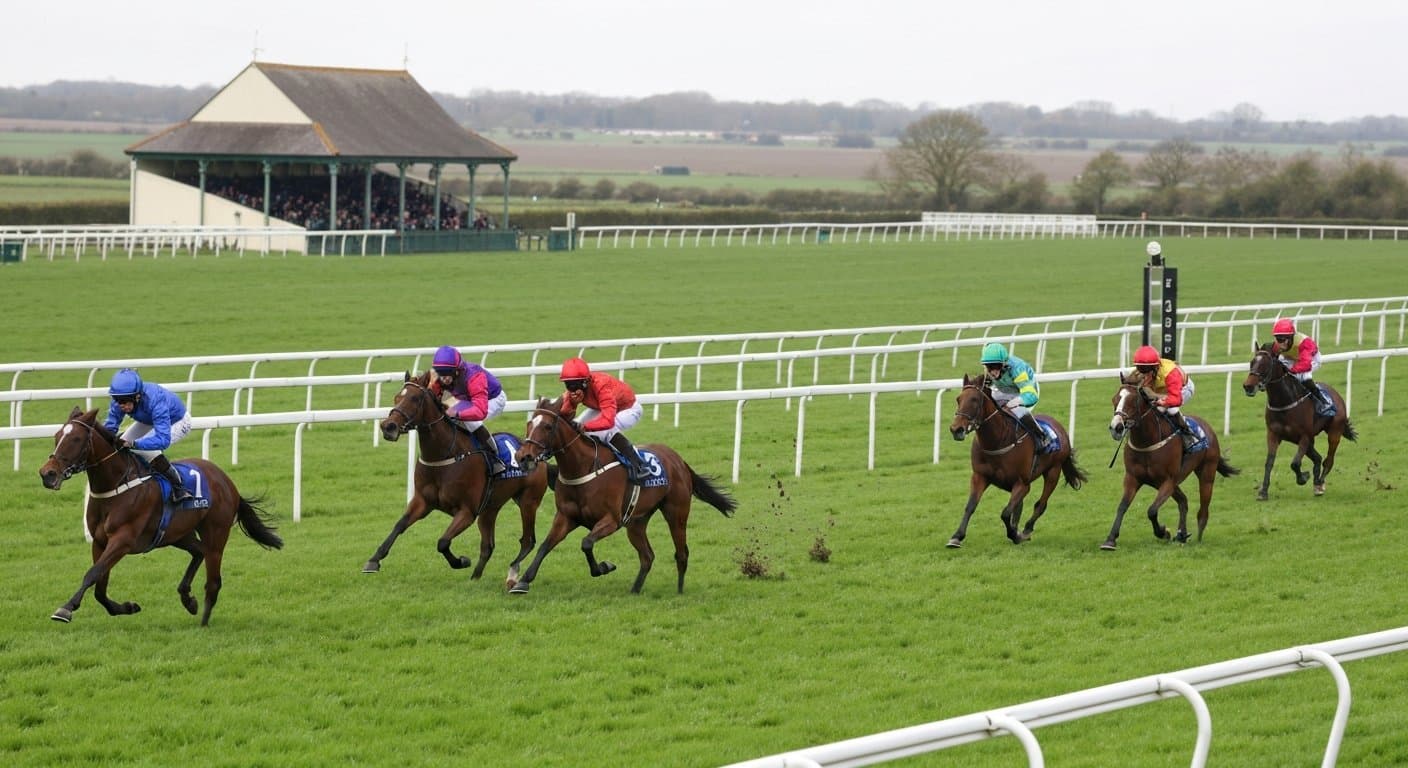
Fakenham sits in the market town of the same name in north Norfolk, making it the only National Hunt racecourse in East Anglia. That geographical isolation shapes the course's betting environment in a specific way: fields are sourced primarily from within 150 miles, the calendar is compact at around eight to ten meetings per year, and the absence of nearby jumps alternatives means horses that suit the track return repeatedly. Course form at Fakenham is more predictive than at almost any other English NH venue outside the immediate south.
The course is left-handed, nearly square in shape, and measures approximately one mile around. The steeplechase circuit has six fences per circuit, with an open ditch positioned as the penultimate obstacle before the home straight. That open ditch placement — arriving when horses are tiring on the final circuit — is the course's most defining technical feature and the primary reason course-experienced horses hold a significant advantage over first-time visitors.
Key angles before betting at Fakenham:
- Course form is the strongest selection filter — the compact square layout, open ditch positioning, and short home straight combine to create demands that not all horses handle; previous course winners return with evidence that no other form can replace
- The open ditch as penultimate fence is the race-decider in chases — a horse that jumps it cleanly on a tired body has solved the course's hardest problem; one that hits it or fiddles it is left with too much ground to make up in the short straight
- Handy types beat closers — the home straight is too short for a hold-up horse to produce a sustained run from the rear; horses that race in the first three positions through the final circuit are structurally advantaged
- East Anglian yards understand the course — stables from Norfolk, Suffolk, and Cambridgeshire that run here regularly carry tactical knowledge that visiting yards from further afield lack
- Going is most commonly Good to Soft to Soft in winter — Norfolk's lighter sandy soil drains faster than clay-based southern courses, but winter meetings still produce testing conditions; the raceday going report is essential
- The Fakenham Silver Cup is the spring benchmark race — winners carry confirmed course evidence at the highest quality the programme offers; their form is the most reliable reference for future visits
The complete guide to Fakenham covers the course layout and history. Its fixtures section covers the Fakenham Silver Cup and the Norfolk National. The winter racing guide addresses the broader NH programme. The day out guide covers visitor logistics.
Bet on Fakenham
Place your bets on Fakenham races with a trusted bookmaker.

Promo code BETFRED50. New customers only. Register, deposit with a Debit Card, and place a first bet of £10+ at Evens (2.0)+ on Sports, to be settled within 7 days, to get £30 in Sports Free Bets and £20 in Bet Builder Free Bets within 24 hours of settlement. 7-day expiry. Eligibility & payment exclusions apply. Full T&Cs apply. Take Time to Think. BeGambleAware.org. 18+. Full T&Cs.

Promo code R30. New UK customers only, 18+. Register, deposit £10 or more, then place a £10 single cash bet at odds of 1/2 (1.5) or greater on any sports market (excluding Virtuals). Once the qualifying bet settles you get £30 in Free Bets (3 x £10) — the qualifying bet can win or lose. Free Bets are valid on any sports market excluding Virtuals, expire in 7 days, are non-withdrawable and must be used in full. Excluded deposit methods apply (including PayPal, Apple Pay, Skrill and NETELLER). Named bets such as Lucky 15 do not qualify. If you cash out the qualifying bet, or it is voided, you are no longer eligible for the offer. Ends 31.12.26. Full T&Cs apply. Please gamble responsibly. BeGambleAware.org. 18+. Full T&Cs.

Promo code BET40GET20. New UK customers, 18+. Register with the code and place a first bet of £40 or more at Evens (2.0) or greater. Receive 2 × £10 free bets: the first credited automatically once the qualifying bet settles, the second 24 hours later. Free bets must be placed at minimum odds of 4/1 (5.0), expire 24 hours after credit, and the free-bet stake is not returned with winnings. Debit card deposits only. Take Time to Think. BeGambleAware.org. 18+. T&Cs apply. Full T&Cs.

50% of your first-day net losses refunded as a free bet, capped at £25. New UK customers aged 18+ only. To qualify, deposit and place a first bet of £10 or more on any sport at minimum odds of evens (2.00), then place at least two further bets on different events, each worth at least 50% of your largest bet, all at evens (2.00) or greater. Losses are counted from your first settled bet until 23:59 the same day. Place a qualifying £10+ bet and you are guaranteed at least a £5 free bet. Bets placed at SP, void bets, cashed-out bets and bets struck with free bets do not count towards the offer. The free bet is credited the day after your qualifying bets settle and must be used within 7 days, after which it expires. It can be used at odds from 1/4 (1.25) up to 250/1 on singles and straight accumulators, but not on Trixie, Patent or Yankee style multiples. Free-bet stake is not returned with winnings. One offer per person, household, address, IP address and device. E-wallet deposits may not qualify, so check the cashier before depositing. Customers registered with GAMSTOP cannot claim. KYC identity verification must be completed before the free bet is credited. Take Time to Think. BeGambleAware.org. 18+. T&Cs apply. Full T&Cs.

New customers, 18+. Choose the sports bonus at sign-up, make a first deposit and receive a 100% bonus up to £50 in your Sports Bonus balance. To convert the bonus to cash, wager it 10x within 30 days. Single bets below Evens (2.00) do not qualify; accumulators do not qualify if any selection is below 1/2 (1.50). Virtual Sports, voided, cancelled, drawn, cashed-out and free-bet wagers do not count towards wagering. Only the first settled bet per event counts. Withdrawing before the wagering requirement is met forfeits the bonus balance including bonus winnings. Real-money funds are used before bonus funds. Deposits via Skrill or Neteller are not eligible. Not valid in conjunction with other promotions. Odds, bet and payment limits apply. 10bet general and promotion T&Cs apply. BeGambleAware.org. 18+. Full T&Cs.

New customers in Great Britain and Republic of Ireland, 18+. Place a £10 fixed-odds qualifying bet at minimum odds of 1/2 (1.50) — single or each-way (only the win part counts), pre-event or in-play, not cashed out early, within 28 days of opening the account. Receive up to £60 in bonuses credited over three days: 3 × £10 fixed-odds free bets (the first on settlement, then 24 and 48 hours later) plus 3 × £5 Total Goals FOOTBALL spread bets and 3 × £5 racing Winning Favourites spread bets, with a £1 racing Race Index spread bet as an extra on top. The spread bets need a full spread-betting account, opened within 28 days of the fixed-odds account and subject to Spreadex's eligibility and appropriateness checks. Free-bet stakes not returned with winnings; free bets valid 28 days from issue. IMPORTANT: the £5 credits are SPREAD bets — sports spread betting carries the risk that losses can exceed your stake. Sports spread-betting customers do not have Financial Ombudsman or FSCS recourse. Take Time to Think. BeGambleAware.org. 18+. T&Cs apply. Full T&Cs.

Promo code WELCOME15, entered under My Bonuses after registering. New UK customers, 18+. Place a first qualifying bet of at least £10 from your cash balance at odds of evens (2.0) or greater within 7 days of opening the account. Once the qualifying bet fully settles you receive £15 in free bets, credited as 3 x £5 tokens with set uses: one £5 accumulator free bet (minimum 4 legs, each leg at 2/5 or bigger), one £5 sports free bet (any market at evens or bigger) and one £5 Sub Cover free bet (selected football player markets at evens or bigger). Free-bet stakes are not returned with winnings. Free bets expire 7 days after they are credited. Void, cashed-out and partially cashed-out bets do not qualify. One offer per customer. Confirm the current terms on BetGoodwin's own welcome-offer page before claiming. Take Time to Think. BeGambleAware.org. 18+. T&Cs apply. Full T&Cs.

New UK customers, 18+. Minimum deposit £10. Place a £10 qualifying single on sports (excluding virtuals) at minimum odds of 1/2 (1.50), settled within 14 days. Deposit-method exclusions apply. Receive £30 in free bets (stake not returned), split £20 for sportsbook use (2 x £10) and £10 for Bet Builder only (2 x £5); Bet Builder does not cover horse racing. Free bets must be accepted within 7 days and expire 7 days after acceptance. No promo code required. Best Odds Guaranteed on UK & Irish racing, subject to having staked over £25 in the previous seven days. Operated by LiveScore Betting and Gaming (Gibraltar) Ltd, UKGC 56859. Confirm the current terms on LiveScore Bet's own promotions page before claiming. Take Time to Think. BeGambleAware.org. 18+. T&Cs apply. Full T&Cs.
18+. BeGambleAware.org
Track Characteristics
The Fakenham circuit is left-handed and roughly square in outline, measuring approximately one mile around. The course sits on the edge of Fakenham town in north Norfolk, set on relatively flat ground with gentle undulations that do not significantly alter the nature of the test compared to a truly flat circuit. What defines Fakenham is not gradient but geometry: the nearly square shape creates bends that come up quickly and consistently, making tactical position far more important than at courses where the oval is more elongated and horses have longer straights to recover.
The Square Layout and Its Consequences
At most NH courses, the oval allows horses some time to regroup after a bend before the next obstacle. At Fakenham, the approximately square shape means the four bends arrive rapidly on a circuit of only one mile. Horses that race wide on any of these bends — those that take the outer line through each turn — run measurably further than horses on the inner rail. Over two circuits of a two-mile chase, the ground lost to wide running accumulates to a significant distance.
The tactical implication is that position on the inside rail at each bend is worth more here than at most courses. Jockeys who understand this — those who have ridden at Fakenham regularly — seek the inner rail actively from the start of the race, particularly through the back straight bends where the ground lost to wide running is easiest to accumulate unnoticed.
The Open Ditch
The open ditch on the steeplechase course is positioned as the penultimate fence on each circuit — the last fence before the short home straight. This positioning is unusual. At most courses, the penultimate fence arrives when horses are beginning to organise their final challenge and are physically fresher than they are at the final fence. At Fakenham, the penultimate fence is an open ditch: a fence with a water-filled ditch on the take-off side that demands a clean, respectful jump rather than allowing a horse to slip over the fence hurriedly.
Horses that jump the penultimate open ditch cleanly while carrying their momentum into the final push have solved the course's key technical challenge. Horses that chip in an extra stride, meet the ditch wrong, or lose their confidence at the fence leave the straight with less energy and less momentum than their rivals who jumped it well. Over a short home straight with limited time to recover, that deficit at the open ditch is often the deciding margin.
For betting purposes: in chase races at Fakenham, prioritise horses whose form records include clean jumping at open ditches and at compact courses where accurate fence-by-fence jumping is tested. Horses known to be casual at ditches or to make errors at close-range fences are at measurably higher risk at Fakenham than at courses with fewer technical demands.
The Hurdle Course
The hurdle circuit runs inside the chase course and is also approximately one mile around. Over hurdles, the square shape and short home straight apply in the same way as for chases, but without the open ditch complication. Handy, nimble types with accurate jumping ability carry the same advantage over hurdles that they do in chases, though the scale of the advantage is smaller because hurdle flights are lower and less physically demanding than fences.
Form Transfer
Form from compact, left-handed NH courses transfers most reliably to Fakenham. Market Rasen — also left-handed and compact — is the most similar English NH course for form purposes. Sedgefield and Huntingdon are secondary comparisons. Form from galloping courses like Cheltenham, Newbury, or Kempton requires significant discounting when applied to Fakenham, because the physical and tactical demands are fundamentally different.
Going & Draw Bias
Fakenham's going is determined by the sandy, lighter soil of north Norfolk rather than the clay-based substrates that dominate southern and western English jump courses. Sandy soil drains more quickly than clay after rain and dries faster between meetings. This means Fakenham's going is typically one or two grades firmer than what might be expected at similarly timed meetings at courses on heavier soil. Good to Soft is the most common winter going description rather than the Soft or Heavy that dominates at clay-based courses.
Typical Going Through the Season
October and November meetings at Fakenham often run on Good to Soft or Good in dry autumns, or on Soft when autumnal rain arrives early. The course's drainage means it handles autumn rain better than courses built on heavier ground, and this is one reason Fakenham rarely suffers abandonments from waterlogging.
December and January meetings encounter the most testing conditions. Sustained winter cold can freeze the ground and force abandonment; sustained winter rain can push the going toward Soft or Soft to Heavy. The open ditch is most significant when the going is testing — horses expend more energy at each fence, and the penultimate open ditch arrives when legs are most tired.
February and March meetings tend to produce the most variable going of the season as weather patterns shift toward spring. Good to Soft with patches of Soft is the typical description, and the going can improve noticeably from one week to the next as spring drying begins.
Going and the Open Ditch
The interaction between going and the open ditch position is central to Fakenham betting in winter. When the going is Soft, the energy demand of crossing the open ditch at the penultimate fence of a chase increases significantly. A horse that might clear it cleanly on Good to Soft can chip in an extra stride and lose its jumping rhythm on Soft. The fence becomes progressively more decisive as the going softens, because tired horses on soft ground are less able to produce the coordinated take-off that clean ditch jumping requires.
When the going is Soft or Soft to Heavy, elevate the importance of jumping form — specifically ditch-jumping — in selection assessments. Horses with a record of clean ditch-jumping at compact courses on testing ground are the most reliable Fakenham chase selections in winter.
Draw
Draw bias does not apply to National Hunt racing at Fakenham. Starting position does influence how quickly horses can establish their preferred position on the inner rail — horses drawn on the inside at the start face a shorter path to the rail through the first bend. This is not a draw bias in the traditional sense but a tactical positioning advantage for horses that settle quickly and can hold an inner position.
In practice, the jockey's decision-making through the first bend matters more than the horse's starting stall. Jockeys who are alert to the inner rail from the break consistently give their horses a better position than jockeys who allow their horse to drift wide. This is one reason experienced Fakenham jockeys consistently outperform occasional visitors at the course — they understand the value of the inner line on the first bend.
Going Checks
Norfolk's weather is less predictable than its inland position might suggest. North Sea weather systems can arrive quickly and alter the going between the morning declaration and the first race. The official raceday going report from the course is the most reliable source, and it is updated more frequently on changeable days. Do not rely on the Wednesday morning declaration for a Saturday Fakenham meeting; check again on the day.
Key Trainers & Jockeys
Fakenham's trainer landscape is shaped by East Anglian geography. The course's position in north Norfolk means that stables within 100 miles — covering Suffolk, Cambridgeshire, Lincolnshire, and the eastern Midlands — provide the majority of the field at most meetings. Two operations in particular have built records at Fakenham that reflect deliberate course targeting rather than incidental use.
Neil Mulholland
Neil Mulholland, who trains at Limpley Stoke in Wiltshire, has a consistent Fakenham record that extends beyond what geography might predict. He makes a specific point of targeting East Anglian racing and has developed a strong understanding of what Fakenham requires. Mulholland's horses at Fakenham in Class 3 and Class 4 handicap chases and hurdles are worth noting above the market price that routine form analysis would suggest.
His typical Fakenham runner is a durable, workmanlike NH horse — not the flamboyant, naturally talented type that wins big prizes at Cheltenham, but the kind of solid, adaptable horse that handles compact courses and non-extreme going conditions without fuss. That profile matches Fakenham's requirements precisely.
Philip Kirby
Philip Kirby trains at Thirsk in North Yorkshire, approximately 180 miles from Fakenham. The distance is deceptive — Kirby has a documented track record at the course that suggests deliberate targeting of meetings rather than incidental use. His horses in Class 3 and Class 4 conditions races at Fakenham, particularly in hurdles, carry the benefit of a trainer who has done his homework on what the compact circuit requires.
East Anglian Regional Yards
Several smaller operations based in Norfolk, Suffolk, and Lincolnshire maintain productive Fakenham records through volume and local knowledge rather than individual star horses. Stables that run horses here three or more times per season understand the surface behaviour, the open ditch's specific demands, and the tactical requirements of the square circuit. When one of these yards sends a horse with previous course form at Fakenham, the combination is worth taking seriously even when the official rating suggests the horse is not the most talented in the field.
Jockey Knowledge
The jockey with the best Fakenham record in terms of wins per ride — across several recent seasons — is typically one of the course regulars from the eastern circuit rather than a nationally prominent name. Jockeys who ride regularly at Fakenham, Market Rasen, Huntingdon, and Leicestershire develop the specific skill of positioning on the inside rail through the tight bends and timing the approach to the open ditch correctly.
When a trainer puts up an experienced Fakenham jockey on a horse in a competitive handicap, that booking is a signal worth noting. Conversely, when a prominent horse from a leading stable is given a jockey having their first or second Fakenham ride in a chase, the open ditch represents a tactical challenge that familiarity would reduce.
The Open Ditch Jockey Premium
The most specific jockey skill at Fakenham is the ability to present a horse correctly at the open ditch when it is tiring on the final circuit. This requires reading the horse's rhythm in the back straight, making a decision about pace through the second-to-last bend, and arriving at the ditch at the correct take-off point without choking the horse's stride. Jockeys who ride at Fakenham regularly can make these adjustments automatically; jockeys doing it for the first time in a competitive race are less likely to get it exactly right.
Betting Strategies
Fakenham's betting strategies are built on the structural demands of the course — the compact square layout, the open ditch as penultimate fence, and the short home straight. Each creates a repeating pattern in the results that can be exploited systematically.
Strategy One: Course Form as the Primary Filter
At no English NH course is course form more reliably predictive than at Fakenham. The combination of the square layout (requiring specific tactical knowledge), the open ditch placement (requiring specific jumping accuracy), and the short home straight (requiring prominent position well before the final bend) creates demands that not all horses handle on their first visit.
Apply course form as the first filter before any other assessment. In any field that includes at least one horse with a win or place at Fakenham in the last eighteen months, that horse should be the selection starting point. If the horse also has appropriate going form and is from a yard that targets the course, the case is established. Opposition to a Fakenham course winner requires positive reasons rather than the default assumption that form from other courses is directly comparable.
Strategy Two: Handy Types Over Hold-Up Horses
The home straight at Fakenham is short. A horse that reaches the final bend in fourth or fifth position is too far back to deliver a finishing run in the limited distance available. This structural reality makes hold-up horses — those that rely on a sustained late run from the rear — significantly disadvantaged compared to horses that race prominently.
In race planning, identify whether each horse is a prominent or hold-up runner. Favour prominent runners. Be specifically cautious about backing hold-up horses from major stables at short prices when their previous form has been achieved at galloping courses with extended straights. The hold-up style that wins over a two-furlong Cheltenham run-in has less transfer value to Fakenham's short home straight than the price implies.
Strategy Three: Chase Chase Form Over Hurdle Form
Fakenham's open ditch is a chase-specific feature. The predictive value of course form in chases at Fakenham is higher than in hurdles, because the open ditch creates an additional discriminating obstacle absent from the hurdle circuit. When assessing a horse's transferable Fakenham evidence, weight chase course form at the track more heavily than hurdle form. A horse that has won a chase at Fakenham, jumped the open ditch cleanly, and stayed to win in the short straight has demonstrated three things simultaneously. A horse that has only won a hurdle here has demonstrated two of those three things.
Strategy Four: East Anglian Yard Runners at Value Prices
Regional yards based in the East Anglian area run horses at Fakenham throughout the season. When one of these yards — identified by their consistent presence in the Fakenham results over recent seasons — runs a horse at 4/1 or above with course form, the combination of local knowledge and proven track suitability creates a value case. These yards do not have the profile to attract systematic market support from national punters; the local edge is not fully reflected in the price.
Strategy Five: Avoid Short-Priced First-Time Visitors in Chases
Backing a horse at short odds for its first chase at Fakenham carries more risk than the price implies. The open ditch at the penultimate position is truly novel for first-time visitors, and the timing of its arrival — when the horse is tiring — makes errors at it more costly than at a fence in the early stages. In fields where alternatives with course form are available at reasonable prices, the short-priced first-timer is the weakest value bet regardless of its form from other courses.
To compare place terms and each-way promotions across the major bookmakers, see our best bookmakers for horse racing guide.
Key Races to Bet On
Fakenham's NH calendar is built around approximately eight to ten meetings between October and May. The programme peaks in spring, when the Fakenham Silver Cup and the Norfolk National provide the most competitive fields of the season. Winter meetings through November to January are more modest in competitive quality but generate consistent betting opportunities for bettors with systematic course knowledge.
The Fakenham Silver Cup
The Fakenham Silver Cup is the course's spring feature, a Class 3 handicap hurdle run over two miles in March at the Spring National Hunt meeting. It shares its date with Cheltenham Gold Cup day, which the course plays on in its own marketing and which is where our previous name for it came from.
Course form counts for more at Fakenham than at a conventional track, because the circuit is compact and sharp and the run-in is short. We are not publishing a strike rate or a price threshold for this race: the figures that stood here were measured against a race that does not exist.
The fixtures section of the complete guide covers the race and its place in the calendar.
The Fakenham Silver Cup
The Fakenham Silver Cup is a Class 3 handicap hurdle over two miles, run at the Spring National Hunt meeting in March. It is the most competitive hurdle of the Fakenham season and attracts horses that are returning from winter campaigns or being pointed toward spring targets. The going is typically Good to Soft at this time of year — the most manageable for a range of horse types — and the field quality is at its highest in the hurdle programme.
Being a hurdle race, the Silver Cup never meets the open ditch that shapes Fakenham's chases, so course experience counts for slightly less here than over fences. Prominent-racing handy types with Fakenham form at the trip are the profile the track tends to reward.
Winter Handicap Chases and Hurdles
From October through January, Fakenham stages Class 3, 4, and 5 handicaps across both hurdles and chases. These races attract fields of eight to fourteen runners from regional yards and represent the bread-and-butter betting opportunity at the course. The competitive quality is lower than at the spring programme, but the course form advantage is equally present — and in smaller fields, a single horse with strong course credentials can be backed at prices that represent real value.
The November and December handicap chases — run when the going is most often Good to Soft — produce the most consistent results for the course form strategy. These are the races where East Anglian regional yards with established Fakenham records hold their greatest advantage over visiting stables from further afield.
Novice Events
Fakenham stages novice hurdles and novice chases throughout the season. In novice chases, first-time course visitors face the open ditch without previous experience, making the risk profile for short-priced favourites higher than at galloping courses. Novice chasers that have previously run at Fakenham in a hurdle, giving them at least one experience of the square circuit, hold a modest advantage over horses appearing at the course for the first time.
Share this article
More about this racecourse
All Fakenham guides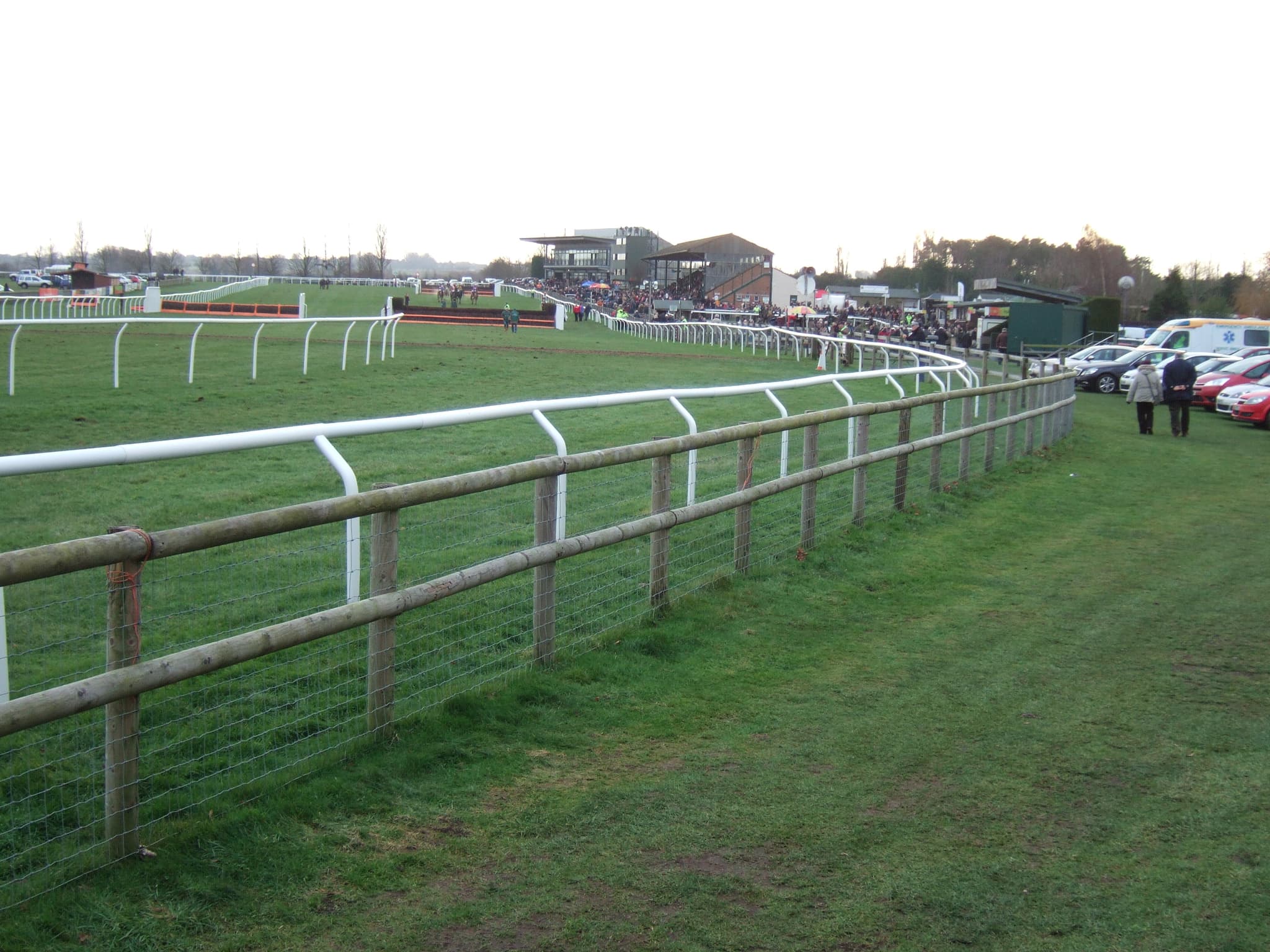
Fakenham Racecourse: Complete Guide
Fakenham Racecourse guide: East Anglia's only jumps venue, the Norfolk National and the Fakenham Silver Cup, plus how to plan a day's racing in Norfolk.
Read more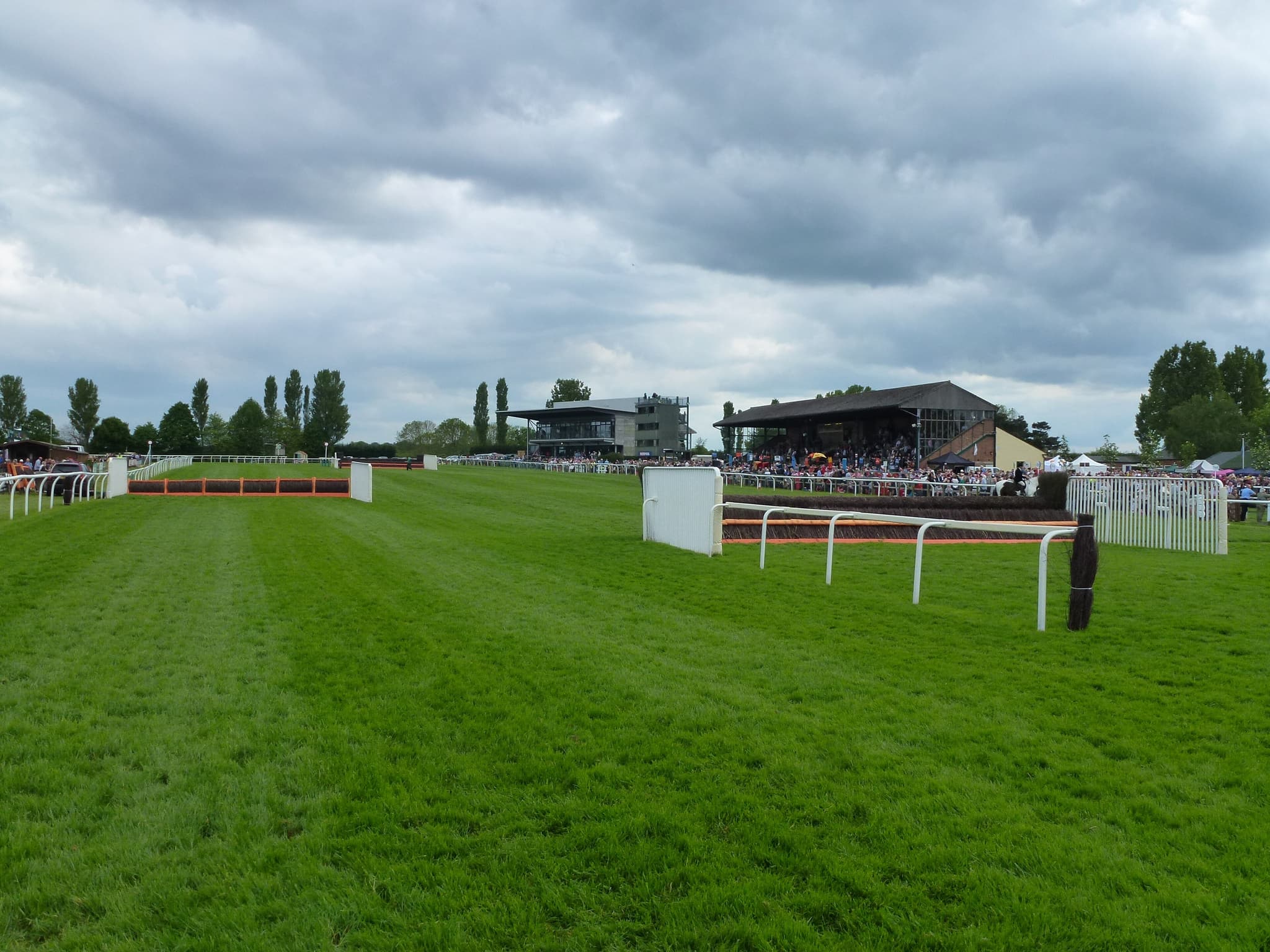
A Day Out at Fakenham Racecourse
Everything you need for a day at Fakenham — getting there, what to wear, enclosures, food and drink, and insider tips for East Anglia's only jumps venue.
Read more
Fakenham Festival Guide: Your Complete Guide
Complete guide to Fakenham's racing festivals. Day-by-day coverage, key races, betting tips and visitor information for Norfolk's intimate jump racing venue.
Read morePhotos on this page are used under Creative Commons licences. Titles, sources and licence links for each one are on our image credits page.
Research the field with the AI Race Predictor
Our model publishes calibrated win-probability estimates for UK races — a second opinion to understand a race, not tips. It's open about its record: it doesn't beat the market, and we show exactly how it does.
Work it out & learn the basics
Gamble Responsibly
Gambling should be entertaining and not seen as a way to make money. Never bet more than you can afford to lose. If you or someone you know has a gambling problem, help and support is available.