
Founder & Editor · Last reviewed 2026-04-05
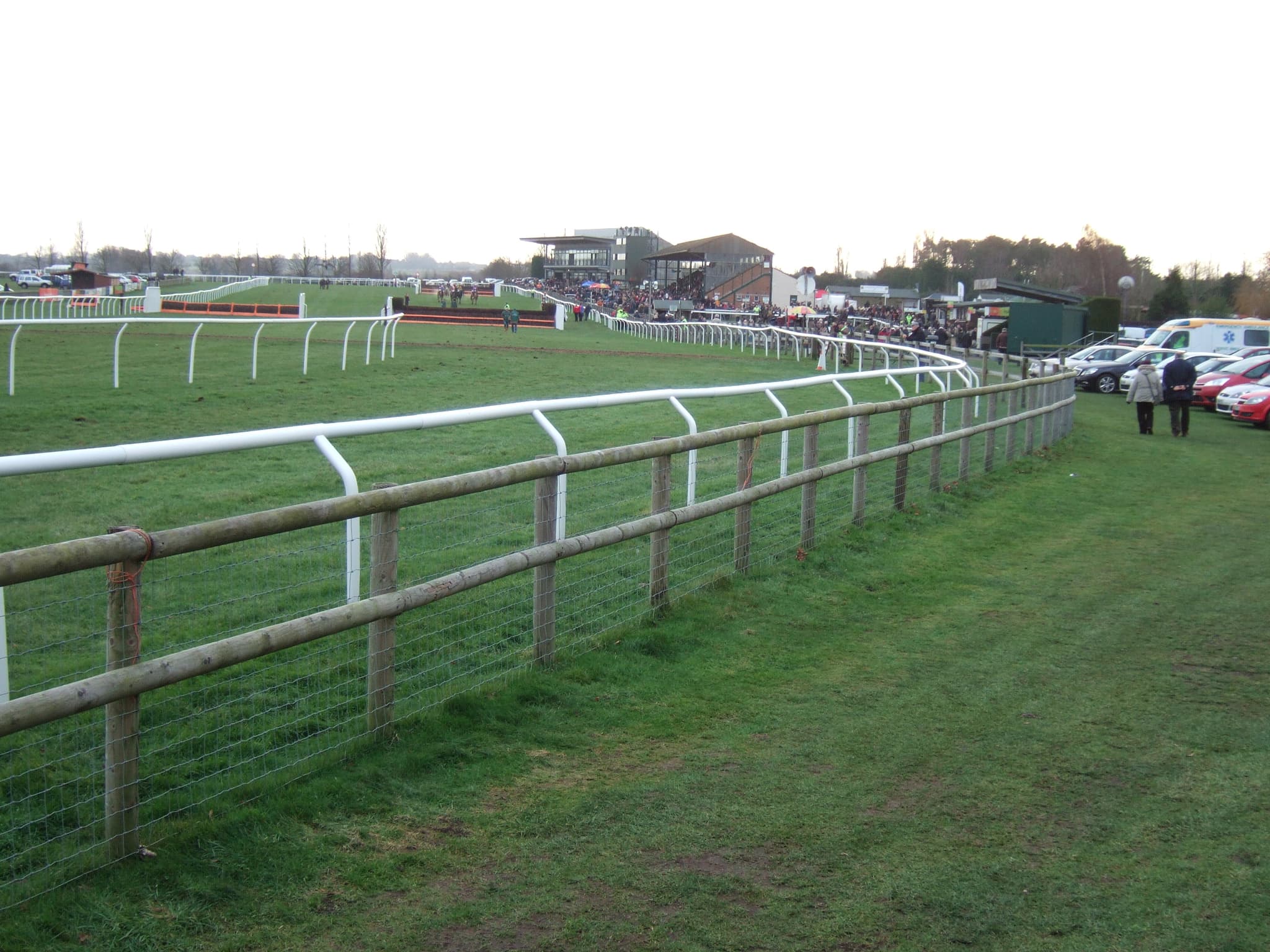
Fakenham Racecourse is a small, intimate National Hunt venue in rural Norfolk — one of the flattest jumps courses in Britain and the only NH track in East Anglia. It sits on the southern edge of Fakenham town, postcode NR21 7NY, and has been staging jump racing since 1905. The circuit measures approximately one mile round and follows a near-square, left-handed layout that is unlike almost anything else in British racing. Those four near-right-angle bends, the short straights connecting them, and the flat terrain beneath combine to produce a test that suits agile, nippy horses rather than the long-striding galloper.
The course holds around 5,000 at capacity, but most regular weekday meetings draw closer to 2,000 to 3,000 people — a crowd that is overwhelmingly local, knowledgeable, and deeply loyal. Fakenham has no pretensions to the big occasions at Cheltenham or Newbury. Its appeal is precisely the opposite: the paddock is close enough to read a horse's coat; the rail is accessible; the atmosphere is unhurried. It is one of the few venues left in Britain where racing still feels like a community event rather than a commercial spectacle.
For East Anglian NH fans, Fakenham is the only show in town. The flat-racing headquarters at Newmarket and the summer programme at Great Yarmouth serve a different season and a different discipline. When the NH season opens in October, Fakenham is where the region's jump racing interest concentrates. The course's nearest NH neighbour is Huntingdon, 65 miles to the south-west, which means Fakenham is not competing in a crowded local market — it is, by geography, the default choice for anyone in Norfolk who wants to watch jump racing.
The course's relationship with the West Norfolk Hunt, which established racing here in 1905 and continues to stage its point-to-point events at the venue, gives Fakenham a dual identity: a licensed racecourse on the one hand, and a working part of the Norfolk hunt-and-country community on the other. King Charles III, who has longstanding personal connections to NH racing and the hunting tradition, is the course's patron. That connection is not ceremonial in the way it might be at a large commercial venue — at Fakenham's scale, patrons and presidents are part of a real relationship with the course's governing community.
Quick Facts
| Detail | Information |
|---|---|
| Location | Fakenham, Norfolk — NR21 7NY |
| Racing type | National Hunt only (hurdles and chases) |
| Circuit | Left-handed, near-square, approx. 1 mile |
| Track profile | Almost completely flat |
| Opened | 1905 |
| Capacity | c. 5,000 (regular meetings: 2,000–3,000) |
| Feature races | Fakenham Silver Cup (March); Norfolk National (early May) |
| Patron | King Charles III |
| Website | fakenhamracecourse.co.uk |
Who This Guide Is For
This guide serves three groups. First, first-time visitors who want to know what to expect from the course, the facilities, and the journey — Fakenham's rural location and the absence of a local railway station mean planning matters. Second, racing enthusiasts who want to understand how the square circuit works and what types of horse it suits, whether they are watching or betting. Third, anyone combining a race day with a visit to north Norfolk — Holkham Beach is 14 miles to the north-west, Wells-next-the-Sea is 14 miles away, and the north Norfolk coast is among the best stretches of English shoreline. Fakenham fits naturally into a weekend in that part of the world.
The guide is organised across ten sections: the course layout, fixtures calendar, facilities, travel, an extended FAQ, the history of the course, memorable moments, a betting guide focused on the track's unusual geometry, and a section on the surrounding area. Internal links throughout connect to the standalone spoke articles on Norfolk National day, winter racing at Fakenham, and the dedicated betting guide. For those visiting for the first time, the FAQ section and the getting-there section are the most immediately practical starting points — Fakenham's road approach from Norwich via the A1067 and from King's Lynn via the A148 are both covered in detail, along with guidance on overnight stays on the north Norfolk coast.
Bet on Fakenham
Place your bets on Fakenham races with a trusted bookmaker.

Promo code BETFRED50. New customers only. Register, deposit with a Debit Card, and place a first bet of £10+ at Evens (2.0)+ on Sports, to be settled within 7 days, to get £30 in Sports Free Bets and £20 in Bet Builder Free Bets within 24 hours of settlement. 7-day expiry. Eligibility & payment exclusions apply. Full T&Cs apply. Take Time to Think. BeGambleAware.org. 18+. Full T&Cs.

Promo code R30. New UK customers only, 18+. Register, deposit £10 or more, then place a £10 single cash bet at odds of 1/2 (1.5) or greater on any sports market (excluding Virtuals). Once the qualifying bet settles you get £30 in Free Bets (3 x £10) — the qualifying bet can win or lose. Free Bets are valid on any sports market excluding Virtuals, expire in 7 days, are non-withdrawable and must be used in full. Excluded deposit methods apply (including PayPal, Apple Pay, Skrill and NETELLER). Named bets such as Lucky 15 do not qualify. If you cash out the qualifying bet, or it is voided, you are no longer eligible for the offer. Ends 31.12.26. Full T&Cs apply. Please gamble responsibly. BeGambleAware.org. 18+. Full T&Cs.

Promo code BET40GET20. New UK customers, 18+. Register with the code and place a first bet of £40 or more at Evens (2.0) or greater. Receive 2 × £10 free bets: the first credited automatically once the qualifying bet settles, the second 24 hours later. Free bets must be placed at minimum odds of 4/1 (5.0), expire 24 hours after credit, and the free-bet stake is not returned with winnings. Debit card deposits only. Take Time to Think. BeGambleAware.org. 18+. T&Cs apply. Full T&Cs.

50% of your first-day net losses refunded as a free bet, capped at £25. New UK customers aged 18+ only. To qualify, deposit and place a first bet of £10 or more on any sport at minimum odds of evens (2.00), then place at least two further bets on different events, each worth at least 50% of your largest bet, all at evens (2.00) or greater. Losses are counted from your first settled bet until 23:59 the same day. Place a qualifying £10+ bet and you are guaranteed at least a £5 free bet. Bets placed at SP, void bets, cashed-out bets and bets struck with free bets do not count towards the offer. The free bet is credited the day after your qualifying bets settle and must be used within 7 days, after which it expires. It can be used at odds from 1/4 (1.25) up to 250/1 on singles and straight accumulators, but not on Trixie, Patent or Yankee style multiples. Free-bet stake is not returned with winnings. One offer per person, household, address, IP address and device. E-wallet deposits may not qualify, so check the cashier before depositing. Customers registered with GAMSTOP cannot claim. KYC identity verification must be completed before the free bet is credited. Take Time to Think. BeGambleAware.org. 18+. T&Cs apply. Full T&Cs.

New customers, 18+. Choose the sports bonus at sign-up, make a first deposit and receive a 100% bonus up to £50 in your Sports Bonus balance. To convert the bonus to cash, wager it 10x within 30 days. Single bets below Evens (2.00) do not qualify; accumulators do not qualify if any selection is below 1/2 (1.50). Virtual Sports, voided, cancelled, drawn, cashed-out and free-bet wagers do not count towards wagering. Only the first settled bet per event counts. Withdrawing before the wagering requirement is met forfeits the bonus balance including bonus winnings. Real-money funds are used before bonus funds. Deposits via Skrill or Neteller are not eligible. Not valid in conjunction with other promotions. Odds, bet and payment limits apply. 10bet general and promotion T&Cs apply. BeGambleAware.org. 18+. Full T&Cs.

New customers in Great Britain and Republic of Ireland, 18+. Place a £10 fixed-odds qualifying bet at minimum odds of 1/2 (1.50) — single or each-way (only the win part counts), pre-event or in-play, not cashed out early, within 28 days of opening the account. Receive up to £60 in bonuses credited over three days: 3 × £10 fixed-odds free bets (the first on settlement, then 24 and 48 hours later) plus 3 × £5 Total Goals FOOTBALL spread bets and 3 × £5 racing Winning Favourites spread bets, with a £1 racing Race Index spread bet as an extra on top. The spread bets need a full spread-betting account, opened within 28 days of the fixed-odds account and subject to Spreadex's eligibility and appropriateness checks. Free-bet stakes not returned with winnings; free bets valid 28 days from issue. IMPORTANT: the £5 credits are SPREAD bets — sports spread betting carries the risk that losses can exceed your stake. Sports spread-betting customers do not have Financial Ombudsman or FSCS recourse. Take Time to Think. BeGambleAware.org. 18+. T&Cs apply. Full T&Cs.

Promo code WELCOME15, entered under My Bonuses after registering. New UK customers, 18+. Place a first qualifying bet of at least £10 from your cash balance at odds of evens (2.0) or greater within 7 days of opening the account. Once the qualifying bet fully settles you receive £15 in free bets, credited as 3 x £5 tokens with set uses: one £5 accumulator free bet (minimum 4 legs, each leg at 2/5 or bigger), one £5 sports free bet (any market at evens or bigger) and one £5 Sub Cover free bet (selected football player markets at evens or bigger). Free-bet stakes are not returned with winnings. Free bets expire 7 days after they are credited. Void, cashed-out and partially cashed-out bets do not qualify. One offer per customer. Confirm the current terms on BetGoodwin's own welcome-offer page before claiming. Take Time to Think. BeGambleAware.org. 18+. T&Cs apply. Full T&Cs.

New UK customers, 18+. Minimum deposit £10. Place a £10 qualifying single on sports (excluding virtuals) at minimum odds of 1/2 (1.50), settled within 14 days. Deposit-method exclusions apply. Receive £30 in free bets (stake not returned), split £20 for sportsbook use (2 x £10) and £10 for Bet Builder only (2 x £5); Bet Builder does not cover horse racing. Free bets must be accepted within 7 days and expire 7 days after acceptance. No promo code required. Best Odds Guaranteed on UK & Irish racing, subject to having staked over £25 in the previous seven days. Operated by LiveScore Betting and Gaming (Gibraltar) Ltd, UKGC 56859. Confirm the current terms on LiveScore Bet's own promotions page before claiming. Take Time to Think. BeGambleAware.org. 18+. T&Cs apply. Full T&Cs.
18+. BeGambleAware.org
The Course
Fakenham's circuit measures approximately one mile in circumference and follows a near-square, left-handed track. That geometry sets it apart from almost every other National Hunt course in Britain. The four turns are close to right angles — not the wide, sweeping bends you find at Newbury or Haydock, but tight, square corners that force horses to slow, pivot, and re-accelerate four times per circuit. The straights connecting those bends are short: the longest, down the far side, runs to perhaps 300 metres. The run-in from the final fence to the line measures around 200 metres.
The track is almost completely flat. For a National Hunt course, this is unusual. Jumps tracks in Britain typically incorporate at least some undulation — Cheltenham's Old Course climbs steeply from the back of the field, Ludlow drops and rises, Exeter has a pronounced hill on the far side. Fakenham, sitting on the low-lying farmland south of the town, has none of that. The terrain is fenland-adjacent, and the course sits at roughly 50 metres above sea level across the entire circuit. A horse that arrives from a hilly track and has been struggling to get up slopes will not face that problem here.
The Chase Course
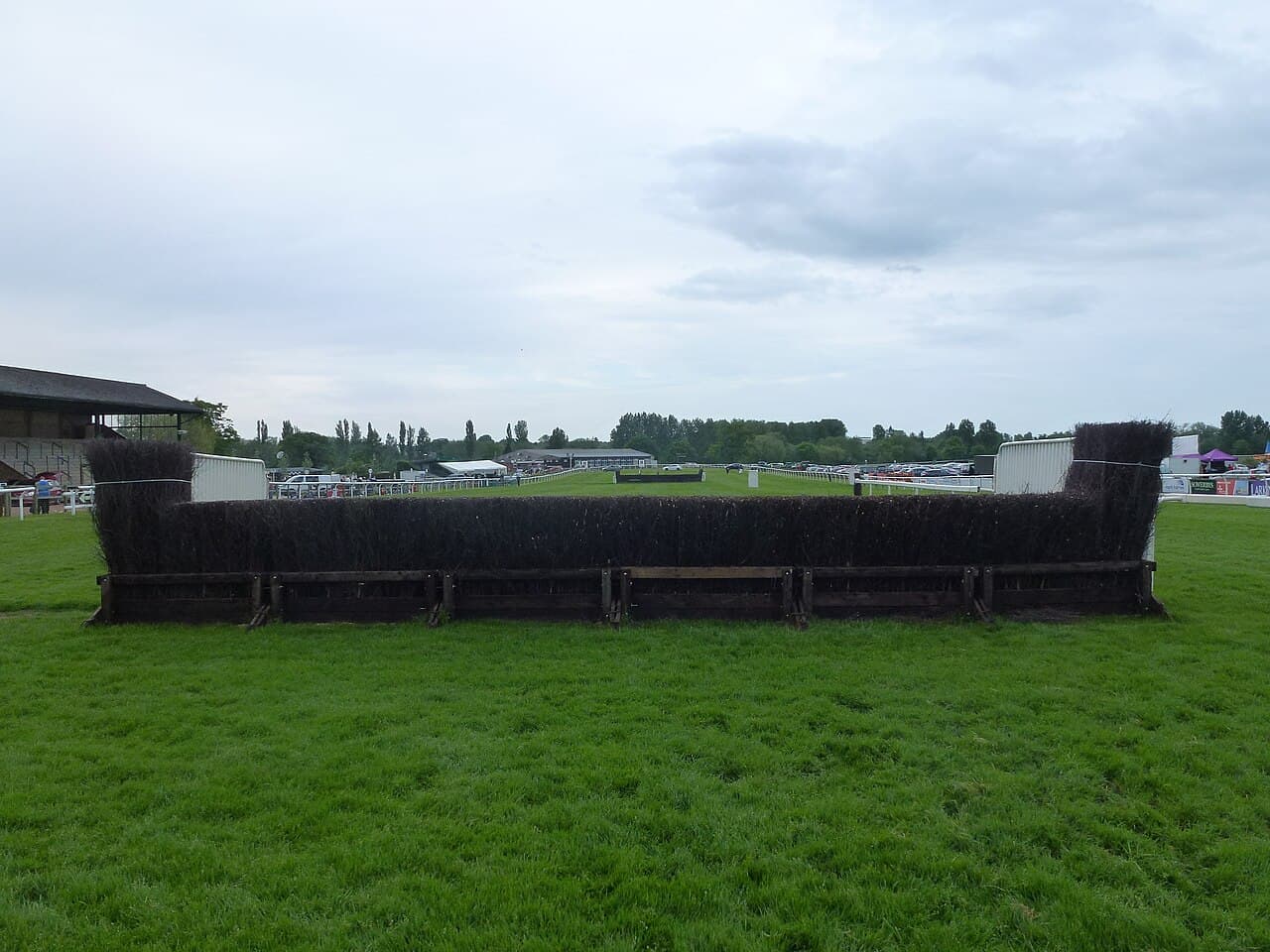
The steeplechase track sits outside the hurdle course. There are eight fences per circuit — this is the more accurate count for the full track, rather than the six sometimes cited for a shorter circuit configuration. Those fences include one open ditch per circuit, positioned as the penultimate obstacle before the home turn. The open ditch demands a bold jump and a horse that is attacking its fences rather than fiddling.
The fences at Fakenham are constructed to standard British NH specifications: birch fences with a sloped face on the take-off side and a near-vertical back face. At 4 feet 6 inches, they are regulation height. What makes them demanding is not their size but their positioning relative to the bends. Several fences sit close to the corners of the square circuit, which means horses are jumping and immediately turning — there is no recovery corridor of straight track between landing and the next directional change. A horse that jumps crookedly and drifts right on landing from a fence positioned before a left-hand bend creates a serious problem for itself and for jockeys following.
Because the bends are so sharp, jumping position matters more than at galloping tracks. A horse that meets a fence slightly wrong on the approach to a bend has very little time to recover before it must negotiate the corner. The premium is on accurate, quick-thinking jumping — the kind a horse develops over multiple runs at tight-turning venues. Course form is therefore more relevant at Fakenham than almost anywhere: a horse that has run well at Plumpton, Exeter, or Huntingdon — all tracks that share the tight-turning characteristic — has demonstrated it can handle this style of racing.
The run-in after the last fence is short enough that a horse landing in front at the final obstacle has a strong advantage. Unlike galloping tracks where a powerful stayer can grind past a leader between the last fence and the post, Fakenham does not offer that opportunity. Lead the field into the home straight and you have a real chance of holding on.
The Hurdle Track
The hurdle course runs inside the chase course and follows the same near-square shape. The shorter distances — 2 miles and 2 miles 3 furlongs are the most common — mean that in a two-mile hurdle, horses are covering the circuit twice and negotiating eight sharp bends before reaching the finish. The cumulative effect of those turns on a horse that is not built for tight circuits is significant. Horses described in race cards as requiring time and space to settle and find their stride — long-striding types — will be disadvantaged.
Key Distances
Fakenham races at four principal distances: 2 miles, 2 miles 3 furlongs, 2 miles 5 furlongs, and 3 miles 1 furlong 110 yards. The longest trips require multiple full circuits and a sustained ability to handle the bends. Three-mile-plus races at Fakenham are not a test of staying power in isolation — they are a repeated examination of agility and bend-handling. A horse that gallops smoothly on a big, sweeping track can be found seriously wanting over three miles on this circuit.
The 2 miles 5 furlongs trip shows well what the circuit demands of a chaser. Over this distance, horses complete two and a half circuits, negotiating ten bends and sixteen fences. The combination of stamina and agility required over that distance is why races over it often produce form that diverges from results at other tracks. The 3 miles 1 furlong 110 yards option is used for the longer handicap chases and tests staying ability more directly, though the bend frequency still means that a horse incapable of handling the corners efficiently will be exposed over three miles in a way it would not be on a conventional long-distance track.
Going Tendencies
Norfolk's low-lying topography means Fakenham can hold water. The flat nature of the site actually assists drainage to some degree — there are no hollows where water collects as there would be on a contoured track — but after sustained autumn or winter rain, the going moves to good to soft and then soft quickly. October and November meetings can see a range of ground conditions, from good at the season's opening meeting to heavy by December if rain has been persistent.
The soil structure is lighter than many NH venues in the Midlands. This means the course can ride on the faster side in spring — the April meeting sometimes sees good ground, which can suit lighter, quicker-moving horses. The going is always worth checking via the British Horseracing Authority's ground reports in the days before a meeting, as Fakenham's readings can shift by a mark or two in 48 hours.
The Horse Type That Wins at Fakenham
The square circuit selects for a specific kind of horse. Agility at the bends is the primary requirement: the horse must balance and turn without losing forward momentum. Related to that is the ability to be ridden close to the pace — being handy in the first three or four from the front is a decisive advantage at Fakenham, because there is simply not enough straight track to launch the kind of sweeping, wide-angled challenge that wins races at Cheltenham or Ascot.
Horses that benefit from the flat profile include those that have previously laboured on hilly courses, and horses that are carrying a light weight and need level ground to show their speed. Older, experienced horses with a history of winning on tight, sharp circuits tend to be reliable at Fakenham because they understand what the bends demand.
The horse type that fails at Fakenham is almost equally well-defined: long-striding, relentless galloping types that need a wide, sweeping track to build momentum. These horses may be perfectly effective at Newbury, Haydock, or Sandown, but the four near-right-angle corners at Fakenham interrupt their rhythm too frequently. Trainers and jockeys know this. When a horse's record shows multiple placed efforts at galloping tracks without a win, but clean rounds and winners at compact tracks, Fakenham moves it into a more favourable context.
Viewing the Course
For a spectator, Fakenham's geometry means the entire race is visible from the grandstand. On the far side, the two turns at the top of the circuit are just under 400 metres away — close enough to follow horses jumping and turning without binoculars. The home bend, where horses negotiate the final left-hand turn before the short run to the line, is directly in front of the stand, creating one of the more dramatic spectator moments in small-course NH racing. The crowd can hear the horses hooves on the approach, see the jockeys using their hands in the approach to the bend, and watch the race resolve itself in the final 200 metres.
This visibility distinguishes Fakenham from courses where the far side of the track is lost to distance or contour. At Ascot's NH course, the Valley fence is essentially invisible from the main stand. At Cheltenham, the top of the hill disappears from view on several circuit configurations. At Fakenham, nothing is hidden.
See the betting guide for the full analytical framework built around these track characteristics.
Key Fixtures & Calendar
Fakenham stages around 13 jump meetings a year, all under National Hunt rules, between October and June. There are no flat meetings: the summer months see the course host the West Norfolk Hunt's point-to-point events and non-race-day private hire, but Fakenham's identity is bound entirely to jump racing.
The October Opener
The season at Fakenham traditionally begins in October, often in the first or second week of the month. This meeting serves as the opening fixture for a large proportion of the region's NH horses — trainers based in Norfolk, Cambridgeshire, and Suffolk use Fakenham's early fixture as a fitness run for horses that have spent the summer in the field. Fields at the October meeting can include horses returning from breaks of five or six months, and the results carry an asterisk because of the range of fitness levels on display.
For spectators, the October opener has an attractive character: the light is good, the autumn foliage around the course is at its best, and the crowd is enthusiastic after a summer without jump racing. Attendance at October meetings tends to sit in the 2,000 to 2,500 range — smaller than the spring fixtures, but a loyal and knowledgeable turnout. The going at this point in the season is typically good to soft or good, which allows for faster, cleaner racing.
Winter Meetings
From November through to February, Fakenham stages several fixtures spread across weekday afternoons and the occasional weekend date. These winter meetings form the backbone of the course's year. They attract the core Fakenham regular — the racing enthusiast who is there in all weathers, who knows the local trainers and their strings, and who has studied the form carefully enough to make the trip worthwhile on a cold Tuesday in January.
Attendances at weekday winter meetings can dip to 1,500 to 2,000, but this is not a sign of indifference — it is the nature of a rural venue staging racing on a working day. Those who attend are committed. The going in December and January often reaches soft or heavy, which extends the season for mud-lovers and tests the jumping ability of horses rather than their speed.
The Christmas period typically brings one meeting, often between Christmas and New Year. This fixture draws a slightly different crowd — families, visitors staying in north Norfolk over the holidays, people who have discovered that a jump racing afternoon is an excellent antidote to the post-Christmas lull. Fakenham's relaxed atmosphere suits this audience well.
The Spring National Hunt Meeting and the Silver Cup (March)
The Spring National Hunt meeting in March carries the Fakenham Silver Cup, a Class 3 handicap hurdle over two miles. It is run on Cheltenham Gold Cup day, which the course plays on itself ("Fakenham goes silver as Cheltenham goes gold"). The 2026 running was on 13 March, with £15,000 in prize money.
An earlier version of this page named a "Fakenham Chase" in April as the course's signature race and its biggest day. We hold no source for a race of that name, and Fakenham's biggest day is in May, so that section has been removed.
Norfolk National Day (early May)
Fakenham's biggest raceday is Norfolk National day, on the early-May bank holiday (Monday 4 May in 2026). The Norfolk National is a staying handicap chase over 3m 5f 24y, worth £25,000 according to the course, and was a Class 3 in 2026. The whole card carried £150,000 in total prize money in 2026, which the course calls the biggest single raceday in its history. Our Norfolk National day guide covers the day in full.
The Spring Finale
Fakenham's season typically closes in May, with a spring finale meeting that catches horses at the end of their campaigns. Trainers use this fixture to give horses a final run before the summer break, or to place a lightly-raced animal in a race where the competition is reduced by post-Cheltenham attrition. The going in May is often good or good to firm as the Norfolk soil dries in the spring warmth — a different test to the testing winter ground.
Crowd Character
Across all meetings, Fakenham's crowd has a consistent character that distinguishes it from larger venues. At 2,000 to 3,000 people in the stands and along the rail, the course feels populated without feeling pressured. You can watch from wherever you choose, move freely between enclosures on a standard race day, and get close to the paddock without negotiating crowds. For new visitors to National Hunt racing, this accessibility makes Fakenham an excellent entry point. For experienced racing enthusiasts who have grown tired of the queues and noise at major festivals, it is a reminder of what regional jump racing does best.
Full fixture lists are published each season on the Fakenham Racecourse website and on the British Horseracing Authority fixture calendar.
Facilities & Hospitality
Fakenham's facilities are modest by the standards of larger venues, but well-maintained and suited to the course's intimate character. The upgrade that mattered most came in March 2002, when the Prince of Wales Stand — a £1 million development — was officially opened by the then Prince of Wales. That investment gave the course a proper modern grandstand while leaving the relaxed atmosphere intact. Fakenham has not attempted to become something it is not, and that restraint is part of its appeal.
The Prince of Wales Stand
The Prince of Wales Stand is the main grandstand and the focal point of the course. It provides covered viewing across the home straight, with tiered seating and standing areas. The sightlines from the upper level are excellent: the near-square circuit means you can see the horses on the far side, round both bends on that side, and into the home straight from a single position. At a sprawling track like Ascot or Doncaster, the far side of the course disappears from view; at Fakenham, you never lose the race.
The stand houses the main bar, the betting hall, and the course's hospitality suites. Hospitality packages on race days are bookable through the course office and are popular for small groups and corporate parties. The venue is licensed for weddings and private functions, and the Prince of Wales Stand has hosted events outside the racing calendar since its opening.
The Paddock
Fakenham's paddock is one of the most accessible in British racing. The walking ring sits close to the grandstand and is enclosed by low rails rather than the high barriers found at larger venues. Spectators stand just feet from the horses on parade, with no need to elbow into position. On a typical race day with a 2,500 crowd, every race presents a clear view of the horses in the paddock. You can watch the trainer talking to the jockey, observe how a horse is moving and behaving, and make judgements that simply are not possible from distance.
This proximity is especially valuable for punters who use paddock inspection as part of their betting process. A horse that is sweating up, moving stiffly, or showing signs of unease is visible immediately at Fakenham. The same horse at a busier venue might be observed only briefly and at range.
Food and Drink
Fakenham's catering makes a conscious effort to reflect its Norfolk setting. The Norfolk Barn is the course's main catering outlet, offering a menu that draws on local produce. Norfolk dressed crab appears as a starter on the Fakenham Chase meeting card; local cheeses, pork from Norfolk farms, and Norfolk dumplings are seasonal features. The local ales on tap include beers from Woodforde's Brewery in Woodbastwick, which has been supplying Norfolk pubs and events since 1981, and from Wolf Brewery in Besthorpe. This emphasis on regional food and drink gives Fakenham a catering identity that distinguishes it from the generic racecourse offering at many venues.
Bar prices are in line with rural Norfolk pubs rather than the premium pricing found at prestige festivals. A pint of Woodforde's Wherry — the brewery's flagship bitter, at 3.8% ABV — typically costs around what you would pay in a Fakenham town pub. The relaxed pricing is consistent with the course's unpretentious character.
On a standard race day, there are additional refreshment kiosks in the main enclosure selling hot drinks, sandwiches, and light snacks. The grandstand bar handles the majority of drink sales and can become busy in the interval between races, but the queues are a fraction of what you experience at festivals.
Disabled Facilities
The course has invested in improving accessibility since the Prince of Wales Stand development. Level access is available from the main car park into the enclosure area, and the stand has lift access to the upper level. Viewing areas with step-free access have been designated along the home straight rail.
Anyone with specific accessibility requirements should contact the course office before their visit. The team at Fakenham is known for its helpfulness with individual requests — the scale of the venue means that individual needs can actually be addressed rather than managed by a generic policy.
The Caravan and Camping Site
Fakenham offers approximately 120 caravan and camping pitches on the infield and perimeter of the course, bookable for race-day weekends. This facility is unusual among NH courses. The pitch holders can walk to the track on race day from their overnight position, and the site is also available for non-racing weekends. Details and booking are handled through the course website.
The Betting Ring
The on-course bookmakers set up along the main enclosure rail in front of the grandstand. The betting ring at Fakenham is small by the standards of a city course — typically six to ten pitches on a race day — but active. The market here reflects the real opinion of local regulars and the course's habitués. On-course prices at Fakenham can differ meaningfully from the exchanges because the market is less liquid, which occasionally creates value opportunities for the attentive punter. The Tote has a presence at Fakenham meetings and typically offers place pools as well as win betting.
Getting There
Fakenham Racecourse sits south of the town centre on the B1146, postcode NR21 7NY. Getting there requires planning. The railway closed in 1964 when the Midland and Great Northern Joint Railway line through Fakenham was lifted as part of the Beeching cuts, so there is no station within convenient distance of the course. Fakenham is a rural market town 25 miles north-west of Norwich and 18 miles east of King's Lynn, and the honest advice is: drive, or arrange to be driven.
By Car from Norwich
The A1067 runs directly from Norwich to Fakenham — a straightforward 25-mile journey that takes approximately 35 to 40 minutes in normal traffic. Leave Norwich via the Dereham Road (A1067) heading north-west, pass through Lenwade and Bawdeswell, and follow the signs into Fakenham. The racecourse is signposted from the southern edge of town. Allow 45 minutes if travelling on a race day, as the final approach road can queue in the last hour before the first race.
By Car from King's Lynn
From King's Lynn, take the A148 east — a drive of approximately 18 miles and 25 to 30 minutes. The A148 passes through Castle Rising and Fakenham Bypass before connecting to the town. Follow racecourse signs from the A148 junction.
By Car from the A47
Travellers coming from the A47 (the Norwich to Peterborough route) should turn north at Swaffham, then take the A1065 or B roads through Dereham to join the A1067. The total journey from the A47/A1065 junction at Swaffham is approximately 30 minutes.
Parking
The course has a free car park with capacity for several hundred vehicles. On most regular race days, there is no charge and no need to book in advance. Norfolk National day in early May draws larger numbers, and arriving 45 minutes before the first race is sensible to secure a straightforward parking position. The car park surface is grass and can be soft after rain; waterproof footwear is recommended if the going at the course is soft or heavy.
By Bus — Seasonal and Limited
A seasonal bus service operates from Norwich to Fakenham Racecourse on some race days, arranged in conjunction with the local transport authority. This service does not run for every fixture. Check the course website and Norfolk County Council transport pages for confirmed race-day bus services in the current season. Services typically depart from Norwich Bus Station about two hours before the first race.
From Fakenham town centre, it is possible to walk to the racecourse in approximately 20 minutes via the B1146 — though this route is unlit on winter afternoons and the road has no footpath for part of the distance. A taxi from Fakenham town to the course costs in the region of £6 to £8 each way.
Taxis and Pre-Booking
If you are travelling from King's Lynn station (the nearest National Rail stop, served by trains from Cambridge, Ely, and London King's Cross via Ely), a taxi to Fakenham Racecourse covers approximately 18 miles and costs £30 to £40 each way. Pre-booking a return taxi before the first race is strongly recommended — King's Lynn is a reasonable-sized town, but post-race-day demand for taxis can be high, and last-race finishes in winter mean the return journey is often made in darkness.
Making an Effort to Get There
The isolation of Fakenham is part of its character. The crowd that fills the course on a February afternoon has made a deliberate effort to be there — they have driven through Norfolk's rural lanes, navigated their way off the main road network, and arrived prepared. This self-selection produces an audience that is truly interested in racing. It is the same quality you find at other deliberately remote venues like Cartmel in Cumbria or Hexham in Northumberland. The journey is part of the experience.
Staying Overnight
The north Norfolk coast is 14 to 18 miles from Fakenham and offers excellent accommodation options: B&Bs and holiday cottages in Burnham Market, Wells-next-the-Sea, and Holkham. Staying overnight converts a race day into a short break. Burnham Market, sometimes called "Chelsea-on-Sea" for its concentration of affluent second homes, has several good restaurants and pubs within walking distance of accommodation. Wells-next-the-Sea has a harbour-side character and fish-and-chip shops that are as good as anything on the Norfolk coast. Book accommodation well in advance for spring and summer weekends: north Norfolk is one of the most popular domestic holiday destinations in England, and availability in April — around the Fakenham Chase meeting — can be limited.
Frequently Asked Questions
History of Fakenham Racecourse
Racing at Fakenham traces directly to 1905, when the West Norfolk Hunt established a course on the southern edge of the town on land that had previously been used for agricultural purposes. The Hunt's previous point-to-point venue at East Winch had presented drainage problems — the soil there was heavier than the land near Fakenham — and the decision to move to the current site was driven by practical ground conditions as much as any other factor. The first meeting was held on Easter Monday 1905, drawing a crowd from across Norfolk by horse-drawn transport and the still-operating Midland and Great Northern Joint Railway line that then passed through Fakenham.
The Edwardian Layout That Was Never Changed
The square circuit laid out in 1905 was a product of the available land rather than any deliberate design philosophy. The field south of Fakenham happened to be roughly square, and the course was mapped to its boundaries. This accident of geography produced one of the most distinctive circuits in British jump racing. When venues elsewhere in the country were rebuilt, widened, or remodelled through the 20th century, Fakenham was left largely as it had been. The geometry of the bends, the length of the straights, and the overall circumference of approximately one mile have remained consistent since the Edwardian era.
This preservation of the original layout was partly a consequence of the course's limited resources and partly of its community ownership. There was no wealthy private operator with capital to spend on reconstruction. The West Norfolk Hunt, and later the independent racecourse committee, maintained what they had. The result is that Fakenham today offers something truly rare in British sport: a sporting venue that looks and operates in substantially the same way it did 120 years ago.
A Second Meeting Added in 1947
The first two decades saw single-meeting seasons — one fixture per year on the Easter programme. A second meeting at Whitsun Bank Holiday was added in 1947 after the Second World War, when the resumption of civil racing and the increased appetite for NH fixtures made expansion logical. The course's committee used the post-war years to develop the facilities gradually, adding proper stands and improving the fencing while keeping the core circuit unchanged.
The Norfolk NH Tradition
Fakenham has always been the sole outpost of jump racing in East Anglia. Huntingdon, 65 miles to the south-west, is the nearest NH neighbour, and the two courses have served overlapping but distinct catchment areas for most of the 20th century. Huntingdon is on the main East Coast railway and the A1 road — easily accessible from London; Fakenham is deliberately remote, its audience drawn from within Norfolk and the immediate region.
The East Anglian NH tradition has always coexisted with the dominant flat-racing culture of Newmarket and Yarmouth. Fakenham's trainers and owners have historically come from agricultural backgrounds — Norfolk farming families, estate managers, and the farming community of the north Norfolk coast. This agricultural connection gives the course a different character from urban jump venues. The horses that run at Fakenham in November and December are often wintering on farms in the county between races.
The Prince of Wales Stand — March 2002
The course's most significant infrastructural development came in March 2002, when the £1 million Prince of Wales Stand was officially opened by the then Prince of Wales (now King Charles III). This investment represented a step change in the course's facilities. The previous grandstand structure dated largely from the postwar period and had begun to show its age. The new stand provided covered viewing, modern bars, hospitality suites, and properly equipped catering facilities while retaining the course's deliberately unfussy atmosphere.
King Charles III has continued as patron of the course. His long personal connection with the venue — he was a keen point-to-point rider and NH supporter — reflects the course's social character. Fakenham sits in the world of country estates, agricultural estates, and the traditional English hunt-and-racing nexus that the King has represented as patron.
Community Ownership and Governance
Fakenham Racecourse is community-owned — controlled by a trust or company structure rather than a private commercial operator or a public company. This ownership model means that the course's priorities are shaped by local interest rather than by shareholder return. The decision-making about fixture lists, facility investment, and the character of the racing programme reflects what the local racing community wants rather than what maximises revenue.
This ownership structure has implications for how the course operates. Staff turnover is lower than at commercially-driven venues; the relationship between the race day team and the regular attendees is more personal; and the course's identity has remained stable across decades. Fakenham does not rebrand itself for new audiences or redesign its offering to chase demographics it does not currently serve. It does what it has always done and does it for the people who have always come.
Local Trainers and the Fakenham Community
The training community that has supported Fakenham across its history has been predominantly local, though the definition of "local" covers the broader East Anglian region and into Lincolnshire. Trainers based in Norfolk and Cambridgeshire have consistently used Fakenham as a home track for their NH strings, entering horses for the mid-tier handicaps and novice events that make up the bulk of the card.
Among the trainers associated with Fakenham in the contemporary era, James Reveley — based at Saltburn in the north-east but with a record of sending horses to smaller NH venues — represents the kind of trainer whose string suits Fakenham's programme. Local permit holders, farming families who train a handful of horses under permit, have always been part of the Fakenham picture. These small-scale operations are increasingly rare in British racing, where training costs have pushed many out, but Fakenham's programme of modest-grade races continues to offer a viable home for horses trained outside the big commercial yards.
Famous Moments
Fakenham's status as a small, rural NH course means its most memorable moments are not recorded in the same encyclopedic detail as the famous races at Cheltenham or Aintree. The attendance figures are modest, the prize money limited, and the horses that run here are rarely household names. What Fakenham produces instead is a particular kind of racing memory: sharp, specific, and belonging to the people who were there.
Horses That Shone on the Square Track
The square circuit produces specialists: horses that are modest at better-grade venues but near-unbeatable when the unique geometry of Fakenham's bends plays to their strengths. Over the course's 120-year history, this pattern has appeared repeatedly. Horses trained at small East Anglian yards, entered at Fakenham because the trainer knows the circuit suits their particular way of going, have accumulated impressive records on the course while remaining largely unknown outside the region.
This local specialisation is one of the things that gives Fakenham its character as a betting market. The on-course regulars who have watched a particular horse at three or four Fakenham meetings have information that a bookmaker pricing up the race from a London office simply does not have. The intimate knowledge of the course, its demands, and the horses that are suited to it belongs to the community that attends regularly.
The Crowd's Own Memories
At a course with typical attendance of 2,500 to 3,500, individual races have an immediacy that disappears at large meetings. The crowd is close enough to the action that a particularly dramatic finish — two horses locked together along the short home straight, jockeys driving, the decision going to a short head — is experienced at a physical proximity that no television camera replicates. These moments belong to the people present, not to a wider audience.
The winter meetings create their own memorable conditions. A meeting staged in January after a week of North Sea gales brings a specific atmosphere: the course exposed to the east wind off the Norfolk coast, the crowd clustered in the lee of the Prince of Wales Stand, the horses labouring in soft ground on the far side of the circuit. These are not the conditions for polished racing, but they are the conditions for racing that tests character — in horses and in the people watching them.
Weather and the Norfolk Setting
North Sea weather is part of the Fakenham story. The course sits only 14 miles south of the coast at Holkham, and in autumn and early spring, the easterlies that come off the North Sea can be severe. There have been November meetings staged in conditions more appropriate to a coastal headland than an inland racecourse: horizontal sleet, driving cold rain, winds that lean against horses on the exposed far side of the circuit. These meetings are remembered with affection by the hardy regular who attends them, precisely because they represent the course's refusal to be anything other than what it is.
The spring April meetings, by contrast, can stage racing in conditions of exceptional clarity: cold, bright East Anglian light, the fields behind the stand in the first flush of green, the crowd in shirts and light jackets at the paddock. These fluctuations in condition are part of what gives Fakenham racing a seasonal character distinct from the climate-controlled experience at covered venues.
The Point-to-Point Connection
The West Norfolk Hunt's point-to-point events, staged at Fakenham outside the licensed racing calendar, have produced their own memorable days. Point-to-point racing is amateur, the horses often home-trained, and the atmosphere is closer to a country show than a professional race meeting. The Fakenham ground accommodates both codes, and the continuity between the Hunt's history and the licensed course creates a layered narrative that goes back to the founding of the course in 1905. Several horses that began their careers in the Hunt's point-to-point programme have Then graduated to licensed races on the same course — a continuity between the two codes that is visible in the record books, even if it rarely makes national headlines.
Betting Guide
Fakenham's near-square, left-handed circuit is the single most important factor in assessing any race staged there. The four near-right-angle bends, the short straights, and the completely flat terrain create a test so different from standard NH tracks that form figures earned at other courses must be discounted or reinterpreted before they are applied. The punter who treats Fakenham like a standard NH handicap is working with the wrong template.
The Core Principle: Bend-Handling Above All
The fundamental betting angle at Fakenham is track suitability. Before considering class, weight, or recent form, ask whether each horse in a race has previously demonstrated the ability to handle tight, square bends. The evidence comes from two sources: the horse's record at other sharp-turning NH courses, and any previous runs at Fakenham itself.
Fakenham form — a previous run at the course, particularly a placed or winning performance — is the most reliable indicator of suitability. A horse that has run well at Fakenham before has demonstrated two things: that it can balance through near-right-angle turns without losing momentum, and that it can jump fences accurately when placed immediately before a bend demands a quick change of direction.
Previous form at Plumpton, Exeter, and Huntingdon translates reasonably well to Fakenham. Plumpton is a tight, left-handed circuit of one mile that demands similar agility to Fakenham's bends. Exeter has a comparatively tight track configuration on its hurdle course. Huntingdon is flat and sharp — the most similar in topography, though its circuit is slightly more oval and less angular than Fakenham's. A horse with a good record at any of these three venues has demonstrated the bend-handling capacity that Fakenham requires.
Which Form to Discount
Form earned at galloping tracks transfers poorly to Fakenham. The tracks most likely to mislead are those with wide, sweeping bends and long straights: Newbury, Haydock, Sandown, and Cheltenham's New Course. Horses that have built their records at these venues — particularly those described in race-reading comments as "travelling wide and sweeping into the straight" or "produced with a long run" — are operating in a style that Fakenham's short straights and sharp corners do not accommodate. When a trainer's comment in the form book notes that a horse "needs a galloping track," apply that observation directly: Fakenham's circuit is, by definition, not a galloping track.
Horses that have disappointed on hilly NH circuits — Cheltenham's Old Course with its steep uphill finish, Ludlow's undulating back straight, Exeter's pronounced far-side climb — may actually find Fakenham's flat profile more sympathetic. This is a limited form of positive signal: poor performance on hills does not guarantee good performance on a flat square circuit, but it removes one source of underperformance from the equation.
Favourites and Market Dynamics
At small NH meetings, favourites perform below the expected rate. Fakenham's meetings are no exception, and there are structural reasons for this. First, the field sizes are small — six to ten runners is typical — which increases variance in results. Second, the unique track characteristics create real uncertainty about form translation that even experienced handicappers cannot fully resolve. Third, many of the races on a Fakenham card are modest-grade handicaps or novice events where the form book is thin and unpredictable.
The practical implication is that betting against the market favourite at Fakenham — particularly when that favourite's form is built on galloping tracks — offers a structural edge. This is not a blanket instruction to lay every Fakenham favourite; a horse with strong previous course form and a trainer who regularly wins at the track is a different proposition. But a favourite whose recent runs have all been at Newbury or Haydock, being sent to Fakenham for the first time, deserves close scrutiny before being backed at a tight price.
The Flat Profile — A Specific Angle
Fakenham's flat terrain offers a specific opportunity. In NH handicaps, horses are often rated partly on the basis of efforts at hilly courses where the climb in the closing stages is a significant factor. A horse rated, say, 110 whose last three runs have all been at Cheltenham's Old Course has been working against a severe gradient in the final half-mile. At Fakenham, there is no gradient. If the horse's jumping is clean and its turn-handling acceptable, the flat profile removes a constraint that has been artificially limiting its performance. This angle works best for horses in the lower-to-mid range of the handicap that have been competitive without winning at hilly tracks.
Going and Its Betting Implications
Going at Fakenham shifts quickly in autumn and winter. Checking the official going report 48 hours before a meeting and again on the morning of racing is good practice. A move from good to soft to soft affects horse selection in predictable ways: muddy-ground lovers and strong jumpers of heavy-going fences become more attractive; quick-jumping, lightly-built horses that show their best form on better ground become less so.
The flat surface drains better than a contoured course after light to moderate rain, but sustained rain over several days can move the going to heavy relatively quickly. Spring meetings are more likely to be run on the better side, as the course has had the winter to recover and the weather is often drier, but the going in May can still vary after a wet spring.
Trainer and Jockey Angles
Small NH venues like Fakenham develop patterns of trainer dominance. A handful of yards — particularly those in East Anglia and the East Midlands who send horses regularly — build strike rates that the overall record shows. Trainers who understand the square circuit and enter horses specifically suited to it are worth tracking across seasons. In-form local trainers at venues like Fakenham often maintain strike rates of 20 to 30 percent with their course-specialists, substantially above the national average for NH trainers.
Jockeys who ride regularly at Fakenham — particularly conditional (apprentice) jockeys building their books of rides at small venues — can have course knowledge that outweighs their limited overall experience. A conditional who has ridden 12 winners at Fakenham in two seasons understands the pace of the bends in a way that a senior jockey visiting for the first time does not.
For a standalone analysis of the betting angles at Fakenham, including a full treatment of trainer statistics and historical favourite performance data, see the dedicated Fakenham betting guide.
Atmosphere & Planning Your Visit
Fakenham is 14 miles south of Holkham Beach and 14 miles from Wells-next-the-Sea. The racecourse and the north Norfolk coast are natural companions for a day out or a short break. Few stretches of English coast combine this kind of landscape — wide, backed by pines and salt marsh, overwhelmingly undeveloped — with a racecourse of Fakenham's character within 20 minutes' drive.
The North Norfolk Coast
Holkham Beach (National Trust) is the starting point for most visitors. Managed by the Holkham Estate, which covers 25,000 acres across north Norfolk, the beach stretches for several miles behind a line of Corsican pines that were planted from the 1860s onward to stabilise the dunes. The combination of the woods, the dunes, and the wide tidal flat beyond is unlike any other beach in England. At low tide, the sand extends for half a mile before the sea. On a clear April morning, the light across the Norfolk coast has a particular quality — flat, precise, and cold.
Wells-next-the-Sea, 14 miles from Fakenham, has a working harbour where whelks and crabs are landed from small boats. The seafood stalls on the harbour front sell dressed crab, whelks, and smoked fish caught in the North Sea. The town has a straighter, less self-conscious character than Burnham Market — the local shops and cafés are used by residents as well as visitors, and the harbour walk is straightforward and attractive.
Burnham Market, 15 miles north-west of Fakenham on the B1155, is the smartest village on the Norfolk coast. The market square is lined with independent shops — a good cheesemonger, a bookshop, a cookware shop, a fishmonger — and the village has three or four restaurants of real quality. It attracts a wealthier second-home crowd, particularly in summer, and prices reflect this, but the quality of the food and the physical beauty of the village make it worth including in a north Norfolk visit.
Combining Coast and Racing
The logical sequence for Norfolk National day in early May, or a spring weekend, is a morning on the coast followed by afternoon racing. Leave Burnham Market or Wells after a late morning walk and drive the 14 miles south to Fakenham, arriving in time for the first race at 1.00 pm. The contrast between the wide, quiet coastal landscape and the concentrated intimacy of the racecourse is part of what makes the day distinctive.
For October meetings, the beach visit works particularly well: the dunes and pinewoods are at their best in autumn light, the summer visitors have largely gone, and the coast has a quieter character. Holkham's pines turn no colour — they are evergreen — but the marshes and the low-angled autumn sun over the tidal flats provide compensation.
Holkham Hall
Holkham Hall itself is 14 miles from Fakenham on the A149. The Palladian house, home of the Earls of Leicester, was built between 1734 and 1764 to designs based on ideas by William Kent, with Thomas Coke, 1st Earl of Leicester (of the Holkham line), involved in the design. The house's Marble Hall — the grand entrance chamber in which Coke imported the stone from Italy — is one of the finest Palladian interiors in Britain. The estate covers 25,000 acres including the beach, the pine belt, agricultural land, and the village of Holkham. State rooms are open on selected days during the season; the walled garden and deer park are accessible more frequently.
A visit to Holkham Hall is best treated as a separate half-day or full day rather than a quick detour on a racing day. The house and gardens need three to four hours to do them justice.
Fakenham Town
Fakenham itself has a market on Thursdays that draws traders from across north Norfolk. The town has the character of a working Norfolk market town rather than a tourist destination — the market square is functional, the shops are a mix of independent businesses and national chains, and the pubs are unpretentious. The Crown on Market Place has a decent local reputation; the Swan is closer to the racecourse end of town.
Accommodation
The north Norfolk coast has strong accommodation options across all price points. Burnham Market and the surrounding villages offer holiday cottages and B&Bs at the quality end of the range — prices in April and summer reflect the demand from London and the south-east. Wells-next-the-Sea has a larger supply of more moderately priced guesthouses and self-catering properties. Holkham's estate cottages are available through the Holkham website and book up months in advance for summer. For the Fakenham Chase meeting in April, which falls in the early part of the spring holiday season, booking six to eight weeks ahead is the minimum; for the most popular coastal properties, three months ahead is more realistic. Fakenham town itself has a small number of B&Bs at lower prices than the coastal options, convenient for those who want to arrive the night before without the premium of a coast location.
More guides for this course
Share this article
More about this racecourse
All Fakenham guides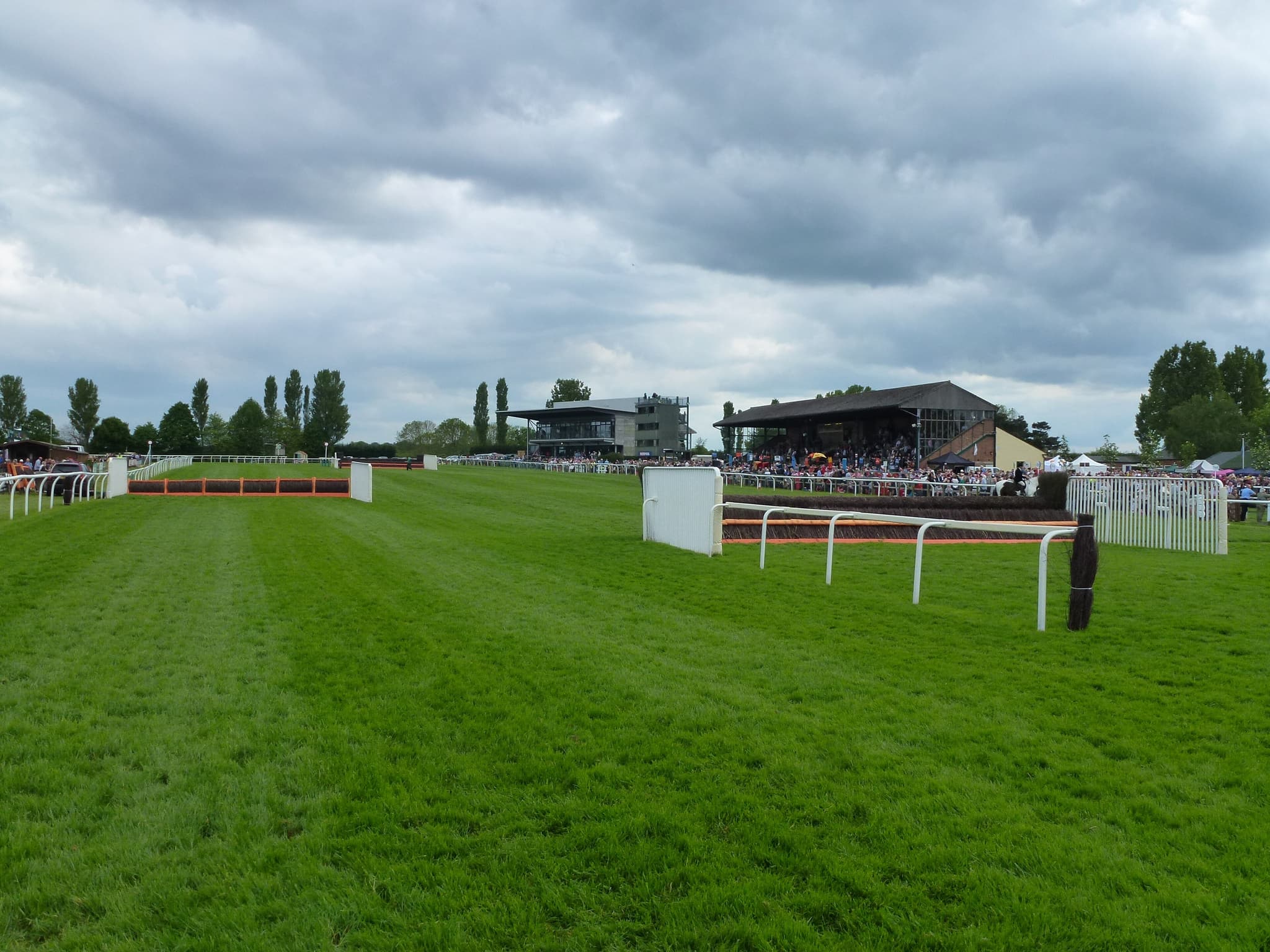
A Day Out at Fakenham Racecourse
Everything you need for a day at Fakenham — getting there, what to wear, enclosures, food and drink, and insider tips for East Anglia's only jumps venue.
Read more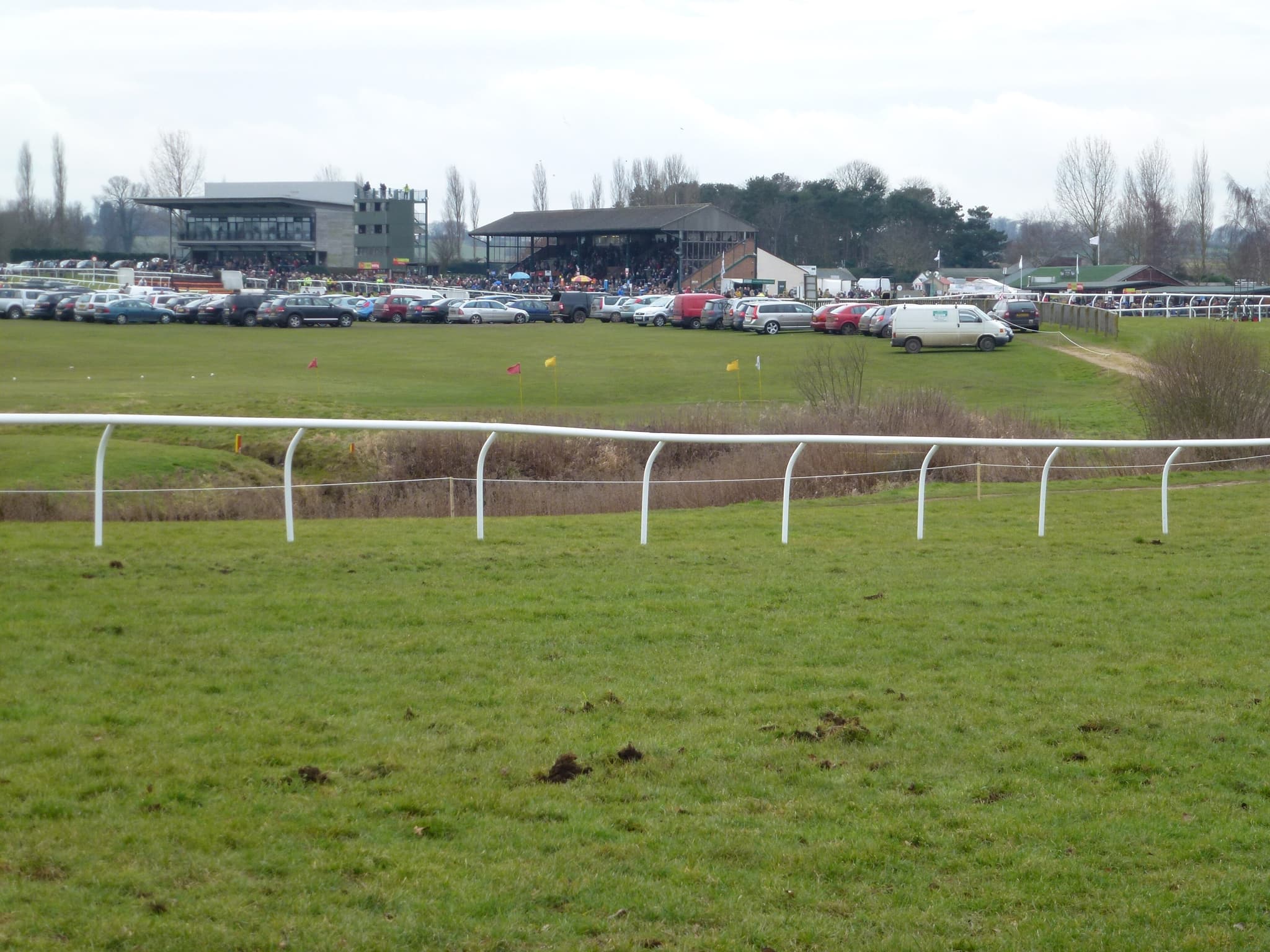
Fakenham Festival Guide: Your Complete Guide
Complete guide to Fakenham's racing festivals. Day-by-day coverage, key races, betting tips and visitor information for Norfolk's intimate jump racing venue.
Read more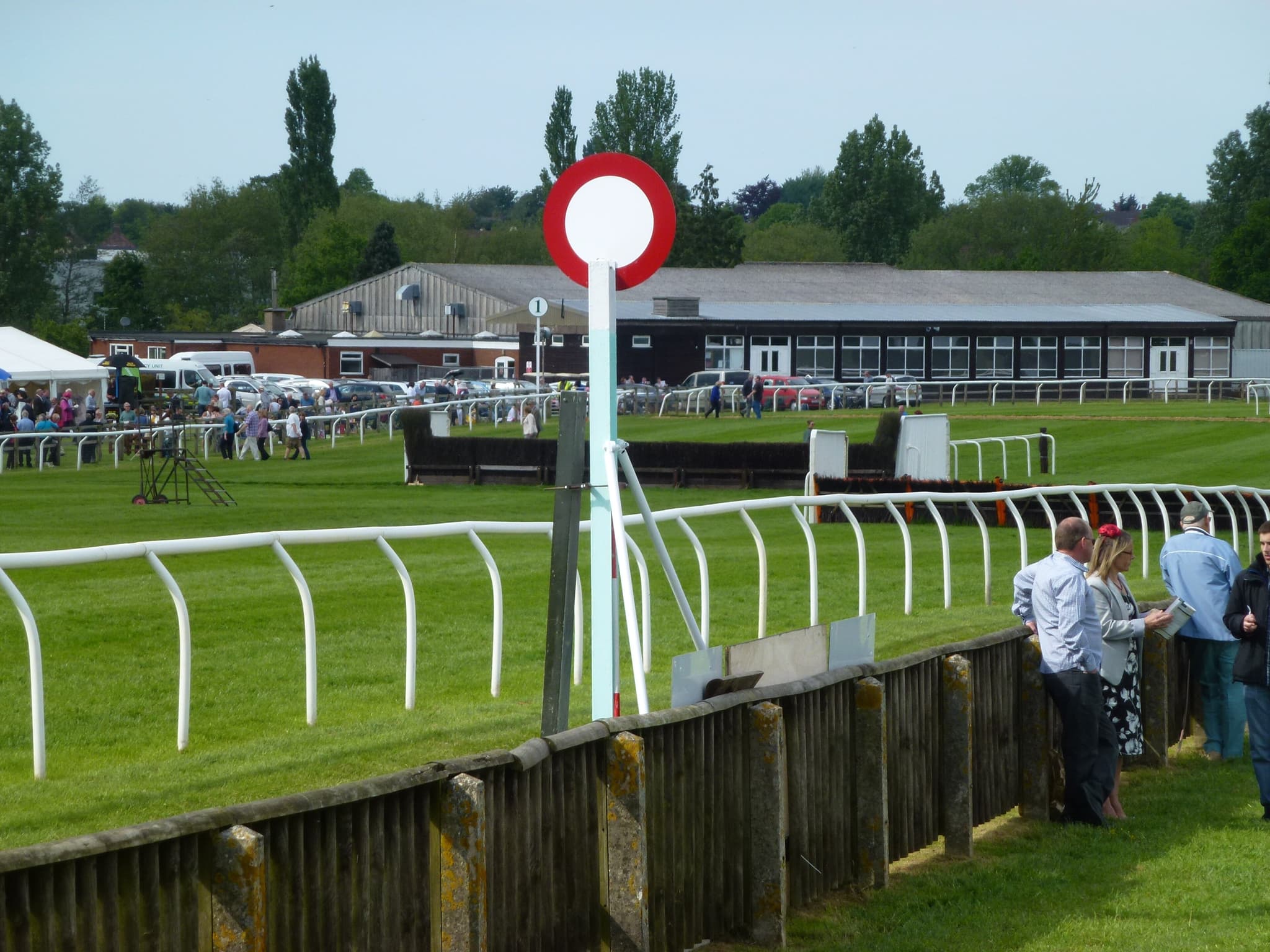
The History of Fakenham Racecourse
Over 120 years of racing at Fakenham — from the West Norfolk Hunt's move in 1905 to East Anglia's only jumps venue.
Read morePhotos on this page are used under Creative Commons licences. Titles, sources and licence links for each one are on our image credits page.
Research the field with the AI Race Predictor
Our model publishes calibrated win-probability estimates for UK races — a second opinion to understand a race, not tips. It's open about its record: it doesn't beat the market, and we show exactly how it does.
Work it out & learn the basics
Gamble Responsibly
Gambling should be entertaining and not seen as a way to make money. Never bet more than you can afford to lose. If you or someone you know has a gambling problem, help and support is available.