
Founder & Editor · Last reviewed 2026-04-05
Fakenham Racecourse sits at the edge of a Norfolk market town, surrounded by farmland that has been worked continuously since before the Norman Conquest. The address is NR21 7NY. The circuit is barely a mile round. The stands hold no more than 5,000 people on the busiest days of the year. By the standards of British racing's headline venues, Fakenham is small in almost every measurable sense.
And yet Fakenham has raced since at least 1905, has survived two world wars, one economic depression, and the slow decline of dozens of smaller National Hunt courses across England. It remains, well into its second century, the only jumps venue in East Anglia — the sole place within 50 miles where Norfolk and Suffolk racegoers can watch a horse clear a fence under rules.
That fact alone gives Fakenham a significance that its circuit size and prize fund cannot fully convey. East Anglia is flat-racing country by instinct and geography: Newmarket is the headquarters of British flat racing, and Great Yarmouth provides a coastal summer alternative. Neither hosts hurdles. Neither stages chases. If you want National Hunt racing in East Anglia, Fakenham is the only answer, and it has been the only answer for 120 years.
The course's origins lie with the West Norfolk Hunt, which moved its meetings from East Winch — where the going was heavy — to Fakenham's lighter ground in 1905. For its first four decades, the course staged a single fixture on Easter Monday. Hurdles arrived in 1926. A second meeting was added in 1947. The first grandstand went up in 1953. Fakenham Racecourse Ltd was incorporated in 1965, giving the course access to Levy Board funding and a more secure financial footing. The £1 million Prince of Wales Stand, opened by the then Prince of Wales on 15 March 2002, transformed the facilities and signalled that Fakenham was planning for a future rather than simply surviving its present.
The Fakenham Silver Cup is the signature race of the spring meeting, and the Norfolk National on the early-May bank holiday Monday is the course's biggest raceday. King Charles III is the current patron. The course is left-handed and essentially flat, running in a tight near-square loop that puts a premium on clean jumping and accurate cornering rather than raw galloping power. Horses that know the track tend to run well there again; course specialists are unusually common at Fakenham, and that repeatable pattern is central to understanding how the betting market functions here.
This article traces Fakenham's journey from a one-day hunt meeting in 1905 to the modern fixture list it runs today. It covers the agricultural landscape that shaped the course, the slow institutional development of the post-war decades, the key races and moments that gave it a place in the wider story of National Hunt racing, and the investments that secured its long-term future. Fakenham may be small, but its story is longer and richer than its postcode suggests.
Origins
Origins: The Hunt, the Move, and the First Fixture
The West Norfolk Hunt's East Winch Years
Before there was a racecourse at Fakenham, there was the West Norfolk Hunt — and before Fakenham, there was East Winch. The Hunt had been staging meetings at East Winch, a village roughly six miles east of King's Lynn, since 1884. They were the informal, social occasions common to rural hunting culture in late Victorian England: a few races between horses owned by local landowners and farmers, a crowd drawn more by community than by form-book interest, and an atmosphere closer to a county show than a structured sporting event.
The problem with East Winch was the soil. The land around that part of West Norfolk sits on boulder clay, which retains moisture readily. Meetings held on heavy ground were testing on horses — not testing in the way that soft winter ground tests a good jumper, but unpredictably boggy in ways that made race preparation unreliable and altered outcomes beyond what form suggested. Year after year, the going at East Winch was a recurring complaint. The hunt wanted lighter ground and a venue where the surface could be relied upon to produce fair racing.
They found what they needed at Fakenham.
Easter Monday 1905: Racing Begins
Fakenham is a market town in North Norfolk, roughly equidistant from the coast and the county boundary with Lincolnshire. The area around the course, south of the town on the road towards East Dereham, is arable land with lighter, sandier soils than the heavier clay belt further west. The going would be more manageable. The drainage would be better. And Fakenham itself, as a market town with a weekly cattle market dating back to medieval times, had the infrastructure and the visitor accommodation that a race meeting needed.
The first fixture at Fakenham took place on Easter Monday 1905. It was a modest start: one day, one meeting, organised by the West Norfolk Hunt. The programme would have included a small number of races — point-to-point style events alongside any hurdle or flat races the organisers could attract — with a crowd drawn largely from the farming and landowning community of North Norfolk. There were no permanent stands in 1905. Racegoers watched from the rails, from temporary structures, or from horse-drawn vehicles pulled to the perimeter. The whole affair looked, to an outsider, very much like what it was: a well-organised rural entertainment with roots in the hunt.
But it mattered. Easter Monday 1905 established Fakenham as a racing venue, and racing at Fakenham has continued without a break in the calendar — aside from the interruptions caused by the two world wars — ever since.
The Agricultural Context: Land That Shapes the Sport
Understanding why Fakenham is where it is requires a brief look at the agricultural landscape around it. North Norfolk was, in 1905 and remains today, one of the most productive farming counties in England. The reason is an agricultural revolution that took place within sight of the racecourse. Raynham Hall, the seat of the Townshend family, stands roughly three miles east of Fakenham. It was Charles Townshend — the second Viscount Townshend, known as "Turnip Townshend" — who popularised the four-field crop rotation system in the 1730s, replacing the old open-field system with a cycle of wheat, turnips, barley, and clover that transformed the productivity of Norfolk's light soils.
Eight miles north of Fakenham, at Holkham Hall, Thomas William Coke — later the first Earl of Leicester — extended and refined those improvements across the Holkham estate through the late eighteenth and early nineteenth centuries. Coke's annual sheep shearings at Holkham, which he held between 1778 and 1821, were effectively agricultural conferences attended by landowners from across England and Europe, drawing up to 7,000 visitors to hear lectures on improved farming methods. The estate that Coke built remains one of the largest and most productive in England.
Both Raynham and Holkham sit within ten miles of the racecourse. This is not background scenery. The wealth that those estates generated — and the farming culture they embedded in North Norfolk — provided the social and economic foundation for institutions like the West Norfolk Hunt and, by extension, the racing that evolved from it. The hunt was not a hobby for struggling smallholders. It was an institution sustained by the gentry and substantial farmers of a county that had been one of England's wealthiest rural regions for 150 years.
The Royal Connection: Sandringham and the Norfolk Sphere
Fourteen miles north-west of Fakenham, beyond the market town of Dersingham on the edge of the Sandringham estate, stands the house that the Royal Family has used as a private Christmas retreat since Queen Victoria's reign. Sandringham House was purchased by the Prince of Wales — the future King Edward VII — in 1862 for £220,000. The estate covers around 20,000 acres of West Norfolk farmland and woodland, and the Royal Family have maintained a continuous connection to it ever since.
Racing has been part of Sandringham's identity from the start. Edward VII was a racing man of real enthusiasm, winning the Grand National and the Derby as both Prince of Wales and King. His stud at Sandringham bred horses that raced under Royal colours, and the social world of North Norfolk's landowning class was closely connected to the Court's annual visits. A hunt meeting at Fakenham fitted naturally into that world — the kind of rural sporting occasion that drew families from across the county, including those whose estates were closest to Sandringham.
The connection is now formalised. King Charles III is Fakenham Racecourse's patron, a relationship that places the course within a tradition of Royal association with Norfolk sporting life stretching back more than 160 years.
The Early Decades: One Day a Year
For the first 21 years of its life, Fakenham Racecourse staged a single fixture annually: Easter Monday. The calendar was sparse, but the tradition was consistent. The West Norfolk Hunt remained the organising force, and the meetings retained the informal, community character of their origins. The course was part of a wider pattern of small National Hunt fixtures that dotted the English countryside in the pre-war era — courses that served local communities and the hunting world, operating outside the mainstream of the professional sport.
What changed the sport across Britain in this period was the professionalisation of National Hunt racing as a whole. Hurdle racing and steeplechasing grew in popularity through the 1910s and 1920s, driven by the establishment of a proper calendar, better prize money from the Jockey Club and its NH equivalent, and the expansion of the racing press that brought results and form to a national readership. Courses that had previously been purely local affairs began to attract runners from yards further afield as the logistics of horse transport improved and prize money made the journey worthwhile.
Fakenham's first hurdle race was run in 1926. That fact marks the moment when the course moved from a purely point-to-point style event to something recognisably modern: a fixture under rules, with hurdles rather than hedges, and the formal apparatus of National Hunt racing rather than the informal traditions of the hunt. It was a small change on the surface — just a different kind of jump — but it signalled that Fakenham intended to grow.
The Compact Circuit: Shape from the Beginning
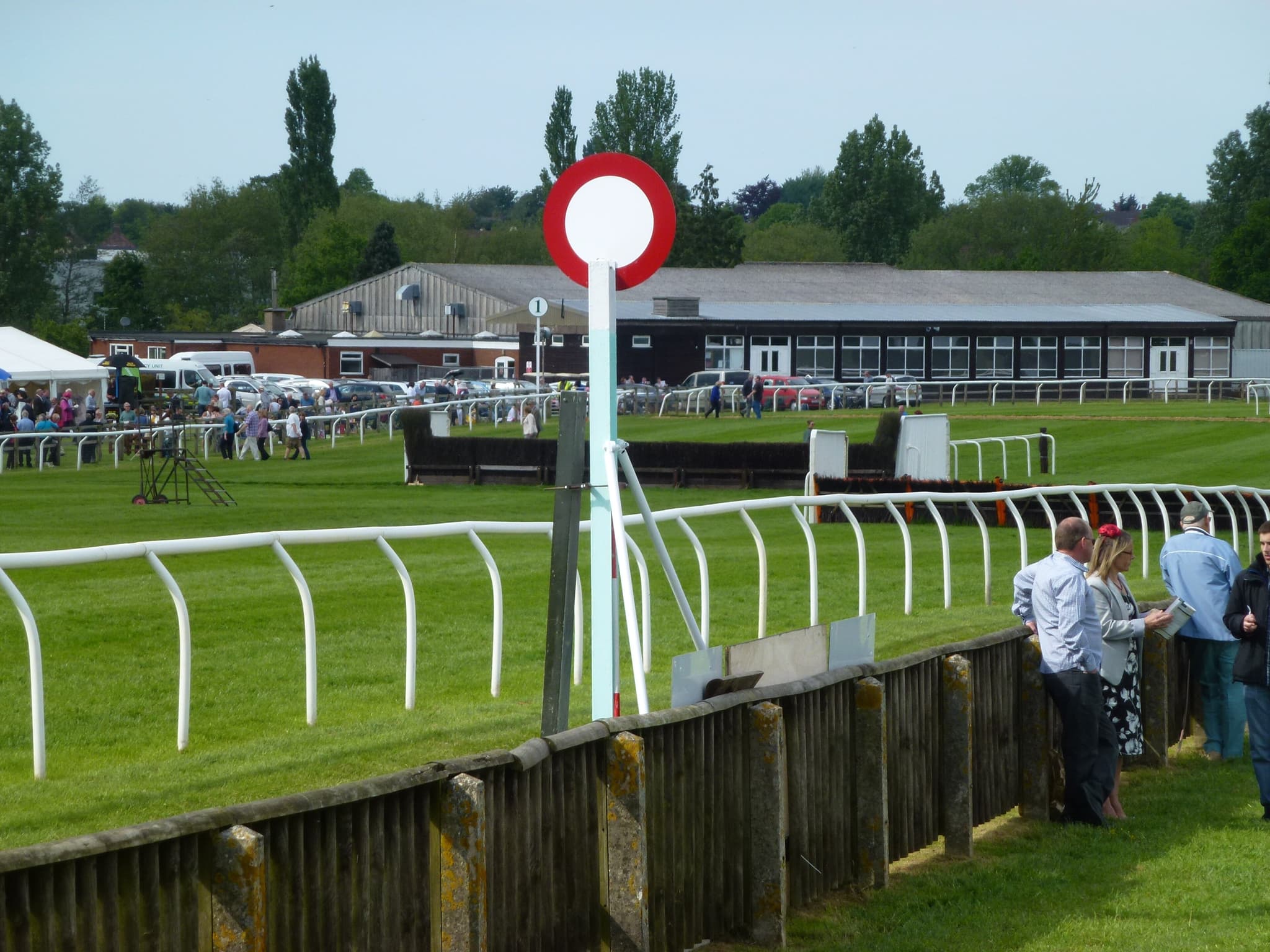
The course's layout has changed very little since 1905. The circuit is approximately one mile round, left-handed, running in a near-square loop on essentially flat ground south of the town. The bends are tight. The home straight is short. There are five fences on the chase course, including the open ditch, and the configuration demands that horses jump quickly and accurately through the corners rather than simply galloping on into the next obstacle.
This layout was not designed by a committee of engineers. It was shaped by the available land and the practical requirements of a hunt meeting: a field south of Fakenham that happened to suit the needs of a one-day Easter event. That the resulting circuit would go on to define a century of racing — producing the specialist track that punters and trainers know today — was not planned. It was a product of geography and opportunity.
The tight, flat, left-handed circuit that characterises Fakenham today is the direct descendant of the layout established for the first Easter Monday meeting in 1905. Every quirk that makes Fakenham a specialist track — every tendency for course winners to run well again, every difficulty faced by horses with a flat-track galloping style — traces back to decisions made, mostly by accident, in the years when the course was nothing more than a field and a dream.
Era takeaway: Fakenham's origins are inseparable from the social and agricultural world of North Norfolk. The West Norfolk Hunt brought racing to the town in 1905; the lighter soils and the wealth of the farming community around Raynham and Holkham kept it there. The compact circuit that would define the course for the next 120 years was not planned but inherited from the contours of the land.
The Golden Era
The Golden Era: Building a Proper Racecourse
The Post-War Shift: A Second Fixture
When racing resumed after the Second World War, the sport across Britain was trying to rebuild attendance, income, and infrastructure after six years in which many courses had been requisitioned for military use, left unimaintained, or simply mothballed. Fakenham was small enough that the wartime disruption had not damaged it permanently, but it emerged from 1945 as what it had always been: a one-meeting-a-year course with limited facilities and no clear plan for growth.
The Whitsun Bank Holiday fixture changed that. In 1947, Fakenham added a second annual meeting, held at Whitsun rather than Easter. The addition may seem minor in retrospect — two meetings a year is still a very thin calendar by any standard — but it was a decision with long-term consequences. For the first time, Fakenham was thinking about the course's calendar rather than simply its one traditional fixture. The addition of a second meeting required a more serious approach to ground maintenance, facility management, and race planning. A course that hosted two fixtures a year was beginning, however tentatively, to function as a real racecourse rather than a hunt meeting with occasional aspirations.
The post-war period also saw the beginning of proper investment in the course's infrastructure. The track's reputation for fair, predictable going attracted trainers who wanted a manageable winter surface for their horses. The compact, left-handed circuit began to develop its character as a specialist track — one where horses that had raced there before, and had learnt to jump through the tight bends, held a clear edge over course debutants.
The Grandstand: 1953
The construction of the original Grandstand in 1953 was the most significant single investment in Fakenham's first half-century. Before 1953, racegoers at Fakenham watched from temporary structures, from the rails, or from vehicles brought to the course boundary. The experience was authentically rural and entirely weather-dependent. A cold Easter Monday or a wet Whitsun Bank Holiday offered no shelter worth mentioning.
The 1953 Grandstand was not a grand building by the standards of racing's showcase venues. Fakenham was not building a Chester or a Goodwood. But it was permanent, it was covered, and it gave racegoers a fixed point from which to watch racing. The Grandstand signalled that the course expected to still be staging meetings in 20 or 30 or 50 years — that this was not a temporary arrangement but a commitment to racing in North Norfolk for the foreseeable future.
The timing was significant. 1953 was Coronation year. Across Britain, civic institutions were investing in visible markers of continuity and confidence. The Grandstand at Fakenham was, in its own modest way, part of that moment: a small course in a market town in Norfolk deciding that it had a permanent future and spending money accordingly.
Fakenham Racecourse Ltd: Professionalisation in 1965
The formation of Fakenham Racecourse Ltd in 1965 was as important for the course's long-term health as the construction of the Grandstand, though far less visible to racegoers. The Horserace Betting Levy Board had been established by Parliament in 1961 to channel a proportion of bookmakers' turnover back into racing through prize money, administration, and course improvement. To qualify for Levy Board support, a course had to be properly constituted as a legal entity.
Fakenham Racecourse Ltd gave the course that legal structure. With it came access to Levy Board funding that could be used for track improvements, prize money subsidies, and infrastructure investment. Without that funding, smaller courses across Britain were finding it increasingly difficult to maintain the standards that the sport's regulators required. Several courses had already closed in the 1950s and early 1960s as the economics of small-scale National Hunt racing became more demanding. Fakenham's incorporation in 1965 placed it on a more secure footing and gave it access to the support mechanisms that would sustain it through the following decades.
The new company structure also enabled proper long-term planning. A corporate entity with a board could borrow money, enter long-term contracts, and make investment decisions that a loose association of hunt members could not have made formally. The course began to think systematically about its future — about how many fixtures it could sustain, what facilities it needed, and how it positioned itself within the National Hunt calendar.
The West Norfolk Hunt: A Continued Partnership
Through all the institutional changes of the 1950s and 1960s, the West Norfolk Hunt remained part of Fakenham's identity. The hunt's Point to Point events continued to use the course — a tradition that has survived to the present day. The Point to Point at Fakenham is one of those occasions in English sporting life that looks much the same in the early twenty-first century as it did in the early twentieth: horses owned and ridden by farmers and landowners, a crowd drawn from the farming community, and an atmosphere that preserves something of the hunt meeting origins from which the racecourse grew.
The dual identity — licensed racecourse and hunt venue — was not always easy to manage. The infrastructure required for a proper racecourse under rules is different from that required for a Point to Point, and the two sets of requirements do not always align neatly. But the continued connection to the hunt served Fakenham well. It maintained a community of people with a direct stake in the course's continued operation: farmers, landowners, and hunting families who supported it because it was their ground, in their community, serving their traditions.
Expanding the Calendar: The Long Build
Through the 1960s and 1970s, Fakenham gradually extended its fixture list beyond the original two dates. The introduction of additional winter meetings — November, December, January — transformed the course from a seasonal curiosity into something that could truly claim a role in the National Hunt calendar. Winter racing became Fakenham's primary identity: when summer flat racing dominated the sport's headlines, Fakenham was quiet; when the jumping season got properly underway, Fakenham opened its gates and staged the kind of competitive, affordable racing that local racegoers could attend without travelling to Cheltenham or Newbury.
The spring programme grew into the centrepiece of the Fakenham season, and its races attracted competitive fields over the full circuit of tight bends and open country. A horse that could win at Fakenham had demonstrated the jumping accuracy and tactical intelligence the track demanded. Course form became increasingly repeatable as trainers learnt which horses suited the unique demands of the left-handed, near-square circuit.
What the Course Built on the Track
The tight circuit created certain racing certainties that became embedded in Fakenham's form over this period. A horse that jumped through the right-hand corner at the top of the track — where the course turns back on itself after the open ditch — without losing momentum had gone a long way towards winning. Jumping fluently at Fakenham, where there is no room to recover from a mistake before the next obstacle, was a different skill from jumping fluently at a more galloping track like Huntingdon or Hereford.
The ground crew's ability to produce consistent going on the essentially flat, light-soiled Norfolk terrain was another factor. Fakenham's drainage, on the lighter agricultural soils south of the town, was generally more reliable than that at courses on heavier clay. Trainers who needed a surface that would not be desperately testing in wet winters found Fakenham a more predictable option than some alternatives. The going at Fakenham tended to be described as good to soft or soft in winter without descending routinely to the heavy extremes that made some Norfolk venues unpredictable.
Era Takeaway: From Hunt Meeting to Functioning Racecourse
By the late 1960s, Fakenham had completed a transformation that few would have predicted in 1905. The single Easter Monday fixture had become a multi-meeting winter season. The temporary structures of the early years had been replaced by a permanent Grandstand. A formally constituted company gave the course access to the Levy Board funding that the sport's economics required. And a clear identity had emerged: East Anglia's National Hunt course, serving a region where the major venues offered flat racing only.
The golden era was not about landmark races or famous horses. It was about the slower, less dramatic work of turning a hunt meeting into an institution — building the structures, the governance, and the calendar that would allow Fakenham to survive and eventually to thrive into the twenty-first century.
Famous Moments
Famous Moments: Fakenham's Races Worth Remembering
The Nature of Fame at a Small Course
Fakenham has never staged a race that appeared in the next morning's front pages. It has never hosted a runner that went on to win the Cheltenham Gold Cup or the Grand National. Its prize fund does not attract the strings of high-profile trainers who dominate the sport's top meetings. By the standards of racing journalism, Fakenham exists at the margins — mentioned in the context of East Anglian racing, cited occasionally as a curiosity when discussing the smallest circuits in Britain, but rarely given the extended analysis reserved for Cheltenham or Ascot.
This is, in itself, a specific kind of history. The story of Fakenham's famous moments is a story about what matters at a regional course: the day the Prince of Wales came to open the new stand, the winter afternoon when the Gold Cup field was unusually strong, the course record that stood for years, the horse that kept coming back to a track it clearly understood. These are not famous moments in the global sense. They are famous in Norfolk, and famous within the community of small-course National Hunt enthusiasts who follow the sport across the January and February cards when the big meetings are weeks away.
15 March 2002: The Prince of Wales Stand Opens
If there is a single date that divides Fakenham's modern era from its earlier history, it is 15 March 2002. On that afternoon — a Friday, during the Spring National Hunt meeting — the then Prince of Wales, later to become King Charles III, attended Fakenham Racecourse to formally open the £1 million stand that bore his name and title.
The Prince of Wales Stand was a substantial investment for a course of Fakenham's size and resources. One million pounds, at 2002 values, represented a serious financial commitment — one that required careful planning, the involvement of the Levy Board and other funding streams, and confidence that the course had a future worth investing in. The stand replaced the ageing facilities that had served Fakenham since the 1953 Grandstand, and it did so with a building that offered modern viewing from tiered seating, enclosed hospitality areas usable in winter conditions, and function spaces that could be hired for weddings and corporate events throughout the year.
The Royal visit was not simply ceremonial. The Prince of Wales's appearance at Fakenham linked the course explicitly to the Royal family's long association with North Norfolk. Sandringham, 14 miles to the north-west, had been part of the Royal household for 140 years at that point. Racing at Fakenham was, in a real sense, racing within the Royal family's home county — and the presence of the heir to the throne at the opening of a new stand gave the course a kind of recognition that no amount of prize money could have bought.
The Spring National Hunt meeting on which that opening fell has since become the highlight of Fakenham's annual calendar. The meeting in March, typically held across one or two days and including the Fakenham Silver Cup, draws a strong crowd and the season's best fields at the course.
The Fakenham Silver Cup: The Course's Spring Feature
The Fakenham Silver Cup is the race against which the course measures its spring meeting. A chase over approximately two miles and five furlongs — the exact distance varies slightly depending on the condition of the ground and the position of any temporary rail adjustments — it is typically run at the Spring National Hunt meeting in March and attracts fields of eight to 12 runners drawn from yards across the Midlands, the North, and the South-East.
The race is not a Grade 1. It is not a Grade 2. At its current class level, it is a competitive handicap or limited-handicap chase that gives trainers without strings of top-class horses a real target race on the East Anglian circuit. A horse trained in Suffolk or Cambridgeshire, with good form over the winter, can be pointed at Fakenham's spring feature as a realistic ambition rather than a hopeless aspiration.
What Fakenham rewards is course knowledge. The tight circuit, the open ditch that arrives on the far side before the final corner, and the short run-in from the last fence to the line all favour horses that have run at Fakenham before and adapted to its demands. The field for the Gold Cup tends to include several previous course winners, and the strike rate of course specialists in the race has historically been high enough that the form guides routinely flag it as a factor worth weighting.
The course record at Fakenham, set in conditions closer to good than soft, demonstrates what the track rewards when everything comes together: a horse jumping accurately, taking the inside line through the bends, and finding a turn of foot on the short home straight that its rivals cannot match.
The Open Ditch: Where Races Are Decided
Among the five fences on Fakenham's steeplechase course, the open ditch on the far side is the one that settles races. An open ditch is a fence with a water-filled ditch on the take-off side, which requires a horse to stand back further than at a plain fence and to jump with a different arc. At Fakenham, the open ditch arrives before the final bend, which means that any horse that makes a significant error there — whether a stumble on landing, a slight loss of rhythm, or a slide outward toward the outer rail — will concede ground going into the corner and will face a recovery effort on the short home straight.
Trainers who bring horses to Fakenham regularly understand the significance of the fence. Course reports from the larger yard managers who occasionally use Fakenham as a prep meeting for a more important race often note whether their horse handled the open ditch cleanly. The ones that do tend to come back. The ones that don't often don't return.
The fence has produced its share of drama over the years: fallers, unseated riders, and the kind of close finish that emerges when one horse flukes a clear round and another — the race favourite — has a moment of hesitation at the ditch and spends the rest of the race in recovery. None of these individual incidents have made national headlines. But collectively they have shaped the course's identity as a technical test rather than a galloping one.
Winter Afternoons: The Fakenham Atmosphere
Some of the most memorable days at Fakenham have nothing to do with specific races or individual horses. They are about the atmosphere of a small course in winter — the particular experience of watching National Hunt racing in North Norfolk on a January afternoon when the light is low, the crowd is thin but loyal, and the course feels entirely detached from the mainstream of the sport.
Fakenham stages winter meetings on Saturdays and Sundays through November, December, January, and February. A typical winter card runs six or seven races, beginning around midday and finishing by three o'clock to catch the last of the usable winter light. The crowd on a cold February card might be 1,500 or 2,000 people — fewer than a single mid-tier chase at Newbury would draw — but the atmosphere carries a specific quality that larger courses cannot replicate.
The caravan and camping pitches — 120 in total on the racecourse site — fill for the bigger meetings. Racegoers drive from across Norfolk and Suffolk, from Cambridge and Ely and the market towns of Lincolnshire's southern edge. The course offers the kind of racing day that has almost disappeared at bigger venues: truly affordable, close to the action, with a scale that allows you to watch the horses in the parade ring and then walk thirty yards to a good spot at the rail.
The Fakenham Silver Cup: A Supporting Act That Matters
The Fakenham Silver Cup, a Class 3 handicap hurdle run over two miles at the Spring National Hunt meeting, has developed its own following among racegoers who follow the smaller meetings. It typically runs a day before or on the same card as the Gold Cup, and the pairing gives the spring meeting a festival-style feel that a single feature race cannot produce.
The Silver Cup draws trainers who specialise in competitive two-mile hurdle races — sharp, accurate hurdlers that suit Fakenham's tight circuit better than the longer-striding types more at home at Haydock or Sandown. The race's distance over two miles puts a premium on clean jumping and tactical positioning from the front, and course specialists again tend to feature prominently in the result.
The Community Frame: What Fame Looks Like Here
Fakenham's famous moments are not catalogued in the major racing histories. The course does not appear in the roll call of venues that feature in the chapters on post-war National Hunt growth. Individual race results fade from the national form books without generating the kind of discussion that a Cheltenham or Aintree winner attracts.
But the course has its own record, kept locally, of horses that won here repeatedly, of trainers who used Fakenham as a launching pad for horses that went on to better things, of jockeys who learnt the tight turns as conditional riders and still credit the course with teaching them how to position a horse in a race. This is the history that lives in a community rather than in the archives.
The Fakenham community — the racegoers, the farmers, the Point to Point riders, the North Norfolk families who have been coming to the course on Easter Monday since before the Grandstand was built — carries that history in its own way. The famous moments at Fakenham are the ones that mattered to the people who were there.
The Modern Era
The Modern Era: Investment, Diversification, and a Secure Future
The Prince of Wales Stand as a Foundation
The opening of the Prince of Wales Stand in March 2002 is the logical starting point for any account of Fakenham's modern era. Not because the stand was the first investment the course had ever made — the 1953 Grandstand and the 1965 incorporation both mattered — but because the 2002 building represented a qualitatively different kind of ambition. A £1 million investment at a course of Fakenham's scale was not a cautious, incremental improvement. It was a statement that the course intended to compete seriously for racegoer attendance and year-round revenue in a way that its previous facilities had not allowed.
The stand's design reflected how smaller racecourses had learnt to sustain themselves in the modern era. The primary function — providing covered viewing for the racing public — was straightforward. The secondary functions were equally deliberate: a function space for weddings, corporate hospitality, and private events that could generate income on days when no racing was scheduled. For a course that ran perhaps 12 to 15 fixtures a year, the ability to use the facilities on the other 350 days mattered significantly. The function hire model has become central to the economics of small British racecourses, and Fakenham adopted it as part of the 2002 development.
The Royal visit that marked the opening of the stand — the Prince of Wales attending in person on 15 March 2002 — gave the course a public profile that extended beyond its normal media coverage. National racing press reported the opening; local media in Norfolk gave it prominent attention. For a course that operated largely below the radar of the sport's mainstream coverage, the occasion was an opportunity to present itself to a wider audience.
Growing the Fixture List
The modern era brought a gradual expansion of Fakenham's annual fixture list. From the two meetings of the early post-war years, the course has grown to stage multiple meetings through the autumn and winter season. The exact number of fixtures in any given year depends on the allocation made by the British Horseracing Authority following consultation with the course and other stakeholders, but a typical Fakenham season runs from October or November through to April, with meetings spread across the winter months.
The expansion of the fixture list was enabled partly by the improved facilities — better changing rooms for jockeys, better facilities for stewards and officials, better viewing and catering for racegoers — and partly by the professionalisation of the course's management. Fakenham Racecourse Ltd, established in 1965, had by the 2000s become an organisation capable of running multiple meetings efficiently, managing the ground through a winter season, and meeting the British Horseracing Authority's increasingly demanding standards for course safety, facility quality, and race administration.
The Spring National Hunt meeting in March remained the centrepiece of the calendar. Two or three days of racing in late March, centred on the Fakenham Silver Cup, drew strong fields and a good crowd. But the winter Saturday and Sunday meetings — the quieter cards run in November, January, and February — filled out the season and gave the course a regular presence in the racing schedule that its limited early calendar had never achieved.
Caravan and Camping: A Destination Model
One of the more practical adaptations of the modern era was the development of the caravan and camping facility. The racecourse site, with 120 pitches for caravans and motorhomes, turned the larger spring and autumn meetings into overnight occasions for a segment of the racegoing public who preferred to travel that way. A Norfolk racegoer from Ipswich, a 90-minute drive away, could arrive on a Friday afternoon, set up for the weekend, attend Saturday's racing and the Sunday card if one was scheduled, and return home on Sunday evening having spent two days in the North Norfolk countryside for the cost of a pitch and their entrance.
The caravan model sits naturally alongside Fakenham's identity as a course embedded in North Norfolk tourism. The town of Fakenham itself is a gateway to the North Norfolk coast: Holkham Beach and Holkham Hall lie eight miles to the north, accessible in 15 minutes. Wells-next-the-Sea, with its harbour and the broad tidal beach at the end of the estuary path, is about the same distance. Burnham Market — sometimes called "Chelsea-on-Sea" for the concentration of second-home owners and London weekenders who have colonised it — is 12 miles north. The Norfolk Broads are an hour's drive to the east.
A race meeting at Fakenham offers, for the willing visitor, something that a day at Newbury or Leicester does not: access to one of England's most attractive rural coastlines within 20 minutes of the finishing post. The caravan pitches make that combination straightforward. The course is not simply selling racing. It is selling a North Norfolk weekend with racing as the centrepiece.
The Rail Connections: Or Their Absence
Part of what keeps Fakenham's attendance patterns distinct from those of better-connected courses is the absence of a nearby railway station. The nearest mainline stations are Sheringham, roughly 20 miles north on the Bittern Line from Norwich; King's Lynn, about 22 miles to the west on the line from London King's Cross; and Norwich, 23 miles to the south-east on multiple lines into the national network.
None of these is convenient. Sheringham requires an onward journey by taxi or bus across rural North Norfolk. King's Lynn is a better option for racegoers coming from Cambridge or London, but the onward connection to Fakenham still requires a car or taxi. Norwich is the most accessible node for racegoers from the south-east, but the road journey into North Norfolk takes 35 to 40 minutes on an uncongested day.
The practical consequence is that Fakenham's racegoing public almost exclusively arrives by car. The A148, which runs east from King's Lynn through Fakenham to Cromer, is the main approach route, and the course's car parking — spacious, free, and well-organised — is one of the infrastructure advantages that car-dependent racegoers value. For the kind of racegoer who finds a day at a major course more stressful than relaxing — the crowds, the queues, the parking charges — Fakenham's free, easy car access is a real attraction.
King Charles III as Patron
The formal relationship between Fakenham Racecourse and the Royal household, established well before the 2002 opening, has continued through the reign of King Charles III. Charles became patron of the course — a relationship that carries no administrative responsibilities but provides significant associative benefit — and his interest in rural North Norfolk life, as a regular visitor to Sandringham, made the connection natural rather than ceremonial.
The course's Royal patronage gives it a distinction that is truly unusual among small National Hunt venues. Fakenham is not a glamorous course. Its prize fund does not attract the sport's biggest names. But a course with a Royal patron in a county where the Royal family has maintained a home for more than 160 years carries a cultural weight that goes beyond what the fixture list alone would suggest.
The Modern Fixture: What Fakenham Offers Now
A typical Fakenham meeting in the modern era runs six or seven races over hurdles and fences, with a card time stretching from approximately midday to 3:15pm. The prize money on a standard winter Saturday is competitive at the Class 4 and Class 5 level — not high enough to attract the very best horses, but enough to draw competitive fields from yards in East Anglia, the East Midlands, and occasionally from further afield when the conditions look favourable.
The complete guide to Fakenham covers the practical details of attending: what to expect in the different enclosures, how to interpret course form for betting purposes, and how to plan a day out at the course. For racegoers making their first visit, the scale of the venue tends to be the first surprise — the entire course can be circumnavigated on foot in 10 minutes, which means that the intimacy of a small course is matched by real accessibility to every part of the racing action.
Era Takeaway: A Small Course That Found Its Place
The modern era at Fakenham is not a story of transformation into something the course was not. It is a story of a small National Hunt course identifying exactly what it could be — East Anglia's only jumps venue, a winter destination for loyal racegoers, a community institution for North Norfolk's farming and hunting world — and investing carefully in the facilities needed to sustain that role. The Prince of Wales Stand was the visible expression of that process. The caravan pitches, the function hire, and the expanded fixture list are its working parts.
Fakenham's Legacy
Legacy: What Fakenham Means to Racing in East Anglia
The Unique Position
There is a simple fact at the centre of Fakenham's legacy that no amount of institutional history can fully capture: it is the only National Hunt racecourse in East Anglia. Newmarket, 45 miles to the south-east, is the headquarters of British flat racing and one of the most important venues in the sport's global structure. Great Yarmouth offers a coastal flat-racing programme through the summer. Chelmsford City provides all-weather flat racing year-round for the Essex and London markets. But none of these courses provides hurdles. None stages chases. In a region of approximately six million people — Norfolk, Suffolk, Essex, Cambridgeshire, and Lincolnshire's southern counties — Fakenham is the sole answer to the question: where can I watch jumping?
That monopoly is both Fakenham's greatest asset and its greatest challenge. The asset is obvious: a captive audience. Any racegoer in East Anglia who wants to see National Hunt racing without a two-hour journey to Huntingdon or Hereford or Kempton ends up at Fakenham by default. The challenge is equally clear: a monopoly without quality is simply a convenience, and a course that relies on geographic captivity rather than real appeal will eventually find racegoers choosing not to go at all rather than travelling to a poor alternative.
Fakenham has navigated this challenge reasonably well over 120 years. The course has not always had outstanding facilities or ambitious prize money. But it has maintained a standard of racing and a quality of raceday experience that keeps its loyal racegoing community coming back, and it has added enough — the Prince of Wales Stand, the caravan pitches, the expanded winter programme — to give occasional visitors a reason to make the drive.
The Agricultural Heartland: A Course in Its Landscape
Fakenham's legacy cannot be separated from the agricultural landscape that surrounds it. The course is in North Norfolk, and North Norfolk is farming country of a very specific kind. The improvements pioneered at Raynham Hall and Holkham Hall in the eighteenth century transformed British agriculture and made this region one of the wealthiest farming areas in England. The farming families who benefited from those improvements — and their descendants, who still farm the same land 250 years later — are part of the social base on which Fakenham's racegoing community rests.
The West Norfolk Hunt, which brought racing to Fakenham in 1905, drew its membership from exactly those farming and landowning families. The Point to Point events that the hunt continues to stage at the course are a living connection to that tradition. When a farmer's son or daughter rides in a Point to Point at Fakenham on a March Saturday, they are participating in something that has its roots in the rural community of North Norfolk going back at least 140 years to the hunt's East Winch meetings of 1884.
This is a kind of legacy that is harder to quantify than prize money or attendance figures, but no less real. Racing at Fakenham is not simply a commercial product delivered to consumers. It is a community institution with roots in the land, the families, and the agricultural traditions of North Norfolk.
The Hunt Tradition: An Unbroken Thread
The West Norfolk Hunt's continued use of Fakenham for Point to Point events represents something unusual in modern British racing. At many courses, the relationship with the local hunt that founded or sustained the early meetings has long since faded — replaced by professional management structures with no particular connection to the hunting world. At Fakenham, the thread has not been cut.
The Point to Point takes place on the course's track, under the course's infrastructure, typically in the spring after the licensed racing season has concluded. The crowd it draws is different from the licensed racing crowd: primarily local families with horses, farmers with an interest in point-to-pointing, and the community of rural horse sport that has always been the backbone of National Hunt racing's deepest roots. They are not, by and large, the same people who come for the spring meeting. But they are part of the same story.
The Royal Dimension
King Charles III's patronage gives Fakenham a cultural dimension that sets it apart from the majority of small National Hunt courses. Royal patronage of a racecourse is not unusual in Britain — the Racing Post lists several courses with Royal connections — but the specific connection between Fakenham and the Royal family's Norfolk life is unusually direct. Sandringham is 14 miles away. The estate's farming operations are a visible part of the North Norfolk landscape. The Royal family's relationship with Norfolk is not distant or ceremonial; it is the relationship of people who spend extended time in the county, who know its farmers and landowners, and who move through the same social world from which Fakenham's racegoing community is drawn.
For the course, this is a legacy asset in the truest sense. Royal patronage costs nothing to maintain in operational terms and provides a constant background of prestige that small courses rarely enjoy. The name of the Prince of Wales Stand — unchanged since its 2002 opening despite the change in Royal title that accompanied the accession — will continue to carry that history for as long as the building stands.
What the Course Teaches Punters
One of Fakenham's less-discussed but practically significant legacies is what it has taught the betting community about specialist tracks. For racegoers who study form seriously, Fakenham is one of the clearest examples in British racing of a course where course form is a systematic, repeatable advantage rather than a vague indicator.
The betting guide covers this in detail. But in historical terms, the pattern has been consistent across decades: horses that have run at Fakenham before — particularly those that have won or finished close at the course — perform better on their return than straightforward form would suggest. The tight circuit, the open ditch on the far side, and the short home straight create a set of demands that reward experience in a way that more conventional tracks do not.
This pattern has made Fakenham a case study in how track-specific form should be assessed. Trainers who use the course regularly — primarily those based in East Anglia and the East Midlands — have learnt to factor course experience into their race planning. Horses that handle Fakenham tend to be returned there; horses that don't tend to be pointed elsewhere. The result is a track where the course specialists are consistently over-represented in the winner's enclosure.
Looking Forward
Fakenham enters its second century of racing with the structural advantages that its 120 years have built: a clear identity as East Anglia's only jumps venue, a loyal racegoing community with deep agricultural roots, Royal patronage, modern facilities opened in 2002, and a fixture list that fills the National Hunt winter calendar across the region.
The challenge for any small course in the modern era is sustaining the balance between commercial viability and the character that makes it worth visiting. Fakenham's character — intimate, cold in winter, close to the action, truly part of the rural community it serves — is its strongest card. The day out guide captures what that experience looks like from the racegoer's perspective. The racing itself is not what you would see at Cheltenham or Ascot. But it is real, competitive National Hunt racing in one of England's most distinctive landscapes, at a course that has been putting on the same show — improving it slowly, building it carefully — since Easter Monday 1905.
That is Fakenham's legacy. Not a famous race or a famous horse, but a century of continuity: the same course, the same community, the same left-handed circuit bending through the Norfolk farmland, year after year.
Share this article
More about this racecourse
All Fakenham guides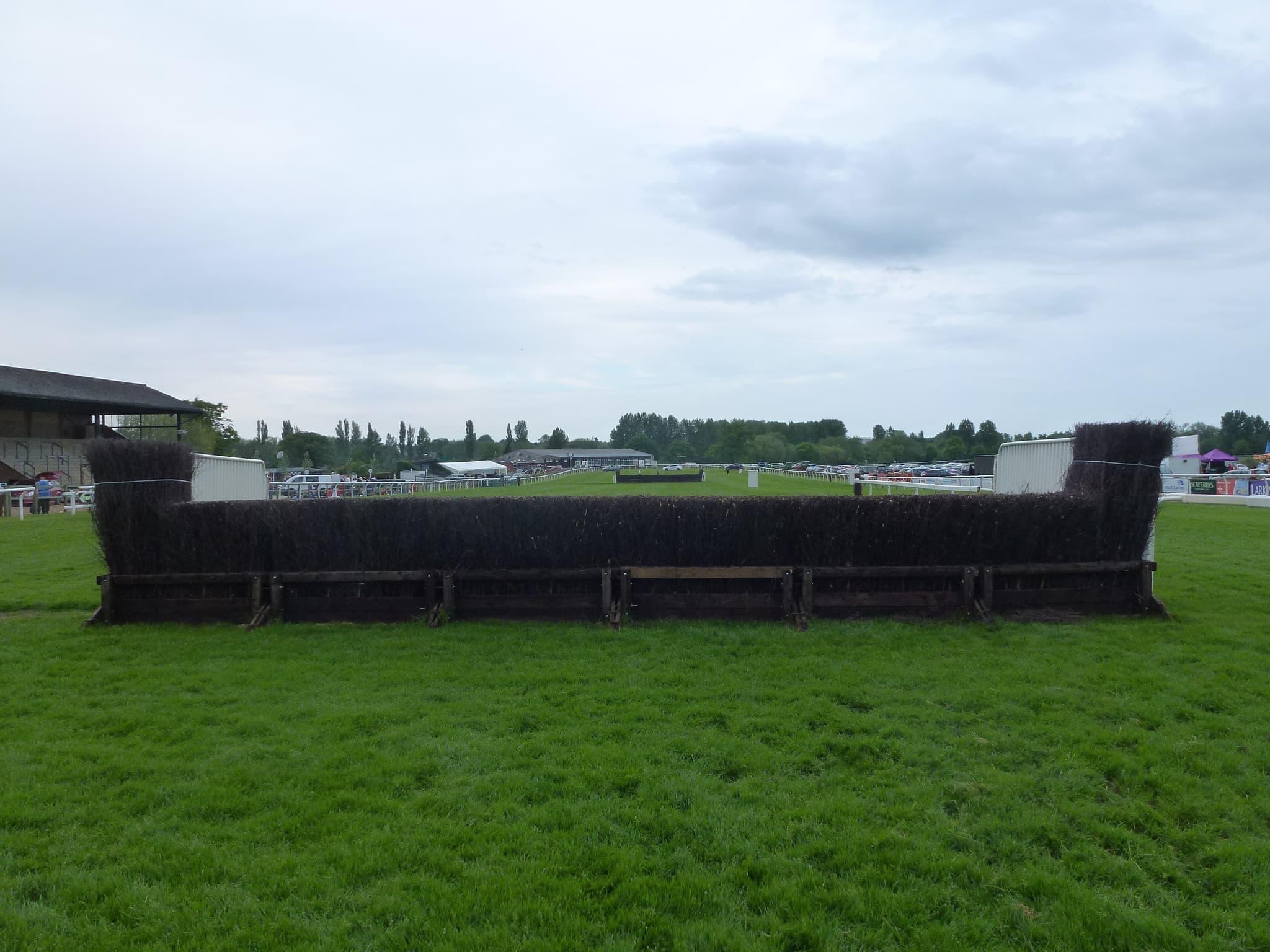
Winter Racing at Fakenham Racecourse
Your guide to winter racing at Fakenham — East Anglia's only jumps venue, cold days, and the build-up to the Fakenham Silver Cup in March.
Read more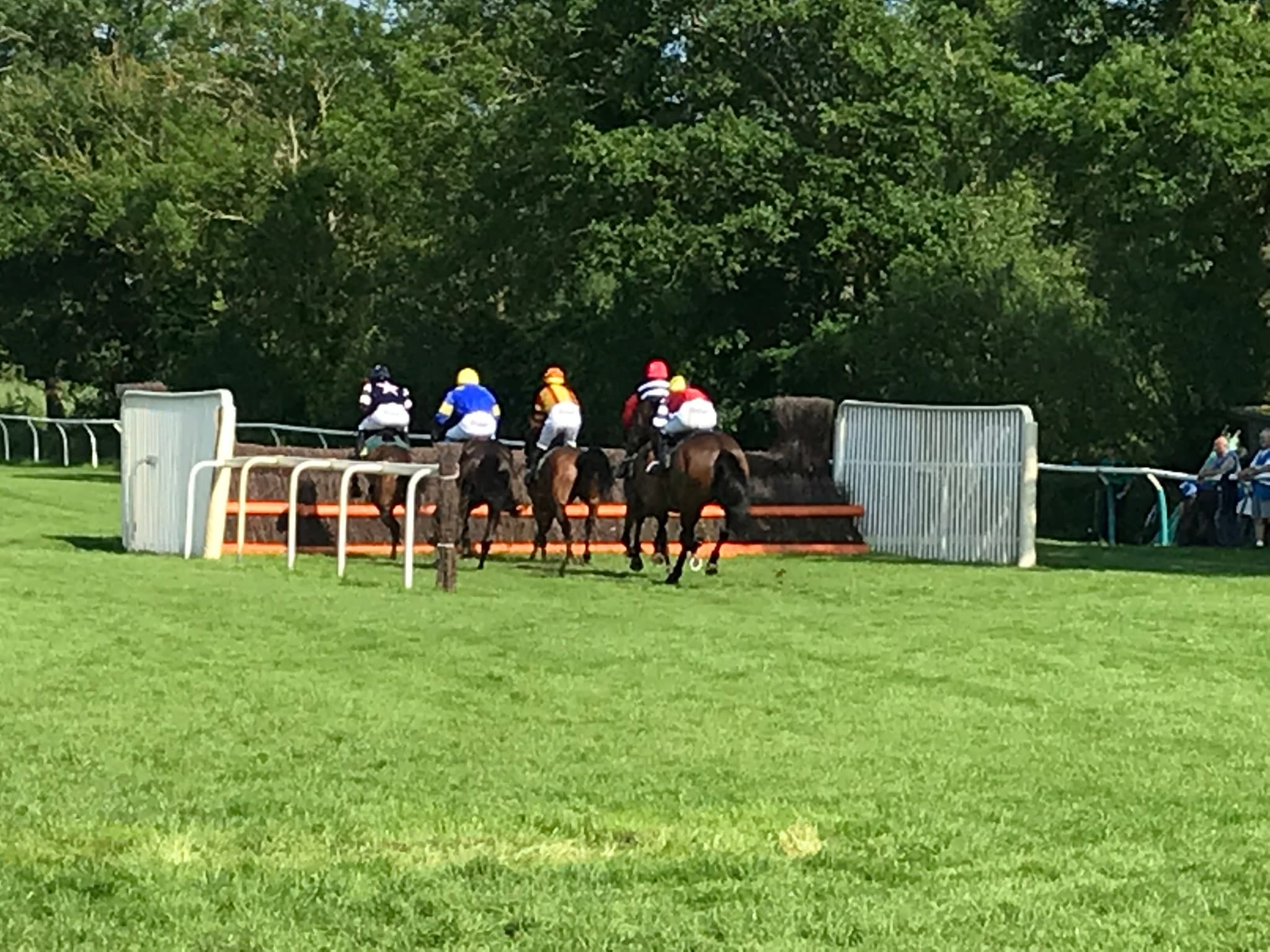
Norfolk National Day at Fakenham: The Complete Guide
Everything you need to know about Norfolk National Day at Fakenham — the biggest fixture at Britain's most intimate National Hunt course.
Read more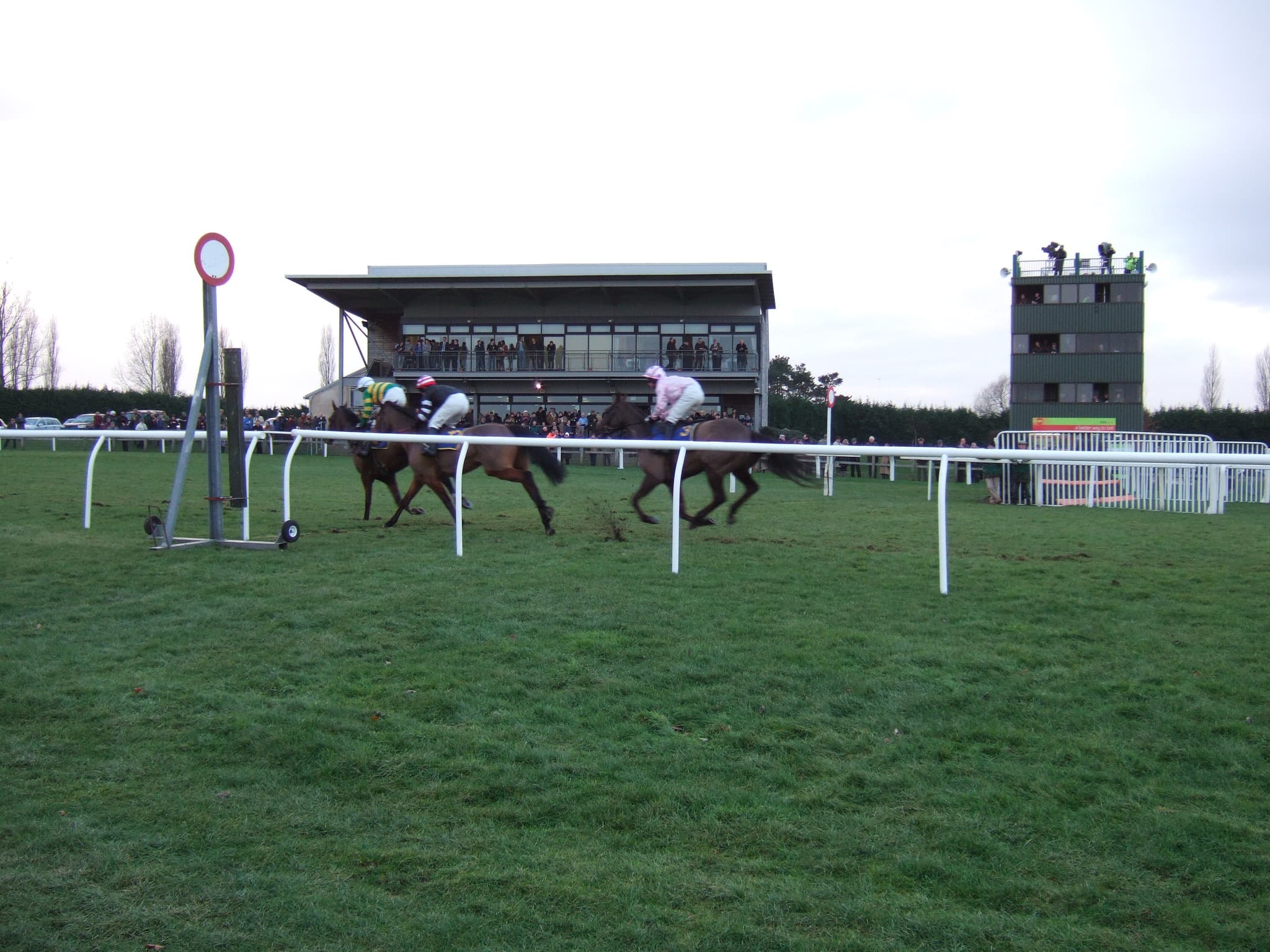
Cool Roxy at Fakenham: The Complete Story
Cool Roxy won 11 races at Fakenham from 25 starts — the definitive horse-for-course story at Britain's most intimate National Hunt track.
Read morePhotos on this page are used under Creative Commons licences. Titles, sources and licence links for each one are on our image credits page.
Gamble Responsibly
Gambling should be entertaining and not seen as a way to make money. Never bet more than you can afford to lose. If you or someone you know has a gambling problem, help and support is available.