
Founder & Editor · Last reviewed 2026-04-05
On 1 August 2012, the greatest racehorse of the modern era stepped onto a track unlike any he had encountered before and produced a performance that left even those who had long stopped doubting him gasping at the sheer brilliance of it. Frankel's Sussex Stakes victory at Goodwood was not merely another win in an unbeaten career. It was a statement of adaptability, of controlled power, and of a horse so far above his contemporaries that even a course designed to test every ounce of a horse's ability could not come close to troubling him.
Goodwood's undulating, cambered mile, with its downhill start, sweeping right-hand turn and demanding final furlong, is one of the most exacting tests in British flat racing. It catches out horses that lack balance. It exposes those that cannot handle changes of gradient. It demands tactical intelligence from jockey and horse alike. For Frankel, stepping back to a mile after excursions over further, and doing so on terrain that bore no resemblance to the flat gallops of Newmarket where he trained, the Sussex Stakes represented a real test of his versatility.
What followed was six lengths of devastation. Frankel settled, quickened, and left his rivals for dead in a display that combined raw power with balletic poise. It was his 12th consecutive victory, and it is widely regarded as one of the finest performances of his entire career, which, given the standard of everything else he achieved, places it among the greatest moments in the history of the sport.
Yet the story of Frankel at Goodwood begins not in 2012 but in 2011, when he won the Sussex Stakes on his first visit to the track as a three-year-old. That victory, by five lengths from Canford Cliffs, established his authority over the mile division and made the 2012 return feel less like a fresh challenge than a coronation. Understanding both Sussex Stakes wins together gives the full picture of what Goodwood meant to Frankel and what Frankel meant to Goodwood.
Goodwood has staged Group 1 racing since 1954, and the Sussex Stakes itself dates to 1878. Brigadier Gerard won it in 1971 and 1972. Warning won it in 1988. Giant's Causeway won it in 2000. The race has a list of winners that spans the best part of a century and a half of British flat racing. But no winner has defined it as completely as Frankel, who won it in back-to-back years and made it, for the first time, truly unmissable viewing for anyone with an interest in the sport.
This is the story of those two days: the build-up, the 2011 Sussex Stakes, the 2012 race itself, its aftermath, the extraordinary man who trained him, and the legacy that Frankel left at Goodwood.
Bet on Goodwood
Place your bets on Goodwood races with a trusted bookmaker.

Promo code BETFRED50. New customers only. Register, deposit with a Debit Card, and place a first bet of £10+ at Evens (2.0)+ on Sports, to be settled within 7 days, to get £30 in Sports Free Bets and £20 in Bet Builder Free Bets within 24 hours of settlement. 7-day expiry. Eligibility & payment exclusions apply. Full T&Cs apply. Take Time to Think. BeGambleAware.org. 18+. Full T&Cs.

Promo code R30. New UK customers only, 18+. Register, deposit £10 or more, then place a £10 single cash bet at odds of 1/2 (1.5) or greater on any sports market (excluding Virtuals). Once the qualifying bet settles you get £30 in Free Bets (3 x £10) — the qualifying bet can win or lose. Free Bets are valid on any sports market excluding Virtuals, expire in 7 days, are non-withdrawable and must be used in full. Excluded deposit methods apply (including PayPal, Apple Pay, Skrill and NETELLER). Named bets such as Lucky 15 do not qualify. If you cash out the qualifying bet, or it is voided, you are no longer eligible for the offer. Ends 31.12.26. Full T&Cs apply. Please gamble responsibly. BeGambleAware.org. 18+. Full T&Cs.

Promo code BET40GET20. New UK customers, 18+. Register with the code and place a first bet of £40 or more at Evens (2.0) or greater. Receive 2 × £10 free bets: the first credited automatically once the qualifying bet settles, the second 24 hours later. Free bets must be placed at minimum odds of 4/1 (5.0), expire 24 hours after credit, and the free-bet stake is not returned with winnings. Debit card deposits only. Take Time to Think. BeGambleAware.org. 18+. T&Cs apply. Full T&Cs.

50% of your first-day net losses refunded as a free bet, capped at £25. New UK customers aged 18+ only. To qualify, deposit and place a first bet of £10 or more on any sport at minimum odds of evens (2.00), then place at least two further bets on different events, each worth at least 50% of your largest bet, all at evens (2.00) or greater. Losses are counted from your first settled bet until 23:59 the same day. Place a qualifying £10+ bet and you are guaranteed at least a £5 free bet. Bets placed at SP, void bets, cashed-out bets and bets struck with free bets do not count towards the offer. The free bet is credited the day after your qualifying bets settle and must be used within 7 days, after which it expires. It can be used at odds from 1/4 (1.25) up to 250/1 on singles and straight accumulators, but not on Trixie, Patent or Yankee style multiples. Free-bet stake is not returned with winnings. One offer per person, household, address, IP address and device. E-wallet deposits may not qualify, so check the cashier before depositing. Customers registered with GAMSTOP cannot claim. KYC identity verification must be completed before the free bet is credited. Take Time to Think. BeGambleAware.org. 18+. T&Cs apply. Full T&Cs.

New customers, 18+. Choose the sports bonus at sign-up, make a first deposit and receive a 100% bonus up to £50 in your Sports Bonus balance. To convert the bonus to cash, wager it 10x within 30 days. Single bets below Evens (2.00) do not qualify; accumulators do not qualify if any selection is below 1/2 (1.50). Virtual Sports, voided, cancelled, drawn, cashed-out and free-bet wagers do not count towards wagering. Only the first settled bet per event counts. Withdrawing before the wagering requirement is met forfeits the bonus balance including bonus winnings. Real-money funds are used before bonus funds. Deposits via Skrill or Neteller are not eligible. Not valid in conjunction with other promotions. Odds, bet and payment limits apply. 10bet general and promotion T&Cs apply. BeGambleAware.org. 18+. Full T&Cs.

New customers in Great Britain and Republic of Ireland, 18+. Place a £10 fixed-odds qualifying bet at minimum odds of 1/2 (1.50) — single or each-way (only the win part counts), pre-event or in-play, not cashed out early, within 28 days of opening the account. Receive up to £60 in bonuses credited over three days: 3 × £10 fixed-odds free bets (the first on settlement, then 24 and 48 hours later) plus 3 × £5 Total Goals FOOTBALL spread bets and 3 × £5 racing Winning Favourites spread bets, with a £1 racing Race Index spread bet as an extra on top. The spread bets need a full spread-betting account, opened within 28 days of the fixed-odds account and subject to Spreadex's eligibility and appropriateness checks. Free-bet stakes not returned with winnings; free bets valid 28 days from issue. IMPORTANT: the £5 credits are SPREAD bets — sports spread betting carries the risk that losses can exceed your stake. Sports spread-betting customers do not have Financial Ombudsman or FSCS recourse. Take Time to Think. BeGambleAware.org. 18+. T&Cs apply. Full T&Cs.

Promo code WELCOME15, entered under My Bonuses after registering. New UK customers, 18+. Place a first qualifying bet of at least £10 from your cash balance at odds of evens (2.0) or greater within 7 days of opening the account. Once the qualifying bet fully settles you receive £15 in free bets, credited as 3 x £5 tokens with set uses: one £5 accumulator free bet (minimum 4 legs, each leg at 2/5 or bigger), one £5 sports free bet (any market at evens or bigger) and one £5 Sub Cover free bet (selected football player markets at evens or bigger). Free-bet stakes are not returned with winnings. Free bets expire 7 days after they are credited. Void, cashed-out and partially cashed-out bets do not qualify. One offer per customer. Confirm the current terms on BetGoodwin's own welcome-offer page before claiming. Take Time to Think. BeGambleAware.org. 18+. T&Cs apply. Full T&Cs.

New UK customers, 18+. Minimum deposit £10. Place a £10 qualifying single on sports (excluding virtuals) at minimum odds of 1/2 (1.50), settled within 14 days. Deposit-method exclusions apply. Receive £30 in free bets (stake not returned), split £20 for sportsbook use (2 x £10) and £10 for Bet Builder only (2 x £5); Bet Builder does not cover horse racing. Free bets must be accepted within 7 days and expire 7 days after acceptance. No promo code required. Best Odds Guaranteed on UK & Irish racing, subject to having staked over £25 in the previous seven days. Operated by LiveScore Betting and Gaming (Gibraltar) Ltd, UKGC 56859. Confirm the current terms on LiveScore Bet's own promotions page before claiming. Take Time to Think. BeGambleAware.org. 18+. T&Cs apply. Full T&Cs.
18+. BeGambleAware.org
The Build-Up
By the summer of 2012, Frankel was already established as something extraordinary. Trained by Sir Henry Cecil at Warren Place in Newmarket and owned by Prince Khalid Abdullah, the son of Galileo had won his first eleven races with a combination of devastating speed and imperious class that had left the racing world struggling for superlatives. His 2,000 Guineas victory at Newmarket in April 2011, where he ran his rivals ragged from the front before easing clear by six lengths in a time of 1 minute 35.18 seconds that still stands as the race record, had announced him as a champion. His Queen Anne Stakes win at Royal Ascot in June 2011, where he obliterated a strong field by eleven lengths, had elevated him to the status of phenomenon.
But questions lingered. Frankel's career to that point had been conducted almost entirely at Newmarket and Ascot: flat, galloping tracks that suited his long, raking stride and his preference for racing prominently. Could he handle a course with real undulations? Could he settle on terrain that might unbalance a less gifted horse? Could he adapt to a track where the turns were tighter and the gradients more demanding than anything he had previously encountered?
The 2011 Sussex Stakes had already offered a partial answer. Frankel had won it as a three-year-old, taking on older rivals for the first time and defeating Canford Cliffs, the previous year's winner and one of the best milers in Europe, by five lengths. That performance, recorded at Goodwood on 27 July 2011, showed he could handle the track when fresh to it. But questions remained about whether the 2011 performance had been achieved almost despite the terrain rather than because of any particular affinity with it.
The 2012 Sussex Stakes would provide the definitive answer. Frankel had begun his four-year-old season with a dominant win in the Lockinge Stakes at Newbury on 19 May 2012 (one mile, five lengths, starting at 7/2-on), which confirmed that he retained all his ability entering his final campaign. He had then won the Queen Anne Stakes at Royal Ascot on 19 June, where he beat Excelebration by eleven lengths on the same track and over the same distance as the previous year's demolition. The pattern was clear: Frankel was not declining. If anything, he was more assured, more controlled, and more complete than the horse who had run away with the 2000 Guineas fourteen months earlier.
The Goodwood mile was, nonetheless, a very different proposition from Newbury's broad, sweeping circuit or the flat straight of Ascot's Golden Mile. The downhill start from Goodwood's elevated position, the right-hand turn into the straight, and the final furlong's testing gradient would demand balance and agility alongside the speed and power that everyone already knew he possessed. Henry Cecil, speaking to reporters ahead of the race, was typically serene. "He's very well," he said. "I think he'll handle it." Those who had watched Frankel for two years understood that this was as close to a guarantee as any trainer offered.
Goodwood's Mile: What the Track Demands
To understand why Goodwood was considered a potential obstacle for Frankel, it helps to understand the specific character of the track. Goodwood's mile course begins at a starting point positioned high on the Sussex Downs, at an elevation significantly above the finishing straight. Horses run downhill for the first three furlongs, a gradient that can cause some animals to rush, lose their action, or fight the jockey's attempts to settle them. The track then sweeps around a right-hand bend that tests lateral balance, particularly on horses who have a pronounced preference for galloping straight.
The straight itself runs for approximately four furlongs and is anything but flat. There are undulations throughout, a slight rise approaching the two-furlong pole, and a demanding final furlong that asks a real question of a horse's stamina even over this comparatively short distance. Goodwood's surface is typically good to firm in summer: fast enough to suit a free-going horse, but firm enough to put additional stress on legs and feet.
Brigadier Gerard, who won the Sussex Stakes in 1971 and 1972, was said to have found the Goodwood mile particularly testing, and even he produced his best work on flatter tracks. Warning, who won the 1988 Sussex Stakes under Pat Eddery, was a horse of exceptional class whose Goodwood win was considered a real test of his adaptability. Frankel's trainers and jockey had studied the track carefully before his 2011 appearance and noted that the key was to keep him relaxed on the descent. The fact that he pulled hard in the early stages of most races, a characteristic that never entirely disappeared, made this more, not less, challenging.
The Field and the Market
There was an additional layer of emotion surrounding every Frankel start that summer. Sir Henry Cecil, one of the greatest trainers in the history of the sport, was battling stomach cancer. The illness that would claim his life in June 2013 was already visible in his gaunt frame, but Cecil's determination to campaign Frankel through one final, triumphant season gave every race a poignancy that transcended sport. The trainer who had saddled Wollow in 1976, Slip Anchor in 1985, Oh So Sharp in the 1985 fillies' Triple Crown, and Reference Point in 1987 was pouring the last reserves of his extraordinary talent into one final masterpiece.
The field for the 2012 Sussex Stakes was respectable but not deep: Frankel's reputation had frightened off all but the bravest challengers. Farhh, trained by Saeed bin Suroor for Godolphin, was the principal opponent. A talented miler who had finished third in the Queen Anne Stakes at Ascot that June, Farhh would go on to win the Lockinge Stakes in 2013 and the Champion Stakes at Ascot in October 2012, confirming him as a proven Group 1 performer in his own right. Gabrial, trained by Richard Fahey and representing a Yorkshire operation that punched consistently above its weight in top-class company, filled the field along with Monarch's Glen from the Andre Fabre yard in France and Ransom Note, who served as a pace-making companion for Frankel.
No one seriously expected anything other than a Frankel victory. The question was not whether he would win, but by how much, and whether Goodwood's unique demands would at least make him work for it.
Frankel was sent off at 1/20, the shortest price for any horse in a British Group 1 race in modern times. The bookmakers had long since surrendered any pretence of offering a fair market. The racing world held its breath and waited to see genius at work.
The 2011 Sussex Stakes
Frankel's First Goodwood Appearance
The 2011 Sussex Stakes, run on 27 July, was the race in which Frankel took on older horses for the first time. As a three-year-old, he had won the 2000 Guineas at Newmarket by six lengths, the St James's Palace Stakes at Royal Ascot by six lengths, and the Queen Anne Stakes at Ascot (restricted to older horses) by eleven lengths. That Queen Anne win had already demonstrated that he was better than the four-year-olds and five-year-olds of his era. The Sussex Stakes would put him in a field alongside Canford Cliffs, the reigning Sussex Stakes champion, who had been champion miler of Europe in 2010.
The contest had been marketed, in the weeks leading up to it, as a head-to-head clash between two champions. Canford Cliffs had won seven consecutive races, including the 2010 Sussex Stakes, the Lockinge, and the Queen Anne. His trainer, Richard Hannon, and his jockey, Richard Hughes, had no reason to be intimidated. The public anticipated a contest. What they got was a rout.
From the start, Frankel pulled hard, harder reportedly than in most of his races. Queally took a stronger hold than usual, allowing the horse to find his rhythm on the downhill section before the turn. As the field swung into the straight, Frankel moved effortlessly alongside the leaders. Then, two furlongs out, Queally simply let him go.
The five-length margin over Canford Cliffs told the story plainly. Frankel did not beat one of Europe's best milers narrowly or comfortably: he beat him with something in hand, easing down in the final furlong. Canford Cliffs, to his credit, was never disgraced; he finished second, beaten by a horse operating on a different plane. The time of 1 minute 36.37 seconds was fast on the day's ground conditions, and the performance earned Frankel a Timeform rating in the 130s even before the heights he would reach in 2012.
Why the 2011 Win Mattered
The significance of the 2011 Sussex Stakes extended beyond the margin of victory. It was the first occasion on which Frankel had run at Goodwood, and the first time he had been truly tested by a world-class rival. Canford Cliffs was no ordinary opponent. The result confirmed that the Guineas demolition had not been the product of a soft field or fortunate circumstances. Frankel was better than every horse in Britain and Ireland by a margin that raised the question of whether he was the best horse in the world.
The 2011 Sussex Stakes also established a template for what would follow. Frankel had shown he could handle Goodwood's terrain, settle reasonably well despite his habitual early keenness, and produce his devastating acceleration at the right moment. When Cecil planned the 2012 campaign and nominated the Sussex Stakes as the second target of the season, he was building on the knowledge that his horse had already answered Goodwood's questions once. The 2012 return was about confirmation at the highest level.
Canford Cliffs in Context
Canford Cliffs deserves a mention beyond his role as Frankel's principal victim in 2011. Trained by Richard Hannon Senior at Marlborough in Wiltshire, he was a horse of real quality whose career was unfortunately defined by his proximity to a once-in-a-generation rival. Before encountering Frankel, he had won the 2010 Sussex Stakes, the Lockinge, the Prix du Muguet at Saint-Cloud, and the Haydock Sprint Cup. He would have been considered one of the outstanding milers of his generation in any era other than the one in which Frankel appeared.
The 2011 Sussex Stakes was Canford Cliffs's last serious attempt to match the champion. He finished second at Goodwood, ran twice more, and was then retired to stud. His story is a reminder that Frankel's supremacy came at a cost to horses who would otherwise have enjoyed careers defined by their own greatness rather than their defeats.
The Build-Up to the 2012 Return
By the time the 2012 Sussex Stakes came around, Frankel's Goodwood appearances had already generated one of the most talked-about performances of the previous season. The 2012 renewal would ask slightly different questions. Frankel was now four years old, had two more Group 1 wins that summer, and was approaching the midpoint of what his connections knew would be his final season. The emotional dimension of every race was more acute. The crowd at Goodwood on 1 August 2012 knew that opportunities to see Frankel race were numbered. There would be, at most, two or three more chances.
The 2012 Sussex Stakes
The 2012 Sussex Stakes went off at 3:15pm on a warm August afternoon, with a crowd that had come not expecting a contest but hoping to witness something they would remember for the rest of their lives. They were not disappointed.
Five runners lined up: Frankel, ridden by Tom Queally; Farhh under Silvestre de Sousa; Gabrial, trained by Richard Fahey; Monarch's Glen from the Andre Fabre yard; and Ransom Note, a pace-making companion for Frankel. The plan, as it had been in several of Frankel's races, was for a stablemate to ensure a strong gallop, allowing Frankel to settle behind before unleashing his devastating turn of foot.
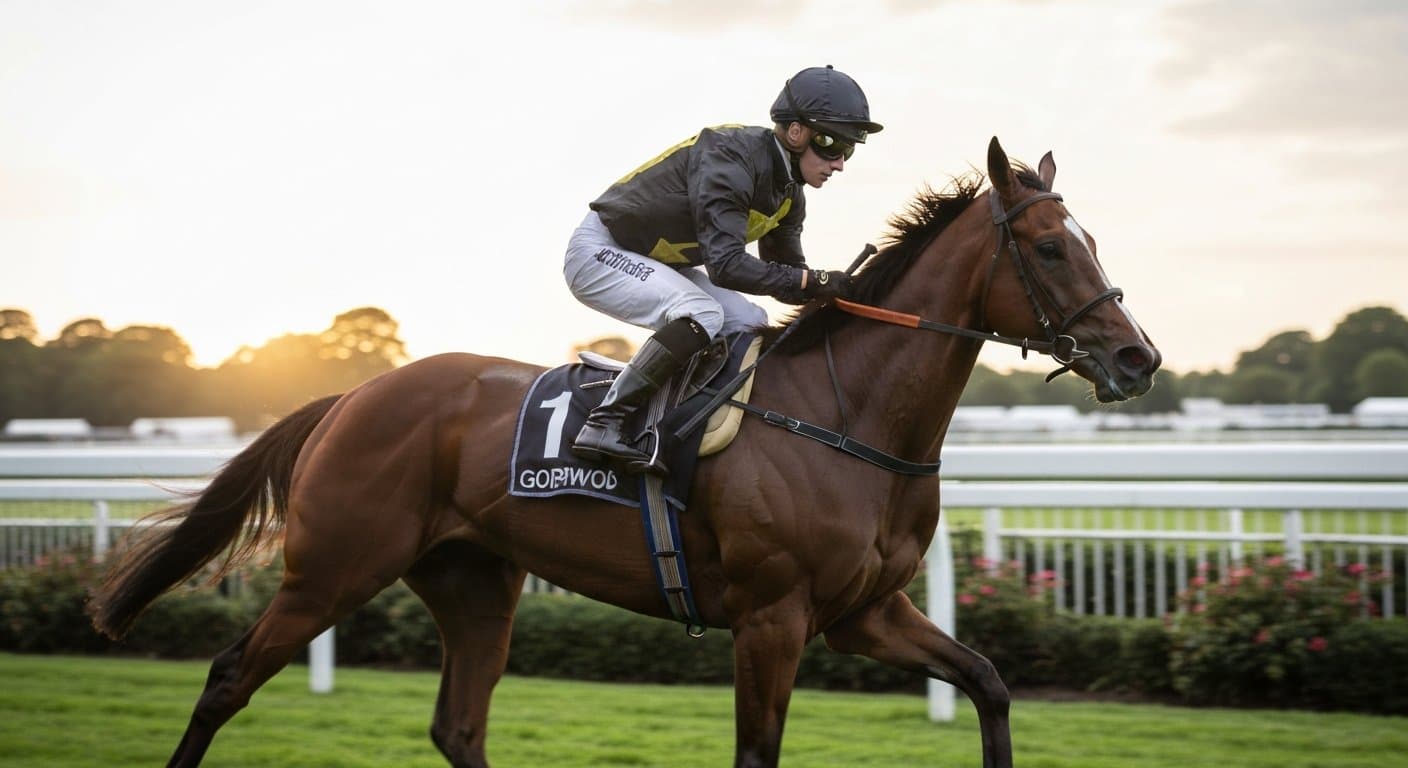
From the stalls, Ransom Note duly went to the front and set a sensible pace down the hill and towards the sweeping right-hand bend. Frankel, drawn in stall four, settled behind in second place under Queally, travelling with a smoothness that belied the undulating terrain beneath him. This was the first indication that Goodwood's course would pose no problems: horses that struggle with the gradients tend to show it early, fighting the jockey or losing their rhythm on the descent. Frankel moved over the ground as if it were billiard-table flat.
As the field rounded the bend and straightened up for the final three furlongs, Queally allowed Frankel to ease alongside Ransom Note. There was a moment, captured beautifully by the head-on camera, when you could see Frankel simply change gear, moving from composed cruising speed to something altogether more devastating. The acceleration was smooth, almost casual, but the effect on the horses around him was instantaneous. Within a furlong, the race was over as a contest.
Frankel lengthened his stride and powered clear, his action devouring the ground with each enormous bound. Queally barely had to move on him. A push of the hands, a gentle squeeze of the heels, and the horse responded by pulling further and further away from his rivals. Farhh, to his considerable credit, stayed on gamely for second, but the six-length margin at the line flattered him. Frankel could have won by twice that distance had Queally asked.
The time of 1 minute 37.41 seconds was fast without being exceptional, but the visual impression was unforgettable. Frankel had taken a course renowned for catching out the unwary and made it look like a training gallop. The undulations did not trouble him. The camber did not unbalance him. The tight turn did not cause him to lose momentum. He had answered every question that Goodwood could ask and made the answers look effortless.
The Race in Detail: Sectional Analysis
To appreciate what Frankel did at Goodwood, the sectional times repay attention. Ransom Note set a reasonable early gallop, not pedestrian, but not the breakneck pace that characterised some of Frankel's earlier races. The first three furlongs, run downhill, were completed at a controlled tempo that allowed the entire field to remain in contact. This is, ironically, where the Goodwood mile asks its most awkward questions: a horse that pulls hard on the descent burns energy that cannot be recovered.
Frankel, who had been known to pull hard throughout his career, was noticeably more composed in 2012 than in 2011. The extra year of racing had given him more settled habits, and Queally had developed an even finer feel for the horse's rhythms. As the field rounded the right-hand bend, Frankel was travelling well within himself, covering the ground economically and without the excess expenditure that marks a horse who is fighting his rider.
From the two-furlong pole, the race changed character. Queally's hands moved, and Frankel's stride lengthened immediately. The change of pace was not dramatic in the way that a sprint finish is dramatic; it was the change of a horse moving through gears rather than a sudden burst. But the practical effect was overwhelming. Farhh, the runner-up, is reported to have covered the final two furlongs in a time that would have been competitive in most Group 1 mile races. He was still beaten six lengths.
Tom Queally's Ride
Tom Queally rode Frankel in all fourteen of his races, and the 2012 Sussex Stakes was one of his finest performances on the horse. Managing Frankel at Goodwood required specific skills. The descent on the far side had to be navigated without allowing the horse to run too freely. The bend had to be ridden accurately, positioning Frankel to straighten up without having to switch round other runners. The run to the line had to be judged so that enough was kept in reserve to satisfy even the most demanding finishing burst.
Queally executed all of this without drama. He was helped, of course, by having a horse of supreme quality beneath him. But the partnership between horse and jockey at Goodwood was as good as anything they produced anywhere. Queally, interviewed afterwards on Channel 4 Racing, was typically economical with his words. "He travels so well," he said. "You just have to let him do it." His tone conveyed what his words understated: that riding Frankel in a race like this was simultaneously the easiest and most pressurised task imaginable.
Farhh: The Best of the Rest
The runner-up deserves more attention than he is usually afforded. Farhh, a bay colt trained by Saeed bin Suroor at Godolphin's Moulton Paddocks yard in Newmarket, was a horse of real class in his own right. He had been trained as a miler through 2011 and 2012, winning the Sandown Mile in April of that year and running third in the Queen Anne Stakes at Royal Ascot before his Goodwood appearance. In the autumn of 2012, after the Sussex Stakes, he won the Champion Stakes at Ascot over ten furlongs, becoming a Group 1 winner at a longer trip.
Farhh's Champion Stakes win came at Frankel's own retirement race, where the champion signed off with a six-length victory. The two horses met in the Sussex Stakes at Goodwood as their sole direct encounter over a mile. Farhh ran an excellent race, posting a time that would have been competitive in most editions of the Sussex Stakes from any other year. He was beaten six lengths by a horse who was not fully extended. The margin reflects the gap between a high-class Group 1 performer and an exceptional one.
The Crowd's Response
The crowd's reaction told the story. There was the usual cheer as the winner crossed the line, but it was followed by something rarer: a sustained, almost reverential applause that continued as Frankel was pulled up and walked back towards the winner's enclosure. People were not celebrating a gambling win or even a great horse winning a big race. They were acknowledging that they had just seen something that comes along perhaps once in a generation, a supreme athlete performing at the absolute peak of his powers, in a setting worthy of the occasion.
The Goodwood crowd, accustomed to fine racing across the five days of the festival, fell into the specific silence that follows pure astonishment before the applause began. John Gosden, standing near the winner's enclosure and watching Cecil's horse return in triumph, was seen shaking his head slowly: the reaction of a great trainer who understood exactly what he had just witnessed.
Tom Queally, never the most effusive interviewee, was characteristically understated afterwards. "He's just a pleasure to ride," he said. "Everything comes so easily to him." It was perhaps the most accurate summary anyone could offer. What looked miraculous to the observers was, for the horse, simply the deployment of ability so vast that even Goodwood's famous challenges were reduced to a formality.
The Race in Historical Context
The 2012 Sussex Stakes deserves its place among the finest performances in the race's long history. Compare the field quality and performance level with other notable editions: Brigadier Gerard's back-to-back wins of 1971 and 1972 were against good horses on suitable ground; Hawk Wing's unlucky second in 2002 came in a race that demonstrated high Group 1 standard. The 2012 edition, despite its relatively small field, had quality in the shape of Farhh (a horse who would win three Group 1 races) and produced a display that made even that quality look modest.
The Sussex Stakes has been run at Goodwood since 1878, with a brief wartime interruption. In 144 years of racing history at the time of Frankel's second victory, no horse had ever dominated the race with the authority he showed in 2011 and 2012. The back-to-back wins were not, in themselves, unmatched: Brigadier Gerard achieved the same in the 1970s. But the nature of the victories was different. Where Brigadier Gerard won hard-fought races against serious opponents, Frankel won at a canter against the best horses that could be found for him.
The Aftermath
The immediate aftermath of Frankel's Sussex Stakes victory was dominated by a single question: where would he go next? The victory had been his 12th consecutive, and the quest for an unbeaten career was gathering an almost gravitational pull. Each win raised the stakes for the next appearance, and each performance had to be measured against the ones that came before.
Racing's press corps, normally a sceptical bunch, had run out of qualifications. The performance at Goodwood was hailed as among his finest, not because it was the most visually dramatic (his Queen Anne demolition at Ascot arguably looked more spectacular), but because it demonstrated something new. Frankel had proven he could handle a track that was utterly different from anything he had raced on before. The adaptability on display at Goodwood answered the lingering doubt about whether he was merely a brilliant Newmarket horse or a distinctly great racehorse. The answer was emphatic.
The Timeform Assessment
The ratings confirmed what the eyes had seen. Timeform assessed the Sussex Stakes performance at 140, one of the highest figures ever awarded for a race run on British soil. The figure required some explanation for those unfamiliar with the Timeform scale: their ratings run on a pounds scale equivalent to the official handicap marks, and 140 represents a level of performance achieved by fewer than a dozen horses in the organisation's entire history since its founding in 1948. To put it in context, Brigadier Gerard, widely regarded as one of the greatest horses of the twentieth century, was rated 144 at his peak by Timeform. Sea Bird II, winner of the 1965 Derby and Prix de l'Arc de Triomphe, was rated 145. Frankel's 2012 Sussex Stakes performance placed him firmly in that company.
The international handicappers concurred. Frankel retained his position at the top of the world rankings by a margin that bordered on the absurd. He was not simply the best horse in training; he was the best horse anyone alive could remember seeing.
By the time Frankel was eventually retired and given a career Timeform rating of 147, the highest the organisation had ever assigned, the 2012 Sussex Stakes was one of the performances that had built toward that extraordinary number. Every win added to the story; the Goodwood race was not the highest individual mark he received, but it contributed weight and context to the overall assessment.
What Came Next
Frankel raced three more times after Goodwood, all in Group 1 company. On 22 August 2012, he won the Juddmonte International Stakes at York by seven lengths from Farhh: their second meeting of the season, with the same result, confirming the Goodwood form. York's Knavesmire is a flat, left-handed galloping track quite different from Goodwood's undulations, and the ease of the York victory confirmed that the Goodwood performance had not flattered him.
He then stepped up to ten furlongs for the first time in the Qipco Champion Stakes at Ascot on 20 October 2012, winning by six lengths from Cirrus des Aigles and signing off his career with an exhibition performance. The extension to a mile and a quarter had been a subject of some debate among racing analysts; there were those who felt his style of running, based on high-speed acceleration over shorter distances, might not translate to the longer trip. It translated perfectly. The Champion Stakes performance earned him a Timeform rating of 147, the highest figure in the organisation's history.
Prince Khalid Abdullah retired Frankel to stud at Banstead Manor in Newmarket after the Champion Stakes. The racing public, who had followed his career with an intensity normally reserved for human athletes, mourned his departure from the track while acknowledging that nothing more could be achieved. The Sussex Stakes at Goodwood had been the moment when even the doubters ran out of objections. After 1 August 2012, Frankel's place in history was beyond argument.
Reactions from the Racing World
The reaction of the press and the broader racing community in the days following the Sussex Stakes was notable for its unanimity. Racing Post gave the race a prominent front-page treatment and devoted several pages to analysis of what the performance meant. The Sporting Life, by then operating primarily online, ran extensive reaction pieces from trainers, jockeys and racing analysts. The consensus was clear: those who had seen the 2012 Sussex Stakes had seen something that would not be repeated within their lifetimes.
Aidan O'Brien, whose Ballydoyle operation would have been Frankel's principal rival in an open international market, was asked for his response. "He's just an exceptional horse," O'Brien said. "You can only admire him." Andre Fabre, whose Monarch's Glen had finished third at Goodwood, acknowledged that the experience had been one of admiration rather than competition.
Saeed bin Suroor, trainer of Farhh, put the performance in clear terms. "Farhh ran his race," he said. "He ran very well. The winner is just exceptional." This became the standard summary from all those who had run against Frankel in the Sussex Stakes: their horses had run to form, Frankel had simply been incomparably better.
The Betting Perspective
For punters, the Frankel era at Goodwood raises a distinctive historical question: how do you price a horse that is essentially unbeatable? At 1/20, Frankel's starting price for the 2012 Sussex Stakes was a frank admission by the bookmakers that they could not see a realistic route to any result other than a Frankel victory. At that price, a £100 stake returned £5 profit. Most bookmakers accepted minimal liability on Frankel singles and focused their attention on the race for second place.
The market for the minor positions was more interesting. Farhh was available at around 5/2 for second place in some each-way markets, and those who correctly assessed his ability as the most credible runner-up were rewarded accordingly. The place betting and forecast markets around Frankel races are instructive examples of how markets price near-certainties: the real liquidity was always in the places and the forecasts rather than the outright result.
Frankel's consistent starting prices across his career (he was odds-on in all but his first two starts) shaped how racing's betting community approached the races. His Goodwood appearances, at 2/7 in 2011 and 1/20 in 2012, represented the progressive confidence of the market in a horse who had answered every question put to him with the same emphatic response.
Henry Cecil & Frankel
The story of Frankel at Goodwood cannot be separated from the story of the man who trained him. Sir Henry Cecil was already one of the most celebrated figures in the history of British racing when Frankel arrived at Warren Place as a yearling in 2009. A ten-time champion trainer, Cecil had saddled the winners of 25 British Classics, trained horses of the calibre of Slip Anchor (1985 Derby winner), Oh So Sharp (1985 fillies' Triple Crown), Reference Point (1987 Derby), Bosra Sham (1996 Champion Stakes) and Bosque, and earned a reputation as an artist in a profession more commonly associated with science and routine.
His training methods were distinctive. Where many yards operated on rigid schedules and systematic programmes, Cecil worked with an intuition sharpened over decades. He visited his horses individually, spending time with each one, learning their habits and moods. He was known to adjust a training programme on the basis of a horse's attitude at morning feed, or to change a race plan because something in the way a horse moved on the gallops suggested it was not quite right. This qualitative rather than quantitative approach to training was exactly the method that Frankel required.
Cecil's Earlier Career
Cecil had been champion trainer for the first time in 1976, a year in which Warren Place was at its most prolific. Through the late 1970s and 1980s he dominated British flat racing in a way that has rarely been replicated, winning championships in 1978, 1979, 1982, 1984, 1985, 1987, 1988, and 1990. His roster of Classic winners reads like a history of the era: Bolkonski, Wollow, Lie In Wait, Ardross (five Group 1 wins), Slip Anchor, Oh So Sharp, Reference Point, Indian Skimmer, and many others.
But Cecil's later years had been marked by personal turmoil and professional decline. A painful divorce from Natalie Cecil, a period of depression, and a dwindling string of owners had seen his operation contract dramatically from its peak. Where he had once trained over 200 horses, by the mid-2000s the number had fallen to fewer than 40. There were those who assumed his best days were behind him. They were spectacularly wrong.
The Cancer Diagnosis and Its Effects
Frankel's emergence coincided with Cecil's diagnosis of cancer in 2006, a diagnosis that was kept private for several years before becoming public knowledge. The trainer who had always been lean became gaunt, his angular frame visibly diminished by illness and treatment. But his eye for a horse, his understanding of training and his ability to produce a runner at peak fitness for a specific race remained undimmed. If anything, the illness sharpened his focus. Frankel was not merely a brilliant horse; he was Cecil's last great project, a final chance to remind the world of what he could do.
Those who worked at Warren Place during the Frankel years have described the atmosphere as one of purpose and concentration. Cecil knew what he had. He knew what was at stake: not in a competitive sense, but in terms of the sport's history. Frankel was a horse that came along once in a professional lifetime, and Cecil, with that lifetime running short, was determined to prepare him as well as any horse had ever been prepared.
The Training of Frankel
Cecil's specific approach to Frankel's training offers insight into how great horses are managed. From the beginning, Frankel had displayed enormous ability and an equally enormous capacity for being difficult. He pulled hard, he was headstrong, and the simple act of managing his considerable energy without depleting it became one of the stable's principal tasks.
Cecil used Bullet Train, Frankel's elder half-brother also trained at Warren Place, as a training companion and later as a race pacemaker. This is a practice with a long history in top-class training, but the relationship between Frankel and Bullet Train was unusually productive. Bullet Train, who was a high-class performer in his own right (he won the Geoffrey Freer Stakes at Newbury in 2011 as a Group 2), served as Frankel's lead horse in races including the Lockinge and the Sussex Stakes. Cecil's decision to maintain this partnership throughout Frankel's career was a practical expression of his understanding of the horse's psychology.
The training sessions on Warren Place's gallops, conducted in the early morning, were attended by a small, consistent group of stable staff. Cecil insisted on continuity: the same work riders, the same exercise regimen, the same routine. Frankel responded to this environment of quiet competence. By the time he ran at Goodwood in 2012, he was three years into a system that suited his temperament exactly.
The Emotional Dimension
The relationship between trainer and horse was unusually intense. Cecil spoke about Frankel in terms that went beyond professional assessment; he described the horse as a companion, a source of joy during the darkest period of his life. The emotional dimension of Frankel's races was inescapable: every victory was a triumph not just for the horse but for a man who was running out of time.
At Goodwood on that August afternoon in 2012, Cecil was present in the parade ring before the Sussex Stakes, his tall frame slightly stooped, his famous smile lighting up a face that illness had made thinner but not less expressive. He patted Frankel on the neck, exchanged a few words with Tom Queally, and watched his horse walk to the start with the quiet confidence of a man who knew exactly what was about to happen. The six-length victory was, in one sense, routine, since Frankel had been doing this for two years. But Cecil's visible emotion as the horse returned to the winner's enclosure spoke to a deeper truth. Each race might be the last. Each victory was precious beyond what the prize money or the rating could convey.
Racing journalists present at Goodwood that day remarked on Cecil's composure. He did not celebrate extravagantly, as he rarely did. He stood in the winner's enclosure with a quiet satisfaction that was more eloquent than any speech. When asked by reporters how Frankel would run next, Cecil gave his characteristic reply: "Very well, I think." The understatement was deliberate and characteristic. He understood that the horse would speak for himself.
Cecil's Legacy Through Frankel
Sir Henry Cecil died on 11 June 2013, less than a year after Frankel's retirement. The tributes that poured in acknowledged him as one of racing's true greats: a man who trained champions across four decades and whose final masterpiece ensured that his name would be remembered as long as horses race. A statue of Cecil was later commissioned and placed at the Warren Place yard in Newmarket, a fitting tribute to a man who had shaped British flat racing for half a century.
The knighthood that Cecil received in 2011, awarded when the Frankel era was at its height, was recognition from the establishment of what the racing world had known for decades. The timing was appropriate: Cecil was honoured while he was still producing work of the highest quality, and the horse who embodied that quality was still racing.
The Sussex Stakes at Goodwood in 2012 was one of the last occasions when the racing public saw Cecil and Frankel together in the winner's enclosure, and the image of the ailing trainer standing beside his magnificent horse is one of the most poignant in the sport's long history. Cecil was given eighteen months after Frankel's retirement to see the start of the horse's stud career at Banstead Manor. He knew the first foals were coming. He did not live to see them race.
What Cecil Said About the Goodwood Wins
In the aftermath of the 2011 Sussex Stakes, Cecil was asked whether Goodwood had been a concern. His reply was measured: "He handled it beautifully. I knew he would." In 2012, after the second Sussex Stakes win, he was more expansive. "He's the best horse I've trained," he said. "By some distance." This was not a remark Cecil made lightly. He had trained Oh So Sharp, who had won the Fillies' Triple Crown. He had trained Reference Point and Slip Anchor. The phrase "by some distance" carried specific weight coming from a man who had seen so much.
Frankel's Legacy at Goodwood
Frankel's back-to-back Sussex Stakes victories have become inseparable from Goodwood's identity. The race existed for 171 years before he won it in 2011, and champions had graced it before: Brigadier Gerard in 1971 and 1972, Kris in 1979 and 1980, Warning in 1988, Giant's Causeway in 2000. But none left a mark as profound or as lasting. When racing fans think of the Sussex Stakes now, they think of Frankel. When they think of Goodwood's greatest moments, the 2011 and 2012 Sussex Stakes are invariably the first races mentioned. Two afternoons redefined the race's place in the hierarchy of the sport.
Goodwood's Position in the Flat Racing Calendar
The legacy extends beyond sentiment. Frankel's performances at Goodwood demonstrated to the wider world that the Sussex Stakes, and by extension the Qatar Goodwood Festival, belonged on the global stage. International owners, trainers and breeders who might have overlooked the meeting began to take notice. If the greatest horse of the modern era chose Goodwood as a stage not once but twice for defining performances, the course clearly merited serious attention. The subsequent growth in international entries at the festival owes something to the spotlight that Frankel's victories shone on the meeting.
The Qatar Goodwood Festival, held in late July and early August each year, is already one of the most distinctive gatherings in European flat racing. The combination of the Sussex Stakes, the Nassau Stakes, the Goodwood Cup, the Richmond Stakes and the Molecomb Stakes gives the five-day meeting exceptional Group race depth. But it is the Sussex Stakes that draws the finest milers, and the Frankel era established the race's non-negotiable status as a top-tier event for the best horses in training.
Bloodstock Impact
Frankel retired to Banstead Manor Stud in Newmarket, a Juddmonte facility, at the end of 2012. His stud fee was initially set at £125,000, which reflected both his exceptional form and the uncertainty that always surrounds a first-season stallion. By 2017 his fee had risen to £175,000, and by 2019 it reached £200,000, one of the highest fees in the world for a European-based stallion. The demand for Frankel's services was matched by the quality of mares he received, and the resulting offspring have justified the investment.
His first crop (foals of 2014, three-year-olds in 2017) produced champions in multiple countries. Cracksman, out of Rhadegunda and trained by John Gosden, won the 2017 Champion Stakes at Ascot and went on to be rated 136, the highest Timeform figure by a domestic British performer in several years. Poet's Word won the 2018 King George VI and Queen Elizabeth Stakes at Ascot, one of the most prestigious middle-distance races in the world. Enable, though she is by Nathaniel rather than Frankel, is from the same lineage of carefully matched breeding that characterises the Juddmonte programme.
Frankel's progeny have raced at Goodwood. The course that hosted his Sussex Stakes victories has since staged Group races featuring his offspring, creating a direct generational connection between the horse and the track he graced so memorably. Each Frankel offspring to win at Goodwood adds a chapter to the story that began on 27 July 2011.
The Sussex Stakes Today
The Sussex Stakes in the years since Frankel has continued to attract the best milers in Europe. Solow won it in 2015 with a performance that generated talk of a Frankel comparison before careful analysis concluded that the gap remained large. Ribchester won in 2016 and 2017, giving that race consecutive victories for the first time since Frankel. The race has retained its identity as a clear championship contest for the mile division, and Frankel's association with it has, if anything, raised the bar against which subsequent winners are measured.
Trainers now actively consider the Sussex Stakes as a target for their best milers precisely because of what Frankel did there. The race has a status it might not otherwise have achieved if the world's best horse had not chosen it twice. That is a direct legacy of the 2011 and 2012 victories.
For Racegoers at Goodwood
Those who attend Goodwood on Sussex Stakes day should be aware of what they are watching. The race has more history than most mile races in Britain, and more recent significance than any other British Group 1 outside Royal Ascot. Goodwood's setting, the natural amphitheatre of the Sussex Downs with the grandstands elevated above the track and views extending across the coastal plain, gives it a character that no purpose-built facility can replicate.
The mile course itself, which Frankel made look straightforward, is anything but. The downhill start, the camber on the turn, the undulations in the straight: these features separate the great horses from the merely good. When you watch the Sussex Stakes, you are watching horses navigate a test that Frankel conquered twice, on both occasions with something in reserve.
At stud, Frankel has become the most sought-after sire in the world, and his progeny have continued to grace Goodwood's turf. The sight of a Frankel offspring racing down the same straight where their father delivered his masterclass creates a connection between past and present that enriches the experience for every racegoer who knows the history. Great horses leave legacies not just in record books but in the bloodlines that follow them.
For Goodwood itself, Frankel's two Sussex Stakes victories stand as proof of what the course demands and what true greatness looks like when it meets real challenge. The undulations, the cambers, the tight turn: all the features that make Goodwood so testing were reduced to irrelevance by a horse of supreme quality. Goodwood asked every question it could, twice, and Frankel answered every one of them with contemptuous ease. That is why, of all the races in his perfect fourteen-from-fourteen career, the two Sussex Stakes at Goodwood hold a special place. They were the days when Frankel proved that brilliance has no conditions.
Share this article
More about this racecourse
All Goodwood guides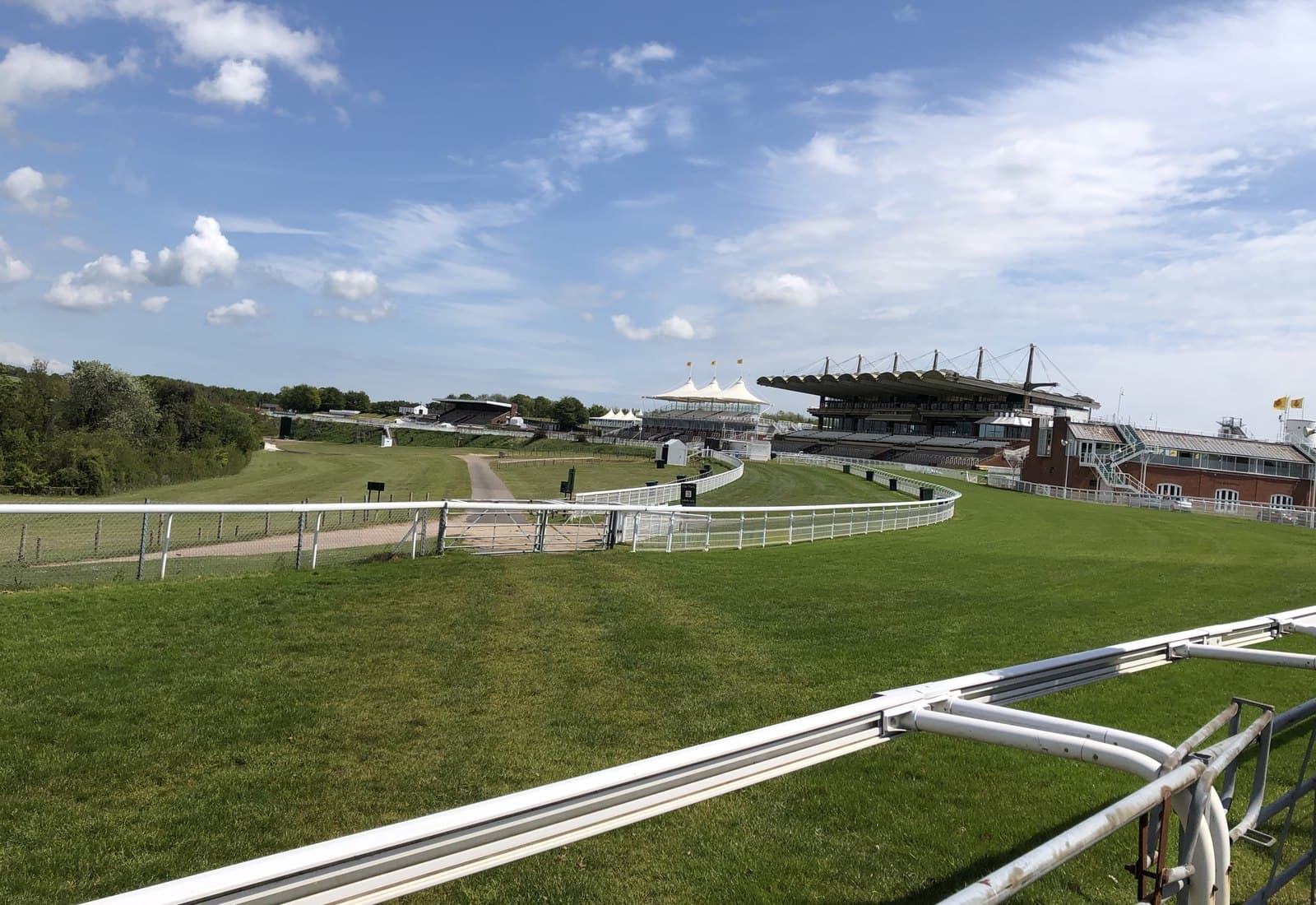
Glorious Goodwood Festival: Complete Guide
Your complete guide to the Qatar Goodwood Festival — five days of world-class flat racing, from the Sussex Stakes to the Stewards' Cup.
Read more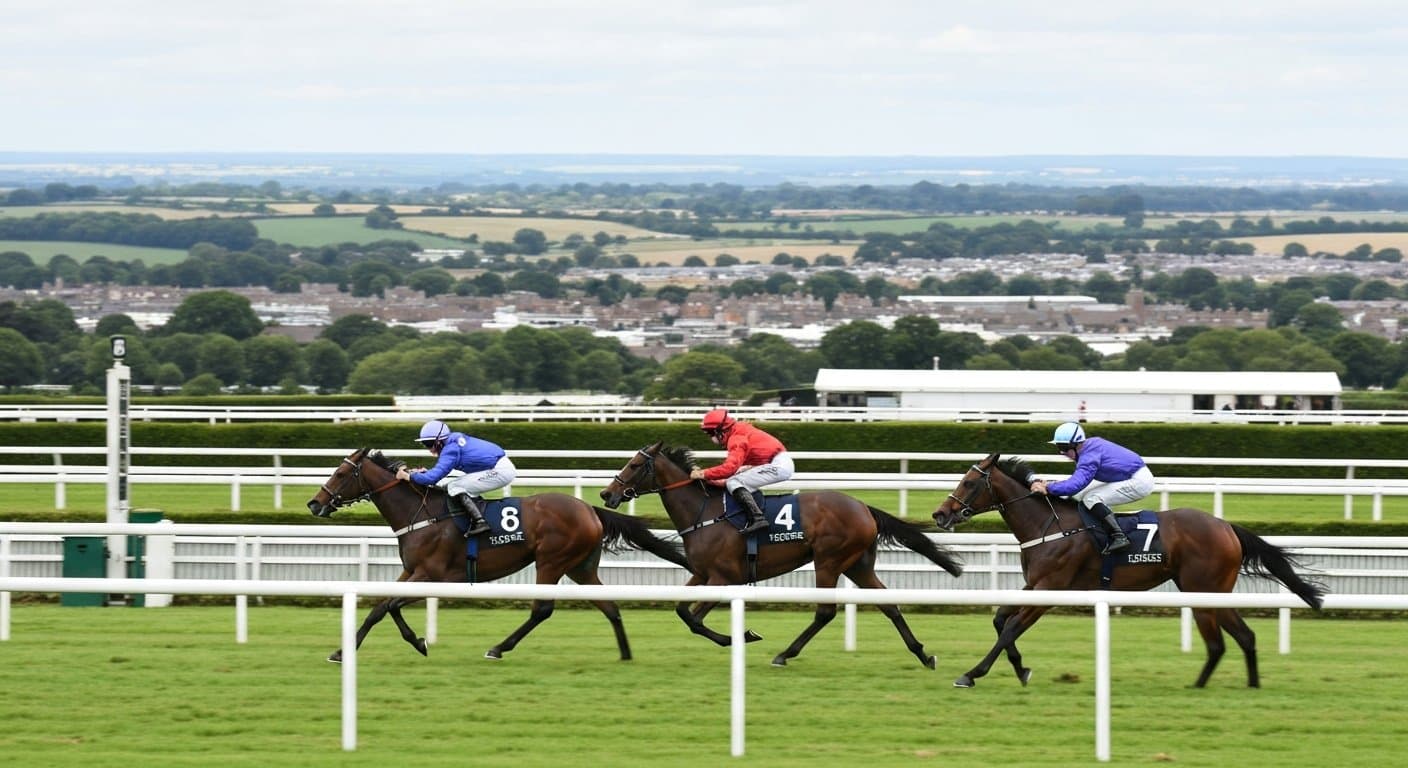
Betting at Goodwood Racecourse
How to bet smarter at Goodwood — track characteristics, draw biases, going preferences, key trainers and winning strategies for this unique course.
Read more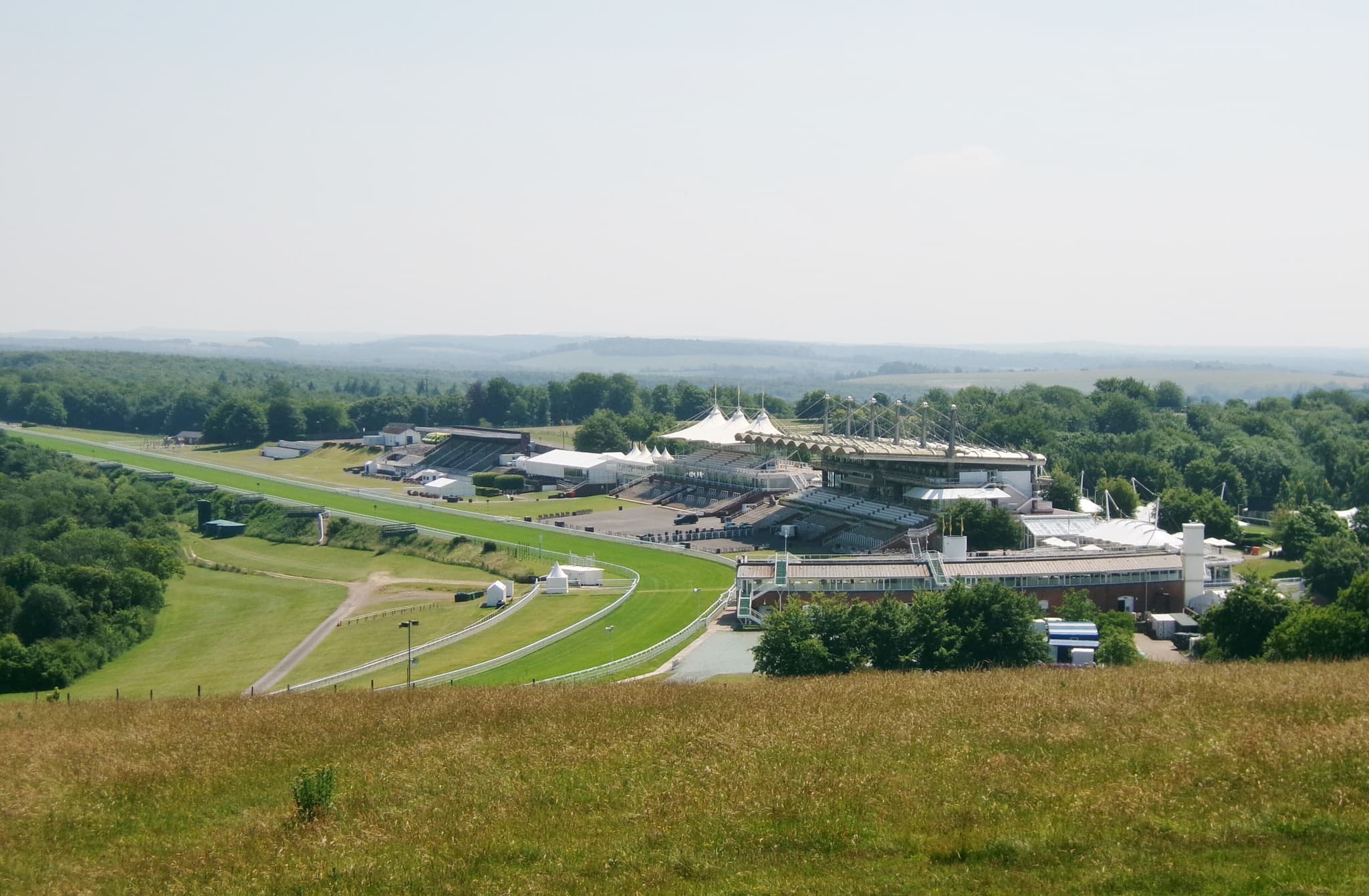
Goodwood Racecourse: Complete Guide
Goodwood — home of Glorious Goodwood, the world's most beautiful racecourse. Course layout, facilities, transport and betting angles.
Read morePhotos on this page are used under Creative Commons licences. Titles, sources and licence links for each one are on our image credits page.
Research the field with the AI Race Predictor
Our model publishes calibrated win-probability estimates for UK races — a second opinion to understand a race, not tips. It's open about its record: it doesn't beat the market, and we show exactly how it does.
Betting offers for Goodwood
Work it out & learn the basics
Gamble Responsibly
Gambling should be entertaining and not seen as a way to make money. Never bet more than you can afford to lose. If you or someone you know has a gambling problem, help and support is available.