
Founder & Editor · Last reviewed 2026-04-05
Goodwood is one of the most fascinating and challenging racecourses in Britain from a betting perspective. Its unique topography, pronounced draw biases and rapidly changing ground conditions create a puzzle that rewards the prepared punter and punishes those who rely on lazy form reading. This is not a course where you can simply back the horse at the top of the ratings and expect to profit. Goodwood demands deeper thinking.
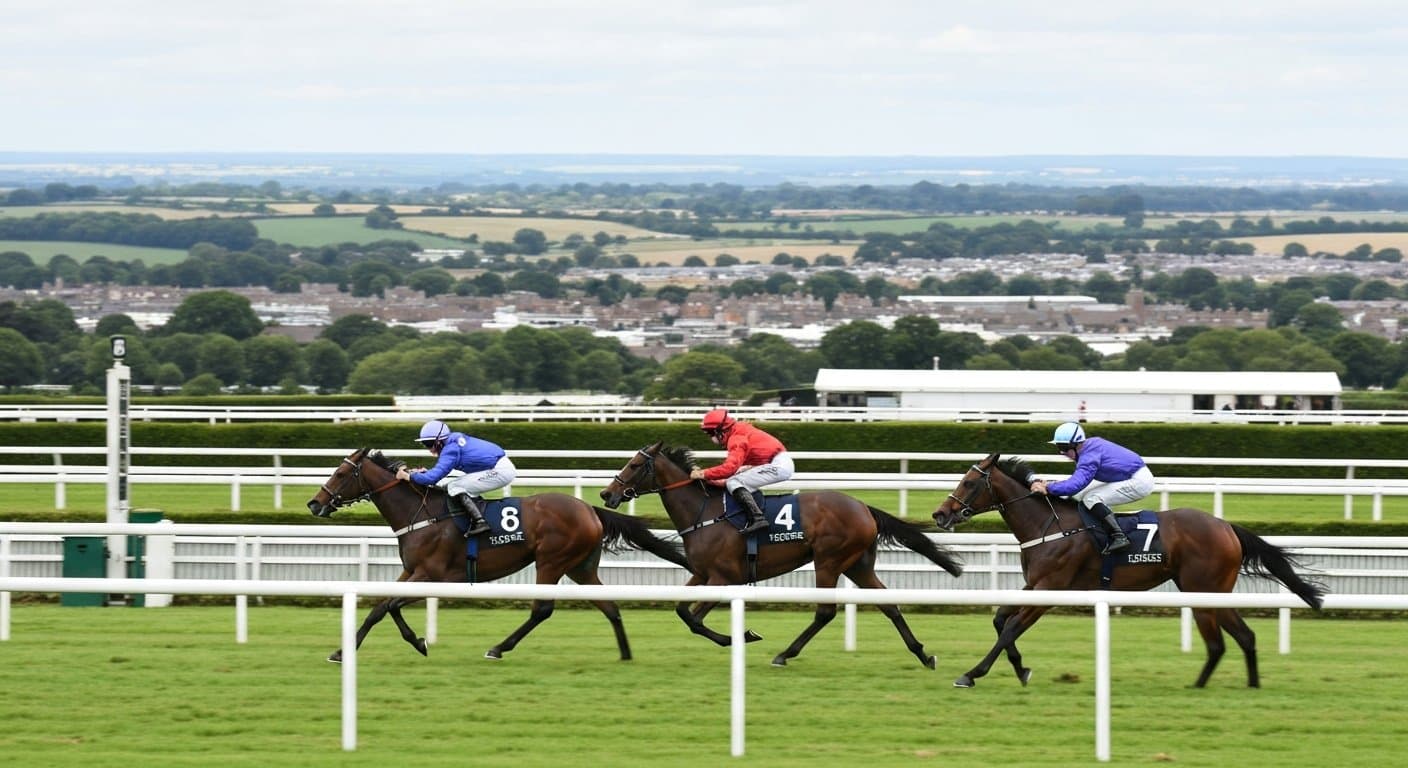
The track sits on the crest of the Sussex Downs near Chichester at roughly 700 feet above sea level, and its position on a chalk downland ridge shapes everything about how racing unfolds here. No other flat track in Britain asks so many different questions of a horse within a single race. Horses that glide over Newmarket's galloping expanses can struggle with the constant changes of gradient here, while less fancied runners with balance and agility outperform their official ratings. Course form is king at Goodwood, arguably more so than at any other track in the country, and understanding why certain horses handle it while others fail is the foundation of profitable betting.
The course does not complete a full circuit. That single fact separates Goodwood from almost every other venue in British flat racing. Races at different distances start from completely separate chutes and entry points, meaning the configuration, the degree of elevation change, and the character of the race change entirely depending on what is on the card. A five-furlong sprint on the straight course is a very different proposition from a mile run that begins on a separate spur before sweeping right-handed onto the main track. Punters who treat them as variations of the same puzzle are already at a disadvantage before a horse breaks from the stalls.
Draw bias adds another dimension. On the straight course, stall position can be worth several lengths, and the bias shifts depending on distance, ground conditions and field size. In large sprint fields of 20 or more runners, the kind that populate the Stewards' Cup, high draws on the far side have a statistically significant historical edge. Ignoring the draw at Goodwood is equivalent to ignoring the going at Cheltenham.
The Qatar Goodwood Festival, five days of racing in late July and early August, is the biggest betting event of the British summer. More than £300 million is wagered on the festival across betting exchanges and traditional bookmakers. The concentration of Group 1 races, heritage handicaps and large fields in a single week gives a prepared punter more angles than almost any comparable fixture in the calendar. But the Festival also concentrates Goodwood's peculiarities: volatile going, extreme draw scenarios and the difficulty of reading form across the unique track layout.
This guide breaks down everything you need to bet smarter at Goodwood: the track's physical characteristics and what they reward, how draw bias operates across the different starting configurations, the Festival races and how the markets behave, the impact of going patterns across a five-day programme, the trainers and jockeys who consistently outperform here, handicap betting angles including the Stewards' Cup, and a full FAQ covering the questions that matter most when money is on the line.
Bet on Goodwood
Place your bets on Goodwood races with a trusted bookmaker.

Promo code BETFRED50. New customers only. Register, deposit with a Debit Card, and place a first bet of £10+ at Evens (2.0)+ on Sports, to be settled within 7 days, to get £30 in Sports Free Bets and £20 in Bet Builder Free Bets within 24 hours of settlement. 7-day expiry. Eligibility & payment exclusions apply. Full T&Cs apply. Take Time to Think. BeGambleAware.org. 18+. Full T&Cs.

Promo code R30. New UK customers only, 18+. Register, deposit £10 or more, then place a £10 single cash bet at odds of 1/2 (1.5) or greater on any sports market (excluding Virtuals). Once the qualifying bet settles you get £30 in Free Bets (3 x £10) — the qualifying bet can win or lose. Free Bets are valid on any sports market excluding Virtuals, expire in 7 days, are non-withdrawable and must be used in full. Excluded deposit methods apply (including PayPal, Apple Pay, Skrill and NETELLER). Named bets such as Lucky 15 do not qualify. If you cash out the qualifying bet, or it is voided, you are no longer eligible for the offer. Ends 31.12.26. Full T&Cs apply. Please gamble responsibly. BeGambleAware.org. 18+. Full T&Cs.

Promo code BET40GET20. New UK customers, 18+. Register with the code and place a first bet of £40 or more at Evens (2.0) or greater. Receive 2 × £10 free bets: the first credited automatically once the qualifying bet settles, the second 24 hours later. Free bets must be placed at minimum odds of 4/1 (5.0), expire 24 hours after credit, and the free-bet stake is not returned with winnings. Debit card deposits only. Take Time to Think. BeGambleAware.org. 18+. T&Cs apply. Full T&Cs.

50% of your first-day net losses refunded as a free bet, capped at £25. New UK customers aged 18+ only. To qualify, deposit and place a first bet of £10 or more on any sport at minimum odds of evens (2.00), then place at least two further bets on different events, each worth at least 50% of your largest bet, all at evens (2.00) or greater. Losses are counted from your first settled bet until 23:59 the same day. Place a qualifying £10+ bet and you are guaranteed at least a £5 free bet. Bets placed at SP, void bets, cashed-out bets and bets struck with free bets do not count towards the offer. The free bet is credited the day after your qualifying bets settle and must be used within 7 days, after which it expires. It can be used at odds from 1/4 (1.25) up to 250/1 on singles and straight accumulators, but not on Trixie, Patent or Yankee style multiples. Free-bet stake is not returned with winnings. One offer per person, household, address, IP address and device. E-wallet deposits may not qualify, so check the cashier before depositing. Customers registered with GAMSTOP cannot claim. KYC identity verification must be completed before the free bet is credited. Take Time to Think. BeGambleAware.org. 18+. T&Cs apply. Full T&Cs.

New customers, 18+. Choose the sports bonus at sign-up, make a first deposit and receive a 100% bonus up to £50 in your Sports Bonus balance. To convert the bonus to cash, wager it 10x within 30 days. Single bets below Evens (2.00) do not qualify; accumulators do not qualify if any selection is below 1/2 (1.50). Virtual Sports, voided, cancelled, drawn, cashed-out and free-bet wagers do not count towards wagering. Only the first settled bet per event counts. Withdrawing before the wagering requirement is met forfeits the bonus balance including bonus winnings. Real-money funds are used before bonus funds. Deposits via Skrill or Neteller are not eligible. Not valid in conjunction with other promotions. Odds, bet and payment limits apply. 10bet general and promotion T&Cs apply. BeGambleAware.org. 18+. Full T&Cs.

New customers in Great Britain and Republic of Ireland, 18+. Place a £10 fixed-odds qualifying bet at minimum odds of 1/2 (1.50) — single or each-way (only the win part counts), pre-event or in-play, not cashed out early, within 28 days of opening the account. Receive up to £60 in bonuses credited over three days: 3 × £10 fixed-odds free bets (the first on settlement, then 24 and 48 hours later) plus 3 × £5 Total Goals FOOTBALL spread bets and 3 × £5 racing Winning Favourites spread bets, with a £1 racing Race Index spread bet as an extra on top. The spread bets need a full spread-betting account, opened within 28 days of the fixed-odds account and subject to Spreadex's eligibility and appropriateness checks. Free-bet stakes not returned with winnings; free bets valid 28 days from issue. IMPORTANT: the £5 credits are SPREAD bets — sports spread betting carries the risk that losses can exceed your stake. Sports spread-betting customers do not have Financial Ombudsman or FSCS recourse. Take Time to Think. BeGambleAware.org. 18+. T&Cs apply. Full T&Cs.

Promo code WELCOME15, entered under My Bonuses after registering. New UK customers, 18+. Place a first qualifying bet of at least £10 from your cash balance at odds of evens (2.0) or greater within 7 days of opening the account. Once the qualifying bet fully settles you receive £15 in free bets, credited as 3 x £5 tokens with set uses: one £5 accumulator free bet (minimum 4 legs, each leg at 2/5 or bigger), one £5 sports free bet (any market at evens or bigger) and one £5 Sub Cover free bet (selected football player markets at evens or bigger). Free-bet stakes are not returned with winnings. Free bets expire 7 days after they are credited. Void, cashed-out and partially cashed-out bets do not qualify. One offer per customer. Confirm the current terms on BetGoodwin's own welcome-offer page before claiming. Take Time to Think. BeGambleAware.org. 18+. T&Cs apply. Full T&Cs.

New UK customers, 18+. Minimum deposit £10. Place a £10 qualifying single on sports (excluding virtuals) at minimum odds of 1/2 (1.50), settled within 14 days. Deposit-method exclusions apply. Receive £30 in free bets (stake not returned), split £20 for sportsbook use (2 x £10) and £10 for Bet Builder only (2 x £5); Bet Builder does not cover horse racing. Free bets must be accepted within 7 days and expire 7 days after acceptance. No promo code required. Best Odds Guaranteed on UK & Irish racing, subject to having staked over £25 in the previous seven days. Operated by LiveScore Betting and Gaming (Gibraltar) Ltd, UKGC 56859. Confirm the current terms on LiveScore Bet's own promotions page before claiming. Take Time to Think. BeGambleAware.org. 18+. T&Cs apply. Full T&Cs.
18+. BeGambleAware.org
Track Characteristics
Understanding Goodwood's layout is fundamental to betting on it effectively. The course is right-handed and sits on the crest of the Sussex Downs at approximately 700 feet above sea level. It features two distinct configurations: a straight course used for sprints up to six furlongs, and a round course used for races from seven furlongs to two miles. Critically, Goodwood does not complete a full loop. Races at different distances begin at entirely separate starting chutes, which means the terrain a horse encounters (the gradient profile, the severity of the bends, the length of the home straight) changes depending on the race distance.
The Straight Course (5f – 6f)
The straight course runs roughly east to west, with a gradual downhill gradient over the first half before levelling out in the final two furlongs. The camber is significant, with the ground sloping away to the right towards the stands side, and this affects the way horses travel through their races, particularly when the ground is soft. Front-runners and prominently ridden horses have a strong historical record on the straight course. The downhill start from the five-furlong chute creates pace distortion: horses are effectively assisted by gravity in the early stages, which inflates sectional times for the first two furlongs relative to what the same horses would record on a level track. By the time the gradient levels in the closing stages, any horse that has used too much energy in the first half of the race will empty quickly.
This pace distortion is one reason why draw bias on the straight course is so consequential. With pace high from the start, the field fans wide naturally, and those drawn towards the far side are not fighting the gravity-assisted surge from behind. The downhill run also rewards horses with an extended stride that can carry momentum rather than horses that need to build their action through an acceleration phase.
The Round Course (7f – 2m)
The round course is where Goodwood's character reveals itself most clearly. Races over seven furlongs and a mile start on a separate spur that joins the main course after roughly two furlongs. The opening section runs sharply downhill before sweeping right-handed into the home straight. The turn is severe, markedly tighter than it appears from the stands, and horses caught wide at this point can lose three or four lengths purely through the wider arc they must travel.
Races over a mile and a quarter and beyond use more of the round course and take in the full back straight. Horses climb steadily for around one and a half furlongs on the back straight, level out briefly, then descend towards the home turn. The undulations are not decorative; they are a real physical test. A horse that is only marginally fit, or whose stamina limit is exactly at the race distance on a flat track, will be found out when those gradients are added to the equation.
The home straight at Goodwood runs slightly downhill in the final two furlongs, and this creates an advantage for horses with an extended, ground-covering stride rather than a short, choppy action. A horse that can lengthen and maintain its stride while running slightly downhill will pass rivals who are shortening under pressure. This is why so many of Goodwood's winners carry a pedigree footnote pointing to stamina or to sires known for producing balanced, athletic stock.
The 1m2f Starting Configuration
The mile-and-a-quarter start is one of the most deceptive on the course. Horses break from a chute on the far side of the track and immediately face a sweeping bend before straightening for the back stretch. Runners drawn on the outside of a large field must navigate this early bend wide and expend energy compensating for the extra ground. In races with 10 or more runners over this trip, low draws carry a significant advantage in the early stages. If the pace is slow from the front, horses on the inside can dictate position without effort; in truly run races, outside runners often get shuffled back and face a much longer task.
What the Track Rewards
The physical demands of Goodwood consistently favour one type of horse over another. Compact, well-balanced individuals with a quick turn of foot handle the undulations and the tight turns better than big, rangy gallopers who need time to hit top gear and require long straights to deploy their stride. Horses with a proven record on undulating courses, specifically Epsom, Brighton and Beverley, regularly transfer that ability to Goodwood. Trainers with yards set on downland terrain, particularly those in Lambourn (which sits on the same chalk ridge system roughly ten miles from the track), often report that their horses are already familiar with the underfoot conditions before they arrive.
Fitness matters more here than at flat, galloping tracks. The constant climbing and descending saps energy from horses that are not fully prepared. First-time-out runners and horses returning from a break of more than 60 days should be treated with serious caution unless their trainer has a specific record of having horses ready early. The Gosden operation, for example, has historically arrived at the Festival with horses at a high state of readiness; the same cannot be said for every yard that sends runners to Chichester.
Stamina is also consistently underestimated at Goodwood. Races that appear on paper to fall within a horse's standard range of distances become tests of real staying power once the gradients are factored in. A horse at the edge of its stamina limit on the flat can fail entirely here. A horse with a stamina surplus, by contrast, often delivers a career-best performance precisely because the terrain plays to its reserves.
Draw Bias at Goodwood
Draw Bias at Goodwood
Draw bias at Goodwood is one of the most extensively studied phenomena in British racing, and it is real, consistent and significant enough to alter your selection process before you have assessed a single piece of form. The bias does not operate uniformly across the course — it changes entirely depending on the starting configuration, field size and ground conditions — so understanding the specific rules for each scenario is more useful than knowing only that "high draws are good."
Straight Course: The Stewards' Cup Configuration (6f, Large Fields)
The most pronounced draw bias at Goodwood occurs on the straight six-furlong course when fields are large. In the Stewards' Cup, which routinely attracts 25 or more runners, horses drawn in high stalls — typically those in the teens and twenties — have historically produced a disproportionate number of winners and placed horses. Analysis of Stewards' Cup results from 2000 to 2023 consistently shows that stall positions in the top third of the draw outperform those in the bottom third by a significant margin once strike rate and starting price returns are combined.
The mechanism behind this bias is partly topographical and partly tactical. The far side of the straight course sits on fractionally higher, slightly faster ground. When fields are large and runners fan to both sides during the race, the group that forms on the far side — the high-drawn group — has historically been the more effective racing surface. A second factor is the natural camber of the course, which channels horses towards the stands rail as the race develops. Far-side runners are not fighting this camber; they are racing relatively free of it.
The bias is most pronounced on good-to-firm or firm ground. As the going softens and the surface becomes more uniform, the advantage narrows but does not entirely disappear. In very soft conditions the bias has occasionally reversed for specific renewals, but betting against the historical tendency on soft ground requires more evidence than a single going report.
Straight Course: Shorter Sprint Races (5f, Smaller Fields)
Over five furlongs with 10 to 14 runners, the draw bias is less systematic. Fields are smaller, the race unfolds faster, and there is less opportunity for a distinct far-side advantage to emerge. The practical rule is that in fields under 12 on the five-furlong straight course, the draw can largely be discounted as a primary filter. Concentrate instead on pace scenarios, fitness and course form. In fields of 15 or more over five furlongs, the high-draw advantage from the six-furlong analysis begins to apply.
Mile Races: The Straight Start Element
The one-mile course at Goodwood begins on the straight before sweeping onto the round course after approximately two furlongs. This starting configuration is somewhat unusual and means that the first portion of the race is essentially run on the straight. Horses drawn in low stalls face the rail quickly and can secure a position before the field narrows as it joins the round course. In practice, the mile draw advantage tends to favour low-stall runners — those that can secure the inside berth at the point where the straight meets the round course without being angled wide. In a field of 12 or more over a mile, stalls one to four have outperformed the higher draws over a sustained period.
Round Course (7f and Beyond)
Over seven furlongs, the round-course start on the spur sees horses immediately facing a right-handed bend. Here, low draws — those in stalls one through five — hold a positional advantage because they face a shorter arc around the initial turn. In a field of 12 runners, a horse drawn in stall 12 must travel significantly more ground in the first quarter-mile of the race than one drawn in stall two. If the pace is truly fast from the front, wide runners can sometimes settle on the outside and save ground at the bend, but this requires an active, experienced jockey to execute and is far from a default assumption.
Over 1m2f and beyond, the draw diminishes in practical significance. Fields tend to be smaller, and the additional distance gives horses more time to find their positions. By the time you reach 1m4f (ten furlongs), the draw is a minor consideration relative to form, fitness and going preference.
Going Patterns and Their Impact on the Straight Course
The straight course's chalk base drains remarkably quickly after rain, which means it often returns to good or good-to-firm within 24 hours of moderate overnight rain. Watering is used to manage the surface during the Festival, but the natural tendency of chalk downland is towards the faster end of the scale. In late July — the typical Festival period — the ground in the South East has usually been dry for several weeks, and the Goodwood going reports frequently read good-to-firm or firm without intervention.
This consistency in ground conditions creates a specific betting opportunity. Horses that have run well on good-to-firm ground at Ascot in the Royal meeting in June often carry that form forward effectively to Goodwood six weeks later. The going is similar, both courses demand balance and quick footwork, and horses that have shown an ability to handle fast ground in competitive races are worth following rather than opposing. In contrast, horses that have run exclusively on good-to-soft or softer ground often fail to reproduce their best form at Goodwood during the Festival unless there has been significant rainfall.
When the going does soften during the Festival — typically due to thunderstorm activity in the South East rather than sustained rainfall — the pace of races changes markedly. On soft ground, the front two furlongs of straight-course races are less assisted by gravity, the camber effect becomes more punishing, and stamina becomes a more significant factor even in sprint races. In soft-ground Festival renewals, course specialists and proven stamina-laden types have outperformed the market predictions in the high-draw positions far more often than they have underperformed.
Practical Draw Rules for Goodwood Punters
For straight-course handicaps with 15+ runners: treat the draw as the first filter before form. High draws have a structural advantage backed by two decades of results data, and you need a specific, evidence-based reason to oppose them. For mile races on the round course: favour low draws in large fields unless you have specific evidence that the pace scenario will allow a wide-drawn horse to save ground. For races over 7f to 1m2f: low draws carry a significant but declining advantage — factor it in but don't let it override strong form at a significant price difference. For races over 1m4f and beyond: ignore the draw entirely and focus on form, stamina and fitness. Always check how the draw performed on the earlier races of the card — if far-side runners have dominated the first sprint of the day, the pattern is likely to continue.
Glorious Goodwood Betting
Glorious Goodwood Betting
The Qatar Goodwood Festival runs across five days in late July and early August and functions as the focal point of the British flat racing summer. More than £300 million is wagered on the meeting across exchanges and traditional bookmakers in a typical year. The concentration of Group 1 races, heritage handicaps and large competitive fields means the market is always under pressure — and that pressure creates mispricings that a prepared punter can exploit.
Market Patterns During the Five-Day Festival
Goodwood betting markets behave differently from single-day meetings in several ways. The volume of high-profile races compressed into five days means that public money flows heavily towards the Festival's marquee events — the Sussex Stakes, the Goodwood Cup, the Nassau Stakes and the Stewards' Cup — while some of the mid-card handicaps and conditions races go relatively underexamined by the general betting public. This creates a consistent pattern: Festival Group races are usually efficiently priced by opening time, while handicaps with large fields often offer more value in the early and mid-morning markets before sharp money shortens the relevant horses.
The Festival also operates under a specific microclimate pressure. The going can change dramatically between days, and bookmakers frequently struggle to adjust their prices fast enough when rain falls overnight. A soft-ground specialist that opened at 8/1 for Tuesday's two-mile handicap can be a significantly better price in Saturday's market than its actual chance suggests once Thursday's rain has improved the going for it. Monitoring the going reports on the morning of each Festival day and comparing those reports against the going recorded when horses ran their best performances is one of the most reliable ways to find value across the week.
The Sussex Stakes (Group 1, 1 mile)
The Sussex Stakes is the centrepiece of the Festival and one of Europe's most prestigious mile races. Frankel won it in both 2011 and 2012, going into the race unbeaten on both occasions. His 2012 victory — trained by Henry Cecil for Juddmonte Farms — was his final race before retirement, and it remains the benchmark for what a Sussex Stakes winner should look like: a horse of exceptional tactical speed, outstanding balance through the Goodwood bends, and the ability to quicken decisively in the final furlong. Brigadier Gerard, another unbeaten champion, also won this race in 1971 and 1972.
The betting angle in the Sussex Stakes is primarily about market reading rather than traditional handicapping. Because the field is small — typically 8 to 12 runners — and quality is uniformly high, the standard draw and going filters matter less than they do in handicaps. Jockey confidence, signalled through market support rather than stated publicly, is a more useful indicator. When a top-tier trainer shortens their Sussex Stakes runner from 5/2 to 6/4 in the final two hours before the race without obvious justification from the morning going report, that movement is worth noting.
Aidan O'Brien has sent multiple high-profile runners to the Sussex Stakes in recent years. His runners are typically well enough served by the going conditions but the round-course configuration at Goodwood does not always suit horses trained on Ballydoyle's flat gallops. O'Brien-trained Sussex Stakes runners that have demonstrated versatility on undulating tracks — Epsom or Goodwood in prior runs — tend to outperform those that have only run on flat Irish tracks.
The Goodwood Cup (Group 1, 2 miles)
The Goodwood Cup is one of the three legs of the Stayers' Triple Crown alongside the Ascot Gold Cup and the Doncaster Cup. It is, in terms of pure test of stamina and balance, the hardest of the three. The two-mile trip on Goodwood's undulating track requires that a horse truly stays the distance — not merely on a flat course, but on terrain that is constantly asking questions of both the horse's engine and its physical coordination.
Stradivarius dominated this race across 2018, 2019 and 2020, winning all three renewals for trainer John Gosden and owner Bjorn Nielsen. Those three victories illustrated the importance of a proven staying pedigree combined with course-appropriate balance. Stradivarius was not a big, rangy horse; he was compact and well-proportioned, allowing him to handle Goodwood's gradients better than rivals with more raw size. His record in the race also demonstrated that a horse with multiple Goodwood Cup wins should be taken very seriously in future entries at the track — the form is not a coincidence.
The betting approach to the Goodwood Cup should be conservative in one respect and aggressive in another. Be conservative about backing unproven stayers at short prices — the course's demands regularly expose horses that have not truly been tested over two miles on undulating ground. Be aggressive about backing proven Goodwood Cup winners and horses with course form at a variety of distances here, especially when the going is fast and their stamina is suited to taking on the course's elevation changes without ground assistance.
Horses that have won or placed in the Ascot Gold Cup typically perform well in the Goodwood Cup, though the switch from Ascot's flat, wide galloping track to Goodwood's compact undulations sometimes requires a period of adjustment. The Gold Cup-Goodwood Cup double has been completed multiple times in the era of modern racing, but it is not automatic — form assessors tend to overstate how directly it translates.
The Nassau Stakes (Group 1, 1m 2f)
The Nassau Stakes is a championship race for fillies and mares over a mile and a quarter. John Gosden and Thady Gosden have an outstanding historical record in this race, having trained multiple winners from the Clarehaven stable. The betting angles in the Nassau reflect the broader dynamics of fillies' racing in Britain: three-year-olds taking on older mares for the first time can be underpriced when they have Classic form, or overpriced when they have only beaten their own age group in sub-Group-1 company.
The each-way market in the Nassau Stakes is often generous. Fields of 8 to 12 runners in a Group 1 race typically offer three or four places, and unexposed three-year-old fillies that have shown strong form at Epsom, Ascot or Sandown can represent significant value at 8/1 or bigger when taking on older mares for the first time.
Festival Market Behaviour: Late Movers and Early Value
Across the Festival as a whole, the most consistent market pattern involves late-morning shorteners in the big handicaps. Sharp money for the Stewards' Cup, the Goodwood Stakes and the mile handicaps tends to arrive between 10am and 11am on race morning. Horses that have shortened from their overnight prices by the time the market opens on Betfair at 9am — and continue to contract through mid-morning — are frequently those that their trainers have been specifically targeting for the Festival. Following those moves, especially in large-field handicaps where form reading is truly difficult, has historically been a profitable approach over a sustained period.
Key Trainers & Jockeys
Certain trainers and jockeys consistently outperform at Goodwood, and factoring their presence into your analysis provides a real edge. The course's quirks reward familiarity, and the handlers who send well-prepared runners time after time are the ones worth following.
John and Thady Gosden
John Gosden and, in more recent years, Thady Gosden operating jointly under the Clarehaven banner have long been among the most potent forces at Goodwood. They trained Stradivarius to three consecutive Goodwood Cup victories between 2018 and 2020, and John Gosden also managed multiple Nassau Stakes winners from the same Newmarket base. The yard's runners tend to be balanced, athletic types rather than long-striding gallopers, and their strike rate in Group races at the Festival is outstanding. Any Gosden runner at a short price in the Sussex or Nassau Stakes should be taken seriously. The historical record also shows that Gosden-trained horses running at Goodwood for the second or third time in a season frequently outperform those making their first visit of the year.
The Frankel connection adds historical context. Frankel was trained by Henry Cecil — not Gosden — but his two Sussex Stakes victories in 2011 and 2012 were run from Juddmonte Farms' operation under Cecil's guidance from Newmarket's Warren Place. Cecil's approach of targeting Goodwood after Royal Ascot, allowing horses to consolidate fitness before the Festival, is a template that several top Newmarket yards have adopted since.
Richard Hannon
Richard Hannon trains at Herridge near Marlborough, approximately 40 miles from Goodwood, and his familiarity with the track is reflected in a consistently strong record particularly with two-year-olds and sprinters. The Hannon yard excels at preparing lightly raced younger horses for competitive conditions races during the Festival, and their two-year-old runners in the back half of July are worth monitoring. In sprint handicaps and conditions races at Goodwood, Hannon's stable have produced winners at a rate that exceeds their national average.
William Haggas
William Haggas has emerged as a consistent Goodwood performer from his Newmarket base at Somerville Lodge. His operation focuses on horses that are fit, well-schooled and able to handle varied track configurations, and his Goodwood strike rate in competitive handicaps is above his national average. Haggas-trained horses in the mile-and-a-quarter and mile-and-a-half range at Goodwood have been particularly effective, partly because the yard regularly produces horses with a stamina surplus that benefits from Goodwood's demanding terrain.
Andrew Balding
Andrew Balding, based at Kingsclere in Hampshire roughly 35 miles from the track, has excellent operational knowledge of southern courses. His runners in mile and mile-and-a-quarter races at Goodwood appear regularly in the results, and his handicap runners during the Festival have an above-average record at prices typically in the 8/1 to 20/1 range. Balding's runners in the Goodwood Stakes (two-mile handicap) are particularly worth examining — he has targeted that race successfully on several occasions with horses that have been quietly prepared across the summer.
Lambourn Trainers: The Terrain Advantage
Trainers based in Lambourn, roughly ten miles from Goodwood across the same chalk downland ridge, operate on terrain that is broadly similar to the course itself. Their horses work on undulating chalk ground and arrive at Goodwood having experienced the type of footing they will encounter during a race. Clive Cox, based in Lambourn, has a strong record with sprinters at Goodwood in particular, and his runners in straight-course handicaps should be evaluated with the terrain familiarity factor as a positive. Other Lambourn yards — including those on the Beckhampton gallops — report similar benefits when their horses step into Goodwood's draw-biased sprint races.
Aidan O'Brien
Aidan O'Brien sends his best horses to the Festival for the Sussex Stakes, the Goodwood Cup and occasionally the Nassau Stakes. While his overall Goodwood strike rate is held down by the volume of runners across the full programme, his Group 1 performers at the Festival have an excellent record when they arrive with demonstrated ability on right-handed, undulating tracks. O'Brien horses that have performed well at Epsom, or that carry a pedigree note suggesting balance and adaptability, should be rated more highly at Goodwood than those with a profile built entirely on flat, galloping venues.
Key Jockeys
Ryan Moore handles Goodwood's undulations as well as any rider currently in the weighing room. His ability to balance a horse through the cambers while maintaining a strong rhythm in the final furlong gives his mounts a consistent advantage over less experienced riders in the same races. Moore has ridden numerous Festival winners on horses that would not have won with a rider who simply pointed them at the front two furlongs out. His record on the round course — particularly over seven furlongs and a mile — is significantly above average.
William Buick, riding predominantly for the Gosden and Appleby operations, combines patience with tactical intelligence that suits Goodwood's non-linear configuration. His willingness to wait on the round course before delivering a late challenge — a strategy that requires confidence in a horse's turn of foot on undulating ground — suits the course's demands. Buick's winners at Goodwood often look easier in replay than they appeared during the race because his timing is precise.
Jim Crowley and Oisin Murphy both have strong course records and ride Goodwood with the confidence of regulars. Both jockeys understand where to save ground on the round course, when to commit in the straight-course sprints, and how to manage large fields in the Stewards' Cup configuration. In competitive handicaps where the draw matters, having a jockey who will adhere to the track's optimal racing lines rather than improvising can be worth a length or more.
Handicap Betting Angles
Handicap Betting Angles
Goodwood's Festival programme contains several of the most bet-upon handicap races in the British calendar, and each has its own specific structure of patterns and angles. The key to profiting from them is applying the right filter for each race rather than treating them as interchangeable large-field puzzles.
The Stewards' Cup: Britain's Biggest Sprint Handicap Puzzle
The Stewards' Cup, run over six furlongs on the straight course on the final Saturday of the Festival, is the defining Goodwood handicap from a betting perspective. It consistently attracts 25 or more runners, is one of the most heavily backed races of the entire British season, and has a draw bias that is among the most documented in racing.
High draws have a statistically significant advantage in the Stewards' Cup when the field reaches 20 or more runners. Analysis of the race from 2000 through 2023 shows that horses drawn in stalls 17 and above have produced a win percentage and Betfair SP return profile that consistently outperforms those drawn in stalls one through ten. In the very largest fields — 25 or more runners — the bias towards high draws is at its most extreme, with far-side groups historically dominating the placed positions.
Pace scenarios within the race determine whether the draw advantage is amplified or reduced. When there are several prominent racers drawn in the high stalls, the far-side group typically forms early and creates a self-contained pace scenario on their side of the track. If that group runs at even fractions, a horse with any tactical advantage — better position within the group, a stronger handler, a fitter horse — can win from it. When pace is uneven, or when the far-side group has no natural front-runners, the advantage can be reduced. Checking the pace profile of each high-drawn runner on the morning of the race is a straightforward and productive exercise.
The Stewards' Cup is also a race where each-way betting at large prices has produced a positive return over time, precisely because the structural advantage of the draw is not fully priced into the market for horses at 14/1 and beyond. A horse drawn in stall 22 at 20/1 that has run competitively in similar field sizes at this trip, and has a going preference compatible with the current Goodwood ground, is a more interesting each-way candidate than its raw price suggests.
The Goodwood Stakes (Handicap, 2 miles)
The Goodwood Stakes, traditionally run on Tuesday of the Festival, is a marathon handicap that attracts stayers who are qualified by handicap mark rather than pattern-race class. The race's two-mile distance over Goodwood's undulating course is a significantly harder test than two miles on the flat at Ascot or Sandown — the elevation changes add the equivalent of a quarter-mile to the effective stamina requirement. Horses that have won or placed over two miles on flat tracks and have then failed to stay when the course becomes more demanding are not failing because of a stamina shortfall; they are failing because they were never as confirmed over the trip as the flat-track form suggested.
The trainer angle matters enormously in the Goodwood Stakes. A small number of trainers target this race specifically with horses that have been quietly prepared across early summer. Balding and Haggas have both won this race with horses that showed limited form earlier in the season but arrived at Goodwood with an improved handicap mark and a specific preparation for the trip. When a trainer's runner in the Goodwood Stakes is shortening in the morning markets without an obvious piece of public form that explains the move, that is worth following.
Mid-Card Festival Handicaps (1m – 1m4f)
The Festival's mile and mile-and-a-quarter handicaps sit outside the headline races but regularly produce big-priced winners. These races often contain 12 to 16 runners and operate on round-course configurations where the draw advantage for low stalls is real but less dramatic than on the straight course. The most productive approach for these races is to combine the draw filter (low stalls marginally preferred in fields of 12+) with the course-form filter (previous Goodwood winners or placed horses) and the trainer-intent filter (watch for significant market support from overnight to morning).
Horses that have run well at Epsom — another right-handed, undulating track — and are now stepping up in trip at Goodwood for the first time can represent significant value in these mid-card handicaps. The transferability of Epsom form to Goodwood is not perfect, but it is stronger than the transferability of Newmarket or Chester form. A horse with Epsom placed form making its first appearance at Goodwood in a 1m2f Festival handicap at 16/1 deserves more consideration than the general market will typically give it.
Course Specialists in Handicap Company
Goodwood produces repeat winners in handicap company at a rate that exceeds most other British tracks. A horse that has won a Goodwood handicap will frequently return to the track and perform to a similar level even when its handicap mark has risen, because the advantage it holds comes from course suitability rather than handicap positioning. The market often prices these horses as if the form mark rise is the dominant factor, creating value in horses that have won here before at prices of 8/1 to 16/1.
The key filter is to separate real course specialists — horses that have won or placed at Goodwood on multiple occasions across different going conditions — from one-time winners that benefited from an ideal draw and pace scenario in a single race. A horse that has won at Goodwood on both good-to-firm and good-to-soft ground is a true course specialist. A horse that won once when drawn one in a field of four on soft ground is a fortuitous winner rather than a structural advantage to back again.
Frequently Asked Questions
Share this article
More about this racecourse
All Goodwood guides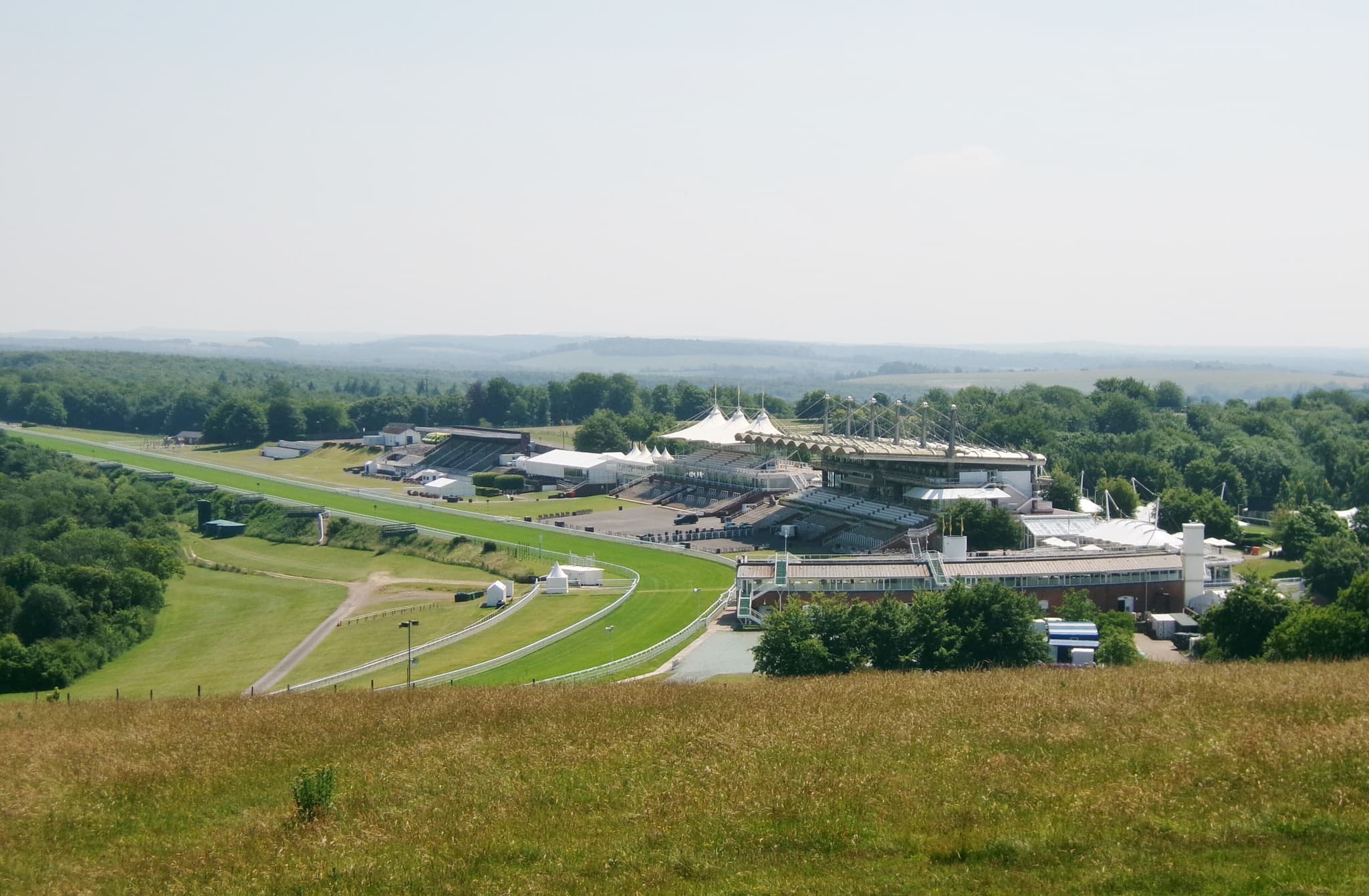
Goodwood Racecourse: Complete Guide
Goodwood — home of Glorious Goodwood, the world's most beautiful racecourse. Course layout, facilities, transport and betting angles.
Read more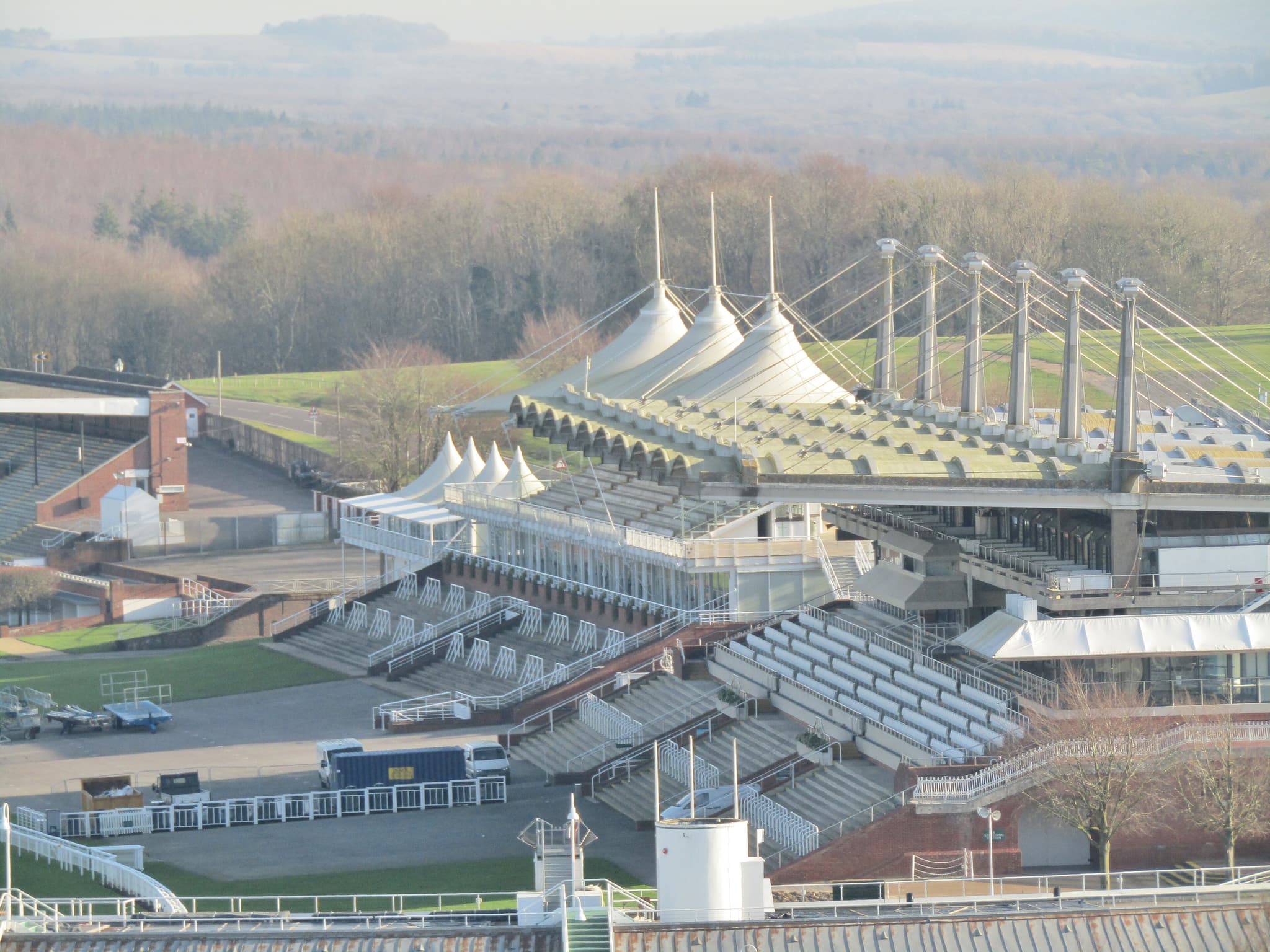
A Day Out at Goodwood Racecourse
Everything you need for a day at Goodwood — getting there, what to wear, enclosures, food and drink, and insider tips for making the most of your visit.
Read more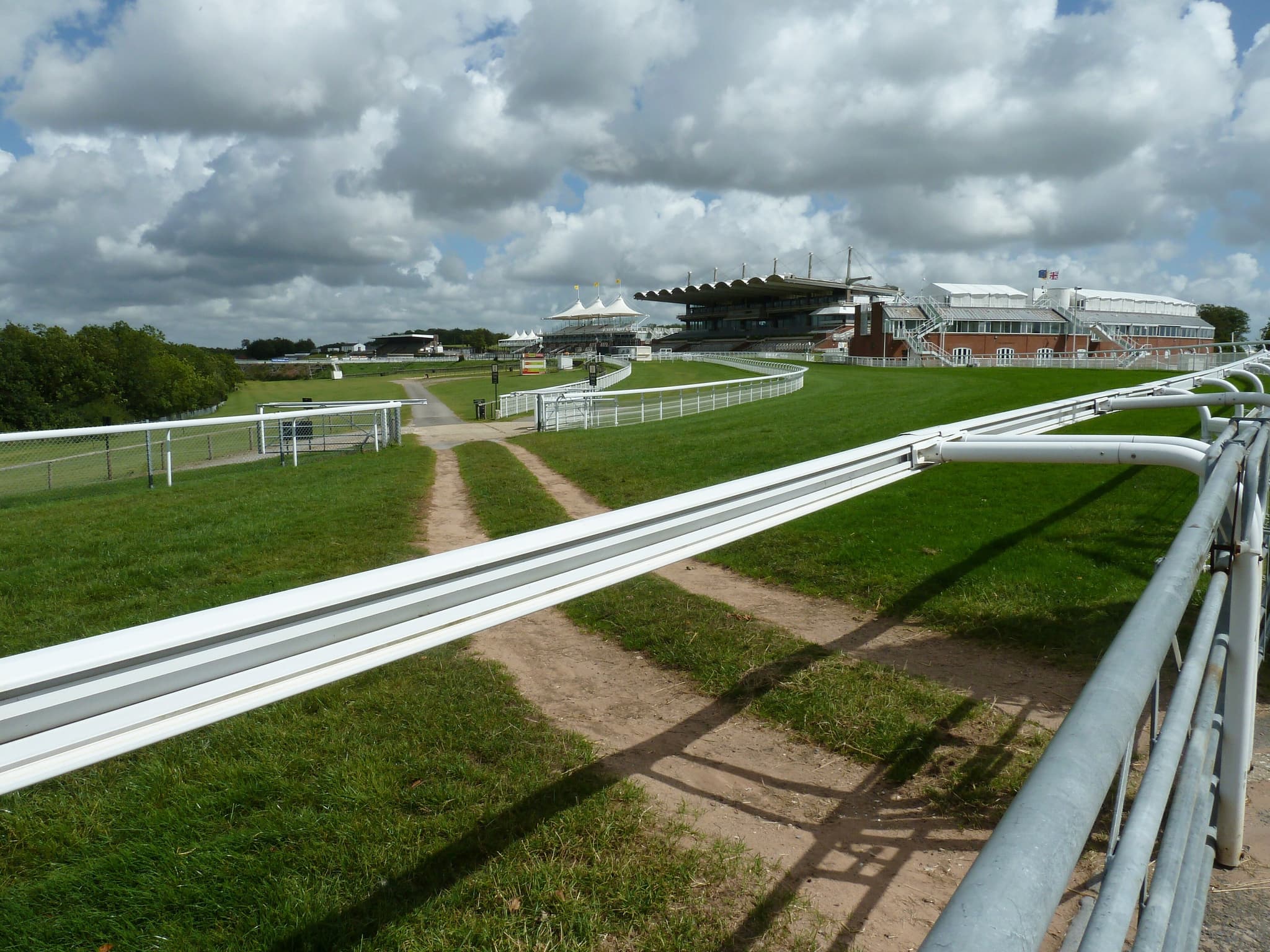
The History of Goodwood Racecourse
From the 3rd Duke of Richmond's private course in 1802 to one of the world's most beautiful racing venues — the story of Goodwood.
Read morePhotos on this page are used under Creative Commons licences. Titles, sources and licence links for each one are on our image credits page.
Research the field with the AI Race Predictor
Our model publishes calibrated win-probability estimates for UK races — a second opinion to understand a race, not tips. It's open about its record: it doesn't beat the market, and we show exactly how it does.
Betting offers for Goodwood
Work it out & learn the basics
Gamble Responsibly
Gambling should be entertaining and not seen as a way to make money. Never bet more than you can afford to lose. If you or someone you know has a gambling problem, help and support is available.