
Founder & Editor · Last reviewed 2026-03-02
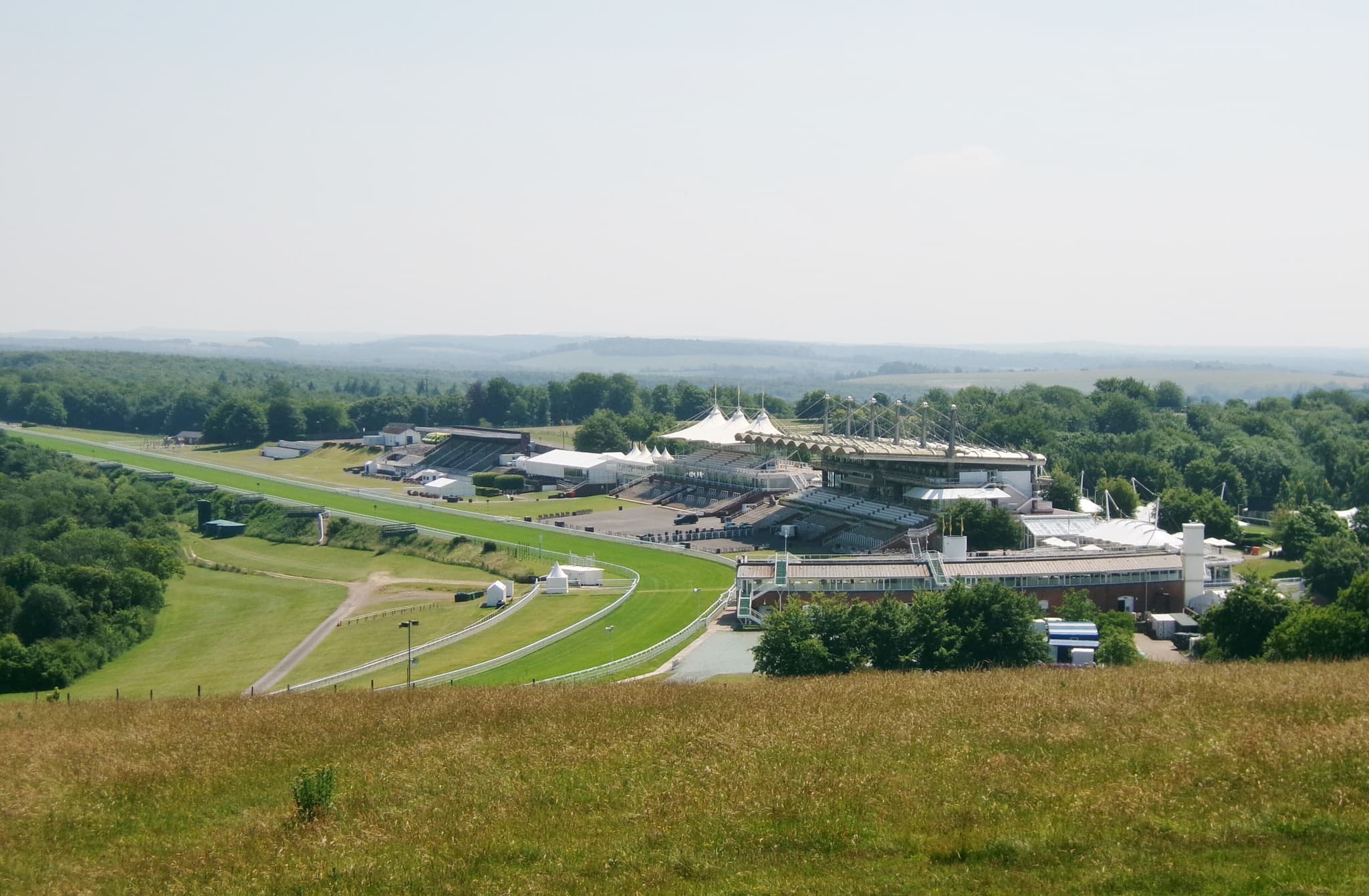
Goodwood Racecourse sits on top of the Sussex Downs, roughly 600 feet above sea level, on the Goodwood Estate owned by the Duke of Richmond. On a clear July afternoon, you can see from the South Downs all the way to the English Channel. No other flat racecourse in Britain offers a view anything like it, and no other course tests horses quite the way this one does.
Founded in 1802, Goodwood has spent over two centuries earning its reputation. The track is right-handed and shaped by the natural contours of the downland: undulating, cambered, and demanding in ways that catch horses and jockeys by surprise. Speed is necessary, but balance matters as much. Horses that win here have something extra, the ability to adapt on the move, to hold their rhythm through the dips and rises, and to find more at the end of a finish that runs uphill.
The signature event is the Qatar Goodwood Festival, five days in late July and early August that rank among the best racing in the European flat season. The Sussex Stakes (Group 1, one mile), the Goodwood Cup (Group 1, two miles), and the Nassau Stakes (Group 1, one mile two furlongs) draw the best horses from across the continent. The Stewards' Cup, a six-furlong Heritage Handicap with 20-plus runners, produces one of the biggest betting races of the summer. The festival's atmosphere is unlike anything else in flat racing: intense, informed, and set against a backdrop that makes even a midfield finish feel worth watching.
Outside of festival week, Goodwood stages quality fixtures from May through October. The track rewards return visits from both racegoers and horses. Course form means more here than at most venues, and understanding the draw bias in sprint races gives you a consistent edge in the betting.
Quick Decision Block
- When to go: The Qatar Goodwood Festival (late July/early August) for the best racing; May and August meetings for the best value
- Which enclosure: Lennox Enclosure for most visitors (good views, relaxed dress code, fair prices); Richmond Enclosure for a formal occasion or special day out
- Getting there by car: Postcode PO18 0PS, approach via the A285 north of Chichester; free parking with most tickets
- Getting there by train: London Victoria to Chichester (1hr 40min), then shuttle bus during the Festival (£5-8 return); taxi otherwise (£15-20)
- Dress code: Jacket and tie in the Richmond Enclosure; smart casual in the Lennox; relaxed in the Gordon — jeans are fine if they're decent ones
- Betting angle: Draw bias is real and profitable in sprint races; high-numbered stalls have a clear edge over five furlongs, and stall position is your first call when assessing the Stewards' Cup
- The view: From the stand, the course drops away to the left, the Downs fold into each other, and on a clear day you can make out the Channel. Go at least once to understand what the fuss is about.
Who This Guide Is For
First-time visitors who want to know where to stand, what to wear, and how to get there without spending half the morning lost on a B-road in West Sussex.
Racegoers planning a festival trip who need to understand the layout of the week, which enclosure suits their budget, and which days are worth the extra cost of a Richmond ticket.
Punters and form students looking to understand Goodwood's draw biases, how the undulations affect race outcomes, and which trainers and jockeys consistently outperform at this course.
Horse racing fans who want the full picture: the history, the famous horses, the estate, and the reasons why this course occupies such a distinctive position in British flat racing.
Whether you're planning your first visit or trying to sharpen your betting approach, the sections below cover everything you need. Start with the course layout if you want to understand the track's unusual demands, or go straight to betting angles if you're here for the punting intelligence.
Bet on Goodwood
Place your bets on Goodwood races with a trusted bookmaker.

Promo code BETFRED50. New customers only. Register, deposit with a Debit Card, and place a first bet of £10+ at Evens (2.0)+ on Sports, to be settled within 7 days, to get £30 in Sports Free Bets and £20 in Bet Builder Free Bets within 24 hours of settlement. 7-day expiry. Eligibility & payment exclusions apply. Full T&Cs apply. Take Time to Think. BeGambleAware.org. 18+. Full T&Cs.

Promo code R30. New UK customers only, 18+. Register, deposit £10 or more, then place a £10 single cash bet at odds of 1/2 (1.5) or greater on any sports market (excluding Virtuals). Once the qualifying bet settles you get £30 in Free Bets (3 x £10) — the qualifying bet can win or lose. Free Bets are valid on any sports market excluding Virtuals, expire in 7 days, are non-withdrawable and must be used in full. Excluded deposit methods apply (including PayPal, Apple Pay, Skrill and NETELLER). Named bets such as Lucky 15 do not qualify. If you cash out the qualifying bet, or it is voided, you are no longer eligible for the offer. Ends 31.12.26. Full T&Cs apply. Please gamble responsibly. BeGambleAware.org. 18+. Full T&Cs.

Promo code BET40GET20. New UK customers, 18+. Register with the code and place a first bet of £40 or more at Evens (2.0) or greater. Receive 2 × £10 free bets: the first credited automatically once the qualifying bet settles, the second 24 hours later. Free bets must be placed at minimum odds of 4/1 (5.0), expire 24 hours after credit, and the free-bet stake is not returned with winnings. Debit card deposits only. Take Time to Think. BeGambleAware.org. 18+. T&Cs apply. Full T&Cs.

50% of your first-day net losses refunded as a free bet, capped at £25. New UK customers aged 18+ only. To qualify, deposit and place a first bet of £10 or more on any sport at minimum odds of evens (2.00), then place at least two further bets on different events, each worth at least 50% of your largest bet, all at evens (2.00) or greater. Losses are counted from your first settled bet until 23:59 the same day. Place a qualifying £10+ bet and you are guaranteed at least a £5 free bet. Bets placed at SP, void bets, cashed-out bets and bets struck with free bets do not count towards the offer. The free bet is credited the day after your qualifying bets settle and must be used within 7 days, after which it expires. It can be used at odds from 1/4 (1.25) up to 250/1 on singles and straight accumulators, but not on Trixie, Patent or Yankee style multiples. Free-bet stake is not returned with winnings. One offer per person, household, address, IP address and device. E-wallet deposits may not qualify, so check the cashier before depositing. Customers registered with GAMSTOP cannot claim. KYC identity verification must be completed before the free bet is credited. Take Time to Think. BeGambleAware.org. 18+. T&Cs apply. Full T&Cs.

New customers, 18+. Choose the sports bonus at sign-up, make a first deposit and receive a 100% bonus up to £50 in your Sports Bonus balance. To convert the bonus to cash, wager it 10x within 30 days. Single bets below Evens (2.00) do not qualify; accumulators do not qualify if any selection is below 1/2 (1.50). Virtual Sports, voided, cancelled, drawn, cashed-out and free-bet wagers do not count towards wagering. Only the first settled bet per event counts. Withdrawing before the wagering requirement is met forfeits the bonus balance including bonus winnings. Real-money funds are used before bonus funds. Deposits via Skrill or Neteller are not eligible. Not valid in conjunction with other promotions. Odds, bet and payment limits apply. 10bet general and promotion T&Cs apply. BeGambleAware.org. 18+. Full T&Cs.

New customers in Great Britain and Republic of Ireland, 18+. Place a £10 fixed-odds qualifying bet at minimum odds of 1/2 (1.50) — single or each-way (only the win part counts), pre-event or in-play, not cashed out early, within 28 days of opening the account. Receive up to £60 in bonuses credited over three days: 3 × £10 fixed-odds free bets (the first on settlement, then 24 and 48 hours later) plus 3 × £5 Total Goals FOOTBALL spread bets and 3 × £5 racing Winning Favourites spread bets, with a £1 racing Race Index spread bet as an extra on top. The spread bets need a full spread-betting account, opened within 28 days of the fixed-odds account and subject to Spreadex's eligibility and appropriateness checks. Free-bet stakes not returned with winnings; free bets valid 28 days from issue. IMPORTANT: the £5 credits are SPREAD bets — sports spread betting carries the risk that losses can exceed your stake. Sports spread-betting customers do not have Financial Ombudsman or FSCS recourse. Take Time to Think. BeGambleAware.org. 18+. T&Cs apply. Full T&Cs.

Promo code WELCOME15, entered under My Bonuses after registering. New UK customers, 18+. Place a first qualifying bet of at least £10 from your cash balance at odds of evens (2.0) or greater within 7 days of opening the account. Once the qualifying bet fully settles you receive £15 in free bets, credited as 3 x £5 tokens with set uses: one £5 accumulator free bet (minimum 4 legs, each leg at 2/5 or bigger), one £5 sports free bet (any market at evens or bigger) and one £5 Sub Cover free bet (selected football player markets at evens or bigger). Free-bet stakes are not returned with winnings. Free bets expire 7 days after they are credited. Void, cashed-out and partially cashed-out bets do not qualify. One offer per customer. Confirm the current terms on BetGoodwin's own welcome-offer page before claiming. Take Time to Think. BeGambleAware.org. 18+. T&Cs apply. Full T&Cs.

New UK customers, 18+. Minimum deposit £10. Place a £10 qualifying single on sports (excluding virtuals) at minimum odds of 1/2 (1.50), settled within 14 days. Deposit-method exclusions apply. Receive £30 in free bets (stake not returned), split £20 for sportsbook use (2 x £10) and £10 for Bet Builder only (2 x £5); Bet Builder does not cover horse racing. Free bets must be accepted within 7 days and expire 7 days after acceptance. No promo code required. Best Odds Guaranteed on UK & Irish racing, subject to having staked over £25 in the previous seven days. Operated by LiveScore Betting and Gaming (Gibraltar) Ltd, UKGC 56859. Confirm the current terms on LiveScore Bet's own promotions page before claiming. Take Time to Think. BeGambleAware.org. 18+. T&Cs apply. Full T&Cs.
18+. BeGambleAware.org
History of Goodwood
Racing at Goodwood owes its existence to one man's passion and one extraordinary piece of land. Charles Lennox, the 3rd Duke of Richmond, was already a devoted patron of the Turf when he decided in 1801 that the high downland above his Sussex estate would make a perfect setting for a private racecourse. The first meeting took place on 25 April 1802, with officers from the local barracks providing many of the runners. It was a modest affair. The setting was anything but.
The 3rd Duke chose his site brilliantly. The natural contours of the Downs created a course with character and challenge, its sweeping bends and undulating terrain demanding more from horse and jockey than the flat expanses of Newmarket or Doncaster. Within a few years, the meeting had outgrown its private origins and was attracting runners and racegoers from across southern England.
The Early Years and the Sussex Stakes
The early decades established Goodwood as a fixture of real quality. The Sussex Stakes was first run in 1841, initially over one mile, and quickly became the course's most prestigious contest. It attracted the best milers of the day and gave Goodwood a flagship race that would grow into one of Europe's premier Group 1 events.
By the 1840s, Goodwood's July meeting had earned the nickname "Glorious Goodwood," a tribute to both the racing and the setting. The timing was perfect, falling after Royal Ascot and before the shooting season began, capturing the aristocracy at their most relaxed. The Goodwood Cup, first run in 1812, added a demanding staying test over two miles that drew the best stayers in training.
The 5th Duke of Richmond expanded the course and its facilities during the mid-19th century, building new stands and improving the racing surface. His ambition transformed Goodwood from a charming private meeting into one of the most important fixtures on the British racing calendar. The course's reputation for combining top-class sport with a convivial social atmosphere was firmly established by the time of his death in 1860.
Victorian Grandeur and the Social Season
The late Victorian era saw Goodwood at its most fashionable. Special trains ran from London to Chichester, depositing racegoers who would be ferried up the hill by horse-drawn carriage. The July meeting became a fixture of the social season, attended by royalty, politicians and the cream of society. Edward, Prince of Wales (later Edward VII) was a regular visitor whose presence guaranteed column inches in the national press.
The racing itself kept pace with the social glamour. The Stewards' Cup, established in 1840 as a handicap sprint over six furlongs, became one of the biggest betting races of the year. Its large fields and fiercely competitive nature made it a favourite that drew enormous crowds. The race remains a highlight of the festival to this day, now run as a Heritage Handicap with prize money and betting volumes that would have astonished its Victorian founders.
Goodwood's character owed much to its estate setting. Unlike courses in towns or near railway stations, Goodwood sat in splendid isolation on the Downs. Getting there was part of the experience: the climb up from Chichester through winding lanes, the sudden revelation of the course spread across the hilltop, the panoramic views that greeted arrivals. It was, and remains, a journey with a destination that justifies the effort.
The Goodwood Cup drew some of the greatest staying horses of the late nineteenth century. Crowds that gathered for the July meeting had access to racing of a quality that matched any venue in England. By 1890, the course had installed telegraph services to relay results, and the betting ring below the stands was one of the most active outside of Newmarket. The combination of social occasion and serious sport was baked into Goodwood's identity from its earliest years.
The Edwardian and Pre-War Years
The Edwardian era brought continued prosperity but also the first signs of a broader social shift. The landed gentry were still central to the meeting's character, but the railways had made Goodwood accessible to a wider public than ever before. Day trippers from Brighton, Portsmouth and London added a new dimension to the crowd. The July meeting swelled in size, and the course's infrastructure was extended to accommodate the growing numbers.
Racing at Goodwood during this period reached a consistent level of quality. The Sussex Stakes attracted the best milers in training, and the Goodwood Cup served as a key pointer to autumn staying targets. Several horses of real historical note passed through the course during these years, not as curiosities but as favourites, backed short and expected to win.
The Edwardian era ended with the outbreak of the First World War in 1914. Racing at Goodwood was suspended, the Downs given over to military training. The course fell silent for four years, but the estate itself remained active, serving the war effort in ways that varied by season and year.
Wars and Recovery
Racing resumed after the First World War, though the social context had changed. The extravagant house-party culture of the Victorian and Edwardian eras never fully returned, but the racing itself did, and quickly. By the early 1920s, Goodwood's July meeting was back at full strength, drawing competitive fields and large crowds.
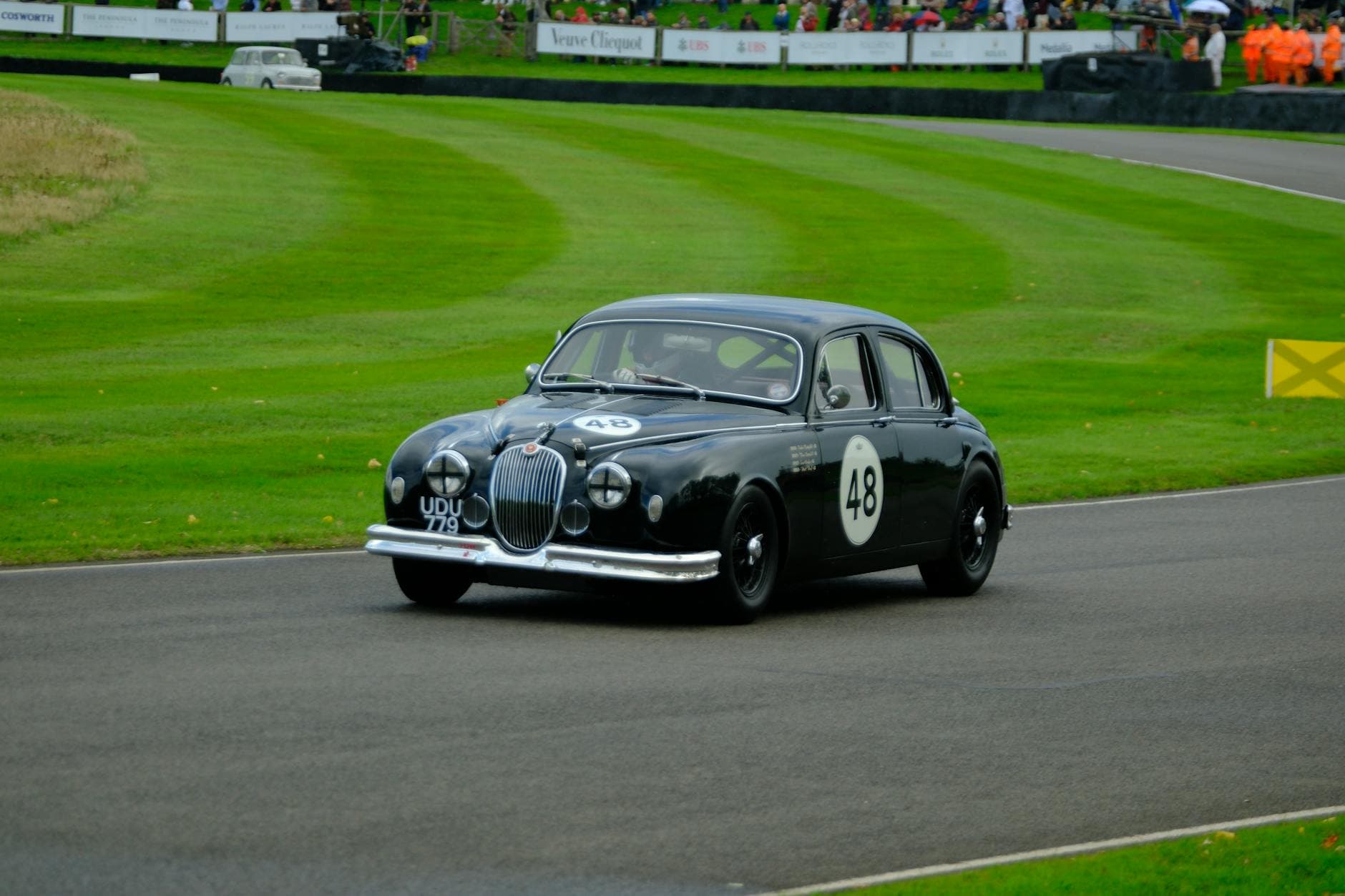
The Second World War brought a more dramatic interruption. The RAF built Westhampnett airfield adjacent to the course, and racing was again suspended for the duration. What appeared to be a temporary inconvenience became the seed of something else: after the war, the airfield became the Goodwood Motor Circuit, which would host the Festival of Speed and the Goodwood Revival and give the estate a second great sporting identity alongside horse racing.
Racing resumed in 1946 and the post-war years saw Goodwood rebuild its reputation. The 9th Duke of Richmond, Frederick Charles Gordon-Lennox, oversaw a revival that restored the July meeting to its pre-war standing. New stands were built, facilities improved, and the quality of racing steadily climbed back towards its former heights.
The 1950s brought memorable moments. The Stewards' Cup continued to generate the kind of competitive drama that made it one of the most-watched handicaps of the season. The Sussex Stakes produced winners of real class. Goodwood's reputation as a testing, tactical track grew through these years. The course's quirks and challenges rewarded knowledge and judgement in a way that flatter, more straightforward venues did not.
The Course Grows in Stature
Through the 1960s and 1970s, Goodwood consolidated its position in the British racing calendar. The festival format settled into its current shape, five days of high-quality racing built around three Group 1 contests and the Stewards' Cup, and the course developed a character distinct from any other venue. Horses with previous form at Goodwood carried a clear advantage, and trainers began to speak openly about the course's idiosyncrasies when preparing their string.
The Group system, introduced in 1971, formalised what had been evident for decades: the Sussex Stakes, Goodwood Cup and Nassau Stakes were races of European significance, attracting runners from France and Ireland as well as the best British stables. Prize money climbed, international runners arrived, and the festival's reputation spread beyond British shores.
Several horses defined the era. The Goodwood Cup produced stayers of the highest quality. The Sussex Stakes established itself as the premier summer mile in Europe, a race that tested milers who had already proven themselves at Royal Ascot against those from France and Ireland who had targeted it as their first British appearance. The Nassau Stakes gave top fillies a high-grade option that didn't require mixing it with colts.
Frankel and the Sussex Stakes
No account of Goodwood's history is complete without the name that defines modern racing's greatest chapter. Frankel, trained by Henry Cecil and ridden by Tom Queally throughout his unbeaten career, won the Sussex Stakes twice.
His first win came in 2011 as a three-year-old. Having won the 2,000 Guineas at Newmarket, he travelled to Goodwood for what was only his sixth career start and left with the Sussex Stakes by five lengths, confirming what many had suspected: this was not an ordinary horse.
The second visit, on 1 August 2012, was something else. Frankel arrived as the undisputed champion of the Turf, seeking his 12th consecutive victory, his rating already touching the 140s in the assessors' books. The Sussex Stakes field was competitive. Farhh, Excelebration and the French challenger Immortal Verse were all serious opponents. What followed was a performance that people who were there still struggle to describe calmly.
Frankel settled in mid-division, handled the course's undulations with the ease of a much smaller, more nimble horse, then quickened around the home turn in a way that left his rivals stationary by comparison. He crossed the line six lengths clear. Queally eased him near the line. The time was fast. The winning margin could have been eight or nine on a different day. The crowd at Goodwood that afternoon saw one of the two or three greatest single-race performances in flat racing history.
That race confirmed him not just as a brilliant miler but as a horse who could adapt to any challenge. It remains one of the most iconic moments in the Sussex Stakes' long history, and one of the reasons Goodwood occupies such a prominent place in the memories of those who follow racing.
For more on Frankel's time at Goodwood, see the Frankel at Goodwood article.
The Qatar Sponsorship and Global Recognition
The arrival of Qatar as title sponsor in 2010 marked a significant shift. The Qatar Goodwood Festival received investment that pushed prize money higher, attracted stronger international fields, and funded upgrades to the facilities. The deal recognised Goodwood's position in the global racing world and gave the course the resources to compete with the richest meetings on the calendar.
Prize money for the top races increased substantially. The Sussex Stakes, Nassau Stakes and Goodwood Cup all attracted larger fields as a result, drawing runners from France, Ireland, Germany and occasionally further afield. The King George Qatar Stakes, a Group 2 sprint over five furlongs, became one of the most valuable short-distance races in Europe. International travel agents began packaging Goodwood alongside Ascot and Epsom as part of British racing tours for visitors from Japan, the UAE and the United States.
The sponsorship also funded practical improvements: better drainage, a refurbished parade ring, upgraded hospitality. The estate's character was preserved while the infrastructure caught up with the demands of a 21st-century festival.
The Goodwood Estate Today
Modern Goodwood is far more than a racecourse. The estate covers several thousand acres of West Sussex downland and includes the Motor Circuit (home to the Revival in September and the Festival of Speed in June), a golf course, the Goodwood Hotel, an aerodrome and organic farmland. The Goodwood Estate Company manages all of these under the supervision of the current Duke of Richmond, Charles Gordon-Lennox, who has continued his family's hands-on approach to the property.
The racecourse sits at the heart of this broader identity. It's the oldest of the estate's major attractions and the one that draws the largest single-day crowds. The organic farm supplies ingredients to on-course caterers, a connection between the land and the race meeting that no other venue can claim so directly.
From a private military meeting in 1802 to one of the world's most followed racing festivals, Goodwood's development mirrors the sport itself. What hasn't changed is the setting: those Sussex Downs, the sweeping views, the sense that this is somewhere different. The 3rd Duke chose his site well.
Key Dates in Goodwood Racing History
- 1802: First meeting held on 25 April, organised by the 3rd Duke of Richmond
- 1812: Goodwood Cup first run, establishing a long-standing staying race
- 1840: Stewards' Cup first run as a six-furlong sprint handicap
- 1841: Sussex Stakes first run over one mile
- 1914-1918: Racing suspended during the First World War
- 1939-1945: Racing suspended; Westhampnett airfield built adjacent to the course
- 1946: Racing resumes post-war
- 1971: Group system introduced; Sussex Stakes, Goodwood Cup and Nassau Stakes confirmed as Group races
- 2010: Qatar Petroleum signs as title sponsor; Qatar Goodwood Festival brand launched
- 2011: Frankel wins the Sussex Stakes by five lengths
- 2012: Frankel returns to win again, six lengths clear in a performance widely regarded as one of the finest on a British racecourse
- 2018-2020: Stradivarius wins the Goodwood Cup in three consecutive seasons
The Course
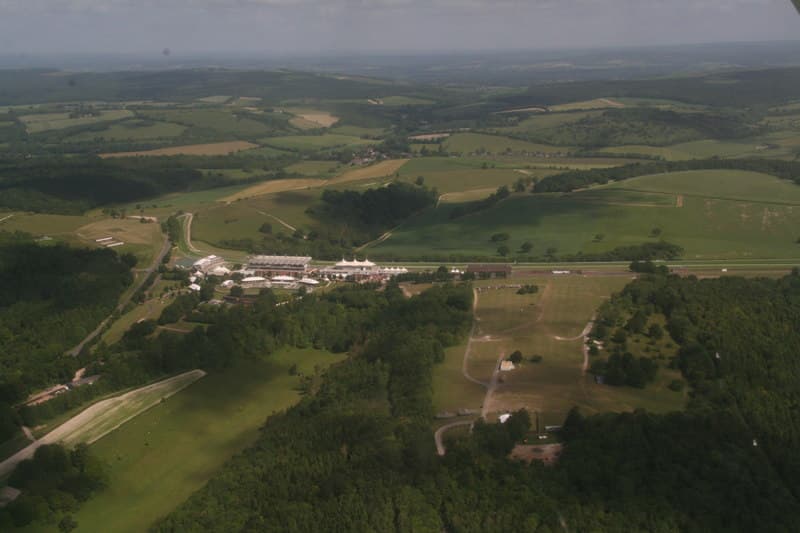
Goodwood is unlike any other flat racecourse in Britain. Set on the crest and slopes of the Sussex Downs, this right-handed track features undulations, cambers and gradients that make it one of the most demanding and fascinating courses in the country. Understanding its quirks is essential for any serious racegoer or punter. What wins here often struggles elsewhere, and vice versa.
Track Layout
The course is right-handed and roughly horseshoe-shaped, though longer-distance races utilise extensions that create something closer to a figure-of-eight configuration. The track descends from the six-furlong start, sweeps around a pronounced right-hand bend, then climbs steadily before dropping again into a dip roughly two furlongs from home. The final furlong rises quite sharply to the winning post.
This constant changing of gradient is what makes Goodwood so unusual. Horses are rarely on level ground for more than a couple of furlongs, and the camber on the bends tilts noticeably away from the inside rail. Jockeys consistently describe it as one of the trickiest tracks to ride. Get your positioning or timing wrong and the course will punish you.
The circuit itself measures approximately one mile and six furlongs around the full loop. Short-distance races use sections of the straight or start from extensions added to the main loop. Longer races over a mile and a half or two miles involve the full circuit and sometimes extra chutes, giving the impression of a course that folds back on itself through the downland.
The Critical Final Two Furlongs
Where Goodwood catches horses out most often is in the final two furlongs. After the home turn, the course drops into a distinct dip, a valley in the downland surface, before rising sharply to the winning post. The sequence runs: descent into the dip, brief flattening at the bottom, then a climb over the final furlong.
This matters because horses that have used up their energy running downhill into the dip have nothing left for the climb. A horse that races keenly, takes a strong hold on the descent, and hits the bottom of the dip with its tank half-empty will be swallowed up by horses that have been held together and can find more. The best jockeys at Goodwood know exactly where to start asking, not at the top of the descent, but at the bottom of the dip, when the horse can transfer its energy into the uphill run.
For punters, this creates a specific profile to look for: horses that settle well in their races, have a clean turn of foot, and have previously been ridden with restraint at a similar track. Horses that have only won by front-running or by leading from pillar to post are riskier propositions at Goodwood than at Newmarket or York, where the final furlong is flat.
Five Furlongs
The straight five-furlong course runs downhill from the start, flattening out before a slight rise to the line. It's one of the fastest five-furlong tracks in the country, and the draw here is as important as anywhere in Britain.
High-numbered stalls — those drawn towards the stands' rail — hold a clear statistical advantage. On faster ground, this bias is particularly pronounced. Low-drawn runners face an uphill battle from the off, with no natural ability to cross the field and find the favoured ground without losing lengths in transit. In fields of ten or more, the draw can be worth two or three lengths before a hoof has been raised.
Punters should treat stall position as the primary filter when assessing five-furlong races at Goodwood. A low-drawn favourite is not as reliable as it would be on a flat, straight track. A high-drawn runner of slightly lower ability is often overpriced in the market because the form book numbers alone don't capture the draw's effect.
The five-furlong record at Goodwood is fast. On good to firm ground, top sprinters have been timed at rates that compare favourably with the fastest courses in Europe. Sectional times from the later stages of sprint races show that the downhill start generates significant early momentum, but the rise to the line sorts out those with real speed reserves.
Six Furlongs
Races over six furlongs start on the far side of the course and sweep around the right-hand bend into the straight. The bend is where the race is often won and lost tactically. The camber on the turn tilts outward, towards the wide part of the track, and horses racing too wide lose ground physically while also fighting the lean of the surface.
The ideal position around the bend is close to the rail, with enough momentum to hold a good line without being pushed wide by rivals. Jockeys who know Goodwood's six-furlong bend can save a length without any additional riding effort. Those who don't know it, or who have horses that don't handle the camber, will give ground they can't recover in the short run-in.
Draw bias over six furlongs is less extreme than over five, but still present. Higher-numbered stalls give runners a better line into the home straight. In large fields of 15 or more runners, the bias becomes more significant as horses sorting themselves out around the bend can lose ground or be hampered.
The Stewards' Cup is the definitive six-furlong race at Goodwood, run with fields regularly reaching 25 to 30 runners. The draw strategy for this race is discussed in detail in the betting angles section.
Seven Furlongs
The seven-furlong start is positioned further back, giving runners a longer run before the bend. This distance tests both speed and stamina, with the undulations becoming a more significant factor as tired horses struggle with the final rise.
Jockeys who can settle their mounts early and save energy for the hill have a clear tactical advantage. The race distance means that pace judgement through the middle portion of the race matters more than it does over six furlongs, where the pace is almost always strong throughout. Seven-furlong horses at Goodwood benefit from a high cruising speed that doesn't require an extravagant opening burst.
The draw's influence over seven furlongs is moderate. A spread of stalls can give higher-drawn runners a slightly easier passage into the straight, but the longer distance allows horses to find their positions more naturally than in shorter races.
One Mile
The mile at Goodwood is the distance of the Sussex Stakes, one of Europe's top miling contests. The start is on the far side of the course at the top of the hill, and runners immediately begin the descent before sweeping around the right-hand bend and into the home straight.
This configuration is among the most demanding in British flat racing for a horse competing at one mile. The downhill start requires balance: horses that set off too fast on the descent can lose co-ordination, while those that are settled and fluent carry their momentum more efficiently into the bend. The camber on the turn then tests the horse's ability to balance again, and by the time the straight is reached, a well-ridden horse has already gained on one that has been fighting its way through the race.
Previous form at Goodwood over a mile is one of the most reliable form factors you can apply. A horse that has run well here before has already demonstrated it can handle all of these demands. A first-time runner at Goodwood over a mile, regardless of form at Newmarket or Sandown, is taking on an additional unknown.
One Mile Two Furlongs to One Mile Four Furlongs
These intermediate distances involve the full loop of the course and are among the most demanding configurations at Goodwood. The figure-of-eight element comes into play at some distances, with runners crossing the main track during the early stages. Stamina becomes increasingly important, and horses that handle the undulations fluently gain an advantage over those that fight the terrain.
The Nassau Stakes is run over one mile two furlongs and provides a consistent illustration of how Goodwood's demands play out at this trip. The race asks horses to handle the full loop, the descent, the bend, and the final climb, a series of challenges that can expose any weakness in a horse's action or stamina.
Two Miles: The Goodwood Cup Distance
Two miles at Goodwood is as demanding a test as any flat race in Britain. The Goodwood Cup involves the full circuit, repeated loops of undulating downland that sap energy from horses that aren't stayers of the highest order. By the final two furlongs, the course has been round enough to expose any pretender to staying company.
Stradivarius won the Goodwood Cup in 2018, 2019 and 2020. What made those performances impressive was not merely that he won. It was that he won against quality fields, on a track where the undulations suit a particular type, and he did it with enough in hand each time to suggest he had reserves unused. The Goodwood Cup at two miles is where staying specialists are separated from horses that merely stay well enough over slightly shorter trips.
For more on Stradivarius and other horses who have defined this race, see the Notable Horses section.
Ground and Going
Goodwood sits on chalk downland that drains freely, meaning the going is rarely heavy or even soft during the summer months. The course's position on the Downs means that rainfall clears quickly. During the Qatar Goodwood Festival in late July and early August, good to firm is the standard going for most of the week. The course management water the track when necessary to maintain safe conditions, but firm going (where the ground has a real sting in it) can occur in hot, dry summers.
The free-draining nature of the chalk means the going can vary across different parts of the track after localised rainfall. A shower that moves quickly through might dampen the far side of the course while leaving the stands side drier. In large fields, horses on different parts of the track can be racing on noticeably different surfaces. Jockeys' post-race comments about ground conditions are worth tracking across the days of a multi-day festival.
By the third or fourth day of the festival, the inside rail on the bends tends to get cut up as field after field passes through. Trainers targeting day four or five often request that their horses are positioned away from the inside, where the going can be broken up and unreliable.
Goodwood's ground rarely suits soft-ground specialists. A horse whose best performances have come on heavy or soft going will face a very different test here. Form analysis at Goodwood should start by filtering for going preference: if a horse's track record shows it doesn't act on faster ground, Goodwood in July is not where you want to be backing it.
What Makes Goodwood Unique
The combination of undulations, camber, draw bias and the constant changing of gradients creates a track that rewards certain types of horses. Nimble, well-balanced runners with a high cruising speed tend to thrive. Big, long-striding gallopers who need flat, true surfaces can find the terrain's demands a problem.
This is why Goodwood form transfers less reliably to courses like Newmarket or Doncaster than form from those tracks transfers here. A horse that has run well at Goodwood has proven its adaptability. A horse that has only impressed on straightforward tracks may never quite get the hang of the Downs.
Jockeyship matters enormously at Goodwood. The best riders know every rise, dip and camber and can gain lengths through intelligent positioning alone. It's a course where experience and local knowledge count more than almost anywhere else in British racing, which is why certain jockeys and trainers consistently outperform the market here. Their edge is real and it's based on accumulated knowledge of a track that rewards it.
Course Statistics at a Glance
| Distance | Draw Bias | Key Characteristic |
|---|---|---|
| 5f | Strong: high stalls favoured | Downhill start, fast times, draw is the key factor |
| 6f | Moderate: high stalls preferable | Right-hand bend, camber, Stewards' Cup |
| 7f | Mild | Balance of speed and stamina required |
| 1m | Low | Downhill start, full loop, Sussex Stakes |
| 1m2f | Negligible | Full circuit, Nassau Stakes |
| 2m | Negligible | Full circuit plus extensions, Goodwood Cup |
Facilities & Enclosures
Goodwood's facilities reflect its character, a blend of modern amenities and the relaxed, estate-driven atmosphere that sets it apart from more corporate venues. The course has seen significant investment in recent years, but the feel remains distinctly Goodwood: elegant without being stuffy, comfortable without losing its rural charm.
Richmond Enclosure
The Richmond Enclosure is Goodwood's premium offering, positioned closest to the winning post with the best views of the finish and the parade ring. This is where you'll find the smartest dress codes and the finest hospitality, with access to the Richmond Lawn and the stands' best viewing positions.
The dress code in the Richmond Enclosure is formal: gentlemen require a jacket and tie, ladies are expected to dress smartly. During the Qatar Goodwood Festival, standards are particularly high, and the enclosure takes on the feel of a high-end garden party. Hospitality options include private boxes, the Charlton Club and several restaurants offering fine dining with course views.
Ticket prices for the Richmond Enclosure vary by meeting. Expect to pay upwards of £60-80 during the Qatar Goodwood Festival, dropping to £30-40 for standard fixtures. Booking in advance is strongly recommended for festival days, when this enclosure regularly sells out. Wednesday (Sussex Stakes) and Saturday (Stewards' Cup) sell out first. If either of those days is your target, book as soon as tickets go on sale in spring.
The Richmond enclosure's betting ring is well-served by on-course bookmakers who set their own prices, often offering better value than the exchanges in competitive sprint handicaps where market intelligence lags on-course money. The parade ring is accessible from the Richmond and gives you a close view of the horses before each race, useful for assessing how well they're travelling in their coats and how they're moving up.
Lennox Enclosure
Named after the family that has owned the Goodwood Estate for over three centuries, the Lennox Enclosure offers good value with solid views and a more relaxed atmosphere than the Richmond. This is the right choice for most racegoers: smart without being formal, sociable without being raucous.
The dress code here is smart casual: no trainers, shorts or sportswear, but jackets aren't required for gentlemen. The enclosure has its own bars, food outlets and betting facilities, along with viewing steps that give a decent line on the racing. During festival week, the Lennox is where you'll find the most engaged crowd, people who know their racing and are there for the sport as much as the spectacle.
Standard fixture tickets in the Lennox Enclosure typically cost £20-30, rising to £40-55 during the Qatar Goodwood Festival. It's a natural choice for groups, regular racegoers and those who want a good day without the formality of the Richmond.
From the Lennox, you can see the full run-in and the final furlong clearly. The views across the course to the South Downs are good from most positions. On a day when the course is dry and fast, and the betting ring is busy, the Lennox is where the festival's energy is most concentrated.
Gordon Enclosure
The Gordon Enclosure is Goodwood's most accessible option, offering affordable entry with a relaxed dress code and a family-friendly atmosphere. Named after another branch of the Richmond family, it sits further from the winning post but provides views of the course and access to the main facilities.
There's no formal dress code in the Gordon Enclosure. The general Goodwood ethos encourages making an effort. You won't feel out of place in jeans and a decent shirt, but nobody's being turned away for being underdressed. The area has its own bars, food stalls and bookmakers, along with a large open lawn that works well for picnics when the weather is good.
Ticket prices start from £10-15 for regular meetings and £20-30 during the festival. For families and first-time visitors, it's the right starting point. You can always upgrade on a subsequent visit once you know the layout of the course.
The Gordon's main advantage is space. During even busy festival days, there's room to move around, find a decent spot on the grass, and watch the racing without being pressed against a crowd barrier. The betting ring in the Gordon is smaller than in the Richmond, but there are usually enough on-course bookmakers to get a price without a long wait.
The March Stakes Restaurant
Goodwood's flagship dining venue overlooks the course and offers a sit-down restaurant experience on racedays. The menu features locally sourced ingredients from the Goodwood Estate's own organic farm. During the Qatar Goodwood Festival, the restaurant operates at full capacity and booking is essential. Leaving it until a few weeks before the meeting means you'll likely be disappointed. For standard fixtures, booking a week or two ahead is usually sufficient.
The food is a step above standard racecourse catering. The kitchen makes use of the estate's produce in a way that reflects Goodwood's broader identity as a working farm and country house, not just a sporting venue.
The Charlton Club
The Charlton Club is Goodwood's members' facility, sitting within the Richmond Enclosure and offering a private bar, restaurant and viewing area. Annual membership provides benefits across the racing season: complimentary admission to certain fixtures, priority booking for hospitality, and access to the members' area throughout the year. It's popular with local racing followers and those who attend several Goodwood meetings each season.
Membership fees are available from the course. For anyone attending more than three or four meetings annually, the maths tend to work out in the member's favour when you factor in the complimentary tickets.
The Parade Ring
The parade ring at Goodwood is set close to the Richmond Enclosure and provides a clear view of the horses before each race. In the build-up to major Group races during the festival, crowds gather three or four deep around the rail to watch trainers, jockeys and owners confer. This is one of the best places at any racecourse to read how a horse is in itself: whether it's relaxed, alert, sweating or moving well. For punters who use paddock watching as part of their process, Goodwood's parade ring is well-positioned and the pre-race ritual is unhurried enough to be useful.
Food and Drink
Catering at Goodwood has improved over the past decade, moving beyond standard racecourse fare. The estate's organic farm supplies ingredients to several on-course outlets, and there's a real emphasis on quality across all enclosures. Options range from artisan burgers and wood-fired pizzas to fish and chips and the sit-down restaurant experience in the March Stakes.
The bars serve local ales, wines and spirits. Champagne and Pimm's are the drinks of choice during the summer festival. Queues build during peak times on busy days, and timing your refreshment runs between races rather than after them saves waiting time. On Saturday of the festival, the stretch between races five and six can see the bars surge. Going earlier than you think you need to is good advice.
A small selection of external caterers typically supplement the in-house offering during the festival, with food trucks and pop-up stalls appearing in the open areas of the Gordon Enclosure and on the lawns. Quality varies, but the best of these are worth the slightly longer walk.
Betting Facilities On-Course
On-course bookmakers operate throughout the Richmond, Lennox and Gordon enclosures, each setting their own prices. The number of bookmakers present increases for the bigger meetings. During the festival, the betting ring has a dozen or more traders operating simultaneously.
Tote betting is available via PASS terminals and windows throughout the course. The Tote pool on Stewards' Cup day in particular can be worth checking: with 25-plus runners and a field that the market often misreads, the Tote exacta and trifecta dividends can be significant.
For those who prefer mobile betting, the Goodwood site has reasonable signal coverage across most areas. The stands and enclosures have good reception; some of the more remote areas of the Gordon Enclosure can be patchy.
Accessibility
Goodwood's hillside location presents some challenges for visitors with mobility issues, but the course has invested in improving accessibility. Wheelchair-accessible viewing areas are available in all main enclosures, and there's designated disabled parking close to the entrances. A companion ticket policy allows free entry for carers accompanying disabled racegoers.
The nature of the terrain means that some areas involve slopes, and moving between enclosures can require gradients. Contacting the course in advance allows the accessibility team to arrange assistance and ensure specific requirements are met. For electric wheelchair users, it's worth checking in advance which pathways are paved and which are grass, as the estate setting means surfaces vary more than at a purpose-built urban venue.
Family Facilities
Goodwood caters well for families, particularly in the Gordon Enclosure where there's space for children to run around. During major meetings, dedicated children's entertainment is provided. Children under 18 are admitted free when accompanied by a paying adult, making it affordable for families.
Baby-changing facilities are available in the main buildings, and the course is generally pushchair-friendly, though the hillside location means some areas involve slopes. The estate setting, with views across the Downs and open lawns, makes Goodwood a more pleasant family environment than courses in urban settings, where the raceday crowds can feel more pressured.
Getting There
Goodwood's hilltop location on the Sussex Downs means getting there requires more planning than your average racecourse visit. The course sits roughly five to six miles north of Chichester, accessed by winding country lanes that climb from the coastal plain to the top of the Downs. It's worth the journey, but knowing your options makes a real difference.
By Train
Chichester station is the nearest railhead, served by Southern Railway with direct services from London Victoria (1 hour 40 minutes), Brighton (50 minutes), Southampton (1 hour) and Portsmouth (30 minutes). The station is on the main South Coast line, making it accessible from most of southern England without changes.
From Chichester station, the racecourse is approximately five to six miles north. During major meetings, particularly the Qatar Goodwood Festival, a dedicated shuttle bus service runs from the station to the course, taking around 20 minutes depending on traffic. The shuttle runs throughout the day, is well signposted at the station, and return services operate until after the last race. Expect to pay £5-8 return for the shuttle during the festival.
For smaller meetings, the shuttle may not operate. In those cases, taxis from Chichester station cost around £15-20 and take 15-20 minutes. Several local firms are accustomed to the racecourse run and know the route well. Booking a return taxi in advance is strongly recommended, particularly after evening meetings when availability tightens. Pre-book before you leave for the course, not after the last race.
Train services to Chichester run at good frequency on most days. During the festival, additional services are sometimes added to the Victoria and Brighton lines. Check National Rail in advance for the specific timetable. Peak trains on Sussex Stakes Wednesday and Stewards' Cup Saturday fill quickly, and standing in a packed carriage after a day's racing is not how anyone wants to end the day. Book a reserved seat if available.
By Car
Goodwood is most easily reached from the A27, the main east-west route along the South Coast, via the A285 heading north through Chichester towards Petworth. The course is well signposted from the A285. The postcode PO18 0PS works reliably for sat nav systems and gets you to the main entrance.
From London (approximately 65 miles), the A3 south to the A272, then the A286 to Chichester, then north on the A285 is the most straightforward route. Alternatively, the M25 to the A24, then the A29 via Bognor Regis avoids Chichester town centre if there's town traffic. Journey time from central London is typically 90 minutes to two hours depending on conditions on the A3.
From Brighton (approximately 30 miles), follow the A27 west to Chichester, then the A285 north. Allow 45-60 minutes in normal traffic.
From Southampton and Portsmouth (approximately 30-40 miles east), take the A27 east to Chichester, then the A285 north. This approach generally has fewer congestion pinch points than the London approach.
The narrow country lanes on the final approach to the course deserve a mention. The A285 widens as you get closer, but the last mile or two before the course involves roads that weren't designed for thousands of cars. Traffic marshals are present during the festival, but expect queues. On busy days — Wednesday and Saturday of festival week — the approach roads can back up for 20-30 minutes. Arriving 90 minutes before the first race generally avoids the worst of this.
Parking
General admission parking is included with your racecourse ticket for most meetings. The main car parks spread across the hillside below the course, with marshals directing traffic on arrival. This is a real advantage at Goodwood compared with courses that charge £15-20 to park. Over a festival week, the saving adds up.
Premium parking closer to the enclosure entrances is available for an additional charge, typically £10-20 depending on the meeting. During the festival, premium parking sells out ahead of time. If you want to avoid the longer walk, book through the Goodwood website when you buy your tickets.
The walk from the car parks to the course entrances varies from a few minutes to around 15 minutes depending on where you park. Comfortable footwear is useful regardless of enclosure, as the hillside setting means uphill walking is unavoidable.
On departure, traffic can be slow. The narrow approach lanes become a single-file bottleneck once the main crowd starts to leave. Staying for a drink after the last race (20-30 minutes is usually enough to let the initial rush clear) makes leaving significantly easier. If you need to leave immediately after racing, budget an extra 30-45 minutes for the journey out on a busy day.
Qatar Goodwood Festival Transport
The five-day festival in late July and early August brings the highest traffic volumes of the year. The course operates an expanded park-and-ride service from locations around Chichester, with regular shuttle buses running throughout the day. This is often the most efficient option for drivers: it avoids the queues on the narrow approach roads and means no anxiety about finding a space.
Traffic management is in place during the festival, including one-way systems and diversions on the lanes leading to the course. Festival-week arrival is best planned for 90 minutes before the first race. If you're targeting a particular day for betting, going early enough to study the paddock before the first race pays dividends in information you can't get anywhere else.
The shuttle bus from Chichester station increases its frequency during the festival, typically to every 10-15 minutes. This is the recommended option for anyone travelling by train, and it's worth allowing extra time. Buses fill quickly in the hour before the first race and for the last-race return.
Getting There from Further Afield
For visitors travelling from outside the South East, the train-and-shuttle combination is worth considering even if it requires changing at Chichester from a longer-distance service. The cross-country option via Gatwick or London Blackfriars to Chichester works for visitors from the Midlands and the North. From the North of England, the journey by car is a significant commitment, roughly four hours each way, making overnight accommodation in the Chichester area a practical consideration for festival week.
Staying Overnight
For those who want to avoid the transport logistics entirely, the Goodwood Hotel sits on the estate itself and offers direct walking access to the course. It's the closest accommodation to the racecourse and books out early for festival week. The price reflects its position. Chichester itself has a range of hotels, B&Bs and guest houses at various price points, and it's a pleasant city to spend an evening in after racing.
Airbnb and short-term rental options in Chichester, Midhurst and the surrounding villages fill up for festival week by spring. If you're planning a trip in July, sorting accommodation in January or February is not excessive. Many people book the year before.
Alternative Options
Cycling to Goodwood is possible. The climb from Chichester is demanding, but the route follows reasonably quiet lanes for most of the way, and cycle parking is available at the course. This suits riders who know the area and aren't worried about the ascent after a day's racing.
Taxi and ride-hailing apps operate in the Chichester area. Pre-booking for the return journey is strongly advised for all festival days. Several local firms offer fixed-price racecourse transfers and know the timing of the last race.
Recommended Strategy by Meeting Type
Qatar Goodwood Festival: Train to Chichester, festival shuttle bus. Avoids all parking stress, allows a drink after racing, and the shuttle is well-run. Book your return train seat if possible.
Standard weekday or weekend meetings: Drive. The approach roads are clear, the parking is free with your ticket, and the transport to and from the course is straightforward. Arrive 45-60 minutes before the first race.
Evening meetings: Drive or taxi to Chichester then taxi up. Evening train services from Chichester are reasonably frequent but check the return timetable before you go. Missing the last convenient train means a taxi back to the station at potentially short notice.
Racing Calendar & Key Fixtures
Goodwood stages flat racing exclusively, with a programme running from May through October that builds steadily towards the centrepiece Qatar Goodwood Festival in late July. The course typically hosts around 18-20 fixtures annually, with a quality-over-quantity approach that reflects the estate's commitment to maintaining its standing as a venue for high-grade racing.
May Meeting (Season Opener)
Goodwood's season traditionally opens in May with a two-day fixture that marks the course's return from its winter break. This meeting features competitive handicaps and conditions races, often providing early clues about horses aimed at bigger summer targets. The ground is usually good to firm, and the smaller crowds make it an excellent opportunity to enjoy the course without the bustle of peak season.
The May meeting appeals to serious form students. Several trainers use it as a stepping stone towards festival targets, and horses that run well here often reappear in stronger company during the summer. It's also one of the best-value days at Goodwood in terms of ticket prices versus quality of racing on show.
June Meeting
The June fixture steps up in quality, with Listed and Group races beginning to appear on the card. This two-day meeting often includes valuable handicaps attracting competitive fields from leading yards. By June, the course is in its summer condition, the going firming up and the backdrop at its most appealing.
Evening meetings during June are particularly pleasant at Goodwood. The long summer evenings, combined with the setting, create an atmosphere that's distinctive in British racing. If you haven't visited Goodwood for an evening meeting, it's worth scheduling one: fewer crowds, relaxed atmosphere, and the light on the Downs late in the evening is a different experience from the midday festival environment.
Qatar Goodwood Festival (Late July – Early August)
The five-day Qatar Goodwood Festival is the undisputed highlight of the season and one of the most followed meetings in European flat racing. Held over five consecutive days from Tuesday to Saturday in late July (occasionally spilling into early August), it features Group racing of the highest quality plus the biggest sprint handicap of the summer.
Each day of the festival has its own character, its own headline race, and its own crowd. Understanding the distinctions helps you choose which day suits you best.
Tuesday: Opening Day
Tuesday opens the festival and sets the tone for the week. The card is anchored by two races of the highest quality.
The Goodwood Cup (Group 1, two miles) is Britain's most significant staying flat race outside the Gold Cup at Royal Ascot. Two miles of Goodwood's undulating circuit tests stayers in a way that's unlike any other race on the calendar. The Goodwood Cup has produced consistent, long-running champions: Stradivarius won it three years running from 2018 to 2020, making it one of the defining images of that era of staying racing. True stayers who handle undulations dominate this race; horses that prefer flat, fast galloping tracks often find the Goodwood circuit saps their energy before the finish.
The Lennox Stakes (Group 2, seven furlongs) is a high-quality seven-furlong contest that sits between the sprints and the milers in terms of its demands. It tests speed and staying power in roughly equal measure, and the undulations over seven furlongs at Goodwood make balance as important as raw ability.
Supporting handicaps on the opening day are competitive and set the betting tone for the week. The crowd on Tuesday is typically the quietest of the five days, making it an excellent choice for those who want easy access to the parade ring and a more relaxed atmosphere than Wednesday or Saturday.
Wednesday: Sussex Stakes Day
Wednesday is the festival's premier day for miling. The Sussex Stakes (Group 1, one mile) is the race around which the day is built, and it consistently attracts a field that can legitimately claim to be the best mile race of the summer anywhere in Europe.
The Sussex Stakes was first run in 1841. In the modern Group system, it has achieved a status that rewards the best three-year-olds against older horses, testing whether the Classic generation can hold its own against experienced milers who have been running at the top level for several seasons. The race regularly draws the best from Britain, Ireland and France, and occasionally from Japan and the United States.
Frankel won it twice, in 2011 and 2012. Baaeed won it in 2022. Enable, Persuasive, and Raven's Pass are among the modern champions who have taken it. The race is good enough to define a horse's season, and the field it attracts means that price-shopping on the morning of the race can find value in horses whose reputation in the market undersells their course form.
The Molecomb Stakes (Group 3, five furlongs) on Wednesday is the feature two-year-old sprint, and it often produces a future star. The minimum trip over five furlongs at Goodwood on fast ground is as demanding as any juvenile sprint in the calendar, and the draw bias discussed in the course section plays out fully here.
Supporting handicaps on Wednesday are well-attended and competitive. The crowd is larger than Tuesday, more formally dressed in the Richmond enclosure, and oriented towards the racing rather than the social spectacle.
Thursday: Nassau Stakes Day
Thursday features the Nassau Stakes (Group 1, one mile two furlongs), the festival's race for older fillies and mares. First run in 1840, the Nassau Stakes has established itself as one of the most important fillies' races in the European calendar, attracting international runners and providing a platform for top fillies to prove themselves against their own sex.
One mile two furlongs at Goodwood requires a combination of speed and stamina. The full loop, the downhill sections, the camber, and the final climb all feature. Nassau winners tend to be horses with a clean action and the ability to quicken from mid-race, rather than front-runners who set off fast and hope to stay on.
Thursday also hosts the Richmond Stakes (Group 2, six furlongs), one of the premier juvenile sprint races in Britain. Two-year-olds over six furlongs at Goodwood are tested by the course's bend, and the Richmond produces future Classic contenders at a rate that makes it worth following as a pointer to next season's sprinting scene.
The King George Qatar Stakes (Group 2, five furlongs) is one of Europe's most valuable five-furlong races. The sprint specialists that contest it are among the fastest short-distance horses in Britain, and the draw bias over five furlongs at Goodwood is especially relevant: high stalls in a high-class sprint field can make a winning difference.
Thursday's crowd is traditionally called Ladies' Day, though the dress code and atmosphere are broadly similar to Wednesday. The combination of three feature races across different distances and age groups makes it an excellent day for form students who want variety in the programme.
Friday: Gordon Stakes Day
Friday is anchored by the Gordon Stakes (Group 3, one mile four furlongs), a trial for the St Leger over a distance that tests both stamina and adaptability on Goodwood's demanding circuit. The Gordon Stakes regularly produces horses who go on to finish in the frame in the St Leger at Doncaster in September, and following its form into autumn racing is a worthwhile exercise.
The Vintage Stakes (Group 2, seven furlongs) for two-year-olds rounds out the Group programme on Friday. Seven furlongs is a more searching test for juveniles than the five-furlong and six-furlong sprints that dominate the earlier days of the festival, and Vintage winners sometimes develop into Guineas horses the following season.
Friday is a degree quieter than Wednesday or Saturday in terms of crowd numbers. The parade ring is easier to access, queues at food outlets are shorter, and the atmosphere in the Lennox Enclosure is slightly more relaxed. For regular festival-goers who have attended before and want a day with slightly less pressure on their schedule, Friday offers good racing without the peak-day bustle.
Saturday: Stewards' Cup Day
Saturday is the festival's betting day. The Qatar Stewards' Cup (Heritage Handicap, six furlongs) is the week's most heavily wagered race and one of the largest betting events in the British flat season. Fields regularly reach 25 to 30 runners, all competing over six furlongs of Goodwood's demanding course.
The Stewards' Cup is a Heritage Handicap, meaning it carries conditions designed to maintain its character as a competitive sprint for horses across a range of ratings. The race is run on the straight six-furlong course rather than the round course, which changes the nature of the challenge. The crowd on Stewards' Cup day tends to be the largest and most vocally engaged of the five, with the atmosphere in the betting ring building through the afternoon to a peak in the Stewards' Cup itself.
The race has been won by horses from every part of the rating spectrum. Pattern-level sprinters carrying big weights have won; unexposed handicappers at the bottom of the weights have won. Draw analysis, trainer patterns, and pace assessment are all relevant. The betting section of this guide covers Stewards' Cup strategy in detail.
Supporting races on Saturday are competitive across the board. The festival closes with a full programme designed to round out a week of racing at the highest level.
August Meeting
The August fixture, held a few weeks after the festival, offers quality racing in a more relaxed atmosphere. Fields are competitive as trainers bring forward horses that weren't quite ready for festival week or need a run before autumn targets. Ticket prices are significantly lower than festival rates, and the crowds are smaller. The quality of racing often belies the modest admission costs.
September Meeting
Goodwood's September meeting bridges summer and autumn, with the emphasis shifting towards end-of-season targets. The going can be slightly softer by this stage, changing the character of some races. Several Listed contests feature on the card, and this fixture regularly throws up horses who improve significantly as they mature into the autumn.
October Finale
The season ends with the October meeting, often the final flat fixture of the year in the South of England. The mood is autumnal, the crowds smaller, and the racing competitive in a lower-key way. For racegoers who like Goodwood in a quiet register, October is worth considering: the Downs look different in autumn light, the prices are accessible, and the course retains its character even without the festival crowds.
Planning Your Visit: Ticket Strategy
Qatar Goodwood Festival tickets go on sale in spring. Wednesday (Sussex Stakes) and Saturday (Stewards' Cup) sell out first in the Richmond Enclosure. If either of those is your target, book when sales open. Tuesday and Friday offer marginally easier availability across all enclosures and are reasonable alternatives for a first festival visit.
For the best value, the May and October meetings offer racing at entry-level prices with smaller crowds. The August meeting provides near-festival-quality racing without festival-sized prices.
Check the Goodwood website for current fixture dates and ticket availability. Festival dates are confirmed well in advance, but other fixtures can shift slightly year to year.
Betting at Goodwood
Goodwood is one of the most interesting courses in Britain from a betting perspective. Its unusual undulations, pronounced draw biases and demanding terrain create patterns that the prepared punter can use to find an edge. Understanding how this track works is worth something. It's a venue where knowledge pays, consistently, over time.
Draw Bias: The Sprinter's Primary Filter
The draw is the single most important factor in sprint races at Goodwood. Over five furlongs, high-drawn horses (those in the higher-numbered stalls, drawn towards the stands' rail) hold a clear statistical advantage. This bias has been documented over decades of racing at the course and it persists in modern fields.
The bias intensifies on faster ground and in larger fields. When the going is good to firm and the field is a dozen or more, low-drawn horses can find themselves racing on the unfavoured far side with no ability to cross and find the better ground without losing several lengths in transit. The geometry of the five-furlong course at Goodwood simply places high-drawn horses on a shorter, more efficient path.
Over six furlongs, the bias is less extreme but still present. Higher stalls give runners a better line into the home straight and allow them to avoid the worst of the camber on the right-hand bend. In large-field handicaps, stall position should be your starting point when assessing chances. A well-drawn horse of moderate ability frequently outperforms a better horse drawn at stall one or two.
At seven furlongs and beyond, the draw's influence fades as horses have time to find their position naturally. The general rule is straightforward: the shorter the race, the more the draw matters. In five-furlong fields, it's the primary consideration. Over a mile, it's worth a glance but isn't decisive.
The Stewards' Cup: Specific Strategy
The Stewards' Cup is the most complex betting puzzle of the festival week. Twenty-five to 30 runners over six furlongs, weights spread across a competitive handicap field, and the draw factoring in across a wide range of stalls. Getting this race right requires a multi-step approach.
Step one: eliminate the worst draws. Historically, stalls one through five have the worst record in the Stewards' Cup, particularly when the field is at or above 20 runners. The race's history over many renewals shows low-drawn runners underperforming their odds relative to high and middle draws. Starting by crossing off the bottom five stalls saves time and reduces the field to a manageable size.
Step two: identify pace setters from the favoured draw. The six-furlong course at Goodwood includes the right-hand bend, and a horse drawn high with natural early pace can find the rail quickly and dominate the race from the front. Front-runners who are high-drawn have the combination: they get the good ground, they find the rail, and they can dictate a pace that suits them. Check which horses in the field have a history of leading or racing prominently, and whether they're drawn in double digits.
Step three: look for course-and-distance form. Horses that have placed or won over six furlongs at Goodwood before carry a proven ability to handle the course's specific demands. A horse with C&D form that fits the draw profile is your starting point for both win and each-way analysis.
Step four: trainer patterns. Certain yards send horses to the Stewards' Cup primed. Richard Hannon's yard has a strong history with this race. Northern yards from Middleham and Malton have sent horses to Goodwood at peak fitness who have been underestimated by southern-focused form guides. A horse that has been freshened up and arrives in good form from a northern yard with a favourable draw deserves serious consideration.
Step five: check the weights. The Stewards' Cup is run as a Heritage Handicap, which means well-handicapped horses at the bottom of the ratings can be competitive with horses 10 or 15 pounds higher up the weights. Unexposed handicappers from good yards who have been given a lenient mark can be among the best bets in the race.
The Undulations Factor
Goodwood's constant changes of gradient catch out certain types of horses. Big, long-striding gallopers who thrive on flat, galloping tracks like Newmarket or Doncaster can struggle here. The terrain demands something different: a quick, adaptable action that doesn't lose rhythm on the descent or spend too much energy fighting the camber.
The practical betting application: treat previous course form as a strong positive. A horse that has won or placed at Goodwood has already demonstrated it handles these demands. A horse that has only run impressively on flat, conventional tracks is carrying an additional unknown when it arrives here. The unknown isn't always decisive, as talented horses adapt, but at similar prices, the horse with proven Goodwood form is the better bet.
The undulations also create a specific vulnerability in the final two furlongs. The course dips before the final rise to the finish. Horses that have been asked hard into the dip — often by jockeys misjudging the finish point or riding a horse that ran into the dip on its own — have nothing left for the climb. This means horses that settle well and have a clean turn of foot are consistently overrepresented in winners' enclosures relative to front-runners and keen-going types.
When assessing a race at Goodwood, check how each horse has been ridden at its previous races. A horse that fights for its head, pulls hard early, or tends to race close to the pace at flat tracks may find the sustained effort of Goodwood's circuit more draining than its rating suggests. A horse that has been settled off the pace and quickened in the straight at other courses has exactly the qualities Goodwood rewards.
Ground Conditions and Their Effect on Betting
Goodwood's chalk downland drains freely, so the going is rarely worse than good to soft during the summer festival. Soft-ground specialists are likely to find the July meeting too quick. If a horse's best performances have come on going officially described as soft or heavy, discounting it for Goodwood in late July is usually the right call.
When rain does arrive during a festival week, it tends to affect parts of the course differently. The far side of the track can drain more slowly than the stands side. Post-race jockey comments in the early days of the festival can give useful going intelligence for the races that follow: if riders are reporting better ground away from the rail, that information applies to subsequent races.
Hard ground (officially Firm) does occasionally appear at Goodwood in hot, dry summers. In those conditions, some trainers withdraw horses with concerns about jarring. A late withdrawal the morning of a race due to ground concerns is worth noting: it often means the trainer had the horse ready but didn't want to risk the surface, which can carry positive implications for a quick follow-up run on better going.
Trainer Patterns at Goodwood
Certain yards consistently outperform their strike rate at Goodwood. The reasons are practical: local access to similar terrain for schooling, familiarity with the course's quirks, and a history of targeting the meeting with well-prepared horses.
John Gosden, and now Gosden and Thady Gosden, have a strong record at Goodwood at all distances. They've won the Sussex Stakes, Nassau Stakes and Goodwood Cup across multiple seasons and their runners at the festival deserve close attention.
William Haggas frequently raids Goodwood with handicappers given a specific target. A Haggas runner that hasn't been seen for several weeks and is stepping up in trip or changing surface is worth treating with respect.
The Hannon family, based in Wiltshire, have long targeted Goodwood's juvenile sprints. Over five and six furlongs, Hannon two-year-olds have a strong historical record, particularly when drawn in the favoured stalls.
Charlie Appleby's yard at Godolphin has a reliable record in the better races at Goodwood. Their horses tend to be well-prepared and are often entered with specific race targets in mind, which means their Goodwood runners are rarely casual appearances.
Among jockeys, regular Goodwood riders hold a real edge. Ryan Moore, William Buick and Oisin Murphy all post strong records here. The track rewards riders who know precisely where to position a horse at each stage of the race: when to save ground on the rail, when to angle wide to find better footing, and how to time a challenge on the rising ground in the final furlong. An unfancied horse ridden by a jockey with a strong Goodwood record is consistently worth a second look.
Horses with Proven Goodwood Form
The most reliable shortcut in Goodwood betting is previous course form. At most tracks, course form is a useful filter. At Goodwood, where the demands are distinctive enough to sort horses in ways that don't show up at other venues, it's closer to a prerequisite.
When a horse returns to Goodwood having previously won or placed here, it brings a proven ability to handle the undulations, the camber, the draw implications, and the final climb. That track record is worth a pound or two in the market, meaning that a horse with proven Goodwood form at 8/1 is often better value than a course debutant at 6/1.
The longer the course history, the better. A horse that has run well at Goodwood across two or three seasons, on different types of going, at slightly different distances, is demonstrating something structural about how it handles this track. Back it accordingly.
Group Race Betting at the Festival
For the Group races at the festival, Goodwood's character affects form analysis in specific ways. Form from flat, straightforward tracks like Newmarket or the Curragh doesn't translate automatically to Goodwood. Horses whose best performances have come on level surfaces at true galloping tracks face the same adaptation challenge as handicappers: the undulations are either handled well or they catch horses out.
Horses with proven form on undulating tracks, such as Epsom, Brighton, Sandown, or Goodwood itself, tend to carry that form reliably into festival races. A French or Irish challenger with multiple runs on flat European tracks is taking on an additional unknown when arriving at Goodwood for the first time. Some adapt brilliantly; others run below their rating.
In the Sussex Stakes, the combination of the downhill start, the right-hand bend, and the final rise creates a test that rewards balance over raw speed. Horses with higher ratings earned at Ascot or Newmarket who have never run at Goodwood are best treated with a small degree of caution. Not dismissed, but not blindly backed purely on the rating.
Festival Betting Tips: A Summary Framework
- Draw is the primary filter in all sprint races; eliminate low draws in large fields before assessing anything else
- Stewards' Cup: high and middle draws, course-and-distance form, northern yards at peak fitness, Heritage Handicap leniency for underrated horses
- Prefer horses that settle and quicken over front-runners and keen-going types
- Course form carries more weight at Goodwood than at most British flat tracks
- Gosden, Haggas, Hannon, Appleby are the trainer groups to track at the festival
- Soft-ground specialists are almost never the right bet in July
- French and Irish challengers in Group races are worth checking for previous runs on undulating tracks before assuming their flat-track ratings transfer directly
Frequently Asked Questions
Notable Horses at Goodwood
Goodwood has provided the setting for some of the most memorable performances in British flat racing. The course's demanding character means that horses who win here with authority aren't just talented. They're adaptable, well-balanced, and often built differently from the horses that dominate on flat, conventional tracks. A few names stand out.
Frankel (2011 and 2012 Sussex Stakes)
Frankel arrived at Goodwood in July 2011 as a three-year-old who had already won the 2,000 Guineas at Newmarket by six lengths. The Sussex Stakes was his first outing since the Guineas, and the question around the paddock was simple: could a horse that dominant on the flat, true surface at Newmarket handle Goodwood's very different demands?
He answered it directly. Trained by Henry Cecil and ridden by Tom Queally throughout his career, Frankel won the 2011 Sussex Stakes by five lengths. He handled the undulations, the camber, and the descent without apparent difficulty, and he quickened through the final two furlongs with the same devastating acceleration he had shown at Newmarket. The form at that point suggested an exceptional horse. His subsequent victories confirmed it.
The 2012 Sussex Stakes was a different proposition entirely. Frankel returned as a four-year-old, already bearing the highest official rating ever assigned to a flat horse in training, seeking his 12th consecutive victory. The field included Farhh, Excelebration, and the French challenger Immortal Verse. None of them got within six lengths.
What made the 2012 performance striking to those watching from the stands at Goodwood was not just the winning margin. It was the quality of what came second and third. These were serious Group 1 horses. Excelebration had won multiple Group races and would go on to further success in the autumn. Frankel treated them like an ordinary handicap field.
He settled in mid-division, handled the right-hand bend without any sign of discomfort, and then quickened between the two-furlong pole and the one-furlong pole in a way that left his rivals unable to respond. Tom Queally eased him in the final 100 yards. The time was fast. The winning margin could have been greater on a different day.
Frankel retired unbeaten in 14 starts later in 2012. His two appearances at Goodwood are among the most discussed performances in modern British racing, and the Sussex Stakes carries something of his legacy each time it's run. For more on his career, see the Frankel at Goodwood article.
Stradivarius (2018, 2019 and 2020 Goodwood Cup)
Where Frankel defined the Sussex Stakes mile in the modern era, Stradivarius did the equivalent for staying racing at Goodwood. Trained by John Gosden and ridden by Frankie Dettori, he won the Goodwood Cup three consecutive times from 2018 to 2020, making the race and Goodwood's two-mile circuit synonymous with his name.
Stradivarius was a stayer of a type that appears rarely: he had both the speed to quicken in the straight and the stamina to run two miles on an undulating course without appearing to tire. The Goodwood Cup's demands — the full circuit, the repeated undulations, the final climb — played to his strengths. He handled the course better than any rival was able to handle him.
In all three victories, Dettori rode him positively, using the horse's natural ability to travel at pace and save energy through the circuit for a final acceleration. Goodwood rewards this style: a horse ridden smoothly through the undulations, not fought or pushed, arrives at the final two furlongs with more in the tank than a horse that has been urged throughout.
Stradivarius also won the Ascot Gold Cup in 2018, 2019 and 2020, dominating British staying racing across those seasons in a way that made the Goodwood Cup feel like the natural companion to his summer programme. He won four Gold Cups in total. His Goodwood Cup treble stands as one of the great sequences of wins at any single race on the British flat calendar.
The Goodwood Cup is run at two miles, as demanding a test of the staying flat horse as the calendar provides outside Royal Ascot. That Stradivarius won it three years in a row says as much about the course as it does about the horse: Goodwood at two miles identifies real stayers and it found one.
Baaeed (2022 Sussex Stakes)
Baaeed was trained by William Haggas and won the 2022 Sussex Stakes in his first Group 1 race at one mile. He had arrived at Goodwood following a sequence of impressive victories at shorter trips and the Sussex Stakes was a step up in company and scrutiny.
He won with authority, producing a performance that raised comparisons with Frankel, a comparison not made lightly and not made thoughtlessly. He won all 10 of his races that season, including the Sussex Stakes, and was officially rated the best horse in the world by the end of 2022. The Goodwood performance was one of the most watched races of the season.
What the Sussex Stakes revealed about Baaeed was that he handled Goodwood's course as well as the best milers of the previous decade. His ability to settle and quicken was well-suited to the track's demands, and the way he drew clear in the final furlong showed that the rising ground at the finish was not a problem.
Other Notable Performances
The history of Goodwood racing includes many more horses who defined their eras at this course. Enable, trained by Gosden and ridden by Dettori, won the Nassau Stakes in 2018 as part of an exceptional season. Persuasive won the same race in 2017. Each Nassau Stakes renewal adds to a history of top fillies at one mile two furlongs on the Sussex Downs.
The Richmond Stakes and Molecomb Stakes each year produce juveniles who go on to Classic careers. The Gordon Stakes is a reliable Leger trial. And the Stewards' Cup, over its long history from 1840 to the present, has produced thousands of competitive handicap performances, many of them memorable precisely because the race is so hard to read before the off.
Goodwood's combination of demanding terrain and high-quality racing means that the horses who win here with authority tend to leave a mark. They've proven something that a victory at a flatter, more conventional track doesn't necessarily establish: that they can handle the unexpected.
The Goodwood Atmosphere
Goodwood's physical setting shapes everything about how the festival feels. You notice it before you even arrive: the road north from Chichester begins climbing soon after you leave the outskirts, the trees close in on either side, and the landscape shifts from the flat coastal plain to downland. Then the course appears, spread across the top of the hill, the grandstands visible against the sky, and you understand why people keep coming back.
The Drive Up and What You See First
The approach to Goodwood from the A285 is one of the more effective arrivals in British racing. The narrow road ascends through woodland before opening out to the estate proper, where the parkland either side of the road gives way to the course infrastructure: car parks, service roads, and then the grandstands against the sky.
On a clear July morning, before the first race, the view from the concourse behind the stands is the thing that newcomers remember. The course drops away down the hillside to the left. Beyond it, the South Downs roll south towards Chichester and the coastal plain. On a day with good visibility, the Channel appears as a line of light on the horizon. The Isle of Wight is visible on the clearest days.
No photograph does this justice, partly because photographs flatten the depth of the view and partly because the view shifts as you move around the course. From different positions in the stands, from the parade ring, from the lawns of the Gordon Enclosure, the landscape presents itself differently. The racing happens in the foreground; the Downs stretch away behind it.
Festival Week vs a Regular Meeting
The Qatar Goodwood Festival occupies its own category among British racing occasions. Twenty-five thousand people on the biggest days creates a density of crowd that changes the atmosphere of the hilltop completely. The betting ring becomes loud with on-course bookmakers calling their prices. The parade ring fills to several rows deep before each Group race. The bars run at capacity for most of the afternoon.
But festival Goodwood is not the same as Royal Ascot. The Royal Enclosure, the hats, the formal processions, the corporate grandeur of Ascot's infrastructure: none of that is Goodwood. What Goodwood has instead is something more like a large, well-dressed country party that happens to have a five-furlong sprint track and a two-mile stayers' race attached to it. The atmosphere is warm rather than cool, interested rather than performative. People dress up, but they also watch the horses.
A regular meeting in May or August has a different register entirely. The crowd numbers a few thousand, the betting ring is manageable, the approach roads are clear, and the course's quality is available without competition from a festival crowd. If your priority is the racing itself, being close to the horses, accessing the parade ring easily, watching the jockeys come in, a smaller Goodwood meeting offers something the festival cannot.
Wednesday and Saturday: Different Character
Within the festival, Wednesday and Saturday have distinctive atmospheres that are worth understanding before you book.
Wednesday is Sussex Stakes day. The race draws the best milers in Europe, the crowd is engaged and knowledgeable, and the Richmond Enclosure carries a sense of occasion that the opening day doesn't quite match. The dress code is observed seriously. Conversations in the betting ring before the Sussex Stakes are about form, about track conditions, about jockey choices. This is a racing crowd as much as a social one.
Saturday is Stewards' Cup day. The crowd is larger, louder, and more focused on the betting than any other day of the festival. The Stewards' Cup has been a major betting race since 1840 and that history is present in how the crowd behaves around it. The atmosphere in the half-hour before the Stewards' Cup, the bookmakers adjusting their prices, the field being led out, the noise level rising, is different from any other race in British flat racing.
Both days are worth attending, but they reward different things. If you're there for the sport and the betting, Saturday gives you more to work with. If you're there for a day at the top end of British flat racing with a Group 1 as the centrepiece, Wednesday is the one.
Why Racegoers Tolerate the Transport
Getting to Goodwood is not straightforward. The course has no railway station; the shuttle from Chichester is fine but adds time; the approach roads narrow in ways that create queues on busy days. People come anyway, year after year.
The reason is simple: Goodwood is worth the effort in a way that not many venues are. The setting, the quality of racing, and the particular atmosphere of the festival combine into something that doesn't have a direct equivalent elsewhere in British racing. Racegoers who have been coming for twenty years talk about specific days, specific races, specific views from specific spots on the course. That kind of attachment to a venue comes from experience accumulating into something that matters.
The transport is a small price. Most Goodwood regulars have worked out their system: train and shuttle, or drive and park early, or stay in Chichester and taxi up. Once the system is in place, it stops being a consideration. What remains is the course itself, on top of the Downs, with the summer racing season at its peak.
The Estate Context
Goodwood Racecourse sits within a working estate of several thousand acres. The Goodwood Hotel, the Motor Circuit, the golf course, the aerodrome and the organic farm are all adjacent to or visible from the racing. This is not a racecourse that exists in isolation from its surroundings. It's one part of a much larger whole.
That context affects how the place feels. The food on course comes partly from the estate's own farm. The views include the Motor Circuit banking where the Festival of Speed is held in June. The hotel, reachable by a short walk, has the atmosphere of a country house rather than a business property.
For some visitors, particularly those attending for the first time, this estate character is one of Goodwood's most striking qualities. You're not visiting a sports facility. You're visiting a place that has been owned and maintained by the same family since the 17th century, with the racecourse as one of its central activities. The racing feels connected to the land in a way that doesn't apply to courses built on urban or suburban sites.
That connection is part of why Goodwood's atmosphere is what it is: the course exists because the Downs were here first, and the Downs are still the backdrop to everything that happens on them.
Nearby & Where to Stay
Goodwood's hilltop setting means that planning where to stay and what to do around a race visit requires a little more thought than at courses in large cities. The good news: Chichester and the surrounding area of West Sussex are worth a day or two of exploration, and accommodation options range from the Goodwood Hotel on the estate itself to a wide range of choices in Chichester and nearby.
The Goodwood Hotel
The Goodwood Hotel sits on the estate, a short walk from the racecourse. Staying here removes all transport logistics: you can walk to the course, walk back for lunch, walk back again before the last race, and end the evening in the hotel bar. This is the most direct racing-and-staying experience available anywhere near the course.
The hotel has around 90 rooms and carries the estate's character — country house rather than chain hotel, with food that draws on the farm's produce. Prices during festival week reflect its position. A single festival night in a standard room is not cheap, and the hotel books out for festival week months in advance. If this is the experience you want, planning well ahead is necessary.
Outside of festival week, the hotel is more accessible in both availability and price. It's used as a base for the Motor Circuit events, golf, and estate visits throughout the year.
Chichester
Chichester is the nearest city, five to six miles south of the course. It's a compact Roman city with a cathedral that dates from the 11th century, a well-preserved city wall, good independent restaurants and the Chichester Festival Theatre, which runs an annual programme of productions that often include transfers to the West End. It's a pleasant place to base yourself for an overnight stay around a race visit.
The range of accommodation in Chichester is broad: hotels at various price points, B&Bs in the surrounding streets, and holiday lets in the city and its outskirts. For festival week, booking early is advisable — the city fills with racegoers. For standard meetings, availability is less pressured, though popular properties book out on race days.
Eating in Chichester has improved noticeably over the past decade. The city has a concentration of good independent restaurants and a couple of well-regarded pubs, along with the expected chain options. An evening meal in Chichester after a day's racing at Goodwood requires no special planning: there are options at every price point within a short walk of the city centre.
The Surrounding Area
The West Sussex Downs are worth time in their own right. The South Downs National Park surrounds Goodwood on most sides, and the walking available from the course itself, if you want to arrive on foot from Chichester and are fit enough for the climb, gives the visit a different dimension from the standard raceday experience.
Petworth House, a National Trust property about eight miles north of Goodwood, is one of the finest country houses in southern England. The house holds an important art collection, including works by Turner and van Dyck, and the estate's deer park is among the best-maintained in the country. It's an easy half-day from a Goodwood base.
Arundel, about 12 miles east of Chichester, has Arundel Castle (the seat of the Duke of Norfolk), plus an independent bookshop, a collection of good independent cafés and restaurants, and the Wildfowl and Wetlands Trust reserve on the banks of the Arun. It makes a reasonable detour on the day before or after a race meeting.
Midhurst, immediately north of the course on the road from Goodwood, is a small market town with a good pub-and-restaurant scene and some of the most attractive architecture in West Sussex. The ruins of Cowdray House, a Tudor mansion destroyed by fire in 1793, are in the town and open for visits.
Brighton is 30 miles east along the A27 and reachable in about 45 minutes outside of busy periods. It's a full city with a wide range of restaurants and bars, the seafront, the Lanes, and its own racecourse at the top of the cliffs above the city, which runs a flat programme in parallel with Goodwood's season.
Planning a Multi-Day Visit
For anyone attending more than one day of the Qatar Goodwood Festival, a base in Chichester is the most practical option for most visitors. The city is comfortable, the shuttle bus to the course is well-run during the festival, and an evening in Chichester after racing is pleasant. The Chichester Festival Theatre takes bookings for summer productions in advance, and combining a race day with an evening at the theatre is one of the better ways to use a two-night stay in the area.
For those who want the full estate experience, booking the Goodwood Hotel and spending two or three days in the estate's orbit, racing by day, dinner at the hotel, perhaps a visit to the Motor Circuit, is one of the more unusual multi-sport experiences available in southern England.
The West Sussex countryside rewards an early morning walk before racing, especially in July when the days are long and the light on the Downs is at its best. Several good walking routes start from the course itself or from the Chichester outskirts. The South Downs Way passes within a few miles of Goodwood and provides easy access to open downland that most racegoers drive past without stopping.
More guides for this course
Share this article
More about this racecourse
All Goodwood guides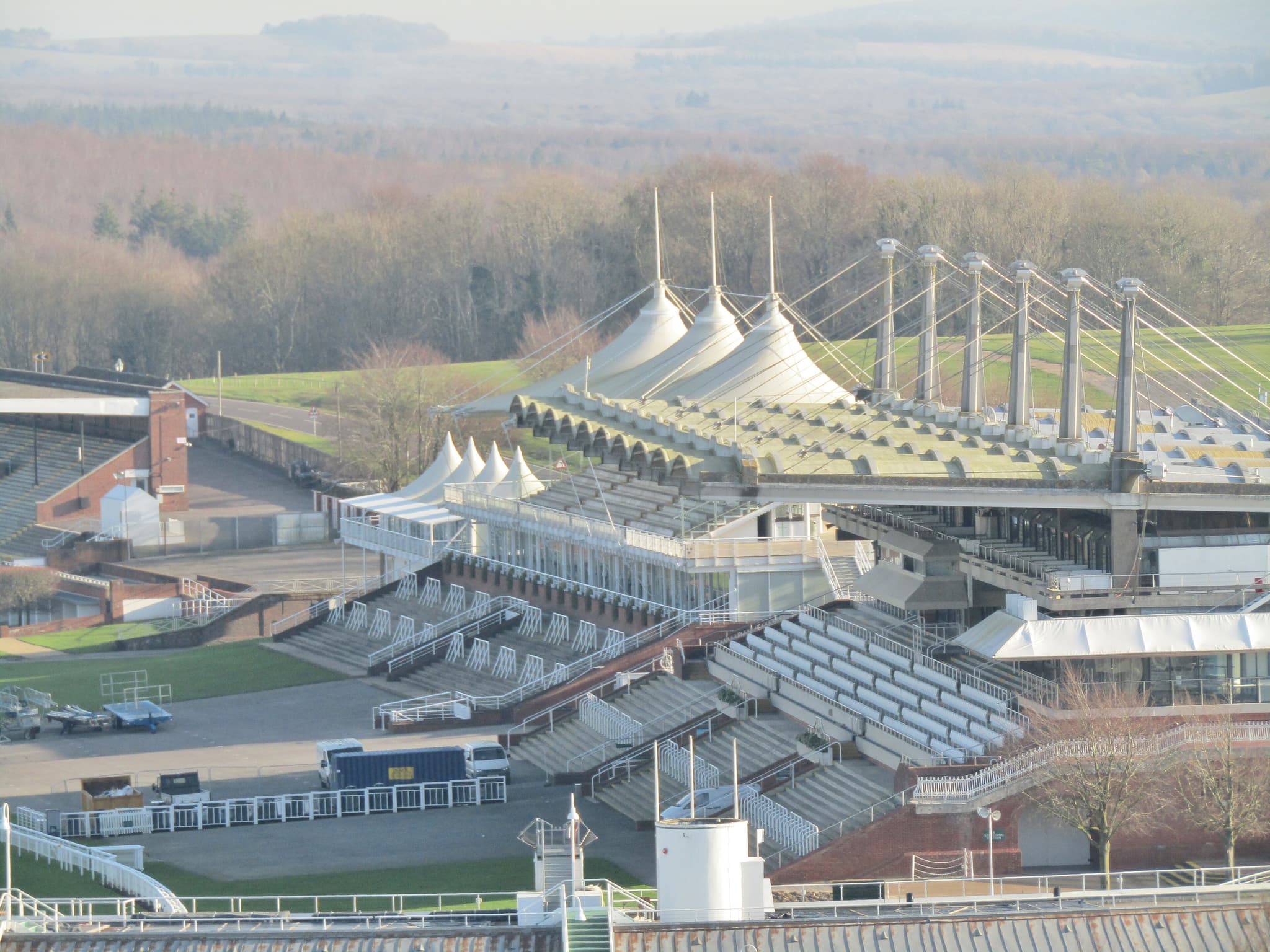
A Day Out at Goodwood Racecourse
Everything you need for a day at Goodwood — getting there, what to wear, enclosures, food and drink, and insider tips for making the most of your visit.
Read more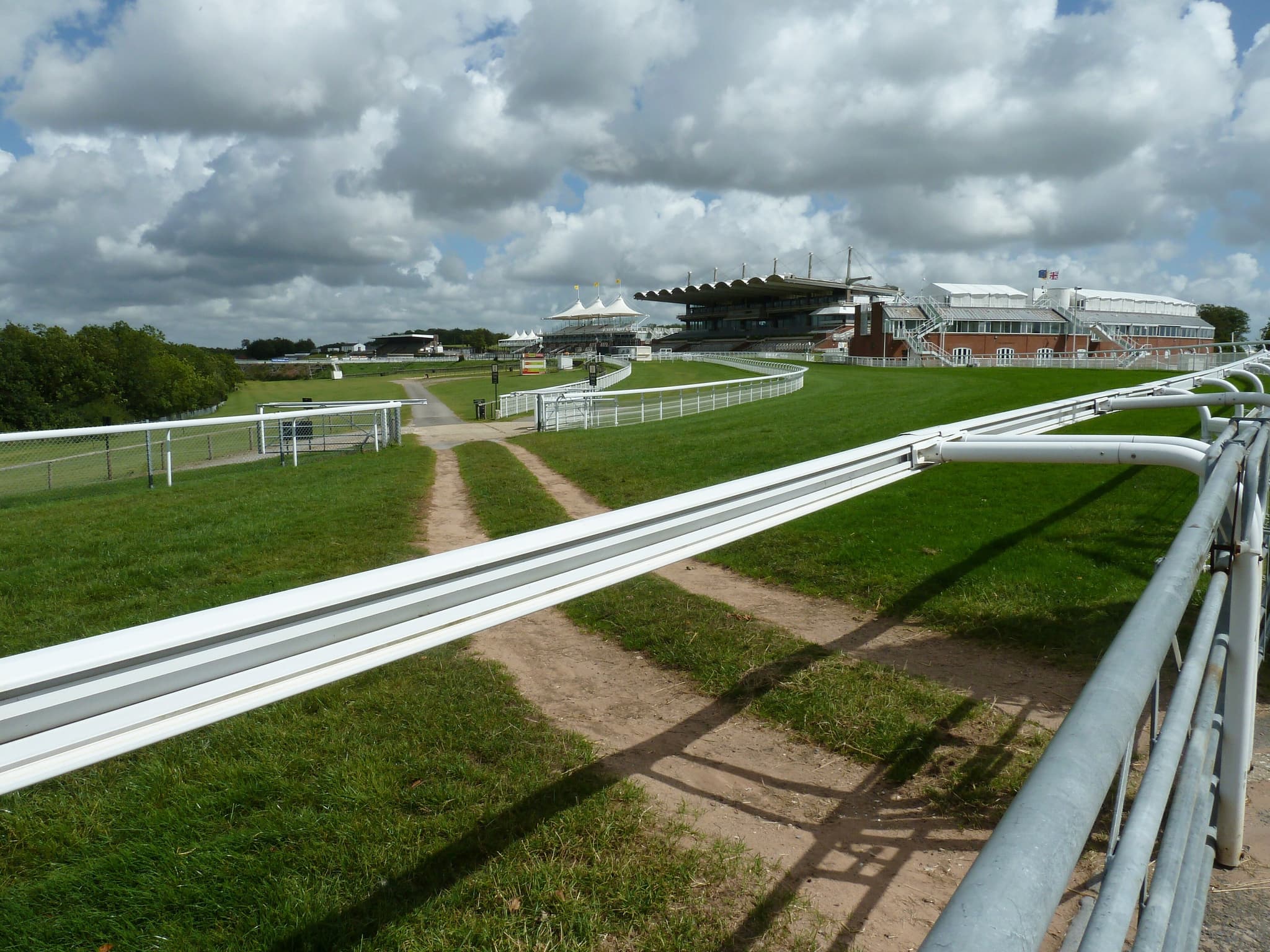
The History of Goodwood Racecourse
From the 3rd Duke of Richmond's private course in 1802 to one of the world's most beautiful racing venues — the story of Goodwood.
Read more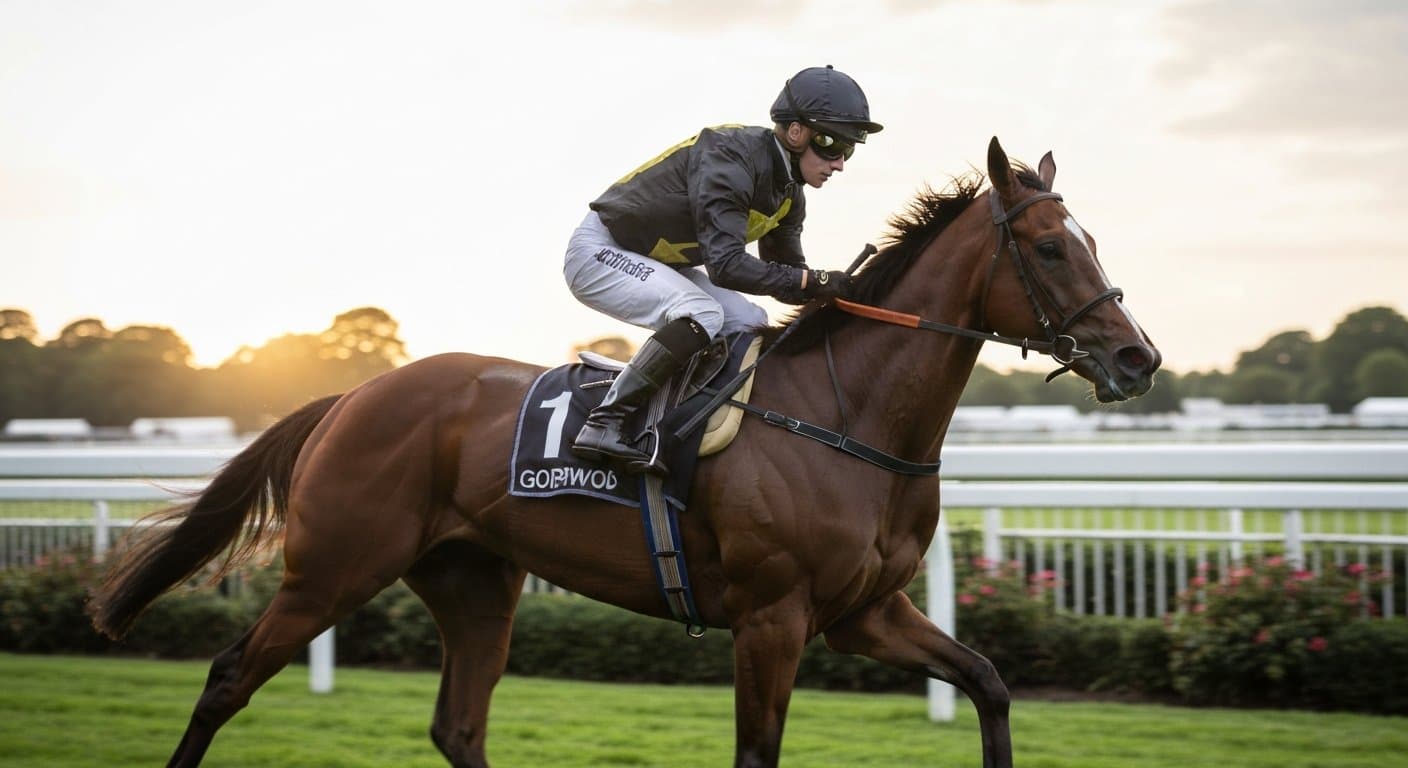
Frankel at Goodwood
Reliving Frankel's back-to-back Sussex Stakes victories at Goodwood in 2011 and 2012 — two of the greatest performances in racing history.
Read morePhotos on this page are used under Creative Commons licences. Titles, sources and licence links for each one are on our image credits page.
Research the field with the AI Race Predictor
Our model publishes calibrated win-probability estimates for UK races — a second opinion to understand a race, not tips. It's open about its record: it doesn't beat the market, and we show exactly how it does.
Betting offers for Goodwood
Work it out & learn the basics
Gamble Responsibly
Gambling should be entertaining and not seen as a way to make money. Never bet more than you can afford to lose. If you or someone you know has a gambling problem, help and support is available.