
Founder & Editor · Last reviewed 2026-04-04
The story of Goodwood Racecourse is inseparable from the story of the Goodwood Estate and the family that has owned it for over three centuries. While most British racecourses grew from common land, public heath or royal decree, Goodwood was born from one aristocrat's passion for horses and his good fortune in possessing one of the most spectacular pieces of high ground in southern England.
When Charles Lennox, the 3rd Duke of Richmond, laid out a course on the Sussex Downs above his estate in 1802, he was acting on a private impulse: he wanted somewhere to exercise his racehorses and entertain the officers stationed nearby. The first meeting was a two-day affair attended by a small circle of friends and local soldiers. There were no grandstands, no railway connections, and no great expectation that the place would amount to much. That it became one of the most celebrated flat racing venues in the world is a consequence of the terrain, the family, and the way those two things combined across successive generations.
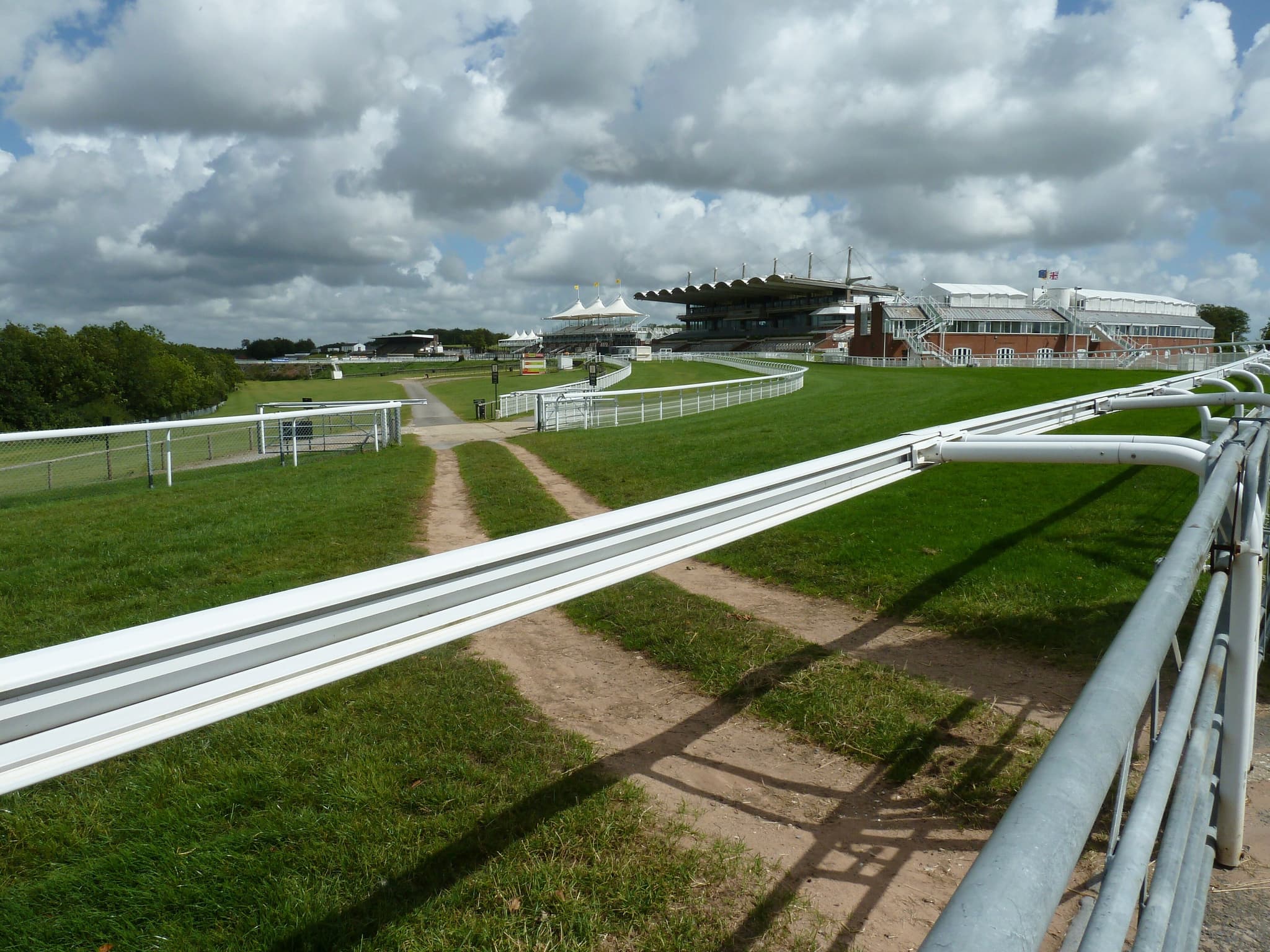
What began as a military diversion has evolved into the Qatar Goodwood Festival — five days of Group 1 racing that draws the best horses in training to a hilltop track set roughly 600 feet above sea level, with views that stretch across West Sussex to the English Channel. The track is unlike anything else in British racing: undulating, cambered and shaped entirely by the natural contours of the Downs. Engineers did not design it. The land dictated it.
The history of Goodwood is not purely the history of races won and lost, though it contains some of the finest performances ever seen on a British racecourse. It is the story of an estate adapting across two centuries, of a family that has managed the tension between heritage and commerce with more skill than most, and of a meeting that has retained its essential character through wars, social upheaval, the arrival of the railways, the arrival of television, and the arrival of a Gulf state's sponsorship money.
The complete guide to Goodwood Racecourse covers everything from the track layout and facilities to how to plan a day at the course. This article tells the longer story: where Goodwood came from, why it took the shape it did, and what accounts for its hold on those who visit it.
Origins & The Duke of Richmond (1802–1840s)
Origins: The Duke's Downland Course (1802–1840s)
The Lennox family's connection to Goodwood began in 1697, when the 1st Duke of Richmond acquired the estate as a hunting lodge. The high Downs above the house offered exceptional sport, and successive Dukes expanded the property gradually into one of Sussex's great country estates. By the time the 3rd Duke, Charles Lennox, came into his inheritance in 1750, Goodwood was a substantial operation with stables, farmland and a household that required a small army to run.
The 3rd Duke was a man of wide-ranging energy. He served as Master-General of the Ordnance under Pitt the Younger, was a significant patron of the arts, and maintained an active interest in horse racing at a time when the sport sat near the top of the aristocratic leisure hierarchy. He kept a string of racehorses, attended meetings at Lewes, Brighton and Epsom, and by the late 1790s had begun turning over a more ambitious idea: bringing racing directly to his own estate.
The practical occasion was a military one. The officers of the Sussex militia trained regularly near Chichester, and the 3rd Duke maintained close ties with the regiment. A private race meeting on his own land, laid out on the high Downs above the house, would offer the officers an afternoon's sport and allow the Duke to entertain in the manner he preferred: at home, on his own ground, on his own terms.
The first meeting took place on 25 April 1802. It was a modest affair by any measure: two days, a handful of races, small fields, and an audience composed mainly of the Duke's circle and soldiers from the local barracks. The course itself was rough and basic, a strip of downland turf shaped by the natural contours of the hilltop rather than any engineering. But the setting was already exceptional. The track sat at roughly 600 feet above sea level, with views that stretched south to the Solent and the Isle of Wight on a clear day, and north to the rolling wood and farmland of the Sussex Weald. The horses were racing in a natural amphitheatre of considerable drama.
Charles Lennox died in 1806, during a visit to Canada where he was serving as Governor General. His death was caused by the bite of a rabid fox, a peculiarly violent end for a man who had created something so enduring. He was 54 and had been racing at Goodwood for only four years. He did not live to see the Goodwood Cup established in 1812, or the meeting's growth into a national fixture. The foundation, though, was entirely his.
The 4th Duke and the Goodwood Cup
The 4th Duke, Charles Gordon-Lennox, inherited the estate at 18 and had his father's enthusiasms without his father's breadth of public life. Racing was his principal interest, and he threw himself into the development of the course with a commitment that soon attracted serious attention from the wider sport. He expanded the programme, improved the prize money and set about drawing runners from further afield than Sussex.
The establishment of the Goodwood Cup in 1812 was the defining act of his early tenure. The race was run over two miles and was designed as a test for the best stayers in training, horses that could maintain high speed across a distance that exposed any weakness in stamina or constitution. From the outset it attracted quality. Staying races were among the most fashionable contests of the Regency period, and the Goodwood Cup quickly positioned itself alongside the Ascot Gold Cup as an event that mattered.
Prize money helped, but the course's natural character was equally important. Horses that stayed two miles at Goodwood needed to handle the undulations of the Downs, cope with a track that cambered away in unexpected places, and hold their form on a ground that could shift from firm in June to soft within a week of persistent summer rain. These were real sporting demands, not ones that could be met by a sprinter with stamina bolted on.
A small grandstand appeared in the early years of the 4th Duke's stewardship, and the social side of the meeting began to take shape. The Duke understood that racing alone was not enough. The experience of attending had to be worth the journey, and in the early 19th century that journey was still a significant undertaking. The roads from London to Chichester were long, the coaching routes were crowded in summer, and a meeting that could not justify the effort would quickly lose its audience.
Infrastructure and the first growth years
The 4th Duke's improvements accumulated steadily through the 1820s and 1830s. The course was extended and reshaped, the starting posts moved to create cleaner sightlines from the stands, and the facilities for racegoers (basic by later standards, but functional) were expanded to accommodate larger crowds. Goodwood was becoming a business as well as a sporting event, though the Duke would not have used that language.
By the late 1820s the meeting had grown to three days and was attracting runners from the major yards in Newmarket and Lambourn. The quality of the fields improved season by season, and with quality came attention. The London papers sent correspondents. Connections from the great Newmarket establishments began to make the journey south. Owners who had never visited Sussex found themselves entering horses at Goodwood because the prize money was worth having and the course was developing a reputation for fair, well-run racing.
The Goodwood Cup was already the meeting's centrepiece, but other races were establishing themselves too. The Stakes programme grew to provide opportunities across different distances and classes, giving trainers more reason to make the effort of travelling to West Sussex.
The railway did not reach Chichester until 1846, so through the 1820s and 1830s the meeting still relied on horse-drawn transport. Horses came by road from nearby yards, while wealthier racegoers travelled by private carriage. This dependency on road transport gave Goodwood a self-selecting audience — those who came tended to be those who could afford the journey — which reinforced the social character of the meeting and set the template for everything that followed.
Why this era matters: The origins of Goodwood established two things that have defined it ever since. First, the estate model: this was never a public or municipal enterprise, and the Duke's personal investment meant that decisions were made with the long view in mind rather than the immediate season. Second, the terrain: the course was shaped by the land, not the other way round, and that gave it a sporting character that proved impossible to replicate elsewhere. Everything that followed was built on those two foundations.
The Victorian Golden Age (1840s–1900)
The Victorian Golden Age (1840s–1900)
The railway changed everything. When the London and South Western Railway reached Chichester in 1846, Goodwood's geography was transformed overnight. A journey that had previously required a full day by carriage from London could now be accomplished in a couple of hours by train, with special race trains laid on during the July meeting that deposited thousands of racegoers at Chichester station before noon. The effect on attendance was immediate and dramatic, and the character of the crowd shifted with it.
Before the railway, Goodwood's audience was broadly self-selecting: the wealthy, the local, and the sufficiently committed. After it, the meeting opened to a much wider segment of fashionable society, and to the professional and commercial classes whose growing prosperity in the mid-Victorian period translated directly into appetite for the sort of spectacle that Goodwood offered. The stands filled, the bookmakers multiplied, the tented villages beyond the rails expanded, and the meeting acquired the feeling of an event rather than a private fixture.
The 5th Duke and the meeting's transformation
The 5th Duke of Richmond, who inherited the estate in 1860 following the death of his father, proved to be the most consequential figure in Goodwood's Victorian development. He had grown up watching the meeting grow and had clear ideas about what it needed to become. Within a few years of inheriting, he had rebuilt the grandstand on a more ambitious scale, improved the drainage of the racing surface, and committed to a level of investment in facilities that his predecessors had not contemplated.
His timing was excellent. The 1860s and 1870s were the high point of Victorian sporting culture, and horse racing sat at its apex. The Derby at Epsom was a national occasion; Royal Ascot was at the height of its social prestige; and the July meeting at Goodwood had established itself as the natural finale to the London Season, arriving after Ascot when society was still in town but ready for something less formal. Goodwood provided exactly that: the feel of a country house party transplanted to a hilltop, with Group-quality racing as the entertainment.
The 5th Duke extended the meeting to five days, a format that allowed for a fuller racing programme and gave the social side of the event more room to breathe. He also worked to attract a more consistent quality of horses, corresponding with trainers and owners and ensuring that the prize money stayed competitive. The Sussex Stakes, first run in 1841, grew under his stewardship into the course's most important race. By the 1860s it was drawing the best middle-distance horses in training to Goodwood in late July, providing a late-season opportunity for horses that had run in the Derby and Oaks to meet again on different terms.
"Glorious Goodwood" and the Victorian social world
The phrase that would eventually define the meeting entered common usage during this period. "Glorious Goodwood" had appeared in print as early as the 1840s, a spontaneous expression of what made the meeting different from anything else on the calendar. By the 1860s and 1870s, it was in regular use in the sporting and society press, a shorthand that captured something the formal race title could not.
What made it glorious was not simply the racing, though the racing was excellent. It was the specific combination of terrain, weather and social atmosphere. July in West Sussex, with its long evenings and the prevailing south-westerly carrying the smell of the Downs across the grandstands, provided a backdrop that no man-made course could replicate. The hilltop setting meant that the crowd could see the entire race from start to finish, a luxury that flat, ground-level courses denied their spectators. And the estate setting gave the whole event a pastoral quality that contrasted pleasantly with the urban pressures of London life.
The Victorian aristocracy and upper classes who gathered at Goodwood each July were not, primarily, racing enthusiasts. They were people for whom the meeting was a social occasion with racing attached: a chance to see and be seen, to conduct the kind of informal business that could not easily be done elsewhere, and to enjoy the rare pleasure of several days spent outdoors in summer. The Duke of Richmond's hospitality at Goodwood House, where the inner circle were housed for the week, set the tone for the whole meeting.
The scene: Goodwood in the 1880s
It is the third afternoon of the July meeting, 1883. The grandstand is packed to its upper tiers, with parasols making a pattern of pale colour against the sky. On the track below, a field of sixteen lines up for the Stewards' Cup. The men around the rails write hurriedly in their ledgers as money moves in the final minutes before the flag falls. Across the Downs to the south, the Channel glitters. When the field breaks, the crowd surges to the rail. The horses are lost briefly in a fold of the ground, then reappear rounding the final turn, a mass of colour and effort pouring towards the line.
The great horses of the Victorian era
The quality of racing at Goodwood in the second half of the 19th century was as high as the meeting had ever seen, and for a period rivalled anything available at Ascot or Newmarket.
Isonomy, trained by John Porter and one of the most admired horses of the late 1870s, won at Goodwood in consecutive seasons in 1878 and 1879. His second visit came as the reigning Ascot Gold Cup champion, and his performance over the Downs confirmed him as the outstanding stayer of his generation. Porter was later generous in his praise of Goodwood as a venue, noting that the undulating track was a more demanding test than most gave it credit for.
The great Ormonde, unbeaten in his career and winner of the 1886 Triple Crown, ran at Goodwood that same year. His appearance brought a level of public interest that went beyond the ordinary racegoing crowd, with spectators travelling from considerable distances to see a horse that was already being spoken of in the same terms as Eclipse. He did not disappoint.
Formosa, one of the finest fillies of her era, won the Goodwood Cup in 1868, adding a summer staying prize to a season that had already brought her a dead-heat for the 2000 Guineas and outright victories in the 1000 Guineas, Oaks and St Leger. That she contested and won a two-mile staying race at Goodwood, a month after her Oaks victory at Epsom, speaks to the ambition of her trainer and the breadth of the Victorian race programme.
The Stewards' Cup and the betting culture
No Victorian race at Goodwood attracted more betting activity than the Stewards' Cup, first run in 1840 and quickly established as one of the most wagered-on sprints in the calendar. The race was run over six furlongs and attracted large fields of handicappers, which meant unpredictable results and significant opportunities for the professional betting community.
Victorian gambling on horse racing was not a casual entertainment. The professional layers who operated at Goodwood carried sizeable ledgers and operated complex books across multiple races, and the Stewards' Cup was their annual test of nerve and calculation. Fields of 20 or more, drawn across a track where the draw had not yet been properly quantified, produced regular upsets. Favourites were beaten with a frequency that the layers exploited and the public complained about in roughly equal measure.
This pattern of betting drama around the Stewards' Cup has never really changed. The race remains one of the most heavily wagered-on handicaps of the summer season, and the draw bias at Goodwood continues to complicate the form analysis in ways that the Victorian layers would have recognised immediately. For anyone planning to follow the modern festival, the guide to Glorious Goodwood covers the race-by-race betting angles in detail.
Edward, Prince of Wales — later Edward VII — became a regular visitor to the July meeting from the 1870s onwards. His presence guaranteed extensive coverage in the London society press and brought a level of royal validation that cemented Goodwood's status as a fixture of the establishment calendar. The Prince kept his own horses in training and was a committed enthusiast for the sport, not merely a ceremonial attendee. His entourage occupied Goodwood House for the week, and the guest lists for those gatherings read like a full register of late Victorian public life.
By the close of the 19th century, Goodwood had established itself as one of the five or six most important racing meetings in Britain. The combination of a strong racing programme, an exceptional natural setting and a social atmosphere that had been carefully developed over fifty years had produced something that no other course could quite match.
Why this era matters: The Victorian period set the template for everything Goodwood has been since. The five-day summer meeting, the mix of flagship Group races and competitive handicaps, the combination of serious racing with an accessible social atmosphere: all of these were established in the decades between 1840 and 1900. The course did not invent this model from scratch; it evolved it from the foundations the 3rd Duke had laid. But it was the Victorian era that turned a promising regional meeting into a national institution.
The Edwardian Meeting and Two Wars (1900–1945)
The Edwardian Meeting and Two Wars (1900–1945)
The 20th century arrived at Goodwood with no dramatic break from what had gone before. The July meeting continued its summer rhythm, the estate was in capable hands, and the quality of racing showed no sign of decline. If anything, the Edwardian period saw Goodwood at perhaps its most confidently fashionable, a meeting that had now been running for a century and knew exactly what it was.
King Edward VII's accession in 1901 merely formalised what had been true for decades: the monarch loved Goodwood. As Prince of Wales he had been a regular at the July meeting, keeping horses in training and maintaining the kind of close interest in the racing itself that separated the committed racegoer from the ceremonial attendee. His horse Minoru won the Derby at Epsom in 1909, and the King's involvement in racing gave Goodwood a royal flavour that attracted coverage and attendance in proportion.
The Edwardian years were the height of the country house party as a social institution, and Goodwood sat squarely within that culture. The Duke of Richmond's hospitality at Goodwood House during the week was arranged on a significant scale: guests arrived on Sunday, settled in for several days of sport, and departed on the Friday or Saturday following the final race. The connection between the racing meeting and the private house, which the 3rd Duke had established simply because it was his land, had become by the Edwardian period a defining feature that set Goodwood apart from every other major meeting in Britain.
The First World War
Racing at Goodwood stopped in August 1914, three weeks into the First World War. The suspension came as racing itself contracted sharply across Britain, with courses requisitioned for military purposes and the social calendar dismantled by the demands of mobilisation. The Goodwood Estate was handed over to military use; the course was used for training purposes, the stables commandeered, and the house became a centre for the war effort in West Sussex.
Racing resumed at other courses from 1915 onwards, in restricted form and with reduced fields, but Goodwood did not return to the calendar until the war's end. The course had been occupied and worked over in ways that required attention before horses could safely race on it, and the Duke's management team had other priorities than a summer race meeting.
The first postwar meeting, in 1919, drew crowds that reflected the pent-up appetite for normality that characterised British social life in the months after the Armistice. People wanted to attend race meetings, to dress up, to stand at the rails in July sunshine and watch horses compete. Goodwood, with its particular atmosphere of relaxed formality, was well placed to receive them. The crowds were large, the mood was something close to relief, and the racing programme picked up approximately where it had left off in 1914.
The interwar years
The 1920s and 1930s produced some of the most competitive racing in Goodwood's history, as the sport recovered quickly from the war years and prize money grew again to attract the best horses in training.
The Sussex Stakes continued to develop its reputation as the late-season championship race for milers and middle-distance horses. Its position in the calendar — coming after the Classics in late July — meant that it attracted horses that had already been thoroughly tested, and the results tended to reflect actual pecking orders rather than the uncertainties of earlier-season racing. Trainers who sent horses to contest the Sussex Stakes were usually confident they had something worth the journey, and the race seldom disappointed.
The Goodwood Cup retained its prestige through this period, drawing staying horses from across the British Isles and occasionally from France. The race had by now moved to the standard distance of two miles, and the staying division of the interwar period included some formidable animals. Gordon Richards, the era's dominant jockey, was a frequent winner at the July meeting and held the course in particular regard, noting in his autobiography that the undulating track suited horses with good balance and a high cruising speed, qualities that the best Goodwood winners have always needed.
The 9th Duke of Richmond managed the estate through the interwar decades, maintaining the racing programme while adapting to the social changes that the First World War had accelerated. The rigid class hierarchies of the Edwardian period had relaxed, and the racecourse had to adapt its offer accordingly. The development of motor transport, which grew rapidly through the 1920s, changed the character of the crowd again: people who had previously relied on the train now came by car, bringing a different demographic to the trackside and creating new demands for parking and access.
Television was still two decades away, but radio coverage of racing had begun by the late 1930s, and the BBC's commentary on major races was creating a national audience for events that had previously been only of local interest. Goodwood races began to appear on the national racing calendar in a more prominent way, as the broadcast media started to shape public perception of which meetings mattered.
The Second World War
Racing at Goodwood stopped again in 1940, shortly after the fall of France. The second suspension was, in practical terms, even more complete than the first. The estate was heavily involved in the war effort; the nearby Goodwood aerodrome, which had been developed in the 1930s, became a Royal Air Force station, and the surrounding area was central to the defence of the south coast against the threat of German air attack. The racecourse was again in military hands, and remained so until the war's end.
Goodwood's proximity to the English Channel had made it a target area during the Battle of Britain in the summer of 1940. The aerodrome was attacked several times by the Luftwaffe, and the ground around it was scarred by the fighting that was conducted above it. The course itself emerged from the war without major damage, but the estate had been occupied and used in ways that required significant work before racing could resume.
Why this era matters: The two wars interrupted Goodwood's development at intervals of a generation, but they did not alter its fundamental character. What this period reveals is the resilience of the estate model: because Goodwood was owned by one family and tied to one piece of land, it could suspend operations, survive military occupation, and return to racing without having to rebuild from institutional scratch. The identity was preserved through the interruptions in a way that would not have been possible under corporate or municipal management.
Post-War Revival and the Modern Festival (1945–2010)
Post-War Revival and the Modern Festival (1945–2010)
Racing returned to Goodwood in 1947, two years after the war's end. The delay was not unusual; several major courses took time to recover from military occupation, and the estate used the interval to repair surfaces, restore facilities and prepare for what it hoped would be a rapid resumption of the prewar quality.
The first postwar meetings were well attended. Britain in 1947 was austere, rationing was in force, and the desire for leisure and spectacle was strong. Horse racing filled that need across the country, and Goodwood, with its exceptional setting and its long reputation for quality, drew crowds that exceeded the management's expectations. The July meeting ran for five days as it had before the war, and the fields were competitive from the first season.
Glorious Goodwood: the name becomes official
The phrase "Glorious Goodwood" had been in common use for a century, but in the postwar period it became the effective name for the July meeting rather than a descriptive epithet. By 1948 it was being used in official communications, race programmes and press coverage as though it were the fixture's proper title. The five-day July festival format was cemented, and the programme was built around the Group races that would define the meeting for the rest of the century.
The Sussex Stakes claimed its position as the centrepiece of the programme. In 1971, when the pattern system reorganised British racing into Groups 1, 2 and 3, the Sussex Stakes was awarded Group 1 status, recognition of the quality it had consistently attracted. The race over one mile attracted the best milers in training and provided a late-July championship opportunity for horses that had contested the 2000 Guineas at Newmarket in May.
The Goodwood Cup, which had been running since 1812, received Group 1 status in 1995. The staying division in British racing had fallen somewhat from the heights of its Victorian prestige, but the Goodwood Cup retained the quality it needed to justify the new status, drawing top stayers from across Europe and regularly producing strong results.
Television and a national audience
BBC television coverage of the July meeting began in the 1960s, and the effect on Goodwood's national profile was significant. For the first time, racegoers who had never visited the course could see the track's unusual configuration, the panoramic views from the stands, and the way the horses negotiated the undulations of the Downs. The visuals were striking, and they communicated something about Goodwood that written descriptions could not fully convey.
The broadcast relationship also changed the meeting's internal workings. Races that appeared on television attracted more betting turnover, which in turn made them more attractive to sponsorship, which increased prize money and improved field quality. This virtuous cycle ran through the 1960s and 1970s, and by the early 1980s Goodwood's principal races were among the most competitive on the British flat racing calendar.
Channel 4's takeover of terrestrial racing coverage in the early 1980s brought a more commercial approach to broadcast, and Goodwood's July meeting was one of the fixtures that benefited most. The course's aesthetic qualities (the backdrop, the Downs, the light in late July) translated well to television in a way that satisfied both sport and spectacle requirements, and the production teams gave it prominent treatment in their coverage.
The Duke of Richmond and the modern estate
Charles Gordon-Lennox, the 10th Duke of Richmond, had inherited the estate in 1989 and took a broad view of what it could become. He was already deeply involved in the Goodwood Motor Circuit, which had been part of the estate since the early 1950s, and in 1993 launched the Festival of Speed, a hillclimb event that brought the world's most significant cars to the grounds of Goodwood House each June. In 1998 the Goodwood Revival followed, a September meeting at the motor circuit conducted entirely in period dress, with cars and racing from the circuit's original active period between 1948 and 1966.
These motor sport events transformed the Goodwood Estate into one of Britain's most unusual sporting venues: a single private estate hosting three major annual events across two sports, managed under consistent ownership with a coherent vision of what the estate experience should feel like. The model attracted attention from the wider leisure and events industry, and the Duke's approach to balancing heritage and commerce became something that courses and estates across the country studied.
The racing operation was not neglected in the midst of this expansion. Prize money increased steadily through the 1990s, the facilities were upgraded, and the estate's food and hospitality offer developed to a standard that was beginning to outpace most of its competitors on the racing calendar.
The Qatar era begins
The arrival of Qatar Racing and Equestrian Club as title sponsor in 2010 marked the most significant change to the financial structure of the meeting in its history. The Qatar Goodwood Festival — the new official name for the summer fixture that everyone continued to call Glorious Goodwood — received a level of prize money injection that immediately changed the calculation for connections considering whether to run their best horses at the July meeting rather than at equivalent races in France or Ireland.
The Sussex Stakes and Nassau Stakes both saw their prize money increase substantially in the first years of the sponsorship. International horses began to appear with more regularity. Japan, Australia and Ireland all contributed runners as the meeting's prize fund made it a viable option for horses that might previously have been aimed elsewhere. The Goodwood Cup attracted the staying horses that would become the centrepiece of a new era.
The Qatar investment extended into facilities as well. New hospitality structures were built with care for the estate's aesthetic, drainage was improved to reduce the number of wet-weather abandonments, and the broadcast infrastructure was upgraded to support the more sophisticated production demands of the modern television age.
Why this era matters: The postwar decades rebuilt something that two wars had put on hold, and the final thirty years of the 20th century set Goodwood on a course toward the top tier of European racing. The arrival of Qatar's sponsorship in 2010 was not a bolt from the blue. It was the logical next step for a meeting that had been building its reputation and its infrastructure for sixty years. The estate model, which had seemed old-fashioned in the early 20th century, turned out to be exactly the right model for what British racing needed in the 21st.
The Frankel and Stradivarius Era (2011–Present)
The Frankel and Stradivarius Era (2011–Present)
Any serious account of Goodwood's modern history must pause on 27 July 2011. That was the afternoon Frankel ran in the Sussex Stakes for the first time, and it was the afternoon on which a horse produced a performance that placed him, in the estimation of many who saw it, beyond any horse seen on a British racecourse in living memory.
Frankel was trained by Sir Henry Cecil, who by 2011 was fighting cancer but still very much in command of the operation at Warren Place in Newmarket. The horse had been unbeaten through his two-year-old and three-year-old seasons, winning the 2000 Guineas at Newmarket in May 2011 with a display of acceleration that left the field standing. But Goodwood was a different test. The undulations and cambers of the Downs asked questions of balance and adaptability that a flat, galloping track like Newmarket did not.
Frankel answered every question. He settled well in the early stages, handled the track's changes in gradient without difficulty, and when Tom Queally asked him to quicken around the turn into the home straight, he moved through the field with an ease that produced an audible reaction from the stands. He won by five lengths from Canford Cliffs, and Goodwood had a new chapter in its history.
He returned the following year, 2012, in the final Sussex Stakes of his career. Cecil's illness had progressed; the trainer watched the race from the owners' and trainers' stand with the knowledge that this would be one of his final times on a racecourse. Frankel was now a four-year-old, heavier and more powerful than his three-year-old self, and the expectation was that he would be even more formidable. He was. He won by six lengths from Farhh, smoothly and without apparent effort, and the crowd's reaction to the performance was the kind that happens only a few times in a generation. Cecil died in June 2013. Frankel retired unbeaten with 14 victories.
The Sussex Stakes at Goodwood has its own detailed record of what Frankel achieved there. His two victories, taken together, represent the high-water mark of Goodwood's modern racing history.
Stradivarius and the staying championship
Where Frankel defined an era in a sprint, John Gosden's Stradivarius defined one in the staying division, and he did so in large part at Goodwood. The son of Sea The Stars won the Goodwood Cup for the first time in 2018, adding it to a season that had already brought him the Yorkshire Cup and the Ascot Gold Cup. He returned in 2019 and won again, then came back in 2020 to win a third consecutive renewal, placing him alongside the great stayers of any era in Goodwood's long history of hosting the Cup.
Stradivarius was not a flashy horse. He did not win by the margins that Frankel had made familiar, and his style — grinding out the front after hitting the front at the turn for home — was less visually spectacular than the milers' quickening acts of the Sussex. But his durability was extraordinary. He was trained with obvious care by Gosden, handled his multiple campaigns with equanimity, and his ability to travel across the Goodwood Downs in a style that the course demands spoke to a quality of constitution that pure ability alone cannot provide.
His 2019 victory was perhaps the finest of the three. He went into that summer as the reigning Ascot Gold Cup champion and was sent off at 4/11. He won comfortably, but the performance was more about how he did it than the margin. Frankie Dettori sat still throughout, then stretched away from a strong field in the final two furlongs. Gosden's management of the horse across five seasons at the top level was the kind of training that attracts its own kind of admiration.
Baaeed and recent Group 1 excellence
The Sussex Stakes attracted another horse of exceptional quality in 2022. Baaeed, trained by William Haggas, came to Goodwood with an unbeaten record and a profile that invited comparison with the finest milers of recent decades. He had won the Lockinge Stakes at Newbury in May and the Queen Anne Stakes at Royal Ascot in June; the Sussex Stakes was the third leg of what his connections hoped would be an unbeaten summer.
He did not disappoint. Ridden by Jim Crowley, Baaeed settled in the middle of the field, moved to the outside of the runners rounding the home turn, and drew away to win by three and a half lengths. The performance was controlled rather than explosive. A horse of his quality rarely needed to extend himself against the opposition available, and it continued a season that would eventually see him retire unbeaten from 10 starts.
The Nassau Stakes: a Group 1 for fillies and mares
The Nassau Stakes, awarded Group 1 status in 1999, has produced its own series of strong performances across the years. Ouija Board's victory in 2006, adding the Nassau to a CV that already included the Oaks and a Breeders' Cup Filly and Mare Turf, was a reminder that the race attracts horses at the top of the middle-distance staying division. More recently, Nashwa's victory in 2022 for trainer John Gosden added another chapter to a distinguished roll of honour.
The race sits at the festival in a position that gives it particular weight: run on a Thursday, it is the centrepiece of a day whose card is designed around it, and the fields that gather for the Nassau in recent years have consistently been among the strongest on the programme.
The Stewards' Cup: Victorian origins, modern relevance
Through all of this Group 1 activity, the Stewards' Cup has maintained its position as one of the betting events of the summer. The race has been run since 1840 and has changed less than most of its contemporaries. It is still a large-field sprint handicap over six furlongs, still produces unpredictable results, and still attracts the most intense betting interest of the festival week.
Battaash, the Charlie Hills-trained speedster who dominated Goodwood sprinting between 2017 and 2021, brought a different kind of excitement to the adjacent King George Qatar Stakes. He won the race three times and broke the course record in 2019, his four-length victory in a time of 56.05 seconds for the five furlongs stopping watches across the country. He is the kind of horse that a specific course sometimes produces, an animal whose style and ability happen to suit the track so exactly that the combination becomes definitive. Goodwood has had these figures at intervals throughout its history: horses whose names are inseparable from the course.
For those planning to follow the modern festival, the guide to Glorious Goodwood covers the full programme and the races to follow.
The Estate, the Family, and What They Built
The Estate, the Family, and What They Built
Goodwood's position in British racing is explained as much by what it is not as by what it is. It is not a publicly owned course. It is not a corporate operation with shareholders and quarterly targets. It is not a municipal venue maintained by local authority. It is a private estate, owned by the same family for over three centuries, and the consequences of that ownership model run through every aspect of what the racecourse has become.
The racing is one activity among several on an estate that includes the Goodwood Motor Circuit, a hotel, an aerodrome, an organic farm, a golf course and the management of Goodwood House itself. The 11th Duke of Richmond, Charles Gordon-Lennox, who inherited in 2017, has maintained his father's approach of treating the estate as an integrated operation rather than a collection of separate commercial enterprises. When decisions are made about the racecourse, they are made in the context of the estate as a whole, a perspective that produces different conclusions than a dedicated racing business would reach.
The organic farm, for instance, supplies the course's catering operations. The aerodrome provides access for owners and guests who prefer to fly in. The hotel means that the estate can offer a complete hospitality experience rather than requiring visitors to find accommodation in Chichester. These connections are not marketing copy; they are the practical consequences of two centuries of accumulated development on a single piece of land.
What the course demands of horses
The racing character of Goodwood is inseparable from the topography that made the 3rd Duke choose this particular hilltop in 1802. The track descends from the start on the highest part of the Downs, curves right-handed around Trundle Hill, and returns to the finish on a surface that rises and falls in ways that are not always obvious from the stands. The cambers in the straight are significant enough to unseat horses with poor balance, and the soft ground that can arrive in late July — even in a dry summer — changes the demands on a horse's stamina in ways that trainers have to account for.
Horses that win here are not simply fast. They have to handle the conditions, maintain their rhythm through the changes in gradient, and have enough left in reserve to respond when challenged in the final furlong of a race that has already taken more out of them than the bare distance suggests. The course has a reputation for producing results that surprise, not because the results are wrong, but because the track sorts horses more honestly than many of its flat, galloping equivalents.
The festival as an institution
The Qatar Goodwood Festival has grown, in the twenty-first century, into a truly international racing event. Horses travel from Ireland, France, Germany and increasingly from further afield to contest the Group 1 races. Prize money has reached levels that make the meeting competitive with the major meetings on the European racing calendar. The television production is international standard.
But the identity of the meeting has not changed in any fundamental way since the Victorian era. Five days in late July or early August, on a hilltop in West Sussex, with the best horses of the season gathered to settle questions that the Classics left open. That is what the 5th Duke was building in the 1860s, and it is what the Qatar Goodwood Festival still is.
The balance between the global and the local, between the commercial and the personal, is not easy to maintain. Goodwood has managed it better than most. The atmosphere at the July meeting retains something of the country house character that the Victorian press was reporting in the 1870s: a sense that this is a specific place, rooted in a specific family's history, and that the horses and their connections are guests rather than products.
The longer view
From the 3rd Duke's two-day meeting in 1802 to the five-day festival of the 2020s, the arc covers 220 years and several distinct eras of British social and sporting history. The Goodwood story has accommodated the arrival of the railways, two world wars, the advent of television, the rise and partial decline of the Sunday racing programme, the internationalisation of the bloodstock market and the arrival of Gulf state money in British sport.
None of these changes broke the fundamental continuity of the operation. The course is still on the same hilltop. The family still owns the estate. The racing still happens in late July, and the fields still test the best horses of the season across a track that has never been made easier than the land allows.
For racing's longer history, that continuity is unusual enough to be worth examining. Most great courses have changed ownership, governance structures, or physical character at least once across comparable periods. Goodwood has not. The 3rd Duke would recognise the meeting, even if he could not quite account for the scale of it.
Frequently Asked Questions
Share this article
More about this racecourse
All Goodwood guides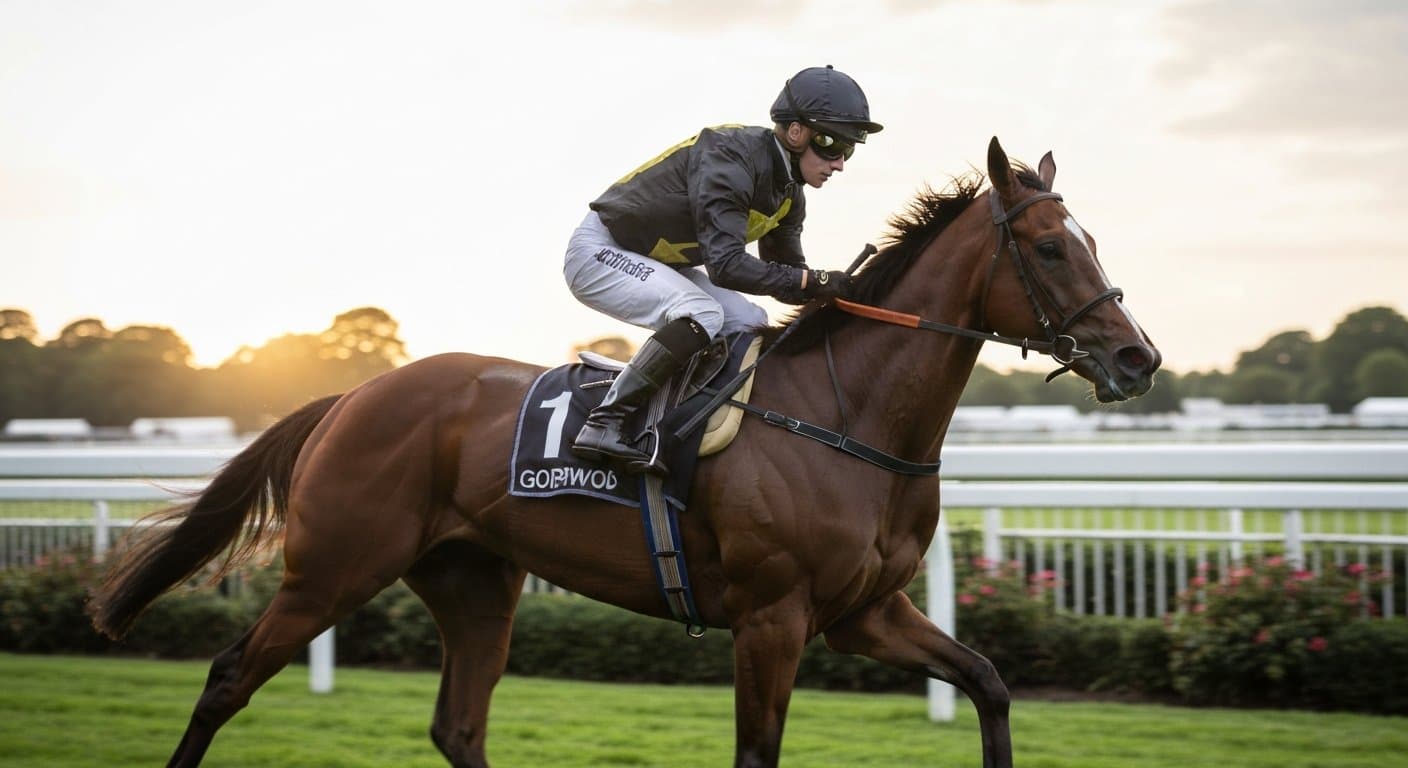
Frankel at Goodwood
Reliving Frankel's back-to-back Sussex Stakes victories at Goodwood in 2011 and 2012 — two of the greatest performances in racing history.
Read more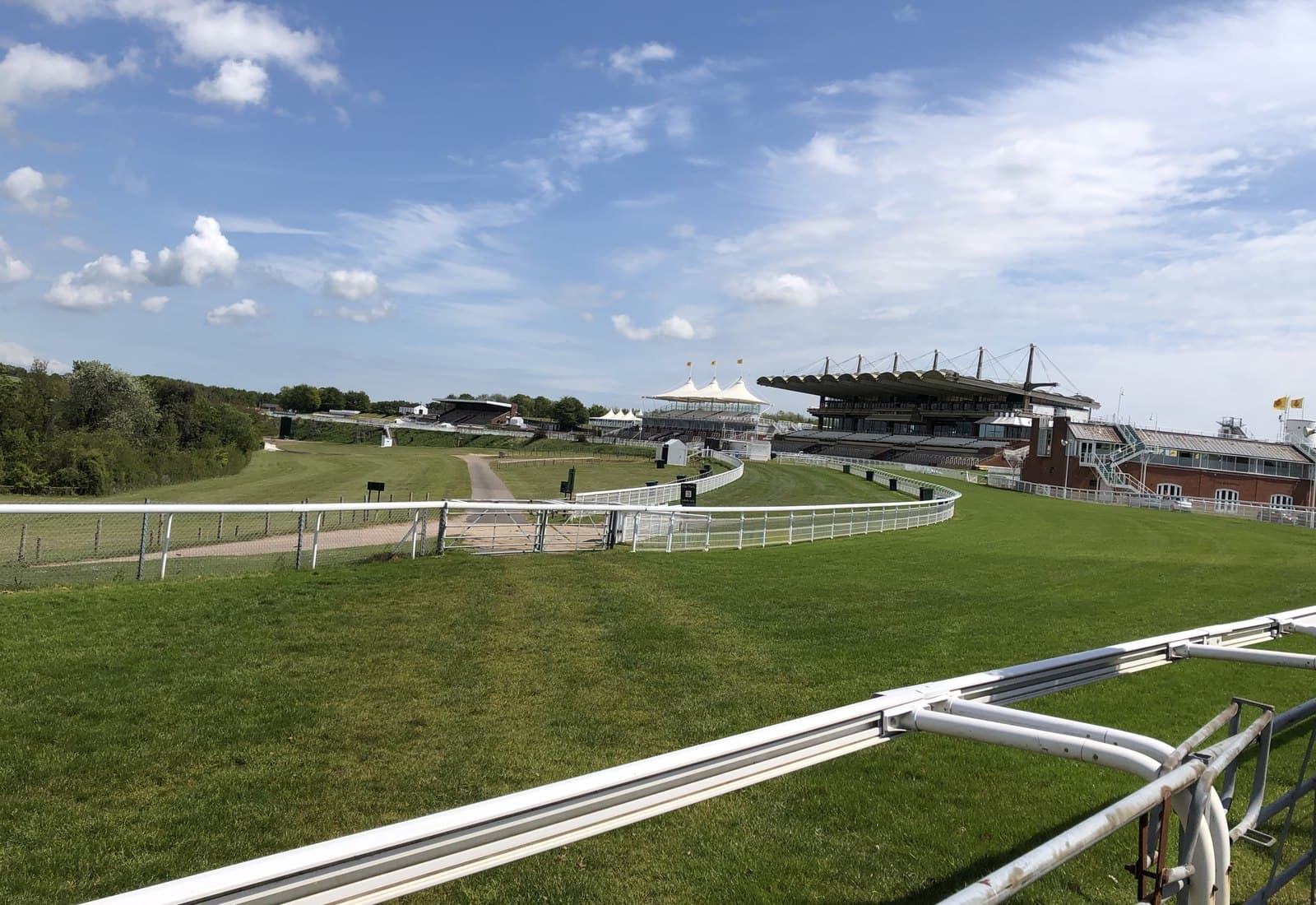
Glorious Goodwood Festival: Complete Guide
Your complete guide to the Qatar Goodwood Festival — five days of world-class flat racing, from the Sussex Stakes to the Stewards' Cup.
Read more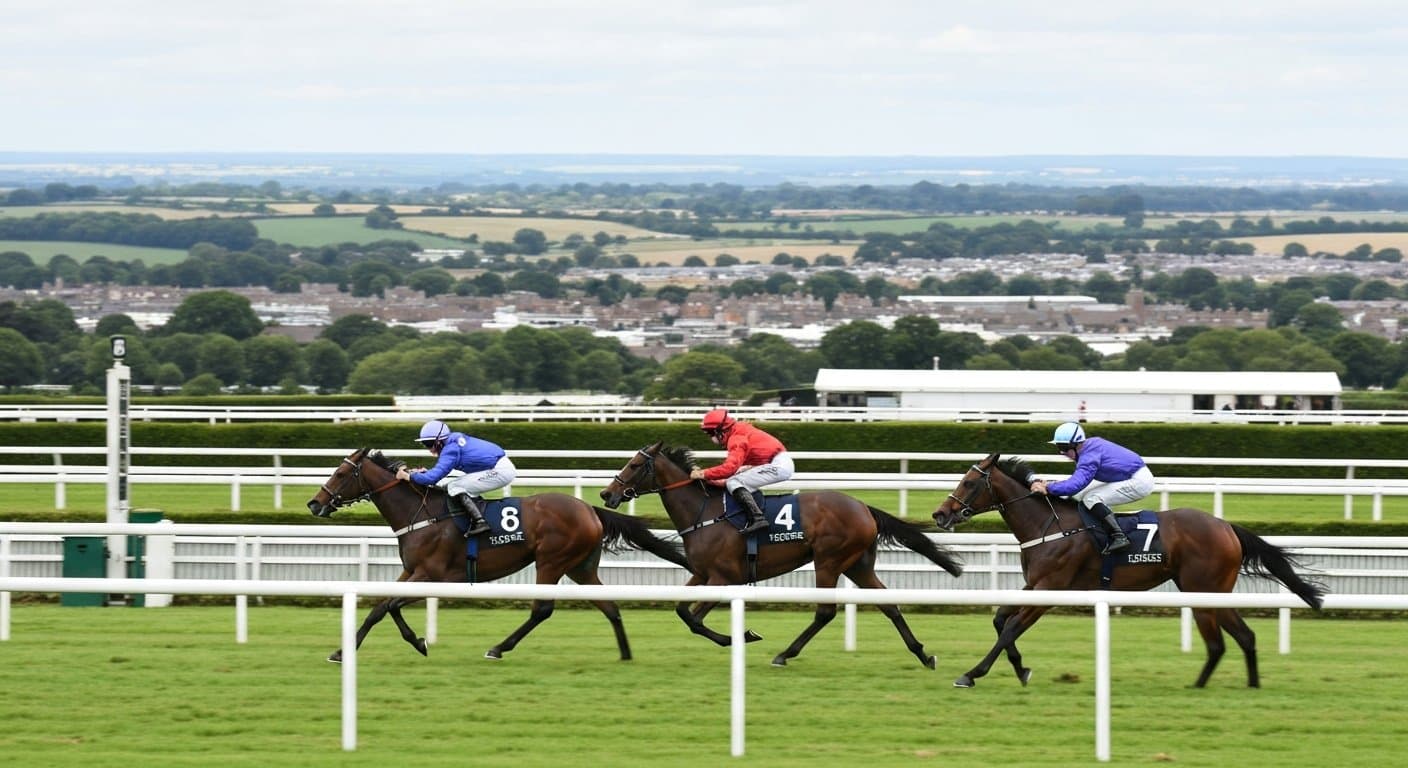
Betting at Goodwood Racecourse
How to bet smarter at Goodwood — track characteristics, draw biases, going preferences, key trainers and winning strategies for this unique course.
Read morePhotos on this page are used under Creative Commons licences. Titles, sources and licence links for each one are on our image credits page.
Betting offers for Goodwood
Gamble Responsibly
Gambling should be entertaining and not seen as a way to make money. Never bet more than you can afford to lose. If you or someone you know has a gambling problem, help and support is available.