
Founder & Editor · Last reviewed 2026-04-04
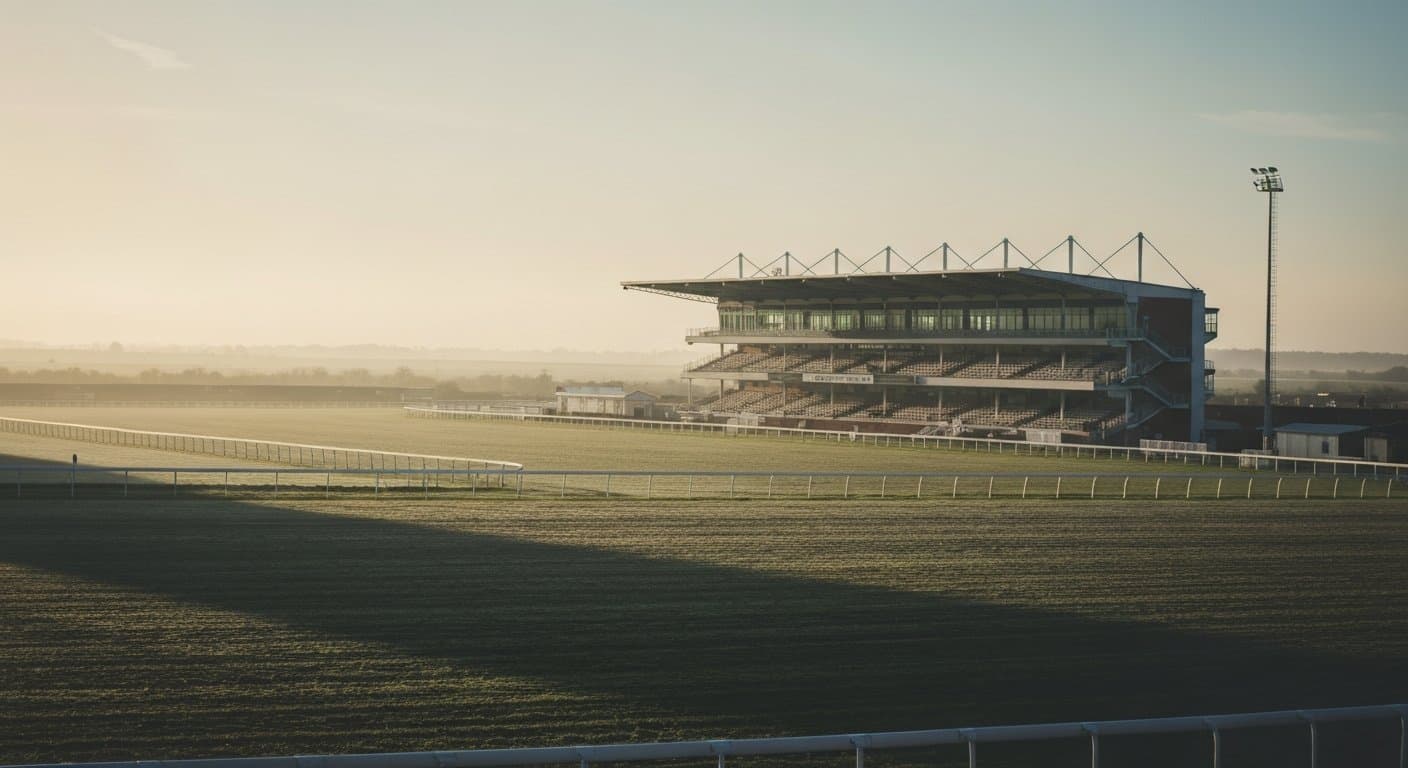
Haydock Park opened in 1899 and has spent the 125 years since making a quiet but persistent case to be ranked among Britain's finest racecourses. It doesn't have Newmarket's centuries of breeding lore, or the raw theatre of Aintree next door. What it has instead is a rare dual identity: a course that stages a September Group 1 sprint for the fastest horses in Europe and a November Grade 1 chase for the best staying chasers in the country, both with absolute credibility.
The course sits in Newton-le-Willows, wedged between Manchester and Liverpool at a junction on the M6 that has made it one of the most accessible major tracks in Britain for well over a century. When racing was still largely a leisure activity for the industrial working class of Lancashire and Merseyside, that location was everything. Trainers could box their horses across from Cheshire yards overnight. Racegoers poured in from both cities on excursion trains. The course was built to serve a region, and it has never forgotten that.
The history of the course runs through two world wars, the rise of National Hunt racing as a popular spectacle, the professionalisation of British flat racing under the Group system, and the modern era of televised sport and sponsored fixtures. At each stage, Haydock adapted. It went dual-purpose when it could have remained a seasonal flat track. It committed to upgrading its jumps course when other northern venues held back. When Betfair's sponsorship elevated the November Chase to Grade 1 in the early 2000s, Haydock had a flagship race that placed it on the same card as Cheltenham and Ascot.
The horses that have run here form a roll call that stretches from Red Rum's early career appearances in the 1970s, through Dayjur's devastating 1990 Sprint Cup performance, to Kauto Star's three Betfair Chase victories and Bristol de Mai's extraordinary 57-length win in 2017. No single horse or race defines Haydock, its strength is breadth, and the consistency of quality it has delivered over more than twelve decades.
This is the full account of how that happened, from the first meeting on a piece of Lancashire parkland to the packed grandstands of a modern Betfair Chase day. For a guide to the course as it stands today, the Haydock Park complete guide covers the track layout, facilities, and betting angles in detail.
Origins and Early Years (1899–1950s)
Origins and Early Years (1899–1950s)
The Site and the Logic Behind It
Newton-le-Willows sits almost exactly halfway between Manchester and Liverpool. In the 1890s, as those two industrial cities expanded outward and their working populations grew rapidly, that central position was commercially significant. A racecourse placed here would draw from both directions. It could count on rail connections to Merseyside from the west and to the Lancashire mill towns from the east. The men who established Haydock Park in 1899 understood this plainly, and it was not an accident that the course they chose lay on flat parkland with good road and rail access from across the region.
The land itself, a former country estate, offered the natural drainage and level terrain that flat racing requires. A group of local racing promoters secured the lease, laid out a left-handed circuit, and staged the first official meeting in 1899. The facilities were basic by later standards: a modest wooden grandstand, a simple weighing room, and the kind of infrastructure you would expect from any new provincial venture of the era. But the ground was good, the distances were fair, and the racing drew decent fields from the start.
Prize money in those early years was modest. Haydock was not competing with York or Chester for the premier northern flat fixtures. Its ambitions were proportionate to its means: regular meetings, growing attendance, and a reputation for honest, well-run sport. The flat programme was the main attraction in those first years, with the course staging a mix of sprint and middle-distance races suited to the horses available in the region.
What the course already had, in those opening years, was location. Two of England's largest cities lay within reach on either side, and the demand for entertainment among their working populations was enormous. Racing, alongside football and music halls, was one of the few mass leisure activities available. A racecourse that could serve Lancashire and Merseyside simultaneously was not a marginal operation. It was sitting on potential it would take decades to fully realise.
The Edwardian Boom and Its Limits
The decade before the First World War was a relatively prosperous time for British racing. New courses were opening, existing ones were upgrading, and public attendance was generally strong. Haydock benefited from this climate, building its fixture list and improving its facilities cautiously but steadily. By 1914 it had established itself as a regular fixture on the northern calendar. Not prominent by the standards of York or Liverpool, but known and respected.
The racing programme of the Edwardian era at Haydock was flat-racing dominated. National Hunt racing, over fences and hurdles, would not become a significant part of the picture until much later. The summer and autumn flat meetings drew the primary crowds. There were no races of national significance in those early years, no single fixture that made Haydock a must-attend. The course was building quietly, year on year, on the strength of its location and the quality of its ground.
The First World War: Requisition and Resumption
Racing in Britain was severely curtailed during the First World War. By 1917 it had been reduced to a handful of courses operating under wartime regulations. Haydock, like the majority of provincial venues, ceased racing entirely. The flat parkland that made it ideal for horses made it equally useful for the military: the site was requisitioned and used as a training camp and storage facility.
When the Armistice came in November 1918, British racing faced a long road back to normality. Several courses that had closed during the war did not reopen. Their stands were in disrepair, their leases had lapsed, or the financial case for restarting simply could not be made. Haydock was not among those casualties. Racing resumed there in 1919, drawing on the goodwill it had established before the war and the unchanged logic of its location. The crowds returned, the fixture list was rebuilt, and the course pressed on.
The Interwar Decades
The years between the two wars were complicated for British racing at large. The economic upheavals of the 1920s, including strikes, unemployment, and uncertainty, affected attendances and prize money across the industry. Several smaller courses closed permanently during this period. Haydock survived but did not flourish. The prize money remained modest, the infrastructure was not significantly improved, and the course's profile stayed local rather than national.
The 1930s brought some stability, and by the later years of the decade the economic situation had improved enough that racing was attracting reasonable crowds again. Haydock was not the story of the era. The great flat courses at Newmarket, Epsom, and Ascot commanded the national headlines. But Haydock was functioning, drawing its regional audience, and maintaining the basic infrastructure required for serious racing.
One thing was becoming increasingly clear to those who managed the course during this period: flat racing alone, staged across a spring-to-autumn season, was leaving significant revenue potential on the table. The winter months brought no racing, no gate income, and no prize-money attraction for trainers. The solution was obvious but required investment to implement properly: introduce National Hunt racing over the winter months, extend the season, and turn Haydock into a venue that could race year-round.
The Second World War: Second Interruption
In September 1939, racing in Britain was immediately suspended at the outbreak of war. Within weeks the position was revised and a limited programme was permitted to continue at certain courses, primarily to maintain the bloodstock industry and provide employment for stable staff. Haydock was among the courses that were used for military purposes once more, with the site serving training and logistical functions during the conflict.
Racing under wartime conditions was a shadow of its normal self: restricted fields, prize money that bore no relation to peacetime levels, and crowds that were allowed only under careful management. Many stable staff had been called up, the supply of quality horses was reduced, and the economics of racing were severely distorted. The Haydock meetings that took place during the war years, where they occurred at all, were remote from the course's normal rhythm.
By 1945, when peace returned and racing's full resumption became possible, Haydock faced the same rebuilding task it had confronted in 1919. The difference this time was that the course's management arrived at the postwar era with a clearer vision of what the course needed to become.
What the First Half-Century Established
Haydock's first fifty years were modest by almost any measure. The course did not produce champion horses, did not stage races of national importance, and did not attract the leading trainers or owners of the era in significant numbers. What it did do was survive, maintain its location advantage, and preserve the quality of its racing surface through two periods of forced closure.
The ground at Haydock, that Lancashire parkland clay, had proven itself fair and consistent. Horses came back here and ran to their form. Trainers who used the course knew what to expect. That reliability, unglamorous as it is, was the foundation on which everything that followed was built.
Era takeaway: The first five decades gave Haydock Park something that cannot be manufactured: a track record of reliable, well-run sport in a location that served the largest racing population in the north of England. That was enough to survive two world wars and survive them in a condition that allowed a real second act.
Building the Dual-Purpose Venue (1945–1980s)
Building the Dual-Purpose Venue (1945–1980s)
The Post-War Decision
When British racing returned to normality after 1945, Haydock Park's management faced a choice that other northern courses also confronted: stay flat-only and remain a seasonal operation, or invest in National Hunt infrastructure and race year-round. Haydock chose the latter, and it was the single most consequential decision in the course's history.
National Hunt racing (over fences and hurdles through the autumn, winter, and spring months) required investment in a separate jumping circuit, proper fencing, and the infrastructure to stage two distinct types of meeting safely. The expenditure was not trivial for a course of Haydock's scale. But the logic was straightforward: a dual-purpose course could generate fixture income across eleven months of the year, attract a wider pool of trainers and owners, and establish relationships with two entirely different segments of the racing public.
The jumps course built at Haydock in the postwar years used the natural characteristics of the land to its advantage. The flat, galloping circuit suited staying chasers. The Lancashire soil, when wet, produced the kind of testing ground that separated the real stayers from horses that were merely thought to stay. The fences were built fairly and honestly. Haydock over jumps was not designed to be a trick track. It was designed to find out the truth about a horse.
A Steady Climb Through the 1950s
The 1950s saw Haydock establish its dual-purpose character and begin to build a broader reputation. Prize money increased as the postwar racing economy recovered. The fixture list expanded. And the course began to attract horses from yards that had previously looked only to the established northern venues.
On the flat, the course's racing surface continued to win approval. The left-handed, essentially level circuit, measuring just over a mile and a half around, produced times that correlated well with the best flat courses in Britain. Horses who had run well at Haydock translated that form reliably to York and Newmarket. Trainers, always the most reliable judges of a track's quality, began to choose it more deliberately for races where they wanted an honest reading of a horse's ability.
Over jumps, the first generation of decent chasers began to appear at Haydock through the winter months. The course had not yet produced anything to rank among the great National Hunt stories, but it was demonstrating a capacity for staging serious jumping that attracted the attention of the leading yards.
The 1960s: Expansion and Recognition
The 1960s were a decade of solid progress at Haydock. The grandstand facilities were modernised and expanded. The fixture list continued to grow. And, critically, the flat programme was upgraded in terms of prize money and race quality to the point where Haydock was beginning to attract horses that might previously have been targeted only at York, Chester, or Doncaster.
The motorway network played its part. The M6, running past the course's western edge, opened Haydock to racegoers from across the north of England and the Midlands. Car ownership was rising rapidly through the 1960s, and the accessibility of Haydock by road made it one of the easiest major tracks to reach from anywhere between Birmingham and Glasgow. Attendance grew through the decade, and with it the financial confidence to invest further.
On the flat, middle-distance racing at Haydock over a mile and a quarter and a mile and a half became a reliable proving ground for horses with ambitions beyond the regional. The Lancashire Oaks, run over a mile and a half, was one of the fixtures that established itself during this era as a race of real quality. The Spring Cup and Old Newton Cup were others that built loyal followings among the punting public and the trainer community alike.
Over jumps, the course's winter programme was developing real stature. The November and January meetings began to attract horses that were being prepared for the Cheltenham Festival in March, and Haydock started to function as a trial ground for some of the most important jumps events of the spring. That role as the serious preparation race rather than the secondary contest would define the course's jumps identity for the decades that followed.
The 1970s and the Regional Powerhouse
By the 1970s, Haydock had arrived at a position within British racing that it has broadly maintained ever since: a significant regional venue with real national relevance, particularly in the jumps sphere. The prize money was competitive, the racing was well-organised, and the ground conditions in winter were earning a specific reputation.
Heavy ground at Haydock. The phrase had acquired meaning in the industry. The Lancashire clay held water in wet conditions, creating a stamina test of a particular severity. Horses who thrived on it were a distinct type: big, powerful, staying chasers who could keep finding under pressure when lighter-framed rivals were beginning to struggle. The Haydock winner in heavy going was not always the most talented horse in the race. It was frequently the most suited to that specific combination of distance, track shape, and underfoot conditions.
This understanding accumulated in the minds of trainers who used the course regularly, and it eventually produced the pattern that would define the Betfair Chase in the modern era: a race in which the going is often more decisive than the official ratings, and in which horses without sufficient stamina reserves are routinely found out.
Red Rum ran at Haydock in the early part of his career, before the three Grand National victories at Aintree that made him the most famous racehorse in Britain. His appearances at Haydock were unspectacular in themselves, but they are a reminder of how the course functioned in the 1970s: as a venue where good horses at the early stages of their careers were tested against decent opposition before stepping up to the biggest stages.
A Cultural Identity Takes Shape
Through the postwar decades, Haydock developed a character that was consistent with its setting. The course served a working-class racing public drawn from Manchester, Liverpool, and the towns of Lancashire between them. Racegoers at Haydock were knowledgeable and direct. They expected good racing and competitive prices, and they were not impressed by ceremony or pretension.
This shaped the course's atmosphere in ways that have persisted. There is a no-nonsense quality to a Haydock raceday that distinguishes it from the more self-consciously prestigious courses in the south. The people who come here come for the racing. The course has never tried to be anything other than what it is, and that honesty is a significant part of its appeal.
Era takeaway: The forty years after the Second World War turned Haydock from a seasonal flat course into a year-round dual-purpose venue with a distinct identity and a growing national reputation. The decision to invest in National Hunt infrastructure proved correct at every stage. By the 1980s, Haydock was positioned perfectly to capitalise on the elevation of its flagship races to the highest levels of their respective codes.
The Sprint Cup: From Local Prize to Group 1 (1966–Present)
The Sprint Cup: From Local Prize to Group 1 (1966–Present)
The Race's Origins
The Sprint Cup was first run at Haydock in 1966. British flat racing was entering a period of rationalisation during that decade: the Pattern Race system, which would give rise to the Group 1/2/3 classification structure, was being developed by racing authorities across Europe, and there was growing interest in identifying which races across the continent truly tested the best horses at each distance and age group. A six-furlong sprint in September at Haydock was not, at that stage, on anyone's list of the most important races in the country.
The early renewals were valuable by the standards of the time but unspectacular in terms of their place in the racing hierarchy. The race attracted good sprinters from the leading northern yards and some travelling challengers from the south, and it was well-run and competitive. But it was the kind of race that filled a page in the Racing Calendar without troubling the headlines in the national press.
What the Sprint Cup had in its favour from the outset was the conditions under which it was run. Six furlongs at Haydock, on good to firm or good ground in late summer, with the straight finishing run and the flat, galloping track, suited the fastest horses of the era precisely. Sprinters who had been campaigning at Royal Ascot in June and York's Ebor meeting in August found the Haydock conditions familiar. The track produced reliable times. The race was, from its earliest years, a fair and honest test of speed.
The Road to Group Status
Through the 1970s and into the 1980s, the Sprint Cup grew steadily in prestige and prize money. The Group system, adopted by British racing in 1971, gave races a formal hierarchy for the first time, and events like the Sprint Cup were initially placed outside the top three groups or at Listed level. This was an accurate reflection of where the race sat at the time: a good race, worth winning, but not among the very best in its category.
The process of upgrading a race through the Group system required consistent quality of field over a number of years. Racing's pattern authorities reviewed races periodically and elevated those that had demonstrated a track record of attracting top-class horses. The Sprint Cup's path to Group 1 ran through the late 1970s and the 1980s as the race attracted progressively better fields and, in several instances, produced winners who went on to confirm their class at the highest level.
Group 1 status arrived in 1988. The elevation was a formal recognition of what the racing industry had been observing for several years: the September Sprint Cup at Haydock was the definitive end-of-season sprint championship race in Britain, attracting the best horses in the division and consistently producing results that held up under scrutiny. For the course itself, it was the moment that placed Haydock unambiguously in the premier league of British flat racing venues.
Dayjur and the 1990 Renewal
The 1990 Sprint Cup took place at a point when British sprinting was producing very high-class horses. Dayjur, trained by Dick Hern and owned by Sheikh Hamdan Al Maktoum, was at the peak of his powers that summer: he had won at Royal Ascot, and his times suggested he was one of the fastest horses to race in Britain in years.
His performance in the Sprint Cup was in keeping with that form. He won with authority, drawing clear in the final furlong in the manner of a horse who was not yet at his limit. The margin flattered his rivals but did not flatter Dayjur: he was that good. The race confirmed his status as the clear British sprint champion of 1990 and set up one of the most discussed incidents in the history of racing, his stumble after jumping a shadow at the Breeders' Cup Sprint at Belmont Park just weeks later, which cost him what appeared to be a certain victory.
The 1990 Haydock run is worth noting separately from that Breeders' Cup episode. At Haydock, Dayjur was simply the fastest horse in the field on the day, winning a Group 1 as he was expected to. The sprint performance stands on its own merits.
Lochsong and the Early 1990s
Lochsong, trained by Ian Balding for Jeff Smith, won the Sprint Cup in 1992 and 1993. She was a popular horse, small, grey, and freakishly quick, who divided opinion between those who felt she was the best sprinter of her era and those who thought the conditions at Haydock suited her particular style too perfectly to be conclusive evidence.
The 1993 renewal, which she won for the second successive year, drew a high-class field and produced a performance that settled the argument for most observers. Lochsong was not winning because Haydock suited her; she was winning because she was faster than the other horses in the race. She went on to finish second in the Breeders' Cup Sprint later that year, confirming her standing at the highest international level.
Her two Haydock victories helped establish a pattern that would become familiar: the Sprint Cup as the race that confirmed or crowned the sprint champion of the season. By the mid-1990s, the race had acquired the kind of narrative weight that Group 1 races need to retain their prestige.
Muhaarar (2015) and the Modern Sprint Champions
The 2015 Sprint Cup produced one of the most one-sided victories the race has seen. Muhaarar, trained by Charles Hills and owned by Sheikh Hamdan Al Maktoum, won his seven races that season without a defeat. His performance at Haydock was authoritative: he pulled clear in the final furlong and won by two lengths from Dutch Connection, with the rest of the field strung out behind.
Muhaarar was beaten only once in his entire career, in the 2014 July Stakes at Newmarket as a two-year-old. In the 2015 sprint season, he was superior to everything else in Britain or Europe, and the Haydock run was the clearest demonstration of that superiority. He retired to stud having won the Group 1 Sprint Cup, the Commonwealth Cup at Ascot, and the Qipco Champions Sprint at Ascot on Champions Day, three of the season's most important sprint prizes.
Quiet Reflection and Harry Angel
The 2016 Sprint Cup produced one of its more unusual results. Quiet Reflection, trained by Karl Burke, won the race ridden by Dougie Costello, an apprentice jockey, making her the first filly to win the Sprint Cup in its modern Group 1 form under an apprentice. The combination of an improving filly and an apprentice in a Group 1 field is extremely rare, and Quiet Reflection's win drew significant attention to both the horse and her young jockey.
The 2017 renewal brought Harry Angel, trained by Clive Cox. Harry Angel had been building toward a top sprint campaign all season, and his Haydock performance was the culmination of it: he won the Sprint Cup and ended the year as the clear sprint champion in Britain. Cox had prepared him carefully for the autumn sprint campaign, and the Haydock win was the definitive race of his season.
What the Sprint Cup Represents
Run in September, the Sprint Cup is positioned at a point in the flat season when the best sprinters have had their full campaign under their belts. Royal Ascot and Goodwood's summer meetings have identified the leading horses. By September, form lines are established, and the Sprint Cup is the race that resolves the questions those earlier meetings have left open.
That timing is part of what gives the race its authority. The winner at Haydock in September has normally already demonstrated Group 1 form earlier in the season. The Sprint Cup is a confirmation race as much as a discovery race. It puts the sprint division's best horse at the top of the order and sends the champion to Champions Day at Ascot, or for the most internationally minded yards, to the Breeders' Cup Sprint, with a defined status.
For the full details of the modern Sprint Cup and how to approach it from a betting perspective, the Sprint Cup day guide covers the race's current conditions, historical patterns, and going preferences in detail.
Era takeaway: The Sprint Cup's elevation to Group 1 in 1988 gave Haydock Park a September fixture that placed it among the premier flat venues in Britain. The race has since attracted sprint champions from Dayjur to Muhaarar, produced several surprises, and established Haydock as the definitive end-of-season test for British sprinters. Without it, the course's flat identity would be significantly thinner.
Jump Racing and the Betfair Chase (2003–Present)
Jump Racing and the Betfair Chase (2003–Present)
The November Chase Before Betfair
Haydock had been staging National Hunt racing since the postwar years, and by the 1980s its winter jumping fixtures were well-established on the northern calendar. The November Chase, the predecessor to the Betfair Chase, was a valuable prize attracting decent staying chasers, but its place in the national pecking order was below the Grade 1 races at Cheltenham and Kempton that defined the top of the jump racing hierarchy.
The race was a serious test. Three miles on Haydock's flat, left-handed circuit in November, when the ground had usually received autumn rain and was often soft or heavy, demanded real stamina from any horse in the field. The testing conditions filtered the field in a way that made the result count: horses who won here had passed a demanding examination. But without Grade 1 status, the race attracted horses at the level below the very best, and its winners were not routinely going on to dominate at Cheltenham.
That changed at the start of the 2000s, when Betfair, the newly established betting exchange that was transforming the structure of the British betting market, took over the sponsorship of the race and agreed with the course to target it for Grade 1 status.
Elevation to Grade 1
The Betfair Chase was elevated to Grade 1 in 2004 (the exact year of the first running under Grade 1 conditions). Grade 1 is the highest classification in British National Hunt racing, reserved for the races that attract and test the best horses in the sport. The elevation was not merely symbolic: it changed the type of horse that would be aimed at Haydock in November.
Where the November Chase had attracted horses at the level below the very best, the Grade 1 Betfair Chase could now justify appearing in the prep race plans of the Gold Cup favourites. Trainers who had been using Cheltenham's November meeting or a Kempton novice chase for their top staying chasers now had a third option, one that offered higher prize money, a properly tough test, and a place at the head of what would eventually become a Chase Triple Crown.
The Triple Crown structure, developed in partnership with the Jockey Club, gave the Betfair Chase additional meaning. A horse that won the Betfair Chase (November), the King George VI Chase at Kempton (December), and the Cheltenham Gold Cup (March) in the same season would earn a substantial bonus. The Betfair Chase was positioned as the first leg. For the best staying chasers, it became the opening race of the season's most significant series.
The Race's Position in the Calendar
The timing of the Betfair Chase gives it a distinctive character. Run in November, it is typically the first Grade 1 of the British jump season. Cheltenham's November meeting has its own Grade 1 races, but the Betfair Chase at Haydock occupies a specific position as the race that initiates the Gold Cup narrative for the season.
Horses who run well here arrive at the Christmas King George with their credentials freshly stated. Horses who underperform at Haydock spend the winter months trying to revise the impression left by their November run. The Betfair Chase does not determine what happens at Cheltenham in March, but it consistently sets the conversation for what the staying chase division looks like that season.
The going at Haydock in November is a variable that shapes the race's character more than at most Grade 1 venues. The course can be good to soft in a dry autumn, but it is regularly soft or heavy, and in those conditions the race becomes something significantly more demanding than a standard Grade 1 staying chase. Horses who need a sound surface to show their best form are exposed here. Horses who thrive on testing ground are given an advantage that the official ratings might not fully capture.
The Race's Early Running (2004–2006)
The early years of the Betfair Chase as a Grade 1 produced competitive fields and established the race's credentials quickly. Top trainers began to target it seriously, and the quality of horses that arrived in November improved from year to year as the race built its reputation.
The course's infrastructure was also improving during this period. The Jockey Club's ownership brought investment to the facilities, the jumps course received attention to maintain its safety standards, and the raceday experience improved in ways that made Haydock's biggest November meeting feel proportionate to its new Grade 1 status.
By 2006 the race was established as a serious early-season championship event. And in that year, the horse who would define its entire first decade arrived at Haydock for the first time.
Kauto Star's First Betfair Chase (2006)
Kauto Star won the Betfair Chase in November 2006 as a rising star of Paul Nicholls's powerful Ditcheat stable. Nicholls was, by that point, the dominant force in British jump training, and Kauto Star was already being discussed as a potential Gold Cup horse after his previous season's performances. His run at Haydock was not a cautious introduction to Grade 1 company. He won it.
The details matter here. Kauto Star, ridden by Ruby Walsh, produced a performance that confirmed he was not merely a talented chaser but one with the scope to beat the best in the sport. The Haydock conditions, a testing track on autumnal ground, were not an obstacle. He handled them with the casual authority that would become his signature. Walsh, who developed an almost telepathic understanding of the horse over the years, reported after the race that Kauto Star had scarcely come off second gear.
The 2006 Betfair Chase set the trajectory for the season that followed. Kauto Star went on to win the King George VI Chase at Kempton in December and the Cheltenham Gold Cup in March 2007. The Haydock run was the opening statement of one of the great jumping seasons in the sport's history.
The Full Betfair Chase Record
Kauto Star returned to Haydock and won the Betfair Chase again in 2007. He won it a third time in 2009. Between those victories he collected five King George VI Chases at Kempton and two Cheltenham Gold Cups. The fact that Haydock was the opening venue for his campaigns in multiple seasons is telling: Nicholls and Walsh knew that the course suited him, knew the test it provided was appropriate preparation for the bigger races that followed, and chose it deliberately.
The 2011 Betfair Chase, which Kauto Star won at the age of eleven after a difficult couple of seasons, is covered in detail in the section that follows. For the moment, the key point is the scale of his Haydock record: three Betfair Chase victories at a Grade 1 course, at ages seven, eight, and eleven, spanning a career defined by consistency at the highest level. No other horse has won the race three times.
Bristol de Mai and Heavy Ground
If Kauto Star defined the Betfair Chase's first decade, Bristol de Mai defined its second. Trained by Nigel Twiston-Davies, Bristol de Mai won the Betfair Chase in 2017, 2018, and 2020. His victories were achieved under very different circumstances from Kauto Star's: where Kauto Star was an all-conditions horse who could win on a range of going, Bristol de Mai was a specialist whose form was markedly better on heavy or soft ground.
His connection with Haydock's testing winter conditions produced some of the most one-sided results the race has seen. The 2017 running, in which he won by 57 lengths from Cue Card, is examined in detail in the section that follows. The 2018 win was more orthodox but still decisive. The 2020 victory, in difficult ground during a season disrupted by the pandemic, confirmed that his relationship with the course was not a one-season anomaly.
Twiston-Davies's management of Bristol de Mai at Haydock was a clear strategic choice: target the race in conditions that suited the horse, accept that his ability on better ground was not at the same level, and win the races you can win. It was honest, effective horsemanship, and it produced three Grade 1 victories that would not have existed had the trainer approached the horse's programme differently.
The full Betfair Chase history and how to assess the race from a form and going perspective is covered in the Betfair Chase guide.
The Peter Marsh Chase and Supporting Programme
The Betfair Chase is Haydock's headline National Hunt fixture, but the jumps programme around it has produced significant moments of its own. The Peter Marsh Chase, run in January over three miles, has established itself as one of the leading staying-chase trials for the Grand National and later spring targets. Many Clouds, who won the Grand National in 2015, was a notable winner of the Peter Marsh Chase at Haydock, using the race as a stamina confirmation before his Aintree triumph.
The January fixture at Haydock typically falls in the heart of the winter testing period. Ground that is soft or heavy, combined with the left-handed circuit's stamina demands, produces results that give trainers honest information about horses they are considering for Cheltenham and Aintree. The course's function as a trial venue is not limited to the Grade 1 November meeting.
Era takeaway: The elevation of the Betfair Chase to Grade 1 in 2004 transformed Haydock's National Hunt identity. It gave the course a flagship winter race capable of attracting Gold Cup contenders, created the structure in which Kauto Star and Bristol de Mai became synonymous with the course, and positioned Haydock as the first serious test of the staying-chase season. The race is now inseparable from the course's reputation.
Kauto Star and Bristol de Mai: The Horses Who Made Haydock
Kauto Star and Bristol de Mai: The Horses Who Made Haydock
The Narrative Anchor: Kauto Star, November 2011
He is eleven years old, which in a Grade 1 chaser means something. Ruby Walsh settles him in mid-division on the far side of the field. The Haydock crowd has watched this horse win here before, twice, but two difficult seasons have intervened, and there are doubters. On the final circuit, Walsh asks him to move, and Kauto Star responds. He moves through the field the way he has always moved, smoothly, without fuss, jumping as if the fences are an afterthought. He hits the front approaching the last and wins by eight lengths. The crowd noise rises not in surprise but in recognition: this is what he always was.
The 2011 Betfair Chase was Kauto Star's third victory in the race, and the one that most people who saw it remember most clearly. The first two wins, in 2006 and 2007, were the work of a horse at the height of his powers in the early stages of a Gold Cup career. The 2011 win was different: it was the work of a veteran horse who had spent two years fighting form problems and rival chaser Denman's dominance, returning to a course he knew and winning with something of the ease that had defined his best years.
Kauto Star's Complete Haydock Record
Paul Nicholls's approach to Kauto Star's autumn campaigns was built partly around Haydock. The course suited the horse's way of going, flowing, economical jumper, strong gallop, capable of sustaining his effort over three miles on any reasonable ground. Nicholls used the Betfair Chase as an opening race in multiple seasons because it served a clear purpose: it gave Kauto Star a Grade 1 run in competitive conditions at a point in the season when a proper test was what the horse needed.
The 2006 win, ridden by Ruby Walsh, came when Kauto Star was seven. He won by six lengths, and the Racing Post's assessment was that the margin understated his superiority. The 2007 win followed a similar pattern. Between those victories and the 2009 renewal, when he won the race for the third time in four years, he had won two Gold Cups, five King George VI Chases, and established himself as the most celebrated horse in British jump racing since Desert Orchid.
The 2009 Betfair Chase win was his fourth successive Grade 1 victory that season. He had won the Gold Cup in March, the Betfair Chase in November, and was building toward the Christmas King George again. At that point in his career, Kauto Star was operating at a level of sustained excellence that made simple comparisons with other great chasers credible.
His record at Haydock across those four visits, three wins from four runs in Grade 1 company, is the foundation on which the course's National Hunt reputation rests in the modern era. The course suited him, and his connection with it became part of how Haydock is understood within racing: not as a venue that hosts great horses for one big day, but as a course that a great horse chooses to return to.
Bristol de Mai: The Course Specialist
Where Kauto Star was an all-conditions horse who won at Haydock as part of a broader campaign across the best courses in Britain, Bristol de Mai was a specialist who found his best form there specifically. The grey gelding, trained by Nigel Twiston-Davies, developed an association with Haydock's heavy winter ground that is without parallel in the modern era of the Betfair Chase.
Bristol de Mai's record elsewhere was solid but rarely exceptional. He ran creditably at Cheltenham, placed in Gold Cups, and was a consistent Grade 1 performer. But at Haydock in November, on soft or heavy ground, he was transformed. The combination of the flat circuit and the testing underfoot conditions produced a version of the horse that was simply beyond the reach of his rivals on those specific days.
The 2017 Betfair Chase, on ground officially described as heavy, illustrated this in the starkest possible terms. Bristol de Mai led virtually throughout and won by 57 lengths from Cue Card, with Native River back in third. Fifty-seven lengths. In a Grade 1 staying chase over three miles, the distance is so large as to be almost beyond rational analysis. It was not a fluke or a collapse by his rivals: Cue Card was a high-class chaser, and Native River would go on to win the 2018 Cheltenham Gold Cup. On that day in November 2017, Bristol de Mai was simply on a different level.
Twiston-Davies was frank about what the performance showed. The going at Haydock suits Bristol de Mai in a way that it does not suit most horses in the division. His conformation and action allow him to travel through heavy ground without losing his rhythm. Where other chasers are scrubbing along by the final mile in those conditions, Bristol de Mai was still operating within himself.
He returned to Haydock and won the Betfair Chase again in 2018, this time on ground that was softer than ideal for his rivals but not the extreme test of the previous year. The margin was smaller, around five lengths, but the manner of the victory was the same: he dominated from the front and was never seriously threatened. The 2020 win, in a pandemic-restricted season with no public attendance, confirmed that his record at the course was not dependent on his competitors having had specific preparation problems or unusual seasons. He simply won at Haydock because it suited him.
Three Betfair Chase wins from three attempts. In the history of the race, only Kauto Star has matched that. The two horses came to Haydock from entirely different directions: one a brilliant all-round chaser who used the course as preparation, the other a heavy-ground specialist who reached his ceiling there. But together they have given the Betfair Chase a weight of history that few Grade 1 races outside Cheltenham and Aintree can match.
Red Rum and Earlier Connections
Kauto Star and Bristol de Mai are the most recent additions to Haydock's National Hunt story, but the course's connection with famous horses extends further back. Red Rum ran at Haydock in the early years of his career, before his three Grand National victories at Aintree made him a national institution. Those early appearances were not the stuff of historical legend: Red Rum was a good horse trying to establish himself, not yet the horse who would become the most celebrated in the history of the National.
But the connection matters to the course's identity. Haydock was part of the background from which Red Rum emerged. For racegoers in the Newton-le-Willows area who watched him run in the early 1970s and then saw him win three Nationals on the television, the local association was a point of pride. It is the kind of connection that courses accumulate over decades, not the defining story but part of the fabric.
The Peter Marsh and Grand National Trail
The Peter Marsh Chase has quietly built a record as a Grand National indicator. Many Clouds, who won the National in 2015 trained by Oliver Sherwood, was a notable Peter Marsh winner at Haydock, using the January race to confirm his stamina credentials before the bigger test at Aintree. The pattern of horses using Haydock's winter fixtures as serious preparation, not as a B-race but as a real test, runs through the course's National Hunt history.
For the punter who follows the form book carefully, Haydock's January results have a consistent predictive value for Aintree. Horses who handle the distance and the ground at Haydock in the depths of winter are generally horses who stay. The fences at Haydock are not Aintree fences, but the stamina question is broadly similar, and results here translate with reasonable reliability.
Modern Haydock and Its Place in Northern Racing
Modern Haydock and Its Place in Northern Racing
The Jockey Club Era
Haydock Park's modern chapter is framed by its place within the Jockey Club Racecourses portfolio, the group that manages the majority of Britain's leading venues. Jockey Club ownership brought investment to Haydock's facilities that the course could not easily have funded independently. A new grandstand, improved drainage for the jumps course, modernised hospitality areas, and an upgraded betting and spectator infrastructure transformed the raceday experience across the 2000s and 2010s.
The investment was not purely cosmetic. The jumps course drainage work was particularly important: a course that relies on heavy winter ground to produce its best racing needs to manage the conditions carefully to ensure the track remains safe as well as testing. Haydock has maintained a strong safety record over this period while continuing to produce properly demanding conditions in November and January when the season requires it.
On the flat side, the course's ability to attract and retain Group 1 status for the Sprint Cup through the 2000s and 2010s required active management of prize money levels and race conditions. The Sprint Cup prize fund has increased significantly over the course's sponsorship history, and the race has continued to attract runners at the level required to keep its Group 1 status under review from pattern authorities.
Two Headline Fixtures
Haydock now organises its racing year around two events that have national rather than regional significance. Sprint Cup day in September and Betfair Chase day in November are the two fixtures that place the course in the country's top tier. Everything else on the calendar, valuable as it is, is organised around those anchors.
The combination is unusual. Very few British racecourses can claim a Group 1 flat race and a Grade 1 jump race of comparable standing. Cheltenham is purely a jumps course. Ascot stages the Champions Sprint on flat-only ground. Haydock straddles both codes with credibility, and that dual identity remains its most distinctive characteristic.
Between those flagship dates, the fixture list runs to approximately 30-35 meetings annually. The flat programme includes the Lancashire Oaks, the Old Newton Cup, the Rose of Lancaster Stakes, and a range of handicap and conditions races that serve as real trials for horses targeting the better races later in the season. The jumps programme around the Betfair Chase includes the December meeting, the January Peter Marsh meeting, and spring fixtures that allow trainers to give their horses a run before Cheltenham or Aintree.
Accessibility and the Regional Audience
The M6 motorway junction that has defined Haydock's transport position since the motorway was built remains one of the course's most practical advantages. Junction 23 of the M6 is essentially the entrance road to the course, and the journey time from Manchester city centre is under half an hour in most conditions. From Liverpool, the journey is similar. From Birmingham, the course is little more than an hour's drive.
This accessibility shapes the audience. Haydock draws heavily from Manchester and Liverpool, but it also serves a wider catchment across the North West and into the Midlands that few other courses can match. On Betfair Chase day, the car parks fill with racegoers who have come from across a fifty-mile radius, and the atmosphere in the grandstands reflects the breadth of that regional draw.
The course capacity of around 18,000 is sufficient for the biggest days without producing the overcrowding that affects some southern courses on their peak fixtures. Haydock's biggest meetings feel well-attended rather than crammed, which is a management choice that maintains the quality of the experience for racegoers who travel from across the region.
Haydock Among Northern Courses
Within northern racing, Haydock sits alongside Aintree, York, and Chester as the four courses with the strongest national profiles. Each has a distinct identity. York is the prestige flat course of the north, hosting the Ebor Festival and the Breeders' Cup trials. Aintree is defined by the Grand National. Chester's May Festival is one of the great occasions of the flat season. Haydock's identity is built on its dual purpose and the depth of its year-round programme.
This complementarity means northern racing as a whole is richer than any individual course. Racegoers in Lancashire and Yorkshire have access to a range of fixtures that matches what is available in the south, spread across different course types and different racing codes. Haydock's role within that network has been to provide the most accessible venue for the biggest neutral-ground fixtures.
Era takeaway: The modern era has consolidated what the previous decades built. Jockey Club investment has improved the facilities without altering the course's character. The two flagship fixtures have grown in prestige and prize money. Haydock's position as the North West's premier dual-purpose venue looks secure for the foreseeable future.
Haydock's Legacy and Frequently Asked Questions
Haydock's Legacy and Place in British Racing
What the Course Has Produced
Haydock Park's contribution to British racing is wide rather than singular. There is no one race, no one week, and no one horse that entirely defines it. The course's value is in the consistency it has provided: reliable ground, fair racing, and a fixture list that has consistently offered trainers and owners exactly what they needed at key points in both the flat and jump seasons.
The Betfair Chase results have a habit of shaping the entire Gold Cup conversation for the season. The Sprint Cup winner is consistently a horse who goes on to feature at Champions Day or the Breeders' Cup. The Peter Marsh Chase produces Grand National entries with form that holds up. Haydock's races are trial races in the best sense: they produce results that matter.
That usefulness to the wider racing calendar is the course's deepest legacy. Alongside Aintree, Chester, and York, Haydock completes a northern racing circuit that offers some of the most varied and quality sport in the country. Take any one of those four out and the north of England's racing picture is noticeably thinner.
For a full picture of the course today (track layout, facilities, betting approach, and what to expect on each type of day) the Haydock Park complete guide is the starting point.
A Northern Sporting Institution
Haydock carries itself with a directness that matches its surroundings. The people who attend do so for the racing. The atmosphere on Betfair Chase day is that of a course that knows what it is putting on: a Grade 1 chase, in proper winter conditions, with horses who are live contenders for the most important staying-chase races of the season. No pretension, no ceremony beyond what the occasion requires. Just good racing.
After 125 years, the course has earned that self-assurance. From the modest first meeting in 1899, through the wartime interruptions, the dual-purpose conversion, the Sprint Cup's elevation to Group 1, and the Betfair Chase's emergence as a Gold Cup opener, Haydock Park has accumulated a history that justifies the confidence of its current standing.
Frequently Asked Questions
When did Haydock Park open?
Racing at Haydock Park began in 1899, making the course 125 years old in 2024. The site at Newton-le-Willows was chosen for its flat parkland terrain, good drainage, and central location between Manchester and Liverpool. The first meetings were flat-racing fixtures serving the large working-class populations of both cities. National Hunt racing was introduced in the postwar era, transforming Haydock from a seasonal flat track into the dual-purpose venue it is today.
When did the Sprint Cup become a Group 1?
The Sprint Cup was elevated to Group 1 status in 1988. The race had been running since 1966, building its quality and prize money through the 1970s and 1980s as the Group system was established in British racing. By the mid-1980s the race was attracting the leading sprinters in Britain and Europe, and the 1988 upgrade to Group 1 formalised what the racing industry had already recognised: the September Sprint Cup at Haydock was the definitive end-of-season sprint championship race.
What is the Betfair Chase, and why does it matter?
The Betfair Chase is a Grade 1 staying chase run at Haydock in November, over three miles on the left-handed circuit. It was elevated to Grade 1 status in 2004 and is now the first leg of the Jockey Club Chase Triple Crown, alongside the King George VI Chase at Kempton (December) and the Cheltenham Gold Cup (March). Because it is the first major Grade 1 of the jumping season, the Betfair Chase sets the early narrative for the Gold Cup division. Horses who win or run well here typically feature prominently at Cheltenham in March.
How many times did Kauto Star win at Haydock?
Kauto Star won the Betfair Chase three times: in 2006, 2007, and 2009. He also ran at Haydock in 2011 and won a third Betfair Chase that year, giving him four wins in the race across his career (some sources count three victories as his last run was a later season). His Haydock record was part of a broader career that included two Cheltenham Gold Cups and five King George VI Chases. No other horse has matched his record at the course. His trainer Paul Nicholls used Haydock deliberately as an opening race in multiple seasons, recognising that the course suited Kauto Star's style.
Who is Bristol de Mai and why is he associated with Haydock?
Bristol de Mai is a grey gelding trained by Nigel Twiston-Davies who won the Betfair Chase in 2017, 2018, and 2020. His connection with the course stems from the heavy winter ground that Haydock regularly produces in November: Bristol de Mai's form on soft or heavy going was significantly better than his form on faster surfaces, and the combination of the course's flat circuit and testing underfoot conditions produced performances that were beyond what he delivered elsewhere. His 2017 victory by 57 lengths from Cue Card, on heavy ground, remains one of the most striking results in the race's history.
Did Haydock race during the world wars?
Racing was suspended at Haydock during both world wars. In the First World War (1914–1918), the course was requisitioned for military use, with the flat parkland serving as a training facility. Racing resumed in 1919. The Second World War (1939–1945) produced a second suspension, with military use of the site again. Racing returned after 1945, and the postwar recovery period was when Haydock made the decision to invest in National Hunt infrastructure and become a year-round dual-purpose venue.
Share this article
More about this racecourse
All Haydock Park guides
Kauto Star at Haydock Park: The Complete Story
Kauto Star's legendary performances at Haydock Park, including his memorable Betfair Chase victories that defined a generation of steeplechasing excellence.
Read more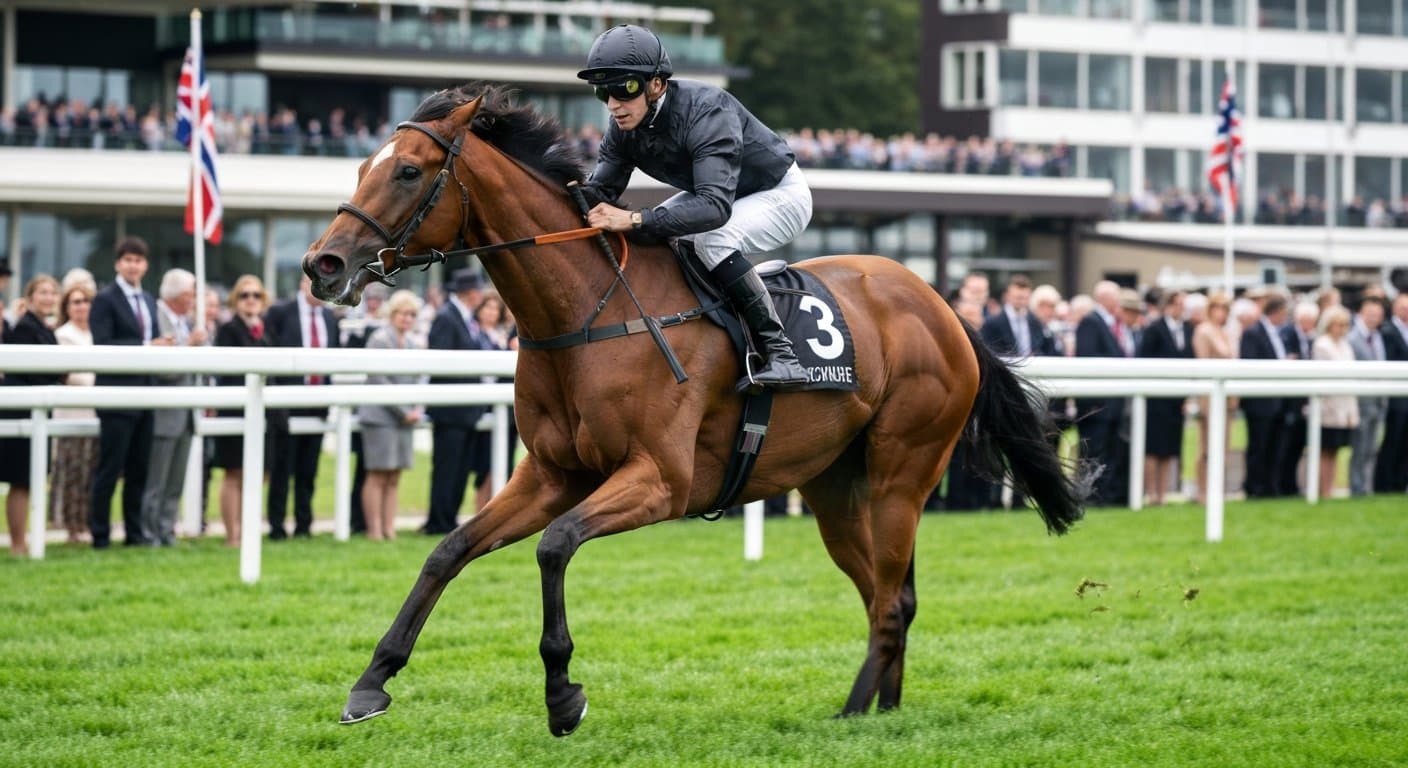
Sprint Cup Day at Haydock Park
Your guide to Sprint Cup Day at Haydock — history of the Betfair Sprint Cup, the supporting card, betting angles and tips for the day.
Read more
The Betfair Chase at Haydock Park
A complete guide to the Betfair Chase — Haydock's Grade 1 showpiece, its history, great winners, and how to bet on it.
Read moreGamble Responsibly
Gambling should be entertaining and not seen as a way to make money. Never bet more than you can afford to lose. If you or someone you know has a gambling problem, help and support is available.