

Founder & Editor · Last reviewed 2024-12-19
There is a statue of him at Kempton Park. There are four King George VI Chase trophies bearing his name. There are countless photographs of him soaring over Kempton's birch fences, grey coat gleaming under the floodlights, crowd roaring as he powered up that famous home straight. And when racing people debate the greatest steeplechaser ever to grace a British racecourse, one name dominates the conversation.
Desert Orchid.
Trained by David Elsworth in Surrey, owned by Richard Burridge and his partners, and ridden primarily by Simon Sherwood, Desert Orchid was a grey gelding who made Kempton Park his personal kingdom throughout the 1980s and early 1990s. He won the King George VI Chase four times — 1986, 1988, 1989, and 1990 — transforming Boxing Day racing from a pleasant festive tradition into unmissable sporting theatre.
The King George, run over three miles on Kempton's right-handed track, became Desert Orchid's stage. The race demands speed, stamina, and the ability to handle Kempton's unique challenges — the long home straight, the testing downhill fence, and the pressure of performing under lights before capacity crowds. Desert Orchid possessed all these qualities, but more than that, he possessed something indefinable that turned casual observers into devoted followers.
His story at Kempton is not simply about four victories. It is about how a grey horse with a suspect jumping technique became the most beloved racehorse of his generation, about the rivalries that defined an era, and about performances that elevated steeplechasing into high art. From his breakthrough King George triumph as a seven-year-old to his emotional final victory at ten, Desert Orchid's Kempton career spans the golden age of jump racing.
This is the complete story of Desert Orchid at Kempton Park — the races, the rivalries, the moments that made him a legend, and the legacy that endures today.
Bet on Kempton Park
Place your bets on Kempton Park races with a trusted bookmaker.

Promo code BETFRED50. New customers only. Register, deposit with a Debit Card, and place a first bet of £10+ at Evens (2.0)+ on Sports, to be settled within 7 days, to get £30 in Sports Free Bets and £20 in Bet Builder Free Bets within 24 hours of settlement. 7-day expiry. Eligibility & payment exclusions apply. Full T&Cs apply. Take Time to Think. BeGambleAware.org. 18+. Full T&Cs.

Promo code R30. New UK customers only, 18+. Register, deposit £10 or more, then place a £10 single cash bet at odds of 1/2 (1.5) or greater on any sports market (excluding Virtuals). Once the qualifying bet settles you get £30 in Free Bets (3 x £10) — the qualifying bet can win or lose. Free Bets are valid on any sports market excluding Virtuals, expire in 7 days, are non-withdrawable and must be used in full. Excluded deposit methods apply (including PayPal, Apple Pay, Skrill and NETELLER). Named bets such as Lucky 15 do not qualify. If you cash out the qualifying bet, or it is voided, you are no longer eligible for the offer. Ends 31.12.26. Full T&Cs apply. Please gamble responsibly. BeGambleAware.org. 18+. Full T&Cs.

Promo code BET40GET20. New UK customers, 18+. Register with the code and place a first bet of £40 or more at Evens (2.0) or greater. Receive 2 × £10 free bets: the first credited automatically once the qualifying bet settles, the second 24 hours later. Free bets must be placed at minimum odds of 4/1 (5.0), expire 24 hours after credit, and the free-bet stake is not returned with winnings. Debit card deposits only. Take Time to Think. BeGambleAware.org. 18+. T&Cs apply. Full T&Cs.

50% of your first-day net losses refunded as a free bet, capped at £25. New UK customers aged 18+ only. To qualify, deposit and place a first bet of £10 or more on any sport at minimum odds of evens (2.00), then place at least two further bets on different events, each worth at least 50% of your largest bet, all at evens (2.00) or greater. Losses are counted from your first settled bet until 23:59 the same day. Place a qualifying £10+ bet and you are guaranteed at least a £5 free bet. Bets placed at SP, void bets, cashed-out bets and bets struck with free bets do not count towards the offer. The free bet is credited the day after your qualifying bets settle and must be used within 7 days, after which it expires. It can be used at odds from 1/4 (1.25) up to 250/1 on singles and straight accumulators, but not on Trixie, Patent or Yankee style multiples. Free-bet stake is not returned with winnings. One offer per person, household, address, IP address and device. E-wallet deposits may not qualify, so check the cashier before depositing. Customers registered with GAMSTOP cannot claim. KYC identity verification must be completed before the free bet is credited. Take Time to Think. BeGambleAware.org. 18+. T&Cs apply. Full T&Cs.

New customers, 18+. Choose the sports bonus at sign-up, make a first deposit and receive a 100% bonus up to £50 in your Sports Bonus balance. To convert the bonus to cash, wager it 10x within 30 days. Single bets below Evens (2.00) do not qualify; accumulators do not qualify if any selection is below 1/2 (1.50). Virtual Sports, voided, cancelled, drawn, cashed-out and free-bet wagers do not count towards wagering. Only the first settled bet per event counts. Withdrawing before the wagering requirement is met forfeits the bonus balance including bonus winnings. Real-money funds are used before bonus funds. Deposits via Skrill or Neteller are not eligible. Not valid in conjunction with other promotions. Odds, bet and payment limits apply. 10bet general and promotion T&Cs apply. BeGambleAware.org. 18+. Full T&Cs.

New customers in Great Britain and Republic of Ireland, 18+. Place a £10 fixed-odds qualifying bet at minimum odds of 1/2 (1.50) — single or each-way (only the win part counts), pre-event or in-play, not cashed out early, within 28 days of opening the account. Receive up to £60 in bonuses credited over three days: 3 × £10 fixed-odds free bets (the first on settlement, then 24 and 48 hours later) plus 3 × £5 Total Goals FOOTBALL spread bets, 3 × £5 racing Winning Favourites spread bets and a £1 racing Race Index spread bet (the spread bets need a full spread-betting account). Free-bet stakes not returned with winnings; free bets valid 28 days from issue. IMPORTANT: the £5 credits are SPREAD bets — sports spread betting carries the risk that losses can exceed your stake. Sports spread-betting customers do not have Financial Ombudsman or FSCS recourse. Take Time to Think. BeGambleAware.org. 18+. T&Cs apply. Full T&Cs.

Promo code WELCOME15, entered under My Bonuses after registering. New UK customers, 18+. Place a first qualifying bet of at least £10 from your cash balance at odds of evens (2.0) or greater within 7 days of opening the account. Once the qualifying bet fully settles you receive £15 in free bets, credited as 3 x £5 tokens with set uses: one £5 accumulator free bet (minimum 4 legs, each leg at 2/5 or bigger), one £5 sports free bet (any market at evens or bigger) and one £5 Sub Cover free bet (selected football player markets at evens or bigger). Free-bet stakes are not returned with winnings. Free bets expire 7 days after they are credited. Void, cashed-out and partially cashed-out bets do not qualify. One offer per customer. Confirm the current terms on BetGoodwin's own welcome-offer page before claiming. Take Time to Think. BeGambleAware.org. 18+. T&Cs apply. Full T&Cs.

New UK customers, 18+. Minimum deposit £10. Place a £10 qualifying single at minimum odds of 1/2 (1.50), settled within 14 days. Receive £30 in free bets (stake not returned), split £20 for sportsbook use (2 x £10) and £10 for Bet Builder only (2 x £5); Bet Builder does not cover horse racing. Free bets must be accepted within 7 days and expire 7 days after acceptance. No promo code required. Best Odds Guaranteed on UK & Irish racing, subject to having staked over £25 in the previous seven days. Operated by LiveScore Betting and Gaming (Gibraltar) Ltd, UKGC 56859. Confirm the current terms on LiveScore Bet's own promotions page before claiming. Take Time to Think. BeGambleAware.org. 18+. T&Cs apply. Full T&Cs.
18+. BeGambleAware.org
The Horse
From Humble Beginnings to Racing Legend
Desert Orchid was born on 11 April 1979 at Shirley Heights Stud in Surrey, a grey colt by Grey Mirage out of Flower Child. His breeding suggested a decent middle-distance horse, but nothing that would hint at the extraordinary career that lay ahead. The grey colouring that would make him instantly recognisable came from his sire, though few could have predicted how that distinctive coat would become synonymous with jumping excellence.
Initially trained by Colin Nash, Desert Orchid showed promise but hardly set the world alight in his early career. He won his first race as a three-year-old at Kempton Park in June 1983 — a fitting venue for what would become his spiritual home. However, it was his move to David Elsworth's Whitsbury yard in Hampshire that truly transformed his fortunes and set him on the path to greatness.
The Elsworth Partnership
David Elsworth was already establishing himself as one of the most astute trainers in the country when Desert Orchid arrived at his yard. The partnership between trainer and horse would prove to be one of the most successful in National Hunt history. Elsworth recognised something special in the grey gelding — a combination of natural jumping ability, stamina, and an almost human-like intelligence that set him apart from his contemporaries.
Under Elsworth's guidance, Desert Orchid developed into a versatile performer capable of winning over a range of distances and conditions. The trainer's patient approach allowed the horse to mature both physically and mentally, building the foundation for the remarkable performances that would follow. Elsworth's ability to keep Desert Orchid sound and competitive for over a decade speaks volumes about his training methods and understanding of the horse.
The Jockey Partnerships
Desert Orchid's early career saw him partnered by various jockeys, but it was the association with Simon Sherwood that truly clicked. Sherwood, a former amateur who had turned professional, formed an almost telepathic understanding with the grey. Their partnership was built on mutual respect and trust — Sherwood understood that Desert Orchid needed to be allowed to find his own rhythm and jumping style, rather than being forced into a predetermined pattern.
When Sherwood was unavailable, Richard Dunwoody often took the ride, and later in Desert Orchid's career, the partnership with Adrian Maguire produced some memorable moments. Each jockey brought something different to the relationship, but all understood that they were riding a horse who knew his job better than most humans understood theirs.
Physical Presence and Racing Style
Standing just over 16 hands, Desert Orchid wasn't the biggest horse in training, but his presence was unmistakable. His grey coat, which lightened to almost white as he aged, made him instantly recognisable to racegoers. More importantly, his conformation was near-perfect for a steeplechaser — well-balanced, with a strong hindquarters that provided the power for his spectacular jumping.
Desert Orchid's racing style was a thing of beauty. He possessed an innate understanding of pace, often settling behind the leaders before producing a devastating turn of foot that would demoralise his rivals. His jumping was economical yet spectacular — he rarely made mistakes and seemed to relish the bigger obstacles that intimidated lesser horses. At Kempton Park, where the fences are particularly testing, his technique was flawless.
What Made Him Special
In an era when many chasers were one-dimensional performers, Desert Orchid's versatility set him apart. He could win over two miles on good ground or stay three miles and more in testing conditions. His ability to adapt his racing style to different tracks and circumstances marked him out as truly exceptional. While contemporaries like Burrough Hill Lad and Wayward Lad were formidable opponents, neither possessed Desert Orchid's range or longevity.
His temperament was perhaps his greatest asset. Unlike many highly-strung racehorses, Desert Orchid seemed to genuinely enjoy racing and the attention that came with it. He would prick his ears for photographers and appeared to feed off the energy of the crowd. This connection with the public was unprecedented in National Hunt racing and helped elevate him from mere racehorse to national treasure.
The Kempton Connection
From that first victory as a three-year-old, Desert Orchid developed an extraordinary affinity with Kempton Park. The track's right-handed configuration seemed to suit his racing style perfectly, and the testing fences played to his strengths as a bold, accurate jumper. The Boxing Day atmosphere, with its unique blend of festive celebration and serious racing, provided the perfect stage for his talents.
His preparation for Kempton races became almost ritualistic. Elsworth would have him spot-on for the big occasions, and Desert Orchid seemed to know when something special was expected of him. The combination of his natural ability, perfect preparation, and the track's characteristics created the conditions for the legendary performances that would follow.
Contemporary Competition
During Desert Orchid's prime years, National Hunt racing was blessed with exceptional quality. Horses like Burrough Hill Lad, Wayward Lad, and later Garrison Savannah provided formidable opposition. Each brought their own strengths — Burrough Hill Lad's consistency, Wayward Lad's front-running style, Garrison Savannah's stamina. Yet Desert Orchid's ability to adapt and overcome different types of opposition marked him as the complete chaser.
The rivalry with these horses, particularly played out in the King George VI Chase, elevated the entire sport. Desert Orchid didn't just beat good horses; he inspired them to run beyond themselves, creating some of the most memorable contests in racing history.
The Races at Kempton Park
The King George VI Chase
The King George VI Chase on Boxing Day is Kempton Park's crown jewel, and it was Desert Orchid's stage. First run in 1937 and originally called the King George VI Steeplechase, this Grade 1 contest over three miles has become the most prestigious steeplechase outside of Cheltenham's Gold Cup. The prize money of £150,000 in Desert Orchid's era made it one of the richest races in the jumping calendar.
The race attracts the cream of staying chasers from Britain and Ireland, creating a mid-season championship that often determines which horses head to Cheltenham as favourites. The timing is perfect — far enough into the season for horses to be at peak fitness, yet early enough to avoid the wear and tear that can accumulate by March.
Desert Orchid's four victories in 1986, 1988, 1989, and 1990 transformed this race from a prestigious contest into a national institution. His dominance was so complete that bookmakers eventually stopped taking bets on him winning, focusing instead on the margins of victory.
Kempton's Unique Challenge
Kempton Park's right-handed track presents a distinctive test that suited Desert Orchid perfectly. The course is relatively flat with gentle undulations, allowing horses to maintain rhythm and momentum throughout the three-mile journey. The long home straight — nearly four furlongs — rewards horses with genuine stamina and acceleration.
The fences at Kempton are fair but demanding. Built to Cheltenham specifications, they require horses to jump with precision whilst maintaining pace. The water jump, positioned in front of the stands, adds an extra dimension that can catch out the unwary. Desert Orchid's bold jumping style was perfectly suited to these obstacles.
The ground at Kempton tends to ride faster than many other National Hunt tracks, even when officially described as soft or heavy. This characteristic played to Desert Orchid's strengths — his natural speed meant he could dictate the pace and kick clear when others were struggling with the conditions.
The Boxing Day Atmosphere
Boxing Day racing at Kempton creates an atmosphere unlike any other in the sporting calendar. Families arrive after Christmas lunch, wrapped in scarves and clutching programmes, creating a unique blend of festive celebration and serious sport. The crowd of 18,000 on Desert Orchid's big days generated a noise that could be heard across Surrey.
The television audience was equally impressive. BBC's coverage regularly attracted over 8 million viewers, making the King George one of the most-watched horse races of the year. Desert Orchid's presence guaranteed viewing figures that rivalled major football matches.
The pre-race parade became a ritual in itself. Desert Orchid's distinctive grey coat gleaming under the winter sun, his ears pricked and head held high, created scenes that remain etched in racing folklore. The roar when he appeared on the track was unlike anything heard at other meetings.
Other Notable Kempton Races
While the King George VI Chase dominated Desert Orchid's Kempton career, he also contested other significant races at the track. The Feltham Novices' Chase, now a Grade 1 contest, provided an early showcase for his talents. His victory in this race as a seven-year-old hinted at the greatness to come.
The Christmas Hurdle, run on the same Boxing Day card, never featured Desert Orchid but added to the prestige of the meeting. This Grade 1 hurdle race attracts the best two-mile hurdlers and creates a perfect supporting act to the main event.
Kempton's summer jumping programme also includes the Silviniaco Conti Chase, a valuable Grade 2 contest that has grown in stature since Desert Orchid's era. The track's all-weather flat racing during the winter months ensures year-round activity, but it's the National Hunt programme that defines Kempton's reputation.
The Track's Evolution
During Desert Orchid's era, Kempton Park was undergoing significant modernisation. The grandstand, rebuilt in the 1990s, provided better viewing angles and facilities for the growing crowds that Desert Orchid attracted. The parade ring was repositioned to allow better access for spectators eager to see their hero.
The course itself remained largely unchanged, preserving the characteristics that made it such a fair test of staying chasers. The drainage was improved to cope with winter weather, ensuring that racing could continue even in challenging conditions. This reliability was crucial for a race as important as the King George VI Chase.
The weighing room and stable facilities were upgraded to meet modern standards, attracting top trainers who might previously have avoided the track. Desert Orchid's success helped raise Kempton's profile among the racing establishment, leading to increased investment in facilities.
Racing's Biggest Stage
The King George VI Chase became Desert Orchid's personal stage, but it also elevated Kempton Park's status within British racing. The race now sits alongside the Cheltenham Gold Cup and Grand National as one of the three most important steeplechases in the calendar.
The quality of opposition Desert Orchid faced at Kempton was consistently high. Horses like Yahoo, Rhyme 'N' Reason, and Norton's Coin all brought Grade 1 form to the contest. The depth of competition made Desert Orchid's dominance even more remarkable.
Modern King George winners like Kauto Star and Clan Des Obeaux have maintained the race's prestige, but none have captured the public imagination quite like Desert Orchid. His four victories remain the benchmark against which all future King George performances are measured.
Great Moments
The 1986 King George VI Chase
Desert Orchid's first King George victory came in conditions that would have defeated lesser horses. The ground was heavy, the weather miserable, and the grey was facing seasoned campaigners including Door Latch and Combs Ditch. But as the field turned for home, Desert Orchid found another gear that left the crowd breathless.
He won by fifteen lengths, a margin that flattered the opposition. Jockey Colin Brown later said it felt like riding a machine that had been switched to a different setting. The performance announced Desert Orchid as a serious Gold Cup contender and established his love affair with Kempton's right-handed track.
The 1988 King George VI Chase
Two years later, Desert Orchid returned to defend his crown in front of a packed Boxing Day crowd. The opposition was stronger this time, with Nupsala and Cavvies Clown both carrying serious credentials. The race developed into a thriller, with three horses locked together approaching the final fence.
Desert Orchid's jumping was flawless when it mattered most. He pinged the last and found a burst of acceleration that carried him clear by four lengths. The roar from the stands could be heard across Sunbury-on-Thames. Trainer David Elsworth described it as the moment he knew they had something truly special.
The 1989 King George VI Chase
The hat-trick attempt drew the biggest Boxing Day crowd in Kempton's history. Yahoo and Panto Prince provided serious opposition, but Desert Orchid was now at his peak. The grey travelled like a dream through the early stages, his distinctive jumping style drawing gasps from the packed grandstands.
Turning for home, Desert Orchid faced his sternest test yet. Yahoo matched him stride for stride until the final furlong, where the grey's superior class told. He won by a length and a half, but the margin understated the drama. Colin Brown punched the air as they crossed the line, and the crowd's ovation lasted several minutes.
The 1990 King George VI Chase
The fourth King George was Desert Orchid's masterpiece at Kempton. Norton's Coin had shocked the racing world by winning the Cheltenham Gold Cup earlier that year, and many wondered if the grey's dominance was ending. The ground was testing, the field competitive, and Desert Orchid was now eleven years old.
None of it mattered. Desert Orchid produced a performance that combined tactical brilliance with raw power. He stalked the leaders before unleashing a devastating finish that left Norton's Coin trailing by eight lengths. Richard Dunwoody, riding the winner, later called it the most complete performance he'd ever been part of.
The 1991 Defeat
Desert Orchid's bid for a fifth consecutive King George ended in heartbreak that somehow enhanced his legend. Garrison Savannah, the previous year's Gold Cup winner, was in the form of his life. The two horses locked horns from the final fence, with Desert Orchid refusing to yield despite his advancing years.
Garrison Savannah prevailed by a short head in one of the greatest finishes in King George history. The crowd's reaction was extraordinary — they cheered both horses with equal fervour. Desert Orchid had lost, but his courage in defeat created a moment that racing fans still talk about decades later.
The Emotional Farewell
Desert Orchid's final Kempton appearance came in December 1991, not in the King George but in a lesser race. The crowd knew this was goodbye, and the atmosphere was electric with emotion. Though he finished second to Remittance Man, the reception he received walking back to the winner's enclosure was fit for a champion.
David Elsworth made the decision to retire him after that race. "He'd given us everything," the trainer said. "Kempton had been his stage, and he deserved to leave it with his dignity intact." The grey had run his last race at the track where he'd become a legend.
The Statue Unveiled
In 1999, a bronze statue of Desert Orchid was unveiled in Kempton's parade ring. The ceremony drew thousands of racing fans, many of whom had travelled from across the country to pay their respects. The statue captures the grey in full flight, ears pricked, embodying the spirit that made him beloved.
The inscription reads simply: "Desert Orchid 1979-2006. Four times winner of the King George VI Chase." But those words carry the weight of a career that transformed Kempton Park from a good racecourse into a shrine for one of racing's greatest champions.
Legacy & Significance
The Desert Orchid Statue
The bronze statue of Desert Orchid stands proudly in the parade ring at Kempton Park, unveiled in 2000 to commemorate the grey's extraordinary connection with the course. Sculpted by Judy Boyt, it captures Dessie in full flight, ears pricked and neck arched in his characteristic style. The statue has become a pilgrimage site for racing fans, with many making a point of touching it for luck before the King George each Boxing Day.
The inscription reads simply "Desert Orchid 1979-2006 — The People's Champion", reflecting his unique status as the only steeplechaser to transcend the sport and capture the British public's imagination. On King George day, the statue is often adorned with flowers and racing colours left by admirers.
The King George VI Chase Legacy
Desert Orchid's four King George victories fundamentally changed the race's status and Boxing Day racing's place in the British sporting calendar. Before Dessie, the King George was respected but not revered. His performances, particularly the epic 1989 victory in the mud, elevated it to championship status alongside the Gold Cup and Champion Hurdle.
Television audiences for the King George grew exponentially during Desert Orchid's era, peaking at over 8 million viewers for his final attempt in 1991. The race now regularly attracts audiences of 4-5 million, making it one of the most-watched horse races outside the Grand National. Kempton Park's Boxing Day fixture has become a British institution, with families gathering to watch "the King George" as part of their Christmas tradition.
Impact on Grey Horses
Desert Orchid single-handedly changed public perception of grey racehorses. Before his emergence, greys were often considered unlucky or inferior performers at the highest level. His success sparked a surge of interest in grey bloodlines, with breeders actively seeking to produce grey offspring.
The "Desert Orchid effect" can be traced through subsequent grey champions like One Man, Rooster Booster, and Neptune Collonges. Modern trainers report that grey horses often receive extra attention from owners and punters, a direct legacy of Dessie's popularity. His influence extended beyond Britain, with grey horses gaining favour in Ireland and France during the 1990s.
Training Methods Revolution
David Elsworth's unconventional training of Desert Orchid influenced a generation of trainers to think beyond traditional methods. His decision to keep Dessie fresh rather than over-race him, combined with innovative fitness work and careful course selection, became a template for managing top-class horses.
The practice of targeting specific races months in advance, rather than following traditional seasonal patterns, gained acceptance partly through Elsworth's success with Desert Orchid. Modern trainers like Paul Nicholls and Willie Mullins acknowledge this strategic approach in their own methods.
Cultural Impact Beyond Racing
Desert Orchid remains the only steeplechaser to have achieved genuine celebrity status in Britain. His autobiography topped bestseller lists, his retirement was front-page news, and his death in 2006 prompted obituaries in national newspapers normally reserved for human celebrities.
The grey's popularity introduced thousands of non-racing fans to National Hunt racing, many of whom remained followers long after his retirement. Racing attendance figures at Kempton and other courses showed measurable increases during his peak years, with many venues reporting first-time visitors specifically coming to see Desert Orchid run.
Enduring Memory
Twenty years after his retirement, Desert Orchid's name still resonates with the British public in ways no other racehorse has matched. His story represents the perfect intersection of sporting excellence, timing, and character that creates true sporting legends. At Kempton Park, where his greatest triumphs unfolded, that legacy lives on every Boxing Day when the field lines up for the King George VI Chase.
Frequently Asked Questions
Share this article
More about this racecourse
All Kempton Park guides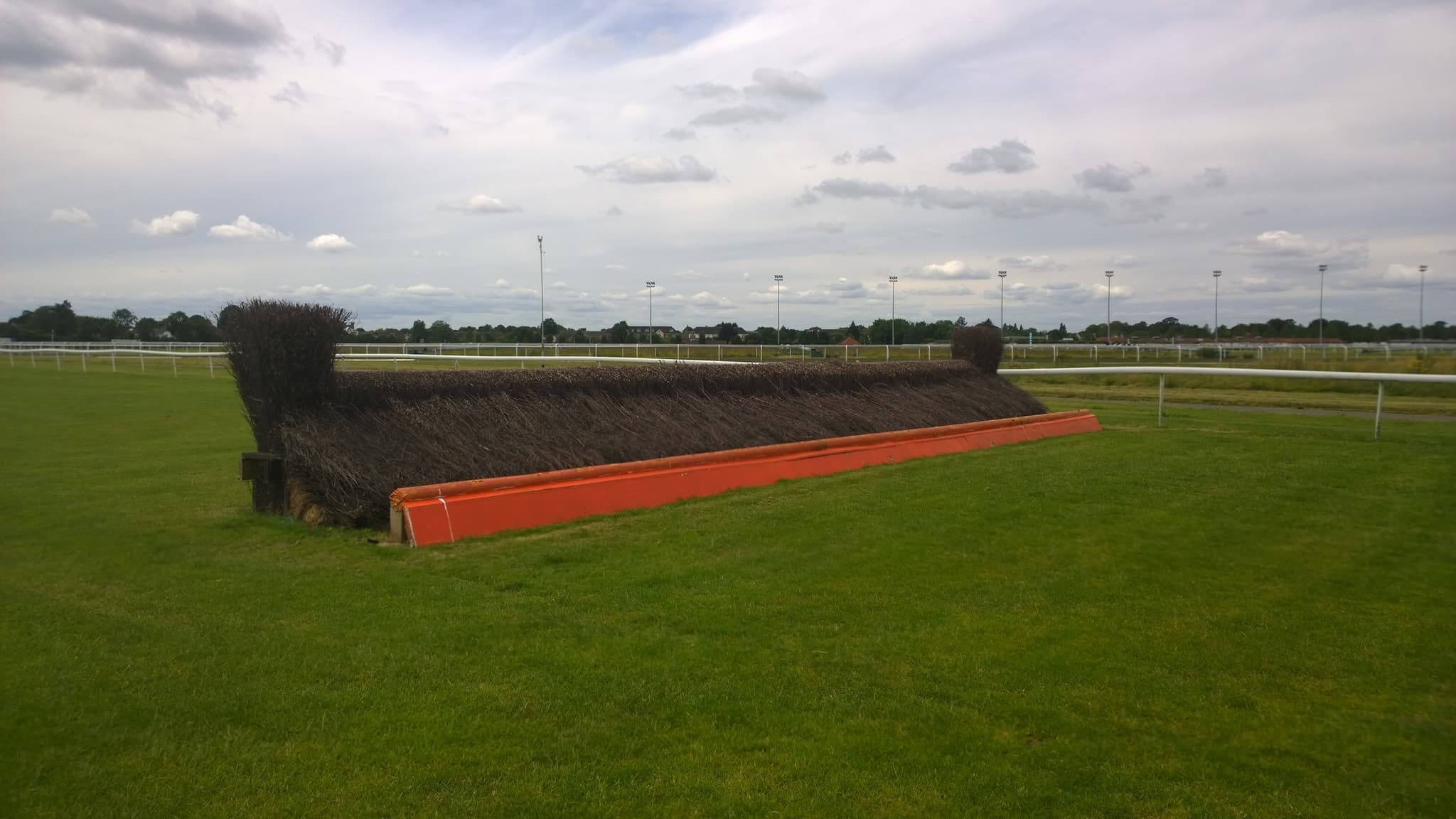
King George VI Chase Day at Kempton: The Complete Guide
Your complete guide to Boxing Day at Kempton Park — home of the King George VI Chase, the mid-season championship for staying chasers. Racing card, atmosphere, tickets, travel and betting guide.
Read more
The King George VI Chase: Complete Guide
Everything you need to know about the King George VI Chase — Boxing Day's showpiece race at Kempton Park, from history to betting angles.
Read more
King George VI Chase Winners: The Full Roll of Honour (1970-2026)
Every King George VI Chase winner since 1970 - horse, age, starting price, jockey and trainer - with the trends that emerge across the full roll of honour. Source-verified.
Read morePhotos on this page are used under Creative Commons licences. Titles, sources and licence links for each one are on our image credits page.
Research the field with the AI Race Predictor
Our model publishes calibrated win-probability estimates for UK races — a second opinion to understand a race, not tips. It's open about its record: it doesn't beat the market, and we show exactly how it does.
Betting offers for Kempton Park
Work it out & learn the basics
Gamble Responsibly
Gambling should be entertaining and not seen as a way to make money. Never bet more than you can afford to lose. If you or someone you know has a gambling problem, help and support is available.