
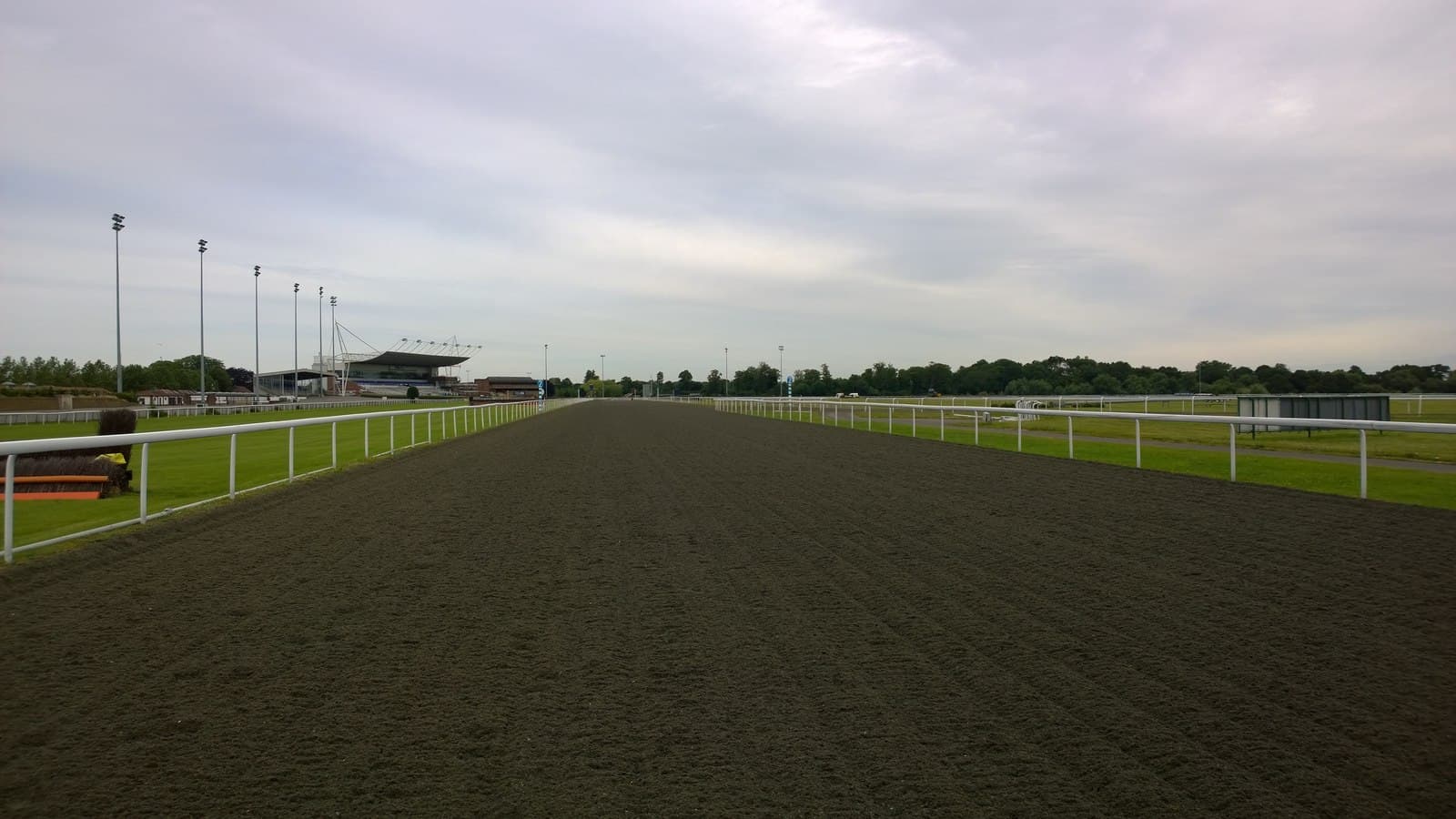
Founder & Editor · Last reviewed 2026-03-02
This year's race: the date, off time, recent winners and trends are on our King George VI Chase race guide.
For millions of British racing fans, Christmas doesn't truly begin until the King George VI Chase goes off at Kempton Park. Boxing Day at Kempton is one of the great sporting traditions in this country — a day when the best steeplechasers in training line up for the mid-season championship, the grandstands fill with racegoers in scarves and woolly hats, and living rooms across the nation tune in for the biggest jumps race of the winter.
The Christmas meeting at Kempton Park typically spans two days — Boxing Day and the 27th of December — and together they form one of the most important fixtures in the National Hunt calendar. The centrepiece is the King George VI Chase, a Grade 1 contest over three miles that has been won by legends like Kauto Star, Desert Orchid and Wayward Lad. But the supporting programme is outstanding in its own right, featuring Grade 1 hurdle races, valuable handicaps and competitive novice events that regularly produce future Cheltenham Festival contenders.
The Christmas meeting is also one of the year's best opportunities to see flat racing's winter game at Kempton, though this is a distinction that new visitors sometimes find confusing. Kempton operates two separate surfaces: the turf chase course used for the King George and the Boxing Day programme, and the all-weather Polytrack circuit that runs year-round evening and weekend flat racing. During the Christmas meeting, it is the turf jumps card that commands attention, but the all-weather surface is part of Kempton's broader identity throughout December and January, providing a different betting proposition before and after the Christmas fixtures.
What sets the Kempton Christmas meeting apart from other big racing occasions is its timing and its cultural resonance. It falls during that peculiar stretch of the year when the country is on holiday, the normal rhythms of life are suspended, and people are looking for something to do together. Families who never normally go racing make the trip to Kempton on Boxing Day. Friends arrange it as an annual tradition. Couples use it as an escape from the in-laws. The result is a crowd that is unlike any other raceday — a mix of die-hard fans and once-a-year visitors, all bound together by the festive atmosphere and the prospect of some exceptional racing.
The meeting has a history as long as the King George itself. Since 1937, Kempton has been the home of Christmas jump racing, and the event has survived wartime suspension, changes of ownership, television rights shifts and the 2017 threat of the course's closure to remain exactly what it has always been: the place where British racing gathers for its midwinter celebration.
Whether you're a regular who wouldn't miss Boxing Day at Kempton for anything or a newcomer considering it for the first time, this guide will help you plan the perfect day out at one of the most special meetings in British sport. It covers the full programme across Boxing Day and December 27th, how to read the betting markets for festive racing, what the atmosphere is actually like, and how to make the most of a day that is truly unlike any other in the racing calendar.
Bet on Kempton Park
Place your bets on Kempton Park races with a trusted bookmaker.

Promo code BETFRED50. New customers only. Register, deposit with a Debit Card, and place a first bet of £10+ at Evens (2.0)+ on Sports, to be settled within 7 days, to get £30 in Sports Free Bets and £20 in Bet Builder Free Bets within 24 hours of settlement. 7-day expiry. Eligibility & payment exclusions apply. Full T&Cs apply. Take Time to Think. BeGambleAware.org. 18+. Full T&Cs.

Promo code R30. New UK customers only, 18+. Register, deposit £10 or more, then place a £10 single cash bet at odds of 1/2 (1.5) or greater on any sports market (excluding Virtuals). Once the qualifying bet settles you get £30 in Free Bets (3 x £10) — the qualifying bet can win or lose. Free Bets are valid on any sports market excluding Virtuals, expire in 7 days, are non-withdrawable and must be used in full. Excluded deposit methods apply (including PayPal, Apple Pay, Skrill and NETELLER). Named bets such as Lucky 15 do not qualify. If you cash out the qualifying bet, or it is voided, you are no longer eligible for the offer. Ends 31.12.26. Full T&Cs apply. Please gamble responsibly. BeGambleAware.org. 18+. Full T&Cs.

Promo code BET40GET20. New UK customers, 18+. Register with the code and place a first bet of £40 or more at Evens (2.0) or greater. Receive 2 × £10 free bets: the first credited automatically once the qualifying bet settles, the second 24 hours later. Free bets must be placed at minimum odds of 4/1 (5.0), expire 24 hours after credit, and the free-bet stake is not returned with winnings. Debit card deposits only. Take Time to Think. BeGambleAware.org. 18+. T&Cs apply. Full T&Cs.

50% of your first-day net losses refunded as a free bet, capped at £25. New UK customers aged 18+ only. To qualify, deposit and place a first bet of £10 or more on any sport at minimum odds of evens (2.00), then place at least two further bets on different events, each worth at least 50% of your largest bet, all at evens (2.00) or greater. Losses are counted from your first settled bet until 23:59 the same day. Place a qualifying £10+ bet and you are guaranteed at least a £5 free bet. Bets placed at SP, void bets, cashed-out bets and bets struck with free bets do not count towards the offer. The free bet is credited the day after your qualifying bets settle and must be used within 7 days, after which it expires. It can be used at odds from 1/4 (1.25) up to 250/1 on singles and straight accumulators, but not on Trixie, Patent or Yankee style multiples. Free-bet stake is not returned with winnings. One offer per person, household, address, IP address and device. E-wallet deposits may not qualify, so check the cashier before depositing. Customers registered with GAMSTOP cannot claim. KYC identity verification must be completed before the free bet is credited. Take Time to Think. BeGambleAware.org. 18+. T&Cs apply. Full T&Cs.

New customers, 18+. Choose the sports bonus at sign-up, make a first deposit and receive a 100% bonus up to £50 in your Sports Bonus balance. To convert the bonus to cash, wager it 10x within 30 days. Single bets below Evens (2.00) do not qualify; accumulators do not qualify if any selection is below 1/2 (1.50). Virtual Sports, voided, cancelled, drawn, cashed-out and free-bet wagers do not count towards wagering. Only the first settled bet per event counts. Withdrawing before the wagering requirement is met forfeits the bonus balance including bonus winnings. Real-money funds are used before bonus funds. Deposits via Skrill or Neteller are not eligible. Not valid in conjunction with other promotions. Odds, bet and payment limits apply. 10bet general and promotion T&Cs apply. BeGambleAware.org. 18+. Full T&Cs.

New customers in Great Britain and Republic of Ireland, 18+. Place a £10 fixed-odds qualifying bet at minimum odds of 1/2 (1.50) — single or each-way (only the win part counts), pre-event or in-play, not cashed out early, within 28 days of opening the account. Receive up to £60 in bonuses credited over three days: 3 × £10 fixed-odds free bets (the first on settlement, then 24 and 48 hours later) plus 3 × £5 Total Goals FOOTBALL spread bets and 3 × £5 racing Winning Favourites spread bets, with a £1 racing Race Index spread bet as an extra on top. The spread bets need a full spread-betting account, opened within 28 days of the fixed-odds account and subject to Spreadex's eligibility and appropriateness checks. Free-bet stakes not returned with winnings; free bets valid 28 days from issue. IMPORTANT: the £5 credits are SPREAD bets — sports spread betting carries the risk that losses can exceed your stake. Sports spread-betting customers do not have Financial Ombudsman or FSCS recourse. Take Time to Think. BeGambleAware.org. 18+. T&Cs apply. Full T&Cs.

Promo code WELCOME15, entered under My Bonuses after registering. New UK customers, 18+. Place a first qualifying bet of at least £10 from your cash balance at odds of evens (2.0) or greater within 7 days of opening the account. Once the qualifying bet fully settles you receive £15 in free bets, credited as 3 x £5 tokens with set uses: one £5 accumulator free bet (minimum 4 legs, each leg at 2/5 or bigger), one £5 sports free bet (any market at evens or bigger) and one £5 Sub Cover free bet (selected football player markets at evens or bigger). Free-bet stakes are not returned with winnings. Free bets expire 7 days after they are credited. Void, cashed-out and partially cashed-out bets do not qualify. One offer per customer. Confirm the current terms on BetGoodwin's own welcome-offer page before claiming. Take Time to Think. BeGambleAware.org. 18+. T&Cs apply. Full T&Cs.

New UK customers, 18+. Minimum deposit £10. Place a £10 qualifying single on sports (excluding virtuals) at minimum odds of 1/2 (1.50), settled within 14 days. Deposit-method exclusions apply. Receive £30 in free bets (stake not returned), split £20 for sportsbook use (2 x £10) and £10 for Bet Builder only (2 x £5); Bet Builder does not cover horse racing. Free bets must be accepted within 7 days and expire 7 days after acceptance. No promo code required. Best Odds Guaranteed on UK & Irish racing, subject to having staked over £25 in the previous seven days. Operated by LiveScore Betting and Gaming (Gibraltar) Ltd, UKGC 56859. Confirm the current terms on LiveScore Bet's own promotions page before claiming. Take Time to Think. BeGambleAware.org. 18+. T&Cs apply. Full T&Cs.
18+. BeGambleAware.org
Boxing Day at Kempton
Boxing Day at Kempton
Boxing Day at Kempton Park is an institution. Since the first running of the King George VI Chase in 1937, this has been the day when jump racing takes centre stage in the British sporting calendar, and the tradition has only grown stronger with each passing decade.
The Shape of the Day
The day begins early for those attending. Gates typically open two to three hours before the first race, and regulars know that arriving early is essential — not just for parking and position, but to absorb the building atmosphere. There is a palpable sense of anticipation at Kempton on Boxing Day morning that you do not find at ordinary meetings. People are excited, slightly giddy from Christmas Day, and ready for something special.
The racing programme usually features six or seven races spread across the afternoon, with the first race going off around midday and the King George itself typically scheduled for the mid-afternoon slot — usually around 3:00pm. This timing is deliberate: it allows the race to be the centrepiece of the afternoon's television coverage, catching the post-lunch audience at the point when families have cleared the plates and settled in front of the television.
Each race on the Boxing Day card receives a level of attention it would not command at a normal midweek meeting. The Christmas Hurdle, run earlier in the afternoon, is a Grade 1 event in its own right and regularly features Champion Hurdle contenders. The Kauto Star Novices' Chase gives the public an early sight of the sport's next generation. The handicap races generate serious betting activity. By the time the King George arrives, the crowd has had three or four races to settle in, find their feet and build up to the main event.
The Atmosphere
The atmosphere in the grandstands for the King George is extraordinary. The crowd, which regularly exceeds 15,000 on Boxing Day, generates a wall of noise as the runners jump the last fence and turn for home. Win or lose, the reception for the competitors is warm — there is a generosity of spirit on Boxing Day that you do not always find at more pressurised meetings. People cheer good jumping, applaud brave performances and celebrate the simple pleasure of watching exceptional horses do what they do best.
The crowd on Boxing Day is unlike the crowd at any other meeting. On a normal midweek jumps card, the audience is predominantly racing people — regulars who know the form, know the track and have opinions about everything. On Boxing Day, that core remains present but is surrounded by a much larger and more varied group. Families who come once a year are here. People who received race tickets as a Christmas present are making their first visit. Groups of friends who have arranged Boxing Day at Kempton as an annual tradition are here for their eighth or tenth year running, mixing the expertise of long familiarity with the pleasure of ritual.
The effect of this mixed crowd is an atmosphere that feels inclusive and celebratory in a way that more formal big meetings — the Cheltenham Festival, Royal Ascot — do not quite manage. At those events, the crowd tends to be self-selecting: people who follow racing seriously and have made a deliberate choice to attend. At Kempton on Boxing Day, the crowd includes people who are simply enjoying a day out during the Christmas holidays, and their uncomplicated enthusiasm adds to the collective atmosphere.
Television and National Attention
For those who cannot attend, the television coverage is complete. ITV Racing broadcasts the full Boxing Day card live, with extensive build-up, interviews with trainers and jockeys and analysis of every race including the King George. The Boxing Day show is one of the year's highest-rated racing broadcasts, second only to the Grand National broadcast in its audience figures.
The betting shops are open on Boxing Day, the online bookmakers are in full swing, and the King George typically generates one of the highest betting turnovers of any race in the calendar. Millions of people who do not normally follow jump racing will place a bet on the King George — the combination of festive holiday, live television coverage and a race with a clear narrative (who is the best chaser in training?) draws in casual punters who are otherwise absent from the sport.
This broad engagement is part of what gives the King George its special character. It is not a race watched only by specialists; it is a race that belongs to the wider sporting public. When Desert Orchid was winning at Kempton in the late 1980s, his performances were watched by people who had no other interest in horse racing and knew nothing about form or handicaps. They simply watched a grey horse jump boldly at fences on Boxing Day and fell in love with it. That same accessibility is still present every year.
After the Races
The day extends well beyond the final race. Kempton's bars stay open after racing, and many racegoers linger to discuss the day's events, compare notes on their betting and soak up the last of the festive atmosphere. The train back to Waterloo is invariably full of animated conversation about the King George and whether the winner will follow up at Cheltenham in March.
If you are attending with a group, the post-racing period at Kempton has a relaxed quality that turns a good day into a truly excellent one. The pressure of the racing is over, the bars are less crowded than they were in the build-up to the King George, and there is a pleasant wind-down quality to the late afternoon that a summer meeting rarely produces.
The 27th December
The 27th of December offers more racing for those who want to extend the Christmas meeting experience. The second day's card is less high-profile than Boxing Day but still features competitive races, and the atmosphere retains a festive character. It is also a good option for those who prefer a slightly less crowded experience — attendances on the 27th are lower, tickets are cheaper, and the racing is still very good.
The 27th card typically features a selection of Grade 2 and Grade 3 events alongside competitive handicaps. Horses that were being kept back from Boxing Day's more demanding contests appear here, as do progressive younger horses targeting the best opportunities of the winter season. The form produced on the 27th often feeds into Cheltenham ante-post discussions — horses that win well here in December are regularly Festival-bound in March.
For those making a weekend of the Christmas meeting, attending both days gives a different perspective on each. Boxing Day is the spectacle and the championship. The 27th is the quieter, more considered complement — a day when you can watch the racing closely without quite the same intensity of expectation that surrounds the King George.
The Racing Card
The Christmas Racing Programme
The Boxing Day card at Kempton is consistently one of the strongest of the entire jumps season, and it goes far beyond the King George itself. Understanding the full programme helps you plan your day — and your betting — more effectively.
The King George VI Chase (Grade 1, 3 miles)
The headline act. A three-mile championship chase that attracts the best steeplechasers in training. Typically a field of six to ten runners, many of whom are previous Grade 1 winners. The race carries a prize fund that usually exceeds £250,000 and serves as the defining mid-season test. For a full analysis of the race, its history and its betting angles, see our King George VI Chase guide.
The King George tends to go off at around 3:00pm, placing it squarely as the centrepiece of the afternoon. Everything before it is a build-up. For punters, the race demands the most preparation: studying the ante-post movement from October onwards, reviewing the going in the days before Christmas, assessing the trainer and jockey bookings that are finalised in mid-December, and understanding how the likely pace scenario will affect different types of runners.
The Christmas Hurdle (Grade 1, 2 miles)
The day's other championship event, and a race of real significance. The Christmas Hurdle regularly attracts the best two-mile hurdlers in training, and the winner often goes on to contest the Champion Hurdle at Cheltenham in March. Its flat, fast track is ideal for sharp-jumping, pacey hurdlers, and the form produced here is among the most reliable of the season.
For betting purposes, the Christmas Hurdle is a more predictable race than the King George. Two-mile hurdles at Kempton reward speed and fluency above all, and the market for the Christmas Hurdle tends to reflect that clearly. Nicky Henderson's record in the race is exceptional across multiple decades — his hurdlers suit the flat, speed-demanding Kempton circuit and he consistently targets this race with his best two-mile prospects. A Henderson-trained Christmas Hurdle runner in the top two of the market is rarely worth opposing without strong specific reasons.
The correlation between Christmas Hurdle form and Champion Hurdle form is stronger than the King George / Gold Cup correlation. Both races are run over two miles at flat tracks, and speed is the common currency. A horse that wins the Christmas Hurdle in authoritative style and appears to have more in reserve is immediately credible as a Champion Hurdle contender.
Kauto Star Novices' Chase (Grade 1, 3 miles)
Named after Kempton's most celebrated champion, this Grade 1 novices' chase is one of the most significant races for young steeplechasers. The three-mile trip and championship conditions provide a stern test for novices who are still learning their craft, and the winners regularly graduate to compete at the RSA Chase or the Brown Advisory Novices' Chase at the Cheltenham Festival.
Watching the Kauto Star Novices' Chase requires a different analytical approach from the senior championship events. These are horses with limited form, often making their second or third chase start, being asked to handle Grade 1 conditions in front of a large Boxing Day crowd. Backing novice chasers at this level is inherently more uncertain than backing seasoned Grade 1 performers, because the risk of a jumping error, a loss of confidence under pressure, or a simple lack of experience is substantially higher.
The horses to watch are those that jump with natural ease and fluency — novices that make chasing look straightforward, maintaining their rhythm from fence to fence without the occasional hesitation or awkward jump that characterises less talented beginners. These horses have the potential to go all the way, and seeing them at Kempton in December is often the first public indication of a future star.
Supporting Handicaps
The Boxing Day card also features several valuable handicap races over fences and hurdles, and these are where much of the serious betting action is concentrated. The handicaps attract competitive fields and often produce absorbing finishes, with in-form horses from leading yards competing against each other at weights designed to level the playing field.
For punters, the handicaps offer some of the most interesting analysis of the day. The Grade 1 races are dominated by the market leaders and tend to resolve relatively predictably — the best horse wins, the second-best horse fills the place. The handicaps are more open, and the form analysis is more layered: which horse has been prepared specifically for this race? Which is running for fitness before a bigger target? Which has a favourable draw on the track? Which has course experience that gives it an edge over less experienced rivals?
The Kempton Boxing Day handicaps are worth targeting with focused research in the week before the meeting. Trainers who win these races regularly — and there are patterns in who targets the Boxing Day handicap programme specifically — are worth following, and their entry lists from the previous week can give early indications of which horses are being primed for the Christmas meeting.
The 27th December Card
The second day of the Christmas meeting features a programme that complements Boxing Day without trying to replicate it. The emphasis shifts from pure championship quality toward competitive novice events, conditions races and handicaps that give a second tier of horses their opportunity.
The 27th card typically includes a Grade 2 chase and a Grade 2 hurdle, which attract horses a step below Grade 1 standard but still of real quality. These races are often key waypoints in a horse's season — significant enough to matter, but not so demanding that they compromise a subsequent spring target. Horses that win a Grade 2 event at Kempton on the 27th of December are often Festival-bound in March, and their Boxing Day performance provides one of the strongest pieces of winter form in the calendar.
The 27th also features races for improving young horses — bumpers, novice hurdles, maiden chases — that represent the pipeline of talent developing through the season. These races are worth watching rather than betting, at least until you have accumulated enough information about the individual horses. A memorable performance in a Boxing Day novice hurdle is worth noting in your form records because the horse may reappear at a higher level in January or February.
The AW Flat Programme Around Christmas
Kempton's all-weather Polytrack flat programme continues throughout December and January, with evening meetings and weekend cards running around the Christmas jumps fixture. These events use the inner circuit and a completely different surface from the turf jumps card, but they contribute to the overall character of Kempton as a year-round venue.
For flat racing punters, the AW programme in December is worth following. Fields tend to be smaller and more predictable at this time of year, the form book is settled after a long Flat season, and horses that have been campaigning consistently on the AW through the autumn have established a form profile that is reliable. The Christmas period produces a number of AW flat handicaps where the market sometimes undervalues horses with strong course-and-distance form in favour of more fashionably bred horses making their AW debut. See our Kempton Park betting guide for a full analysis of AW betting patterns at the track.
The Festive Atmosphere
Atmosphere and Tradition
The atmosphere at Kempton on Boxing Day is unlike anything else in the racing calendar. It shares the quality of other big National Hunt occasions — the buzz before the first race, the building tension as the main event approaches, the roar of the crowd as the field jumps the last — but it adds something uniquely festive that lifts the whole experience into a category of its own.
The Crowd That Makes It
The crowd is a significant part of what makes Boxing Day at Kempton special. On a normal midweek meeting, Kempton draws a couple of thousand regulars. On Boxing Day, the attendance swells to 15,000 or more, and the demographic shifts dramatically. The hardcore racing crowd is still there — these are the people who've been coming every Boxing Day for years and can tell you exactly where to stand for the best view of the last fence. But alongside them are families, groups of friends, couples, teenagers dragged along by their parents, and visitors from overseas who've heard about the King George and decided to experience it for themselves.
The effect is a warm, inclusive and lively atmosphere. People are in a good mood — they're on holiday, they've survived Christmas Day, and they're doing something different and enjoyable. Strangers talk to each other in the bar. Children watch the horses in the parade ring with wide eyes. Groups of friends huddle together in the cold, sharing a hip flask and debating who's going to win the King George. There is laughter, banter, and the kind of communal enjoyment that reminds you why live sport matters in a way that watching it on television cannot replicate.
This mixing of expertise levels creates something that more prestigious meetings sometimes lack: real collective excitement. At the Cheltenham Festival, the crowd is largely self-selecting — people who follow jump racing seriously and have invested weeks of preparation in their choices. At Kempton on Boxing Day, a substantial portion of the crowd is experiencing the sport with fresh eyes, and their uncomplicated enthusiasm for the racing is infectious.
Festive Touches Without Excess
The festive elements of the day are present without being overwhelming. Mulled wine stalls appear alongside the usual bars, offering a warming alternative to the standard pint or gin that most race meetings provide. Some racegoers come in Christmas jumpers or Santa hats, which causes mild amusement in the weighing room areas but is entirely in keeping with the spirit of the day. The course is dressed with seasonal lighting and some greenery. There are family-oriented activities for younger visitors near the parade ring.
None of this is overdone. Kempton is not attempting to turn a race meeting into a Christmas market or a theme park experience. The racing is always the reason for being there, and the festive dressing is subordinate to that priority. But the subtle seasonal atmosphere adds to the sense of occasion in a way that a mid-January card — even a very good one — simply cannot match.
The Build-Up to the King George
One of the most enjoyable aspects of attending Boxing Day is the way the programme builds towards the King George. Each race that precedes it is strong in its own right, and yet there is always a larger collective awareness that the best is still to come. Conversations in the bars between races invariably return to the main event: who is going to win? What does the going look like? Is the favourite as good as its prices suggests?
By the time the King George runners enter the parade ring, the crowd presses forward for the best view. The parade itself — eight or nine Grade 1 chasers walking around a ring in front of 15,000 people — has a grandeur that few racing moments can match. These are the best horses in training, at the peak of their fitness, preparing for the race that defines their season. The crowd recognises this and responds accordingly.
The King George Itself
When the King George goes off, the atmosphere reaches its peak. The crowd, ranged along the rails and filling the grandstands, generates a wall of noise that rises and falls with the progress of the race. The cheering builds as the runners jump the final fence and turn into the home straight, reaches a peak as they hit the line, and resolves into celebration or disappointment as the result becomes clear.
Win or lose your bet, there is an intensity to that moment that stays with you. The collective experience of 15,000 people watching an exceptional race on a Boxing Day afternoon is one of those sporting moments that transcends the result. People remember where they were when Desert Orchid won in the heavy ground. They remember the roar when Kauto Star came back to win in 2011 at eleven years old. They remember the Boxing Day when the favourite fell at the last and the whole crowd seemed to gasp at once. These are the moments that make live sport irreplaceable.
The Post-Race Atmosphere
After the King George, the atmosphere shifts into something more relaxed and reflective. The main event is done, the result is settled, and the remainder of the afternoon — one or two more races, then the bars — takes on a pleasant wind-down quality. People compare notes on how their day went financially, replay the King George in conversation, and gradually drift toward the exits.
The return journey — whether by train to Waterloo or by car through the quieter-than-usual Boxing Day roads — is invariably conducted in high spirits. Even among people who have not had a profitable day with the bookmakers, there is a warmth that comes from having spent Boxing Day afternoon doing something well worth doing in the company of others. The tradition has endured for nearly nine decades precisely because it delivers that feeling reliably, year after year.
Families at Christmas Kempton
Boxing Day at Kempton is one of the better race meetings for families with children. The festive atmosphere creates a context in which non-racing activities — looking at the horses, having food and drinks, watching the crowds — are as enjoyable as the racing itself. Children aged 17 and under are admitted free with a paying adult, which removes a significant financial barrier.
The compact layout of Kempton means that families are not trekking long distances between facilities. The parade ring, the main grandstand, the food and drink outlets and the betting ring are all within easy walking distance of each other. A family can watch the horses in the parade ring before each race, find a good viewing position in the grandstand, and return to the parade ring after the race without losing an hour to walking.
Younger children will find the parade ring particularly absorbing. Seeing racehorses — large, glossy, clearly highly strung — at close range has an immediacy that television cannot convey. The sight of a King George competitor walking around the ring, with all its associated drama of rugs being removed and jockeys being legged up, is something that children tend to remember clearly.
For families visiting for the first time, the key is managing warmth and timing. Boxing Day in late December is cold, and children who are not dressed for sustained outdoor exposure in December will be uncomfortable before the end of the afternoon. Thermal layers, warm hats and waterproof boots should be treated as essential rather than optional. And planning to leave after the King George — rather than staying for the final race — is a sensible strategy with younger children who will have hit their limit by mid-afternoon.
The 27th as a Different Experience
The December 27th card offers a slightly different version of the Kempton Christmas experience — less intense, less crowded, but retaining much of the festive character. Attendances are lower, ticket prices are marginally cheaper, and the racing has a more relaxed atmosphere that suits people who found Boxing Day slightly overwhelming or simply want a second day of excellent winter racing.
The 27th is a particularly good choice for visiting racing fans who are making a specific trip to Kempton rather than incorporating it into a Boxing Day family gathering. The smaller crowd means better access to the parade ring and viewing positions, shorter queues at the bars and food outlets, and a more personal experience of the meeting overall. The racing quality remains high — Grade 2 events and competitive handicaps rather than the full Grade 1 programme — and the atmosphere, while less electric than Boxing Day, is still clearly festive.
For regulars who attend both days, Boxing Day and the 27th together form a pair with a satisfying internal rhythm: the big celebration and the quieter reflection. Both are worth attending if the logistics allow it, and for anyone planning a Christmas racing weekend in the London area, combining the two days at Kempton is among the best options the jumps calendar provides.
Planning Your Visit
Betting at Christmas Kempton
The Christmas meeting at Kempton is an interesting betting proposition. The jumps card and the surrounding AW flat programme each have their own betting logic, and approaching them with the right framework can significantly improve your returns.
Betting the King George
The King George VI Chase is covered in full detail in our separate King George VI Chase guide. For punters attending the Christmas meeting and wanting the short version, the key points are:
The market leaders deserve respect. Kempton's flat, fair track allows the best horses to express their class, and the race does not produce the kind of course-specialist upsets that can occur on more idiosyncratic tracks. Opposing the favourite simply for the sake of a bigger price is a losing strategy over time.
Course form matters enormously. Horses that have won at Kempton before, particularly in Grade 1 or Grade 2 company over fences, carry a real advantage. The flat circuit suits a specific type of horse, and horses that have already shown their suitability here are proportionally more reliable.
Paul Nicholls dominates the trainer statistics. His King George record is by some distance the best of any trainer in the modern era, and a fancied Nicholls runner should not be dismissed at any price.
Front-runners and prominent racers have a better record than hold-up horses. If the field lacks natural pace, horses with a turn of foot in the home straight become more important. If the race is likely to be strongly run, prominent racers with stamina profiles are the safer options.
The ante-post market is worth engaging with early. The best prices available for the likely winner are usually found six to eight weeks before the race, before the key prep races run and before the market fully contracts.
Betting the Christmas Hurdle
The Christmas Hurdle is a two-mile Grade 1 event and one of the most reliable races on the Boxing Day card for betting purposes. The flat Kempton circuit suits speed-based hurdlers, and the form the race produces for the Champion Hurdle is among the most reliable of the season.
Nicky Henderson's record in the Christmas Hurdle is outstanding and should always be the starting point for assessment. His operation consistently produces two-mile hurdlers suited to Kempton's specific demands, and his Christmas Hurdle runners near the head of the market have an excellent strike rate. A Henderson-trained Christmas Hurdle runner available at 2/1 or shorter is rarely worth opposing on trainer-form grounds alone.
The each-way angle is limited in a small field, but there can be value in taking a chance on a second Henderson runner or on a Willie Mullins raider from Ireland if the market has focused heavily on one horse and left alternatives at a price that underestimates their chance.
Betting the Festive Flat AW Programme
Kempton's all-weather Polytrack programme continues through December and January, providing a regular stream of flat racing alongside the jumps calendar. For punters who follow AW racing through the autumn, the December and January Kempton meetings offer a familiar betting environment with some additional seasonal characteristics.
The key principle for December AW betting at Kempton is that the established form book is highly reliable. By late December, horses that have been racing on the AW since October have accumulated enough starts for their Polytrack form to be well understood. Horses with multiple wins at Kempton specifically — as opposed to general AW form at other tracks — are the most reliable selections, because course-specific form at this track is the single strongest predictor of winning probability.
December AW meetings at Kempton tend to have slightly smaller fields than the busy autumn meetings. This is partly because some trainers wind their operations down in late December and partly because the programme is less densely populated around Christmas. Smaller fields produce lower levels of market inefficiency, which means the odds are often fair or slightly short rather than offering obvious value. For punters, this suggests focusing on high-confidence selections at even-money or short prices rather than seeking speculative bigger-priced winners.
The trainer landscape in December AW flat racing at Kempton is dominated by the major all-weather operations — Charlie Appleby and Godolphin particularly, with John and Thady Gosden, William Haggas and Roger Varian all maintaining active campaigns. These operations do not have an off-season, and their horses in December are fit, well-prepared and taking the racing seriously. If a Godolphin horse appears in a Kempton AW handicap in December at a price that reflects its recent form rather than its overall ability, the stable's year-round fitness programme means the form should be taken at face value.
Familiar Form Lines in Winter AW Betting
One of the useful features of winter AW betting at Kempton is the predictability of familiar form lines. By December, horses that have been racing at Kempton through October and November have often established clear patterns of performance: they like the track, they like the distance, they come alive on Polytrack. These horses return repeatedly to Kempton because their connections know where they are competitive, and that familiarity is a betting advantage.
The specific angle to exploit is the horse that ran well at Kempton in October or November but did not win — perhaps finishing second or third behind a stronger horse — and is now returning to run in a field that lacks the horse that beat it. The market will often price this horse based on its most recent result (a non-win) rather than its underlying performance level at the track. A horse that ran a career-best effort at Kempton AW in November and has returned to the track for a December handicap is often underpriced at 3/1 or 4/1 by a market that is anchored to the result rather than the performance.
Market Behaviour at Christmas Meetings
The betting markets at Christmas meetings behave slightly differently from standard-season markets. The total amount of money bet on racing over Christmas is high — the festive period generates one of the year's highest aggregate betting turnovers — but it is distributed across a broader and less expert population than on a typical midweek card.
For savvy punters, this creates occasional opportunities. Casual money that flows into markets from people watching the King George on television or having their once-a-year bet creates a slight bias toward the most famous horses and the most obvious selections. Horses that are well-known to racing fans but may be slightly over-priced on their current form, and horses that are less famous but have strong credentials for a particular race, can sometimes be found at prices that the market would not offer on a day with a more expert betting population.
This effect is most pronounced in the King George itself, which attracts the largest proportion of casual money. In the supporting races — the Christmas Hurdle, the Kauto Star Novices' Chase, the handicaps — the market is more efficiently formed by people who know the form, and casual money has less influence.
Planning Your Day at Kempton
A successful Christmas meeting visit requires advance planning. Tickets, transport and timing all benefit from preparation made well before Boxing Day.
Tickets: Book early. Boxing Day tickets go on sale through the Jockey Club website in the autumn, and the Premier Enclosure and hospitality packages can sell out months ahead. Grandstand tickets are more readily available but still benefit from advance purchase — you will save a few pounds compared to the gate price and guarantee entry on a day when capacity can be stretched. Typical prices range from £25–35 for Grandstand and £35–50 for Premier. Children aged 17 and under go free with a paying adult.
Transport by train: South Western Railway runs services from London Waterloo to Kempton Park station on Boxing Day, but on a reduced holiday timetable. Trains typically start later — around 8:00–9:00am — and finish earlier than normal. Frequency is lower than usual, typically hourly rather than the half-hourly service of weekdays. Always check the exact timetable on the National Rail website well in advance, and book tickets online if possible. The carriages fill up quickly on Boxing Day, so travel early for comfort.
Transport by car: Parking at Kempton is free, but on Boxing Day the car parks reach capacity. Aim to arrive at least an hour before the first race — ideally earlier. The course is well-signposted from the M3 (Junction 1) and the A308. The postcode for navigation is TW16 5AQ. Boxing Day roads are generally quieter than normal working days, but traffic in the immediate vicinity of Kempton builds significantly in the hour before racing starts.
What to bring: Warmth is the priority. Kempton sits in a flat Thames valley and the wind can be cutting in late December. Thermal base layers, a warm coat, hat, scarf and gloves are essential rather than optional. Waterproof boots are strongly advised — even if rain is not forecast, the ground in the enclosures and around the course can be cold and damp underfoot. A hip flask of something warming is traditional and entirely acceptable. Bring cash as well as cards for bookmakers and smaller food stalls. A portable phone charger is useful if you are betting on your phone — cold weather drains batteries quickly.
Timing your day: Gates typically open two to three hours before the first race. The first race on Boxing Day is usually around midday, with the King George at mid-afternoon. Arriving by 11:00am gives you time to settle in, study the card, get a warm drink and watch the early races without feeling rushed. The last race is usually around 4:00–4:30pm.
If you are making a weekend of it, attending both Boxing Day and the 27th gives two full days of excellent winter racing. Hotels in the Sunbury and Shepperton area fill up around the Christmas period, so arrange accommodation well in advance if you are staying overnight.
Frequently Asked Questions
Share this article
More about this racecourse
All Kempton Park guides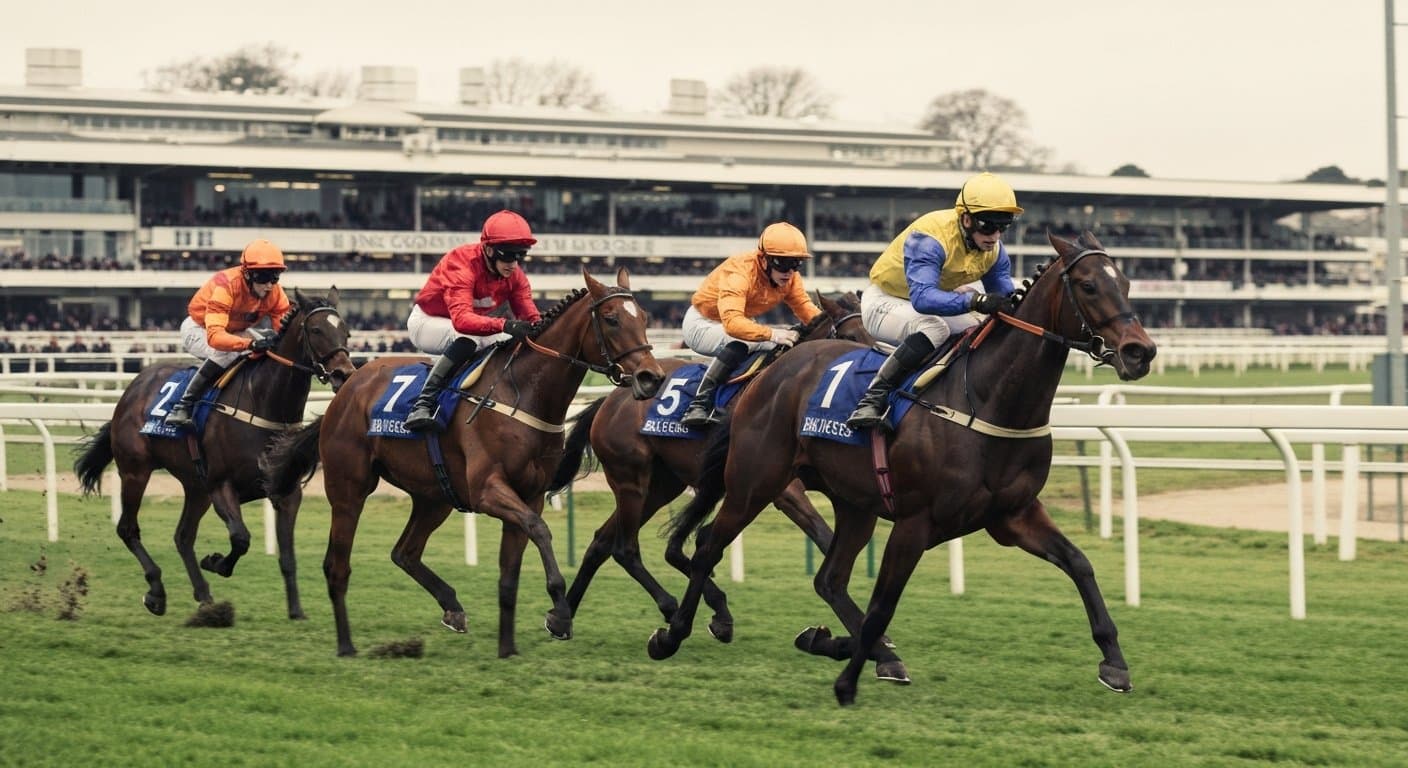
Kempton Park Betting Tips: Draw Bias, Form & Strategy
Discover Kempton's all-weather draw advantage, Boxing Day angles, and jumps form secrets. Expert betting strategies for better profits.
Read more
Kempton Park Racecourse: Complete Guide
Kempton Park — home of the King George VI Chase on Boxing Day. All-weather and turf racing, facilities, transport and betting angles.
Read more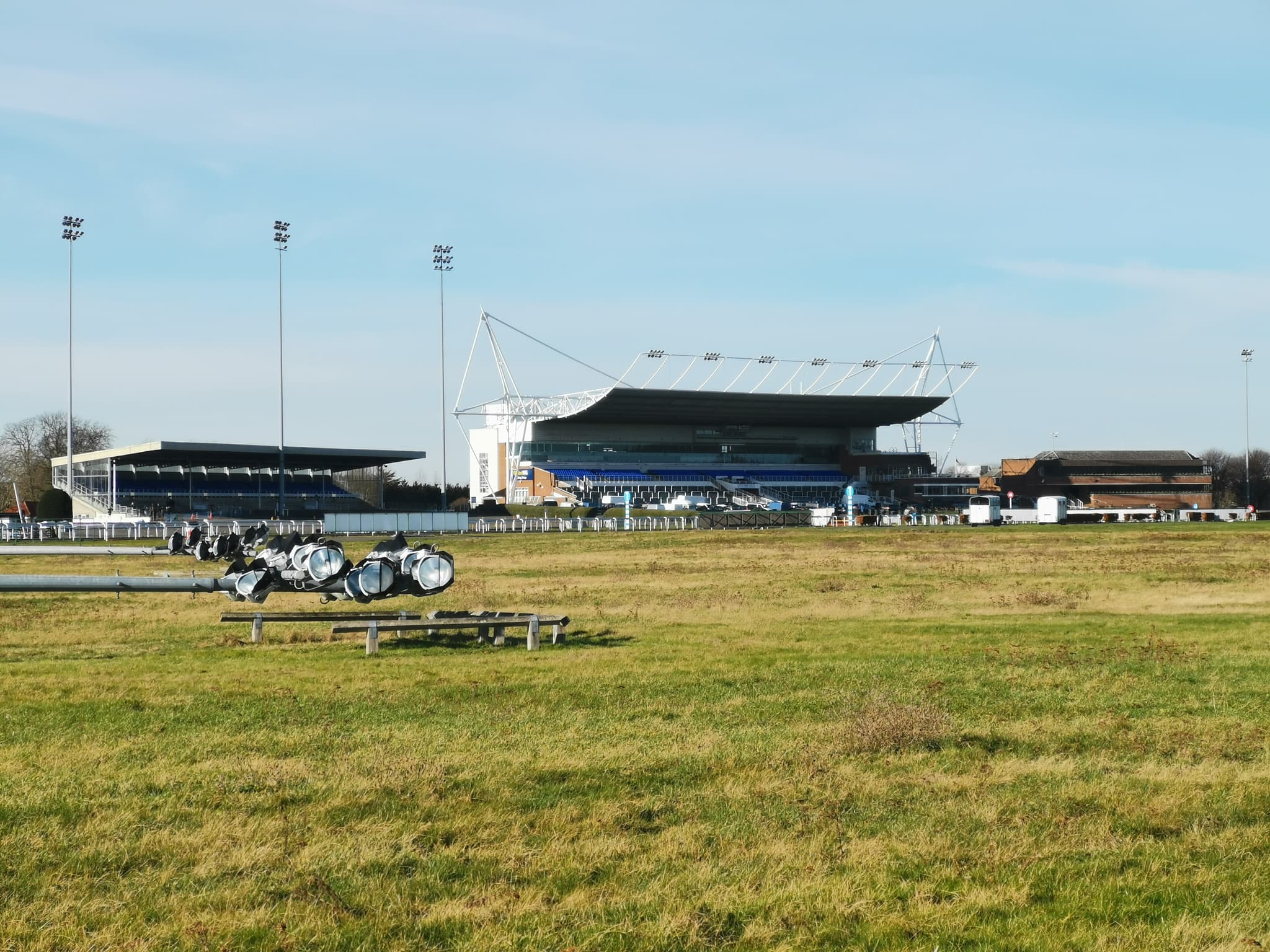
A Day Out at Kempton Park Racecourse
Everything you need for a day at Kempton Park — getting there, what to expect, enclosures, food and drink, and tips for Boxing Day and beyond.
Read morePhotos on this page are used under Creative Commons licences. Titles, sources and licence links for each one are on our image credits page.
Research the field with the AI Race Predictor
Our model publishes calibrated win-probability estimates for UK races — a second opinion to understand a race, not tips. It's open about its record: it doesn't beat the market, and we show exactly how it does.
Betting offers for Kempton Park
Work it out & learn the basics
Gamble Responsibly
Gambling should be entertaining and not seen as a way to make money. Never bet more than you can afford to lose. If you or someone you know has a gambling problem, help and support is available.