
Founder & Editor · Last reviewed 2026-04-05
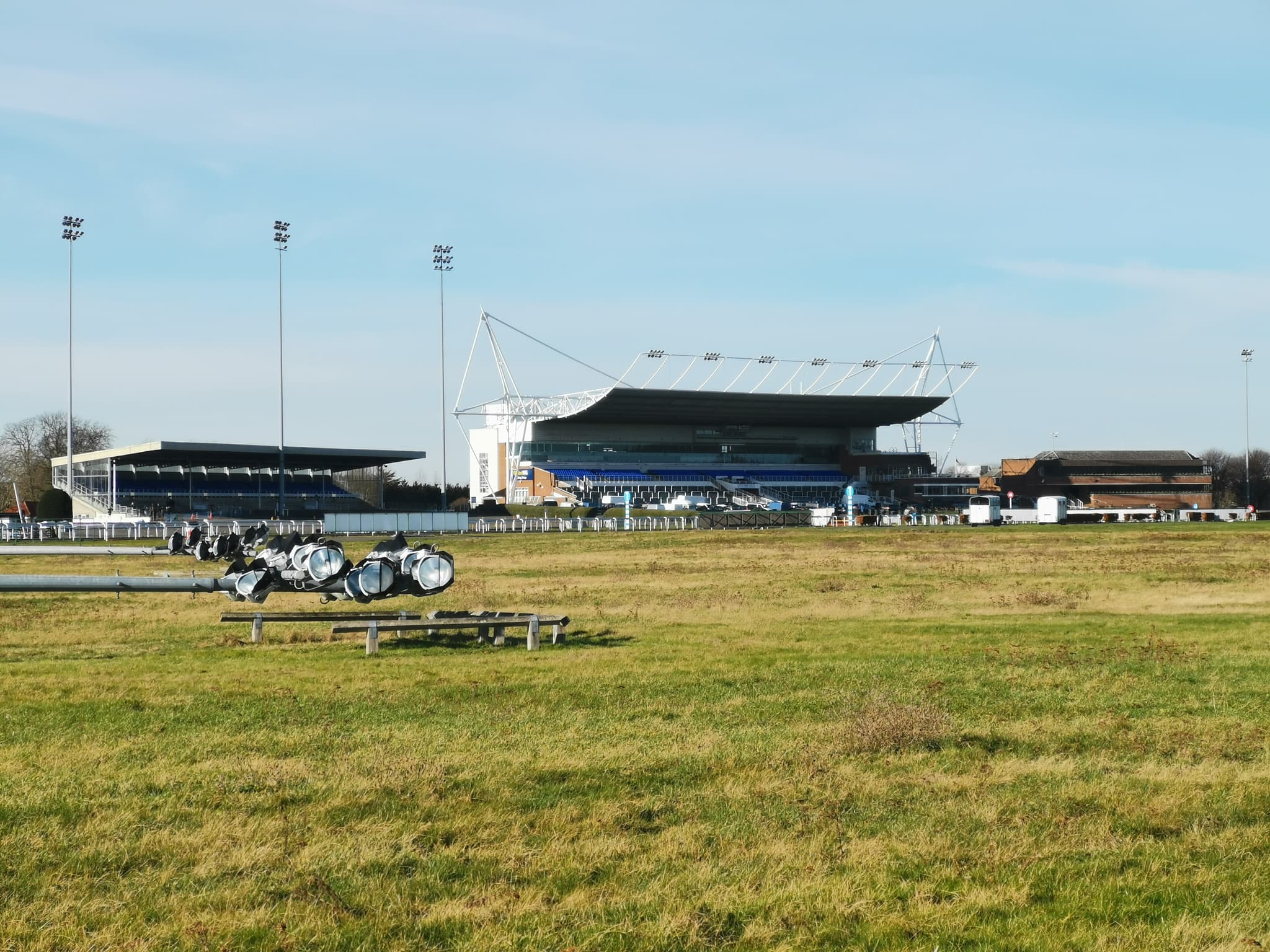
Picture Boxing Day morning at London Waterloo. Platform 16, just after nine o'clock. The concourse smells of coffee and the first hint of Christmas-morning recovery. You board the South Western Railway service toward Shepperton, and for the next 40 minutes the city gradually softens into suburban Surrey — Richmond Park, Hampton Court, the slow Thames valley flatlands. Then the train slows, and through the carriage window you catch the first flash of white rails, the outline of a grandstand, and a banner carrying the name of the most celebrated steeplechase on the Boxing Day calendar. Kempton Park station sits directly beside the course entrance. You step off the platform, through the gate, and you are already there.
That journey — door to racecourse in under an hour from anywhere inside the M25 — is the single best thing about Kempton Park. In a country full of racecourses that demand cars, taxis, or circuitous bus connections, Kempton's own railway station is an extraordinary convenience. It is also the reason the Boxing Day meeting regularly attracts crowds above 15,000 people who pour out of London to spend December 26th watching the King George VI Chase — a Grade One steeplechase that has been run at Kempton since 1947 and has produced some of British racing's most enduring moments.
But Kempton is far more than one day a year. The course in Sunbury-on-Thames, Surrey, between Hampton Court and Staines, operates a dual-purpose programme that runs across every season. The turf track hosts jump racing in the winter half of the year. The all-weather Polytrack — a right-handed triangle installed in 2006 — delivers flat racing 12 months a year, including the midweek evening meetings that draw a loyal after-work crowd from London and the surrounding south-east. Kempton stages somewhere around 60 to 70 fixtures annually, making it one of the busiest venues in Britain.
What the course does particularly well is make racing accessible without dumbing it down. The layout is compact: the grandstand, parade ring, betting ring and food outlets all sit within a few hundred yards of each other, so you are never far from the next race or the next drink. The facilities are solid rather than luxurious. There is no enforced dress code for most enclosures. The atmosphere at an evening all-weather meeting is closer to a pub garden than a society occasion, and that is entirely by design — Kempton has always drawn its crowd from people who love horses and racing rather than people who want to be photographed in a hat.
The one exception is Boxing Day. The King George VI Chase turns Kempton into something else entirely. Desert Orchid won it four times — in 1986, 1988, 1989 and 1990 — and if you were at Kempton on 26 December 1989 when he scrambled home through the mud and snow to beat Yahoo in conditions that should have ended his challenge, you have a story that other racegoers will listen to for the rest of their lives. Kauto Star won the King George five times between 2006 and 2011, a record that may never be broken. On Boxing Day the crowd is different from any other day at the course — bigger, louder, wrapped in scarves and coats, fuelled by mulled wine and the residual energy of Christmas morning.
Who This Guide Is For
This guide is written for anyone making their first or second visit to Kempton Park, whether that means a Boxing Day pilgrimage for the King George, a spring evening meeting after work, or a midwinter all-weather afternoon. It covers the journey from London in detail, explains the enclosure options, sets out what to wear for every season, and walks through food, drink, and betting facilities. The FAQ section at the end addresses the questions that come up most often from first-timers.
If you are a regular at major festivals — Cheltenham, Ascot, Goodwood — Kempton will feel unpretentious by comparison. That is its strength. If you are new to racing entirely, Kempton is one of the best places in Britain to start.
Quick Decision Block
Before you read further, here is the short version for anyone who needs answers fast:
Getting there: Take the train from London Waterloo — direct to Kempton Park station, approximately 40 minutes, standard return around £8–12 off-peak. There is no easier racecourse journey in southern England.
Arrival time: Standard all-weather meetings, 30 minutes before the first race is fine. Boxing Day King George card — arrive at least 60 to 90 minutes early. Gates get busy, trains fill up, and you will want time to settle in.
Which enclosure: Grandstand for a relaxed day at a fair price (£15–25 on most fixture days). Premier for better facilities and more space, worth the extra £10–15 on busy days or if you are entertaining.
What to wear: December requires serious layering — thermal base, warm coat, hat, gloves, waterproof boots. For summer evening meetings, casual is fine. The dress code is smart casual as a minimum in the Premier areas; everywhere else, common sense applies.
Betting: On-course bookmakers operate in the betting ring every meeting. Mobile signal on site is reliable. Bring some cash for smaller stalls.
Getting to Kempton Park
Kempton Park's greatest logistical advantage over almost every other racecourse in Britain is its own railway station. Kempton Park station sits directly beside the course entrance — step off the platform, walk perhaps 200 yards, and you are at the turnstiles. That fact alone shapes the travel decision for the majority of visitors coming from London, and it should shape yours too.
By Train — The Strongly Recommended Option
South Western Railway operates the service into Kempton Park station. The route runs from London Waterloo, and the journey takes around 35 to 40 minutes depending on the service. Trains depart from platforms on the Windsor lines side of Waterloo — check the departure boards for services toward Shepperton or Strawberry Hill, which call at Kempton Park station on race days.
On standard race days throughout the year, trains run roughly every 30 minutes. For the Boxing Day meeting and other major fixtures, South Western Railway typically adds extra services to handle demand, though you should always check the National Rail website or the SWR app in advance rather than assuming enhanced provision will match your exact timing. The official SWR timetable is usually published around two weeks before major fixtures.
A standard off-peak return from London Waterloo to Kempton Park station costs approximately £8–12 depending on when you book and travel. That is notably cheap for a London day out, and it compares very favourably with the fuel and parking costs of driving from the city. Anytime returns cost more — typically £12–16 — so if your journey is flexible, the off-peak saving is worth targeting. Railcard holders (16-25, 26-30, Network Railcard, Family and Friends) can bring the cost down further, sometimes to under £6 return.
One important detail for Boxing Day: the Boxing Day train timetable operates on a reduced schedule. Services run later in the morning, and the last trains back to Waterloo leave earlier in the evening than on a standard day. The King George VI Chase typically starts in the early afternoon (first race usually around 12:00–12:30, the King George itself mid-afternoon). If you plan to travel by train on Boxing Day, check the exact SWR holiday schedule, book your ticket in advance (the trains fill up fast), and do not leave it to chance. Carriages heading back to Waterloo after the last race are crowded, noisy, and thoroughly enjoyable if you got a winner, but chaotic if you have not planned around them.
From points other than Waterloo, the most practical option is to get to Waterloo first and join the direct service. If you are coming from the west — Reading, Guildford, or Woking — Staines and Feltham are served by SWR trains on nearby lines, and both are a short taxi or rideshare from the course. Sunbury station, one stop closer, is sometimes used by racegoers catching a cab for the last mile.
By Car
Kempton Park sits just off the A308 at Sunbury-on-Thames, with two main approaches depending on where you are coming from.
From central London and the east, the A316 (the route that runs through Richmond and past the M3 junction) is the natural approach. In light traffic, you can be at the course from central London in 40 to 45 minutes. The A316 is subject to congestion during evening rush hours, and on Boxing Day it can be slow from mid-morning onward as the day builds. Leave earlier than you think you need to.
From the south-west, the M3 motorway exits at Junction 1 and connects quickly to the A308. This is the cleaner route for anyone driving in from Surrey, Hampshire, or Wiltshire. The sat-nav postcode for the course is TW16 5AQ.
Parking at Kempton is free for all racegoers, which is a rarity among southern racecourses and one of the less-advertised financial advantages of visiting. The car parks are well-organised with clear marshalling and reasonable walking distances to the entrance. For standard weekday and evening meetings, parking is never an issue. For the Boxing Day card, the calculus is different: prime car park spaces go quickly, and even the overflow areas fill up well before the first race. Arriving 90 minutes before the first race is the sensible target on Boxing Day; arriving 60 minutes before is the absolute minimum if you want a straightforward experience.
The one consideration against driving for bigger meetings is that you cannot drink freely — and drinking freely is, for many people, a significant part of Boxing Day at the races. The train solves this problem entirely, which is one more reason it remains the default choice for the majority of Kempton's Boxing Day crowd.
By Taxi or Rideshare
An Uber or local taxi from central London runs approximately £30–45 depending on traffic and time of day. Surge pricing on Boxing Day morning is common, so do not be surprised if the fare is higher than usual. From Heathrow Airport, which is roughly 8 miles from the course, expect £15–25. From Staines or Feltham, a short cab will cost £8–12.
The course has a clearly marked drop-off and collection point near the entrance. For rideshare pickups after the last race on busy days, there can be a wait as demand spikes — preemptively booking your return ride 20 minutes before the last race finishes is worth doing on peak days.
Coach Travel
Organised coach trips to Kempton do exist, usually run by local betting shops, social clubs, or racing syndicates, but there is no regular scheduled coach service. The train makes a coach connection largely redundant for anyone travelling from London, so this option is mainly relevant for groups coming from outside the south-east who want to organise transport together.
Accessibility
Kempton Park's flat terrain makes it one of the more accessible racecourses in Britain for wheelchair users and visitors with mobility requirements. The site avoids the banks, hills, and uneven ground that can make other courses difficult to navigate. Accessible parking spaces are available close to the main entrance; notify the racecourse in advance to ensure availability. The grandstand has lift access to upper levels, and there are designated viewing platforms for wheelchair users with sightlines to both the parade ring and the finishing straight. Anyone with specific requirements should contact the course directly through the Jockey Club website before visiting, as advance planning makes a significant difference on the busiest days.
Distance Reference Points
| Departure Point | Journey Time (Train) | Approximate Cost |
|---|---|---|
| London Waterloo | 35–40 minutes | £8–12 return (off-peak) |
| Richmond (change at Waterloo or direct) | ~25 minutes to Waterloo | Combined fare |
| Heathrow (taxi/rideshare) | 20–25 minutes | £15–25 |
| Staines (taxi) | 10–15 minutes | £10–15 |
| Central London (car, light traffic) | 40–50 minutes | Free parking on site |
What to Wear
Kempton Park is one of the more relaxed racecourses in Britain when it comes to dress codes, and that is a large part of its appeal to people who want a good day out without feeling interrogated at the entrance. There are no morning suits, no mandatory hats, and no fascinator conventions. What you wear should be guided by three things: the enclosure you have booked, the time of year, and the weather forecast — and of those three, the weather forecast matters most.
Grandstand Enclosure
There is no enforced dress code for the Grandstand beyond the absolute basics. Smart casual is the prevailing standard — dark jeans or chinos with a collared shirt for men, and something comfortable but presentable for women. Trainers are permitted and widely worn. Most people aim for "smart enough for a nice pub" rather than anything more formal, and that is exactly right.
On midweek all-weather meetings and evening fixtures, the dress code softens further. A significant portion of the crowd has come straight from work in office attire; others have come in whatever they happened to be wearing on a Tuesday afternoon. Nobody is policing the gates, and no one will raise an eyebrow at a clean pair of trainers or a waterproof jacket over an untucked shirt.
The one caveat is the obvious extreme end — overtly filthy or ripped clothing is not welcome anywhere on the course. But Kempton has never been a place where people are turned away for not meeting an arbitrary style standard, and that is one of the reasons it draws a broader audience than more formal courses.
Premier Enclosure
The Premier Enclosure asks you to make an effort, without going as far as the equivalent areas at Ascot or Cheltenham. Smart dress is expected: collared shirts, tailored trousers or chinos for men; smart dresses, skirts, or tailored trousers for women. A jacket on men is appropriate for bigger days. Ties are not required but are not unusual at the King George meeting in December, when the occasion encourages people to dress up.
Sportswear, ripped clothing, shorts, and flip-flops are all outside what the Premier Enclosure welcomes. That said, nobody expects black tie — the standard is closer to smart restaurant than black-tie event. If you are attending hospitality on Boxing Day and are uncertain, err toward slightly over-dressed rather than under.
Boxing Day specifically brings out a more formal version of Kempton. Many racegoers treat the King George meeting as a Christmas occasion and dress accordingly — a smart coat over a decent outfit signals that you understand the day. You will see everything from tweed to puffer jackets to full three-piece suits, and all of it looks appropriate when the setting is a packed grandstand in December cold.
The Weather Factor — The Element That Matters Most
Kempton races every month of the year, and conditions range from hard frost and single-digit temperatures in December to 25-degree evening sun in July. What you wear needs to match the conditions more than it needs to match any dress code.
December and the King George meeting: This is the most important weather scenario to plan for. Kempton sits in the flat Thames valley, and a cold westerly wind in late December cuts through without mercy. Temperatures regularly hover around 3–6°C on Boxing Day, and with a wind chill the effective temperature is lower. The practical kit for a winter day:
- A thermal base layer under everything else
- A warm mid-layer (fleece or wool sweater)
- A proper windproof and waterproof outer coat — not a stylish jacket, a coat that keeps the wind out
- Hat and gloves without compromise
- A scarf
- Waterproof boots or at minimum water-resistant leather footwear — the ground areas can be muddy, damp, or frost-covered
Ankle boots and leather shoes are fine in the grandstand. If you plan to spend time near the rails or walking the outer areas, something with grip and waterproofing is sensible. Heels are a poor choice on the ground areas in December, though they are perfectly manageable on the hard surfaces inside the grandstand.
January through March all-weather meetings: Similar cold-weather advice applies, though without the Boxing Day crowds. Layer up, keep hands warm, and bring waterproofs if there is any chance of rain.
Spring evening meetings (April–June): The evening air can still be cool even when the afternoon has been warm. A light jacket or cardigan for when the sun drops is sensible. The dress code continues to be relaxed, and the atmosphere is informal enough that smart casual feels correct.
Summer evening meetings (July–August): The most relaxed version of Kempton. Light clothing, sunglasses, and comfortable shoes are all you need. The evening meetings from around 6pm feel almost festival-like on warm nights, and plenty of people are in short sleeves. You will still want a layer in your bag for after 8pm when temperatures can drop quickly even in August.
Autumn (September–November): The all-weather programme continues into autumn with conditions that are generally manageable but unpredictable. A waterproof layer and solid footwear are sensible insurance in October and November, when wet cold can arrive without warning.
One Practical Rule
Whatever enclosure you are in, whatever season it is: dress for comfort before dress for style. You will be standing for several hours, often outdoors, in conditions that are rarely ideal. The most elegantly dressed person on the Boxing Day grandstand does not look elegant if they are shivering through the third race. Warm, practical, and presentable — in that order.
Enclosures & Viewing
Kempton Park keeps its enclosure structure straightforward, which suits the course's character. There are two main enclosures for most racegoers — the Grandstand and the Premier — with hospitality packages available for bigger meetings. The price difference between them is modest and the decision usually comes down to how much space you want and how much you plan to eat and drink inside the course's better facilities.
Grandstand Enclosure
Typical price: £15–25 depending on the fixture. All-weather weekday meetings are at the lower end; the Boxing Day card and other feature days push toward the top of that range. Children aged 17 and under are admitted free when accompanied by a paying adult.
The Grandstand enclosure is where the majority of Kempton's racegoers spend their day, and it delivers a thoroughly enjoyable experience at a fair price. Access includes the main covered grandstand with its mix of tiered seating and standing areas, the parade ring for pre-race inspection of the runners, the full on-course betting ring, and the range of food and drink outlets spread across the site.
The viewing from the Grandstand is solid. Kempton's flat terrain means there are no natural elevation advantages, but the grandstand provides a decent sight line to the finishing straight — the last two furlongs of the all-weather track and the final two jumps on the chase course are clearly visible and close enough to feel the excitement. The Polytrack's triangular layout means some of the far-side action plays out at a distance, but the big screens positioned around the course fill in what the naked eye misses comfortably.
For the King George VI Chase, the Grandstand enclosure offers good access to the final fences and the finishing line. If you want the best possible view of the chase's critical moments — the last two fences where races have been won and lost for decades — position yourself in the lower grandstand or along the rail from about three furlongs out. You will see the field coming toward you from the home turn, and the finish is right in front of you.
On evening all-weather meetings, the Grandstand enclosure takes on a relaxed, almost pub-garden quality on warm nights. The crowd tends to be younger and more casual, the atmosphere is low-key, and the racing itself is tight and competitive. Kempton's evening flat programme draws strong fields because the course is so easy to reach from London, and trainers based in the south are willing to run horses there that they might spare for other fixtures elsewhere.
Premier Enclosure
Typical price: £25–40 depending on the fixture. The Boxing Day meeting sits at the higher end.
For an additional £10–15 on most days, the Premier Enclosure delivers a significant upgrade in comfort and experience. The bars and restaurants are of better quality, the facilities feel more polished, and there is noticeably more space — which matters significantly on the busier days when the Grandstand gets truly packed. The viewing position is slightly elevated compared to the main stand areas, and the enclosure has a defined, better-equipped section near the parade ring for watching the horses before each race.
The Premier Enclosure is worth the extra cost in two situations: when you are making a serious day of it with a partner or a group, and when you are attending a major fixture like the Boxing Day King George. On the King George day in particular, the standard enclosure gets truly crowded by midday, and the extra breathing room the Premier provides makes the price difference feel immediately justified. The restaurants book up for December 26th, so reserve a table before the day.
For casual midweek all-weather meetings, the upgrade to Premier is less necessary. The crowd is smaller, there is more space throughout the site, and the Grandstand enclosure provides everything you need without the extra outlay.
Hospitality Packages
Kempton Park offers a range of hospitality packages for the King George VI Chase and other feature meetings. These typically include private box or suite access, a sit-down three-course meal, complimentary drinks on arrival, a racecard, and a premium viewing position. Packages start at approximately £150 per person for the Boxing Day fixture and scale upward depending on the level of service and the size of the group.
For the Christmas meeting specifically, hospitality packages sell out well in advance — often by October. The Jockey Club, which operates Kempton, opens bookings for the following Christmas season early in the year. If you are planning corporate entertainment or a special occasion group booking for Boxing Day, the hospitality calendar should be your first stop, not an afterthought.
The corporate appeal of Kempton's hospitality is straightforward: you get a quality experience at substantially lower cost than equivalent entertainment at Ascot or Cheltenham, with the added benefit of easy London transport links that make getting a group there and back painless. A company day out for 20 people at Kempton costs a fraction of what the same day would cost at Royal Ascot, and the racing product on Boxing Day is every bit as good.
Understanding the Track Layout and Where to Watch
Kempton operates two distinct tracks, and understanding which one is in use shapes where you should position yourself for the best view.
The all-weather Polytrack is a right-handed triangle installed in 2006, with a circuit length of approximately 1 mile 5 furlongs. Flat races on the all-weather run either the full circuit or shorter distances that start on the back straight and turn into the home straight. The home straight, which runs directly in front of the grandstand, is the best vantage point for all-weather racing — this is where sprint finishes are decided and where close finishes can be appreciated.
The turf course is left-handed, a different configuration from the all-weather triangle that sits inside it. Jumps racing on the turf track includes fences and hurdles placed on the far side and in the home straight. For chase racing — including the King George — the key viewing positions are the last two fences in the home straight, where the best horses show their class under pressure, and the finishing line itself. Standing on the rail from the two-furlong marker to the post gives you the most immediate experience of the racing.
Whichever enclosure you are in, the parade ring before each race is worth your time. Spending five minutes watching the horses walk round before a race tells you things no form guide can convey — which animals are moving freely, which look relaxed, and which are sweating or unsettled. Experienced racegoers take the parade ring seriously, and you should too.
Food & Drink
Kempton Park does not pretend to be a food destination, and that honesty is part of its charm. The catering is racecourse fare done reasonably well — good enough to sustain a full day at the course without regrets, with options that range from a quick burger at a kiosk to a sit-down restaurant in the Premier Enclosure. Knowing where to go and when to go there makes the difference between an easy day and a frustrating one.
Bars
Bars are distributed throughout both the Grandstand and Premier enclosures, and they are generally well-stocked and efficient enough on most days. Prices sit at the London end of the racecourse spectrum without quite reaching the extremes of Ascot or Glorious Goodwood. On a standard meeting day, expect to pay around £5.50–6.50 for a pint of lager or ale, £6–8 per glass of wine, and £5–7 for a single measure of spirits. Canned beer is available at some outlets as a slightly cheaper option.
The bar configuration adjusts for the season and the crowd. On major fixture days — Boxing Day being the clear example — temporary bars are installed in addition to the permanent ones to absorb demand. Even with this provision, queue times at the main bars peak between races. The experienced approach is to get your drink either before the race goes off or immediately after it finishes, rather than in the seven-minute window between races when everyone moves at once.
Mulled wine becomes the unofficial drink of the Boxing Day meeting. It appears at dedicated stalls throughout the Grandstand and Premier areas and is widely consumed by people who would not normally drink mulled wine at any other point in the year. For December at Kempton, it makes complete sense — it is warm, festive, and reasonably priced at around £5–6 per cup. There is something specifically right about standing in the cold December air, mulled wine in hand, watching an elite steeplechaser stride around the parade ring.
For the spring and summer evening meetings, the outdoor bar areas are the main draw. The Polytrack evening programme typically starts around 6pm, and arriving early enough for a drink in the evening sun before the first race is one of the pleasanter ways to spend a Tuesday or Wednesday in May. The crowd at these meetings is notably relaxed — after-work Londoners on a warm evening, cold pints, competitive flat racing. Kempton's evening programme has cultivated a loyal regular following precisely because the experience is low-effort and high-reward.
Food
The catering covers a consistent range of racecourse staples across both enclosures. Burger stalls, fish and chip outlets, pie and pasty vendors, hot dogs, and a range of snack options are positioned throughout the Grandstand areas. Prices typically run £7–10 for a main item — a burger and chips, fish and chips, or a steak pie with a soft drink.
Quality is uneven, as it is at most racecourses running multiple kiosks across a large site. The burgers are reliably decent and consistently popular. The pies are the right call on a cold winter day — hot, filling, and proportionally good value. Fish and chips are serviceable. The hot dog stalls draw long queues on Boxing Day because speed matters when the cold is cutting in and you have five minutes before the next race.
In the Premier Enclosure, the sit-down dining option represents a real step up. The restaurant format serves proper meals — roast dinners around Christmas, steaks and seasonal mains across the year — with a quality level that justifies the premium over the kiosks outside. Booking a table in advance is advisable for any major meeting; for the Boxing Day card, it is essential. The restaurants at Kempton can be booked through the Jockey Club's Kempton Park booking system, usually available from October onward for the Christmas fixtures.
For Boxing Day and the December 27th cards that often follow, the course extends the food offering with seasonal additions. Hog roast stands, roasted chestnuts, mince pies, and other Christmas market-style vendors complement the permanent outlets. The addition adds to the atmosphere as much as it adds to the food options — walking past a hog roast while carrying a racing slip on Boxing Day afternoon is a specifically British pleasure.
Practical Tips for Eating and Drinking Well
Time your visits. The worst queue times for food and drink at Kempton occur in the 10 minutes immediately after a race finishes, when the entire crowd moves simultaneously. If you need food, either get it before the first race or wait until after the second race has started and the queues have cleared. Between the second and third race of the day tends to be the quietest window.
Arrive with a plan. For a six-race card, you will have roughly five windows between races of five to fifteen minutes each. That is enough time to get a drink, but not always enough time to queue for food, eat it, and get back to a good viewing position. The simplest approach is to eat a full meal before the halfway point of the card and graze on snacks for the rest.
Cash alongside cards. Most of the permanent bar and food facilities at Kempton accept cards, and contactless payment is standard. Some of the smaller independent food stalls and on-course bookmakers operate cash-only or prefer it; a £20 note in your pocket avoids the only frustration of an otherwise straightforward venue.
Racecard and racecard holders. If you buy a racecard at the entrance (around £2–3), keep it dry. It is your guide to every race, the form guide for every runner, and worth protecting. A crossbody bag or jacket pocket works; a trouser pocket in the rain does not.
The hip flask tradition. Bringing a small personal hip flask is a long-standing racing tradition and nobody at Kempton will object. A flask of decent whisky or brandy is a sensible companion for a December afternoon — warming and economical. Full bottles of spirits cannot be brought through the turnstiles, but a small flask is entirely acceptable and very much in the spirit of British racing culture.
Designated drivers. If someone in your group is driving back, the course has clear soft drink and alcohol-free options throughout. The catering staff are accustomed to the question and will point you toward the right areas.
Tips & FAQ
How much does it cost to get into Kempton Park?
Admission varies by fixture type and which enclosure you choose. Standard midweek all-weather meetings — Kempton runs around 60 to 70 fixtures per year — start from approximately £10–15 for the Grandstand enclosure. Weekend meetings and feature days cost more, and the Boxing Day King George VI Chase card typically ranges from £25–35 for Grandstand and £35–50 for Premier.
Booking online in advance usually delivers a saving of £3–5 compared to paying on the gate, and for the Boxing Day meeting it is the only reliable way to guarantee entry. The Christmas card regularly sells substantial numbers of tickets in advance and turning up and hoping to pay on the gate on December 26th is a risk not worth taking. Tickets are available through the Jockey Club's Kempton Park booking page. Children aged 17 and under are admitted free when accompanied by a paying adult on most fixture days.
What time does the King George VI Chase usually start, and when should I arrive?
The King George VI Chase is typically scheduled as the feature race mid-afternoon on the Boxing Day card. The first race usually goes off around 12:00 to 12:30, with the King George itself scheduled for approximately 2:30 to 3:00 depending on the year's programme. The Jockey Club publishes the full card in advance, and the exact race times are confirmed around two weeks before the fixture.
For Boxing Day specifically, arrive at least 60 to 90 minutes before the first race. That means targeting the course by 10:30 to 11:00 at the latest if you are using the train from Waterloo. The car parks start filling from mid-morning, the train services run on a reduced Boxing Day timetable, and the entry queues at the turnstiles build quickly from around 11:30. Arriving early gives you time to get settled, pick up a racecard, find your food and drink, and watch the horses in the parade ring before the card gets fully under way.
Is the train or driving better for Boxing Day?
The train is the better choice for most people on Boxing Day, for several connected reasons. First, the Kempton Park station is directly beside the course entrance — the walk from platform to turnstile is a few hundred yards, and you are straight in. Second, Boxing Day traffic on the A316 and local roads around Sunbury can be slow from late morning, and parking fills up significantly before the first race. Third, and most usefully, driving means you cannot drink freely, which for many people is a significant part of the day.
The train trade-off is that the Boxing Day SWR timetable runs on a reduced holiday schedule — trains start later and finish earlier than a standard day. Check the exact National Rail timetable before you travel, book your return ticket in advance, and plan your departure from the course to catch a train that is not the absolute last service of the evening, which will be packed.
If you are driving, the M3 at Junction 1 or the A316 from London are the main routes. Arrive by 11:00 at the very latest for a comfortable experience. Sat-nav postcode: TW16 5AQ.
Can I bring children to Kempton Park?
Yes, and Kempton is well-suited to it. Children aged 17 and under are admitted free to most meetings when accompanying a paying adult. The site is largely flat and easily navigable with a pushchair. Baby-changing facilities are available on site. There is no dedicated children's play area, but in practice younger visitors tend to enjoy the parade ring — watching horses of this size and quality up close holds attention — and the general noise and atmosphere of race day.
For the Boxing Day meeting, bear in mind that the course gets crowded and the day can be long and cold. Older children (10 and up) typically find the occasion exciting; younger ones may struggle with the cold and the wait between races. If you are bringing very young children to a December meeting, the Premier Enclosure's additional indoor space and facilities make the experience more manageable.
What is the dress code, and is it actually enforced?
Kempton's dress code is among the least formal of any major British racecourse. In the Grandstand enclosure, there is no enforced dress code beyond basic presentability — smart casual is the accepted standard, trainers are permitted, and nobody is conducting spot checks at the gate.
The Premier Enclosure asks for smart dress: collared shirts and trousers or chinos for men, smart dresses or trousers for women. Ties are not required. The main exclusions are sportswear, ripped clothing, shorts (on the main fixture days), and flip-flops. On Boxing Day the dress standard in the Premier areas is noticeably higher because many people treat it as an occasion — smart coats, scarves, and an effort toward looking pulled-together are the norm.
On evening all-weather meetings and midweek fixtures, the dress standard across the whole site relaxes further. People come straight from work or in casual clothes, and the atmosphere reflects that. The gate staff on a Tuesday evening all-weather card are not enforcing anything beyond the obvious.
What should I bring to make the day easier?
The things experienced Kempton racegoers consistently recommend:
A racecard. Available at the entrance for around £2–3. It lists every runner in every race with recent form, jockey, trainer, and the morning betting market. Even if you have studied the racing beforehand, the racecard is the on-course reference guide and worth the cost.
Cash. Most permanent facilities accept cards, but smaller food stalls and some on-course bookmakers prefer cash or operate cash-only. A £20 note avoids the only consistent frustration of an otherwise smooth venue.
Binoculars. Optional for a large grandstand venue like Kempton, but useful for jump racing where some of the far-side action is at a distance. A compact pair in a jacket pocket adds next to nothing in weight and significantly improves the experience of watching a steeplechase.
A charged phone. Mobile signal on site is generally reliable. Most punters use a betting app rather than the on-course windows, and your phone is your betting tool, your form guide, and your way home. Bring a portable charger for an all-day visit.
Layers in winter. Already covered in the clothing section, but worth emphasising here: one extra layer is always worth carrying in December. A fleece in a bag weighs very little and is invaluable when the temperature drops at 2pm.
How does betting work at Kempton?
On-course bookmakers set up in the betting ring for every Kempton meeting. For jump fixtures and weekend flat meetings, there are typically 15 to 25 layers operating, with boards showing prices on the current race and ante-post markets. For smaller midweek all-weather meetings, there may be fewer bookmakers on the ring, but there will always be a presence.
The Tote — now operated by Betfred — runs windows throughout both enclosures. The Tote pools bets from across the course and pays out at a dividend rather than a fixed price; this means you can sometimes beat the board prices on outsiders and sometimes receive less than the SP on favourites. For first-timers, the Tote window is the simplest and most straightforward way to place a bet: walk up, say the race number, the horse's name or number, the type of bet (win, each-way), and the stake.
Most people attending Kempton now bet primarily through phone apps — Betfair, William Hill, Paddy Power, Betfred and others all have mobile products, and the signal on site is reliable enough to make in-running and last-minute betting straightforward. There is also Wi-Fi coverage in parts of the grandstand. For more detailed guidance on betting angles and approaches specific to Kempton's all-weather track, see our dedicated betting guide.
What are evening meetings like compared to a Saturday card?
Kempton's evening all-weather meetings — which run regularly from April through to late autumn, typically on Tuesday and Wednesday evenings — are a different proposition from the Boxing Day or a busy Saturday fixture. The crowd is smaller (often 2,000 to 5,000 people rather than 10,000-plus), the atmosphere is relaxed and convivial, and the evening light adds something that afternoon meetings lack.
For anyone who finds big racing occasions intimidating or who wants to introduce a friend or partner to racing in a low-pressure setting, an evening meeting at Kempton is close to ideal. The racing is competitive — Kempton's all-weather programme attracts quality flat horses from trainers across the south of England, and the Polytrack produces real racing — but the overall experience is closer to an enjoyable evening out than a major sporting event. Many racegoers arrive around 5:30pm, have dinner and a few drinks, watch six or seven races, and are home by 9:30.
Evening meetings also tend to have lower ticket prices (£10–15 for Grandstand) and quicker entry. The contrast with Boxing Day could hardly be sharper, and both versions of Kempton are worth experiencing.
Are hospitality packages worth it at Kempton?
For the right occasion, yes. Kempton's hospitality offering on the King George day includes private boxes and suites with sit-down dining, complimentary drinks, a racecard, and premium viewing. Packages typically start around £150 per person and rise depending on the level of service and group size.
Whether that represents value depends on what you are comparing it to. Relative to Ascot or Cheltenham hospitality on comparable days, Kempton is significantly cheaper for a broadly similar quality of experience. The transport links from London make the logistics painless for a corporate group. The King George itself is Grade One racing of the highest standard. For a company event, a special birthday, or a group who want the full day without managing their own catering and queuing, hospitality at Kempton delivers a clean, organised experience.
For individual visitors or small social groups, the Premier Enclosure plus a restaurant booking is probably a better use of money — you get the upgrade without the hospitality price premium.
What are the disabled facilities like?
Kempton's flat terrain makes it more accessible than many British racecourses. The site avoids the hills and slopes that can make navigation difficult at courses built on elevated ground. Dedicated accessible parking is available close to the main entrance, and the course asks visitors with specific requirements to contact them in advance through the Jockey Club website to arrange assistance and confirm availability.
The grandstand has lift access to upper viewing levels. Designated wheelchair viewing areas are positioned with clear sight lines to the parade ring and the finishing straight. Accessible toilet facilities are available across the site. For visitors with hearing impairments, the on-course screens and commentary boards are distributed throughout the enclosures. For any requirement beyond standard accessibility, advance contact with the racecourse is strongly recommended — the team is used to planning for a range of needs, and major fixture days require some advance coordination.
Can I bring a dog?
Guide and assistance dogs are admitted to all areas of Kempton Park. Pet dogs are not permitted inside the course. The policy is consistent with most Jockey Club venues. If you are bringing an assistance dog, confirming in advance with the Jockey Club's Kempton Park contact is advisable, particularly for the busiest fixture days.
Where does Kempton rank as a racing venue compared to nearby courses?
Kempton sits in an interesting position among the southern racecourses. It lacks the grandeur of Ascot, 12 miles to the west, and the scenic natural amphitheatre of Epsom Downs. It does not have Goodwood's hilltop views or Sandown's reputation as a dual-purpose showpiece. What Kempton has, and what none of those courses can match, is the transport connection — Kempton Park station, direct from Waterloo, at a fraction of the cost of an Ascot or Goodwood trip.
For most Londoners assessing a day at the races, Kempton wins on convenience every time. The racing quality on Boxing Day is truly elite — the King George has been contested by Arkle, Kauto Star, Desert Orchid, Wayward Lad, and Gold Cup winners across its 70-plus year history. The all-weather programme is competitive and consistent. The atmosphere is unpretentious and welcoming. For a first trip to the races or a routine afternoon's racing, Kempton delivers more for less effort than almost anywhere in the south.
Share this article
More about this racecourse
All Kempton Park guides
Kempton Christmas Festival: Your Complete Guide
Boxing Day at Kempton is the jumps season's Christmas centrepiece. Three days of top-class racing over the festive period — here's everything you need to know.
Read more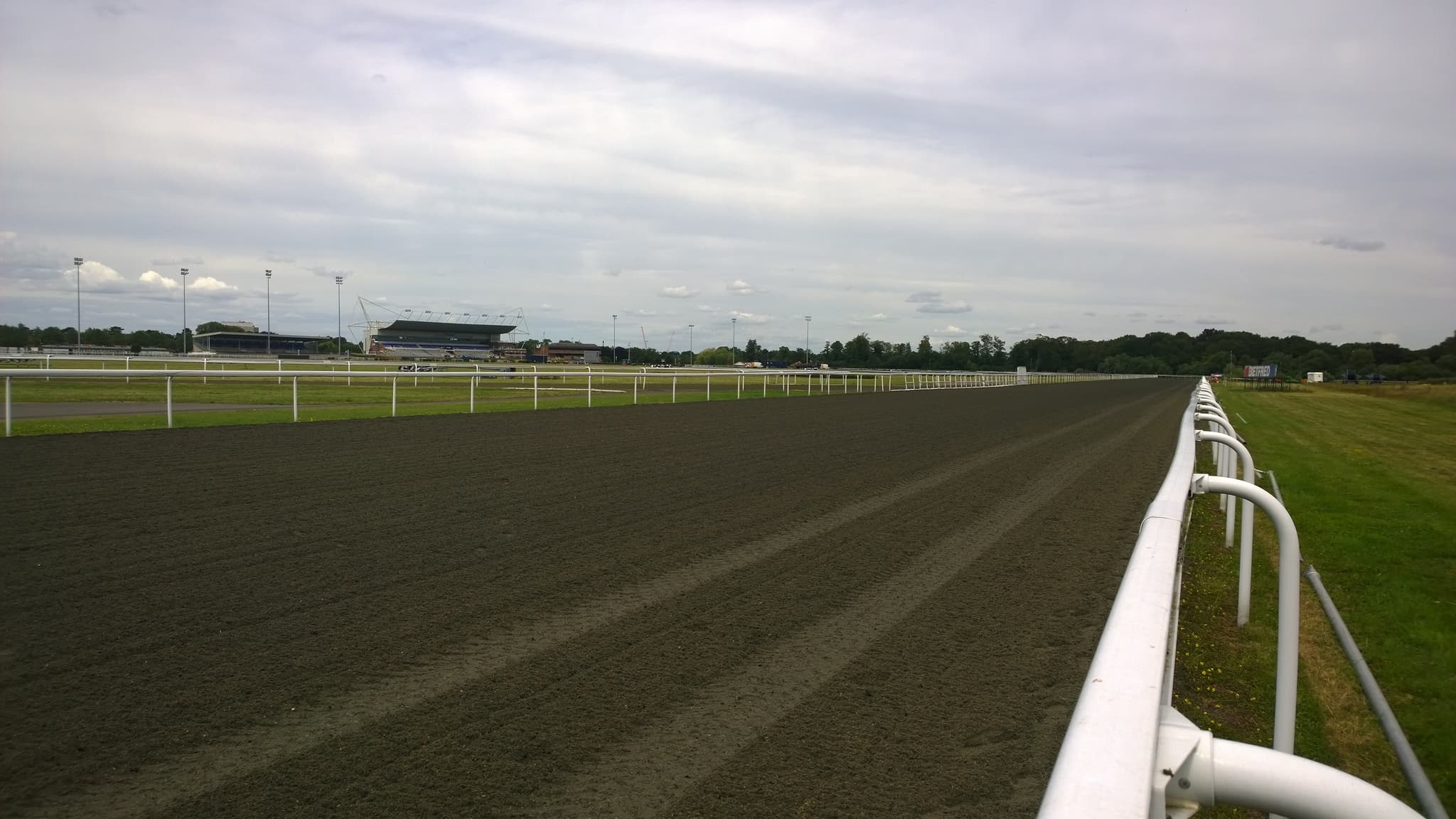
The History of Kempton Park Racecourse
From Victorian beginnings to Boxing Day tradition — the story of Kempton Park and its place in British racing history.
Read more
Desert Orchid: 4 King George Wins & Kempton Park Legend
Discover Desert Orchid's record four King George VI Chase victories at Kempton Park, his famous grey coat, and why he remains Britain's most beloved steeplechaser.
Read morePhotos on this page are used under Creative Commons licences. Titles, sources and licence links for each one are on our image credits page.
Betting offers for Kempton Park
Gamble Responsibly
Gambling should be entertaining and not seen as a way to make money. Never bet more than you can afford to lose. If you or someone you know has a gambling problem, help and support is available.