
Founder & Editor · Last reviewed 2026-04-04
Every Boxing Day, while much of the country is recovering from the previous day's excess, tens of thousands of racing fans make their way to Sunbury-on-Thames for one of the most celebrated days in the jumps calendar. The King George VI Chase at Kempton Park is the race that defines midwinter jump racing: a Grade 1 contest over three miles that has been won by Desert Orchid four times, Kauto Star five times, and Arkle once. This is their track.
But Kempton Park is far more than one race in December. This is one of Britain's most versatile racecourses, operating on two completely different surfaces: a turf jumps course used for National Hunt racing from October through April, and a Polytrack all-weather circuit that runs year-round. Racing has been taking place here since 1878. When other courses close due to frost or waterlogging, Kempton stays open.
Quick Decision Block
Should you visit? Yes. One of the easiest big-day racing trips in the country, with a dedicated train station 30 seconds from the gates.
Best time to go? Boxing Day for the King George VI Chase, the signature event. October or February for quality jumps racing without the crowds.
Which enclosure? The Grandstand & Paddock Enclosure suits most visits. For the Boxing Day fixture, consider the Premier Enclosure. It fills fast and the catering is a step up.
Which surface? National Hunt on the turf course for the big occasions; Polytrack all-weather for year-round midweek and evening racing.
Getting there? Train from London Waterloo to Kempton Park station, approximately 30 minutes. The station sits directly beside the course entrance.
What to wear? Smart casual for most days. On Boxing Day, people generally make more of an effort. No formal requirement, but jeans and trainers can look out of place in the Premier Enclosure.
Family-friendly? Yes. The course is flat and pushchair-accessible. Under-18s go free with a paying adult on most racedays.
Betting tip? On the Polytrack all-weather, high draws have a significant edge in sprint races of seven furlongs or less. On the jumps course, horses that race prominently win far more than their fair share.
Who This Guide Is For
If you're planning your first Boxing Day trip, this guide will tell you everything about the King George VI Chase, how to get there from London, which enclosure to book, and what to expect from the day.
If you're a regular punter trying to sharpen your Kempton angles, the sections on the all-weather course draw bias, pace analysis, and the King George VI Chase betting profile are where you'll spend most time.
If you're interested in the course's history (the Desert Orchid legend, the Kauto Star era, the threatened closure in 2017), the history section covers all of it in detail.
And if you're simply deciding whether Kempton is worth a visit on a random Wednesday in February, the answer is usually yes. The train from Waterloo takes half an hour. The racing is honest. The atmosphere on evening all-weather fixtures is relaxed in a way that suits a spontaneous trip. Few courses in Britain are this easy to reach from the capital.
What follows covers the course layout in detail across both surfaces, the full fixture calendar, the King George VI Chase and its legendary winners, the facilities and enclosures, transport options, betting angles, and a set of frequently asked questions that address the practical details most visitors actually need.
Bet on Kempton Park
Place your bets on Kempton Park races with a trusted bookmaker.

Promo code BETFRED50. New customers only. Register, deposit with a Debit Card, and place a first bet of £10+ at Evens (2.0)+ on Sports, to be settled within 7 days, to get £30 in Sports Free Bets and £20 in Bet Builder Free Bets within 24 hours of settlement. 7-day expiry. Eligibility & payment exclusions apply. Full T&Cs apply. Take Time to Think. BeGambleAware.org. 18+. Full T&Cs.

Promo code R30. New UK customers only, 18+. Register, deposit £10 or more, then place a £10 single cash bet at odds of 1/2 (1.5) or greater on any sports market (excluding Virtuals). Once the qualifying bet settles you get £30 in Free Bets (3 x £10) — the qualifying bet can win or lose. Free Bets are valid on any sports market excluding Virtuals, expire in 7 days, are non-withdrawable and must be used in full. Excluded deposit methods apply (including PayPal, Apple Pay, Skrill and NETELLER). Named bets such as Lucky 15 do not qualify. If you cash out the qualifying bet, or it is voided, you are no longer eligible for the offer. Ends 31.12.26. Full T&Cs apply. Please gamble responsibly. BeGambleAware.org. 18+. Full T&Cs.

Promo code BET40GET20. New UK customers, 18+. Register with the code and place a first bet of £40 or more at Evens (2.0) or greater. Receive 2 × £10 free bets: the first credited automatically once the qualifying bet settles, the second 24 hours later. Free bets must be placed at minimum odds of 4/1 (5.0), expire 24 hours after credit, and the free-bet stake is not returned with winnings. Debit card deposits only. Take Time to Think. BeGambleAware.org. 18+. T&Cs apply. Full T&Cs.

50% of your first-day net losses refunded as a free bet, capped at £25. New UK customers aged 18+ only. To qualify, deposit and place a first bet of £10 or more on any sport at minimum odds of evens (2.00), then place at least two further bets on different events, each worth at least 50% of your largest bet, all at evens (2.00) or greater. Losses are counted from your first settled bet until 23:59 the same day. Place a qualifying £10+ bet and you are guaranteed at least a £5 free bet. Bets placed at SP, void bets, cashed-out bets and bets struck with free bets do not count towards the offer. The free bet is credited the day after your qualifying bets settle and must be used within 7 days, after which it expires. It can be used at odds from 1/4 (1.25) up to 250/1 on singles and straight accumulators, but not on Trixie, Patent or Yankee style multiples. Free-bet stake is not returned with winnings. One offer per person, household, address, IP address and device. E-wallet deposits may not qualify, so check the cashier before depositing. Customers registered with GAMSTOP cannot claim. KYC identity verification must be completed before the free bet is credited. Take Time to Think. BeGambleAware.org. 18+. T&Cs apply. Full T&Cs.

New customers, 18+. Choose the sports bonus at sign-up, make a first deposit and receive a 100% bonus up to £50 in your Sports Bonus balance. To convert the bonus to cash, wager it 10x within 30 days. Single bets below Evens (2.00) do not qualify; accumulators do not qualify if any selection is below 1/2 (1.50). Virtual Sports, voided, cancelled, drawn, cashed-out and free-bet wagers do not count towards wagering. Only the first settled bet per event counts. Withdrawing before the wagering requirement is met forfeits the bonus balance including bonus winnings. Real-money funds are used before bonus funds. Deposits via Skrill or Neteller are not eligible. Not valid in conjunction with other promotions. Odds, bet and payment limits apply. 10bet general and promotion T&Cs apply. BeGambleAware.org. 18+. Full T&Cs.

New customers in Great Britain and Republic of Ireland, 18+. Place a £10 fixed-odds qualifying bet at minimum odds of 1/2 (1.50) — single or each-way (only the win part counts), pre-event or in-play, not cashed out early, within 28 days of opening the account. Receive up to £60 in bonuses credited over three days: 3 × £10 fixed-odds free bets (the first on settlement, then 24 and 48 hours later) plus 3 × £5 Total Goals FOOTBALL spread bets and 3 × £5 racing Winning Favourites spread bets, with a £1 racing Race Index spread bet as an extra on top. The spread bets need a full spread-betting account, opened within 28 days of the fixed-odds account and subject to Spreadex's eligibility and appropriateness checks. Free-bet stakes not returned with winnings; free bets valid 28 days from issue. IMPORTANT: the £5 credits are SPREAD bets — sports spread betting carries the risk that losses can exceed your stake. Sports spread-betting customers do not have Financial Ombudsman or FSCS recourse. Take Time to Think. BeGambleAware.org. 18+. T&Cs apply. Full T&Cs.

Promo code WELCOME15, entered under My Bonuses after registering. New UK customers, 18+. Place a first qualifying bet of at least £10 from your cash balance at odds of evens (2.0) or greater within 7 days of opening the account. Once the qualifying bet fully settles you receive £15 in free bets, credited as 3 x £5 tokens with set uses: one £5 accumulator free bet (minimum 4 legs, each leg at 2/5 or bigger), one £5 sports free bet (any market at evens or bigger) and one £5 Sub Cover free bet (selected football player markets at evens or bigger). Free-bet stakes are not returned with winnings. Free bets expire 7 days after they are credited. Void, cashed-out and partially cashed-out bets do not qualify. One offer per customer. Confirm the current terms on BetGoodwin's own welcome-offer page before claiming. Take Time to Think. BeGambleAware.org. 18+. T&Cs apply. Full T&Cs.

New UK customers, 18+. Minimum deposit £10. Place a £10 qualifying single on sports (excluding virtuals) at minimum odds of 1/2 (1.50), settled within 14 days. Deposit-method exclusions apply. Receive £30 in free bets (stake not returned), split £20 for sportsbook use (2 x £10) and £10 for Bet Builder only (2 x £5); Bet Builder does not cover horse racing. Free bets must be accepted within 7 days and expire 7 days after acceptance. No promo code required. Best Odds Guaranteed on UK & Irish racing, subject to having staked over £25 in the previous seven days. Operated by LiveScore Betting and Gaming (Gibraltar) Ltd, UKGC 56859. Confirm the current terms on LiveScore Bet's own promotions page before claiming. Take Time to Think. BeGambleAware.org. 18+. T&Cs apply. Full T&Cs.
18+. BeGambleAware.org
History of Kempton Park

Kempton Park's story begins with a businessman and a railway timetable. In 1878, S.H. Hyde leased land from the Earl of Ellesmere at Sunbury-on-Thames and built a racecourse close enough to London to be profitable. The railway had already reached the area. Shepperton branch services were running, and Hyde understood that accessibility was everything. Epsom was already established. Ascot had Royal patronage. Hyde's pitch was simpler: race here, go home for tea.
The first meeting took place on 18 July 1878, and the course drew a crowd. London's racing public was large and underserved by the existing schedule. A course reachable from Waterloo in under an hour, on a regular timetable, was exactly what a portion of that public wanted. Within a few years, Kempton had fixed itself firmly on the calendar.
The Victorian and Edwardian Years
The course quickly earned a reputation for quality racing. In 1887, the Jubilee Handicap was inaugurated to celebrate Queen Victoria's Golden Jubilee, a race that lasted in various forms for well over a century. The meeting attracted large fields and serious prize money, confirming Kempton's place among the leading flat race venues south of London.
By the turn of the 20th century, Kempton was hosting both flat and National Hunt racing. That dual nature was a commercial advantage that single-code courses could not match: racing from spring through to the following spring, with breaks only when the ground forced it. While Ascot focused on the prestige flat season and Cheltenham built its jumps identity, Kempton served both audiences.
The Edwardian years were prosperous for British racing generally, and Kempton benefited. The grandstand was improved, the fixture list grew, and the Boxing Day card, already popular, began attracting better horses.
War and Recovery
The First World War disrupted racing across Britain. The military requisitioned Kempton Park in 1915, and racing was suspended for the duration. Troops were stationed on the grounds. The infrastructure Hyde had built suffered from military use and subsequent neglect.
Racing returned after the armistice, but the immediate post-war period was difficult. Prize money was reduced, crowds were slower to return than the promoters had hoped, and the fixture list took several years to rebuild. By the late 1920s things had recovered, and the course entered the 1930s in decent shape.
The Second World War brought a second interruption. Again the military took over, and this time the physical damage was more severe. Post-war recovery was measured in years, not months. By the early 1950s Kempton was operational again, with competitive fixtures drawing reasonable crowds throughout the year.
The Birth of the King George VI Chase
The defining event in Kempton's modern identity was the inauguration of the King George VI Steeplechase on 26 December 1937. Named in honour of the newly crowned king, the race was conceived as a midwinter championship of steeplechasing: a Grade 1 test over three miles on the jumps course that could rival the Gold Cup for prestige, if not immediately for public profile.
The early editions attracted solid but not spectacular fields. It took time to build a reputation. The turning point came when top-class horses started targeting it as a serious objective rather than treating it as an opportunistic Boxing Day engagement.
Arkle won the race in 1965. That single fact changed the race's status permanently. By the mid-1960s, Arkle was the most celebrated racehorse in Britain or Ireland, arguably in the world. When he ran at Kempton on Boxing Day 1965 and won, every stable in the country took notice. A race that Arkle considered worth entering was a race that mattered.
Desert Orchid and the 1980s
The 1980s brought Kempton's most enduring romantic figure. Desert Orchid, grey, bold and front-running, became one of the most popular racehorses Britain had ever produced, not just within racing but among the wider public. He raced with an urgency and showmanship that translated brilliantly to television, and the grey colouring made him instantly recognisable to anyone with a passing interest in sport.
His first King George win came in 1986. He won again in 1988, 1989 and 1990: four victories that no other horse had managed and that built a connection between Desert Orchid and Kempton running deeper than statistics. Boxing Day at Kempton became "Dessie's day." Families who watched him on television started making the trip to see him in the flesh.
The 1989 edition carries particular resonance. Desert Orchid had already won the Cheltenham Gold Cup that March, on going softer than he would have chosen, in a performance that put him beyond any serious debate as the horse of his era. By the time he returned to Kempton the following Boxing Day, he was a national figure. That third King George victory, on a course and at a distance that suited him perfectly, was as close to a ceremonial lap of honour as jump racing ever produces.
Desert Orchid's four Kempton victories and his Gold Cup heroics made him the face of British racing in that decade. A bronze statue of Desert Orchid now stands at the course: the first thing many visitors notice as they approach the grandstand.
The Kauto Star Era
No horse in Kempton's history surpasses Kauto Star. Between 2006 and 2011, Paul Nicholls' champion chaser won the King George VI Chase five times, a record that was hard to believe as it was being set and seems even more implausible in retrospect.
His first victory in 2006 announced him as the next major star of jump racing, trained at Ditcheat by Nicholls and ridden in most of his big races by Ruby Walsh. His second in 2007, third in 2008 and fourth in 2009 built the kind of record that makes people start asking whether records can be broken.
In 2010, Long Run, a younger horse trained by Nicky Henderson, beat him at Kempton. Kauto Star finished second. Many assumed his era was ending.
He came back in 2011 and won again. The fifth King George victory, at the age of 11, with a defeat on the same course the previous year, was one of those moments that remind long-time observers why they follow the sport. Walsh, who had ridden him in many of those victories, described it as "the most special feeling I've had in racing." The crowd at Kempton that afternoon, around 8,000 people, understood they were watching something they would be talking about for years.
A statue of Kauto Star stands at Kempton alongside the one of Desert Orchid. Two horses, two statues, both in the same racing enclosure in suburban Surrey. It tells you something about what this course has been for jump racing.
The Threat of Closure: 2017
In January 2017, the Jockey Club announced plans to close Kempton Park and sell the 220-acre site for housing. The scheme involved building up to 3,000 homes on the land, with the proceeds funding a new all-weather track at Newmarket. The King George VI Chase would move to Sandown Park. Kempton would be gone.
The racing world's reaction was immediate and overwhelming hostile. Petitions gathered tens of thousands of signatures. Racing journalists wrote about the Boxing Day tradition, the Kauto Star statue, the difficulty of replacing something that had taken 140 years to build. Spelthorne Borough Council, the local authority, opposed the development on planning grounds. The Racing Post led sustained coverage of the threat.
The Jockey Club maintained for several years that the development remained viable. But planning objections mounted, the political cost of the closure increased, and by 2021 the organisation had quietly stepped back from the proposal. The formal position stopped short of guaranteeing Kempton's future in perpetuity, but the development plans were effectively shelved.
Racing at Kempton continues. The King George stays at Kempton. The statues of Desert Orchid and Kauto Star remain where they were. The threat of 2017 hasn't vanished entirely from the minds of long-term Kempton followers, but for the foreseeable future the course is operating, and the Boxing Day fixture remains one of the most popular single days in British racing.
The All-Weather Transformation: 2006
A different kind of transformation came the same year as Kauto Star's first King George win. In 2006, the old inner turf flat course at Kempton was removed and replaced with a Polytrack all-weather surface.
The decision was commercially rational. The turf flat course at Kempton had never been a serious competitor to Royal Ascot or Epsom for flat racing prestige, and maintaining two separate turf surfaces on one site was expensive. The Polytrack offered something different: reliable year-round racing regardless of weather. When frost closed Newbury in January, Kempton would be open. When mud made Sandown unraceable in February, Kempton's Polytrack was running.
The all-weather programme transformed the course's commercial position. Dozens of fixtures per year, evening meetings under floodlights, a consistent surface that punters could study with a degree of confidence not possible on turf. The Polytrack became popular with a particular type of regular punter, one who valued statistical predictability over the romance of turf.
The 2006 installation means the all-weather track at Kempton is now approaching two decades of form data. That history is one of its real advantages: punters who study course records here have a substantial archive to work with.
Kempton Today
Modern Kempton operates two separate racing strands. The turf jumps course hosts National Hunt racing from October through April, building towards and then concluding with the Boxing Day fixture as its annual centrepiece. The Polytrack all-weather circuit runs throughout the year, providing racing on days when the turf programme is quiet or closed.
The course sits in suburban Sunbury-on-Thames, 12 miles from central London. Hampton Court Palace is nearby. The Thames runs a mile to the south. The surroundings are leafy and suburban rather than pastoral: this is not a rural racing venue. But that urban proximity is part of Kempton's identity and a significant part of its commercial appeal.
The Boxing Day fixture remains one of the biggest crowd-drawing days in winter racing, bringing together thousands of racegoers for whom the King George VI Chase is as fixed a part of December as anything else the month contains. The all-weather programme keeps the lights on through the rest of the year. Together, the two strands make Kempton one of the most-used racing venues in Britain, a course that has been running since the Victorian era and, despite all the threats to its existence, shows no sign of stopping.
The Course
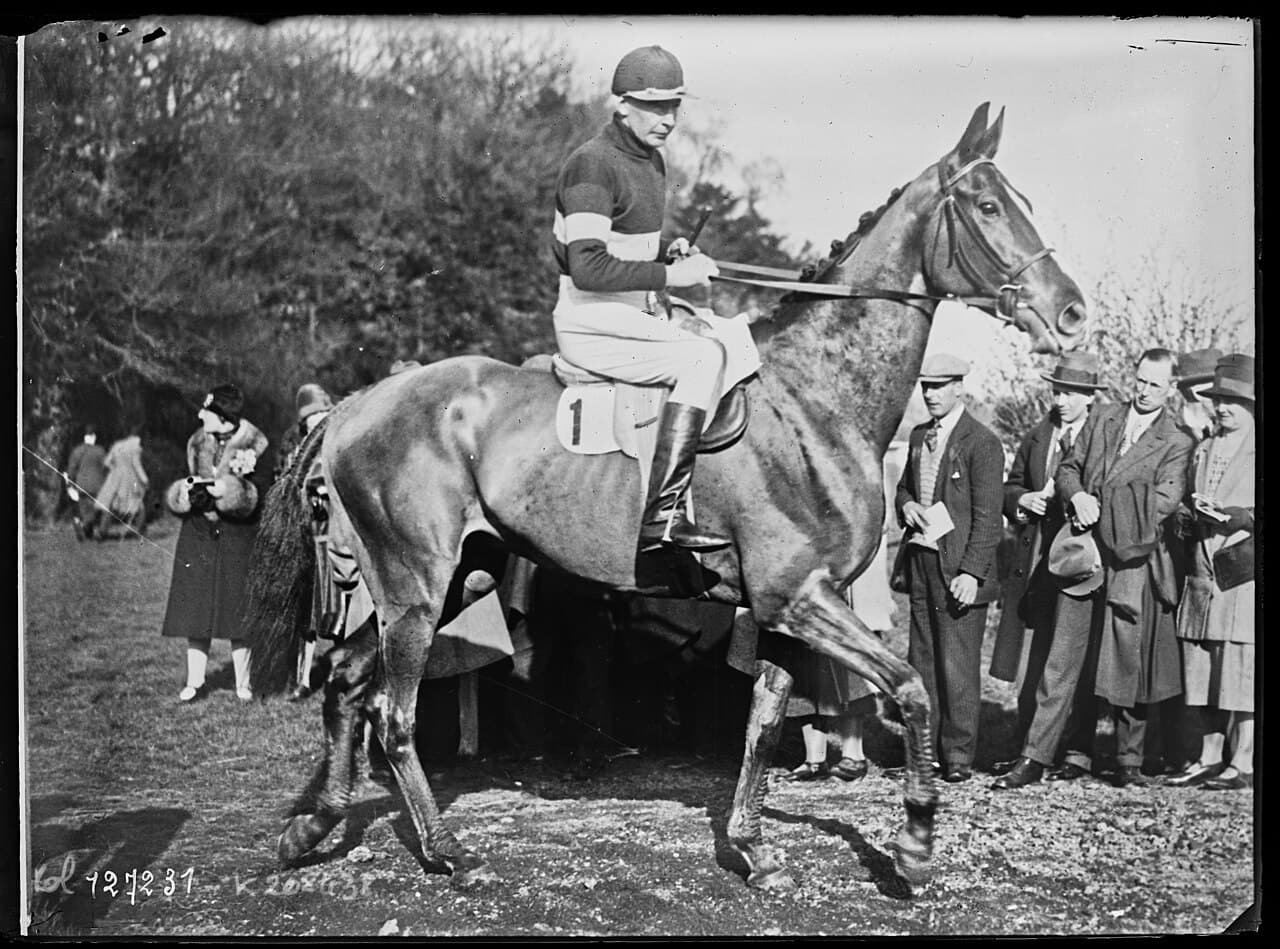
Kempton Park is a dual-surface venue: a turf National Hunt course and a separate Polytrack all-weather circuit operating on the same site. The two surfaces sit one inside the other, the Polytrack inside the larger jumps circuit, and they race on different days according to the type of meeting scheduled. Understanding both surfaces, and their very different characteristics, is essential for anyone trying to bet intelligently at Kempton.
The Turf Jumps Course
The National Hunt course is a right-handed triangle measuring roughly one mile and five furlongs around. It's one of the sharpest tracks in jump racing, and that sharpness defines everything about how races are run here.
Shape and Layout
The triangular configuration gives Kempton three distinct bends rather than the two sweeping curves of an oval track. Each bend is tighter than most jumps tracks, and the effect compounds through a race: a horse that loses momentum going into each bend, perhaps because of a jumping error or because it's simply not handling the track, is losing fractions of a second three times per circuit rather than twice.
The home straight is short, roughly two and a half furlongs from the final fence to the winning post. That compression matters enormously in a jumping race. At Cheltenham, a horse can be several lengths behind at the top of the hill and still win if it jumps the last well and stays on strongly. At Kempton, the geometry simply doesn't allow that recovery. Position at the final bend is decisive.
The terrain is entirely flat. There are no hills, no dips, no climbs. The test is about speed, jumping fluency and tactical positioning, not about a horse's capacity to handle demanding ground or dig deep on a long, testing finish.
Fences and Hurdles
Kempton's steeplechase fences are well-constructed and well-maintained. They're not as formidable as Aintree's spruce fences or as unforgiving as Cheltenham's on soft ground, but they demand respect. The combination of tight bends and fair-sized fences means that poor jumpers are exposed quickly. There's no long run between obstacles to reorganise and maintain rhythm.
The hurdles track follows a similar triangular path. Kempton hurdle races are sharp affairs, particularly over the minimum trip of two miles, where speed and jumping accuracy matter more than stamina. The Christmas Hurdle, run at the Boxing Day fixture, tests the very best two-mile hurdlers in training, and the track's character means only horses with real tactical pace and clean jumping technique are competitive.
What Type of Horse Wins Here
Kempton's jumps course rewards a specific type. The ideal Kempton chaser or hurdler has:
- Clean jumping technique: errors cost more here than on galloping tracks because there's no long straight to recover
- Tactical speed: the ability to race prominently and quicken off the final bend, rather than coming from behind on the run-in
- Balance through tight turns: big, galloping types that thrive at Cheltenham or Newbury can lack the agility to maintain momentum through Kempton's three-corner configuration
- Fitness: the short straight means there's less time to grind opponents down, so horses that arrive at peak fitness and can produce their effort at the right moment have an edge
The contrast with Cheltenham is instructive. Cheltenham rewards stamina, jumping accuracy under pressure, and the ability to handle a demanding climb. Kempton rewards slick jumping, speed and tactical awareness. A horse that wins the King George VI Chase over three miles at Kempton may not be the best horse in a Gold Cup field over three miles two-and-a-half furlongs up Cheltenham's hill. Different courses demand different qualities.
Ground on the Turf Course
Kempton's turf course benefits from relatively well-drained Surrey soil. The going through the winter jumps season is typically Good to Soft or Soft, occasionally Good to Firm earlier in the autumn before the wet weather arrives. Truly heavy ground is rare. Kempton manages its surfaces carefully and the soil drains reasonably well by British winter standards. Abandonment due to ground conditions, while it does happen, is less frequent here than at many comparable venues.
For Boxing Day specifically: the going at the King George VI Chase has been Good to Soft or Good on numerous occasions. The course's drainage means that even after Christmas wet weather, the surface often recovers to a manageable state. Horses that need soft or heavy ground to be at their best may be disappointed at Kempton.
The All-Weather Polytrack Course
The Polytrack circuit, installed in 2006, is a separate track that sits inside the jumps course perimeter. It's smaller, roughly one mile and two furlongs around, and it has an even more pronounced triangular configuration than the turf course. This is the track used for all-weather racing throughout the year, from frost-bound January mornings to summer evening meetings under floodlights.
The Triangular Configuration
The three-bend triangular layout is the defining feature of Kempton's Polytrack, and it directly determines how races should be bet. Most all-weather tracks in Britain (Lingfield, Chelmsford, Wolverhampton) are oval or near-oval. Kempton is a true triangle, with three clear corners rather than two sweeping bends.
That triangular shape means different starting positions around the track for different race distances. A race over five furlongs starts on the back straight. A race over six furlongs starts differently. A race over a mile or longer starts before the first bend, or even on the home straight. The shape of each race, and the number of bends horses encounter, varies with the distance in a way that doesn't apply to oval tracks.
Draw Bias: The Most Important Kempton Angle
The draw bias on Kempton's Polytrack is one of the most significant and consistent biases in British all-weather racing. It operates as follows:
Sprint distances (five furlongs, six furlongs, seven furlongs): High stall numbers have a significant statistical advantage. In a 12-runner sprint, horses drawn in stalls 8, 9, 10 and above perform markedly better than their lower-numbered rivals. The reason is the geometry of the triangular track. Horses breaking from high stalls position themselves closer to the inside rail through the first bend. That inside position on the bend saves ground: fractions of a second that, over a sprint trip, translate into real lengths.
In a typical 12-runner six-furlong race, a horse in stall 10 or 11 that breaks cleanly and uses the rail effectively is running a different race from a horse drawn in stall 2 or 3 that has to cover extra ground around the outside of the first bend. The market doesn't always price this in fully, particularly in lower-grade races where analysis is less sophisticated.
The edge is most pronounced in races up to seven furlongs. Over one mile, the draw bias is real but reduced: there is more time for horses to find a position after the first bend, meaning the initial stall position is less decisive. Over one mile two furlongs and longer, the bias essentially disappears, because horses travel through three bends over a longer period and the tactical pace of the race determines positions more than the starting stall.
Practical application: When betting sprint races at Kempton's Polytrack, always check the stall numbers. A horse drawn in stall 2 in a 12-runner sprint is at a structural disadvantage that has nothing to do with its form. A horse drawn in stall 11 in the same race, with comparable form, deserves more support. The market often prices both similarly. That's where value exists.
Pace Bias on the Polytrack
Beyond the draw, Kempton's Polytrack has a pace bias that experienced punters learn quickly. The surface rewards horses that race prominently. Front-runners and horses that settle in the first two or three positions win more than their statistical share across all distance ranges, particularly over shorter trips where the short home straight limits the scope for late runs.
The pace bias interacts with the draw. A high draw that allows a horse to get to the rail early and dictate or sit close to the pace produces the optimal scenario. A low draw combined with a patient ride from the back is the worst combination at Kempton.
Slow-run races: Be especially alert to fields with only one clear pace-maker. If one horse is likely to set a steady gallop and the others will follow, the result almost always goes to whoever is racing prominently. The short straight doesn't allow come-from-behind horses to reel in a front-runner who has control of the pace.
Contested pace: When multiple horses want to be prominent, you get a hard gallop, and hold-up horses can benefit if the pace horses tire in the final furlong. This is the scenario where a late-running specialist can win at Kempton — but it requires a fierce pace, not just a respectable one.
Surface Conditions
The Polytrack surface is consistent by design. The going is listed as "Standard" or "Standard to Slow" for all meetings, with small variations in surface speed occasionally occurring due to temperature (Polytrack rides slightly faster in warm conditions) but nothing comparable to the range of conditions on turf.
For punters, consistent going means form figures are more transferable. A horse that ran 1-2-1 on Kempton Polytrack in a particular class of handicap is a solid record, not a set of results that need adjusting for ground. Course-and-distance form at Kempton all-weather is among the most reliable performance indicators in British flat racing.
Evening Meetings
Kempton's all-weather track hosts regular evening fixtures under floodlights. These meetings, typically starting around 5pm or 6pm, attract a specific crowd: after-work Londoners making the 30-minute train journey from Waterloo, local regulars who prefer the relaxed atmosphere of an evening card, and professional punters who treat the AW programme as a serious source of income.
The evening atmosphere is different from a major daytime meeting. Less theatrical, more focused on the racing itself. Bar queues are shorter. The crowd is smaller. For someone who wants to watch competitive racing without the social spectacle of a big raceday, a Kempton evening meeting in April or October is one of the better options in the south of England.
The All-Weather Championships
Since 2015, the Kempton all-weather programme has been part of a structured series that builds towards an All-Weather Championships Finals Day, typically held at Lingfield Park in late March or April. Kempton's races throughout the autumn and winter serve as qualifying rounds, with horses earning points in designated races to reach the Finals.
The Championships structure has increased the profile of all-weather racing and given Kempton's winter programme more narrative purpose. Horses specifically prepared for the AW Championships are often at peak fitness for Kempton's qualifying races, which makes form analysis slightly more involved: you need to know whether a horse's connections are targeting the Finals or simply running for prize money.
Comparing the Two Surfaces
The key difference between Kempton's two racing surfaces: the turf jumps course is used for major championship events and rewards exceptional horses; the Polytrack is used for volume racing and rewards the student of draw biases, pace scenarios and course-and-distance form.
A visit to the Boxing Day jumps fixture and a midweek all-weather card are completely different experiences of the same course. The grandstand looks across both circuits; the facilities serve both types of meeting. But the racing itself, and the analytical approach required to bet intelligently on each, could hardly be more different.
King George VI Chase
The King George VI Chase is the reason most people know Kempton Park at all. Run on 26 December every year, this Grade 1 steeplechase over three miles is the midwinter championship of jump racing: an end-of-year test that draws the best staying chasers in training and produces a result that shapes the rest of the season.
It was first run in 1937, named in honour of the newly crowned king. For its first two decades, it was a good race without being a great one. The transformation came as the quality of entries improved, and the decisive shift happened when top-class horses made it the race they wanted to win on Boxing Day: first Arkle in 1965, then Desert Orchid in the 1980s, then Kauto Star in the 2000s.
Why the King George Matters
The significance of the race within the jump racing calendar comes from timing and competition. It falls between the season's early autumn markers and the spring festivals. Horses in it are fit, prepared, and showing their current season's form. Unlike the Gold Cup, which is the definitive championship run in March after months of preparation, the King George is a December snapshot: which horse is at the top of the staying chase world right now, at Christmas?
That timing gives the race both immediacy and analytical interest. It often reveals the Gold Cup market hierarchy, or disrupts it. A horse that wins the King George in December goes to Cheltenham in March as a serious Gold Cup contender. A surprise result at Kempton reshapes everything that follows.
The distance of three miles at Kempton is shorter than the Gold Cup's three miles two-and-a-half furlongs at Cheltenham, and the terrain is entirely different. Kempton is flat. Cheltenham climbs and descends, demanding a different kind of horse. The King George tends to favour horses with speed and jumping fluency over horses that simply stay on endlessly. The Gold Cup can be won by grinding. The King George rarely can.
Desert Orchid — Four King Georges
Desert Orchid's record at Kempton is the foundation on which the race's modern romantic image was built. Four wins (1986, 1988, 1989 and 1990) at a course where his jumping speed and front-running style were ideal.
His first King George win in 1986 was the start of the bond between Dessie and the Kempton crowd. He was already popular, but the grey horse who could gallop from the front at Kempton on Boxing Day and come back to do it again the next year, and the year after that, grew from a successful racehorse into a cultural figure.
The 1989 edition carries special meaning. That year, Desert Orchid had already won the Cheltenham Gold Cup, on ground that was truly testing, in conditions that most observers thought would beat him, ridden by Simon Sherwood and trained by David Elsworth. The Gold Cup win made him a household name outside racing. When he returned to Kempton the following December and won his third King George, he was doing what he did best, on a course that suited him, in front of a crowd that considered him their own.
The fourth victory in 1990, aged 11, completed a record that stood alone. No horse had won the King George four times. When he finally retired, the statue erected at Kempton recognised what those four Boxing Days had meant to racing and to the public.
Desert Orchid also demonstrated something important about what the King George tests. He was not the best horse over extreme distances on soft ground: the Gold Cup victory on testing terrain was as much about courage as preference. But on a flat, sharp track over three miles, when the pace was honest and jumping accuracy was rewarded, he was the best horse of his generation. Kempton suited him as completely as any track can suit any horse.
Kauto Star — Five King Georges
Twenty years after Desert Orchid's final King George win, Paul Nicholls produced a horse that broke his record. Kauto Star won the race five times: 2006, 2007, 2008, 2009 and 2011.
The sequence is worth running through in full because each victory added a different layer to the story.
2006: Kauto Star's first King George arrived in his first full season over fences. He had shown exceptional promise and Nicholls had targeted the race. A clear-cut win announced a new star.
2007: The second King George confirmed he wasn't a one-season wonder. He was already being discussed as one of the best staying chasers seen in years.
2008: Three in a row. The record conversation was beginning. Nicholls had described him as the best horse he had ever trained.
2009: Four in a row. He had equalled Desert Orchid's record of four King George wins. The crowd at Kempton on Boxing Day 2009 knew they were watching a horse doing something nobody had done since Dessie.
2010: Long Run, trained by Nicky Henderson and ridden by Sam Waley-Cohen, beat him. Kauto Star was 10 years old. His era appeared to be ending.
2011: He came back. At the age of 11, having been beaten on this course the previous year, Kauto Star won the King George VI Chase for the fifth time. Ruby Walsh, who had ridden him in many of those victories, described it as the greatest moment he had experienced in racing. Trainers, journalists and racegoers who thought they had seen everything were openly emotional.
The 2011 win sits in the same category as very few moments in sport: a champion returning to the scene of past glories, past his best years on most reasonable assessments, and producing a performance that defied expectation not through some accident of circumstances but through sheer quality. Long Run, the horse that had beaten him the previous year, finished second. The result was not a fluke.
Kauto Star was trained by Paul Nicholls at Ditcheat in Somerset and ridden in most of his career by Ruby Walsh. He also won the Cheltenham Gold Cup twice, in 2007 and 2009. His five King George wins at Kempton are the centrepiece of a record that made him the most decorated staying chaser in modern British racing.
A statue of Kauto Star stands at Kempton Park, alongside the one of Desert Orchid. Two horses, on the same site, commemorated in bronze for the same race.
Betting the King George VI Chase
The King George is one of the most analysed betting races in the calendar, which means the market is generally efficient. But certain patterns are consistent enough to be useful.
Previous Kempton form is the single most reliable indicator. Horses that have won or run well here before are statistically much better bets than horses running at the track for the first time. The triangular layout, the flat terrain, and the short home straight create a course that suits a specific type. When you see a horse that won here last year, or ran second here three months earlier, that form transfers directly. When you see a horse with good form at Cheltenham or Newbury but no Kempton experience, be cautious. Track-suitability is a real factor.
Fitness over debut. The King George comes at Boxing Day, which means horses may not have had many runs since the season started in October. Look for horses that have had one or two preparatory runs in November or early December rather than those making their seasonal debut at Kempton. An autumn prep run at Haydock, Cheltenham or Ascot tells you the horse is race-ready. A debut at the King George is always a gamble on fitness.
Trainer records. Paul Nicholls has a King George record that no other trainer approaches. Kauto Star accounted for five wins, but Nicholls has also trained Silviniaco Conti (2013, 2014), Clan Des Obeaux (2018, 2019) and other winners. The yard understands Kempton and consistently produces horses in peak condition for Boxing Day. Nicky Henderson and Willie Mullins are perennially dangerous.
The Gold Cup comparison. There is a pattern across the history of the two races: certain horses excel at both, but others are better suited to one than the other. The King George suits horses with pace and jumping fluency at the flat three-mile trip; the Gold Cup suits horses with stamina, durability and the ability to handle Cheltenham's demands. When assessing King George contenders, ask which race they're best designed for.
Going. The going at Kempton in December is usually Good to Soft or Good. The course drains reasonably well. Horses that need soft or heavy ground to be at their best are not ideal King George bets. Horses with solid form on Good or Good to Soft ground, suited to Kempton's flat circuit, are the profile to seek.
Other Boxing Day Races
The Christmas Hurdle, also run at the Boxing Day fixture, is a Grade 1 over two miles on the jumps course. It's the midwinter equivalent of the Champion Hurdle, a top-class two-mile test that often features the reigning champion or a leading market rival for Cheltenham's spring target.
The Christmas Hurdle produces a similar set of betting considerations to the King George: previous Kempton form matters, fitness at this stage of the season matters, and the sharp track suits quick-jumping hurdlers over grinders.
The Kauto Star Memorial Novices' Chase, a Grade 1 novice chase run at the same meeting since 2015, has become a solid early-season pointer for the Supreme Novices' or Arkle Trophy at Cheltenham. The race was renamed in Kauto Star's memory and forms a strong supporting element of the Boxing Day card.
A Day Unlike Any Other
The Boxing Day fixture at Kempton draws crowds of 8,000 to 10,000 people. That's not the largest racing crowd of the year: Cheltenham Festival and Royal Ascot manage bigger numbers. But the character of the day is particular to this fixture. People arrive by train from Waterloo still slightly full from Christmas dinner. The atmosphere is festive in a way that has nothing to do with racing conventions.
For families who have been going to Kempton on Boxing Day since they were children, the day has nothing to do with the specific horses in the field. The King George is the backdrop to an annual gathering that happens to involve racehorses. That combination of sporting excellence and family tradition is what makes the Boxing Day fixture irreplaceable.
Facilities and Enclosures
Kempton Park isn't the most architecturally impressive racecourse in Britain, but it works well for the scale of meetings it hosts. The facilities reflect a course that prioritises access and practicality over grandeur, and for most of its visitors that's entirely adequate.
Enclosures
Kempton operates two main enclosures for most meetings, with additional hospitality options available for the Boxing Day fixture and other key racedays.
Grandstand and Paddock Enclosure
Typical price: £15–25, varying by meeting.
This is the main public area, where the majority of Kempton's racegoers spend their day. It includes access to the grandstand (covered seating and standing), the paddock, the betting ring, and all standard bars and food outlets.
Viewing from the grandstand is decent rather than spectacular. The flat terrain means no raised vantage points, and the triangular layout means part of the circuit is at some distance from the stands. But the home straight, where races are decided, is close and accessible, and for the key moments of any race the view is good enough.
The grandstand atmosphere on a busy Boxing Day is excellent. When the King George runners are circling in the paddock and the crowd is 8,000 strong, even the standard enclosure generates real energy. For midweek all-weather meetings, the same spaces feel calm and spacious — entirely different character, but not without appeal.
Premier Enclosure
Typical price: £25–40, varying by meeting.
The Premier Enclosure offers better bars, sit-down dining options, and an improved viewing position. The dress code is smarter: chinos and a collared shirt rather than jeans, though there's no formal requirement for morning suits or anything of that order.
On Boxing Day, the Premier Enclosure fills quickly and generates a lively atmosphere. The quality of catering is noticeably higher than the standard enclosure, and on a big occasion the extra spend makes sense. For midweek all-weather cards, the price premium over the Grandstand Enclosure is less clearly justified, and most experienced Kempton regulars stay in the cheaper option.
Hospitality
Kempton's hospitality packages are built around the Boxing Day fixture and the bigger jumps cards. Private boxes, restaurant dining and premium viewing are available for groups and corporate clients. The Boxing Day hospitality is popular and tends to sell out several weeks ahead.
Prices for a full hospitality package start at around £150 per person for the Boxing Day meeting and vary for other fixtures. The quality of service in the hospitality suites is generally good, and the catering is a step above the standard enclosure. Corporate groups in particular find Kempton convenient: an easy train journey from the City, good facilities, and a proper sporting occasion that doesn't require extensive planning.
Food and Drink
Kempton's catering has improved in recent years, though it remains a racecourse rather than a restaurant experience.
Bars: Multiple bar points throughout both enclosures serve draught beer, wine, spirits and soft drinks. Pints run at around £5–6, wine from £6 per glass, which is reasonable by racecourse standards. On busy days like Boxing Day, the bars get stretched: arrive early and get your round in before the King George goes off.
Fast food outlets: The standard racecourse selection of burgers, fish and chips, pies, hot dogs and sausage rolls. The food is reliable and filling rather than interesting. Expect to pay £6–10 for a main item. Hot drinks are available throughout, which matters on a cold December afternoon.
Sit-down dining: Available in the Premier Enclosure and hospitality areas. These require advance booking for the bigger meetings and offer a more structured dining experience. The Christmas menu on Boxing Day typically features seasonal options alongside the standard card.
On Boxing Day specifically, additional food stalls appear. Mulled wine is effectively compulsory, and the seasonal additions give the food offering a different character from the standard midweek programme.
Boxing Day Atmosphere
The atmosphere at the Boxing Day fixture deserves specific mention because it's unlike any other racing day. The combination of a Grade 1 race, Christmas excess still fresh, large crowds arriving by train in festive moods, and the familiarity of a tradition many families have maintained for years creates something that can't be replicated by pointing to the facilities on paper.
The paddock before the King George is the best place to experience it. The runners are impressive horses in peak condition, their breath visible in the winter air. The crowd around the rail is three-deep. The atmosphere is focused in a way that casual racedays rarely achieve.
After the King George, the mood is celebratory regardless of which horse won. People linger at the bar, discuss the result, and make plans for the following year. The journey back to Waterloo, platform full, train warm, a successful or unsuccessful bet dissected across the aisle, is part of the experience.
The Betting Ring
On-course bookmakers operate in the betting ring for all racedays, including midweek all-weather meetings. The ring is active and well-attended, with a decent spread of firms taking bets even on quieter days. The Tote runs windows throughout both enclosures.
For the Boxing Day meeting, the betting ring is particularly busy around the King George. If you prefer to bet on the course rather than through an app, arriving at the ring 10–15 minutes before the race gives you time to shop around for the best price. Most regular Kempton visitors bet through mobile apps. The course's signal is generally reliable.
Parade Ring
The paddock is positioned between the two enclosures and offers close-up viewing of the runners before each race. It's compact rather than expansive, which means you're close to the horses — useful for assessing condition and temperament before betting.
The winner's enclosure is adjacent to the paddock, making post-race presentations easy to watch. On Boxing Day, the King George winner's return to the enclosure is one of the day's best moments: connections emotional, crowd close, the horse still warm and working.
General Amenities
- Toilets: Adequate in number and generally well-maintained, though expect queues on Boxing Day during the run-up to the King George.
- Accessibility: Kempton's flat terrain makes it naturally accessible. Wheelchair-accessible viewing areas and disabled toilets are available throughout. Blue Badge parking is positioned close to the entrance.
- Families: Under-18s admitted free on most racedays with a paying adult. Baby-changing facilities are available. The course is pushchair-friendly.
- Programmes: Available at the gate for a few pounds, essential for serious punters wanting the full form details.
Getting There
Kempton Park's location in suburban Surrey, 12 miles from central London, makes it one of the most accessible racecourses in Britain. The transport links are excellent by train, reasonable by car, and manageable by taxi. Of all the reasons to choose Kempton for a day's racing, getting there easily is near the top.
By Train — The Best Option
This is comfortably the easiest way to get to Kempton. The course has its own dedicated railway station, Kempton Park station, which sits directly adjacent to the racecourse entrance. From the platform to the gates is a matter of minutes.
From London Waterloo: South Western Railway runs direct services to Kempton Park station on racedays. Journey time is approximately 30–35 minutes. Trains run regularly and return services after racing are generally frequent enough to avoid significant waiting.
Route: Kempton Park station is on the Shepperton branch of South Western Railway. Services run via Twickenham and Sunbury. You can also reach the station via Clapham Junction if you're coming from south London or connecting from elsewhere on the network.
Ticket cost: A return from London Waterloo typically costs £8–14 depending on time of travel and whether you hold a railcard. Contactless payment works at all stations on this route. On racedays, the platforms at Waterloo for the Shepperton line see a noticeable increase in passengers heading for the course, particularly for the Boxing Day fixture.
On Boxing Day: The train is the right choice. South Western Railway typically runs additional services for the Boxing Day meeting, and the journey from Waterloo with a racecourse atmosphere already developing on the train is part of the day's character. Aim for 60–90 minutes before the first race. The return journey sees the platform fill quickly after the last race; leaving just after the penultimate race reduces the wait.
Alternative stations: Sunbury station, a short distance away, is also served by the same branch line and within walking distance of the course. Some visitors use this as an alternative to avoid the main crowds at Kempton Park station.
By Car
Kempton Park sits close to the M3 motorway (Junction 1) and is easily reached via the A316 from central London. The postcode for sat-nav is TW16 5AQ.
The drive from central London takes 45 minutes to an hour under normal conditions. The A316 through Twickenham is typically the most direct route, though traffic around Twickenham and the Richmond Road junctions can add time. The M25 provides access from north of London via Junction 12 (M3) or from the east via the M4 and A316.
Parking: On-site parking is available at Kempton, typically priced at £5–10 for standard meetings. For the Boxing Day fixture and major jumps cards, parking costs rise and advance booking is strongly advised. The car parks fill on big days, and arriving without a booking risks a significant walk or being turned away.
Boxing Day driving: The roads around Sunbury-on-Thames become busy on 26 December. Staines Road East (A308) and the approaches from the M3 both see racing-related congestion. Budget an extra 20–30 minutes if driving on Boxing Day, and consider leaving after the second-to-last race to beat the main queue on the exit roads.
Blue Badge parking: Dedicated spaces close to the main entrance are available for Blue Badge holders. Contact the racecourse in advance to reserve.
By Bus
Local bus services operate in the Sunbury-on-Thames area, though none stop immediately at the racecourse. The nearest stops on Staines Road East (A308) are a short walk from the entrance.
Routes from Staines, Twickenham and Kingston serve the surrounding area. Given how convenient the train is, buses are mainly used by local racegoers who don't need to travel from London.
By Taxi and Rideshare
A taxi from central London typically costs £40–60 depending on traffic and time of day. From Kingston upon Thames or Staines, the fare is around £10–15. Uber and other app-based services operate in the area and are generally straightforward.
One practical note: after racing on Boxing Day, taxis are harder to find at the course entrance. If you're planning to use a taxi home, either pre-book a car for a specific time, or walk to Sunbury village (a 10-minute walk from the course) where pickups are easier to arrange.
By Air — From Heathrow
Heathrow Airport is approximately six miles from Kempton Park, making this one of the most convenient British racecourses to reach from an international airport. From Heathrow, a taxi takes 15–25 minutes depending on traffic. Alternatively, the Piccadilly Line to Hammersmith followed by a South Western Railway connection via Clapham Junction reaches Kempton Park station in around 50–60 minutes.
Nearby Accommodation
Most Kempton visitors travel from home and don't require accommodation. For those staying overnight, options nearby include:
- Sunbury-on-Thames: Small hotels and guesthouses within walking distance of the course.
- Staines-upon-Thames (10 minutes by car): Wider choice of hotels including budget chains, generally well-priced.
- Hampton Court and Twickenham: Both close to the course with good train connections back to Kempton and onward to London. Hampton Court has tourism appeal in its own right: the palace is 10 minutes from the course.
For Boxing Day, accommodation in the immediate area books up well in advance. Hotels in Staines and along the A316 corridor towards Richmond see strong demand during the Christmas period. Book several weeks ahead if you want anything close to the course.
Racing Calendar and Key Fixtures
Kempton Park's fixture list is one of the busiest in British racing. The all-weather track runs year-round, the turf jumps course operates from October through April, and the two programmes together give the course a racing presence that most venues can't match. The calendar breaks into three distinct strands: the National Hunt season, the Boxing Day centrepiece, and the relentless all-weather programme.
Boxing Day: The King George VI Chase
Nothing else in the Kempton calendar comes close to the Boxing Day fixture. The King George VI Chase is run on 26 December every year (or the nearest available date if 26 December falls awkwardly), and it defines the course's identity to anyone outside regular racing circles.
The card on Boxing Day typically features six or seven races. The King George goes off in the early afternoon, usually around 2pm or 3pm, confirmed by the Jockey Club a few weeks beforehand. The Christmas Hurdle, another Grade 1 contest over two miles, is the day's second major race. The two Grade 1 races together attract the best staying chasers and best hurdlers in training and regularly produce finishes that generate discussion for weeks.
Crowd figures for Boxing Day at Kempton are typically in the range of 8,000–10,000. Cheltenham Festival and the Grand National far exceed it, but the character of the day is particular to this fixture. Families who've attended for years, London-based racegoers using the convenient train, racing professionals mixing with people who come once a year specifically for this occasion. The atmosphere builds from the moment the first runners appear.
The Boxing Day card also features the Kauto Star Memorial Novices' Chase (Grade 1), renamed in Kauto Star's memory after he retired. This novice chase has become an important early-season indicator for the Arkle or Supreme Novices' at Cheltenham, and the quality of horse it attracts is consistently high.
The Autumn Jumps Season: October to December
Kempton's National Hunt season begins properly in October, once the ground has softened and horses are fit after summer rest. October meetings serve a dual purpose: they give trainers an early-season indication of where their horses stand, and they begin the process of building towards the Christmas fixtures.
The October cards at Kempton tend to feature novice chases and hurdles, early-season handicaps, and the occasional conditions race that gives promising horses a relatively soft introduction. The quality varies, but experienced trainers use these fixtures carefully. A well-beaten second at Kempton in October can still tell a trainer what they need to know about a horse's fitness and jumping.
November brings competitive handicap chases and hurdles, with prize money that attracts decent fields. The going is typically Good to Soft or Soft by now, and the racing has more competitive weight to it than the October openers. Several November runners at Kempton are targeting the Boxing Day card, and watching the November form for signs of a King George contender shaping up is a standard punting exercise.
December fixtures leading up to Boxing Day are read carefully by the betting market. A horse that runs at Kempton in early December and wins easily, or runs at Cheltenham or Haydock over a similar trip, is sending a signal about readiness for 26 December.
Post-Christmas Jumps: January to April
After Boxing Day, Kempton continues to host valuable National Hunt fixtures through the spring. The January meetings often feature horses returning after their Christmas exertions, sometimes improved by their run, sometimes slightly flat.
February is an important month: the Adonis Juvenile Hurdle (Grade 2) is one of the key trials for the Triumph Hurdle at the Cheltenham Festival in March. Top juvenile hurdlers from Britain and Ireland travel to Kempton for this race, and the result typically has a direct effect on the Festival market.
March and early April fixtures catch horses in two categories: those on the Classic preparation path (if they ran here in autumn and winter), and horses that ran at the Festival and are being given another run before the end of the season.
The National Hunt programme at Kempton typically concludes in April, though the exact final meeting shifts year to year. By April, most of the big-name jumpers have run their major targets and the focus shifts to preparation for the following season.
The All-Weather Programme: Year-Round
The Polytrack schedule is extensive. Kempton hosts all-weather meetings throughout the year, often two per week during the busiest periods and sometimes more. The breadth of the programme is part of what makes Kempton's form archive so useful: there's a lot of it.
Afternoon meetings: Standard midweek cards typically feature six to eight races across flat distances from five furlongs to one mile four furlongs. The class range covers the full spectrum from maidens and novice stakes at the bottom up to Listed races and All-Weather Championships qualifiers at the top.
Evening meetings: Under-floodlight fixtures run from spring through to autumn, starting around 5pm–6pm. These meetings have a different atmosphere from daytime cards: smaller crowds, more regular faces, a relaxed pace that suits after-work attendance from London. They're popular with punters who study the Polytrack form and can attend without taking a full day off.
Weekend meetings: Saturday all-weather cards at Kempton attract bigger crowds than midweek fixtures and often feature better-quality races. Prize money is higher, the fields are stronger, and the market is more efficient — which is relevant if you're looking for value rather than just competitive racing.
All-Weather Championships Series
Since 2015, a structured series of qualifying races has run throughout the autumn and winter at Kempton and other all-weather tracks, building towards an All-Weather Championships Finals Day in late March or April. Kempton's races contribute qualifying points, and horses with aspirations at the Finals specifically target certain Kempton all-weather races.
The Championships structure has given the winter all-weather programme more purpose and increased the prize money at qualifying races. For punters, the relevance is that horses aiming at the Finals are often at peak fitness for their qualifying runs, which can make the form of those specific races more reliable than standard handicap form.
Key Fixtures at a Glance
| Month | Meeting | Key Race |
|---|---|---|
| October | Autumn jumps opener | Novice chases and hurdles |
| November | Competitive jumps card | Handicap chases, prep runs |
| December | Pre-Christmas jumps | King George prep meetings |
| 26 December | Boxing Day | King George VI Chase (Grade 1), Christmas Hurdle (Grade 1), Kauto Star Novices' Chase (Grade 1) |
| February | Early spring jumps | Adonis Juvenile Hurdle (Grade 2) |
| March–April | Spring jumps | Cheltenham prep and post-Festival cards |
| Year-round | All-weather Polytrack | Qualifying races, handicaps, maidens, evening meetings |
Best Time to Visit
For the full experience: Boxing Day. The King George VI Chase is the reason Kempton exists in most racing fans' minds. Book early: both tickets and transport.
For quality jumps racing without Boxing Day crowds: An October or February fixture. Decent fields, proper atmosphere, no need to book weeks ahead.
For casual midweek racing: An evening all-weather meeting in April, May or September. Low admission price, relaxed crowd, competitive betting. From Waterloo to Kempton in 30 minutes makes this one of the most spontaneous racing options available from London.
For serious all-weather punters: The winter all-weather programme, from October through March, when the draw-bias and pace patterns of the Polytrack are most exploitable and the AW Championships qualifying races add extra analytical interest.
Betting at Kempton Park
Kempton Park rewards punters who understand the track's specific characteristics. The combination of the Polytrack all-weather surface, with its significant draw bias, and the sharp National Hunt course, with its premium on jumping speed and front-running, creates consistent patterns worth exploiting. This section sets out the most actionable angles at Kempton across both surfaces.
The All-Weather Draw Bias: Most Important Angle
The draw bias on Kempton's Polytrack is the single most important betting consideration at the course. On most other tracks in Britain, draw analysis is a secondary factor. At Kempton's AW circuit, in sprint races, it's primary.
The mechanism: The triangular shape of the Polytrack means that the first bend after the start is tighter than bends on oval circuits. Horses drawn in high stalls (towards the outside of the track at the start) break and naturally position themselves closer to the inside rail going into that first bend. Horses drawn in low stalls, at the inside, are effectively on the wrong side of the field and must either pull wide to get a clear run or are squeezed along the rail when the field compresses through the turn.
Which distances are affected:
-
Five furlongs and six furlongs: The draw bias is at its strongest. In a 12-runner sprint, horses drawn in stalls 7, 8, 9, 10 and above have a statistically significant advantage over horses drawn in stalls 1, 2 and 3. The difference is measurable over a large sample. If you regularly back horses in low draws in Kempton five-furlong sprints without adjusting for this, you are giving money away.
-
Seven furlongs: The bias is real but less severe than at five and six furlongs. The longer trip gives the field slightly more time to settle before the first bend becomes decisive, but high draws are still preferred.
-
One mile: The bias exists, but it diminishes significantly. The first bend comes after a longer initial run, horses have time to find their position, and tactical decisions during the race matter more than starting stall.
-
One mile two furlongs and longer: Draw bias is essentially irrelevant. The race is long enough that the triangular layout doesn't materially affect outcomes beyond what normal pace and position analysis explains.
Practical use: When studying a Kempton all-weather sprint card, the first thing to do is sort the field by stall number. Any horse you are considering in a low stall (1–4 in a 14-runner sprint) needs to have a compensating factor: exceptional form, a price that reflects the disadvantage, or a recent performance that showed the horse can handle difficult draw situations. Any horse you are considering in a high stall (8+) gets a positive mark simply for its position.
Markets on lower-grade all-weather races at Kempton do not always price in the draw bias accurately. Casual punters bet by form and price; they don't always adjust for stall position. That creates value for those who do.
Pace Bias on the Polytrack
Kempton's Polytrack rewards prominent racers more consistently than most other surfaces. Front-runners and horses that settle in the first two or three positions win more than their statistical share across all distance ranges, particularly over shorter trips where the short home straight limits the scope for late runs.
The pace bias interacts with the draw. A high draw that allows a horse to get to the rail early and dictate or sit close to the pace produces the optimal scenario. A low draw combined with a patient ride from the back is the worst combination at Kempton.
Slow-run races: Be especially alert to fields with only one clear pace-maker. If one horse is likely to set a steady gallop and the others will follow, the result almost always goes to whoever is racing prominently. The short straight doesn't allow come-from-behind horses to reel in a front-runner who has control of the pace.
Contested pace: When multiple horses want to be prominent, you get a hard gallop, and hold-up horses can benefit if the pace horses tire in the final furlong. This is the scenario where a late-running specialist can win at Kempton, but it requires a fierce pace, not just a respectable one.
King George VI Chase Angles
The King George is the most-analysed race in the Kempton calendar, and the market is generally well-formed. But consistent patterns reward the careful punter.
Previous Kempton form: Horses that have won or run well at Kempton before, particularly over three miles, have an outstanding record in subsequent King George renewals. The course suits a specific type: sharp-jumping, tactically placed, comfortable on flat ground. That type tends to repeat. When you see a horse that won here last December, or ran second in a three-mile chase at Kempton in November, that course form transfers directly.
Fitness signals: Look for horses with one or two prep runs in November or early December. A Haydock Chase in November, followed by the King George, is a classic preparation. A horse making its seasonal debut at the King George requires more evidence from the previous season to justify confidence.
Trainer strike rates: Paul Nicholls has a King George record that no other British trainer approaches. Five wins with Kauto Star alone, plus multiple victories with Silviniaco Conti (2013, 2014) and Clan Des Obeaux (2018, 2019). The Ditcheat stable understands Kempton and targets the Boxing Day fixture with serious intent. When Nicholls has a horse in the King George that was placed in the race the previous year, it is consistently underestimated by the market.
Nicky Henderson's record includes Long Run and others. Willie Mullins has become a consistent King George presence in recent seasons, with several of his top staying chasers making the trip from Ireland.
Going considerations: Kempton's turf course usually produces Good to Soft or Good going for the King George. Horses that have demonstrated form on Good ground or slightly quicker are the natural fit. A horse with a strong soft-ground profile is not necessarily at a disadvantage at Kempton (the going is rarely firm in December) but their best conditions are not what Kempton typically provides.
Comparing King George and Gold Cup profiles: The three-mile King George at flat Kempton and the three-mile two-and-a-half-furlong Gold Cup on Cheltenham's hills reward different profiles. King George horses have speed and jumping fluency over a flat circuit. Gold Cup horses need stamina, durability and the capacity to handle a demanding climb on what is often soft or heavy ground in March. When a horse has dominated on Kempton's flat circuit in December but has no previous Cheltenham form, be careful projecting that Gold Cup standard automatically.
National Hunt Course Patterns
On the turf jumps course, the dominant angle is running style. Kempton's sharp triangular circuit with its short home straight is one of the most front-runner-friendly tracks in jump racing.
Horses that have form at similar sharp tracks (Sandown, Plumpton, Fontwell) are more reliably transferred to Kempton than horses whose career has been built on galloping tracks. Cheltenham form, Newbury form, and Aintree form are not straightforward to apply at Kempton. The galloping types that excel at those venues can find the tight bends and short straight an adjustment.
Prominent racers in handicaps: In competitive handicap chases and hurdles at Kempton, the advantage of front-running or racing close to the pace is more pronounced than at most other tracks. If you see a horse with form figures showing prominent racing styles that has been performing well at other sharp tracks, it's worth considering at Kempton even if the odds don't look obviously generous.
Jumping accuracy: Over fences, the tight bends mean that a sloppy jump at the second or third fence, where horses are still bunched, can result in a loss of position that's hard to recover on such a compressed circuit. Back horses with clean jumping records at equivalent venues.
All-Weather Course-and-Distance Form
On the Polytrack, course-and-distance records transfer at a higher rate than at most turf venues. The consistent surface means a horse's performance here three months ago under Standard going is essentially the same conditions as today. In turf racing, you constantly adjust for going variations. At Kempton's all-weather, those adjustments are minimal.
Backing previous course-and-distance winners: Statistically, horses that have won at Kempton's Polytrack over the same distance in the same or adjacent race grades perform well on return. The market doesn't always price previous Kempton AW form at full value, particularly if the horse has had a subsequent run elsewhere that disappointed. Punters sometimes discount the Kempton form rather than the more recent result. In those cases, the Kempton form is usually the more reliable guide.
Trainer Patterns on the Polytrack
Certain training operations target Kempton's all-weather programme with consistency. Yards that run heavily on the AW circuit during winter build up detailed knowledge of what the Polytrack demands. Charlie Appleby, Simon and Ed Crisford, Andrew Balding, and Roger Varian have all shown strong all-weather records at Kempton over recent seasons.
When a trainer with an established Kempton Polytrack record enters a horse that ran creditably here recently and is stepping up in class or moving to a slightly different distance, that pattern tends to produce good value. These yards are targeting specific opportunities with horses they believe are suited to the track.
Notable Horses
The statue outside Kempton's grandstand tells you most of what you need to know about the course's identity. Two horses in bronze, side by side: Desert Orchid and Kauto Star, representing the two eras in which the King George VI Chase was at its best. No other course in Britain has bronze statues of multiple horses. Kempton has two of them, both for the same race.
Desert Orchid: The People's Champion
Desert Orchid was born in 1979 and made his debut in January 1983. By the time he retired in 1991, he had become one of the most recognisable sports figures in Britain, not just one of the best racehorses. That broader recognition is the point. Most successful racehorses are known only to racing followers. Desert Orchid crossed over.
The grey colouring was part of it. On a racecourse where horses are predominantly bay or brown, a grey stands out. Desert Orchid was immediately recognisable from the television cameras, which in the 1980s were showing jump racing to larger audiences than it commands today. He ran in front, boldly, and his colouring made every race into a high-visibility spectacle.
His jumping style was bold too. He attacked fences rather than treating them with caution. That front-running, fence-popping approach is exactly what Kempton's sharp triangular course rewards, and the match between horse and track was near-perfect. He won the King George in 1986, his first attempt. Kempton suited him as completely as any course he ever ran on.
The 1988 win was his second. By then he was a known quantity, beloved, watched, bet on by people who had never seriously followed racing before. The 1989 win was the third, delivered in the same year he had won the Cheltenham Gold Cup on ground so testing that his trainer David Elsworth had considered withdrawing him. He won anyway, ridden by Simon Sherwood, in one of the most emotional finishes in Gold Cup history.
Then 1990 for the fourth King George. Four wins in the same race is a record that stood alone. At the time, four was an achievement that seemed unlikely to be matched, and his trainer's comments reflected the understanding that something that had never been done before had now been done four times.
Desert Orchid retired in 1991 with 34 career wins from 70 starts, prize money of nearly £1 million when that figure was truly significant in jump racing, and a public profile that transcended the sport. He lived until 2006, dying at the age of 27. The bronze statue at Kempton was unveiled to commemorate his connection to the course and the race he won four times. If you visit on a non-raceday and the course is quiet, the statue and the empty stands produce an atmosphere quite different from the Boxing Day crowds: a reminder of what the place is built around.
Kauto Star: Five King Georges
Kauto Star arrived at Paul Nicholls' Ditcheat yard from France as an already-promising chaser. His early British career included setbacks (a fall at Sandown when many thought he would win easily) but the talent was unmistakable. By his first King George win in 2006, he was already the favourite to become the dominant staying chaser of his generation.
Five King George wins at five, six, seven, eight and 11 years old. The career arc is unusual: four consecutive wins at the peak of his powers, then defeat at Kempton in 2010 (Long Run, then an eight-year-old, beat him into second), then a return victory at 11 in 2011 that no reasonable analysis had predicted.
The 2011 King George is the race that Kempton regulars who were there cite when they talk about the course's greatest moments. Kauto Star had won here four times already. He had also won the Cheltenham Gold Cup twice (2007 and 2009). He was 11. He had been beaten by Long Run the previous year. The expectation among most serious punters was that his record at Kempton was finished, and that Long Run would win again.
He beat Long Run by a length. Ruby Walsh, who had ridden him in many of his big victories, said immediately after dismounting that it was the most special thing he had experienced in racing. Paul Nicholls, not a man given to public displays of emotion, was visibly shaken. The crowd at Kempton, around 8,000 people on a cold Boxing Day, understood it as it happened.
What makes the 2011 win more significant than pure statistics can capture is the context: a horse that had done everything at his peak, been beaten at the same venue the previous year by a younger rival, and still returned to beat that rival again at an age when most staying chasers are retired. It requires something beyond ability: whatever combination of soundness, willingness and continued preparation makes an 11-year-old horse competitive with horses five and six years younger.
Kauto Star retired in 2013 with 23 wins from 40 starts. He died in 2015. His statue at Kempton stands alongside Desert Orchid's. The two statues are the best summary of what the King George VI Chase has been over the past 40 years.
Other King George Legends
Several other horses deserve mention in the context of Kempton's history.
Arkle (1965): The 1965 King George win confirmed the race's status. Arkle, at that point arguably the best jumper seen in Britain or Ireland in the 20th century, ran at Kempton and won. That endorsement from the era's greatest horse raised the race permanently.
Silviniaco Conti (2013, 2014): Trained by Nicholls, twice a King George winner. Not as celebrated as Desert Orchid or Kauto Star but a reliable, high-class performer whose back-to-back wins showed the Nicholls yard's consistent ability to produce horses for this race.
Clan Des Obeaux (2018, 2019): Another Nicholls dual winner. The pattern at Kempton's King George (Nicholls horses, back-to-back wins, Boxing Day performances) shows a training operation that has worked out what Kempton demands and repeatedly delivered it.
Cue Card (2015): A popular horse trained by Colin Tizzard, whose King George win was one of the most celebrated non-Nicholls victories of recent years. Ridden by Paddy Brennan, Cue Card's win demonstrated that the race was not the exclusive property of Ditcheat, and reminded punters that fan-favourite horses can win at the highest level when conditions suit.
Frequently Asked Questions
More guides for this course
Share this article
More about this racecourse
All Kempton Park guides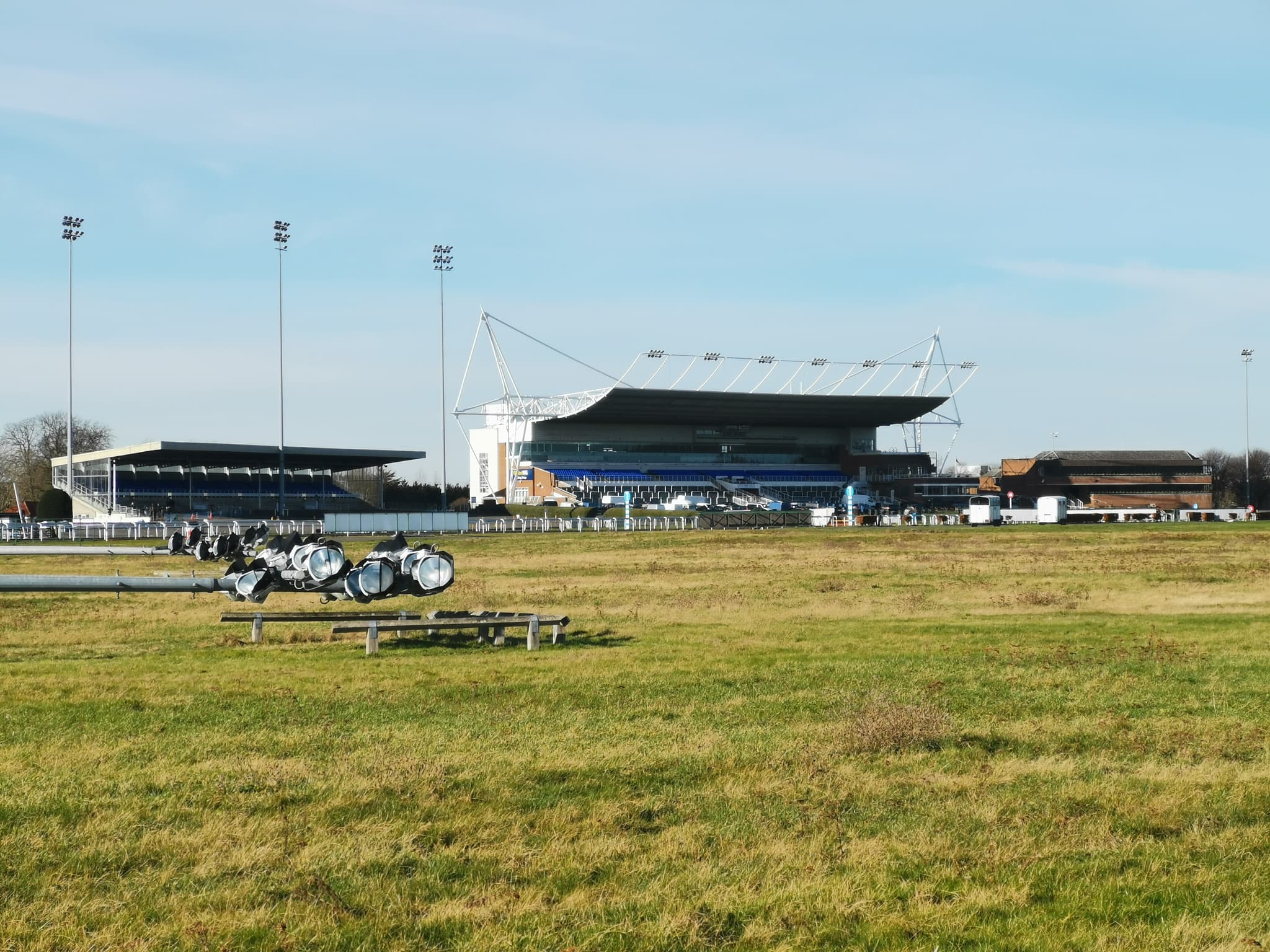
A Day Out at Kempton Park Racecourse
Everything you need for a day at Kempton Park — getting there, what to expect, enclosures, food and drink, and tips for Boxing Day and beyond.
Read more
Kempton Christmas Festival: Your Complete Guide
Boxing Day at Kempton is the jumps season's Christmas centrepiece. Three days of top-class racing over the festive period — here's everything you need to know.
Read more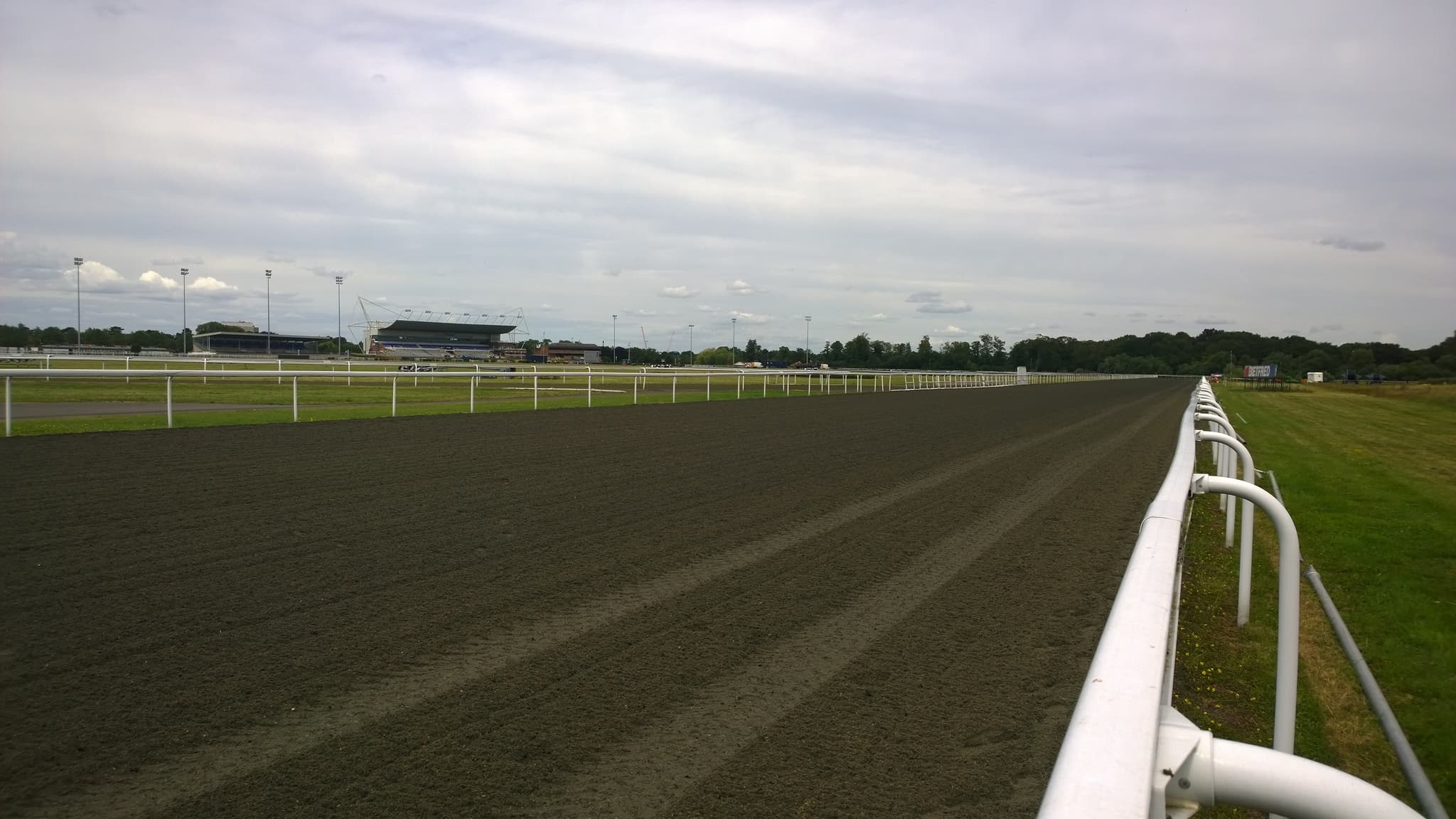
The History of Kempton Park Racecourse
From Victorian beginnings to Boxing Day tradition — the story of Kempton Park and its place in British racing history.
Read morePhotos on this page are used under Creative Commons licences. Titles, sources and licence links for each one are on our image credits page.
Research the field with the AI Race Predictor
Our model publishes calibrated win-probability estimates for UK races — a second opinion to understand a race, not tips. It's open about its record: it doesn't beat the market, and we show exactly how it does.
Betting offers for Kempton Park
Work it out & learn the basics
Gamble Responsibly
Gambling should be entertaining and not seen as a way to make money. Never bet more than you can afford to lose. If you or someone you know has a gambling problem, help and support is available.