
Founder & Editor · Last reviewed 2026-03-02
This year's race: the date, off time, recent winners and trends are on our King George VI Chase race guide.
The King George VI Chase is one of the most important races in the National Hunt calendar and the defining event of the Christmas racing season. Run over three miles at Kempton Park on Boxing Day, it's a Grade 1 contest that attracts the best steeplechasers in training and serves as the mid-season championship of jump racing — the race that separates the serious Gold Cup contenders from the pretenders.
For many racing fans, the King George is the race they look forward to more than any other. Its Boxing Day slot gives it a cultural significance that extends far beyond the world of horse racing. While millions of families settle into the post-Christmas afternoon, the sight of eight or ten quality chasers circling Kempton's flat circuit on television has become as much a part of British tradition as mince pies and crackers. The race commands the biggest Boxing Day audience in sport, and its results regularly lead the evening news.
The roll call of King George winners reads like a who's who of steeplechasing greatness. Arkle, Desert Orchid, Wayward Lad, Kauto Star — the biggest names in the sport have stamped their authority on this race, and winning it carries a prestige that rivals the Cheltenham Gold Cup itself. Some horsemen argue the King George is actually the harder race to win, because the flat Kempton track demands a different, more complete type of chaser — one that combines speed, stamina, accurate jumping and tactical intelligence.
The race's position in the calendar is one of its defining features. Coming in late December, just two and a half months into the National Hunt season proper, it asks questions of horses that are still building into their form. A horse that wins the King George is operating at a level of fitness and ability that makes subsequent spring assignments look manageable by comparison. Equally, the race tests whether a horse's early-season sharpness is backed by the class to beat the best in a true championship setting.
The King George also has a social dimension that sets it apart from other big races. The Gold Cup at Cheltenham is revered by purists, but it belongs to a week-long festival. The Grand National is a national event, but it is framed as spectacle and survival as much as a test of pure ability. The King George stands alone on its Boxing Day card as the unambiguous centrepiece of a winter's day, which gives it a clarity of purpose that racing people find irresistible.
Whether you're planning to attend in person or bet from home, this guide covers everything you need to know about the King George VI Chase: its history since 1937, the champions who have graced it, the course conditions that shape the race, how the betting markets behave, and the angles that can help you find the winner.
Bet on Kempton Park
Place your bets on Kempton Park races with a trusted bookmaker.

Promo code BETFRED50. New customers only. Register, deposit with a Debit Card, and place a first bet of £10+ at Evens (2.0)+ on Sports, to be settled within 7 days, to get £30 in Sports Free Bets and £20 in Bet Builder Free Bets within 24 hours of settlement. 7-day expiry. Eligibility & payment exclusions apply. Full T&Cs apply. Take Time to Think. BeGambleAware.org. 18+. Full T&Cs.

Promo code R30. New UK customers only, 18+. Register, deposit £10 or more, then place a £10 single cash bet at odds of 1/2 (1.5) or greater on any sports market (excluding Virtuals). Once the qualifying bet settles you get £30 in Free Bets (3 x £10) — the qualifying bet can win or lose. Free Bets are valid on any sports market excluding Virtuals, expire in 7 days, are non-withdrawable and must be used in full. Excluded deposit methods apply (including PayPal, Apple Pay, Skrill and NETELLER). Named bets such as Lucky 15 do not qualify. If you cash out the qualifying bet, or it is voided, you are no longer eligible for the offer. Ends 31.12.26. Full T&Cs apply. Please gamble responsibly. BeGambleAware.org. 18+. Full T&Cs.

Promo code BET40GET20. New UK customers, 18+. Register with the code and place a first bet of £40 or more at Evens (2.0) or greater. Receive 2 × £10 free bets: the first credited automatically once the qualifying bet settles, the second 24 hours later. Free bets must be placed at minimum odds of 4/1 (5.0), expire 24 hours after credit, and the free-bet stake is not returned with winnings. Debit card deposits only. Take Time to Think. BeGambleAware.org. 18+. T&Cs apply. Full T&Cs.

50% of your first-day net losses refunded as a free bet, capped at £25. New UK customers aged 18+ only. To qualify, deposit and place a first bet of £10 or more on any sport at minimum odds of evens (2.00), then place at least two further bets on different events, each worth at least 50% of your largest bet, all at evens (2.00) or greater. Losses are counted from your first settled bet until 23:59 the same day. Place a qualifying £10+ bet and you are guaranteed at least a £5 free bet. Bets placed at SP, void bets, cashed-out bets and bets struck with free bets do not count towards the offer. The free bet is credited the day after your qualifying bets settle and must be used within 7 days, after which it expires. It can be used at odds from 1/4 (1.25) up to 250/1 on singles and straight accumulators, but not on Trixie, Patent or Yankee style multiples. Free-bet stake is not returned with winnings. One offer per person, household, address, IP address and device. E-wallet deposits may not qualify, so check the cashier before depositing. Customers registered with GAMSTOP cannot claim. KYC identity verification must be completed before the free bet is credited. Take Time to Think. BeGambleAware.org. 18+. T&Cs apply. Full T&Cs.

New customers, 18+. Choose the sports bonus at sign-up, make a first deposit and receive a 100% bonus up to £50 in your Sports Bonus balance. To convert the bonus to cash, wager it 10x within 30 days. Single bets below Evens (2.00) do not qualify; accumulators do not qualify if any selection is below 1/2 (1.50). Virtual Sports, voided, cancelled, drawn, cashed-out and free-bet wagers do not count towards wagering. Only the first settled bet per event counts. Withdrawing before the wagering requirement is met forfeits the bonus balance including bonus winnings. Real-money funds are used before bonus funds. Deposits via Skrill or Neteller are not eligible. Not valid in conjunction with other promotions. Odds, bet and payment limits apply. 10bet general and promotion T&Cs apply. BeGambleAware.org. 18+. Full T&Cs.

New customers in Great Britain and Republic of Ireland, 18+. Place a £10 fixed-odds qualifying bet at minimum odds of 1/2 (1.50) — single or each-way (only the win part counts), pre-event or in-play, not cashed out early, within 28 days of opening the account. Receive up to £60 in bonuses credited over three days: 3 × £10 fixed-odds free bets (the first on settlement, then 24 and 48 hours later) plus 3 × £5 Total Goals FOOTBALL spread bets and 3 × £5 racing Winning Favourites spread bets, with a £1 racing Race Index spread bet as an extra on top. The spread bets need a full spread-betting account, opened within 28 days of the fixed-odds account and subject to Spreadex's eligibility and appropriateness checks. Free-bet stakes not returned with winnings; free bets valid 28 days from issue. IMPORTANT: the £5 credits are SPREAD bets — sports spread betting carries the risk that losses can exceed your stake. Sports spread-betting customers do not have Financial Ombudsman or FSCS recourse. Take Time to Think. BeGambleAware.org. 18+. T&Cs apply. Full T&Cs.

Promo code WELCOME15, entered under My Bonuses after registering. New UK customers, 18+. Place a first qualifying bet of at least £10 from your cash balance at odds of evens (2.0) or greater within 7 days of opening the account. Once the qualifying bet fully settles you receive £15 in free bets, credited as 3 x £5 tokens with set uses: one £5 accumulator free bet (minimum 4 legs, each leg at 2/5 or bigger), one £5 sports free bet (any market at evens or bigger) and one £5 Sub Cover free bet (selected football player markets at evens or bigger). Free-bet stakes are not returned with winnings. Free bets expire 7 days after they are credited. Void, cashed-out and partially cashed-out bets do not qualify. One offer per customer. Confirm the current terms on BetGoodwin's own welcome-offer page before claiming. Take Time to Think. BeGambleAware.org. 18+. T&Cs apply. Full T&Cs.

New UK customers, 18+. Minimum deposit £10. Place a £10 qualifying single on sports (excluding virtuals) at minimum odds of 1/2 (1.50), settled within 14 days. Deposit-method exclusions apply. Receive £30 in free bets (stake not returned), split £20 for sportsbook use (2 x £10) and £10 for Bet Builder only (2 x £5); Bet Builder does not cover horse racing. Free bets must be accepted within 7 days and expire 7 days after acceptance. No promo code required. Best Odds Guaranteed on UK & Irish racing, subject to having staked over £25 in the previous seven days. Operated by LiveScore Betting and Gaming (Gibraltar) Ltd, UKGC 56859. Confirm the current terms on LiveScore Bet's own promotions page before claiming. Take Time to Think. BeGambleAware.org. 18+. T&Cs apply. Full T&Cs.
18+. BeGambleAware.org
Race History
Race History
The King George VI Chase was first run on Boxing Day 1937, named in honour of the recently crowned King George VI. The race was conceived by Kempton Park's management as a midwinter championship for steeplechasers, filling a gap in the calendar between the autumn fixtures and the spring festivals. From the outset, it was positioned as a race of the highest ambition — a contest that would attract the best horses and deliver racing of the first order.
The Pre-War Years and Wartime Interruption
The inaugural running attracted seven runners and was won by the Irish-bred Southern Hero, trained by Hubert Hartigan. The race's early editions drew a mix of seasoned handicappers and progressive novices, but the quality improved rapidly as word spread that Kempton's Boxing Day event was worth targeting. The flat, right-handed circuit suited galloping types, and the race quickly found its identity as a test that rewarded class and fluent jumping rather than sheer jumping courage.
The early renewals were disrupted by the Second World War, with the race suspended between 1940 and 1946. This gap was an unwanted interruption to a race that had been gathering momentum, but the seven-year hiatus did not damage its long-term prospects. When it resumed in 1947, the King George stepped back into an uncontested position in the mid-season calendar, and the appetite for a real winter championship proved as strong as ever.
The Post-War Revival and Growing Prestige
The post-war era of National Hunt racing was booming, and the King George became the focal point of the Christmas season. Crowds at Kempton on Boxing Day grew steadily through the late 1940s and 1950s, reflecting a broader surge in jumps racing's popularity. The race attracted the best horses from leading English yards, and occasional challengers from Ireland added an international flavour that deepened its significance.
The 1950s saw a number of consecutive-year winners demonstrate the course's suitability to particular types of horses. Hallowe'en won consecutive renewals in 1954 and 1955, establishing an early precedent that course form was worth taking seriously. The flat track was already distinguishing itself from Cheltenham and other undulating circuits — horses that handled Kempton's smooth, tight geometry were self-selecting, and the pattern of repeat winners was emerging.
Arkle and the Race's Elevation to Championship Status
The 1960s brought one of the race's most celebrated moments when Arkle, widely regarded as the greatest steeplechaser of all time, won the King George in 1965. Trained by Tom Dreaper and ridden by Pat Taaffe, Arkle's victory confirmed the race's status as a true championship event. He was at the absolute peak of his powers that Boxing Day, carrying top weight with the casual authority that characterised everything he did. His margin of victory was comfortable, achieved without any sign of effort, and his presence at Kempton elevated the race's prestige to a new level.
Arkle only ran in the King George once — his career was punctuated by injury thereafter, and he was retired in 1968. But that single appearance left a permanent mark on the race's identity. The King George had hosted the best horse in the world and he had won it. That fact alone gave every subsequent renewal a frame of reference for greatness.
The 1970s: A Decade of Good Chasers
Through the 1970s the King George produced consistently competitive renewals, though without a single dominant force. The decade included victories for Captain Christy, who won in 1974 with a front-running display that drew comparisons with the bold jumping the race had come to reward; The Dikler in 1971; and Pendil in 1972 and 1973, who demonstrated the class-based trends that would become a defining feature of the race's modern era. Pendil's back-to-back victories were the first back-to-back wins in the race's post-war history and reinforced that Kempton specialists could return successfully.
The decade also began to cement the race as appointment television. With ITV broadcasting National Hunt racing to growing audiences, the King George's Boxing Day slot made it one of the most-watched sporting events over Christmas. Families who had spent Christmas Day indoors gathered in front of television sets for the mid-afternoon races, and the King George was the race they stayed for.
Wayward Lad and the First Modern Dynasty
The early 1980s delivered the race's first real modern dynasty. Wayward Lad, trained by Monica Dickinson at her Yorkshire yard, won the King George three times — in 1982, 1983 and 1985. He was the perfect Kempton horse: a strong, powerful galloper who handled the flat circuit with ease, jumped fluently at pace and had the tactical speed to quicken off the final turn. His style was absorbing — not the extravagant bravado of later front-runners, but a relentless, grinding excellence that wore down opposition with clinical efficiency.
Wayward Lad's treble was achieved across four seasons, which meant he also demonstrated the longevity that the King George has always admired in its champions. His record at Kempton stood as the benchmark for any subsequent chaser with aspirations to repeated glory, and it stood unchallenged for over two decades until Kauto Star broke it.
Desert Orchid: A New Kind of Champion
The late 1980s and early 1990s belong to Desert Orchid. His first King George victory in 1986 was a watershed moment for jump racing's public profile. Desert Orchid was already becoming a national figure when he won at Kempton that year, but his Boxing Day victory, broadcast live and watched by millions, brought him into homes and hearts across the country.
Desert Orchid returned to win the King George in 1988, 1989 and 1990, giving him four victories in the race — a record at the time. His four wins were each different in character. The 1988 victory was a commanding display against strong competition. The 1989 win came on heavy ground, a surface that many believed would blunt his speed, and yet he won with something to spare, producing a performance that silenced his critics. The 1990 victory, his fourth, came against younger rivals who had been described as his potential successors, and he beat them with a display that reminded everyone who the king of Kempton was.
The 1990s continued to produce high-quality renewals. One Man won back-to-back renewals in 1995 and 1996 with spectacular front-running displays. The Gold Cup winner Mr Mulligan won in 1996 before One Man. Dorans Pride, Master Oats and Imperial Call all featured in competitive renewals. The decade demonstrated that the King George maintained its quality regardless of whether a dominant personality was present.
Kicking King and the Pre-Kauto Era
The early 2000s produced more fine winners before the arrival of the race's most celebrated champion. Florida Pearl won in 2001. Best Mate, the three-time Gold Cup winner, won in 2002. Edredon Bleu took the 2003 running. And then in 2004 came Kicking King, who delivered one of the most dominant single performances in the race's history — a front-running display of such authority that he barely drew on his reserves in winning by a margin that flattered none of the opposition.
Kicking King's 2004 win underlined a theme that runs through the King George's best performances: the flat circuit does not mask quality, it reveals it. When a truly exceptional horse arrives in top condition, the lack of a punishing hill or technical fences means there is nowhere for the opposition to hide.
Kauto Star and the Record
From 2006 onwards, the King George entered the Kauto Star era, which is covered in detail in the following section. His five victories redefined what excellence in this race looked like and produced the most celebrated sequence of performances in its history.
The Kempton Closure Threat
The race's identity was tested in 2017 when Jockey Club Racecourses announced proposals to close Kempton Park and develop the site for housing. The King George would need to move, potentially to Sandown Park or another venue. The proposal generated widespread opposition from racing people, who argued that the race's character was inseparable from Kempton's specific track. The plans were ultimately shelved, preserving the race's home and ensuring that the King George retained the flat, triangular circuit that has defined it since 1937.
The episode reinforced something that racing people had always understood: the King George is not just a race on a particular date. It is a race at a particular place, on a particular type of track, with a particular history. Moving it would have preserved the name and the prize money, but it would have created a different race.
Recent History
The post-Kauto era has continued to produce high-quality winners. Silviniaco Conti won consecutive renewals in 2013 and 2014 — trained by Paul Nicholls, confirming his training operation's extraordinary affinity with the race. Thistlecrack won a thrilling running in 2016. Native River, the 2018 Gold Cup winner, won a memorable renewal in 2017. Clan Des Obeaux, another Nicholls horse, won in 2018 and 2019. Frodon took the 2020 running in difficult conditions. Tornado Flyer won in 2021. And Shishkin won the 2022 running in a performance of controlled authority that suggested a dominant horse in the making.
Each era has produced its own King George character — horses that won through front-running bravado, through tactical intelligence, through sheer class, or through the kind of relentless jumping accuracy that Kempton rewards above everything else. The race's consistency across nine decades of running reflects a format that works: a flat, galloping circuit, a three-mile trip, a Boxing Day stage, and the best horses in training meeting in a fair, direct test.
Great Winners
Great Winners
The King George VI Chase has been won by some of the finest steeplechasers in history, and several champions have left indelible marks on the race.
Arkle (1965)
The greatest of them all graced the King George only once, but his 1965 victory remains one of the most significant moments in the race's history. Arkle arrived at Kempton carrying the weight of his already extraordinary reputation — he had won three consecutive Cheltenham Gold Cups and was spoken of in terms usually reserved for figures of legend. His King George victory confirmed the race's status as a contest fit for the very best.
Arkle won with a wide margin, treating the opposition with the casual superiority that characterised his entire career. Trained by Tom Dreaper and ridden by Pat Taaffe, his performance combined effortless jumping with a cruising speed that the other runners could simply not match. What made it instructive from a modern analytical perspective was how he handled the flat circuit: there was no hill to suit his exceptional stamina reserves, no punishing gradient to isolate weaker horses. Kempton's test was essentially speed and precision, and Arkle passed both with marks to spare.
His presence at Kempton that Boxing Day elevated the race's prestige immeasurably. For the King George to attract Arkle — the undisputed champion of his generation — was a statement about the race's ambition and its standing in the sport.
Wayward Lad (1982, 1983, 1985)
Trained by Monica Dickinson at her Yorkshire yard, Wayward Lad was the first horse to dominate the King George in the modern era. His three victories established the template for the ideal King George horse: a strong traveller who handled the flat, sharp circuit with ease and had the tactical speed to quicken off the final turn.
Wayward Lad won his first King George in 1982 as a relatively young chaser still building his reputation. The 1983 victory confirmed him as the race's outstanding performer of his era, and his return for a third win in 1985 — after finishing second in 1984 — showed a horse that knew his best track and returned to it with renewed purpose. Between his second and third King George wins, Burrough Hill Lad took the 1984 running in a performance of his own authority, but Wayward Lad's bookending victories showed that Kempton course specialists have a tendency to come back and remind the race who it belongs to.
His treble stood as the record for over two decades, and his legacy as a Kempton specialist endures. Monica Dickinson's training of him — she was one of the first female trainers to win a championship jumps race — gave the story an additional significance that racing people still cite.
Desert Orchid (1986, 1988, 1989, 1990)
Dessie's King George victories collectively represent one of the most celebrated chapters in jump racing history, but each one deserves individual consideration.
The 1986 victory was Desert Orchid's breakthrough moment at the highest level. He was already well known and adored by jump racing fans, but the King George confirmed his status as a true Grade 1 performer. His bold front-running style — jumping extravagantly, attacking fences rather than meeting them, maintaining a pace that unsettled opponents — was perfectly suited to Kempton's flat, smooth circuit where there was no section of the track that could expose the vulnerabilities of a bold jumper.
The 1988 victory came after a year in which Desert Orchid had continued to establish himself as the dominant force in jump racing. He won again at Kempton with the authority of a horse who had identified this track as his personal territory, jumping with the same extravagant confidence and maintaining his lead through the final circuit.
The 1989 running is the most celebrated of his four King George wins, and possibly the most extraordinary performance the race has ever witnessed. The ground was heavy — officially described as such, but in practice saturated and testing beyond normal expectations. The conventional wisdom was that such conditions would undermine Desert Orchid's speed-based front-running style. He ignored that wisdom completely. He jumped out boldly, made his own pace, and won by a margin that defied the logic of the going. The performance became one of jump racing's defining moments and is replayed regularly as evidence of what an exceptional horse can achieve when will and ability are combined at their peak.
The 1990 victory, his fourth, came against younger challengers who were being talked of as potential successors. Desert Orchid's response was to win again, confirming that the transition from the old champion to the new generation was still very much on his terms.
Kauto Star (2006, 2007, 2008, 2009, 2011)
No horse has dominated a single race quite like Kauto Star dominated the King George. Paul Nicholls' brilliant chaser won the race five times, a sequence of excellence that spanned six years and may never be equalled. Each victory told its own story.
The 2006 first win introduced a new superstar to a race that had lacked a dominant personality since Desert Orchid. Kauto Star won with class and jumping accuracy, travelling smoothly and then quickening in the manner of a horse with plenty in reserve. Ruby Walsh rode him with the confidence of a jockey who trusted the horse completely, and the combination of exceptional jumping ability and tactical fluency produced a performance that was both authoritative and aesthetically excellent.
The 2007 victory, his second consecutive, came amid growing recognition that this was a very special horse. He was by now the reigning Gold Cup winner, and his King George defence carried the weight of expectation that a champion must always carry. He responded with another smooth, controlled performance.
The 2008 and 2009 victories occurred against the backdrop of the extraordinary rivalry with his Nicholls stablemate Denman. The two horses dominated jump racing discussion for three years, and their King George meetings were charged with a tension that matched the biggest races anywhere in the world. Kauto Star's wins in those renewals showed a horse that could produce his best form under the maximum scrutiny that racing could generate.
The 2010 running was won by Long Run, ridden by Sam Waley-Cohen, who produced a fine performance to beat Kauto Star. It was the interruption that made the 2011 sequel so absorbing.
The 2011 victory is frequently cited as one of the most emotional moments in modern racing. Kauto Star had been written off by many observers after the 2010 defeat and a subsequent fall at the Cheltenham Gold Cup. Coming back to Kempton at eleven years old, he was by any conventional measure past his best. Ruby Walsh's patient, sympathetic ride allowed the veteran to find his rhythm, and the reception from the Kempton crowd when he passed the post was among the great ovations in the sport's history. He won by seven lengths, which was not a close-run thing — it was a statement. A horse that had been doubted had come back to his best track and produced the performance of his life.
Kauto Star's five King George wins — 2006, 2007, 2008, 2009, 2011 — are the record for the race. His four consecutive wins from 2006 to 2009 had already set a new benchmark. The 2011 comeback, defying the two-year interruption, made the overall sequence into something beyond mere racing statistics.
Silviniaco Conti (2013, 2014)
Trained by Paul Nicholls and ridden by Noel Fehily, Silviniaco Conti demonstrated that the post-Kauto era would continue to produce high-class King George performers. His back-to-back victories in 2013 and 2014 were achieved with a front-running style that recalled earlier Kempton champions, particularly in the relentless jumping accuracy he showed across twelve fences on two circuits.
Silviniaco Conti was not as celebrated as Kauto Star or Desert Orchid — he operated in a slightly less glamorous era for the race's media coverage — but his consecutive wins maintained Paul Nicholls' extraordinary record in the race and confirmed that the flat circuit consistently rewards the type of horse his operation specialises in producing.
Other Notable Winners
The roll call of King George champions extends far beyond these headline names.
One Man won back-to-back renewals in 1995 and 1996 with spectacular front-running displays that produced two of the most visually arresting King Georges of the decade. Trained by Arthur Stephenson and then Gordon Richards, he showed that bold-jumping front-runners could dominate even in strong King George fields.
Kicking King's 2004 victory was a performance of such controlling authority that it remains one of the most dominant single winning displays in the race's history. Trained by Tom Taaffe in Ireland and ridden by Barry Geraghty, he was essentially unchallenged from halfway and won at his leisure.
Clan Des Obeaux, another Nicholls horse, won in 2018 and 2019 with performances that demonstrated the virtues the race consistently rewards: sound jumping, a prominent racing position and the class to find extra when asked. His consecutive wins reinforced the statistical case for tracking the Nicholls yard's King George runners.
Native River's 2017 victory was one of the most popular in recent memory — a horse loved by racing fans for his wholehearted jumping style who produced his season's best form at Kempton.
Thistlecrack won the 2016 running as one of the most exciting young chasers of recent years, only to be sidelined by injury before fulfilling his potential. His King George performance represented what he might have become had his career remained uninterrupted.
Long Run's 2010 victory — the year he denied Kauto Star — was the last King George won by a horse trained by a yard outside the two dominant operations of Nicholls and Henderson at that time. Trained by Nicky Henderson and owned by Robert Waley-Cohen, ridden by his son Sam, the win had a charming amateur dimension that gave it a special character.
Shishkin's 2022 victory, trained by Nicky Henderson, showed a horse of exceptional class handling a different sort of King George challenge — asserting control from a prominent position and quickening in the final circuit in the manner of a horse operating well within his limits.
The Course & Conditions
The Course and Its Demands
The King George VI Chase is run over three miles on Kempton's turf steeplechase course, a right-handed, flat, triangular circuit of approximately one mile and five furlongs. The race involves two full circuits, which means runners face 12 fences in total and must negotiate the sharp bends four times.
Flatness as the Defining Characteristic
The defining characteristic of the Kempton chase course is its flatness. There is no hill, no camber, no undulation of any significance. This makes it fundamentally different from Cheltenham, where the famous hill sorts out the stayers from the speed horses, and from Aintree, where the Grand National fences demand courage and jumping technique above all else. At Kempton, the emphasis is on sustained galloping speed, efficient jumping and the tactical intelligence to use the track's geometry to your advantage.
This flatness has direct implications for the type of horse that wins the King George. At a track with a punishing uphill finish — Cheltenham is the obvious example — a horse with exceptional stamina reserves can compensate for moderate cruising speed by outstaying opponents in the final quarter-mile. At Kempton, that mechanism does not exist. A horse that is travelling less fluidly than its rivals at any point on the circuit cannot count on a gradient to bring its rivals back to it. The pace of the race tends to be steady, honest and relentless, which means a horse must be a true three-mile performer on a flat track rather than a stayer who needs topography to express its best form.
The flip side is that the flat circuit can expose horses whose jumping is unreliable. At Cheltenham's undulating track, a horse that misses slightly at a fence can recover its rhythm during the transitions between flat sections and climbs. At Kempton, the ground is always level, and a significant jumping error loses momentum that is harder to recover on a flat, fast-paced circuit. Horses that jump consistently and accurately — who meet their fences on a good stride and clear them without hesitation — perform above their form rating here more often than at technically demanding tracks.
The Triangular Layout and Turning Strategy
The triangular shape of the Kempton circuit creates a specific tactical challenge that experienced jockeys exploit and inexperienced ones often misjudge. There are three distinct turns on each circuit, and horses that drift wide through them concede significant ground to those who hug the inside rail.
In a race over three miles with twelve fences, the cumulative effect of negotiating six turns across two circuits is substantial. A horse that drifts two or three lengths wide on each turn could theoretically concede fifteen or twenty lengths worth of additional running before the two circuits are complete. In practice the effect is less extreme — going wide is not fatal, and horses recover — but the principle stands: inside rail position through the bends is worth keeping if it can be maintained without burning fuel.
Jockeys who ride Kempton regularly — Harry Cobden, who has partnered many of Paul Nicholls' King George horses, or Davy Russell, who spent years coming to Kempton on the best Irish raiders — understand this intuitively. They position their horses to take advantage of the inner line on the bends without fighting for position aggressively, because an argument with another horse mid-race uses energy that is needed for the finish.
The turns also create a pattern where horses running on the outside of a group are doing more work than those on the inside. In a closely-matched race where the margins are small, being drawn into an unfavourable running position can tip the outcome. This is worth observing in the early stages: a horse that gets pushed wide on the first turn and cannot recover its inner position is working harder than it needs to for the remainder of the circuit.
The Fences
The fences at Kempton are fair and well-built, but they are not the fearsome obstacles you find at some other championship tracks. They are regulation steeplechase obstacles — consistent in their construction, honest in their positioning and without the optical challenges that some tracks use to test jumping nerve. Accurate jumping is rewarded here, but the fences themselves rarely cause the kind of carnage that can reshape a race at Aintree or on some of the more technically demanding northern tracks.
What matters more than fence quality at Kempton is jumping rhythm and continuity. A horse that clears each fence without breaking stride, maintaining its natural galloping rhythm from fence to fence, will cover the twelve-fence course in less time and with less energy expenditure than a horse that jumps with occasional hesitation or meets fences on a compromised stride. The best King George performances — Desert Orchid's extravagant front-running, Kauto Star's smooth and metronomic circuit-eating — are characterised by jumping that appears almost automatic, as if each fence is an irrelevance in the broader flow of a gallop.
The open ditch, which appears twice per circuit, is the fence that causes the most incidents. It requires horses to take off a fraction earlier than a plain fence, which can catch out horses that have been jumping reactively rather than attentively. Horses that have run at Kempton before will have experienced the open ditch and will be less likely to be caught out. Course debutants running in their first King George are a marginal concern for this reason — not that inexperience at the track is disqualifying, but course experience is a tangible advantage.
Ground Conditions
The ground conditions for the King George vary from year to year. The race has been run on everything from good to soft to truly heavy ground, and the prevailing conditions can significantly influence the result. Soft or heavy ground places a greater emphasis on stamina, favouring stayers who get the three-mile trip strongly. Quicker conditions allow speedier types to dominate. Checking the going report in the days before the race is essential for informed betting.
The average Boxing Day ground at Kempton is typically good to soft or soft, reflecting autumn and early winter rainfall. However, the specific going on race day can deviate significantly from the seasonal norm. An unusually dry autumn can leave the ground as good or even good to firm, which changes the complexion entirely and can benefit horses that have been campaigned on faster going. An exceptionally wet December can produce testing conditions that put a premium on stamina and raw determination rather than speed.
Ground management at Kempton is sophisticated — the Jockey Club Racecourses team has considerable experience with the track and works hard to present the going as fairly as possible for the big Boxing Day card. But the ground cannot be manipulated beyond the constraints of the weather, and late-autumn or early-winter rainfall can produce truly deep conditions even with good drainage.
For ante-post punters, ground prediction is one of the key variables. A horse whose form profile is built on good or good to soft ground is an uncertain proposition if heavy ground is forecast. Conversely, horses whose best form has come on soft or heavy ground deserve a rating bonus in those conditions that the ante-post market does not always assign early enough.
Speed Versus Stamina at Three Miles
The three-mile trip is a real test of stamina, but it is not the extreme endurance challenge of a four-mile National. It rewards horses that combine speed with staying power — the kind of horse that can travel smoothly for two and a half miles and still have the reserves to quicken in the final three furlongs.
This combination of speed and staying power is relatively rare, which is part of why the King George tends to produce clear-cut results rather than photo finishes resolved by marginal superiority. When a horse has the specific blend of attributes the race requires — class, stamina, jumping accuracy, tactical intelligence — it can control the race from a prominent position and win without being fully extended. When several horses of similar quality meet, the differences between them are often decided by how well each handles the specific demands of the flat circuit rather than by straightforward form comparisons.
The horses that struggle at Kempton tend to fall into two categories: those with insufficient stamina who get outstayed in the final circuit, and those with insufficient speed who find themselves unable to match the pace that the better horses set through the bends. Both weaknesses are exposed more clearly by Kempton's flat circuit than by tracks where topography provides alternative routes to victory.
How Kempton Compares to Cheltenham
The comparison between Kempton and Cheltenham is central to understanding both races. Cheltenham's circuit has significant undulation, a famous uphill finish, and fences that test jumping courage as well as accuracy. Kempton's circuit is flat, triangular and technically straightforward.
The practical effect is that form from the two tracks does not translate reliably in either direction. A horse that has excelled at Cheltenham through stamina and jumping courage may struggle to reproduce that form at Kempton, where the flat circuit removes the hill that exposes opponents' stamina limits. Conversely, a Kempton specialist whose strength is smooth galloping speed and accurate jumping may find Cheltenham's undulations and more technical fences less congenial.
This is why the King George is most usefully understood as a championship in its own right rather than as a direct trial for the Gold Cup. Some King George winners go on to win the Gold Cup — Desert Orchid tried and failed at Cheltenham multiple times before his famous 1989 Gold Cup victory, and Kauto Star won both. But the form does not transfer automatically, and punters who use King George form as a direct predictor of Gold Cup success will regularly be disappointed.
The triple crown concept — Betfair Chase, King George VI Chase, Gold Cup — acknowledges this explicitly. A horse that wins all three must be exceptional at different types of track, different going conditions and different stages of the season. The few horses that have achieved the triple crown, or come close to it, represent the truly rare combination of attributes that can handle all three challenges. Most horses, even very good ones, find their strongest expression of form at one type of track.
Betting Angles & Trends
Betting Angles
The King George VI Chase is one of the most bet-on races of the year, and understanding the key trends can sharpen your selections significantly.
The Ante-Post Market
The ante-post market for the King George opens in October or early November, shortly after the National Hunt season begins in earnest. Initial prices reflect a combination of summer form — Irish Champions such as Leopardstown winners carry strong reputations into the autumn — and early-season performances at the Cheltenham November meeting and other Grade 1 autumn events.
The first anti-post value opportunity typically comes in late October or early November, when the market has taken an initial shape but before the key prep races have run. Horses with a strong course record or a profile that suits Kempton's flat circuit are often available at this stage at prices that will shorten considerably after a successful prep run. The compressed timeline of the jumps season — from late October through to Christmas is only eight or nine weeks — means that prices can move quickly and significantly.
The Betfair Chase at Haydock in mid-November is the most important King George prep race. Run over three miles at a flat, galloping track, it attracts many of the leading King George contenders and provides form that transfers reasonably well to Kempton. A horse that wins the Betfair Chase impressively will typically shorten significantly in the King George ante-post market, sometimes to the point where early ante-post backers are already sitting on a position that shows a profit before the race is run.
The Sandown Tingle Creek Chase, run over two miles in early December, is less directly relevant to the King George as a trip test, but horses that run there and show exceptional jumping quality are worth noting for Kempton. The Kempton Chertsey Chase in late November or early December is a more directly relevant prep race, run at the same track over a shorter trip but providing course experience that is valuable.
For ante-post betting, the key discipline is committing to a view before the market fully contracts. By the week before Christmas, the front of the King George market will have settled at prices that reflect near-complete information. The ante-post value has been absorbed by that point. Early backers who have formed a well-reasoned view based on course suitability, ground preferences and trainer pattern will have secured prices that are no longer available in the final week.
Market Leaders and the Case Against Opposing Them
The most consistent trend in the King George is the strong record of market leaders. Favourites and second favourites have an excellent strike rate in this race, reflecting the fact that Kempton's flat, fair track allows the best horses to show their class.
Unlike at Cheltenham, where the course's unique demands can occasionally trip up the highest-rated runners and provide opportunities for course specialists at longer prices, the King George tends to reward form and ability. Opposing the market leader simply because you want a bigger-priced winner is a losing strategy here. The race's history is dominated by horses that were well-backed and won — Kauto Star was favourite or co-favourite for most of his five victories, and Desert Orchid was consistently well-supported through his four-win sequence.
The exception to this principle is when the favourite has a profile that suggests Kempton's specific demands are not well suited to its strengths. A horse whose form is built on hill-heavy tracks, who has not previously run at Kempton, and whose going preferences are unclear, is a marginal case even at short prices. The statistical case for backing market leaders is strong, but it is not a blank endorsement of every odds-on shot.
Proven Course Form
Horses with previous winning form at Kempton have a significant advantage in the King George. The track rides differently from other championship courses, and experience of the sharp turns, flat terrain and fair fences is a tangible benefit. Multiple King George winners — Wayward Lad, Desert Orchid, Kauto Star, Clan Des Obeaux — have returned to Kempton and won repeatedly because the course suited them precisely.
The specific form to look for is a previous win at Kempton over fences. A horse that has won a conditions chase at Kempton earlier in the season, or has placed in a previous King George, is carrying a course-form bonus that deserves a clear rating upgrade. The flat circuit selects for a particular type of horse, and horses that have already expressed that type here have demonstrated something real about their suitability.
A previous run at Kempton without a win is less powerful evidence but still worth noting. A horse that has run prominently and finished creditably at Kempton, without quite winning, has demonstrated track compatibility. A horse that has struggled at Kempton, finishing well beaten in a previous run there, should be assessed carefully for whether its form has since improved sufficiently to overcome the course's demands.
Pace Dynamics and Positional Strategy
Front-runners and prominent racers have a strong record in the King George. Kempton's flat circuit allows horses to dictate the pace without being headed on a final hill, and bold-jumping leaders can build up an advantage through the turns that is difficult for hold-up horses to overhaul.
The pace pattern in the King George varies year to year depending on the field's composition. In a year with multiple front-runners in the field, the pace will typically be honest and competitive from the first fence, and the leaders will be under pressure before the home straight. In a year where the field lacks natural pace, the race can develop into a slowly-run affair in the first circuit before quickening rapidly in the second, which tends to favour horses with tactical speed.
Identifying the likely pace scenario before the race is one of the most useful betting preparation exercises for the King George. If the race is likely to be strongly run, prominent racers with excellent stamina profiles are the beneficiaries. If it shapes up as a slowly-run tactical affair, horses with a turn of foot in the home straight become more significant.
Hold-up horses can and do win the King George — Long Run's 2010 victory was achieved by a horse that sat off the pace before making his challenge in the final circuit. But the statistical bias is clear: horses that race prominently have a higher win rate than hold-up horses in this specific race. A horse whose trainer acknowledges that it needs to be held up and depends on a strong pace is taking on an additional risk at Kempton.
Paul Nicholls and the Trainer Pattern
Paul Nicholls' record in the King George is exceptional. He trained Kauto Star to five victories and Silviniaco Conti to two, and Clan Des Obeaux extended the record to two further wins. His total of King George winners is the highest of any trainer in the race's history, and his ability to produce horses at their peak on Boxing Day suggests a systematic preparation approach that works specifically for this race.
Nicholls' King George horses tend to share certain characteristics: they are jumping well by Christmas, they are fit and strong rather than being given the race for educational purposes, and they are typically aimed at the King George as a primary target rather than a secondary objective en route to something else. When a Nicholls runner is positioned near the head of the King George market in late December, the historical record says that horse should command respect regardless of its current price.
Nicky Henderson has also been a consistent King George presence, with Long Run's 2010 win and multiple placed horses. His operation's strength with big-race preparation on flat, galloping tracks makes Henderson horses worth including in any assessment. More recently, Henderson's Shishkin demonstrated what a well-prepared Henderson runner can achieve in the race.
Willie Mullins, who dominates the overall Grade 1 jumps landscape, has had a more mixed King George record than his overall statistics would predict. This partly reflects the demands of travelling from Ireland for a Christmas race, and partly reflects the fact that some of Mullins' most dominant horses have been better suited to Cheltenham and Leopardstown than to Kempton's specific demands. However, Mullins' best chasers when brought to Kempton have always commanded respect, and his runners should not be dismissed on trainer-form grounds alone.
The Each-Way Case
In a field of six to ten runners, as the King George typically attracts, the each-way market deserves consideration. The standard place terms are first three at a quarter of the odds, which means a horse at 10/1 that finishes third returns a small profit on the place element.
The each-way angle is most relevant when the market is dominated by two or three very strongly backed horses, creating a group of longer-priced runners whose each-way prospects are undervalued. A horse at 8/1 or 10/1 with a sound King George profile — proven course form, suitable going preferences, correct positional style — is worth considering each-way if the race sets up to produce a placing. These horses' win chance may be small against the market leaders, but their probability of finishing in the places can be underestimated by a market that concentrates its attention on the front of the book.
Ground and Weather Intelligence
The going conditions in the days leading up to Boxing Day can shift significantly, and late changes to the ground can reshape the betting market. The ability to anticipate ground changes before the market reacts is one of the most consistent sources of ante-post value in the King George.
From mid-December, monitoring the weather forecast and comparing it against the field's going preferences is essential preparation. A horse whose ante-post price was calculated on the assumption of soft going faces a materially different challenge if an unexpected cold dry spell produces good or good-to-firm ground. Conversely, a horse dismissed as unsuited to heavy ground can suddenly become an underrated contender if significant rainfall changes the conditions.
The specific patterns to watch: horses whose best form has come on soft or heavy ground are proportionally underpriced in the ante-post market when formed on the assumption of typical Boxing Day going. The market tends to price the most classically-suited horse as the ante-post favourite, but when conditions are likely to deviate significantly from normal, horses with extreme-ground form profiles can represent value at prices that were set before the forecast moved.
The Triple Crown Connection
The Betfair Chase, King George VI Chase and Cheltenham Gold Cup together form what racing media call the staying chaser's triple crown. Very few horses have come close to winning all three in a single season, and even fewer have achieved it. The combination of Haydock's flat, galloping track in November; Kempton's tight, triangular circuit in December; and Cheltenham's undulating, technical challenge in March asks for a different expression of excellence at each stage.
From a betting perspective, the triple crown concept is most useful as a framework for assessing whether a horse's form profile is truly versatile or whether it has been expressed at one type of track. A horse that has won the Betfair Chase but whose form profile suggests it is a flat-track specialist faces a more uncertain Cheltenham challenge even if it wins at Kempton. A horse that has shown consistent form across different track types is a more credible triple crown contender and, if it is available at a price that underestimates its versatility, can represent ante-post value for multiple races simultaneously.
The statistical correlation between King George and Gold Cup success is positive but imperfect. Kauto Star won both (2007 King George, 2007 Gold Cup; 2009 King George, 2009 Gold Cup). Desert Orchid won the King George four times but only won the Gold Cup once (1989), and that victory came in the most exceptional circumstances on ground that suited him more than Cheltenham usually did. Many other King George winners have failed at Cheltenham or have not been aimed at the Gold Cup at all. The form translates when the horse is truly versatile, and it does not when the horse is a Kempton specialist expressing its best form on a track that suits its particular attributes.
For broader context on betting at this venue, see our Kempton Park betting guide.
Frequently Asked Questions
Share this article
More about this racecourse
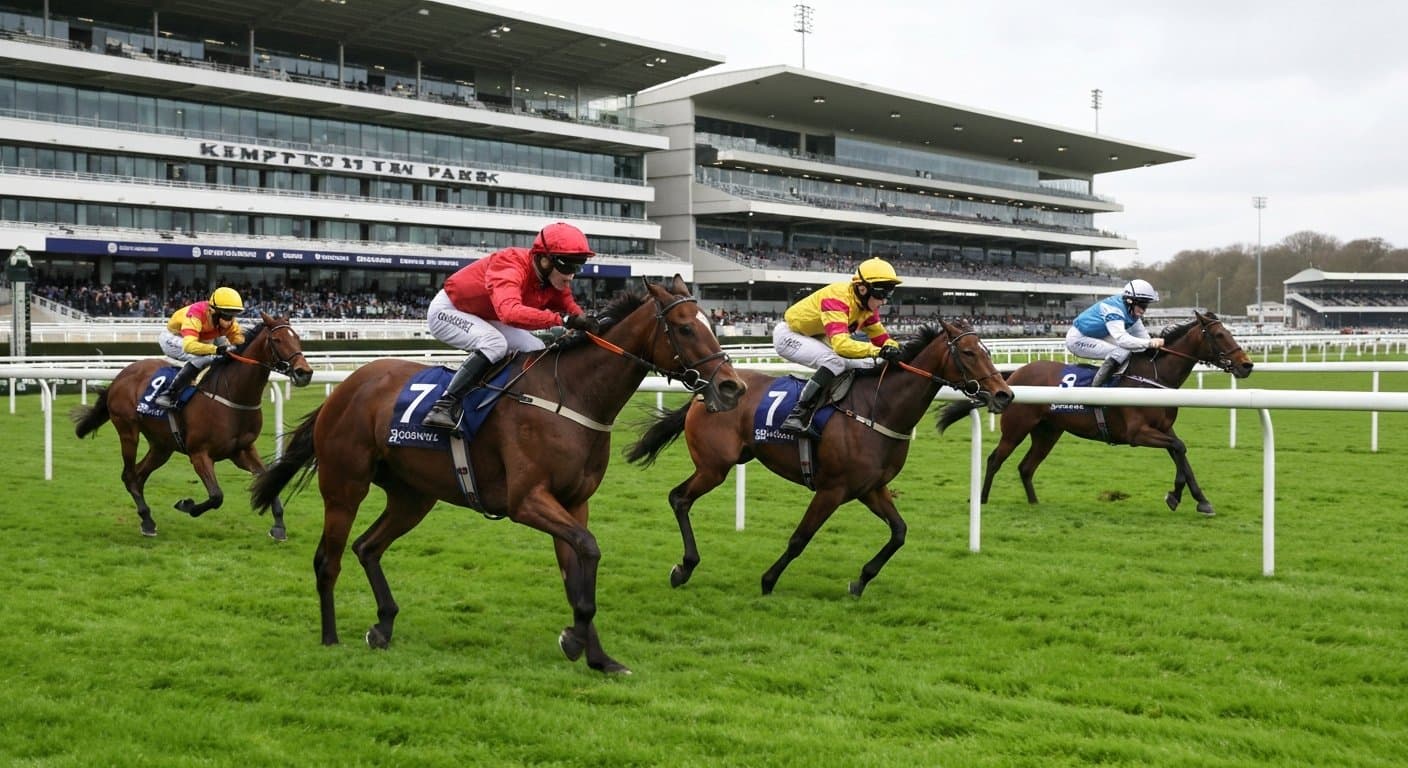
All Kempton Park guides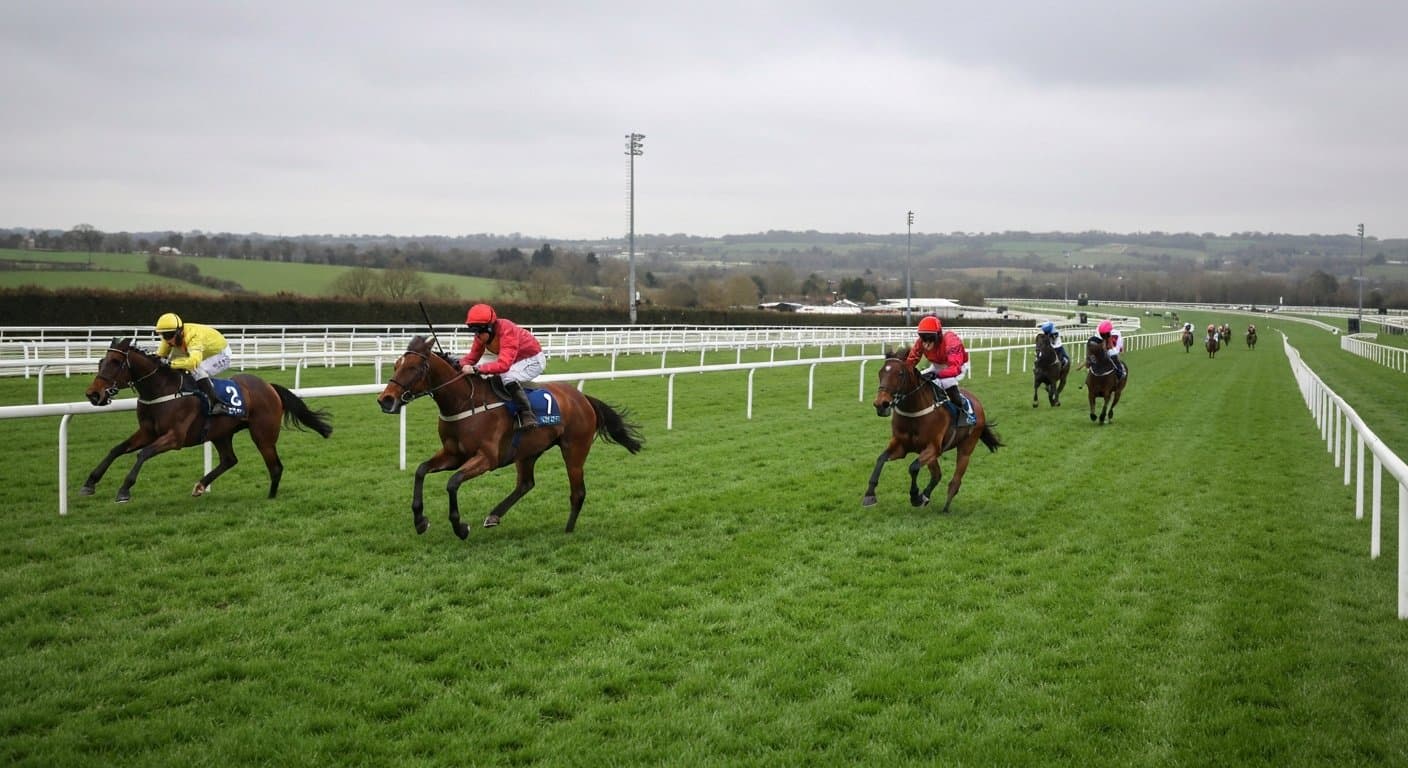
King George VI Chase Winners: The Full Roll of Honour (1970-2026)
Every King George VI Chase winner since 1970 - horse, age, starting price, jockey and trainer - with the trends that emerge across the full roll of honour. Source-verified.
Read more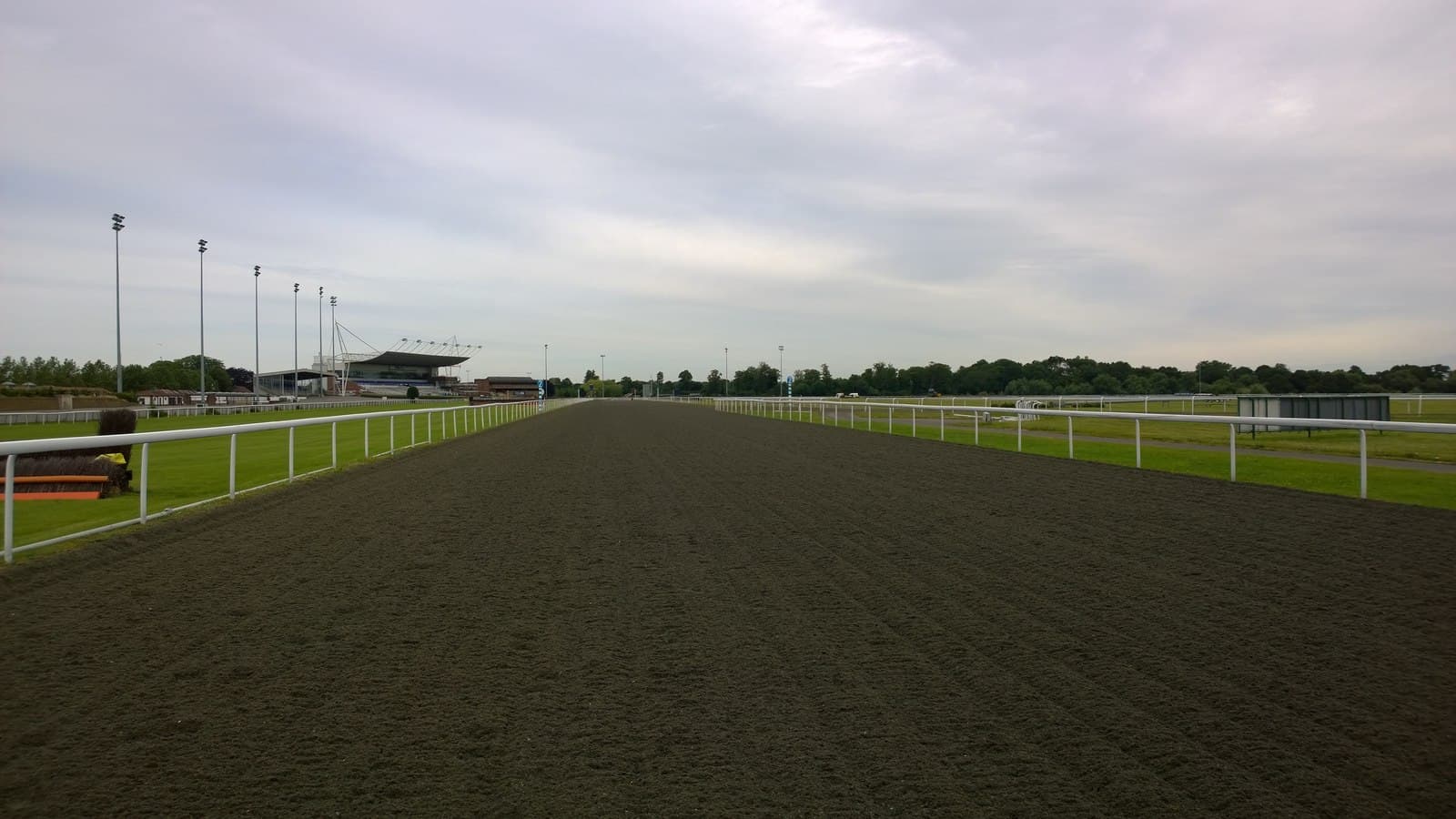
Christmas Racing at Kempton Park
A guide to Kempton Park's famous Christmas meeting — Boxing Day traditions, the King George, the full festive racing experience.
Read more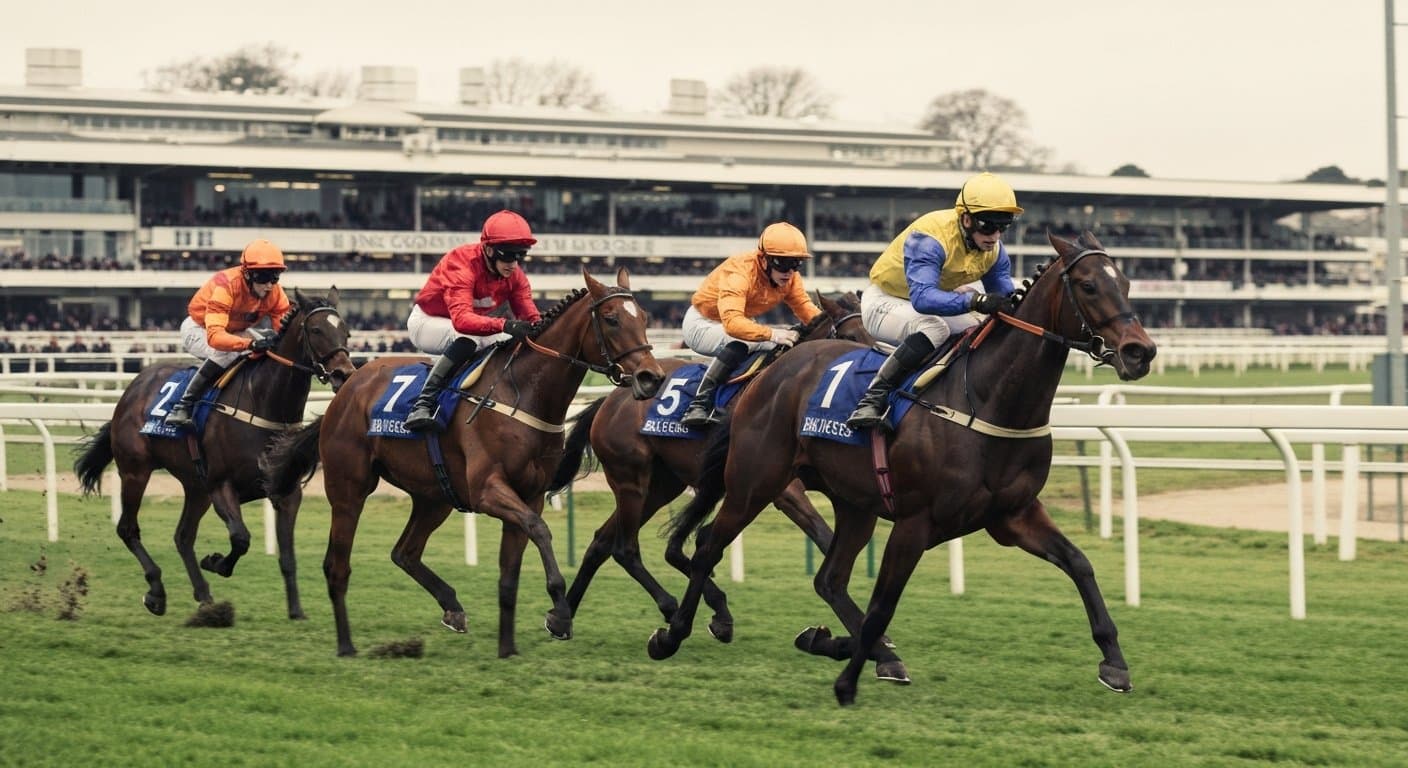
Kempton Park Betting Tips: Draw Bias, Form & Strategy
Discover Kempton's all-weather draw advantage, Boxing Day angles, and jumps form secrets. Expert betting strategies for better profits.
Read morePhotos on this page are used under Creative Commons licences. Titles, sources and licence links for each one are on our image credits page.
Research the field with the AI Race Predictor
Our model publishes calibrated win-probability estimates for UK races — a second opinion to understand a race, not tips. It's open about its record: it doesn't beat the market, and we show exactly how it does.
Betting offers for Kempton Park
Work it out & learn the basics
Gamble Responsibly
Gambling should be entertaining and not seen as a way to make money. Never bet more than you can afford to lose. If you or someone you know has a gambling problem, help and support is available.