
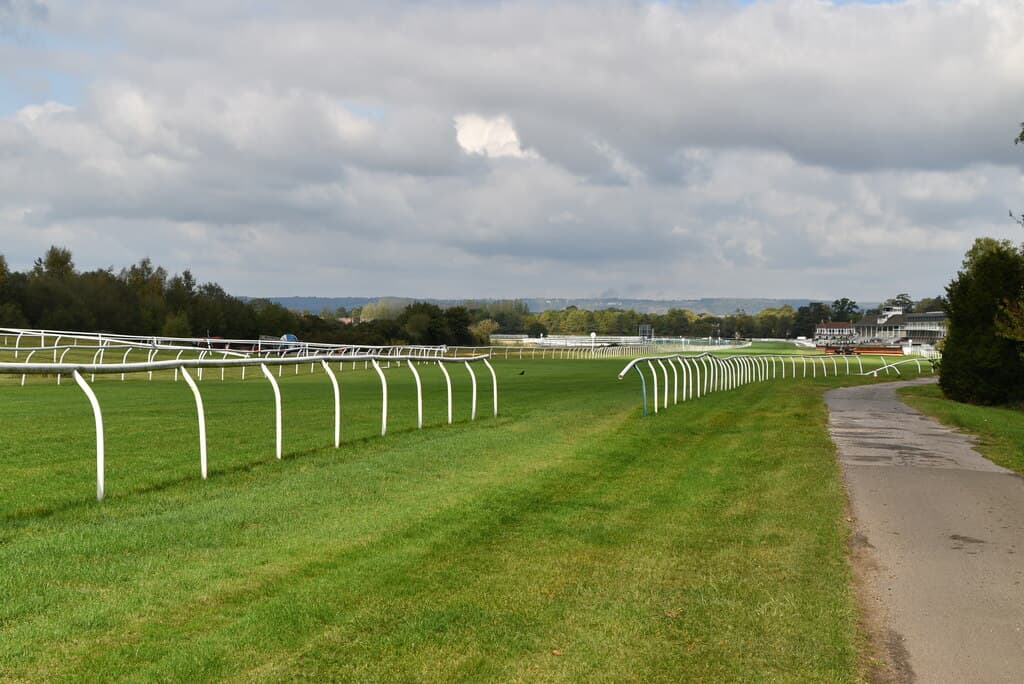
Founder & Editor · Last reviewed 2026-04-04
Introduction
Lingfield Park does three things that most British racecourses do not. It runs flat racing on turf, flat racing on an all-weather Polytrack, and National Hunt jumping — all at the same venue, on different tracks, across the same calendar year. Add to that a direct train from London Victoria in 45 minutes and free on-site parking, and you have a course that suits almost every kind of racegoer.
The headline meeting is the Winter Derby in late February, one of the most important all-weather races run anywhere in Europe. The Winter Derby is a Listed race over one mile two furlongs on the Polytrack, attracting horses with Group-level ability and generating serious ante-post interest. Beyond that, the summer turf programme draws London and South East racegoers out into the Surrey countryside, while the winter National Hunt card fills in the gaps that most all-weather tracks leave blank.
Quick Decision Block
- Should you visit? Yes if you want accessible, well-run racing within easy reach of London. The three-surface variety means there is always something different to see.
- When is the best time? Winter Derby day (February) for the biggest all-weather occasion. May to August for turf evening meetings in pleasant surroundings. October to March for National Hunt.
- Which enclosure? Grandstand for most visitors — good views, reasonable prices, no fuss. Premier Enclosure on Winter Derby day if you want the best sightlines.
- Which race to target? The Winter Derby. Run on the Polytrack in February, it is one of the richest all-weather prizes in the country and the closest thing the winter season has to a Group 1 card.
- How to get there? Train to Lingfield station from London Victoria (45 minutes direct) then a ten-minute walk. There is no easier journey to any Surrey racecourse.
- What to wear? Smart casual for the Grandstand on most days. Smarter for the Premier Enclosure and hospitality areas. Summer evening meetings are relaxed.
- Is it family-friendly? Under-18s admitted free with a paying adult. The compact layout and manageable crowds make it a sensible choice for a first visit with children.
Who This Guide Is For
This guide covers every aspect of Lingfield Park across all three racing surfaces. If you are visiting for the first time and trying to work out what makes the course different from the dozens of other venues on the southern circuit, the sections on the turf course and the Polytrack explain that in detail. If you are a regular punter who wants specific draw-bias figures and going patterns, the betting section has those. If you are planning a day out and need to know exactly how to get there, where to eat and which enclosure to book, the facilities and transport sections have those answers too.
The National Hunt course, often overlooked in favour of the all-weather programme, gets its own treatment here because it offers a different proposition again — sharp fences, competitive winter handicaps, and fields small enough to study properly.
Lingfield has been racing since 1890. In 135 years, it has developed a character that is neither the glamour of Ascot nor the no-frills midweek grind of some all-weather venues. It sits somewhere in between: a proper working racecourse with a Surrey parkland setting, a proper big day in the Winter Derby, and the sort of busy fixture list that rewards anyone who makes the effort to understand it.
Bet on Lingfield Park
Place your bets on Lingfield Park races with a trusted bookmaker.

Promo code BETFRED50. New customers only. Register, deposit with a Debit Card, and place a first bet of £10+ at Evens (2.0)+ on Sports, to be settled within 7 days, to get £30 in Sports Free Bets and £20 in Bet Builder Free Bets within 24 hours of settlement. 7-day expiry. Eligibility & payment exclusions apply. Full T&Cs apply. Take Time to Think. BeGambleAware.org. 18+. Full T&Cs.

Promo code R30. New UK customers only, 18+. Register, deposit £10 or more, then place a £10 single cash bet at odds of 1/2 (1.5) or greater on any sports market (excluding Virtuals). Once the qualifying bet settles you get £30 in Free Bets (3 x £10) — the qualifying bet can win or lose. Free Bets are valid on any sports market excluding Virtuals, expire in 7 days, are non-withdrawable and must be used in full. Excluded deposit methods apply (including PayPal, Apple Pay, Skrill and NETELLER). Named bets such as Lucky 15 do not qualify. If you cash out the qualifying bet, or it is voided, you are no longer eligible for the offer. Ends 31.12.26. Full T&Cs apply. Please gamble responsibly. BeGambleAware.org. 18+. Full T&Cs.

Promo code BET40GET20. New UK customers, 18+. Register with the code and place a first bet of £40 or more at Evens (2.0) or greater. Receive 2 × £10 free bets: the first credited automatically once the qualifying bet settles, the second 24 hours later. Free bets must be placed at minimum odds of 4/1 (5.0), expire 24 hours after credit, and the free-bet stake is not returned with winnings. Debit card deposits only. Take Time to Think. BeGambleAware.org. 18+. T&Cs apply. Full T&Cs.

50% of your first-day net losses refunded as a free bet, capped at £25. New UK customers aged 18+ only. To qualify, deposit and place a first bet of £10 or more on any sport at minimum odds of evens (2.00), then place at least two further bets on different events, each worth at least 50% of your largest bet, all at evens (2.00) or greater. Losses are counted from your first settled bet until 23:59 the same day. Place a qualifying £10+ bet and you are guaranteed at least a £5 free bet. Bets placed at SP, void bets, cashed-out bets and bets struck with free bets do not count towards the offer. The free bet is credited the day after your qualifying bets settle and must be used within 7 days, after which it expires. It can be used at odds from 1/4 (1.25) up to 250/1 on singles and straight accumulators, but not on Trixie, Patent or Yankee style multiples. Free-bet stake is not returned with winnings. One offer per person, household, address, IP address and device. E-wallet deposits may not qualify, so check the cashier before depositing. Customers registered with GAMSTOP cannot claim. KYC identity verification must be completed before the free bet is credited. Take Time to Think. BeGambleAware.org. 18+. T&Cs apply. Full T&Cs.

New customers, 18+. Choose the sports bonus at sign-up, make a first deposit and receive a 100% bonus up to £50 in your Sports Bonus balance. To convert the bonus to cash, wager it 10x within 30 days. Single bets below Evens (2.00) do not qualify; accumulators do not qualify if any selection is below 1/2 (1.50). Virtual Sports, voided, cancelled, drawn, cashed-out and free-bet wagers do not count towards wagering. Only the first settled bet per event counts. Withdrawing before the wagering requirement is met forfeits the bonus balance including bonus winnings. Real-money funds are used before bonus funds. Deposits via Skrill or Neteller are not eligible. Not valid in conjunction with other promotions. Odds, bet and payment limits apply. 10bet general and promotion T&Cs apply. BeGambleAware.org. 18+. Full T&Cs.

New customers in Great Britain and Republic of Ireland, 18+. Place a £10 fixed-odds qualifying bet at minimum odds of 1/2 (1.50) — single or each-way (only the win part counts), pre-event or in-play, not cashed out early, within 28 days of opening the account. Receive up to £60 in bonuses credited over three days: 3 × £10 fixed-odds free bets (the first on settlement, then 24 and 48 hours later) plus 3 × £5 Total Goals FOOTBALL spread bets and 3 × £5 racing Winning Favourites spread bets, with a £1 racing Race Index spread bet as an extra on top. The spread bets need a full spread-betting account, opened within 28 days of the fixed-odds account and subject to Spreadex's eligibility and appropriateness checks. Free-bet stakes not returned with winnings; free bets valid 28 days from issue. IMPORTANT: the £5 credits are SPREAD bets — sports spread betting carries the risk that losses can exceed your stake. Sports spread-betting customers do not have Financial Ombudsman or FSCS recourse. Take Time to Think. BeGambleAware.org. 18+. T&Cs apply. Full T&Cs.

Promo code WELCOME15, entered under My Bonuses after registering. New UK customers, 18+. Place a first qualifying bet of at least £10 from your cash balance at odds of evens (2.0) or greater within 7 days of opening the account. Once the qualifying bet fully settles you receive £15 in free bets, credited as 3 x £5 tokens with set uses: one £5 accumulator free bet (minimum 4 legs, each leg at 2/5 or bigger), one £5 sports free bet (any market at evens or bigger) and one £5 Sub Cover free bet (selected football player markets at evens or bigger). Free-bet stakes are not returned with winnings. Free bets expire 7 days after they are credited. Void, cashed-out and partially cashed-out bets do not qualify. One offer per customer. Confirm the current terms on BetGoodwin's own welcome-offer page before claiming. Take Time to Think. BeGambleAware.org. 18+. T&Cs apply. Full T&Cs.

New UK customers, 18+. Minimum deposit £10. Place a £10 qualifying single on sports (excluding virtuals) at minimum odds of 1/2 (1.50), settled within 14 days. Deposit-method exclusions apply. Receive £30 in free bets (stake not returned), split £20 for sportsbook use (2 x £10) and £10 for Bet Builder only (2 x £5); Bet Builder does not cover horse racing. Free bets must be accepted within 7 days and expire 7 days after acceptance. No promo code required. Best Odds Guaranteed on UK & Irish racing, subject to having staked over £25 in the previous seven days. Operated by LiveScore Betting and Gaming (Gibraltar) Ltd, UKGC 56859. Confirm the current terms on LiveScore Bet's own promotions page before claiming. Take Time to Think. BeGambleAware.org. 18+. T&Cs apply. Full T&Cs.
18+. BeGambleAware.org
History of Lingfield Park
The History of Lingfield Park
Racing at Lingfield began in 1890, making the course one of the younger additions to the late Victorian racing calendar. The site was developed as part of a broader project to open up the Lingfield Park estate in Surrey — a stretch of parkland close to the borders of Kent and East Sussex that had previously served as private grounds. The racecourse was laid out within the estate's natural contours, which accounts for the undulating character of the turf track that persists to this day.
The Lingfield Park Estate and Its Origins
The land on which Lingfield Park racecourse sits had been part of the Surrey countryside for centuries before racing arrived. The Lingfield Park estate occupied a pleasant corner of the Surrey hills, sheltered by mature woodland and characterised by the gently rolling terrain typical of the Surrey Weald. When the development company behind the project chose to build a racecourse here in the late 1880s, they were working with a landscape that already had natural shape — the undulations that make the turf course interesting to this day were not engineered but inherited from the land itself.
The course opened in 1890 and quickly attracted racegoers from London and the surrounding counties. The rail connection was a significant factor from the start. Lingfield station, served by the southern railway network, placed the course within practical reach of the capital at a time when horse-drawn transport still defined the limits of most people's day-trip range. The proximity of London was as much of an advantage in 1890 as it is now.
The early years of racing at Lingfield were characterised by a turf programme similar to dozens of other southern flat courses. Races were run on the grass track through the summer months, drawing moderate fields and the sort of raceday crowd that the Surrey and Kent countryside could supply. The course was not a prestige venue in the Victorian or Edwardian sense — it had no Classic, no Group 1, no fixture that commanded national attention. What it had was convenience, a pleasant setting, and enough regular racing to build a loyal local following.
National Hunt Arrives
Lingfield's development as a dual-purpose course came with the introduction of National Hunt racing. The jumps course, using the outer circuit of the track, allowed the venue to extend its season beyond the flat summer programme and into the autumn and winter months. For a course dependent on Southern racegoers who could not easily travel to northern jump venues, this was a practical expansion that made use of the infrastructure already in place.
The National Hunt programme at Lingfield never aimed at the upper tier of the jumps calendar. Cheltenham, Aintree, Ascot and Sandown drew the top novices and champion chasers. Lingfield's role was different: a testing but accessible venue for competitive winter handicaps, novice events and conditions races that sat comfortably in the middle tier of the jumping programme. Trainers from the south of England used it regularly as a starting point for horses being introduced to jumping, and the sharp nature of the fences and hurdles made it a useful schooling ground even if the prize money could not match the bigger southern jumps tracks.
The All-Weather Revolution
The most significant change in Lingfield's history came in 1989 when the course installed Equitrack, an artificial racing surface that allowed racing to continue regardless of weather. This made Lingfield one of Britain's first all-weather racecourses — a decision that would reshape the venue's character, its fixture list and its reputation over the following decades.
The Equitrack surface was not without its critics. The material behaved differently from turf, rewarded different types of horse, and produced form that punters found difficult to translate to grass racing. The betting markets on early all-weather cards were wide, the specialist knowledge thin, and the fields often populated with horses that had run out of options on turf. But the infrastructure was in place, and Lingfield was racing in January and February when nearly every other course in Britain was closed.
In 2001, Lingfield replaced the Equitrack with Polytrack, a polyester-fibre surface that rides faster and more consistently than its predecessor. The Polytrack resurfacing transformed the quality of racing on the all-weather circuit. Horses with real ability began to appear in numbers, trainers started targeting specific races rather than treating the AW as a last resort, and the form began to stack up in a way that rewarded careful study. Lingfield's Polytrack is now regarded as one of the fairer all-weather surfaces in Britain, comparable in character to Kempton Park's Polytrack, and distinct from the Tapeta at Wolverhampton or the Fibresand that used to operate at Southwell.
The Winter Derby Takes Shape
As the all-weather programme developed through the 1990s, the need for a prestige race to anchor the winter season became clear. The Winter Derby emerged as that race. Run over one mile two furlongs on the Polytrack, it was framed as the definitive test of the all-weather season — a race long enough to require stamina, held late enough in the winter that horses targeting the Flat turf season could use it as a prep.
The Winter Derby has developed into one of the most valuable all-weather prizes in Britain and a key early-season reference point for horses with wider ambitions. It sits within a strong supporting card — the Winter Oaks over the same trip, the Dorans Pride Hurdle for the jumping side — and draws the sort of attendance and on-course atmosphere that is unusual for an all-weather fixture. The race has grown in status consistently since the Polytrack installation, and by the 2020s it carries enough weight in the form book that horses that run well in it regularly go on to compete at Group level on turf.
Lingfield in the South East Racing Picture
Lingfield sits within a cluster of southern racecourses that give the region one of the densest racing calendars in the country. Epsom is 12 miles to the north-west. Kempton Park is 20 miles north. Sandown Park is 18 miles north. Goodwood, Ascot and Newbury all lie within 50 miles. For a course without a Classic or a Grade 1, Lingfield holds its own within that crowded field by doing things its neighbours cannot.
Kempton has Polytrack but no turf course and no National Hunt. Epsom has a famous turf course but no all-weather and a festival built around a single week in June. Sandown has flat and jumping but nothing in January or February when Lingfield's Polytrack is at its busiest. The combination of three surfaces, year-round racing and a direct rail connection from London has given Lingfield a distinct identity within the South East racing scene — not the most glamorous venue, but the most consistently active and the most accessible for racegoers without a car.
Modern Developments
The course has continued to develop its infrastructure through the 2000s and 2010s. Grandstand facilities have been updated, the hospitality offering expanded, and the fixture list extended as British racing's reliance on all-weather racing has grown. The Polytrack surface has been maintained to a high standard, producing going descriptions that are consistent enough that regular form students can track trends across multiple seasons.
The venue also hosts a hotel and conference facilities on the estate, which has made it a destination for events beyond racing and broadened its commercial base. This has not changed the character of the racing itself but has helped keep the investment flowing into track maintenance and facilities that benefit everyone who comes through the gate on a raceday.
Lingfield in 2026 is a busier, better-funded venue than it was when the Polytrack went down in 2001. The fixture list runs to around 80 meetings a year. The Winter Derby has grown into a race that carries real prestige. The turf programme draws solid summer crowds. The National Hunt card provides competitive winter jumping for racegoers who would otherwise have no southern option during the coldest months of the year. Across 135 years of racing, the course has evolved from a modest Victorian turf track into one of the most versatile and active venues in British racing.
The Turf Course
The Turf Course
The turf course at Lingfield is a left-handed, undulating circuit that sits inside the all-weather Polytrack loop. It runs for approximately one mile two furlongs around the full circuit, with a short home straight of just under two furlongs. The shape is roughly oval, with bends that are sharper than they first appear — horses racing here need to be balanced and responsive through the turns, not just fast in a straight line.
Layout and Gradients
The terrain across the Surrey estate has real undulation. The course climbs and falls across the back straight and into the final bend, and the Surrey clay and chalk soil beneath the turf creates ground that can change quickly with rainfall. These are not the dramatic gradients of Epsom, where the Tattenham Corner descent and the camber of the home straight create one of the most technically demanding courses in Britain, but they are real enough to matter. A horse that struggles on undulating or cambered ground will not perform as well at Lingfield as it might on a flat, galloping track like Newmarket.
The home straight measures a little under two furlongs from the final turn to the winning post. This is short. It places a premium on position coming into the straight — horses that are trapped wide or settled too far back at the bend will find the straight insufficient to make up the ground. Jockeys with course experience know to get their horses balanced and in the right spot before the turn rather than relying on a sprint finish from the rear.
The back straight is where stamina begins to matter in longer races. In a one-mile four-furlong or one-mile six-furlong contest on the turf, horses will travel a significant portion of the race on the back straight before the final turn and short run home. Fitness and the ability to maintain rhythm through the bends are as important as raw pace.
Going and Drainage
The turf course sits on Surrey clay and chalk, which drains reasonably well in comparison to heavier clay soils further north, but not as fast as the sandy loam of, say, Newmarket. In dry summers the going can firm up considerably. In wet winters or after prolonged autumn rain it softens quickly. The range of going descriptions that appear across a season at Lingfield is wider than on many all-weather-supplemented programmes because the turf surface is doing its job in all conditions rather than being protected.
Typically, Lingfield's turf meetings run from May through to October. Early-season meetings in May and June can catch the ground in good to firm or firm territory as the summer dries out. August and September meetings often run on good going when the weather cooperates. Autumn meetings can turn to good to soft or soft. The variation is part of what makes the turf programme interesting to study — going changes here can shift the complexion of a race significantly.
Horses that have handled varying ground and shown form at courses with similar profiles — sharp, undulating, left-handed — tend to adapt well. A horse that only runs well on fast ground at flat, galloping tracks like Newmarket or Epsom's straight course should be treated with some caution on the Lingfield turf unless the going is quick.
Draw on the Turf
Draw bias on the Lingfield turf varies by distance and field size. In straight-course races the middle draws have a reasonable record, as the full width of the track is available and the inside rail advantage is diluted. In longer races where the field navigates two or three turns, low draws can be advantageous in smaller fields since a horse can track the inside rail and save ground through the bends. In large fields, the inside position becomes more of a trap — horses can get shuffled back at the first bend and find themselves with nowhere to go.
As a practical guide: in sprint races on the turf at Lingfield, avoid strongly fancied horses with very high draws in large fields unless there is specific evidence they handle the position. In races over a mile or beyond, a low draw in a small, evenly-matched field is a marginal advantage worth noting.
What Type of Horse Wins on Turf
The profile of a Lingfield turf winner is fairly consistent. Sharp, nimble horses that travel well through a race and quicken efficiently off the final bend do best. Long-striding galloping types that need time to wind up and a straight run to get into full flow are at a disadvantage given the tight home straight and the undulations.
Speed over the ground matters more than raw stamina in sprint and mile races, but the ability to handle the undulations is non-negotiable — watch for any horse making its debut at Lingfield after a career on flat, galloping tracks, as some will not adapt immediately. Horses trained in the area, particularly from yards in Surrey, Sussex and Kent, often show good course form simply because they have schooled on similar terrain.
In National Hunt races on the turf course, the same principle applies to jumping: accurate, tidy jumping matters more than bold, spectacular jumping at a course with this configuration. The bends arrive quickly after the fences and horses that make mistakes and lose their rhythm will not easily recover in the time available.
The National Hunt Circuit
The jumps course uses the outer circuit of the turf track with fences and hurdles positioned to allow a full National Hunt card. The chase course has fences on both the back straight and the home straight, with the approach angles to the home straight fences placing a premium on jumping accuracy. Horses that meet the fence at an angle or drift wide into the fence under pressure can get themselves into trouble on this course in a way they might not on a more straightforward track.
The hurdle course is technically simpler — the hurdles are placed on the approach to the bends and down the home straight, and while the short straight limits how long horses can be seen fighting it out, the racing is competitive and the card usually well-filled.
Lingfield's National Hunt programme runs from October through to March and produces a mix of novice events and handicap chases and hurdles. The trainers who know this course well tend to be from the south of England — David Pipe, Seamus Mullins, Gary Moore, Charlie Longsdon and others with bases in the region have solid records here. Northern trainers do appear but have to overcome the travel disadvantage that southern trainers exploit at more obscure southern tracks.
How the Turf Compares to the All-Weather
The turf and all-weather courses at Lingfield are, in racing terms, quite different propositions. The turf rewards nimble, balanced horses that handle undulations; the Polytrack rewards prominent racers that handle kickback and a left-handed oval with sharper bends. Some horses perform on both — they are athletic enough to adapt. But a significant number are surface specialists, and tracking their preferences is one of the more reliable form angles at this course.
If a horse has run poorly on the turf and been switched to the Polytrack, or vice versa, do not simply treat the run as a straight form reversal. Check whether it handled the surface and whether the style of running suits the track it is moving to. Many horses that win on the Lingfield Polytrack in the winter have never raced on turf here at all, and the two form books are only loosely connected.
The All-Weather Course
The All-Weather Course
The Polytrack at Lingfield is a left-handed oval of approximately one mile two furlongs, running as a separate circuit outside the turf course. It is a flat surface — unlike the turf course, there are no significant gradients on the Polytrack loop — and the racing here rewards a specific, consistent profile that regulars learn to identify quickly.
Lingfield's Polytrack was installed in 2001, replacing the original Equitrack surface that had been in place since 1989. The change made a material difference to the quality of racing. Equitrack was slow and produced form that did not translate reliably to other surfaces. Polytrack runs faster, rewards better horses, and generates form figures that serious punters can work with. The current surface has been maintained and resurfaced periodically to keep it consistent, and the going descriptions on the Lingfield AW are more predictable than on any turf track.
Shape, Distances and the Home Straight
The circuit is a left-handed loop. The back straight feeds into a sweeping left-hand bend, and then a shorter run into the final turn before the home straight of approximately two and a half furlongs. The home straight is slightly longer than the turf course's, which gives late challengers marginally more room to make their move — but not much. Position at the final turn still matters considerably.
Sprint races at Lingfield AW start on a chute that feeds into the main circuit, allowing five-furlong and six-furlong races to run mostly or entirely on the straight before picking up the bend. Races at a mile and over start on the back straight, with the full circuit required for longer trips. The two-mile distance, which is used occasionally, requires two full laps and produces tests of stamina that are unusual on an all-weather surface.
The distances available on the Lingfield Polytrack cover five furlongs, six furlongs, seven furlongs, one mile, one mile two furlongs, one mile three furlongs, one mile four furlongs, and up to two miles. This range is broader than some all-weather tracks and allows for real variety across the programme.
Draw Bias on the Polytrack
Draw bias at Lingfield's Polytrack is one of the better-documented aspects of the course and worth understanding before placing a bet. The surface is left-handed, and the inside rail in sprint races is a clear advantage in most conditions.
In five-furlong and six-furlong races, low draws — stalls one through five in a typical field of 12 to 14 — have a strong historical record. The reasons are straightforward: on a left-handed circuit, low-drawn horses can track the rail from the start and save ground into the bend, while high-drawn horses must cover extra distance to reach the same position. In larger fields the effect is amplified. A horse in stall 12 of a 14-runner sprint has to either fight across to the rail early or race wide throughout — neither option is efficient.
In races over a mile or beyond, the draw bias softens. The longer the race, the more time and space there is for jockeys to find position, and the initial starting position matters less. Horses drawn wide in mile-plus races can find cover on the outside and avoid the worst of the kickback, which on the Polytrack is a real consideration — horses that dislike kickback show it quickly on an AW surface, and their form at home can look very different to their form at a track where the issue does not arise.
As a practical rule: take draw seriously in sprints (up to seven furlongs), less so at a mile, and largely ignore it at a mile two furlongs and beyond unless it is an unusually large field.
Pace Bias and How Races Are Run
Front-runners do well on the Lingfield Polytrack. This is a consistent pattern rather than a surface quirk, and it has a mechanical explanation. The circuit has a sharp final bend that compresses the field as they turn for home. Horses that are already in front at this point have the advantage of racing on the inside line and not needing to find extra pace to get past others on a tight turn. Horses coming from behind face the double task of accelerating and navigating around rivals on a bend — some manage it, but the margin for error is small.
In sprint races, particularly over five furlongs, the front-runner advantage is strong enough to be worth quantifying. Looking at any full season of Lingfield AW results, horses that led or raced in the first two or three at the halfway point win a disproportionate percentage of races. This does not mean that closers cannot win — they do — but it should inform how you assess a race where two or three of the front-runners in a sprint have recent form that suggests they will fight for the early lead. Contested pace scenarios tend to be more punishing here than on galloping tracks because the home straight is shorter and the final turn sharper.
In longer races the pace dynamics are more complex. Over a mile or beyond, a horse that is handy without setting the pace — tracking the leaders in second or third — can be ideally placed to pounce on the front-runner in the straight. The front-runner advantage in longer races is less about dominance and more about avoiding trouble; horses that lead over ten to twelve furlongs still win regularly, but they face a stronger challenge than sprint leaders do.
Polytrack Form Translation
One of the key questions for punters studying Lingfield AW form is how it translates to other surfaces. The short answer is: it translates reasonably well to Kempton Park (also Polytrack) and less reliably elsewhere.
Kempton's Polytrack is the closest comparison. Both surfaces share the same material, both are left-handed ovals, and horses that thrive at one frequently perform well at the other. The configurations are different — Kempton is slightly sharper and has a longer home straight — but the surface characteristics are similar enough that form between the two tracks is a reliable reference point.
Wolverhampton uses Tapeta, which rides slower than Polytrack and rewards a slightly different profile. Chelmsford City (formerly Great Leighs) also uses Polytrack but in a right-handed configuration, which matters for horses with a pronounced directional preference. Southwell used to run on Fibresand, the slowest and most distinctive of the all-weather surfaces; any form comparison between Southwell's old Fibresand results and Lingfield's Polytrack was essentially meaningless. Southwell now runs on Tapeta.
Form horses switching from the Lingfield AW to turf racing should be treated with caution unless they have shown turf form elsewhere. The surfaces reward different physical attributes and different running styles, and a horse that dominates on the Lingfield Polytrack has not necessarily demonstrated the ability to handle firm summer turf or the physical demands of a galloping turf course.
AW Championships Qualifying Races
Lingfield hosts a series of races through the winter that qualify for the All-Weather Championships, which run their finals day at Newcastle in April. These qualification races carry bonus prize money and attract horses specifically targeting the finals programme. They are particularly interesting from a betting perspective because the trainer intent is often clear — horses running in qualification races are usually being pointed at the finals, and trainers who handle them are often specialists in all-weather form.
The qualification races at Lingfield are spread across a range of distances and age groups, which means the series brings stronger-than-average fields to the AW winter programme. On days when two or three qualification races appear on the card, the overall quality of racing is noticeably higher than a standard midweek meeting.
Handling the Kickback
The Polytrack surface throws up a fine spray of artificial fibres as horses run over it — this is what punters and stable staff call kickback. Some horses dislike it intensely. They will veer off the rail, lose concentration, or simply stop running when the kickback hits them. The effect is most pronounced in races where horses are closely grouped on the straight section before the final turn, and in smaller fields where a horse running prominently is directly behind the leader.
When assessing a horse's first run on an all-weather surface, note whether they finish as strongly as expected. If a confirmed front-runner suddenly drops away after leading on the Polytrack, kickback is a possibility — particularly if the race was run in a tight group. Horses that have run well on Polytrack before without this issue are generally safe to back again; those with a history of fading after leading on AW may be reluctant to face kickback rather than lacking stamina.
Key Fixtures & Racing Calendar
Key Fixtures and Racing Calendar
Lingfield Park runs around 80 fixtures a year across all three surfaces, which makes it one of the busiest racecourses in Britain. The majority of these meetings are workmanlike cards — competitive handicaps, maidens, novice events and conditions races that form the backbone of the all-weather and turf programmes. But within that busy schedule there are several meetings that stand apart, and for racegoers planning a visit those are the ones worth targeting first.
The Winter Derby (February)
The Winter Derby is Lingfield's defining race and the one meeting that sets it apart from every other all-weather venue in Britain. Run in late February or early March over one mile two furlongs on the Polytrack, it is a Listed race carrying one of the richest prize funds in the winter calendar.
The race was established as the premier all-weather test of the winter season and has grown in quality consistently since the Polytrack installation in 2001. Horses of real Group-level ability now appear in it regularly. Some are horses that have been trained through the winter specifically for this race as an early-season target. Others are using it as a prep for bigger races on turf in the spring — trainers from major southern and Newmarket yards have sent horses here as part of a campaign that targets something like the Lockinge Stakes or the Juddmonte International later in the season. Horses that run well in the Winter Derby and then go on to compete at Group 1 level are not an anomaly; they are part of the race's established pattern.
The race is run over ten furlongs, which is a significant distance for the winter — it requires real stamina rather than just AW pace, and horses that stay well on Polytrack have an obvious advantage. The form of the race tends to hold up well through the spring, and it has become a key early reference point for punters assessing horses that will reappear on turf in April and May.
The supporting card. The Winter Derby does not stand alone. The meeting builds a full card around the main race, including the Winter Oaks over the same trip — effectively the fillies' equivalent of the Winter Derby — and the Dorans Pride Hurdle, which brings National Hunt horses into what is primarily an all-weather day and reminds visitors that Lingfield covers all three racing disciplines. The supporting card features four or five other valuable AW prizes, and the result is the sort of afternoon that would not be out of place on a summer turf card at a bigger southern venue.
On the day. Winter Derby day brings a crowd significantly larger than a standard February AW fixture. The enclosures are busy, the atmosphere in the betting ring is livelier than usual, and the catering outlets run with the kind of pace they reserve for peak demand. Tickets for the Premier Enclosure sell out in advance on Winter Derby day; Grandstand tickets are easier to get but buying ahead is still advisable. Dress for February weather in Surrey — it can be sharp — but the venue is enclosed enough that the wind off the track is manageable.
The Select Stakes (June)
The Select Stakes is a Group 3 race run over one mile two furlongs on the turf in June. It is Lingfield's highest-rated turf race and brings high-class horses to the summer programme. The Select Stakes has been won by some excellent horses over the years, and it sits neatly in the turf calendar as a race for older horses that are not quite at the level of the top-tier summer Group 1 programme but are serious racehorses by any normal measure.
The race is a good reason to visit Lingfield in the summer if you want to see proper Group-level racing without the crowds and prices of a Royal Ascot or a Glorious Goodwood. The card on Select Stakes day typically includes a handful of other Listed and conditions races, making it a proper quality fixture rather than a one-race occasion.
The Lingfield Derby Trial (May)
The Derby Trial is run over one mile two furlongs on the turf in May and serves as a Classic prep for three-year-olds with Epsom in mind. The race does not carry the same profile as the Dante Stakes at York or the Newmarket trials, but it has a legitimate history as a Derby prep and horses that have run well here have gone on to competitive runs at Epsom. For a Classic generation watcher, the Derby Trial is worth following in the weeks before Epsom as form reference.
AW Championships Qualifying Races
Through October to March, Lingfield hosts a series of qualification races for the All-Weather Championships Finals Day at Newcastle. These races carry bonus prize money on top of the standard conditions, which attracts horses specifically targeted at the finals programme. The quality of AW racing on qualification-race days is noticeably higher than on standard midweek cards, and the trainer intent is usually clear from the declarations.
For punters, these races are worth studying in detail. Trainers who specialise in all-weather racing use the qualification races to build their horses' ratings and position them for the finals, and the patterns of how they campaign their horses through the winter are often readable in the declarations. Horses that have run in two or three qualification races and shown consistent form tend to be live contenders when they reappear in the finals at Newcastle.
Summer Turf Evening Meetings (May to August)
From May through August, Lingfield runs a programme of evening meetings on the turf that are among the most enjoyable fixtures in the south of England. Racing typically starts around 5:00pm and the last race goes off at approximately 8:00pm, meaning the meeting works as an after-work evening out for racegoers from London and the surrounding counties. The train from Victoria means you can be at the course by 5:15pm without particular rush.
The atmosphere at summer evening meetings is relaxed. Families, groups of friends and office parties make up a significant portion of the crowd alongside the regulars. The parkland setting is at its best in the long summer evenings — the mature trees around the course catch the light, the paddock parade before each race is a pleasant way to spend ten minutes, and there is enough room in the Grandstand enclosure to watch the racing comfortably without being crammed in.
These meetings do not tend to attract the highest-class horses, but the turf cards are competitive and the going is usually good to firm or good, which produces fair, informative racing. Summer evening fixtures at Lingfield are the kind of meeting where a punter who has done the form properly can find value in a market that has not been dissected by the main national press. The fields are often smaller and the betting intelligence on the course more reliable than at a major festival where every paper has a tip.
National Hunt Season (October to March)
The jumps programme runs from October through to March and provides a consistent winter card for National Hunt racegoers in the south of England who do not have a realistic option of travelling to the midlands or north for their jumping fix. The racing is not at Grade 1 level — Lingfield does not stage a Champion Hurdle trial or a King George qualifier — but it is competitive, well-filled and frequently offers good betting opportunities precisely because the fields are manageable and the course characteristics consistent.
Novice hurdles at Lingfield in October and November attract horses making their jumping debut that have track records as flat horses on the all-weather or turf. These races can be particularly interesting for punters who have studied those horses' flat form and understand how it might translate to jumping. A horse that showed quick early pace on the Polytrack but lacked the length of stride for sprint distances can emerge as a useful hurdler at two miles.
Handicap chases through the winter months produce competitive racing with relatively small fields. The sharp nature of the fences catches out horses that are sloppy over their obstacles, and trainers who know the course send well-schooled horses specifically because the layout rewards accuracy. Horses that have won here before over fences are worth noting — course specialists are a more reliable factor at a sharp chase track than at a more forgiving galloping course.
Year-Round All-Weather Programme
Beyond the marquee fixtures, the bread-and-butter all-weather programme runs roughly 50 to 55 AW fixtures a year, covering every distance from five furlongs to two miles. Midweek afternoon meetings, Friday evening cards and weekend fixtures fill the schedule with regular racing that supports a form-study cycle unlike any turf programme. At a venue with this volume, horses run frequently, trainers develop clear preferences for specific distances and draw positions, and patterns emerge across months of consistent data.
For the regular punter, this consistency is Lingfield's practical selling point. You can follow a trainer's AW operation through 30 or 40 runners in a winter, identify which distances and going conditions their horses are best suited to, and find situations where the market has not fully priced in the pattern. This kind of form study is not realistic at a turf course that runs 12 meetings a year. At Lingfield AW, the sample sizes are large enough to mean something.
Facilities & Hospitality
Facilities and Hospitality
Lingfield Park is a medium-sized racecourse with a capacity of around 8,000 and a facility set that covers everything a racegoer needs without excess. The layout is straightforward, the enclosures are well-positioned relative to the track, and the overall feel is functional rather than fussy. For a course that runs 80-plus meetings a year across three surfaces, the infrastructure has been maintained consistently, and the basics work as they should.
Enclosures
Grandstand Enclosure. This is the standard admission option and the one that most racegoers use for a regular visit. The Grandstand gives access to the main viewing areas along the home straight, the parade ring, the betting ring, the majority of food and drink outlets, and the racing screens showing racing from other meetings. The view from the Grandstand of the all-weather circuit is good — the full home straight is in front of you, and you can see a reasonable portion of the oval. The turf course is viewable but the far side is more distant.
The Grandstand is where you want to be for most meetings. On quieter midweek AW cards it is spacious. On Winter Derby day it gets busy, but not uncomfortably so, and the atmosphere in the betting ring around the time of the main race is worth experiencing even if your interest in the race is limited.
Premier Enclosure. The Premier Enclosure occupies the upper tiers of the main stand and offers better sightlines over both the AW and turf circuits from higher up. The dedicated bar in this enclosure is less crowded on big days than the main Grandstand bars, which makes it a practical choice on Winter Derby day or Select Stakes day when the casual visitor footfall peaks. The Premier Enclosure asks for smart dress — no sportswear, no shorts, no flip-flops — and the pricing reflects the step up in comfort.
For a regular midweek meeting, the Grandstand is sufficient and better value. On the two or three premium fixtures a year, the Premier Enclosure is worth considering if you want the best view and a less hectic bar experience.
Hospitality
Lingfield offers a range of hospitality packages for larger occasions. The standard hospitality format includes a reserved table in a restaurant overlooking the track, a three-course meal, a set allocation of drinks and access to a premium viewing area. Because the hospitality suites face the track, you do not miss races while eating — this is not universal among British racecourses and it matters if the racing is your primary reason for being there rather than a backdrop to a corporate lunch.
Private boxes are available and are popular with corporate groups for Winter Derby day and the summer turf festival. The packages are typically sold as a minimum number of guests with a price-per-head structure, and the quality of food in the hospitality areas is a clear step above the general catering.
For private bookings at the premium fixtures, contacting the course in advance is advisable. Winter Derby day hospitality books up months ahead of time, and the premium packages sell out before general ticket announcements are made.
Food and Drink
The general catering at Lingfield covers the standard range: burger and chip outlets, fish and chips, a hot food station and a couple of options for sit-down meals. The quality is decent for a racecourse. No specific food offering at Lingfield has developed the sort of local identity that, say, a Yorkshire pudding wrap has at Doncaster or a crab sandwich has at Goodwood, but the food is consistent and the queues are manageable except at peak times on big days.
The main bar in the Grandstand is the busiest outlet on a normal raceday. The beer range covers the standard national brands plus a couple of locally relevant options. Wines by the glass are available throughout the enclosures. On summer evening meetings the bar atmosphere is livelier than a daytime card — the evening crowd tends to be younger and there is more socialising alongside the racing.
Summer evening meetings occasionally include themed food events or temporary specialist vendors, which varies the standard offer and adds interest beyond the main catering. These are worth checking when you book — Lingfield publishes details on its website.
Picnics are permitted in the grounds on most racedays, which is a useful option for families who want to control costs. There are grassed areas near the stands where groups spread out on summer days, and it is a common sight at the evening turf meetings.
Betting Facilities
The betting ring sits beside the parade ring and is well-positioned for a pre-race inspection followed by a quick move to the bookmakers. On-course bookmakers operate throughout the main enclosures, with Tote windows alongside them. The betting ring on Winter Derby day generates a proper atmosphere — multiple bookmakers pricing up the main race, on-screen prices from the exchanges and the best-odds boards creating a cluster of movement and noise that is one of the better on-course betting experiences on any all-weather fixture day.
Screens showing racing from other meetings are positioned throughout the enclosures, which allows cross-course punters to follow bets at other venues without moving to a specific area.
Paddock and Pre-Race Access
The parade ring is accessible from both enclosures and is well-arranged for viewing the horses before each race. The ring is compact enough that you can get a good look at the horses from most standing positions without needing to push to the front. Trainers and jockeys gather in the centre as standard — there is no separation between enclosures that would prevent a Grandstand visitor from watching the same parade ring as a Premier Enclosure guest.
On National Hunt days, seeing the horses and their condition up close in the parade ring is particularly valuable. For a competitive handicap chase with a field of eight, spending five minutes at the parade ring before the off gives a better read of which horses look fit and ready than any amount of form-book study.
Family Facilities
The course is accessible and straightforward for families. Children under 18 are admitted free with a paying adult, which makes the cost calculation much simpler than at venues that charge separate junior admission. The layout has no long walks, no difficult terrain and no obviously off-limits areas that frustrate families trying to follow the action.
There is no dedicated children's play area on most standard racedays, but the space on the grassed areas adjacent to the Grandstand gives children room to run around without getting in the way of the main crowd. On themed summer events, additional activities are sometimes laid on — check the course's event page if you are specifically looking for a family-oriented day.
Disabled access is good. There are wheelchair viewing platforms with sightlines to the track, accessible toilet facilities throughout and lift access in the main stand. The compact site means journeys between areas are short, which matters for anyone with limited mobility.
The Parkland Setting
One aspect of Lingfield that improves your day without appearing on any ticket pricing or facility list is the setting itself. The course sits within the Lingfield Park estate, which retains its character as a piece of Surrey parkland despite the racing infrastructure built into it. Mature trees line parts of the course perimeter. The approach from the station walk passes through the estate grounds. On a clear summer evening the backdrop to the racing is the kind of pleasant countryside setting that, combined with a reasonable train journey from London, makes the outing feel like more than just a working racecourse visit.
This is not a manufactured atmosphere. The parkland existed long before the racecourse, and the trees and grounds that frame the racing today are simply a function of where the course was built 135 years ago. The effect in July and August, when the trees are in full leaf and the evening light is good, is one of the more attractive settings on the South East circuit.
Getting to Lingfield Park
Getting to Lingfield Park
The most important practical fact about Lingfield Park is the train. A direct Southern Railway service from London Victoria reaches Lingfield station in approximately 45 minutes, and the station is a ten-minute walk from the racecourse entrance. For racegoers travelling without a car, this is one of the simplest journeys of any course in the South East. There is no bus connection needed, no shuttle, no second train or complicated change. You arrive at the station and walk to the course.
This is Lingfield's logistical advantage over most of its southern competitors. Epsom requires a bus from Epsom Downs station or a longer walk. Sandown is a manageable walk from Esher but the trains are fewer. Fontwell and Goodwood require a change and then a taxi or bus. At Lingfield, the train-to-course journey is as straightforward as it gets.
By Train from London Victoria
The direct service from London Victoria to Lingfield operates via Gatwick Airport. Trains run approximately every 30 minutes during the day, with the journey taking around 45 minutes. East Croydon is the first major stop on the route, taking approximately 35 minutes from there to Lingfield. If you are travelling from south or south-west London — Clapham Junction, Balham, Streatham — picking up the service at East Croydon or at Victoria is your main option.
The service is run by Southern Railway. On a standard raceday the trains are not supplemented specifically for the racing, which means the return journey in the evening requires advance planning. On Winter Derby day, check the timetable and identify your return train before you leave London. The late-evening service frequency drops and the post-racing crowd from a big meeting can fill the platform quickly. Having a specific return train in mind — not just "the next one" — makes the end of the day much smoother.
For AW evening meetings, the last race typically finishes between 7:30pm and 8:30pm. Southern services from Lingfield to Victoria continue until late, but the frequency at that time of night is not the same as peak daytime. Build 15 to 20 minutes of post-racing time into your return plan to allow for the walk from the course to the station and the typical wait.
By Train via East Croydon and the Southern Network
East Croydon is the main interchange for racegoers travelling from elsewhere on the southern network. If you are coming from Brighton, Gatwick, Horsham or other Sussex and Surrey stations, you will change at East Croydon or at Gatwick Airport onto the Lingfield service. The timetable coordination between services at East Croydon is good enough on most days that the connection is smooth, though checking the specific departure times in advance is worth the few minutes it takes.
From Brighton, the journey to East Croydon takes around 30 minutes, making the total journey to Lingfield approximately 65 to 70 minutes — a manageable distance for a day's racing. From Gatwick Airport, the train to Lingfield takes about 25 minutes. The Gatwick connection is useful for anyone flying in for a specific fixture, though arriving before a racemeeting via Gatwick is unusual enough that it is worth mentioning as an option rather than a standard route.
The Walk from Lingfield Station to the Course
Lingfield station is on the southern edge of Lingfield village. The walk to the course takes approximately ten minutes on a flat, well-maintained path through the estate approach. There are no significant hills, no need to cross a busy road unsupported, and no confusing junctions. On racedays a steady stream of racegoers makes the same walk, so direction is not a problem even on a first visit.
The walk back after racing is the same route in reverse. In summer, on an evening meeting, the walk back to the station in the early evening light is pleasant. In winter, on a February AW card, dress for the walk — it is not long but it is exposed in cold weather, particularly if you have been in the warmth of the Grandstand for several hours.
By Car
The road approach to Lingfield is well-served by the M25. Leave the motorway at Junction 6 and take the A22 south. The racecourse is signposted from the A22, and the turning to the course comes up approximately ten minutes after the motorway junction. The route is clear and well-marked, and the sat-nav postcode RH7 6PQ takes you directly to the course entrance.
From the south, the A22 runs north from Eastbourne through East Grinstead. The racecourse is signposted from the A22 in the Lingfield area. Coming from the east — from Kent via Oxted — the B2028 connects to the village. The A264 from Tunbridge Wells is a reasonable route for those travelling from Kent and East Sussex.
Parking. Car parking is free on most racedays, which is a straightforward advantage over many southern courses that charge between £5 and £15 per car. The car parks are positioned adjacent to the course and the walk from your car to the entrance is short. On Winter Derby day and other major fixtures, the car parks fill quickly in the hour before the first race. Arriving 45 minutes to an hour before the first race will secure a position close to the entrance. Arriving later means a longer walk from the overflow areas.
There is no specific advance-booking system for general car parking at Lingfield on most days, though hospitality guests sometimes have reserved parking. On peak days, the free parking is served on a first-come, first-served basis.
By Bus
The 236 bus route connects Lingfield village to East Grinstead. Local bus routes serve the surrounding villages. These services run infrequently and are not a practical option for most racegoers travelling from outside the immediate area. Evening services are particularly sparse. The bus is worth considering only if you live locally in the Lingfield area and already know the timetable.
Local Options and the Village
Lingfield village is a small Surrey settlement with a handful of pubs, a few cafes and some local shops. If you are arriving early or want to extend the day after racing, there are options within the village for food and drink — the White Hart and the Star are the main pubs. Neither is a destination in itself, but they serve their purpose as a pre-racing stop if you have time before the first race.
There are no large hotels in Lingfield village itself. If you are making a two-day trip for a festival or combining racing with other activities in Surrey, accommodation in East Grinstead (five miles south), Gatwick (ten miles north) or Redhill (eight miles north) offers the nearest practical base. East Grinstead has the advantage of being on the same train line as Lingfield, which removes the need for a car on race day even if you are staying overnight.
Betting at Lingfield Park
Betting at Lingfield Park
Lingfield offers two distinct betting environments: the all-weather Polytrack, which runs year-round and produces consistent, analysable form; and the turf course, which operates seasonally and requires a different set of inputs. Adding the National Hunt course gives a third set of considerations entirely. Understanding each is the starting point for anyone who wants to bet at Lingfield with a reasonable edge.
Please gamble responsibly. If you feel you may have a problem with gambling, visit BeGambleAware.org or call the National Gambling Helpline on 0808 8020 133.
All-Weather Draw Bias: The Numbers That Matter
The single most reliable structural edge at Lingfield's Polytrack is the draw bias in sprint races. On a left-handed circuit, the inside draw is consistently advantageous in races up to seven furlongs.
In five-furlong races on the Polytrack, horses drawn in stalls one through four have historically won a significantly higher proportion of races than their random share would suggest. In a typical 12-runner sprint, stalls one through four represent one-third of the field but tend to win around 45 to 50 per cent of races depending on the going and the depth of the opposition. This is not a universal law — a 100-rated horse in stall 12 will beat a 75-rated horse in stall one without needing any draw help — but in evenly-matched handicap sprints the draw matters enough to change how you assess the market.
In six-furlong and seven-furlong races the bias softens but does not disappear. There is more time for jockeys to find position in the early stages, and the chute configuration at seven furlongs means the field has slightly more space before the first bend. In practice, stalls one through six retain a clear advantage in these distances while stalls ten and above face a real penalty in competitive handicaps.
At a mile and beyond, the draw effect is modest. The race is long enough that a wide draw on the first bend can be countered by a patient, wide-running tactic, and many mile-plus races see horses settle into a sensible order well before the final turn. Look out for very large fields — 16 or more runners in a mile handicap — where congestion at the first bend can still punish wide draws.
Pace Analysis on the Polytrack
Front-runners prosper at Lingfield AW. This is one of the most consistent course characteristics, and it is worth building into your race reading before looking at the market.
Before a sprint, check how many of the declared horses like to race prominently. If three or more have run predominantly in the first two or three throughout their recent starts, one of two things will happen: either they fight each other for the lead and burn each other out, benefiting a horse coming from off the pace; or one gets to the front and holds on unchallenged, winning easily. The contested-pace scenario is negative for front-runners and positive for closers. The uncontested-pace scenario is the opposite.
For longer races on the Polytrack, the pace pattern is still relevant but the analysis is less binary. A horse that runs prominently over a mile two furlongs at Lingfield is not necessarily going to win just because it leads — the home straight is long enough at that distance for chasers to mount a challenge. But a horse that travels just behind the leader and can pick up fluently off the final bend is often better placed than a horse tracking from further back.
Sectional timing data — where available — is useful for pace analysis at Lingfield. The Polytrack surface is consistent enough that sectional times from one race translate reliably to the next run of a horse over the same trip, unlike turf going that varies with the weather.
Trainer Patterns on the All-Weather
All-weather racing has its specialists, and Lingfield's Polytrack attracts a clear set of regular operators from the South East training community. Tracking trainer form at a venue over a full winter season is more productive here than at most courses simply because the volume of runners is high enough to generate statistically useful sample sizes within one calendar year.
Trainers with bases in Sussex, Surrey and the Home Counties tend to show strong records at Lingfield AW. Local knowledge, familiarity with the going descriptions and the practical advantage of a short journey all contribute. Trainers who regularly travel horses from the north for AW cards face a small but real disadvantage relative to the southern yards.
When a trainer who is performing well on the Polytrack at the start of the winter enters a horse that fits the race conditions precisely — the right distance, the right rating band, fresh off a run that showed improvement — that convergence of factors is worth noting. Trainer strike rates at Lingfield over 12-month rolling periods are freely available on form sites including Racing Post and Timeform, and they repay the few minutes it takes to check them.
Going Patterns on Turf
The turf course at Lingfield can produce going from firm to soft across its seasonal range, and the type of horse that wins changes with it. A few useful patterns:
On going described as good to firm or firmer, quick-footed horses with a high cruising speed tend to dominate. Long-striding gallopers that need cut in the ground to perform at their best are at a disadvantage on fast Lingfield turf. The short home straight means there is not enough room for a horse to unfurl a sustained gallop — you need instant acceleration off the final bend.
On soft or good to soft ground, the physical demands shift. The undulating turf course is significantly more demanding on soft going than the going description alone might suggest. Horses need to carry their stride through the gradients on the back straight without losing rhythm, and those with a high action that cuts through soft ground do better than those that rely on firm footing under them.
In handicaps on changing ground, look for horses that have shown form on similar going at other left-handed, undulating tracks: Epsom (on the turf), Chepstow, Brighton. These courses share enough characteristics with Lingfield turf that positive form at them translates more reliably than form at flat, right-handed tracks like Newmarket or Newbury.
Betting on the Winter Derby
The Winter Derby deserves its own strategic treatment because it is a race with a specific profile that differs from most other AW contests.
The race attracts three broad categories of runner. First: proven all-weather specialists who have built their form through the winter on the Polytrack circuit, typically by running in qualification races for the AW Championships. These horses are proven at the distance and surface, know the track and run their race consistently. They are often the most reliable in terms of performance. The risk is that their form is fully public — they are not hard to identify, and the market prices them accordingly.
Second: horses trained through the winter specifically for a big prize in early spring, sometimes making their seasonal debut at the Winter Derby. These horses often have Group-level turf form from the previous season and are being targeted at the race rather than campaigned through the winter. They can be difficult to assess on fitness grounds but carry quality. Previous good form over ten furlongs or beyond is the minimum standard — a horse that has only raced over a mile on turf needs to show you it will stay ten furlongs on a Polytrack at race pace before you commit.
Third: horses using the race as a prep run before returning to turf in the spring, not necessarily expected to win but sent to get the miles in. These are often the easy to identify by their market position and their subsequent declarations — if a horse runs in the Winter Derby and then appears in a trial at Newmarket six weeks later, the Winter Derby was almost certainly a prep run.
For each-way betting, the Winter Derby often has five or six runners that fit the race profile and only one or two that do not. The each-way market typically pays four places. Identifying which runner in the 6/1 to 12/1 range has the profile of a solid each-way contender — stamina, Polytrack form at the distance, a trainer known to produce horses fit first time out — is where the value usually sits.
National Hunt Betting Angles
Lingfield's NH course rewards specific attributes that are not always reflected in the market.
Jumping accuracy matters more than at a galloping track. In a chase field of eight or ten runners, horses that have had jumping issues at more forgiving tracks can be exposed quickly on Lingfield's sharper fences. The fences come at angles on parts of the track, and a horse that gets away with imprecise jumping at Sandown or Kempton may not do so here. In novice chase races, a horse with an unblemished jumping record and a trainer known for schooling accuracy is worth considering above its market position.
Front-runners in hurdle races on the sharp circuit also have an advantage that echoes the AW pace bias. The short straight limits how long a late challenge can develop, and a well-jumped leader who clears the final hurdle cleanly and accelerates into the home stretch has a significant advantage. In two-mile handicap hurdles at Lingfield, horses with a front-running record and a clean jumping history have a strong win rate.
Going conditions on the jump course are worth monitoring carefully. In winter, the turf course can switch from good to soft overnight, and the effort required from horses in the back straight changes accordingly. Heavy going at Lingfield is demanding enough that only proper stamina horses handle it. A horse that has run well in heavy on a galloping track like Plumpton or Haydock still needs to handle the undulations at Lingfield, which can expose those without the strength to maintain their stride.
Reading the Market at Lingfield
On-course bookmakers at Lingfield are active and competitive, particularly on Winter Derby day. The betting ring is accessible from the Grandstand enclosure, and the movement of money on big-race days is observable in real time — a horse shortening across multiple boards is usually a useful signal rather than just market noise.
For regular midweek AW cards, the on-course market reflects the morning exchanges fairly closely. There are fewer big-money movers at a Tuesday afternoon all-weather card than at a summer flat fixture, and the market is often dominated by a small number of knowledgeable regulars. If a horse drifts significantly in the ring on a midweek card despite looking like a reasonable favourite on the morning line, the information circulating in the ring is worth paying attention to.
The Tote operates throughout the enclosures. On races where the Tote pool is small — most standard midweek AW cards — the Tote dividend can be volatile and occasionally generous on unexpectedly short-priced winners that the pool has not priced correctly. Conversely, on Winter Derby day with a large pool, the Tote dividend tracks the bookmakers closely.
Atmosphere and the Lingfield Experience
Atmosphere and the Lingfield Experience
Lingfield Park has two distinct personalities depending on when you visit. In winter, it is primarily an all-weather venue — functional, focused, attended by a crowd that is there for the racing rather than the occasion. In summer, the turf course transforms the character of the place: the parkland setting comes into its own, the evening light falls through the trees at the far side of the track, and the crowd is larger, younger and more mixed.
The All-Weather Midweek Character
A standard Tuesday or Wednesday AW card at Lingfield in January draws a working-racegoing crowd. Form students with their Racing Post folded to the day's card, stable staff from local yards watching their horses run, regulars who have been coming to these AW meetings for twenty winters and know most of the other faces in the bar. It is not a glamorous atmosphere, but it is an honest one. People are there because they want to see the racing, and the conversations in the betting ring are about pace and going and draw positions rather than what dress code to follow.
This is actually part of what makes Lingfield worth attending on a quiet AW card. The knowledge level in the on-course crowd is higher than at a summer festival day, the bookmakers are attentive to the movement of money in a way that big-day crowds cannot generate, and the racing itself is often tighter and more competitive than the star-free fields suggest. The best winter AW punters in Britain could make a reasonable case that Lingfield's midweek programme is the most intellectually interesting betting environment in the country during the months of November through February.
Winter Derby Day Atmosphere
Winter Derby day is a different proposition. The course fills to a level it rarely achieves outside the summer turf programme. The Premier Enclosure and Grandstand are busy from an hour before the first race. The betting ring around the time of the main race carries energy that is unusual for February anywhere in Britain — the Winter Derby has grown to the point where serious ante-post money has moved before the day, and the on-course market on the day itself reflects a depth of informed opinion that is not present on a standard AW fixture.
The supporting card contributes. With several other valuable AW prizes on the card including the Winter Oaks and the Dorans Pride Hurdle, there is enough racing of quality to keep the crowd engaged through the afternoon rather than waiting for one race and leaving. The food outlets are busy, the bars have queues on the main race, and the general atmosphere around the parade ring before the Winter Derby itself is the kind of purposeful, focused crowd energy that distinguishes a good race day from a routine one.
For anyone who has only experienced Lingfield on a weekday AW card, Winter Derby day feels like a different course. It is a reminder of how strong the all-weather racing scene has become and how much the Winter Derby has grown as a race.
Summer Turf Evenings
The summer evening turf meetings are where Lingfield is at its most visually attractive. The mature trees that frame the course on the far side of the turf track catch the evening light, the grounds are at their best in July and August, and the crowd is a mixture of London commuters who have taken the direct train from Victoria, local Surrey and Kent families and the raceday regulars who follow the turf programme.
The atmosphere at summer evenings is relaxed without being sleepy. Racing from 5:00pm to 8:00pm gives the day a natural social structure — arrive, watch the first race, settle into the Grandstand bar for the middle of the card, then move trackside for the last two races as the light starts to drop. Groups of friends, office outings and couples make up a significant part of the crowd alongside the dedicated racing public.
The Surrey Parkland Setting
The physical setting of Lingfield is one of its understated assets. The course sits within the Lingfield Park estate, and the trees and open grounds that surround the racing area are not constructed amenity space — they are the original parkland. Walking from the station to the course entrance, you pass through a stretch of estate grounds that gives the arrival a different feel from the car park entrances of most urban AW venues.
On race day, the parkland character is most visible in the areas behind and beside the main enclosures, where the estate grounds extend beyond the racing infrastructure. A family with children can occupy the grassed areas on a summer afternoon and see the horses at a reasonable distance while the children have room to move. The compression of activity into a small urban venue is absent at Lingfield, and the feeling of space — even on a busy Winter Derby day — is part of why racegoers who know their southern courses often rate it above its reputation.
Lingfield is not a course that generates the automatic associations of Cheltenham, Ascot or Goodwood. It does not trade on history, prestige or a celebrated fixture. What it trades on is reliability, accessibility and a setting that delivers something beyond what most all-weather tracks can offer. For racegoers in London and the South East who want a day at the races that does not require the organisational effort of a major festival, it is hard to argue with.
Frequently Asked Questions
More guides for this course
Share this article
More about this racecourse
All Lingfield Park guides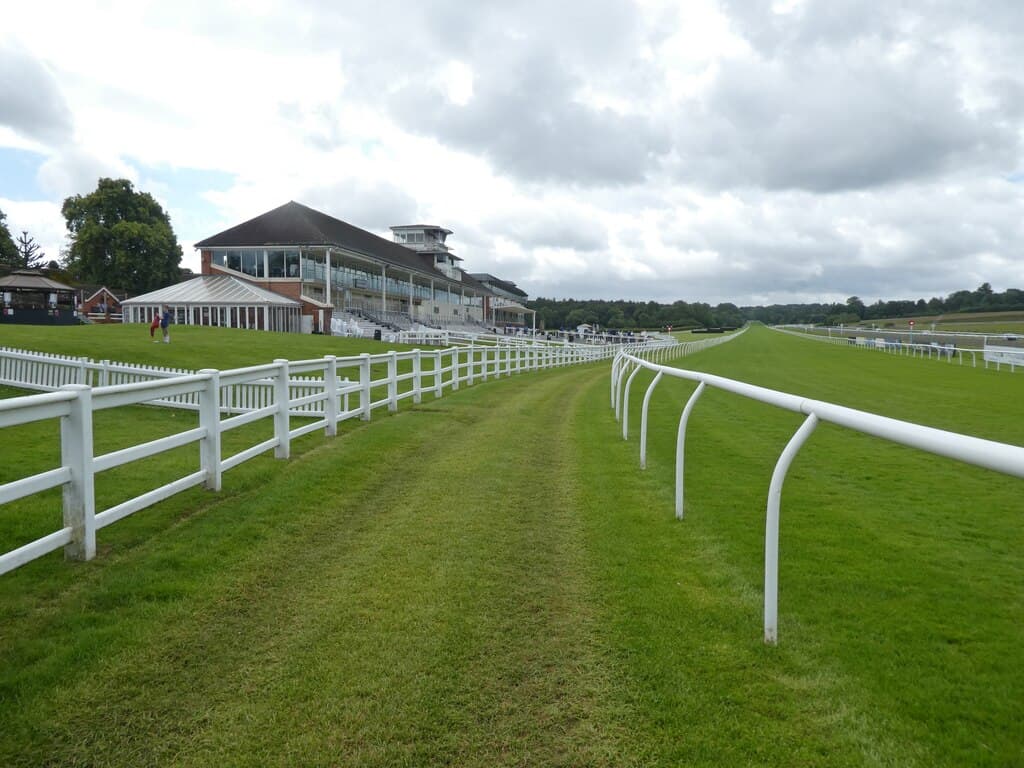
A Day Out at Lingfield Park Racecourse
Everything you need for a day at Lingfield Park — getting there, what to wear, enclosures, food and drink, and insider tips.
Read more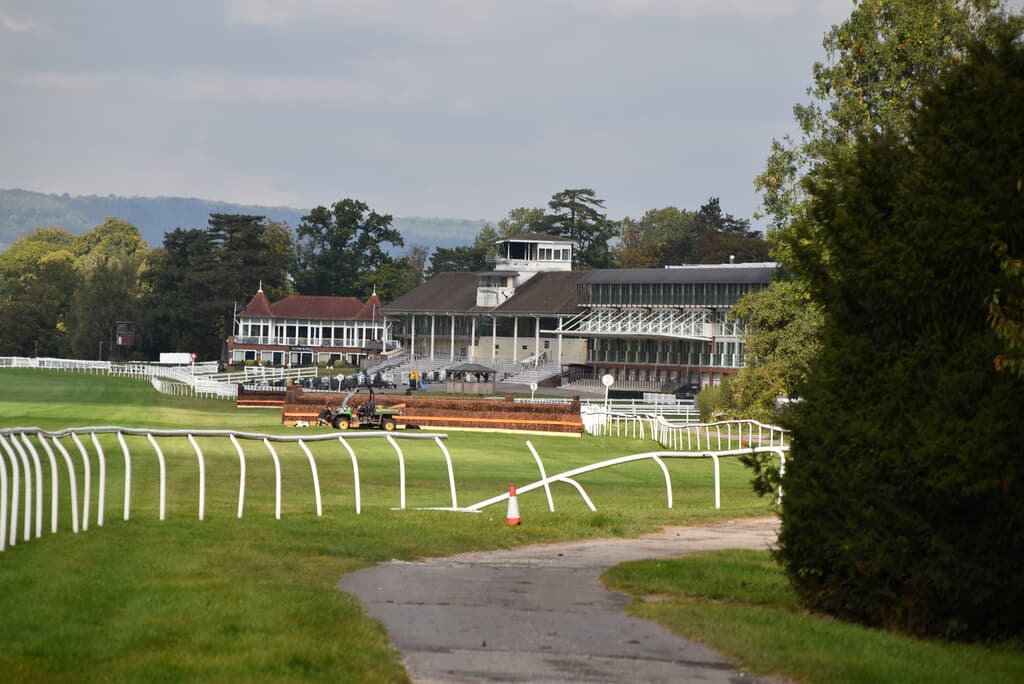
Lingfield Park Winter Derby Festival: Your Complete Guide
Lingfield's Winter Derby weekend is the all-weather season's most prestigious occasion. Here's your guide to the Surrey track's flagship festival and year-round programme.
Read more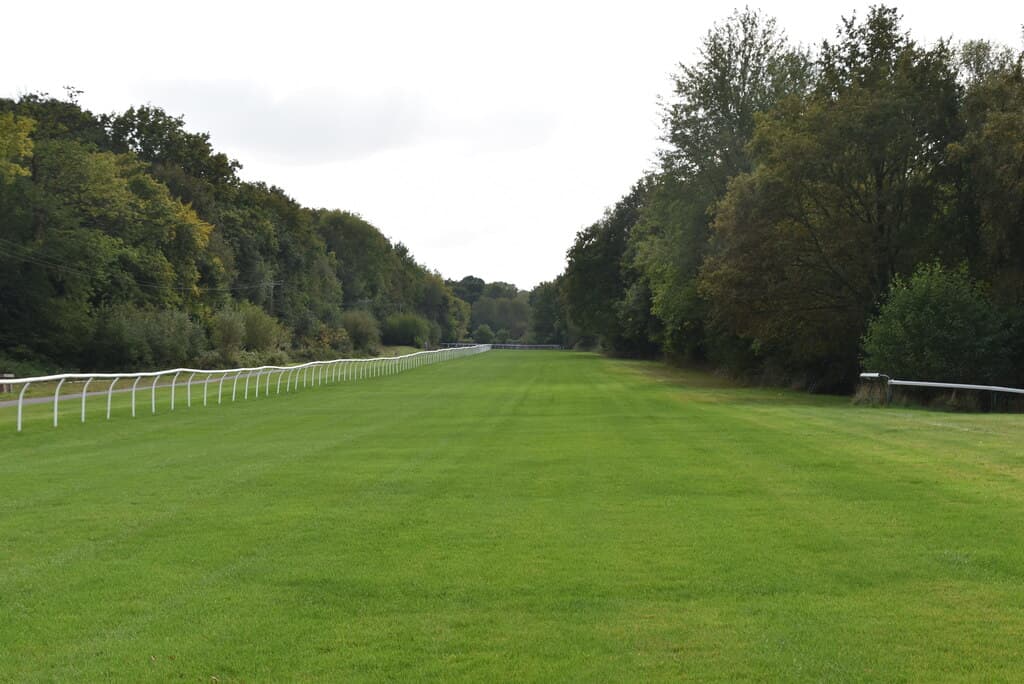
The History of Lingfield Park Racecourse
From a Victorian turf venue to an all-weather pioneer — the fascinating story of Lingfield Park.
Read morePhotos on this page are used under Creative Commons licences. Titles, sources and licence links for each one are on our image credits page.
Research the field with the AI Race Predictor
Our model publishes calibrated win-probability estimates for UK races — a second opinion to understand a race, not tips. It's open about its record: it doesn't beat the market, and we show exactly how it does.
Work it out & learn the basics
Gamble Responsibly
Gambling should be entertaining and not seen as a way to make money. Never bet more than you can afford to lose. If you or someone you know has a gambling problem, help and support is available.