
Founder & Editor · Last reviewed 2026-04-07
Introduction to Musselburgh Racecourse
Musselburgh Racecourse sits five miles east of Edinburgh on the East Lothian coast — Scotland's most urban and accessible racecourse, drawing its crowd from the entire Edinburgh catchment and serving as the country's principal venue for both flat and jump racing within easy reach of a major city. This is not a remote Border country track or a rural backwater; Musselburgh is a proper city-adjacent course with direct rail access, large attendance figures and a programme that covers the full racing year from January through to late autumn.
The racecourse shares its ground with Musselburgh Golf Links, one of the oldest golf courses in the world — a fact that lends the venue a layered history unique in British racing. Golf has been played on these links since at least the sixteenth century, and the racecourse has coexisted with the course for nearly as long. The result is a venue where the natural landscape — coastal turf, sea breezes, low-lying ground looking towards the Firth of Forth — provides an entirely different atmosphere to the inland rural courses of Scotland. On a clear day, looking out from the parade ring, Edinburgh is visible to the west and the waters of the Firth stretch north towards Fife.
The track itself is right-handed and flat — a genuine oval with no significant undulation, relatively sharp in its bends and with a run-in that rewards horses who stay together and finish strongly. The flat profile and the right-handed configuration make Musselburgh a natural fit for sprinters and middle-distance flat horses on the summer programme, and for jump horses who favour honest galloping ground over the more demanding undulating circuits found at Ayr or Kelso. Musselburgh's flatness means exposed weaknesses in jumping technique are harder to hide, but it also means a horse with genuine class rarely gets beaten by the track.
The dual flat and jump programme is central to Musselburgh's identity. Summer flat racing (May through September) draws from the Scottish and northern English flat circuits, with the Edinburgh Cup as the seasonal centrepiece. From November through April the jumps programme takes over, with competitive hurdle and chase cards that attract runners from the major Scottish and northern English jump yards. The New Year's Day fixture stands apart from both as an occasion unto itself — the first race meeting in Britain each year, drawing an attendance and generating an atmosphere that is one of the most distinctive in Scottish sport.
That New Year's Day card deserves special mention because it represents something more than racing. It is the day when Edinburgh-based racegoers make their annual pilgrimage to Musselburgh, when families come who might attend only once a year, and when the occasion of the occasion is almost as important as the racing itself. The bars are full, the crowd is vocal and the combination of January cold, Scottish New Year spirit and good jump racing creates something genuinely memorable. Tickets for the biggest enclosures sell out well in advance; this is one of the few fixtures in the Scottish racing calendar where advance booking is genuinely necessary rather than merely advised.
Musselburgh's Edinburgh proximity — fifteen minutes from Waverley by train, with a direct walk from the station to the course — makes it uniquely accessible by Scottish standards. Racing at Kelso or Perth requires a car; racing at Musselburgh is genuinely achievable without one. That accessibility shapes the crowd and the atmosphere, giving the course a vitality that more remote Scottish venues, however beautiful, cannot always match.
Bet on Musselburgh
Place your bets on Musselburgh races with a trusted bookmaker.

Promo code BETFRED50. New customers only. Register, deposit with a Debit Card, and place a first bet of £10+ at Evens (2.0)+ on Sports, to be settled within 7 days, to get £30 in Sports Free Bets and £20 in Bet Builder Free Bets within 24 hours of settlement. 7-day expiry. Eligibility & payment exclusions apply. Full T&Cs apply. Take Time to Think. BeGambleAware.org. 18+. Full T&Cs.

Promo code R30. New UK customers only, 18+. Register, deposit £10 or more, then place a £10 single cash bet at odds of 1/2 (1.5) or greater on any sports market (excluding Virtuals). Once the qualifying bet settles you get £30 in Free Bets (3 x £10) — the qualifying bet can win or lose. Free Bets are valid on any sports market excluding Virtuals, expire in 7 days, are non-withdrawable and must be used in full. Excluded deposit methods apply (including PayPal, Apple Pay, Skrill and NETELLER). Named bets such as Lucky 15 do not qualify. If you cash out the qualifying bet, or it is voided, you are no longer eligible for the offer. Ends 31.12.26. Full T&Cs apply. Please gamble responsibly. BeGambleAware.org. 18+. Full T&Cs.

Promo code BET40GET20. New UK customers, 18+. Register with the code and place a first bet of £40 or more at Evens (2.0) or greater. Receive 2 × £10 free bets: the first credited automatically once the qualifying bet settles, the second 24 hours later. Free bets must be placed at minimum odds of 4/1 (5.0), expire 24 hours after credit, and the free-bet stake is not returned with winnings. Debit card deposits only. Take Time to Think. BeGambleAware.org. 18+. T&Cs apply. Full T&Cs.

50% of your first-day net losses refunded as a free bet, capped at £25. New UK customers aged 18+ only. To qualify, deposit and place a first bet of £10 or more on any sport at minimum odds of evens (2.00), then place at least two further bets on different events, each worth at least 50% of your largest bet, all at evens (2.00) or greater. Losses are counted from your first settled bet until 23:59 the same day. Place a qualifying £10+ bet and you are guaranteed at least a £5 free bet. Bets placed at SP, void bets, cashed-out bets and bets struck with free bets do not count towards the offer. The free bet is credited the day after your qualifying bets settle and must be used within 7 days, after which it expires. It can be used at odds from 1/4 (1.25) up to 250/1 on singles and straight accumulators, but not on Trixie, Patent or Yankee style multiples. Free-bet stake is not returned with winnings. One offer per person, household, address, IP address and device. E-wallet deposits may not qualify, so check the cashier before depositing. Customers registered with GAMSTOP cannot claim. KYC identity verification must be completed before the free bet is credited. Take Time to Think. BeGambleAware.org. 18+. T&Cs apply. Full T&Cs.

New customers, 18+. Choose the sports bonus at sign-up, make a first deposit and receive a 100% bonus up to £50 in your Sports Bonus balance. To convert the bonus to cash, wager it 10x within 30 days. Single bets below Evens (2.00) do not qualify; accumulators do not qualify if any selection is below 1/2 (1.50). Virtual Sports, voided, cancelled, drawn, cashed-out and free-bet wagers do not count towards wagering. Only the first settled bet per event counts. Withdrawing before the wagering requirement is met forfeits the bonus balance including bonus winnings. Real-money funds are used before bonus funds. Deposits via Skrill or Neteller are not eligible. Not valid in conjunction with other promotions. Odds, bet and payment limits apply. 10bet general and promotion T&Cs apply. BeGambleAware.org. 18+. Full T&Cs.

New customers in Great Britain and Republic of Ireland, 18+. Place a £10 fixed-odds qualifying bet at minimum odds of 1/2 (1.50) — single or each-way (only the win part counts), pre-event or in-play, not cashed out early, within 28 days of opening the account. Receive up to £60 in bonuses credited over three days: 3 × £10 fixed-odds free bets (the first on settlement, then 24 and 48 hours later) plus 3 × £5 Total Goals FOOTBALL spread bets, 3 × £5 racing Winning Favourites spread bets and a £1 racing Race Index spread bet (the spread bets need a full spread-betting account). Free-bet stakes not returned with winnings; free bets valid 28 days from issue. IMPORTANT: the £5 credits are SPREAD bets — sports spread betting carries the risk that losses can exceed your stake. Sports spread-betting customers do not have Financial Ombudsman or FSCS recourse. Take Time to Think. BeGambleAware.org. 18+. T&Cs apply. Full T&Cs.

Promo code WELCOME15, entered under My Bonuses after registering. New UK customers, 18+. Place a first qualifying bet of at least £10 from your cash balance at odds of evens (2.0) or greater within 7 days of opening the account. Once the qualifying bet fully settles you receive £15 in free bets, credited as 3 x £5 tokens with set uses: one £5 accumulator free bet (minimum 4 legs, each leg at 2/5 or bigger), one £5 sports free bet (any market at evens or bigger) and one £5 Sub Cover free bet (selected football player markets at evens or bigger). Free-bet stakes are not returned with winnings. Free bets expire 7 days after they are credited. Void, cashed-out and partially cashed-out bets do not qualify. One offer per customer. Confirm the current terms on BetGoodwin's own welcome-offer page before claiming. Take Time to Think. BeGambleAware.org. 18+. T&Cs apply. Full T&Cs.

New UK customers, 18+. Minimum deposit £10. Place a £10 qualifying single at minimum odds of 1/2 (1.50), settled within 14 days. Receive £30 in free bets (stake not returned), split £20 for sportsbook use (2 x £10) and £10 for Bet Builder only (2 x £5); Bet Builder does not cover horse racing. Free bets must be accepted within 7 days and expire 7 days after acceptance. No promo code required. Best Odds Guaranteed on UK & Irish racing, subject to having staked over £25 in the previous seven days. Operated by LiveScore Betting and Gaming (Gibraltar) Ltd, UKGC 56859. Confirm the current terms on LiveScore Bet's own promotions page before claiming. Take Time to Think. BeGambleAware.org. 18+. T&Cs apply. Full T&Cs.
18+. BeGambleAware.org
Day-by-Day Guide
Musselburgh Festival Calendar: Day by Day
Musselburgh's dual flat and jump programme means the racing year divides into clearly distinct phases, each drawing a different audience and generating a different atmosphere. From the extraordinary New Year's Day fixture in January to the summer flat series through the warm months of July and August, Musselburgh serves a broader section of the Scottish racing audience than any other venue in the country.
New Year's Day Fixture: Scotland's Greatest Racing Occasion
January 1st at Musselburgh is one of the great British racing occasions — not just in Scotland, but as a fixture in the national jump calendar. The race meeting on New Year's Day is the first in Britain each year, and that distinction alone is enough to generate a level of attention and attendance that the course's other fixtures, however excellent, cannot match.
The crowd on New Year's Day is unlike any other Musselburgh crowd. Families who might attend racing once a year, Edinburgh city-dwellers drawn by the novelty of the occasion and the closeness of the venue, regular racegoers who make it an annual tradition, and those still carrying some of the previous night's festivities — all converge on the East Lothian coast in numbers that regularly fill the enclosures. The atmosphere is genuinely festive in a way that goes beyond the usual racing-day warmth. There is something about the combination of Scottish New Year, the coastal January air, and the spectacle of jump racing that produces an occasion that people return to year after year.
The racing itself is serious. The Auld Reekie Handicap Chase (Class 2, 2m 4f 68y) is the centrepiece, supported by the Hogmaneigh Handicap Hurdle (Class 3). There is no Listed or Graded race on the card. The supporting programme of handicap chases and hurdles is strong, and the going — typically soft to heavy on the East Lothian turf in January — produces honest tests that sort out the genuine stayers from those simply starting their season with a pipe-opener. Buy tickets well in advance; this is one of the few Scottish racing days that genuinely sells out popular enclosures.
Edinburgh Cup Sprint Day: Summer Flat Highlight
July brings the Edinburgh Cup — Musselburgh's most prestigious flat race and the centrepiece of the summer flat programme. The Edinburgh Cup is a Listed sprint, and it attracts Scottish-campaign horses from the major northern flat yards alongside occasional visitors who have targeted the race specifically.
Sprint day at Musselburgh has a different character from the jump programme — faster horses, shorter races, a crowd that includes a higher proportion of flat-racing devotees. The East Lothian summer is at its best in July, the coastal breezes keep the temperature pleasant, and the view from the grandstand — golf links stretching to the right, the Firth of Forth visible in the distance — is one of the more distinctive in British summer racing. The going on Edinburgh Cup day is typically good to firm, having dried through June and early July, and the race rewards horses with genuine sprint speed and the ability to handle quick ground.
Summer Flat Series: May Through September
From May onwards, Musselburgh's flat programme provides regular competitive racing for the northern flat community. Keith Dalgleish, Jim Goldie, and other Scottish and northern English trainers use the summer flat cards to campaign their horses through a period when the bigger southern meetings dominate the racing news but when solid prizes remain available at venues like Musselburgh, Ayr and Hamilton Park.
The summer flat series attracts a consistent crowd that has a strong local flavour — Edinburgh and the surrounding East Lothian and Midlothian communities. Evening meetings in June and July are particularly popular, drawing people who come straight from work and stay for the racing and the post-racing atmosphere that the course's facilities support well.
Winter Jump Programme: November Through April
When October brings the first autumn rains and the jump season proper resumes, Musselburgh shifts to its National Hunt programme. The winter jump meetings run from November through April, with Lucinda Russell and other Scottish trainers providing a consistent stream of runners from the north. Competitive handicap hurdle and chase cards draw fields from across Scotland and occasionally from northern English yards that make the trip north for specific races.
The jump programme at Musselburgh has benefited from its proximity to Edinburgh — larger attendance figures than most comparable-grade Scottish jump venues, good facilities, and the kind of competitive prize money that attracts quality horses. The East Lothian coast can be brutal in January and February — wind off the Firth is sharp and cold — but the flat turf drains well and the course can race through most winter weather without significant delays.
Easter Jump Festival: Spring Bank Holiday
The Easter Bank Holiday jump card is the winter jump programme's closing flourish. Spring arrives earlier on the East Lothian coast than it does inland, and the April Easter card tends to have a lightness of mood that the heavy midwinter meetings lack. Novice chasers making their final runs of the season, handicappers who have found their mark through the winter, and the occasional progressive horse building a sequence — the Easter meeting draws a good crowd and wraps the jump programme in suitable style before the summer flat season takes over.
Key Races to Watch
Key Races at Musselburgh
Musselburgh's dual flat and jump programme produces a varied set of key races that span the calendar from January through to October. The most prestigious flat race, the Edinburgh Cup, sits alongside the New Year's Day handicaps and the Silver Arrow handicap series to define the course's competitive identity across both codes.
The Edinburgh Cup (Listed Sprint, Summer)
The Edinburgh Cup is Musselburgh's most prestigious race — a Listed sprint that stands as the centrepiece of the summer flat programme and the race around which the course's flat identity is most clearly defined. Run at around six furlongs on the right-handed flat oval, the Edinburgh Cup attracts the best of the Scottish-campaign sprinters alongside northern English horses whose summer programme includes the east-coast flat circuit.
The right-handed configuration at Musselburgh is worth understanding in the context of the Edinburgh Cup. Sprint races on right-handed tracks suit horses that have raced around similar configurations; the draw has historically been a factor in races of this type, with the lower-numbered stalls holding a slight advantage depending on rail positioning. The fast-draining East Lothian turf in July produces ground that is typically good to firm — true sprint conditions that reward horses with genuine top-end speed rather than stamina.
The Edinburgh Cup has historical prestige within Scottish racing that goes beyond its Listed grade. Winning the race is a genuine achievement on the Scottish flat calendar, and yards from across Britain that target the Scottish summer circuit specifically will often aim at Edinburgh Cup day as their seasonal high point. Keith Dalgleish, Jim Goldie and other Scottish flat trainers use the race as a season-defining target.
The New Year's Day handicaps (January 1st)
Musselburgh is the only British course racing on 1 January, and the card is built around two handicaps: the Auld Reekie Handicap Chase (Class 2, two miles four furlongs and 68 yards) and the Hogmaneigh Handicap Hurdle (Class 3, two miles three furlongs and 171 yards). Neither is Listed or Graded, and the fixture's standing comes from the occasion rather than the classification. Both draw National Hunt horses from across Scotland and northern England, and the timing gives them a specific character: many runners have had one or two outings in October or November, then been freshened for their winter campaign.
The fitness dynamic on New Year's Day is important. Horses that ran in late November or early December before a planned break are typically in excellent condition; horses that ran in October and have been idle for two months may be ring-rusty. For betting purposes, horses with a late autumn run behind them, particularly those that ran well without winning in November at competitive venues, tend to be better placed than those returning from longer lay-offs.
Musselburgh Silver Arrow (Sprint Handicap, Summer)
The Silver Arrow handicap sprint is part of the summer flat programme's competitive backbone — a handicap race that runs through a series format and connects to other Scottish sprint handicap events at Hamilton Park and Ayr. Horses that compete consistently through the Scottish summer sprint circuit build profiles that make them reliable betting propositions: once a horse has demonstrated an aptitude for right-handed flat sprinting on the east-coast Scottish courses, the form transfers dependably.
The Silver Arrow's series format means there are early-round qualifiers and a final, giving the race a structure that rewards trainers who plan a summer campaign specifically around the circuit. Casual visitors who enter a single leg without previous course form tend to struggle against the circuit specialists.
The East Lothian Chase (Handicap Chase, Winter)
The East Lothian Chase is the winter jump programme's most important handicap chase — a competitive event run over two miles and five furlongs to three miles on typically soft winter ground, drawing fields from the Scottish and northern English jump community. Lucinda Russell and the other Scottish jump training yards use this race as a mid-season marker, and the form it produces through the winter connects directly to the spring festival programme.
The East Lothian Chase on the flat Musselburgh circuit is a good test of jumping technique on fast-running, flat ground. Unlike the undulating Kelso chase programme, Musselburgh's flat oval means there are no topographical challenges to navigate — the premium is on clean jumping and staying power over a sustained pace. Horses that win this race convincingly are frequently competitive at a higher level at Ayr, Kelso or the major Scottish spring meetings.
Betting Preview
Betting at Musselburgh: A Strategic Guide
Musselburgh's dual flat and jump programme creates two distinct betting contexts within the same venue. The strategies that apply to the summer flat sprint programme are fundamentally different from those relevant to the winter jump cards and the unique New Year's Day fixture. Understanding the differences — and the common threads — is the foundation of any serious Musselburgh betting approach.
New Year's Day: Fitness is Everything
The New Year's Day fixture demands a specific analytical approach. This is a jump card held on January 1st, which means the horses running have been through one of two preparation routes: a recent run in late November or December followed by a deliberate freshening, or a return from a longer break without a recent race.
The horses that held a recent run benefit enormously. A horse that ran well at Kelso, Haydock or another competitive jump venue in November or December — showing good form, jumping well, and finishing in the places — arrives at Musselburgh on New Year's Day fit, sharp and with its jumping mechanics well-tuned. Compare that to a horse returning from a two-month absence, however well it may have worked at home: the ring rust factor in jump racing is real, and New Year's Day is too early in the season for a cold, rusty horse to be trusted at short prices.
The specific pattern to identify: horses with a competitive run between November 15 and December 20, finishing second or third in decent company, entered in the New Year's Day handicaps. These horses are often not at their peak favourites' prices because the market focuses on those with the strongest form, but a fit, progressive horse just outside the first line of form often represents the best value.
Sprint Form Transfers
On the flat programme, form from Hamilton Park and Ayr transfers directly and reliably to Musselburgh. All three courses are right-handed and flat (or close to it); the Scottish sprint circuit is genuinely consistent in its demands, and a horse that has won at Hamilton on good to firm ground, finding six furlongs on a flat right-handed circuit to its liking, deserves to be the favourite for a similar Musselburgh sprint.
The Edinburgh Cup specifically benefits from this analytical approach. Horses that have been competitive on the Scottish and northern English sprint circuit through May and June arrive at Musselburgh in July with directly comparable form. The key judgment is whether they have peaked or whether the form is still progressive — a horse that ran well three times in May and June and is entered for the Edinburgh Cup in July may be at the top of its form or may be a tired horse running one race too many.
Scottish Trainer Patterns
Keith Dalgleish and Jim Goldie are the dominant local flat trainers, and their records at Musselburgh are worth checking systematically before every flat meeting. Both yards are well-placed for the course — short travel, familiar environment, and horses specifically prepared for the Scottish flat circuit. The flat programme equivalent of the Kelso local-trainer premium applies here: a Dalgleish or Goldie runner at Musselburgh that has shown reasonable recent form should be given a somewhat higher probability than its odds imply.
For the winter jump programme, Lucinda Russell is the dominant local trainer. Her Edinburgh-area operation means Musselburgh jump meetings are effectively home fixtures, and her strike rate at the course consistently outperforms the national average for trainers of her ranking. Any Russell runner at Musselburgh's jump meetings with recent form behind it deserves careful consideration.
Coastal Going: The Drying Factor
East Lothian's coastal location means the ground at Musselburgh dries faster in spring and early summer than at inland tracks of equivalent elevation. The Firth of Forth breezes that can make January days feel brutal also accelerate drying as the season progresses. Good to firm can arrive at Musselburgh several weeks earlier in the year than at comparable tracks inland, and this catches out visitors and betting markets alike.
In practical terms: when May arrives and other Scottish tracks are still reporting good or good to soft, check the Musselburgh going carefully. It is often already good to firm, and horses that prefer faster conditions — lighter, more speed-based types — gain a significant advantage over those entered optimistically on the assumption of more forgiving ground. The going board at Musselburgh is one of the most important pieces of intelligence for early-season flat betting in Scotland.
The Winter Jump and Form Quality
One contextual note about betting the Musselburgh winter jump programme: the competition level here is genuinely good by Scottish standards but not comparable to the major English jump venues. A horse that has shown useful English form at Wetherby or Haydock moving to the Musselburgh winter programme faces a significant drop in competition level, and this means well-handicapped English horses can dominate the Scottish winter circuit in a way that distorts the market. When a confirmed good-quality English jump horse enters a Musselburgh winter handicap, weigh the competition-level differential carefully before accepting the implied odds.
Visitor Information
Visiting Musselburgh Racecourse: Practical Guide
Getting There
Musselburgh is the most accessible racecourse in Scotland — a combination of direct rail connection, Edinburgh proximity and well-organised road access that makes it achievable without a car in a way that almost no other Scottish venue can claim.
By rail: Musselburgh station is approximately five minutes' walk from the racecourse entrance — one of the closest station-to-track connections in British racing. Trains from Edinburgh Waverley to Musselburgh take approximately 12 minutes, with a regular service throughout the day. From Edinburgh Waverley the journey is simple: take a stopping train on the East Coast line to Musselburgh, walk five minutes to the course. On New Year's Day the service is modified — check ScotRail timetables in advance, as reduced holiday services operate on January 1st and the trains fill early. For the summer flat programme, the regular Edinburgh-North Berwick or Edinburgh-Dunbar stopping service calls at Musselburgh with no changes required.
By bus: Regular Lothian Buses services run between Edinburgh city centre and Musselburgh throughout the day, with the stop near the course easily accessible. Race-day buses also run from central Edinburgh for major meetings, including New Year's Day.
By car: The course is on the A1 east of Edinburgh, approximately five miles from the city centre. Follow the A1 eastbound from Edinburgh, take the Musselburgh junction, and the course is well-signposted. On-site and adjacent parking is available. The A1 can be slow through Portobello on busy days — allow extra time.
The Course
Musselburgh Racecourse shares its land with Musselburgh Golf Links — one of the oldest golf courses in the world, with the claim that golf has been played here since the sixteenth century. The racing oval sits within and around the golf links in a configuration that is entirely unique among British racecourses. The setting is coastal East Lothian — relatively flat, with views north towards the Firth of Forth and west towards Edinburgh. On clear days Arthur's Seat is visible above the city skyline.
The main grandstand provides good views along the back straight and around the final turn. The lawns and enclosure beside the golf links are pleasant in summer and distinctive at any time of year. The paddock is well-positioned for close observation of the horses before racing.
What to Wear
The dress code is smart casual throughout the year, but the practical demands change dramatically with the season. For New Year's Day: warm, windproof and waterproof. The East Lothian coast on January 1st is seriously cold — wind off the Firth is sharp, and even standing in the grandstand for an extended period requires serious preparation. Thermal layers, a good coat, hat and gloves are not optional. For the summer flat programme: lighter attire is appropriate, but the coastal breezes mean a layer is wise even on warm Edinburgh summer days.
New Year's Day: Advance Booking Essential
New Year's Day at Musselburgh is unlike any other race day at the course. Demand for tickets — particularly for the popular enclosures and any hospitality packages — exceeds supply, and the major enclosures sell out well in advance of January 1st. If you are planning to attend the New Year fixture, book tickets as early as possible, typically in November or early December. The year-to-year demand means that leaving ticket purchase until the week before will result in disappointment for the best enclosures.
Edinburgh: The Post-Racing Capital
One of Musselburgh's principal advantages over every other Scottish racecourse is what it offers after racing: Edinburgh city centre is fifteen minutes from Musselburgh by train, and the city's restaurants, bars and entertainment options are exceptional. The combination of an afternoon's racing at Musselburgh followed by dinner in Edinburgh's New Town or the Grassmarket represents one of the best race-day experiences available in Scotland.
For New Year's Day specifically, the connection to Edinburgh's Hogmanay continuation is obvious — Musselburgh racing followed by a return to the city for the evening is a natural progression for those celebrating the New Year across multiple days.
Accommodation
Edinburgh has extensive hotel accommodation at all price points. For Musselburgh itself, there are B&B and hotel options in the town, and East Lothian's coastal villages (North Berwick, Haddington, Dirleton) offer quality accommodation within twenty minutes of the course. For the New Year fixture, Edinburgh hotels fill rapidly — book several months in advance.
Share this article
More about this racecourse
All Musselburgh guides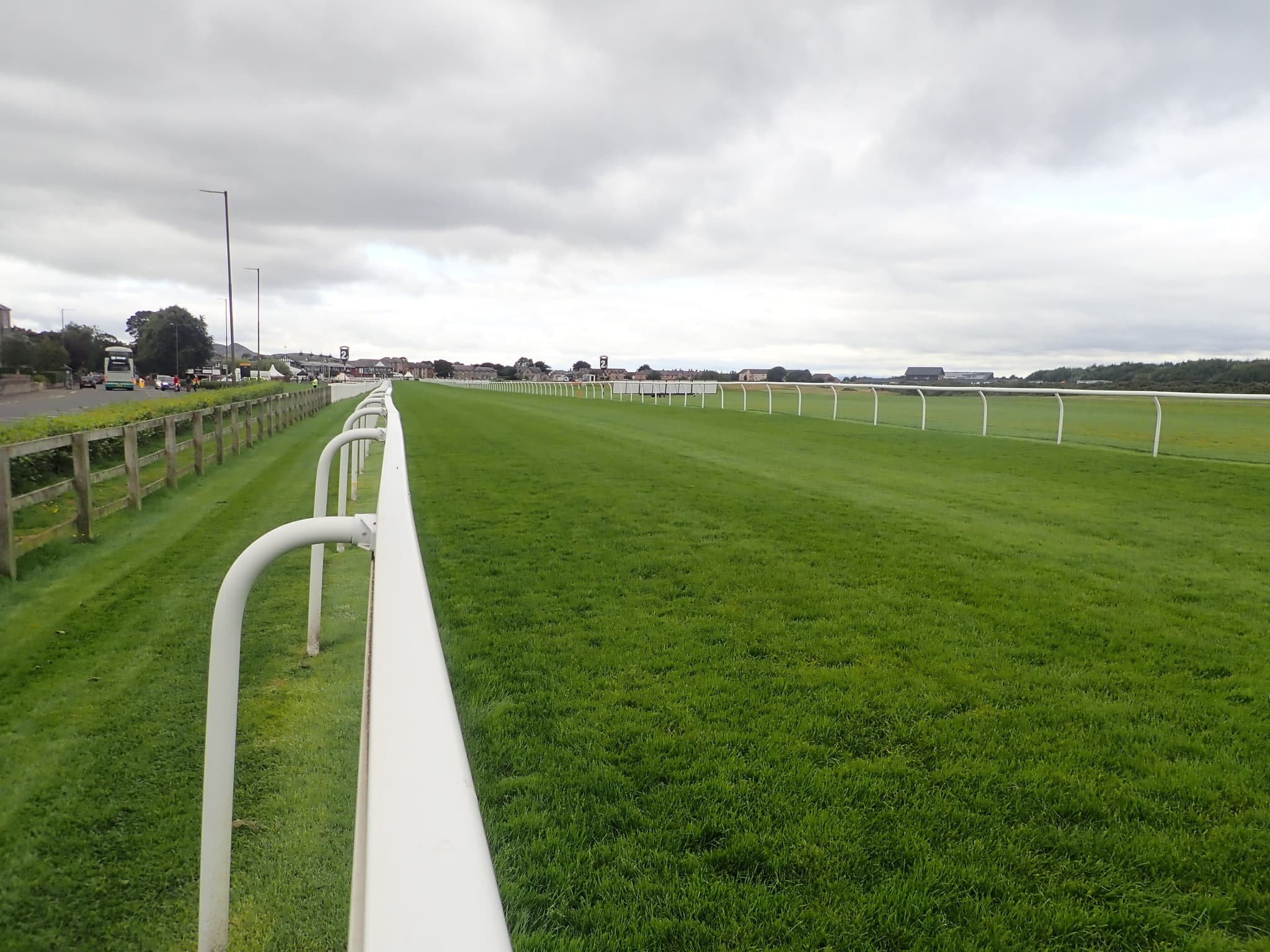
Musselburgh Racing History: 200 Years from Leith Sands
Discover how Musselburgh evolved from Leith sands racing in the 1800s to Scotland's premier dual-purpose course at Edinburgh's doorstep.
Read more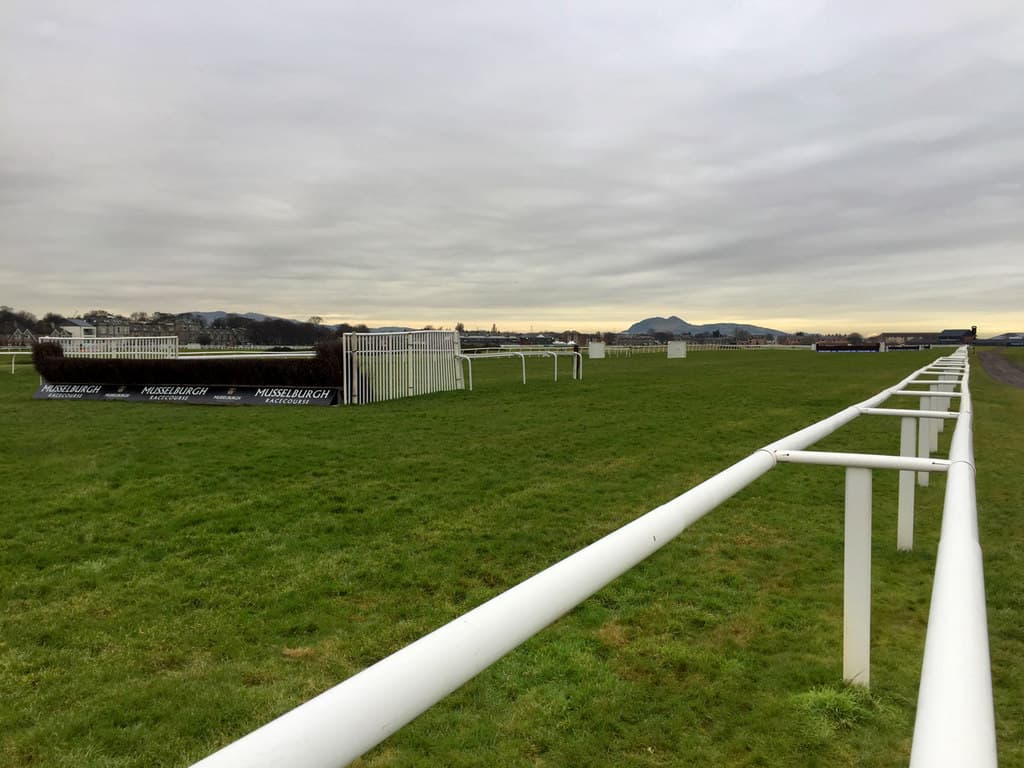
Musselburgh New Year's Day: Complete Guide
Musselburgh New Year's Day meeting — Scotland's largest sporting event on 1 January, with jumps racing, live music, and festive atmosphere.
Read more
New Year's Day Racing at Musselburgh: The Complete Guide
Your guide to New Year's Day racing at Musselburgh — Britain's most atmospheric January 1st occasion. Race card breakdown, betting angles, how to get there from Edinburgh, and what to expect from Scotland's most festive race day.
Read morePhotos on this page are used under Creative Commons licences. Titles, sources and licence links for each one are on our image credits page.
Research the field with the AI Race Predictor
Our model publishes calibrated win-probability estimates for UK races — a second opinion to understand a race, not tips. It's open about its record: it doesn't beat the market, and we show exactly how it does.
Work it out & learn the basics
Gamble Responsibly
Gambling should be entertaining and not seen as a way to make money. Never bet more than you can afford to lose. If you or someone you know has a gambling problem, help and support is available.