
Founder & Editor · Last reviewed 2026-04-05
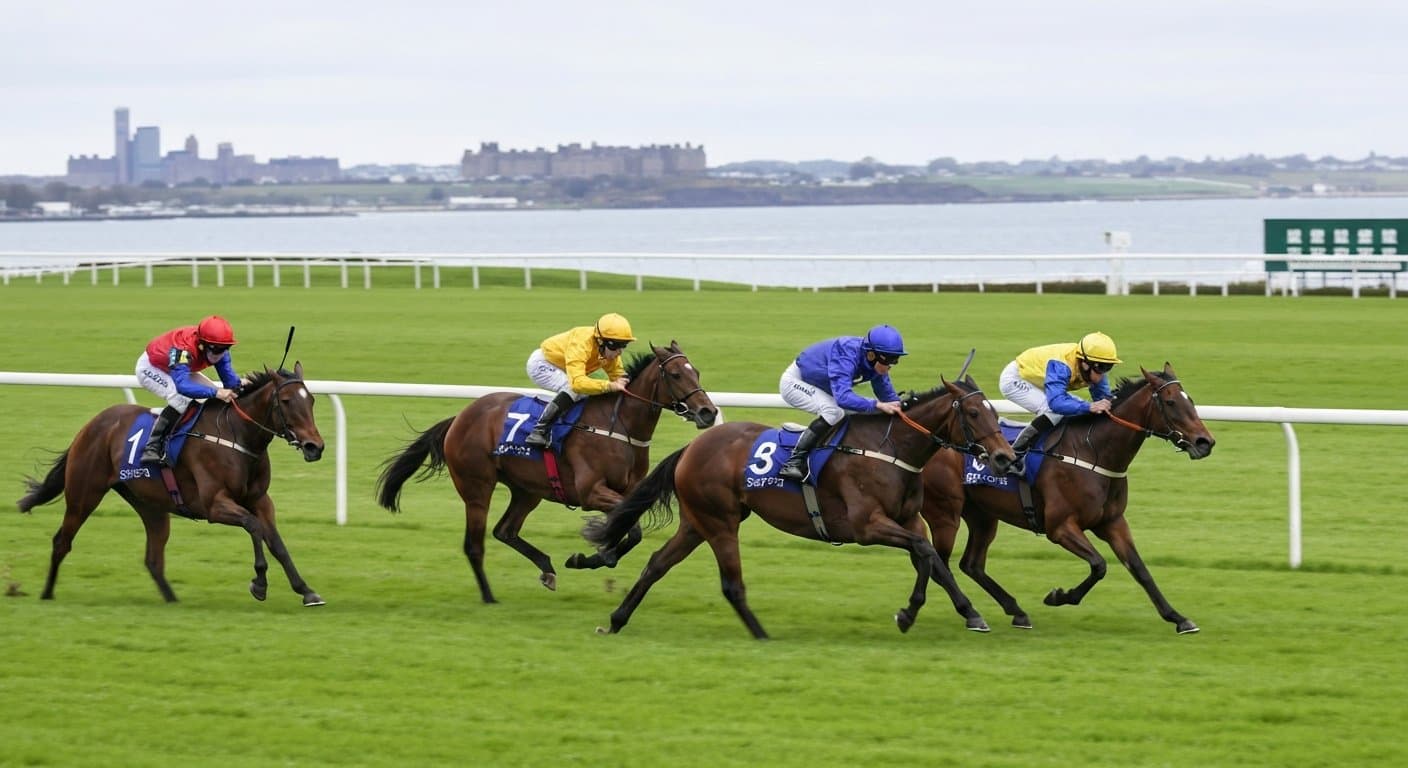
Musselburgh Racecourse sits inside Musselburgh Links, one of the oldest golf courses in the world, six miles east of Edinburgh on the East Lothian coast. The setting tells you something about the track: compact, windswept, and built into the landscape rather than cut out of it. What makes Musselburgh distinctive as a betting proposition is that it operates both a flat programme (April to November) and a National Hunt programme (October to April), sharing the same right-handed 1m2f circuit. For bettors, that dual-purpose calendar creates specific angles that do not exist at single-code venues.
The flat programme is anchored by the Scottish Sprint Cup, a Listed 6f race run in July that draws the best sprint talent north of the border. Keith Dalgleish, based at Carluke in Lanarkshire roughly 40 miles south-west, has dominated the race and the Musselburgh flat programme more broadly. His strike rate at the course consistently outperforms his national average, and that local knowledge translates into a reliable betting angle. On the National Hunt side, the Edinburgh Gold Cup — a Listed chase run in spring — is the flagship, with Lucinda Russell's Kinross yard, around 30 miles north, the key targeting stable.
The circuit itself is flat throughout, which has practical consequences. There is no testing gradient to expose horses that stay on at Beverley or Hamilton Park; what matters at Musselburgh is tractability on the turns and a clean jump at the hurdles and fences. The East Lothian climate keeps the flat programme largely on good to firm ground in June and July, but the NH season increasingly operates on softer ground from October onwards as Scottish rainfall picks up.
Five things to know before betting at Musselburgh:
- Keith Dalgleish's flat runners, particularly in sprint handicaps, carry a home-advantage premium worth identifying before prices shorten
- Low draws (stalls 1–4) provide a modest but consistent advantage in 5f and 6f races when fields exceed 12 runners; the effect disappears beyond 7f
- The tight 1m2f circuit disadvantages horses that are accustomed to galloping wide and flat tracks such as Newmarket or York
- Lucinda Russell targets the Edinburgh Gold Cup annually; her Musselburgh NH record is worth checking before that race
- The New Year's Day card, a longstanding Scottish racing tradition, often runs on tricky ground with light fields — market confidence carries more weight than usual on that specific day
Bet on Musselburgh
Place your bets on Musselburgh races with a trusted bookmaker.

Promo code BETFRED50. New customers only. Register, deposit with a Debit Card, and place a first bet of £10+ at Evens (2.0)+ on Sports, to be settled within 7 days, to get £30 in Sports Free Bets and £20 in Bet Builder Free Bets within 24 hours of settlement. 7-day expiry. Eligibility & payment exclusions apply. Full T&Cs apply. Take Time to Think. BeGambleAware.org. 18+. Full T&Cs.

Promo code R30. New UK customers only, 18+. Register, deposit £10 or more, then place a £10 single cash bet at odds of 1/2 (1.5) or greater on any sports market (excluding Virtuals). Once the qualifying bet settles you get £30 in Free Bets (3 x £10) — the qualifying bet can win or lose. Free Bets are valid on any sports market excluding Virtuals, expire in 7 days, are non-withdrawable and must be used in full. Excluded deposit methods apply (including PayPal, Apple Pay, Skrill and NETELLER). Named bets such as Lucky 15 do not qualify. If you cash out the qualifying bet, or it is voided, you are no longer eligible for the offer. Ends 31.12.26. Full T&Cs apply. Please gamble responsibly. BeGambleAware.org. 18+. Full T&Cs.

Promo code BET40GET20. New UK customers, 18+. Register with the code and place a first bet of £40 or more at Evens (2.0) or greater. Receive 2 × £10 free bets: the first credited automatically once the qualifying bet settles, the second 24 hours later. Free bets must be placed at minimum odds of 4/1 (5.0), expire 24 hours after credit, and the free-bet stake is not returned with winnings. Debit card deposits only. Take Time to Think. BeGambleAware.org. 18+. T&Cs apply. Full T&Cs.

50% of your first-day net losses refunded as a free bet, capped at £25. New UK customers aged 18+ only. To qualify, deposit and place a first bet of £10 or more on any sport at minimum odds of evens (2.00), then place at least two further bets on different events, each worth at least 50% of your largest bet, all at evens (2.00) or greater. Losses are counted from your first settled bet until 23:59 the same day. Place a qualifying £10+ bet and you are guaranteed at least a £5 free bet. Bets placed at SP, void bets, cashed-out bets and bets struck with free bets do not count towards the offer. The free bet is credited the day after your qualifying bets settle and must be used within 7 days, after which it expires. It can be used at odds from 1/4 (1.25) up to 250/1 on singles and straight accumulators, but not on Trixie, Patent or Yankee style multiples. Free-bet stake is not returned with winnings. One offer per person, household, address, IP address and device. E-wallet deposits may not qualify, so check the cashier before depositing. Customers registered with GAMSTOP cannot claim. KYC identity verification must be completed before the free bet is credited. Take Time to Think. BeGambleAware.org. 18+. T&Cs apply. Full T&Cs.

New customers, 18+. Choose the sports bonus at sign-up, make a first deposit and receive a 100% bonus up to £50 in your Sports Bonus balance. To convert the bonus to cash, wager it 10x within 30 days. Single bets below Evens (2.00) do not qualify; accumulators do not qualify if any selection is below 1/2 (1.50). Virtual Sports, voided, cancelled, drawn, cashed-out and free-bet wagers do not count towards wagering. Only the first settled bet per event counts. Withdrawing before the wagering requirement is met forfeits the bonus balance including bonus winnings. Real-money funds are used before bonus funds. Deposits via Skrill or Neteller are not eligible. Not valid in conjunction with other promotions. Odds, bet and payment limits apply. 10bet general and promotion T&Cs apply. BeGambleAware.org. 18+. Full T&Cs.

New customers in Great Britain and Republic of Ireland, 18+. Place a £10 fixed-odds qualifying bet at minimum odds of 1/2 (1.50) — single or each-way (only the win part counts), pre-event or in-play, not cashed out early, within 28 days of opening the account. Receive up to £60 in bonuses credited over three days: 3 × £10 fixed-odds free bets (the first on settlement, then 24 and 48 hours later) plus 3 × £5 Total Goals FOOTBALL spread bets and 3 × £5 racing Winning Favourites spread bets, with a £1 racing Race Index spread bet as an extra on top. The spread bets need a full spread-betting account, opened within 28 days of the fixed-odds account and subject to Spreadex's eligibility and appropriateness checks. Free-bet stakes not returned with winnings; free bets valid 28 days from issue. IMPORTANT: the £5 credits are SPREAD bets — sports spread betting carries the risk that losses can exceed your stake. Sports spread-betting customers do not have Financial Ombudsman or FSCS recourse. Take Time to Think. BeGambleAware.org. 18+. T&Cs apply. Full T&Cs.

Promo code WELCOME15, entered under My Bonuses after registering. New UK customers, 18+. Place a first qualifying bet of at least £10 from your cash balance at odds of evens (2.0) or greater within 7 days of opening the account. Once the qualifying bet fully settles you receive £15 in free bets, credited as 3 x £5 tokens with set uses: one £5 accumulator free bet (minimum 4 legs, each leg at 2/5 or bigger), one £5 sports free bet (any market at evens or bigger) and one £5 Sub Cover free bet (selected football player markets at evens or bigger). Free-bet stakes are not returned with winnings. Free bets expire 7 days after they are credited. Void, cashed-out and partially cashed-out bets do not qualify. One offer per customer. Confirm the current terms on BetGoodwin's own welcome-offer page before claiming. Take Time to Think. BeGambleAware.org. 18+. T&Cs apply. Full T&Cs.

New UK customers, 18+. Minimum deposit £10. Place a £10 qualifying single on sports (excluding virtuals) at minimum odds of 1/2 (1.50), settled within 14 days. Deposit-method exclusions apply. Receive £30 in free bets (stake not returned), split £20 for sportsbook use (2 x £10) and £10 for Bet Builder only (2 x £5); Bet Builder does not cover horse racing. Free bets must be accepted within 7 days and expire 7 days after acceptance. No promo code required. Best Odds Guaranteed on UK & Irish racing, subject to having staked over £25 in the previous seven days. Operated by LiveScore Betting and Gaming (Gibraltar) Ltd, UKGC 56859. Confirm the current terms on LiveScore Bet's own promotions page before claiming. Take Time to Think. BeGambleAware.org. 18+. T&Cs apply. Full T&Cs.
18+. BeGambleAware.org
Track Characteristics
The Circuit
Musselburgh's racing circuit is a right-handed oval of approximately 1m2f, set within the boundaries of Musselburgh Links golf course on the East Lothian coast. The track is entirely flat — there is no camber to speak of and no significant undulation. The bends are reasonably tight for a course of this circumference, tighter than Haydock and considerably tighter than York, though not as sharp as Chester. The run-in from the final bend to the winning post is short: roughly two furlongs for flat racing. Horses need to have their finishing position secured before that last turn, which punishes hold-up horses who rely on a long straight to make up ground.
The Links setting creates a specific microclimate. There is little natural wind shelter, and the Firth of Forth is close enough to the back straight that wind direction is a practical factor on exposed days. The going is rarely affected by waterlogging — linksland drains freely — but the exposed position means evaporation can also be swift, so ground that is watered during dry spells can revert quickly.
Flat Racing Characteristics
For flat racing, the key implication of Musselburgh's layout is that position in running matters more than raw ability. The tight right-handed bends compress the field on the turns, which means horses wide of the rail burn extra ground. A horse racing in stall 14 in a 5f sprint is already at a structural disadvantage before the gates open. The ideal Musselburgh flat performer is compact, well-balanced on a right-handed turn, and able to travel prominently without pulling hard. Front-runners with a low draw in sprints can be very difficult to peg back on the short run-in.
Distance range on the flat runs from 5f to 1m6f, though sprint races (5f and 6f) and mile races dominate the fixture list. The flat course is wider than the National Hunt circuit, allowing good-sized fields in the summer programme. Comparisons to Catterick and Ripon are more accurate than comparisons to open, galloping courses. Form from those two Yorkshire tracks often translates to Musselburgh more reliably than form from Newbury or Ascot.
The Scottish Sprint Cup (Listed, 6f, July) is the defining flat race at the course. The field typically includes 12 or more runners, and the combination of a competitive Listed sprint on a tight circuit with a significant low-draw advantage makes pre-race draw analysis especially useful in that race.
National Hunt Characteristics
The National Hunt circuit occupies the inner loop of the same right-handed oval and shares the flat terrain. Fences and hurdles are placed on a track that offers no testing gradient, so jumping horses do not face the climbs found at Kelso or Hexham. What they do face is a sequence of tight bends that punish horses who jump out to the right or who need to be ridden wide to stay balanced.
Front-running jumpers do particularly well at Musselburgh. The flat, sharp circuit does not give chasers much time to settle into a long-striding rhythm, and horses that make their own pace often score at a higher rate than elsewhere. The Edinburgh Gold Cup (Listed chase, spring) is run over approximately 2m, a distance that suits agile, accurate jumpers rather than the staying types who dominate at Cheltenham or Newbury.
The NH programme ranges from 2m hurdles to 3m chases, giving the fixture list variety across the October-April season. Novice chasers who handle the tight circuit are often informative for bigger meetings: a horse that jumps accurately and travels prominently at Musselburgh usually carries those traits to Ayr and beyond.
Dual-Purpose Overlap
Between October and November, both the flat and NH programmes run simultaneously, sharing the same turf. This dual use can affect ground conditions in autumn, as the Links surface absorbs more traffic. The flat programme usually concludes before the NH season reaches its busiest phase, but bettors attending autumn Musselburgh meetings should check the recent fixture history to understand how much the turf has been used.
Going & Draw Bias
East Lothian Climate and Going Patterns
Musselburgh sits on the eastern edge of the Scottish Central Belt, facing the Firth of Forth. East Lothian has a drier climate than the west of Scotland — Edinburgh typically receives around 650–700mm of rainfall per year, compared to 1,000mm+ on the west coast — but it is exposed to cold easterly winds off the North Sea in spring and autumn. The linksland soil at Musselburgh drains freely, which means going rarely falls to heavy outside January and February, when a prolonged cold wet period is required to overwhelm even free-draining Links turf.
For the flat programme, the practical going pattern runs as follows:
- April–May: Ground typically starts at good to soft as the spring programme gets under way, softening to soft after rain. Watering is rarely needed this early.
- June–July: The peak of the flat season. Going is typically good to firm or firm, and the racing team regularly waters to protect the surface. These are the conditions that suit front-running, quick-actioned sprinters most clearly.
- August–September: More variable. Autumn rainfall arrives with some regularity, and good or good to soft becomes the norm. A sustained dry spell can still leave the going quick into September.
- October–November: As the flat programme winds down and the NH card begins, rainfall increases. Good to soft to soft is typical. The surface endures heavier use with two codes running.
For the National Hunt programme, soft ground from October through March is the expectation rather than the exception. A frost in January or February can lead to abandonment rather than a heavy surface, since Musselburgh has good drainage but limited frost protection. The spring NH meetings (March–April) tend to find better going as the ground recovers.
Draw Bias: 5f and 6f
Draw analysis at Musselburgh is most relevant in sprint races, specifically over 5f and 6f on the round course. In those trips, the first significant bend is reached within roughly the first furlong from the start. Horses drawn in the low stalls (1–4) sit closest to the inside rail as the field approaches the bend, which allows them to save ground through the turn and maintain a shorter racing line.
In races with 12 or more runners, the advantage to low draws (1–4) in 5f and 6f races is real and consistent enough to factor into pre-race analysis. The effect is most pronounced when a big field compresses on the first bend: high-drawn runners are forced wide, expend more energy maintaining pace through the bend, and then face a short run-in with less in reserve. The bias is not as extreme as the well-documented low-draw advantage at Chester, but it is more than a marginal effect in large fields.
In smaller fields of eight or fewer runners, the draw effect softens considerably. With fewer horses, there is less bunching on the first bend and a high-drawn horse can find a clear run without burning excessive ground.
Practical approach for sprint races:
- In fields of 12+, note stall positions carefully. A fancied horse drawn in stalls 1–4 carries a structural advantage; one drawn 10 or higher faces an uphill task if the race is run at a fast early pace.
- In the Scottish Sprint Cup (Listed, 6f, July), the full draw is not confirmed until final declarations. Checking the draw immediately after declarations and before the market settles can identify price discrepancies — a well-fancied horse moving from the outer to a low stall in a re-draw scenario has occasionally been available at enhanced odds.
Draw Bias: 7f and Beyond
Beyond 6f, the draw effect at Musselburgh diminishes to the point where it is not a reliable betting tool. Over 7f and 1m, the start is positioned further down the back straight, giving all horses additional time to settle before the first significant bend. High-drawn horses can slide across early without burning material ground. The effect over 1m2f is negligible.
For NH racing, draw has no significant role — starting positions in hurdles and chases vary by race and field size, and the compact circuit means pace-setting ability matters far more than where a horse loads.
Going Specialists
On the flat, horses with strong records on good to firm ground in June and July at Musselburgh are truly fast-ground types; there is no gradient to mask fitness or ability. When the Scottish Sprint Cup is run on firm, the horses in contention are typically the fastest ground-loving sprinters in the north.
In NH racing, horses that have won at Musselburgh on soft ground in winter are worth noting when they next appear at courses with similar terrain: Kelso, Ayr, and Perth in the spring. The flat circuit means a horse that jumps well and stays on in soft ground at Musselburgh is likely to replicate that form at courses with comparable conditions rather than more testing uphill circuits.
Key Trainers & Jockeys
Flat Trainers
Keith Dalgleish (Carluke, Lanarkshire) is the dominant flat trainer at Musselburgh. His Carluke yard sits roughly 40 miles south-west of the course, making Musselburgh his closest quality flat venue and a track he targets systematically throughout the season. Dalgleish has trained multiple Scottish Sprint Cup winners and his overall strike rate at the course runs materially ahead of his national flat average. His runners in sprint handicaps — particularly over 5f and 6f — are the most reliable trainer angle at the track. When a Dalgleish runner is sent off at single-figure odds at Musselburgh, the bet is structured around local knowledge of the track as much as form. His horses are generally well-suited to the tight turns, and he rarely sends unprepared runners to his home course. Backing his flat runners on the nose at Musselburgh, filtered by SP of 8/1 or shorter, produces a positive return over a significant sample.
Jim Goldie (Uplawmoor, Renfrewshire) is based roughly 50 miles west of Musselburgh and has a consistent each-way record at the course. Goldie specialises in sprint and mile handicappers and tends to target competitive handicaps rather than conditions races. His horses are priced at longer odds than Dalgleish's and are best approached each-way when the market has them between 6/1 and 14/1. He has a good record at Hamilton Park too, so form from that course is often directly transferable.
Linda Perratt (Ayr) sends occasional flat runners north to Musselburgh, primarily in handicaps during the summer programme. Her runners are worth watching when she fields a horse with existing Musselburgh form.
Keith Reveley (Saltburn, North Yorkshire, around 80 miles south) operates a small dual-purpose string and is capable of sending both flat and jumps runners to Musselburgh. On the flat his record is limited, but in NH racing his chasers have performed consistently.
National Hunt Trainers
Lucinda Russell (Kinross, around 30 miles north of Musselburgh) is the key National Hunt trainer at the course. Her yard targets the Edinburgh Gold Cup (Listed chase, spring) as a seasonal objective, and her record in that race is strong. Russell's jumpers are suited to the flat, right-handed circuit — her training methods emphasise accurate jumping and front-running, which maps directly to Musselburgh's characteristics. Beyond the Edinburgh Gold Cup, her novices and handicap chasers are regular contributors to the winter programme.
Sandy Thomson (Lambden, Berwickshire, around 25 miles south-east) trains from the closest base of any jumps trainer to Musselburgh. He targets the course regularly with handicap chasers and hurdlers who know the track well. Thomson's runners at Musselburgh are often available at each-way prices that offer value — his strike rate is good enough to make him worth following, especially when he sends a horse with two or more previous runs at the track.
Nicky Richards (Greystoke, Cumbria, around 100 miles south) sends quality NH runners north for the graded and Listed races at Musselburgh. He has trained Cheltenham Festival horses from his northern base and his runners in the Edinburgh Gold Cup and the New Year's Day card carry class. Richards's involvement in a race tends to compress the market, but his strike rate at Musselburgh justifies the respect he receives.
Keith Dalgleish also operates a small NH string alongside his flat yard. His jumpers at Musselburgh receive the same home-course familiarity as his flat runners, making him worth noting on the NH side in handicaps and novice races.
Key Jockeys
Joe Fanning (retained by Mark Johnston/Kingsley Park) rides regularly at Musselburgh during the flat season and has a strong record on the course. He is a clean, tactical jockey who handles tight circuits well and rarely wastes ground on the bends.
Jason Hart is another northern flat jockey who is regularly in the top five at Musselburgh. Hart's aggressive front-running style suits the short run-in; he is worth noting when booked on a low-drawn sprinter.
In NH racing, conditional riders based at Scottish yards — particularly those attached to the Russell and Thomson strings — often ride at advantageous weights at Musselburgh and are experienced on the track from earlier in their careers.
Betting Strategies
Dalgleish Home Advantage
The single most reliable betting angle at Musselburgh is backing Keith Dalgleish's flat runners when they are fancied in sprint handicaps. The Carluke yard is around 40 miles from the course, the horses are familiar with the tight right-handed circuit, and Dalgleish has a long record of targeting specific Musselburgh handicaps with horses peaking on the day. The approach works best when:
- The horse is 8/1 or shorter in a 5f or 6f handicap
- It has at least one previous run at Musselburgh or at a comparable track (Catterick, Ripon)
- Dalgleish has not recently run the horse in a race that suggests the target was elsewhere
This is not a blanket back-all-Dalgleish approach — his longer-priced runners in maiden races or at distances beyond a mile are not part of this angle. The focus is sprint handicaps, where his local knowledge and track-specific preparation give him the clearest edge.
Low Draw in Sprint Races
In 5f and 6f races with 12 or more runners, horses drawn in stalls 1–4 have a consistent structural advantage as the field approaches the first bend within the opening furlong. The practical application is straightforward: if two horses are evenly matched on form and price but one is drawn 2 and the other is drawn 13, the low draw should influence your selection or your staking.
The draw angle is most actionable in the Scottish Sprint Cup (Listed, 6f, July), where the large field, fast pace, and competitive market create real price discrepancies based on stall position. Check the draw at final declarations before committing to a bet. A horse who was previously 3/1 ante-post and draws stall 14 in a 16-runner field is a horse to re-examine.
The draw is not relevant in races beyond 6f at Musselburgh and should not be applied to NH races.
Dual-Purpose Calendar Navigation
Musselburgh's overlap between the flat and NH programmes, running simultaneously from October to November, creates a specific research task. When reviewing autumn NH form at Musselburgh, consider that the ground is being used by two programmes at once and that going conditions may shift more quickly than at a single-code NH course. Soft ground in October at Musselburgh is not the same as October soft at a dedicated NH circuit with lighter summer usage.
When the flat programme ends and the NH season takes over fully from December, form from Kelso and Ayr becomes the most directly relevant reference point. Horses who have handled the flat, tight circuits at either of those courses tend to adapt well at Musselburgh. Coming at it the other way, a horse with solid Musselburgh NH form who steps up for an Ayr chase in January carries course-form evidence that is worth weighting.
New Year's Day Betting
Musselburgh's New Year's Day card is a well-established Scottish racing tradition, usually drawing competitive fields for the major chases and hurdles on the programme. Several factors shape the betting approach:
- Fields are typically light in numerical terms but competitive in quality among the runners who do line up
- The going is often soft or heavy after a Scottish winter; proven soft-ground form at Musselburgh or comparable courses is essential
- Market movers on the day tend to reflect real confidence — trainers who target the New Year's Day card do so deliberately, and significant ante-post moves deserve attention
- Lucinda Russell and Sandy Thomson, whose yards are the two closest to Musselburgh of the major NH operations, regularly land bets on this card. When either sends a runner who is well-supported from the open market, the alignment of proximity, course knowledge, and deliberate targeting is a strong indicator
Avoid outright favouritism with expensive market leaders who have not raced at Musselburgh before. The specific going and tight circuit on a January morning catches out horses who have only raced at more forgiving, galloping NH tracks.
What to Avoid
Backing heavily supported flat handicap market leaders at Musselburgh who lack course form or form from comparable sharp tracks is a losing approach over time. The circuit's specific demands — tight turns, short run-in, right-handed throughout — mean that horses who have produced their best at Newmarket, Goodwood, or York can disappoint at short prices. A horse rated 95 who has won a Newmarket mile handicap is not automatically competitive in a Musselburgh mile handicap; the formats are different enough to matter.
To compare place terms and each-way promotions across the major bookmakers, see our best bookmakers for horse racing guide.
Key Races to Bet On
Scottish Sprint Cup (Listed, 6f, July)
The Scottish Sprint Cup is Musselburgh's flagship flat race — a Listed 6f contest run in July that consistently attracts sprinters from across Britain. The race typically draws 12 to 16 runners, which activates the low-draw advantage on the round course. Stall positions should be checked at final declarations; the draw in a competitive field of that size carries pricing implications that the market does not always fully reflect until raceday morning.
Keith Dalgleish has trained multiple winners of the race and approaches it as a seasonal target, often running one or two horses who have been campaign-managed specifically for the July date. His runners in this race warrant close study. Beyond Dalgleish, horses with existing 6f form at sharp tracks — Catterick, Hamilton Park, Ripon — are the most reliable form lines. Horses stepping down from longer distances at galloping tracks frequently find the pace and the tight bend too much to handle at peak speed.
The race is the highest-quality flat contest in Scotland outside Ayr Gold Cup week and the ante-post market opens several weeks in advance. The best value often sits in the 8/1–14/1 range with horses who have proven Musselburgh or sharp-track sprint form.
Edinburgh Gold Cup (Listed, NH, spring)
The Edinburgh Gold Cup is the National Hunt equivalent — a Listed chase run in spring, usually over approximately 2m, that draws the best NH talent available at that stage of the season. Lucinda Russell's Kinross yard has targeted the race consistently, and her runners in the Edinburgh Gold Cup carry the combined weight of trainer form, local knowledge, and course-specific preparation.
The betting approach in the Edinburgh Gold Cup focuses on front-running, accurate jumpers with proven form on the soft ground that typically prevails at Musselburgh in spring. Horses who stay on at staying distances but who lack the agility to handle the tight bends are at a disadvantage. Nicky Richards sends quality runners north for this race, and his involvement typically brings in well-supported runners from English NH markets. The price often compresses significantly in the 24 hours before the race.
Summer Sprint Handicap Programme
Outside the Scottish Sprint Cup, Musselburgh runs a well-developed programme of sprint handicaps throughout the flat season. The evening meetings in May, June, and August offer sprint handicaps over 5f and 6f where the draw angle still applies in large fields. These races attract the core of the Scottish flat handicap pool and are Dalgleish and Goldie's territory. Jim Goldie in particular targets summer sprint handicaps each-way, and his runners at 6/1 or bigger in competitive evening fields are worth noting.
New Year's Day Card
Musselburgh's New Year's Day meeting is run annually on 1 January, making it one of a very small number of British racecourses that hold New Year's Day fixtures. The card typically features two or three competitive NH races including a handicap chase and a handicap hurdle, with ITV coverage driving significant betting turnover.
Fields are usually small — eight to twelve runners per race — but the quality is respectable and the betting markets are closely followed. The going is invariably soft or heavy after a Scottish winter. Sandy Thomson and Lucinda Russell are the trainers who most consistently target the day. Course form at Musselburgh in the preceding months is the most reliable form reference; horses coming from English tracks on their first visit north need to demonstrate adaptability on a tight right-handed circuit before they can be trusted at short prices.
Share this article
More about this racecourse
All Musselburgh guides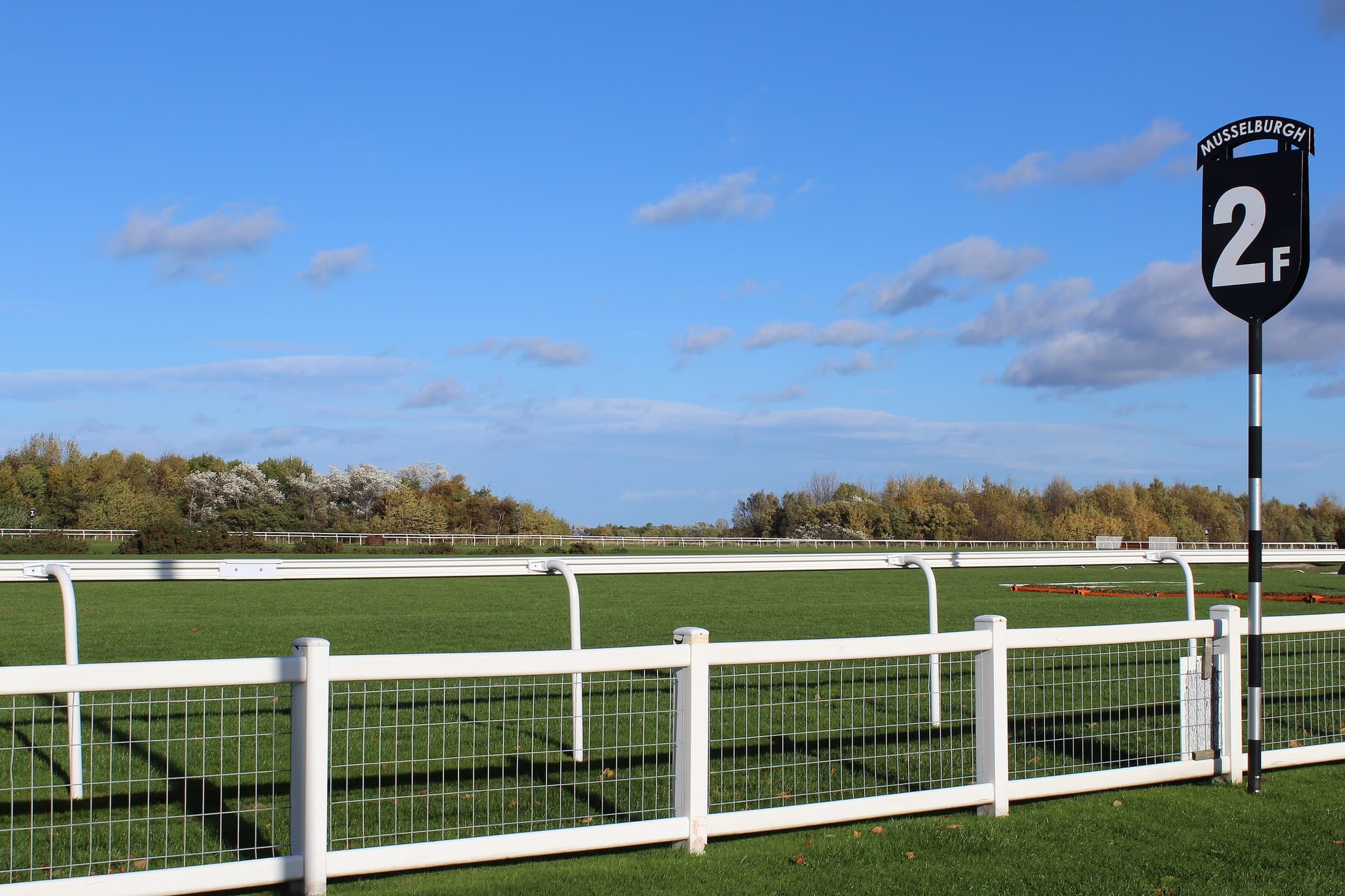
Musselburgh Racecourse: Complete Guide
Musselburgh — Scotland's dual-purpose course on Edinburgh's doorstep, the Scottish Sprint Cup, and racing beside the Firth of Forth.
Read more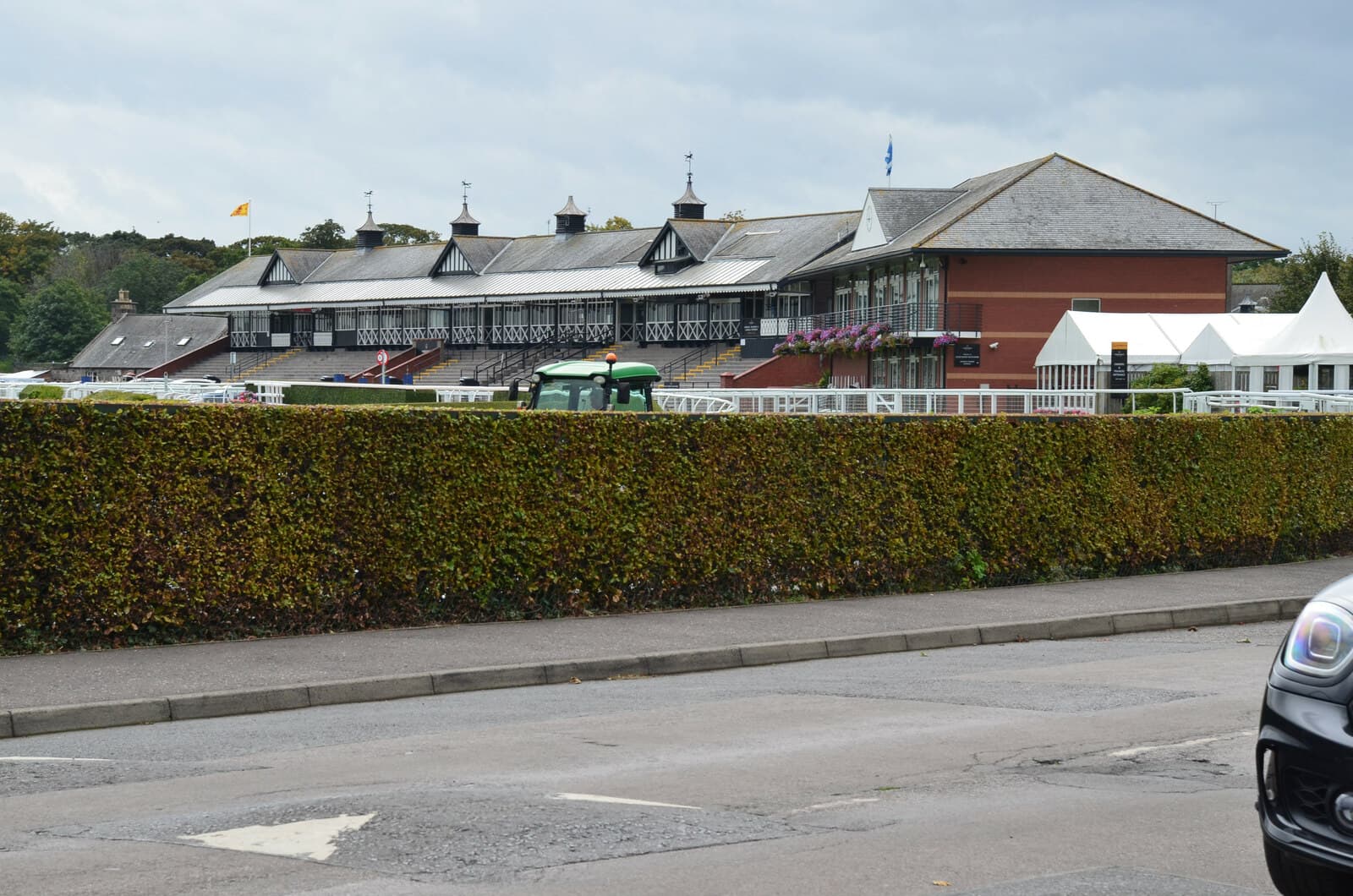
A Day Out at Musselburgh Racecourse
A day at Musselburgh — getting there, what to wear, enclosures, food and drink, and insider tips for Scotland's dual-purpose course on Edinburgh's doorstep.
Read moreMusselburgh Festival Guide
Your complete guide to Musselburgh Racecourse — the Scottish Sprint Cup, the New Year's Day fixture and what makes this East Lothian track Edinburgh's racing venue.
Read morePhotos on this page are used under Creative Commons licences. Titles, sources and licence links for each one are on our image credits page.
Research the field with the AI Race Predictor
Our model publishes calibrated win-probability estimates for UK races — a second opinion to understand a race, not tips. It's open about its record: it doesn't beat the market, and we show exactly how it does.
Work it out & learn the basics
Gamble Responsibly
Gambling should be entertaining and not seen as a way to make money. Never bet more than you can afford to lose. If you or someone you know has a gambling problem, help and support is available.