
Founder & Editor · Last reviewed 2026-07-08
Introduction
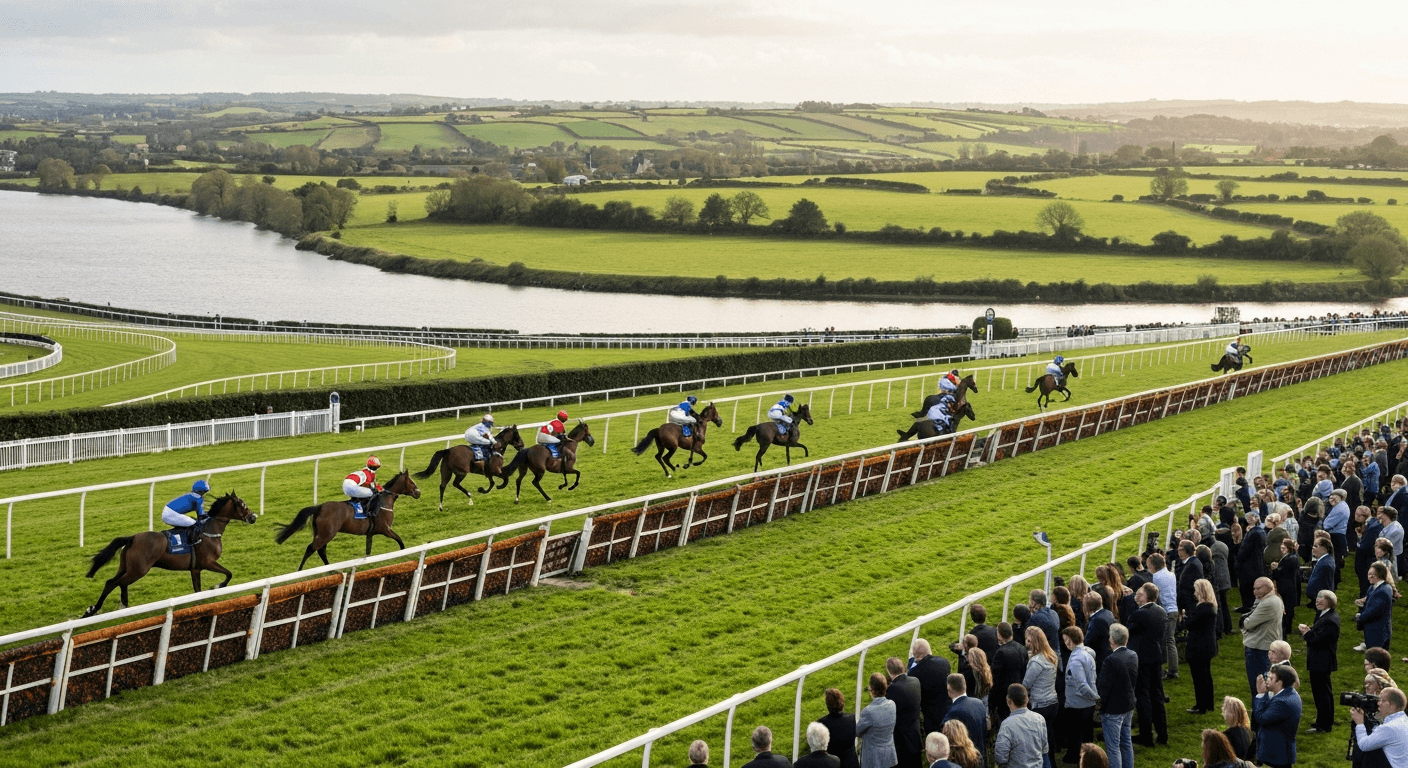
Cork Racecourse, widely known as Cork Racecourse Mallow, is a leading Munster dual-code track, staging both Flat and National Hunt racing on turf. It sits on the Killarney Road at Mallow, County Cork, on the banks of the River Blackwater, about 35km north of Cork city. The course is operated by Cork Racecourse (Mallow) Ltd, with Eoghan O'Grady as General Manager, and it runs roughly 18 to 20 fixtures a year across the calendar.
The track is a right-handed, flat, galloping oval. The inner circuit used mainly for the Flat is about 10 furlongs and the outer about 12 furlongs, with a straight sprint chute that was extended in 2019 to create a straight seven furlongs, one of only two such tracks in Ireland. The going rarely turns too testing, because the sandy, well-drained river-silt soil clears water quickly. Full detail on the layout, draw and pace is in The track.
Racing in the Mallow area dates back to 1777, but the modern course opened as Mallow Racecourse in 1924, replacing the closed Cork Park Racecourse, and was later rebranded Cork. Its showpieces are the Easter Festival, described by the course as its biggest event of the year, the Grade 2 Hilly Way Chase in December, and the Cork National in early November. More on those in The races.
On this page
Where to Bet
Place your bets with a trusted, licensed bookmaker.

Promo code BETFRED50. New customers only. Register, deposit with a Debit Card, and place a first bet of £10+ at Evens (2.0)+ on Sports, to be settled within 7 days, to get £30 in Sports Free Bets and £20 in Bet Builder Free Bets within 24 hours of settlement. 7-day expiry. Eligibility & payment exclusions apply. Full T&Cs apply. Take Time to Think. BeGambleAware.org. 18+. Full T&Cs.

Promo code R30. New UK customers only, 18+. Register, deposit £10 or more, then place a £10 single cash bet at odds of 1/2 (1.5) or greater on any sports market (excluding Virtuals). Once the qualifying bet settles you get £30 in Free Bets (3 x £10) — the qualifying bet can win or lose. Free Bets are valid on any sports market excluding Virtuals, expire in 7 days, are non-withdrawable and must be used in full. Excluded deposit methods apply (including PayPal, Apple Pay, Skrill and NETELLER). Named bets such as Lucky 15 do not qualify. If you cash out the qualifying bet, or it is voided, you are no longer eligible for the offer. Ends 31.12.26. Full T&Cs apply. Please gamble responsibly. BeGambleAware.org. 18+. Full T&Cs.

Promo code BET40GET20. New UK customers, 18+. Register with the code and place a first bet of £40 or more at Evens (2.0) or greater. Receive 2 × £10 free bets: the first credited automatically once the qualifying bet settles, the second 24 hours later. Free bets must be placed at minimum odds of 4/1 (5.0), expire 24 hours after credit, and the free-bet stake is not returned with winnings. Debit card deposits only. Take Time to Think. BeGambleAware.org. 18+. T&Cs apply. Full T&Cs.

50% of your first-day net losses refunded as a free bet, capped at £25. New UK customers aged 18+ only. To qualify, deposit and place a first bet of £10 or more on any sport at minimum odds of evens (2.00), then place at least two further bets on different events, each worth at least 50% of your largest bet, all at evens (2.00) or greater. Losses are counted from your first settled bet until 23:59 the same day. Place a qualifying £10+ bet and you are guaranteed at least a £5 free bet. Bets placed at SP, void bets, cashed-out bets and bets struck with free bets do not count towards the offer. The free bet is credited the day after your qualifying bets settle and must be used within 7 days, after which it expires. It can be used at odds from 1/4 (1.25) up to 250/1 on singles and straight accumulators, but not on Trixie, Patent or Yankee style multiples. Free-bet stake is not returned with winnings. One offer per person, household, address, IP address and device. E-wallet deposits may not qualify, so check the cashier before depositing. Customers registered with GAMSTOP cannot claim. KYC identity verification must be completed before the free bet is credited. Take Time to Think. BeGambleAware.org. 18+. T&Cs apply. Full T&Cs.

New customers, 18+. Choose the sports bonus at sign-up, make a first deposit and receive a 100% bonus up to £50 in your Sports Bonus balance. To convert the bonus to cash, wager it 10x within 30 days. Single bets below Evens (2.00) do not qualify; accumulators do not qualify if any selection is below 1/2 (1.50). Virtual Sports, voided, cancelled, drawn, cashed-out and free-bet wagers do not count towards wagering. Only the first settled bet per event counts. Withdrawing before the wagering requirement is met forfeits the bonus balance including bonus winnings. Real-money funds are used before bonus funds. Deposits via Skrill or Neteller are not eligible. Not valid in conjunction with other promotions. Odds, bet and payment limits apply. 10bet general and promotion T&Cs apply. BeGambleAware.org. 18+. Full T&Cs.

New customers in Great Britain and Republic of Ireland, 18+. Place a £10 fixed-odds qualifying bet at minimum odds of 1/2 (1.50) — single or each-way (only the win part counts), pre-event or in-play, not cashed out early, within 28 days of opening the account. Receive up to £60 in bonuses credited over three days: 3 × £10 fixed-odds free bets (the first on settlement, then 24 and 48 hours later) plus 3 × £5 Total Goals FOOTBALL spread bets, 3 × £5 racing Winning Favourites spread bets and a £1 racing Race Index spread bet (the spread bets need a full spread-betting account). Free-bet stakes not returned with winnings; free bets valid 28 days from issue. IMPORTANT: the £5 credits are SPREAD bets — sports spread betting carries the risk that losses can exceed your stake. Sports spread-betting customers do not have Financial Ombudsman or FSCS recourse. Take Time to Think. BeGambleAware.org. 18+. T&Cs apply. Full T&Cs.

Promo code WELCOME15, entered under My Bonuses after registering. New UK customers, 18+. Place a first qualifying bet of at least £10 from your cash balance at odds of evens (2.0) or greater within 7 days of opening the account. Once the qualifying bet fully settles you receive £15 in free bets, credited as 3 x £5 tokens with set uses: one £5 accumulator free bet (minimum 4 legs, each leg at 2/5 or bigger), one £5 sports free bet (any market at evens or bigger) and one £5 Sub Cover free bet (selected football player markets at evens or bigger). Free-bet stakes are not returned with winnings. Free bets expire 7 days after they are credited. Void, cashed-out and partially cashed-out bets do not qualify. One offer per customer. Confirm the current terms on BetGoodwin's own welcome-offer page before claiming. Take Time to Think. BeGambleAware.org. 18+. T&Cs apply. Full T&Cs.

New UK customers, 18+. Minimum deposit £10. Place a £10 qualifying single at minimum odds of 1/2 (1.50), settled within 14 days. Receive £30 in free bets (stake not returned), split £20 for sportsbook use (2 x £10) and £10 for Bet Builder only (2 x £5); Bet Builder does not cover horse racing. Free bets must be accepted within 7 days and expire 7 days after acceptance. No promo code required. Best Odds Guaranteed on UK & Irish racing, subject to having staked over £25 in the previous seven days. Operated by LiveScore Betting and Gaming (Gibraltar) Ltd, UKGC 56859. Confirm the current terms on LiveScore Bet's own promotions page before claiming. Take Time to Think. BeGambleAware.org. 18+. T&Cs apply. Full T&Cs.
18+. BeGambleAware.org
The Track
The Track
Cork is a right-handed, flat, galloping oval, and that shape sets the character of racing here. The terrain is level throughout, so there are no stiff climbs or sharp cambers to test a horse. Two turf circuits share the site: an inner loop of roughly 10 furlongs (1m 2f), used mainly for the Flat, and an outer loop of about 12 furlongs (1m 4f). The chase circuit measures around 1m 4f. There is no all-weather surface; Cork races on turf only.
A straight chute lets the course stage sprints away from the round bends. It began as a straight five and six furlongs, and in 2019 it was extended to a straight seven furlongs, one of only two straight seven-furlong tracks in Ireland. The home straight runs to about four furlongs, with a run-in of roughly one furlong over jumps. Over the chase course there are eight fences to a circuit, three of them in the home straight, including two open ditches. The hurdles course has two circuits, the inner one around 1m 2f.
Going
The going tends not to get too testing. The soil is sandy and well drained, formed from river silt off the neighbouring Blackwater, so surface water clears quickly and the ground rarely turns truly heavy for long.
Draw and pace
Draw effects at Cork depend on which course is in use. On the round track, from the mile-and-a-half start, a low draw is favoured because the start sits close to the bend. On the straight sprint course a high draw is favoured when the ground is good or faster, as the field tends to congregate on the stands rail, while in softer ground the draw bias evens out. Across both codes the flat, level layout rewards prominent, pace-holding types, because it is hard for hold-up horses to make up ground on such an even surface. None of this makes betting profitable; it simply describes how races here tend to be run. For how these angles play out in practice, see Form and Betting; for a walk through the layout, see Course Map.
Confirmed track facts
| Feature | Detail |
|---|---|
| Handedness | Right-handed |
| Shape and terrain | Flat, galloping oval |
| Surface | Turf only, no all-weather |
| Inner circuit (Flat) | About 10f (1m 2f) |
| Outer circuit | About 12f (1m 4f) |
| Chase circuit | About 1m 4f |
| Straight sprint course | Straight seven furlongs (extended 2019) |
| Home straight | About 4f |
| Run-in (over jumps) | About 1f |
| Fences per chase circuit | Eight (three in home straight, two open ditches) |
| Standard times by distance | n/a (not published in authoritative public form) |
The Course Map
Course Map and Layout
Cork's grandstands and public areas cluster along the home straight, so the whole racing spectacle unfolds in front of the enclosures. The three-tier Grandstand and the two-storey Pavilion Stand sit virtually side by side, both overlooking the winning post and the final furlong. Between and behind the two stands you will find the parade ring, the enclosures and the betting ring, with the bookmakers' pitches occupying the space between the stands. This tight, side-by-side arrangement means the walk from the parade ring to a viewing spot on the rail is short, and racegoers can follow horses from the paddock to the post without covering much ground.
The finish sits at the end of a home straight of roughly four furlongs, with a run-in of about one furlong over jumps. The oval circuit runs right-handed and flat around the stands. For the detail of the circuits, fences and the straight seven-furlong sprint chute, see The Track; for a fuller breakdown of each viewing area and its facilities, see Enclosures and Stands.
The Races
The Races
For a smaller provincial course, Cork carries a surprisingly rich programme of pattern and graded contests across both codes. It stages two Group 3 Flat races and six Graded National Hunt races, alongside valuable handicaps and a clutch of Listed Flat prizes. The winter jumps card is the strongest, but the Flat programme has genuine quality too.
The Cork National
The Cork National, run as the Paddy Power Cork Grand National Handicap Chase, is the course's showpiece staying handicap. It is a Listed (Class 1) contest over 3m 4f for horses aged four and older, run off a 0-150 mark in early November. The winner's share was around €27,000 in 2025 from a total fund of roughly €45,000.
Lonesome Boatman took the 2025 running for trainer Sean Allen and jockey Darragh O'Keeffe at 8/1, winning by six lengths from thirteen runners in 7m 23.60s. Sphagnum won in 2024 at 8/1, and Sir Bob in 2023 at 9/1. Recent renewals have gone to a spread of yards, with Gordon Elliott, Willie Mullins, Noel Meade, T J Nagle Jr and Michael Hourigan each recording two wins in the modern era. Note that the Kerry National is run at Listowel and the Munster National at Limerick, so neither belongs to Cork.
The Hilly Way Chase
The marquee winter jumps race is the Grade 2 Bar One Racing Hilly Way Chase, run over about two miles in December and often televised on RTE. First run in 2001 as a Grade 3 and promoted to Grade 2 in 2003, it has become a launchpad for elite two-mile chasers. Golden Silver (2009, 2010, 2011) and Energumene (2021, 2022, 2024) are the only three-time winners. Douvan won by 22 lengths in 2016, and Un De Sceaux, Chacun Pour Soi and El Fabiolo have all added their names. Willie Mullins is the record trainer with 13 wins and Paul Townend the record jockey. More on these horses in the legends section.
Group 3 Flat races and the wider roster
On the Flat, the Group 3 Munster Oaks (1m 4f, fillies and mares, June) and the Group 3 Give Thanks Stakes (1m 4f, fillies and mares, August) headline. Magical Hope won the 2025 Munster Oaks for Paddy Twomey and Colin Keane, Twomey's third win in four renewals. The jumps roster also includes the Grade 3 Cork Stayers Novice Hurdle (3m, December) and the Grade 3 Michael O'Sullivan Chase (3m half-furlong), while Listed Flat prizes such as the Cork Stakes and Noblesse Stakes feature at the Easter Festival.
| Race | Code / grade | Distance | Month | Notable recent winner |
|---|---|---|---|---|
| Cork National | NH handicap chase, Listed | 3m 4f | November | Lonesome Boatman (2025) |
| Hilly Way Chase | NH, Grade 2 | approx 2m | December | Energumene (2024) |
| Cork Stayers Novice Hurdle | NH, Grade 3 | 3m | December | n/a |
| Munster Oaks | Flat, Group 3 | 1m 4f | June | Magical Hope (2025) |
| Give Thanks Stakes | Flat, Group 3 | 1m 4f | August | n/a |
The biggest of these days form the backbone of Cork's calendar, covered in more detail under festivals.
Records and Stats
Records and stats
Cork does not publish a widely available course-record schedule, so there is no authoritative table of standard times by distance. The figures that do exist come from its feature races. The Cork National, run over 3m 4f, was won in 2025 by Lonesome Boatman in 7m 23.60s and in 2024 by Sphagnum in 7m 11.20s, while Raz De Maree's 2016 win was clocked at roughly 7m 08.30s. These are race times rather than official records, and they vary with the going and pace of each renewal. One standout performance is worth noting: in the 2016 Hilly Way Chase, Douvan won by 22 lengths, the widest margin of his career, recording a Racing Post Rating of 178.
Attendance is harder to pin down. The course does not publish single-day or festival attendance figures, or annual footfall. What it does describe is the scale of the venue: General Manager Eoghan O'Grady calls the Easter Festival "our biggest event of the year", and the site markets around 32,292 sq ft of meeting space, with a top-floor Panoramic Restaurant catering for groups of 2 to 300. See The track for the layout behind these numbers.
On leading connections, Willie Mullins is the dominant jumps figure, with a record 13 Hilly Way Chase wins and Paul Townend as the record-winning jockey in that race. On the Flat, Aidan O'Brien and Paddy Twomey hold strong Munster Oaks records. More on them in Legends.
History
History
Organised racing around Mallow reaches back to 1777, when meetings were held under the King's Plate Articles. For much of the following century and a half the main venue for Cork's racing was Cork Park Racecourse, which closed in 1917. Demand for a replacement led to the opening of Mallow Racecourse in 1924, and that course is the one we now know as Cork Racecourse. The wider district carries an even older claim on the sport: the neighbouring towns of Buttevant and Doneraile are credited with the first recorded steeplechase in 1752, a wager between Edmund Blake and Cornelius O'Callaghan raced from Buttevant church to Doneraile church.
The rebranding from Mallow Racecourse to Cork Racecourse prompted some local controversy, though the Cork name has since become the familiar one. The modern course has been reshaped in stages. The Pavilion Stand opened in November 2008 at a cost of around six million euro, adding a second major viewing structure alongside the Grandstand.
The most significant recent change came on the track itself. The straight seven-furlong sprint course was completed and opened in 2019 as the Matchbook Straight Seven, extending what had been a straight five and six furlongs. Groundworks began in 2017, and the development was funded through the HRI Racetrack Improvements Scheme. It opened on Friday 10 May 2019 during the two-day Race and Taste Festival, giving Cork one of only two straight seven-furlong tracks in Ireland. Reported costs differ: HRI's own release put the figure at 500,000 euro, while an earlier announcement cited 600,000 euro. A separate stable yard modernisation, valued at around 520,000 euro, was reported around 2015.
For how these features shape modern racing at the track, see the track and the records and stats. The horses and people who have written Cork's more recent story are covered in legends.
The Legends
Legends of Cork Racecourse
Cork's roll of honour is written mostly over jumps, and above all through the Hilly Way Chase, the two-mile Grade 2 that has drawn many of Ireland's best chasers to Mallow each December.
Beef Or Salmon is the horse who put the race on the map. Michael Hourigan's popular chaser won the Hilly Way in 2002 and 2003, the first coming on only his second start over fences, and went on to land ten Grade 1 victories. Golden Silver was the first three-time winner, taking it in 2009, 2010 and 2011 for Willie Mullins and Paul Townend. Douvan produced one of the meeting's most spectacular displays in 2016, winning by 22 lengths. Energumene matched Golden Silver's tally with three wins (2021, 2022 and 2024), using Cork as a springboard to Champion Chase glory. Un De Sceaux, Chacun Pour Soi, El Fabiolo and Cilaos Emery, all Mullins Grade 1 chasers, have added their names to the same honour board.
The people behind those winners are a story in themselves. Willie Mullins dominates the Cork jumps with a record 13 Hilly Way wins, Paul Townend the record-winning jockey in the race, and Hourigan is forever tied to the track through Beef Or Salmon. On the Flat, Aidan O'Brien and Paddy Twomey both hold strong records in the Munster Oaks, with Colin Keane a leading rider at the course.
Local character runs deeper still. Mallow sits at the crossroads of Munster, near Buttevant and Doneraile, credited with the first recorded steeplechase in 1752. One odder footnote: in 1983 a private jet made an emergency landing on the racecourse turf. For the meetings these names built, see festivals.
The Festivals
Festivals and signature meetings
Cork's calendar of roughly 18 to 20 fixtures is built around a handful of set-piece dates, and the biggest of them all is the Easter Festival. Branded "Racing Home for Easter", the 2026 running spans three days from Saturday 4 to Monday 6 April, across the bank holiday weekend, and General Manager Eoghan O'Grady describes it as the course's biggest event of the year. Each day has its own character. Easter Saturday 2026 is the inaugural Down Syndrome Centre Cork fundraising Flat raceday, with the course pledging 100% of general admission proceeds to the charity; it was launched by four-year-old Danny Duane from Doneraile alongside Cheltenham-winning jockey Danny Mullins, and carries seven Flat races. Easter Sunday is a traditional full jumps card, a long-standing favourite. Easter Monday is Family Day, with a petting farm, reptile zone and face painting for younger racegoers. The Listed Cork Stakes (6f) and the Listed Noblesse Stakes (fillies, 1m 4f) are both run over the weekend, and the Most Stylish Lady competition adds to the occasion. Adult admission is €25 for 2026 (under-14s free), with early-bird tickets from around €15 to €20 and Panoramic Restaurant hospitality from €75 per person. Free shuttle buses run from Mallow Train Station and the town centre.
The autumn highlight is the Cork National meeting in early November, staged on Sunday 2 November in 2025 with the 2026 date to follow the HRI fixture list. It is headlined by the Paddy Power Cork Grand National Handicap Chase, a Listed 0-150 event over 3m 4f, won in 2025 by Lonesome Boatman. See the-races for the full card of graded races.
December brings the marquee winter jumps fixture built around the Grade 2 Bar One Racing Hilly Way Chase, a two-mile chase that has drawn a remarkable list of champions and is often televised on RTE. Its roll of honour, and the horses who have made their name over it, are covered in legends.
Through the warmer months Cork also stages its Group 3 Flat features, the Munster Oaks in June and the Give Thanks Stakes in August, alongside summer evening and music nights branded "Cork Rocks" and family fun days. Together these meetings give the Mallow track a spread of occasions across both codes and the full racing year.
Form and Betting
Form and betting at Cork
Start with the only honest headline: the market wins, and favourites lose to starting price. Across 407 Cork races from October 2023 to June 2026, backing the favourite at SP returned minus 16.14% on level stakes. Favourites still won more than a third of the time, at a 34.4% strike rate, but winning often is not the same as paying, and the layer's margin is baked in. Treat that ROI figure with care: the 95% confidence interval runs from minus 28.57% to minus 2.49%, so the loss is real but its size is noisy. No staking plan or system removes the built-in edge.
The numbers
| Measure | Value |
|---|---|
| Sample window | Oct 2023 to Jun 2026 |
| Races / runners | 407 / 4,832 |
| Favourite SP ROI (level stakes) | minus 16.14% |
| Favourite ROI 95% CI | minus 28.57% to minus 2.49% |
| Favourite strike rate | 34.4% |
| Average field size | 11.9 (median 12) |
| Most common going | Good (33.9% of races) |
| Race mix | Flat 198, Hurdle 158, Chase 51 |
Ground and field size
Cork's sandy, river-silt soil drains fast, so the going rarely gets extreme. Good ground is most common at 33.9% of races, with Soft (16.2%) and Yielding (15.5%) next, and Heavy a rare 2%. Fields are mid-sized, averaging 11.9 runners with a median of 12, ranging from 2 to 24. The card leans jumps overall once hurdles and chases are combined, though Flat is the single largest type. For the fixtures behind these numbers see the races and records and stats.
Draw and pace
The draw makes little difference across the sample as a whole: low, mid and high bands all win at roughly 9% (9.2%, 9.1% and 8.8%). Any edge is race-specific rather than course-wide. As the dossier notes, a low draw can help from the mile-and-a-half round start, and a high draw can help on the straight sprint in good or faster ground, while soft ground evens it out. On a flat, galloping track prominent, pace-holding runners are hard to peg back.
Bet responsibly
Betting should be for entertainment, never income, and the figures above show why the long-run edge sits with the bookmaker. Never chase losses or stake more than you can comfortably lose. If gambling stops being fun, free confidential help and self-exclusion tools are at BeGambleAware.org. Must be 18 or over.
Planning a Visit
Visiting Cork Racecourse
Cork Racecourse sits on the Killarney Road at Mallow, County Cork, on the banks of the River Blackwater, about 35km north of Cork city. It runs both Flat and jumps across roughly 18 to 20 fixtures a year, so most visits centre on a single card rather than a long meeting. General admission is around 15 to 20 euro for adults, with a discount bringing concessions for OAPs and full-time students to about 15 euro on proof of ID, and children aged 14 and under go free with an adult. A Premium Level ticket, around 30 euro pre-booked, opens the restricted top floor of the Grandstand.
A few practical anchors are worth planning around. Parking is free for racegoers. Mallow is a mainline rail station, with a free race-day shuttle bus linking the station, the town centre and the course, so the train is a genuine option. There is no cash machine on site, so bring cash. The dress code is smart or casual throughout, and fancy dress is not permitted.
For the full transport breakdown see getting there, and for the stands and enclosures see enclosures and stands.
Getting There
Getting There
Cork Racecourse sits on the Killarney road out of Mallow, County Cork, on the banks of the River Blackwater. Despite the name it is not in Cork city but about 35km to the north, so allow for the drive if you are staying in the city.
By road, the course lies roughly 35km north of Cork city and 64km south of Limerick, off the N20 and M8 corridor. From Cork or Limerick you follow the main road to Mallow and then pick up the Killarney road out of the town, where the racecourse is signposted. Free car parking is available for racegoers, so there is no need to budget for a parking charge on top of admission.
By rail is the easy option and worth considering if you would rather not drive. Mallow is a mainline station served by trains from Cork, Dublin Heuston, Tralee and Killarney. The station sits about 2.5km from the racecourse, and on race days a free shuttle bus runs between Mallow train station, the town centre and the course, so you can arrive by train and reach the gate without a taxi.
By bus, an hourly service runs from Cork to Mallow. By air, Cork Airport is about 44km away, roughly 45 minutes by road, and helicopter landing can be arranged in advance through the racecourse office.
For what to do once you arrive, from admission prices to the layout of the stands, see Visiting and Enclosures and Stands.
Tickets and Enclosures
Enclosures and stands
Cork keeps its viewing simple. Two stands sit virtually side by side overlooking the winning post and final furlong: the three-tier Grandstand, offering around 2,000 square metres over three floors, and the two-storey Pavilion Stand at around 1,000 square metres. The parade ring, the enclosures and the betting ring lie between and behind the stands, so the walk from paddock to rail to bookmaker is short. There is a single general enclosure rather than the tiered rings you find at the bigger tracks, which keeps the whole crowd close to the action.
General admission covers both stands and the enclosures. As a guide it runs at about €15 to €20 for adults, with roughly €5 off for over-65s and full-time students on proof of ID (concessions around €15), and children aged 14 and under go free with an adult. Prices here are indicative and vary by fixture, so check the day you plan to attend.
For a step up there is a Premium Level ticket. This gives access to a restricted top floor of the Grandstand, including the Owners, Trainers and Members Bar, at around €30 with a racecard when pre-booked. Restaurant packages pairing a four-course meal with Premium Level entry have been offered at roughly €55 to €75 per adult; the dining itself sits in the top-floor Panoramic Restaurant, covered in food, bars and hospitality.
Regulars can take annual membership, priced around €150 for adults and €100 for over-65s and students, which includes reciprocal meetings at other courses. Racecards are included with admission at Cork. For how to reach the stands on the day, see getting there.
Food, Drink and Facilities
Food, bars and hospitality
Cork's flagship dining room is the Panoramic Restaurant on the top floor of the Grandstand, which overlooks the winning post and the final furlong. It serves three- and four-course meals and comes with a private balcony, its own bar and betting facilities. On raceday, Panoramic hospitality packages have started from around €75 per person for a three-course meal, admission, racecard, a reserved table, a private bar and balcony access, with lighter social packages from around €30 to €35 per person. Also on the top floor is the Owners and Trainers/Members Bar.
For a bet, Tote facilities are found in the main tote building and on every level of both the Grandstand and the Pavilion Stand, while a bookmakers' ring sits between the two stands, with Paddy Power based on the ground floor of the Pavilion.
Two practical points are worth planning for. There is no cash machine on site, so bring cash, and the Racing Post cannot be bought at the course, though a racecard is included with admission. Doctors and Order of Malta personnel are on hand on racedays.
See also enclosures and stands and capacity and venue hire.
What to Wear
What to Wear
Cork keeps its dress code refreshingly relaxed. Smart casual is the standard across all enclosures, so there is no formal requirement to dress up for any part of the racecourse. The one firm rule is that fancy dress is strictly not permitted, whatever the occasion.
That said, the bigger meetings do bring a touch more polish. The Easter Festival runs Most Stylish Lady competitions, so many racegoers use those days as a reason to make more of an effort with their outfit even though nothing dressier is demanded to get in.
Because Cork is an outdoor turf track on the banks of the River Blackwater, the practical advice matters as much as the style guide. Bring layers and a waterproof for changeable Irish weather, and think carefully about footwear, as the ground around the parade ring and enclosures can be soft underfoot after rain. Comfortable shoes will serve you better than heels on the grass.
For enclosure options and ticket levels, see enclosures and stands; for the festival itself, see festivals.
Capacity and Venue Hire
Capacity and venue hire
Cork Racecourse does not publish an official crowd capacity, and precise single-day or festival attendance figures are not made public either, so any headline crowd number for the track should be treated with caution. What the course does confirm is that the Easter Festival, described by General Manager Eoghan O'Grady as "our biggest event of the year", is the busiest date in the calendar. For a sense of the enclosures and stands themselves, see the enclosures and stands section.
Away from raceday, Cork markets itself as a conference and events venue, and here the figures are firmer. The course advertises around 32,292 square feet of total meeting space spread across its two main buildings. The three-storey Grandstand offers roughly 2,000 square metres over three floors, while the Pavilion Stand adds around 1,000 square metres. The main restaurant sits on the top floor of the Grandstand overlooking the track and winning post, with a full bar, Tote facilities and a private balcony, and it caters for groups of 2 to 300.
Beyond those totals the dossier does not name individual function rooms with specific banqueting or theatre capacities, so anyone planning a large event should confirm room sizes directly with the course office. The same top-floor Panoramic Restaurant doubles as the raceday hospitality suite, described further in food, bars and hospitality. Children under 14 are admitted free with an adult.
The Atmosphere and What Cork Means
Atmosphere and culture
Cork Racecourse belongs to Mallow, and Mallow belongs to Munster racing. The town sits at the crossroads of the province, on the banks of the River Blackwater, and its identity is bound up with the sport in a way few other Irish tracks can claim. Just up the road are Buttevant and Doneraile, credited with the first recorded steeplechase in 1752, a wager between Edmund Blake and Cornelius O'Callaghan raced from one church steeple to the other. Cork carries that lineage lightly but genuinely.
The character on the track is jumps-first and Mullins-flavoured. Willie Mullins dominates the winter meetings, Paul Townend rides the big winners, and the Limerick trainer Michael Hourigan is woven into local affection through Beef Or Salmon. On the Flat, Aidan O'Brien and Paddy Twomey give the summer cards their weight. General Manager Eoghan O'Grady leads the current operation.
The mood shifts with the calendar. The Easter Festival is the loud, family-filled centrepiece, complete with Most Stylish Lady competitions and a charity raceday; summer brings the relaxed "Cork Rocks" music evenings and fun days. Cork folklore even records a private jet making an emergency landing on the racecourse turf in 1983, a story that still gets a retelling.
For the meetings that define the place, see the festivals section, and for the horses and people behind the atmosphere, the legends section.
Accessibility
Accessibility
Cork Racecourse describes its facilities as disabled-friendly, with all areas accessible to racegoers with reduced mobility. Designated disabled parking sits just outside the main entrance, so the walk from car to gate is short. Both principal stands are served by lifts: the three-tier Grandstand and the neighbouring Pavilion Stand each have a lift, meaning the upper floors, including the top-floor restaurant, can be reached without stairs. Accessible toilets are provided in both stands.
Beyond those points the course publishes little detail, so plan ahead and phone the office before a visit if you have specific needs. The dossier gives no information on step-free routes to the parade ring, betting ring or lawn, no accessible viewing platforms or dedicated wheelchair bays trackside, and no policy on assistance dogs, carer or companion tickets, or Blue Badge validity. Nor is there published guidance on the surface underfoot, which matters on a turf course after rain. The free race-day shuttle bus from Mallow station and town is noted in getting there, though the dossier does not confirm whether the shuttle vehicles are wheelchair accessible.
For questions on where each lift and accessible toilet sits relative to the enclosures, see enclosures and stands, and contact the racecourse office directly to confirm arrangements for your visit.
Where to Stay and Nearby
Nearby
Cork Racecourse sits on the Killarney Road just outside Mallow, so most racegoers base themselves in the town or in Cork city. The Hibernian Hotel in Mallow is a handy nearby option and links in with the race-day shuttle, while the town centre holds a further scattering of hotels and B&Bs within easy reach of the course. Cork city, around 35km to the south, opens up a much wider range of hotels for those wanting a bigger base, and it connects to Mallow by mainline train (see Getting there).
For anyone building a day or a weekend around a fixture, the local area has a few draws beyond the racing. Mallow Castle sits in the town itself, Doneraile Park lies a short drive northeast, and the surrounding Blackwater Valley is worth a wander. Pair a visit with the enclosure and hospitality options covered under Visiting.
Frequently Asked Questions
Share this article
More about this racecourse
All cork guides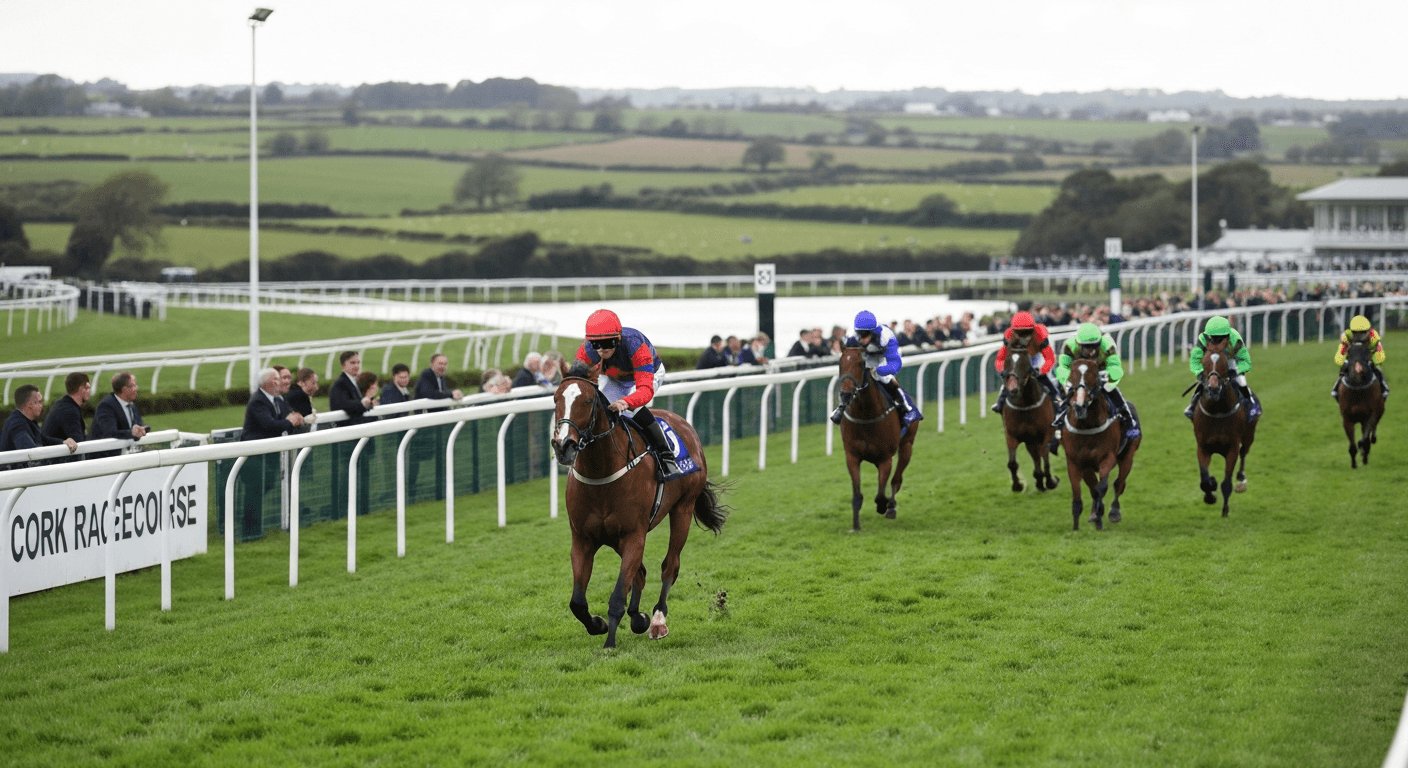
Energumene at Cork: The Complete Story
How Energumene made Cork's Hilly Way Chase his own, winning the Grade 2 two-mile chase three times on the road to Champion Chase glory for Willie Mullins.
Read more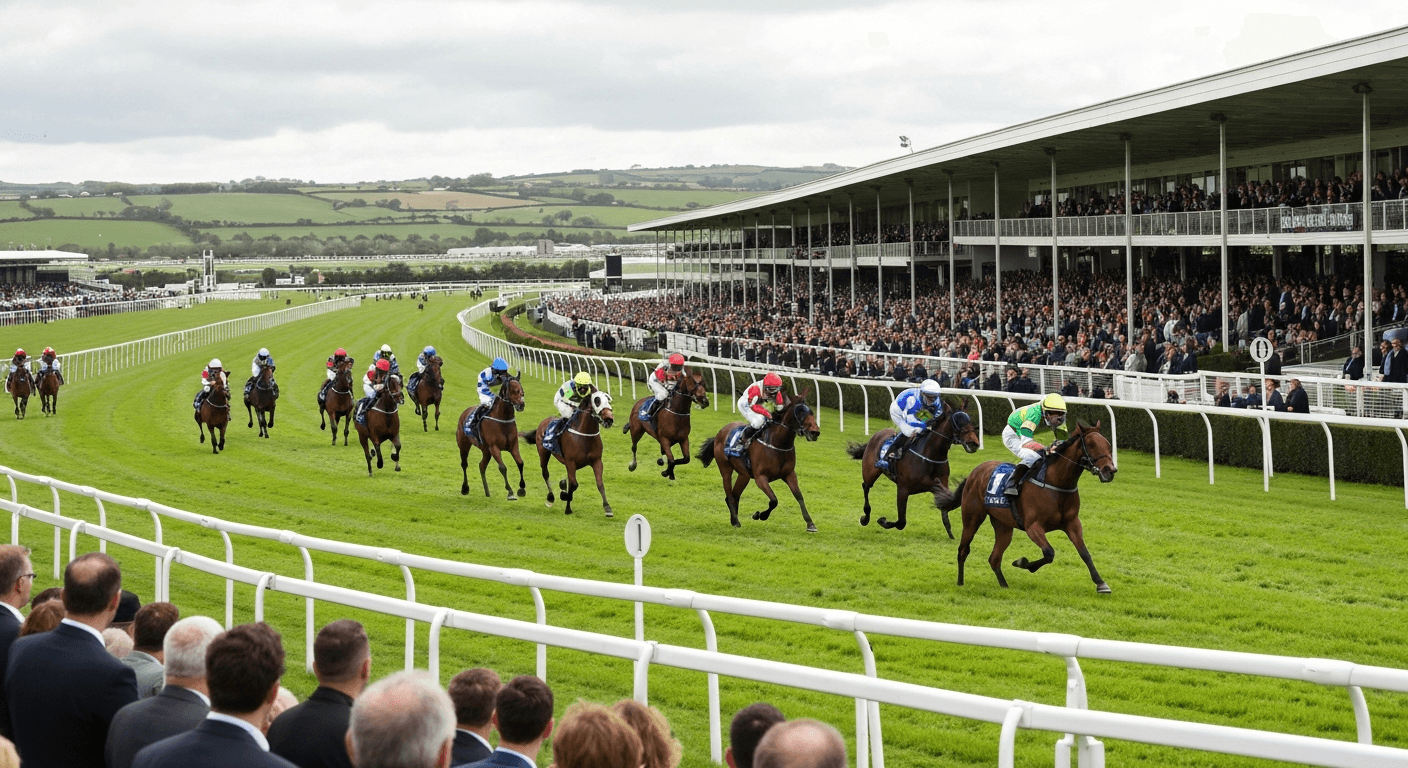
Hilly Way Chase Day at Cork: The Complete Guide
Hilly Way Chase Day at Cork: the Grade 2 two-mile chase that opens the Champion Chase trail each December, from Golden Silver and Energumene to the day itself.
Read more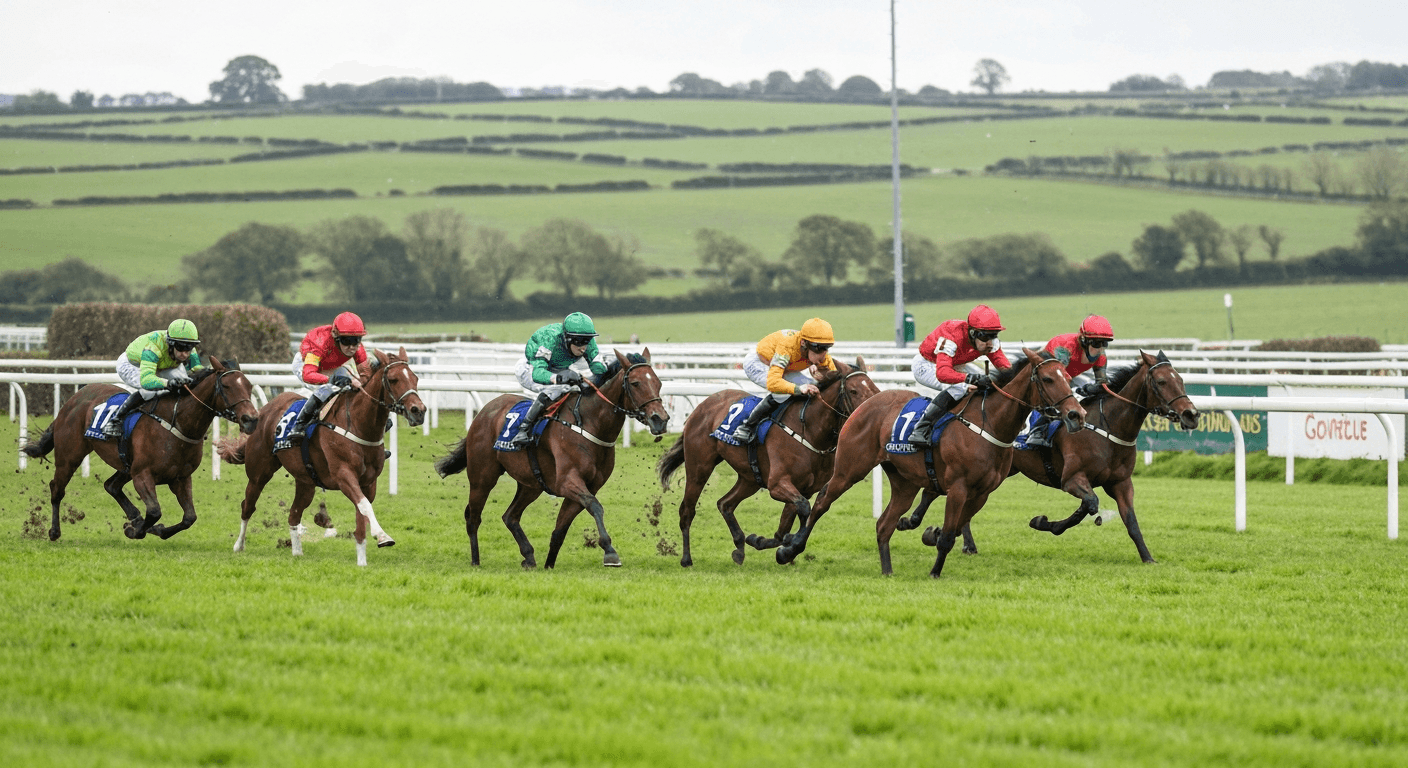
Betting at Cork Racecourse
How Cork's flat, galloping dual-code track shapes betting, with the draw, going, trainer and favourite form patterns framed honestly, no tips.
Read moreResearch the field with the AI Race Predictor
Our model publishes calibrated win-probability estimates for UK races — a second opinion to understand a race, not tips. It's open about its record: it doesn't beat the market, and we show exactly how it does.
Work it out & learn the basics
Gamble Responsibly
Gambling should be entertaining and not seen as a way to make money. Never bet more than you can afford to lose. If you or someone you know has a gambling problem, help and support is available.