
Founder & Editor · Last reviewed 2026-07-13
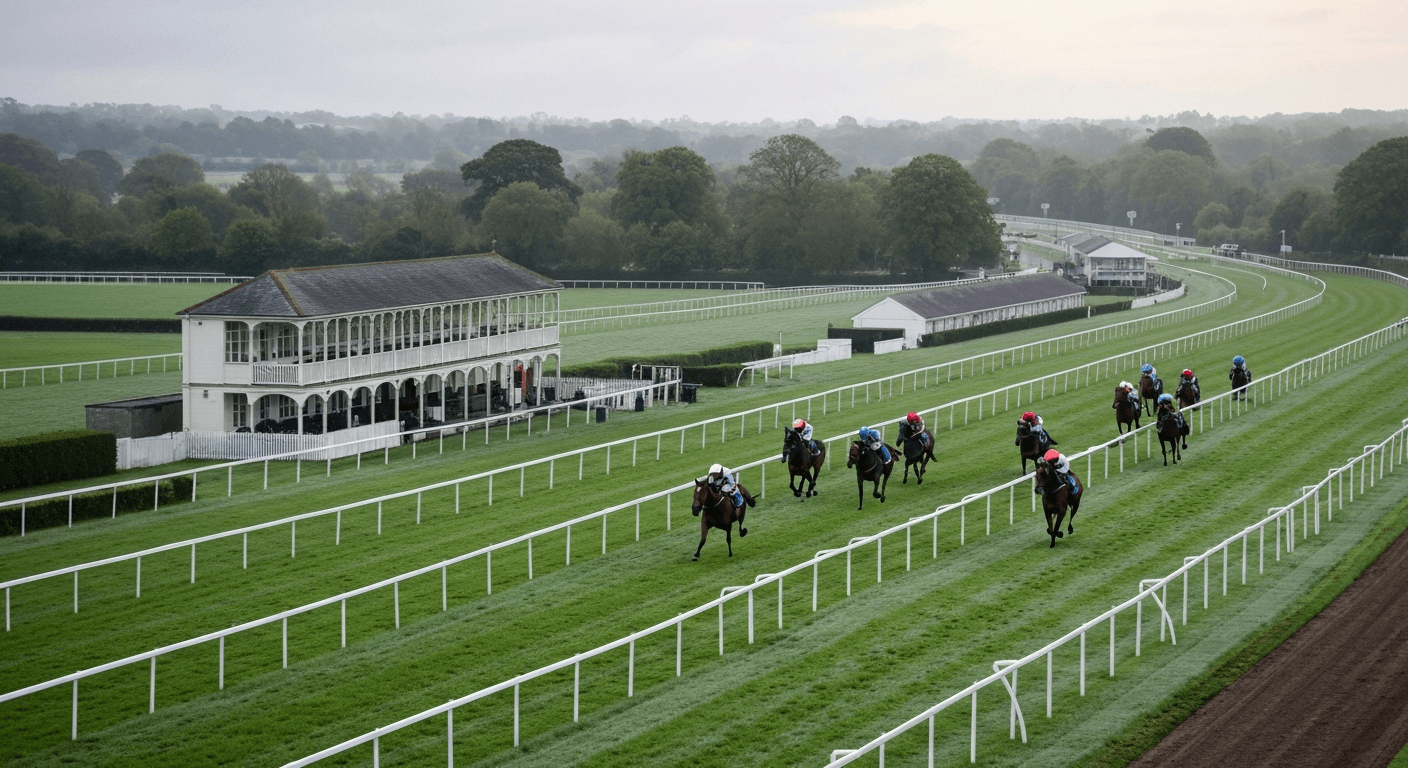
Racing at Gowran Park goes back to a single afternoon: 16 June 1914, when the course first opened its gates on the Annaly Estate just outside the village of Gowran in Co. Kilkenny. That opening card mixed Flat racing and steeplechases for total prize money of £130. More than a century later, the same undulating turf oval is still in use, staging a busy dual-code programme of jumps and Flat fixtures across the year.
Gowran sits about 13km east of Kilkenny city, on ground that has stayed in the racing calendar through two world wars, the founding of a new race company in 1948, and a major rebuild in the early 2000s. It is a working country course rather than a grand national arena, and much of its reputation rests on one race in particular. The Goffs Thyestes Handicap Chase, first run in 1954, has carried the names of Arkle and Flyingbolt on its roll of honour and sends horses on towards Aintree, Fairyhouse and Cheltenham. Locally it is known as "the race that stops a county".
The story that follows sticks to the record. Some of it is unusually well documented, including the founding date, the first race company and Ireland's first on-course commentary in 1952. Some of it, such as the exact weight Arkle carried in 1964, cannot be pinned down with confidence, and where that is the case the gaps are left as gaps rather than filled in.
This guide covers the Annaly Estate and the 1914 opening, the milestones from the Thyestes to Grade 1 status, the legendary horses and the legendary people, the records and stats, the atmosphere and what Gowran means, the modern era, and answers to common questions.
The Annaly Estate and the 1914 Opening
Gowran Park was laid out on the Annaly Estate, on the eastern edge of the village of Gowran, roughly 13km from Kilkenny city on the old Dublin to Waterford road. The course opened on 16 June 1914 with a card run under Irish National Hunt rules that combined Flat races and steeplechases, for prize money of £130 in total. From the outset it was a genuine dual-code venue, and it has remained one ever since.
The people at that first meeting tell you a good deal about the country-racing world Gowran grew out of. The stewards for the inaugural card included Lord Annaly, whose family name is attached to the estate itself; Captain Dermot McCalmont, whose grandson Harry McCalmont serves on the present board; and Isaac Bell, the well-known huntsman of the Kilkenny Hunt. Hunting, breeding and racing overlapped closely in this part of the south-east, and the McCalmont family in particular would stay bound up with the course for the next hundred years and more.
The early decades left less of a documented trail than the opening itself. The turning point in the modern record comes in 1948, when the present race company was formed, with Jack Duggan of Kilkenny's Monster House store installed as its first managing director. That reorganisation gave Gowran the corporate footing it still runs on today, trading through the company that also operates the adjoining golf and leisure business.
One early distinction is worth setting down plainly. Ireland's first on-course commentary was delivered at Gowran Park in 1952, a small piece of racing history for a country course. The course also states that Ireland's first televised race came from Gowran, although the exact date is not settled: the racecourse claims the first televised race, while other accounts place the first televised Irish meeting in 1969. The safe position is that Gowran was early to both microphone and camera, without over-claiming the television milestone.
By the middle of the twentieth century, then, the shape of the place was set. A dual-code turf oval on an old Kilkenny estate, run by a settled race company, with a family connection reaching back to the opening day and a headline chase, added in 1954, that was about to make its name.
Milestones from the Thyestes to Grade 1 Status
Gowran Park's history turns on a handful of defining acts: the founding of a signature chase, a run of firsts for Irish racing, and a modern climb up the grading ladder. Set out in order, they show a country course steadily building its standing.
The Thyestes arrives, 1954
The most important single addition to the fixture list came in 1954, with the first running of the Thyestes Handicap Chase. Run over about 3 miles 1 furlong in late January, it quickly became one of Ireland's most historic staying handicap chases and a recognised trial for the Aintree Grand National, the Irish Grand National and the Cheltenham Gold Cup. The race is named after the racehorse Thyestes, a son of The Tetrarch bred by Major Victor McCalmont of Mount Juliet and trained by Atty Persse in Wiltshire; the horse was rated the third-best two-year-old of 1930 before injury ended his career. The trophy was presented to Gowran Park by the McEnery family of Rossenarra Stud for that first running. Goffs has sponsored the race since 2012, and it now carries €100,000 in prize money.
A run of firsts
Alongside the Thyestes, Gowran collected a series of firsts that mark it out in the Irish record. Ireland's first on-course commentary was heard here in 1952, and the course's first Tote Jackpot was run in 1966. The course also lays claim to Ireland's first televised race, though the date is disputed, as covered in the origins section above.
Group and Grade status, 2006
The other great milestone is comparatively recent. In 2006 Gowran Park staged Ireland's first Group 3 Flat race, when the Denny Cordell Lavarack & Lanwades Stud Fillies Stakes was promoted to that level, having been founded in 1996 and given Listed status in 2000. In the same year the course was reclassified as a Grade 1 course for National Hunt prize-money purposes. For a rural Kilkenny track, staging pattern-class Flat racing and holding top-tier jumps status in the same season was a notable step up.
The table below sets out the defining dates.
| Year | Milestone |
|---|---|
| 1914 | Course opens on the Annaly Estate, 16 June, Flat and jumps for £130 |
| 1948 | Present race company formed, Jack Duggan first managing director |
| 1952 | Ireland's first on-course commentary |
| 1954 | First running of the Thyestes Handicap Chase |
| 1966 | Course's first Tote Jackpot |
| 2001 | Adjoining 18-hole golf course developed |
| 2003 | New grandstand officially opened, April |
| 2006 | First Group 3 Flat race staged; reclassified a Grade 1 National Hunt course |
Every date here traces to the historical account of the course and matches the modern-era and FAQ sections that follow.
The Legendary Horses
Gowran Park's great horses are, almost without exception, Thyestes horses. The late-January chase has drawn top staying jumpers for seventy years, and its winners' list reads like a roll of Irish and Aintree honours. The horses below all recorded a defining win at Gowran itself, which is the test that keeps this list honest.
Arkle, 1964
The name that towers over Gowran is Arkle. On 30 January 1964 he won the Thyestes Chase under Pat Taaffe for trainer Tom Dreaper, and the racecourse records that he was led into the winner's enclosure by his owner, Anne, Duchess of Westminster. That detail rests on the course's own account and is best treated as such. The win was the middle leg of a winter campaign that carried him to the first of his three Cheltenham Gold Cups a few weeks later. Arkle's Timeform rating of 212 remains the highest ever awarded to a steeplechaser. He characteristically gave away large amounts of weight in handicaps, and accounts have him conceding 35lb to Loving Record at Gowran, but his exact weight carried, winning margin and starting price that day cannot be confirmed, so no firm figure is stated here.
Flyingbolt, 1966, and Fort Leney, 1965
Tom Dreaper won the Thyestes three years running in the mid-1960s. Fort Leney took the 1965 running and went on to win the 1968 Gold Cup. In 1966 it was the turn of Flyingbolt, Arkle's stablemate and, on Timeform's figures, very nearly his equal. Carrying top weight on his first attempt beyond two and a half miles, Flyingbolt beat the high-class mare Height O'Fashion by a distance in one of the great weight-carrying displays. The exact weight he conceded is disputed: one account gives 28lb, while other retellings cite figures approaching three stone, so the concession is best left as a matter of dispute rather than fixed.
The Grand National winners
Gowran's reputation as a Grand National pointer rests on three horses in particular. Hedgehunter won the Thyestes in 2004 for Willie Mullins before landing the 2005 Aintree Grand National. Numbersixvalverde followed the same path, winning the Thyestes in 2005 for Martin Brassil and the Aintree National in 2006, having taken the Irish Grand National in between. More recently Nick Rockett won the 2025 Thyestes for Mullins and then won the Aintree Grand National in the same season, a rare double that underlines what the race is for.
Djakadam and the modern era
Among modern winners, Djakadam's 2015 success stands out. Ruby Walsh drove the Mullins-trained horse to victory under top weight in thick fog on heavy ground, a display that read across to top staying chases. On the two-mile chase track, Sizing Europe made himself a Gowran regular by winning the course's Champion Chase four times, a record of consistency at the top level that few tracks can match from a single horse.
Taken together, these horses explain why a country course in Kilkenny keeps drawing the best staying chasers in training each January.
The Legendary People
A country course lives through its families, trainers and jockeys, and Gowran has been shaped by all three.
The McCalmont family
The McCalmont name runs right through Gowran's story. Captain Dermot McCalmont was a steward at the inaugural meeting in 1914, and his grandson Harry McCalmont sits on the present board, giving the family an association with the course that spans its entire history. The connection reaches into the fixture list too. Major Victor McCalmont of Mount Juliet bred the racehorse Thyestes, after whom the signature chase is named, and the Victor McCalmont Memorial Stakes, a Listed race for fillies and mares, honours the racecourse administrator and owner-breeder Victor McCalmont.
The men who built the company
The modern race company owes its footing to Jack Duggan of Kilkenny's Monster House store, who became its first managing director when the company was formed in 1948. On the sponsorship side, Joe Connolly, chairman of Gowran Park and head of the Kilkenny animal-nutrition firm Connolly's Red Mills, has been central to the growth of the February fixture that carries the Red Mills name.
Trainers and jockeys
The training story of the early Thyestes belongs to Tom Dreaper, who won it three years in a row from 1964 to 1966 with Arkle, Fort Leney and Flyingbolt, all ridden by Pat Taaffe. In the modern era the dominant figure is Willie Mullins, whose Closutton yard sits close to the course. Mullins is the leading Thyestes trainer, and his winners include Micko's Dream (2000), Hedgehunter (2004), Homer Wells (2007), On His Own (2012 and 2014), Djakadam (2015), Invitation Only (2019), Total Recall (2020), Carefully Selected (2023) and Nick Rockett (2025), a run of ten named winners. The course's own site has at times quoted a lower tally of seven, so the exact count carries a small discrepancy worth noting rather than glossing over. Among jockeys, David Casey and Paul Townend have each won the Thyestes three times in the modern era.
Gowran's Flat racing has its own standout figure. Aidan O'Brien has a record seven wins in the Hurry Harriet Stakes, the August Listed race for fillies and mares that serves as a pointer to the course's autumn Group 3. Between them, these people have kept a rural Kilkenny course connected to the very top of Irish and British racing.
Records and Stats
Gowran Park is not a course with a well-published record book, and it is worth being straight about that. Official course-record times are not readily available from the racecourse or from Horse Racing Ireland, so no definitive set of track records can be stated here. What can be set down are attendance figures, the leading win counts in the marquee races, and a couple of conditions-specific times from recent runnings.
Attendance
The all-time attendance record is 11,500, set on Red Mills day in 2023 under a free-admission initiative. The course manager described it at the time as a capacity crowd and the largest ever recorded at Gowran. Thyestes day is the other big draw, typically pulling in the region of 9,000 to 10,000 spectators, with management and press estimates rather than audited counts behind those figures.
Leading win counts
The record-holders in the big races are a good measure of a course's character. The table below gathers the headline numbers.
| Record | Detail |
|---|---|
| All-time attendance | 11,500, Red Mills day, 2023 |
| Leading Thyestes trainer | Willie Mullins (ten named winners; course site has cited seven) |
| Most Gowran Champion Chase wins | Sizing Europe, four |
| Most Hurry Harriet Stakes wins | Aidan O'Brien, seven |
| Published course-record times | n/a (not available) |
Recent times
As reference points rather than records, the 2026 Thyestes Chase over about 3 miles 1 furlong on heavy ground was run in 7 minutes 10.40 seconds, and the 2026 Red Mills Trial Hurdle over 2 miles on heavy ground in 4 minutes 23.40 seconds. Both are conditions-specific times on testing winter ground, not course records.
One honest general note belongs here. The stamina test on soft or heavy ground and the stiff uphill finish shape how races are run at Gowran, but reading historical strike rates is description, not a betting method. Backing favourites blindly loses money to starting price over time, and no staking system turns a profit over the long run.
The Atmosphere and What Gowran Means
The best way to understand Gowran Park is through its two winter fixtures, because they show the two sides of the place.
Thyestes day, on a Thursday in late January, is the one that defines it. Locally it is called "the race that stops a county", and the phrase is close to literal: schools and businesses across the Kilkenny south-east effectively take the day off, and the meeting is the biggest one-day National Hunt fixture in the region. Corporate hospitality routinely sells out, part of the card goes out on RTE, and the bars fill with live music and a party marquee. It is a working farmers' and racing crowd having its day of the year, wrapped around a serious staying chase.
Red Mills day in February has a different feel. Sponsored by the Kilkenny animal-nutrition firm Connolly's Red Mills, it has leaned into a free-admission initiative aimed at a younger, more social crowd, and that is what drove the record 11,500 attendance in 2023. Where Thyestes day is tradition and hospitality, Red Mills day is closer to a big, open, sociable afternoon out.
The setting adds to both. The grandstand looks out over the winning post towards the Blackstairs Mountains and Mount Leinster, and an 18-hole parkland golf course threads through and around the racecourse, sharing the same estate. Away from racing the grounds host events such as the Gowran Festival of Speed and the Kilkenny Country Music Festival, using the hundreds of acres of open space around the track. It is a venue that earns its keep beyond the nineteen or so race meetings a year, but its identity is still fixed by that late-January afternoon when the county turns out for the Thyestes.
The Modern Era
The Gowran Park of today took shape across a busy quarter-century of investment and upgrading, built on the race company formed back in 1948.
The golf course and the new grandstand
The first big modern change came in 2001, when an 18-hole parkland golf course was developed on the estate, five of its holes sitting inside the racecourse boundary and the rest running through the surrounding woodland and lakes. Two years later the racing side had its own major rebuild. A new grandstand and its facilities were officially opened in April 2003 at a cost of around €3.5 million, with funding assistance from Horse Racing Ireland, alongside upgrades to the parade ring and stables. The result is a course that now trades as a combined golf, leisure and racing business through Gowran Park Golf & Leisure Ltd, under general manager Eddie Scally.
Climbing the grading ladder
The year 2006 was the turning point for Gowran's competitive standing. It staged Ireland's first Group 3 Flat race, with the Denny Cordell Lavarack & Lanwades Stud Fillies Stakes promoted to that level, and it was reclassified as a Grade 1 course for National Hunt prize-money purposes. That combination gave a rural course pattern-class Flat racing and top-tier jumps status in the same season.
The course today
The programme has kept growing since. In 2024 the course created the Irish Stallion Farms EBF Gowran Classic, a sales race for three-year-olds run in early June, which became the richest race staged at Gowran, with a first prize of around €108,000 reported in 2025. The free-admission initiative on Red Mills day has pushed attendances to record levels, including the all-time high of 11,500 in 2023. Coverage has widened too: Gowran Park is shown on Racing TV, which began broadcasting Irish racing in 2019, with Thyestes day additionally carried by RTE.
In 2026 the course is scheduled to stage 19 race meetings, 6 National Hunt and 13 Flat, a slightly higher count than the 16 to 18 quoted in older guides. That fuller calendar, sitting on top of a rebuilt grandstand, a Group-class Flat highlight and a Grade 1 jumps designation, is the measure of how far the course has come from the £130 card of June 1914 while keeping the same undulating turf oval at its heart.
Frequently Asked Questions
Share this article
More about this racecourse
All gowran-park guides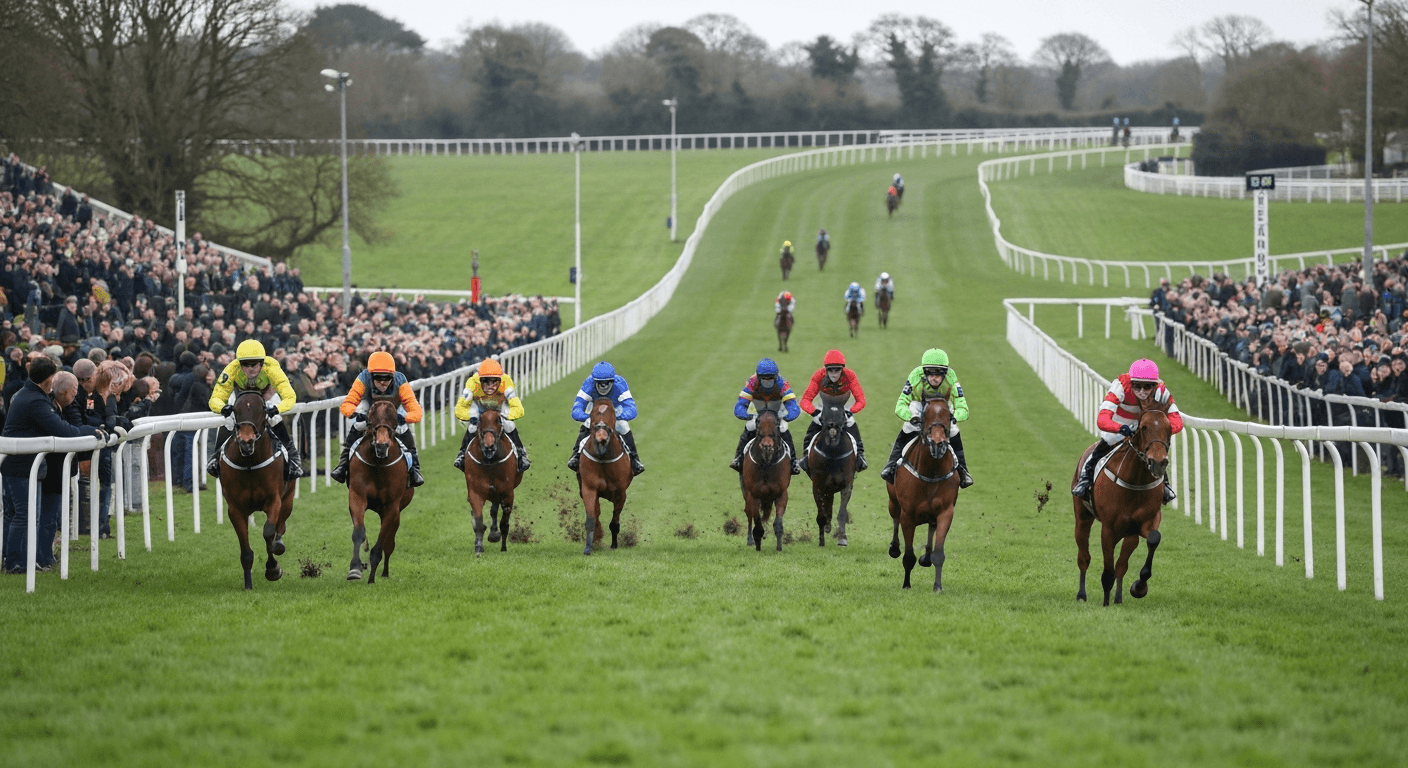
Gowran Park Racecourse: The Complete Guide
Gowran Park, the dual-code turf course in Co. Kilkenny, home of the Goffs Thyestes Chase where Arkle won, plus tickets, travel and how to visit.
Read more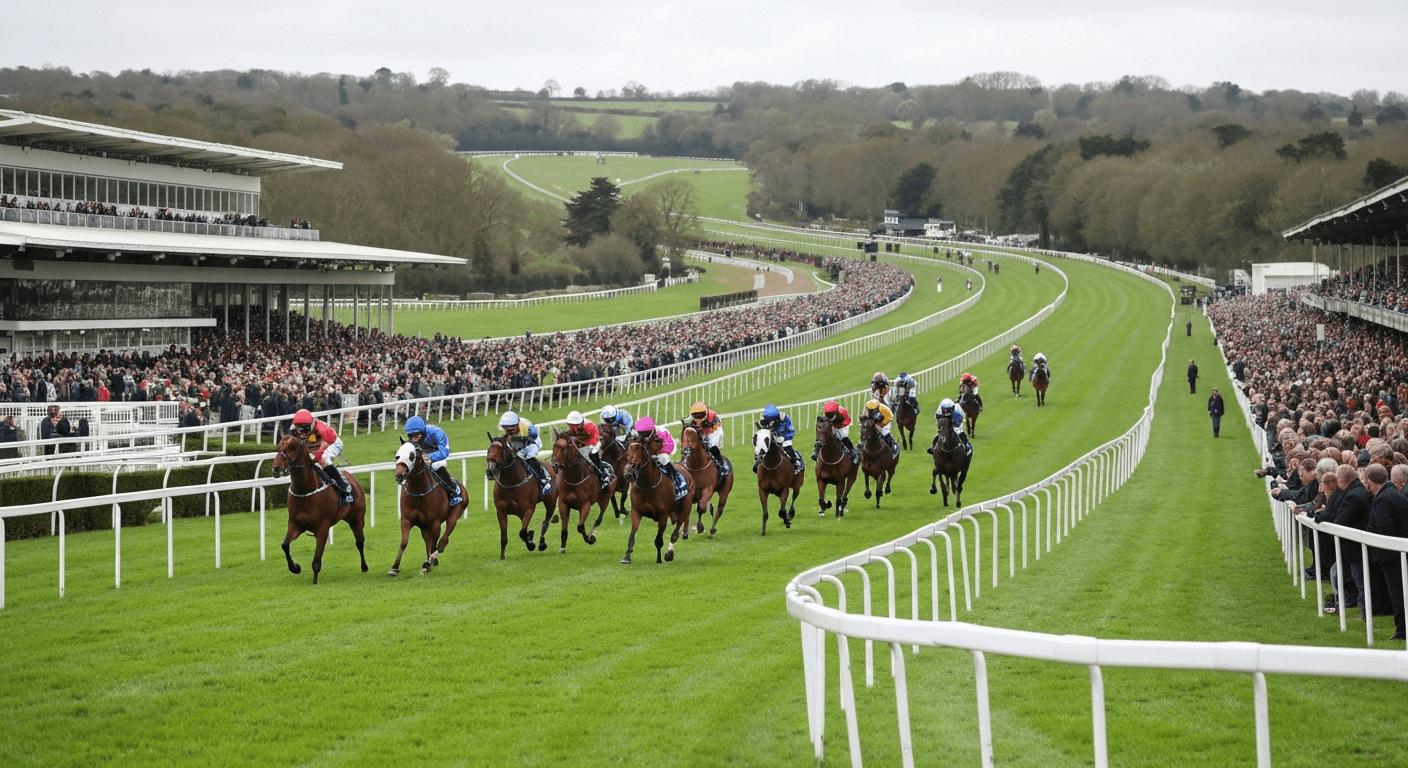
Thyestes Chase Day at Gowran Park: The Complete Guide
The Goffs Thyestes Chase at Gowran Park, the Grade 3 late-January handicap where Arkle won and a proven Aintree Grand National trial, with its roll of honour.
Read more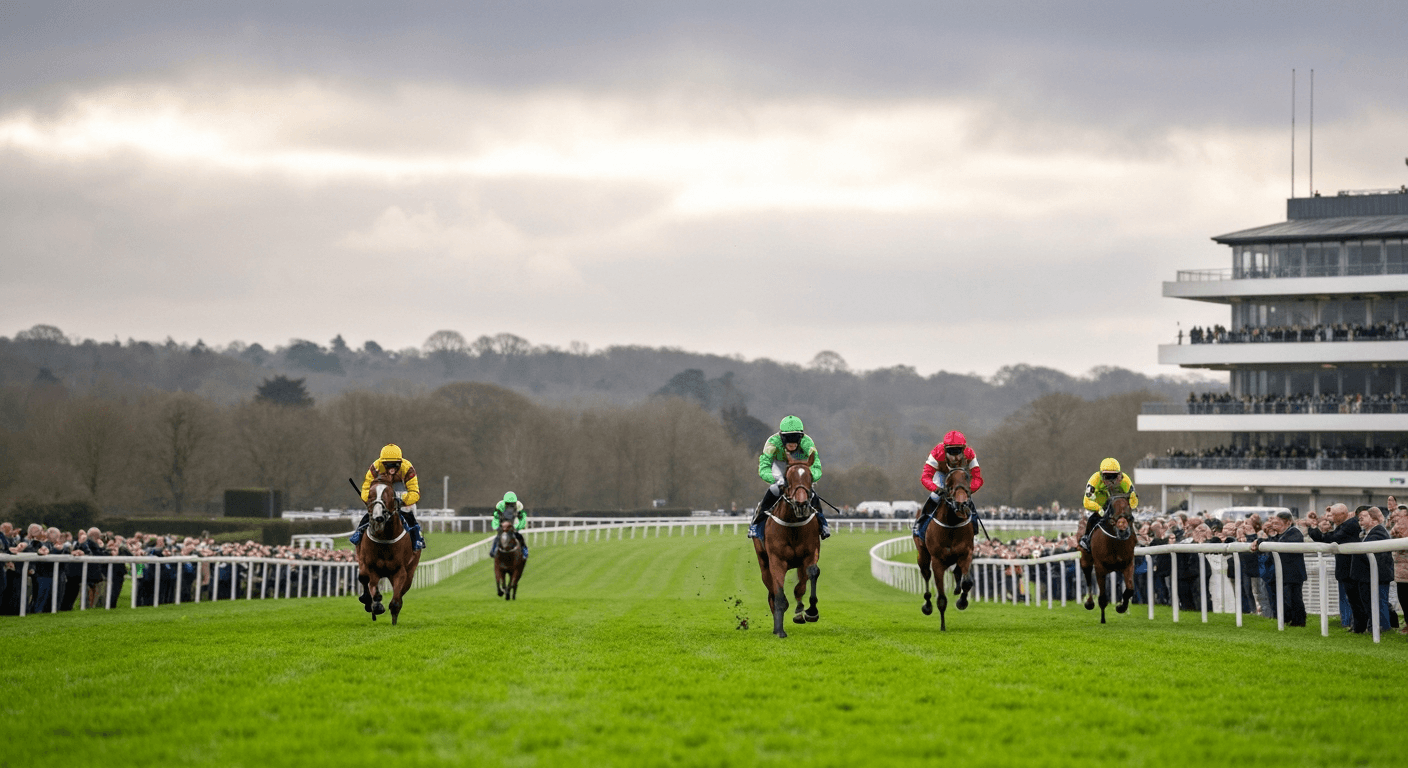
Arkle at Gowran Park: The Complete Story
How Arkle won the 1964 Thyestes Chase at Gowran Park, led in by the Duchess of Westminster, on the road to the first of his three Cheltenham Gold Cups.
Read moreGamble Responsibly
Gambling should be entertaining and not seen as a way to make money. Never bet more than you can afford to lose. If you or someone you know has a gambling problem, help and support is available.