
Founder & Editor · Last reviewed 2026-07-11
Racing at Thurles goes back a very long way. The first recorded meeting on the course was a three-day festival in 1732, noted in the Trinity College Dublin document known as "Pue's Occurrences". That single reference makes Thurles one of the oldest tracks in Ireland.
For most of its history the story of Thurles was the story of one family. The Molony family owned the course from the early 1900s, and until the summer of 2025 Thurles was the only privately owned racecourse in Ireland. Four generations kept it going, through two world wars and a pandemic that briefly made a small Tipperary track the only jumping on British television. That run ended in August 2025, when the course closed and Horse Racing Ireland stepped in to keep the fixtures alive.
The land is a large part of why Thurles lasted. The famously free-draining turf meant meetings were rarely lost even in the depths of winter, earning the course the fond nickname of "Ireland's first all-weather racecourse" and making it a valued trial ground that sent horses like Don Cossack and Sizing John on their way to the Gold Cup.
In this guide:
The First Meetings on Tipperary Turf
The documented history of Thurles begins with a single, precise reference. The first recorded race meeting on the course was held in 1732, a three-day festival noted in the Trinity College Dublin document known as "Pue's Occurrences". Thurles does not lean on legend or founding myth; its claim to be among the oldest racecourses in Ireland rests on that printed reference to organised racing. The 1732 date marks the start of the record, not the moment racing began, in a county that had horses in its blood long before anyone wrote the meetings down.
The early calendar
Racing at Thurles in that early period looked nothing like the winter jumps programme of today. There were four meetings a year, held in February, April, June and November, sociable fixtures woven into the farming year; the winter emphasis and the graded races came much later. The scale was modest too. The course had just twenty stables, nowhere near enough for a meeting drawing horses from around the county, so trainers routinely brought their runners to Thurles the day before racing.
A tradition of community stabling
That shortage produced something lasting. Local farms and yards took in visiting horses the night before a meeting, and the arrangement grew into a tradition of community involvement. From the earliest recorded meetings the course depended on the goodwill and outbuildings of the surrounding parish, and the townspeople treated the races as their own, a relationship that explains a good deal about the reaction when the course's future was thrown into doubt in 2025.
The ground beneath it all
The other constant is the ground. The course sits a mile or so west of the town, in the middle of Co. Tipperary, on turf that drains exceptionally well. That soil is why Thurles could reliably stage racing when heavier tracks were waterlogged, and why the nickname "Ireland's first all-weather racecourse" attached itself to the place. The description is not literal; there has never been a synthetic surface, and the going can still turn soft or heavy in a wet mid-winter. What it captures is that meetings here were rarely lost.
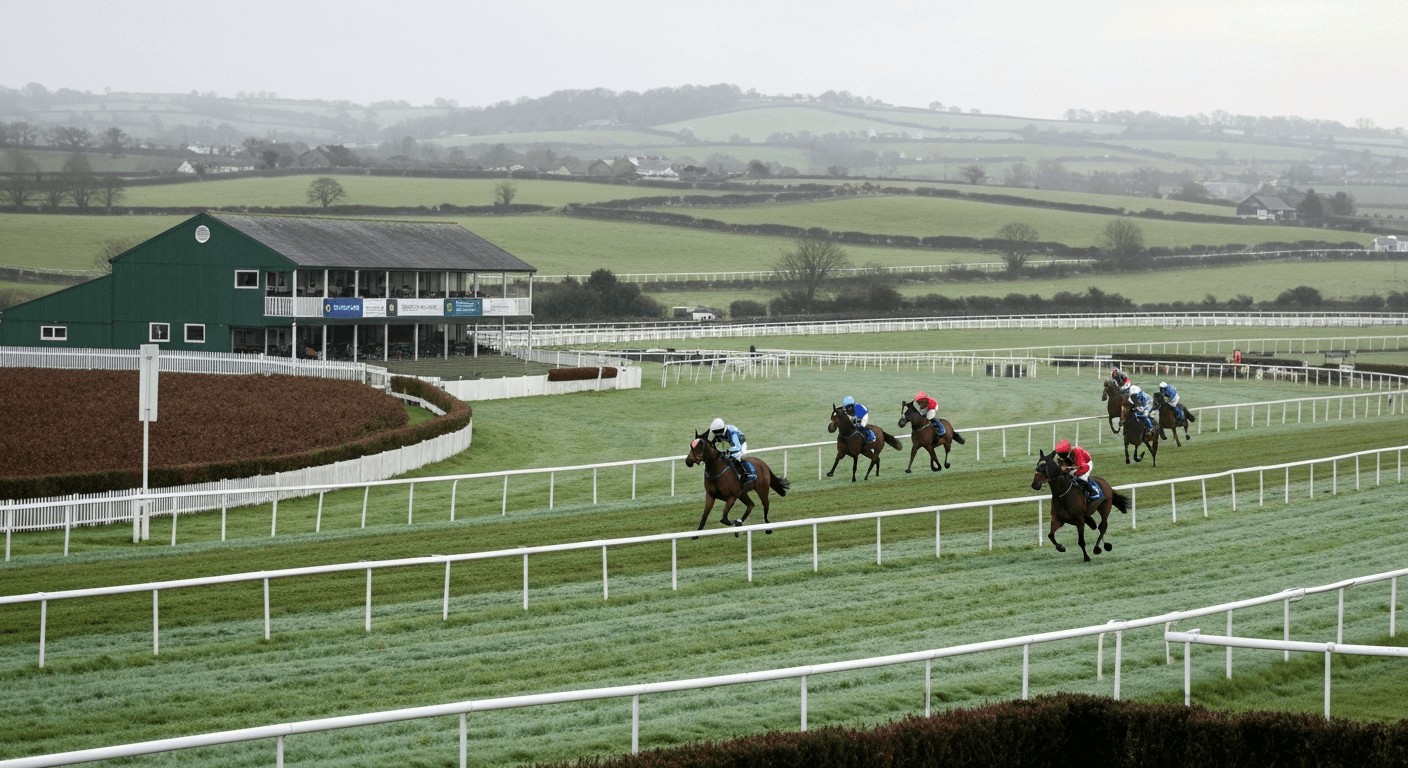
The layout settled into a right-handed, undulating oval of about a mile and a quarter, with a stiff uphill finish and a short run-in, a test that rewards handy, accurate jumpers with stamina rather than long-striding gallopers. That basic shape has barely changed. From those beginnings, the next chapter belongs almost entirely to one family.
The Molony Century and the Signature Races
The modern course is the work of one family. The Molonys took ownership in the early 1900s, when Pierce Molony took over the running of the track from the local committee that had managed it before, and the course stayed in private hands for more than a hundred years.
Four generations of Molony ownership
The stewardship passed down the generations. Dr Paddy Molony ran the course from the 1960s, and his son Pierce became manager in 1974, running Thurles for more than four decades until his death in 2015. After he died, his widow Riona and their daughters, Patricia, Helen, Anne Marie and Kate, took charge and kept it going.
Unbroken family ownership of that length is rare in racing anywhere. Decisions were made by people who lived beside the track and knew the regulars by name, and the course kept its no-frills, single-enclosure character and its winter identity throughout.
Building the signature races
The races that gave the modern course its standing were founded over a short span at the turn of the millennium: three graded contests plus supporting Listed races.
The Kinloch Brae Chase is the showpiece. First run in 1997, it developed into a Grade 2 steeplechase of about two and a half miles staged in late January, and became a noted trial for the Cheltenham Gold Cup and the Ryanair Chase. Its grade has wobbled: downgraded to Grade 3 in 2017, restored to Grade 2 in 2018. Merry Gale won the inaugural running and Manhattan Castle followed in 1998.
The Anaglog's Daughter Mares Novice Chase honours the mare who won both the Irish and the British Arkle in 1980. It became one of the most valuable races at the meeting: first run in 2003 as a Listed race, awarded Grade 3 in 2004, promoted to Grade 2 in 2013.
The Michael Purcell Memorial Novice Hurdle, run over two and a half miles in February or March, was first staged in 2004 and held Grade 2 status before being downgraded to Grade 3 in 2017.
The Pierce Molony Memorial Novice Chase, a Grade 3 run in the spring, honours two Molony managers, grandfather and grandson, and is registered as the Native Upmanship Novice Chase after the triple Kinloch Brae winner who became a course favourite.
Signature races at a glance
| Race | Type and grade | First run | Notes |
|---|---|---|---|
| Kinloch Brae Chase | Grade 2 chase, about 2m4½f | 1997 | Downgraded to Grade 3 in 2017, restored to Grade 2 in 2018; Gold Cup and Ryanair trial |
| Anaglog's Daughter Mares Novice Chase | Grade 2 mares novice chase, about 2m4½f | 2003 | Listed at first, Grade 3 in 2004, Grade 2 in 2013; honours the 1980 Irish and British Arkle winner |
| Michael Purcell Memorial Novice Hurdle | Grade 3 novice hurdle, 2m4f | 2004 | Previously Grade 2, downgraded to Grade 3 in 2017 |
| Pierce Molony Memorial Novice Chase | Grade 3 novice chase, spring | n/a | Registered as the Native Upmanship Novice Chase; honours two Molony managers |
A winter trials venue
Because the ground could be relied on when other winter cards were lost, trainers used Thurles to prepare their best jumpers for the spring festivals. That is the Molony family's real milestone: not grandstands to rival Leopardstown, but a place the sport could count on in the worst of the weather, with a small roster of races that carried real form.
The Great Horses of Thurles
For a small winter track, Thurles has had a remarkable number of top horses pass through it, and the Kinloch Brae Chase above all carries a roll of honour that reads like a who's who of Irish jumping.
The Kinloch Brae kings
Two horses stand level at the top. Native Upmanship won the Kinloch Brae three times, in 2002, 2003 and 2004, and became a course favourite in the process. Two decades later Allaho matched him, taking the race in 2021, 2022 and 2024 before going on to win the Ryanair Chase at Cheltenham. The most recent multiple winner is Appreciate It, successful in 2025 and 2026 for Willie Mullins. Rule Supreme was another popular horse who ran his best over the Thurles fences.
The Gold Cup road ran through Thurles
The Kinloch Brae's reputation as a Gold Cup trial is not just marketing. Don Cossack won the race before landing the 2016 Cheltenham Gold Cup, and Sizing John did the same before his 2017 Gold Cup. For a country track running eleven fixtures a year, sending two consecutive Gold Cup winners on their way is about as strong a claim to significance as jumps racing offers.
Honeysuckle and the mares' races
Honeysuckle, later a dual Champion Hurdle winner, raced at Thurles on her way up. In 2018 Rachael Blackmore won a mares' novice hurdle at the course on her, an early chapter in a partnership that went on to make history at Cheltenham. Honeysuckle heads the roll of honour of the Listed mares' novice hurdle staged on the final weekend before Christmas.
A Flat champion's first day
Not every Thurles legend was a jumper. Vintage Crop, the future Melbourne Cup winner, won his very first race at Thurles.
The early Kinloch Brae winners
Merry Gale won the inaugural Kinloch Brae in 1997, ridden by Conor O'Dwyer for the trainer Jim Dreaper, and Manhattan Castle followed in 1998. Newmill won the race twice, and the smart chaser Hi Cloy features on the roll as well. These horses established the Kinloch Brae as a race worth winning before the Gold Cup winners and the Mullins stars arrived.
A word on the older folklore
Old courses attract stories, and claims are sometimes made linking the great chasers Flyingbolt and Arkle to Thurles specifically. Those connections could not be verified against an authoritative source, so they should be treated as folklore rather than record.
There is a reason so many of these names are horses on the way to bigger targets. The reliable ground let trainers plan around a Thurles run knowing the race would go ahead, and the sharp circuit with its uphill finish asked real questions of jumping and stamina, so the form tended to hold up at Cheltenham and the Dublin Racing Festival.
The People Who Shaped Thurles
Thurles is defined first by a family, then by the trainers and jockeys who filled its winner's enclosure.
The Molony family
Pierce Molony took over from the local committee in the early 1900s. Dr Paddy Molony ran the track from the 1960s, and his son Pierce became manager in 1974, holding the role until his death in 2015. After that, Pierce's widow Riona and their daughters, Patricia, Helen, Anne Marie and Kate, carried the course through its final decade in private hands. The whole ethos of Thurles as an unpretentious, community-minded winter track was theirs.
The dominant trainer
Among trainers, Willie Mullins towers over the modern course, most strikingly in the two January features. He has won the Kinloch Brae Chase seven times, with Apt Approach in 2012, Real Steel in 2020, Allaho in 2021, 2022 and 2024, and Appreciate It in 2025 and 2026. His grip on the Anaglog's Daughter Mares Novice Chase is just as firm, with winners including Pomme Tiepy in 2008, Vroum Vroum Mag in 2015, Westerner Lady in 2017, Camelia de Cotte in 2019, Elimay in 2020, Colreevy in 2021 and Allegorie De Vassy in 2023. He has also landed the Michael Purcell Memorial Novice Hurdle repeatedly, from Kim Fontaine in 2004 and Cooldine in 2008 to Tin Soldier in 2017, Five O'Clock in 2020 and Largy Hill in 2024.
The jockeys
Paul Townend, Mullins's regular winning partner, is the leading jockey in the Kinloch Brae with six wins, a tally that includes Appreciate It in 2026. Rachael Blackmore won a mares' novice hurdle at the course in 2018 aboard Honeysuckle, and further back, Conor O'Dwyer rode Merry Gale to victory in the very first Kinloch Brae in 1997 for the trainer Jim Dreaper.
The challenger and the owners
Mullins does not have it all his own way. Gordon Elliott has built a strong record in the novice hurdles, particularly the Michael Purcell, with winners including Blow By Blow in 2018, Grand Paradis in 2021, The Goffer in 2022 and Sa Fureur in 2023. Among owners, the green and gold of JP McManus has featured prominently: Nara, trained by Henry de Bromhead, won the Anaglog's Daughter in 2025 for a record fourth McManus win in the race, and his Common Practice, trained by Joseph O'Brien, took the Pierce Molony Memorial Novice Chase the same year.
What links them all is that Thurles rewarded people who kept coming back: the trainers who mastered it did so over years, and the family who ran it did so over generations.
Records and Statistics
The record book at Thurles comes with an honest health warning. The course does not publish an authoritative course-record or standard-times table, so a verified list of fastest times does not exist. What can be stated with confidence are the win counts in the signature races and the recorded attendance.
The record book at a glance
| Category | Record |
|---|---|
| Official course-record or standard-times table | Not published |
| Most Kinloch Brae Chase wins (horse) | Native Upmanship (2002, 2003, 2004) and Allaho (2021, 2022, 2024), three each |
| Leading Kinloch Brae Chase trainer | Willie Mullins, seven |
| Leading Kinloch Brae Chase jockey | Paul Townend, six |
| Recorded attendance (2023, annual) | 17,273 |
| Single-day attendance record | Not published |
| Fixtures per year | About 11, from October to March |
On winning times
Individual winning times are available through result services, but they are not a standard-times table. The 2026 Kinloch Brae Chase, for example, was run in 5 minutes 25.10 seconds over 2m4f66y on yielding to soft ground; without official standard times to measure it against, that is a single data point, not a course record.
On the counts and the crowd
The win counts are on firmer ground. Native Upmanship and Allaho share the Kinloch Brae record for a horse with three wins each, Willie Mullins leads the trainers with seven, and Paul Townend the jockeys with six. These are historical descriptions of who has won most often, not a betting angle.
The attendance figure needs its own caveat. Wikipedia, citing the Horse Racing Ireland Factbook, records a 2023 attendance of 17,273. That is an annual total across all of the year's fixtures, not a single-day crowd, and no verified single-day record or capacity figure is published. The counts are solid; the times and crowds are only lightly documented, a fair reflection of a track that measured itself by the horses it produced rather than the size of its record book.
Race Day and the Tipperary Connection
Thurles never pretended to be anything it was not: a no-frills, largely single-enclosure track with a members' clubroom, standard bars and catering, and racing bought at the turnstiles on the day. The appeal was the racing and the company.
A Thursday crowd
The course built a loyal core of enthusiasts around a simple habit: for years the regulars raced at Thurles on Thursdays. A midweek winter card draws people who love the sport enough to turn up in January cold, and that gave Thurles a settled, familiar feel, a crowd who knew each other and knew the horses. The community stabling tradition described earlier never left the character of the place.
Racing in a Tipperary town
Tipperary is a proud GAA and farming county, and the town of Thurles is home to Semple Stadium, one of the great hurling grounds. The racecourse was one thread in that wider sporting and rural life, and the nearby Horse & Jockey Hotel, which sponsors the feature chase, has long served as a local hospitality base on the bigger days.
The hard year
The strength of that local attachment showed most clearly when the course was under threat. When the Molony family announced the closure of Thurles in 2025, the news landed hard in the town, and there was widespread relief locally when Horse Racing Ireland stepped in to keep the fixtures running.
The same year brought real grief. In February 2025 the Irish jockey Michael O'Sullivan died following a fall at the course, a loss deeply felt across Irish racing and a reminder of the risks behind every winter jumps card. Those two events framed the last full season of family ownership, and showed how much a small Tipperary racecourse could mean to the people around it.
The Closure and the HRI Takeover
The modern history of Thurles is not a story of grandstands and redevelopment. The course stayed true to its no-frills, single-enclosure character right to the end of private ownership; the defining events of its recent past are about ownership and survival.
The pandemic and a moment in the spotlight
The most unlikely chapter came in 2020, when the Covid-19 pandemic shut down British sport and Irish racing continued behind closed doors. The free-to-air broadcaster ITV screened racing from Thurles to viewers who had no jumping of their own to watch, an extraordinary turn for a course of eleven fixtures a year.
Closure in August 2025
After Pierce Molony died in 2015, his widow Riona and their daughters kept Thurles running as the only privately owned racecourse in Ireland. The decisive moment came a decade later: on 1 August 2025 the family announced that Thurles had closed, with immediate effect. After more than a century of family ownership the gates were shut, and the future of the fixtures was suddenly in doubt. The reaction, locally and across the sport, was immediate; Thurles was a valued winter track and trials venue, and the question was whether anyone would step in to keep the racing going.
Horse Racing Ireland steps in
The answer came within weeks. On 28 August 2025 Horse Racing Ireland announced that it would take over operational responsibility for Thurles and keep the course open, committing to the season's eleven fixtures through to March 2026, with racing resuming as scheduled on Thursday 9 October 2025 while a longer-term plan was worked out. That preserved the winter programme, including the January feature card built around the Kinloch Brae and the Anaglog's Daughter, with racing continuing to be broadcast through Racing TV.
The course today, and the open question
Thurles remains what it has long been: a right-handed, undulating turf track of about a mile and a quarter, free-draining enough to keep racing through the worst of the winter, staging around eleven jumps fixtures between October and March, and still serving as a Cheltenham and Dublin Racing Festival trials venue.
What is genuinely unresolved is the long-term future. HRI's takeover secured the fixtures through March 2026, but who runs the course beyond that, and on what basis, was not settled at the time of the takeover. The honest position is that Thurles has been saved for a season and a plan is being developed. After nearly three hundred years of racing and more than a century in the hands of one family, the next chapter is still being written.
Frequently Asked Questions
Share this article
More about this racecourse
All thurles guides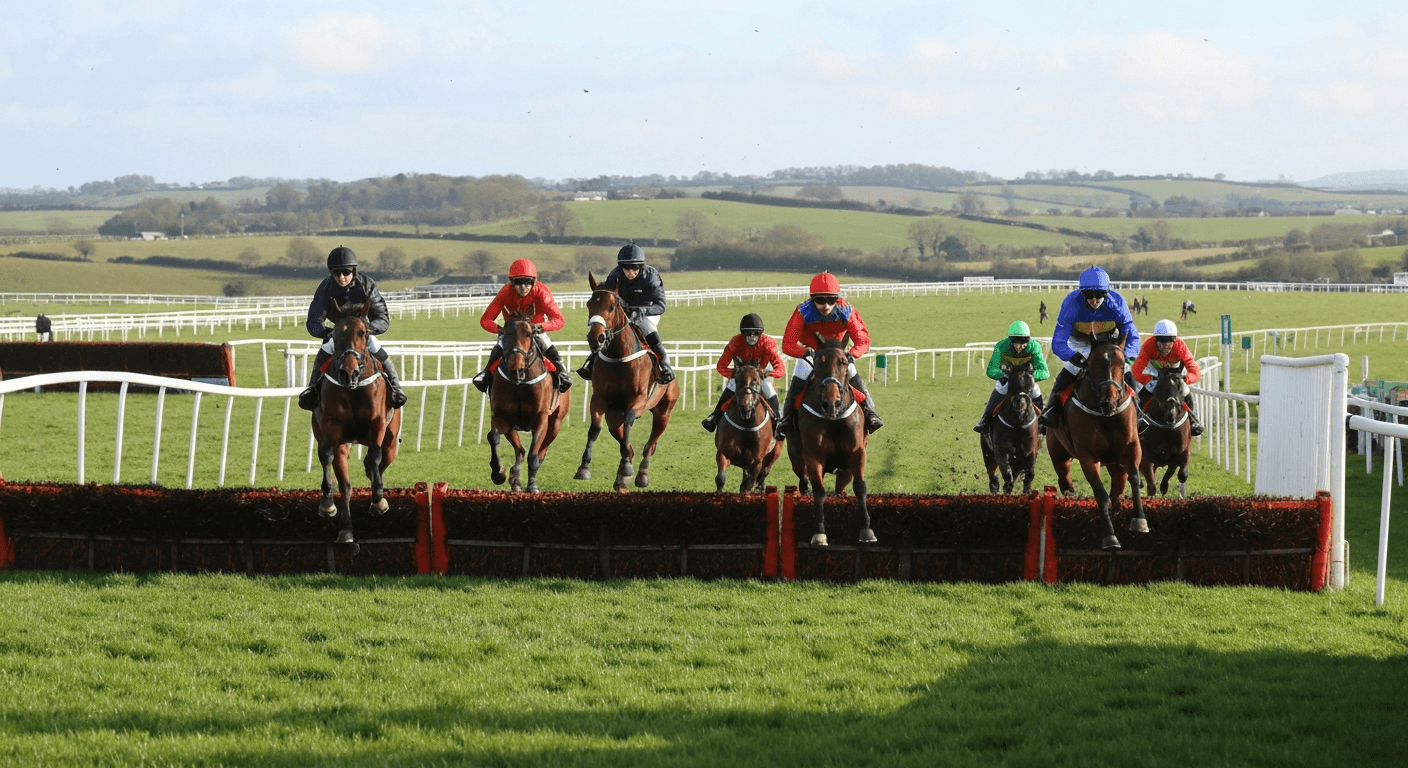
Thurles Racecourse: The Complete Guide
Thurles Racecourse, the free-draining National Hunt track in Co. Tipperary and home of the Grade 2 Kinloch Brae Chase, plus tickets, travel and how to visit.
Read more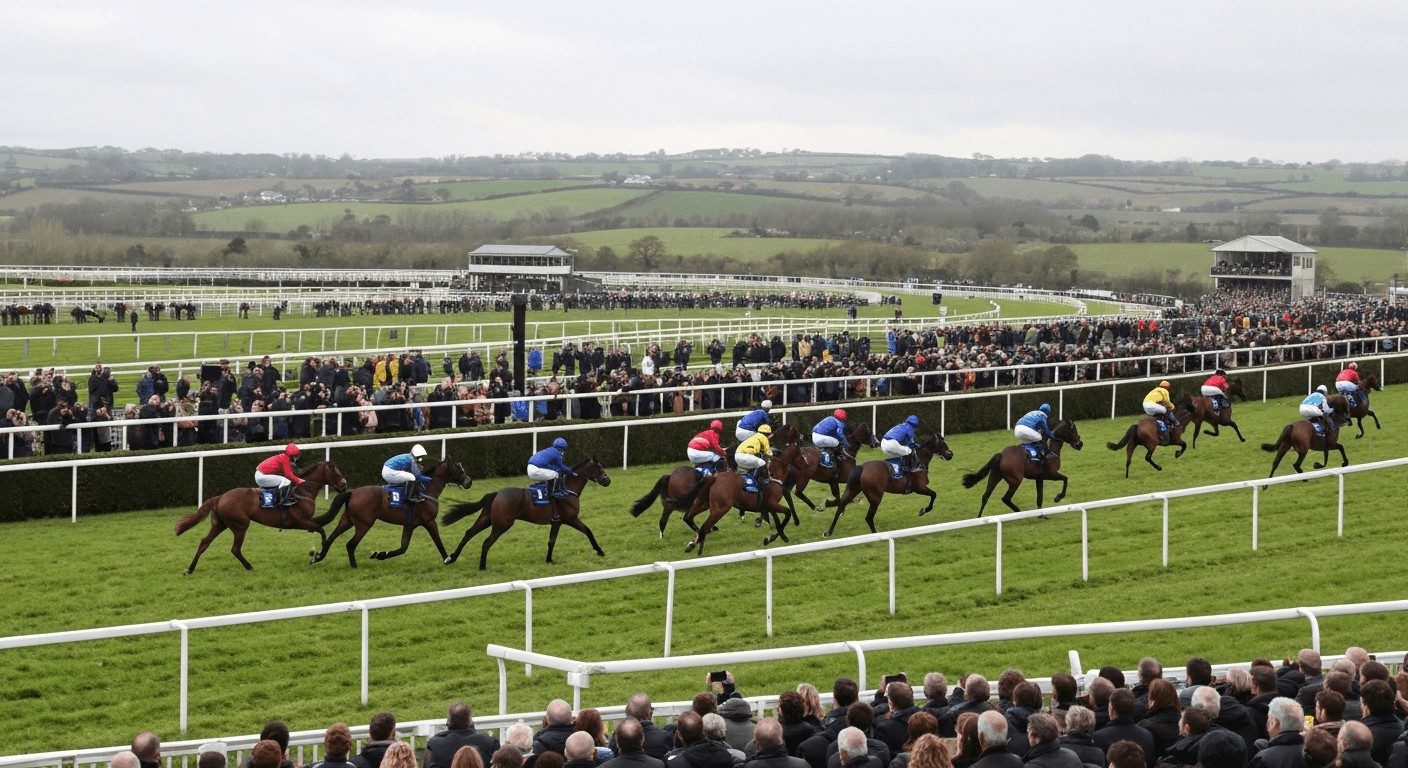
Kinloch Brae Day at Thurles: The Complete Guide
The mid-January Sunday at Thurles, headlined by the Grade 2 Kinloch Brae Chase, a proven Gold Cup and Ryanair trial, plus the Anaglog's Daughter and how to attend.
Read more
Betting at Thurles Racecourse
How Thurles's sharp, free-draining National Hunt track and the Grade 2 Kinloch Brae Chase shape the betting, with trainer, jockey and honest favourite angles.
Read moreGamble Responsibly
Gambling should be entertaining and not seen as a way to make money. Never bet more than you can afford to lose. If you or someone you know has a gambling problem, help and support is available.