
Founder & Editor · Last reviewed 2026-07-08
Introduction
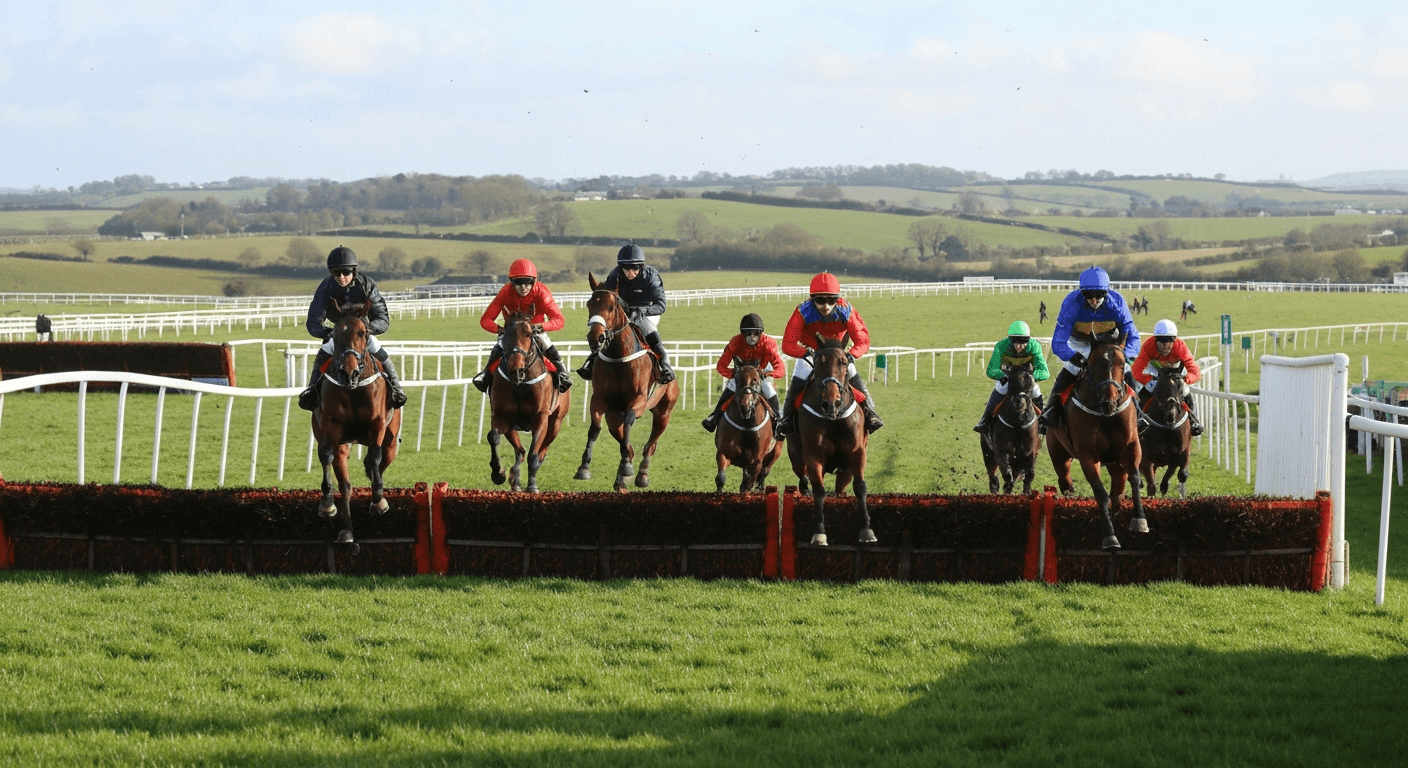
Thurles Racecourse is a National Hunt (jumps) turf track at Thurles in Co. Tipperary, about 1.5km west of the town centre and roughly five miles west of the N8/M8 Dublin to Cork road. It is a right-handed, undulating oval of about a mile and a quarter, with seven fences and six hurdle flights to a circuit, a short run-in of about a furlong and a quarter, and a steep uphill finish. There is no all-weather surface, but the turf is famously free-draining, so meetings are rarely lost even in deep winter, which earned Thurles the affectionate nickname "Ireland's first all-weather racecourse".
The course hosts about 11 fixtures a year between October and March, mostly on Thursdays with some weekend cards. Its status rests on three Grade 2 and Grade 3 features, headed by the mid-January Kinloch Brae Chase, and it is valued as a Cheltenham and Dublin Racing Festival trials venue because of that reliable ground. More on the layout is in the track, and the feature roster is covered in the races.
The first recorded meeting here was in 1732, making Thurles one of the oldest tracks in Ireland. It was long the only privately owned racecourse in the country, held by the Molony family since the early 1900s. On 1 August 2025 the family announced the course had closed with immediate effect; on 28 August 2025 Horse Racing Ireland took over operations, keeping it open through its 11 fixtures to March 2026, with racing resuming on 9 October 2025. The longer-term future beyond March 2026 is undecided.
On this page
Where to Bet
Place your bets with a trusted, licensed bookmaker.

Promo code BETFRED50. New customers only. Register, deposit with a Debit Card, and place a first bet of £10+ at Evens (2.0)+ on Sports, to be settled within 7 days, to get £30 in Sports Free Bets and £20 in Bet Builder Free Bets within 24 hours of settlement. 7-day expiry. Eligibility & payment exclusions apply. Full T&Cs apply. Take Time to Think. BeGambleAware.org. 18+. Full T&Cs.

Promo code R30. New UK customers only, 18+. Register, deposit £10 or more, then place a £10 single cash bet at odds of 1/2 (1.5) or greater on any sports market (excluding Virtuals). Once the qualifying bet settles you get £30 in Free Bets (3 x £10) — the qualifying bet can win or lose. Free Bets are valid on any sports market excluding Virtuals, expire in 7 days, are non-withdrawable and must be used in full. Excluded deposit methods apply (including PayPal, Apple Pay, Skrill and NETELLER). Named bets such as Lucky 15 do not qualify. If you cash out the qualifying bet, or it is voided, you are no longer eligible for the offer. Ends 31.12.26. Full T&Cs apply. Please gamble responsibly. BeGambleAware.org. 18+. Full T&Cs.

Promo code BET40GET20. New UK customers, 18+. Register with the code and place a first bet of £40 or more at Evens (2.0) or greater. Receive 2 × £10 free bets: the first credited automatically once the qualifying bet settles, the second 24 hours later. Free bets must be placed at minimum odds of 4/1 (5.0), expire 24 hours after credit, and the free-bet stake is not returned with winnings. Debit card deposits only. Take Time to Think. BeGambleAware.org. 18+. T&Cs apply. Full T&Cs.

50% of your first-day net losses refunded as a free bet, capped at £25. New UK customers aged 18+ only. To qualify, deposit and place a first bet of £10 or more on any sport at minimum odds of evens (2.00), then place at least two further bets on different events, each worth at least 50% of your largest bet, all at evens (2.00) or greater. Losses are counted from your first settled bet until 23:59 the same day. Place a qualifying £10+ bet and you are guaranteed at least a £5 free bet. Bets placed at SP, void bets, cashed-out bets and bets struck with free bets do not count towards the offer. The free bet is credited the day after your qualifying bets settle and must be used within 7 days, after which it expires. It can be used at odds from 1/4 (1.25) up to 250/1 on singles and straight accumulators, but not on Trixie, Patent or Yankee style multiples. Free-bet stake is not returned with winnings. One offer per person, household, address, IP address and device. E-wallet deposits may not qualify, so check the cashier before depositing. Customers registered with GAMSTOP cannot claim. KYC identity verification must be completed before the free bet is credited. Take Time to Think. BeGambleAware.org. 18+. T&Cs apply. Full T&Cs.

New customers, 18+. Choose the sports bonus at sign-up, make a first deposit and receive a 100% bonus up to £50 in your Sports Bonus balance. To convert the bonus to cash, wager it 10x within 30 days. Single bets below Evens (2.00) do not qualify; accumulators do not qualify if any selection is below 1/2 (1.50). Virtual Sports, voided, cancelled, drawn, cashed-out and free-bet wagers do not count towards wagering. Only the first settled bet per event counts. Withdrawing before the wagering requirement is met forfeits the bonus balance including bonus winnings. Real-money funds are used before bonus funds. Deposits via Skrill or Neteller are not eligible. Not valid in conjunction with other promotions. Odds, bet and payment limits apply. 10bet general and promotion T&Cs apply. BeGambleAware.org. 18+. Full T&Cs.

New customers in Great Britain and Republic of Ireland, 18+. Place a £10 fixed-odds qualifying bet at minimum odds of 1/2 (1.50) — single or each-way (only the win part counts), pre-event or in-play, not cashed out early, within 28 days of opening the account. Receive up to £60 in bonuses credited over three days: 3 × £10 fixed-odds free bets (the first on settlement, then 24 and 48 hours later) plus 3 × £5 Total Goals FOOTBALL spread bets, 3 × £5 racing Winning Favourites spread bets and a £1 racing Race Index spread bet (the spread bets need a full spread-betting account). Free-bet stakes not returned with winnings; free bets valid 28 days from issue. IMPORTANT: the £5 credits are SPREAD bets — sports spread betting carries the risk that losses can exceed your stake. Sports spread-betting customers do not have Financial Ombudsman or FSCS recourse. Take Time to Think. BeGambleAware.org. 18+. T&Cs apply. Full T&Cs.

Promo code WELCOME15, entered under My Bonuses after registering. New UK customers, 18+. Place a first qualifying bet of at least £10 from your cash balance at odds of evens (2.0) or greater within 7 days of opening the account. Once the qualifying bet fully settles you receive £15 in free bets, credited as 3 x £5 tokens with set uses: one £5 accumulator free bet (minimum 4 legs, each leg at 2/5 or bigger), one £5 sports free bet (any market at evens or bigger) and one £5 Sub Cover free bet (selected football player markets at evens or bigger). Free-bet stakes are not returned with winnings. Free bets expire 7 days after they are credited. Void, cashed-out and partially cashed-out bets do not qualify. One offer per customer. Confirm the current terms on BetGoodwin's own welcome-offer page before claiming. Take Time to Think. BeGambleAware.org. 18+. T&Cs apply. Full T&Cs.

New UK customers, 18+. Minimum deposit £10. Place a £10 qualifying single at minimum odds of 1/2 (1.50), settled within 14 days. Receive £30 in free bets (stake not returned), split £20 for sportsbook use (2 x £10) and £10 for Bet Builder only (2 x £5); Bet Builder does not cover horse racing. Free bets must be accepted within 7 days and expire 7 days after acceptance. No promo code required. Best Odds Guaranteed on UK & Irish racing, subject to having staked over £25 in the previous seven days. Operated by LiveScore Betting and Gaming (Gibraltar) Ltd, UKGC 56859. Confirm the current terms on LiveScore Bet's own promotions page before claiming. Take Time to Think. BeGambleAware.org. 18+. T&Cs apply. Full T&Cs.
18+. BeGambleAware.org
The Track
The Track
Thurles is a right-handed, undulating turf oval of about one and a quarter miles, and it races over jumps only, with no all-weather surface. A full circuit carries seven fences for chasers and six flights of hurdles, and the layout asks a specific type of question rather than a simple test of speed.
The shape of a lap is what gives Thurles its character. Down the back straight horses climb, taking three fences racing uphill, including an open ditch before the ground begins to fall away. From there the track drops fairly steeply towards a sharp home turn, then presents a downhill plain fence that can catch horses out before two more fences and a rising finish. The run-in is short, about one and a quarter furlongs, and it runs uphill to the line, so a horse that meets the last well still has real work to do.
In hurdle races the back straight can feature a line of three flights, of which the middle one is optional and not always jumped. The overall test is a sharp one, and the dossier describes the course as favouring handy, efficient jumpers with stamina rather than long-striding, galloping types. Being well positioned two out matters, given the short run-in and the steep climb home.
Thurles is best known for its ground. The turf is famously free-draining, so meetings are rarely lost even in the depths of winter, which earned it the affectionate nickname "Ireland's first all-weather racecourse". That reliability is why it is valued as a Cheltenham and Dublin Racing Festival trials venue. The ground rarely turns bottomless, though soft-to-heavy going does occur in mid-winter and tests stamina. The dossier also notes that the surface is a touch more resilient on the outside, and that jockeys sometimes pull wide later in the card once the inside is churned.
As a National Hunt track, there is no meaningful draw bias. For how that shapes race-reading, see Form and betting; for the fences and hurdle positions in plan, see the Course map.
The confirmed track facts are collected below.
| Feature | Detail |
|---|---|
| Handedness | Right-handed |
| Circuit shape | Undulating turf oval |
| Circuit length | About 1m2f (one and a quarter miles) |
| Fences per circuit | Seven |
| Hurdle flights per circuit | Six |
| Run-in | About 1.25 furlongs, uphill |
| Finish | Steep, rising to the line |
| Surface | Turf only (no all-weather); free-draining |
| Codes staged | National Hunt (jumps) |
| Draw bias | None (jumps track) |
The Course Map
Course Map and Layout
Thurles is a compact, largely single-level site laid out around a right-handed turf oval of about one and a quarter miles. As covered in the track, the circuit climbs the back straight over three fences, including an open ditch, before a fairly steep descent to a sharp home turn, a downhill plain fence and two final fences into the rising ground. The winning post sits at the top of a steep uphill finish, reached by a short run-in of about one and a quarter furlongs, so spectators at the line watch horses labouring up the climb rather than sprinting flat out.
The public areas follow the track's no-frills tradition: a single enclosure with on-course bars and a members' clubroom, all within easy walking distance of the turnstiles and the free parking close to the entrance. There is ample free parking at the racetrack. Detail on the individual viewing areas is in enclosures and stands.
The dossier does not give the precise positions of the parade ring, weighing room or winners' enclosure relative to the stands, so those are not described here.
The Races
The races
Thurles is a National Hunt track, and its standing rests on a compact roster of graded winter contests rather than a single showpiece festival. Three Grade 2 and Grade 3 chases and a Grade 3 hurdle anchor the programme, supported by a clutch of Listed races. Because the ground here drains so freely, these fixtures rarely fall to the weather, which is why the course is valued as a Cheltenham and Dublin Racing Festival trials venue. For how those trials tend to run, see Form and betting; for how the fixtures sit in the winter calendar, see Festivals.
The Kinloch Brae Chase, currently run as the Horse & Jockey Hotel Chase, is the highlight. A Grade 2 steeplechase of about 2m4½f over 14 fences in late January, it was first run in 1997, downgraded to Grade 3 in 2017 and restored to Grade 2 in 2018. It has proved a genuine Gold Cup and Ryanair Chase pointer: Don Cossack and Sizing John both won it before their Cheltenham Gold Cups (2016 and 2017), and Allaho took it before his Ryanair wins. Native Upmanship (2002 to 2004) and Allaho (2021, 2022, 2024) share the record with three wins each. Willie Mullins leads the trainers on seven, Paul Townend the jockeys on six. In 2026 the 1/1 favourite Appreciate It won it for Mullins and Townend.
The Anaglog's Daughter Mares Novice Chase is a Grade 2 for mares aged five and up, about 2m4½f over 14 fences in January, and is often the meeting's most valuable race. First run in 2003, it reached Grade 2 in 2013 and honours the 1980 Irish and British Arkle winner. Mullins dominates the roll; Henry de Bromhead won it in 2025 with Nara, a record fourth win for owner JP McManus.
The Michael Purcell Memorial Novice Hurdle is a Grade 3 over 2m4f and 12 hurdles in February or March, first run in 2004. Mullins and Gordon Elliott have both won it repeatedly, Elliott most recently with Jacob's Ladder in 2025 (a running switched to Naas after Thurles was waterlogged). The Pierce Molony Memorial Novice Chase, registered as the Native Upmanship Novice Chase, is a Grade 3 in March honouring two Molony managers; C'Est Ta Chance won it in 2026.
Listed races fill out the winter cards, among them the Billy Harney Memorial Boreen Belle Mares Novice Hurdle (2m, headed on its roll by Honeysuckle), the Racing TV Club Day Chase (2m6f) and a mares chase of about 2¾ miles first run in 2023.
| Race | Grade | Type | Distance | Month | Notable / recent winner |
|---|---|---|---|---|---|
| Kinloch Brae Chase | Grade 2 | Chase | c.2m4½f | January | Appreciate It (2026) |
| Anaglog's Daughter Mares Novice Chase | Grade 2 | Mares novice chase | c.2m4½f | January | Nara (2025) |
| Michael Purcell Memorial Novice Hurdle | Grade 3 | Novice hurdle | 2m4f | Feb/Mar | Jacob's Ladder (2025) |
| Pierce Molony Memorial Novice Chase | Grade 3 | Novice chase | c.2m2¼f to 2m5f | March | C'Est Ta Chance (2026) |
| Boreen Belle Mares Novice Hurdle | Listed | Mares novice hurdle | 2m | December | n/a |
| Racing TV Club Day Chase | Listed | Chase | 2m6f | n/a | n/a |
Records and Stats
Records and stats
Thurles does not publish an authoritative course-record or standard-times table, so there is no verified list of fastest times to quote here. Individual winning times surface through result services rather than an official record: the 2026 Kinloch Brae Chase, for instance, was run in 5m 25.10s over 2m4f66y on yielding to soft ground. Treat any single figure as a one-off result, not a ratified track record.
Attendance figures are similarly thin. Wikipedia, citing the HRI Factbook, records a 2023 attendance of 17,273, but that is an annual total across the fixtures, not a single-day gate, and no verified single-day record or comfortable-capacity figure is published. Thurles has long run as a no-frills, largely single-enclosure venue with a members' clubroom and standard on-course bars, so it has never operated as a scale attendance business in the way a big festival track does. See enclosures and stands for how the site is laid out.
The clearer statistical story is on the racecard. Willie Mullins is the dominant trainer at the modern course, with seven Kinloch Brae wins and a long roll in the Anaglog's Daughter Mares Novice Chase, while Paul Townend is his regular winning partner, including the 2026 Kinloch Brae on Appreciate It. Gordon Elliott has the standout record in the Michael Purcell Memorial Novice Hurdle. For how those trainer and jockey patterns play into a bet, see form and betting; none of it implies a profit.
History
History
Racing at Thurles reaches back almost three centuries. The first recorded meeting was a three-day festival in 1732, noted in the Trinity College Dublin document "Pue's Occurrences," which makes Thurles one of the oldest tracks in Ireland. In those early years the course held four meetings a year, in February, April, June and November, and had just 20 stables. With space so tight, trainers often brought their horses to Thurles the day before racing, and the local community helped provide extra stabling. That practical arrangement began a lasting tradition of community involvement that still defines the place.
The story since then is largely the story of one family. The Molonys have owned Thurles since the early 1900s, when Pierce Molony took over from a local committee, and the track became known as the only privately owned racecourse in Ireland. Dr Paddy Molony ran it from the 1960s, and his son Pierce took over as manager in 1974, staying in charge until his death in 2015. After that his widow Riona and daughters Patricia, Helen, Anne Marie and Kate took charge, keeping four generations of the family at the heart of the course. For more on the family's influence, see the legends section.
Thurles has had its share of notable moments and hard ones. In 2020, during the Covid-19 pandemic, the course was screened on Britain's free-to-air ITV when British racing was postponed, an unusual turn for a modest Tipperary venue. In February 2025 the Irish jockey Michael O'Sullivan died following a fall at the course, a loss felt deeply across Irish racing.
The most significant recent change came in 2025. On 1 August the Molony family announced that the course had closed with immediate effect. On 28 August Horse Racing Ireland stepped in to take over operations and keep Thurles open, committing to run the 2025 to 2026 winter programme through to March 2026, with racing resuming as scheduled on 9 October 2025. The longer-term future beyond that programme remains to be settled.
The Legends
Legends of Thurles
Thurles has long been a proving ground for top National Hunt horses. Its signature contest, the Kinloch Brae Chase (see The Races), has been won three times each by Native Upmanship (2002, 2003 and 2004) and Allaho (2021, 2022 and 2024), the two most successful horses in the race's history. The Kinloch Brae has also served as a springboard to Cheltenham's greatest prize: both Don Cossack and Sizing John landed it before going on to win the Cheltenham Gold Cup, in 2016 and 2017 respectively. Rule Supreme was another popular course horse, and Appreciate It, successful in both 2025 and 2026, is the most recent dual Kinloch Brae winner.
Honeysuckle, later a dual Champion Hurdle winner, is among the stars to have raced at Thurles on the road to Cheltenham. Rachael Blackmore won a mares' novice hurdle here in 2018 aboard Honeysuckle, an early chapter in one of Irish racing's great partnerships. On the Flat, the future Melbourne Cup winner Vintage Crop won his debut race at Thurles, a reminder of the course's occasional autumn Flat cards.
Off the track, the Molony family defines Thurles: four generations across more than a century of private ownership, latterly the sisters Patricia, Helen, Anne Marie and Kate with their mother Riona. Among trainers, Willie Mullins dominates the modern course, particularly in the Kinloch Brae and the Anaglog's Daughter Mares Novice Chase, with Paul Townend his regular winning jockey. Gordon Elliott holds a strong record in the Michael Purcell Memorial Novice Hurdle. Irish racing also mourned here: jockey Michael O'Sullivan died in February 2025 following a fall at the course, a loss felt deeply across the sport. For more on the meetings these names built, see History.
The Festivals
Festivals and signature meetings
Thurles does not run a multi-day festival in the way the big Irish tracks do. Its season is a run of roughly eleven winter fixtures between October and March, mostly staged on Thursdays with a handful of weekend cards, so the calendar is built around individual feature days rather than a single showpiece meeting. What raises those days above ordinary provincial cards is the track's reliable free-draining ground, which makes Thurles a valued trials venue for Cheltenham and the Dublin Racing Festival. For the graded races themselves, see the races; for how the going shapes results, see form and betting.
The showpiece is the mid-January Sunday card. It carries the two Grade 2 contests that anchor the season: the Kinloch Brae Chase, run as the Horse & Jockey Hotel Chase, and the Anaglog's Daughter Mares Novice Chase. In 2026 this card fell on Sunday 18 January, with the Kinloch Brae off at about 15:20. The chase was won by the 1/1 favourite Appreciate It for Willie Mullins and Paul Townend, a second win in the race for that horse after his 2025 success. The Kinloch Brae has long served as a Gold Cup and Ryanair Chase trial, with Don Cossack and Sizing John among past winners who went on to land the Cheltenham Gold Cup.
Two further graded days give the season its shape. The Grade 3 Michael Purcell Memorial Novice Hurdle headlines a February card, run on 19 February in 2026 and won by a Mullins and Townend runner at 14/1. The Grade 3 Pierce Molony Memorial Novice Chase, registered as the Native Upmanship Novice Chase, headlines an early-March fixture, staged on 5 March in 2026 and won by C'Est Ta Chance for the same yard.
The earlier part of the season is marked by Listed contests rather than graded features. November brings the John Meagher Memorial Chase, and the final weekend before Christmas hosts the Billy Harney Memorial Boreen Belle Mares Novice Hurdle, a Listed race over two miles that Honeysuckle heads on its roll of honour. A short programme of Flat races, including the Moyne and Littleton Handicaps, has historically been staged in late October, though Thurles is effectively a jumps venue.
There is no separate festival admission structure. Tickets are bought at the turnstiles on the day, and even the January Sunday card is run on the track's usual no-frills, largely single-enclosure basis. For arrival and parking on these busier days, see getting there.
Form and Betting
Form and betting at Thurles
Start with the number that matters most: over the long run the market wins and favourites lose money to starting price. Across 215 races at Thurles between October 2023 and March 2026, backing every favourite blind at SP returned an ROI of about minus 18.8 per cent. Favourites won 36.7 per cent of the time, so more than six in ten lost outright. That ROI carries a wide 95 per cent confidence interval (roughly minus 34 per cent to minus 3 per cent), so treat the exact figure as noisy rather than precise, but the direction is clear: there is no profitable "just back the jolly" angle here.
| Thurles betting snapshot | Figure |
|---|---|
| Races in sample | 215 (Oct 2023 to Mar 2026) |
| Runners in sample | 2,374 |
| Favourite strike rate | 36.7% |
| Favourite ROI to SP (level stakes) | about -18.8% (95% CI -33.9% to -3.1%) |
| Average field size | 11.0 (median 11, range 2 to 18) |
| Most common going | Good (26.5%), then Soft (20.9%), Yielding (16.3%) |
| Race-type mix | Hurdle 109, Chase 69, Flat 37 |
| Draw bias | n/a (jumps track, no draw) |
A few descriptive patterns from the dossier, none of which implies profit. As a jumps course there is no draw to weigh. The track is sharp and undulating with a short uphill run-in, rewarding handy, accurate jumpers with stamina rather than long striding types, and horses well positioned two out. The free draining turf rarely turns bottomless, but soft to heavy ground does appear in midwinter and tests stamina harder. In the feature races Willie Mullins and Paul Townend hold exceptional records, and Gordon Elliott is strong in the novice hurdles, though short prices on any yard erode value.
For the going breakdown and race roster see The races; for course records and the sample behind these figures see Records and stats.
Bet responsibly
These are historical patterns for interest only, not tips, and none of them makes betting profitable over time. Only stake what you can afford to lose, and never chase losses. Free, confidential support and self-assessment tools are at BeGambleAware.org. Must be 18 or over.
Planning a Visit
Visiting Thurles Racecourse
Thurles is a no-frills provincial jumps course about a mile west of Thurles town in Co. Tipperary, and roughly five miles west of the N8/M8 Dublin to Cork road. It races about 11 fixtures a year between October and March, mostly on Thursdays with some weekend cards, so a visit means dressing for winter: there is no formal dress code, but warm and waterproof clothing is advisable.
Getting there is straightforward. Thurles railway station sits on the Dublin to Cork line about a mile from the track, with a free minibus shuttle from the station on raceday, and there is ample free parking at the course. For fuller detail see getting there.
Admission is bought at the turnstiles on the day rather than pre-booked; the course runs a simple single-enclosure model with on-course bars and a members' clubroom. Indicative recent prices are around €15 for adults and €7 to €8 for OAPs and students, with children admitted free alongside an adult, though 2026 figures should be confirmed with the course. Enclosure and ticketing detail is covered in enclosures and stands, and accessibility, which is best confirmed directly, in accessibility.
Getting There
Getting There
Thurles sits in central Ireland, which makes it one of the more evenly reachable tracks in the country for racegoers travelling from Dublin, Cork or the west. The course lies about a mile west of Thurles town and roughly five miles west of the N8/M8, the main Dublin to Cork corridor. Drivers coming off the motorway have a short, well-signposted run in to the racecourse, and there is ample free parking at the track itself, so there is no need to hunt for a space in town on a raceday.
For anyone travelling without a car, the train is the easy option. Thurles railway station is on the Dublin to Cork line and sits about a mile from the course. On racedays a free minibus shuttle collects racegoers from the station and runs them to the track, so you can leave the car at home; the walk is also manageable if you would rather stretch your legs. Coach travel is served by Bernard Kavanagh and Sons, whose services reach Thurles from a range of destinations.
Flying in, the nearest major airport is Shannon, from which you would pick up a hire car or onward transport for the final leg to the course.
Because Thurles runs its fixtures through the winter, from October to March, it is worth allowing extra time on the roads in poor weather and dressing for the cold once you arrive. For what to expect at the gate and the single-enclosure layout, see Visiting, and for hotels and things to do around the town, see Nearby.
Tickets and Enclosures
Enclosures and Stands
Thurles keeps things refreshingly simple. Rather than the tiered maze of enclosures you find at Britain's bigger tracks, it runs a single-enclosure model: one ticket buys the run of the course, and there are no separate Members', Grandstand or Silver Ring areas to choose between. Admission is bought at the turnstiles on raceday, so there is no need to pre-book, and the compact, largely single-level site means the parade ring, stands, bars and betting ring are all a short walk apart. It is a no-frills setup by design, in keeping with a track that has always prized racing over ceremony.
Prices are indicative rather than confirmed official 2026 figures, so treat the following as a guide and check with the course before you travel. Adult admission has recently sat at around EUR 15, with OAPs and students around EUR 7 to EUR 8, and children under 14 (some sources say under 18) admitted free when accompanied by an adult. Membership has been offered at roughly EUR 120 for adults and EUR 100 for OAPs, covering all fixtures and including a free racecard plus use of the members' clubroom.
The clubroom is the one indoor comfort worth flagging, giving members a warmer base on a cold winter card. There are no pre-bookable set hospitality packages here; the on-course bars and catering are open to everyone on the day, which you can read more about in Food, Bars and Hospitality. One caveat: with Horse Racing Ireland now running the course, admission and membership arrangements may change, so confirm current prices before setting off. For layout and where each area sits, see the Course Map.
Food, Drink and Facilities
Food, bars and hospitality
Thurles keeps its catering straightforward. The course lays on standard on-course food outlets and bars, plus a members' clubroom used by the regulars, and the site is well maintained throughout. Facilities here are functional rather than lavish, very much in keeping with the track's long-standing no-frills reputation as a working winter jumps venue.
There are no pre-bookable set hospitality packages at Thurles. Catering and the bars are simply available on the day, in step with the single-enclosure, pay-at-the-turnstiles model covered in the enclosures and stands section. Arrangements may change under Horse Racing Ireland's operation of the course, so it is worth confirming current provision directly with the track before you travel.
For anyone wanting a fuller sit-down option, the nearby Horse & Jockey Hotel, which sponsors the feature Kinloch Brae Chase, is a well-known local hospitality base about five minutes away on the N8. It is a natural spot to build a raceday around, and features again in the nearby section alongside other places to eat and stay in Thurles town and around Cashel.
What to Wear
What to Wear
Thurles keeps things relaxed. There is no formal dress code, so you can leave the morning suit and heels at home and come as you are. This is a working winter jumps track rather than a fashion occasion, and comfort matters far more than formality across its single-enclosure layout.
The one thing worth planning for is the weather. Thurles races from October to March, so cards fall in the coldest, wettest part of the Irish calendar, and much of your day is spent outdoors near the rails and the paddock. Warm layers and waterproof clothing are advisable, along with sturdy footwear for turf underfoot that can be soft to heavy after rain. A hat and gloves earn their place on a raw January afternoon.
Once you have shaken off the cold, the members' clubroom, bars and on-course catering give you somewhere warm to regroup between races (see food, bars and hospitality and the visiting guide for planning your day).
Capacity and Venue Hire
Capacity and venue hire
Thurles does not publish an official capacity figure, and no verified single-day attendance record exists. The only crowd number on record comes from Wikipedia, citing the Horse Racing Ireland Factbook, which gives a 2023 attendance of 17,273. That is an annual total spread across the season's roughly 11 fixtures, not a single-day figure or a comfortable-capacity guide, so it should not be read as either.
The lack of a headline capacity number fits the venue itself. Thurles has always operated as a no-frills, largely single-enclosure course with modest facilities rather than a conference and events business. There is a members' clubroom, standard on-course bars and catering, and little beyond that. Named function-room capacities are not published, and the course has not marketed formal venue-hire packages in the way larger tracks do.
For that reason there are no pre-bookable set hospitality packages here. Admission is bought at the turnstiles on the day, and catering and bars are used as you go. Anyone hoping to book space for a group or private function should contact the course directly on 0504 22253 or info@thurlesraces.ie, particularly as arrangements may have changed since Horse Racing Ireland took over operations in August 2025.
If you are planning a group visit, the practical detail on tickets sits in enclosures and stands, and the members' clubroom and catering are covered under food, bars and hospitality.
The Atmosphere and What Thurles Means
Atmosphere and culture
Thurles is a community racecourse first and foremost, and its character comes from that. The town sits in Co. Tipperary, a proud GAA and farming county, and the course has been woven into local life for a long time. The first recorded meeting was held here in 1732, and from the earliest days, when the track had just 20 stables, the local community helped provide extra stabling for horses that arrived the day before racing. That habit of pitching in became a lasting tradition of community involvement.
For most of its modern history the course was defined by the Molony family, who owned it privately from the early 1900s across four generations. When the family announced the course's closure with immediate effect on 1 August 2025, there was widespread relief locally once Horse Racing Ireland stepped in on 28 August 2025 to keep racing going. It is the kind of place with a loyal core of enthusiasts and regulars who traditionally raced on Thursdays.
The atmosphere is unpretentious and winter-hardy rather than glossy: no formal dress code, no multi-day festival, just a run of low-key jumps cards from October to March. The showpiece mid-January Sunday, headed by the Kinloch Brae Chase, draws the biggest crowd (see Festivals and meetings). Beyond the gates, Tipperary landmarks such as the Rock of Cashel and Semple Stadium give the day out a wider regional flavour (see Nearby).
Accessibility
Accessibility
Thurles publishes very little detail on accessibility, so disabled racegoers should plan around what the site itself supports rather than a formal access statement. The venue works in your favour on the basics: it is a largely single-level, compact course with ample free parking close to the entrance (see Getting there), which keeps distances short and avoids the tiered-stand navigation of larger tracks. The layout is a simple single-enclosure model (see Enclosures and stands), and course staff assist on request.
Beyond that, the specifics are not confirmed from an official Thurles page. Blue-badge parking bays, accessible viewing areas, accessible toilets, the assistance-dog policy and any carer or companion ticket arrangement are all provisions you should confirm directly with the course before travelling. Contact details are the raceday line and the info@thurlesraces.ie address.
Two things make that call more important than usual. First, Horse Racing Ireland took over operational responsibility from the Molony family in August 2025, so pre-2025 guidance may no longer be current. Second, this is a winter jumps venue running October to March, so accessible routes across grass can be affected by underfoot conditions in cold or wet weather. Ring ahead, confirm your needs, and dress for the season.
Where to Stay and Nearby
Nearby: where to stay and the local area
The best-known base near the track is the Horse & Jockey Hotel, about five minutes away on the N8 and the sponsor of the feature Kinloch Brae Chase. In Thurles town the Anner Hotel is the other established option, with further rooms across the town and in nearby Cashel a short drive south.
The surrounding countryside gives plenty to fill a raceday visit. The Rock of Cashel, one of Ireland's most famous medieval sites, is the standout landmark, with Holycross Abbey another draw close by. Thurles itself is home to Semple Stadium, a spiritual home of hurling in a proud GAA and farming county, and the wider Tipperary landscape is worth the detour.
If you are planning the trip, the getting there section covers rail, road and the free station shuttle, while on-course catering and bars are set out under food, bars and hospitality.
Frequently Asked Questions
Share this article
More about this racecourse
All thurles guides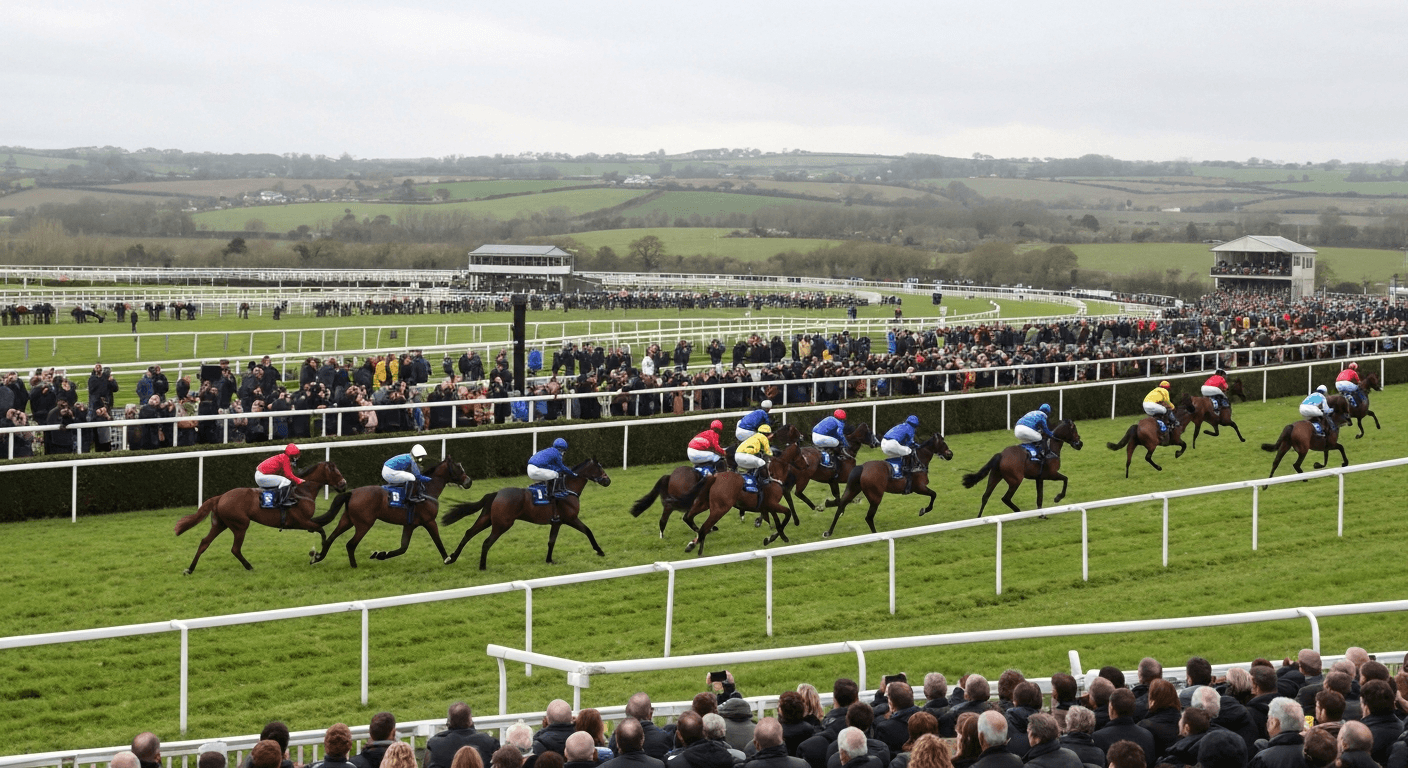
Kinloch Brae Day at Thurles: The Complete Guide
The mid-January Sunday at Thurles, headlined by the Grade 2 Kinloch Brae Chase, a proven Gold Cup and Ryanair trial, plus the Anaglog's Daughter and how to attend.
Read more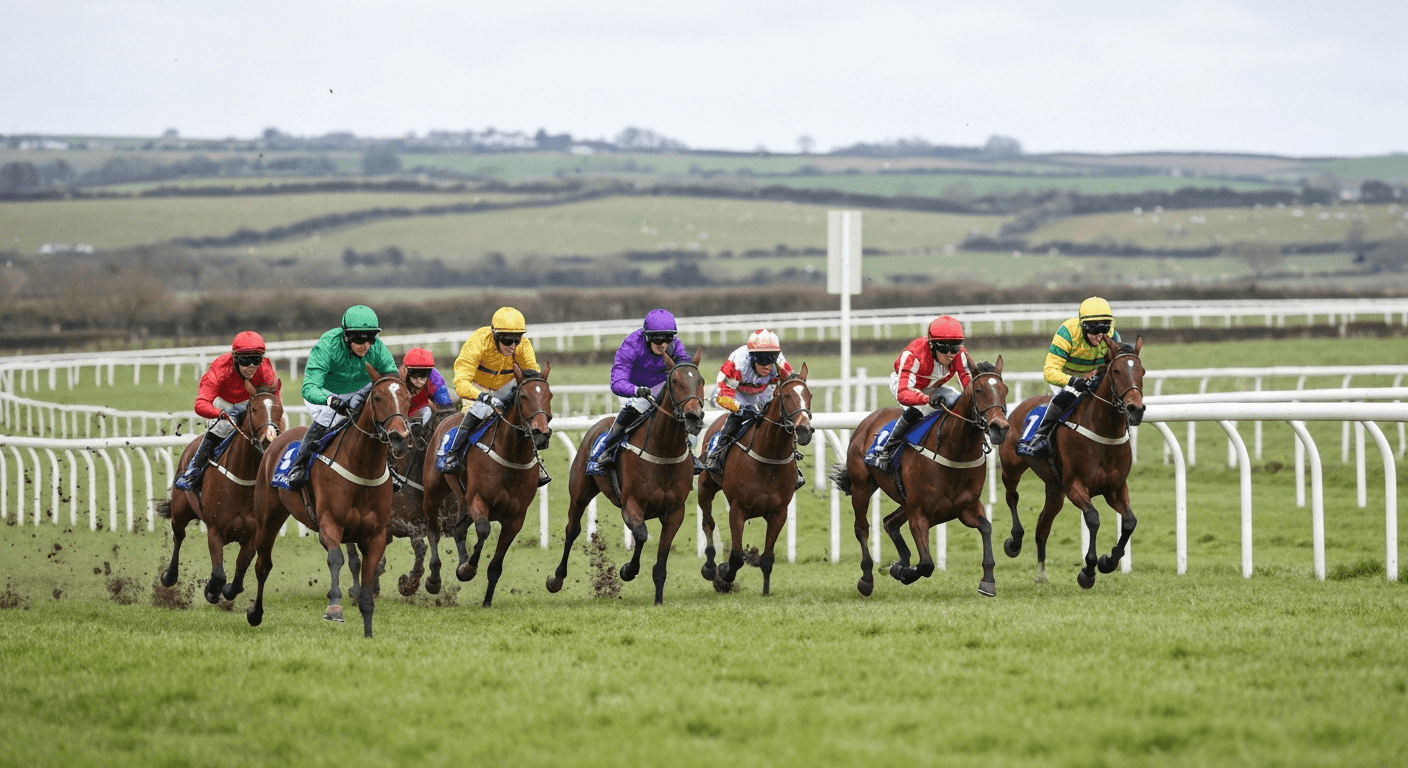
Betting at Thurles Racecourse
How Thurles's sharp, free-draining National Hunt track and the Grade 2 Kinloch Brae Chase shape the betting, with trainer, jockey and honest favourite angles.
Read more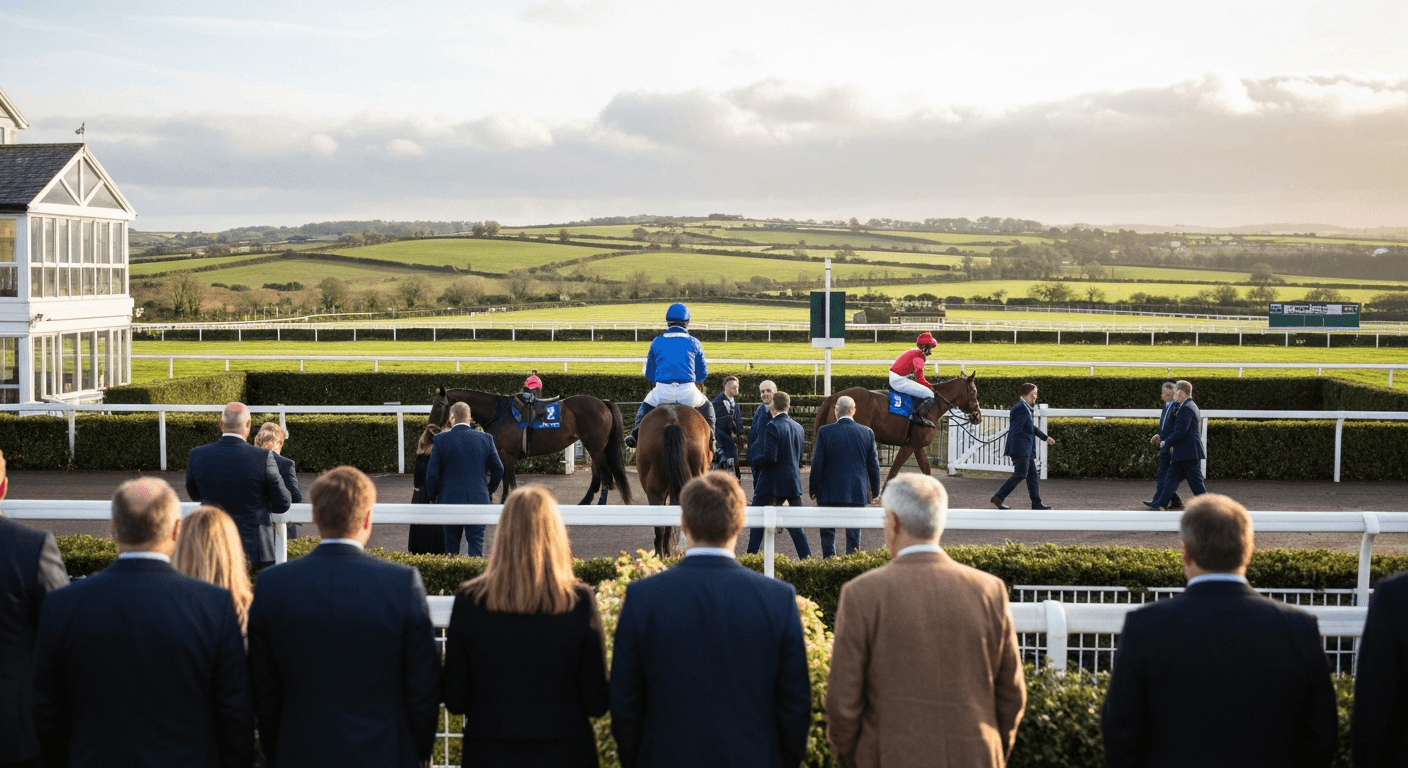
A Day Out at Thurles Racecourse
How to plan a day at Thurles: getting there, the single-enclosure setup, tickets, food and bars, the best winter cards and first-visit tips.
Read moreResearch the field with the AI Race Predictor
Our model publishes calibrated win-probability estimates for UK races — a second opinion to understand a race, not tips. It's open about its record: it doesn't beat the market, and we show exactly how it does.
Work it out & learn the basics
Gamble Responsibly
Gambling should be entertaining and not seen as a way to make money. Never bet more than you can afford to lose. If you or someone you know has a gambling problem, help and support is available.