
Founder & Editor · Last reviewed 2026-07-13
Introduction
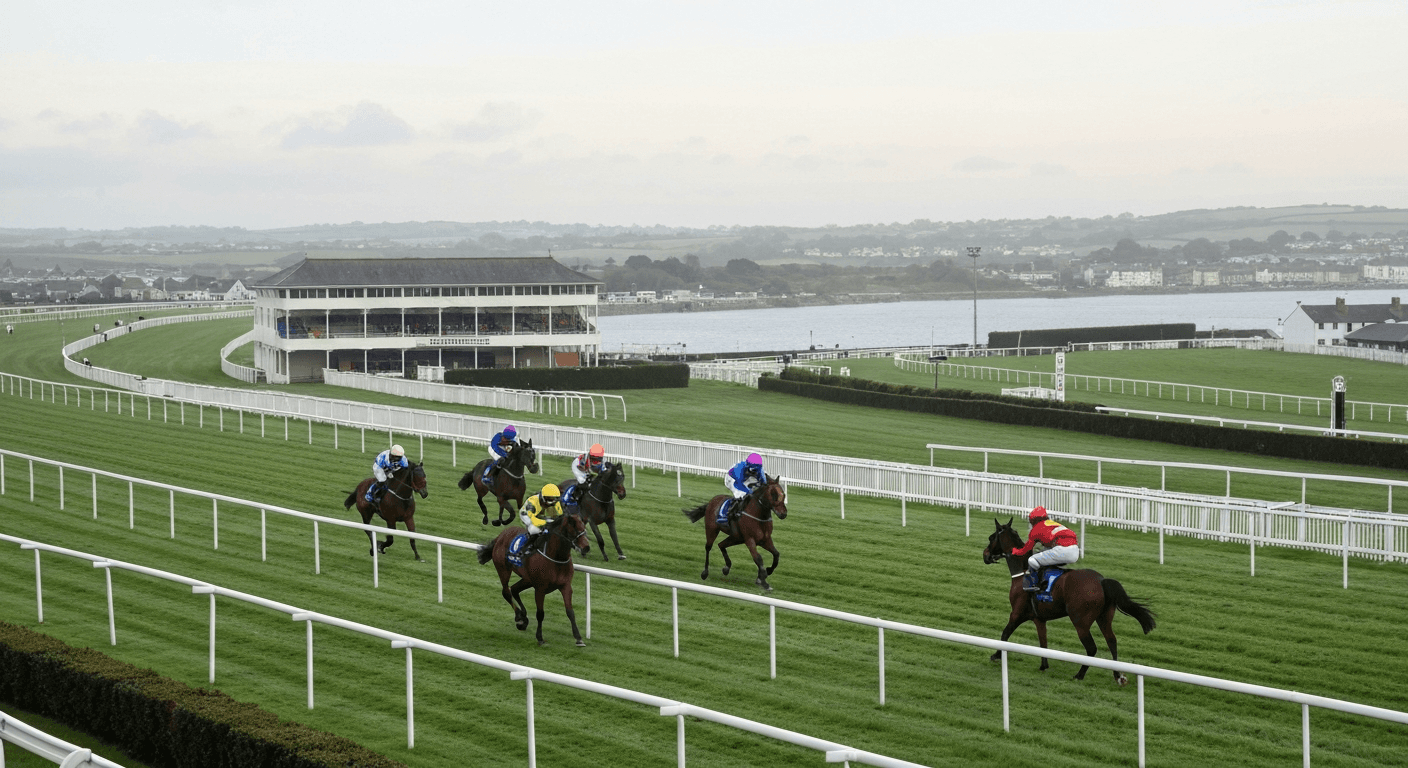
Wexford Racecourse sits at Bettyville, on the Newtown Road about a kilometre west of Wexford town, on ground that looks out over Wexford Harbour in the south-east of Ireland. Racing in the Wexford area goes back to around 1870, but the course you can visit today is younger than that history suggests. The modern track at Bettyville opened on 15 October 1951, and much of what defines it now was settled far more recently still.
Two changes stand out. In early 2015 the direction of racing was switched from right-handed to left-handed, the biggest single alteration in the course's history. Then in 2016 Flat racing was dropped altogether, leaving Wexford a jumps-only National Hunt venue. A track that spent most of its life running both codes the "wrong" way round became, within about a year, a left-handed jumps course. Most of its recognisable character is younger than the grandstand.
That short, eventful modern record is the spine of this article. It also has a scattering of good horse stories to tell, from the mare who won a Flat maiden here and went on to breed a Derby and Arc winner, to the Listed chase that now brings Grade 1 performers to a small country track once a year.
What follows tracks Wexford from the first racing in the area through the 1951 opening, the improvements that kept the place going, and the two decisions that made it what it is. Use the links below to jump to a section.
Racing in the Area, and the Move to Bettyville
Organised racing in the Wexford area dates back to around 1870. The detail of those early meetings is thin, and the continuous story of the course really begins in the middle of the 20th century, when a group of local figures set about building a permanent track at Bettyville on the western edge of the town.
The 1951 opening
The Bettyville course opened on Monday 15 October 1951. Contemporary press reports put the crowd at roughly 17,000, a large turnout for a new country track. The first race went off at 2pm. Admission was priced by enclosure and, in the money of the day, worked out at ten shillings for gentlemen, five shillings for ladies and half-a-crown for the outside enclosure.
The people who brought it about were mostly local. The founding directors included the brothers Dr T. E. Pierse and Dr James Pierse, County Manager T. D. Sinnott, Chief Agricultural Officer M. T. Connolly, P. O. Lambert and Dan Murphy, with James White as secretary. The course was laid out by the architect N. O'Dwyer, and the building work was done by the contractor Paul Murphy of Brownswood, Enniscorthy. James White went on to serve as track secretary until 1989, when Michael Murphy took over as general manager.
Keeping the show on the road
A country track needs steady upkeep, and Wexford's came in large part from its supporters. The Wexford Racecourse Supporters' Club, now the Racing Club, was founded in 1987 and raised funds for a run of track improvements. The surface was levelled and drained, the sharp bend into the straight was eased, two furlongs were added on the western side, and the bends were cambered.
Investment in the facilities followed. On 31 May 1996 the Minister for Agriculture, Ivan Yates TD, opened a new stand with bars and Tote facilities. He returned in 1998 to open the Ivy Room bar and restaurant, still the principal dining venue at the course today.
For its first six decades Wexford ran as a dual-code track, staging both Flat and jumps on a right-handed circuit. That arrangement lasted until the two decisions of 2015 and 2016 that reshaped the place, covered in the milestones section and in Wexford today.
The Milestones That Shaped the Course
Wexford's history is short enough to lay out cleanly, and most of its turning points are dates rather than eras. The table below gathers the ones that matter, and the notes after it pick out the two that changed the course most.
| Year | Milestone |
|---|---|
| c. 1870 | Racing recorded in the Wexford area |
| 1951 | The Bettyville course opens on 15 October, drawing about 17,000 |
| 1987 | Supporters' Club (now the Racing Club) founded; track improvements follow |
| 1996 | New stand with bars and Tote facilities opened on 31 May |
| 1998 | The Ivy Room bar and restaurant opened |
| 2013 | The M. W. Hickey Memorial Chase awarded Listed status |
| 2015 | Direction switched from right-handed to left-handed; two furlongs added |
| 2016 | Flat racing discontinued; Wexford becomes jumps-only |
The 2015 reconfiguration
The single biggest change in the course's history came in early 2015. The direction of racing was switched from right-handed to left-handed. At the same time two furlongs were added, the reservoir was relocated to widen the eastern end of the track, and the irrigation was updated. One visible consequence is that the winning post now sits beyond the stands, to the right of the spectator enclosures rather than in front of them. A track that had run one way round for more than sixty years was, in effect, turned about.
The 2016 switch to jumps only
The second decision followed close behind. In 2016 Flat racing was discontinued and Wexford became a National Hunt-only venue. It has run jumps alone on turf ever since, staging around eleven fixtures a year between March and November. The task brief that prompted this guide still describes Wexford as a dual-code track, so it is worth stating plainly: it stopped running the Flat in 2016, and everything that follows is jumps.
The Hickey Memorial Chase
The course's one piece of black-type sits in this timeline too. The M. W. Hickey Memorial Chase, a steeplechase run over about 2m 7f in late October, was awarded Listed status in 2013. It was the first Listed race at Wexford since 2005. Before that it had been run as a handicap chase. The race is named after Michael W. Hickey of Garryrichard Stud, Foulksmills, County Wexford, a long-established National Hunt breeding operation. It remains the most valuable race at the course and the centrepiece of the two-day autumn meeting over the October bank holiday. Its winners are the subject of the legendary horses section.
The Horses With a Wexford Line on Their Page
Wexford is a small track, and it does not pretend to have shaped the careers of many great horses. What it has instead are two kinds of connection worth setting out carefully: one horse whose Wexford win matters because of what she bred, and a run of Listed chase winners who went on to championship-level form elsewhere. The distinction between a horse that made its name here and a horse that merely passed through matters, so each is labelled plainly below.
Sinntara, an indirect claim to fame
The most famous name with a Wexford line on its page is a mare who won a fairly ordinary race. Sinntara, a bay filly foaled in 1989, by Lashkari out of Sidama, owned by the Aga Khan and trained by John Oxx, won a Flat maiden at Wexford over 1m 4f on 30 July 1992. She added the Irish Cesarewitch at the Curragh later that year.
Her importance is indirect. Sinntara became the dam of Sinndar, foaled in 1997, by Grand Lodge, also trained by John Oxx and ridden by Johnny Murtagh. In 2000 Sinndar won the Epsom Derby, the Irish Derby and the Prix de l'Arc de Triomphe in a single season, one of the outstanding European colts of his era. Sinndar himself never raced at Wexford. The Wexford connection runs through his dam's maiden win, not through anything the colt did on the track. The official course history commemorates that maiden all the same.
The Hickey Memorial Chase winners
The direct connections, horses that actually won at Wexford, come through the Listed M. W. Hickey Memorial Chase. Over the past decade or so its roll of honour has carried some genuine Grade 1 chasers, which gives a small country track a real thread of top-level form.
- Double Seven (2013) was trained by Martin Brassil for J P McManus. He is best known for finishing third in the 2014 Aintree Grand National, behind Pineau De Re. The brief that prompted this guide had him placed in the Cheltenham Gold Cup; that is wrong, the placing was in the National.
- Road To Riches (2014) was trained by Noel Meade for Gigginstown House Stud. In the same season he won the Galway Plate, the Grade 1 JNwine.com Champion Chase at Down Royal and the Grade 1 Lexus Chase at Leopardstown, then finished third in the 2015 Cheltenham Gold Cup.
- Minella Indo (2020) won going away by 25 lengths under Rachael Blackmore for Henry de Bromhead, sent off at 8/13 in a four-runner field. He went on to win the 2021 Cheltenham Gold Cup.
- Noble Yeats (2022) took the race for Emmet Mullins, ridden by Sean Bowen and owned by Robert Waley-Cohen, winning by 4¾ lengths on heavy ground. He was the reigning Grand National winner at the time.
- Blizzard Of Oz (2025) won the most recent running for Willie Mullins and Paul Townend, owned by Simon Munir and Isaac Souede, at 11/8 by three-quarters of a length in a time of 6m 08.40s.
Valseur Lido and Sub Lieutenant are both recorded as past winners of the race, but the exact years are not confirmed and are left out here rather than guessed. Valseur Lido, a dual Grade 1-winning novice chaser owned by Gigginstown House Stud, was trained by Willie Mullins and later Henry de Bromhead.
Between them, these horses give Wexford's only black-type race a line back to Gold Cup and Grand National form, which is a lot for a track of its size.
The People Behind Wexford Racing
The people who matter at Wexford fall into two groups: the founders and administrators who built and ran the place, and the modern trainers and jockeys who have dominated its jumps racing.
Founders and administrators
The 1951 course was the work of local figures, chief among them the brothers Dr T. E. Pierse and Dr James Pierse, County Manager T. D. Sinnott and secretary James White. White ran the track as secretary until 1989, a stretch of nearly four decades, before Michael Murphy took over as general manager.
Today the course is operated by Sports (Wexford) DAC, chaired by Michael J Murphy, with Ursula Sinnott as Secretary and Managing Director. The board also includes P. Denis Hickey, of the Hickey family whose patriarch, Michael W. Hickey of Garryrichard Stud in Foulksmills, gives the course's Listed chase its name.
The trainers and jockeys who rule the jumps
Modern Wexford belongs, more than anywhere, to Willie Mullins. As of February 2021 he was the leading trainer at the course with 37 wins from 107 runners, a strike rate of 34.58 per cent. Across the five seasons from 2015-16 to 2019-20 he was top trainer with 25 winners at around 36 per cent, so the dominance held across measures.
In the saddle, the Closutton connection shows again. Ruby Walsh won 31 times at Wexford from 2009 onwards, with Paul Townend (29 wins) and Mark Walsh (22) the other leading riders over that period. Townend was the leading rider across 2015-16 to 2019-20 with 17 wins at 29 per cent. Michael Hourigan and Conor O'Dwyer also feature strongly in the course's records.
The Hickey Memorial Chase has had its own dominant yard in the Listed era. Henry de Bromhead has been the standout trainer of the race in recent years, winning with Minella Indo in 2020 and Eklat De Rire in 2021, with Rachael Blackmore riding both.
Records and Numbers
Wexford's record book is a modest one, and honesty about what is and is not documented matters more here than a long list of figures.
The course does not publish an authoritative all-time record schedule or a set of standard times by distance. Where a specific time exists in the record, it is quoted; where it does not, no number is invented to fill the gap. The one firm mark on hand is the 2025 M. W. Hickey Memorial Chase over 2m 7f, won in 6m 08.40s.
The clearest numbers are the win counts of the leading yards, measured to February 2021.
| Record | Detail |
|---|---|
| Course record times | Not published (no standard-times schedule) |
| 2025 Hickey Memorial Chase (2m 7f) | 6m 08.40s |
| Leading trainer | Willie Mullins, 37 wins from 107 runners (34.58%) |
| Leading jockeys | Ruby Walsh 31, Paul Townend 29, Mark Walsh 22 |
One pattern in the form is worth noting as history rather than a tip. Data to February 2021 showed a clear bias to prominent, early-pace runners over both hurdles and chases, with front-runners posting the strongest win and place strike rates and returns falling away the further back a horse was held up. That describes how the sharp, undulating circuit has tended to ride. It is not a betting angle. Over any length of time, backing horses to a pattern loses money to the starting price, and no staking method changes the long-run edge held by the layer.
What a Day at Wexford Feels Like
Wexford's appeal has always leaned more on setting and occasion than on the everyday quality of the racing. The track sits above Wexford Harbour, and its identity is bound up with the "sunny south-east", the stretch of coast that the county trades on.
The rhythm of the racing year gives the place its social shape. The summer Friday-evening meetings are the ones that fill the enclosures, an after-work crowd rather than a hardened racing one. The two-day autumn festival over the October bank-holiday weekend is the quality highlight, headlined by the Listed Hickey Memorial Chase, and it sits firmly in the town's calendar. A Ladies Day around late August adds a dressing-up occasion to the summer.
Wexford's cultural associations run wider than racing. The course sits within a town known for the Fleadh Cheoil, the traditional music festival, and the racecourse's own events, from the evening meetings to the festival, are part of the same civic life. The supporting cards through the year are ordinary jumps fare, maiden and handicap hurdles, beginners' chases and bumpers, and the honest reading is that people come for the day out and the setting as much as for the horses. That is not a criticism of the place. It is what a good country track is for.
Wexford Today
The Wexford of today was largely made in the space of about two years, between the 2015 reconfiguration and the 2016 switch away from the Flat. Both are covered in outline in the milestones section; this is where they land as the shape of the course now.
The left-handed jumps track
Since early 2015 the course has run left-handed, having been right-handed for the whole of its earlier life. The 2015 work also added two furlongs, moved the reservoir to widen the eastern end and updated the irrigation, and it left the winning post beyond the grandstand rather than in front of it. The reconfigured circuit is an undulating, roughly rectangular left-handed loop of about a mile and a quarter, variously put at between nine and nine-and-a-half furlongs, with a slightly uphill home straight. The precise cost of that 2015 project is not published in the material available, so no figure is put on it here.
From 2016 the course has been jumps only. It runs on turf, with no all-weather surface, and stages around eleven National Hunt fixtures a year between March and November, sitting outside the core winter jumps season. Its one piece of black-type is the Listed Hickey Memorial Chase, its most valuable race, run each autumn.
Ownership, broadcast and what is not known
The course is owned and operated by Sports (Wexford) DAC, chaired by Michael J Murphy with Ursula Sinnott as Secretary and Managing Director. Its racing is broadcast by Racing TV, with streaming through subscription and bookmaker platforms for account holders.
Some things about the modern course are genuinely not documented, and it is better to say so than to guess. Current single-day and festival attendance figures and annual footfall are not published; the only firm crowd number in the record is the estimated 17,000 at the 1951 opening. The course has said it upgraded all its toilet facilities to a high standard and continues to develop patron facilities, but a full, published account of accessibility provision is not available. Where those gaps exist, this guide leaves them open rather than filling them in.
Frequently Asked Questions
Share this article
More about this racecourse
All wexford guides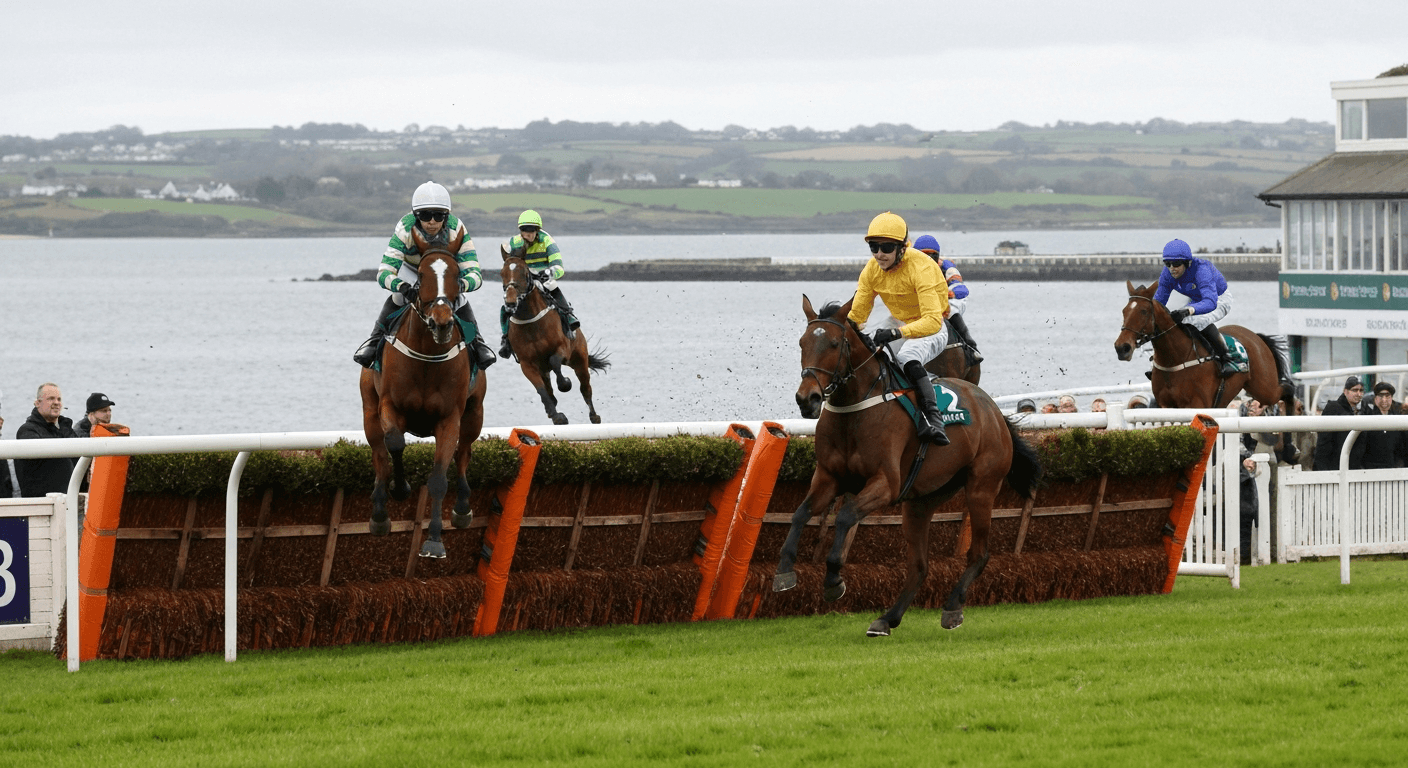
Wexford Racecourse: The Complete Guide
Wexford Racecourse: County Wexford's sharp left-handed jumps track, home of the Listed Hickey Memorial Chase, plus tickets, travel and how to visit.
Read more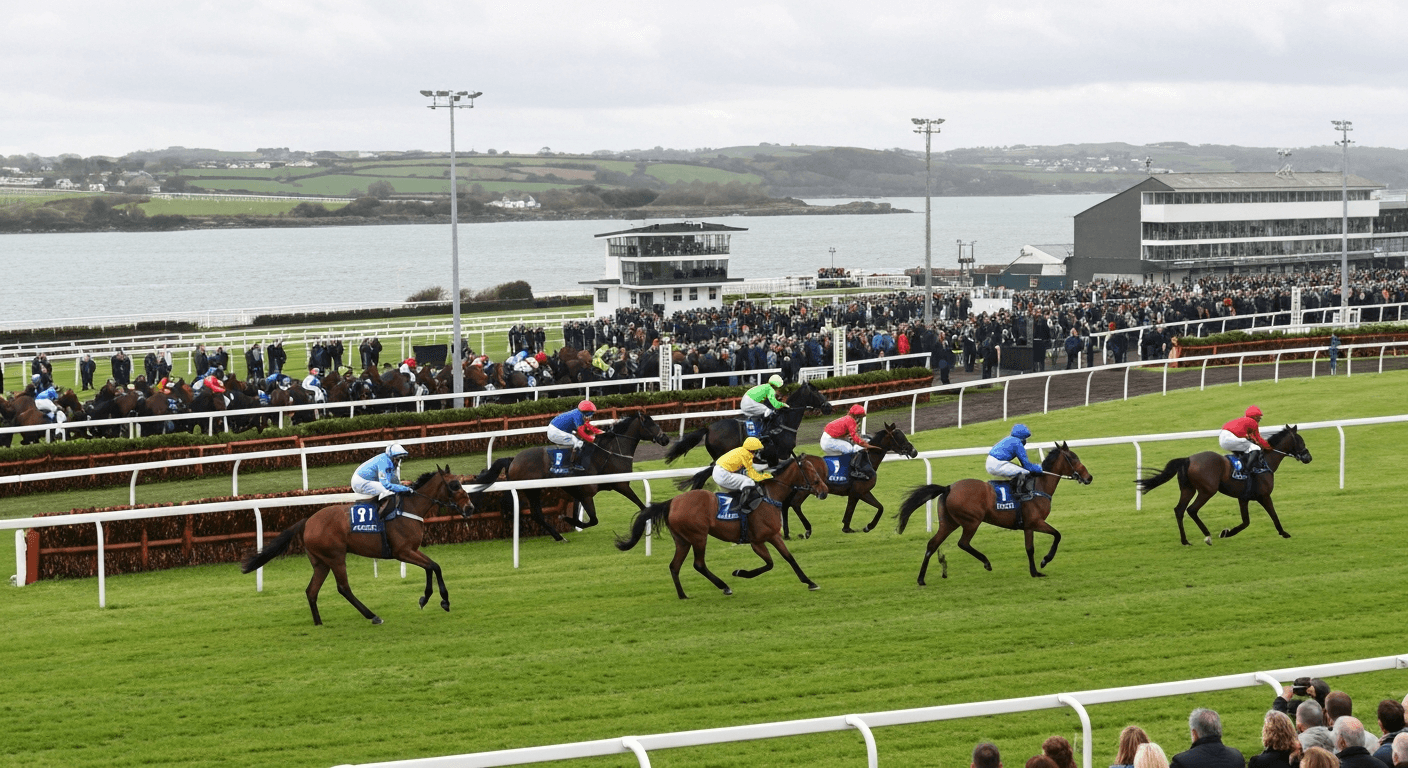
M.W. Hickey Memorial Chase Day at Wexford: The Complete Guide
Your guide to M.W. Hickey Memorial Chase Day at Wexford, the Autumn Festival's Listed chase highlight in late October, with the roll of honour and how to watch.
Read more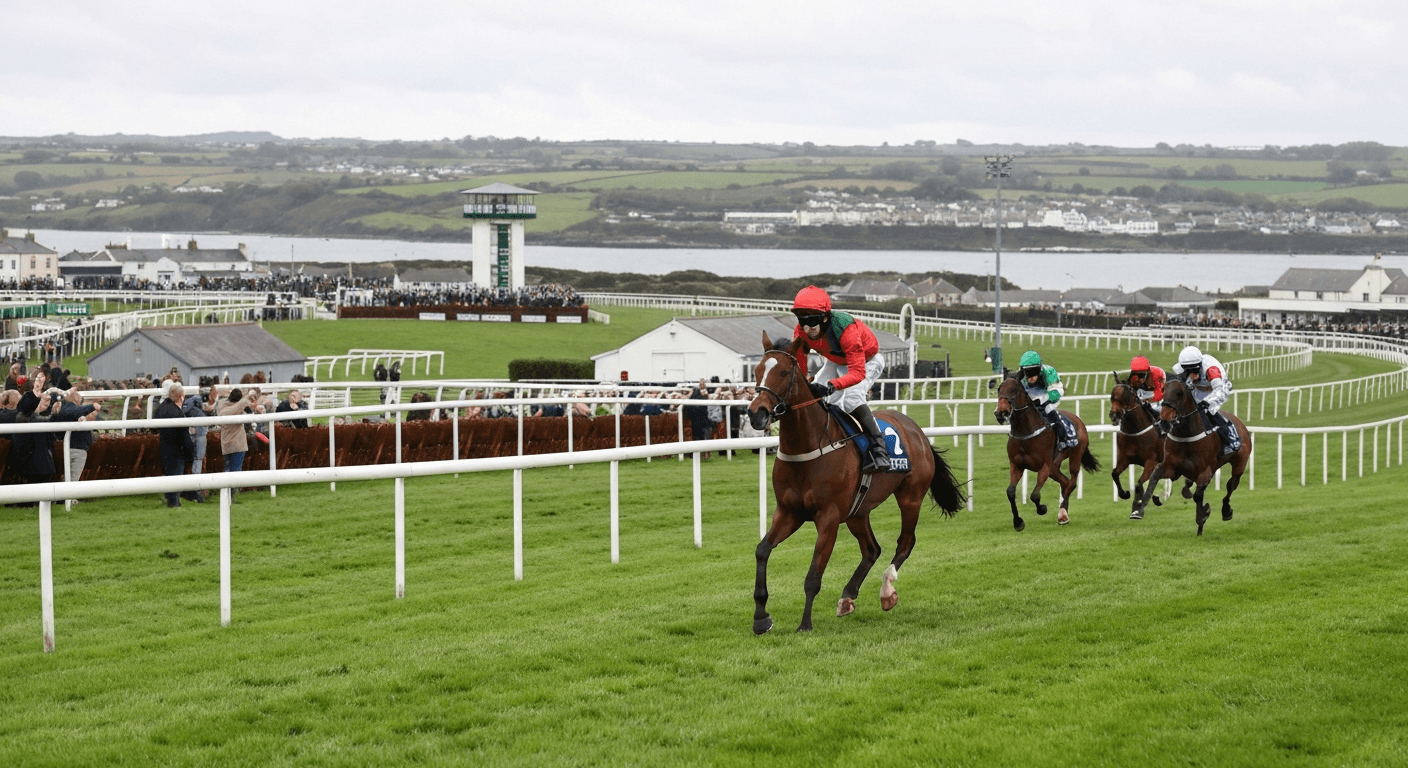
Sinntara at Wexford: The Complete Story
How Sinntara, winner of a maiden at Wexford in 1992, went on to breed Sinndar, the colt who won the 2000 Epsom Derby, Irish Derby and Arc.
Read moreGamble Responsibly
Gambling should be entertaining and not seen as a way to make money. Never bet more than you can afford to lose. If you or someone you know has a gambling problem, help and support is available.