
Founder & Editor · Last reviewed 2026-03-02
There is a patch of common land on the southern edge of Doncaster that has been used for horse racing since the reign of James I. Town Moor belongs, legally and historically, to the freemen of Doncaster, a status granted under medieval charters that predates organised racing by centuries. Those same freemen still exercise their rights on the moor today. When horses line up for the St Leger in September, they do so on land where no individual or corporation has ever held exclusive ownership. That fact alone separates Doncaster from every other major racecourse in Britain.
Racing has taken place on Town Moor since around 1600. The current course at Cheltenham dates from 1831. Ascot from 1711. Even Newmarket, the self-declared headquarters of British racing, only began its formal programme under King James in 1622. Doncaster was there first. It has been running races across four centuries, through two world wars, through the collapse of aristocratic patronage, through the rise of television and global bloodstock markets, and it has done so on the same stretch of South Yorkshire turf throughout.
The course's history is inseparable from the St Leger. First run in 1776, the St Leger is the oldest Classic race in the world. It predates the Derby by four years and the Oaks by three. The Triple Crown (won by Nijinsky in 1970 and by no horse since) requires Doncaster as its final stage. The weight of that tradition is felt every September when another generation of three-year-olds lines up on Town Moor, hoping to join a roll of honour that stretches back to the age of George III.
But the Doncaster story extends well beyond September. The Lincoln Handicap in late March signals the start of the turf flat season. The November Handicap closes it down. Between those two markers, the racing calendar runs in a rhythm that Doncaster has helped to set for generations. The complete guide to Doncaster Racecourse covers what the course looks and feels like today. This article is about how it came to be.
The history here is not a simple story of steady progress. There were rough early decades on open moorland with no stands and no rules. There was the disruption of wars that moved the St Leger to other venues. There was a long period in the late 20th century when the race's prestige slipped and the facilities looked dated. What runs through all of it is the moor itself: permanent, legally protected, older than the sport that now takes place on it. That is what makes the history of Doncaster Racecourse different from the story of any other course.
Origins & Early Racing
The Land Before the Races
Town Moor did not begin as a racecourse. It began as common land: a stretch of flat, firm turf south of the town where the freemen of Doncaster exercised ancient rights to graze animals and gather resources. Those rights were enshrined in medieval charters, and they gave the moor a legal status that no private landlord could override. In an era when English common land was being steadily enclosed for farming and development, Town Moor survived because its ownership was collective and its rights were legally entrenched. The horses came later. The moor came first.
The earliest recorded racing on Town Moor dates to around 1600, during the reign of James I. What happened in those early years was not organised racing in any modern sense. Local landowners and gentlemen brought horses to the moor and ran them against each other, with bets struck between individuals and disputes settled by whoever had the most authority in the field. The moor's flat, firm surface made it ideal: horses could gallop at full stretch across ground that gave a fair test of speed, which was more than could be said for many venues of the period.
There were no stands, no enclosures, no starting gates and no prize money as we would understand it. The crowd gathered on the common, bets were made by word and handshake, and the racing was as much a social occasion as a sporting one. It was, in form, little different from the informal match races that took place on heaths and commons across England at the same period. What set Doncaster apart was the quality of its land and the support of the town's civic leadership.
The Corporation Takes an Interest
The Corporation of Doncaster began taking a formal interest in racing on Town Moor in the early 17th century. The town's leaders understood something straightforward: racing brought visitors, and visitors spent money. A successful meeting meant full inns, busy markets and a boost to local trade that no other event could match. The Corporation began contributing to prize money, offering gold cups and trophies that gave the meetings a prestige that purely private arrangements lacked.
By 1703, that civic backing had produced a named race: the Doncaster Gold Cup, offered at 100 guineas prize, run over the moor. At a time when most races were simply "a sweepstakes" or "a match," a named race with a substantial prize was a significant marker of status. The 1703 Gold Cup was one of the earliest named races in Britain, and it confirmed that Doncaster was operating at a different level from the informal gatherings of the previous century.
The Corporation's involvement set a pattern that has endured for over three centuries. Doncaster Racecourse has always had a relationship with the town that goes beyond the commercial. The civic dimension of Town Moor (the ancient rights of the freemen, the common land that cannot simply be sold or developed) gave racing at Doncaster a permanence that privately owned courses could not guarantee.
The Stuart and Restoration Period
The English Civil War disrupted racing across the country, Doncaster included. Cromwellian England had little enthusiasm for the pastimes of the aristocracy, and race meetings were seen as gathering points for disorder and loose morals. When racing at Doncaster paused during the 1640s and 1650s, it was not unusual. The same was happening everywhere.
The Restoration of Charles II in 1660 changed everything. Charles was a passionate racing man. He rode winners himself at Newmarket and used his patronage to raise the sport to a level of royal approval it had not previously enjoyed. Racing flourished across England in the two decades after the Restoration, and Doncaster benefited from the rising tide. The moor became more active, the meetings more organised, and the crowds more substantial.
By the end of the 17th century, Doncaster had established itself as one of the leading racing venues in the north of England. Yorkshire was already producing some of the best racehorses in the country, and Town Moor was where the best of them competed in front of the largest northern crowds. The Great North Road, the main coaching route between London and Edinburgh, passed through Doncaster, which meant the town was accessible to racing people from across Britain. That geographic advantage would become increasingly important in the century that followed.
The 18th Century: Doncaster Goes National
The early 18th century saw Doncaster's racing evolve from a significant regional event into something with national resonance. Owners and trainers from the south began sending horses north for the Doncaster meetings, attracted by prize money that compared well with anything on offer at Newmarket. The September fixture grew longer and more structured. What had been a single day's racing expanded into a multi-day meeting. A calendar was published. A consistent date was established.
The physical setting changed during this period too. The haphazard gallops across the open moor gave way to a defined course with starting posts and finishing posts. A grandstand appeared, initially a modest wooden structure that gave those willing to pay a better view than the common crowd. By the 1760s, Doncaster had the infrastructure of a proper racecourse, not just a stretch of common land where horses occasionally ran.
The audience was changing as well. Racing had been, in the 17th century, largely a pursuit of the landed gentry, with local crowds of varying social composition watching from the rails. By the 1770s, the sport was drawing people from a wider social range: merchants and traders, Yorkshire farmers, labourers on their days off, bookmakers operating openly and noisily. The September meeting was becoming a great week in the local calendar, a gathering that was as much about commerce and socialising as about the horses themselves.
1776: The Race That Changed Everything
It was into this established and expanding venue that Anthony St Leger proposed his sweepstakes. St Leger was an Irish-born army officer, a younger son of a County Tipperary family, who had settled in Yorkshire and taken a keen interest in local racing. In 1776, he suggested running a sweepstakes for three-year-old horses and fillies over two miles of Town Moor, with entry fees creating the prize money. The proposal was accepted.
The first running, on 24 September 1776, attracted six runners. The winner was Allabaculia, a filly owned by the 2nd Marquess of Rockingham. The race was simply called "the sweepstakes" at its first running. It took its creator's name two years later, in 1778, when Hollandaise won a race officially billed as the St Leger Stakes for the first time. The naming was organised by local racing figures as a tribute to St Leger's role in founding it.
At the time, nobody could have predicted what the race would become. It was one of many sweepstakes being proposed at racecourses across England during this period. The Derby was established four years later at Epsom, in 1780. The Oaks came in 1779. The 2,000 Guineas and 1,000 Guineas followed in the 19th century. When the five races were eventually grouped together as the Classics, the St Leger found itself in a unique position: the oldest of them all, and the only one run on common land with medieval origins.
The 1776 race matters not just as a founding moment, but as a statement about what Doncaster was. A town that had been hosting racing for 176 years by that point was confident enough to propose a new kind of race, with enough organisation and prize money to attract good horses. The sweepstakes format, where entry fees accumulated into a worthwhile prize, was progressive for its time. It turned the race into something that owners actually wanted to win, not just a civic cup handed out to whoever showed up.
Why this era mattered: The period from the first racing in 1600 through to the 1776 St Leger established the two foundations that define Doncaster to this day. The first is the common land status of Town Moor, which gave the course a permanence and a civic identity that privately owned venues could never replicate. The second is the institutional confidence to create the St Leger, the race that would, within a century, become the final act of the Triple Crown and one of the most watched sporting events in Victorian England.
The Classic Era
Royal Patronage and the Regency St Leger
The years between 1780 and 1850 were the period in which the St Leger grew from a promising Yorkshire sweepstakes into one of the most important races in the British calendar. It did not happen automatically. The race grew because it attracted the right horses, the right people, and eventually the right royal interest.
The Prince Regent (later George IV) was a regular visitor to the Doncaster September meeting during the late 18th and early 19th centuries. His presence raised the social status of the fixture substantially. When a future king attends your race meeting, the whole apparatus of aristocratic society follows: the fashionable, the ambitious and the merely wealthy. Doncaster during "the great week," as the September meeting was known by the 1790s, was one of the premier social events in northern England.
The Prince Regent's racing manager was the colourful and controversial figure at the centre of the Turf establishment. In 1815, the Prince's horse Whisker won the St Leger in a victory that generated considerable discussion, some of it centred on the betting around the race and whether the outcome had been arranged in advance. The allegations were never proved. Racing at this period was shot through with the possibility of race-fixing; the rules against it were weak and the incentives strong. What the Whisker story illustrates is that Doncaster was already important enough for the major betting interests to take seriously.
The horses of this era were extraordinary by any standard. Hambletonian, who won the St Leger in 1795, was so celebrated that he was painted by George Stubbs, producing one of the defining sporting images of the age. Beningbrough (1794) and Paulina (1807) were among the best of their respective generations. Touchstone, who won in 1834 and went on to become one of the most influential stallions of the 19th century, showed that the St Leger could crown not just good horses but great ones. The race was already sorting out the true staying three-year-olds from those with limitations over the demanding distance.
John Scott: Sixteen Wins and an Era Defined
No individual has shaped the history of the Doncaster St Leger more than John Scott. Based at Whitewall, his training yard near Malton in the North Riding of Yorkshire, about 35 miles north of Doncaster, Scott trained St Leger winners between 1821 and 1862 with a consistency that has never been approached before or since. His total of 16 victories in the race remains the record. No trainer in the modern era has come close to matching it.
Scott's achievement requires some context. Training in the 19th century was not the professionalised operation it is today. Trainers were often also riders, often also the stable manager and the purchasing agent. They worked with limited veterinary support, no modern nutrition science, and variable going conditions on courses that had no drainage systems. To win the St Leger 16 times across four decades, with horses owned by a range of different patrons, was a display of sustained excellence that puts Scott in a category of his own.
His nickname "the Wizard of the North" was earned through results, not self-promotion. His principal horses included Memnon (1825), Rowton (1829), Mundig (1835), Attila (1842), and a succession of others that made Whitewall the most feared stable in the St Leger betting market every September. When Scott sent a horse to Doncaster, the racing world paid attention.
The relationship between Scott's success and the development of the Doncaster meeting itself is direct. A trainer of Scott's calibre, winning at Doncaster decade after decade, attracted the best horses and the most ambitious owners to the race. His presence was a quality signal. When the biggest names in the sport could be beaten by a Whitewall horse, it confirmed that the St Leger was the real test, not something to avoid but something to target.
West Australian and the Birth of the Triple Crown
The idea that a single horse could win all three Classics in one season was not formalised until well into the 19th century, but the concept was understood informally. When West Australian, trained by John Scott, won the 2,000 Guineas, the Derby and the St Leger in 1853, he completed a feat that no horse had achieved before. The phrase "Triple Crown" would come into common use later, but the achievement was recognised immediately as something without precedent.
West Australian was trained by Scott to a peak for all three races, a scheduling challenge that required careful management across a season running from May to September. He won the Guineas and Derby without great difficulty, then came to Doncaster for the St Leger as a clear favourite with his Triple Crown already half-written in the form book. He won by a length and a half over Sittingbourne. The victory confirmed that the three-Classic sweep was achievable and set the template for every Triple Crown attempt that followed.
The significance of West Australian's achievement for Doncaster's status is difficult to overstate. By being the final stage of the first Triple Crown, the St Leger lifted itself from a strong Classic to the defining race of any three-year-old season. A horse could win the Derby and still have something to prove in September. A horse that won at Doncaster after the Guineas and Derby had done something no other race could offer. That logic held throughout the Victorian era and has never entirely lost its force.
The Railway Transforms Everything
The Great Northern Railway reached Doncaster in 1848, and its effect on the racing meeting was almost immediate. Before the railway, travelling to Doncaster from London meant a coach journey of two days or more. The gentry came by private carriage; ordinary people did not come at all unless they lived within a day's ride. The railway changed the mathematics of attendance completely.
From 1848 onwards, special trains ran from London to Doncaster for the September meeting. Excursion fares brought working people from Yorkshire's industrial towns (Sheffield, Leeds, Bradford) who had never previously been able to attend a major race meeting. The crowd sizes at the St Leger grew rapidly during the 1850s and 1860s. By the 1870s, the September meeting was drawing crowds of tens of thousands, making it one of the largest sporting gatherings in Britain.
The railway did more than increase numbers. It transformed the character of the meeting. Doncaster's great week had been, until mid-century, a largely provincial gathering of Yorkshire gentry, local traders and the racing establishment. After the railway, it became a national event. Owners, trainers, journalists, bookmakers and punters from across Britain made the journey north. The betting market on the St Leger became one of the largest in racing, with sums wagered that rivalled the Derby.
The course itself had to adapt. New grandstands were built during the 1860s and 1870s to accommodate the growing crowds. Enclosures were defined and priced differently. The race card was extended to fill a four-day meeting, with supporting races that justified the journey for those who could only come for part of the week. The Doncaster Cup, the Champagne Stakes and the Park Hill Stakes all became established parts of the programme during this period, adding depth to a meeting that had previously been built around one race.
The St Leger as a National Event
By 1880, the St Leger was one of the three or four most followed sporting events in Britain. The Derby had the glamour of Epsom and London proximity, but the St Leger had the staying test, the race that asked the hardest question of a Classic generation. The betting markets were enormous. Newspapers devoted columns to the runners for weeks in advance. The race was discussed in Parliament, in club rooms, in factory yards and in agricultural markets across the country.
The Victorian St Leger also attracted some of the greatest horses in the history of the sport. Isinglass (1893), Persimmon (1896, owned by the Prince of Wales, later Edward VII) and Rock Sand (1903): the roll of honour across the last quarter of the 19th century and the Edwardian period reads like a list of the era's finest thoroughbreds. Each of them came to Town Moor in September and faced the test that the 1776 sweepstakes had established.
The course's programme was also enriched during this period by the Lincoln Handicap, which became established as an early-season event at Doncaster and would eventually occupy its position as the first major flat race of the year. The combination of March and September fixtures gave the course a dual role in the calendar that it has maintained ever since.
Why this era mattered: The period from 1776 to 1900 transformed the St Leger from a local sweepstakes into one of the pillars of British racing. John Scott's 16 victories brought quality and competitive pressure. West Australian's 1853 Triple Crown gave Doncaster a role at the pinnacle of the sport that no other course could claim. The railway opened the meeting to a national audience and drove the investment in facilities that a modern racecourse required. By 1900, Doncaster was not simply a northern track with a famous race. It was one of the defining venues in British sport.
Famous Races & Moments
The Wars That Moved the Race
The St Leger has left Doncaster only a handful of times in its 250-year history, and both occasions were forced by war. Each interruption tells its own story about the relationship between the race and the town.
During the First World War, Town Moor was requisitioned for military use from 1915 onwards. The army needed the land for training and logistics, and horse racing was not a priority for a nation mobilising for industrial-scale warfare. The St Leger moved to Newmarket in 1917 and 1918, and the wartime runnings were held without the crowds, the social occasion and the sense of occasion that made the Doncaster version the real thing. The race returned to Town Moor in 1919, when Keysoe won the first post-war renewal, and the relief in the town was considerable.
The Second World War brought a more complicated displacement. The St Leger moved to Thirsk for the 1940 running, then transferred to Newmarket for the bulk of the conflict, before briefly using York in 1945. Doncaster itself was used for military purposes throughout, with the racecourse facilities serving roles that had nothing to do with horses. The wartime Legers are officially recognised, but every Doncaster loyalist will note that none of them carried the full weight of the race as it is understood at Town Moor.
When the St Leger returned to Doncaster in 1946, with Airborne winning by a length, it was the first proper running since 1939. Seven years without the race at its home course was a long time, but the welcome back was warm. The post-war St Leger drew some of the largest crowds the course had seen, partly from simple relief that major racing was resuming, partly because the sporting public was hungry for spectacle after years of austerity.
Triple Crown Heroes at Town Moor
The St Leger's role as the final Classic means that Doncaster has been the setting for fifteen Triple Crown completions, each one a moment when a horse arrived having already won the 2,000 Guineas and the Derby, with history within its grasp. Each of those fifteen occasions carried a weight that no other racecourse in Britain can match.
West Australian set the template in 1853. Isinglass confirmed his brilliance in 1893. Rock Sand showed that staying Classic form was repeatable in 1903. Bahram, unbeaten throughout his career, added the Triple Crown in 1935 without ever appearing to be in difficulty. These were not squeaky moments; these were dominant three-year-olds doing what was expected of them.
The 1947 St Leger offered the opposite: a Triple Crown attempt that failed, and failed in a way that reordered racing's understanding of what the season's form meant. Tudor Minstrel was the Guineas winner that year, the best middle-distance horse of his generation, and he came to Doncaster as the favourite for the Triple Crown. What happened was instructive: Tudor Minstrel, a high-class miler and Guineas winner, was beaten into fourth place by Sayajirao, trained by Paddy Prendergast and sent off at 7/1. The mile and three-quarters of the St Leger had found Tudor Minstrel out. It was a reminder, delivered in clear terms, that Classic ability does not automatically transfer across distances, and that the St Leger asks a question other races do not.
12 September 1970
Nijinsky walks out onto Town Moor. He is a bay horse of exceptional size and presence, trained by Vincent O'Brien at Ballydoyle in County Tipperary. Lester Piggott sits on him, small and still. Nijinsky has already won the 2,000 Guineas at Newmarket in May and the Derby at Epsom in June. The crowd of over 30,000 knows what is at stake: no horse has completed the Triple Crown since Bahram in 1935. Thirty-five years. Nijinsky goes to post as a short-priced favourite. When the stalls open, he settles immediately, travelling easily behind the pace. Three furlongs out, Piggott gives him a nudge. Nijinsky goes through his gears. Not dramatically, not in an explosion of acceleration, but with the authority of a horse that knows it is better than anything around it. He beats Meadowville by a length. The crowd noise is something Doncaster has not heard before or since.
That scene on 12 September 1970 is the defining moment in Doncaster's modern history. Over fifty years later, no horse has completed the Triple Crown. Nijinsky's victory at Town Moor remains the last such achievement in British racing, and the sense that each new Classic generation might be the one to finally match him adds a particular charge to the St Leger every September.
The aftermath of the 1970 race told a story that adds further significance to what Doncaster put Nijinsky through. He ran next in the Prix de l'Arc de Triomphe in Paris, starting at odds-on and finishing second to Sassafras in a race he probably should have won. A fortnight later, he was beaten again in the Champion Stakes at Newmarket. He was retired having lost his last two races, but the Triple Crown was secure. O'Brien acknowledged afterwards that the St Leger campaign had taken something from Nijinsky. The race at Doncaster, which he won, was more demanding than the margin of victory suggested. The toll of a Triple Crown season on a horse has to be measured against what comes after, and in Nijinsky's case, the costs were real.
The 1971 St Leger brought further television exposure when Mill Reef ran, though he was diverted to the Arc. Television coverage from the 1960s onwards had already widened the Doncaster audience considerably, and by the early 1970s the September meeting was reaching a national audience that would have seemed extraordinary to the Victorian crowds who packed the moor.
Oh So Sharp: A Fillies' Triple Crown
In 1985, the St Leger produced a different kind of milestone. Oh So Sharp, trained by Henry Cecil and ridden by Steve Cauthen, arrived at Doncaster having won the 1,000 Guineas and the Oaks. She was attempting the Fillies' Triple Crown, which had last been completed in 1902 by Pretty Polly. She was sent off favourite and won with authority. A filly who had been at her best all season, she showed at Doncaster that her stamina matched her speed.
Oh So Sharp's achievement has not been repeated since. The rarity of the Fillies' Triple Crown in the modern era, combined with the increasing tendency to avoid the St Leger's taxing mile and three-quarters, makes her 1985 victory at Doncaster a significant entry in the race's history. Cecil's training of her through three Classics in one season is a study in careful preparation, and the Doncaster crowd that September afternoon saw one of the best fillies of the 20th century at her best.
Camelot and the Famous Upset of 2012
The 2012 St Leger carried more anticipation than any running since Nijinsky. Camelot, trained by Aidan O'Brien at Ballydoyle and ridden by Joseph O'Brien, had won the 2,000 Guineas and the Derby and came to Doncaster for the Triple Crown attempt that the sport had been waiting for. The betting market was polarised: Camelot at short odds, everything else a long way behind.
What happened was one of the St Leger's most striking results. Encke, trained in Godolphin colours by Mahmood Al Zarooni, was sent off at 20/1. He beat Camelot by a length and three quarters. Camelot was second. The Triple Crown attempt was over.
Encke's victory has since acquired an uncomfortable dimension: Al Zarooni was banned from racing in 2013 after admitting to administering prohibited substances to horses in his care. The result stands in the form book, but the 2012 St Leger is remembered with asterisks. What it demonstrated, in sporting terms, was that the St Leger's mile and three-quarters can produce upsets that no other Classic can quite replicate. The combination of distance, pace and the September draw on a three-year-old that has been racing all year can find out even the best horse on a given day.
The Lincoln Handicap and the Calendar's Other Anchor
The St Leger is the most famous race at Doncaster, but it is not the only one that matters to the course's history. The Lincoln Handicap, established in Lincoln before moving to Doncaster, has been the traditional opener of the flat turf season for generations of punters. Running on the first Saturday of the turf flat season in late March, the Lincoln carries a weight of seasonal expectation that few handicaps can match.
The ritual of the Lincoln is embedded in the folklore of British punting. The race attracts large fields, competitive betting markets and the hope that a successful selection will set the tone for a profitable campaign ahead. The St Leger Festival guide covers the September fixture in detail; the Lincoln's spring counterpart belongs to a different tradition entirely, one that is about the start of something rather than the culmination.
Why this era mattered: The 20th century tested the St Leger in ways the Victorian era did not. Wars moved it from its home. Changing ownership patterns and training philosophies made the Triple Crown increasingly rare. Specific moments (Tudor Minstrel's 1947 defeat, Nijinsky's 1970 victory, Oh So Sharp in 1985, Camelot's 2012 defeat) defined what the race meant in different decades. The common thread across all of it is that the St Leger remained the one race that could not be faked: horses good enough to win it proved something at Doncaster they could not prove anywhere else.
The Modern Era
After Nijinsky: The Lean Years
The 1970s were not a straightforward period for the St Leger. Nijinsky's 1970 Triple Crown had given the race a peak of attention it had rarely matched, but the years that followed brought a gradual shift in how top trainers viewed the race. The rise of the Prix de l'Arc de Triomphe as the autumn target for the best European three-year-olds created a direct conflict with the St Leger. A horse that ran at Doncaster in mid-September would be racing three weeks before the Arc, a schedule that trainers increasingly decided was too demanding. Horses good enough to challenge at Longchamp were quietly bypassed from the Town Moor entry.
The consequence was that the St Leger's fields in the late 1970s and 1980s sometimes lacked the very best of the Classic generation. The race retained its prestige in historical terms and its position as the final Classic on the calendar, but the betting markets occasionally reflected a field where the top three-year-olds were absent. This was not unique to Doncaster. The whole structure of European racing was shifting as the Arc expanded in importance, but the change was acutely felt at a course that defined itself through the St Leger.
The facilities of the period did not help. By the 1980s, the existing grandstands and enclosures were looking dated. Crowds that had come in large numbers for great occasions found an infrastructure that had not kept pace with expectations. Investment was needed, and it did not come quickly enough.
Investment and Reinvention
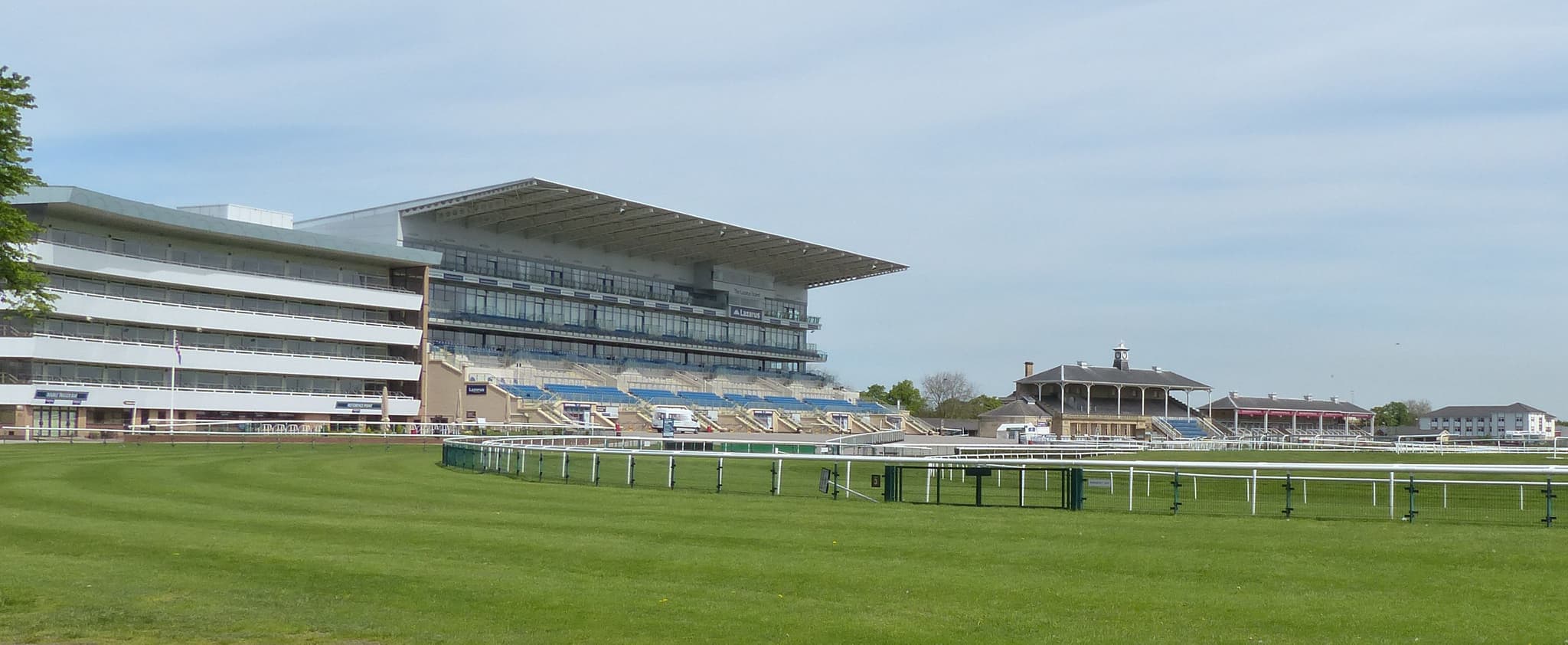
The shift began in the 1990s, accelerated through the 2000s, and culminated in the £32 million grandstand completed in 2007. The new stand transformed the racegoer experience at Doncaster in a way that an outsider visiting after a 20-year absence would have found difficult to reconcile with what they remembered. Modern facilities, improved hospitality and better viewing: the infrastructure of a major racecourse rather than one trying to live on historical reputation.
The 2007 grandstand was not just an aesthetic improvement. It was a statement about what Doncaster intended to be in the 21st century: a venue that could justify its place among the top courses in Britain on current merit, not just historical legacy. The capacity of 30,000 reflects a venue sized for the modern racing audience while remaining large enough for the biggest occasions.
The racing programme was strengthened in parallel. The St Leger Festival was rebuilt as a four-day event with quality racing throughout. Ladies' Day became one of the most attended days of the Yorkshire social calendar. Prize money was improved to attract better horses. The strategy produced results: recent St Leger fields have included horses from the major European yards, and the race's prestige has recovered considerably from its low point.
Recent Champions
The modern era St Leger has produced some memorable winners. Logician, trained by John Gosden, won the 2019 renewal with a dominant display, drawing favourable comparisons to the race's best recent renewals from a horse who looked the part throughout.
Hurricane Lane, trained by Charlie Appleby and ridden by William Buick, won the 2021 St Leger by three lengths on Good to Firm ground. Appleby's Godolphin operation has become one of the dominant forces in British flat racing, and their investment in the St Leger has done much to restore the race's attractiveness to top connections. Hurricane Lane was a horse good enough to run in the Arc later that season, and did run well in it; his Doncaster win proved the race was no longer being bypassed by serious Classic horses.
The 2026 running will be the 250th edition of the St Leger, a milestone that the course and its organisers have been building towards for several years. The 250th St Leger carries obvious historical weight and the prospect of a triple Crown attempt adds further interest to an anniversary that stretches back to that six-horse sweepstakes in 1776.
National Hunt Racing and a Dual Purpose
One of the more significant developments of the late 20th century was Doncaster's evolution into a fully dual-purpose venue. The addition of a National Hunt programme transformed the course's calendar from a flat-only operation into one that runs quality racing throughout the winter months as well.
The flat, galloping nature of Town Moor translates well to jump racing. The wide track gives horses room to race without the congestion that tight circuits produce, and the long straight rewards stamina and jumping technique rather than position at the final turn. Doncaster's jumps fixtures may lack the profile of Cheltenham or Aintree, but they offer well-run racing on a track that suits a specific type of horse.
The November Handicap, traditionally the final significant flat race of the season, sits at the other end of the calendar from the Lincoln and has become a fixture in its own right. Doncaster now bookends the flat season: the Lincoln in late March signals that turf racing has resumed; the November Handicap draws the curtain down. No other course holds both ends of the flat calendar in that way. The complete guide to Doncaster Racecourse describes the current fixture list and what each meeting offers.
Arena Racing and Modern Management
Doncaster Racecourse has been managed by Arena Racing Company for the past decade, and the relationship has produced further investment and modernisation. The broadcast facilities have been upgraded to meet the demands of a racing industry that now distributes live pictures globally. The digital and commercial operation has expanded. Hospitality has been developed to bring in revenue that sustains the prize money improvements racing fans value.
The tension between commercial development and preserving the character of Town Moor is real but so far has been managed carefully. The moor's common land status imposes natural limits on what can be built and where. Those limits are, from one angle, a constraint; from another, they are what makes Doncaster irreplaceable. A course that cannot be redeveloped beyond its historic footprint is a course that will always feel like what it is: an old place that has seen a great deal of history and intends to see a great deal more.
Why this era mattered: The post-Nijinsky decades tested whether Doncaster could remain relevant without a Triple Crown to anchor it. The answer was eventually yes, but it required substantial investment and a willingness to rebuild both the facilities and the St Leger's standing among top trainers. The 2007 grandstand and the strengthening of the festival programme were the turning points. Recent St Leger champions like Hurricane Lane, coming to Doncaster as real stars rather than Arc rejects, confirm that the recovery has been real.
Doncaster's Legacy
The Freemen's Procession
On St Leger day each September, before the horses go to post for the first race, the freemen of Doncaster exercise an ancient right. Their procession to the course is a ceremony that connects the racing taking place on Town Moor to the medieval charters that gave the freemen their stake in the land. It is not a tourist attraction or a heritage event staged for racegoers. It is a legal right, exercised because the freemen of Doncaster are entitled to exercise it, as their predecessors were entitled before them. The fact that 30,000 people happen to be watching horses race on the same land is incidental to the right itself.
No other Classic race in the world is run on land with that kind of legal and historical character. The Derby is run at Epsom, which is private. The Arc is run at Longchamp, which is owned by a racing authority. The Kentucky Derby runs at Churchill Downs, a commercial venue since 1875. The Doncaster St Leger runs on common land that belongs, in law and in spirit, to the people of a South Yorkshire town. That distinction matters more than it is usually given credit for.
What the St Leger Established
The race that Anthony St Leger proposed in 1776 has left two kinds of legacy. The first is statistical and historical: the oldest Classic, the only race to complete the Triple Crown, the training record of John Scott, the fifteen Triple Crown completions, the list of champions stretching from Allabaculia in 1776 to the present day. These facts can be cited and verified.
The second legacy is harder to quantify. The St Leger established what it means to truly stay. Epsom's Derby is run over a mile and a half with an undulating track that introduces variables beyond pure stamina. The St Leger is run over a mile and three-quarters on a flat, galloping course with a long straight. It is a purer test of staying power, and it has been filtering the best staying Classic horses from the merely good ones since 1776. The influence of that test runs through the breeding of British and Irish thoroughbreds: every bloodstock decision that values stamina, every decision to breed for a distance beyond a mile and a half, is informed, at some level, by what the St Leger has been asking since the age of George III.
A Course That Defines Both Ends of the Season
Doncaster's place in the calendar is unique. The Lincoln Handicap in late March is the traditional opener of the turf flat season. The November Handicap in autumn closes it. No other racecourse holds both ends of the flat year in that way, and the symmetry is not accidental. It reflects a course that has been central to the British racing calendar for so long that the calendar has shaped itself around Town Moor's fixtures.
For the betting public, Doncaster's dual role has a practical dimension. The Lincoln attracts big fields, competitive handicap weights and a punting market that has been studied obsessively for generations. The notable horses associated with Doncaster include Lincoln winners as well as St Leger heroes, and the handicap tradition at the course is as strong as the Classic one.
Doncaster as a Fair Track
One aspect of Doncaster's legacy that is rarely discussed in historical terms but is felt every time the course is used is its physical fairness. The wide, flat, straight-running layout rewards ability rather than tactical positioning or course knowledge. The best horse wins at Doncaster more often than it does at tracks with tight bends, significant undulations or sharp turns that can be exploited by horses racing from certain draw positions.
That fairness is not an accident. It is a product of Town Moor's geography: flat common land with enough width to run horses without congestion. And it is, in a modest way, a product of the tradition that running on common land carries: the moor belongs to everyone, so the racing on it should give every horse a fair chance. Whether that connection between civic ownership and sporting fairness is real or post-hoc rationalisation is a question for philosophers of sport. What is not in question is that Doncaster consistently produces results that the form book can explain.
Where to Go From Here
The history covered in this article runs to nearly 250 years of racing at Town Moor. The full picture of what Doncaster looks like as a going concern today (its facilities, its layout, what a raceday feels like, where to watch from and how to get there) is in the complete guide to Doncaster Racecourse. The St Leger Festival guide covers the September meeting in detail: the races, the social calendar, how the four days are structured and what the Festival offers beyond the headline Classic. The story of Town Moor is still being written. What 1600 to 2026 has established is that it will continue to be written on the same stretch of South Yorkshire ground, under the same ancient rights, for as long as the freemen of Doncaster choose to exercise them.
Frequently Asked Questions
When was the St Leger first run?
The first running took place on 24 September 1776. Six horses contested a sweepstakes for three-year-olds over two miles of Town Moor. The winner was Allabaculia, a filly owned by the 2nd Marquess of Rockingham. The race was not called the St Leger until the 1778 running, when it was named after Anthony St Leger, the army officer who had proposed the sweepstakes two years earlier.
When did racing first take place at Doncaster?
The earliest recorded racing on Town Moor dates to around 1600, during the reign of James I. These were informal affairs: match races between local horses with private wagers, run across open common land with no stands or formal infrastructure. The Corporation of Doncaster began contributing to prize money in the early 17th century, and a named race (the Doncaster Gold Cup) was formalised by 1703.
Who is the St Leger named after?
Lieutenant-General Anthony St Leger, an Irish-born army officer from a County Tipperary family who had settled in Yorkshire. St Leger proposed the original 1776 sweepstakes but the race was not named after him until 1778. He was a keen racing man but not a prominent figure in the national sport; his enduring fame rests entirely on the race that bears his name.
Has any horse won the Triple Crown at Doncaster?
Yes. Fifteen horses have completed the Triple Crown, with the St Leger as the final stage. The first was West Australian in 1853. The most recent was Nijinsky in 1970, who beat Meadowville by a length on 12 September that year. No horse has won the Triple Crown in the 56 years since. Camelot in 2012 was the most recent to attempt it; he finished second to Encke at 20/1.
What is the connection between Doncaster and the freemen of the town?
Town Moor, where the racecourse sits, is common land that belongs to the freemen of Doncaster under medieval charters. The freemen hold legal rights over the moor that predate horse racing by centuries. Those rights have never been extinguished by private ownership, industrialisation or development pressure. The freemen's procession to the course on St Leger day is an exercise of those ancient rights, connecting a modern race meeting to a civic tradition older than any other aspect of the course's history.
What is the oldest Classic race in British racing?
The St Leger, first run in 1776. It predates the Oaks (1779), the Derby (1780), the 2,000 Guineas (1809) and the 1,000 Guineas (1814). The five races are collectively known as the Classics, but the St Leger has seniority over all of them. The fact that it is also the longest, at a mile and three-quarters, means it has kept its status as the most demanding of the five despite occasional periods when top trainers chose to bypass it.
Share this article
More about this racecourse
All Doncaster guides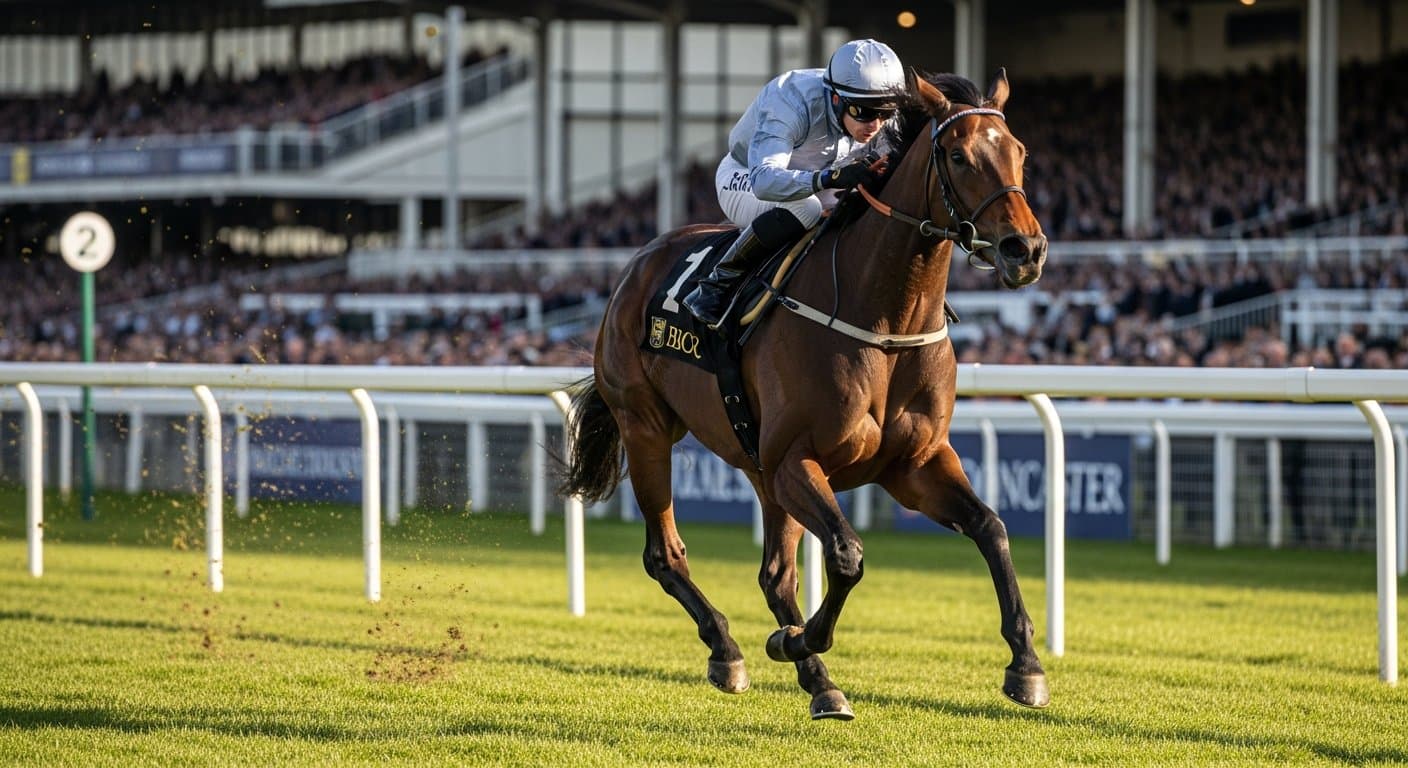
Nijinsky at Doncaster: The Complete Story
Nijinsky won the 1970 St Leger at Doncaster to complete the last Triple Crown of the twentieth century. The story of a defining race and a defining horse.
Read more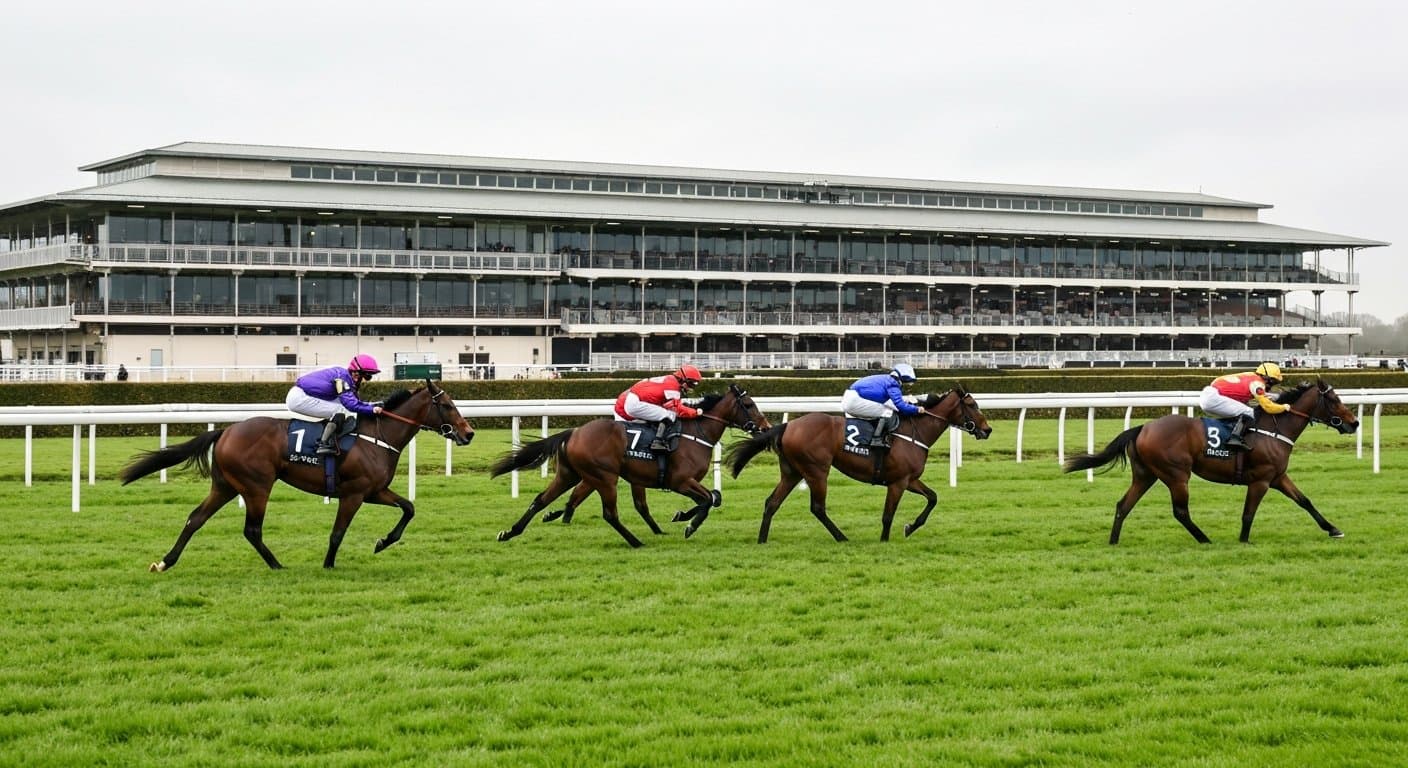
The November Handicap at Doncaster
A complete guide to the November Handicap — the traditional curtain-closer of the flat season at Doncaster, with history, trends and betting angles.
Read more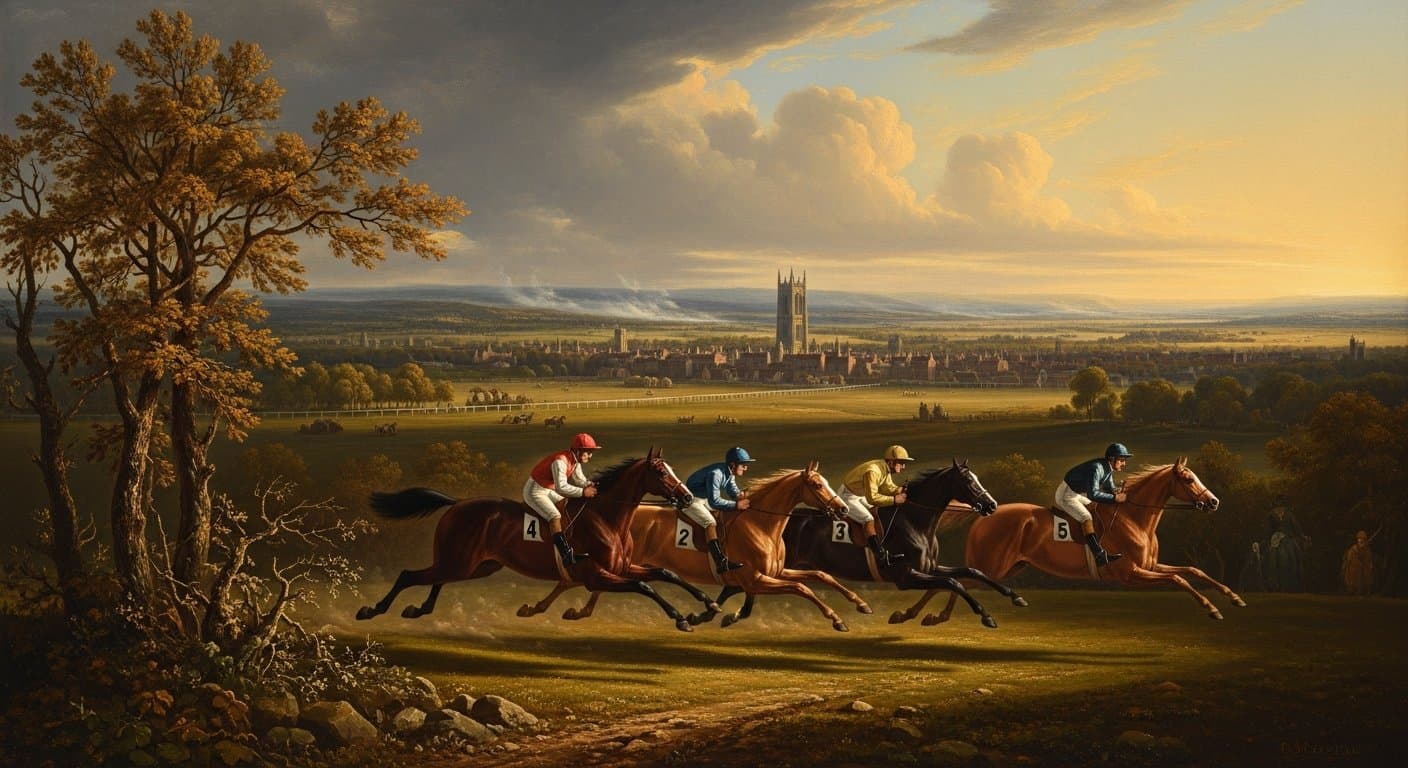
St Leger Day at Doncaster: The Complete Guide
Your complete guide to St Leger Day at Doncaster — the oldest Classic in the world, the final test of the staying generation, and Yorkshire's most famous race day. History, betting frameworks, attending advice and what makes Town Moor unique.
Read moreGamble Responsibly
Gambling should be entertaining and not seen as a way to make money. Never bet more than you can afford to lose. If you or someone you know has a gambling problem, help and support is available.