
Founder & Editor · Last reviewed 2026-03-02
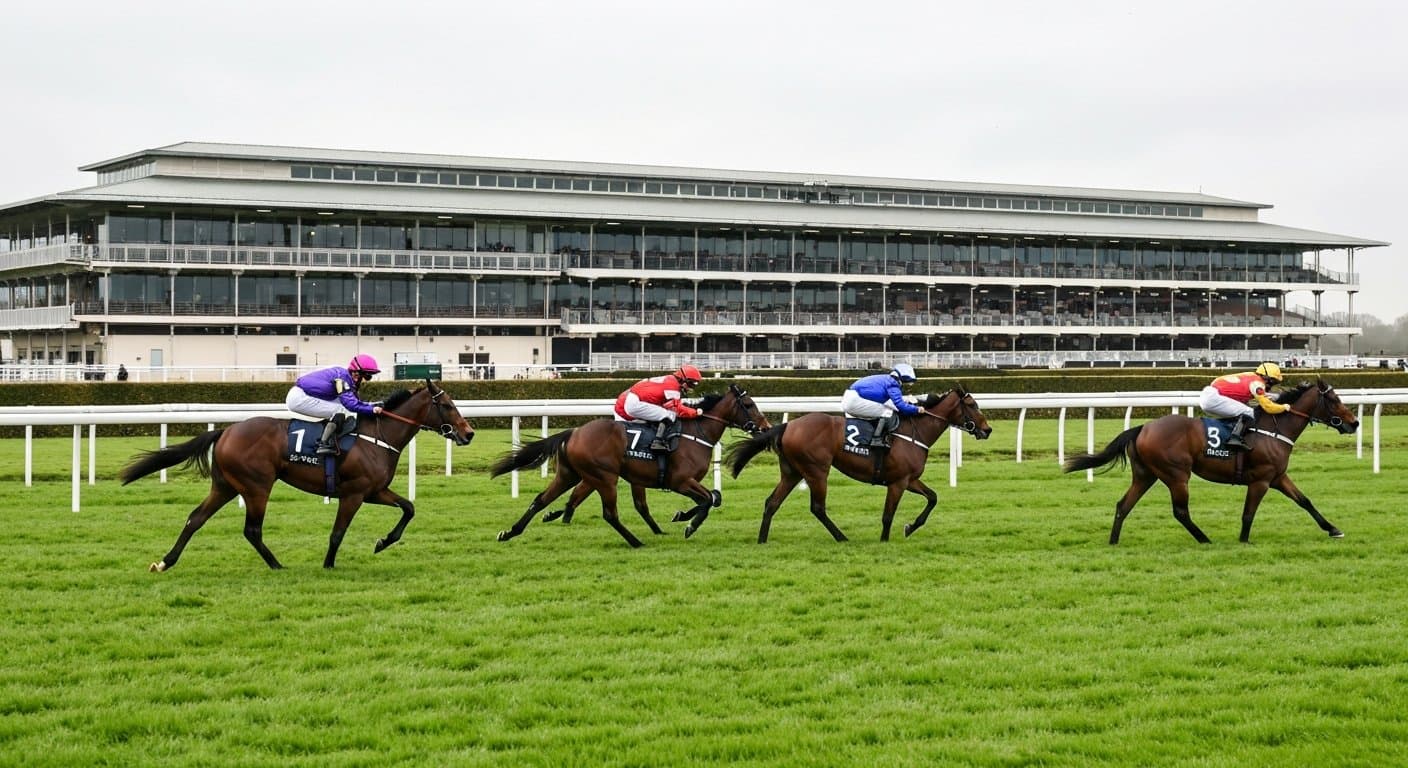
The November Handicap at Doncaster is one of British racing's great traditions. It is the final big handicap of the flat season, run on the last Saturday of turf racing before the sport retreats to the all-weather for the winter. It's a race that carries a weight of sentiment that few handicaps can match. For punters, it's one last chance to land a touch on the grass. For trainers, it's a target that can salvage an otherwise modest season. For the sport, it's a full stop on the flat campaign, the curtain coming down on Town Moor just as it rose with the Lincoln back in March.
Run over a mile and four furlongs on Doncaster's round course, the November Handicap typically takes place on ground that ranges from soft to heavy, which gives the race a distinctive character. This is not a race for pretty movers or fair-weather types. It demands real stamina, an appetite for testing ground, and the constitution to perform at the tail end of a long season. The big fields, competitive betting markets and unpredictable conditions make it one of the most fascinating puzzles on the racing calendar.
The race has been a fixture at Doncaster since the mid-19th century, and its place in the calendar gives it a romantic quality that newer races cannot replicate. It's the last hurrah, the final act of a season that began with spring sunshine and ends in November mud. For a broader look at what makes Doncaster special, the complete guide covers the course, the facilities and the full fixture list. But for now, this guide focuses on the race that draws the curtain closed.
What separates the November Handicap from other big staying handicaps is its position in the calendar. By the time these horses line up, they have been in training for the best part of nine months. Some are starting to find their form fading; others arrive at Town Moor at their absolute peak, having been freshened up specifically for this final target of the season. Reading which type of horse you're backing is one of the central challenges of the race and one of the reasons it rewards punters who do their homework properly.
The race is classified as a Heritage Handicap, placing it alongside the Lincoln, the Cambridgeshire and the Cesarewitch in a category of historic betting contests that British racing has rightly chosen to celebrate and preserve. That status brings with it a guaranteed minimum prize fund and an identity that anchors the race in the broader flat-racing story. The November Handicap is not simply the last handicap before the lights go out. It is a race with its own distinct character, history and logic, one that repays careful study every autumn.
This guide covers the full history of the race, the great winners and memorable renewals, how the course and conditions shape the outcome, and the betting angles that give you the best chance of finding the winner. If you are planning to attend, the day out guide has everything you need to prepare for a November afternoon at Town Moor.
Bet on Doncaster
Place your bets on Doncaster races with a trusted bookmaker.

Promo code BETFRED50. New customers only. Register, deposit with a Debit Card, and place a first bet of £10+ at Evens (2.0)+ on Sports, to be settled within 7 days, to get £30 in Sports Free Bets and £20 in Bet Builder Free Bets within 24 hours of settlement. 7-day expiry. Eligibility & payment exclusions apply. Full T&Cs apply. Take Time to Think. BeGambleAware.org. 18+. Full T&Cs.

Promo code R30. New UK customers only, 18+. Register, deposit £10 or more, then place a £10 single cash bet at odds of 1/2 (1.5) or greater on any sports market (excluding Virtuals). Once the qualifying bet settles you get £30 in Free Bets (3 x £10) — the qualifying bet can win or lose. Free Bets are valid on any sports market excluding Virtuals, expire in 7 days, are non-withdrawable and must be used in full. Excluded deposit methods apply (including PayPal, Apple Pay, Skrill and NETELLER). Named bets such as Lucky 15 do not qualify. If you cash out the qualifying bet, or it is voided, you are no longer eligible for the offer. Ends 31.12.26. Full T&Cs apply. Please gamble responsibly. BeGambleAware.org. 18+. Full T&Cs.

Promo code BET40GET20. New UK customers, 18+. Register with the code and place a first bet of £40 or more at Evens (2.0) or greater. Receive 2 × £10 free bets: the first credited automatically once the qualifying bet settles, the second 24 hours later. Free bets must be placed at minimum odds of 4/1 (5.0), expire 24 hours after credit, and the free-bet stake is not returned with winnings. Debit card deposits only. Take Time to Think. BeGambleAware.org. 18+. T&Cs apply. Full T&Cs.

50% of your first-day net losses refunded as a free bet, capped at £25. New UK customers aged 18+ only. To qualify, deposit and place a first bet of £10 or more on any sport at minimum odds of evens (2.00), then place at least two further bets on different events, each worth at least 50% of your largest bet, all at evens (2.00) or greater. Losses are counted from your first settled bet until 23:59 the same day. Place a qualifying £10+ bet and you are guaranteed at least a £5 free bet. Bets placed at SP, void bets, cashed-out bets and bets struck with free bets do not count towards the offer. The free bet is credited the day after your qualifying bets settle and must be used within 7 days, after which it expires. It can be used at odds from 1/4 (1.25) up to 250/1 on singles and straight accumulators, but not on Trixie, Patent or Yankee style multiples. Free-bet stake is not returned with winnings. One offer per person, household, address, IP address and device. E-wallet deposits may not qualify, so check the cashier before depositing. Customers registered with GAMSTOP cannot claim. KYC identity verification must be completed before the free bet is credited. Take Time to Think. BeGambleAware.org. 18+. T&Cs apply. Full T&Cs.

New customers, 18+. Choose the sports bonus at sign-up, make a first deposit and receive a 100% bonus up to £50 in your Sports Bonus balance. To convert the bonus to cash, wager it 10x within 30 days. Single bets below Evens (2.00) do not qualify; accumulators do not qualify if any selection is below 1/2 (1.50). Virtual Sports, voided, cancelled, drawn, cashed-out and free-bet wagers do not count towards wagering. Only the first settled bet per event counts. Withdrawing before the wagering requirement is met forfeits the bonus balance including bonus winnings. Real-money funds are used before bonus funds. Deposits via Skrill or Neteller are not eligible. Not valid in conjunction with other promotions. Odds, bet and payment limits apply. 10bet general and promotion T&Cs apply. BeGambleAware.org. 18+. Full T&Cs.

New customers in Great Britain and Republic of Ireland, 18+. Place a £10 fixed-odds qualifying bet at minimum odds of 1/2 (1.50) — single or each-way (only the win part counts), pre-event or in-play, not cashed out early, within 28 days of opening the account. Receive up to £60 in bonuses credited over three days: 3 × £10 fixed-odds free bets (the first on settlement, then 24 and 48 hours later) plus 3 × £5 Total Goals FOOTBALL spread bets and 3 × £5 racing Winning Favourites spread bets, with a £1 racing Race Index spread bet as an extra on top. The spread bets need a full spread-betting account, opened within 28 days of the fixed-odds account and subject to Spreadex's eligibility and appropriateness checks. Free-bet stakes not returned with winnings; free bets valid 28 days from issue. IMPORTANT: the £5 credits are SPREAD bets — sports spread betting carries the risk that losses can exceed your stake. Sports spread-betting customers do not have Financial Ombudsman or FSCS recourse. Take Time to Think. BeGambleAware.org. 18+. T&Cs apply. Full T&Cs.

Promo code WELCOME15, entered under My Bonuses after registering. New UK customers, 18+. Place a first qualifying bet of at least £10 from your cash balance at odds of evens (2.0) or greater within 7 days of opening the account. Once the qualifying bet fully settles you receive £15 in free bets, credited as 3 x £5 tokens with set uses: one £5 accumulator free bet (minimum 4 legs, each leg at 2/5 or bigger), one £5 sports free bet (any market at evens or bigger) and one £5 Sub Cover free bet (selected football player markets at evens or bigger). Free-bet stakes are not returned with winnings. Free bets expire 7 days after they are credited. Void, cashed-out and partially cashed-out bets do not qualify. One offer per customer. Confirm the current terms on BetGoodwin's own welcome-offer page before claiming. Take Time to Think. BeGambleAware.org. 18+. T&Cs apply. Full T&Cs.

New UK customers, 18+. Minimum deposit £10. Place a £10 qualifying single on sports (excluding virtuals) at minimum odds of 1/2 (1.50), settled within 14 days. Deposit-method exclusions apply. Receive £30 in free bets (stake not returned), split £20 for sportsbook use (2 x £10) and £10 for Bet Builder only (2 x £5); Bet Builder does not cover horse racing. Free bets must be accepted within 7 days and expire 7 days after acceptance. No promo code required. Best Odds Guaranteed on UK & Irish racing, subject to having staked over £25 in the previous seven days. Operated by LiveScore Betting and Gaming (Gibraltar) Ltd, UKGC 56859. Confirm the current terms on LiveScore Bet's own promotions page before claiming. Take Time to Think. BeGambleAware.org. 18+. T&Cs apply. Full T&Cs.
18+. BeGambleAware.org
History of the November Handicap
Origins on Town Moor
The November Handicap's origins stretch back to the mid-1800s, when it was established as the final important flat race of the season at Doncaster. The race was a natural fit for Town Moor. The course had already been hosting racing for over two centuries by then, and its position as the bookend of the flat calendar gave it a logical home for the season's farewell.
In its early decades, the November Handicap was a modest affair compared to the St Leger, but it quickly developed its own identity. Where the Classic was a test of quality, the November Handicap was a test of determination. The ground was invariably testing by late November, the fields were large, and the race attracted the kind of tough, honest handicappers who thrived when conditions turned against the faint-hearted. It became known as a punters' race, a wide-open betting heat where shrewd judges could find value amid the uncertainty.
The 1904 Foundation and Early Growth
The race as it is formally recorded dates from 1904, and in its early years it drew strong support both from trainers in the north and from the major Newmarket yards who recognised Doncaster's round course as a fair and honest test. The mile-and-a-half trip over flat, galloping ground allowed real stayers to prove their worth, and the testing late-season conditions acted as a filter: horses who could not handle soft ground were quickly found out.
The racing public embraced the November Handicap with a fondness that surprised many in the sport's establishment, who tended to view handicaps as inferior to the Classics and Group races. But the November Handicap had something that weight-for-age races could not offer: real unpredictability, large fields, and the drama of a final-day battle on deteriorating ground. Ante-post betting on the race was established early, and by the Edwardian era it had already developed a loyal following among regular punters.
Disruption and Continuity
The two world wars disrupted the race's continuity, as they did for so much of Doncaster's programme. The St Leger was relocated during both conflicts, and the November Handicap was either moved or abandoned entirely in certain years. Doncaster racecourse itself was requisitioned for military purposes during the Second World War, forcing the suspension of all racing at Town Moor from 1941 to 1945. When racing returned in 1946, the November Handicap resumed its place in the calendar as though it had never been away.
The post-war decades saw the race fluctuate in status. At its best, the November Handicap attracted quality horses off decent marks and generated intense betting interest. At its worst, it was a muddling affair run on bottomless ground in front of thin crowds. The race's fortunes tended to follow the weather. A dry November produced faster ground and bigger fields, while relentless rain could reduce the contest to a war of attrition where the toughest and the lightest-weighted tended to prevail.
The Heritage Handicap Era
The modern era has been kind to the November Handicap. Improved drainage at Doncaster means the ground, while still testing, rarely reaches the extremes of decades past. Prize money has been boosted, the race attracts competitive fields of around 15 to 20 runners, and the betting market generates real interest among punters who view it as the season's final puzzle.
Its classification as a Heritage Handicap has been the defining step for the race's modern identity. Heritage Handicap status places the November Handicap alongside the Lincoln, the Cambridgeshire and the Cesarewitch. These are races whose long history and cultural resonance give them a standing that goes beyond their prize money. The BHA introduced the Heritage Handicap category to celebrate and protect exactly this kind of race: contests that are not Group 1s but are woven into the fabric of the sport and carry meaning that newer, better-funded races simply cannot replicate.
Heritage Handicap status brings a guaranteed minimum prize fund, and the extra investment has helped the race attract better-quality fields. Trainers who might previously have bypassed the November Handicap in favour of an all-weather target now find it worth pointing a horse specifically at Town Moor for the last flat Saturday of the year.
The Doncaster Symmetry
Perhaps the most satisfying aspect of the November Handicap's history is the symmetry it creates with the Lincoln. Doncaster opens the flat turf season in late March with a mile handicap on the straight course, and closes it six or seven months later with the November Handicap on the round. No other course in British racing bookends the flat season in this way, and it gives Doncaster a unique identity as the course that holds the first and last chapters of the flat story.
The Lincoln and the November Handicap are in some ways mirror images of each other. The Lincoln favours sharp, well-handicapped types who can handle fast-paced racing on the straight mile. The November Handicap rewards stayers with proven soft-ground form who have been kept fresh for a final autumn campaign. The two races bookend not just the calendar but also the range of flat-racing types: speed versus stamina, spring versus autumn, quick ground versus testing.
The race continues to fulfil the role it has occupied for over 120 years: the last big flat race of the year, run at the course that also hosts the first. That history is not just sentiment. It is a real selling point for a race that earns its place on the calendar through tradition, quality and the sheer appeal of one final Saturday afternoon of flat racing before winter arrives.
Great Winners & Memorable Renewals
Top Weight Heroes
The November Handicap has produced its share of memorable performances, though the winners tend to be honest professionals rather than superstars. What makes the great renewals special is the combination of conditions, competition and circumstance. The best November Handicap stories are about horses overcoming adversity on a cold November afternoon when the ground was bottomless and the field was packed.
Horses who have won carrying big weights in testing ground are particularly celebrated. Carrying 9st 10lb or more through heavy ground over a mile and four furlongs demands extraordinary toughness, and the November Handicap roll of honour features several horses who managed exactly that. These are the performances that racing folk remember: not the flash of brilliance that wins a Group 1, but the dogged, relentless determination that grinds down a big field in the mud.
The Trainers Who Made the Race Their Own
Certain trainers have made the November Handicap a particular target over the years, understanding that the race rewards specific preparation. Mark Johnston, now succeeded by his son Charlie, built an enviable record at Town Moor through decades of application. The Johnston operation at Middleham understood the November Handicap at a deep level. They knew how to bring a horse to its peak for a November target, how to read the going, and how to find the right type of horse for the race's specific demands.
Johnston's runners in the November Handicap were rarely accidental. They were horses specifically identified as suited to the trip, the going and the time of year. Fresh, fit and often lightly raced in the second half of the season, they arrived at Doncaster with something left in the tank when most other horses in the field were running on empty.
Sir Michael Stoute, Luca Cumani and Sir Henry Cecil also trained November Handicap winners, lending the race a touch of class that some might not expect from a late-season handicap. These were not throwaway runners. They were well-planned campaigns that recognised the race's value and its specific demands. When a trainer of Stoute's calibre targets a Heritage Handicap, it tells you something important: this is a race that serious professionals regard as truly worth winning.
Barry Hills and John Dunlop were among the Lambourn trainers who had good records in the race, proving that geography was no barrier. Horses from the southern yards were just as capable of performing at Town Moor in November as northern-trained runners, provided they had the right profile.
Memorable Renewals Through the Decades
The 1970s and 1980s produced several November Handicaps that became folklore among regular Doncaster racegoers. Large fields on truly testing ground, fierce ante-post markets that traded for weeks, and finishes that took the judge several minutes to unravel: these were the hallmarks of the race at its most gripping.
Some renewals are remembered for a particular horse's performance; others are remembered for what happened in the betting ring or for the conditions in which the race was run. A November Handicap in which the going was officially described as heavy, the winning time was nearly a minute outside the course record, and a 25/1 outsider held on by a head from a 20-runner field: that kind of drama sticks in the memory long after more prestigious races have been forgotten.
The November Type
The November Handicap has, over more than a century, established a recognisable profile for its winners. They tend to be horses aged four or five, trained to a peak for this specific race, with proven form on soft or heavy ground and a handicap mark that gives them a real chance without crushing them under too much weight. They are not necessarily the most talented horses in the field. They are the most suitable horses for this particular task on this particular day.
That's what makes the November Handicap such a rich betting puzzle. The question is not simply who is the best horse in the field; it's which horse fits the race's exacting requirements most precisely. A horse rated 95 that loves soft ground, has had a mid-season rest and is trained by a handler with a good November Handicap record is often a far better bet than a horse rated 105 that has been in continuous training since April and has never won on anything softer than good.
Dramatic Finishes
The November Handicap's large fields and stamina-testing conditions regularly produce thrilling finishes. When 18 or 20 horses come up the long Doncaster straight in the final two furlongs, spread right across the track, the sight is one of the most stirring in flat racing. Photo finishes are common, and the race has thrown up several results that have taken minutes to determine.
The combination of soft ground, tired horses and a long straight means that the closing stages of the November Handicap are rarely a procession. Horses who hit the front too early get caught; horses who are held up too long find the ground sapping their finishing speed. The winners are almost always horses who have been ridden with precise judgement, delivered at exactly the right moment with just enough energy left to hold on up the home straight.
Jockeys with extensive experience at Doncaster have a real advantage in the November Handicap. The course's long straight rewards those who know exactly where to make their move. Too early and the horse will tie up in the soft ground; too late and there simply isn't enough distance to close the gap. Getting that timing right in a 20-runner handicap on testing ground is a significant skill, and it explains why the same jockeys appear in the winning photographs year after year.
The Betting Ring
No account of the November Handicap's great moments would be complete without mentioning the betting ring. This is historically one of the best-attended betting races of the year in terms of on-course activity. The markets are fierce, the prices fluctuate in the final minutes before the off, and the roar when the stalls open is that particular blend of excitement and anxiety that only a big-field handicap can generate. The on-course bookmakers at Doncaster relish this race. It's one of the highlights of their year, and the battle for the best price is half the entertainment.
Ante-post trading on the November Handicap is also serious business. Markets open in October, sometimes as early as late September for confirmed stable targets, and the prices shift substantially in the weeks leading up to the race as entries are confirmed, trials are run, and trainers drop hints about their intentions. Punters who follow the November Handicap ante-post market closely through the autumn often find better prices than those who wait for race day.
A Race for the Notebook
The November Handicap regularly produces horses who go on to better things the following season. Well-handicapped types who run big races in the November Handicap without winning are worth noting. If they can handle heavy ground at Doncaster in late November, they can handle almost anything, and they often reappear at attractive odds in the spring.
Horses who finish in the first four or five in a competitive November Handicap, especially those who were never ideally positioned or were drawn wide, often improve significantly when they return in the spring on better ground over an easier trip. They've proven their toughness and their stamina; what they often need is a slightly more favourable set of conditions to convert form into wins.
The Course & Conditions
The Round Course at a Mile and Four Furlongs
The November Handicap is run over a mile and four furlongs on Doncaster's left-handed round course, a flat, galloping circuit that provides one of the fairest tests in British racing. The start is on the far side of the course, and runners travel through a sweeping left-hand turn before straightening up for the long run home. That home straight, stretching roughly five furlongs, is where the race is decided.
On a normal summer afternoon, Doncaster's round course plays to the strengths of horses with a good turn of foot. In November, on soft or heavy ground, the pattern changes completely. Speed becomes less important than stamina, and the ability to gallop through testing ground for a sustained period is the overriding factor. The long straight, which on quick ground allows closers to swoop late, becomes a stamina-sapping slog where every yard has to be earned.
The galloping nature of the track is an important factor. Doncaster does not have any sharp turns, awkward cambers or tight sections that might unsettle a horse mid-race. This is a straightforward, honest circuit that rewards horses with a real, sustained galloping action, and that profile happens to align precisely with what the November Handicap demands in its typical conditions.
Draw Bias at a Mile and Four Furlongs
Draw bias is a topic that dominates conversations about Doncaster's straight-course races like the Lincoln, but it is equally worth considering on the round course for the November Handicap. The effect is less dramatic than on the straight, but it is present, and understanding it can help narrow a large field.
Over a mile and four furlongs, the stalls are positioned on the far side of the track at the start. Horses drawn in the middle of the field can sometimes find themselves squeezed at the first bend as runners from wide stalls attempt to take up a more economical position towards the rail. Low draws, broadly speaking the bottom third of the field, allow a horse to slot in near the inside rail and save ground through the long sweeping turns. This can be worth two or three lengths over the full trip in conditions where every stride requires extra effort.
The significance of the low draw is amplified in very soft or heavy conditions. When the ground is riding slowly and the horses are working harder than normal, the inside line through the bends is measurably shorter than a wide path, and those extra yards matter. Research on Doncaster's round course in soft-to-heavy conditions consistently shows that the low-to-middle draw is preferable, with high draws carrying a slight disadvantage.
That said, this is not an absolute rule. A horse with a wide draw can compensate with a strong early pace, clean jumping from the stalls, and a jockey who rides aggressively to find a decent early position. As a starting filter for a 20-runner field, draw position is a legitimate tool: all else being equal, the horse drawn low has a small but real advantage.
Ground Conditions
The going for the November Handicap is almost always on the soft side of good, and truly heavy ground is far from unusual. Doncaster's drainage has improved significantly in recent decades, which means the course handles rain better than it once did, but late November in South Yorkshire is never going to produce firm ground. Punters should expect conditions ranging from good to soft at best to heavy at worst.
The ground conditions are the single most important variable in the race. Horses with proven form on soft or heavy going have a large advantage over those whose best form is on quicker surfaces. Before looking at anything else, check whether each horse has run well when the going was described as soft or worse. A horse who has only raced on good ground or faster is taking a significant risk stepping into November mud for the first time.
There is a useful distinction between soft and heavy ground worth keeping in mind. A horse that handles soft ground well may not handle heavy ground nearly as effectively. The increase in ground resistance over a mile and four furlongs is significant, and some horses who are effective on a soft-good surface simply cannot maintain their effort in truly heavy conditions. Look for horses with a proven record on the specific going conditions you expect on the day, not just broadly on testing ground.
The Weather Factor
November weather at Town Moor can be bleak. Cold temperatures, persistent rain and a wind that cuts across the open common land are all part of the experience. For racegoers, the day out guide covers what to wear and how to prepare; in short, dress for winter. For the horses, the weather is a test in itself. Some thrive in the cold and the mud; others visibly struggle. The parade ring inspection before the race is particularly valuable on November Handicap day. A horse who looks bright-eyed and keen in the pre-race atmosphere is far more likely to give a good account than one who looks miserable in the rain.
Horses who have run well in November or late-October conditions elsewhere provide useful data points. A horse that won a late-season handicap at Newbury or Nottingham on heavy ground in October is telling you something important about its constitution: that it can handle cold, wet conditions and still perform. This kind of form, on going that closely mirrors what you'll face at Doncaster, is more reliable than early-season form on completely different ground.
The Fields
The November Handicap typically attracts between 15 and 22 runners, making it one of the larger fields you'll see on the round course. The wide track handles big fields comfortably. There's no bottleneck at any point on the circuit, and horses can find racing room throughout. The stalls are positioned across the track, and while the draw is less significant on the round course than the straight, a low draw can still offer a marginal advantage by allowing a horse to take the shortest route around the first bend.
Large fields generate competitive markets and real value opportunities. When 20 horses line up, the favourite is rarely below 5/1, and the each-way market frequently throws up generous prices for horses with strong profiles. Treating the November Handicap as an each-way race, rather than trying to find the outright winner, is a sensible approach that aligns with the race's fundamental unpredictability.
End-of-Season Fitness
A factor often underestimated in race assessments is the question of fitness as the season draws to a close. By November, horses that have been in continuous training since March or April are approaching the limit of what their bodies can sustain without a significant break. A horse who has run eight or ten times since early spring may look fit in the parade ring but could be mentally tired. The spark that drives the extra effort in the closing stages of a hard race may have dimmed even if the physical condition appears sound.
This is why freshness is such a valued commodity in the November Handicap. A horse that has had six to eight weeks off since its last run, brought to a sharp peak specifically for this race, often has more in reserve than an opponent that is running for the fifth time in six weeks. The trainer's choice to give a horse a mid-autumn break rather than keep it in continuous work through September and October is a clear signal: it suggests they have identified the November Handicap as a specific target and are managing the horse's energy accordingly.
Betting Angles & Trends
Proven Soft-Ground Form is Non-Negotiable
The single most important trend in the November Handicap is ground preference. Horses who have won on soft or heavy going have a substantially better record in this race than those without proven form on testing surfaces. Before looking at anything else, check whether the horse has run well when the ground has been described as soft or worse. If the answer is no, think carefully before backing it. The November Handicap is not the race in which to hope a horse discovers a taste for soft ground for the first time.
Drilling further into this principle: horses who have won in soft or heavy ground conditions rather than just placed deserve a premium. A horse that has finished second or third a few times on testing ground is demonstrating that it copes adequately; a horse that has won in those conditions is demonstrating that it positively thrives. The November Handicap, run at the tail end of a long season on a demanding mile and four furlongs, tends to expose those who merely cope and reward those who truly love it.
Fresh Horses Outperform
Horses who arrive at the November Handicap relatively fresh tend to outperform those who have been in hard training all season. Look for runners who have had a break since their last outing: six weeks or more is ideal. Trainers who specifically target this race often give their horses a mid-autumn rest before bringing them back for one final effort. The logic is straightforward. A fresh horse copes better with heavy ground than a tired one, and the November Handicap demands every ounce of a horse's reserves.
Cross-reference a horse's freshness with its trainer's approach. Some trainers bring horses to the November Handicap after a long summer campaign with no particular preparation; they are running because it is a convenient final race. Others give horses a deliberate rest in October and bring them back sharpened up specifically for Town Moor. The second type is the one you want to back. A horse returning from a six-to-eight-week break, fit but fresh, trained by a handler with a good record in the race, is the core profile of a November Handicap winner.
Why November Timing Changes the Race
The late-season context of the November Handicap creates a specific set of conditions that sets it apart from similar handicaps earlier in the year. Horses are at very different stages of their physical and mental condition by the time November arrives, and identifying which category each runner falls into is a central part of race analysis.
Form in form versus the seasoned campaigner. The November Handicap regularly contains a tension between two archetypes. The first is the horse that has been running consistently well for several months, whose form is current and reliable. This horse has been competitive in good handicaps through September and October and arrives at Doncaster with its confidence up and its fitness assured. The second is the horse that has been saved for this race, properly freshened up and potentially sharper than it has been all season. Which type wins more often? The evidence broadly favours the fresh horse in the worst ground, and the in-form horse in less extreme conditions.
Declining horses. By November, some horses' form has truly tailed off from its summer peak. A horse that ran big races in July and August but has been regressing since September should be treated with scepticism, even if its official rating still looks competitive. The November Handicap is not the race for a horse that is finding its form harder to produce. The testing conditions will expose, not paper over, any decline.
Horses coming off a break. A horse returning after six weeks or more off the track deserves extra consideration in the November Handicap, particularly if it ran well on soft ground earlier in the season. Trainers who build an autumn campaign around a mid-October break and a single prep run before the November Handicap are following a pattern that has produced results. The race rewards preparation, and the trainers who understand this tend to outperform those who treat it as an afterthought.
Weight Matters — But Not in the Way You'd Think
The November Handicap's conditions mean that lighter-weighted horses often outperform top weights. Carrying 9st 7lb or more through heavy ground over a mile and four furlongs is a significant ask, and even quality horses can be anchored by a big weight. The trends suggest looking in the 8st 7lb to 9st 2lb range for value: horses who are well-handicapped based on their best form but will not be crushed by the weight in testing conditions.
That said, the lightest weights in the field, horses carrying 7st 12lb or 8st, are not automatically the right answer. An extremely low weight often signals a horse whose form is modest and whose handicap mark reflects real limitations. The sweet spot is the middle of the weight range: a horse carrying enough weight to show the handicapper respects it but light enough to run through the mud without being ground down.
Calculating the true weight differential is worth the effort. A horse rated 90 carrying 9st 0lb is on a fundamentally different task to a horse rated 85 carrying 8st 9lb. The difference of 9lb over a mile and four furlongs in heavy ground is equivalent to several lengths. When two horses appear evenly matched on form, the one with the lighter burden in the saddle has a real edge.
How to Spot the Right Weight Carrier
The ideal November Handicap winner carries a weight that the handicapper has assigned based on its best form earlier in the season, but whose actual current abilities have been disguised by running in conditions that didn't suit: either too quick a surface, too short a trip, or in races where the pace was wrong. If you can identify a horse whose official rating is based on form over seven furlongs on quick ground but which has a deeper form history suggesting it is a real mile-and-four-furlong performer on soft ground, you have found a horse that is almost certainly underrated by the official handicapper for this specific race.
Equally, horses that have shown their best form over longer trips, mile and six or staying two miles, but have been rated down to a manageable mark in the mile-and-four-furlong handicap division are worth considering. The November Handicap's mile and four furlongs over soft or heavy ground is, in terms of the demands placed on a horse, closer to two miles on quick ground than it is to the same trip in the summer. A horse with real staying ability, lightly weighted, will often outrun its market price.
Age and Experience
The November Handicap tends to favour horses aged four and five who have had enough racing to be seasoned but are still improving or at the peak of their powers. Three-year-olds receive a weight allowance, which can be significant, but they also face the challenge of racing against older, more experienced rivals on ground they may not have encountered before. A three-year-old who has a strong form profile on soft ground and a generous weight concession is worth considering; a three-year-old stepping onto testing ground for the first time is a significant risk regardless of its quality.
Older horses, seven and above, can be tough and hardy, but they are fighting against the physical toll of multiple long seasons. There are exceptions: real toughies with strong soft-ground records and light weights have won the November Handicap at advanced ages. On balance, though, the four-to-six age range provides the most reliable winners.
Each-Way is the Right Approach
With fields of 15 to 20 or more runners, each-way betting is the natural approach for the November Handicap. The extended each-way places, typically first four and sometimes first five with the bigger bookmakers, mean that backing a horse at 14/1 or 16/1 each-way can produce a satisfying return even if it only manages third or fourth. Focus on horses with solid placed form in big-field handicaps on testing ground. They may not win outright, but they are reliable place candidates.
For each-way punters, the ideal target is a horse priced between 10/1 and 20/1 that ticks most of the key boxes: fresh, proven on soft ground, well weighted, from a trainer with a good November record and ideally drawn low to middle. Horses at these prices who fit that profile represent the heart of each-way value in this race.
Trainer Patterns
Mark Johnston (Charlie Johnston since the training licence transfer) has an outstanding record in the November Handicap over several decades. When the Johnston yard has a declared runner that fits the typical profile of fresh horse, soft-ground form and right weight, it deserves serious attention. Other trainers with strong late-season staying-handicap records worth tracking include William Haggas, Roger Varian and John and Thady Gosden, all of whom manage big strings and are capable of targeting specific races with well-prepared horses.
Northern trainers in general have a useful edge in this race. Local knowledge of Town Moor, the ability to work horses on the course itself, and familiarity with the specific demands of Doncaster's round course in November can all translate into an advantage that is not always reflected in market prices. A well-fancied runner from a leading northern yard with soft-ground form at the right weight is the archetypal November Handicap selection.
Watch the Market
The late market moves on November Handicap day are worth monitoring closely. This is a race where inside information, particularly about a horse's wellbeing on the day and its trainer's confidence, can filter through into the betting. Horses who shorten in the final 30 minutes before the off often run well. Drifters, horses whose price lengthens noticeably, are best avoided. The on-course bookmakers at Doncaster are sharp, and the market for this race is one of the best-informed of the season.
Ante-post monitoring through October is also rewarding. Trainers who confirm in public that the November Handicap is a target are providing truly useful information: they are telling you that the horse has been freshened up, that it has a suitable profile, and that the yard believes it has a real chance. These declarations are not always reflected instantly in the ante-post prices, and getting on early after a trainer confirmation can secure a noticeably better price than you will find on race day.
The Final Flat Race Context
There is a sentimental and practical dimension to the November Handicap's status as the last major flat handicap of the season. From a betting perspective, it matters because the race focuses the attention of informed judges who have been following the flat campaign all year. By November, the best analysts have a clear picture of which horses truly love soft ground, which trainers are at their best in autumn, and which horses have been deliberately held back for this specific target. That concentration of knowledge makes the market for the November Handicap among the most informed of the year, and it means the betting signals, both ante-post and on the day, carry real weight.
Frequently Asked Questions
Share this article
More about this racecourse
All Doncaster guides
St Leger Day at Doncaster: The Complete Guide
Your complete guide to St Leger Day at Doncaster — the oldest Classic in the world, the final test of the staying generation, and Yorkshire's most famous race day. History, betting frameworks, attending advice and what makes Town Moor unique.
Read more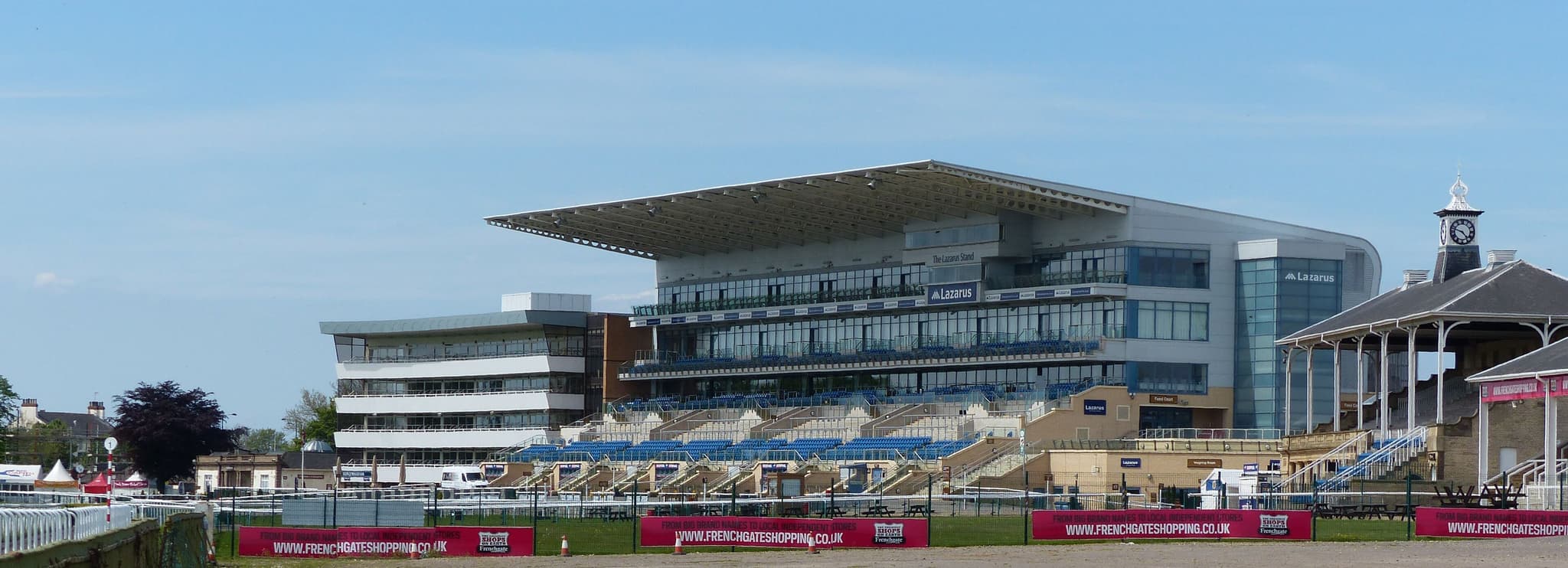
St Leger Festival: Complete Guide
Your complete guide to the St Leger Festival at Doncaster — four days of top-class racing, crowned by the world's oldest Classic.
Read more
Betting at Doncaster Racecourse
How to bet smarter at Doncaster: track characteristics, draw bias, going preferences, key trainers and strategies for Town Moor.
Read morePhotos on this page are used under Creative Commons licences. Titles, sources and licence links for each one are on our image credits page.
Research the field with the AI Race Predictor
Our model publishes calibrated win-probability estimates for UK races — a second opinion to understand a race, not tips. It's open about its record: it doesn't beat the market, and we show exactly how it does.
Work it out & learn the basics
Gamble Responsibly
Gambling should be entertaining and not seen as a way to make money. Never bet more than you can afford to lose. If you or someone you know has a gambling problem, help and support is available.