
Founder & Editor · Last reviewed 2026-03-02
Few racecourses anywhere in the world carry the historical weight of Epsom Downs. Racing has taken place on this stretch of Surrey downland since at least 1661, making it one of the oldest continuously used sporting venues in Britain, and in 1780 it became home to a race that would define flat racing itself: The Derby.
That single event transformed a modest country racecourse into a global institution. The Derby became the race every owner, breeder, and jockey wanted to win above all others. It gave its name to similar contests around the world: the Kentucky Derby, the Irish Derby, the Australian Derby. It turned the first Saturday in June into one of the most important dates on the British sporting calendar, and the course shaped the sport of horse racing as we know it.
But Epsom's history stretches well beyond the Derby. Its origins are bound up with the discovery of Epsom salts, the rise of Georgian spa culture, and the particular geography of the Surrey Downs, which created a natural amphitheatre perfectly suited to racing. Along the way, the course has witnessed suffragette protests, wartime requisitions, royal triumphs, and some of the most consequential horse races ever run.
What makes Epsom's past particularly interesting is how intertwined it is with the broader story of British life. Derby day was never just a race. It was a national holiday, a cross-class carnival that brought together aristocrats and costermongers, pickpockets and prime ministers. Dickens wrote about it, Frith painted it, and Parliament adjourned for it. The infield was free to enter, which meant that anyone who could get themselves to Epsom on the first Saturday in June was part of the spectacle.
This article traces that story from the earliest race meetings on the Surrey Downs and the birth of the Derby through to the famous moments that have defined the course, and its place in the modern era. For a full guide to the course and what's on, see our Epsom Downs complete guide.
Origins & The Epsom Salts
The Epsom Salts Connection
The story of Epsom Downs racecourse begins, oddly enough, with a cow. In 1618, a local farmer named Henry Wicker discovered a spring on Epsom Common where his cattle refused to drink. The water tasted bitter, and when it evaporated it left behind white crystals, what would later be identified as magnesium sulphate, or Epsom salts. Word of the spring's supposed medicinal properties spread quickly, and by the mid-17th century, Epsom had become one of England's most fashionable spa towns.
The wealthy visitors who flocked to Epsom to take the waters needed entertainment, and horse racing was the obvious answer. The open, high downland just south of the town provided a natural setting: gently undulating chalk grassland with enough space for horses to gallop and enough height for spectators to watch. The chalk geology mattered more than it might seem. It drained freely after rain, kept the turf firm even in wet weather, and provided the kind of fast, springy going that suited thoroughbreds. The geology that put minerals in Epsom's water also made the Downs a natural racetrack.
Early Racing on the Downs
The first recorded race meeting on Epsom Downs took place in 1661, during the reign of Charles II, a king who was famously passionate about horse racing and had already worked to establish Newmarket as the sport's administrative centre. Charles visited Epsom personally, partly for the water cure and partly for the racing, and his patronage gave the meetings a legitimacy that encouraged greater investment and larger fields.
Those early meetings were informal affairs by later standards. Local gentry matched their horses against each other over the natural terrain, with spectators gathering on the hillside. There were no stands, no enclosures, and no official regulations. It was sport in its rawest form, driven by wagers and local rivalry.
Through the late 17th and early 18th centuries, Epsom's racing grew in reputation alongside the spa itself. The proximity to London was key. The journey south from the city took a few hours by horse, close enough for a day excursion, far enough to feel like a proper outing. By the early 1700s, regular meetings were attracting runners and racegoers from across the south of England, and some from further afield.
The Restoration Background
The Restoration of the monarchy in 1660 is important context for understanding Epsom's early growth. Racing had been suppressed during the Commonwealth period, as Cromwell's government regarded it as an occasion for disorder and wagering. When Charles II returned to the throne, one of the social consequences was a rapid revival of horse racing across England. Royal patronage made the sport fashionable, and fashionable people followed.
Epsom was well placed to benefit from this revival. The spa gave it a pre-existing reason to attract wealthy visitors. The open downland gave those visitors a natural venue. And the course's position in Surrey, within easy reach of London, meant it could draw on the largest urban population in the country. The combination of health tourism and horse racing was not unique to Epsom. Cheltenham would later grow in a similar way, but Epsom did it first and on a larger scale.
The Natural Amphitheatre
One aspect of Epsom's geography that rarely gets enough attention is the shape of the land. The Downs rise to a high point near Tattenham Corner, then fall away sharply towards the home straight. Early racegoers discovered that they could stand on the high ground and watch horses running on ground far below them, giving a grandstand view without the need for any grandstand at all. This natural bowl meant that even before any formal infrastructure existed, tens of thousands of people could see the racing clearly.
The left-handed horseshoe shape of the course emerged from the natural lie of the land. Horses run uphill from the start, around a sweeping bend, then face a long descent to Tattenham Corner before the home straight. This combination of elevation change, camber, and tight turning produced a track unlike anything else in England. Horses that handled it well were athletic and well-balanced. Those that didn't lost the race before the straight began.
The Oaks and the 12th Earl of Derby
The transformation of Epsom from a pleasant country meeting into the most important racecourse in the world hinged on a dinner party. In 1778, the 12th Earl of Derby and his friend Sir Charles Bunbury, both serious racing men, were at a gathering at the Earl's nearby estate, The Oaks, a few miles from the course. The conversation turned to the idea of establishing a new race for three-year-old fillies over a mile and a half of the Epsom course.
The race was run for the first time in 1779 and named after the Earl's estate: The Oaks. It was an immediate success, drawing a strong field and a large crowd. Satisfied with this, the Earl and Bunbury devised a companion race for the following year, this time open to both colts and fillies over the same distance. The two Classic races that would define Epsom for the next two and a half centuries had been born within a year of each other at the same table.
The Spa Town as Foundation
It is easy to underestimate how much the spa connection shaped Epsom's racing development. While Newmarket grew on royal patronage and Ascot would earn its regal association later, Epsom's early growth was driven by commerce and fashion. The spa visitors brought money, social networks, and an appetite for amusement. Racing was part of the seasonal programme alongside gambling rooms, concerts, and promenading.
By the time Epsom's spa popularity began to fade in the later 18th century, the racing had acquired a life of its own. The Derby had ensured that the course would endure long after the last visitor drank from Henry Wicker's bitter spring.
Section takeaway: Epsom Downs became a racecourse because of geology, geography, and royal patronage, a combination that no other English course quite replicated. By the time The Oaks was established in 1779, the course had been drawing serious horses and large crowds for over a century.
The Birth of The Derby
The Derby's First Running
The Derby was first run on 4 May 1780, and its origin story contains one of British racing's most retold anecdotes. Lord Derby and Sir Charles Bunbury needed to decide whose name would go on the new race. According to the most widely circulated version, they tossed a coin. Derby won the toss. The race took his name. Bunbury, a prominent racing administrator who had done as much as anyone to organise the new fixture, accepted this gracefully. Then his horse Diomed won the first running.
The details of the coin toss story have been disputed by historians. Some versions say Bunbury won the toss and deferred the naming out of modesty. Others maintain it was straightforward. But the irony is the same either way: the man who didn't get the race named after him supplied the inaugural winner. Diomed won that first Derby at odds that reflected his quality. He was later sold to America, where he won further races and contributed to American thoroughbred breeding. The horse's transatlantic career is a small footnote to the much larger story of how the Derby's name and format travelled the world.
Why the Derby Mattered
The Derby's rise to the top of the racing calendar was fast. Within a decade of its first running, it had established itself as the most important flat race in England. Within thirty years, it was the most watched sporting event in the country.
Several factors drove this. The race distance of one mile and four furlongs, combined with the demanding nature of the Epsom course, created a real test of a three-year-old's ability, stamina, and temperament. It wasn't enough to be fast on a flat track. A Derby winner had to handle the uphill start, the sweeping descent to Tattenham Corner, and the testing run-in while under pressure from good horses on either side. Horses that won the Derby were complete athletes, and that quality mattered to breeders as well as punters.
The combination of prestige and prize money also attracted the best horses in training. Once the best horses came, the best jockeys followed, then the best trainers. The Derby became self-reinforcing: it was important because the best horses ran in it, and the best horses ran in it because it was important.
The Victorian Derby — A National Holiday
Derby morning, June 1858. The road from London is already busy before dawn. Carts and carriages jostle on the turnpike south through Mitcham, their passengers wrapped against the early chill. By nine o'clock, the Downs are already thick with people: costers setting up their stalls, gamblers marking their cards, gentlemen in top hats picking their way to the enclosures. William Frith, a notebook in his coat pocket, watches the crowd build and tries to decide where to put his eye.
William Powell Frith's painting "Derby Day," completed in 1858, is one of the most reproduced images of Victorian England. It isn't really a painting about horse racing. The race itself barely features. What Frith captured was the crowd, the extraordinary social mix of people who crammed onto the Downs every June for what had become something close to a national holiday.
By the middle of the 19th century, Derby day had acquired a scale unlike any other sporting occasion in Britain. Parliament adjourned. Factories closed. The road from London to Epsom became, for one day a year, one of the most congested routes in the country. Charles Dickens described the procession vividly: an unbroken column of vehicles stretching from Kennington to Sutton, with pedestrians threading between the wheels and the smell of horses and food mixing with road dust.
The key to understanding the Derby's social pull is that the course's Hill, the vast infield visible from the grandstands, was open to anyone who could get there, free of charge. This was common land, and the racing meeting could not exclude the public from it. The result was that Derby day was as democratic as anything in Victorian England. Aristocrats in the reserved enclosures were separated by only a few yards from the acrobats, card sharps, and pie sellers on the Hill. Frith sketched both and put them in the same frame.
Royal and Political Interest
Queen Victoria attended the Derby in 1840, 1841, and 1842, though her visits were less frequent than her patronage of Ascot. Her son Edward VII had a far more passionate relationship with Epsom. As Prince of Wales, he ran horses in the Derby for years before winning it with Persimmon in 1896, a victory met with cheering that rattled the Downs. He won again with Diamond Jubilee in 1900 and, as King, with Minoru in 1909. Three Derby winners carrying royal colours across three decades cemented the race's position at the centre of the establishment calendar.
Prime ministers of all parties were regular attendees, and the adjournment of Parliament for Derby day was a tradition that lasted well into the 20th century. The race had become woven into the political and social fabric in a way no other sporting event matched.
Famous Victorian Winners
The quality of 19th-century Derby fields was consistently high, and several winners left legacies that shaped the breed. West Australian, who won the Derby in 1853 as part of his Triple Crown, was considered the finest horse seen to that point. He was the first to win all three Classics in a season: the 2,000 Guineas, the Derby, and the St Leger, establishing a benchmark that very few horses have matched since.
Ormonde, who won in 1886, was widely regarded as unbeatable during his career. He won all 16 races he entered, including the Derby by a comfortable margin, and retired to stud where he influenced the breed on both sides of the Atlantic. Persimmon in 1896 and Diamond Jubilee in 1900, both trained at Sandringham, gave Edward VII his first two Derby victories and confirmed the royal family's investment in top-level flat racing.
The Railway and the Swelling Crowds
The arrival of the railway in 1865, with a station at Epsom Downs built specifically to serve the racecourse, changed the logistics of Derby day. The journey from London Bridge took less than an hour. Tickets were cheap. Working-class Londoners who had previously faced a day's travel by cart or on foot could now make the round trip on a half-holiday. The crowds grew accordingly, and by the late Victorian era, Derby day attendance regularly exceeded 100,000.
This was not simply a sporting event. It was one of the largest regular gatherings of people in Britain, organised around a race that lasted less than three minutes.
Section takeaway: The Victorian Derby was British flat racing's defining institution: a race prestigious enough to attract the best horses, open enough to attract every stratum of society, and dramatic enough to hold both together. The combination made Epsom unlike any other racecourse in Britain.
Famous Races & Moments
Emily Davison and the 1913 Derby
The most shocking moment in Epsom's long history occurred on 4 June 1913 when suffragette Emily Wilding Davison stepped onto the course during the Derby and was struck by King George V's horse, Anmer. She died from her injuries four days later on 8 June 1913.
What Davison intended remains the subject of real historical debate. She had a return train ticket in her pocket, which some historians cite as evidence she planned to survive the day. Others have pointed to the complexity of the scene: jockeys were bunched coming around Tattenham Corner, and the precise moment she stepped out suggests she may have been trying to reach Anmer specifically, perhaps to attach a suffragette banner. The newsreel footage, shot by the Pathé camera crew that was at every Derby, captured the collision in stark detail. The images were distributed across Britain and around the world within days.
Davison had been arrested nine times for suffragette activities. She had gone on hunger strike in prison. She had worked as a researcher and organiser for the Women's Social and Political Union. Whatever her intention on that June afternoon, she chose the Derby deliberately. The race was the biggest crowd event in Britain. The King's horse was running. Every camera and every pair of eyes would be pointing at the same stretch of Epsom turf at the same moment.
Anmer's jockey, Herbert Jones, was thrown from his horse but survived, though he was badly shaken and reportedly haunted by the incident for years. Davison was buried in Morpeth, Northumberland, on 14 June, with crowds lining the funeral route. The Women's Social and Political Union turned the occasion into one of the largest public demonstrations of the suffragette campaign.
Her action at Epsom did not immediately advance the vote, which came in 1918 for women over 30 and fully in 1928, but the footage meant the suffragette cause was seen by audiences who might never have engaged with it otherwise. The 1913 Derby is remembered less for the horse that won (Aboyeur, at 100/1, after the original winner Craganour was disqualified in a stewards' inquiry) and more for the moment on the back straight that preceded it.
Section takeaway: Davison's action at the 1913 Derby put Epsom at the centre of one of the most significant political events in early 20th-century Britain. The course's visibility, the biggest crowd and the most watched race, was precisely why she chose it.
The First World War and its Aftermath
Racing at Epsom was among the first casualties of the war. In 1915, with the Downs being requisitioned for military training and the social mood changed entirely, the Derby was moved to Newmarket. It ran there through 1918. The grandstands at Epsom served various wartime purposes, including as billets and stores. The course itself was used for drilling troops.
The 1919 Derby, back at Epsom for the first time in five years, drew an enormous crowd. Grand Parade won at 33/1, ridden by Fred Templeman, and the occasion carried a weight beyond sport. People had been starved of the regular Derby for four years, and the return to Epsom felt like a restoration of something that should never have been interrupted.
The Second World War
The pattern repeated in 1940. With Britain at war and Epsom again required for military use, the Derby moved to Newmarket for the duration. Anti-aircraft batteries were positioned on the Downs. Parts of the course were ploughed for food production, a wartime measure applied to numerous racecourses and private estates across the country.
The course that returned to racing in 1946 showed the wear of six years of military occupation and wartime neglect. Repairs took time, and facilities were basic. But the first postwar Derby, won by Airborne at 50/1, was celebrated as another marker of normality returning. Crowds flocked back. The ritual of Derby day had survived a second world war, and people were grateful for it.
Shergar (1981)
Some Derby victories become more than racing results, and Shergar's destruction of the 1981 field is one of them. The Aga Khan's colt, trained by Michael Stoute and ridden by the 19-year-old Walter Swinburn, won by ten lengths. The margin of victory remains a record for the modern Derby. He led from two furlongs out and simply pulled away on the Epsom straight, leaving a field of high-class horses trailing at distances most Derby winners don't see between second and third, let alone between the winner and the rest.
Shergar then won the Irish Derby and the King George VI and Queen Elizabeth Stakes at Ascot before retiring to stud at Ballymany, County Kildare. In February 1983, he was stolen by armed raiders in what was widely attributed to the IRA. He was never found. The case remains unsolved. The ten-length Derby winner who dominated his Classic season became a different kind of famous: his fate, rather than his performances, is what most people now associate with the name.
Lester Piggott's Nine Derbys
No jockey has ridden the Epsom course with the consistency and mastery of Lester Piggott. Between 1954 and 1983, Piggott won the Derby nine times, a record that is almost certainly permanent. His first win, on Never Say Die in 1954, came when he was 18 years old. Never Say Die was American-bred and an unfashionable winner at the time. His final Derby, on Teenoso in 1983, came when Piggott was 47.
What Piggott understood about Epsom that others didn't was how to read the course. The descent to Tattenham Corner is fast and left-handed, and riders who commit too early lose position, while those who go too wide lose ground. Piggott routinely found the right line through the bend and arrived at the straight in the ideal position. His record across 29 years is not a record of great horses alone. It is a record of the most complete tactical understanding of a single racecourse in the history of the sport.
Galileo (2001)
Galileo's victory in the 2001 Derby was decisive rather than close. Trained by Aidan O'Brien and ridden by Mick Kinane, the colt won comfortably on good ground, confirming the form he had shown in his earlier runs. He went on to win the Irish Derby and the King George before retiring to stud at Coolmore.
What makes his Derby win worth examining in hindsight is what came after. Galileo became the most influential breeding stallion of the 21st century. His sons include Frankel, who retired unbeaten and is widely regarded as the greatest horse to race on British soil in the modern era. His daughters include Enable, who won eleven Group One races. His influence reaches across the European breeding industry in a way no other Derby winner from the last 50 years has matched. The 2001 Epsom race sits at the start of that breeding lineage.
Sea The Stars (2009)
Sea The Stars won the Derby in June 2009 and spent the rest of that season winning races that no horse had won before in the same year. He won the 2,000 Guineas, the Derby, the Eclipse, the Juddmonte International, and then the Prix de l'Arc de Triomphe at Longchamp in October. Six Group Ones in a single season, across four countries, on varying ground. Trained by John Oxx and ridden by Mick Kinane, he was retired unbeaten at the top level.
His Derby win was controlled and confident. He settled mid-field, moved up entering the straight, and had the race won before the final furlong. He started at 11/4 and won without drama. The five months that followed, however, placed that Derby performance in the context of one of the great seasonal campaigns in European racing history. For more on the races he contested at Epsom, see our Derby guide.
Golden Horn (2015)
John Gosden's Golden Horn won the Derby in 2015 under Frankie Dettori, then went on to win the Eclipse, the Irish Champion Stakes, and the Arc at Longchamp. He was the best European horse of his generation and gave Dettori one of the most complete Classic seasons of his career.
Golden Horn's Derby was notable for the conditions. He won on good to firm ground, which suited his quick action, and he accelerated sharply in the straight in the manner of a horse who had more left to give. He came into the race as the third favourite and left it as one of the most impressive Derby winners in years.
Section takeaway: The horses who have defined Epsom's history were not just good racehorses. Several of them shaped the breeding industry that followed. From Galileo to Sea The Stars, Derby winners have a habit of mattering long after the race is over.
The Modern Era
Post-War Evolution
The second half of the 20th century saw Epsom navigate the tension between preserving its unique character and modernising its facilities. The course that returning racegoers found in 1946 was essentially Victorian in its infrastructure, grand in scale but badly in need of investment after six years of military occupation. Through the 1950s and 1960s, a series of incremental improvements gradually updated the physical environment without fundamentally changing the course's character.
The most consequential change came in 1992 when the old grandstands were demolished and replaced with the current Queen's Stand, designed by the architectural firm Lobb Partnership. The old buildings had historical atmosphere but practical limitations that had become impossible to ignore: poor sightlines, inadequate hospitality, and facilities that didn't meet the expectations of modern racegoers. The new stand delivered what was needed — better sightlines, improved catering, and proper infrastructure for the thousands who came to the Derby meeting each year.
The Queen's Stand was not universally welcomed at the time. Few modern grandstands built to replace Victorian originals have been, at any racecourse. But it has proved functional and durable, and it did solve the problems it was designed to solve. The old grandstands were not replaceable on a like-for-like basis. The Victorian originals had been built by a horse racing industry with different economics, and no late 20th-century operator was going to spend that kind of money on aesthetics alone.
Common Land and Public Access
Epsom Downs occupies a legal position that is unlike any other major British racecourse. The Downs are common land, which means the public has access rights over much of the area. This has shaped the course's development at every point. Planning decisions, the layout of enclosures, and the famous free Hill on Derby day are all a consequence of the common land designation as much as any racing tradition.
The Hill, the open infield area that fills with tens of thousands of non-paying racegoers on the first Saturday in June, is not simply a quaint tradition. It exists because the public has a legal right to be there. The course cannot exclude people from common land, and has never tried to. The result is that Derby day retains something of its Victorian social character: paid enclosures alongside an open public area, the two coexisting in a way that would be impossible on privately owned ground.
This arrangement has sometimes complicated the racecourse's commercial development. Revenue per head is lower when a significant proportion of your biggest-day crowd pays nothing to attend. But the Hill is also part of what makes Derby day distinctive, and its loss would change the event's character in ways that are hard to quantify but easy to feel.
The Jockey Club Era
Epsom came under the management of what is now Jockey Club Racecourses, the commercial arm of the Jockey Club. Centralised management brought investment and a more structured approach to the racing programme. The Derby meeting remained the clear centrepiece, but the supporting calendar of flat fixtures from spring through autumn was developed and refined.
The course has invested in improving facilities for ordinary racegoers across all its fixtures, not just the Derby meeting. Evening meetings, family-focused racedays, and improved catering have broadened the audience at non-Derby fixtures, where attendance can be harder to guarantee. The day-out experience has become a focus in its own right, with a recognition that first-time visitors need a reason to come back.
Television and Global Reach
The arrival of live television coverage transformed the Derby from a national event into an international one. BBC coverage began in the 1950s and brought the descent to Tattenham Corner into millions of living rooms. The Derby became one of the BBC's flagship sporting broadcasts, the kind of event that people who never watched racing would tune in for, because it was national television at its most spectacular.
In the decades since, the broadcast has expanded globally. The Derby is now shown in over 100 countries. The race attracts runners from Ireland, France, and beyond, and the dominant Irish operation of Aidan O'Brien at Ballydoyle has produced multiple Derby winners in the 21st century. The international betting market for the race is substantial, making it one of the most heavily wagered flat races outside the major French and American classics. For those looking at the betting side, the Epsom betting guide covers the markets in detail.
Workforce and the Record (2010)
Among the modern-era Derby performances, Workforce's 2010 win is worth noting for one specific reason: it produced the fastest time in the race's history. Ryan Moore rode the colt to victory in 2 minutes 31.33 seconds on good to firm ground, a course record that still stands. The combination of conditions and pace produced a time that put Epsom's unique geography into numbers.
The record matters because times at Epsom are normally unimportant. The gradients and camber mean that times vary enormously depending on conditions, and comparing across years is largely meaningless. But when every factor aligns, fast ground, a strong early pace, a horse capable of sustaining speed on the descent, the Epsom course can produce times that look fast by any standard.
Section takeaway: The modern era at Epsom has been a process of balancing heritage with practicality, maintaining the elements that make the Derby unique while updating the infrastructure that makes large-scale events viable. The common land designation means the Hill is a permanent feature rather than a commercial decision, which is why Derby day still looks the way it does.
Epsom's Legacy
A Course That Shaped a Sport
Epsom's influence on horse racing worldwide is difficult to overstate. The Derby didn't just become the most important race in Britain. It became the model for Classic racing across the globe. When other nations established their premier flat races, they looked to what had been created at Epsom in 1780: a test over a mile and a half for three-year-olds, run at the highest level, carrying the prestige that comes from age and consistency. The Kentucky Derby, the Prix du Jockey Club, the Irish Derby, the Australian Derby, all owe their format to what Lord Derby and Sir Charles Bunbury devised at a dinner table in Surrey.
Two of the five British Classics are run at Epsom. No other course hosts more than one. That distinction places Epsom alongside Newmarket, which hosts both Guineas, as one of the two pillars of the British flat racing season.
The Unique Test
What makes Epsom's legacy particularly enduring is the nature of the course itself. The horseshoe-shaped track, with its dramatic elevation changes and the left-handed sweep of Tattenham Corner into the home straight, is unlike any other racecourse in the world. It doesn't test only speed. It tests balance, temperament, and the ability to handle gradients and camber at racing pace.
This is why breeders still value a Derby winner highly as a stallion prospect. A horse that performs well at Epsom has demonstrated something about its constitution that matters in a breeding context. Galileo's 2001 Derby form preceded a stud career producing Frankel, Enable, and dozens of other top-class horses. Sea The Stars' Derby win in 2009 preceded a stud career at Aga Khan Studs that has produced high-quality horses in every season since. The connection between Epsom's demands and what breeders look for is direct and practical, not merely sentimental.
The Downs as a Living Space
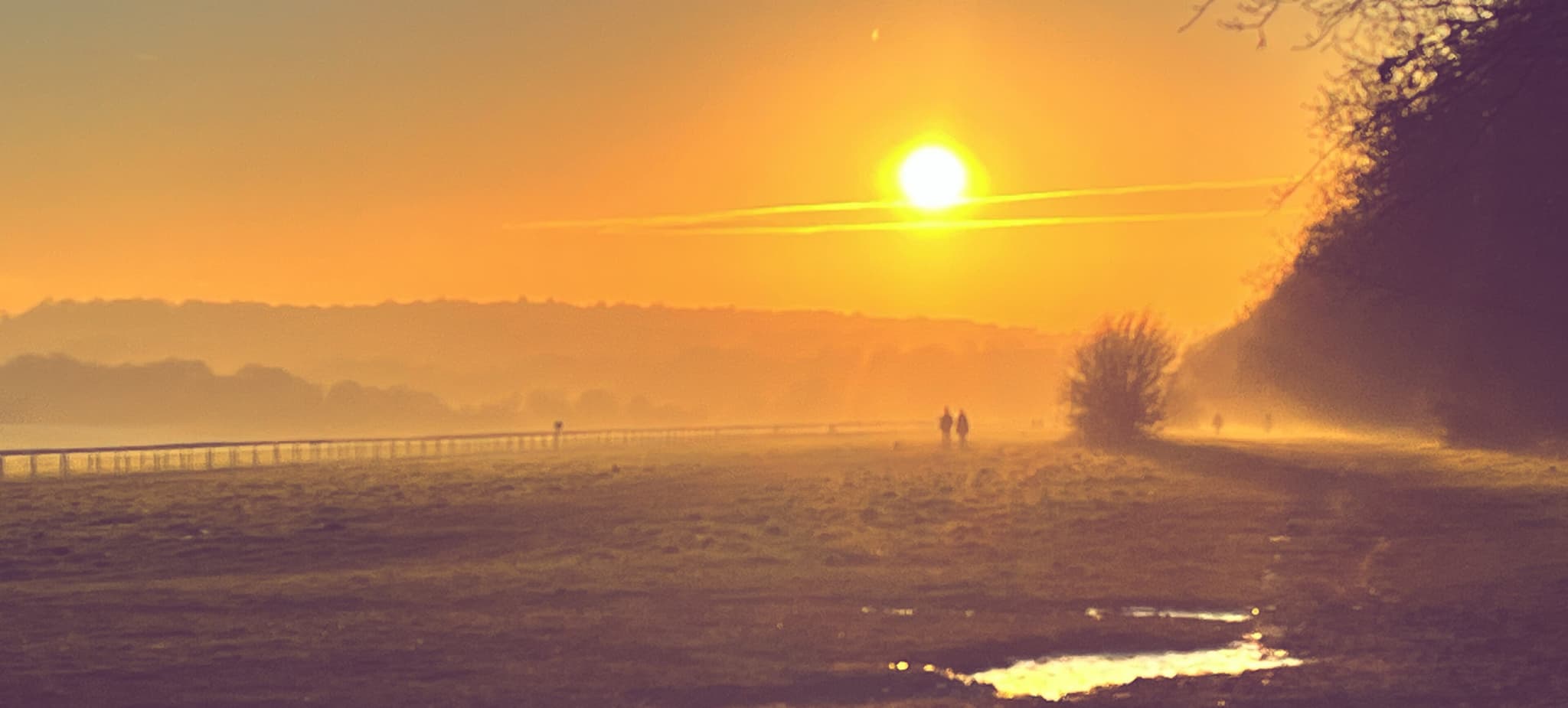
Epsom Downs today is not purely a commercial sporting venue. It is common land, a nature reserve, and a public recreational space that happens to host one of the world's most famous races. Dog walkers use the course early in the mornings. Joggers follow the same turf that Derby winners have crossed for 245 years. The golfers on the adjacent club and the horse trailers arriving for exercise share the same road.
This dual character, public and commercial at once, is something Epsom manages continuously. The racecourse has to function as a major sporting venue while operating on land it doesn't fully control. The fact that this has worked for so long is a function of the common land framework and the course's willingness to work within it rather than against it.
The Hill on Derby Day
Every June, the Hill fills with people who pay nothing to be there. They arrive by train, by car, and on foot, carrying picnics and portable radios. The view from the Hill is not the best view of the racing. The horses are distant, and the finish line is at the far end of the straight. But that has never been the point. The Hill is about being present at the Derby, being part of the crowd, being there. It was true when Dickens described the scene in 1851 and it remains true now.
This free-entry tradition is one of the things that separates the Derby from every other major British racing event. The Royal Ascot crowd is entirely within paid enclosures. Cheltenham is ticketed. The Grand National at Aintree is managed. Only at Epsom can you watch a Classic race without spending a penny, and the legal basis for that is the common land designation that has existed since long before any of the current infrastructure was built.
Epsom in the Context of British Racing
The full picture of what Epsom represents to British racing only makes sense when you look at the other great courses alongside it. Ascot has its Royal meeting, Cheltenham its Gold Cup week, Aintree its National. Each has a single defining occasion. Epsom has two Classics, the Derby and The Oaks, plus the historical depth that comes from nearly two and a half centuries of the most important flat race in Britain being run on the same course, on the same stretch of Surrey chalk, in the same month of every year.
For the full picture of what the course offers today, see our Epsom Downs complete guide.
Frequently Asked Questions
When was the Derby first run?
The Derby was first run on 4 May 1780. It was contested over a mile and a half at Epsom and was open to three-year-old colts and fillies. The race was named after the 12th Earl of Derby, who had established The Oaks at the same course the previous year. The Derby has been run at Epsom in every year since 1780, with the exception of the two world wars when it was relocated to Newmarket.
Why is the race called "The Derby"?
The race is named after the 12th Earl of Derby, who was involved in its creation alongside Sir Charles Bunbury. The two men wanted to name the new race after one of them and decided the matter by tossing a coin, or by some accounts, by Bunbury deferring to the Earl out of modesty. Either way, Lord Derby won the naming rights. The word "derby" has since become a generic term for a major flat race for three-year-olds: the Kentucky Derby, the Irish Derby, and similar races around the world all derive their names from the Epsom original.
Who won the first Derby?
The first Derby, in 1780, was won by Diomed, owned by Sir Charles Bunbury, the man who didn't get the race named after him. Diomed was a bay colt who carried Bunbury's colours to a clear victory. He was later sold to the United States, where he won further races and contributed to American thoroughbred breeding. His victory gave the Derby's history an ironic beginning that racing writers have been noting ever since.
What happened in the 1913 Derby?
The 1913 Derby is remembered primarily for the intervention of Emily Wilding Davison, a suffragette who stepped onto the course at Tattenham Corner during the race and was struck by King George V's horse, Anmer. She died four days later. The race itself had a turbulent conclusion: Craganour crossed the line first but was then disqualified following a stewards' inquiry, with the 100/1 outsider Aboyeur awarded the race instead. The stewards' decision remains one of the most controversial in the Derby's history. Davison's action, captured on newsreel film, became one of the defining images of the suffragette movement.
Which Derby winner went on to the greatest legacy?
Galileo, who won the 2001 Derby, has had the most significant impact of any Derby winner in the modern era. His stud career at Coolmore produced Frankel, widely considered the greatest racehorse of the post-war period, along with Enable, who won eleven Group Ones including two Prix de l'Arc de Triomphe, and numerous other Group One winners across Europe and beyond. Sea The Stars, the 2009 Derby winner, has also had a considerable stud career, though Galileo's breadth of influence across more than two decades of European racing is unmatched by any other Classic winner of recent times.
Has the Derby ever been run outside Epsom?
Yes, twice. During the First World War, the Derby was moved to Newmarket and run there from 1915 to 1918. It returned to Epsom in 1919. During the Second World War, it moved to Newmarket again from 1940 to 1945, returning to Epsom in 1946. On both occasions, the disruption was a direct result of the Epsom course being requisitioned for military use. In every other year of its history since 1780, the Derby has been run at Epsom.
Share this article
More about this racecourse
All Epsom Downs guides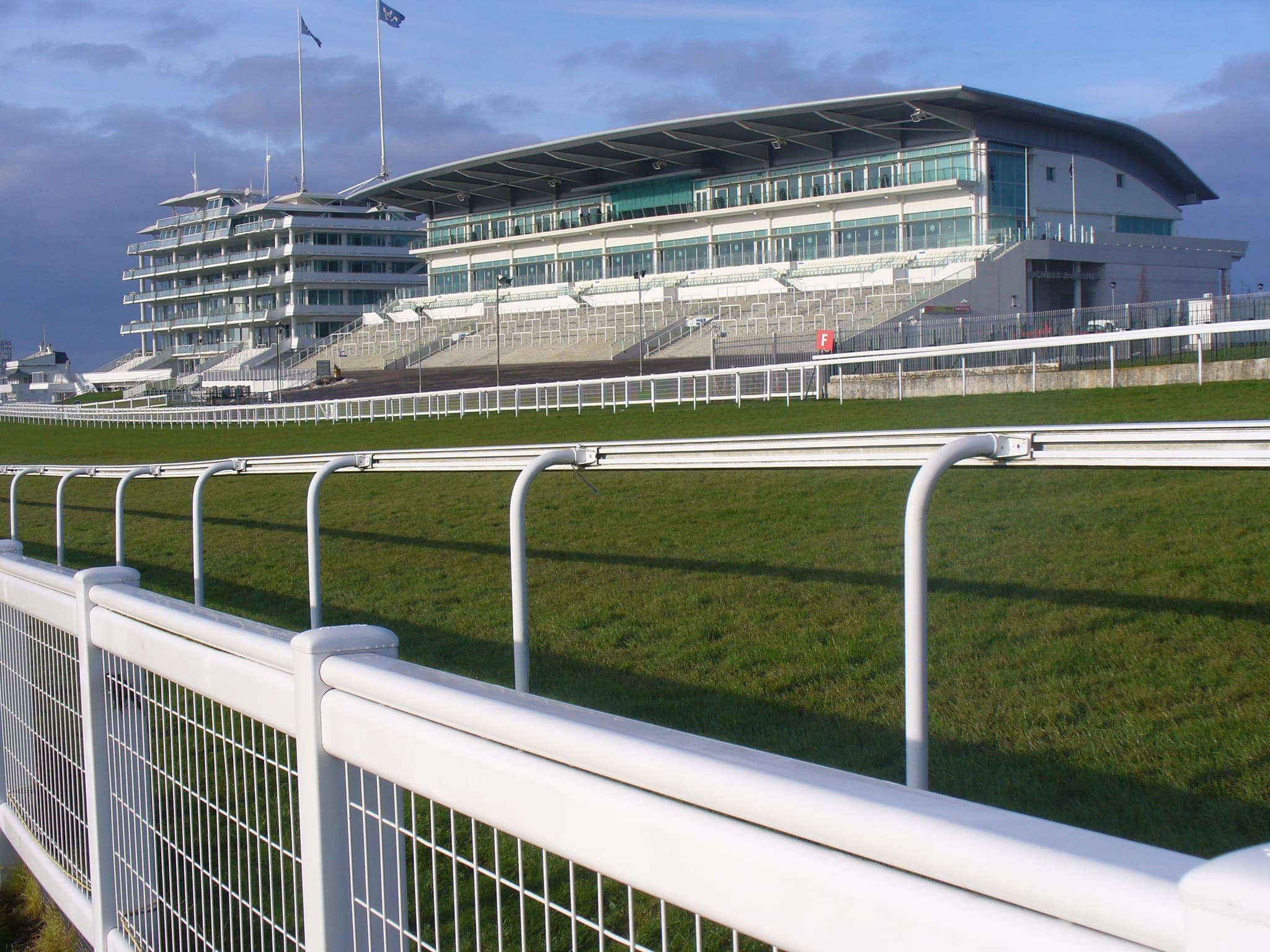
Nijinsky at Epsom: The Last Triple Crown
Nijinsky's 1970 Derby victory at Epsom was the centrepiece of the last Triple Crown in British racing history. Here's the full story of the greatest Flat horse of his era.
Read more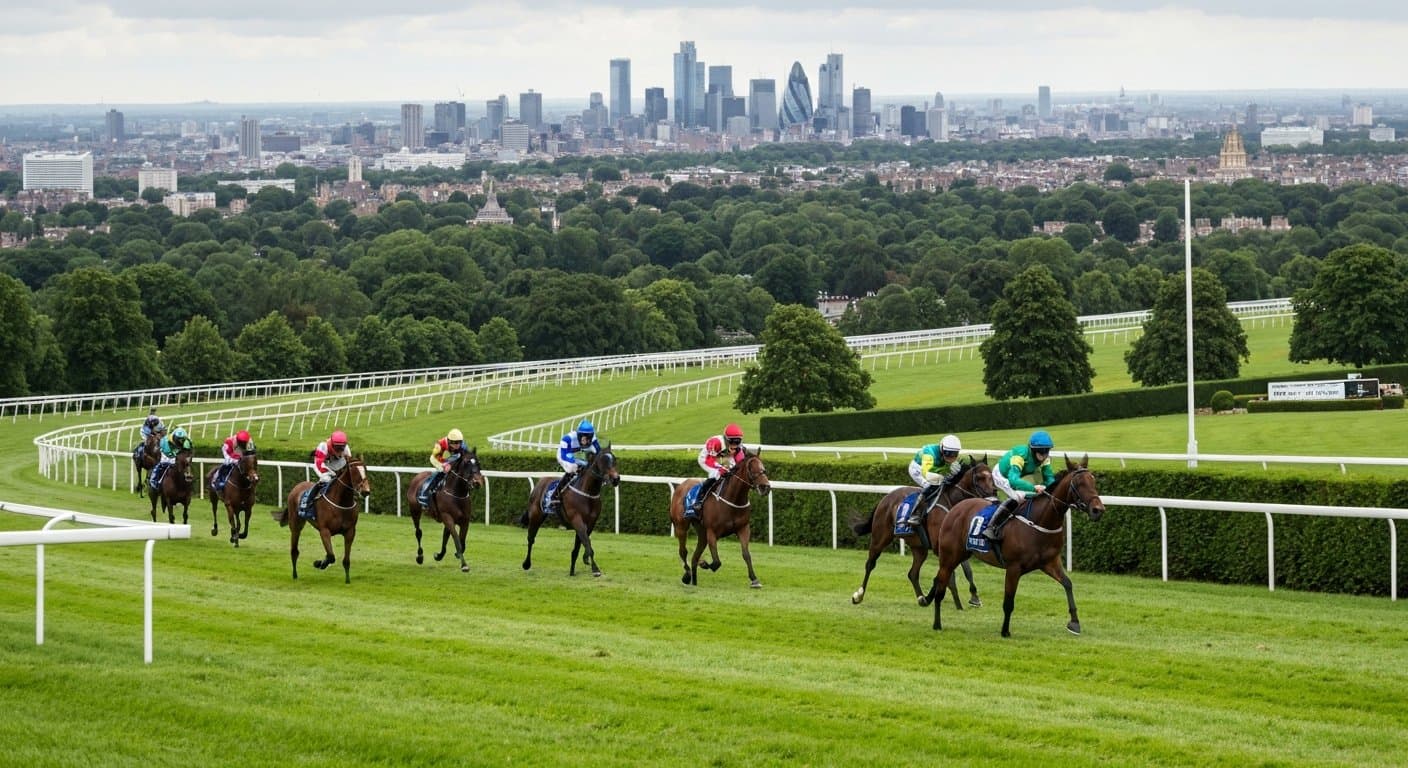
Oaks Day at Epsom Downs
Your guide to Oaks Day at Epsom — the fillies' Classic, its history, great winners, the supporting card, and tips for the day.
Read more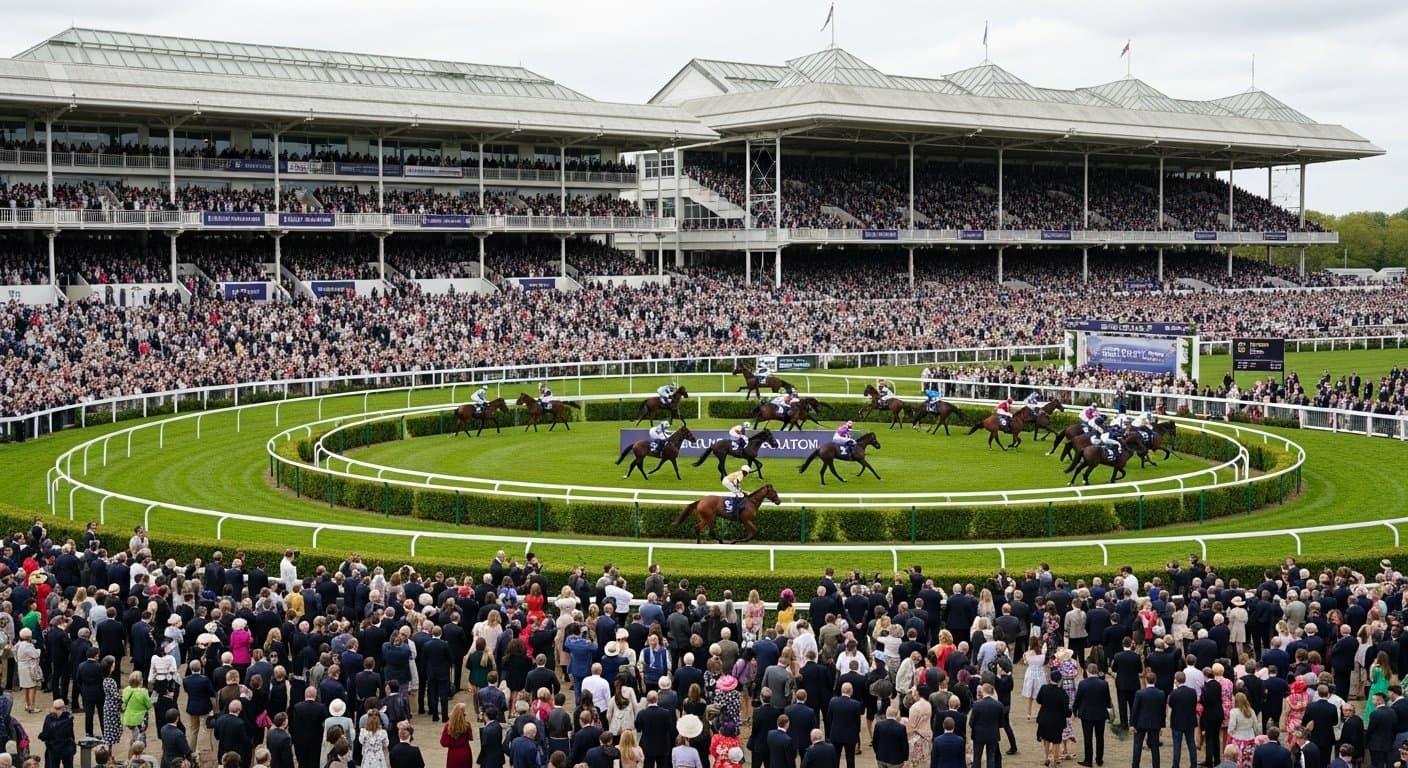
The Coronation Cup at Epsom: Complete Guide
The Coronation Cup is one of Epsom's oldest and most prestigious races — a Group One for older horses run on Derby day. Here's everything you need to know.
Read morePhotos on this page are used under Creative Commons licences. Titles, sources and licence links for each one are on our image credits page.
Betting offers for Epsom Downs
Gamble Responsibly
Gambling should be entertaining and not seen as a way to make money. Never bet more than you can afford to lose. If you or someone you know has a gambling problem, help and support is available.