Founder & Editor · Last reviewed 2026-07-13
Racing in the Ballinrobe area is recorded as far back as 1774, which makes this small Co. Mayo town one of the oldest racing locations in Ireland. The horses have not been on the present site for quite that long. Racing settled at the current course in 1921, when the land was bought, and it has stayed there ever since. In 2021 the course marked its centenary on that ground.
Two dates, then, sit side by side in any honest account of Ballinrobe: a town that has watched racing for around two and a half centuries, and a racecourse on its present patch that turned a hundred in 2021. Both matter, and this article keeps them separate rather than blurring them into a single tidy founding year.
Ballinrobe is Mayo's only racecourse and one of just four in Connacht. It is a dual-code venue, staging Flat and National Hunt racing on turf, and it runs most of its meetings in the summer evenings. None of that scale suggests a track that shapes the sport nationally, yet Ballinrobe has a habit of launching horses who go on to do exactly that. Tiger Roll ran his first chase here. Dorans Pride made his racecourse debut here. The course has leaned into that identity, naming a race after Tiger Roll and drawing the biggest yards in Irish jumping to its feature day.
This history follows the course from those early recorded meetings through the move to the present site in 1921, the storm-driven redevelopment of the 1990s, and the rise of the McHale Mayo National into the course's showpiece. It looks at the great horses whose stories touched Ballinrobe, the people who run and dominate the fixtures, and what the record book does and does not tell us about a tight track before Lough Carra and the Partry Mountains.
Use the links below to jump to a section:
Racing in Ballinrobe
The earliest thread of Ballinrobe's racing story is a date rather than a full account. Racing in the Ballinrobe area is recorded as far back as 1774, which places organised sport with horses in this corner of Mayo among the oldest in the country. What the record gives us is the fact of racing near the town in the late 18th century, not a running order or a founding committee. That distinction is worth keeping. It is easy to reach back to a heritage of more than two centuries and dress it up with detail that was never written down, and this account does not do that.
From the Town to the Present Site
For most of that long span the racing and the exact ground it used are not the same story. The present course, the one that stages the McHale Mayo National and the summer evening cards, dates from 1921. That was the year the land was purchased and racing settled where it runs today, about two kilometres outside Ballinrobe town. So while meetings around the town go back to 1774, the racecourse on its current site has a cleaner and more recent starting point.
The course celebrated its centenary in 2021, one hundred years on from that 1921 move. To mark the occasion it published an anthology titled A History in the Making, curated by local historian Averil Staunton. That the town chose a written history for its hundredth birthday says something about how the place sees itself, as a course rooted in a specific community rather than a commercial venue that happened to land in Mayo.
Mayo's Only Racecourse
Ballinrobe holds a distinction that shapes its whole character: it is the only racecourse in Co. Mayo, and one of only four in the province of Connacht. For a county of Mayo's size that scarcity gives the course a pull it might not otherwise have. When racing comes to Ballinrobe, it is the racing for a wide stretch of the west, and the summer meetings draw crowds accordingly.
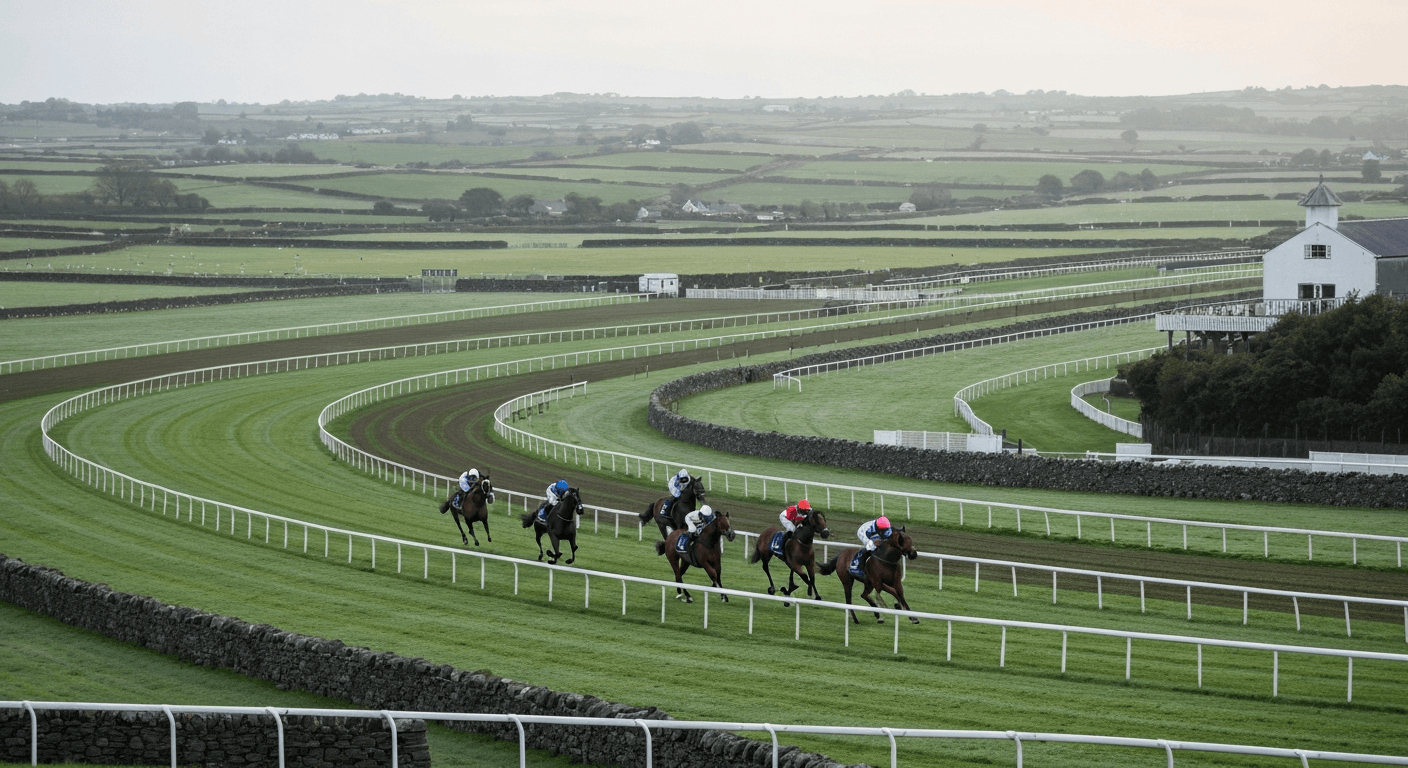
The physical course itself is a slightly elevated, right-handed oval, described variously as about a mile to a mile and one furlong round. It is a tight track with a very short run-in of just over a furlong, set in a natural amphitheatre before Lough Carra and the Partry Mountains. That setting, with the grandstand looking down over every stride, is as much a part of the course's identity as any race on the card.
What the Early Record Does Not Say
It is honest to note where the trail runs thin. The 1774 date tells us racing existed near the town; it does not hand us a first meeting, a founding body or a list of early winners on the present ground. The firmer history begins in 1921 with the move to the current site, and it is from there that the course's continuous story can be traced with confidence. The years between are part of Ballinrobe's long racing heritage, but they are heritage rather than a documented running record, and this history treats them as such.
The McHale Mayo National and the Course's Big Races
For most of its history Ballinrobe was a well-liked country track without a race of national standing. That changed in 2014, when the course introduced the McHale Mayo National. In a little over a decade it has grown into the course's showpiece and given Ballinrobe a fixture the biggest yards target every May.
The McHale Mayo National
The McHale Mayo National is a Listed handicap chase run over about 2m7f, officially 2m7½f, for horses aged four and older. It is the centrepiece of McHale Raceday, a seven-race evening card held in late May and broadcast live on TG4's Rásaí Beo. The race was first run in 2014 and has been sponsored throughout by McHale, the Ballinrobe-based agricultural-machinery firm the course describes as good neighbours.
The defining milestone came in 2020. As Ballinrobe chairman Kenneth Murphy put it, "In 2020, the McHale Mayo National became our first ever listed race and now it is worth fantastic prize-money." That grade change lifted the race above ordinary summer handicap company, and the prize fund climbed with it. Recent runnings have been promoted as a €100,000 showpiece.
The race also earned a reputation as a springboard. Western Fold, the 2025 winner, went on to take the Tote Galway Plate and end the season a Grade 1 winner at Punchestown, exactly the kind of upward story the meeting likes to tell about itself.
Roll of honour
| Year | Winner | Trainer | Jockey |
|---|---|---|---|
| 2014 | Sammy Black | Anthony Mullins | Danny Mullins |
| 2015 | Rohan's Pride | Robert Honner | Brian Hayes |
| 2016 | King Leon | Aidan O'Brien | Mark Walsh |
| 2017 | Kilcarry Bridge | John Patrick Ryan | Donagh Meyler |
| 2018 | Kaiser Black | P M J Doyle | Jack Kennedy |
| 2019 | Peregrine Run | Peter Fahey | Kevin Sexton |
| 2020 | Doctor Duffy | Charles Byrnes | Kevin Brouder |
| 2021 | Agent Boru | Thomas Gibney | Phillip Enright |
| 2022 | Rock Road | Willie Mullins | Kieran Callaghan |
| 2023 | Tullybeg | Gordon Elliott | Danny Gilligan |
| 2024 | Duffle Coat | Gordon Elliott | Sam Ewing |
| 2025 | Western Fold | Gordon Elliott | Danny Gilligan |
| 2026 | Native Speaker | Henry de Bromhead | Darragh O'Keeffe |
Gordon Elliott is the race's most successful trainer, winning three in a row from 2023 to 2025. His bid for a fourth straight win failed in 2026, when Henry de Bromhead's Native Speaker made all and beat Conyers Hill by seven lengths. Among jockeys, Danny Gilligan has two wins, in 2023 and 2025. No horse has won the race twice.
The Rest of the Big-Race Card
McHale Raceday carries more than the National. The McHale Mayo Hurdle, a handicap hurdle over about 2m6½f worth €30,000, runs on the same card; Digby won it in 2025 at 18/1, a year after Baltic Bird took the 2024 running. The card also stages the McHale Tiger Roll Beginners Chase, named in honour of the horse who recorded his first win over fences at Ballinrobe in 2016. Willie Mullins won the 2025 running with Westport Cove, ridden by Paul Townend for local owner Cathal Hughes of Westport.
Older cards featured the Coranna Handicap Hurdle, historically one of the course's two most valuable races at €30,000 and run on the Tuesday of the old two-day late-May meeting. It no longer appears on current cards and seems to have been discontinued or renamed; the Coranna name now attaches to the course's premier restaurant and hospitality package rather than a race.
Legendary Horses
Ballinrobe's claim on racing history is not about championship days decided on its turf. It is about beginnings. Two horses in particular ran early, career-launching races here before going on to the sport's biggest stages, and that pattern of the small western track as a nursery for future champions is central to how Ballinrobe sees itself.
Tiger Roll
Tiger Roll's link to Ballinrobe is the course's single strongest story. The horse who would win back-to-back Grand Nationals made his chasing debut here, in a beginners' chase over 2m1f on 31 May 2016. Ridden by the then conditional jockey Jack Kennedy and sent off at 5/2, he ran out a comfortable eight-length winner. It was a modest evening's work at a country track, and it was the first fence win of a career that ended up among the most celebrated in modern jumping.
From that Ballinrobe start Tiger Roll built an extraordinary record. He won the Grand National in both 2018 and 2019, the first horse to take the Aintree marathon in consecutive years since Red Rum in 1973 and 1974. At the Cheltenham Festival he won five times, a tally bettered only by Quevega and equalled by Golden Miller. Ballinrobe has kept the connection alive by renaming that 2016 beginners' chase the McHale Tiger Roll Beginners Chase, run each year on McHale Raceday.
Dorans Pride
The parallel story belongs to Dorans Pride, and it runs more than two decades deeper. Dorans Pride made his racecourse debut at Ballinrobe on 19 April 1993, winning his only start in a bumper. Sent off the 100/30 favourite and ridden by amateur Mr B Moran, he won by a length and a half from Ifallelsefails in a field of eighteen on soft ground. Like Tiger Roll, he began at Ballinrobe and went on to the top.
Dorans Pride became one of the defining staying jumpers of the late 1990s. He won the Stayers' Hurdle at the 1995 Cheltenham Festival and a string of Grade 1 chases, and he finished third in the Cheltenham Gold Cup in both 1997 and 1998. His story ended in tragedy: he was killed in a fall in the Foxhunter Chase at the Cheltenham Festival on 13 March 2003, aged thirteen. He is commemorated by the Dorans Pride Novice Hurdle at Limerick, which carries his name. That a horse of his standing had his very first run at Ballinrobe is a point of quiet pride for the course.
Others Who Passed Through
Two more names round out the picture, and both should be described for exactly what the record supports. Wicklow Brave, who won the Irish St Leger in 2016, also won at Ballinrobe; his chase debut came here in 2019. And Western Fold, the 2025 McHale Mayo National winner, used his Ballinrobe success as a launching point for the Tote Galway Plate and a Grade 1 win at Punchestown later that season.
The care worth taking with a section like this is not to claim Ballinrobe wins these horses did not have. Tiger Roll's Grand Nationals and Cheltenham haul, Dorans Pride's Stayers' Hurdle, Wicklow Brave's Irish St Leger: those were won elsewhere. What Ballinrobe can honestly claim is the start. In several notable cases, the first winning line on a great horse's page was written on this tight Mayo oval.
Legendary People
A country course lives on the people who run it and the yards who keep coming back. Ballinrobe's recent history is shaped by a small cast of trainers, officials and a sponsor whose names recur across every big card.
The Trainers Who Dominate
Two men set the standard over jumps at Ballinrobe: Gordon Elliott and Willie Mullins. Both dominate the fixtures, and both have their names on the McHale Mayo National. Elliott is the outstanding figure in the course's headline race, winning it three years running from 2023 to 2025 with Tullybeg, Duffle Coat and Western Fold. His connection to the course runs deeper still, since Tiger Roll, whose Ballinrobe chase debut gave the beginners' chase its name, was trained by Elliott.
Willie Mullins took the National in 2022 with Rock Road and remains a constant presence, winning the 2025 Tiger Roll Beginners Chase with Westport Cove under Paul Townend. Between them, Elliott and Mullins account for much of the strongest recent form at the course, and Paul Townend and Willie Mullins in particular post the sort of jockey-and-trainer strike rates that mark them out on the card.
The People Behind the Course
Manager John Flannelly is the public face of Ballinrobe, the name attached to the course's raceday news and its promotion of the summer fixtures. For more than two decades the Clerk of the Course was Lorcan Wyer, who oversaw racing at Ballinrobe for over twenty years before stepping back in 2025. His long tenure gave the course a steady hand through much of its modern growth.
The centenary in 2021 brought another name to the fore: local historian Averil Staunton, who curated A History in the Making, the anthology the course published to mark its hundredth year on the present site. That the hundredth birthday was celebrated with a written history rather than simply a big raceday says a good deal about how Ballinrobe values its own story.
The Sponsor and the Broadcaster
No account of Ballinrobe's modern era is complete without McHale, the Ballinrobe-based agricultural-machinery manufacturer that has sponsored the Mayo National since its 2014 launch and lends its name to the course's biggest day. It is a genuinely local partnership, the town's own firm backing the town's own race.
Exposure has come through TG4, whose Irish-language racing programme Rásaí Beo has broadcast McHale Raceday for several consecutive years, carrying a Mayo evening card to a national audience. Together the local sponsor and the national broadcaster have turned what was a country meeting into a fixture with a reach well beyond Connacht.
Records and Stats
A record book is only as good as its sources, and Ballinrobe's has a notable gap. Authoritative all-time course-record times by distance are not published in any accessible source. Rather than quote a figure that cannot be stood behind, this section leaves that line blank and sticks to what the record does support.
What Can Be Counted
The firmest numbers belong to the McHale Mayo National, where per-running times and connections are on record. The fastest recorded running was the inaugural 2014 renewal, when Sammy Black won in 5:33.70. The slowest was 2021, when Agent Boru got home in 6:16.50, a gap that reflects how much the going and tempo can vary on a summer evening at a tight track.
The trainer and jockey records for the race are equally clear. Gordon Elliott holds the trainer record with three wins, taken in consecutive years from 2023 to 2025. Danny Gilligan leads the jockeys with two, in 2023 and 2025. No horse has won the race more than once.
| Record | Detail |
|---|---|
| All-time course-record times by distance | Not published in an accessible source (n/a) |
| Fastest McHale Mayo National | 5:33.70, Sammy Black (2014) |
| Slowest McHale Mayo National | 6:16.50, Agent Boru (2021) |
| Leading National trainer | Gordon Elliott, 3 wins (2023 to 2025) |
| Leading National jockey | Danny Gilligan, 2 wins (2023, 2025) |
| Horses to win the National twice | None |
Course Character in the Numbers
The shape of the track leaves its own statistical fingerprint. Ballinrobe is a tight, right-handed oval with a very short run-in of just over a furlong, and the closing stretch runs downhill after an uphill back straight. That favours speedier, prominent racers over out-and-out stayers, and on the Flat a low draw plus an early, prominent position tends to help around the sharp turns. Over jumps the chase course uses an outer loop that adds about two furlongs and rides fairer than the tight inner track.
Historically the course has thrown up form patterns worth noting as description rather than instruction. On the Flat, favourites have shown a level-stakes profit across the samples analysed here, particularly in non-handicaps, and yards such as Aidan O'Brien, Dermot Weld, Jessica Harrington and Willie Mullins post high strike rates. These are historical patterns drawn from limited samples, not predictions. Across racing as a whole, backing favourites loses money to starting price over time, and no staking system or reliance on the favourite is profitable in the long run.
Atmosphere and What Ballinrobe Means
Ballinrobe's character comes as much from where it sits as from what runs there. The course occupies a natural amphitheatre before Lough Carra and the Partry Mountains, and the grandstand looks down over the whole oval, giving a view of every stride. It is a setting that turns an ordinary summer evening card into something people travel for.
A Summer Evening Course
Most of Ballinrobe's racing happens in the evenings between April and September, and that rhythm shapes the feel of the place. This is relaxed country racing rather than a metropolitan meeting, with popular summer evening fixtures that draw a wide crowd from across the west. As Mayo's only racecourse, and one of just four in Connacht, Ballinrobe carries a regional pull that a course in a busier racing county would not, and its big days regularly sell out.
The calendar highlight is McHale Raceday in late May, a Monday evening card built around the McHale Mayo National. It draws the leading yards, from Elliott and Mullins to de Bromhead, and its live TG4 coverage on Rásaí Beo gives a Mayo evening a national audience. The two-day July festival is the other pillar of the year, a hugely popular summer meeting with a family-day atmosphere and, on its second evening, a Race Dance in the Mask Pavilion.
A Course That Knows Its Own Story
Ballinrobe has a clear sense of its identity, and it has put that on the record. For its centenary in 2021 the course published A History in the Making, an anthology curated by local historian Averil Staunton, choosing to mark a hundred years on the present site with a written history of the place. That instinct, to record and celebrate its own past, runs through how the course presents itself.
Recognition has followed. Ballinrobe was named Racecourse of the Year in 2012 by the Irish Racegoers Consultative Forum, and again in 2023 by Horse Racing Ireland, a rare double for a small country track. Live music often follows racing in the pavilion, and the whole offer, from the scenic setting to the summer evenings to the relaxed welcome, adds up to a course that trades on being exactly what it is: Mayo's racecourse, comfortable in its own skin.
The Modern Era
The modern Ballinrobe was shaped by a storm. In 1992 the main stand was damaged, and rather than simply patch it the course used the moment to rebuild. That redevelopment turned a modest country track into the well-appointed venue that hosts the McHale Mayo National today.
Rebuilding After the 1992 Storm
The centrepiece of the rebuild was a new grandstand, put up along with a new boundary wall, turnstiles and sanitary facilities. The stated capacity of that grandstand is 1,800, though this figure comes from third-party course guides referencing the 1990s development rather than from the course's current official site, so it is best treated as an approximate legacy figure rather than a confirmed present-day number.
The work did not stop at the stand. Over the following years the course added improved banking, a new ambulance track, upgraded stables, and new steward and jockey facilities, followed later by a new pavilion and restaurant. The most recent addition came in 2024, when a new catering facility for stable staff and trainers was opened. Taken together, these projects steadily modernised the course while keeping its intimate, natural-amphitheatre character intact.
The Course Today
Ballinrobe is operated by the Ballinrobe Race Committee and stages ten fixtures in 2026, spread across the season from April to September; older guides list nine, reflecting the gradual growth of the calendar. Most of those meetings run in the evenings, and the course offers stabling for 108 horses. It remains a dual-code venue on turf, with no all-weather surface, staging a mix of competitive Flat and jumps racing.
For a small track, it has drawn notable recognition. Ballinrobe was named Racecourse of the Year in 2012 by the Irish Racegoers Consultative Forum, and again in 2023 by Horse Racing Ireland. Those awards, a decade apart, bracket the period in which the McHale Mayo National grew from a new race in 2014 into the course's Listed showpiece.
The near-term direction of travel is more of what has worked. The National has climbed in grade and prize money, the July festival remains a popular two-day fixture, and the course continues to attract the country's leading jumps yards to a Mayo evening. Ballinrobe enters its second century on the present site as what it has long been, a compact country course that keeps a firm place in the Irish summer calendar and, now and then, sends a future champion on its way.
Frequently Asked Questions
Share this article
More about this racecourse
All ballinrobe guides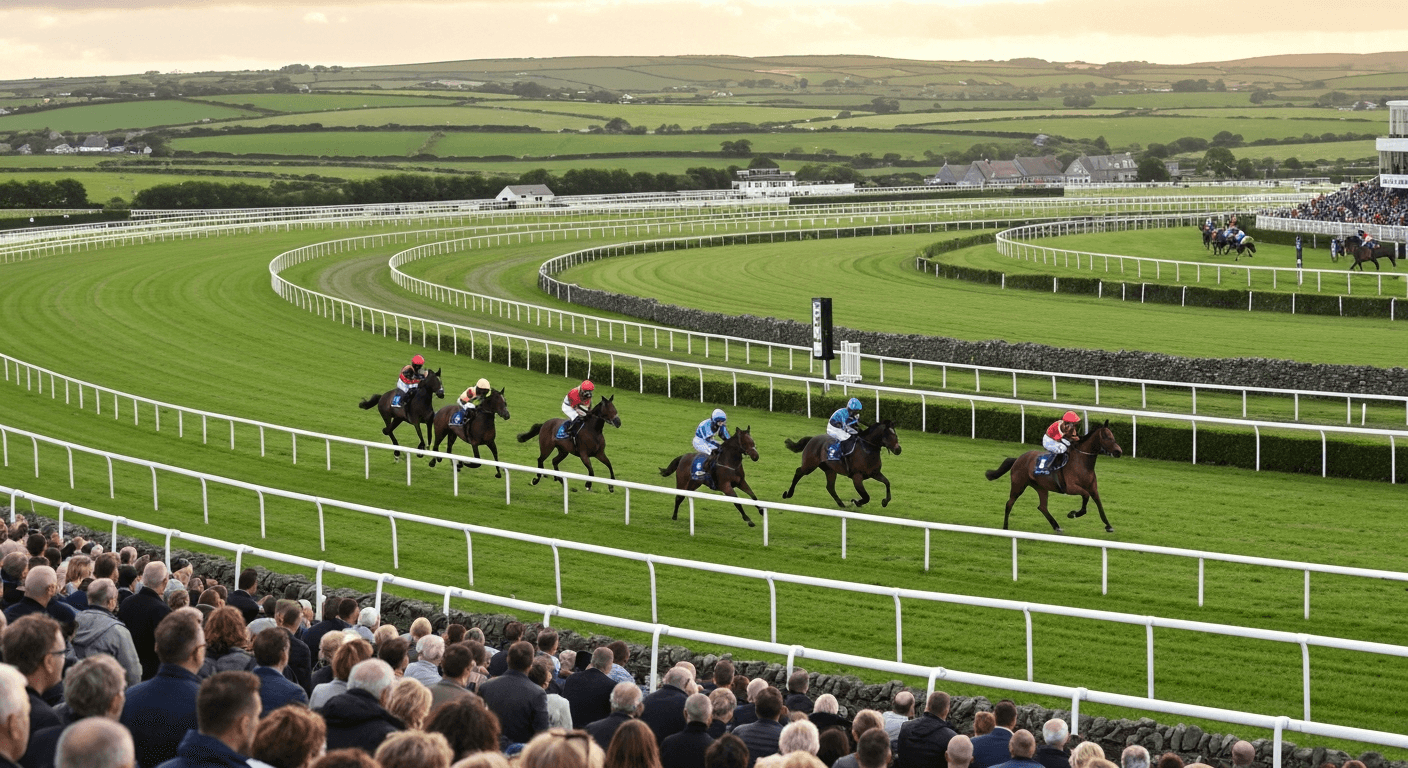
Ballinrobe Racecourse: The Complete Guide
Ballinrobe Racecourse guide: Co. Mayo dual-code course, home of the McHale Mayo National and Tiger Roll's first chase win, plus tickets and travel.
Read more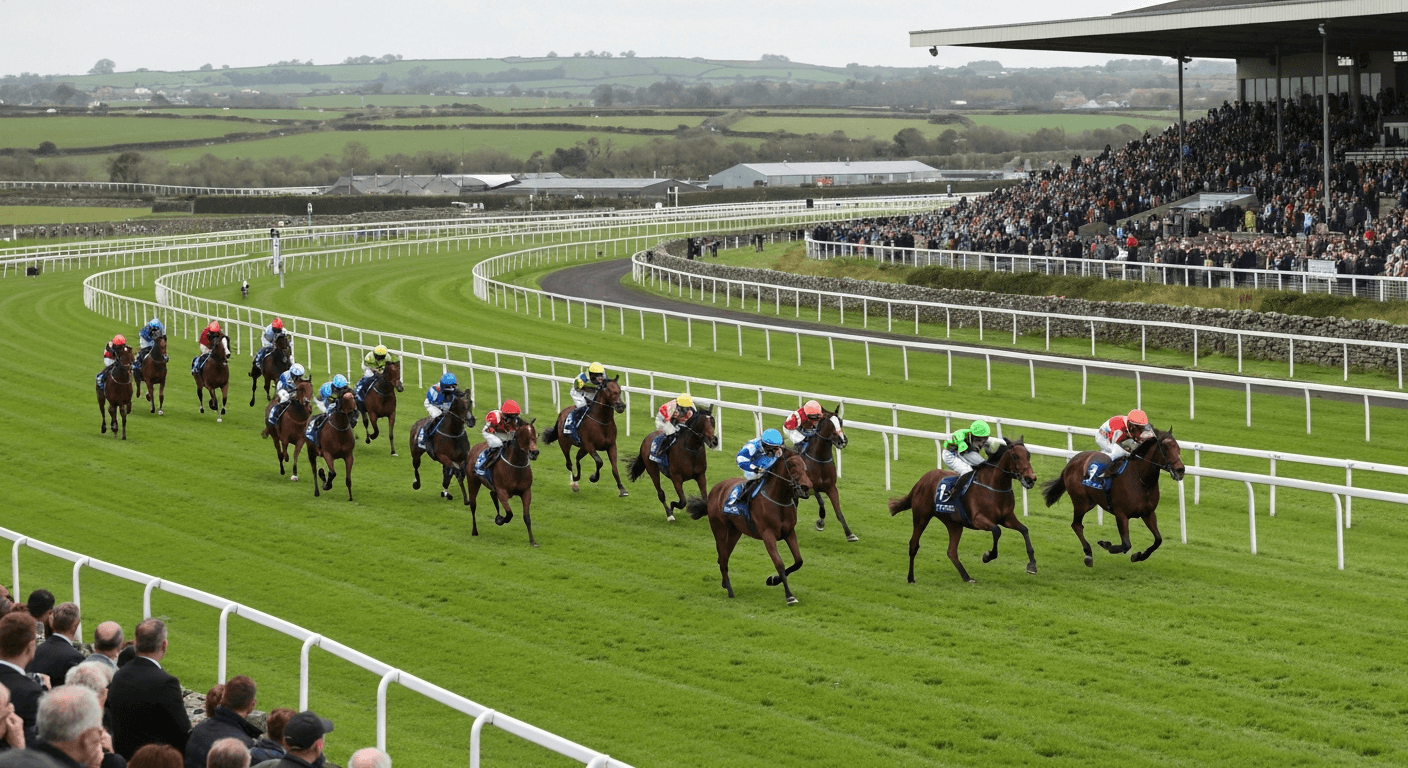
McHale Mayo National Day at Ballinrobe: The Complete Guide
A guide to McHale Raceday at Ballinrobe: the Listed McHale Mayo National handicap chase in late May, its roll of honour, its place on the card and how to watch.
Read more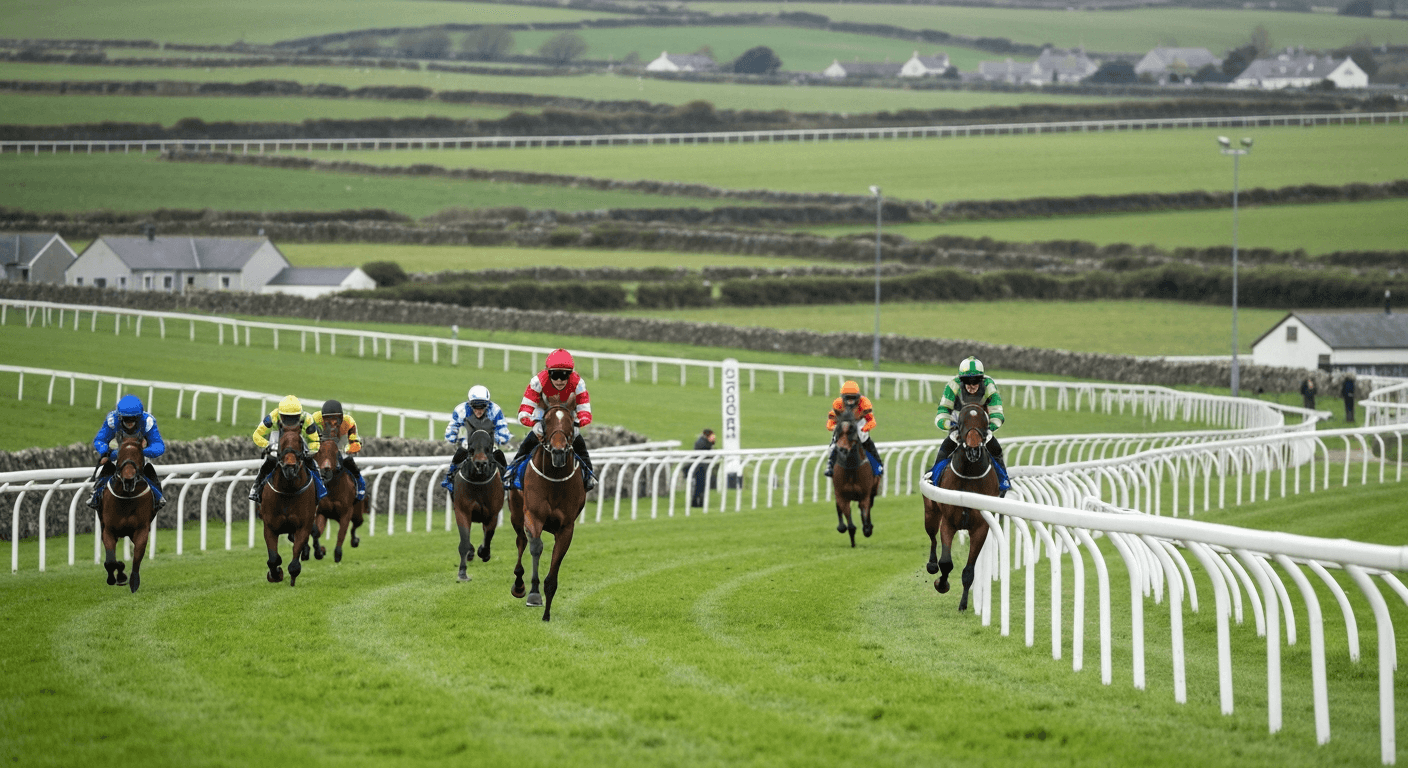
Tiger Roll at Ballinrobe: The Complete Story
How Tiger Roll ran his first-ever chase at Ballinrobe in 2016, winning by eight lengths, and how the Co. Mayo track named its beginners chase after him.
Read moreGamble Responsibly
Gambling should be entertaining and not seen as a way to make money. Never bet more than you can afford to lose. If you or someone you know has a gambling problem, help and support is available.