
Founder & Editor · Last reviewed 2026-07-08
Introduction
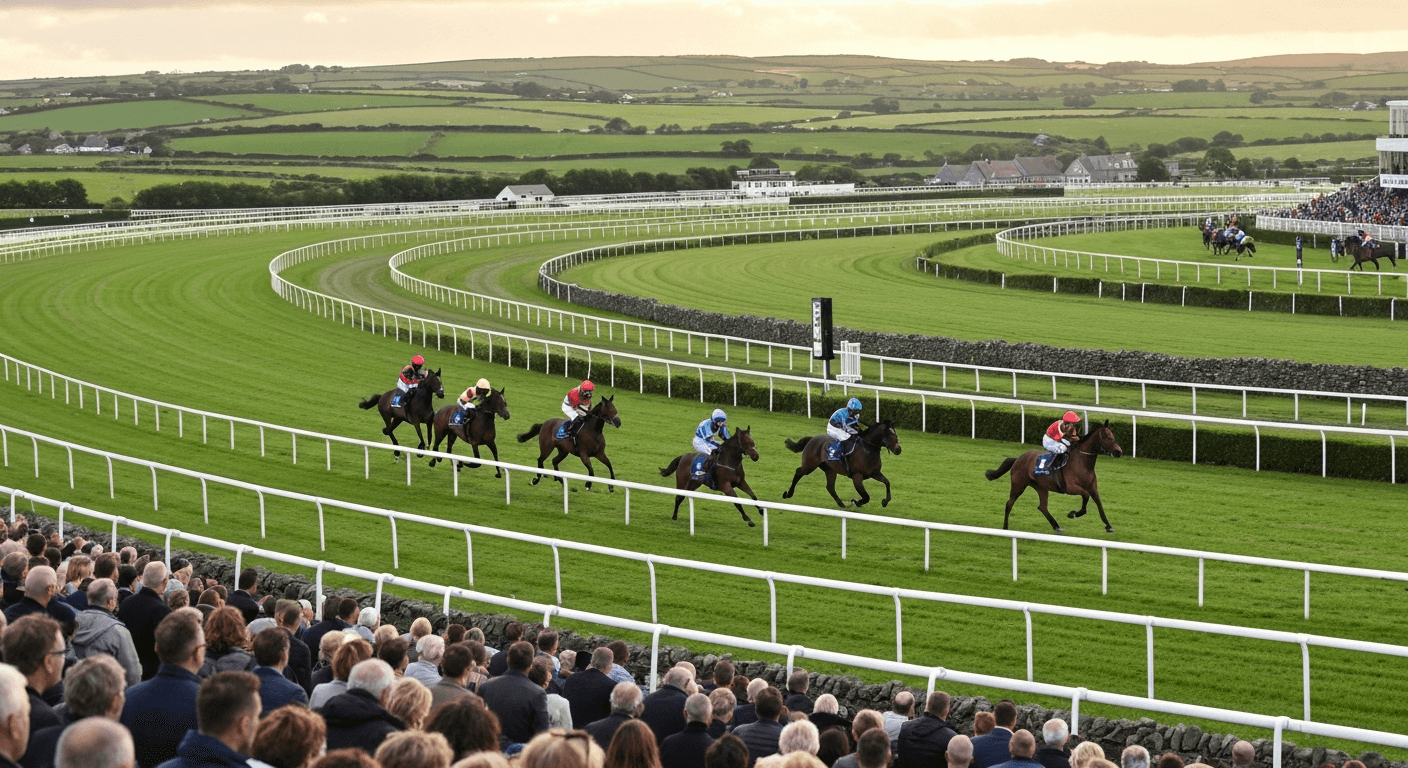
Ballinrobe Racecourse sits about 2km outside Ballinrobe town in Co. Mayo, on the N84 Castlebar road, with Lough Carra and the Partry Mountains as its backdrop. It is Mayo's only racecourse and one of just four in Connacht, a dual-code venue that stages both Flat and National Hunt racing on turf, with no all-weather surface. The course runs 10 fixtures across the 2026 season, from April to September, most of them relaxed summer evening meetings. Its standing is well recorded: it was named Racecourse of the Year in 2012 and again in 2023.
The track is a slightly elevated, tight right-handed oval of about one mile to 1m1f, with a very short run-in of just over a furlong and a downhill closing stretch that favours speedier, prominent types. Flat races and hurdles use the inner loop, while chases switch to an outer loop that adds roughly two furlongs. More on the shape and its biases sits in the track.
Racing in the Ballinrobe area is recorded as far back as 1774, making it one of Ireland's oldest racing locations, and the present venue has staged racing since 1921, when the land was purchased. The course marked its centenary in 2021. The full story, including the 1992 storm that reshaped the grandstand, is in history.
This guide covers the venue in full, section by section.
Where to Bet
Place your bets with a trusted, licensed bookmaker.

Promo code BETFRED50. New customers only. Register, deposit with a Debit Card, and place a first bet of £10+ at Evens (2.0)+ on Sports, to be settled within 7 days, to get £30 in Sports Free Bets and £20 in Bet Builder Free Bets within 24 hours of settlement. 7-day expiry. Eligibility & payment exclusions apply. Full T&Cs apply. Take Time to Think. BeGambleAware.org. 18+. Full T&Cs.

Promo code R30. New UK customers only, 18+. Register, deposit £10 or more, then place a £10 single cash bet at odds of 1/2 (1.5) or greater on any sports market (excluding Virtuals). Once the qualifying bet settles you get £30 in Free Bets (3 x £10) — the qualifying bet can win or lose. Free Bets are valid on any sports market excluding Virtuals, expire in 7 days, are non-withdrawable and must be used in full. Excluded deposit methods apply (including PayPal, Apple Pay, Skrill and NETELLER). Named bets such as Lucky 15 do not qualify. If you cash out the qualifying bet, or it is voided, you are no longer eligible for the offer. Ends 31.12.26. Full T&Cs apply. Please gamble responsibly. BeGambleAware.org. 18+. Full T&Cs.

Promo code BET40GET20. New UK customers, 18+. Register with the code and place a first bet of £40 or more at Evens (2.0) or greater. Receive 2 × £10 free bets: the first credited automatically once the qualifying bet settles, the second 24 hours later. Free bets must be placed at minimum odds of 4/1 (5.0), expire 24 hours after credit, and the free-bet stake is not returned with winnings. Debit card deposits only. Take Time to Think. BeGambleAware.org. 18+. T&Cs apply. Full T&Cs.

50% of your first-day net losses refunded as a free bet, capped at £25. New UK customers aged 18+ only. To qualify, deposit and place a first bet of £10 or more on any sport at minimum odds of evens (2.00), then place at least two further bets on different events, each worth at least 50% of your largest bet, all at evens (2.00) or greater. Losses are counted from your first settled bet until 23:59 the same day. Place a qualifying £10+ bet and you are guaranteed at least a £5 free bet. Bets placed at SP, void bets, cashed-out bets and bets struck with free bets do not count towards the offer. The free bet is credited the day after your qualifying bets settle and must be used within 7 days, after which it expires. It can be used at odds from 1/4 (1.25) up to 250/1 on singles and straight accumulators, but not on Trixie, Patent or Yankee style multiples. Free-bet stake is not returned with winnings. One offer per person, household, address, IP address and device. E-wallet deposits may not qualify, so check the cashier before depositing. Customers registered with GAMSTOP cannot claim. KYC identity verification must be completed before the free bet is credited. Take Time to Think. BeGambleAware.org. 18+. T&Cs apply. Full T&Cs.

New customers, 18+. Choose the sports bonus at sign-up, make a first deposit and receive a 100% bonus up to £50 in your Sports Bonus balance. To convert the bonus to cash, wager it 10x within 30 days. Single bets below Evens (2.00) do not qualify; accumulators do not qualify if any selection is below 1/2 (1.50). Virtual Sports, voided, cancelled, drawn, cashed-out and free-bet wagers do not count towards wagering. Only the first settled bet per event counts. Withdrawing before the wagering requirement is met forfeits the bonus balance including bonus winnings. Real-money funds are used before bonus funds. Deposits via Skrill or Neteller are not eligible. Not valid in conjunction with other promotions. Odds, bet and payment limits apply. 10bet general and promotion T&Cs apply. BeGambleAware.org. 18+. Full T&Cs.

New customers in Great Britain and Republic of Ireland, 18+. Place a £10 fixed-odds qualifying bet at minimum odds of 1/2 (1.50) — single or each-way (only the win part counts), pre-event or in-play, not cashed out early, within 28 days of opening the account. Receive up to £60 in bonuses credited over three days: 3 × £10 fixed-odds free bets (the first on settlement, then 24 and 48 hours later) plus 3 × £5 Total Goals FOOTBALL spread bets, 3 × £5 racing Winning Favourites spread bets and a £1 racing Race Index spread bet (the spread bets need a full spread-betting account). Free-bet stakes not returned with winnings; free bets valid 28 days from issue. IMPORTANT: the £5 credits are SPREAD bets — sports spread betting carries the risk that losses can exceed your stake. Sports spread-betting customers do not have Financial Ombudsman or FSCS recourse. Take Time to Think. BeGambleAware.org. 18+. T&Cs apply. Full T&Cs.

Promo code WELCOME15, entered under My Bonuses after registering. New UK customers, 18+. Place a first qualifying bet of at least £10 from your cash balance at odds of evens (2.0) or greater within 7 days of opening the account. Once the qualifying bet fully settles you receive £15 in free bets, credited as 3 x £5 tokens with set uses: one £5 accumulator free bet (minimum 4 legs, each leg at 2/5 or bigger), one £5 sports free bet (any market at evens or bigger) and one £5 Sub Cover free bet (selected football player markets at evens or bigger). Free-bet stakes are not returned with winnings. Free bets expire 7 days after they are credited. Void, cashed-out and partially cashed-out bets do not qualify. One offer per customer. Confirm the current terms on BetGoodwin's own welcome-offer page before claiming. Take Time to Think. BeGambleAware.org. 18+. T&Cs apply. Full T&Cs.

New UK customers, 18+. Minimum deposit £10. Place a £10 qualifying single at minimum odds of 1/2 (1.50), settled within 14 days. Receive £30 in free bets (stake not returned), split £20 for sportsbook use (2 x £10) and £10 for Bet Builder only (2 x £5); Bet Builder does not cover horse racing. Free bets must be accepted within 7 days and expire 7 days after acceptance. No promo code required. Best Odds Guaranteed on UK & Irish racing, subject to having staked over £25 in the previous seven days. Operated by LiveScore Betting and Gaming (Gibraltar) Ltd, UKGC 56859. Confirm the current terms on LiveScore Bet's own promotions page before claiming. Take Time to Think. BeGambleAware.org. 18+. T&Cs apply. Full T&Cs.
18+. BeGambleAware.org
The Track
The Track
Ballinrobe is a slightly elevated, right-handed oval, described variously as about one mile to 1m1f round. It is a tight, sharp circuit with a very short run-in of just over a furlong, so front runners rarely have far to hold on once they turn for home. The back straight climbs, but the closing two and a half furlongs run downhill, a shape that favours speedier types over out-and-out stayers.
The course effectively has two configurations. Flat racing and hurdles use the inner loop, while chases switch to an outer loop that runs parallel to and outside the old back straight. That outer loop adds about two furlongs and makes the track more galloping and fairer when in use. The old inner track is tight and can throw runners wide at the sharp home turn, which historically bred course specialists who knew how to save ground.
Over jumps the chase course has six fences per circuit, three of them in the back straight, with the last coming just after the turn into the short finishing straight. The dossier reports these as among the easiest fences in Ireland, with the positioning of the final two obstacles the tricky part rather than the size of the fences. The hurdle course has five flights per circuit.
On the draw and pace, the picture is consistent across both codes. Six-furlong sprints on the Flat are run around a sharp right-handed turn, and a low draw plus a prominent early position help. More broadly there is a clear pace bias toward prominent racers, a product of the tight turns and the short downhill run-in. Any historical trainer or draw patterns are noted in the dossier as coming from limited samples, not predictions, and backing favourites loses money to starting price over time. The betting angles are covered in more detail in Form and Betting.
The whole circuit sits in a natural amphitheatre before Lough Carra, so the grandstand offers a view of every stride. For how the loops and fences sit relative to the enclosures, see the Course Map.
Confirmed track facts
| Feature | Detail |
|---|---|
| Handedness | Right-handed |
| Shape | Slightly elevated oval |
| Circuit length | About 1 mile to 1m1f |
| Run-in | Just over a furlong |
| Gradient | Uphill back straight, downhill final 2.5f |
| Codes | Flat and National Hunt (turf, no all-weather) |
| Flat and hurdles | Inner loop |
| Chases | Outer loop, adds about 2 furlongs |
| Chase fences per circuit | 6 (3 in the back straight) |
| Hurdle flights per circuit | 5 |
| Draw and pace | Low draw and prominent position favoured; pace bias to front runners |
| All-time record times | n/a (not published in an accessible source) |
The Course Map
Course map and layout
Ballinrobe sits on slightly elevated ground about 2km outside the town on the N84, with the racing surface laid out as a compact right-handed oval before the backdrop of Lough Carra and the Partry Mountains. The grandstand occupies the high point of a natural amphitheatre, so spectators get a clear view of every stride around the circuit rather than losing runners on the far side. The finish comes at the end of a very short run-in of just over a furlong, on the short finishing straight reached just after the home turn.
The infield holds two configurations that share the same finish. Flat races and hurdles run on the tight inner loop; chases switch to an outer loop that tracks parallel to and outside the old back straight, adding roughly two furlongs. The main hospitality and viewing buildings cluster by the grandstand, with the Coranna Restaurant set above the weigh room and the Mask Pavilion nearby.
For the gradients, turns and draw effects that shape how races are run here, see The track; for the buildings and viewing areas in detail, see Enclosures and stands.
The Races
The races
Ballinrobe is a summer track without a Graded contest, so its calendar is built around competitive handicaps rather than championship prizes. The one race that carries black type is the McHale Mayo National, and everything else on the roster is a handicap or novice event pitched at the provincial jumps and Flat programme. Most of the meaningful action falls on the late-May McHale Raceday, covered in more detail under festivals.
McHale Mayo National
The McHale Mayo National is the flagship, a Listed (Class 1) handicap chase run over about 2m7f for four-year-olds and up. First staged in 2014, it has grown into a €100,000 prize (held at that level from 2024 to 2026) and headlines the McHale Raceday card in late May. McHale, the Mayo agricultural machinery firm, marked a thirteenth year of sponsorship in 2025.
The race has become a springboard for good staying chasers. The 2025 winner Western Fold went on to take the Tote Galway Plate and a Grade 1 at Punchestown. Gordon Elliott dominated the recent history with three in a row from 2023 to 2025 before Henry de Bromhead broke the sequence in 2026 with Native Speaker. Danny Gilligan has ridden two winners, in 2023 and 2025.
Recent McHale Mayo National roll of honour:
| Year | Winner | Jockey | Trainer |
|---|---|---|---|
| 2020 | Doctor Duffy | Kevin Brouder | Charles Byrnes |
| 2021 | Agent Boru | Phillip Enright | Thomas Gibney |
| 2022 | Rock Road | Kieran Callaghan | W P Mullins |
| 2023 | Tullybeg | Danny Gilligan | Gordon Elliott |
| 2024 | Duffle Coat | Sam Ewing | Gordon Elliott |
| 2025 | Western Fold | Danny Gilligan | Gordon Elliott |
| 2026 | Native Speaker | Darragh O'Keeffe | Henry de Bromhead |
The rest of the feature roster
The McHale Mayo Hurdle shares the McHale Raceday card, a handicap hurdle over about 2m6½f worth €30,000. Digby (Paddy O'Brien, Dermot McLoughlin) won it at 18/1 in 2025, a year on from Baltic Bird in 2024.
The McHale Tiger Roll Beginners Chase honours Tiger Roll, who recorded his first win over fences at Ballinrobe in 2016. Westport Cove (Paul Townend, Willie Mullins) took the 2025 running for local owner Cathal Hughes.
The Coranna Handicap Hurdle was historically one of the course's two most valuable races at €30,000, but it appears to have been discontinued or renamed and no longer features on current cards; the Coranna name now attaches to the hospitality restaurant. For the horses who made their names here, see legends.
| Race | Type | Distance | Value | Latest winner |
|---|---|---|---|---|
| McHale Mayo National | Listed handicap chase | c.2m7f | €100,000 | Native Speaker (2026) |
| McHale Mayo Hurdle | Handicap hurdle | c.2m6½f | €30,000 | Digby (2025) |
| McHale Tiger Roll Beginners Chase | Beginners chase | n/a | n/a | Westport Cove (2025) |
| Coranna Handicap Hurdle | Handicap hurdle (discontinued) | n/a | €30,000 | n/a |
Records and Stats
Records and stats
Ballinrobe is a small provincial course, and much of the headline data a bigger track would publish simply is not on record. Certified all-time course-record times by distance are not published in any accessible source, so there is no official "fastest" mark to quote here. Likewise, single-day and festival attendance figures and annual footfall are not published by the course, so any crowd number would be guesswork. What can be stated is scale: the racecourse offers stabling for 108 horses and stages 10 fixtures in 2026, spread from April to September. The grandstand is often cited as holding 1,800, but that figure comes from third-party guides referring to the 1990s redevelopment rather than a current official source, so treat it as indicative only.
On leading connections, the record is clearer over jumps. Gordon Elliott is the dominant recent trainer, winning the McHale Mayo National three years running from 2023 to 2025, and Danny Gilligan rode two of those winners (2023 and 2025). Willie Mullins and Paul Townend also post strong recent strike rates across both codes. On the Flat, trainers such as Aidan O'Brien, Dermot Weld, Jessica Harrington and Willie Mullins record high strike rates in the samples analysed. These are historical patterns from limited samples, not predictions, and backing favourites still loses money to starting price over time. For how the tight, prominent-racer-friendly layout shapes those trends, see The track.
History
History
Racing in the Ballinrobe area is recorded as far back as 1774, making this one of Ireland's oldest racing locations. Horse racing has taken place at the present venue since 1921, when the land was purchased, and it has been Mayo's only racecourse ever since. Ballinrobe marked its centenary in 2021 and, to celebrate it, published "A History in the Making," an anthology curated by local historian Averil Staunton.
The defining modern chapter began with misfortune. In 1992 a storm damaged the main stand, and the setback prompted a major redevelopment of the course. A new grandstand, quoted at a 1,800 capacity, went up alongside a fresh boundary wall, new turnstiles and improved sanitary facilities. That capacity figure derives from third-party course guides referencing the 1990s work rather than the current official site, so it is best treated as indicative. Work did not stop there: the years that followed brought improved banking, a new ambulance track, upgraded stables, and new steward and jockey facilities.
Later phases added a new pavilion and restaurant, giving the course the hospitality footprint racegoers know today, from the Coranna Restaurant to the Mask Pavilion bars. The most recent addition came in 2024, when a new catering facility for stable staff and trainers opened, continuing the steady, practical upgrading that has characterised the venue rather than any single grand rebuild.
That approach has been recognised twice at national level: Ballinrobe was named Racecourse of the Year in 2012 and again in 2023. The course has also become a nursery for future stars, most famously Tiger Roll, who won his first chase here in 2016 before his back-to-back Grand Nationals, a story picked up in the legends section. For a fuller look at how the redeveloped stands and hospitality spaces are laid out, see enclosures and stands.
The Legends
Legends
For a small provincial course, Ballinrobe has an outsized claim on one of the modern era's great names. Tiger Roll won his first chase here in 2016, a beginners chase taken by eight lengths under Jack Kennedy, before going on to win the Grand National in both 2018 and 2019. The course now names its McHale Tiger Roll Beginners Chase in his honour, a link celebrated every year on McHale Raceday (see The Races).
Other good horses have passed through on their way up. Dorans Pride won his only bumper start at Ballinrobe in 1993, ahead of a career that earned over a million euro and a Stayers' Hurdle. Wicklow Brave, the 2016 Irish St Leger winner, also won here. More recently Western Fold took the 2025 Mayo National and went on to land the Galway Plate and a Grade 1 at Punchestown, a reminder of how the Mayo National can act as a springboard.
Among the people, two trainers cast the longest shadow. Gordon Elliott won three Mayo Nationals in a row from 2023 to 2025, before Henry de Bromhead's Native Speaker broke the sequence in 2026, while Willie Mullins and jockey Paul Townend post the strongest recent strike rates over jumps. Manager John Flannelly is the public face of the course, and the agricultural machinery firm McHale is its long-term title sponsor, marking a thirteenth year of backing in 2025. Clerk of the Course Lorcan Wyer oversaw racing here for more than 20 years before stepping back in 2025. TG4's Rásaí Beo has broadcast McHale Raceday for several consecutive years, giving the meeting national exposure (see Festivals).
The Festivals
Festivals and signature meetings
Ballinrobe stages ten fixtures across the 2026 season, running from April to September, and its calendar is built around two standout occasions rather than a single week-long festival.
McHale Raceday (late May)
McHale Raceday is the biggest fixture of the year, a Monday evening meeting held on 26 May in 2025 and 25 May in 2026. The card is headlined by the €100,000 McHale Mayo National, a Listed handicap chase over about 2m7f, alongside the €30,000 McHale Mayo Hurdle and the McHale Tiger Roll Beginners Chase, named for the horse that recorded his first win over fences here in 2016. Racing typically begins around 4.25pm, with TG4's Irish-language "Rásaí Beo" providing live coverage from the afternoon, which has given the meeting several years of national exposure. The Mayo National off-time has crept steadily earlier to fit that broadcast window, moving from 20:30 in 2016 to 20:00 in 2018, 19:45 in 2021, 18:30 in 2025 and 18:35 in 2026. See the feature races for the full roll of honour.
The two-day July meeting (Tote Raceday)
Ballinrobe's July festival is a hugely popular two-day summer meeting, held on Monday 20 and Tuesday 21 July in 2026. It features competitive handicaps including the Tote Handicap and carries a relaxed family-day atmosphere. The 2025 season marked the twelfth anniversary of the Tote Raceday partnership, underlining how long the fixture has anchored the midsummer calendar.
The wider season
Beyond those two anchors, the 2026 programme mixes several styles of fixture. There are "Flexi-Friday" evening meetings on 17 April, 8 May and 11 September, the two-day McHale meeting on 25 and 26 May, and the Lodge at Ashford Castle Ladies Day on Monday 22 June, when many racegoers dress up though there is no compulsory dress code. August brings further evening cards, with the season closing in September. Most of Ballinrobe's racing takes place in the evenings across the summer, which suits the course's country-racing character and its natural-amphitheatre setting before Lough Carra.
Note that the historic two-day late-May format and the Coranna Handicap Hurdle, once one of the course's two most valuable races, no longer feature on current cards. If you are weighing a wager on any of these meetings, the tight track carries a clear pace bias worth reading first in form and betting; no staking approach turns a long-term profit.
Form and Betting
Form and betting angles
The market wins here, as it does everywhere. Across 178 races at Ballinrobe from April 2024 to June 2026 (1,981 runners), backing every favourite to Starting Price returned a level-stakes ROI of minus 16.9 per cent, with a strike rate of 32.6 per cent. That negative figure carries a wide 95 per cent confidence interval, from minus 36.1 per cent to plus 2.4 per cent, so on this sample the result crosses zero and is best read as no reliable signal rather than proof of anything. Nothing about the favourite, or any staking plan built on it, turns a profit over time.
With that framing, the numbers below describe how racing at Ballinrobe has looked, not how to beat it.
Ballinrobe by the numbers (Apr 2024 to Jun 2026)
| Measure | Value |
|---|---|
| Races in sample | 178 |
| Runners | 1,981 |
| Favourite SP ROI (level stakes) | minus 16.9% (95% CI minus 36.1% to plus 2.4%) |
| Favourite strike rate | 32.6% |
| Average field size | 11.1 (median 11, range 4 to 16) |
| Race-type mix | Hurdle 92, Flat 65, Chase 21 |
The card is jumps-led: hurdles and chases together outnumber the Flat contests, which fits the season structure covered in the races. Field sizes are healthy for a provincial track, averaging just over eleven runners.
Going is quick more often than not. Good ground featured in 53.9 per cent of races, with Good to Yielding a further 20.8 per cent; Soft (14.0 per cent), Yielding to Soft (6.2 per cent) and Yielding (5.1 per cent) make up the softer end. Genuinely testing ground is the exception at a summer-scheduled course.
On the draw, the sample splits Low (9.7 per cent winners), Mid (7.4 per cent) and High (12.7 per cent). The spread is modest and the per-band counts are small, so treat any apparent edge with caution. For the trainers and horses behind these figures, see records and stats.
Please gamble responsibly
Betting should be fun, never a way to make money. Only ever stake what you can afford to lose, set limits before you start, and never chase losses. If gambling stops feeling like entertainment, free confidential help and self-exclusion tools are available through BeGambleAware.org. You must be 18 or over to bet. 18+ | BeGambleAware.org.
Planning a Visit
Visiting Ballinrobe Racecourse
Ballinrobe Racecourse sits about 2km outside Ballinrobe town on the N84 Castlebar road, at Eircode F31 E677 in Co. Mayo. As Mayo's only racecourse it stages 10 fixtures across the 2026 season, running from April to September, with most cards held on summer evenings. The biggest day is McHale Raceday in late May, and the popular two-day Tote Raceday follows in July, so weekday evening racing is the norm rather than the exception.
For arriving, the course is roughly a 50-minute drive north of Galway and 28km south of Castlebar; the nearest train station is Claremorris, 21km away, and the nearest airport is Ireland West Airport Knock. Parking is free both on-course and opposite the entrance, but the on-course area is compact, so early arrival is advised. Full route detail is in getting there.
Standard 2026 adult admission is €15 online in advance or €20 on raceday, with concessions and under-14s free; see enclosures and stands for tickets and hospitality. There is no dress code, covered in what to wear. The course publishes no dedicated accessibility information, so contact it directly on (094) 954 1811; see accessibility.
Getting There
Getting There
Ballinrobe Racecourse sits about 2km outside Ballinrobe town in Co. Mayo, on the N84 Castlebar road, at Eircode F31 E677. As Mayo's only racecourse and one of just four in Connacht, it draws racegoers from a wide catchment, so it pays to plan the journey around the compact site rather than the wider region.
By road
The course is well placed on the N84, roughly 50km north of Galway, which is about a 50-minute drive, and 28km south of Castlebar. From further afield, allow around three hours from Dublin and a similar run from Cork. The N84 runs directly past the entrance, so the final approach is straightforward once you reach the Ballinrobe area. Because most fixtures are summer evening meetings, factor in commuter traffic on the approaches into and out of Galway.
By rail
The nearest railway station is Claremorris, about 21km away on the Dublin to Westport line. There is no station in Ballinrobe itself, so rail travellers will need onward transport by taxi or car to cover the final stretch to the course.
By air
For visitors flying in, the nearest airport is Ireland West Airport Knock, about 48km away, or around 45 minutes by road, with connections to the UK. From the terminal you would continue by hire car or taxi.
Parking
Parking is free, both on-course and in the area across from the racecourse. The on-course parking is compact, so early arrival is strongly advised, particularly for the busiest fixtures such as McHale Raceday in late May and the two-day July meeting. For what to do once you arrive, see Visiting and Enclosures and stands.
Tickets and Enclosures
Enclosures and stands
Ballinrobe keeps things simple. Unlike the big meetings with three or four separately priced rings, the course runs on a single general-admission basis, with a Members' area layered on top rather than a fenced-off premium enclosure. One ticket gives you the run of the grandstand, the parade ring, the bars and the trackside lawns.
The main grandstand replaced the original stand after storm damage in 1992. Third-party guides put its capacity at around 1,800, though that figure traces back to the 1990s redevelopment rather than a current official source, so treat it as indicative. The stand sits in a natural amphitheatre above the track, before Lough Carra and the Partry Mountains, and the setting gives a clear view of every stride from the sharp home turn to the short run-in.
Members' Club membership costs €100 for 2026 and adds the Members, Owners and Trainers lounge, a free racecard and 11 reciprocal days at other courses. It sold out before the season opener, so it is worth booking early. The members' area is served by the Carra Bar, which has its own outdoor balcony and is exclusive to Members, Owners and Trainers.
Hospitality guests in the Coranna Restaurant, above the weigh room, get a reserved table with a balcony view over the parade ring and finish. There is no roped-off racecourse enclosure beyond these; children under 14 go free, and the compact layout keeps the stands, rings and playground within a short walk of each other.
For the bars and restaurants inside these stands see food, bars and hospitality, and for parking and the on-course layout on arrival see getting there.
Food, Drink and Facilities
Food, bars and hospitality
Ballinrobe keeps its catering and bars grouped in a handful of clearly named spaces. The premium option is the Coranna Restaurant, sited above the weigh room, which serves a four-course gourmet meal and has its own balcony. The Corrib Restaurant is a self-service option that opens about 90 minutes before racing. The hospitality packages reflect this split: the Coranna package runs from around 85 euro per person (admission, free parking, racecard, four-course meal, a reserved table and Tote betting, booked through Lydon House Catering), while the Corrib group package is priced at 40 euro per person. See Enclosures and stands for how these tie into admission.
Most of the drinking and casual betting happens in the Mask Pavilion, which houses the Chase Bar, Hurdle Bar and Pavilion Bar, all fitted with TVs and Tote facilities. There is also a Coffee Dock, and a Members-only Carra Bar with an outdoor balcony reserved for Members, Owners and Trainers. Families are catered for with a children's playground. Live music often follows racing in the pavilion, which suits the relaxed summer-evening feel described in Atmosphere and culture.
What to Wear
What to Wear
Ballinrobe keeps things relaxed. There is no dress code, so you are free to come as you are and dress instead for the changeable Irish weather. This is a country track with popular summer evening meetings, and comfort tends to win out over formality. A jacket or layers you can shed, along with footwear that copes with grass underfoot, will serve you well whatever the sky decides to do.
The one occasion when racegoers dress up is the Lodge at Ashford Castle Ladies Day in June, when many ladies make more of an effort. Even then it is not compulsory, so wear what you like and enjoy the day either way.
For more on the June Ladies Day and the other headline fixtures, see festivals, and for the enclosures and facilities you will be moving between, see enclosures and stands.
Capacity and Venue Hire
Capacity and venue hire
Ballinrobe does not publish a current official capacity figure. The most widely cited number is a grandstand capacity of 1,800, built after a storm damaged the main stand in 1992 as part of a redevelopment that also added a new boundary wall, turnstiles and sanitary facilities. That figure comes from third-party course guides referencing the 1990s works rather than the racecourse's own current site, so treat it as an indicative estimate rather than a confirmed present-day limit. Behind the scenes, the course provides stabling for 108 horses, a useful marker of its operational scale as Mayo's only track. Single-day and festival attendance figures and annual footfall are not published, though the course is described as a regular sell-out on its big evenings.
On formal venue hire, Ballinrobe does not list named conference or function rooms or numeric room capacities. Its hospitality offer is built around bars, restaurants and the pavilion rather than a dedicated conference centre. The spaces that exist are the Coranna Restaurant for premier dining above the weigh room, the Corrib self-service restaurant, the Mask Pavilion housing the Chase, Hurdle and Pavilion bars with Tote betting, the Members-only Carra Bar with its outdoor balcony, and a Coffee Dock. Group and hospitality packages are sold for racedays through the caterer rather than as standalone event hire (see food, bars and hospitality and enclosures and stands). Anyone planning an event should contact the course directly on (094) 954 1811 or info@ballinroberacecourse.ie.
The Atmosphere and What Ballinrobe Means
Atmosphere and culture
Ballinrobe holds a particular place in the west of Ireland: it is Mayo's only racecourse and one of just four in Connacht, which gives its fixtures a genuine sense of local occasion. The identity is rooted in the setting, a natural amphitheatre before Lough Carra with the Partry Mountains beyond, and in a relaxed country-racing feel that draws people to the popular summer evening meetings. Regular sell-outs are the norm rather than the exception, and 2026 Members' Club membership sold out before the season opener.
The town and the course are closely bound. Racing in the Ballinrobe area is recorded as far back as 1774, and the present venue has staged racing since 1921. To mark its centenary in 2021 the course published "A History in the Making," an anthology curated by local historian Averil Staunton, a reminder of how much the meetings belong to the community around them.
McHale, the agricultural machinery firm, has been the long-term title sponsor and lends its name to the flagship late-May card, while TG4's Irish-language coverage through "Rásaí Beo" has broadcast McHale Raceday for several consecutive years, giving a provincial track national exposure. Manager John Flannelly is the public face of the course. For the flavour of the big days, see festivals, and for the on-course food, bars and post-racing live music that shape the day, see food, bars and hospitality.
Accessibility
Accessibility
Accessibility is the biggest gap in Ballinrobe's published information. The racecourse's own website carries no dedicated accessibility section, so there is no stated detail on accessible parking bays, step-free routes to the stands and enclosures, accessible viewing areas or toilets, an assistance-dog policy, or a carer or companion ticket arrangement. None of that is confirmed either way, so it would be wrong to promise provisions the course does not advertise.
What the course does publish is limited but useful as a starting point. Parking is free both on-course and across the road from the racecourse, which helps if you need to drop someone close to the entrance, though the on-course area is compact and fills quickly, so arriving early is the safest way to secure a nearby space. There is also a children's playground on site. The grandstand's natural-amphitheatre setting before Lough Carra means much of the racing can be watched from a single vantage point.
Because the detail simply is not online, anyone who needs specific access information should contact the course directly before travelling, on (094) 954 1811 or info@ballinroberacecourse.ie, and confirm exactly what is available on the day. For related practical planning, see Getting There and Visiting.
Where to Stay and Nearby
Nearby: Where to Stay and the Local Area
For an overnight stay, Woodview House B&B sits directly opposite the racecourse and is a popular raceday base, so it books up well in advance. For something grander, the Lodge at Ashford Castle in nearby Cong is a notable luxury option, and it lends its name to the course's Ladies Day branding.
The setting is one of Ballinrobe's draws. The track looks out over Lough Carra, with Lough Mask and the Partry Mountains close by, and these lakes and hills give the area its scenery for anyone extending a raceday into a longer visit. Ballinrobe town itself is roughly 2km away and serves the usual needs for food, drink and accommodation.
If you are planning the trip, see Getting There for road, rail and airport routes into this corner of Co. Mayo, and Visiting for tickets, admission and on-course practicalities.
Frequently Asked Questions
Share this article
More about this racecourse
All ballinrobe guides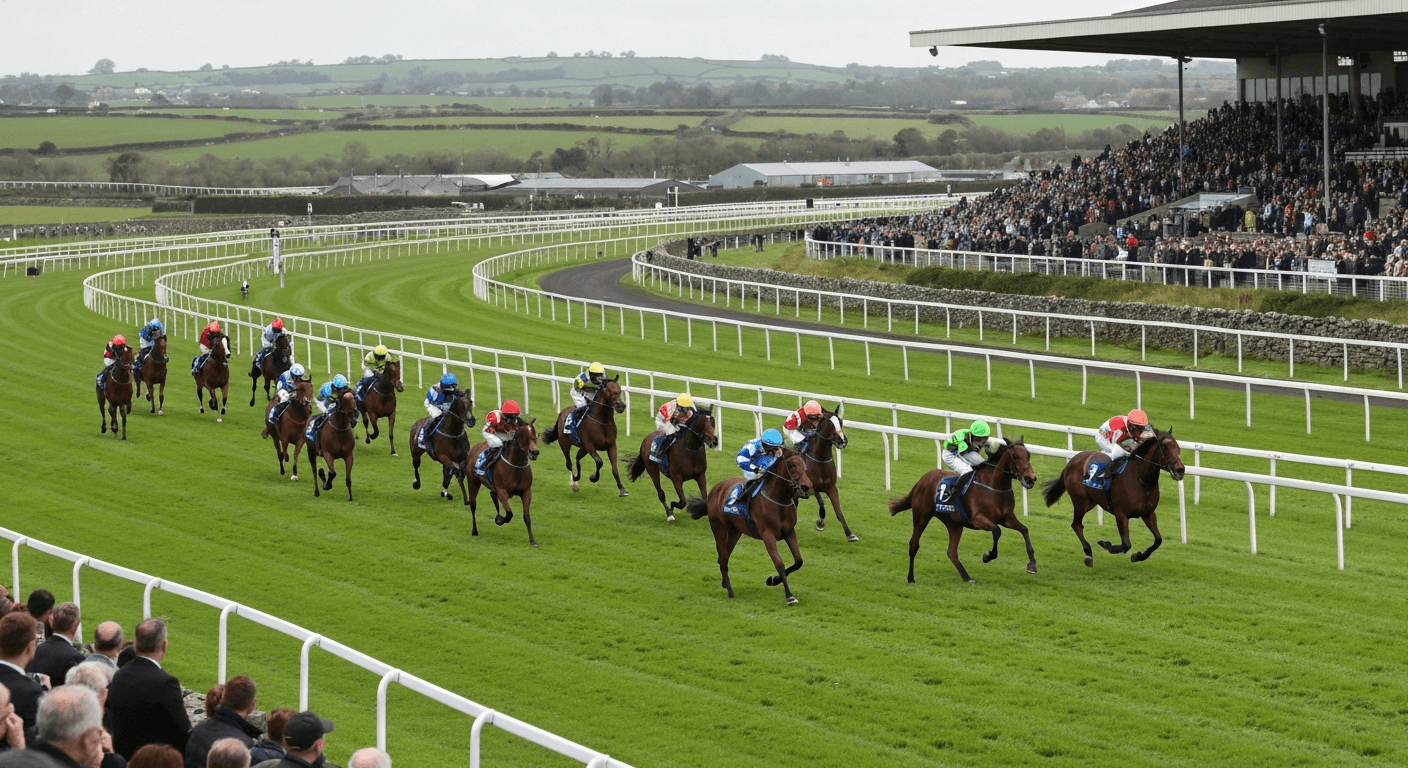
McHale Mayo National Day at Ballinrobe: The Complete Guide
A guide to McHale Raceday at Ballinrobe: the Listed McHale Mayo National handicap chase in late May, its roll of honour, its place on the card and how to watch.
Read more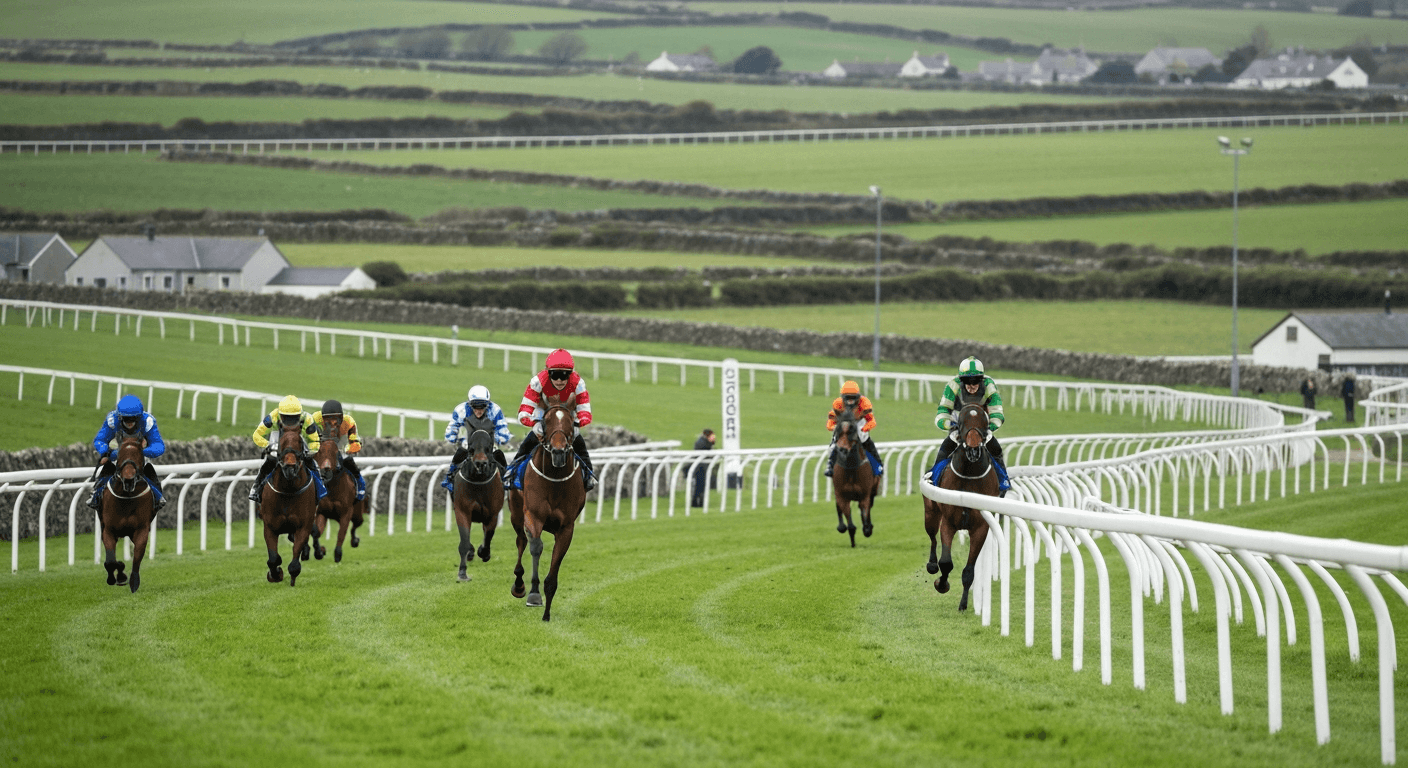
Tiger Roll at Ballinrobe: The Complete Story
How Tiger Roll ran his first-ever chase at Ballinrobe in 2016, winning by eight lengths, and how the Co. Mayo track named its beginners chase after him.
Read more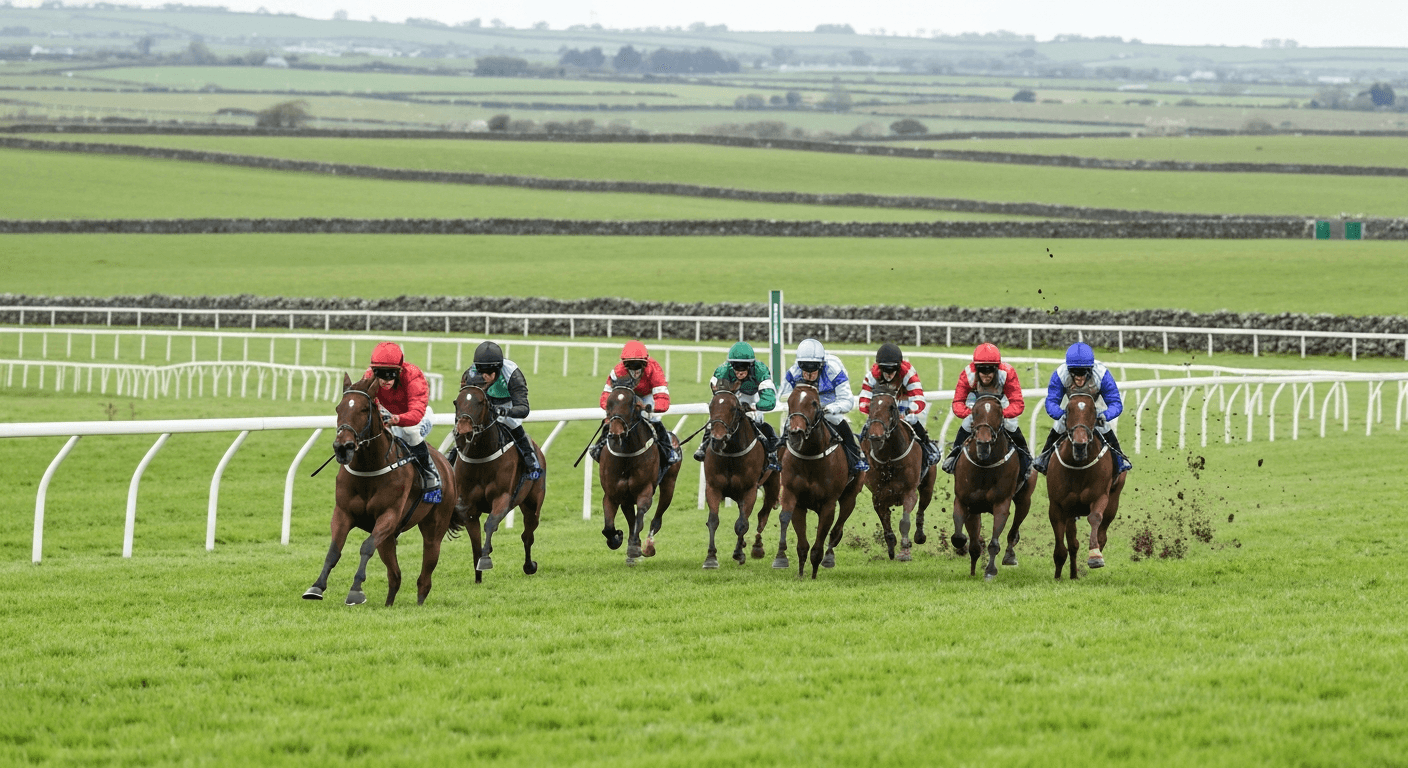
Betting at Ballinrobe Racecourse
A betting-focused guide to Ballinrobe: the tight right-handed Mayo oval, its pace and draw patterns, the McHale Mayo National, plus trainer and jockey angles.
Read moreResearch the field with the AI Race Predictor
Our model publishes calibrated win-probability estimates for UK races — a second opinion to understand a race, not tips. It's open about its record: it doesn't beat the market, and we show exactly how it does.
Work it out & learn the basics
Gamble Responsibly
Gambling should be entertaining and not seen as a way to make money. Never bet more than you can afford to lose. If you or someone you know has a gambling problem, help and support is available.