Founder & Editor · Last reviewed 2026-07-08
Introduction
Bellewstown Racecourse sits on the Hill of Crockafotha near the village of Bellewstown in County Meath, in the Republic of Ireland. It is a dual-code turf venue, running both Flat and National Hunt racing, though the jumps programme is over hurdles only, with no steeplechases staged here. The course lies about 8 to 11km south of Drogheda and roughly 37km north of Dublin, on high ground that offers views of the Mountains of Mourne to the north and the Irish Sea to the east.
This is a small, characterful provincial track. It is a sharp, undulating left-handed oval that the racecourse and HRI describe as one mile and one furlong round, with a three-furlong uphill run-in and five hurdles per circuit. The modern calendar has grown from as few as five days to roughly eight or nine days spread across April, July, August and October, headlined by the three-day July Festival on the Hill.
Its fame rests more on people and occasions than on champion horses. Racing here is recorded from at least 1726, in the August edition of The Dublin Gazette and the Weekly Courier. In 1780 George Tandy, a former Mayor of Drogheda and brother of the patriot James Napper Tandy, secured royal sponsorship from King George III for His Majesty's Plate. The course is also woven into betting folklore through Barney Curley's 1975 "Yellow Sam" coup. In 2026 Bellewstown marked its 300th anniversary.
This guide covers the following sections:
Where to Bet
Place your bets with a trusted, licensed bookmaker.

Promo code BETFRED50. New customers only. Register, deposit with a Debit Card, and place a first bet of £10+ at Evens (2.0)+ on Sports, to be settled within 7 days, to get £30 in Sports Free Bets and £20 in Bet Builder Free Bets within 24 hours of settlement. 7-day expiry. Eligibility & payment exclusions apply. Full T&Cs apply. Take Time to Think. BeGambleAware.org. 18+. Full T&Cs.

Promo code R30. New UK customers only, 18+. Register, deposit £10 or more, then place a £10 single cash bet at odds of 1/2 (1.5) or greater on any sports market (excluding Virtuals). Once the qualifying bet settles you get £30 in Free Bets (3 x £10) — the qualifying bet can win or lose. Free Bets are valid on any sports market excluding Virtuals, expire in 7 days, are non-withdrawable and must be used in full. Excluded deposit methods apply (including PayPal, Apple Pay, Skrill and NETELLER). Named bets such as Lucky 15 do not qualify. If you cash out the qualifying bet, or it is voided, you are no longer eligible for the offer. Ends 31.12.26. Full T&Cs apply. Please gamble responsibly. BeGambleAware.org. 18+. Full T&Cs.

Promo code BET40GET20. New UK customers, 18+. Register with the code and place a first bet of £40 or more at Evens (2.0) or greater. Receive 2 × £10 free bets: the first credited automatically once the qualifying bet settles, the second 24 hours later. Free bets must be placed at minimum odds of 4/1 (5.0), expire 24 hours after credit, and the free-bet stake is not returned with winnings. Debit card deposits only. Take Time to Think. BeGambleAware.org. 18+. T&Cs apply. Full T&Cs.

50% of your first-day net losses refunded as a free bet, capped at £25. New UK customers aged 18+ only. To qualify, deposit and place a first bet of £10 or more on any sport at minimum odds of evens (2.00), then place at least two further bets on different events, each worth at least 50% of your largest bet, all at evens (2.00) or greater. Losses are counted from your first settled bet until 23:59 the same day. Place a qualifying £10+ bet and you are guaranteed at least a £5 free bet. Bets placed at SP, void bets, cashed-out bets and bets struck with free bets do not count towards the offer. The free bet is credited the day after your qualifying bets settle and must be used within 7 days, after which it expires. It can be used at odds from 1/4 (1.25) up to 250/1 on singles and straight accumulators, but not on Trixie, Patent or Yankee style multiples. Free-bet stake is not returned with winnings. One offer per person, household, address, IP address and device. E-wallet deposits may not qualify, so check the cashier before depositing. Customers registered with GAMSTOP cannot claim. KYC identity verification must be completed before the free bet is credited. Take Time to Think. BeGambleAware.org. 18+. T&Cs apply. Full T&Cs.

New customers, 18+. Choose the sports bonus at sign-up, make a first deposit and receive a 100% bonus up to £50 in your Sports Bonus balance. To convert the bonus to cash, wager it 10x within 30 days. Single bets below Evens (2.00) do not qualify; accumulators do not qualify if any selection is below 1/2 (1.50). Virtual Sports, voided, cancelled, drawn, cashed-out and free-bet wagers do not count towards wagering. Only the first settled bet per event counts. Withdrawing before the wagering requirement is met forfeits the bonus balance including bonus winnings. Real-money funds are used before bonus funds. Deposits via Skrill or Neteller are not eligible. Not valid in conjunction with other promotions. Odds, bet and payment limits apply. 10bet general and promotion T&Cs apply. BeGambleAware.org. 18+. Full T&Cs.

New customers in Great Britain and Republic of Ireland, 18+. Place a £10 fixed-odds qualifying bet at minimum odds of 1/2 (1.50) — single or each-way (only the win part counts), pre-event or in-play, not cashed out early, within 28 days of opening the account. Receive up to £60 in bonuses credited over three days: 3 × £10 fixed-odds free bets (the first on settlement, then 24 and 48 hours later) plus 3 × £5 Total Goals FOOTBALL spread bets, 3 × £5 racing Winning Favourites spread bets and a £1 racing Race Index spread bet (the spread bets need a full spread-betting account). Free-bet stakes not returned with winnings; free bets valid 28 days from issue. IMPORTANT: the £5 credits are SPREAD bets — sports spread betting carries the risk that losses can exceed your stake. Sports spread-betting customers do not have Financial Ombudsman or FSCS recourse. Take Time to Think. BeGambleAware.org. 18+. T&Cs apply. Full T&Cs.

Promo code WELCOME15, entered under My Bonuses after registering. New UK customers, 18+. Place a first qualifying bet of at least £10 from your cash balance at odds of evens (2.0) or greater within 7 days of opening the account. Once the qualifying bet fully settles you receive £15 in free bets, credited as 3 x £5 tokens with set uses: one £5 accumulator free bet (minimum 4 legs, each leg at 2/5 or bigger), one £5 sports free bet (any market at evens or bigger) and one £5 Sub Cover free bet (selected football player markets at evens or bigger). Free-bet stakes are not returned with winnings. Free bets expire 7 days after they are credited. Void, cashed-out and partially cashed-out bets do not qualify. One offer per customer. Confirm the current terms on BetGoodwin's own welcome-offer page before claiming. Take Time to Think. BeGambleAware.org. 18+. T&Cs apply. Full T&Cs.

New UK customers, 18+. Minimum deposit £10. Place a £10 qualifying single at minimum odds of 1/2 (1.50), settled within 14 days. Receive £30 in free bets (stake not returned), split £20 for sportsbook use (2 x £10) and £10 for Bet Builder only (2 x £5); Bet Builder does not cover horse racing. Free bets must be accepted within 7 days and expire 7 days after acceptance. No promo code required. Best Odds Guaranteed on UK & Irish racing, subject to having staked over £25 in the previous seven days. Operated by LiveScore Betting and Gaming (Gibraltar) Ltd, UKGC 56859. Confirm the current terms on LiveScore Bet's own promotions page before claiming. Take Time to Think. BeGambleAware.org. 18+. T&Cs apply. Full T&Cs.
18+. BeGambleAware.org
The Track
The Track
Bellewstown is a left-handed course, sharp and undulating, laid out on the Hill of Crockafotha. The racecourse's own race-meetings page describes it as "a sharp left-handed oval of 9 furlongs with a run-in of 3 furlongs and an uphill finish," with five hurdles on the circuit. Both the racecourse and Horse Racing Ireland give the circumference as one mile and one furlong, though several form guides describe it as "about nine furlongs" or "about 1m2f." That discrepancy reflects differing measurement of the inner hurdles line against the flat line rather than any settled figure, and the precise reconciliation is not confirmed.
The defining features are the three-furlong run-in to a slightly uphill finish and a chute for five-furlong sprints that starts up on the hill, giving a steep downhill run in the opening stages. Undulations, cambers (a slight camber running right to left) and road crossings can unbalance a horse, so the track rewards balance and speed. There are no steeplechases at Bellewstown. National Hunt racing is over hurdles only, with five hurdles per circuit, two on the far side and three in the home straight, and none on the bends. The well-cambered, long straights make the hurdles course fairer than the tight Flat track, and it is not considered to breed course specialists over jumps.
On draw and pace, the dossier records a marked high-draw bias over five furlongs. The dogleg lets high-drawn runners in the middle of the course take a straighter, shorter line while low-drawn runners on the inside race further. A slight low-draw edge is noted over a mile. There is a strong front-runner and pace bias over the minimum trip that weakens at longer distances. Over hurdles the data is less conclusive but suggests prominent runners do well. None of this makes any bet profitable: no draw or pace angle should be assumed to make backing horses at Bellewstown pay.
Ground is usually on the quick side in July because the course sits on high ground, but it is well watered. For where these features sit on the layout, see the course map; for how they shape betting angles, see form and betting.
Confirmed track facts
| Feature | Detail |
|---|---|
| Handedness | Left-handed |
| Shape | Sharp, undulating oval |
| Circumference (racecourse/HRI) | 1 mile 1 furlong (about 9 furlongs) |
| Alternative guide figure | About 1m2f (reported, not reconciled) |
| Run-in | About 3 furlongs, slightly uphill finish |
| Codes | Flat and National Hunt (hurdles only, no steeplechases) |
| Hurdles per circuit | 5 (2 far side, 3 home straight, none on bends) |
| Sprint start | Chute on the hill, steep downhill early run |
| Draw bias (5f) | Marked high-draw bias |
| Draw bias (1m) | Slight low-draw edge |
| Pace bias | Strong front-runner edge over minimum trip, weakening at longer trips |
| Going (July) | Usually quick, well watered |
The Course Map
Course map and layout
Bellewstown's public buildings and racing action are gathered on the hilltop, so the layout is easy to read once you are up on the Hill of Crockafotha. The stands, enclosures and the parade area all sit together on the high ground, giving spectators a single vantage point over the sharp left-handed oval below. The winning post stands at the top of the roughly three-furlong uphill run-in, so the finish climbs back towards the crowd rather than away from it, and the closing stages play out in front of the main viewing area.
The setting is part of the appeal. From the hilltop you look north to the Mountains of Mourne and east to the Irish Sea, a backdrop that helps make the course one of the most distinctive in Irish racing. For how the oval itself runs, including the five-furlong chute, the bends and the cambers, see the track. For where to stand and watch on the day, see enclosures and stands.
The Races
The Races
Bellewstown stages no Pattern or Graded races. There is no black type on the card here, and the programme is built around handicaps, maiden hurdles and low-key contests rather than championship prizes. What the Hill of Crockafotha offers instead is a pair of well-established feature handicaps, one in July and one in August, that headline the two big meetings of the year.
The July highlight is the QuinnBet Handicap Hurdle, formerly run as the Crockafotha Handicap Hurdle and named in honour of the hill on which the racecourse sits. It is the headline act of the July Festival and has been promoted with a fund of around 60,000 euro in recent seasons, a large sum by Bellewstown standards that makes it comfortably the most valuable race of the meeting.
The August equivalent is the Mullacurry Cup Handicap Hurdle, run over about 2 miles 4 and a half furlongs and heading the late-August programme. The race takes its name from Mullacurry, a now-defunct racecourse in County Louth. Prize money has been cited variously, at about 20,000 euro in older guides and nearer 10,000 to 11,500 euro for the 2025 running, so the exact current value is not settled (the sources conflict). The 2025 Mullacurry Cup, sponsored as the Bective Stud Tea Rooms and Apartments Mullacurry Cup, was won by Birmingham Alabama.
Beyond the two features, the fixtures regularly include the Bellewstown Handicap Hurdle, the Seamus Mulvaney Bookmaker Crockafotha (a qualified riders' race), assorted EBF maiden hurdles and a range of Flat handicaps. None of these carries black type, and a National Hunt note worth remembering is that there are no steeplechases at Bellewstown at all: the jumps racing is over hurdles only, five per circuit.
Published rolls of honour for the feature races are thin, so a full multi-year winners' list cannot be given from the dossier. The table below sets out what is confirmed, with "n/a" where the source does not verify a figure or a winner.
| Race | Meeting | Code | Distance | Approx. prize | Recent confirmed winner |
|---|---|---|---|---|---|
| QuinnBet Handicap Hurdle (formerly Crockafotha) | July Festival | Hurdles | n/a | around 60,000 euro | n/a |
| Mullacurry Cup Handicap Hurdle | August meeting | Hurdles | about 2m 4.5f | about 10,000 to 20,000 euro (sources conflict) | Birmingham Alabama (2025) |
| Bellewstown Handicap Hurdle | n/a | Hurdles | n/a | n/a | n/a |
| Seamus Mulvaney Bookmaker Crockafotha (QR) | n/a | Hurdles | n/a | n/a | n/a |
Off-times for the two headline handicaps shift from year to year, though on the 2025 evening cards they fell among the middle-to-late races; one 2025 listing timed the Mullacurry Cup at 18.25. For how these races sit within the wider three-day July and two-day August programmes, see Festivals, and for trainer and jockey records at the track see Records and Stats.
Records and Stats
Records and Stats
Bellewstown is a small provincial track, and much of the headline data collectors expect is simply not published. No authoritative course-record or standard-time figures for the venue could be located, so we do not quote any here. Attendance numbers are the same story: the July Festival is famous for drawing large crowds, but exact record attendances, typical raceday crowds and annual footfall are not published by the racecourse or the Irish authorities.
What the course data does support is a clear picture of who wins here. Over jumps, Gordon Elliott is the outstanding trainer at Bellewstown, credited with about 21 wins, roughly double the tally of his nearest rivals Willie Mullins and Tony Martin. On the Flat, Ger Lyons is the most successful trainer.
In the saddle, Colin Keane leads the Flat riders with about 21 wins, ahead of Shane Foley and Declan McDonogh. Over hurdles, Davy Russell is the most successful active jockey with about 12 wins, while retired riders Ruby Walsh (about 16) and Paul Carberry (about 12) also feature prominently in the record.
These figures are indicative course tallies rather than certified all-time records, and the multi-decade rolls of honour for the feature races remain thin in published sources. For the races those trainers and jockeys are winning, see The Races; for how the layout shapes results, see Form and Betting. No pattern of backing any of these names should be assumed profitable.
History
History
Racing on the Hill of Crockafotha reaches back at least to the early 18th century. The first surviving record appears in the August 1726 edition of The Dublin Gazette and the Weekly Courier, and in 2026 the racecourse marked its 300th anniversary, tying the modern venue to that 1726 mention.
The defining moment came in 1780, when George Tandy, a former Mayor of Drogheda and brother of the patriot James Napper Tandy, secured royal sponsorship from King George III. The monarch's backing introduced His Majesty's Plate, valued at £100. According to the racecourse's own history, royal support for the plate continued for more than two centuries; it is generally recorded as running until 1980, when it was discontinued as the British monarchy consolidated its Irish sponsorship on the Royal Whip at the Curragh.
By the mid-18th century Bellewstown had become a focal point of Irish racing, drawing large crowds and at one point extending to five-day meetings. A cricket ground once sat in the middle of the track, a reminder of how the hilltop doubled as a wider community gathering place. Today the calendar has broadened again, with fixtures across April, July, August and October rather than the compact summer meetings of old (see festivals).
In 1975 the course became the scene of one of racing's most famous betting coups, masterminded by Barney Curley with the horse Yellow Sam. Yellow Sam was returned at 20/1 in the Mount Hanover Handicap Hurdle on 26 June 1975, and per a Racing Post feature the coup won Curley £306,000, the equivalent of over £2 million today. It worked because Bellewstown's limited telecommunications could be exploited: a single public phone box was tied up to stop off-course bookmakers from cutting the price. That story remains central to the course's identity (see legends).
More recently, the home bend was realigned from 2009 to allow safer, faster racing, and the 2026 season carried a 300th Birthday Celebration, including a Country Music Xtravaganza on 5 July 2026.
The Legends
Legends of Bellewstown
Bellewstown's fame rests more on people and occasions than on individual equine champions. The horse most closely tied to the course is Yellow Sam, whose win in the Mount Hanover Handicap Hurdle on 26 June 1975 is part of racing folklore. Returned at 20/1, Yellow Sam was the centrepiece of a betting coup masterminded by the punter Barney Curley, who exploited the course's limited telecommunications by having a public phone box tied up so off-course bookmakers could not react to the money and shorten the price. Per a Racing Post feature the coup won Curley around £306,000, described as the equivalent of over £2 million today. More on that day sits in the history section.
Beyond Yellow Sam, no individual course-specialist "legend" is well documented in authoritative sources. Many top trainers instead use Bellewstown as an educational stepping stone for young hurdlers rather than a target for established stars.
In the modern era the standout name is trainer Gordon Elliott, the outstanding jumps handler at the track with about 21 wins, roughly double his nearest rivals Willie Mullins and Tony Martin. Charles Byrnes has a strong strike rate, while on the Flat Ger Lyons has been the most successful trainer. Among the riders, Colin Keane (about 21 Flat wins) leads alongside Shane Foley and Declan McDonogh, and Davy Russell (about 12 wins) is the most successful active jumps jockey. Retired greats Ruby Walsh and Paul Carberry also feature on the roll of winners.
One glamorous footnote: Frankie Dettori made his only riding appearance at Bellewstown on 30 September 2021, creating a memorable atmosphere on the Hill. For where these names line up on the calendar, see festivals.
The Festivals
Festivals and signature meetings
Bellewstown's calendar is built around two summer occasions, with lower-key spring and autumn dates filling out the modern programme. The whole racing year runs to roughly eight or nine days across April, July, August and October, but it is the July and August meetings that define the place.
July Festival
The July Festival is the biggest occasion of the Bellewstown year, traditionally a three-day meeting in early July. It is headlined by the QuinnBet Handicap Hurdle, formerly the Crockafotha Handicap Hurdle, named in honour of the Hill of Crockafotha on which the course sits. In recent years the race has been promoted with a fund of around 60,000 euro, a large sum by Bellewstown standards, which makes it the July highlight. As with all National Hunt racing here, it is run over hurdles rather than fences, and it carries no Pattern or Graded status.
The 2025 July dates were 3, 4 and 5 July, and the 4 July card included a Best Dressed competition. In 2026 the July Festival runs on 2, 3 and 4 July, followed by a Country Music Xtravaganza on Sunday 5 July 2026 from 13.00 to 18.00, marking the racecourse's 300th anniversary, with acts including Mike Denver.
August Meeting
The August Meeting is traditionally two days in late August. Its centrepiece is the Mullacurry Cup Handicap Hurdle, run over about 2 miles 4½ furlongs and named after Mullacurry, a now-defunct racecourse in County Louth. The 2025 August dates were 26 and 27 August, and the 27 August card featured a seven-race programme in which the Mullacurry Cup was won by Birmingham Alabama. Reported prize money for the feature has varied between sources, cited at around 20,000 euro in older guides and closer to 10,000 to 11,500 euro for the 2025 running, so treat any single figure with care.
Spring and autumn dates
The modern calendar adds an April fixture and October dates to the two summer meetings. In 2025 the April dates were 5 and 12 April, with October racing on 1 and 2 October. For 2026 the April dates are 11 and 18 April.
Meeting-day character
Racing at the summer festivals is typically staged on warm evenings, in keeping with a long evening-racing tradition on the Hill. There is no strict dress code, though best-dressed prizes are awarded on set days. All fixtures are broadcast on Racing TV. Exact scheduled off-times for the headline handicaps vary year to year, with the July feature and the August Mullacurry Cup usually falling among the middle-to-late races on the evening card.
For the races themselves, see The races; for tickets, food and getting to the Hill, see Visiting.
Form and Betting
Form and Betting
The market wins and favourites lose. Across 141 Bellewstown races between April 2024 and April 2026 (1,585 runners), the favourite won 32.6% of the time yet returned a level-stakes loss of about 15% to Starting Price. That single figure is the honest starting point: even the horse the market rates hardest to beat does not pay its way over time. Treat the number with caution, though, because the 95% confidence interval is wide (roughly minus 36% to plus 8%). It crosses zero, which on this small a sample means no reliable signal either way, not a green light. No system of backing favourites is profitable here or anywhere.
The numbers behind the racing
| Metric | Value |
|---|---|
| Sample window | 24 Apr 2024 to 18 Apr 2026 |
| Races / runners | 141 / 1,585 |
| Favourite strike rate | 32.6% |
| Favourite SP return (level stakes) | about minus 15% (95% CI minus 36% to plus 8%) |
| Average field size | 11.2 (median 11, range 4 to 16) |
| Most common going | Good (55.3% of races) |
| Race mix | Flat 97, Hurdle 44 |
Reading the track
Bellewstown is a sharp, undulating left-hander, and its quirks matter more than any staking plan. Ground is usually on the quicker side at the July fixture, and the data agrees: Good ground accounts for 55.3% of races in the sample, with Soft (15.6%) and the yielding range making up most of the rest. Field sizes are moderate, averaging 11.2 runners, so these are competitive handicaps rather than short-priced processions.
On the draw, the whole-course numbers are close to level (low, mid and high stalls all win around 9%), so there is no blanket edge across every trip. The sharper effect is trip-specific: over the minimum five furlongs a high draw and a prominent, front-running position are historically favoured because of the dogleg, an edge that fades over further. Balance and speed count for plenty given the cambers and road crossings. For the fixtures themselves, see the-races; for the July and August highlights, see festivals.
Responsible gambling
Betting should be fun, never a way to make money. The figures above show even favourites lose over time, so only ever stake what you can afford to lose, set limits and take breaks. If it stops being enjoyable, help is available at BeGambleAware.org. You must be 18 or over to bet.
Planning a Visit
Visiting Bellewstown
Bellewstown Racecourse sits on the Hill of Crockafotha near Bellewstown village in County Meath, about 11km south of Drogheda and roughly 37km north of Dublin. The Eircode is A92 EC82. Its programme runs across roughly eight to nine days a year, chiefly the three-day July Festival in early July and the two-day August meeting in late August, with additional April and October dates.
Gates open two hours before the first race, and there is ample free parking on the course. If you would rather leave the car, take the train to Drogheda and hop on the complimentary Carroll's Coach shuttle from the Old Abbey car park, which departs an hour before the first race and returns 30 minutes after the last on a first-come basis. Full route detail is in getting there.
General admission has been about 15 euro for adults, 8 euro for students and seniors, and free for accompanied under-16s, with membership options for regulars. There is no dress code, though best-dressed prizes are awarded on set days; see what to wear. Detailed accessibility provisions were not published during research, so contact the racecourse ahead of your visit.
Getting There
Getting There
Bellewstown Racecourse sits on the Hill of Crockafotha near Bellewstown village in County Meath, about 11km south of Drogheda and roughly 35 to 37km north of Dublin. The Eircode is A92 EC82, confirmed on the racecourse's own website and useful if you are navigating by sat-nav.
By road
Drivers take the M1 motorway and exit at Julianstown/Drogheda South (Exit 7) to join the R132 towards Drogheda. At the Applegreen service station at Gormanston, take the immediate left signposted "Bellewstown" and follow the local signs up to the course. The hilltop setting means the final approach climbs towards the enclosures and parade area, so allow a little extra time on a busy festival evening.
By rail
The nearest station is Drogheda, on the Irish Rail network, about 11km from the course, with frequent services from Dublin and Dundalk. Some older guides point visitors towards Gormanston, but Drogheda is the practical choice and links up with the racecourse shuttle described below.
By bus and shuttle
On racedays a complimentary courtesy shuttle, run by Carroll's Coach, operates from the Old Abbey car park in Drogheda. It departs one hour before the first race and returns 30 minutes after the last. Seats are first-come, first-served, so arrive in good time if you are relying on it, especially during the busy July Festival.
Parking
There is ample free parking at the racecourse, and gates open two hours before the first race each day. That early opening suits the picnic tradition on the hill, so there is no rush to grab a spot.
For opening times, admission and what to expect on the day, see Visiting; for the meetings themselves, see Festivals.
Tickets and Enclosures
Enclosures and stands
Bellewstown keeps things simple. This is a hilltop country course rather than a multi-tier grandstand venue, so there is no maze of separate enclosures to navigate. The stands, enclosures and parade area sit together on the top of the Hill of Crockafotha, with the winning post at the head of the three-furlong uphill run-in. From up here the setting does much of the work: on a clear day you look north to the Mountains of Mourne and east to the Irish Sea, and many racegoers simply picnic on the hill rather than chase a reserved seat.
Admission is straightforward and, by big-track standards, gentle. General admission has been about €15 for adults and about €8 for students and senior citizens, with accompanied children under 16 admitted free (prices indicative, so check the current rate before you travel). Regular visitors can take annual membership, which has run at about €50 for adults and about €30 for students and seniors, worth considering if you plan to attend at least four of the meetings across the year.
For groups and hospitality, the course works on a marquee model rather than named boxes. Corporate bookings are taken for parties of 4 to 400, with packages that typically include reserved marquee seating, an elevated viewing space, a racecard, a meal, Tote facilities and full bar service. Named individual function rooms and premium festival-day price bands are not separately published, so contact the racecourse for a quote.
For gate opening times and the courtesy shuttle see getting there; for the food and bar outlets on the hill see food, bars and hospitality.
Food, Drink and Facilities
Food, Bars and Hospitality
Bellewstown keeps its catering deliberately informal and family-oriented. On a raceday you will find food and beverage outlets, full bar service and picnic areas set out across the hilltop, in keeping with the course's relaxed, community-driven character. The summer festival in particular is associated with picnics on the hill and the traditional strawberries and cream, alongside live entertainment. Specific named bars and restaurants, and their price ranges, are not published in detail, so it is best to check the racecourse's own pages before you travel.
Hospitality at Bellewstown is built around a marquee model rather than fixed function rooms. The course takes corporate and group bookings from 4 to 400 people on a raceday, with packages that typically include reserved marquee seating, a racecard, a meal (a BBQ or buffet), a racing expert, an elevated viewing space, Tote facilities, full bar service and post-racing entertainment. Individually named function rooms with set capacities are not documented beyond this marquee approach.
For admission prices and enclosure detail see Enclosures and Stands, and for the festival atmosphere that shapes the day see Atmosphere and Culture.
What to Wear
What to Wear
Bellewstown has no dress code, so almost any outfit is fine. This is a hilltop summer meeting with a deliberately informal, family-oriented character, so comfort matters more than formality. The parade area, enclosures and picnic spots all sit on open, undulating ground on the Hill of Crockafotha, which means practical footwear and a layer for the breeze are worth having whatever the forecast, even at the warm July fixture.
For those who want to make an effort, the racecourse rewards it. Valuable prizes are awarded on certain days for the best-dressed man, woman and couple. The Best Dressed competition on 4 July 2025, for example, offered accommodation and dining prizes at Tankardstown House. These style days are the main reason to dress up, rather than any rule requiring it.
In short, wear what suits you and the weather on the Hill. For the festival days these prizes fall on, see festivals and meetings; for the enclosures you will be moving between, see enclosures and stands.
Capacity and Venue Hire
Capacity and venue hire
Bellewstown has no published official capacity figure. The racecourse is well known for drawing large crowds to its July Festival, but record attendances, typical crowd sizes and annual footfall are not published, so any specific number would be guesswork rather than a verified fact. The best honest description is a mid-sized provincial Irish course whose hilltop enclosures fill on festival evenings; for the shape and layout of those spaces see enclosures and stands.
On the venue-hire side, the picture is clearer. Bellewstown takes corporate and group bookings for parties ranging from 4 to 400 people on a raceday. The packages are built around marquee hospitality rather than fixed function suites, and they typically include reserved marquee seating, a racecard or race slip, a meal (a barbecue or buffet), an on-hand racing expert, an elevated viewing space, Tote facilities, full bar service and post-racing entertainment. This flexible, marquee-based model suits everything from a small office outing to a large company day out.
What is not documented is the detail beneath that headline. Named individual function or meeting rooms, with their own banqueting or standing capacities, were not published, so the 4-to-400 marquee package is the only firm hospitality structure to plan around. Prospective bookers should contact the racecourse directly on +353 41 9823614 to confirm current prices, dates and group arrangements. For the wider feel of a raceday here, see atmosphere and culture.
The Atmosphere and What Bellewstown Means
Atmosphere and culture
Bellewstown is cherished as a jewel of the Irish summer racing calendar, and the racecourse styles itself the historical home of Irish summer jump racing. The character comes from the setting as much as the sport. The stands and enclosures sit on the Hill of Crockafotha, with views north to the Mountains of Mourne and east to the Irish Sea, and the summer meetings carry an unhurried, festive, family-driven feel: picnics on the hill, strawberries and cream, best-dressed competitions and live entertainment on warm July evenings.
The course is run by a long-standing local committee rather than a corporate operator, and it is woven into the identity of the surrounding villages of Bellewstown, Collierstown and Duleek, and of nearby Drogheda. That community ownership shows in the informal, welcoming tone of a raceday. There is no strict dress code (see what to wear), yet best-dressed prizes on set days give those who want to dress up a reason to.
Folklore runs deep here. In 1975 Bellewstown was the scene of one of racing's most famous betting coups, when Barney Curley landed the Yellow Sam gamble by tying up the course's single public phone box so off-course bookmakers could not cut the price. In more recent memory, Frankie Dettori made his only Bellewstown appearance on 30 September 2021. For the full story of the coup and the course's royal past, see history and legends.
Accessibility
Accessibility
Bellewstown does not publish detailed accessibility information, so anyone with access needs should contact the racecourse directly before travelling. The course itself sets some of the context: it sits on the exposed, undulating Hill of Crockafotha, the stands and enclosures are on the hilltop, and the going in July tends to be firm underfoot, so the ground can be uneven and sloping in places.
At the time of research the racecourse's own pages did not confirm the specifics that matter most for planning a visit. There is no published detail on accessible or blue-badge parking, step-free routes to the enclosures and viewing areas, accessible toilets, accessible or raised viewing platforms, an assistance-dog policy, or a carer and companion ticket scheme. None of these should be assumed to exist until confirmed. This gap is one of the items formally flagged as unverified in the underlying research.
The practical step is to phone the course on +353 41 9823614 or check the "Plan Your Visit" and FAQ pages on bellewstownraces.ie close to your raceday, and to confirm arrangements for parking, drop-off and viewing when you book. The complimentary courtesy shuttle from Drogheda, covered in getting there, and the free on-site parking, noted under visiting, may both be relevant when arranging an easier arrival.
Where to Stay and Nearby
Nearby
Most raceday accommodation is concentrated in Drogheda, the market town about 11km north of the course, which offers a range of hotels and makes a natural base for the July Festival and August meeting. Dublin sits roughly 35km to the south and is comfortably within reach, so many visitors combine a day on the Hill with a stay in the capital and a trip to the coast.
The setting lends itself to a wider break. Bellewstown falls within the Boyne Valley, one of Ireland's richest heritage areas, with the Neolithic passage tomb at Newgrange and the Battle of the Boyne site both close by. Drogheda town itself and the Boyne coast are easy additions to a racing trip.
For how to reach the course from Drogheda or Dublin, including the courtesy shuttle bus, see Getting there. For gate times, admission and planning your day on the Hill, see Visiting.
Frequently Asked Questions
Share this article
More about this racecourse
All bellewstown guides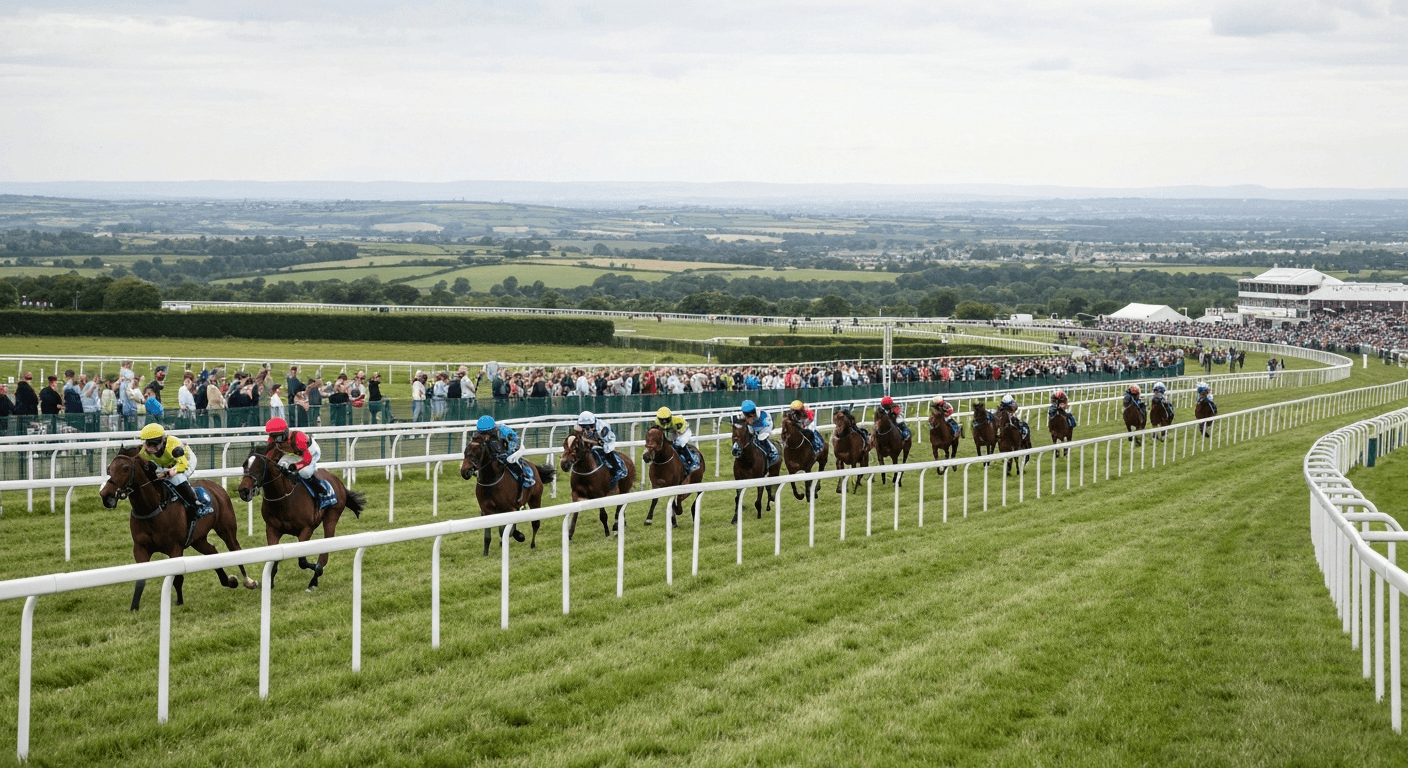
The Yellow Sam Coup: Bellewstown's Most Famous Day
The 1975 Yellow Sam coup at Bellewstown, when Barney Curley used a single phone box to block the off-course price and landed a gamble worth millions today.
Read more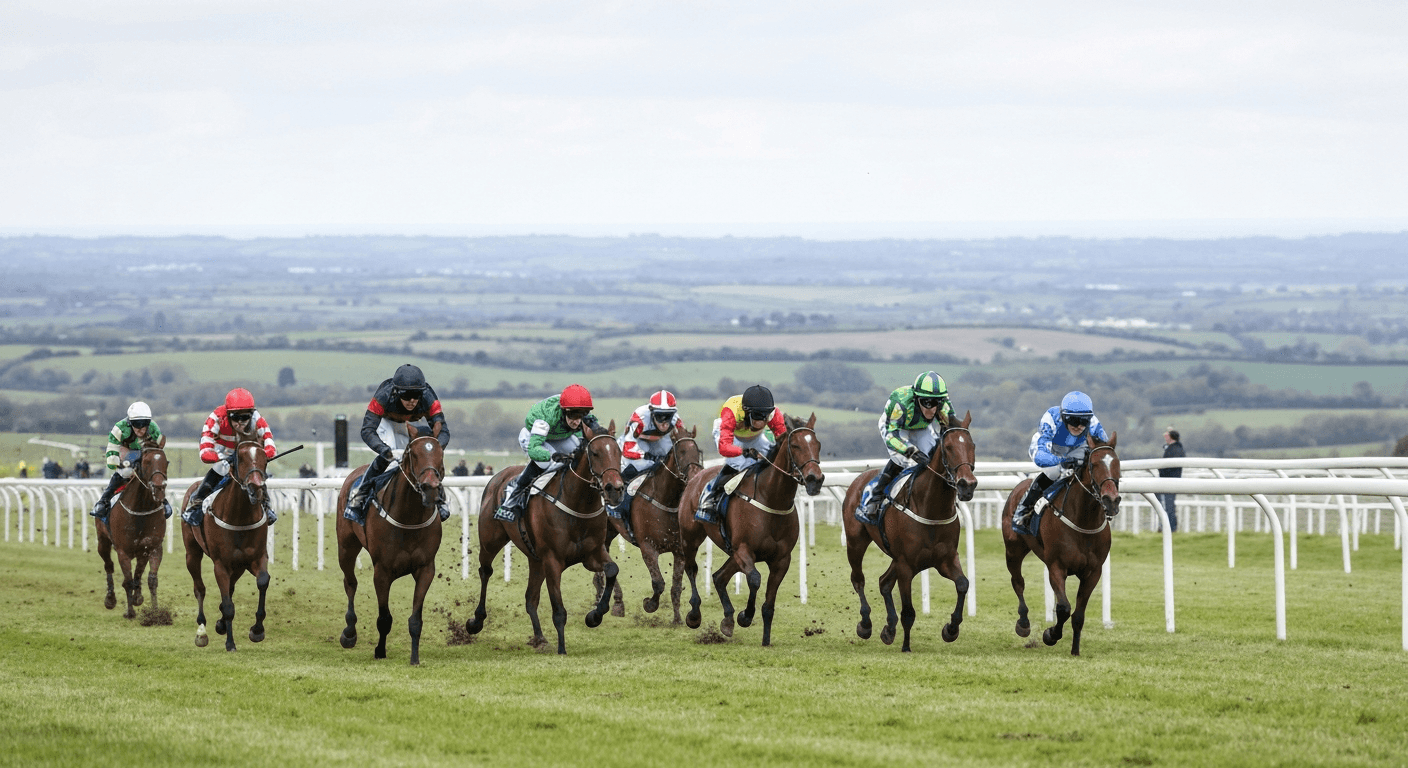
Betting at Bellewstown Racecourse
A betting-focused guide to Bellewstown: the sharp, undulating hilltop track on Crockafotha, its draw and pace patterns, plus trainer and jockey angles.
Read more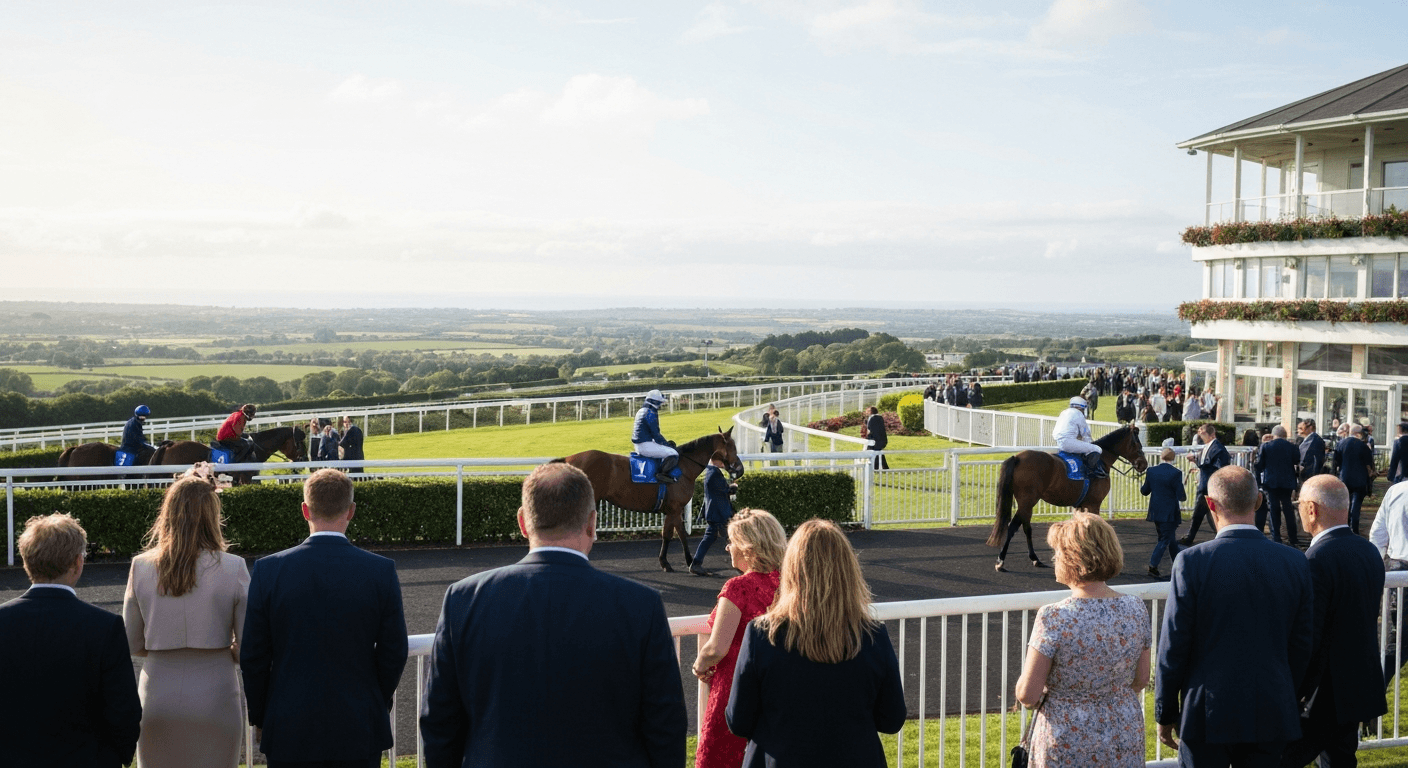
A Day Out at Bellewstown Racecourse
Plan a day at Bellewstown Racecourse in Co. Meath: getting there, tickets, the marquee facilities, the July and August festivals, what to wear and first-visit tips.
Read moreResearch the field with the AI Race Predictor
Our model publishes calibrated win-probability estimates for UK races — a second opinion to understand a race, not tips. It's open about its record: it doesn't beat the market, and we show exactly how it does.
Work it out & learn the basics
Gamble Responsibly
Gambling should be entertaining and not seen as a way to make money. Never bet more than you can afford to lose. If you or someone you know has a gambling problem, help and support is available.