Founder & Editor · Last reviewed 2026-07-13
Racing around Mallow goes back a very long way. Organised racing in the area is recorded from 1777 under the King's Plate Articles, and the countryside just to the north gave the sport one of its founding moments a generation earlier still. The course we now know as Cork Racecourse, on the Killarney Road at Mallow beside the River Blackwater, is younger than that: it opened in 1924 to replace Cork Park Racecourse, which had staged the city's racing until it closed in 1917.
That makes Cork a course with two histories running side by side. One is the deep local story of racing in north Cork, including the wager between Buttevant and Doneraile in 1752 that is credited as the first recorded steeplechase. The other is the working life of the Mallow track itself: a dual-code turf oval that today stages around 18 to 20 fixtures a year across the Flat and over jumps, and whose winter card built around the Hilly Way Chase has become one of the recognised staging posts of the Irish National Hunt season.
This article traces that record. It covers the origins of racing at Mallow, the signature races that took shape, the legendary horses and legendary people tied to the course, the records and stats, the raceday atmosphere and what Cork means, the modern era and its redevelopment, and answers to common questions. Where the record is thin or a claim cannot be pinned down, the piece says so rather than filling the gap.
Racing at Mallow and the Birth of the Course
Cork Racecourse as it stands today opened in 1924, but racing in the Mallow district is a good deal older than the course, and the wider area holds a place in the sport's origin story that few racecourses anywhere can claim.
The birthplace of the steeplechase
The nearby towns of Buttevant and Doneraile, a short distance north of Mallow, are credited with the first recorded steeplechase in 1752. The contest is remembered as a wager between Edmund Blake and Cornelius O'Callaghan, a race run cross-country from Buttevant church to Doneraile church. The word steeplechase comes from exactly this idea of racing from one church steeple to another over whatever country lay between. That north Cork wager is the moment the sport is usually traced back to, which gives the racing around Mallow a lineage that predates the organised course by the best part of two centuries.
Organised racing in the Mallow area itself is recorded from 1777 under the King's Plate Articles, the framework that governed the early prize races run under royal patronage. From there the thread runs forward through the following century towards a permanent home for Cork's racing.
From Cork Park to Mallow
For many years the main venue for the city's racing was Cork Park Racecourse. Cork Park staged racing until it closed in 1917. Its closure left a gap, and the demand for a replacement led to the opening of Mallow Racecourse in 1924. That course, on the banks of the Blackwater on the Killarney Road out of Mallow, is the one we know today as Cork Racecourse.
The site suited the purpose. The ground is flat and level, and the sandy, well-drained soil left by the river drains quickly, so the going rarely turns truly testing even after heavy rain. Those characteristics shaped the course into the fair, galloping oval it remains.
A change of name
The course spent its early decades as Mallow Racecourse before being rebranded to Cork Racecourse. The change tied the track to the county's largest city and its wider racing identity rather than to the town at its gates. It did not pass without comment: the rebrand prompted some local controversy, a reminder that Mallow's own claim on the course has always been felt strongly on the ground. The compromise the course settles on to this day is to trade under both, widely known as Cork Racecourse Mallow.
The Signature Races Take Shape
Cork's standing in the calendar rests on a small group of races that grew into fixtures with real weight. The course stages two Group 3 Flat races and six Graded National Hunt races, plus valuable handicaps and Listed events. The dates on which those races were founded and upgraded chart how the course built its reputation.
The Hilly Way Chase
The winter card is anchored by the Hilly Way Chase, a two-mile chase run each December. It was first run in 2001 as a Grade 3 and promoted to Grade 2 in 2003. The race is named after Hilly Way, the dual Queen Mother Champion Chase winner of 1978 and 1979, which fits its identity as a test for the leading two-mile chasers. It sits early in the Irish jumps season and works as a seasonal reappearance and trial race, with many of its winners going on to the Dublin Racing Festival, the Cheltenham Festival and the Punchestown Champion Chase.
Sponsorship has run through the Kerry Group and, from 2022, Bar One Racing. The race was worth 100,000 euro in 2025, with 60,000 euro to the winner. Willie Mullins has dominated it to a degree matched almost nowhere else in the sport.
The Cork National
The staying showpiece is the Cork National, currently run as the Paddy Power Cork Grand National Handicap Chase. It is a Listed handicap chase over 3 miles 4 furlongs in early November, open to horses aged four and older rated 0 to 150. It is a stamina test and a distinct race from the Hilly Way in every respect except the venue. The exact year it gained Listed status and its inaugural running are not established in the available record.
The Flat pattern races
Cork's leading Flat race is the Munster Oaks, a Group 3 for fillies and mares over 1 mile 4 furlongs in June. Its history is a story of movement. It was established in 2003 at Naas as the Noblesse Stakes, a Listed race, promoted to Group 3 and opened to older fillies in 2004, transferred to Cork in 2005, and renamed the Munster Oaks in 2014. The course also stages the Group 3 Give Thanks Stakes, another 1 mile 4 furlong contest for fillies and mares, run in August.
Over jumps, the Cork Stayers Novice Hurdle over three miles in December was upgraded to Grade 3 in 2010. Cork also stages the Grade 3 Michael O'Sullivan Chase.
Founding and upgrade dates
| Race | Code and grade | Distance | Key date |
|---|---|---|---|
| Hilly Way Chase | National Hunt, Grade 2 | About 2m half-furlong | First run 2001 as Grade 3, Grade 2 from 2003 |
| Cork National | National Hunt, Listed handicap | 3m 4f | Listed-status year n/a |
| Munster Oaks | Flat, Group 3 | 1m 4f | Founded 2003 at Naas, moved to Cork 2005, renamed 2014 |
| Give Thanks Stakes | Flat, Group 3 | 1m 4f | n/a |
| Cork Stayers Novice Hurdle | National Hunt, Grade 3 | 3m | Upgraded to Grade 3 in 2010 |
The pattern shows a course that has both grown its own races, as with the Hilly Way, and given a home to races that arrived from elsewhere, as with the Munster Oaks.
The Legendary Horses
Almost every great horse associated with Cork made its name in one race: the Hilly Way Chase. The roll of honour reads as a list of the best two-mile chasers Ireland has produced this century, and the horses below are placed here because they won at Cork, not because they were good elsewhere.
Beef Or Salmon
Michael Hourigan's popular chaser is where the modern story starts. Beef Or Salmon won the Hilly Way in 2002 and again in 2003, and the 2002 win came on just his second start over fences. Those Cork victories launched a career that took in ten Grade 1 wins, though those top-level successes came at other courses. Beef Or Salmon also holds a neat distinction as the only horse to have won both the John Durkan Memorial Chase and the Hilly Way Chase.
Golden Silver
Golden Silver was the first three-time winner of the Hilly Way, taking it in 2009, 2010 and 2011 for Willie Mullins, with Paul Townend aboard for the first two. There is an honest asterisk on the middle leg: the 2010 running was staged at Fairyhouse over 2 miles 1 furlong after Cork's chase course froze and the meeting was abandoned, so two of his three wins in the race were won on Cork ground and one was not. Beyond the Hilly Way, Golden Silver was a Grade 1 winner, including the Irish Arkle in 2009 and the Punchestown Champion Chase in 2010.
Douvan
Douvan produced one of the most spectacular performances the course has seen. In the 2016 Hilly Way he won by 22 lengths, sent off at 1/6, in what stands as the widest winning margin of his career. It remains a benchmark for what a top two-miler can do round Cork when everything clicks.
Energumene
Energumene equalled Golden Silver as a three-time Hilly Way winner, scoring in 2021, 2022 and 2024. The gaps in that sequence tell their own story. He did not run in 2023, when his stablemate El Fabiolo took the race, and he missed the entire core of the 2023/24 season through injury before returning to win the 2024 Hilly Way after a 593-day absence, coming home ten lengths clear at the head of a Mullins one-two-three-four. Both his 2021 and 2022 Cork wins were the first step in campaigns that ended in Queen Mother Champion Chase glory at Cheltenham, which is exactly the role the race is built to play. Owned by Tony Bloom and trained by Willie Mullins, he retired in April 2026 as one of the finest two-mile chasers of his era.
The Mullins two-mile production line
Around those headline names sits a run of Grade 1 chasers who all took the Hilly Way for Willie Mullins: Twinlight in 2013, Felix Yonger in 2014 and 2015, Un De Sceaux in 2017, Cilaos Emery in 2019, Chacun Pour Soi in 2020, and El Fabiolo in 2023. Chacun Pour Soi's win was another exhibition round, home by 19 lengths at 1/5. The 2015 renewal, like Golden Silver's 2010, was moved away from Cork, run at Navan after the meeting was abandoned.
The sequence was finally broken in 2025, when Gordon Elliott's Found A Fifty, ridden by Jack Kennedy at 3/1, wore down the favourite Majborough to deny Energumene a fourth win and end a long Mullins winning streak in the race.
The Legendary People
The people who shaped Cork's record are, over jumps, a very short list with one name at the top of it, and over the Flat a spread of the leading Irish stables.
Willie Mullins and Paul Townend
No trainer is tied to Cork like Willie Mullins. He is the record-winning trainer of the Hilly Way Chase by a distance, and his grip on the race has been almost total in recent seasons: he had won the six renewals before 2025, and fielded six of the eight runners in the 2024 running. The exact number of Hilly Way wins to his name is given differently across compilations, from 13 up to 16, so the precise tally is better treated as unsettled than quoted as a single figure. What is not in doubt is the dominance behind it.
Paul Townend is the record-winning jockey in the race, credited with nine wins, and he partnered many of the Mullins winners listed among the course's great horses. The Mullins and Townend axis is the single strongest thread running through Cork's modern history.
Michael Hourigan
The Limerick trainer Michael Hourigan is woven into Cork's story through Beef Or Salmon, whose back-to-back Hilly Way wins in 2002 and 2003 he saddled. Hourigan also features on the Cork National roll of honour, winning it with A New Story in 2005 and The Gatechecker in 2019.
The Flat stables
On the Flat, the Munster Oaks has drawn the strongest yards in the country. Aidan O'Brien has a deep record in the race, and Paddy Twomey has become its most successful recent handler, landing the 2025 renewal with Magical Hope for a third win in four years. Colin Keane, one of the leading Flat jockeys in Ireland, rides regularly and successfully at the track.
The course itself
Off the track, the current operation is led by General Manager Eoghan O'Grady, with Tom Gaffney serving as chairman around 2017 to 2019. The identity they steward is bound up with Mallow's position as a crossroads of Munster and with the district's standing as the cradle of steeplechasing at Buttevant and Doneraile, a heritage the course sits squarely within.
Records and Stats
Cork does not publish a widely available all-time course-record schedule, and detailed standard times by distance are not available in an authoritative public form. That means some of the figures a records section would normally lead with simply cannot be quoted with confidence, and the honest position is to say so rather than invent them. What the record does support is set out below.
Marquee-race figures
The Cork National provides the clearest run of times, all over the 3 mile 4 furlong trip:
| Year | Cork National winner | Winning time |
|---|---|---|
| 2025 | Lonesome Boatman | 7m 23.60s |
| 2024 | Sphagnum | 7m 11.20s |
| 2016 | Raz De Maree | About 7m 08.30s |
The variation across those runnings reflects the ground and the pace as much as anything, which is why they are recorded as race times rather than a course record.
Biggest performances over jumps
The most emphatic Hilly Way winning margins belong to two of the course's greatest visitors. Douvan won the 2016 running by 22 lengths, the widest winning margin of his career, and recorded a Racing Post Rating of 178. Chacun Pour Soi won the 2020 running by 19 lengths. Both are among the standout individual performances in the course's modern record.
Leading records in the Hilly Way Chase
| Record | Holder | Detail |
|---|---|---|
| Leading trainer | Willie Mullins | Record winner of the race; tally given as 13 to 16 across compilations |
| Leading jockey | Paul Townend | Nine wins |
| Most wins by a horse | Golden Silver and Energumene | Three each |
Golden Silver (2009, 2010, 2011) and Energumene (2021, 2022, 2024) share the record as the only three-time winners, though Golden Silver's 2010 leg was run away from Cork, at Fairyhouse, after the meeting was abandoned. These figures are a description of the historical record and nothing more; over time the layer holds the edge, and no run of results changes that.
Raceday Atmosphere and What Cork Means
Cork's raceday character comes from a handful of set-piece meetings and from the district it sits in, rather than from grand architecture.
The Easter Festival
The biggest event of the year is the Easter Festival, staged across the Easter bank holiday weekend and described by General Manager Eoghan O'Grady as the course's biggest event of the year. It runs over three days, each with its own flavour. Easter Sunday is a traditional full jumps card, a long-standing favourite. Easter Monday is Family Day, built around children's attractions such as a petting farm, a reptile zone and face painting. For 2026 the Saturday became the inaugural Down Syndrome Centre Cork fundraising Flat raceday, with the course pledging all general admission proceeds to the charity; it was launched by four-year-old Danny Duane from Doneraile alongside the Cheltenham-winning jockey Danny Mullins. A Most Stylish Lady competition runs across the festival, and free shuttle buses link the course to Mallow train station and the town centre.
The winter jumps day
December brings the other end of the mood, the winter jumps card headed by the Hilly Way Chase. It is one of the highlights of the southern Irish jumps calendar and the big days have been shown live on RTE. The identity of the meeting is firmly that of a Champion Chase trial, with Willie Mullins routinely fielding several runners, and it draws in the crowds that a top two-mile chase brings.
Through the summer the tone changes again, with evening music nights branded Cork Rocks and family fun days spread across the season.
What Cork means
The course's deeper meaning is tied to place. Mallow sits at a crossroads of Munster, and the racing here draws directly on the district's claim to be the birthplace of the steeplechase at nearby Buttevant and Doneraile. One stranger footnote belongs to the ground itself: in 1983 a private jet made an emergency landing on the racecourse turf, an incident the course has never quite lived down.
The Modern Era
The Cork of the last two decades is a course that has invested steadily in its infrastructure while keeping the shape of the track much as it always was. It is operated by Cork Racecourse (Mallow) Ltd and stages around 18 to 20 fixtures a year across the Flat and over jumps, all on turf, with no all-weather surface.
The Pavilion Stand
The most visible modern addition to the enclosures is the Pavilion Stand, which opened in November 2008 at a cost of around 6 million euro. It is a two-storey stand that sits virtually side by side with the older three-tier Grandstand, both overlooking the winning post and the final furlong, with the parade ring, enclosures and betting ring set between and behind them.
The straight seven
The single biggest change to the racing surface came in 2019 with the completion of a straight seven-furlong track, one of only two straight seven-furlong courses in Ireland. It was created by extending the existing straight sprint course, which had run to five and six furlongs, and it opened as the Matchbook Straight Seven on Friday 10 May 2019 during the two-day Race and Taste Festival. Groundworks had begun in 2017, and the project was funded through the Horse Racing Ireland Racetrack Improvements Scheme.
The cost is reported two different ways, and both deserve to be recorded rather than one being chosen quietly. Horse Racing Ireland's own release put the figure at 500,000 euro, while an earlier announcement cited 600,000 euro. A separate stable yard modernisation, reported at around 520,000 euro, was carried out around 2015.
The course today
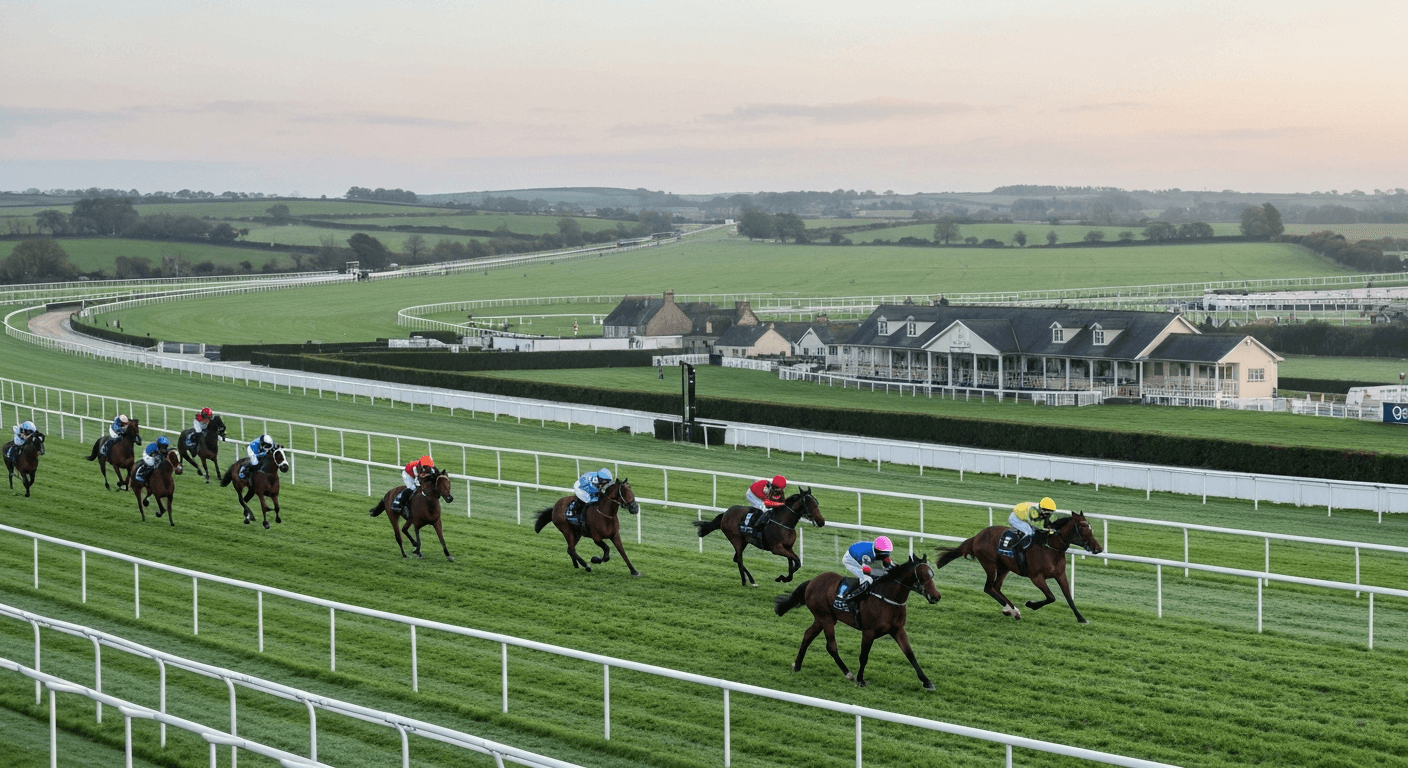
What all this investment has produced is a fair, galloping, right-handed oval that rides much as it did before, helped by the sandy, free-draining soil that keeps the going from turning truly heavy. The inner circuit used mainly for the Flat runs to about 10 furlongs and the outer to about 12, with a chase course of around 1 mile 4 furlongs carrying eight fences to a circuit, three of them in the home straight. The current operation, under General Manager Eoghan O'Grady, has kept Cork as one of Munster's busiest and most familiar courses, with the Easter Festival, the Cork National meeting and the Hilly Way card as the fixed points of its year.
Frequently Asked Questions
Share this article
More about this racecourse
All cork guides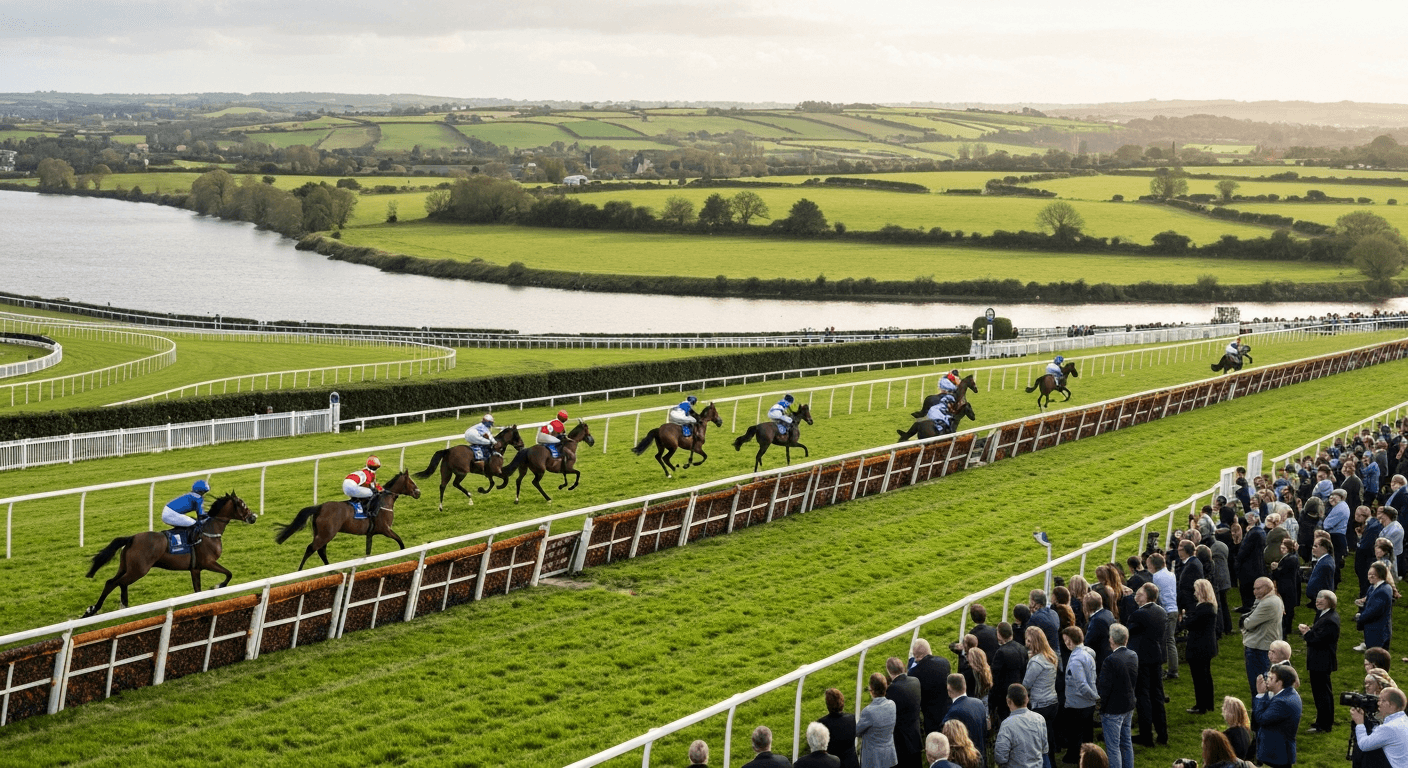
Cork Racecourse: The Complete Guide
Cork Racecourse (Mallow) in full: Munster's leading dual-code track, the Cork National and the Easter Festival, the track and its feature races, tickets, travel and how to visit.
Read more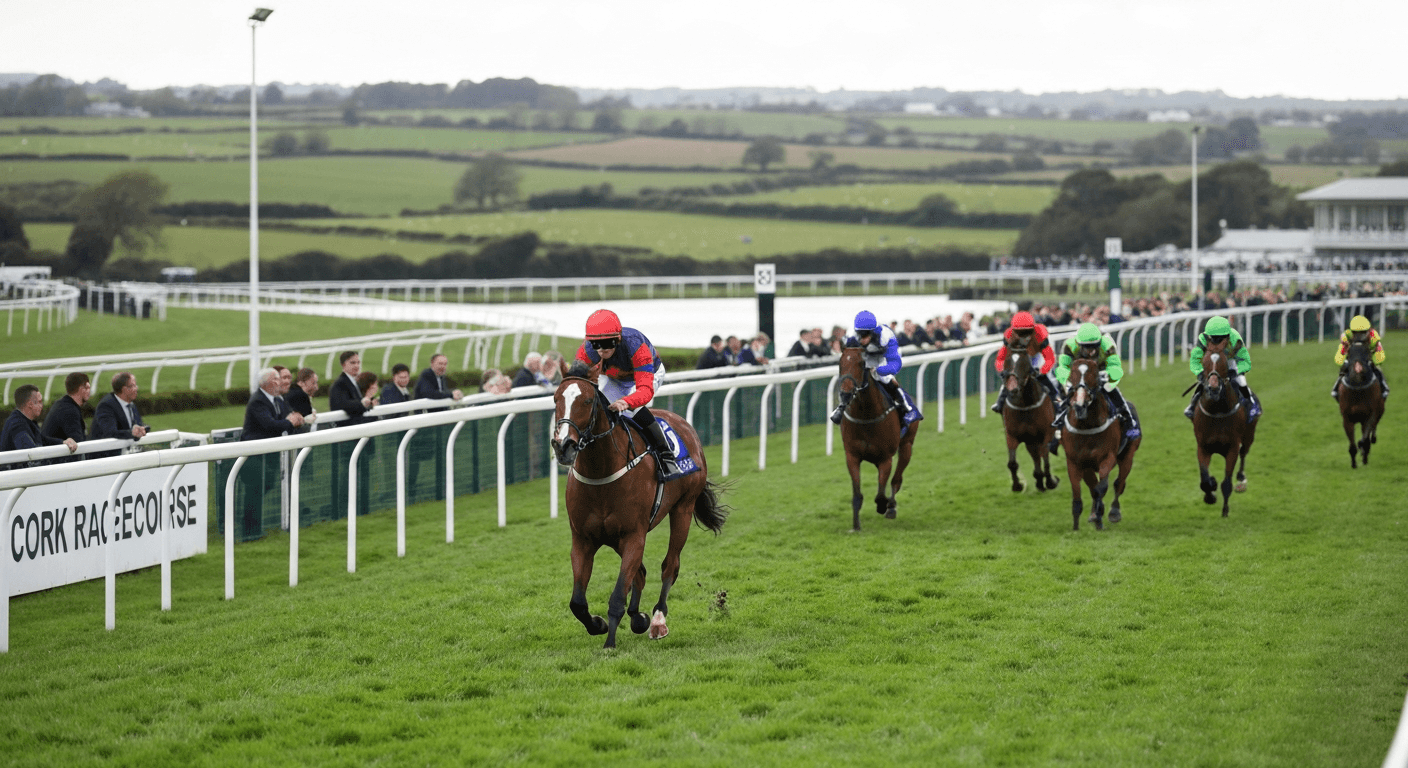
Energumene at Cork: The Complete Story
How Energumene made Cork's Hilly Way Chase his own, winning the Grade 2 two-mile chase three times on the road to Champion Chase glory for Willie Mullins.
Read more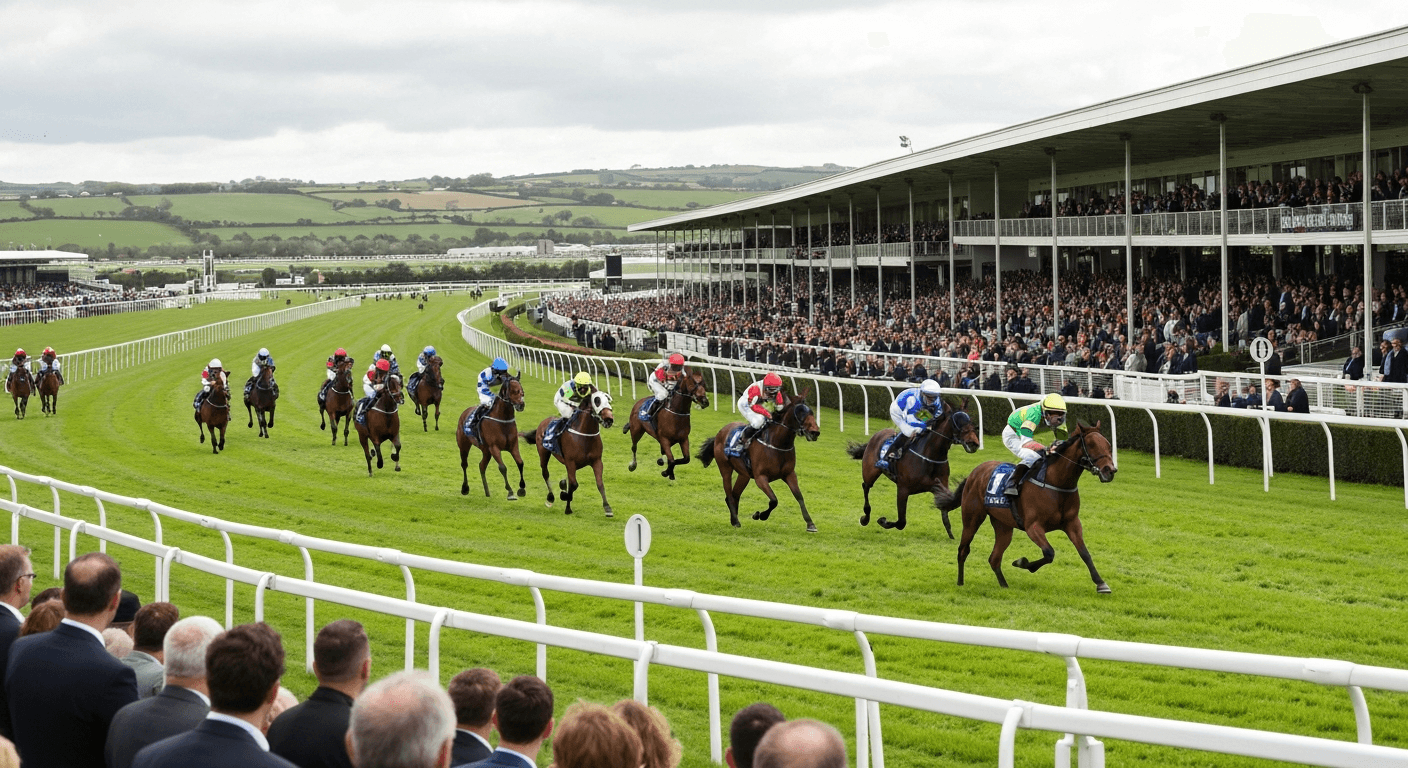
Hilly Way Chase Day at Cork: The Complete Guide
Hilly Way Chase Day at Cork: the Grade 2 two-mile chase that opens the Champion Chase trail each December, from Golden Silver and Energumene to the day itself.
Read moreGamble Responsibly
Gambling should be entertaining and not seen as a way to make money. Never bet more than you can afford to lose. If you or someone you know has a gambling problem, help and support is available.