
Founder & Editor · Last reviewed 2026-07-08
Introduction
Dundalk Stadium is Ireland's only floodlit all-weather racecourse and Europe's only combined horse and greyhound racing venue. It sits on Racecourse Road, Dowdallshill, just north of Dundalk in Co. Louth, in the Republic of Ireland, about 5km south of the border with Northern Ireland. The venue is run by Dundalk Racing (1999) Ltd, formed in 1999 by the merger of Dundalk Race Company PLC and Dundealgan Greyhound Racing Company Limited, with Jim Martin as CEO.
Racing here is Flat only, on Polytrack, a wax-coated synthetic surface of silica sand, synthetic fibres, plastics and rubber. It is emphatically not turf. Horse racing in the town dates to 1889 at a Dowdallshill turf course used mainly for National Hunt racing, which closed in 2001. The merger allowed a new circuit to be built over the old turf course with a greyhound track inside it, and the all-weather horse track officially opened on 26 August 2007, hosting Ireland's first all-weather meeting on Polytrack. You can read the full history further down.
Horse Racing Ireland lists 43 fixtures across the year, with weekly Flat racing from late October to mid-March. The calendar is built on year-round Friday-evening dual race nights, with greyhound racing following the horses. For how the left-handed Polytrack oval rides, see the track.
On this page
Where to Bet
Place your bets with a trusted, licensed bookmaker.

Promo code BETFRED50. New customers only. Register, deposit with a Debit Card, and place a first bet of £10+ at Evens (2.0)+ on Sports, to be settled within 7 days, to get £30 in Sports Free Bets and £20 in Bet Builder Free Bets within 24 hours of settlement. 7-day expiry. Eligibility & payment exclusions apply. Full T&Cs apply. Take Time to Think. BeGambleAware.org. 18+. Full T&Cs.

Promo code R30. New UK customers only, 18+. Register, deposit £10 or more, then place a £10 single cash bet at odds of 1/2 (1.5) or greater on any sports market (excluding Virtuals). Once the qualifying bet settles you get £30 in Free Bets (3 x £10) — the qualifying bet can win or lose. Free Bets are valid on any sports market excluding Virtuals, expire in 7 days, are non-withdrawable and must be used in full. Excluded deposit methods apply (including PayPal, Apple Pay, Skrill and NETELLER). Named bets such as Lucky 15 do not qualify. If you cash out the qualifying bet, or it is voided, you are no longer eligible for the offer. Ends 31.12.26. Full T&Cs apply. Please gamble responsibly. BeGambleAware.org. 18+. Full T&Cs.

Promo code BET40GET20. New UK customers, 18+. Register with the code and place a first bet of £40 or more at Evens (2.0) or greater. Receive 2 × £10 free bets: the first credited automatically once the qualifying bet settles, the second 24 hours later. Free bets must be placed at minimum odds of 4/1 (5.0), expire 24 hours after credit, and the free-bet stake is not returned with winnings. Debit card deposits only. Take Time to Think. BeGambleAware.org. 18+. T&Cs apply. Full T&Cs.

50% of your first-day net losses refunded as a free bet, capped at £25. New UK customers aged 18+ only. To qualify, deposit and place a first bet of £10 or more on any sport at minimum odds of evens (2.00), then place at least two further bets on different events, each worth at least 50% of your largest bet, all at evens (2.00) or greater. Losses are counted from your first settled bet until 23:59 the same day. Place a qualifying £10+ bet and you are guaranteed at least a £5 free bet. Bets placed at SP, void bets, cashed-out bets and bets struck with free bets do not count towards the offer. The free bet is credited the day after your qualifying bets settle and must be used within 7 days, after which it expires. It can be used at odds from 1/4 (1.25) up to 250/1 on singles and straight accumulators, but not on Trixie, Patent or Yankee style multiples. Free-bet stake is not returned with winnings. One offer per person, household, address, IP address and device. E-wallet deposits may not qualify, so check the cashier before depositing. Customers registered with GAMSTOP cannot claim. KYC identity verification must be completed before the free bet is credited. Take Time to Think. BeGambleAware.org. 18+. T&Cs apply. Full T&Cs.

New customers, 18+. Choose the sports bonus at sign-up, make a first deposit and receive a 100% bonus up to £50 in your Sports Bonus balance. To convert the bonus to cash, wager it 10x within 30 days. Single bets below Evens (2.00) do not qualify; accumulators do not qualify if any selection is below 1/2 (1.50). Virtual Sports, voided, cancelled, drawn, cashed-out and free-bet wagers do not count towards wagering. Only the first settled bet per event counts. Withdrawing before the wagering requirement is met forfeits the bonus balance including bonus winnings. Real-money funds are used before bonus funds. Deposits via Skrill or Neteller are not eligible. Not valid in conjunction with other promotions. Odds, bet and payment limits apply. 10bet general and promotion T&Cs apply. BeGambleAware.org. 18+. Full T&Cs.

New customers in Great Britain and Republic of Ireland, 18+. Place a £10 fixed-odds qualifying bet at minimum odds of 1/2 (1.50) — single or each-way (only the win part counts), pre-event or in-play, not cashed out early, within 28 days of opening the account. Receive up to £60 in bonuses credited over three days: 3 × £10 fixed-odds free bets (the first on settlement, then 24 and 48 hours later) plus 3 × £5 Total Goals FOOTBALL spread bets, 3 × £5 racing Winning Favourites spread bets and a £1 racing Race Index spread bet (the spread bets need a full spread-betting account). Free-bet stakes not returned with winnings; free bets valid 28 days from issue. IMPORTANT: the £5 credits are SPREAD bets — sports spread betting carries the risk that losses can exceed your stake. Sports spread-betting customers do not have Financial Ombudsman or FSCS recourse. Take Time to Think. BeGambleAware.org. 18+. T&Cs apply. Full T&Cs.

Promo code WELCOME15, entered under My Bonuses after registering. New UK customers, 18+. Place a first qualifying bet of at least £10 from your cash balance at odds of evens (2.0) or greater within 7 days of opening the account. Once the qualifying bet fully settles you receive £15 in free bets, credited as 3 x £5 tokens with set uses: one £5 accumulator free bet (minimum 4 legs, each leg at 2/5 or bigger), one £5 sports free bet (any market at evens or bigger) and one £5 Sub Cover free bet (selected football player markets at evens or bigger). Free-bet stakes are not returned with winnings. Free bets expire 7 days after they are credited. Void, cashed-out and partially cashed-out bets do not qualify. One offer per customer. Confirm the current terms on BetGoodwin's own welcome-offer page before claiming. Take Time to Think. BeGambleAware.org. 18+. T&Cs apply. Full T&Cs.

New UK customers, 18+. Minimum deposit £10. Place a £10 qualifying single at minimum odds of 1/2 (1.50), settled within 14 days. Receive £30 in free bets (stake not returned), split £20 for sportsbook use (2 x £10) and £10 for Bet Builder only (2 x £5); Bet Builder does not cover horse racing. Free bets must be accepted within 7 days and expire 7 days after acceptance. No promo code required. Best Odds Guaranteed on UK & Irish racing, subject to having staked over £25 in the previous seven days. Operated by LiveScore Betting and Gaming (Gibraltar) Ltd, UKGC 56859. Confirm the current terms on LiveScore Bet's own promotions page before claiming. Take Time to Think. BeGambleAware.org. 18+. T&Cs apply. Full T&Cs.
18+. BeGambleAware.org
The Track
The track
Dundalk is a left-handed Polytrack oval of about 1 mile 2 furlongs (10 furlongs, roughly 2,000m), with a run-in of about 2½ furlongs. The surface is Polytrack, a wax-coated synthetic mix of silica sand, synthetic fibres, plastics and rubber, and it is emphatically not turf. The old turf course at Dowdallshill closed in 2001, and the all-weather track opened in 2007 (covered in the history).
Two chutes shape how races start. A 5-furlong chute joins the main course on the home bend just over 3½ furlongs from the finish, and the 1-mile start sits in a short chute at the head of the back straight, so minimum-trip races do not begin on a bend. The oval and the greyhound track that runs inside it are laid out in the course map.
Going and how it rides
Because it is synthetic, Dundalk does not have soft or heavy ground. The Polytrack generally rides like good to firm or good turf, so horses that need genuine give underfoot on grass are not always suited here. All-weather times are consistent from meeting to meeting.
Draw and pace bias
There is a meaningful and well-documented draw bias: low draws are favoured, and the advantage is strongest over 5 and 6 furlongs, where runners meet a bend soon after the start. The dossier reports that over 6 furlongs, at one point around half of the 10-plus-runner handicaps were won by the bottom third of the draw; that is a reported historical pattern rather than a current guaranteed edge, and it is not a licence to bet blind. Over 7 furlongs the bias is only slight, because outside draws have time to secure a good position, and over 1 mile there is just a slight edge to low draws. Prominent, front-running types are often advantaged over the sprint trips. These angles are explored further in form and betting; no draw pattern makes betting profitable over the long run.
Confirmed track facts
| Feature | Detail |
|---|---|
| Handedness | Left-handed |
| Surface | Polytrack (all-weather), wax-coated synthetic |
| Circuit | Oval, about 1m 2f (10 furlongs, ~2,000m) |
| Run-in | About 2½ furlongs |
| 5f start | Chute joining the home bend just over 3½f from the finish |
| 1m start | Short chute at the head of the back straight (not on a bend) |
| Typical going | Rides like good to firm or good turf |
| Draw bias | Low favoured, strongest over 5f and 6f; slight over 7f and 1m |
| Circumference (yards) | n/a (the 550-yard figure describes the greyhound track, not the horse circuit) |
The Course Map
Course map and layout
Dundalk's layout is unusually compact because it packs two sports into one footprint: the greyhound track sits inside the left-handed Polytrack horse oval, with the whole scene overlooked by a single three-storey grandstand. That stand, spanning about 2,500 square metres, gives elevated viewing across both the horse and greyhound tracks, so spectators watch the racing from one concentrated block rather than spread around the circuit.
The finish and run-in are the focal point. Horses turn for home and cover a run-in of about 2½ furlongs to the line, run directly in front of the grandstand. On the upper floors the roughly 400-seat View Restaurant looks out over the finish and, beyond it, the Cooley Mountains, while four corporate suites occupy the second floor with their own race-viewing screens. The ground-floor Silks Carvery and the bars keep the crowd close to the track.
Free parking for about 500 cars and 50 coaches sits alongside the stadium. For how the oval itself is shaped and rides, see the track; for the individual stands and suites, see enclosures and stands.
The Races
The Races
Dundalk stages no Pattern races on turf for the simple reason that it has none to run on, but its Polytrack carries a small roster of valuable all-weather black-type races. The highest-class of them is the Mercury Stakes, a Group 3 sprint over 5 furlongs for two-year-olds and upwards, run in late October and sponsored by Bar One Racing. It was upgraded from Listed to Group 3 in 2018 and, in 2020, was run in memory of Pat Smullen. The race is worth €60,000 guaranteed, with about €36,000 going to the winner. The 2025 running, on Friday 24 October, went to the five-year-old Spartan Arrow at 6/1, trained by Archie Watson and ridden by Hollie Doyle, in 58.57s.
The track's long-standing feature is the Diamond Stakes over 1 mile 2 furlongs and 150 yards. It moved to Dundalk in 2008 and, in 2009, became Ireland's first non-turf Group race when it was promoted to Group 3, though it was downgraded back to Listed in 2022. Part of the Breeders' Cup Challenge series and run in September or October for three-year-olds and upwards, the 2025 edition carried a €45,000 prize fund with €27,000 to the winner. It was landed by the 3/1 favourite Phantom Flight (GB), trained by George Scott, on Friday 26 September. Past winners include the O'Brien-trained Group 1 performers Mastercraftsman and Declaration Of War, a mark of the class the track can attract.
Below that sit three more Listed races and one that has slipped in grade. The Legacy Stakes (5 furlongs) and the Star Appeal Stakes (7 furlongs, worth about €47,500 guaranteed) are both for two-year-olds only in October. The Cooley Fillies Stakes over 1 mile is for fillies and mares aged three and upwards in late October or early November. The Patton Stakes, a 1-mile race for three-year-olds in late February or early March, is now a Conditions race, having lost its Listed status from the 2024 running, so older guides that still label it Listed are out of date.
Away from the black type, the winter calendar hangs on the Winter Series, a championship of handicaps running weekly from late October to March and covered in more detail in the festivals section. Dundalk is also an Irish qualifying venue for the wider all-weather championship structure, with the Finals Day itself staged in Britain. For a sense of how these trips and the draw shape results, see form and betting.
Feature races at a glance
| Race | Status | Distance | Age | Month | 2025 winner |
|---|---|---|---|---|---|
| Mercury Stakes | Group 3 | 5f | 2yo+ | Late October | Spartan Arrow (6/1) |
| Diamond Stakes | Listed | 1m2f150y | 3yo+ | Sep or Oct | Phantom Flight (3/1 fav) |
| Star Appeal Stakes | Listed | 7f | 2yo | October | n/a |
| Legacy Stakes | Listed | 5f | 2yo | October | n/a |
| Cooley Fillies Stakes | Listed | 1m | Fillies and mares 3yo+ | Late Oct or early Nov | n/a |
| Patton Stakes | Conditions | 1m | 3yo | Late Feb or early Mar | n/a |
Prize funds vary by fixture and season; the Mercury is worth €60,000 guaranteed and the Star Appeal about €47,500 guaranteed, while other Listed pots are confirmed only where noted above.
Records and Stats
Records and stats
Dundalk keeps consistent, well-recorded all-weather times from meeting to meeting, but no single authoritative course-record table is published by the course or Horse Racing Ireland. The figures below are indicative fast times rather than official records. The 2025 Mercury Stakes over 5 furlongs was run in 58.57 seconds, and the 2025 Diamond Stakes over 1 mile 2 furlongs and 150 yards in 2 minutes 11.61 seconds. A representative 1-mile time, set in the 2020 Cooley Fillies Stakes, was 1 minute 35.38 seconds. Because the Polytrack rides consistently, times cluster tightly, but treat these as reference points, not ratified records.
On scale, the three-storey grandstand spans about 2,500 square metres and the stadium holds roughly 6,000 spectators. Behind the scenes there is a stable block for up to 130 horses (some sources say 135) and around 120 greyhound kennels, with free parking for about 500 cars and 50 coaches. Specific attendance figures are not published in the sources reviewed.
For leading yards and riders, Adrian Murray was the standout trainer at Dundalk in 2025, and Togoville is a noted course specialist with a reported 14 wins at the track for trainer Anthony McCann. The 2025 Mercury Stakes fell to Archie Watson and Hollie Doyle with Spartan Arrow, while George Scott took the Diamond Stakes with Phantom Flight. See The races and History for context.
History
History
Horse racing at Dundalk dates back to 1889, staged at Dowdallshill on a turf track that was used predominantly for National Hunt racing. That original turf course ran for well over a century before closing in 2001, and its footprint would eventually be reshaped into the venue that stands today. For a full sense of the modern circuit that replaced it, see The Track.
Greyhound racing arrived in the town in 1930 at the Ramparts stadium, home of the Dundealgan Greyhound Racing Company. The Ramparts closed on 20 November 2000, setting the stage for a bold merger of the two sports on a single site. In late 1996 the greyhound management, led by Jim Martin Jr along with Gerry Kerley and Hugh McGahan, met the horse-racing management to discuss combining the operations. In 1999 the two companies formally merged to create Dundalk Racing (1999) Ltd, the entity that made it possible to build a new horse circuit over the old turf course with a greyhound track laid inside it.
The redevelopment came in two stages. The new greyhound stadium opened officially on 29 November 2003 at a cost of around 11 million euro, with Minister John O'Donoghue performing the honours and CEO Jim Martin giving thanks to Bord na gCon chairman Paschal Taggart, whose Shelbourne Park scheme served as the model. The all-weather horse track followed, opening officially on 26 August 2007 after a further investment of about 24 million euro. That day marked Ireland's first all-weather meeting, run on Polytrack, and made Dundalk the country's only floodlit synthetic circuit. The total cost of the combined redevelopment is put at around 35 million euro.
The result was a venue unlike any other in Europe, pairing horse and greyhound racing under one roof. Its winter fixtures and black-type Polytrack races quickly established it as a fixture of the Irish calendar, a story continued in The Races.
The Legends
Legends of Dundalk
For a track that only staged Ireland's first all-weather meeting in 2007, Dundalk has drawn some serious names to its Polytrack. The Diamond Stakes, the venue's long-standing feature, has been won over the years by horses from Aidan O'Brien's Ballydoyle yard, including Mastercraftsman and Declaration Of War. Numerous subsequent Group 1 winners have raced and won here, and the surface is rated among the finest all-weather tracks in Europe.
If the graded winners bring the star quality, the course specialists supply the loyalty. Togoville is the name most associated with the place, credited with a reported 14 wins at the track for trainer Anthony McCann, the kind of record that only comes from a horse who truly relishes a particular surface and circuit.
The 2025 black-type nights added their own headliners. Spartan Arrow took the Group 3 Mercury Stakes under Hollie Doyle for trainer Archie Watson, while Phantom Flight landed the Listed Diamond Stakes as the 3/1 favourite for George Scott. Adrian Murray was the standout trainer at the track across the 2025 season, a name worth knowing when the winter cards come around (see form and betting).
The human story runs deepest through the Martin family. CEO Jim Martin has led the venue through its entire all-weather era and won a Horse Racing Ireland racecourse award for his trouble. The family's ties to Dundalk go back generations of greyhound racing: Paddy Martin was the founding director of the old Ramparts stadium, later succeeded by his brother Jimmy, and then Jim Martin Jr, whose 1996 merger talks with the horse-racing side created the modern stadium.
The Festivals
Festivals and signature meetings
Dundalk does not run a multi-day festival in the way the big turf tracks do. Its calendar is built instead on year-round Friday-evening dual race nights, on which greyhound racing follows the horse racing, with the last dog race around 10.20pm and music often after that. Doors open about an hour before the first horse race on Fridays, and first-race times shift through the year. Alongside the Fridays there are some Saturday greyhound-only cards and a handful of midweek horse fixtures. The winter all-weather season is the busy stretch, running weekly from late October to mid-March.
Two nights stand out, and they are distinct in character. The stronger fixture in pure racing-quality terms is the black-type night around the Diamond and Mercury Stakes in late September and October. The Group 3 Mercury Stakes, run over 5 furlongs for two-year-olds and up in late October and sponsored by Bar One Racing, is the highest-class race staged at the track; it was upgraded from Listed in 2018 and run in memory of Pat Smullen in 2020. The Listed Diamond Stakes, over 1 mile 2 furlongs and 150 yards for three-year-olds and up in September or October, is the long-standing feature and forms part of the Breeders' Cup Challenge. The 2025 Diamond Stakes, on Friday 26 September, was won by the 3/1 favourite Phantom Flight for trainer George Scott. The autumn programme also carries the Listed Legacy Stakes (5 furlongs, two-year-olds, October), the Listed Star Appeal Stakes (7 furlongs, two-year-olds, October) and the Listed Cooley Fillies Stakes (1 mile, fillies and mares, late October or early November). For more on these races and their conditions, see the races.
The other landmark is the Winter Series, a winter all-weather championship of handicaps that runs weekly from late October to March. It culminates in the Winter Series Awards Day, held on Friday 20 March 2026, which combines the season finale with the awards night. That card was built around multiple handicaps worth €15,000 each (paying €9,000 to the winner), restricted to horses that had run at Dundalk between 5 November 2025 and 13 March 2026. The Awards Day is the richest handicap night of the year, while the Diamond and Mercury night is the highest in class, so the two are best thought of as separate highlights rather than one showpiece.
For draw bias and surface notes that shape how these meetings play out, see form and betting.
Form and Betting
Form and Betting
The market wins here, and favourites lose to Starting Price. Across 941 Flat races at Dundalk between October 2023 and May 2026, backing every favourite to SP at level stakes returned minus 15.9 percent, with a strike rate of 32.4 percent. That figure carries a wide 95 percent confidence interval (roughly minus 24.9 to minus 7.2 percent), so treat it as a broad picture rather than a precise number, but the direction is clear: no policy of blindly backing favourites, and no system, turns a profit over time.
A few grounded points shape how Dundalk races run. Every fixture is on the same Polytrack surface, so the going reads Standard 100 percent of the time and soft-ground turf form does not transfer cleanly. Fields are competitive, averaging 11.6 runners with a median of 13, which keeps prices honest and races hard to call.
On the draw, the site's own dataset shows only a small spread across the field, with low, mid and high starting positions all winning at a broadly similar rate (8.3 to 9.3 percent). Course lore points to an advantage for low draws over the shortest trips of 5 and 6 furlongs, where runners meet a bend soon after the start; over 7 furlongs and 1 mile any edge is slight. See The Track for the layout and The Races for the trip-by-trip picture.
| Metric | Value |
|---|---|
| Sample | 941 Flat races (Oct 2023 to May 2026) |
| Favourite SP ROI | minus 15.9% (95% CI minus 24.9% to minus 7.2%) |
| Favourite strike rate | 32.4% |
| Going | Standard, 100% |
| Average field size | 11.6 (median 13) |
| Draw win rate (low / mid / high) | 8.4% / 9.3% / 8.3% |
Bet responsibly. Betting should be fun, never a way to make money. The figures above show that even backing the favourite loses over time. Only stake what you can afford to lose, set limits, and never chase losses. If gambling is affecting you or someone you know, free confidential support is available at BeGambleAware.org or on the National Gambling Helpline, 0808 8020 133. 18+.
Planning a Visit
Visiting Dundalk Racecourse
Dundalk Stadium sits on Racecourse Road, Dowdallshill, just north of Dundalk town in Co. Louth (Eircode A91 FFP3), firmly inside the Republic of Ireland despite the nearby border. It is Ireland's only floodlit all-weather racecourse, so most racing is on Friday evenings year-round, with weekly winter fixtures from late October to mid-March and greyhound racing following the horses on dual nights. Doors typically open about an hour before the first horse race.
Getting there is straightforward: the stadium is just off the M1, roughly 45 to 50 minutes from Dublin and about 60 minutes from Belfast, with Dundalk (Clarke) rail station around 4km away. Parking is free for cars and coaches. For full route detail see getting there.
General admission can be bought at the gate or online, with reductions for seniors, students and children; hospitality packages and private suites should be booked ahead. See enclosures and stands for ticket options.
The dress code is smart casual, with sportswear and baseball caps discouraged in hospitality areas; more in what to wear. The venue advertises wheelchair access and elevated viewing, covered under accessibility.
Getting There
Getting There
Dundalk Stadium sits on Racecourse Road at Dowdallshill, just north of Dundalk town in Co. Louth, and the town lies on the main M1/N1 corridor between Dublin and Belfast. The Eircode is A91 FFP3.
By road, the stadium is just off the M1. Leave at Junction 18 and follow the N52, and you are only a couple of minutes from the gates. Reckon on roughly 45 to 50 minutes from Dublin and about 60 minutes from Belfast in normal traffic. Dublin Airport is also about 45 to 50 minutes away, which makes the track an easy add-on for visitors flying in.
By rail, the nearest station is Dundalk (Clarke), which sits on the Dublin to Belfast line and is well served in both directions. It is about 4km from the stadium, so a short taxi ride finishes the journey. Trains do not run to the course itself, so plan the last leg by cab.
By bus, Bus Eireann serves Dundalk, including a 100X service linking Dublin Airport, Drogheda and Dundalk. Matthews Coaches also run to the town, dropping passengers at the Marshes Shopping Centre. From either drop-off point you will need a local taxi or onward connection to reach Racecourse Road.
Parking is generous and free of charge. The stadium accommodates about 500 cars and 50 coaches at no cost, so driving is straightforward for most racegoers and for group trips arriving by coach.
Once you have arrived, see Visiting for admission and doors, and Enclosures and Stands for finding your way around the three-storey grandstand and its viewing areas.
Tickets and Enclosures
Enclosures and Stands
Dundalk keeps things simple. Unlike the tiered turf tracks in Britain and Ireland, it does not split the crowd across separate paid enclosures. General admission gives you the run of the venue, and the viewing is built around a single large grandstand rather than a patchwork of rings and lawns.
That grandstand is a three-storey structure spanning roughly 2,500 square metres, giving elevated views across both the horse and greyhound tracks. With an approximate capacity of about 6,000 spectators, it rarely feels stretched on a standard Friday-evening card, so finding a spot on the steppings or at a rail is generally straightforward. The floodlit Polytrack sits directly below, and the elevation helps you follow runners the whole way round the left-handed oval, including the sprint start in the chute and the roughly two-and-a-half-furlong run-in to the line.
Upper floors add the premium viewing. The View Restaurant, a trackside room seating around 400 on an upper floor, looks out over the finish and across to the Cooley Mountains, while four corporate suites on the second floor each offer their own private race-viewing screens and a covered vantage point over the track. These are the closest Dundalk comes to a members-style enclosure, though they are hospitality spaces rather than a separately gated area. Details on booking them sit in the food, bars and hospitality section.
Because everything is under one roof, the venue stays comfortable through the winter season, when Dundalk races weekly from late October to mid-March and the covered stand matters. Free parking for about 500 cars and 50 coaches sits close by, so the walk from car to stand is short. For arrival routes, see getting there.
Food, Drink and Facilities
Food, bars and hospitality
The trackside centrepiece is The View Restaurant, an upper-floor room seating around 400 with panoramic views over the finish and the Cooley Mountains. It offers four-course dining with table-side tote service and sources local produce from SeaLouth and the Boyne Valley. For a more relaxed sit-down meal, the Silks Carvery on the ground floor opens for every horse fixture and needs no pre-booking. Fast food is covered by the Bit and Bite takeaway, which trades on every race night.
For drinks, the venue has several bars, including the Saddle Bar and the Gallops Bar. Burger-and-beer combos start from around €20 per person, and group bar-food packages are available from around €26 per person for parties of 10 or more.
At the top end, four corporate suites on the second floor each come with a private bar, table-side tote service, race-viewing screens and a dedicated hospitality host. The suites carry no extra charge but should be requested early and are subject to minimum numbers. For where these rooms sit within the grandstand see enclosures and stands, and for wider event and function bookings see capacity and venue hire.
What to Wear
What to Wear
Dundalk keeps things relaxed. The dress code is smart casual, so there is no requirement for morning suits, hats or formal wear of the kind you might find at a summer festival meeting. That said, shorts, jerseys, tracksuit bottoms and baseball caps are discouraged, particularly in the hospitality areas such as the View Restaurant and the corporate suites (see Food, Bars and Hospitality). A neat, comfortable look is the safe choice.
Because so much of the racing here is Friday-evening and winter all-weather action, from late October to mid-March, it is worth dressing for cold, dark nights: a warm coat and sensible footwear matter more than anything else if you plan to watch from the enclosures and stands trackside.
Groups are welcome too. Fancy dress for hen and stag parties is allowed, provided it is not offensive.
Capacity and Venue Hire
Capacity and Venue Hire
Dundalk Stadium has no single official capacity figure published by the course or Horse Racing Ireland. The commonly cited number is an approximate spectator capacity of around 6,000, which should be treated as an estimate rather than a certified limit. The venue is built around a three-storey grandstand of roughly 2,500 square metres, with elevated viewing that looks out across both the horse and greyhound tracks. Free parking accommodates about 500 cars and 50 coaches, which gives a sense of the scale it is set up to handle on a busy Friday dual night.
Venue hire is a genuine part of the business rather than an afterthought, and the stadium markets itself as "more than just a racing venue". Its indoor spaces host conferences, weddings, birthday parties and music concerts alongside the racing calendar. The hospitality rooms that anchor these events include the View Restaurant, a trackside room seating around 400 with panoramic views over both tracks and the Cooley Mountains, and four corporate suites on the second floor, each with a private bar, table-side tote service, viewing screens and a dedicated host. Several bars, including the Saddle Bar and the Gallops Bar, cater for group functions.
Bookings and event enquiries go through the venue directly at bookings@dundalkstadium.com or 042 9334438. For how these rooms work on a race night, see food, bars and hospitality; for the general feel of the place, see atmosphere and culture.
The Atmosphere and What Dundalk Means
Atmosphere and culture
Dundalk's character is unlike anywhere else in Irish racing, and it comes from one fact: this is Europe's only combined horse and greyhound venue. The signature night is the year-round Friday dual card, where the horses run first and the greyhounds follow on the track inside, the last dog race going off around 10.20pm with live music often carrying the evening on from there. Doors open about an hour before the first horse race, and the floodlit Polytrack under a dark winter sky gives the place a compact, buzzing feel a daytime turf course cannot match.
It is a distinctly local, workaday institution rather than a grand social occasion. Racing at Dowdallshill traces back to 1889, and the modern stadium is run by Dundalk Racing (1999) Ltd, formed when the town's horse-racing and greyhound companies merged. The Martin family, long tied to Dundalk greyhound racing, still runs it through CEO Jim Martin. The venue leans into its border setting, roughly midway between Dublin and Belfast in Co. Louth, and openly bills itself as "more than just a racing venue", hosting weddings, conferences and concerts alongside the sport.
That mix carries into the crowd. Fancy dress for hen and stag parties is allowed provided it stays inoffensive, and elevated viewing takes in both tracks and the Cooley Mountains beyond. For the calendar behind these nights see signature festivals and meetings, and for the setting itself getting there.
Accessibility
Accessibility
Dundalk Stadium advertises wheelchair access and presents itself as a family-friendly venue, helped by the three-storey grandstand's elevated viewing over both the horse and greyhound tracks. That raised vantage point means much of the racing can be watched under cover and from a height, which suits spectators who prefer not to move down to the rails. Parking is free and generous, with room for about 500 cars close to the stands, so the walk from car to grandstand is short.
Beyond that, the official published detail is limited. The sources reviewed for this guide did not set out the specifics that many visitors with access needs will want to confirm in advance, namely designated accessible parking bays, step-free routes into and around the grandstand, the availability and location of lifts, accessible toilets, the assistance-dog policy, and any carer or companion ticket arrangement. None of these were published clearly enough to state as fact here, so we have not done so.
If you or a member of your party has specific access requirements, the practical step is to contact the stadium directly before travelling, by phone on 042 9334438 or by email at bookings@dundalkstadium.com, and confirm the exact arrangements for your fixture. For how to reach the course and where to park, see Getting There; for seating and hospitality options, see Enclosures and Stands.
Where to Stay and Nearby
Nearby
Dundalk town, just to the south of the stadium, offers a range of hotels along with the Marshes Shopping Centre, so an overnight stay and a bite before or after racing are easy to arrange close at hand. The setting is one of the track's quieter pleasures: the View Restaurant looks out over the Cooley Mountains, and that same scenery is worth exploring if you make a weekend of it.
The scenic Cooley Peninsula sits close by, along with the medieval village of Carlingford on Carlingford Lough, a popular base for walking, water sports and a night away. Dundalk itself is well placed midway between Dublin and Belfast, which makes the racecourse an easy add-on to a trip to either city.
For the practical detail on reaching the stadium from the town, the M1 or the Dublin to Belfast rail line, see getting there; for admission, opening times and what a race night involves, see visiting. Specific hotel and package prices are best confirmed with the venue.
Frequently Asked Questions
Share this article
More about this racecourse
All dundalk guides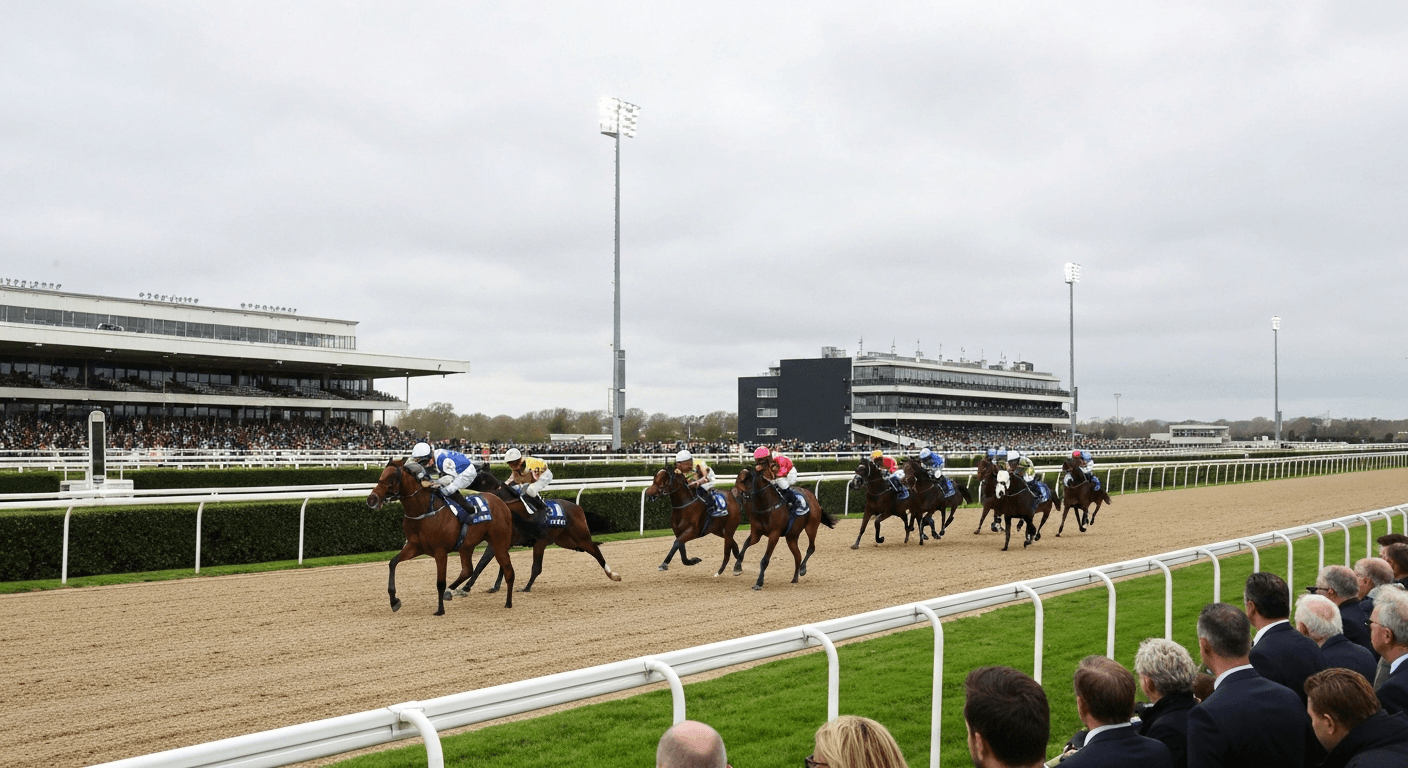
Mercury Stakes Night at Dundalk: The Complete Guide
A complete guide to the Group 3 Mercury Stakes, Dundalk's highest-class race, the floodlit Friday nights it headlines in late October, and the Listed Diamond Stakes.
Read more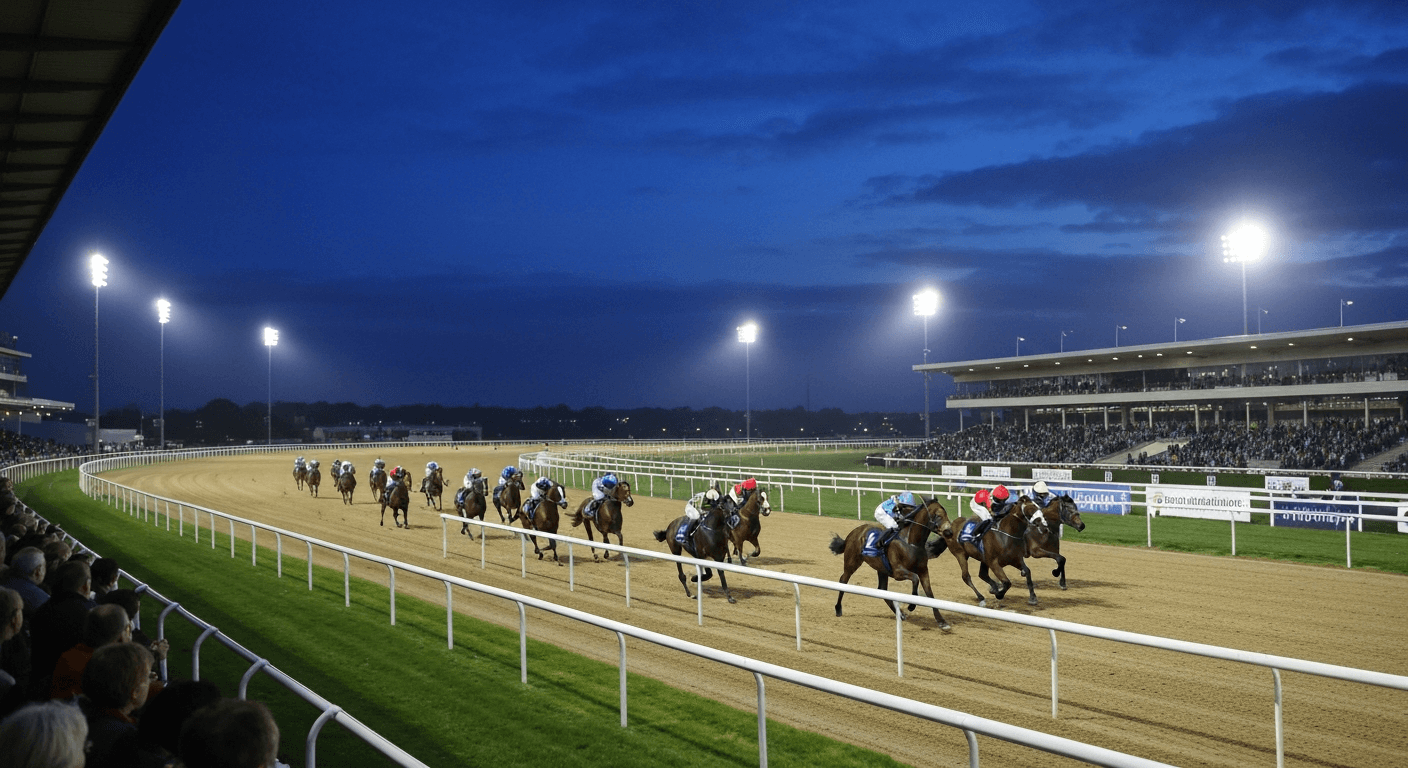
Dundalk: Ireland's Floodlit All-Weather Home
How Dundalk became the Republic's only floodlit all-weather Flat track and Europe's only combined horse-and-greyhound venue, racing on Friday nights.
Read more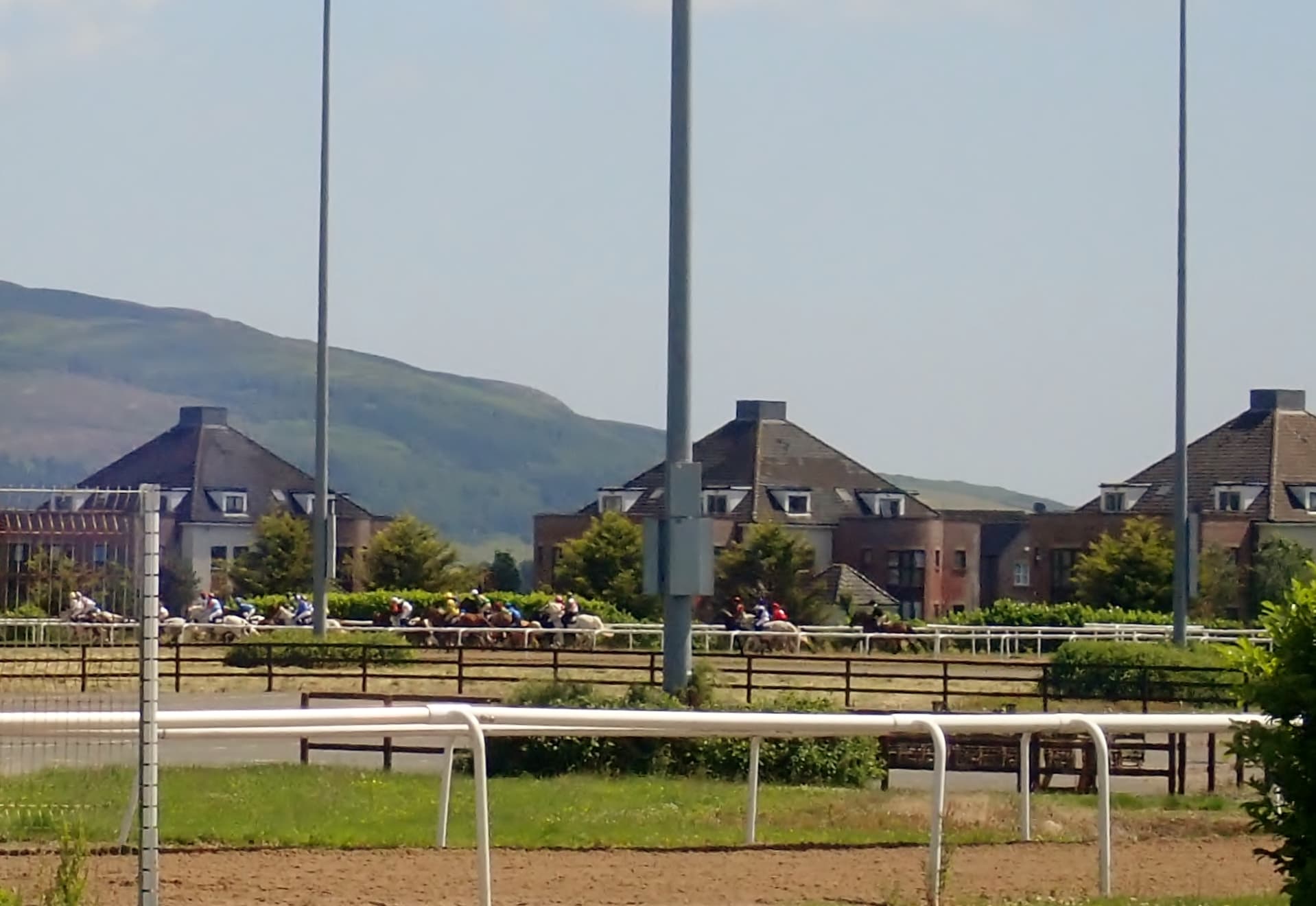
Betting at Dundalk Stadium
How Dundalk's floodlit Polytrack oval shapes betting, with the low-draw sprint bias, going, trainer and favourite form all set out honestly for the Friday-night Flat cards.
Read morePhotos on this page are used under Creative Commons licences. Titles, sources and licence links for each one are on our image credits page.
Research the field with the AI Race Predictor
Our model publishes calibrated win-probability estimates for UK races — a second opinion to understand a race, not tips. It's open about its record: it doesn't beat the market, and we show exactly how it does.
Work it out & learn the basics
Gamble Responsibly
Gambling should be entertaining and not seen as a way to make money. Never bet more than you can afford to lose. If you or someone you know has a gambling problem, help and support is available.