
Founder & Editor · Last reviewed 2026-07-13
On a winter afternoon at Gowran Park in January 1964, a seven-year-old bay gelding trained by Tom Dreaper won the Thyestes Chase and was led into the winner's enclosure by his owner, Anne, Duchess of Westminster. The horse was Arkle. Within six weeks he would win the first of his three Cheltenham Gold Cups. Before the decade was out he would carry a Timeform rating of 212, the highest ever awarded to a steeplechaser. The Thyestes at Gowran Park was one of the handicap stepping stones that set the season up.
Gowran Park, the dual-code course in Co. Kilkenny, has staged its Thyestes Handicap Chase in late January since 1954. The race asks a staying chaser to carry weight over about three miles one furlong of undulating turf, and its winter date makes it a natural test on the road to the spring festivals. For a young Arkle in the first of his Gold Cup campaigns, it was exactly that: a handicap outing that showed the champion could give lumps of weight away and still win with ease.
Arkle's connection to Gowran Park is a single afternoon. He ran there once, in the 1964 Thyestes, and never came back. Almost all of his story belongs to other courses, to Cheltenham, Leopardstown, Newbury, Sandown and Kempton, and this page keeps his wider career in the background where it belongs. What follows stays with Gowran Park, with the race he won there, and with why that one afternoon earned its place in his story and in the history of the Thyestes.
The precise weight he carried that day, the winning margin and his starting price were not recorded in a form book that survives in a reliable state, so this account keeps to what can be stood over: the horse, the race, and the connections who brought him to Kilkenny.
In this story:
Where to Bet
Place your bets with a trusted, licensed bookmaker.

Promo code BETFRED50. New customers only. Register, deposit with a Debit Card, and place a first bet of £10+ at Evens (2.0)+ on Sports, to be settled within 7 days, to get £30 in Sports Free Bets and £20 in Bet Builder Free Bets within 24 hours of settlement. 7-day expiry. Eligibility & payment exclusions apply. Full T&Cs apply. Take Time to Think. BeGambleAware.org. 18+. Full T&Cs.

Promo code R30. New UK customers only, 18+. Register, deposit £10 or more, then place a £10 single cash bet at odds of 1/2 (1.5) or greater on any sports market (excluding Virtuals). Once the qualifying bet settles you get £30 in Free Bets (3 x £10) — the qualifying bet can win or lose. Free Bets are valid on any sports market excluding Virtuals, expire in 7 days, are non-withdrawable and must be used in full. Excluded deposit methods apply (including PayPal, Apple Pay, Skrill and NETELLER). Named bets such as Lucky 15 do not qualify. If you cash out the qualifying bet, or it is voided, you are no longer eligible for the offer. Ends 31.12.26. Full T&Cs apply. Please gamble responsibly. BeGambleAware.org. 18+. Full T&Cs.

Promo code BET40GET20. New UK customers, 18+. Register with the code and place a first bet of £40 or more at Evens (2.0) or greater. Receive 2 × £10 free bets: the first credited automatically once the qualifying bet settles, the second 24 hours later. Free bets must be placed at minimum odds of 4/1 (5.0), expire 24 hours after credit, and the free-bet stake is not returned with winnings. Debit card deposits only. Take Time to Think. BeGambleAware.org. 18+. T&Cs apply. Full T&Cs.

50% of your first-day net losses refunded as a free bet, capped at £25. New UK customers aged 18+ only. To qualify, deposit and place a first bet of £10 or more on any sport at minimum odds of evens (2.00), then place at least two further bets on different events, each worth at least 50% of your largest bet, all at evens (2.00) or greater. Losses are counted from your first settled bet until 23:59 the same day. Place a qualifying £10+ bet and you are guaranteed at least a £5 free bet. Bets placed at SP, void bets, cashed-out bets and bets struck with free bets do not count towards the offer. The free bet is credited the day after your qualifying bets settle and must be used within 7 days, after which it expires. It can be used at odds from 1/4 (1.25) up to 250/1 on singles and straight accumulators, but not on Trixie, Patent or Yankee style multiples. Free-bet stake is not returned with winnings. One offer per person, household, address, IP address and device. E-wallet deposits may not qualify, so check the cashier before depositing. Customers registered with GAMSTOP cannot claim. KYC identity verification must be completed before the free bet is credited. Take Time to Think. BeGambleAware.org. 18+. T&Cs apply. Full T&Cs.

New customers, 18+. Choose the sports bonus at sign-up, make a first deposit and receive a 100% bonus up to £50 in your Sports Bonus balance. To convert the bonus to cash, wager it 10x within 30 days. Single bets below Evens (2.00) do not qualify; accumulators do not qualify if any selection is below 1/2 (1.50). Virtual Sports, voided, cancelled, drawn, cashed-out and free-bet wagers do not count towards wagering. Only the first settled bet per event counts. Withdrawing before the wagering requirement is met forfeits the bonus balance including bonus winnings. Real-money funds are used before bonus funds. Deposits via Skrill or Neteller are not eligible. Not valid in conjunction with other promotions. Odds, bet and payment limits apply. 10bet general and promotion T&Cs apply. BeGambleAware.org. 18+. Full T&Cs.

New customers in Great Britain and Republic of Ireland, 18+. Place a £10 fixed-odds qualifying bet at minimum odds of 1/2 (1.50) — single or each-way (only the win part counts), pre-event or in-play, not cashed out early, within 28 days of opening the account. Receive up to £60 in bonuses credited over three days: 3 × £10 fixed-odds free bets (the first on settlement, then 24 and 48 hours later) plus 3 × £5 Total Goals FOOTBALL spread bets and 3 × £5 racing Winning Favourites spread bets, with a £1 racing Race Index spread bet as an extra on top. The spread bets need a full spread-betting account, opened within 28 days of the fixed-odds account and subject to Spreadex's eligibility and appropriateness checks. Free-bet stakes not returned with winnings; free bets valid 28 days from issue. IMPORTANT: the £5 credits are SPREAD bets — sports spread betting carries the risk that losses can exceed your stake. Sports spread-betting customers do not have Financial Ombudsman or FSCS recourse. Take Time to Think. BeGambleAware.org. 18+. T&Cs apply. Full T&Cs.

Promo code WELCOME15, entered under My Bonuses after registering. New UK customers, 18+. Place a first qualifying bet of at least £10 from your cash balance at odds of evens (2.0) or greater within 7 days of opening the account. Once the qualifying bet fully settles you receive £15 in free bets, credited as 3 x £5 tokens with set uses: one £5 accumulator free bet (minimum 4 legs, each leg at 2/5 or bigger), one £5 sports free bet (any market at evens or bigger) and one £5 Sub Cover free bet (selected football player markets at evens or bigger). Free-bet stakes are not returned with winnings. Free bets expire 7 days after they are credited. Void, cashed-out and partially cashed-out bets do not qualify. One offer per customer. Confirm the current terms on BetGoodwin's own welcome-offer page before claiming. Take Time to Think. BeGambleAware.org. 18+. T&Cs apply. Full T&Cs.

New UK customers, 18+. Minimum deposit £10. Place a £10 qualifying single at minimum odds of 1/2 (1.50), settled within 14 days. Receive £30 in free bets (stake not returned), split £20 for sportsbook use (2 x £10) and £10 for Bet Builder only (2 x £5); Bet Builder does not cover horse racing. Free bets must be accepted within 7 days and expire 7 days after acceptance. No promo code required. Best Odds Guaranteed on UK & Irish racing, subject to having staked over £25 in the previous seven days. Operated by LiveScore Betting and Gaming (Gibraltar) Ltd, UKGC 56859. Confirm the current terms on LiveScore Bet's own promotions page before claiming. Take Time to Think. BeGambleAware.org. 18+. T&Cs apply. Full T&Cs.
18+. BeGambleAware.org
Arkle: The Horse
Arkle was foaled on 19 April 1957, an Irish-bred bay gelding by Archive out of Bright Cherry and a grandson of the great Nearco. He was bred by Mrs Mary Baker, also known as Alison Baker, of Malahow House near Naul in Co. Dublin, and foaled at Ballymacoll Stud in Co. Meath. He passed into the ownership of Anne Grosvenor, Duchess of Westminster, who named him after a mountain in Sutherland in the Scottish Highlands. He was trained by Tom Dreaper at Greenogue, Kilsallaghan, and was ridden throughout his chasing career by Pat Taaffe.
Nothing in that early history marked him out. His breeding was respectable rather than fashionable, and his first seasons over hurdles gave only glimpses of what was coming. It was over fences, and under big weights, that Arkle became the horse the sport still measures others against. His Timeform rating of 212 remains the highest ever given to a steeplechaser, and no chaser since has been rated close to it.
The record
Across his career Arkle won 27 of his 35 starts, including 22 of his 26 completed chases. What set those numbers apart was the weight he carried while compiling them. He shouldered more than twelve stone in fourteen of his races, conceding great chunks of weight to good horses and beating them anyway. In an age when the handicap was meant to bring the best back to the field, Arkle simply carried whatever was put on his back and won.
The centrepiece of his career was three Cheltenham Gold Cups in a row, in 1964, 1965 and 1966. He added the 1964 Irish Grand National under twelve stone, two Hennessy Gold Cups in 1964 and 1965, both under 12st 7lb, the King George VI Chase in 1965, and the Whitbread Gold Cup the same year. In the 1965 Gallaher Gold Cup he conceded sixteen pounds to his old rival Mill House and still broke the course record by seventeen seconds.
His superiority became a scheduling problem for the handicappers. For the 1964 Irish Grand National the Irish authorities drew up two weight systems, one for the races in which Arkle ran and one for the races in which he did not, because his presence distorted every handicap he entered.
Arkle and Mill House
The rivalry that defined the era was with Mill House, the powerful English-trained chaser who had beaten Arkle in the 1963 Hennessy after Arkle slipped on landing. From that point Arkle turned the head-to-head into a rout. He beat Mill House by five lengths in the 1964 Gold Cup, by ten lengths in the 1964 Hennessy, and by twenty lengths in the 1965 Gold Cup, as well as in the Gallaher Gold Cup. By the time of the 1966 Gold Cup, run without Mill House, Arkle won by thirty lengths from Dormant, and the question of who was the best chaser in training had long since been settled.
His first Gold Cup season, the winter of 1963 into 1964, was the one that brought him to Gowran Park. As a rising star being aimed at Cheltenham for the first time, he spent that winter proving himself in valuable Irish handicaps before taking on Mill House in March. The Gowran race sat in the middle of that campaign, and its detail belongs to the next section rather than here.
The end of the story
Arkle's career ended at Kempton Park on 27 December 1966. Running in the King George VI Chase, he struck the guard rail and fractured a pedal bone, yet still galloped on to finish second to Dormant. He never raced again. He was retired in 1968 and, after his condition failed to allow a return, was put down on 31 May 1970 at the age of thirteen.
He was known to the public simply as "Himself", and the affection he commanded was without parallel in the sport. Letters reached him addressed only to "Arkle, Ireland". By the time he came to Gowran Park in 1964 the legend was only beginning, and the horse who let the Duchess of Westminster lead him in that day was on his way to becoming the yardstick for greatness over fences.
The 1964 Thyestes at Gowran Park
Arkle ran at Gowran Park once. He won the Thyestes Chase there on 30 January 1964, ridden by Pat Taaffe and trained by Tom Dreaper. That single afternoon is his entire Gowran Park record, and everything worth saying about his connection to the course runs through it.
The 1964 Thyestes Chase
The Thyestes is Gowran Park's biggest National Hunt prize, a staying handicap chase run over about three miles one furlong in late January. First run in 1954, it draws the better staying chasers in Ireland at a point in the winter when trainers are looking towards Cheltenham and Aintree. In 1964 it caught Arkle at the perfect moment, a rising champion in the first of his Gold Cup seasons, being tested under a big weight against horses receiving lumps of it from him.
The bare result is clear even where the fine detail is not. Arkle won, beating Loving Record, to whom he conceded thirty-five pounds. Reports of the day record only that he won easily. The exact weight he carried, the winning margin and his starting price were not preserved in a form record that can be relied upon, so this account leaves those figures where the evidence leaves them, unstated rather than guessed.
What the concession tells you is the point of the race. A thirty-five pound pull in the weights is enormous. It is the difference between a top-class chaser and a plain handicapper, and Arkle gave it away and still came home in front without being asked a serious question. For a horse being aimed at his first Gold Cup, it was the ideal rehearsal: proof that he could carry top weight over a true staying trip on undulating ground and win with something to spare.
The Gowran win sat inside a wider winter campaign, though the rest of that campaign happened elsewhere and is context only, never part of his Gowran record. He won at Leopardstown before the Thyestes and again at Leopardstown after it, and the three wins together took him to Cheltenham in the best possible order. On 7 March 1964, just over five weeks after Gowran, he won the first of his three Cheltenham Gold Cups, beating Mill House by five lengths and confirming everything the handicaps that winter had promised.
Arkle's win was the first leg of a remarkable Dreaper hat-trick in the race. Tom Dreaper saddled the Thyestes winner three years running: Arkle in 1964, Fort Leney in 1965, and the brilliant Flyingbolt in 1966. For a single yard to win Gowran's feature chase three times in succession, with three horses of that calibre, remains one of the defining sequences in the race's history.
The Thyestes roll of honour
Arkle's name sits near the top of a roll of honour that has come to mark the Thyestes as a proven trial for the biggest staying chases. Three later winners went on to win the Aintree Grand National, Hedgehunter in 2005, Numbersixvalverde in 2006 and Nick Rockett in 2025, each having taken the Gowran handicap first. The table below sets Arkle among that company. Every horse listed won the race at Gowran Park.
| Year | Winner | Trainer | Jockey |
|---|---|---|---|
| 1964 | Arkle | Tom Dreaper | Pat Taaffe |
| 1965 | Fort Leney | Tom Dreaper | n/a |
| 1966 | Flyingbolt | Tom Dreaper | n/a |
| 2004 | Hedgehunter | Willie Mullins | D J Casey |
| 2005 | Numbersixvalverde | Martin Brassil | N P Madden |
| 2025 | Nick Rockett | Willie Mullins | Paul Townend |
Hedgehunter carried 10st 2lb when winning the 2004 Thyestes as the 100/30 favourite, and Numbersixvalverde carried 10st 5lb at 8/1 the following year. Both then completed the Gowran-to-Aintree double that has become the race's calling card. Set against those weights, Arkle's willingness to give thirty-five pounds and more to his rivals in the same race puts the scale of his 1964 performance into perspective. He was not being trialled for a handicap off a winnable mark. He was a champion using a handicap as a schooling ground, and giving the rest of the field a head start on the way.
Great Moments
The image that survives from Arkle's afternoon at Gowran Park is not the race itself but what followed it. Gowran Park's own history records that after the 1964 Thyestes, Arkle was led into the winner's enclosure by his owner, Anne, Duchess of Westminster. A reigning champion, walking back through a Kilkenny crowd on the arm of the woman who owned him, is the moment the course remembers, and it is worth looking at more closely than the bare result allows.
The Duchess and her horse
Anne, Duchess of Westminster, was not an owner who kept a distance from her horses. She had named Arkle herself, after a mountain on her Scottish land, and her attachment to him was well known. To lead him in at Gowran was an act of ownership in the plainest sense, a woman claiming her horse in front of the people who had come to see him. The scene fixes the day in the course's memory in a way that a winning distance never could, and it is the single detail that ties Arkle personally to Gowran Park.
That said, the record for the moment rests on the racecourse's own account, and no other source has been located to corroborate it independently. It is presented here as Gowran Park tells it.
What the win actually showed
The greatness of the Gowran performance is easy to miss because it looks, on paper, like a routine handicap win. The depth is in the weight. Conceding thirty-five pounds to Loving Record and winning easily is the kind of result that only a truly exceptional chaser produces. Thirty-five pounds is not a nudge in the handicap. It is close to two and a half stone, a margin that is meant to be unbridgeable between horses of genuinely different classes.
Arkle bridged it and had more in hand. Contemporary reports do not describe a hard-fought finish or a horse being driven out to hold on. They describe a horse winning with ease under a burden designed to stop him. For anyone at Gowran that day who understood weight-carrying, the performance was a preview of the handicapper's problem that would soon become famous, the horse so far ahead of his rivals that the weights could not be made to work.
A champion caught in mid-flight
Part of what makes the Gowran win resonate is its timing. Arkle came to Kilkenny in the middle of the winter that would end with his first Gold Cup. He was not yet the settled legend of 1965 and 1966; he was a young chaser proving, race by race, that the promise was real. The Thyestes was one of the proofs. Five weeks later he met Mill House at Cheltenham and beat him by five lengths, and the sport had its new champion. Gowran Park had seen him on the way up, at the point where the handicaps still tried to hold him and could not.
The two-weight-system decision that the Irish authorities would soon adopt, one set of weights for races with Arkle and another for races without him, was the formal admission of what Gowran had watched him do in miniature. Give him top weight and thirty-five pounds to hand out, and he would win anyway. That was the lesson of the 1964 Thyestes, and it is why a single afternoon at a Kilkenny track holds a place in the story of the greatest steeplechaser the sport has known.
Legacy and Significance
Arkle's standing in the sport does not rest on any single race, and certainly not on one winter handicap in Kilkenny. It rests on three Cheltenham Gold Cups, on a Timeform rating of 212 that no chaser has approached before or since, and on a record of 27 wins from 35 starts compiled while giving weight away in almost every handicap he entered. Gowran Park's share of that legacy is small in size but real in kind: it is one of the places where the myth was being built, in real time, in front of a crowd who came to watch a champion carry an impossible weight and win anyway.
What Arkle left the sport
The memorials trace the reach of his fame. His skeleton is displayed at the Irish National Stud museum at Tully in Co. Kildare, where it still draws visitors decades after his death. A statue was unveiled at Cheltenham in 1972 by the Duchess of Westminster, at the course where his three Gold Cups were won. On what would have been his birthday, 19 April, in 2014, a large bronze of Arkle and Pat Taaffe by the sculptor Emma MacDermott was unveiled at Ashbourne in Co. Meath, near the country where he was trained.
His name lives on in the races that carry it. The Arkle Challenge Trophy at Cheltenham, the championship chase for the best novices, took his name in 1969. The Arkle Novice Chase at Leopardstown does the same in Ireland. To be called an Arkle horse is still the highest compliment the sport can pay a young chaser.
The Gowran connection endures
For Gowran Park, the Arkle link runs deeper than one line on a roll of honour. The Thyestes is now sponsored by the bloodstock house Goffs, and Goffs also runs the Goffs Arkle Sale, Ireland's leading store sale, named in the horse's honour. When Goffs launches each year's Thyestes, the sale and the race are spoken of in the same breath, so Arkle's name is stitched into the modern identity of the very race he won in 1964. Few horses can claim to have both won a race and, through the sponsor's own naming, come to stand over it.
The race has grown into its reputation in a way that suits its most famous winner. Three later winners went on to take the Aintree Grand National, and the Thyestes is now regarded as one of the surer staying-chase trials in the calendar. Arkle stands at the head of that tradition, the horse whose win, in the first of his Gold Cup seasons, gave the Kilkenny handicap a claim on greatness that later winners have only reinforced.
The verdict on Gowran Park's place in the Arkle story is a modest but secure one. It was never his stage; Cheltenham was that. It was a proving ground, one of the handicaps where the young champion showed what he could do to a field when he gave it a start. On 30 January 1964 he did it in front of a Kilkenny crowd, let the Duchess of Westminster lead him in, and moved on towards the races that made him immortal. Gowran Park keeps the afternoon, and it is enough.
Frequently Asked Questions
Share this article
More about this racecourse
All gowran-park guides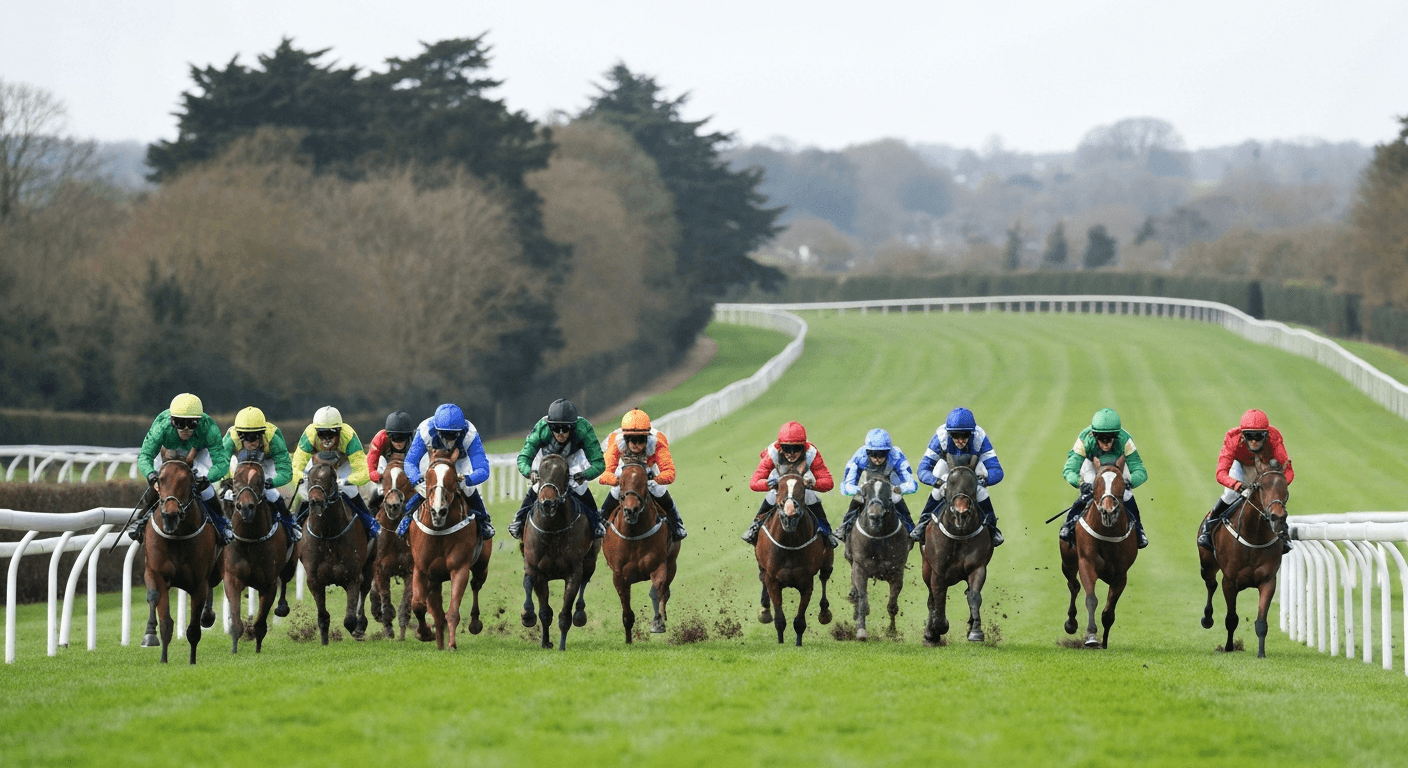
Betting at Gowran Park Racecourse
A factual betting and form guide to Gowran Park, the dual-code Kilkenny course: the galloping uphill track, the 7f draw, the Thyestes and favourites.
Read more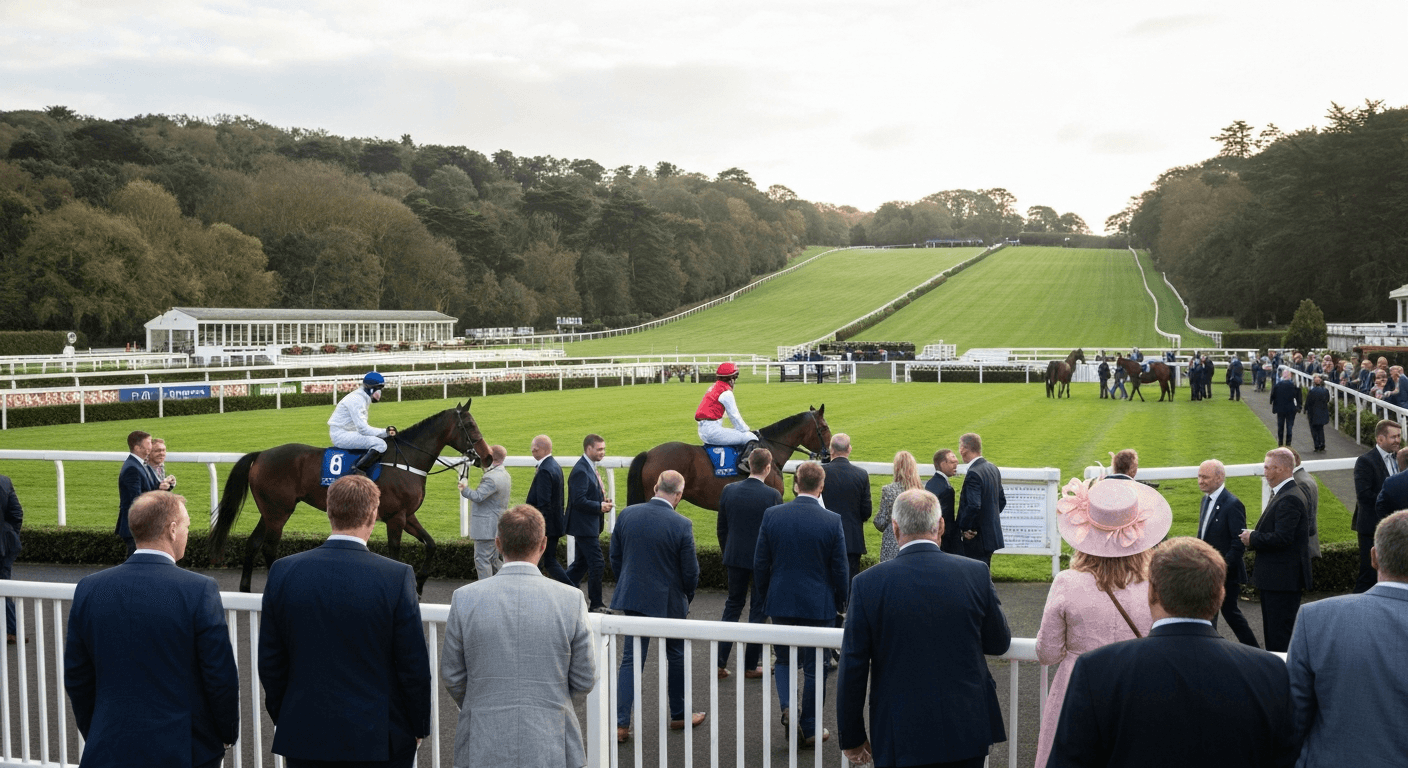
A Day Out at Gowran Park Racecourse
Plan a day at Gowran Park in Co. Kilkenny: getting there, tickets, food and bars, the best days like Thyestes and Red Mills, dress code and first-visit tips.
Read more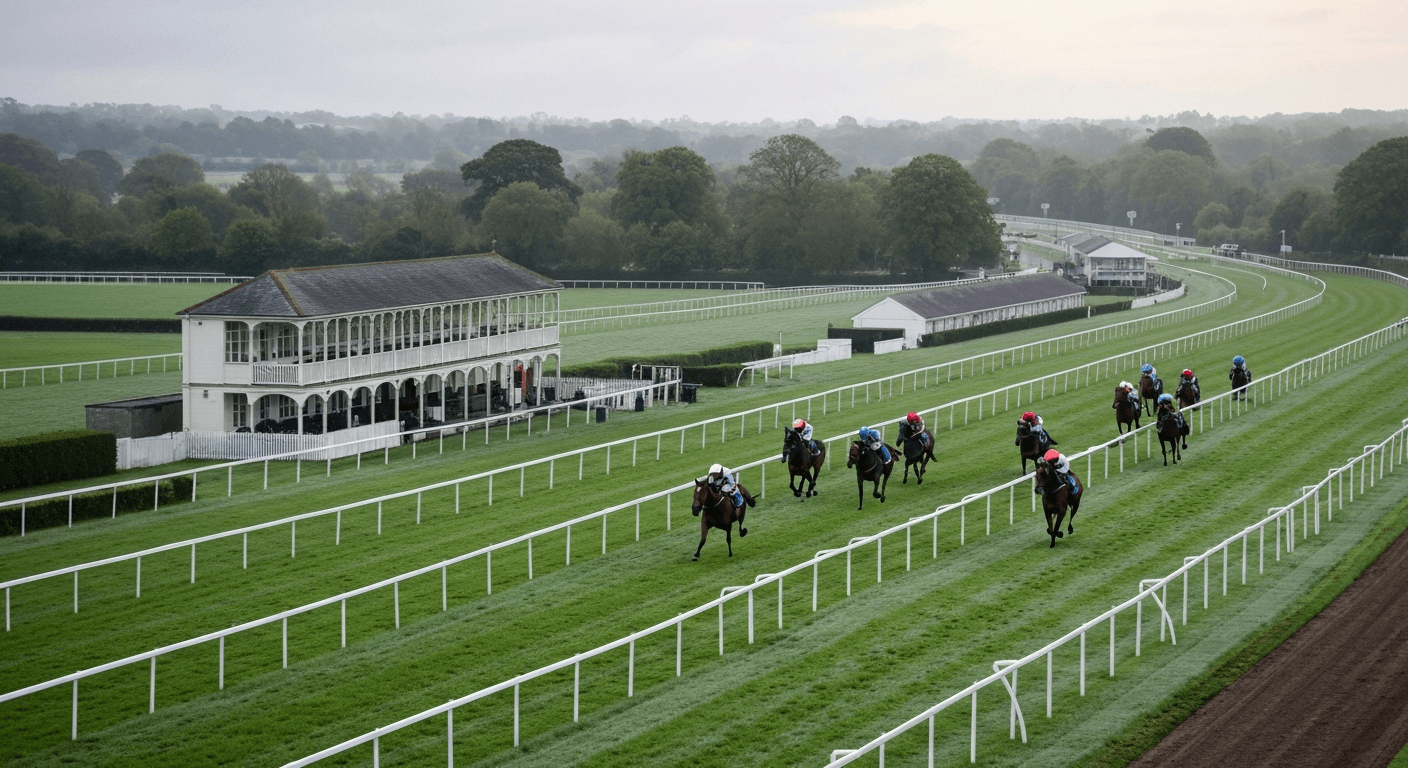
The History of Gowran Park Racecourse
The history of Gowran Park in Co. Kilkenny, from its 1914 opening on the Annaly Estate to the Goffs Thyestes Chase, Arkle's win and Grade 1 status.
Read moreResearch the field with the AI Race Predictor
Our model publishes calibrated win-probability estimates for UK races — a second opinion to understand a race, not tips. It's open about its record: it doesn't beat the market, and we show exactly how it does.
Work it out & learn the basics
Gamble Responsibly
Gambling should be entertaining and not seen as a way to make money. Never bet more than you can afford to lose. If you or someone you know has a gambling problem, help and support is available.