Founder & Editor · Last reviewed 2026-07-13
Kilbeggan has been staging horse races since 1840, and doing it on the same patch of ground at Loughnagore since 1901. That is a long run for a small country track in the middle of Ireland, and it has not always been a comfortable one. The course came close to going under more than once, kept going by a local committee that refused to let it fold, and turned itself into what the racecourse now calls the most successful one-day meeting in Ireland outside the festival tracks.
This is a jumps course, and has been jumps only since 1971. It runs a short summer season of mostly evening fixtures between April or May and September, built around the Midlands National in July. Over the years the tight, turning circuit at Loughnagore has given early runs to horses who went on to far bigger days elsewhere, and it has produced its own specialists who kept coming back to win.
What follows traces that story in order: the first recorded races around the town in 1840, the move to the present site in 1901, the survival through lean decades and the switch to National Hunt racing, the founding and rise of the Midlands National, the horses and people who shaped the place, and the rebuilding that carried the course into its modern form.
Use the links below to jump to a section:
The First Races and the Move to Loughnagore
The first recorded race at Kilbeggan was run on 9 March 1840. It was a Challenge Cup worth 40 guineas, with £10 added, put up by a group of local gentlemen who wanted racing in the town. From that start, meetings were held at several sites around Kilbeggan between 1840 and 1855 before the early run of racing lapsed.
Racing came back in 1879, this time at Ballard, on land owned by the Locke family, the distillery owners whose name is still tied to the town. That revival ran until 1885. The course then found its permanent home in 1901, when racing was re-established at the present Loughnagore site on the edge of Kilbeggan. It has been run there ever since, with only one long break, during the Second World War, when there was no racing from 1941 to 1945.
A Country Course Takes Root
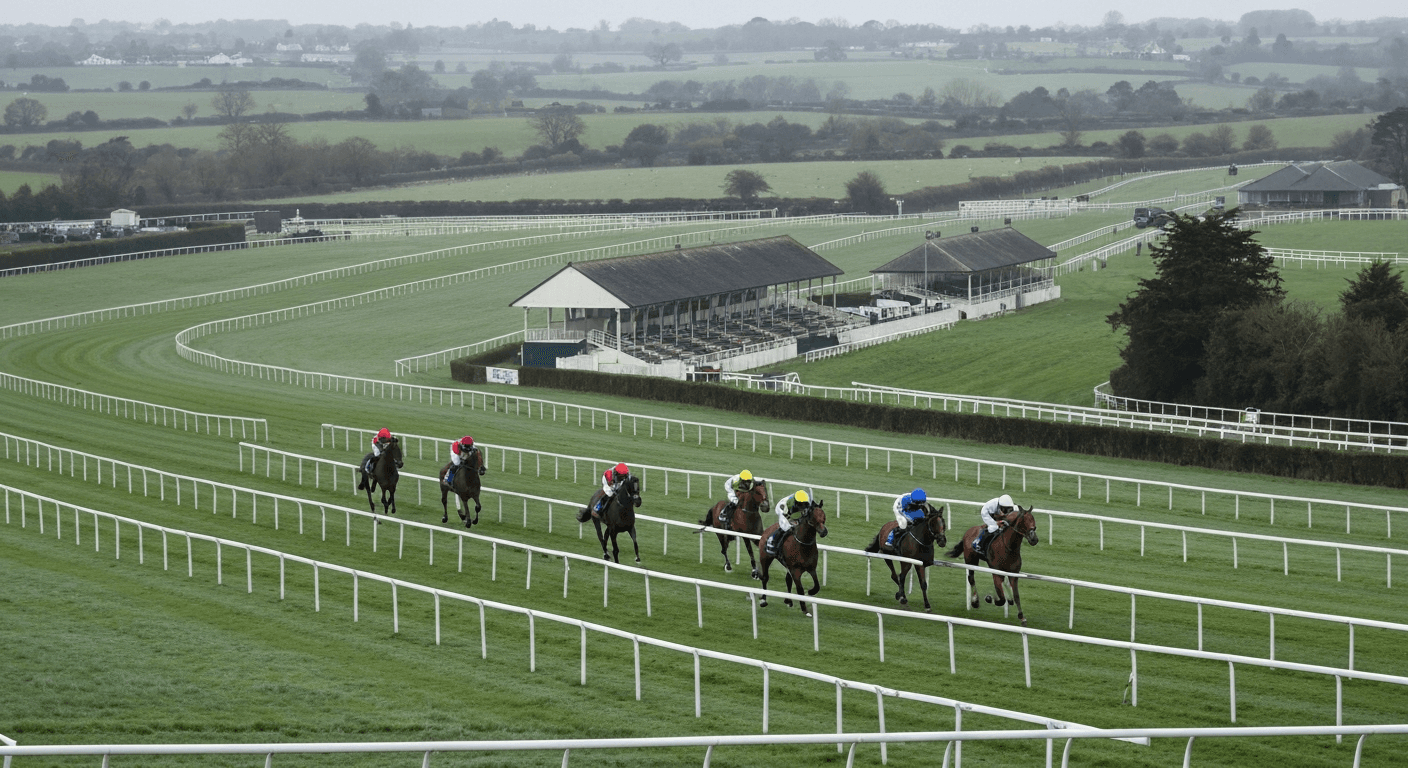
Loughnagore gave Kilbeggan the sharp, right-handed, undulating circuit that still defines the place. It is a tight oval of about nine furlongs, turning almost the whole way round, with a notably sharp bend after the penultimate fence and an uphill run-in of around 300 yards to the line. The layout was never built for long-striding gallopers. It rewards handy, speedy types who can jump and keep their position, and that character shaped the racing at Kilbeggan from the moment the course settled at Loughnagore. You can read how the modern circuit rides in the complete guide to Kilbeggan.
The move to a single fixed site mattered. Racing that drifts between fields around a town is hard to build on. A permanent course gave the local committee something to invest in, maintain and grow, even if the growing came slowly and the money was often short. For its first half-century at Loughnagore, Kilbeggan was a modest local meeting, staging a small number of fixtures a year and getting by on the support of the town and the surrounding countryside.
That modest scale is worth holding onto, because it makes what came later, the rise to fifty thousand racegoers a year and a Graded race, all the more striking. Kilbeggan did not start big. It started as a handful of races put up by local men in 1840, lapsed, revived, lapsed again, and only found solid ground at Loughnagore in 1901. Everything the course became was built on that foundation, and on the stubbornness of the people who kept it going through the harder years that followed.
Survival, Jumps Only and the Midlands National
Kilbeggan's modern shape was set by a run of decisions taken between the 1950s and the present day: surviving near-collapse, moving to jumps only, bringing in sponsors, and building a July feature that grew into the biggest thing the course does.
Surviving the Lean Years
The course hit real trouble in the 1950s and 1960s. At one point it carried a debt of around £13,000, and the Racing Board withdrew its support. For a small country track running on committee money and local goodwill, that was close to the end. Kilbeggan came through it, but the memory of those years is part of why the course describes itself as a community success story rather than taking survival for granted.
In 1971 the committee made the decision that still defines the course: it switched to National Hunt racing only, and it has staged jumps racing exclusively ever since. The last Flat race at Kilbeggan was won by Grá Mo Chroí. Two years later, in 1973, the first sponsored races arrived, an early sign of the commercial support that would later become central to the course's finances.
The Midlands National
The race that carries Kilbeggan's name furthest is the Midlands National, first run in 1997. The inaugural running was won by Cristy's Picnic, trained by Mouse Morris and part-owned by the film director Neil Jordan and the actor Stephen Rea, and the great grey Desert Orchid paraded that day. The racecourse describes how the race "has gone from €10,000 to a race of €100,000."
The Midlands National is a Listed handicap chase run in July over 3 miles 1 furlong, a distance the race moved up to in 2013. In 2022 it was upgraded to Grade B status, the first Graded race ever staged at Kilbeggan, and the prize fund rose from €75,000 to €100,000. AXA came on board as sponsor in 2019, branded as AXA Farm Insurance, with the funding doubled to €100,000; since 2023 the race has been sponsored by Kilmurray's Homevalue Hardware of Mullingar. In 2025 the winner received about €59,000 of the €100,000 total.
The race has a settled reputation as a stepping stone to the Galway Plate. Rockholm Boy won the 2001 Midlands National and then the 2002 Galway Plate at 20/1, and recent Midlands National winners have routinely headed to the Plate next. The July card at Kilbeggan even stages a dedicated Galway Plate Trial handicap chase alongside the feature. You can find the current running details in the complete guide's races section.
One point of housekeeping is worth flagging honestly. Some 2026 previews in the Westmeath and Offaly press describe the coming renewal as "the eighth running" of the race, which does not square with the 1997 start date the racecourse itself cites. The likeliest explanation is that "eighth" counts only the €100,000 or Graded-era runnings, but that has not been pinned down, so treat the "eighth running" line as unresolved rather than as a correction to the 1997 date.
| Milestone | Date | Detail |
|---|---|---|
| First recorded race | 9 March 1840 | Challenge Cup, 40 guineas plus £10 added |
| Racing at present Loughnagore site | 1901 | Run every year since bar 1941 to 1945 |
| Switch to National Hunt only | 1971 | Last Flat race won by Grá Mo Chroí |
| First sponsored races | 1973 | n/a |
| Midlands National first run | 1997 | Won by Cristy's Picnic (Mouse Morris) |
| Midlands National distance raised | 2013 | Up to 3 miles 1 furlong |
| Midlands National upgraded to Grade B | 2022 | Prize fund €75,000 to €100,000 |
The Horses Who Made Their Name Here
Kilbeggan's honour roll works two ways. Some horses did their defining work here and are Kilbeggan names first. Others simply passed through early in careers that made them famous at bigger tracks. It is worth keeping the two apart.
Freewheelin Dylan
The strongest Kilbeggan story of recent years is Freewheelin Dylan. On 10 July 2020, at a meeting run behind closed doors during the pandemic, he made all under Ricky Doyle to win the Midlands National by a nose off a mark of 135. Paddy Dunican, long the guiding hand at the course, called him "a bit of a Kilbeggan specialist, having won here three times already," so the July win came at a track he already knew well.
What he did next belongs to another racecourse but is too good to leave out. On Easter Monday, 5 April 2021, Freewheelin Dylan won the Irish Grand National at Fairyhouse at 150/1, again under Ricky Doyle for trainer Dermot McLoughlin, becoming the longest-priced winner in the history of that race, which was first run in 1870. The Grand National day was Fairyhouse's, but the horse's home form and his July win were Kilbeggan's.
Pakens Rock, the Course Specialist
If Freewheelin Dylan is the marquee name, Pakens Rock is the purest example of a Kilbeggan specialist. He won three times at the track, and across both codes. He took a handicap chase on 19 June 2023 and another handicap chase on 21 July 2023, and then, having switched to the Darren Collins yard, he won a handicap hurdle at Kilbeggan on 24 April 2025 for his third course success. After that April win Collins said, "He likes it here, I think that's his third win at the track, and I'd say he'll come back here during the year." Winning at Kilbeggan over both fences and hurdles is exactly the profile the tight, turning circuit tends to reward.
Passing Through: Tiger Roll and Cause of Causes
Two of the biggest names in recent jumps racing had early runs at Kilbeggan, though their fame was made elsewhere. Tiger Roll won a novice chase here on 20 June 2016, ridden by Jack Kennedy, one of his early chase outings before he became a dual Aintree Grand National winner and a repeat winner at the Cheltenham Festival. Cause of Causes recorded an early win at Kilbeggan in 2012 before he was bought by JP McManus and went on to his own Cheltenham Festival haul. Both were staging posts rather than the mark of course specialists, and their later triumphs belong to Aintree and Cheltenham, not Loughnagore.
Patton and the Clock
One more name earns a place for what it did on the stopwatch. Patton set the fastest recorded Midlands National winning time, 5:16.60, in 2006, trained by Noel Meade and ridden by Niall P Madden. It stands as the quickest running of the feature on the times the course publishes, and Meade's involvement is a thread that runs through several of Kilbeggan's biggest days.
The People Behind Kilbeggan
A small course leans heavily on the people who run it and the horsemen who turn up to ride there. Kilbeggan has had plenty of both.
Paddy Dunican
No name is more closely tied to Kilbeggan's revival than Paddy Dunican. He was general manager from 1988, and was named Manager of the Year several times through the 1990s as the course pulled itself up from the lean decades. He stayed in the role until his death in April 2024, aged 61. His long stewardship covered the years when Kilbeggan went from a modest local meeting to the busy, well-attended summer course it is now, and it was Dunican who described Freewheelin Dylan as a Kilbeggan specialist after that 2020 win.
The Trainers and Jockeys
The Midlands National roll of honour tells you which yards have made Kilbeggan's feature their own. Over the last twenty renewals Noel Meade is the leading trainer with three wins, taken by Patton in 2006, Tulsa Jack in 2016 and Ida's Boy in 2024. Gordon Elliott, Mouse Morris and Philip Fenton each have two. Among the riders, Jack Kennedy is the leading jockey in the race with two wins, on Rogue Angel in 2018 and Hurricane Georgie in 2022.
There is one notable gap. As of the 2026 renewal, champion trainer Willie Mullins had still not won the Midlands National, despite the race dating back to 1997 and despite Mullins being an established Kilbeggan course specialist by strike rate. It is the kind of anomaly that tends to correct itself eventually, and the framing here will change the first year he wins it.
The course has also drawn the biggest riding names of the era. Ruby Walsh, AP McCoy and Barry Geraghty have all ridden at Kilbeggan, which for a summer country track is no small thing.
A Touch of Glamour
Kilbeggan's guest list has not been short of colour. In 1953 Prince Aly Khan rode a winner, Ynys, at the course, attending with the Hollywood actress Gene Tierney. In more recent years the course has welcomed President Michael D. Higgins among its guests. For a track that describes itself as the heart of Ireland and the soul of racing, that mix of local committee, champion jockeys and the occasional famous face is very much in keeping.
Records and Stats
Kilbeggan's record book is a modest one, and it is honest to say so. A full set of all-time course records by distance is not published, and neither are biggest winning margins, so this section sticks to the figures the course and the form actually give.
The clearest numbers come from the Midlands National, where winning times are recorded. Patton set the fastest recent time, 5:16.60, in 2006. The slowest in that run was Foxy Jacks in 2023, at 6:44.90, on much softer ground. Amirite won the 2025 renewal in 6:13.20. The wide spread between those times is a reminder that the feature is run over 3 miles 1 furlong in mid-summer, when the going at Kilbeggan can swing from good to soft and the clock swings with it.
| Midlands National time | Horse | Year |
|---|---|---|
| 5:16.60 (fastest recorded) | Patton | 2006 |
| 6:13.20 | Amirite | 2025 |
| 6:44.90 (slowest in run) | Foxy Jacks | 2023 |
On the training and riding side, the standout figures are Noel Meade's three Midlands National wins over the last twenty renewals, with Gordon Elliott, Mouse Morris and Philip Fenton on two apiece, and Jack Kennedy's two winning rides in the race. Those counts match the honour roll set out in The People Behind Kilbeggan.
Two things are deliberately left blank. There is no reliable all-time course-record time by distance to quote, and there is no published table of biggest winning margins. Rather than fill those gaps with a number that cannot be stood up, the honest entry for both is n/a. As with any track, historical strike rates describe what has happened, not what will; they are not a betting angle, and backing favourites loses money to starting price over time.
The Day Out and What Kilbeggan Means
Kilbeggan calls itself the heart of Ireland and the soul of racing, and the geography backs up at least the first half of that. The course sits at Loughnagore on the edge of Kilbeggan town, in Co. Westmeath, close to the middle of the country. The racecourse also describes itself as the most successful one-day meeting in Ireland outside the festival tracks, which for a small summer venue is a real claim.
The feel of the place comes from its season. Kilbeggan runs mostly evening fixtures across the summer, races that fit around a working day and pull in a crowd looking for a night out as much as a card. The biggest of them is Midlands National day in July, which doubles as the course's Ladies Day and has been described as the social event of the year in the Midlands. It is built around a full card, live music, family entertainment and a party atmosphere rather than a strict formality; there is no strict dress code, though the Best Dressed Guy's Day in late May and the Sustainable Style Ladies Competition on Midlands National day mean plenty of racegoers still dress up.
The growth is measurable. By the racecourse's own figures, attendances rose from 20,000 in 1995 to 50,000 in 2024, and in 2024 the local business community contributed almost €100,000 in sponsorship. Those are the course's own numbers rather than independently audited ones, but the direction of travel is not in doubt.
The town gives the day its backdrop too. Kilbeggan is well known for the Kilbeggan Distillery, and the course has long traded on being a genuine community occasion, run by local people for a local and visiting crowd. That mix of small-town setting, summer evenings and one big July day is what Kilbeggan means to the people who go, and it is a large part of why the course survived to grow at all. For the practical side of a visit, the complete guide covers getting there and tickets.
Rebuilding the Course and Kilbeggan Today
The Kilbeggan of today is the product of a long building programme that ran alongside its rise in attendance. Having come through the financial trouble of the 1950s and 1960s, the course spent the following decades reinvesting in the site.
The Building Programme
The first big step was a new complex costing £165,000, which opened on 20 May 1990. That same year Kilbeggan was voted Racecourse of the Year by the Racing Club of Ireland, a marker of how far it had come from the debt-laden years. In 1992 the committee bought the 88-acre site outright from the Fox family and increased its fixtures to four, giving the course both the land under its feet and a bigger programme to build on.
The investment continued. The New Pavilion opened in May 1999 at a cost of £1,000,000, and a further development of offices and a new parade ring, costing €2.3 million, opened in July 2007. Taken together, the recent upgrade programme has been cited at around €2.5 million. Those figures are consistent across the course's own account of its redevelopment, and they describe a small track that kept spending on itself rather than standing still.
Ownership and Governance
Kilbeggan is owned and run by Kilbeggan Race Company Ltd, a voluntary local committee, and that community ownership is central to how the course sees itself. The current general manager is Stephen Heffernan and the chairman is PJ Lynam. The long-serving manager Paddy Dunican, who had run the course since 1988, died in April 2024; his successor inherited a venue in far healthier shape than the one Dunican took on.
The Course Today
Kilbeggan now stages a short summer season of jumps racing, roughly April or May through to September. The exact number of fixtures is given differently in different places, variously eight or ten, and the racecourse's own figures cite ten meetings in 2024, up from three in the early 1990s. Rather than settle that quietly, it is fairer to say the course runs somewhere around eight to ten fixtures a year, most of them in the evening.
Racing at Kilbeggan is broadcast live on Racing TV under its media-rights arrangement, so the course reaches an audience well beyond the fifty thousand who come through the gates. For a jumps-only country track that nearly folded twice, the modern picture, a rebuilt site, a Graded feature, rising crowds and a national broadcast slot, is a long way from the Challenge Cup of 1840. The complete guide to Kilbeggan covers what the course offers a visitor now.
Frequently Asked Questions
Share this article
More about this racecourse
All kilbeggan guides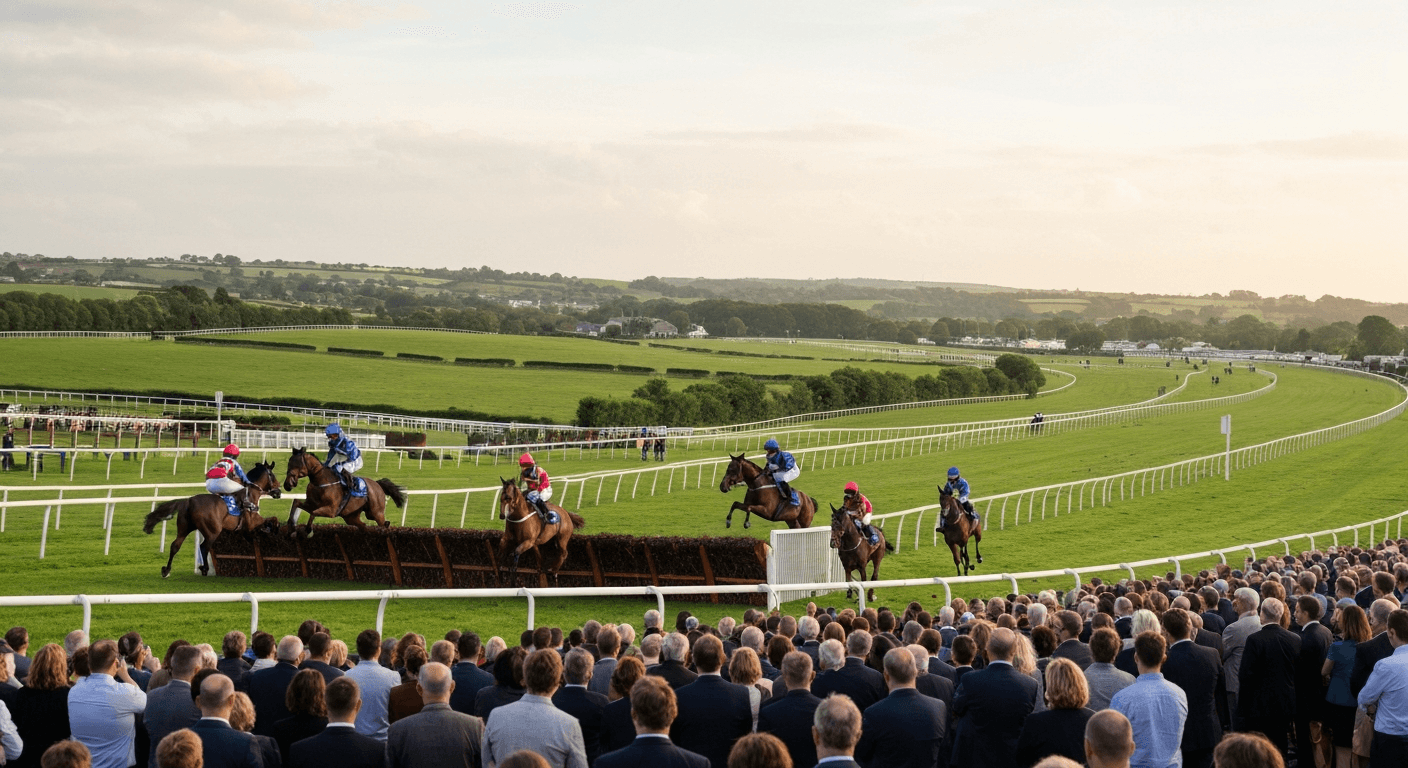
Kilbeggan Racecourse: The Complete Guide
Kilbeggan Racecourse in Co. Westmeath is Ireland's midlands jumps track, home of the Midlands National, plus tickets, travel and how to visit.
Read more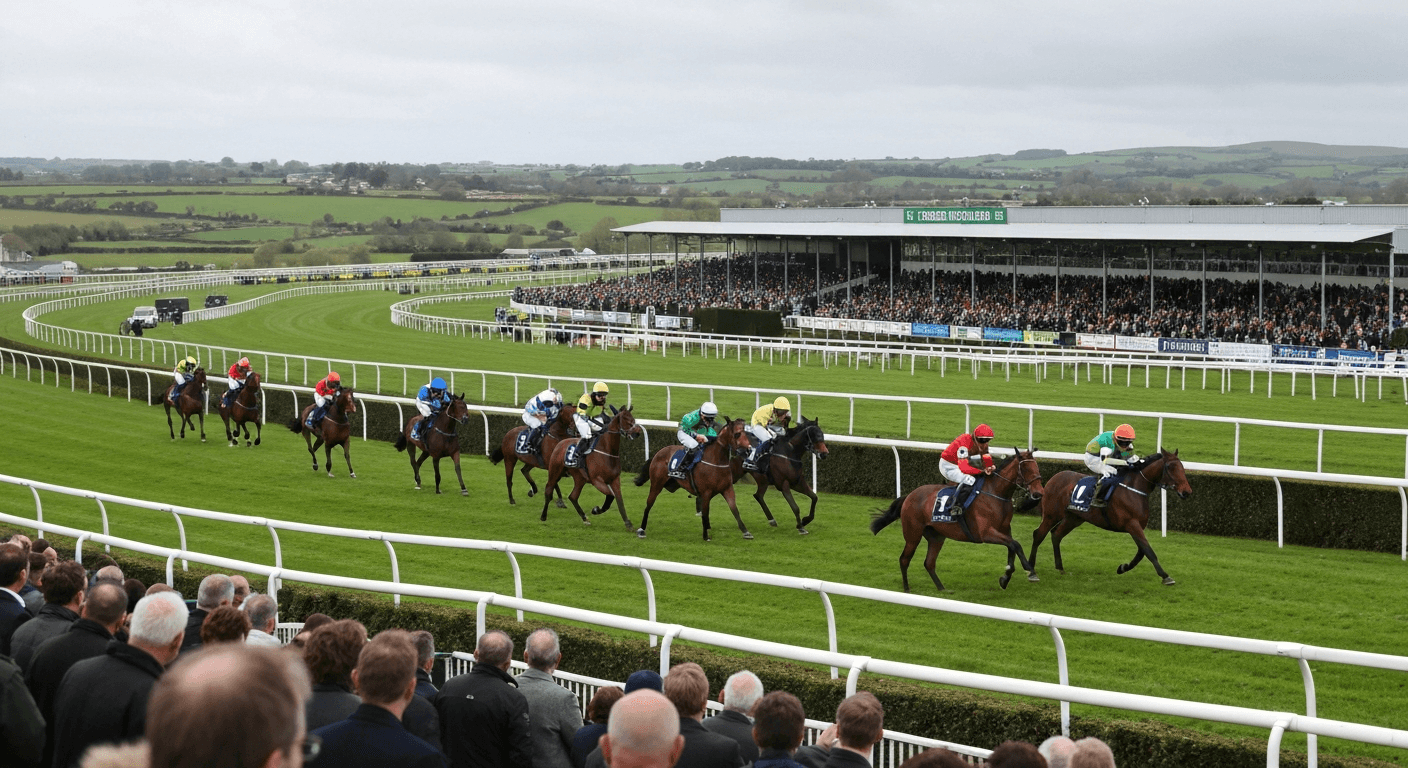
Midlands National Day at Kilbeggan: The Complete Guide
A guide to Midlands National day at Kilbeggan: the Listed 3m1f handicap chase in July, its roll of honour, its role as a Galway Plate stepping-stone and how to watch.
Read more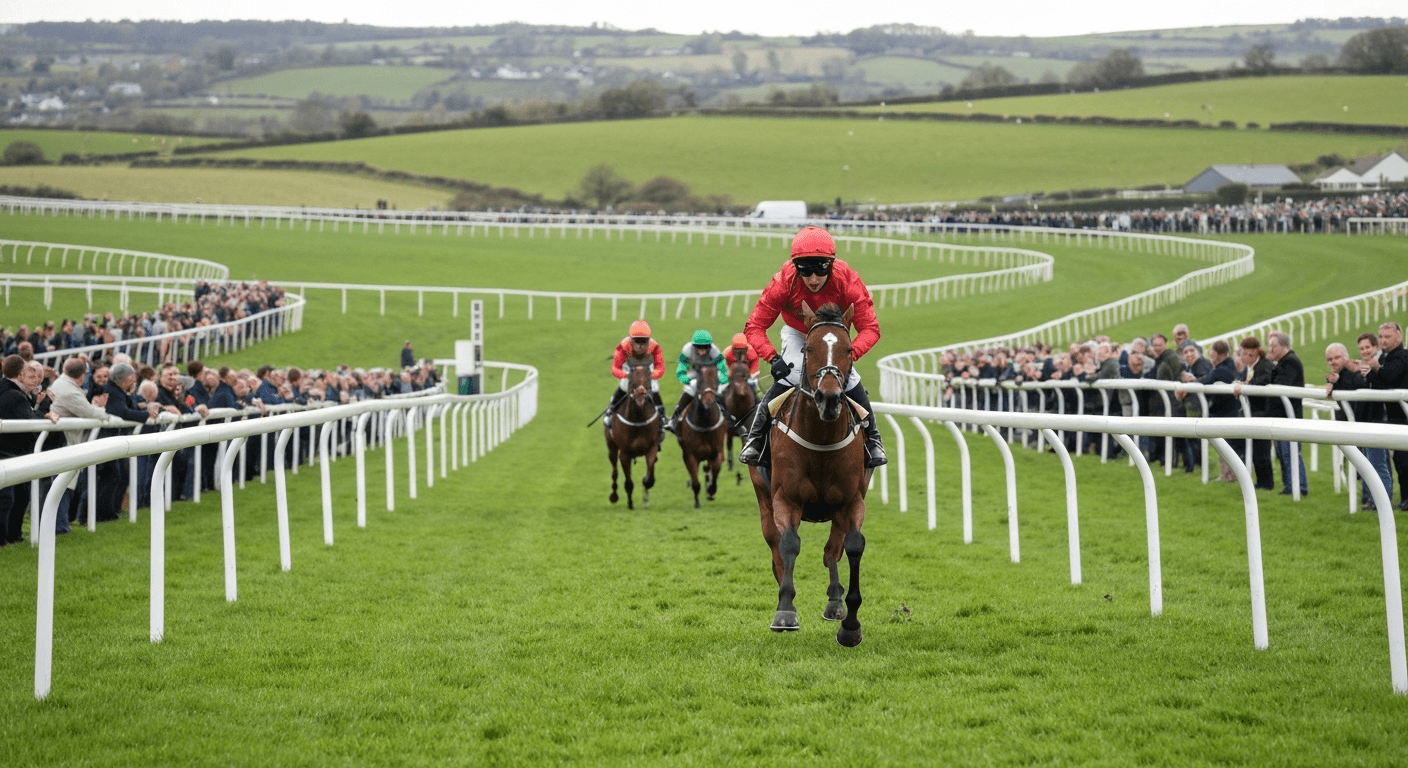
Freewheelin Dylan at Kilbeggan: The Complete Story
How Freewheelin Dylan won the 2020 Midlands National at Kilbeggan by a nose, then landed the 2021 Irish Grand National at 150/1, racing's biggest shock.
Read moreGamble Responsibly
Gambling should be entertaining and not seen as a way to make money. Never bet more than you can afford to lose. If you or someone you know has a gambling problem, help and support is available.