
Founder & Editor · Last reviewed 2026-07-13
Visiting the Laytown Strand Races: Introduction
A day at Laytown does not work like a day at any other racecourse. For 364 days a year there is no course here at all. The strand at Laytown, on the Irish Sea coast in Co. Meath, is just a beach. Then, for one afternoon each September, a temporary track is marked out on the sand at low tide, marquees go up on the grassy field above it, and Europe's only beach meeting run under the Rules of Racing comes to life. When the last race is done, all of it comes down again.
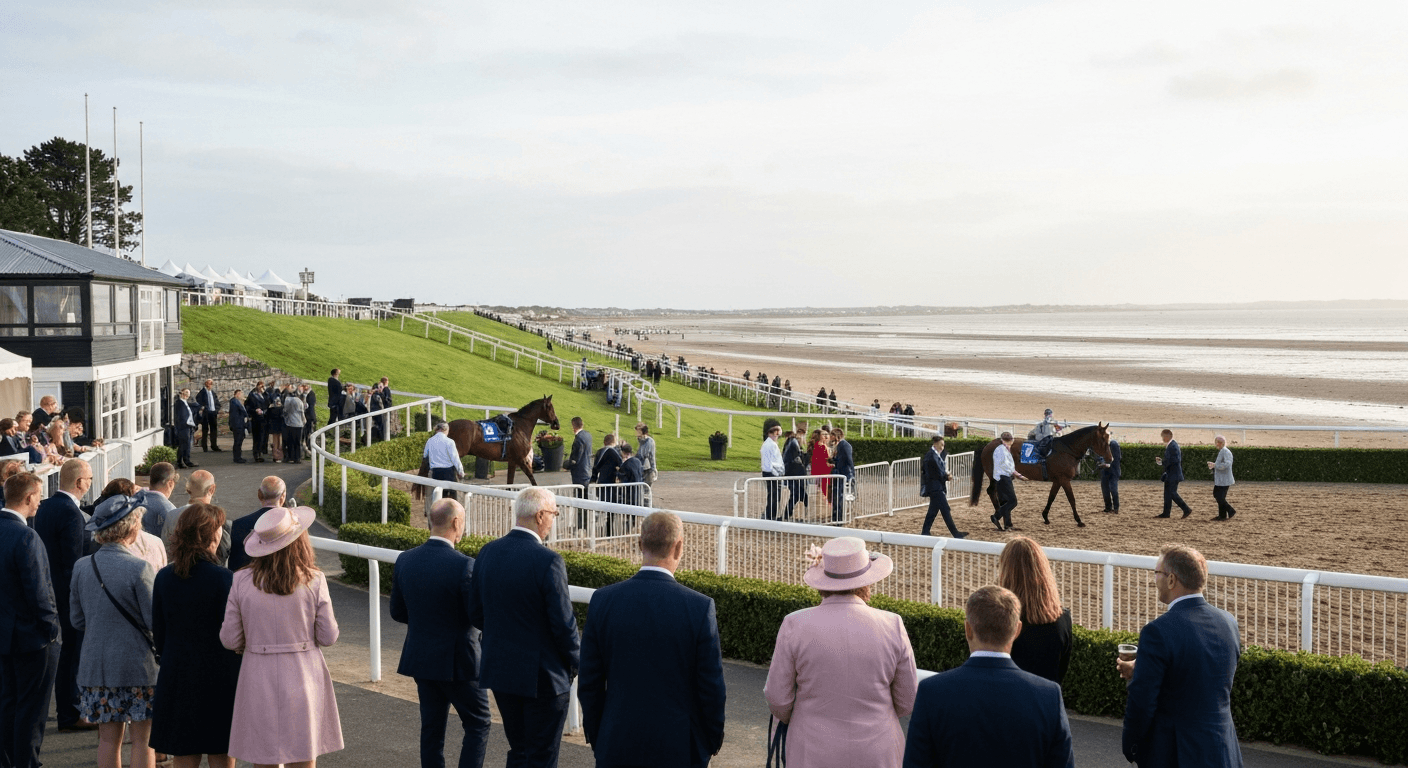
That is what makes visiting so different. There is no grandstand, no permanent enclosures, no rows of bars and boxes. You watch from an elevated grassy field and a mound above the strand, or from a small fenced area on the beach near the winning post. The whole thing is closer to a village carnival that happens to feature real racing than to a conventional race day, and it draws a crowd of well over 5,000, many of whom rarely go racing anywhere else.
The 2026 fixture is scheduled for Thursday 10 September. Because the card is timed around low water, the races can fall unusually late in the day, so always check the confirmed off-times before you set off.
This guide walks through the practical side of a Laytown visit:
- Getting there by rail, road and the race-day shuttle
- What to expect on the strand once you arrive
- Tickets and facilities on the day
- What to bring for a beach meeting
- Frequently asked questions
For the full background on the meeting, see the Laytown Racecourse complete guide.
Getting There
Getting There
Laytown is a small resort on the Meath coast, about 44km north of Dublin and 12km south of Drogheda. It is not built for heavy traffic, so how you arrive matters. The village sits roughly a 20-minute drive from Drogheda and about 45 minutes from Dublin, with Dublin Airport the nearest airport.
By rail
The train is the standout way to get to Laytown. The village has its own railway station right beside the strand, on the Dublin to Belfast line via Dublin Connolly and Drogheda. Services run roughly every 30 to 40 minutes from both Dublin and Drogheda, which makes the meeting one of the easier race days in Ireland to reach without a car.
From the station it is about a 1km walk to the course, roughly 10 minutes on foot. A free shuttle bus also runs throughout race day for anyone who would rather not make the walk. Given how tight parking is in the village, arriving by train and letting the shuttle or a short stroll finish the journey is the plan worth considering first.
By road
By car, allow around 20 minutes from Drogheda and about 45 minutes from Dublin. There are no permanent car parks at Laytown, but three or four free temporary car parks are set up around the town on race day. These fill up, and the resort's narrow roads do not cope well with a big crowd all arriving at once, so leave early and expect the last stretch to be slow. Parking arrangements can change year to year, so it is worth confirming the current setup with the course before you travel.
By bus
Bus services also reach the area, with Matthews serving Dublin and Bus Eireann serving Drogheda. From either of those towns you can connect on to Laytown by train or road.
Whichever way you come, treat the published race-day travel and parking notes from the course as the final word, since the temporary arrangements are put in place fresh each September.
What to Expect on the Strand
What to Expect on the Strand
The first thing to understand about Laytown is that the racecourse is temporary. There are no permanent stands, no fixed enclosures and, apart from a toilet block, essentially no permanent buildings. Everything you see on race day, the running rail, the marquees where jockeys change and horses are weighed, the stewarding facilities, is brought in for the meeting and taken away again afterwards.
The track on the sand
Racing takes place on the exposed wet sand of the strand at low tide. A temporary running rail is erected to mark out the course, which is straight and near-level, following only the slight natural curve of the bay. The full temporary track is about seven furlongs long, and all races are run over 6 or 7 furlongs on that straight line. The compacted sand left behind by the retreating tide tends to ride fairly firm and fast.
Where you watch from
Because there are no stands, spectators watch from an elevated grassy field and a mound overlooking the strand, and from a small fenced area on the beach near the winning post. The raised field gives a broad view across the bay and the temporary course below. Since the 1994 safety reforms, the crowd is kept off the open beach, and no traders or bookmakers operate on the sand itself. Pick your spot on the bank early if you want a clear line to the finish.
The card and the tide
Laytown stages a single card of up to six races. In 2025 the meeting ran six races, a mix of a claiming race, maidens and handicaps over 6 and 7 furlongs. None of the races are Pattern, Graded or black-type, and the day itself, rather than any one contest, is the occasion.
The timing is the unusual part. The off-times are dictated by the tide, with the card scheduled around low water so the strand is fully exposed and safe. That is why Laytown's race times shift from year to year and can fall unusually late in the day compared with other Irish meetings. In 2025 the six races went off between 16:30 and 19:10. The 2026 off-times are set by the tide and confirmed closer to the day, so check them before you plan your arrival.
Expect a relaxed, carnival feel over several hours, well over 5,000 people, and a day out shaped entirely by the sea and the sand.
Tickets and Facilities
Tickets and Facilities
Admission
Tickets for Laytown are sold in advance, and it is worth booking early. The meeting's unique appeal pulls in racegoers from far afield, including many who do not usually go racing, so demand is strong for a single once-a-year fixture. Tickets for the 2026 meeting on Thursday 10 September are on sale. There are no permanent enclosures to choose between and no membership scheme, given the single annual date. Admission gets you access to the race field above the strand and the small fenced beach area near the winning post. Any prices you see quoted should be treated as indicative, so confirm the current admission details with the course before you travel.
What is provided
Catering, bars and betting are all provided in temporary structures within the race field. The marquees that go up for the meeting house the bar and food facilities alongside the weighing and changing areas. Since the 1994 reforms, no bookmakers or traders operate on the beach itself, so the betting facilities sit up in the race field rather than on the sand. The only permanent building on site is the toilet block.
The atmosphere
Laytown is run by a local committee and is woven deeply into the parish and community, described by generations of Meath families as a cherished day out. The build-up each year includes a colouring competition for local schoolchildren, which gives a sense of how much the meeting belongs to the town. Expect a relaxed, family-friendly carnival feel rather than the corporate polish of a big-track raceday.
What is not provided
This is the part to plan around. Because the venue is temporary, do not expect the fixed facilities a normal course offers: there are no permanent grandstands, no seated enclosures, no hospitality suites or boxes, and no built-in shelter beyond the marquees. Viewing is from the open grassy field and mound. If you need specific facilities, including detailed accessibility provision, contact the course ahead of time to check what will be available on the day, since the setup is assembled fresh each September and the beach setting inherently limits what can be provided.
What to Bring
What to Bring
Laytown is a beach meeting, so pack for the strand and the weather rather than for a conventional raceday. A little planning makes the difference between a comfortable afternoon and a cold, damp one.
Footwear and clothing
Leave the smart shoes at home. You will be walking on sand and on the grassy field and mound above the strand, so sturdy, comfortable footwear that you do not mind getting sandy is the sensible choice. There is no formal dress code at Laytown; racegoers dress for a beach and weather-dependent day out, though plenty still make an effort and dress stylishly for the occasion. The key point is to dress for the conditions first.
Weather and shelter
The meeting goes ahead in September on an exposed coast, so come ready for anything from warm sun to wind and rain off the Irish Sea. Layers, a waterproof and something to keep the wind out will all earn their place. Shelter is limited to the temporary marquees, so do not count on getting out of the weather easily. On a bright day, sun cover and something to sit on for the grassy bank are worth having too.
Cash
Bring cash. Betting and catering run out of temporary structures in the race field, and card facilities on a beach setup cannot be assumed, so having notes and coins on you is the safe approach. It is worth confirming what payment options will be available with the course if you would rather not carry much cash.
The walk
Factor in some walking. From Laytown station it is about a 1km walk, roughly 10 minutes, to the course, though a free race-day shuttle bus runs if you would prefer to ride. Once you are there, getting between the car parks or station, the race field and the fenced beach area near the winning post all involves crossing sand and grass. Anyone who finds soft sand hard going should plan their route and pace accordingly.
In short: comfortable footwear, weather-ready layers, cash in your pocket and a bit of patience for the walk. Get those right and the strand does the rest.
Frequently Asked Questions
Share this article
More about this racecourse
All laytown guides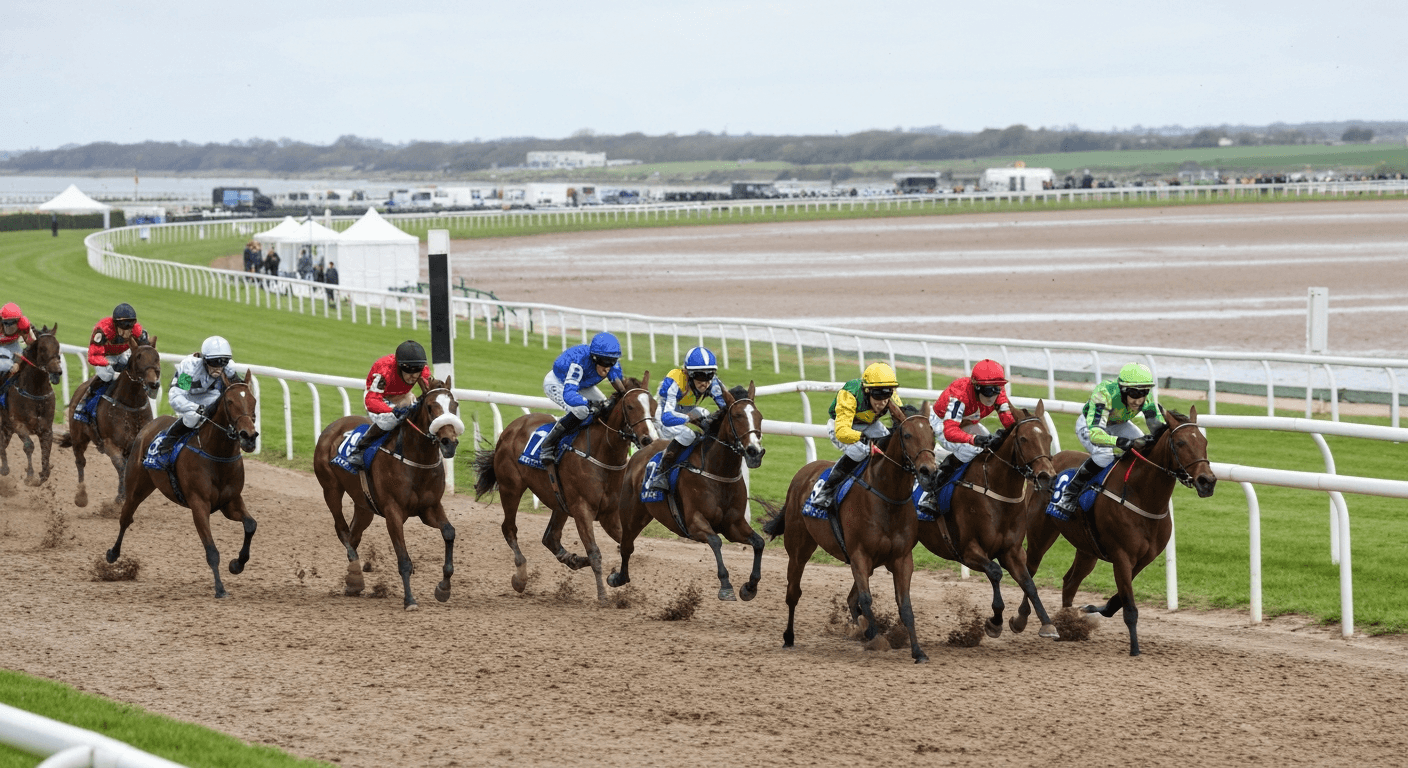
Betting at Laytown: The Beach-Racing Guide
A factual betting and form guide to Laytown, Europe's only beach meeting under Rules of Racing: the wet-sand strand, small fields, and the honest read on favourites.
Read more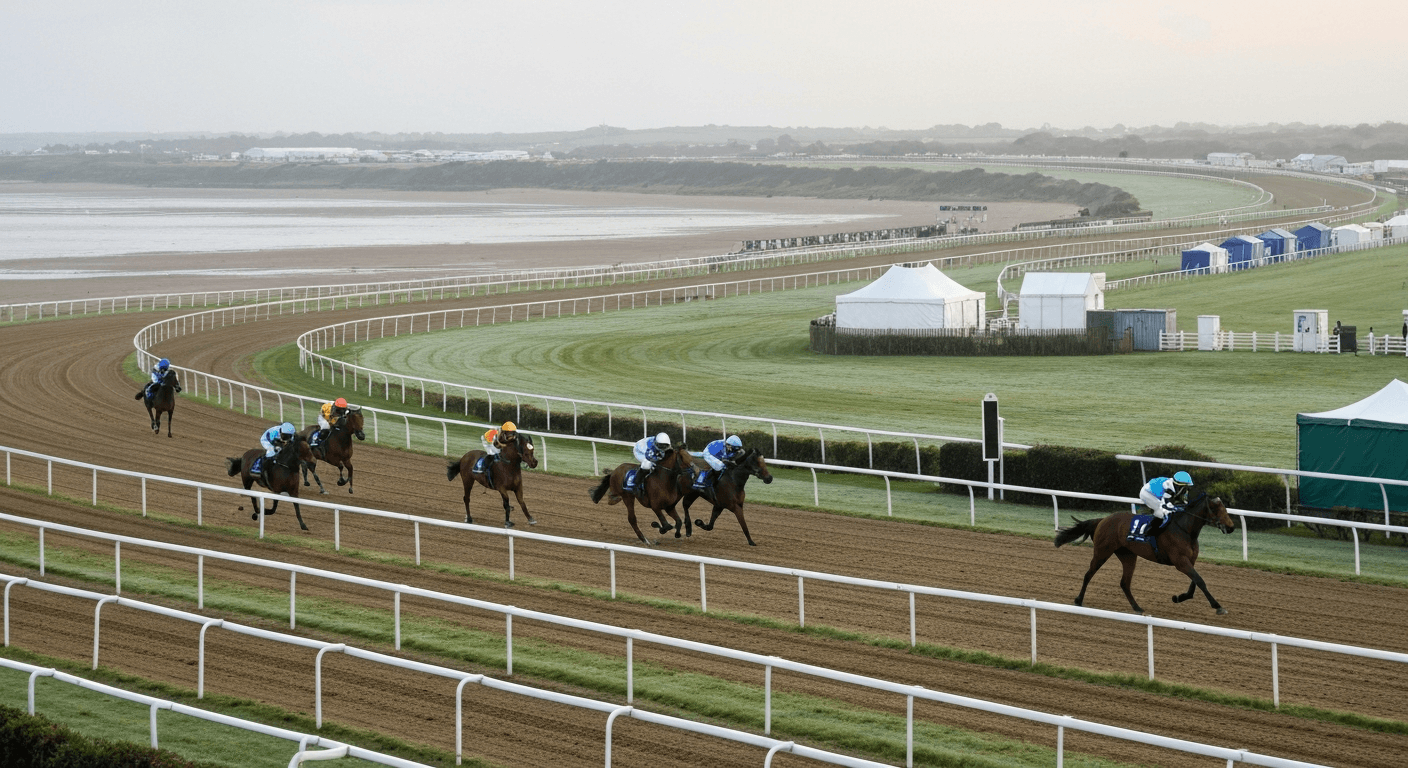
The History of Laytown Strand Races
How Laytown Strand Races grew from an 1868 sideshow to the Boyne Regatta into Ireland's only beach racing under Rules, reshaped by the 1994 tragedy.
Read more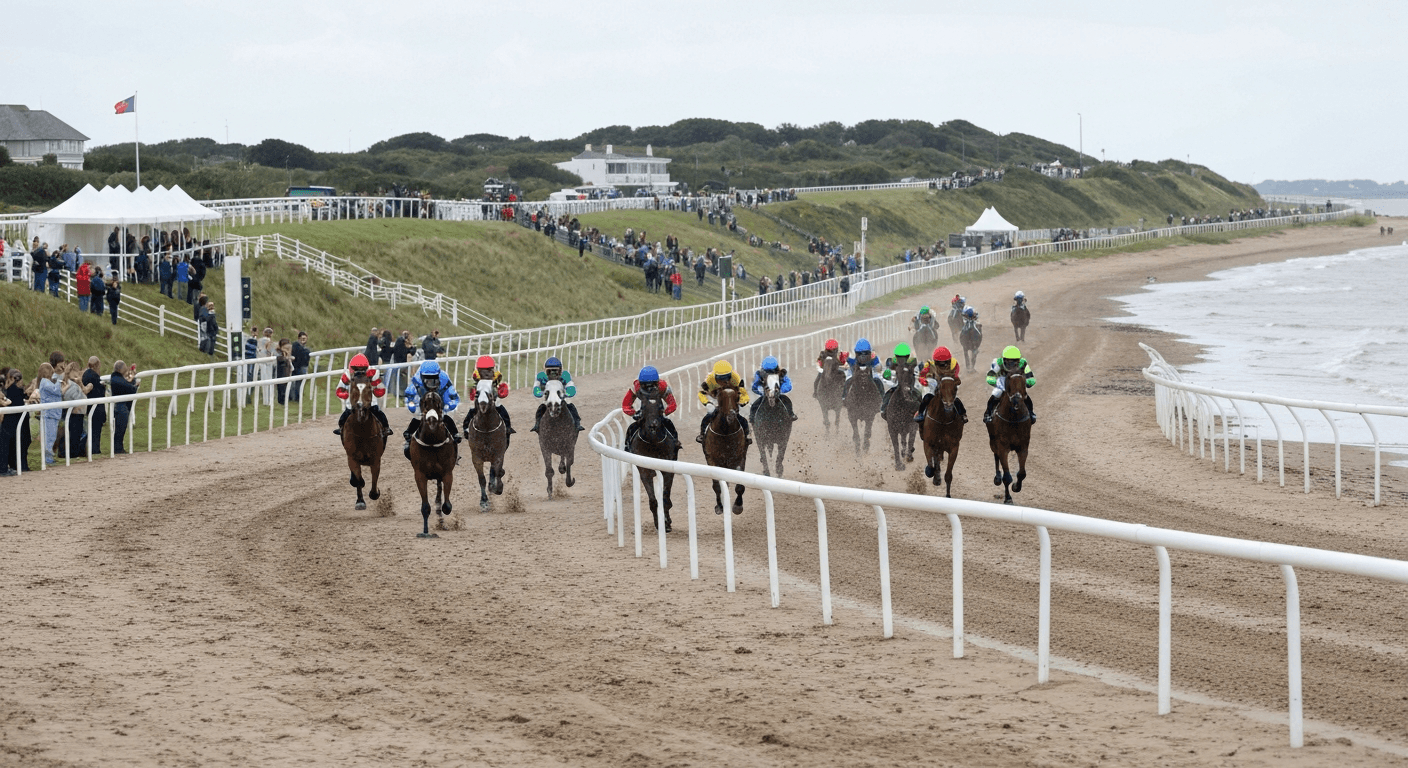
Laytown Racecourse: The Complete Guide
Laytown Racecourse guide: Europe's only beach meeting under Rules of Racing, on the Co. Meath strand each September, plus tickets, travel and how to visit.
Read moreGamble Responsibly
Gambling should be entertaining and not seen as a way to make money. Never bet more than you can afford to lose. If you or someone you know has a gambling problem, help and support is available.