
Founder & Editor · Last reviewed 2026-07-08
Introduction
Naas Racecourse is a dual-code (Flat and National Hunt) turf track at Tipper Road, on the eastern edge of Naas town in County Kildare, in the Republic of Ireland. It sits just off the M7/N7 motorway, about 30km (18 to 20 miles) south-west of Dublin, in the heart of what is often called Thoroughbred County. The Eircode is W91 ED00. This is a Republic of Ireland course, not to be confused with the Northern Ireland tracks Down Royal or Downpatrick.
The course is owned and run by The Naas Race Company Limited, a private, stand-alone racecourse company, rather than by Horse Racing Ireland (the national governing body that sets fixtures and part-funds capital works). The chairman is breeder Dermot Cantillon, and the General Manager since June 2024 is Naas native Aidan McGarry. Naas stages around 20 race meetings a year across both codes on turf only, with no all-weather track, and runs Flat racing roughly from spring to autumn and National Hunt through the winter.
Naas is a left-handed, broadly oval, galloping circuit of about 1 mile 4 furlongs, defined by a long, stiff home straight of roughly four furlongs that climbs uphill to the line. That finish makes it a thorough test of stamina under both codes, favouring strong, stout stayers proven at the trip or beyond. A two-furlong chute lets five- and six-furlong races run on a straight course, and separate starts for seven furlongs and a mile give a long run to the home turn. The full layout is covered in the track and course map.
On the Flat, Naas is one of Ireland's most important trial venues, a stepping-stone before the Curragh Classics and Royal Ascot. Its Group 3s and Listed races have launched champions such as Alpha Centauri, Pleascach, Little Big Bear and Auguste Rodin. Over jumps, its flagship is the Grade 1 novice hurdle staged in January, registered as the Slaney Novice Hurdle and long known as the Lawlor's of Naas Novice Hurdle (run as the Ballymore Novice Hurdle from 2026). It is Naas's only Grade 1 and the first Grade 1 of the Irish National Hunt year, and a key Cheltenham trial won by the likes of Envoi Allen (2020) and Bob Olinger (2021). The richest single day, though, is the Irish EBF Ballyhane Stakes for two-year-olds on the August Bank Holiday Monday. These feature days are set out in the races and festivals.
Horses have raced around Naas for centuries, but the formal course is a 20th-century creation: the Naas Race Company was formed in 1922, during the Irish Civil War, and the first meeting was held on 19 June 1924. Branded the "Nursery of Champions," Naas won Racecourse of the Year at the Association of Irish Racehorse Owners Awards in 2022, 2023 and 2024, and was named Ireland's first Age Friendly Racecourse in December 2024. The full story appears in history.
On this page
Where to Bet
Place your bets with a trusted, licensed bookmaker.

Promo code BETFRED50. New customers only. Register, deposit with a Debit Card, and place a first bet of £10+ at Evens (2.0)+ on Sports, to be settled within 7 days, to get £30 in Sports Free Bets and £20 in Bet Builder Free Bets within 24 hours of settlement. 7-day expiry. Eligibility & payment exclusions apply. Full T&Cs apply. Take Time to Think. BeGambleAware.org. 18+. Full T&Cs.

Promo code R30. New UK customers only, 18+. Register, deposit £10 or more, then place a £10 single cash bet at odds of 1/2 (1.5) or greater on any sports market (excluding Virtuals). Once the qualifying bet settles you get £30 in Free Bets (3 x £10) — the qualifying bet can win or lose. Free Bets are valid on any sports market excluding Virtuals, expire in 7 days, are non-withdrawable and must be used in full. Excluded deposit methods apply (including PayPal, Apple Pay, Skrill and NETELLER). Named bets such as Lucky 15 do not qualify. If you cash out the qualifying bet, or it is voided, you are no longer eligible for the offer. Ends 31.12.26. Full T&Cs apply. Please gamble responsibly. BeGambleAware.org. 18+. Full T&Cs.

Promo code BET40GET20. New UK customers, 18+. Register with the code and place a first bet of £40 or more at Evens (2.0) or greater. Receive 2 × £10 free bets: the first credited automatically once the qualifying bet settles, the second 24 hours later. Free bets must be placed at minimum odds of 4/1 (5.0), expire 24 hours after credit, and the free-bet stake is not returned with winnings. Debit card deposits only. Take Time to Think. BeGambleAware.org. 18+. T&Cs apply. Full T&Cs.

50% of your first-day net losses refunded as a free bet, capped at £25. New UK customers aged 18+ only. To qualify, deposit and place a first bet of £10 or more on any sport at minimum odds of evens (2.00), then place at least two further bets on different events, each worth at least 50% of your largest bet, all at evens (2.00) or greater. Losses are counted from your first settled bet until 23:59 the same day. Place a qualifying £10+ bet and you are guaranteed at least a £5 free bet. Bets placed at SP, void bets, cashed-out bets and bets struck with free bets do not count towards the offer. The free bet is credited the day after your qualifying bets settle and must be used within 7 days, after which it expires. It can be used at odds from 1/4 (1.25) up to 250/1 on singles and straight accumulators, but not on Trixie, Patent or Yankee style multiples. Free-bet stake is not returned with winnings. One offer per person, household, address, IP address and device. E-wallet deposits may not qualify, so check the cashier before depositing. Customers registered with GAMSTOP cannot claim. KYC identity verification must be completed before the free bet is credited. Take Time to Think. BeGambleAware.org. 18+. T&Cs apply. Full T&Cs.

New customers, 18+. Choose the sports bonus at sign-up, make a first deposit and receive a 100% bonus up to £50 in your Sports Bonus balance. To convert the bonus to cash, wager it 10x within 30 days. Single bets below Evens (2.00) do not qualify; accumulators do not qualify if any selection is below 1/2 (1.50). Virtual Sports, voided, cancelled, drawn, cashed-out and free-bet wagers do not count towards wagering. Only the first settled bet per event counts. Withdrawing before the wagering requirement is met forfeits the bonus balance including bonus winnings. Real-money funds are used before bonus funds. Deposits via Skrill or Neteller are not eligible. Not valid in conjunction with other promotions. Odds, bet and payment limits apply. 10bet general and promotion T&Cs apply. BeGambleAware.org. 18+. Full T&Cs.

New customers in Great Britain and Republic of Ireland, 18+. Place a £10 fixed-odds qualifying bet at minimum odds of 1/2 (1.50) — single or each-way (only the win part counts), pre-event or in-play, not cashed out early, within 28 days of opening the account. Receive up to £60 in bonuses credited over three days: 3 × £10 fixed-odds free bets (the first on settlement, then 24 and 48 hours later) plus 3 × £5 Total Goals FOOTBALL spread bets, 3 × £5 racing Winning Favourites spread bets and a £1 racing Race Index spread bet (the spread bets need a full spread-betting account). Free-bet stakes not returned with winnings; free bets valid 28 days from issue. IMPORTANT: the £5 credits are SPREAD bets — sports spread betting carries the risk that losses can exceed your stake. Sports spread-betting customers do not have Financial Ombudsman or FSCS recourse. Take Time to Think. BeGambleAware.org. 18+. T&Cs apply. Full T&Cs.

Promo code WELCOME15, entered under My Bonuses after registering. New UK customers, 18+. Place a first qualifying bet of at least £10 from your cash balance at odds of evens (2.0) or greater within 7 days of opening the account. Once the qualifying bet fully settles you receive £15 in free bets, credited as 3 x £5 tokens with set uses: one £5 accumulator free bet (minimum 4 legs, each leg at 2/5 or bigger), one £5 sports free bet (any market at evens or bigger) and one £5 Sub Cover free bet (selected football player markets at evens or bigger). Free-bet stakes are not returned with winnings. Free bets expire 7 days after they are credited. Void, cashed-out and partially cashed-out bets do not qualify. One offer per customer. Confirm the current terms on BetGoodwin's own welcome-offer page before claiming. Take Time to Think. BeGambleAware.org. 18+. T&Cs apply. Full T&Cs.

New UK customers, 18+. Minimum deposit £10. Place a £10 qualifying single at minimum odds of 1/2 (1.50), settled within 14 days. Receive £30 in free bets (stake not returned), split £20 for sportsbook use (2 x £10) and £10 for Bet Builder only (2 x £5); Bet Builder does not cover horse racing. Free bets must be accepted within 7 days and expire 7 days after acceptance. No promo code required. Best Odds Guaranteed on UK & Irish racing, subject to having staked over £25 in the previous seven days. Operated by LiveScore Betting and Gaming (Gibraltar) Ltd, UKGC 56859. Confirm the current terms on LiveScore Bet's own promotions page before claiming. Take Time to Think. BeGambleAware.org. 18+. T&Cs apply. Full T&Cs.
18+. BeGambleAware.org
The Track
The Track
Naas is a left-handed, broadly oval turf circuit measuring roughly 1 mile 4 furlongs (about 12 furlongs, close to 1.5 miles) around. It is a galloping track, laid out to reward long-striding, strong, genuinely stout stayers rather than nippy, sharp-track types. The signature feature, and the thing every visitor and form student should hold in mind, is the long, stiff home straight of about four furlongs that climbs uphill all the way to the line. That climb makes Naas a thorough test of stamina under both codes.
Layout and the uphill finish
Because the run to the post is uphill and sustained, a horse effectively has to be fully proven at its trip, or beyond it, to see the race out here. The circuit carries only minor undulations, and the course has helped its own cause with extensive levelling work that flattened out ridges in the first three furlongs of the home straight, making the surface fairer to the field as it fans into the straight.
The Flat run-in is reported at roughly four furlongs, which is really just another way of describing that four-furlong home straight. Two separate start arrangements feed sprinters and milers onto it. A two-furlong chute joins the home straight so that five- and six-furlong races can be run on a straight course, while seven-furlong and one-mile starts come from a separate chute at the top of the course, with a long run down to the home turn that gives jockeys time to organise a position before the business end.
For a sense of how the whole shape sits together, see the course map section.
The jumps courses
Both jumps codes share the same left-handed track, with the chase course set on the outside and the hurdles course on the inner, which makes the hurdles track fractionally sharper. The chase course carries eight fences per circuit (both research runs agree on this), including two open ditches. The last two fences sit in the home straight, with the final fence just over a furlong from the line.
Two figures here should be treated with care rather than stated as settled fact. The chase run-in is reported at about two furlongs, though one research run also found sources describing it as "just over a furlong"; these values conflict in the dossier and are flagged as unresolved, so the honest reading is somewhere between just over a furlong and about two furlongs. Similarly, the number of hurdle flights per circuit is disputed: one run reports around eight flights per circuit, the other six, and this too is quarantined as unconfirmed. What both runs do agree on is that the 2 mile 4 furlong Grade 1 novice hurdle is run over 11 flights.
The fences themselves are described as stiff but fair, with no awkward obstacles likely to catch out novices, and Naas typically records one of the lowest faller rates in Irish racing. That combination, a demanding but honest jumping test, is part of why the track is trusted to launch top staying chasers and hurdlers.
Going and drainage
The going at Naas is worth reading closely before racing. The back section of the track, running from the winning post round to the seven-furlong start (the top of the course), tends to drain more slowly and ride softer, effectively heavier, than the rest of the circuit, especially after winter rain. By contrast, the ground tends to run quicker through the second half of the circuit. Across the winter National Hunt season, Naas can ride genuinely testing, soft to heavy, which only sharpens the stamina demand of that uphill finish.
Draw and pace
On the Flat, the draw bias is generally minimal and the track is regarded as fair. Over the minimum trips there is a modest, ground-dependent edge. Over five furlongs (relatively few races) and six furlongs, low-drawn runners have historically held a slight advantage, with the field tending to congregate towards the middle as the track narrows. In soft or heavy ground, runners often tack towards the stands rail, which can favour high-drawn horses, whereas on better ground low draws are generally preferred. Over seven furlongs and a mile the draw matters little because of the long run to the turn from the chute, and it becomes marginally more relevant again over 1 mile 2 furlongs. Some guides note that medium-to-high stalls have fared well in recent seasons, so the bias is not strong.
A sound judgement of pace is essential here precisely because of that stamina-sapping climb. It generally pays to race handy or prominently, and out-and-out hold-up horses have a poor record, particularly over jumps, where hold-up runners across the hurdle distances have shown a very low impact value. None of this implies a profitable angle; it simply describes how the track tends to ride. The stats-and-angles detail sits in the form and betting section.
At a glance
| Feature | Detail (per the merged dossier) |
|---|---|
| Orientation | Left-handed |
| Shape and style | Broadly oval, galloping circuit |
| Circumference | About 1 mile 4 furlongs (roughly 12 furlongs) |
| Home straight | About 4 furlongs, uphill to the line |
| Flat run-in | Roughly 4 furlongs (the home straight) |
| Straight-course sprints | 5f and 6f via a two-furlong chute |
| 7f and 1m starts | Separate top-of-course chute, long run to home turn |
| Surface | Turf only (no all-weather) |
| Chase fences per circuit | 8 (both runs agree), including two open ditches |
| Chase run-in | Reported as about 2f; one run cites "just over a furlong" (dossier conflict, unconfirmed) |
| Hurdle flights per circuit | Disputed: c. 8 (one run) vs 6 (other run); unconfirmed |
| Flights in the 2m4f Grade 1 | 11 (both runs agree) |
| Jumps course layout | Chase on the outside, hurdles on the inner (hurdles fractionally sharper) |
| Typical winter going | Can ride soft to heavy; back section drains slower |
| Draw bias (Flat) | Minimal, ground-dependent; slight low edge at 5f to 6f on better ground |
| Pace | Prominent racers favoured; hold-up horses poor, especially over jumps |
The Course Map
Course map and layout
Naas keeps almost everything a racegoer needs inside a single main enclosure, which is a large part of why it feels so easy to navigate. The buildings run in a line along the home straight, so the grandstand, the newer spectator stand and the pre-parade areas all look out over the same stretch of track. Because the whole left-handed, broadly oval circuit is visible from the stands, you rarely lose sight of the runners between the start and the finish. For how that circuit actually rides, see the track; this section is about where things sit on the ground.
The grandstand is the spine of the enclosure. It was built in 1997 and has been upgraded in stages since. Its ground floor holds a café, a Tote bar, a Paddy Power betting shop and a Tote betting shop, so the everyday business of a race day happens here. The first floor carries the Members Lounge and the Panoramic Restaurant, the course's principal sit-down dining room, whose windows give a raised, wide view down the finishing straight. Private suites, the grandstand's hospitality boxes, sit alongside these first-floor rooms.
The most recognisable modern feature is The Circle, a cylindrical spectator stand that opened in January 2019 as part of an ongoing redevelopment programme. Its ground floor houses a public bar, and the first floor holds the Goffs Owners and Trainers Lounge, which is built to give 180-degree views across the course. (The often-quoted figure of roughly 1.7 million euro for The Circle comes from one research run via the centenary history and was not independently confirmed by the other, so treat the cost as indicative rather than official.) Around these two stands the same redevelopment added The Post, a self-service restaurant, plus a further café, so the food and drink options in food, bars and hospitality are spread along the enclosure rather than clustered in one spot.
The parade ring and pre-race areas sit within the enclosure close to the stands, so you can watch the horses saddle and circle, then move to the rail without a long walk. A stall opposite the parade ring hires out and sells binoculars, which is worth knowing given how much of the far side of the circuit is on show. On-course bookmakers and the Tote both operate here for cash and card.
The finish is the defining point of the layout. The long home straight climbs uphill to the winning line, and every stand is angled to catch that final, stamina-sapping run to the post, which is where most Naas races are decided.
The Races
The Races
Naas is a dual-code course, and its race programme reflects that split personality. Across roughly 20 meetings a year it stages Flat Classic trials and valuable two-year-old prizes through the spring and summer, then switches to National Hunt from the autumn, headlined by the course's single Grade 1. For how these races ride, see the track; for the standout trainers and jockeys behind them, see records and stats.
The Flat programme
Naas is one of Ireland's most important Flat trial venues, a stepping stone to the Curragh Classics and Royal Ascot. The centrepiece of the Flat calendar is the Royal Ascot Trials Day in May, which carries two of the course's three Flat Group 3 races.
The Goffs Lacken Stakes is a Group 3 sprint for three-year-olds and a recognised Commonwealth Cup pointer. First run in 2014 as a Listed race, it was upgraded to Group 3 the following year. The two research runs disagree on its exact distance (6 furlongs versus 5f205y) and on its precise prize fund, so both are flagged as unconfirmed below. Its roll of honour is dominated by Ballydoyle, though the most recent renewal went elsewhere: in 2026 the odds-on favourite was turned over and Havana Anna (Donnacha O'Brien, Gavin Ryan, 9/4) won, beating the 50/1 outsider Oh Cecelia by a head.
The Coolmore Stud Irish EBF Fillies' Sprint Stakes is a Group 3 for two-year-old fillies over about 6 furlongs, run on the same Trials Day card. It has an outstanding record as a nursery of top fillies, with You'resothrilling, Lillie Langtry, Sky Lantern, Alpha Centauri and Porta Fortuna all winning here before Group 1 success. The 2026 running went to Victorious (Aidan O'Brien, Ryan Moore, 10/11 favourite).
The third Group 3 is the Blue Wind Stakes, for three-year-old fillies over about 1m2f. Named after the 1981 Epsom and Irish Oaks winner, it transferred to Naas from Cork in 2005 and can act as an Oaks trial, having produced subsequent Group 1 fillies including Pleascach and Tarnawa. It has traditionally been run in May but has moved to late June in recent seasons.
Naas also stages a deep roster of Listed Flat races, among them the Woodlands, Owenstown Stud, Rochestown, Sole Power Sprint, Naas Oaks Trial and Devoy Stakes.
The richest race at Naas is not a Pattern race at all. The Irish EBF Ballyhane Stakes is a sales-type two-year-old contest over 6 furlongs, run on the August Bank Holiday Monday and founded in 2020 by Joe Foley of Ballyhane Stud. It has been described by the racecourse as one of Europe's most lucrative juvenile races, though its reported value differs by year between the two research runs (€300,000 in 2023, €200,000 in 2025) and is flagged below. Recent winners include Howd'yadoit (2024) and Heavens Gate (2025).
The National Hunt programme
Naas's flagship jumps fixture is its Grade 1 novice hurdle, registered as the Slaney Novice Hurdle and run in early January over about 2m4f. Long known as the Lawlor's of Naas Novice Hurdle, it carried Ballymore Properties as title sponsor from the 2026 running. It is the first Grade 1 of the Irish National Hunt year and a key Cheltenham trial, especially for the Ballymore Novices' Hurdle: Envoi Allen and Bob Olinger both completed the double. Worth €100,000 (€60,000 to the winner), it was elevated to Grade 1 in 2015, becoming Naas's first ever Grade 1. Willie Mullins is its most successful trainer with at least nine wins.
Because the winning jockeys for the 2020, 2022 and 2023 runnings conflicted between the two research runs, those riders are shown as n/a in the winners table rather than asserted.
The rest of the graded jumps roster is spread through the winter. The Limestone Lad Hurdle is a Grade 3 over 2 miles in January, renamed in 2008 to honour the great local staying hurdler; Willie Mullins (eight wins) and Paul Townend (seven) head its records. The Johnstown Novice Hurdle is a Grade 2 over about 2 miles in February, won in the past by Annie Power before her Champion Hurdle. The Newlands Chase shares that February card; its current grade is disputed between the runs (Grade 3 versus Grade 2) and is flagged below. Over further, the Leinster National is a Listed handicap chase over 3m1f in March and a recognised trial for the Irish Grand National; its 2026 running went to The Lovely Man (Gavin Cromwell, Conor Stone-Walsh, 12/1).
Race calendar and grades
| Race | Code / grade | Distance | Month | Notes |
|---|---|---|---|---|
| Lawlor's of Naas / Ballymore Novice Hurdle | NH Grade 1 | c. 2m4f | January | Naas's only Grade 1; first G1 of the Irish jumps year |
| Limestone Lad Hurdle | NH Grade 3 | 2m | January | Renamed 2008 for Limestone Lad |
| Johnstown Novice Hurdle | NH Grade 2 | c. 2m | February | Upgraded to G2 in 2003 |
| Newlands Chase | NH G3 / G2 (disputed) | c. 2m | February | Grade conflicted between research runs |
| Leinster National | NH Listed handicap | 3m1f | March | Irish Grand National trial |
| Lacken Stakes | Flat Group 3 | 6f / 5f205y (disputed) | May | Commonwealth Cup trial |
| Coolmore Stud Fillies' Sprint Stakes | Flat Group 3 | c. 6f | May | 2yo fillies |
| Blue Wind Stakes | Flat Group 3 | c. 1m2f | May / late June | 3yo fillies; Oaks trial |
| Irish EBF Ballyhane Stakes | Flat (not Pattern) | 6f | August | Richest race at Naas; 2yo sales race |
Recent feature winners
| Race | Year | Winner | Trainer | Jockey | SP |
|---|---|---|---|---|---|
| Lawlor's / Ballymore (G1) | 2026 | I'll Sort That | Declan Queally | Mr D.L. Queally | 5/1 |
| Lawlor's / Ballymore (G1) | 2025 | The Yellow Clay | Gordon Elliott | Sam Ewing | 11/4 |
| Lawlor's / Ballymore (G1) | 2024 | Readin Tommy Wrong | Willie Mullins | n/a | 16/1 |
| Lawlor's / Ballymore (G1) | 2023 | Champ Kiely | Willie Mullins | n/a | 10/3 |
| Lawlor's / Ballymore (G1) | 2022 | Ginto | Gordon Elliott | n/a | 5/4f |
| Lawlor's / Ballymore (G1) | 2020 | Envoi Allen | Gordon Elliott | n/a | 1/4f |
| Limestone Lad Hurdle (G3) | 2026 | Glen Kiln | Harry Kelly | Brian Hayes | 4/1 |
| Limestone Lad Hurdle (G3) | 2025 | Anzadam | Willie Mullins | Paul Townend | 1/10f |
| Lacken Stakes (G3) | 2026 | Havana Anna | Donnacha O'Brien | Gavin Ryan | 9/4 |
| Lacken Stakes (G3) | 2025 | Babouche | Ger Lyons | Colin Keane | 2/1 |
| Fillies' Sprint (G3) | 2026 | Victorious | Aidan O'Brien | Ryan Moore | 10/11f |
| Blue Wind Stakes (G3) | 2025 | Barnavara | Jessica Harrington | Shane Foley | n/a |
| Leinster National (Listed) | 2026 | The Lovely Man | Gavin Cromwell | Conor Stone-Walsh | 12/1 |
| Ballyhane Stakes | 2025 | Heavens Gate | Aidan O'Brien | Ryan Moore | 4/6f |
Note: the winning jockeys for the 2020, 2022 and 2023 Grade 1 hurdle conflicted between the two research runs and are shown as n/a rather than asserted; the 2024 Grade 1 rider was likewise left unverified. Several prize-money and distance figures for the Group races are disputed between sources and are noted as such above. None of the form patterns here should be read as a profitable betting angle. For the going, draw and pace context that shapes these races, see form and betting.
Records and Stats
Records and stats
Naas is a course better measured by the champions it has produced than by a wall of record times, and that is partly by necessity. Naas does not publish a widely available, authoritative table of all-time course-record times by distance, and no such consolidated standard-times table was located in the racecourse's own guides or on the main results services. Individual race times are recorded race by race, but there is no single official record chart to quote from, so this guide reports only the times that are genuinely on the record.
Two documented times illustrate how testing the ground can ride here. The 2026 Grade 1 novice hurdle over about 2 miles 4 furlongs was run in 5 minutes 5.10 seconds on soft ground, and the 2025 running was staged on heavy ground. Both point to the truth covered in the track: the uphill, stamina-sapping finish means fast clock times are the exception.
Nursery of Champions: the alumni record
Where Naas keeps a genuine record is in graduates. It brands itself the "Nursery of Champions," and its centenary history states that, as of April 2025, the winners of 31 Aintree Grand Nationals, 28 Cheltenham Gold Cups and eight King George VI Chases have honed their skills at Naas. (An earlier 2024 release gave 30 and 27; the April 2025 figures are the more recent statement.)
Two Flat champions launched their careers here in the summer of 2022, both winning maidens for Aidan O'Brien's Ballydoyle under Seamie Heffernan:
| Horse | Naas debut win | Date | Jockey | What followed |
|---|---|---|---|---|
| Little Big Bear | 5f maiden | May 2022 | Seamie Heffernan (4/9f) | Crowned Europe's champion two-year-old of 2022 |
| Auguste Rodin | 7f maiden | July 2022 | Seamie Heffernan (odds-on) | Won the 2023 Epsom Derby, Irish Derby and Breeders' Cup Turf |
| Arkle | Rathconnel Handicap Hurdle, 2m | 10 March 1962 | Pat Taaffe (2/1f) | Second career win; three-time Cheltenham Gold Cup winner |
| Envoi Allen | Grade 1 novice hurdle | 2020 | n/a | Won the Ballymore at Cheltenham; multiple Grade 1 chaser |
| Bob Olinger | Grade 1 novice hurdle | 2021 | Rachael Blackmore | Won the Ballymore at Cheltenham |
For Envoi Allen's 2020 winning jockey the two research runs disagreed, so no rider is asserted here. Fuller rolls of honour for each big race sit in the races.
Leading trainers and jockeys
The Grade 1 novice hurdle, Naas's flagship jumps race, is dominated by two yards. Willie Mullins is the most successful trainer in it with at least nine wins, and since the 2015 elevation to Grade 1 he and Gordon Elliott have shared the honours almost evenly. Ruby Walsh is the leading jockey in that race historically with four wins.
Across the wider programme, Mullins leads the Grade 3 Limestone Lad Hurdle with eight wins and Paul Townend is its leading jockey with seven, while Henry de Bromhead is the most successful trainer in the Newlands Chase with five. On the Flat, Aidan O'Brien is the dominant trial-day trainer with five Lacken Stakes wins and Ryan Moore its leading jockey with four; Jim Bolger holds the Group 3 Blue Wind Stakes record with six wins, every one ridden by Kevin Manning.
Strike-rate figures from statistics services are period-specific and vary by sample. Over jumps, one dataset credits Mark Walsh with 25 winners across 2015 to 2020, with Paul Townend at roughly a 35 per cent strike rate over that span. On the Flat, Ryan Moore has posted an exceptionally high strike rate (around 36 per cent in one large sample) and Colin Keane has ridden the most Flat winners in recent years. These are historical patterns, not predictions, and never imply a profitable betting angle.
What no authoritative source confirms
Several figures a visitor might expect simply do not exist in verified form. No authoritative figure for a record single-day attendance, festival attendance, typical crowd size, total annual footfall, or a stated comfortable capacity was located by either research run. The only concrete datapoint is that the 2023 Ballyhane free-gate day produced close to a 100 per cent increase versus a normal crowd. Capacity and venue-hire detail carries the same caveat in capacity and venue hire. Where a number is genuinely unpublished, this guide says so rather than manufacturing precision.
History
History
Horses have raced around Naas for at least 260 years, but the racecourse you visit today is a 20th-century creation. Plans for a permanent, properly laid-out course began to form around 1921, and the venture took its formal shape the following year. In 1922, at the height of the Irish Civil War, a group of local farmers and gentlemen came together to form the Naas Race Company. Accounts of that founding group differ, so the exact headcount and make-up cannot be stated with certainty: some sources describe about eight founders joined by a retired army general with wider local subscriptions, while others refer to a larger body of businessmen and farmers. What the sources agree on is that a local businessman, Thomas Whelan (his surname is spelled both Whelan and Whelen in different records), was a driving force, and that each founding subscriber put in £200.
With that capital the new company bought just over 100 acres of farmland on the east side of the town and laid out the left-handed, galloping, uphill-finishing circuit that still defines the place. You can read more about that layout in the-track. The first meeting took place on Thursday 19 June 1924, and it is this date that is most commonly cited as the founding of the racecourse itself.
The bond between that founding era and the present day remains unusually close. Board member Richard Brophy descends from Edward Brophy, one of the founding fathers, and the founding families Brophy and Osborne are still represented on the board. Generations of local training and riding families, among them the Mullins, Harty, O'Grady, Prendergast, Rogers and Myerscough names, have kept the course woven into the fabric of Thoroughbred County Kildare.
Naas has also been pioneering ground for women in Irish racing. Mrs Anne Biddle became Ireland's first licensed female trainer to win a race, in 1966, and Rosemary Rooney became the first female jockey to win against male opposition anywhere in Ireland or the UK, in 1974. Both landmarks came at Naas.
The Lawlor family of Naas thread through the course's story too. Mill House, owned by the Lawlor family, won the 1963 Cheltenham Gold Cup, and decades later the family's Lawlor's of Naas (Town Centre) Hotel gave its name to the course's flagship Grade 1 novice hurdle from 2015 to 2025, before Ballymore Properties took over the title sponsorship from the 2026 running. That race, the Slaney Novice Hurdle, sits at the heart of the modern Naas calendar, and its promotion tells the story of the course's rise up the grades.
The early course was short of facilities, and through the 1950s a steady programme of improvements added a new tote building, alterations to the enclosure buildings, a new entrance from the Dublin Road and better standing for spectators. The pace of investment picked up sharply from the late 1990s. In 1997 a new grandstand was built and opened by the then Minister for Finance, Charlie McCreevy. In 2003 a new public bar and weigh room went up, the track was widened in 2005, and a new stable yard followed in 2009. (The centenary history records costs of roughly €2.2 million for the 1997 grandstand and over €1.7 million for the stable yard, though these figures come from a single source and could not be independently confirmed, so treat them as reported rather than definitive.)
A milestone of a different kind arrived in 2015, when Naas staged its first ever Grade 1, the Lawlor's of Naas Novice Hurdle, upgraded from Grade 2. (The race had reached Grade 2 status in 2005; its earlier history is recorded slightly differently by different sources, so the precise year it first gained a graded classification is left open here.) That Grade 1 is the first of the Irish National Hunt season, and its arrival confirmed Naas as a serious Pattern-race venue rather than a country track.
The most visible transformation came from 2018 onwards, when the racecourse invested over €3.2 million in redevelopment as part of a Horse Racing Ireland Capital Development Scheme. The centrepiece was The Circle, a striking cylindrical feature building that opened in January 2019. It houses a public bar on the ground floor and the Goffs Owners and Trainers Lounge above it, the latter offering 180-degree views across the course. The same programme delivered The Post self-service restaurant, a café, a Members Lounge and upgrades to the grandstand first floor, the Panoramic Restaurant and the private suites. For a closer look at these spaces, see enclosures-and-stands. In October 2023 a new weekend festival began, taking the course to around 20 meetings a year.
The story reached a natural high point in 2024, when Naas celebrated its centenary. The occasion was marked by a history, "The Centenary of Naas Racecourse (1924 to 2024): Nursery of Champions" by Turtle Bunbury, and by a free centenary race day held on 19 May 2024. That "Nursery of Champions" branding is well earned: according to the centenary history, as of April 2025 the winners of 31 Aintree Grand Nationals, 28 Cheltenham Gold Cups and eight King George VI Chases had honed their skills at Naas. (An earlier 2024 release from the course gave a slightly lower tally of 30 Grand Nationals and 27 Gold Cups; the April 2025 figures are the more recent statement.) Rounding out a landmark period, on 17 December 2024 Naas was designated Ireland's first Age Friendly Racecourse by Age Friendly Ireland, a fitting modern chapter for a course a century in the making.
The Legends
Legends of Naas
Naas markets itself as the "Nursery of Champions," and the phrase is earned. This is a track where future stars served their apprenticeship, where a local family's horse won a Cheltenham Gold Cup, and where two women rewrote the record books of Irish racing. The characters below are the ones worth knowing before you go.
Mill House and the Lawlor connection
The name Lawlor runs deep at Naas. The Lawlor's of Naas hotel gave its name to the course's flagship Grade 1 novice hurdle for a decade, but the family's place in racing history is grander than a race sponsorship. Mill House, owned by the Lawlor family of Naas, won the 1963 Cheltenham Gold Cup, one of steeplechasing's greatest prizes. That a Gold Cup winner should belong to a Naas family says much about the town's standing in the sport, and it is a reminder that the connections here reach the very top of National Hunt racing.
The maiden winners who became champions
Naas is best understood as a launch pad. Its two-year-old and novice races have introduced horses who went on to win the biggest races in the world, which is exactly why the course guards the "Nursery of Champions" title so closely.
Little Big Bear won a five-furlong maiden at Naas in May 2022, ridden by Seamie Heffernan at 4/9 favourite, before being crowned Europe's champion two-year-old of that season. Just weeks later, Auguste Rodin won a seven-furlong maiden here in July 2022, again with Heffernan aboard and again odds-on, before going on to win the 2023 Epsom and Irish Derbys and the Breeders' Cup Turf. Two ordinary-looking maidens at a boutique Kildare course; two of the finest thoroughbreds of their generation. For more on how the Flat trials feed into these stories, see the races.
The jumping legends are just as illustrious. Arkle, rated the greatest steeplechaser in Timeform history at 212 and a three-time Gold Cup winner, recorded the second victory of his career at Naas, taking a two-mile handicap hurdle in 1962 under Pat Taaffe. Envoi Allen (2020) and Bob Olinger (2021) both won the course's Grade 1 novice hurdle before following up in the Ballymore at Cheltenham, and Rule The World, who took the 2013 running of the same race, went on to win the 2016 Aintree Grand National. Limestone Lad, the great staying hurdler trained locally by James Bowe, was so bound up with the track that the Bank of Ireland Hurdle was renamed the Limestone Lad Hurdle in his honour. A fuller record of these winners sits in records and stats.
The women who made history at Naas
Two of the most important firsts in the history of women in racing happened on this course, and they deserve to be remembered by name.
In 1966, Mrs Anne Biddle became the first licensed female trainer to win a race in Ireland, and she did it at Naas. Eight years later, in 1974, Rosemary Rooney became the first female jockey to win against male opposition in Ireland or the UK, again at Naas. These were not symbolic gestures on quiet afternoons; they were genuine breakthroughs on a working racecourse, and they place Naas at the front of a change that reshaped the sport. In a county that calls itself Thoroughbred County, the course can fairly claim to have been ahead of its time.
A note on the myths
Naas has produced enough real champions that it needs no invented ones, so it is worth correcting one story that sometimes attaches itself to the track. Vautour, the brilliant Willie Mullins novice, never ran at Naas and did not win the course's Slaney Novice Hurdle; his 2014 novice campaign was confined to Punchestown, Leopardstown and Cheltenham. The 2014 running of that Naas race was won by Briar Hill, Mullins-trained and ridden by Ruby Walsh at 1/3 favourite. The genuine roll of honour is remarkable enough without embellishment.
Taken together, these legends explain why Naas punches so far above its modest size. A Gold Cup winner in local ownership, a production line of Classic and championship horses, and two pioneering women who changed what was possible in the saddle and in the yard. For where those stories are still being written each season, see the festivals.
The Key Meetings
Festivals and key meetings
Naas does not stage a multi-day festival on the scale of Galway or Punchestown. It is a boutique course whose calendar is built instead around a handful of quality single days, spread across both codes. Four of these stand out: the Grade 1 Lawlor's of Naas day in January, the February Cheltenham trials card, the spring Classic-trials and Royal Ascot Trials Day meetings, and the Ballyhane Stakes day in August. For the graded-race detail on each contest, see the races; for the tactical picture, see form and betting.
Lawlor's of Naas / Ballymore day (January)
The flagship National Hunt fixture is built around the Grade 1 Lawlor's of Naas / Ballymore Novice Hurdle (registered as the Slaney Novice Hurdle), Naas's only Grade 1 and the first Grade 1 of the Irish jumps year. Run over about 2 miles 4 furlongs, it carries prize money of 100,000 euro with 60,000 euro to the winner, and is a recognised Cheltenham trial, especially for the Ballymore Novices' Hurdle. Envoi Allen (2020) and Bob Olinger (2021) both won at Naas and followed up at Cheltenham.
The 2026 running went to I'll Sort That, trained by Declan Queally and ridden by Mr D.L. Queally, who beat the 15/8 favourite Sortudo by two and a half lengths. The day also features the Grade 3 Limestone Lad Hurdle and, per the research, a 10,000 euro sweepstake, a "From The Horse's Mouth Live" panel and a Best Dressed competition.
One note on the date. The 2026 fixture was staged on Friday 9 January per Horse Racing Ireland, though some third-party listings and one source gave Sunday 4 January; the dossier records this as an unresolved conflict and treats 9 January as the preferred value.
February trials card
Roughly a month later, Naas hosts a quality mid-winter card aimed squarely at the Cheltenham Festival. Its features are the Grade 2 Johnstown Novice Hurdle over about 2 miles, the Newlands Chase (the two research runs disagree on whether this is currently Grade 2 or Grade 3, so it is not asserted here) and the Nas Na Riogh Novice Chase. Annie Power won the Johnstown in 2013 before becoming a Champion Hurdle winner, an example of the calibre this card can attract.
Spring Classic trials and Royal Ascot Trials Day (April to May)
Naas is one of the most important Flat trial venues in Ireland, a stepping stone before the Curragh Classics and Royal Ascot. The centrepiece is Royal Ascot Trials Day, held in May (17 May in 2026) and run with a Family Fun Day. Its card includes the Group 3 Goffs Lacken Stakes, a key Royal Ascot Commonwealth Cup trial, the Group 3 Coolmore Stud Irish EBF Fillies' Sprint Stakes, and Listed contests including the Woodlands, Owenstown Stud, Sole Power Sprint and Naas Oaks Trial.
This meeting has an outstanding record for launching subsequent Royal Ascot and Classic performers. The Fillies' Sprint Stakes roll of honour alone includes Alpha Centauri (2017) and Porta Fortuna (2023), both of whom went on to Group 1 success. The day has been shown live on terrestrial television (ITV and TG4). The wider spring programme also carries the Naas Oaks Trial and other Flat Listed races as Classic pointers.
Ballyhane Stakes day (August)
Naas's richest fixture is the Irish EBF Ballyhane Stakes, a sales-type race for two-year-olds run over 6 furlongs on the August Bank Holiday Monday. Founded in 2020 by Joe Foley of Ballyhane Stud, it is explicitly not a Listed or Pattern race, but it is Naas's most valuable contest and has been described by the racecourse as one of Europe's most lucrative juvenile races. The reported prize fund has varied year to year (300,000 euro in 2023, 200,000 euro in 2025 per one run), so a single fixed figure is not asserted here. Heavens Gate (Aidan O'Brien / Ryan Moore) won in 2025.
Sponsor-funded free admission on this day has produced very large crowds: in 2023 the free-gate offer drove close to a 100 per cent increase in attendance. The day is family-focused, and in 2025 Naas introduced a dedicated Neurodiverse Day with a mobile sensory bus and quiet-zone suites.
Key meetings at a glance
| Meeting | Timing (2026) | Code | Feature race(s) | Grade / status |
|---|---|---|---|---|
| Lawlor's of Naas / Ballymore day | Fri 9 Jan (per HRI) | National Hunt | Lawlor's / Ballymore (Slaney) Novice Hurdle; Limestone Lad Hurdle | Grade 1; Grade 3 |
| February trials card | February | National Hunt | Johnstown Novice Hurdle; Newlands Chase; Nas Na Riogh Novice Chase | Grade 2; grade disputed; grade uncertain |
| Royal Ascot Trials Day | 17 May | Flat | Goffs Lacken Stakes; Coolmore Stud Fillies' Sprint Stakes | Group 3; Group 3 |
| Blue Wind Stakes day | Late June | Flat | Blue Wind Stakes | Group 3 |
| Ballyhane Stakes day | Aug Bank Holiday Mon | Flat | Irish EBF Ballyhane Stakes | Sales race (not Pattern) |
Notes: the 9 January date is the dossier's preferred value; a Sunday 4 January date also appears in the sources and is unresolved. Prize money and some grades are not shown here where the two research runs conflicted. All figures should be confirmed against the current HRI programme book before travelling.
Form and Betting
Form and betting
The single most useful thing to know before betting at Naas is that, over time, the market wins and favourites lose to Starting Price. Across our sample of 415 races run at Naas between 14 October 2023 and 24 June 2026 (4,833 runners), backing the favourite blindly to level stakes at SP returned a loss of 14.52 percent. The favourite won 34.9 percent of those races, so market leaders take their share, but they are collectively sent off too short to profit from. This is not a Naas quirk; it is how the betting market is built. No staking plan changes the underlying maths.
One honesty note on that figure. The minus 14.52 percent return carries a wide 95 percent confidence interval, from about minus 26.78 percent to minus 1.86 percent. The band is broad because a single course is a small, noisy sample, but it sits entirely below zero, so on this dataset the favourite is reliably a loss-making bet. The number tells you the direction of travel, not a precise edge to trade against.
The Naas favourite, by the numbers
| Metric | Value |
|---|---|
| Races in sample | 415 |
| Date window | 14 Oct 2023 to 24 Jun 2026 |
| Runners | 4,833 |
| Favourite strike rate | 34.9% |
| Favourite level-stakes SP ROI | minus 14.52% |
| 95% confidence interval | minus 26.78% to minus 1.86% |
| Average field size | 11.6 (median 11) |
| Field-size range | 2 to 25 |
| Most common going | Good (27.0% of races) |
Method and limits: figures are to Starting Price at level stakes. There is no Betfair SP for Irish racing, so SP is the only price used. Horses are deduplicated by name string, fallers and pulled-up runners settle as losses, and joint-favourites are split. Treat the whole thing as descriptive, not predictive.
Going, field size and race mix
Naas is a turf course that rides on the softer side through the winter. Good was the most common description at 27.0 percent of races, followed by Soft at 22.2 percent and Soft to Heavy at 16.1 percent; Yielding (14.5 percent), Good to Yielding (10.6 percent) and Heavy (9.2 percent) fill out most of the rest. Field sizes are healthy, averaging 11.6 runners (median 11) and ranging from a 2-runner affair to a 25-runner maximum, which matters because a bigger field lengthens the odds against any single horse, favourite included.
The card is Flat-led. Of the 415 races in the sample, 257 were Flat, 112 were Hurdle and 46 were Chase. That split reflects a dual-code programme that runs Flat racing through the summer and National Hunt through the winter, described in more detail in the-races.
Draw
On the Flat the draw at Naas is a modest factor rather than a decisive one. Across the sample, low-drawn runners won 8.1 percent of the time, middle draws 8.3 percent and high draws 9.6 percent. The high band shows a slight edge here, but the gap is small and the course is generally regarded as fair, with the long run to the home turn from the chute washing out most draw effect over seven furlongs and a mile. Treat these as broad tendencies, not a system.
| Draw band | Runners | Win % |
|---|---|---|
| Low | 974 | 8.1% |
| Mid | 815 | 8.3% |
| High | 888 | 9.6% |
What the course guides say
Qualitatively, Naas rewards stamina. The stiff, uphill home straight means horses proven at the trip or beyond are favoured under both codes, and racing prominently or handy tends to beat waiting tactics, particularly over jumps where hold-up runners have a poor record. None of that is a licence to bet with confidence: these are patterns, not profits. The track's "punter's graveyard" nickname is popular in betting-site guides but is not an official designation, and course guides in fact describe Naas as fair and readable. For the horses that launched their careers here, see legends.
Responsible gambling
Betting should be fun, never a way to make money. As the figures above show, the market is priced to win over time and no angle, system or "sure thing" reverses that. Only ever stake what you can comfortably afford to lose, set your limits before you start, and never chase losses.
If gambling is causing you or someone you know harm, free confidential help is available. Visit BeGambleAware at begambleaware.org or call the National Gambling Helpline on 0808 8020 133. In Ireland, support is available through Problem Gambling Ireland at problemgambling.ie.
You must be 18 or over to bet. 18+. Please gamble responsibly.
Planning a Visit
Visiting Naas Racecourse
Naas is a boutique, country course on the eastern edge of Naas town in Co. Kildare, about 30km (18 to 20 miles) south-west of Dublin just off the M7/N7. It is the kind of track where you can watch the whole circuit from the stands, and it is set up to be an easy, relaxed day out rather than a sprawling festival venue. This section is a quick orientation to the practical side of a visit; the fuller detail on each topic lives in the neighbouring sections, cross-linked below.
Getting here is straightforward. By road, leave the M7/N7 at exit 9 (the "Big Ball"); the course is roughly five minutes from the exit, clearly signposted, and free car parking is provided on every race day on a first-come, first-served basis. Without a car, the usual route is the train to Sallins & Naas on the Dublin Heuston line, then the racecourse shuttle, a feeder bus or a pre-booked taxi on race days; JJ Kavanagh & Sons, Dublin Coach and Bus Éireann route 126 also serve Naas town. The full breakdown of trains, buses and the shuttle is in Getting there.
On admission and where to stand, Naas runs principally a single main enclosure taking in the grandstand, the modern spectator stand known as The Circle, the Panoramic Restaurant, The Post self-service restaurant, a café, a Members Lounge and owners' areas, plus private suites for hospitality. Indicative admission and hospitality prices exist but change year to year and should be confirmed on the official site before you book; see Enclosures and stands and Food, bars and hospitality. There is no formal dress code, so smart-casual and dressing for the weather is the guidance, with a Best Dressed competition on the flagship Grade 1 day. More on that in What to wear.
The course opens 1 hour 30 minutes before the first race, so arrive in good time, and race cards are sold on the day.
Notably, on 17 December 2024 Naas was designated Ireland's first Age Friendly Racecourse by Age Friendly Ireland, following a process aligned with the World Health Organisation's Global Network for Age Friendly Cities and Communities. Accessible parking, accessible toilets in every building and a sensory provision introduced in 2025 are covered in Accessibility. For nearby stays and attractions, see Nearby.
Getting There
Getting There
Naas Racecourse sits on the eastern edge of Naas town at Tipper Road, Co. Kildare (Eircode W91 ED00), roughly 30km (about 18 to 20 miles) south-west of Dublin. It is one of the more accessible Irish tracks, thanks largely to its position right beside the main motorway spine out of the capital. Whether you drive, take the train or hop on a coach, most Dublin-based racegoers can be at the gate inside the hour.
By road
The course lies just off the M7/N7, the motorway that links Dublin with Cork, Limerick, Kilkenny and Waterford. Coming from Dublin, take the N7 and follow it onto the R410, leaving the motorway at exit 9, known locally as the "Big Ball". From that exit the racecourse is only about five minutes away and clearly signposted, with the whole run from Dublin taking somewhere around 35 to 40 minutes in normal traffic. If you are punching the postcode into a sat-nav, the Eircode W91 ED00 will bring you to the entrance; the course also publishes coordinates of N 53° 13.103, W 6° 38.847 for older devices.
Parking is one of the simpler parts of a Naas day out. Free car parking is provided on every race day on a first come, first served basis, with no priority or reserved parking to book in advance. Arriving in good time is still worth it on the busier fixtures. The course opens 1 hour 30 minutes before the first race, so building in a little slack lets you park, collect a race card (sold for €4) and get your bearings before the action. For the marquee crowds, such as the Ballyhane Stakes Day covered in festivals, an early arrival is the safest bet.
By rail
The nearest station is Sallins & Naas, on the Iarnród Éireann (Irish Rail) line out of Dublin Heuston. It sits just outside Naas, roughly 4 to 5km from the racecourse, so you will need onward transport for the last leg. On weekend race days the course runs its own shuttle bus between Sallins station and the track, operating both before and after racing. A feeder bus and a pre-booked taxi service also work the Sallins run, so it is worth checking which option is scheduled for the fixture you are attending before you travel.
By bus and coach
Several operators connect Dublin to Naas. JJ Kavanagh & Sons run frequent services daily, with departures from Dublin city centre points including Georges Quay, Heuston Station and the Red Cow, as well as Dublin Airport, into Naas town. Dublin Coach provides a direct service to the races on race days, running from Dublin Airport via the Red Cow Luas stop to the Roseville stop in Naas. Bus Éireann route 126 also serves Naas town from Dublin. As with the train, these routes drop you in the town rather than at the gate, so factor in a short local hop or taxi to finish the journey.
By air
Dublin Airport is the closest airport, about 46km away, and connects to the course via the bus and coach services above. For owners and connections, helicopter landing at the racecourse can be arranged in advance, subject to insurance documentation being provided beforehand.
Once you have worked out your route in, the visiting section covers admission, opening times and what to expect on arrival.
Tickets and Enclosures
Enclosures and stands
Naas keeps things refreshingly simple. Unlike the big British tracks with their tiered rings and members-only lawns, it operates principally as a single main enclosure, so once you are through the gate the grandstand, the parade ring, the bars and the viewing steps are all open to you on one ticket. It is a boutique, country course, and part of its charm is that you can see the whole circuit from the stands rather than being penned into a sliver of it. For how that plays into the atmosphere on a big day, see atmosphere and culture.
The grandstand
The heart of the enclosure is the grandstand, a substantial building erected in 1997 (run-a records a cost of around €2.2 million, opened by the then Minister for Finance Charlie McCreevy; run-b corroborates the works but did not verify the figure). Its ground floor carries the everyday amenities, a café, a Tote bar, a Paddy Power betting shop and a Tote betting shop, while the first floor houses the Members Lounge and the Panoramic Restaurant. From the stand's steps you look straight up the long, stiff home straight that climbs to the line, which is the best vantage point for judging the stamina-sapping finish described in the track.
The Circle
The newest landmark is The Circle, a distinctive cylindrical feature building opened in January 2019 as part of a wider redevelopment (the racecourse states it has spent over €3.2 million under an HRI Capital Development Scheme; run-a puts The Circle itself at around €1.7 million, a figure run-b could not independently verify). Its ground floor holds a public bar, and the first floor is given over to the Goffs Owners and Trainers Lounge, which enjoys 180-degree views across the track. It is a contemporary spectator stand that has become the modern face of the enclosure alongside the older grandstand.
Restaurants, lounges and suites
For those wanting more than a spot on the steps, the enclosure offers several sit-down and hospitality options. The Panoramic Restaurant on the grandstand's first floor is the flagship dining room. The Post is a self-service restaurant, there is a café for lighter fare, and a Members Lounge for annual members. Owners and trainers have their own dedicated areas, including the Goffs lounge in The Circle. Beyond that, Naas has 11 private suites available to hire, which run-b lists as accommodating parties of between 12 and 120 people, making them suitable for anything from a small group to a sizeable corporate booking. The dining and hospitality packages are covered in more detail in food, bars and hospitality.
Admission
General admission gets you into that single main enclosure. Both research runs put the walk-up price at around €15, which run-b notes includes a €5 betting voucher (run-a records a betting voucher without stating the amount). Note that these figures come from secondary sources dated around 2024, both runs stress that prices change year to year, and they should be confirmed against the official site before you book, so treat them as indicative rather than fixed. A race card is sold separately for €4.
Because Naas is essentially one big enclosure, there is no need to decide between a "cheap ring" and a "posh ring" as you would at some courses. You pay one admission and then choose whether to add a restaurant table, a suite or a hospitality package on top. There is also no formal dress code, so smart-casual is fine throughout (see what to wear). It is worth remembering that a betting voucher and the buzz of the ring do not change the underlying odds; a day at Naas is best treated as an afternoon out rather than a way to make money.
Food, Drink and Facilities
Food, bars and hospitality
Naas keeps its catering compact and easy to navigate, in keeping with a boutique course where you can take in the whole circuit from the stands. Most of the everyday food and drink sits inside the grandstand and the neighbouring feature stand, The Circle, so you are rarely more than a short walk from a bar or a hot meal. For where these outlets fit within the buildings themselves, see Enclosures and stands.
Casual food and bars
The ground floor of the grandstand is the busy hub on a race day. It holds a café for coffee, snacks and quick bites, a Tote bar for a drink between races, and two ways to get a bet on under one roof: a Paddy Power betting shop and a Tote betting shop. This is the natural place to base yourself for a general-admission day, with the parade ring and the run of the enclosures close at hand.
For a fuller, sit-down meal without booking hospitality, The Post is Naas's self-service restaurant, added as part of the course's recent redevelopment. It offers a carvery-style, help-yourself format that suits families and groups who want a proper plate of food between races rather than a formal service. The Circle, the cylindrical feature stand opened in January 2019, has a public bar on its ground floor, giving a second, more contemporary drinking space away from the grandstand crush.
Summer evening fixtures lift the food offer beyond the standard outlets, with a barbecue and live music laid on to match the relaxed, social mood of a warm-weather twilight card.
Restaurants and hospitality
The grandstand first floor is where the hosted dining sits. The Members Lounge serves the annual members, and the Panoramic Restaurant is the flagship à la carte and package restaurant, looking out over the track. On the first floor of The Circle is the Goffs Owners and Trainers Lounge, a hosted room reserved for owners and trainers with runners, noted for its 180-degree views across the course.
For groups and corporate parties, Naas has 11 private suites accommodating from roughly 12 to 120 guests, giving flexibility from a small table up to a large function.
Hospitality prices below are indicative only, drawn from secondary sources around 2024, and the two research runs did not fully agree, so treat them as a guide and confirm current rates with the racecourse before booking.
| Package | Indicative price (per person) |
|---|---|
| Panoramic Restaurant, four-course experience | around €53.50 (one run); €49 to €66 range (other run) |
| Panoramic Restaurant, main-course package | around €40 |
| Private suite package | from about €49 |
| Group package | from about €30 |
A few practical notes round out the on-course picture. There is no cashpoint on the course, though cashback is available on card at the race day office. Binoculars can be hired or bought from a stall opposite the parade ring, and bookmakers and the Tote, taking both card and cash, operate throughout. For admission prices and what a general or members ticket includes, see Enclosures and stands.
What to Wear
What to wear
Naas keeps things refreshingly relaxed. There is no formal dress code at any point in the racing year, which is one of the things that makes it such an easy first-timer or family day out. You will not be turned away for wearing jeans and trainers, and there is no requirement for a jacket, tie or any particular standard of outfit in the main enclosure. The course simply recommends smart-casual clothing and, above all, dressing for the weather.
That last point is the one worth taking seriously. Naas is an open, exposed country course on the eastern edge of the town, and the racing splits sharply by season. Through the winter National Hunt programme the ground can ride genuinely testing and the days are cold, so warm, waterproof layers and sturdy footwear are sensible. The flagship jumps day, the Grade 1 Lawlor's of Naas / Ballymore Novice Hurdle fixture, falls in early January (the exact 2026 date is disputed in the source material, so check the official listing before you travel), and January at Naas can be bitter. For the summer Flat meetings, including Royal Ascot Trials Day in May and the Irish EBF Ballyhane Stakes Day on the August Bank Holiday Monday, lighter clothing works, though the exposed stands mean it is still worth packing for sun or a passing shower.
If you want to make more of an effort, the racecourse runs a Best Dressed and Best Dressed Lady competition on its designated Grade 1 / Ladies Day. This is entirely optional and adds a touch of occasion for those who fancy it, but it sits alongside, rather than replacing, the come-as-you-are ethos of the rest of the calendar. Whatever you wear, comfortable shoes are a good idea, as you will likely be walking between the paddock, the stands and the enclosures across the day. Under-18s are admitted free.
For the practical detail on which areas and hospitality options you are dressing for, see Food, bars and hospitality, and for planning your trip more broadly, see Visiting.
Capacity and Venue Hire
Capacity and venue hire
Naas is a boutique racecourse, smaller than Leopardstown, Fairyhouse, the Curragh, Punchestown or Galway, and it does not stage a multi-day festival on the scale of Galway or Punchestown. It is well regarded for an intimate, country-course atmosphere where spectators can see the whole circuit from the stands.
No official attendance or capacity figure
We want to be straight about this: no authoritative figure for a record single-day attendance, festival attendance, typical crowd size, total annual footfall, or a stated comfortable capacity was located in the research for this guide. Naas's own published material and the governing-body pages do not put a hard number on how many people the course holds or how many turn up on a big day, and neither could be confirmed to a reliable source. Rather than invent a precise-looking figure, we leave it blank.
The one concrete attendance datapoint on record is that the 2023 Irish EBF Ballyhane Stakes day, when Ballyhane Stud funded free admission on the August Bank Holiday Monday, produced close to a 100% increase in the crowd versus a normal day (per The Irish Field, 18 August 2023). That is a relative change, not a headcount, so it does not give us a base crowd size to work from. The richest and busiest single day is the Ballyhane Stakes day; the January Grade 1 Lawlor's of Naas / Ballymore day is the flagship jumps fixture (see the festivals section for the day-by-day billing).
Private suites and venue hire
Naas markets 11 private suites for hospitality and functions, with capacities ranging from 12 to 120 guests, alongside the grandstand, The Circle, the Panoramic Restaurant, The Post and a Members Lounge (see enclosures and stands for how these fit together). Indicative suite hospitality was quoted from about EUR49 per person and group packages from about EUR30 per person in 2024, though these change year to year and should be confirmed with the racecourse before booking.
Age Friendly Racecourse status
On 17 December 2024 Naas was designated Ireland's first Age Friendly Racecourse by Age Friendly Ireland, following a process aligned with the principles of the World Health Organisation's Global Network for Age Friendly Cities and Communities. The designation was launched with Age Friendly Kildare Ambassador Ted Walsh.
What is known
| Item | Detail |
|---|---|
| Record single-day attendance | n/a (no authoritative figure located) |
| Festival attendance | n/a (no authoritative figure located) |
| Typical crowd size | n/a (no authoritative figure located) |
| Annual footfall | n/a (no authoritative figure located) |
| Stated comfortable capacity | n/a (no authoritative figure located) |
| Busiest day | Irish EBF Ballyhane Stakes day, August Bank Holiday Monday |
| Free-gate effect (2023) | Close to 100% increase in attendance vs a normal day |
| Private suites | 11 suites, capacity 12 to 120 guests |
| Age Friendly status | Ireland's first Age Friendly Racecourse, designated 17 December 2024 |
| Scale | Boutique course; no multi-day festival on the Galway or Punchestown scale |
The Atmosphere and What Naas Means
Atmosphere and Culture
Naas trades on being a boutique course, smaller than Leopardstown, Fairyhouse, the Curragh, Punchestown or Galway, but well regarded for its intimate, country feel and the fact that spectators can see the whole circuit from the stands. It does not stage a multi-day festival on the scale of Galway or Punchestown, so the mood is more relaxed and local than at the big meetings, closer in spirit to a proper country day out than a crowded showpiece. The best single guide to how that atmosphere is rated by the people who use it most is the honours board: Naas won Racecourse of the Year at the Association of Irish Racehorse Owners Awards in 2022, 2023 and 2024, three years running, an award voted for by owners rather than handed out by the track itself.
The setting is central to the character. Naas sits at Tipper Road on the eastern edge of Naas town, the county town of Kildare, in the heart of what is marketed as "Thoroughbred County". This is training and breeding country, and the connection between the founding era and the present remains close: many local training and riding families, among them the Mullins, Harty, O'Grady, Prendergast, Rogers and Myerscough dynasties, have been associated with the track across several generations, and founding families Brophy and Osborne are still represented on the board. That local pride runs through the whole programme, from the amateur riders to the crowd.
The heritage sits close to the surface on race day. The Lawlor family of Naas, who gave their name to the Lawlor's of Naas hotel and to the course's Grade 1 novice hurdle from 2015 to 2025, owned Mill House, the 1963 Cheltenham Gold Cup winner and Arkle's great rival, a link that ties the town's best-known family straight to one of jump racing's iconic horses. Arkle himself recorded the second win of his career at Naas, over hurdles in 1962. It is this depth of story that underpins the track's "Nursery of Champions" branding (see History for the full lineage).
The culture also looks outward as well as back. On 17 December 2024 Naas was designated Ireland's first Age Friendly Racecourse by Age Friendly Ireland, following a process aligned with the World Health Organisation's Global Network for Age Friendly Cities and Communities, and launched with Age Friendly Kildare Ambassador Ted Walsh. The same welcoming instinct shows in the family days and the sensory provision introduced for younger and neurodiverse visitors (see Accessibility).
Accessibility
Accessibility
Naas earns a genuine headline here: on 17 December 2024 it was designated Ireland's first Age Friendly Racecourse by Age Friendly Ireland, following a process aligned with the World Health Organisation's Global Network for Age Friendly Cities and Communities. That is a real, recent commitment to older and less mobile visitors rather than marketing gloss, and it sits alongside the practical provisions the course already publishes.
On parking, accessible spaces are available and the course asks anyone who needs them to phone ahead on 045 897391. Car park staff will help holders of a Disabled Person Parking Permit to park close to the entrance, which matters given that general parking is free but first come, first served with no priority bays (see getting there for the wider parking picture). Accessible bathrooms are provided in every building on the site.
Assistance dogs are welcome, but the published policy is narrow: only guide dogs are allowed inside the enclosure, so owners of other assistance or medical-alert dogs should confirm arrangements with the course before travelling.
Naas has also invested in sensory and neurodiverse provision. For Ballyhane Stakes Day 2025 it introduced its first dedicated Neurodiverse Day, featuring a wheelchair-accessible Sensory Express Bus, in effect a mobile sensory room with bubble tubes, colour-changing ball pools, water walls and tactile elements, plus designated quiet-zone suites fitted with ear defenders, sensory toys and calming aids. This was a single named fixture rather than a permanent, every-day facility, so it is worth checking whether it recurs on the day you plan to attend.
Honest gaps to flag: the racecourse's own published material does not set out step-free routes between all enclosures, lift provision in each building, dedicated accessible viewing platforms, or a formal carer or companion ticket policy. None of that means the facilities are absent, only that the official page is silent on the detail. Anyone with specific access needs, including questions about the suites and stands covered in tickets and enclosures, should ring the course directly before booking to confirm exactly what is available on their chosen day.
Where to Stay and Nearby
Nearby: where to stay and the local area
Naas is the county town of Kildare, in the heart of what the region calls "Thoroughbred County", so a raceday here sits at the centre of one of Ireland's densest patches of racing and bloodstock. The course lies on the eastern edge of Naas town, off the M7/N7 motorway and about 30km (18 to 20 miles) south-west of Dublin, which keeps hotels, food and onward travel close at hand. For the practicalities of reaching the course by road, rail or bus, see Getting there.
For an overnight stay, the most convenient options are in Naas town itself. Lawlor's of Naas sits in the town centre and lends its name to the racecourse's flagship January Grade 1 fixture. Other choices in and around the town include the Osprey Hotel, Naas Court Hotel, Killashee Hotel and Barberstown Castle, with further accommodation in nearby Sallins, the village beside the closest railway station. Because these are clustered around the town and the motorway, most are only a short drive or taxi from the entrance.
One of Naas's real advantages is how easily it combines with other tracks for a multi-course break. The Curragh, home of the Irish Classics, is roughly 20 minutes' drive away, and Punchestown is also nearby, so pairing two meetings over a weekend is straightforward. Away from the racing, the Irish National Stud and its Japanese Gardens at Tully, near Kildare town, are a popular local attraction and a natural fit for anyone drawn to the area's breeding heritage.
Naas suits both a focused day at the races and a longer stay built around Kildare's wider racing landscape. If you are planning the visit itself, the on-course facilities and enclosures are covered in Enclosures and stands.
Frequently Asked Questions
Share this article
More about this racecourse
All naas guides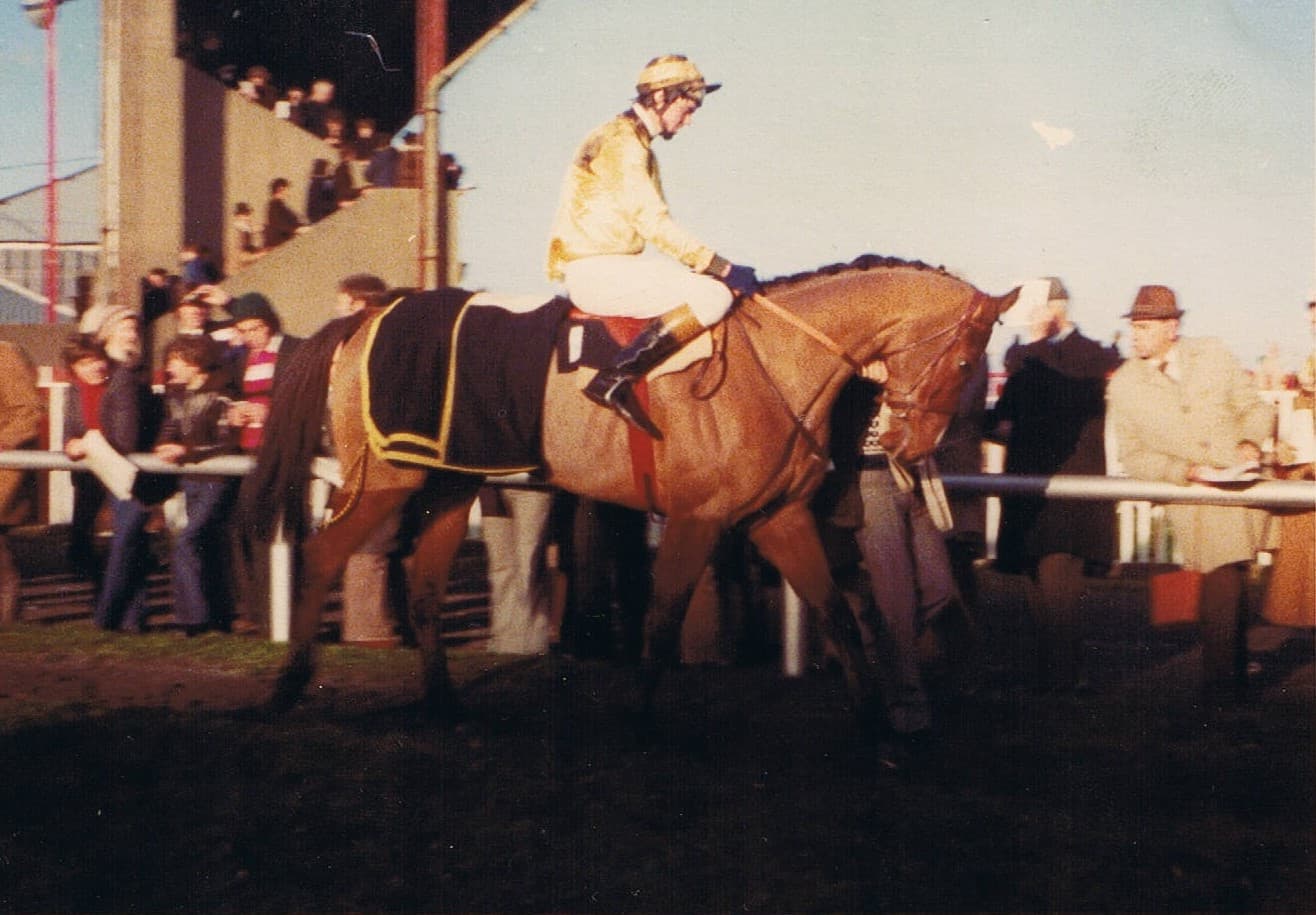
The History of Naas
From a Civil War-era field in Co. Kildare to Ireland's nursery of champions, the story of Naas Racecourse, its track, its horses and its people.
Read more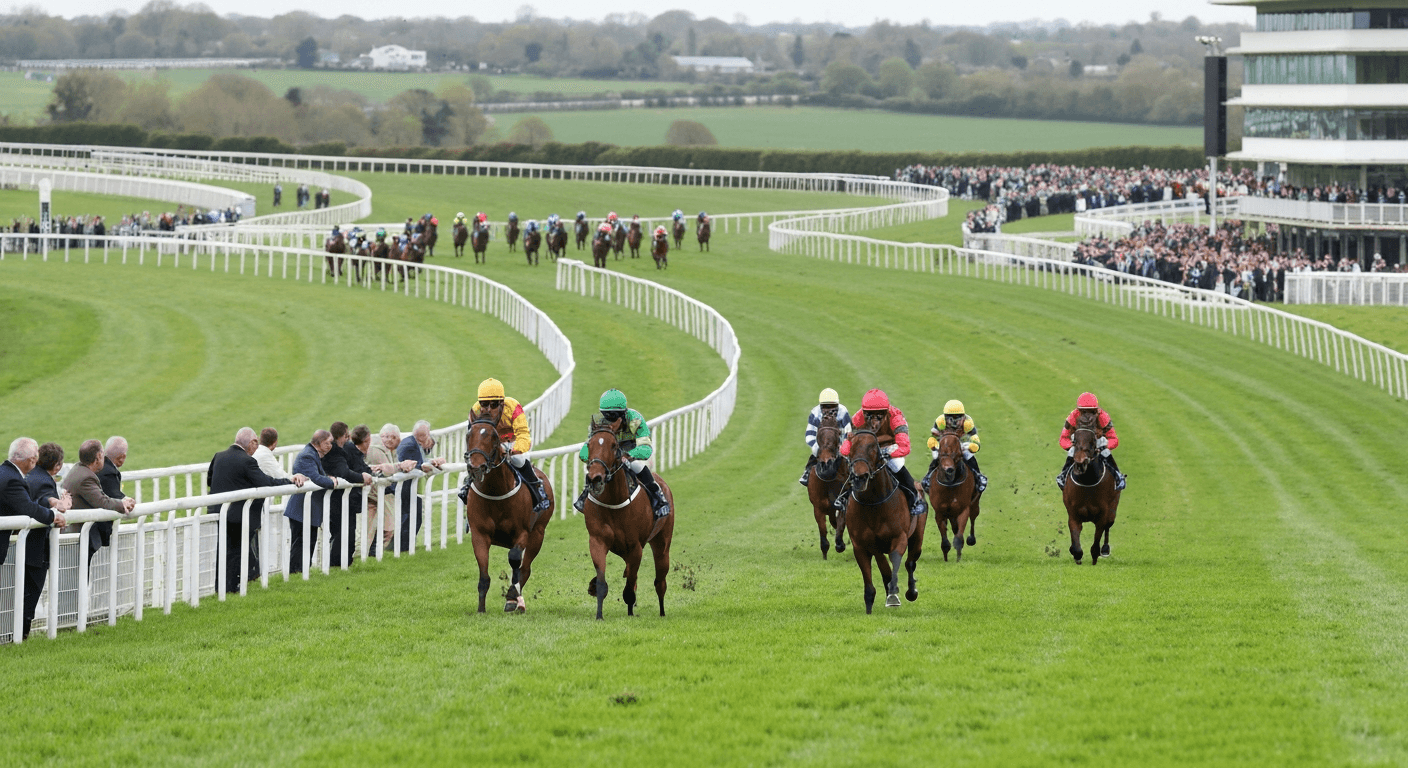
The Lawlor's of Naas Novice Hurdle: Race Guide
A guide to the Grade 1 Lawlor's of Naas Novice Hurdle, the first Grade 1 of the Irish jumps year, its winners and its role as a Cheltenham trial.
Read moreA Day at Naas, Visitor Guide
Plan a day at Naas Racecourse in Co. Kildare, getting there from Dublin, the stands, accessibility, food and bars, the best days and how to watch.
Read morePhotos on this page are used under Creative Commons licences. Titles, sources and licence links for each one are on our image credits page.
Research the field with the AI Race Predictor
Our model publishes calibrated win-probability estimates for UK races — a second opinion to understand a race, not tips. It's open about its record: it doesn't beat the market, and we show exactly how it does.
Work it out & learn the basics
Gamble Responsibly
Gambling should be entertaining and not seen as a way to make money. Never bet more than you can afford to lose. If you or someone you know has a gambling problem, help and support is available.