
Founder & Editor · Last reviewed 2026-07-13
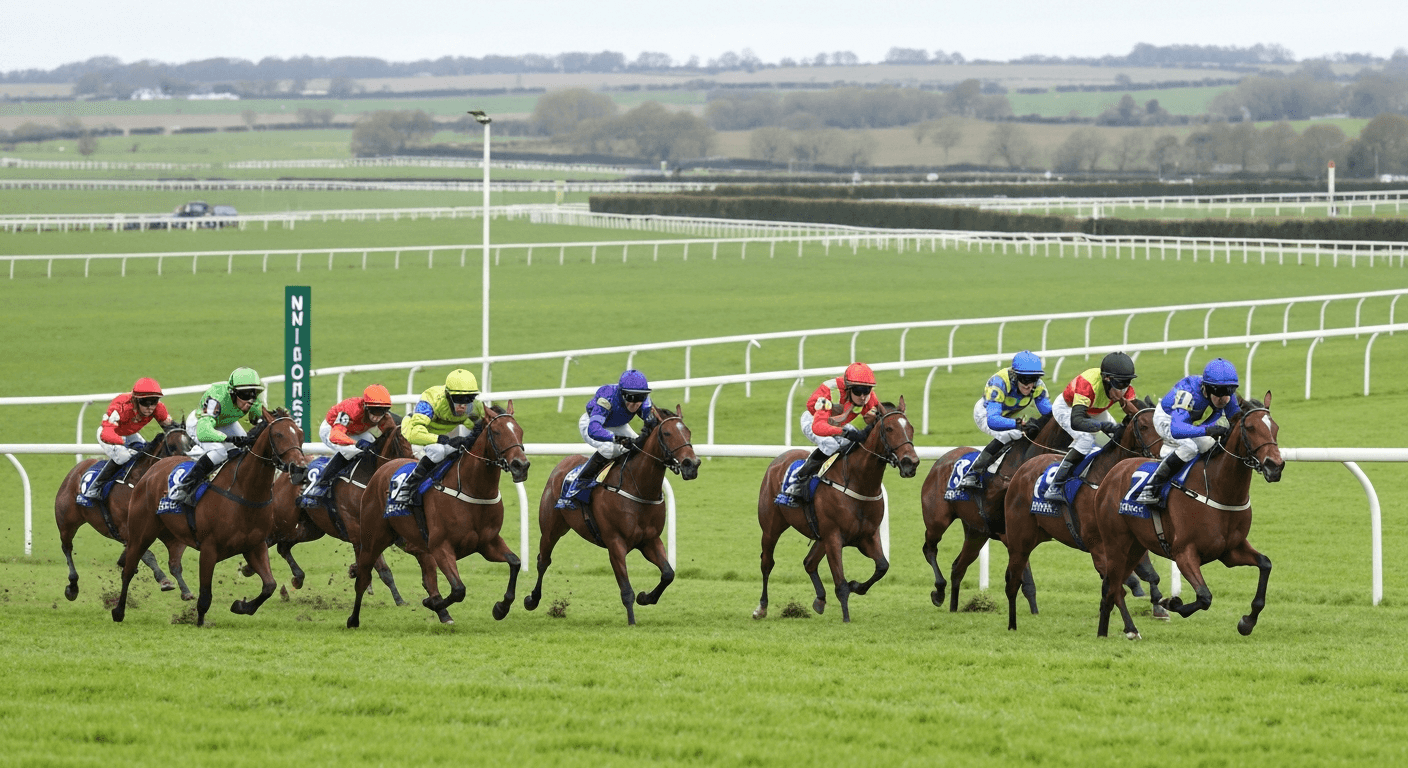
Navan sits at Proudstown, a few miles outside the County Meath town it takes its name from, and it is one of the fairer tests in Irish racing. This is a dual-code track, staging both Flat and National Hunt racing on turf, and the character that defines it is simple enough to describe: a left-handed, galloping circuit of about a mile and a half, wide bends, long straights, and a home straight that climbs all the way to the line. The last two furlongs are uphill. Horsemen prize the finish as a genuine test of stamina and fitness, and that single feature shapes how a card here tends to play out.
Nothing in this guide is a tip, and none of it describes a way to beat the bookmaker. Over time, backing favourites loses money to starting price, and the same is true of every mechanical betting method. The trainer records, the going patterns and the track traits set out below are context that helps you read a race, not edges that turn a profit. Betting is a cost paid for entertainment, so only stake what you can afford to lose, and treat every figure here as information rather than advice. If a bet stops being fun, the GamCare helpline and the tools your bookmaker offers are there to help.
Navan is regarded as one of the fairest courses in the country, with negligible draw bias on the Flat and no strong running-style bias under either code. That fairness is part of the appeal for form students: results here tend to reflect the horses rather than a quirk of the layout. The betting year is anchored by two strands. The November Navan Racing Festival puts the track's National Hunt features front and centre, headed by the Troytown Handicap Chase, while a spring Flat trials card built around the Vintage Crop Stakes brings the season's stayers back to the course.
This guide covers what the track asks of a horse, the going patterns and the draw, the trainer and jockey angles the record supports, the honest picture on favourites and form, how the big race days bet, and answers to common questions.
Where to Bet
Place your bets with a trusted, licensed bookmaker.

Promo code BETFRED50. New customers only. Register, deposit with a Debit Card, and place a first bet of £10+ at Evens (2.0)+ on Sports, to be settled within 7 days, to get £30 in Sports Free Bets and £20 in Bet Builder Free Bets within 24 hours of settlement. 7-day expiry. Eligibility & payment exclusions apply. Full T&Cs apply. Take Time to Think. BeGambleAware.org. 18+. Full T&Cs.

Promo code R30. New UK customers only, 18+. Register, deposit £10 or more, then place a £10 single cash bet at odds of 1/2 (1.5) or greater on any sports market (excluding Virtuals). Once the qualifying bet settles you get £30 in Free Bets (3 x £10) — the qualifying bet can win or lose. Free Bets are valid on any sports market excluding Virtuals, expire in 7 days, are non-withdrawable and must be used in full. Excluded deposit methods apply (including PayPal, Apple Pay, Skrill and NETELLER). Named bets such as Lucky 15 do not qualify. If you cash out the qualifying bet, or it is voided, you are no longer eligible for the offer. Ends 31.12.26. Full T&Cs apply. Please gamble responsibly. BeGambleAware.org. 18+. Full T&Cs.

Promo code BET40GET20. New UK customers, 18+. Register with the code and place a first bet of £40 or more at Evens (2.0) or greater. Receive 2 × £10 free bets: the first credited automatically once the qualifying bet settles, the second 24 hours later. Free bets must be placed at minimum odds of 4/1 (5.0), expire 24 hours after credit, and the free-bet stake is not returned with winnings. Debit card deposits only. Take Time to Think. BeGambleAware.org. 18+. T&Cs apply. Full T&Cs.

50% of your first-day net losses refunded as a free bet, capped at £25. New UK customers aged 18+ only. To qualify, deposit and place a first bet of £10 or more on any sport at minimum odds of evens (2.00), then place at least two further bets on different events, each worth at least 50% of your largest bet, all at evens (2.00) or greater. Losses are counted from your first settled bet until 23:59 the same day. Place a qualifying £10+ bet and you are guaranteed at least a £5 free bet. Bets placed at SP, void bets, cashed-out bets and bets struck with free bets do not count towards the offer. The free bet is credited the day after your qualifying bets settle and must be used within 7 days, after which it expires. It can be used at odds from 1/4 (1.25) up to 250/1 on singles and straight accumulators, but not on Trixie, Patent or Yankee style multiples. Free-bet stake is not returned with winnings. One offer per person, household, address, IP address and device. E-wallet deposits may not qualify, so check the cashier before depositing. Customers registered with GAMSTOP cannot claim. KYC identity verification must be completed before the free bet is credited. Take Time to Think. BeGambleAware.org. 18+. T&Cs apply. Full T&Cs.

New customers, 18+. Choose the sports bonus at sign-up, make a first deposit and receive a 100% bonus up to £50 in your Sports Bonus balance. To convert the bonus to cash, wager it 10x within 30 days. Single bets below Evens (2.00) do not qualify; accumulators do not qualify if any selection is below 1/2 (1.50). Virtual Sports, voided, cancelled, drawn, cashed-out and free-bet wagers do not count towards wagering. Only the first settled bet per event counts. Withdrawing before the wagering requirement is met forfeits the bonus balance including bonus winnings. Real-money funds are used before bonus funds. Deposits via Skrill or Neteller are not eligible. Not valid in conjunction with other promotions. Odds, bet and payment limits apply. 10bet general and promotion T&Cs apply. BeGambleAware.org. 18+. Full T&Cs.

New customers in Great Britain and Republic of Ireland, 18+. Place a £10 fixed-odds qualifying bet at minimum odds of 1/2 (1.50) — single or each-way (only the win part counts), pre-event or in-play, not cashed out early, within 28 days of opening the account. Receive up to £60 in bonuses credited over three days: 3 × £10 fixed-odds free bets (the first on settlement, then 24 and 48 hours later) plus 3 × £5 Total Goals FOOTBALL spread bets and 3 × £5 racing Winning Favourites spread bets, with a £1 racing Race Index spread bet as an extra on top. The spread bets need a full spread-betting account, opened within 28 days of the fixed-odds account and subject to Spreadex's eligibility and appropriateness checks. Free-bet stakes not returned with winnings; free bets valid 28 days from issue. IMPORTANT: the £5 credits are SPREAD bets — sports spread betting carries the risk that losses can exceed your stake. Sports spread-betting customers do not have Financial Ombudsman or FSCS recourse. Take Time to Think. BeGambleAware.org. 18+. T&Cs apply. Full T&Cs.

Promo code WELCOME15, entered under My Bonuses after registering. New UK customers, 18+. Place a first qualifying bet of at least £10 from your cash balance at odds of evens (2.0) or greater within 7 days of opening the account. Once the qualifying bet fully settles you receive £15 in free bets, credited as 3 x £5 tokens with set uses: one £5 accumulator free bet (minimum 4 legs, each leg at 2/5 or bigger), one £5 sports free bet (any market at evens or bigger) and one £5 Sub Cover free bet (selected football player markets at evens or bigger). Free-bet stakes are not returned with winnings. Free bets expire 7 days after they are credited. Void, cashed-out and partially cashed-out bets do not qualify. One offer per customer. Confirm the current terms on BetGoodwin's own welcome-offer page before claiming. Take Time to Think. BeGambleAware.org. 18+. T&Cs apply. Full T&Cs.

New UK customers, 18+. Minimum deposit £10. Place a £10 qualifying single at minimum odds of 1/2 (1.50), settled within 14 days. Receive £30 in free bets (stake not returned), split £20 for sportsbook use (2 x £10) and £10 for Bet Builder only (2 x £5); Bet Builder does not cover horse racing. Free bets must be accepted within 7 days and expire 7 days after acceptance. No promo code required. Best Odds Guaranteed on UK & Irish racing, subject to having staked over £25 in the previous seven days. Operated by LiveScore Betting and Gaming (Gibraltar) Ltd, UKGC 56859. Confirm the current terms on LiveScore Bet's own promotions page before claiming. Take Time to Think. BeGambleAware.org. 18+. T&Cs apply. Full T&Cs.
18+. BeGambleAware.org
What the Track Asks
Navan is a left-handed turf circuit, somewhere between a rectangle and a wide oval, with broad sweeping bends and long straight sections. The round course measures about one mile four furlongs. The racecourse describes it as a left-handed oval of a mile and four furlongs with a stiff uphill climb to the finish from the two-furlong pole, and that description tells you most of what you need before you read a card. Some guides call the circuit a mile and a half round, a difference that reflects rounding and whether the sprint chute is counted; the operator figure of 1m4f with a three-and-a-half-furlong home straight is the one to work from.
The uphill finish
The defining feature is the finish. The home straight runs about three and a half furlongs and climbs steadily, with the final two furlongs uphill. That makes Navan renowned for a stiff, stamina-sapping finish under both codes. In practical terms it is a track that asks a horse to stay every yard of its trip and to be truly fit, because a horse that is short of stamina or condition is found out on that closing rise rather than flattered by it. This is a demand to weigh, not a selection to make: knowing the finish is stiff helps you understand why a strong-travelling type can still be collared late, and why a proven stayer coming off the bridle can keep finding.
The Flat sprint course
There is a straight sprint course of just under six furlongs that joins the main track at the entrance to the home straight, used for the five- and six-furlong Flat races. Sprinters here still meet the same uphill run to the line once they reach the straight, so even over the minimum trip Navan is not a track for a one-paced speed horse that stops the moment the ground rises.
Chase and hurdle courses
Over jumps the chase course runs around the outside of the hurdles track and carries nine fences to a circuit, three of them jumped in the home straight on the uphill run. The hurdles course, on the inner, has seven flights and is fractionally sharper, but the wide bends make the practical difference between the two negligible. The three obstacles in the straight matter for how a race unfolds: a horse has to jump accurately while being asked a stamina question on rising ground, which rewards a fluent, economical jumper and can expose one that is already under pressure.
What the layout rewards
Put together, the wide, galloping shape and the uphill finish describe a track that suits a genuine stayer with a sound cruising speed and clean jumping, rather than a sharp-track specialist that relies on nipping round tight bends. Analysts note a slight edge to prominent and on-pace runners under both codes, but that is close to the sport-wide leaders' bias rather than anything peculiar to Navan. These track facts match the course's complete guide; the point of setting them out is to read a result more clearly, never to convert the demand into a pick.
Going and the Draw
Ground is the variable that shapes a Navan card most, and it is the first thing to establish before reading any form line. The draw, by contrast, is close to a non-issue here, and it is worth being plain about why.
Going through the season
Navan has an extensive high-end watering system, which means it can avoid firm ground through the summer Flat months. In winter the picture changes: the relatively slow-draining subsoil means the ground can become very testing, soft to heavy, which further emphasises the stamina the uphill finish already demands. The November festival, the track's marquee jumps meeting, is typically run on soft or heavy going.
| Period | Typical going | What it means for form |
|---|---|---|
| Summer Flat | Kept off firm by watering; often good | A closing stamina test even on a sound surface |
| Autumn and winter jumps | Soft to heavy on slow-draining ground | Premium on proven stamina and a horse that handles cut |
| November festival | Usually soft or heavy | Stamina and jumping economy count most |
The practical use of this is contextual, not mechanical. A horse whose best form is on a sound surface is a different proposition on soft or heavy November ground, and a soft-ground stayer flatters to deceive on a quick summer surface. Reading the going against each horse's proven preferences tells you more than any single figure, but it does not hand you a way to beat the price.
The draw at Navan
Navan is dual-code, so over jumps there is no draw to speak of; races are started by tape or from a standing position and stall number does not apply. The draw question is a Flat-only one, and even there the honest answer is that it barely matters. Navan is widely considered one of the fairest courses in Ireland, with no discernible draw advantage at any distance and no strong running-style bias. The straight sprint course and the wide bends on the round course mean a horse is not penalised simply for where it starts.
The one qualification worth carrying is the mild edge to prominent, on-pace runners that shows up under both codes. That is regarded as a reflection of the sport-wide leaders' bias rather than a course-specific feature, so it is a soft factor to note alongside pace and position, not a rule to bet to. There is no low-draw or high-draw angle at Navan that yields a profit, and any source presenting one is reading more into the layout than the record supports.
How to use going and draw together
The sensible order is ground first, then pace and position, with the draw a distant afterthought on the Flat and irrelevant over jumps. Establish the going, judge which horses are proven on it, then think about where the pace is likely to come from on a track that gives on-pace runners a slight nudge. None of that is a system. It is a way of understanding the race in front of you, and every figure above is context rather than an edge over starting price.
Trainer and Jockey Angles
Reading the trainer and jockey lines at Navan is partly about who dominates the big jumps days and partly about who simply turns up in form across a season split between two codes. The counts and strike rates below come from third-party course databases and are described as indicative figures that change over time, so treat them as background rather than a formula. A strong yard signals quality, but that quality is already in the price, and the puzzle is usually which of a powerful stable's runners is the live one.
Over jumps
Two yards shape the modern National Hunt picture at Navan. Gordon Elliott, based just up the road at Cullentra House in Longwood, is a self-described Meath man who has made the track something of a stronghold; among trainers since 2009 he has recorded in the region of 119 jumps wins at the course. He has been especially dominant in the Troytown Handicap Chase, supplying the winner in seven of the last dozen runnings to 2025, including Coko Beach in 2023. Willie Mullins, Ireland's perennial champion, is close behind with about 109 jumps wins over the same span. Among the riders, Davy Russell heads the career jockey list with roughly 62 winners, and Jack Kennedy features strongly on the big-meeting cards.
On the Flat
The Flat programme is the smaller part of Navan's year, but the leading names are the familiar ones. Aidan O'Brien leads the trainers with about 92 wins from 402 runners, and Ryan Moore has the best strike rate when riding for the Ballydoyle yard. In the recent jockey table, Colin Keane leads the way with around 55 wins and Shane Foley is next with about 44. As ever, these are win counts accumulated over years and across many runners, so a long list of winners reflects volume of opportunity as much as anything.
Strike rates are the figure to weigh
Raw win totals tell you who runs the most horses; strike rate tells you more about live chances. The course data gives the following indicative percentages, with their windows where stated.
| Trainer | Code | Strike rate | Window |
|---|---|---|---|
| Ger Lyons | Flat | ~26% | since 2015 |
| Aidan O'Brien | Flat | ~22.9% | indicative |
| Willie Mullins | Jumps | ~29.5% | indicative |
| Gordon Elliott | Jumps | ~17% | indicative |
A couple of points are worth drawing out. Ger Lyons and Aidan O'Brien both convert better than one Flat runner in five, which is why their better-fancied horses tend to be short. Over jumps, Willie Mullins posts the higher strike rate of the two big yards even though Gordon Elliott has the larger raw tally at the course, a reminder that Mullins tends to be more selective in where he aims a horse while Elliott runs a bigger team locally. None of that changes the arithmetic of betting: a high strike rate means the market already rates the runner, so the percentages describe past success, not a profitable signal.
How to use it
The sensible way to apply any of this is as a tie-breaker rather than a starting point. A leading stable's horse that also fits the track, stays the trip on the day's ground and is ridden handily is a more complete case than one resting on the trainer's name alone. Where a powerful yard runs two or three, the jockey booking is often the most useful clue to which it rates highest, but even that is information the market watches too. A strong hand at Navan tends to signal a well-run race with a quality winner; it does not make that yard's runners profitable to back blind.
Favourites, Form and the Honest Picture
It is tempting to think that a fair, galloping track with a clear form profile makes the favourite a safe anchor. The numbers say otherwise, and it is worth being clear about it.
What the favourite actually returns
Over time, backing favourites loses money to starting price. That is true across racing as a whole, and analysis of Navan specifically bears it out. Clear favourites at the course win around 32 to 35 per cent of races, which is roughly what you would expect from the horses the market rates most highly, but they return a negative actual-versus-expected figure. In plain terms, they have won less often than their prices implied they should, so backing them has offered poor value and a loss over time. Handicap favourites have been notably worse, which is no surprise on a track whose biggest days are built around competitive, large-field handicaps designed to bring the field together.
| Measure | Navan favourites |
|---|---|
| Clear-favourite win rate | ~32% to 35% |
| Return to level stakes at SP | Negative (a loss) |
| Actual versus expected (A/E) | Below par; underperform the market |
| Handicap favourites | Worse still |
The Troytown Handicap Chase makes the point in the sharpest terms. It is a competitive staying handicap of up to around 19 runners on testing November ground, and the 2025 running went to Answer To Kayf at 11/1. A race built to level the field is, almost by design, one where the favourite's chance is slim and the value is elusive.
Reading form figures here
A few track-specific points help when you read a Navan card:
- Stamina is non-negotiable. The uphill finish, sharpened on soft or heavy winter ground, punishes a horse short of proven stamina over its trip.
- Ground first. Establish the going before anything else, because soft and heavy surfaces reshuffle form lines and raise the premium on stamina and jumping.
- Position over draw. There is no draw angle worth betting to; the mild edge to prominent runners is worth noting alongside pace, not as a rule.
- Quality yards win their share, at a price. A strong stable signals a live chance, but the market has already accounted for it.
The honest bottom line
No bet type, selection method or favourite is profitable as a rule. The trainer records, the going patterns and the track traits set out in this guide describe what has happened; they are context, not edges. Favourites lose to SP over time, and the only sound way to use any of this is to understand the races better, stake only what you can afford to lose, and treat every figure here as information rather than a tip. If your betting stops being entertainment, the GamCare helpline and your bookmaker's deposit limits and self-exclusion tools are there to use.
How the Big Days Bet
Navan's betting year has two clear peaks, and each rewards a slightly different way of reading a card. The point of the notes below is to understand how these races tend to unfold, not to offer a method for beating the bookmaker. The favourite loses backed blind here as everywhere, and the big handicaps in particular are built to make it hard.
The November Navan Racing Festival
The two-day festival, first run in 2023, is the track's showpiece. In 2025 it fell on 15 and 16 November. The Saturday carried two Grade 2 features: the Railway Bar Lismullen Hurdle over two miles four furlongs, won that year by the veteran Colonel Mustard, and the Bar One Racing Fortria Chase over two miles, retained by Found A Fifty for Jack Kennedy and Gordon Elliott after his 2024 win. The Sunday brought two Grade 3 contests: the John Lynch Carpets & Flooring Monksfield Novice Hurdle over two miles four furlongs, won by Kalypso'chance, and the day's centrepiece, the Troytown.
The Troytown Handicap Chase
The Bar One Racing Troytown Handicap Chase is the biggest betting race of the Navan year: a Grade 3 handicap chase over three miles in November, worth around €100,000 with €60,000 to the winner. It is one of Ireland's most competitive early-season staying handicaps and a recognised pointer towards the spring handicaps at Cheltenham and Aintree. The 2025 running went to Answer To Kayf, ridden by John Shinnick for Terence O'Brien at 11/1, who beat Yeah Man by two and a quarter lengths from a field of 19 on heavy going. Gordon Elliott's grip on the race is striking, seven winners in the last dozen runnings to 2025, but a big-field handicap on testing ground remains a puzzle where the market leaders are regularly turned over. The honest read is that Elliott's strength signals a well-aimed runner or two, not a betting shortcut, and the arithmetic of favourites applies here as sharply as anywhere.
The Vintage Crop Stakes and the spring Flat trials
On the Flat, Navan's standout day comes in April around the Vintage Crop Stakes, a Group 3 over one mile six furlongs named after Dermot Weld's 1993 Melbourne Cup winner. It has grown into one of Ireland's leading trials for the Ascot Gold Cup, and it regularly draws the country's better stayers making their seasonal return, with recent runners including Kyprios and Emily Dickinson. The 2026 Vintage Crop raceday was set for Saturday 25 April, supported by the Group 3 Salsabil Stakes and the Listed Committed Stakes. As a trial, its value is in what it tells you about a stayer's wellbeing and trip rather than as a race to bet through for profit; a strong seasonal reappearance here is context for the summer ahead, not a signal that beats the price on the day.
Reading the big days
Across both peaks the pattern is the same. Large fields, testing ground and competitive handicaps make the favourite's job hard, and the Grade 2 and Grade 3 features tend to fall to the powerful yards whose strength is already reflected in the odds. Use the trends to read a result, never as a way to beat the bookmaker.
Frequently Asked Questions
Share this article
More about this racecourse
All navan guides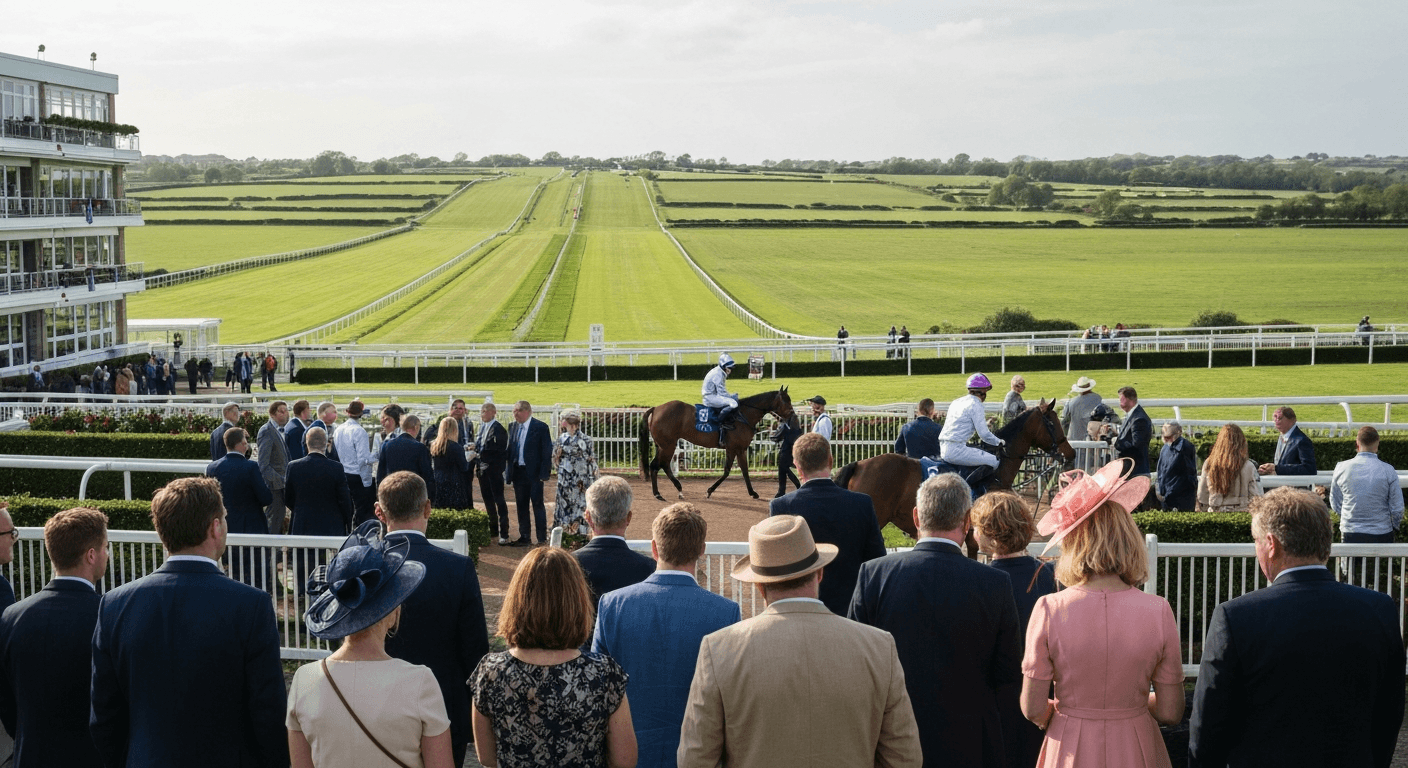
A Day Out at Navan Racecourse
Plan a day at Navan Racecourse in Co. Meath: getting there, tickets and enclosures, food and bars, the best days to go, what to wear and first-visit tips.
Read more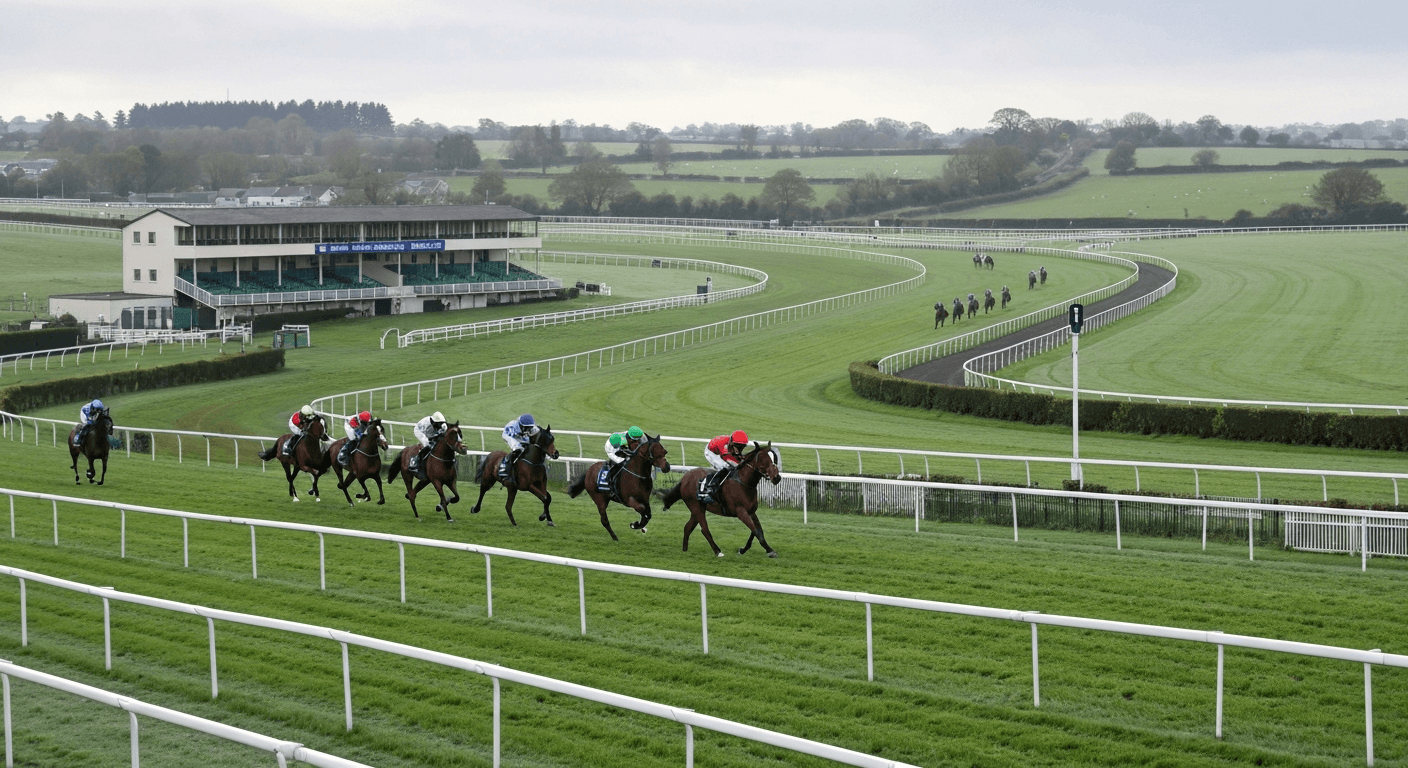
The History of Navan Racecourse
The story of Navan Racecourse in Co. Meath: founded at Proudstown in the 1920s, the track where Arkle first won, and home of the Troytown Chase.
Read more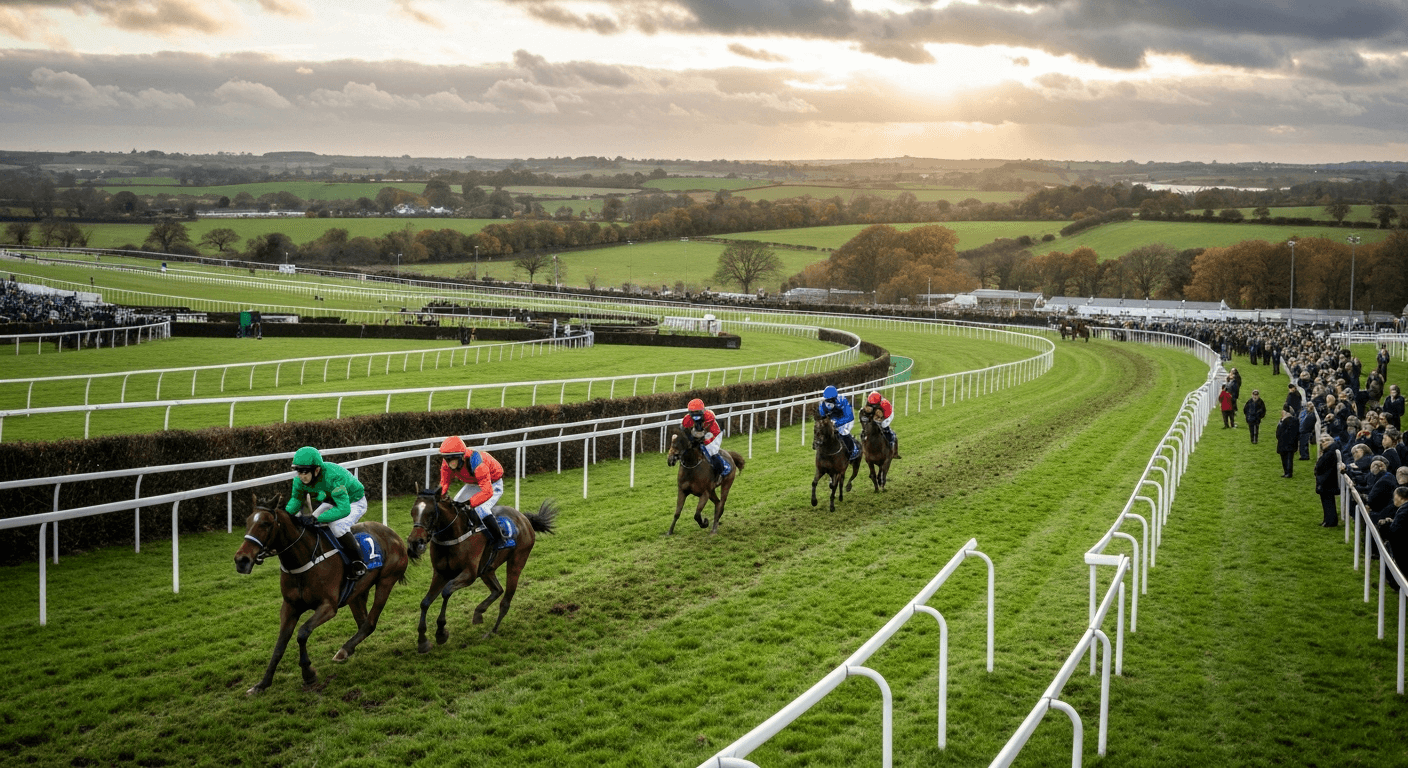
Navan Racecourse: The Complete Guide
Navan Racecourse in full: the Meath dual-code track where Arkle debuted, the Troytown Chase and Vintage Crop Stakes, plus tickets, travel and how to visit.
Read moreResearch the field with the AI Race Predictor
Our model publishes calibrated win-probability estimates for UK races — a second opinion to understand a race, not tips. It's open about its record: it doesn't beat the market, and we show exactly how it does.
Work it out & learn the basics
Gamble Responsibly
Gambling should be entertaining and not seen as a way to make money. Never bet more than you can afford to lose. If you or someone you know has a gambling problem, help and support is available.