Founder & Editor · Last reviewed 2026-07-13
Racing in County Sligo is older than the track most people picture when they hear the name. The course at Cleveragh, set in a natural bowl on the southern edge of Sligo town, only opened in 1955. The racing tradition behind it runs back much further, to a four-day meeting on a seaside course at Rosses Point in September 1781. Between those two dates the sport moved home twice, paused for wars and hard times, and was even staged for a while outside the county altogether.
Sligo has never been a headquarters course. It stages no Group, Graded or Listed race, and it has no single champion horse tied to its name. What it has instead is a long thread of continuity, a testing right-handed circuit that rewards horses and jockeys who know it, and a handful of days each summer that fill the stands. The two-day August meeting, the royal visit of 2015, and a run of dominant trainers give the record its colour.
This article follows that record in order: the move from Rosses Point through Hazelwood to Cleveragh, the feature days that anchor the modern calendar, the course specialists and memorable winners, the trainers, jockeys and committee who shaped the place, the numbers in the book, race day itself, and where Sligo stands today.
In this guide:
From Rosses Point to Cleveragh
Organised racing in County Sligo dates to a four-day meeting at Bowmore, Rosses Point, in September 1781. It was run under Turf Club rules over a three-mile, horseshoe-shaped seaside course, with stakes of 200 guineas, and it became an annual fixture that continued, barring a few cancellations, into the 1840s. That makes the county's racing tradition one of the older ones in the west of Ireland, even though the present course is a much later arrival.
The Hazelwood years
After a lapse, the sport found a new home. Mr John Wynne made a course available on his lands at Hazelwood, near Sligo town, and the first meeting there was held on Wednesday 16 April 1873, with five races run under Turf Club rules. Hazelwood was not a fixed and permanent base in the way Cleveragh later became. When the course was unavailable in 1886, the committee returned to Bowmore for twelve years before racing came back to Hazelwood in 1898.
Racing continued on the shores of Lough Gill at Hazelwood, with the exception of the First World War years, until the last meeting there on 8 April 1942. The war years and the period that followed were difficult ones for the fixture. For a time in the late 1940s, meetings billed as Sligo fixtures were even staged at the Newbrook course outside Mullingar, in 1946 to 1947 and again in 1949 to 1950, while the county waited for a permanent home of its own.
The move to Cleveragh
The search for a permanent venue settled on lands at Cleveragh Demesne, an area known locally as the "Pump Field," recently bought by Sligo Corporation from the Wood-Martin family. The Irish racing authorities approved the site in 1949, and a long-term lease was granted. It is worth being precise about the dates here, because some accounts date the current course loosely to 1949. That year marks the approval of the site, not the start of racing. The first meeting at Cleveragh did not take place until several years later.
The inaugural meeting opened on Wednesday 24 August 1955, with the first race at 3pm, before a crowd of more than 7,000. The Mayor of Sligo, Mr E. Tolan, formally declared the course open. The six-race card had the Cleveragh Maiden as its feature, and the honours for the first winner on the new track were shared by trainer Dan Moore and jockey Pat Doyle. The card also nodded to the setting, with a Lough Gill Maiden Plate and a Benbulben Handicap Hurdle carding races named for the landscape around the course.
That 1955 opening is the founding date of Sligo Racecourse as it exists today. Everything that follows, from the feature days to the redevelopments, sits on the ground bought at Cleveragh and first raced on that August afternoon.
The Feature Days and the Connacht Oaks
Sligo has no black-type races. It stages no Group, Graded or Listed event, and it never has. The programme is built around handicaps and maidens, so the course does not have a signature Classic to organise its history around. What it does have is a set of feature days, headed by the two-day August meeting, that give the calendar its shape.
The two-day August meeting
The busiest and most important fixture of the Sligo year is the two-day meeting in early-to-mid August, which comes hot on the heels of the Galway Festival. It combines a Flat card and a National Hunt evening card across consecutive weekdays, and it draws the track's biggest crowds. The opening Flat day is branded Diageo Day; the second day is the National Hunt evening card that stages Ladies Day.
The Connacht Oaks
The headline Flat race is the Irish Stallion Farms EBF Connacht Oaks Fillies Handicap, run on the opening day and sponsored by the Irish European Breeders Fund. The name invites an obvious comparison, so it is worth being clear about what the race is and is not. Unlike the Curragh's Irish Oaks, which is a Group 1 Classic for three-year-old fillies, the Connacht Oaks is a handicap open to fillies aged three and upwards, run over a middle-distance trip of about 1m 2f. Sligo racecourse manager Kathryn Foley described it in 2023 as the feature race of Diageo Day.
Prize money has grown in recent years, from a total of around 26,000 euro in 2023 to a 30,000 euro fund in 2025, with 18,000 euro to the winner that year. As a competitive handicap it has thrown up some big-priced results, including Starry Heavens at 18/1 in 2023 for trainer Mrs John Harrington and jockey Siobhan Rutledge.
| Year | Winner | Trainer | Jockey | SP |
|---|---|---|---|---|
| 2025 | Lady Lunette | R.P. Cody | C.T. Keane | 9/1 |
| 2024 | No Niki No | Eoghan Joseph O'Neill | C.D. Hayes | 7/2 |
| 2023 | Starry Heavens | Mrs John Harrington | Siobhan Rutledge | 18/1 |
| 2022 | Corky | Joseph Patrick O'Brien | M.P. Sheehy | 10/1 |
| 2021 | Miss Myers | M.C. Grassick | W.J. Lee | 5/1 |
| 2020 | Abandoned | n/a | n/a | n/a |
| 2019 | Kastasa | D.K. Weld | A.J. Slattery | 11/4 |
| 2018 | Echo Park | Mrs John Harrington | C. O'Donoghue | 3/1 |
The feature jumps race
The August meeting also carries a feature National Hunt handicap hurdle, an extended handicap for four-year-olds and upwards run over about 2m 4f to 2m 5f, with a value given as around 11,500 euro to the winner. It has no fixed name: in the recent result cards from 2023 to 2025, the feature handicap hurdle has carried a different commercial sponsor title each year, running as the Lighthouse At Clifford Electrical Handicap Hurdle among others. The race itself is a handicap, not a graded or Listed event.
Course Specialists and Memorable Winners
Sligo does not have a roster of champions. As an ungraded country track with no black-type races, it has never been the stage for the defining wins of the great Irish horses, and it would be dishonest to pretend otherwise. Its lore centres on a different kind of horse: the course specialist that masters the turning, undulating, uphill circuit rather than the famous name whose reputation was made elsewhere.
That specialist theme is grounded in the numbers. The track is idiosyncratic enough that previous course form is regarded as a strong positive, yet its demands are severe enough to spread the winners around. According to one course guide, no jumps horse has won more than three times at Sligo since 1988. It is a place where knowing the track counts, but where no single horse has been able to make it a fortress.
Mollyanna and the royal day
The best-remembered result at Cleveragh belongs to a mare rather than a champion. On 20 May 2015, the year the course marked its 60th anniversary, the then Prince of Wales and the Duchess of Cornwall, now King Charles III and Queen Camilla, attended an evening meeting at Sligo during a four-day visit to Ireland. They presented the prize for the specially named Duke and Duchess of Cornwall Mares' Maiden Hurdle, won by Mollyanna, trained by Colin Bowe and ridden by Mark Walsh, the second winner of the evening for the jockey. In the weeks that followed, the Duchess of Cornwall bought the mare, who was sent to trainer Jamie Snowden at Lambourn.
That afternoon, more than any single racing performance, is the one Sligo returns to when it tells its own story. It is a memorable occasion rather than the making of a legend, and on the evidence that is the honest way to frame the horses of Cleveragh.
The Trainers, Jockeys and the Race Committee
If Sligo's history is short on famous horses, it is not short on famous handlers. The stiff, testing circuit has been mastered by some of the biggest names in Irish training, and the record book is dominated by a handful of them.
Willie Mullins and Dermot Weld
Over jumps, Willie Mullins is the outstanding trainer at the course. He has 30 jumps wins there since 2009, comfortably clear of Gordon Elliott on 18, and his strike rate is remarkable. Per Geegeez's course analysis, Mullins runs at a 48.39% strike rate at Sligo, meaning close to every other horse he sends there wins. Sligo is one of only a small group of Irish tracks where his win strike rate has passed 40% over a meaningful sample, and one of the very few where it has exceeded 50%.
On the Flat, Dermot Weld is the leading trainer, with 17 Flat wins since 2009, roughly twice as many as his nearest rival Michael Mulvany on 10. Weld also trained the 2019 Connacht Oaks winner Kastasa, tying the leading Flat yard to the course's feature race.
The jockeys
The riding records follow the same pattern. Over jumps, Paul Townend leads the current riders with 17 wins since 2009, ahead of Mark Walsh on 15, with Ruby Walsh the leader across the full period. On the Flat, Billy Lee heads the list with 15 wins, just ahead of Declan McDonogh on 14. Gary Carroll and Shane Cross also feature among the jockeys with strong Flat records at the course.
Patrick Mullins and the amateur record
Sligo has a place in the record books of Irish amateur riding. On 15 July 2018, Patrick Mullins rode his 546th winner at the course to become the winning-most amateur rider in Irish racing history, passing Ted Walsh's mark of 545. The winner was Queens Boulevard, trained by his father Willie Mullins, who came home by half a length at 4/7 in an eight-runner field.
The Race Committee
Behind the racing sits the County Sligo Race Committee, which owns and runs the track under the trading name County Sligo Races. In recent years the racecourse manager has been Kathryn Foley, and the chairman at the time of the 2015 royal visit was Kieran O'Connor.
The Record Book
Sligo's record book comes with a caveat. The course does not publish an authoritative course-record or standard-times table, and there is no marquee-race track record on the books, partly because the track has no black-type race to hang one on. Individual winning times are available through result services on a race-by-race basis, but any single figure quoted as "the Sligo course record" should be treated with caution, because none is published as such.
Where the numbers are solid is in the trainer and jockey records, drawn from the runners since 2009.
| Category | Leader | Record |
|---|---|---|
| Jumps trainer | Willie Mullins | 30 wins since 2009, 48.39% strike rate |
| Jumps trainer, second | Gordon Elliott | 18 wins since 2009 |
| Flat trainer | Dermot Weld | 17 wins since 2009 |
| Flat trainer, second | Michael Mulvany | 10 wins since 2009 |
| Jumps jockey, current | Paul Townend | 17 wins since 2009 |
| Jumps jockey | Ruby Walsh | leader over the full period |
| Flat jockey | Billy Lee | 15 wins since 2009 |
| Flat jockey, second | Declan McDonogh | 14 wins since 2009 |
| Amateur milestone | Patrick Mullins | 546th career winner here, 15 July 2018 |
The standout statistic is Mullins's strike rate. A jumps yard winning close to half its races at any track is exceptional, and it makes Sligo one of the strongest single-course records in his career.
One further pattern is worth recording as history rather than as a betting angle. The track is demanding enough that, per one guide, no jumps horse has won more than three times at Sligo since 1988, and course form is regarded as a genuine positive on a circuit that rewards horses who have handled its turns and hill before. These are descriptive patterns only. As everywhere, backing favourites loses money to starting price over time, and none of this implies a profit.
Race Day at Cleveragh
Sligo races are, first and foremost, a summer event. The fixtures are overwhelmingly warm-evening meetings run between May and October, which suits holidaymakers and gives the busier cards a relaxed, sociable feel rather than the crush of a big winter jumps day. Gates open two hours before the first race, and much of the crowd treats the evening as an outing as much as a betting afternoon.
The social calendar turns on a set of themed days. Ladies Day, the second day of the August meeting, is the fashion highlight of the year, with a best-dressed competition; the 2024 running carried a prize of 1,000 euro and was judged by Marietta Doran. Students Day, a separate autumn fixture usually staged around late September or early October, is popular with local university students and is one of the track's liveliest cards. A July Family Day rounds out the summer, with children's activities, a magician and free ice cream. Across the season the course leans into its local sporting communities, with days themed around GAA, Sligo Rovers, Sligo rugby and the ladies' Gaelic football association.
The single day that everyone remembers, though, is the royal visit of 20 May 2015, when the then Prince of Wales and Duchess of Cornwall attended an evening meeting in the course's 60th-anniversary year and presented a prize. That visit came immediately after an emotional trip to nearby Mullaghmore, where Lord Mountbatten was killed in 1979, and it remains the landmark occasion in the modern life of the course.
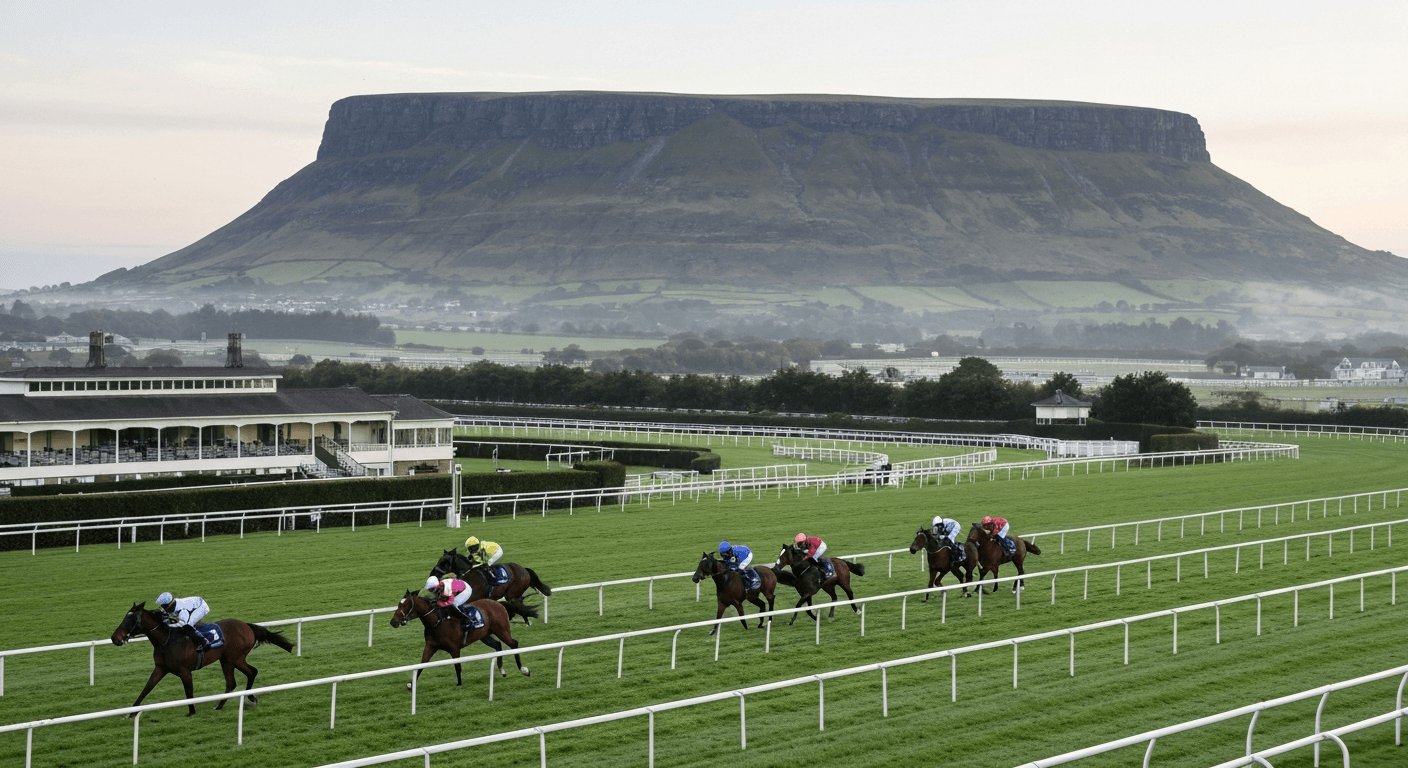
The setting adds to all of this. Cleveragh sits in a natural bowl beneath the mountains of Benbulben and Knocknarea, and the hospitality rooms borrow the local names. The full story of that landscape, and of Sligo's links to the poet W.B. Yeats, belongs to a separate guide; here it is enough to say that few Irish tracks have a more distinctive backdrop.
Sligo Today
The Sligo of today is a modest but well-kept country track, the most northerly racecourse on the island of Ireland, staging around eight to nine fixtures a year between May and October. Sources differ slightly on the exact count, with some guides and Horse Racing Ireland putting it at eight and the racecourse's own recent listings at nine, so the fixture list is best described as around eight to nine dates. All of them fall in the summer and early autumn, and many are evening meetings.
Rebuilding the course
The modern facilities are the product of two rounds of investment. The first phase of a capital development project was completed for the start of the 2013 season, delivering a new grandstand, jockey facilities, a pavilion bar, Tote betting facilities, offices and turnstiles. The cost of that phase is reported differently by different sources, given as around 2 million euro by several guides and around 2.5 million euro by others, so both figures are worth recording rather than choosing one silently.
The second round came soon after. In October 2015, the board of Horse Racing Ireland approved grant aid of close to 800,000 euro under its Racecourse Capital Development scheme. That grant sat within a larger planned programme, described in the region of 1.9 million euro in total, including a two-storey hospitality building overlooking the parade ring. As with the 2013 phase, the headline grant figure and the wider programme figure are best read together rather than treated as competing versions of the same number.
Ownership and how to watch
The course remains owned and run by the County Sligo Race Committee, trading as County Sligo Races, the same body that has overseen the Cleveragh track since it opened. There is no all-weather surface; Sligo is a dual-code turf course staging both Flat and National Hunt racing. Its racing is broadcast via Racing TV under the arrangement covering Irish racecourses, with replays and results also available through the usual result services.
For all that it has grown, Sligo has kept its character as a compact, scenic, specialist's track. It has not chased black-type status or a marquee race. Its place in Irish racing rests on continuity, on its setting, and on the feature days that fill the stands each August. The complete guide to visiting Sligo covers tickets, travel and the modern raceday in full.
Frequently Asked Questions
Share this article
More about this racecourse
All sligo guides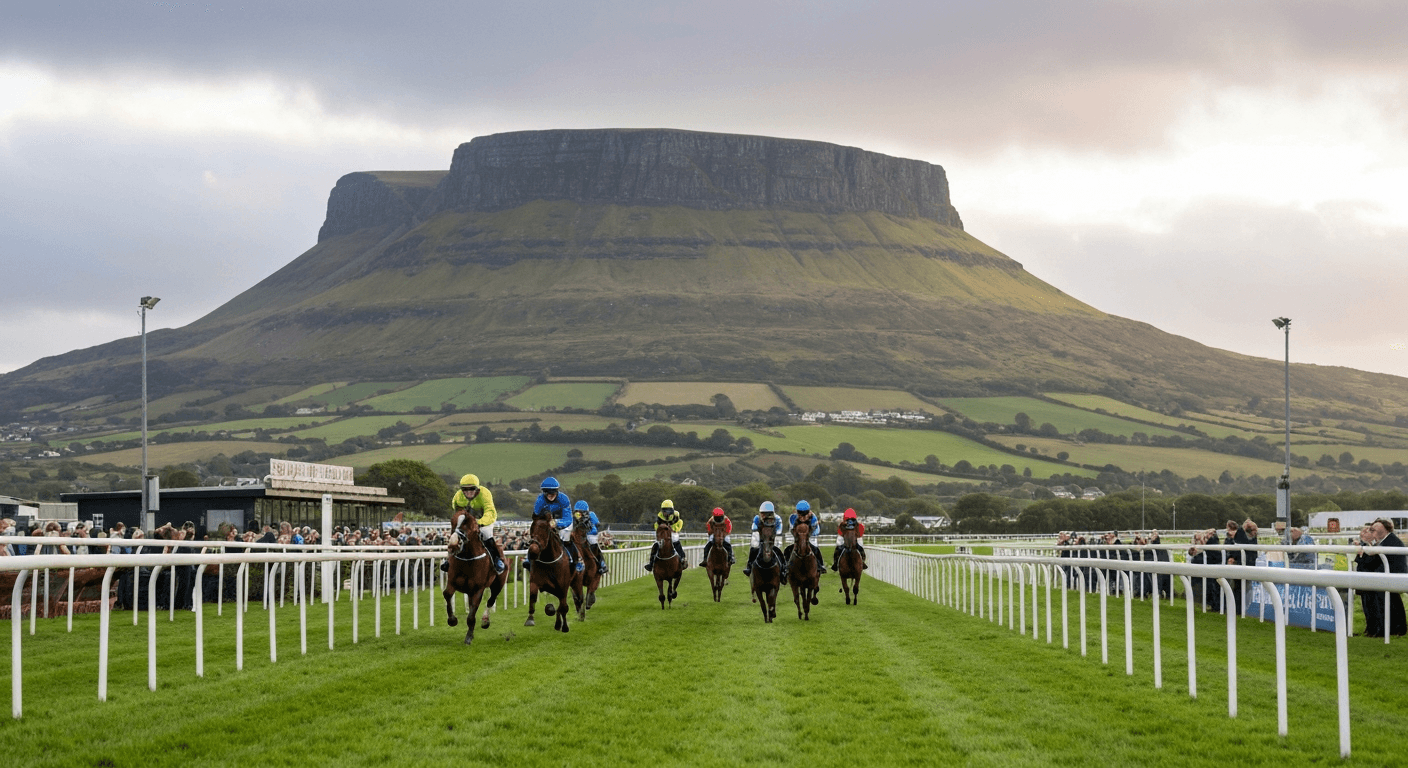
Sligo Racecourse: The Complete Guide
Sligo Racecourse: dual-code Flat and jumps in Co. Sligo, home of the Connacht Oaks and Guinness Sligo Handicap Hurdle, plus tickets, travel and how to visit.
Read more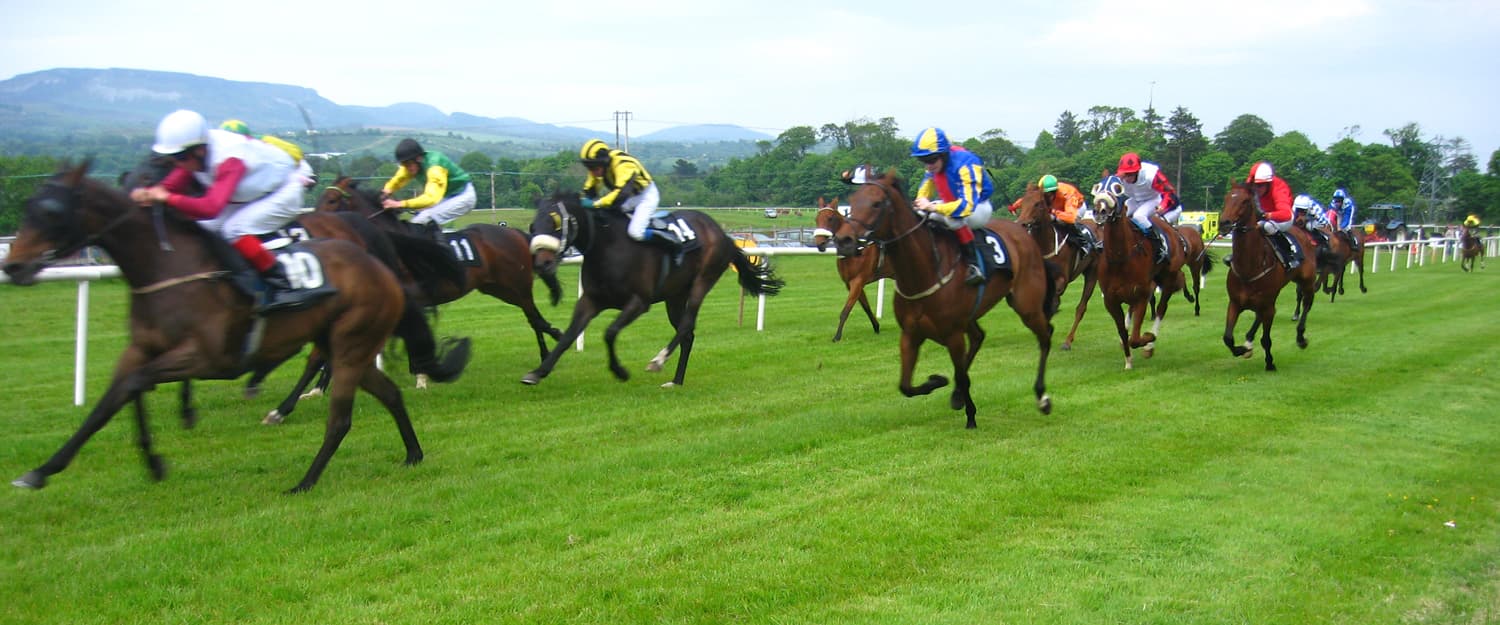
Racing in Yeats Country: Sligo's Setting and Story
Sligo Racecourse sits in a natural bowl at Cleveragh beneath Benbulben, in the heart of Yeats country, for one of Ireland's most scenic evening race days.
Read more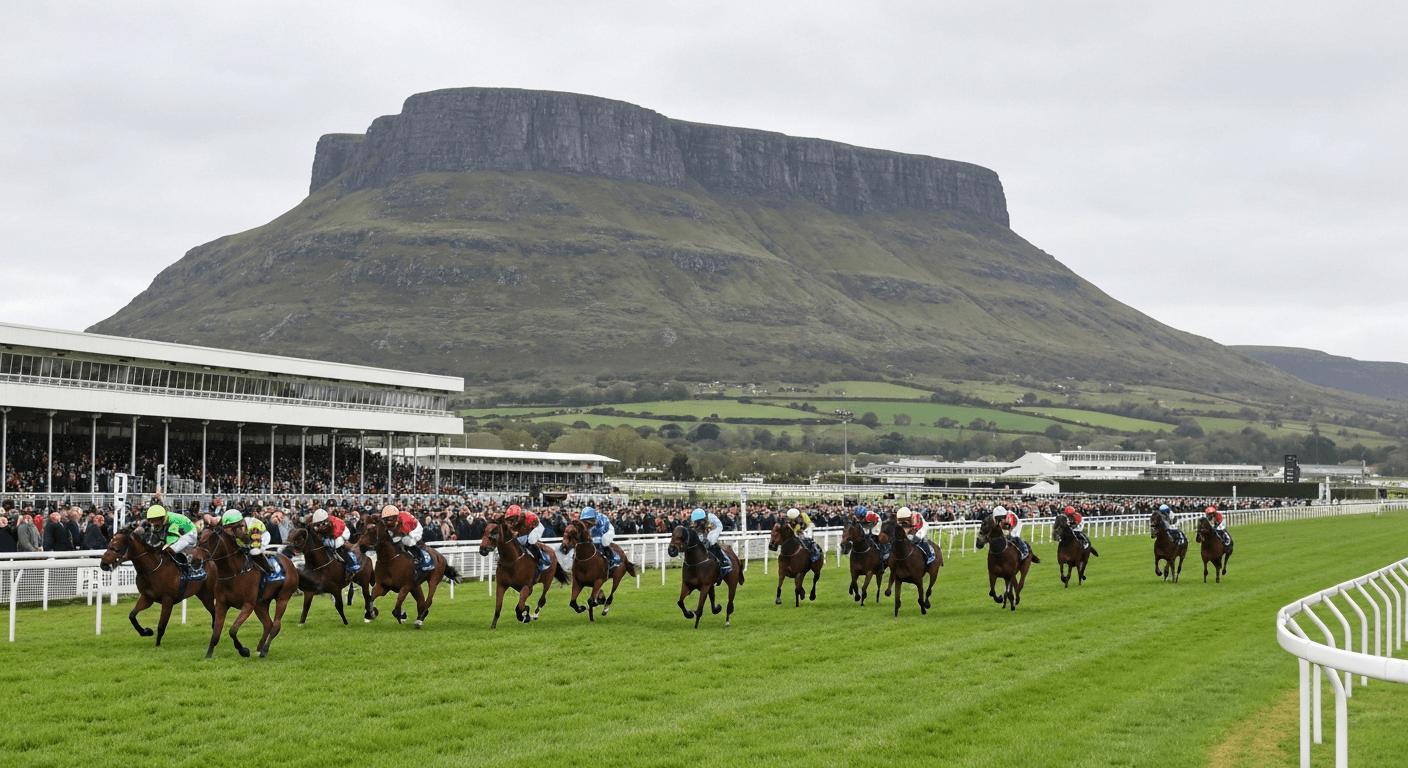
Sligo's August Festival: The Complete Guide
Sligo's two-day August meeting: the Connacht Oaks, the feature handicap hurdle, Ladies Day and Students Day at Ireland's most northerly track.
Read morePhotos on this page are used under Creative Commons licences. Titles, sources and licence links for each one are on our image credits page.
Gamble Responsibly
Gambling should be entertaining and not seen as a way to make money. Never bet more than you can afford to lose. If you or someone you know has a gambling problem, help and support is available.