
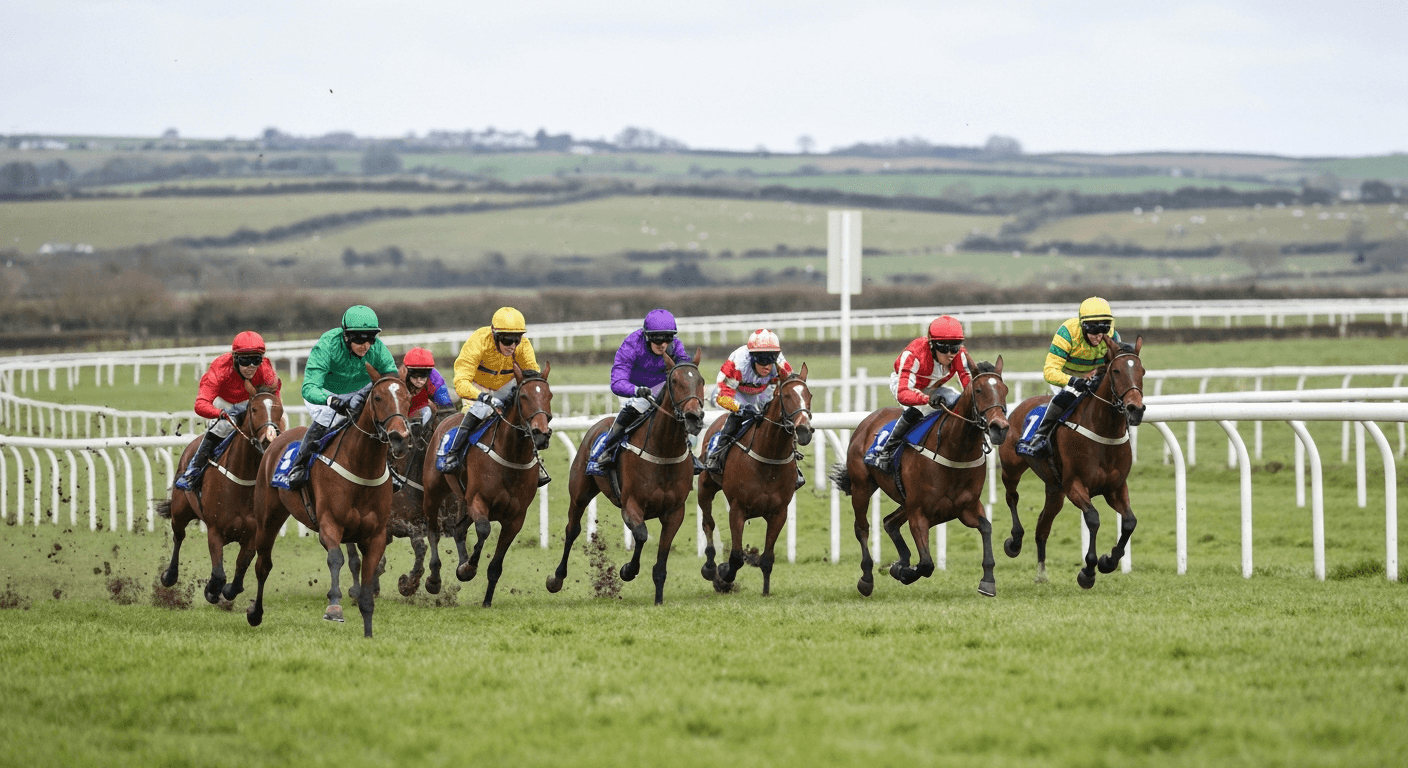
Founder & Editor · Last reviewed 2026-07-11
Betting at Thurles
Thurles sits about a mile west of the town in Co. Tipperary, a few miles off the N8/M8 that runs between Dublin and Cork. It is a National Hunt track and nothing else, a sharp right-handed oval that has staged racing since 1732 and was, until recently, the only privately owned racecourse in Ireland. The Molony family ran it for more than a century. In August 2025 they announced its closure, and Horse Racing Ireland stepped in to keep the fixtures going through to March 2026, with racing resuming that October while the longer-term future is worked out.
For anyone studying the form, Thurles rewards a particular kind of reading. It packs about eleven fixtures into the winter, from October to March, mostly on Thursdays with a handful of weekend cards. Its reputation rests on reliable, free-draining ground and a small but strong roster of graded races, which is why the big yards use it as a trial stage for Cheltenham and the Dublin Racing Festival. The showpiece is the mid-January Sunday card built around the Grade 2 Kinloch Brae Chase.
Before any of that, a plain word on the betting. Nothing in this guide is a tip. Over time, backing favourites loses money to starting price, and that holds at Thurles as it does everywhere. The trainer records, the track quirks and the going patterns set out below describe what has happened here; they are context for reading a race, not a way to beat the bookmaker. The market wins over the long run, which is the whole reason a betting margin exists. Treat betting as paid entertainment, stake only what you can afford to lose, and if it stops being fun, the support is at GambleAware or GamCare.
This guide covers what the sharp jumps track asks, the going patterns and why there is no draw, the trainer and jockey angles the record supports, the honest picture on favourites and form, how the big days bet, and answers to common questions.
Where to Bet
Place your bets with a trusted, licensed bookmaker.

Promo code BETFRED50. New customers only. Register, deposit with a Debit Card, and place a first bet of £10+ at Evens (2.0)+ on Sports, to be settled within 7 days, to get £30 in Sports Free Bets and £20 in Bet Builder Free Bets within 24 hours of settlement. 7-day expiry. Eligibility & payment exclusions apply. Full T&Cs apply. Take Time to Think. BeGambleAware.org. 18+. Full T&Cs.

Promo code R30. New UK customers only, 18+. Register, deposit £10 or more, then place a £10 single cash bet at odds of 1/2 (1.5) or greater on any sports market (excluding Virtuals). Once the qualifying bet settles you get £30 in Free Bets (3 x £10) — the qualifying bet can win or lose. Free Bets are valid on any sports market excluding Virtuals, expire in 7 days, are non-withdrawable and must be used in full. Excluded deposit methods apply (including PayPal, Apple Pay, Skrill and NETELLER). Named bets such as Lucky 15 do not qualify. If you cash out the qualifying bet, or it is voided, you are no longer eligible for the offer. Ends 31.12.26. Full T&Cs apply. Please gamble responsibly. BeGambleAware.org. 18+. Full T&Cs.

Promo code BET40GET20. New UK customers, 18+. Register with the code and place a first bet of £40 or more at Evens (2.0) or greater. Receive 2 × £10 free bets: the first credited automatically once the qualifying bet settles, the second 24 hours later. Free bets must be placed at minimum odds of 4/1 (5.0), expire 24 hours after credit, and the free-bet stake is not returned with winnings. Debit card deposits only. Take Time to Think. BeGambleAware.org. 18+. T&Cs apply. Full T&Cs.

50% of your first-day net losses refunded as a free bet, capped at £25. New UK customers aged 18+ only. To qualify, deposit and place a first bet of £10 or more on any sport at minimum odds of evens (2.00), then place at least two further bets on different events, each worth at least 50% of your largest bet, all at evens (2.00) or greater. Losses are counted from your first settled bet until 23:59 the same day. Place a qualifying £10+ bet and you are guaranteed at least a £5 free bet. Bets placed at SP, void bets, cashed-out bets and bets struck with free bets do not count towards the offer. The free bet is credited the day after your qualifying bets settle and must be used within 7 days, after which it expires. It can be used at odds from 1/4 (1.25) up to 250/1 on singles and straight accumulators, but not on Trixie, Patent or Yankee style multiples. Free-bet stake is not returned with winnings. One offer per person, household, address, IP address and device. E-wallet deposits may not qualify, so check the cashier before depositing. Customers registered with GAMSTOP cannot claim. KYC identity verification must be completed before the free bet is credited. Take Time to Think. BeGambleAware.org. 18+. T&Cs apply. Full T&Cs.

New customers, 18+. Choose the sports bonus at sign-up, make a first deposit and receive a 100% bonus up to £50 in your Sports Bonus balance. To convert the bonus to cash, wager it 10x within 30 days. Single bets below Evens (2.00) do not qualify; accumulators do not qualify if any selection is below 1/2 (1.50). Virtual Sports, voided, cancelled, drawn, cashed-out and free-bet wagers do not count towards wagering. Only the first settled bet per event counts. Withdrawing before the wagering requirement is met forfeits the bonus balance including bonus winnings. Real-money funds are used before bonus funds. Deposits via Skrill or Neteller are not eligible. Not valid in conjunction with other promotions. Odds, bet and payment limits apply. 10bet general and promotion T&Cs apply. BeGambleAware.org. 18+. Full T&Cs.

New customers in Great Britain and Republic of Ireland, 18+. Place a £10 fixed-odds qualifying bet at minimum odds of 1/2 (1.50) — single or each-way (only the win part counts), pre-event or in-play, not cashed out early, within 28 days of opening the account. Receive up to £60 in bonuses credited over three days: 3 × £10 fixed-odds free bets (the first on settlement, then 24 and 48 hours later) plus 3 × £5 Total Goals FOOTBALL spread bets and 3 × £5 racing Winning Favourites spread bets, with a £1 racing Race Index spread bet as an extra on top. The spread bets need a full spread-betting account, opened within 28 days of the fixed-odds account and subject to Spreadex's eligibility and appropriateness checks. Free-bet stakes not returned with winnings; free bets valid 28 days from issue. IMPORTANT: the £5 credits are SPREAD bets — sports spread betting carries the risk that losses can exceed your stake. Sports spread-betting customers do not have Financial Ombudsman or FSCS recourse. Take Time to Think. BeGambleAware.org. 18+. T&Cs apply. Full T&Cs.

Promo code WELCOME15, entered under My Bonuses after registering. New UK customers, 18+. Place a first qualifying bet of at least £10 from your cash balance at odds of evens (2.0) or greater within 7 days of opening the account. Once the qualifying bet fully settles you receive £15 in free bets, credited as 3 x £5 tokens with set uses: one £5 accumulator free bet (minimum 4 legs, each leg at 2/5 or bigger), one £5 sports free bet (any market at evens or bigger) and one £5 Sub Cover free bet (selected football player markets at evens or bigger). Free-bet stakes are not returned with winnings. Free bets expire 7 days after they are credited. Void, cashed-out and partially cashed-out bets do not qualify. One offer per customer. Confirm the current terms on BetGoodwin's own welcome-offer page before claiming. Take Time to Think. BeGambleAware.org. 18+. T&Cs apply. Full T&Cs.

New UK customers, 18+. Minimum deposit £10. Place a £10 qualifying single at minimum odds of 1/2 (1.50), settled within 14 days. Receive £30 in free bets (stake not returned), split £20 for sportsbook use (2 x £10) and £10 for Bet Builder only (2 x £5); Bet Builder does not cover horse racing. Free bets must be accepted within 7 days and expire 7 days after acceptance. No promo code required. Best Odds Guaranteed on UK & Irish racing, subject to having staked over £25 in the previous seven days. Operated by LiveScore Betting and Gaming (Gibraltar) Ltd, UKGC 56859. Confirm the current terms on LiveScore Bet's own promotions page before claiming. Take Time to Think. BeGambleAware.org. 18+. T&Cs apply. Full T&Cs.
18+. BeGambleAware.org
What the sharp jumps track asks
Thurles is a right-handed, undulating turf oval of about a mile and a quarter, with a short run-in of roughly a furlong and a quarter and a steep uphill finish. There are seven fences and six flights of hurdles to a circuit. It is a sharp track, and that shapes the kind of horse that wins here.
The demand the layout sets
A full circuit is a test of position as much as speed. The back straight climbs, with three fences taken racing uphill, including an open ditch before the ground tips away. From there the course drops fairly steeply to a sharp home turn. A downhill plain fence on that stretch can catch horses out, and there are two more fences before the rising run to the line. In hurdle races the back straight can carry a line of three flights, of which the middle one is optional and not always jumped.
Put all that together and the track asks for a handy, accurate jumper with the stamina to see out a stiff finish, rather than a long-striding galloper that wants a wide, sweeping circuit to build momentum. The sharp descent to the home turn and the short run-in reward horses that are already well positioned two out. A horse held up at the back on this layout has less room to make up ground than it would on a galloping course, because the run to the line is short and rising.
Accuracy is at a premium for a specific reason. The downhill plain fence on the run to the home turn is the sort of obstacle that catches out a horse jumping out to the side or meeting it wrong, and a single sloppy leap there can cost a length and a position that the short finish gives no time to recover. The open ditch in the back straight, taken on the climb, is another point where a bold, fluent jumper gains and a hesitant one loses touch. Over hurdles, the optional middle flight in the back-straight line means the shape of a race can change from one running to the next, so watching how a field is ridden through that stretch tells you more than the bare result.
What that means for reading a race
None of this converts into a selection on its own. It is a filter on the form, not a shortcut past it. Knowing that Thurles favours accuracy and positioning helps explain why a slick jumper travelling smoothly in midfield is a live proposition here, and why a big, one-paced stayer that needs a strong gallop over further can find the track against it. That is a way of understanding the race better, not a way of beating the price the market has already set.
The demands here should read the same across our Thurles pages. The complete guide to Thurles describes the same sharp, undulating right-hander with its short uphill run-in, and the form notes there and here are meant to agree. Where a horse has course form at Thurles, it is worth weighing precisely because the track suits a specific type; a proven Thurles jumper has shown it can handle the descent, the turn and the finish, which not every horse manages first time.
Going patterns and why there is no draw
Ground is the variable to settle first at Thurles, and it behaves a little differently here than at most winter tracks.
Free-draining turf
Thurles is famously free-draining. Its meetings are rarely lost even in the depths of winter, which is how it earned the affectionate nickname "Ireland's first all-weather racecourse". That reliability is a large part of why the big yards trust it as a trial stage in January and February, when other cards fall to the weather. The turf holds up so well that the course tends to keep racing when softer, flatter tracks give up.
That does not mean the ground is quick. The fixtures fall between October and March, so soft, and at times soft-to-heavy, going does occur through mid-winter, and when it does it puts a premium on stamina up that final hill. The free-draining nature stops the ground going bottomless as readily as elsewhere, but a wet spell will still turn it testing. Establish the official going before you read a single form line, because a horse with soft-ground form is a different proposition from one whose best runs have come on a sounder surface.
One local quirk is worth noting. The ground tends to be a touch more resilient on the outside, and jockeys will sometimes pull wide later in the card, once the inside has been churned up by earlier races. That is a riding pattern to be aware of when you watch a race back, not a bias that hands you a winner.
| Period | Typical going | What it rewards |
|---|---|---|
| October opening | Reliable, rarely soft early | Accurate jumping, position |
| Mid-winter (Dec to Feb) | Can turn soft to soft-heavy | Proven stamina up the hill |
| Late season (March) | Variable with the weather | Ground-versatile types |
| Single-day record | n/a | n/a |
Why there is no draw bias
Thurles is a jumps-only track, so there is no draw. Runners are not loaded into stalls; a National Hunt field lines up and is sent on its way, so the numbered-position advantage that matters on the Flat simply does not apply here. Anyone arriving from Flat racing looking for a high-draw or low-draw edge will not find one. What matters instead is where a horse is positioned in running, and whether it can jump accurately and travel into the race off the pace the leaders set. Position and jumping do the work the draw does elsewhere, and neither of those is something the market has failed to price.
As with everything on this page, the going and the absence of a draw are context for understanding a race, not a route to profit. They tell you what kind of horse the conditions favour on the day; they do not tell you a bet is value, and they will not beat the starting price over time.
Trainer and jockey angles
Reading the trainer and jockey lines at Thurles is mostly a story of one dominant yard and a few others that turn up in force at the right time. The records below come from the course's graded races and describe what has happened; they are background, not a formula, and none of them overturns the arithmetic of betting.
Willie Mullins and Paul Townend set the standard
The modern Thurles picture is shaped by Willie Mullins. In the Kinloch Brae Chase, the course's Grade 2 highlight, he is the leading trainer with seven wins, taken with Apt Approach (2012), Real Steel (2020), Allaho (2021, 2022 and 2024) and Appreciate It (2025 and 2026). His regular rider Paul Townend is the leading jockey in the same race with six, including the 2026 running on Appreciate It. Mullins also dominates the Grade 2 Anaglog's Daughter Mares Novice Chase, with a long list of winners that runs from Pomme Tiepy (2008) through Vroum Vroum Mag (2015), Elimay (2020), Colreevy (2021) and Allegorie De Vassy (2023).
The read here is not "back the Mullins runner". When a stable that strong lets down a live contender at a small winter fixture, the market knows it, and the price reflects it. The harder and more useful puzzle is often which of two or three stablemates is the one they fancy, and whether a shorter-priced yardmate is worth taking on. A strong hand signals quality; it does not signal value.
Gordon Elliott and the novice hurdles
The other yard with a clear Thurles record is Gordon Elliott, who has won the Grade 3 Michael Purcell Memorial Novice Hurdle repeatedly, with Blow By Blow (2018), Grand Paradis (2021), The Goffer (2022), Sa Fureur (2023) and Jacob's Ladder (2025, a running that switched to Naas after Thurles was waterlogged). Mullins has his own strong record in the same race, so the novice hurdles at the February and March cards often come down to the same two powerhouses. Henry de Bromhead is another to note in the mares' company: he won the 2025 Anaglog's Daughter with Nara, which gave owner JP McManus a record fourth win in that race.
The table
| Race | Grade | Leading trainer | Leading jockey |
|---|---|---|---|
| Kinloch Brae Chase | Grade 2 | Willie Mullins (7) | Paul Townend (6) |
| Anaglog's Daughter Mares Novice Chase | Grade 2 | Willie Mullins | n/a |
| Michael Purcell Memorial Novice Hurdle | Grade 3 | Willie Mullins / Gordon Elliott | n/a |
| Pierce Molony Memorial Novice Chase | Grade 3 | n/a | n/a |
The win counts above are for the named races only. Treat them as a description of who has done well here, not as figures to carry across to another course or another season.
How to use it
The sensible way to apply any of this is as a tie-breaker, not a starting point. A leading yard's runner that also suits the sharp track, jumps accurately, stays the trip and handles the ground is a fuller case than one resting on the trainer's name alone. A strong stable wins more races than most, but that is exactly why its runners tend to go off short, and a short price on a live horse is not the same as a bet with value in it. The records here help you understand who is likely to be involved at the business end; they do not make anyone's runner profitable to back blind, which the next section sets out in plain terms.
The favourite, the form figures and the honest maths
It is tempting to think that a track dominated by a couple of powerful yards makes the favourite a safe anchor. The maths says otherwise, and it is worth being clear about it.
What the favourite actually returns
Over time, backing favourites loses money to starting price. That is true across racing as a whole, and it is true at Thurles. Favourites win their share here, as you would expect at a course where the strongest stables send their better horses, but winning a share of races is not the same as making a profit. After the bookmaker's margin, a mechanical "back every favourite" plan returns a loss over any meaningful run of races. The same holds for every other simple rule, whether it is backing the top yard, the course specialist or the last-time-out winner.
The graded races make the point in both directions. In the 2026 Kinloch Brae Chase, the 1/1 favourite Appreciate It duly won for Willie Mullins and Paul Townend. A month later, the same yard and rider took the Michael Purcell Novice Hurdle with a 14/1 shot. Short-priced favourites land plenty of races at a track like this, and outsiders land their share too, which is precisely why no single price rule beats the market.
| Race (year) | Winner | Starting price | Trainer / jockey |
|---|---|---|---|
| Kinloch Brae Chase (2026) | Appreciate It | 1/1 favourite | Mullins / Townend |
| Michael Purcell Novice Hurdle (2026) | Mullins runner | 14/1 | Mullins / Townend |
| Anaglog's Daughter (2025) | Nara | n/a | de Bromhead |
| Pierce Molony Novice Chase (2026) | C'Est Ta Chance | n/a | Mullins / Townend |
Reading form figures here
A few track-specific points help when you read a Thurles card. Position and jumping matter more than a big, sustained gallop, because the run-in is short and rising. Stamina comes into it when the ground goes soft in mid-winter, so a horse with proven soft-ground form over the trip is a different case in January than it would be on a sounder surface. And a proven Thurles jumper has already shown it can handle the descent to the home turn, which is a real plus at a sharp, quirky track. All of that is information for understanding the race, not an edge over the price.
The honest bottom line
No bet type, selection method or favourite is profitable as a rule. The trainer records, the going patterns and the track quirks in this guide describe what has happened; they are context, not edges. The only sound way to use any of it is to understand the races better, stake only what you can afford to lose, and treat every figure here as information rather than a tip. Betting is a cost paid for entertainment, not a source of income. If it stops being fun, help is at GambleAware or GamCare, and setting a deposit limit before you start is a simple, sensible habit.
How the big days bet
Thurles does not run a multi-day festival. Its calendar is a run of winter fixtures from October to March, and the betting interest concentrates on a handful of graded cards rather than one big week.
The mid-January showpiece
The showpiece is the mid-January Sunday card, built around two Grade 2 races. The Kinloch Brae Chase, run for its sponsor as the Horse & Jockey Hotel Chase, is a steeplechase of about two and a half miles over 14 fences, and it is a noted Cheltenham Gold Cup and Ryanair Chase trial. Its roll of honour bears that out: Don Cossack and Sizing John both won it before landing the Gold Cup, in 2016 and 2017. In 2026 it was run on Sunday 18 January, off at about 15:20, and the 1/1 favourite Appreciate It won a five-runner field from his stablemates James Du Berlais and Gentleman De Mee. The same card carries the Anaglog's Daughter Mares Novice Chase, a Grade 2 for mares that is often the most valuable race of the meeting.
Small, high-quality fields are the pattern in these features. A five-runner Grade 2 packed with horses from the same yard is a very different betting puzzle from a big handicap: the question is less "who can win" and more "which of the fancied runners is the one, and is the favourite short enough to take on". A short-priced winner in a race like the 2026 Kinloch Brae is exactly what you would expect, and it still does not make favourite-backing pay over a season.
The novice cards and the handicaps
The Grade 3 Michael Purcell Memorial Novice Hurdle headlines a February card, run on 19 February in 2026, and the Grade 3 Pierce Molony Memorial Novice Chase headlines an early-March fixture, won in 2026 by C'Est Ta Chance. Listed contests headline the November and December cards, including the mares' novice hurdle run on the final weekend before Christmas. Alongside the graded races, the winter cards carry competitive handicaps, where fields commonly run to 14 to 18 runners against the 5 to 8 typical of the graded events. Those bigger handicaps spread the winning chances far wider, which is the honest counterweight to the short-priced graded winners: the more open the race, the less any favourite or single rule holds up.
One thing to keep straight is that the John Mulhern Galmoy Hurdle, a race sometimes filed under Thurles, is actually run at Gowran Park, not here. On the big days as on the quiet Thursdays, the trends above are there to help you read a result, not to beat the bookmaker; the favourite still loses backed blind.
Frequently Asked Questions
Share this article
More about this racecourse
All thurles guides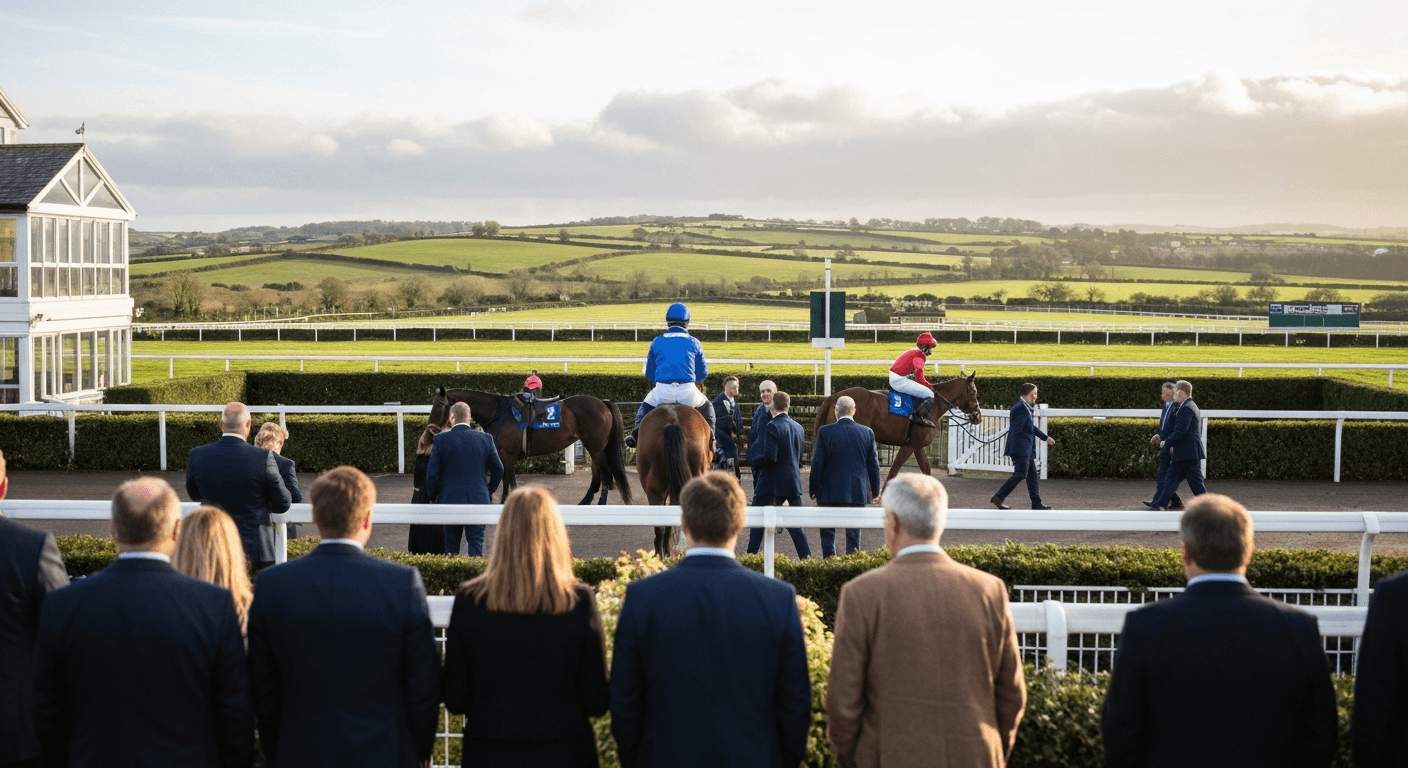
A Day Out at Thurles Racecourse
How to plan a day at Thurles: getting there, the single-enclosure setup, tickets, food and bars, the best winter cards and first-visit tips.
Read more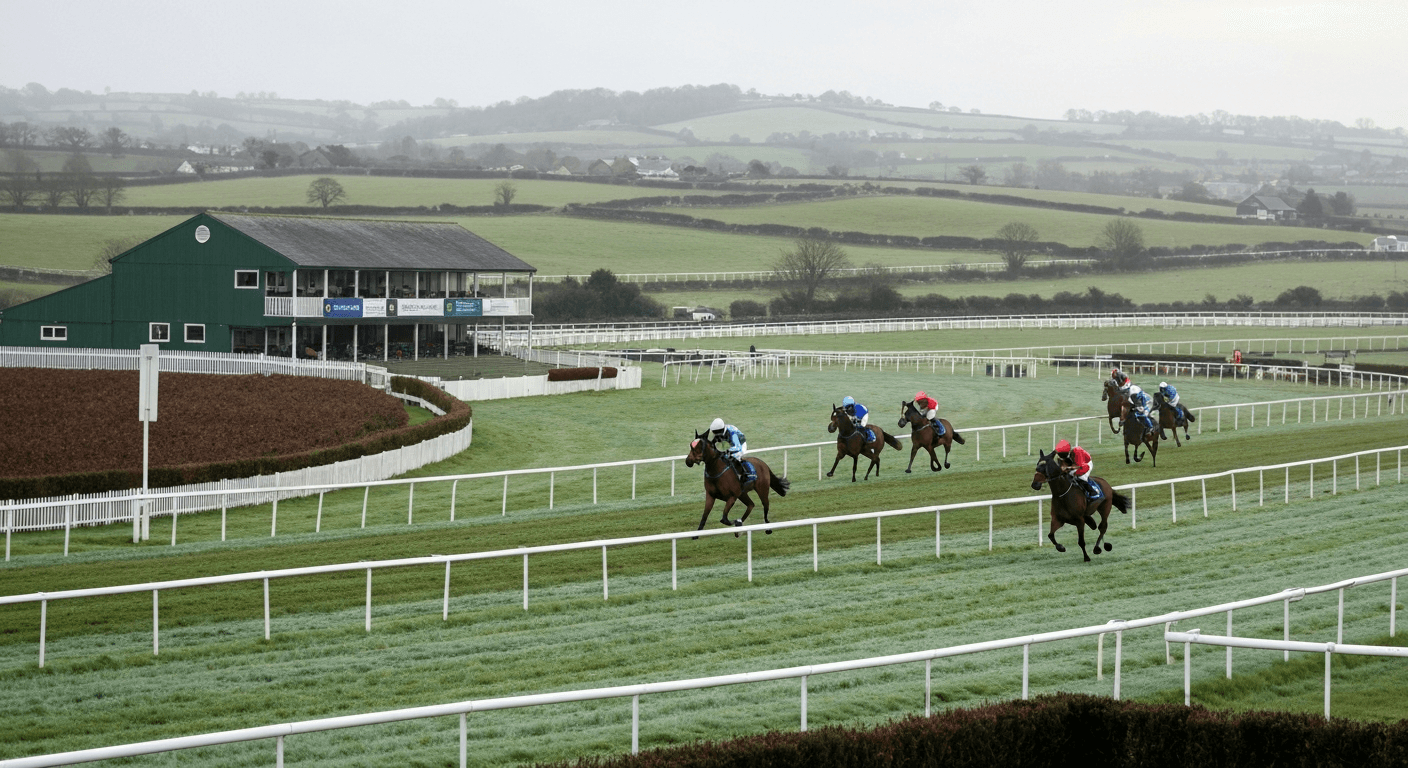
The History of Thurles Racecourse
The history of Thurles Racecourse, Co. Tipperary: from its first recorded meeting in 1732 through a century of Molony ownership to the 2025 HRI takeover.
Read more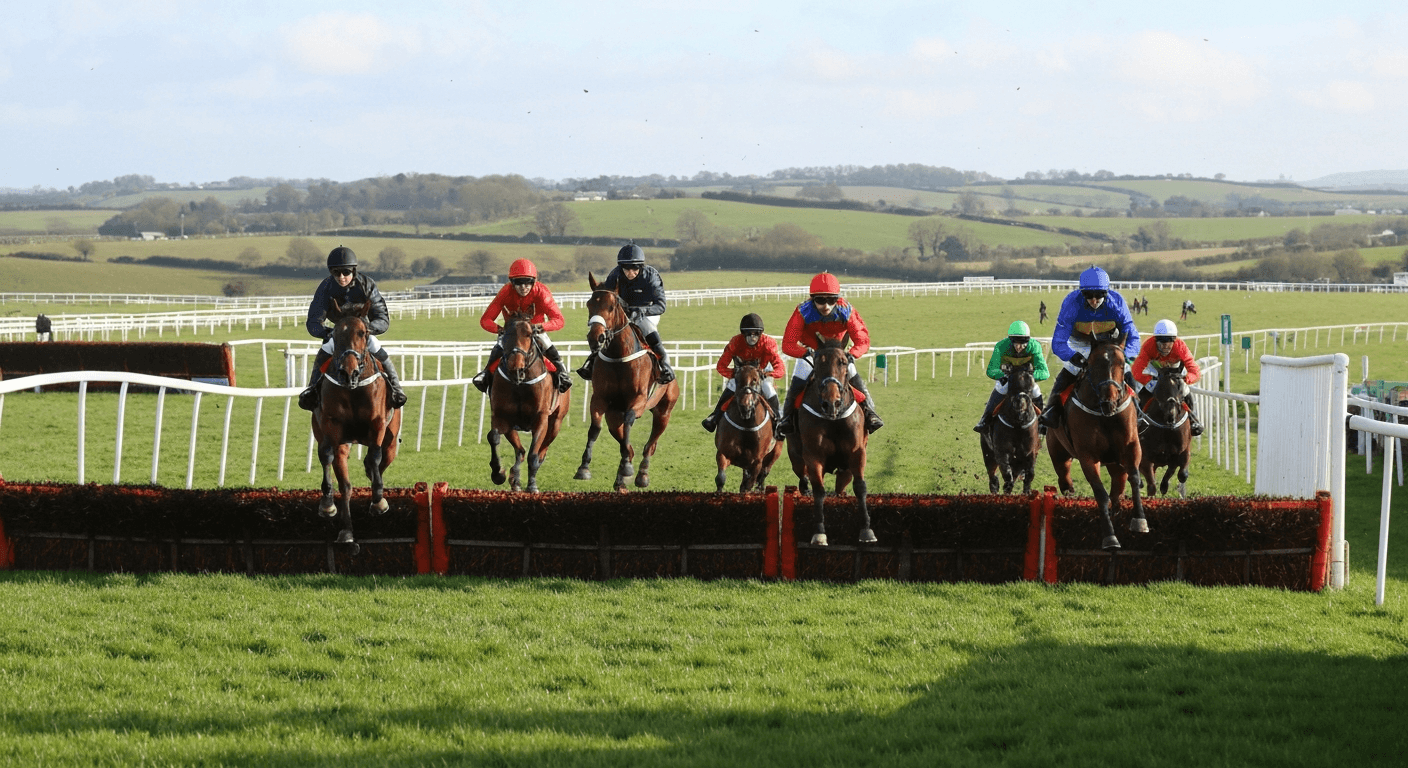
Thurles Racecourse: The Complete Guide
Thurles Racecourse, the free-draining National Hunt track in Co. Tipperary and home of the Grade 2 Kinloch Brae Chase, plus tickets, travel and how to visit.
Read moreResearch the field with the AI Race Predictor
Our model publishes calibrated win-probability estimates for UK races — a second opinion to understand a race, not tips. It's open about its record: it doesn't beat the market, and we show exactly how it does.
Work it out & learn the basics
Gamble Responsibly
Gambling should be entertaining and not seen as a way to make money. Never bet more than you can afford to lose. If you or someone you know has a gambling problem, help and support is available.