
Founder & Editor · Last reviewed 2026-07-08
Introduction
Tipperary Racecourse sits at Ballykisteen, Limerick Junction, Co. Tipperary (Eircode E34 Y621), about two miles from Tipperary town and immediately beside Limerick Junction railway station. It is a dual-code turf track, staging both Flat and National Hunt racing, and is owned by Horse Racing Ireland and run through HRI Racecourses Ltd, alongside Leopardstown, Navan and Fairyhouse. The current racecourse manager is Andrew Hogan.
The course hosts around 11 to 12 fixtures between April and October, more than half of them evening meetings, with the seasonal highlight being Super Sunday on the first Sunday of October. It is a left-handed, flat oval favouring front-runners and quick, agile types, with a dead-straight five-furlong sprint course that is regarded as one of the fastest and fairest in Ireland. More on the layout is in the track.
Racing in the area dates back to a meeting at Barronstown on 27 March 1848. A consortium led by T Gardiner Wallis opened the present Limerick Junction course in September 1916, and it kept the name Limerick Junction Racecourse until it was renamed Tipperary Racecourse in 1986. The full story is in history.
In this guide
Where to Bet
Place your bets with a trusted, licensed bookmaker.

Promo code BETFRED50. New customers only. Register, deposit with a Debit Card, and place a first bet of £10+ at Evens (2.0)+ on Sports, to be settled within 7 days, to get £30 in Sports Free Bets and £20 in Bet Builder Free Bets within 24 hours of settlement. 7-day expiry. Eligibility & payment exclusions apply. Full T&Cs apply. Take Time to Think. BeGambleAware.org. 18+. Full T&Cs.

Promo code R30. New UK customers only, 18+. Register, deposit £10 or more, then place a £10 single cash bet at odds of 1/2 (1.5) or greater on any sports market (excluding Virtuals). Once the qualifying bet settles you get £30 in Free Bets (3 x £10) — the qualifying bet can win or lose. Free Bets are valid on any sports market excluding Virtuals, expire in 7 days, are non-withdrawable and must be used in full. Excluded deposit methods apply (including PayPal, Apple Pay, Skrill and NETELLER). Named bets such as Lucky 15 do not qualify. If you cash out the qualifying bet, or it is voided, you are no longer eligible for the offer. Ends 31.12.26. Full T&Cs apply. Please gamble responsibly. BeGambleAware.org. 18+. Full T&Cs.

Promo code BET40GET20. New UK customers, 18+. Register with the code and place a first bet of £40 or more at Evens (2.0) or greater. Receive 2 × £10 free bets: the first credited automatically once the qualifying bet settles, the second 24 hours later. Free bets must be placed at minimum odds of 4/1 (5.0), expire 24 hours after credit, and the free-bet stake is not returned with winnings. Debit card deposits only. Take Time to Think. BeGambleAware.org. 18+. T&Cs apply. Full T&Cs.

50% of your first-day net losses refunded as a free bet, capped at £25. New UK customers aged 18+ only. To qualify, deposit and place a first bet of £10 or more on any sport at minimum odds of evens (2.00), then place at least two further bets on different events, each worth at least 50% of your largest bet, all at evens (2.00) or greater. Losses are counted from your first settled bet until 23:59 the same day. Place a qualifying £10+ bet and you are guaranteed at least a £5 free bet. Bets placed at SP, void bets, cashed-out bets and bets struck with free bets do not count towards the offer. The free bet is credited the day after your qualifying bets settle and must be used within 7 days, after which it expires. It can be used at odds from 1/4 (1.25) up to 250/1 on singles and straight accumulators, but not on Trixie, Patent or Yankee style multiples. Free-bet stake is not returned with winnings. One offer per person, household, address, IP address and device. E-wallet deposits may not qualify, so check the cashier before depositing. Customers registered with GAMSTOP cannot claim. KYC identity verification must be completed before the free bet is credited. Take Time to Think. BeGambleAware.org. 18+. T&Cs apply. Full T&Cs.

New customers, 18+. Choose the sports bonus at sign-up, make a first deposit and receive a 100% bonus up to £50 in your Sports Bonus balance. To convert the bonus to cash, wager it 10x within 30 days. Single bets below Evens (2.00) do not qualify; accumulators do not qualify if any selection is below 1/2 (1.50). Virtual Sports, voided, cancelled, drawn, cashed-out and free-bet wagers do not count towards wagering. Only the first settled bet per event counts. Withdrawing before the wagering requirement is met forfeits the bonus balance including bonus winnings. Real-money funds are used before bonus funds. Deposits via Skrill or Neteller are not eligible. Not valid in conjunction with other promotions. Odds, bet and payment limits apply. 10bet general and promotion T&Cs apply. BeGambleAware.org. 18+. Full T&Cs.

New customers in Great Britain and Republic of Ireland, 18+. Place a £10 fixed-odds qualifying bet at minimum odds of 1/2 (1.50) — single or each-way (only the win part counts), pre-event or in-play, not cashed out early, within 28 days of opening the account. Receive up to £60 in bonuses credited over three days: 3 × £10 fixed-odds free bets (the first on settlement, then 24 and 48 hours later) plus 3 × £5 Total Goals FOOTBALL spread bets, 3 × £5 racing Winning Favourites spread bets and a £1 racing Race Index spread bet (the spread bets need a full spread-betting account). Free-bet stakes not returned with winnings; free bets valid 28 days from issue. IMPORTANT: the £5 credits are SPREAD bets — sports spread betting carries the risk that losses can exceed your stake. Sports spread-betting customers do not have Financial Ombudsman or FSCS recourse. Take Time to Think. BeGambleAware.org. 18+. T&Cs apply. Full T&Cs.

Promo code WELCOME15, entered under My Bonuses after registering. New UK customers, 18+. Place a first qualifying bet of at least £10 from your cash balance at odds of evens (2.0) or greater within 7 days of opening the account. Once the qualifying bet fully settles you receive £15 in free bets, credited as 3 x £5 tokens with set uses: one £5 accumulator free bet (minimum 4 legs, each leg at 2/5 or bigger), one £5 sports free bet (any market at evens or bigger) and one £5 Sub Cover free bet (selected football player markets at evens or bigger). Free-bet stakes are not returned with winnings. Free bets expire 7 days after they are credited. Void, cashed-out and partially cashed-out bets do not qualify. One offer per customer. Confirm the current terms on BetGoodwin's own welcome-offer page before claiming. Take Time to Think. BeGambleAware.org. 18+. T&Cs apply. Full T&Cs.

New UK customers, 18+. Minimum deposit £10. Place a £10 qualifying single at minimum odds of 1/2 (1.50), settled within 14 days. Receive £30 in free bets (stake not returned), split £20 for sportsbook use (2 x £10) and £10 for Bet Builder only (2 x £5); Bet Builder does not cover horse racing. Free bets must be accepted within 7 days and expire 7 days after acceptance. No promo code required. Best Odds Guaranteed on UK & Irish racing, subject to having staked over £25 in the previous seven days. Operated by LiveScore Betting and Gaming (Gibraltar) Ltd, UKGC 56859. Confirm the current terms on LiveScore Bet's own promotions page before claiming. Take Time to Think. BeGambleAware.org. 18+. T&Cs apply. Full T&Cs.
18+. BeGambleAware.org
The Track
The Track
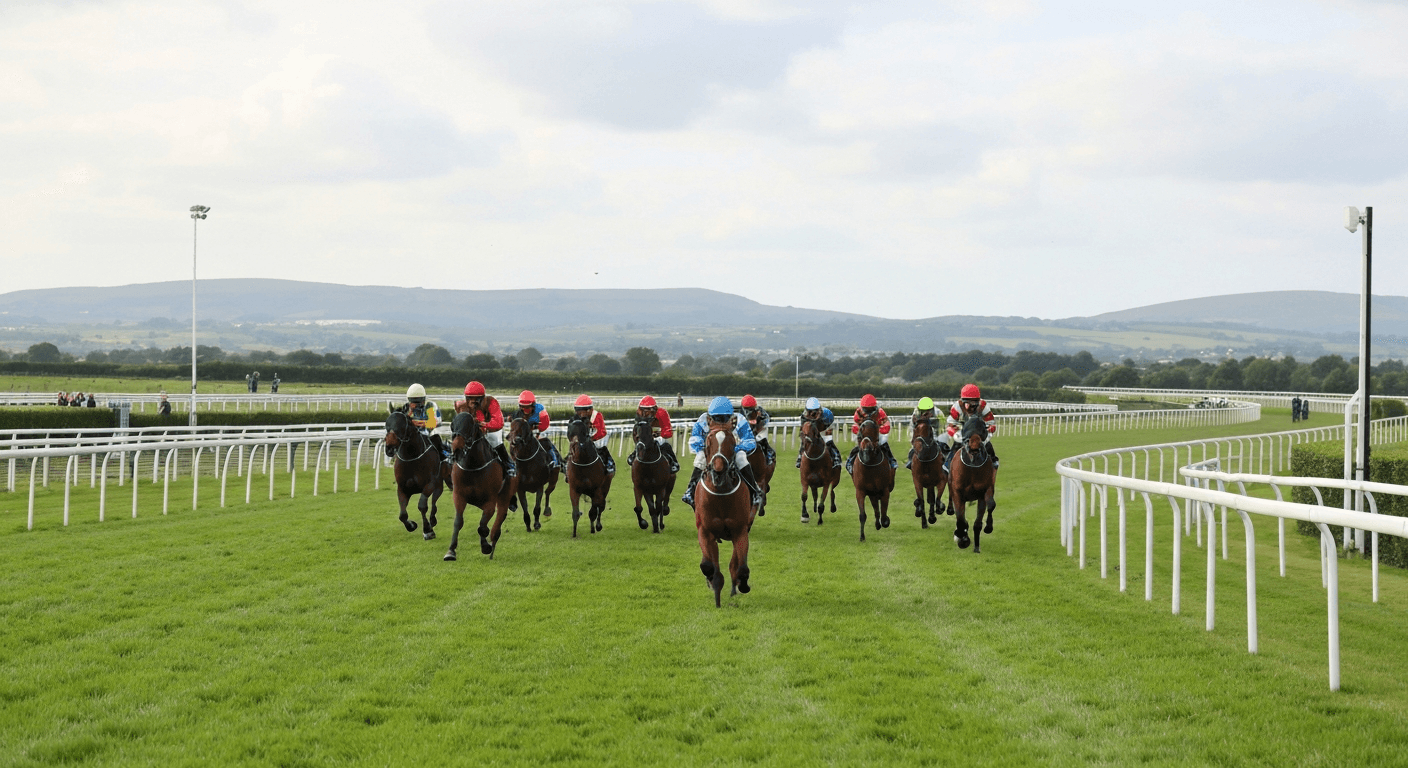
Tipperary is a left-handed, flat, oval circuit measuring one mile and two furlongs round. Its defining features are tight, sharp bends linked by relatively long straights, a combination that puts a premium on speed and agility rather than stamina reserves. The run-in from the home turn is an extended quarter of a mile.
Running into that home straight is a separate, dead-straight five-furlong sprint course. It joins the main circuit at the entrance to the straight and is regarded as one of the quickest and fairest sprint tracks in Ireland. The parade ring, the grandstands (including the Limerick Stand) and the winning post are all grouped together on the stands side.
How the track rides
The dossier describes Tipperary as a speed track that favours front-runners and agile, all-round types. Prominently ridden horses are hard to peg back once they secure an uncontested lead, an effect that is most pronounced on good or firmer ground in both codes. There is no significant undulation to blunt a strong early gallop, so a horse that breaks well and bowls along can be difficult to reel in over the shorter trips.
Draw and pace
On the five-furlong straight course there is a marked draw bias when the going is soft or worse. The stands-side ground holds up better in those conditions, so high-drawn runners are favoured; the dossier singles out stalls 16, 17 and 18 as the beneficiaries. On faster ground that bias largely disappears.
Over seven furlongs and beyond the picture is less settled. Because the first bend arrives soon after the start, a low draw is arguably an advantage, though some data show high draws performing well, so this is a point on which sources differ rather than a confirmed edge.
As always, none of these tendencies makes betting profitable. The dossier is explicit that backing favourites, or any system, loses money to starting price over the long run.
For the black-type races staged on these configurations, see The Races; for trainer and jockey angles, see Form and Betting.
Confirmed track facts
| Feature | Detail |
|---|---|
| Handedness | Left-handed |
| Shape and profile | Oval, flat |
| Circuit length | 1 mile 2 furlongs round |
| Bends | Tight and sharp |
| Straights | Relatively long |
| Run-in | Extended quarter of a mile |
| Sprint course | Straight 5 furlongs, joins the home straight |
| Going bias (5f) | High draws favoured on soft or worse; little bias on faster ground |
| Pace bias | Favours front-runners; speed track |
| Stands-side grouping | Parade ring, grandstands, finish |
The Course Map
Course map and layout
Tipperary's key spectator and racing furniture is grouped together on the stands side, so most of the action unfolds in front of you rather than across the far side of the circuit. The parade ring, the grandstands (including the Limerick Stand) and the winning post all sit on this near side, which keeps the walk from ring to viewing steps short.
The finish comes at the end of the home straight, fed by an extended quarter-mile run-in. The straight five-furlong sprint course runs dead straight into the main circuit, joining it at the entrance to the home straight, so sprinters race towards the stands throughout. For more on how the oval and its sharp bends shape the racing, see the track.
Inside the Limerick Stand, the first-floor Restaurant overlooks both the parade ring and the home straight, with the Silvermine Mountains beyond. General enclosure ticket holders can move freely between both grandstands and the Istabraq Bar. For a fuller breakdown of the viewing areas, see enclosures and stands.
The Races
The races
Tipperary punches above its provincial size on the black-type front, largely because it is the closest racecourse to Aidan O'Brien's Ballydoyle and stages Ireland's most unusual mixed card of the year. The feature races split neatly between a pair of Coolmore-sponsored Flat contests over the seven-furlong trip and a cluster of Graded jumps races, most of them concentrated on Super Sunday, the first Sunday of October.
The Flat headliner is the Concorde Stakes, run over 7f 100y on Super Sunday. Formerly staged at Phoenix Park over a mile, it transferred to Tipperary in 1991, moved to early October in 1995, and was held at Cork in 1999 and 2000. Dermot Weld is the outstanding trainer with 11 wins, and Michael Kinane the leading jockey with five. Deepone (Billy Lee, Paddy Twomey) took the 2025 running in 1 minute 42.99 seconds on heavy ground, off at 14:43. Note that sources disagree on the current grade: some describe the Concorde as Listed, others as Group 3, so the classification is best confirmed against the official pattern book.
The Fairy Bridge Stakes is the August black-type highlight, a Group 3 for fillies and mares over 7f 100y, named after the dam of Sadler's Wells. It began at Listed level in 2003 and was promoted to Group 3 in 2012. Jim Bolger and Joseph O'Brien share top-trainer honours with four wins each; the 2025 running (31 August, off at 16:00) went to O'Brien's Princess Child.
Over jumps, Super Sunday is the only Irish fixture to combine Graded hurdles and chases with a Group-class Flat race on one card. The Istabraq Hurdle is a Grade 2 over two miles, renamed in 2014 to honour Istabraq, who won its first three runnings in 1997, 1998 and 1999. It is joined by a Grade 3 novice hurdle and the Grade 3 Like A Butterfly Novice Chase. The summer calendar also carries the Grimes Hurdle, a Grade 3 over two miles run as the Kevin McManus Bookmaker Grimes Hurdle. Further Flat black type comes from the Listed Abergwaun Stakes (five furlongs), the Listed Coolmore Churchill Stakes (two-year-olds, 7½f) and the Tipperary Stakes.
| Race | Code | Grade | Distance | Month | Latest winner (dossier) |
|---|---|---|---|---|---|
| Concorde Stakes | Flat | n/a (disputed) | 7f 100y | October | Deepone (2025) |
| Fairy Bridge Stakes | Flat | Group 3 | 7f 100y | August | Princess Child (2025) |
| Istabraq Hurdle | Jumps | Grade 2 | 2m | October | n/a |
| Grimes Hurdle | Jumps | Grade 3 | 2m | Summer | n/a |
| Like A Butterfly Novice Chase | Jumps | Grade 3 | n/a | October | n/a |
| Abergwaun Stakes | Flat | Listed | 5f | n/a | n/a |
| Coolmore Churchill Stakes | Flat | Listed | 7½f | n/a | n/a |
For the fuller rolls of honour and trainer strike rates behind these races, see records and stats; for how Super Sunday and the August meeting sit in the season, see festivals.
Records and Stats
Records and stats
Tipperary is not a track with a tidy, published set of all-time course records, so the honest position is that most of the headline numbers a stats page usually leans on simply are not available. Individual race times do appear in published results: Deepone won the 2025 Concorde Stakes in 1 minute 42.99 seconds over 7f 100y on heavy ground, ridden by Billy Lee for Paddy Twomey. Beyond figures like that, a full breakdown of track records by distance, and standard times for the marquee races, is not readily published and should be treated as thin rather than quoted with false precision.
Attendance is the same story. Super Sunday, the mixed card on the first Sunday of October, draws the largest crowds of the year, but specific annual footfall figures and single-day attendance records are not published.
Where the record book is firmer is in the leading connections. In the Concorde Stakes, Dermot Weld is the outstanding trainer with 11 wins and Michael Kinane the leading jockey with five. In the August Fairy Bridge Stakes, Jim Bolger and Joseph O'Brien lead the trainers with four apiece, with Kevin Manning, Pat Smullen and Declan McDonogh the leading jockeys on three each. On the Flat generally, Aidan O'Brien has the most runners and winners, unsurprising given nearby Ballydoyle. Over jumps, Willie Mullins and Henry de Bromhead hold strong recent records. For the full race roster see the races, and for the course's origins see history.
History
History
Organised racing in the Tipperary area goes back well over a century. The first recorded meeting associated with the district was held at Barronstown, south of the present site, on 27 March 1848. That early venue eventually gave way to a purpose-built course a short distance away, and the racing that continues today traces its line to that later move rather than to Barronstown itself.
The modern track was established by a consortium led by T Gardiner Wallis, who developed a new course beside Limerick Junction. It opened in September 1916, with the trainers Senator JJ Parkinson, Stephen Grehan and Charles Moore among those in attendance for the launch. The choice of site was deliberate: the ground sits immediately alongside the Limerick Junction railway station, still the only Irish racecourse positioned next to a working station, which made the course unusually easy to reach in an age when rail carried most raceday traffic.
For its first seven decades the venue was known simply as Limerick Junction Racecourse. It was renamed Tipperary Racecourse in 1986, giving the track the county identity it carries today. The course is now owned by Horse Racing Ireland and run through HRI Racecourses Ltd, the same body that operates Leopardstown, Navan and Fairyhouse.
Tipperary's programme grew alongside its flagship races. The Concorde Stakes, for example, was not native to the track: it moved here from Phoenix Park in 1991, shifted to its early October slot in 1995, and even spent 1999 and 2000 at Cork before settling into its place on the Super Sunday card. You can read more about how these fixtures come together in the races and festivals sections.
The most recent chapter is still being written. An all-weather track development is currently in progress at the venue, with Horse Racing Ireland reporting strong progress and racecourse manager Andrew Hogan commenting on the works. The full timeline and cost of that project have not yet been confirmed.
The Legends
Legends
Tipperary is the closest racecourse to Ballydoyle, Aidan O'Brien's training operation, and that proximity has made it a launch pad for champions. Many Ballydoyle stars made their debut or won their maiden here before going on to bigger stages. High Chaparral broke his maiden at Tipperary before winning the Racing Post Trophy; racing from 2001 to 2003, he had a highly successful career with 13 starts and 10 wins, including six Group 1 victories. Hawk Wing, runner-up to High Chaparral in the 2002 Epsom Derby, also won his two-year-old maiden at the course. Dylan Thomas, Yesterday, Bushranger and Heatseeker all made their racing debuts here too.
Over jumps, the greatest name tied to Tipperary is Istabraq, one of the finest modern hurdlers, who won the first three runnings of the course's Grade 2 Super Sunday hurdle (1997, 1998 and 1999). The race was renamed the Istabraq Hurdle in 2014 in his honour, and the Istabraq Bar in the general enclosure carries his name as well.
Among the people, Aidan O'Brien is the dominant Flat trainer at Tipperary, sending out a steady stream of Ballydoyle winners at a high strike rate. Dermot Weld is the outstanding figure in the flagship Concorde Stakes with 11 wins. In recent jumps seasons Willie Mullins has posted the best trainer strike rate, with Henry de Bromhead also prominent, while Rachael Blackmore and Paul Townend have led the jump jockeys and Colin Keane and Billy Lee the Flat riders.
For the graded races these names contest, see The races; for the meeting where the champions gather each autumn, see Festivals.
The Festivals
Festivals and signature meetings
Tipperary does not run a single multi-day festival in the way the bigger Irish venues do. Its calendar is built instead around a spread of summer evening and Sunday fixtures, around 11 to 12 in total between April and October, with more than half of them evening meetings. The season is anchored by two black-type occasions, one in August and one in October, plus a graded summer hurdle.
Super Sunday
Super Sunday, staged on the first Sunday of October, is the seasonal highlight and draws the largest crowds of the year. It is the only Irish meeting to stage Graded jumps races and a Group-class Flat race on the same afternoon. The card is headed by the Concorde Stakes over 7f 100y, sponsored by Coolmore Stud, run alongside the Grade 2 Istabraq Hurdle over 2 miles, a Grade 3 novice hurdle and the Grade 3 Like A Butterfly Novice Chase. Live entertainment follows the racing. In 2025 Super Sunday fell on 5 October, with the Concorde Stakes going off at 14:43 and won by Deepone, trained by Paddy Twomey and ridden by Billy Lee. The Istabraq Hurdle was renamed in 2014 to honour Istabraq, who won the first three runnings of the race in 1997, 1998 and 1999.
The Fairy Bridge Stakes meeting
The August black-type highlight is the Fairy Bridge Stakes, a Group 3 for fillies and mares over 7f 100y, also sponsored by Coolmore Stud and named after Fairy Bridge, the dam of Sadler's Wells. It was established in 2003 at Listed level and promoted to Group 3 in 2012. The 2025 running was held on 31 August, off at 16:00, and won by Princess Child for Joseph O'Brien, who along with Jim Bolger is the meeting's leading trainer with four wins apiece. When the course was waterlogged in 2020 the race was moved to Gowran Park.
Summer jumps
The summer programme also carries graded National Hunt action in the Grimes Hurdle, a Grade 3 over 2 miles run as the Kevin McManus Bookmaker Grimes Hurdle. It sits within the run of evening and Sunday cards that fill out the mid-season calendar.
Dress and atmosphere
There is no strict dress code for any of these meetings; smart casual wear suitable for the weather is encouraged across all enclosures.
For a fuller breakdown of the feature races themselves see The races, and for how the track shapes results on these days see Form and betting.
Form and Betting
Form and betting
The market wins, and favourites lose to starting price over time. Across 175 races at Tipperary between October 2023 and October 2025 (1,952 runners), backing every favourite to SP at level stakes returned minus 16.41 percent, even though favourites won 34.3 percent of the time. That loss carries a wide 95 percent confidence interval, from about minus 34.9 percent to plus 1.3 percent, so treat it as no reliable edge rather than a proven leak: small per-course samples are noisy, and this one crosses zero. The honest takeaway is simpler. No favourite, and no system, is profitable here in the long run.
Tipperary is a fast, flat speed track, and both the dossier and the numbers point the same way. It favours prominently ridden horses, and front-runners are hard to catch when they get an uncontested lead on good or firmer ground. Field sizes are healthy, averaging 11.2 runners with a median of 12, which keeps prices competitive. The going is most often on the quicker side of soft, with Good to Yielding the single most common description.
On the draw, the sample shows high stalls with the best win rate over the period, matching the noted five-furlong bias where the stands-side ground holds up better on softer going. This is a tendency across all distances combined, not a rule for any one race, so read the card and the going on the day.
| Metric | Value |
|---|---|
| Sample window | Oct 2023 to Oct 2025 |
| Races / runners | 175 / 1,952 |
| Favourite SP ROI (level stakes) | minus 16.41% |
| Favourite strike rate | 34.3% |
| ROI 95% confidence interval | minus 34.92% to plus 1.29% |
| Average field size | 11.2 (median 12) |
| Most common going | Good to Yielding |
| Draw win rate (low / mid / high) | 8.1% / 9.7% / 12.1% |
| Race mix (Flat / Hurdle / Chase) | 93 / 50 / 32 |
Figures are SP only, with no Betfair SP available for Irish racing. See The races for the card structure and Records and stats for the standout performers.
Betting should be for entertainment, and the numbers above show why it is not a way to make money. Never stake more than you can afford to lose. If gambling stops being fun, free confidential help is available at BeGambleAware.org. 18+ only.
Planning a Visit
Visiting Tipperary Racecourse
Tipperary Racecourse sits at Ballykisteen, Limerick Junction, Co. Tipperary, Eircode E34 Y621, about two miles from Tipperary town on the N24 Limerick to Waterford road. It stages around 11 to 12 Flat and National Hunt fixtures between April and October, more than half of them evening meetings, with Super Sunday on the first Sunday of October the busiest day of the year.
The track is the only one in Ireland set beside a railway station, with Limerick Junction about a five-minute walk away, and free, ample parking at every meeting (see Getting there). General admission runs at roughly EUR10 midweek and EUR15 at weekends, with under-18s free when accompanied by a paying adult; package options such as the Real Deal and Punters Pack are also offered (see Enclosures and stands).
There is no strict dress code, and smart casual wear suited to the weather is encouraged across all enclosures (see What to wear). The course provides disabled parking bays and maintains a dedicated accessibility page; confirm detailed provisions directly with the venue before travelling (see Accessibility).
Getting There
Getting There
Tipperary has a claim no other Irish racecourse can make: it is the only track in the country sitting right next to a railway station. Limerick Junction station is roughly a five-minute walk from the gates, which makes the train a genuinely practical way to reach a meeting rather than an afterthought. The station is a busy interchange, with services connecting from Limerick, Dublin Heuston, Cork, Waterford, Tralee and Ennis, so racegoers arriving from most corners of the country can get here without a car.
By road the course sits on the N24, the Limerick to Waterford road, about two miles from Tipperary town. Distances are manageable from the main southern hubs: around 30km from Limerick and 29km from Cashel, roughly 87km from Cork, and about 183km from Dublin for those travelling from the capital. Parking is free and described as ample at every meeting, so there is no need to book a space or budget for a fee on arrival.
For those coming by air, the nearest airport is Shannon, about an hour away by road. Bus Éireann also serves the racecourse, giving a public-transport option for anyone not travelling by rail.
The address for satnav is Ballykisteen, Limerick Junction, Co. Tipperary, Eircode E34 Y621. Given the setting right beside the station and just off a main national road, most visitors find the track easy to reach whether they drive, take the train or use the bus.
Once you have arrived, see Visiting for admission and ticket details, and Enclosures and Stands for how the raceday areas are laid out.
Tickets and Enclosures
Enclosures and Stands
Tipperary keeps things simple with a single general enclosure, so there is no tiered ring system to navigate. One general admission ticket gives you the run of the whole enclosure, including both grandstands and the Istabraq Bar, with the parade ring, the stands and the winning post all grouped together on the stands side of the course. That compact layout means you are never far from the action, and you can drift between the paddock, the bars and the rail without changing tickets.
The main structure is the Limerick Stand. Its first floor houses the Restaurant, which overlooks the parade ring and the home straight and looks out towards the Silvermine Mountains. For groups and hospitality there is also the High Chaparral Room, which can be booked for parties from 20 to 170 people on all-inclusive set packages. These are pre-booked spaces rather than walk-up areas, so arrange them ahead of your visit if you want a seated base for the day.
Admission is priced by day of the week. Midweek entry is about 10 euro for adults and 8 euro for OAPs and students, while weekend fixtures are about 15 euro for adults and 12 euro for OAPs and students. Children under 18 go free when accompanied by a paying adult. Prices here are indicative and worth confirming with the course before you travel. Upgrade packages such as the Real Deal and the Punters Pack bundle admission with a race card, catering and a small tote bet.
For the standing viewpoints, the flat oval and the straight five-furlong sprint course both finish in front of these stands. For the eating and drinking side of the enclosure, see Food, bars and hospitality; for ticket packages in full, see Visiting.
Food, Drink and Facilities
Food, bars and hospitality
Catering at Tipperary is straightforward and centred on the stands side. The main dining option is The Restaurant on the first floor of the Limerick Stand, which offers buffet and silver-service dining with views over the parade ring, the home straight and the Silvermine Mountains beyond. Menus run from a BBQ option at about 30 euro to a premier a la carte menu at around 50 euro. The room can seat up to 170 guests buffet-style or 130 for silver service, and comes with a private bar, private tote betting, closed-circuit television and private cloakrooms.
For general admission racegoers, the Istabraq Bar serves bar food and drinks, and there are further stalls and vending points dotted around the course. Group hospitality is available through the High Chaparral Room, which takes bookings for parties from 20 to 170 people on all-inclusive set packages. Two of the value ticket bundles also fold in catering: the Real Deal package includes a catering voucher and a drink voucher, while the Punters Pack adds a food voucher.
See enclosures and stands for where these facilities sit, and visiting for ticket detail.
What to Wear
What to Wear
Tipperary keeps things relaxed. There is no strict dress code at any point on the calendar, and smart wear suitable for the weather is encouraged across all enclosures. Smart casual is the sensible default, including on the bigger days such as Super Sunday in early October, where smart casual is encouraged but nothing formal is required.
Because most of Tipperary's fixtures fall between April and October, with more than half of them staged as summer evening meetings, the weather is the thing to plan around rather than any rule about attire. The track is a flat, open, rural oval, so bring a layer against the wind and a waterproof if rain is likely, and choose footwear you are happy to stand and walk in around the enclosures and grandstands.
The same easy-going approach applies whether you are in the general enclosure or booked into hospitality. For where those areas sit and what they offer, see Enclosures and Stands and Food, Bars and Hospitality.
Capacity and Venue Hire
Capacity and venue hire
Tipperary does not publish an official ground capacity, and annual footfall and single-day attendance records are not in the public domain either, so any headline figure would be guesswork rather than fact. What is known is that Super Sunday, the mixed card on the first Sunday of October, draws the largest crowds of the year. For the biggest days, treat the course as a mid-sized provincial venue built around two grandstands rather than a stadium with a fixed, quoted limit.
The venue-hire side is better documented. The Restaurant, on the first floor of the Limerick Stand, overlooks the parade ring and home straight with panoramic views towards the Silvermine Mountains. It can cater for up to 170 guests buffet-style or 130 for silver service, and comes with closed-circuit television, private cloakrooms, a private bar and private tote betting. The High Chaparral Room is the flexible function space, bookable for parties of 20 to 170 people on all-inclusive set packages, which makes it suitable for group days out, corporate bookings and celebrations.
General enclosure access, by contrast, spans both grandstands and the Istabraq Bar and needs no booking. Groups wanting a hosted space should contact the course directly to confirm dates, pricing and menus, since these vary by fixture.
For what these rooms serve, see Food, bars and hospitality; for the days worth booking around, see Festivals.
The Atmosphere and What Tipperary Means
Atmosphere and culture
Tipperary races carries the easy feel of a rural provincial meeting rather than a grand set-piece. The course sits in open countryside at Ballykisteen, on the N24 about two miles from Tipperary town, with the Silvermine Mountains framing the view from the Limerick Stand. Part of its charm is unpretentious: the track is known for its picturesque setting, and it is not unusual to see a local farmer working the centre of the course while racing goes on around the rail.
Much of the calendar leans on summer evening and Sunday cards, and more than half of the roughly 11 to 12 annual fixtures are evening meetings, which gives the place a relaxed after-work mood. Dress is smart casual with no strict code, in keeping with the informal tone. The seasonal high point is Super Sunday on the first Sunday of October, the year's biggest crowd, when a Group-class Flat race and Graded jumps share a card followed by live entertainment. See the festivals and visiting sections for the day itself.
Culturally the course is bound up with its neighbours. It is the closest track to Aidan O'Brien's Ballydoyle, so local racegoers are used to seeing future champions make their first starts here, and it is one of three racecourses in County Tipperary alongside Clonmel and Thurles. Its position beside Limerick Junction station, the only Irish course adjacent to a railway station, has long made it a meeting point for racegoers arriving from across Munster and beyond.
Accessibility
Accessibility
Tipperary Racecourse provides designated disabled parking bays and maintains a dedicated accessibility page on its website, tipperaryraces.ie. The wider site is a help here: parking is free and ample at every meeting, so a Blue Badge holder can arrive close to the enclosures without paying, and the parade ring, both grandstands, the Restaurant and the finish are grouped together on the stands side, which keeps the walk between the key areas short.
Beyond that, the detail is thin, and it is worth being straight about what the course does not publish. The official page does not set out step-free routes to the stands, whether the Restaurant on the first floor of the Limerick Stand is reached by lift, the location of accessible toilets, accessible viewing positions, or its policy on assistance dogs and free carer or companion tickets. None of these were confirmable for this guide (see the FAQ), so anyone with specific access needs should ring the course on +353 62 51357 or check the accessibility page before travelling, and mention any requirement when booking hospitality.
For arriving by public transport, Limerick Junction station sits about a five-minute walk from the entrance, covered in Getting there; ticket and enclosure detail is in Tickets and enclosures.
Where to Stay and Nearby
Nearby: where to stay and the local area
Tipperary sits at Ballykisteen, beside Limerick Junction, so most raceday visitors base themselves within a short drive of the course. The Ballykisteen area has a golf hotel and leisure resort close to the track, which suits anyone wanting to stay on the doorstep. Beyond that, the wider choice of hotels, bed and breakfasts and rentals is spread across Tipperary town, Cashel and Limerick, all comfortably reachable given the course's position on the N24 about two miles from Tipperary town (see Getting there).
The area rewards a longer stay. The Rock of Cashel, the medieval ecclesiastical site above Cashel, is the standout nearby attraction, and the surrounding countryside includes the land around Ballydoyle, home of Aidan O'Brien's training operation, which lends the district its racing heritage. With Cashel about 29km away and Limerick around 30km, either makes a practical base for pairing a fixture such as Super Sunday (see Festivals) with a day exploring the region.
Frequently Asked Questions
Share this article
More about this racecourse
All tipperary guides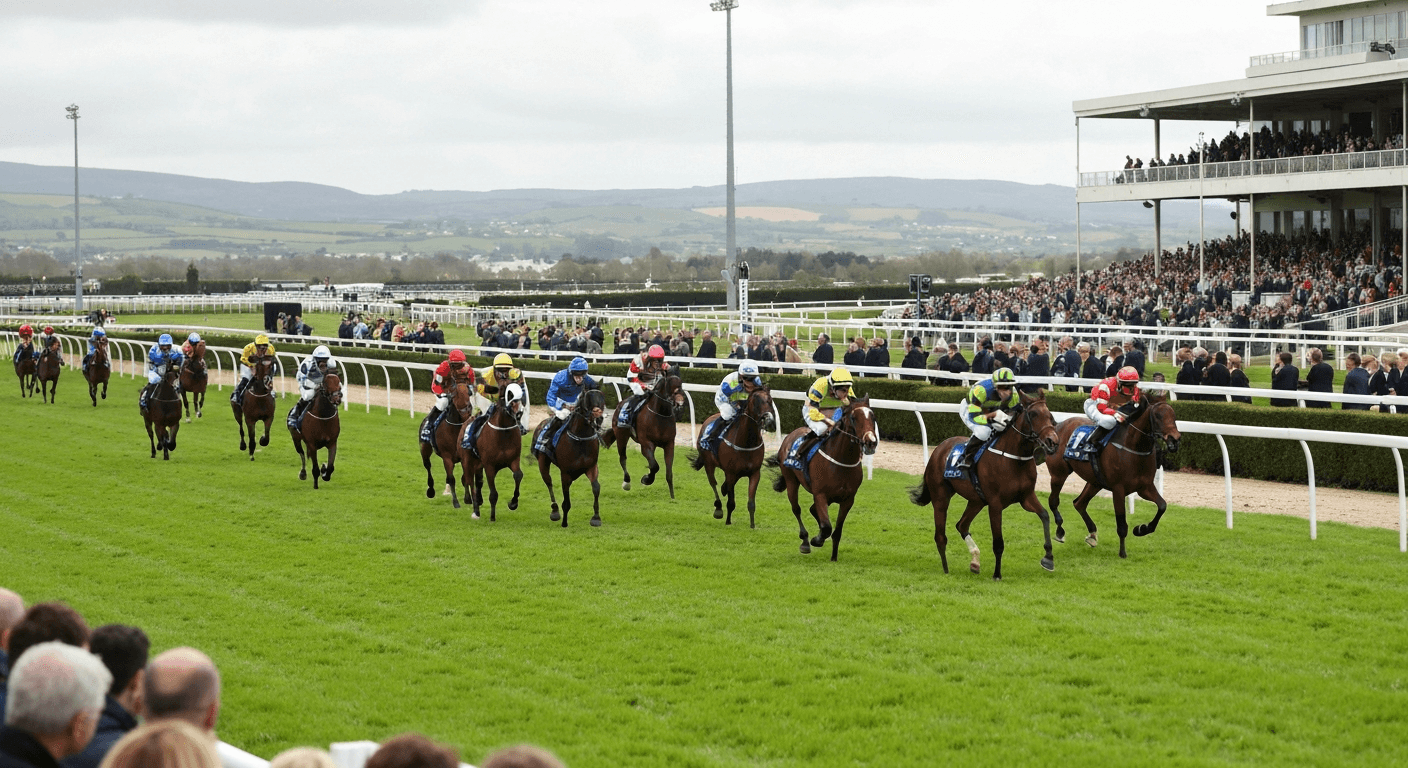
Concorde Stakes Day at Tipperary: The Complete Guide
Concorde Stakes Day at Tipperary, the early-October Super Sunday card headed by the black-type Concorde Stakes over 7f, with the roll of honour, the day and how to watch.
Read more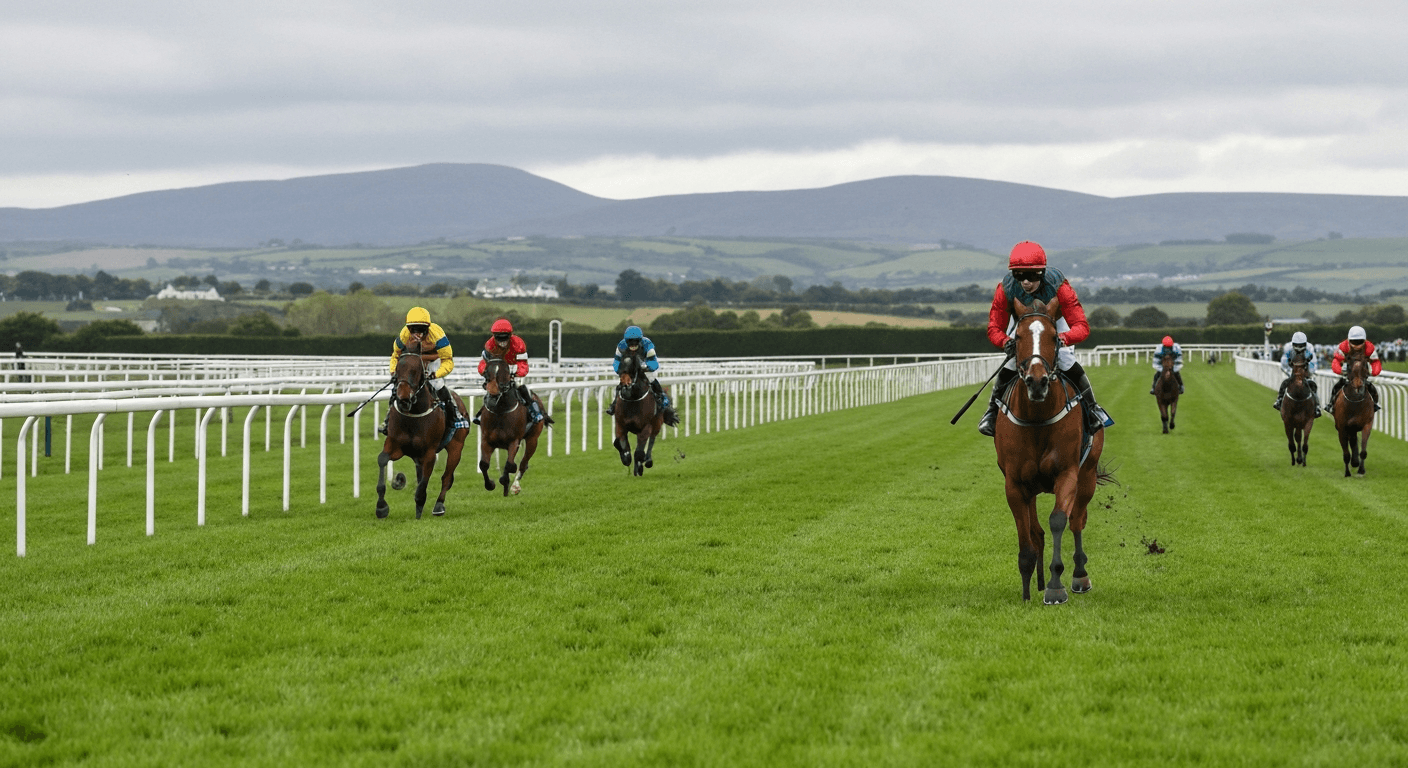
High Chaparral at Tipperary: The Complete Story
How High Chaparral broke his maiden at Tipperary, the nearest track to Ballydoyle, before winning two Derbys and two Breeders' Cup Turfs.
Read more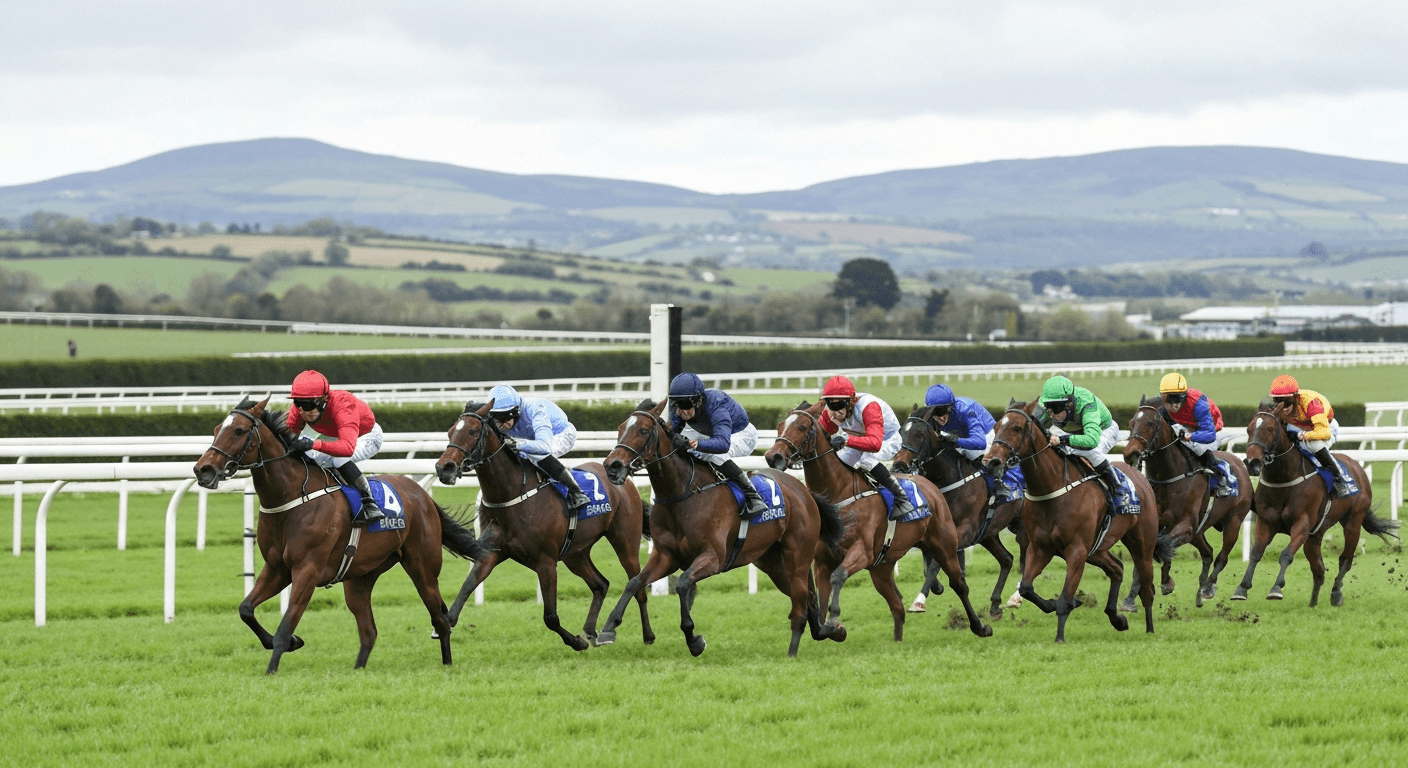
Betting at Tipperary Racecourse
How Tipperary's fast, flat, left-handed dual-code track beside Limerick Junction shapes the betting, with the Concorde Stakes, the 5f draw, going and form framed honestly.
Read moreResearch the field with the AI Race Predictor
Our model publishes calibrated win-probability estimates for UK races — a second opinion to understand a race, not tips. It's open about its record: it doesn't beat the market, and we show exactly how it does.
Work it out & learn the basics
Gamble Responsibly
Gambling should be entertaining and not seen as a way to make money. Never bet more than you can afford to lose. If you or someone you know has a gambling problem, help and support is available.