
Founder & Editor · Last reviewed 2026-07-08
Introduction
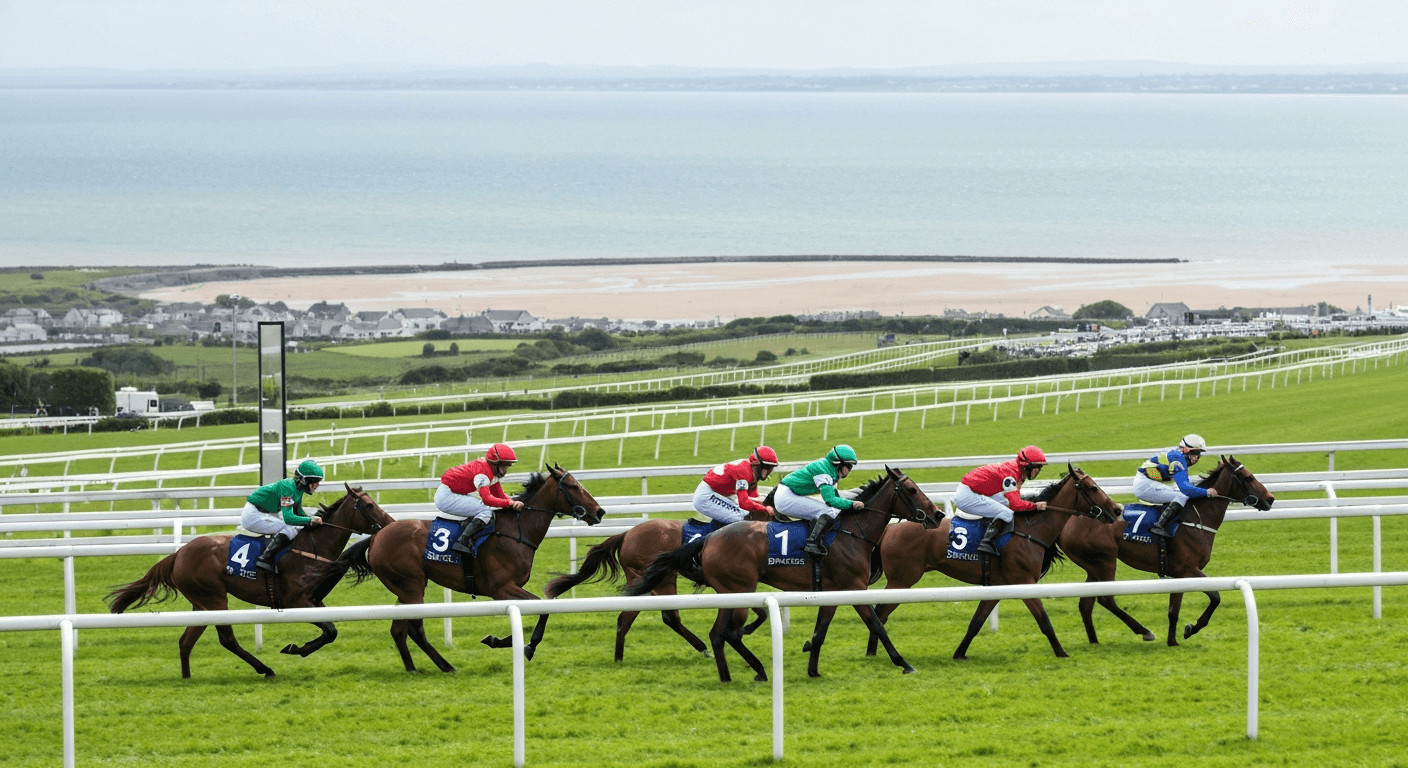
Waterford and Tramore Racecourse sits on Graun Hill, above the seaside resort town of Tramore in County Waterford, in the Republic of Ireland, overlooking Tramore Bay. It is a dual-code turf venue, staging both Flat and National Hunt racing, and holds 11 fixtures a year. The course is owned and run by the Waterford and Tramore Racecourse Company, roughly 12km west of Waterford city.
The track itself is one of the tightest and trickiest in Ireland: a right-handed, undulating, roughly round circuit of about seven to seven-and-a-half furlongs, climbing from the winning post before dropping sharply and rising again into a home straight of only about one furlong. No starting stalls are used on the Flat, so there is no draw bias, and the sharp turns and short straight mean course specialists among both horses and jockeys tend to return again and again. More on all of this in the track.
Racing at Tramore dates to 1785, when it began on the beach and strand below the town and grew into a major August festival by 1807. Severe storms wrecked the beach course in 1911, and Martin J. Murphy provided his own land at Graun Hill so racing could continue; the sport has been held at the present hilltop site since 1912. Two headline meetings define the modern year: the four-day August Festival and the New Year's Day fixture, headed by the Grade 3 O'Driscoll's Irish Whiskey New Year's Day Chase, covered in the history and festivals and meetings.
On this page
Where to Bet
Place your bets with a trusted, licensed bookmaker.

Promo code BETFRED50. New customers only. Register, deposit with a Debit Card, and place a first bet of £10+ at Evens (2.0)+ on Sports, to be settled within 7 days, to get £30 in Sports Free Bets and £20 in Bet Builder Free Bets within 24 hours of settlement. 7-day expiry. Eligibility & payment exclusions apply. Full T&Cs apply. Take Time to Think. BeGambleAware.org. 18+. Full T&Cs.

Promo code R30. New UK customers only, 18+. Register, deposit £10 or more, then place a £10 single cash bet at odds of 1/2 (1.5) or greater on any sports market (excluding Virtuals). Once the qualifying bet settles you get £30 in Free Bets (3 x £10) — the qualifying bet can win or lose. Free Bets are valid on any sports market excluding Virtuals, expire in 7 days, are non-withdrawable and must be used in full. Excluded deposit methods apply (including PayPal, Apple Pay, Skrill and NETELLER). Named bets such as Lucky 15 do not qualify. If you cash out the qualifying bet, or it is voided, you are no longer eligible for the offer. Ends 31.12.26. Full T&Cs apply. Please gamble responsibly. BeGambleAware.org. 18+. Full T&Cs.

Promo code BET40GET20. New UK customers, 18+. Register with the code and place a first bet of £40 or more at Evens (2.0) or greater. Receive 2 × £10 free bets: the first credited automatically once the qualifying bet settles, the second 24 hours later. Free bets must be placed at minimum odds of 4/1 (5.0), expire 24 hours after credit, and the free-bet stake is not returned with winnings. Debit card deposits only. Take Time to Think. BeGambleAware.org. 18+. T&Cs apply. Full T&Cs.

50% of your first-day net losses refunded as a free bet, capped at £25. New UK customers aged 18+ only. To qualify, deposit and place a first bet of £10 or more on any sport at minimum odds of evens (2.00), then place at least two further bets on different events, each worth at least 50% of your largest bet, all at evens (2.00) or greater. Losses are counted from your first settled bet until 23:59 the same day. Place a qualifying £10+ bet and you are guaranteed at least a £5 free bet. Bets placed at SP, void bets, cashed-out bets and bets struck with free bets do not count towards the offer. The free bet is credited the day after your qualifying bets settle and must be used within 7 days, after which it expires. It can be used at odds from 1/4 (1.25) up to 250/1 on singles and straight accumulators, but not on Trixie, Patent or Yankee style multiples. Free-bet stake is not returned with winnings. One offer per person, household, address, IP address and device. E-wallet deposits may not qualify, so check the cashier before depositing. Customers registered with GAMSTOP cannot claim. KYC identity verification must be completed before the free bet is credited. Take Time to Think. BeGambleAware.org. 18+. T&Cs apply. Full T&Cs.

New customers, 18+. Choose the sports bonus at sign-up, make a first deposit and receive a 100% bonus up to £50 in your Sports Bonus balance. To convert the bonus to cash, wager it 10x within 30 days. Single bets below Evens (2.00) do not qualify; accumulators do not qualify if any selection is below 1/2 (1.50). Virtual Sports, voided, cancelled, drawn, cashed-out and free-bet wagers do not count towards wagering. Only the first settled bet per event counts. Withdrawing before the wagering requirement is met forfeits the bonus balance including bonus winnings. Real-money funds are used before bonus funds. Deposits via Skrill or Neteller are not eligible. Not valid in conjunction with other promotions. Odds, bet and payment limits apply. 10bet general and promotion T&Cs apply. BeGambleAware.org. 18+. Full T&Cs.

New customers in Great Britain and Republic of Ireland, 18+. Place a £10 fixed-odds qualifying bet at minimum odds of 1/2 (1.50) — single or each-way (only the win part counts), pre-event or in-play, not cashed out early, within 28 days of opening the account. Receive up to £60 in bonuses credited over three days: 3 × £10 fixed-odds free bets (the first on settlement, then 24 and 48 hours later) plus 3 × £5 Total Goals FOOTBALL spread bets, 3 × £5 racing Winning Favourites spread bets and a £1 racing Race Index spread bet (the spread bets need a full spread-betting account). Free-bet stakes not returned with winnings; free bets valid 28 days from issue. IMPORTANT: the £5 credits are SPREAD bets — sports spread betting carries the risk that losses can exceed your stake. Sports spread-betting customers do not have Financial Ombudsman or FSCS recourse. Take Time to Think. BeGambleAware.org. 18+. T&Cs apply. Full T&Cs.

Promo code WELCOME15, entered under My Bonuses after registering. New UK customers, 18+. Place a first qualifying bet of at least £10 from your cash balance at odds of evens (2.0) or greater within 7 days of opening the account. Once the qualifying bet fully settles you receive £15 in free bets, credited as 3 x £5 tokens with set uses: one £5 accumulator free bet (minimum 4 legs, each leg at 2/5 or bigger), one £5 sports free bet (any market at evens or bigger) and one £5 Sub Cover free bet (selected football player markets at evens or bigger). Free-bet stakes are not returned with winnings. Free bets expire 7 days after they are credited. Void, cashed-out and partially cashed-out bets do not qualify. One offer per customer. Confirm the current terms on BetGoodwin's own welcome-offer page before claiming. Take Time to Think. BeGambleAware.org. 18+. T&Cs apply. Full T&Cs.

New UK customers, 18+. Minimum deposit £10. Place a £10 qualifying single at minimum odds of 1/2 (1.50), settled within 14 days. Receive £30 in free bets (stake not returned), split £20 for sportsbook use (2 x £10) and £10 for Bet Builder only (2 x £5); Bet Builder does not cover horse racing. Free bets must be accepted within 7 days and expire 7 days after acceptance. No promo code required. Best Odds Guaranteed on UK & Irish racing, subject to having staked over £25 in the previous seven days. Operated by LiveScore Betting and Gaming (Gibraltar) Ltd, UKGC 56859. Confirm the current terms on LiveScore Bet's own promotions page before claiming. Take Time to Think. BeGambleAware.org. 18+. T&Cs apply. Full T&Cs.
18+. BeGambleAware.org
The Track
The Track
Tramore is a right-handed, tight, undulating and roughly round circuit, one of the tightest and trickiest in Ireland. The racecourse's own course-layout page describes it as "a thrilling right-handed track known for its sharp turns, dramatic elevation changes, and exciting uphill finish," with a National Hunt circuit "just over seven furlongs" and "five fences per lap." Published sources put the round trip at about seven to seven-and-a-half furlongs; that range has not been reconciled to a single figure, so treat it as a spread rather than an exact measurement.
The shape of the ground does the work here. The course climbs from the winning post to about halfway down the back straight, then drops sharply before rising again into a short uphill home straight of only about one furlong. Over fences the run-in is about 160 yards. Combined with the sharp turns, that layout produces course specialists among both horses and jockeys, and many horses simply fail to act around it. Balance and a nimble, handy type matter; big galloping horses tend to be ill-suited.
On the Flat there are no starting stalls. Tramore uses flag starts, so there is no draw and therefore no draw bias, though horses unused to flag starts can struggle. The Flat course is used sparingly, chiefly for the Style Evening at the August Festival, over trips from about 1m4f to 2m. The chase course carries five fences per circuit, with a long downhill run to the second-last just before the short uphill straight, and the fences are traditionally soft and forgiving.
Pace is shaped by the going. On quicker ground the tight turns and one-furlong straight make it very hard to make up lost ground, so prominent, front-running types are favoured; on soft ground, horses can come from further off the pace. The going itself is usually on the soft side, which heavily affects winning times: the 2026 New Year's Day Chase, for example, was run in 5m 54.20s on soft going. No authoritative course-record or standard-time data was located for Tramore, so those benchmarks are unconfirmed. None of this makes any betting angle profitable; course form is a pointer, not a promise.
For how these facts translate into raceday form and pace reading, see Form and betting; for a walk round the layout, see Course map.
Confirmed track facts
| Feature | Detail |
|---|---|
| Handedness | Right-handed |
| Shape | Tight, undulating, roughly round |
| Circuit length | About 7f to 7.5f (range not reconciled) |
| Home straight | About 1 furlong, uphill |
| Run-in (over fences) | About 160 yards |
| Fences per circuit | Five |
| Flat starts | Flag starts, no stalls (no draw bias) |
| Flat trip range | About 1m4f to 2m |
| Typical going | Usually soft |
| Course record / standard times | n/a (not published) |
The Course Map
Course Map and Layout
Tramore sits on a hilltop at Graun Hill, above the seaside town and overlooking Tramore Bay, so the public areas are arranged to make the most of the elevation and the coastal view. The stands, tarmacked enclosures and viewing areas occupy the top of the hill, giving panoramic sightlines over Tramore Strand and the length of the track below. The parade area and the hospitality suites also overlook the racing surface and the coastline, so racegoers can follow the horses in the paddock and out on the course from broadly the same vantage point.
The track itself is a tight, right-handed, undulating round of about seven to seven-and-a-half furlongs. The finish is the defining feature: a short uphill home straight of only about one furlong, with a run-in over fences of roughly 160 yards after a long downhill run to the second-last. Because the straight is so short and rises to the line, the hilltop enclosures look directly down onto the finish, keeping the climax of every race in clear view.
For the shape of the racing surface see The Track; for where to stand see Enclosures and Stands.
The Races
The Races
Tramore is a small, dual-code provincial track, and its calendar reflects that. The course stages no Pattern races and only one Graded contest, so the racing year is built around a single New Year's Day centrepiece and a run of festival handicaps and conditions races rather than a deep programme of black type.
The one Graded race
The O'Driscoll's Irish Whiskey New Year's Day Chase is the course's flagship and its only Graded race. It is a Grade 3 steeplechase run over about 2 miles 7 furlongs (2m 6f 170y) on 1 January, for five-year-olds and up. The race was previously Listed and was upgraded to Grade 3 in 2020, and it has carried several names over the years, including the Wilf Dooly Chase, the Holden Plant Rentals Chase and the Savills New Year's Day Chase, with O'Driscoll's Irish Whiskey taking over as title sponsor from 2025. First prize is €22,125 from a total advertised fund of €37,500.
The 2026 running went to Heart Wood, ridden by Darragh O'Keeffe and trained by County Waterford's Henry de Bromhead, sent off the 2/1 joint-favourite. He won by 8½ lengths from Ile Atlantique on soft going, a third win in the race in four years for de Bromhead. For that renewal O'Driscoll's added a €50,000 bonus had the winner's connections landed any race at the 2026 Cheltenham Festival.
The August Festival features
The four-day August Festival supplies the rest of the headline racing, though these are handicaps and conditions races rather than Pattern events. The Friday BBQ Evening carries the meeting's feature chase, promoted generically as the "EY Steeplechase" and run in 2025 as the Seamus Byrne Electrical Steeplechase over about 2m5f. The Saturday Style Evening is built around a Rated Flat Race, with the Flat course used only sparingly across the year. More on the meeting itself is in Signature festivals and meetings.
Elsewhere the eleven-fixture calendar includes a 7 July evening card featuring the Tote Tramore Derby.
Feature races at a glance
| Race | Code / grade | Distance | When | 2025/26 winner | SP |
|---|---|---|---|---|---|
| O'Driscoll's Irish Whiskey New Year's Day Chase | Chase, Grade 3 | c.2m7f (2m 6f 170y) | 1 January | Heart Wood (2026) | 2/1 jf |
| Seamus Byrne Electrical Steeplechase ("EY Steeplechase") | Chase, handicap/conditions | c.2m5f | August, Fri | Caesar Rock (2025) | 5/1 |
| Morris DIY Rated Race | Flat, rated (3yo) | 1m4f | August, Sat | Chica Guerrera (2025) | 11/2 |
| Perennial Freight Handicap | Flat, handicap | 1m4f | August, Sat | Tounsivator (2025) | evens |
| Tote Tramore Derby | Flat | n/a | 7 July | n/a | n/a |
Rolls of honour
Full multi-decade rolls of honour are thin in central sources. What is on record is that the New Year's Day Chase has gone to the favourite in about ten of its last twenty renewals, with The Fonze (2010, 12/1, Eoin Doyle) cited as the biggest-priced recent winner. That the favourite obliges often does not make backing favourites profitable, a point picked up in Form and betting. For course records and standing statistics, see Records and stats.
Records and Stats
Records and stats
Tramore is a small provincial track, and much of the headline data that larger courses publish is simply not on record here. No authoritative course-record or standard-time figures have been located for Tramore, so there are no verified track bests to quote. Winning times are in any case shaped by the usually soft going: the 2026 New Year's Day Chase, for instance, was run in 5m 54.20s on soft ground.
Attendance figures are equally sparse. The best-documented crowd is the record of over 10,000 (reported as high as 11,000) on 1 January 2000, when Tramore staged the first race of the new Millennium. Beyond that single figure, typical raceday attendances and annual footfall are unpublished. The racecourse sits on an 80-acre site above Tramore Bay and hosts 11 fixtures a year.
Over jumps, Willie Mullins dominates the modern era, with roughly 63 National Hunt wins since 2009 at about a 38 per cent strike rate. Henry de Bromhead, the local County Waterford trainer, has taken the New Year's Day Chase three times in four recent years, including with Heart Wood in 2026. Gordon Elliott and Eoin Doyle also feature strongly, and Pat Flynn is cited as the leading recent Flat trainer. Among the jockeys, Shane Foley and Wayne Lordan lead the recent Flat statistics, while Darragh O'Keeffe and Paul Townend feature over jumps.
For the track quirks that create these course specialists, see the-track; for the feature races behind these names, see the-races.
History
History
Racing at Tramore began on the beach and strand in 1785 and quickly became popular with residents and tourists alike. By 1807 it had grown into a major August festival, then a six-day event, and the completion of the railway line from Waterford in 1853 brought still larger crowds to the coast.
In 1880 a new racecourse opened on reclaimed land with added facilities, but the beach setting proved its undoing. Severe storms in 1911 flooded and damaged the course and its buildings beyond repair, forcing a search for higher ground. Martin J. Murphy provided his own land at Graun Hill, a little further back from the sea, and racing has been staged at that hilltop site since 1912. It has remained there ever since, overlooking Tramore Bay from the position described in the track.
The modern era brought fresh investment. In 1997 a consortium bought the racecourse and spent about five million euros upgrading the facilities. Two turn-of-the-century footnotes then secured Tramore a small place in racing history. On 1 January 2000 the course staged the first sporting event of the new Millennium, billed as the only European track to race that day, before a crowd of over 10,000. The opening race was won by the aptly named No Problem, ridden by local jockey Shay Barry. Two years later, on 1 January 2002, Tramore became the first racecourse to host a meeting at which euros were used for betting.
Those New Year's Day fixtures have become part of the course's identity, now headlined by the Grade 3 O'Driscoll's Irish Whiskey New Year's Day Chase covered in the races. From a tidal beach course to a permanent hilltop venue, Tramore's story is one of adapting to its exposed coastal setting while keeping the seaside holiday atmosphere that still defines its raceday character today.
The Legends
Legends of Tramore
Tramore's fame rests on its seaside setting and its calendar rather than on individual equine champions, so its legends are drawn as much from people and moments as from horses.
The name most tied to the modern course is No Problem, the aptly named winner of the first race of the new Millennium on 1 January 2000, ridden by local jockey Shay Barry before a crowd of over 10,000. That fixture, billed as the first sporting event of the new Millennium, remains the course's most retold story (see history).
Over the past two decades the statistics belong to Willie Mullins, Ireland's champion jumps trainer and comfortably the most successful at Tramore in the modern era, with around 63 National Hunt wins since 2009 at roughly a 38 per cent strike rate. Alongside him, County Waterford trainer Henry de Bromhead carries the strongest local ties. He has won the Grade 3 New Year's Day Chase three times in recent years, including the 2026 running with Heart Wood, ridden by Darragh O'Keeffe. His late father, Harry de Bromhead, was described by the racecourse as "a great friend of Tramore racecourse."
In the saddle, Shane Foley and Wayne Lordan are noted specialists on the tight Flat track, where local knowledge counts for a great deal, while Darragh O'Keeffe and Paul Townend feature strongly over jumps.
The founding figure sits further back. When storms destroyed the beach course in 1911, Martin J. Murphy gave his personal land at Graun Hill so that racing could continue, and the course has stayed on his hillside ever since. For the horses and jockeys who dominate the current figures, see records and stats.
The Festivals
Festivals and signature meetings
Tramore packs its eleven-fixture year around two set-piece occasions: the four-day August Festival and the New Year's Day meeting. Between them they carry most of the course's crowds, atmosphere and best racing.
The August Festival
The August Festival runs Thursday to Sunday and is the centrepiece of the Tramore year. In 2025 it ran from 14 to 17 August; in 2026 it is scheduled for 13 to 16 August. The first three days are evening meetings and the final day is an afternoon fixture, each card carrying seven races.
Day 1 (Thursday) is HRI Ownership Day, a National Hunt card with an evening meeting and live music. Day 2 (Friday) is the BBQ Evening, another National Hunt card built around the meeting's feature chase. The racecourse promotes this generically as the "EY Steeplechase", but in 2025 it was run as the Seamus Byrne Electrical Steeplechase (about 2m5f, worth 12,500 euros), won by Caesar Rock, ridden by Darragh O'Keeffe for trainer Mouse Morris at 5/1 on 15 August 2025. A DJ plays in the parade ring after racing.
Day 3 (Saturday) is Style Evening, a seven-race Flat card and the best chance to see Tramore's sparingly used Flat course in action. Its feature is the designated Rated Flat Race, run in 2025 as the Morris DIY Rated Race for three-year-olds over 1m4f and won by Chica Guerrera at 11/2; the most valuable Flat race on the card was the Perennial Freight Handicap (1m4f), won by the evens favourite Tounsivator. Best-dressed prizes are awarded and live music plays in the O'Driscoll's Irish Whiskey Festival Marquee. Day 4 (Sunday) is a relaxed afternoon National Hunt family day. Prize money across the festival is modest by national standards.
New Year's Day
Tramore's other marquee date is 1 January, a fixture that traditionally draws bumper crowds and is headlined by the course's only Graded race. The Grade 3 O'Driscoll's Irish Whiskey New Year's Day Chase, run over about 2m7f for five-year-olds and up, was awarded Grade 3 status in 2020. The 2026 running, off at 2.25pm, went to Heart Wood, ridden by Darragh O'Keeffe for County Waterford trainer Henry de Bromhead, the 2/1 joint-favourite, winning by 8½ lengths on soft going. That gave de Bromhead a third win in the race in four years. For more on the fixtures themselves, see the races; for the course quirks that shape them, see the track.
Form and Betting
Form and betting at Tramore
The market wins, and favourites lose to starting price. Across 217 races at Tramore (2,299 runners) between October 2023 and May 2026, backing every favourite blind to SP returned about minus 14.6% at level stakes. That headline number comes with a wide 95% confidence interval, from roughly minus 32.6% to plus 1.4%, so on this sample size it is noisy rather than a hard signal. The point stands all the same: favourites won 35% of the time, and no betting system should ever be treated as profitable.
| Metric | Figure |
|---|---|
| Sample window | Oct 2023 to May 2026 |
| Races analysed | 217 |
| Runners | 2,299 |
| Favourite strike rate | 35.0% |
| Favourite ROI to SP (level stakes) | -14.6% (95% CI -32.6% to +1.4%) |
| Average field size | 10.6 (median 10, range 3 to 16) |
| Race types | Hurdle 106, Chase 72, Flat 39 |
| Draw bias | n/a (flag starts, no stalls) |
There is no draw to weigh. Tramore uses flag starts on the Flat, so there is no draw bias to factor in, which is one fewer variable than at most tracks. The story here is the track itself, a tight, undulating, right-handed circuit covered in the track section. Sharp turns and a home straight of only about a furlong make it very hard to make up ground, so course specialists, both horses and jockeys, return again and again. Many horses simply fail to act around it.
Ground matters to how a race unfolds. The sample skewed towards quicker going, with Good (28.6%), Yielding (24.9%) and Good to Yielding (23.0%) accounting for more than three-quarters of races, and only Soft (9.2%), Heavy (9.7%) and Soft to Heavy (4.6%) at the softer end. On quicker ground prominent runners are favoured; on soft ground horses can come from further back. Jumps form dominates the fixtures, so course form over hurdles and fences is the more meaningful pointer. The marquee dates are covered under festivals.
Betting should be for entertainment only, never treated as a way to make money. Favourites lose to SP over time, and no system profits reliably. If gambling stops being fun, set limits and seek support at BeGambleAware.org. 18+.
Planning a Visit
Visiting Tramore Racecourse
Tramore Racecourse sits at Graun Hill, above the seaside town of Tramore in County Waterford, about 12km from Waterford city in the Republic of Ireland. It is a compact provincial course with panoramic views over Tramore Bay, and it holds 11 fixtures a year, headlined by the four-day August Festival (13 to 16 August in 2026) and the New Year's Day meeting on 1 January.
The course is roughly a 15-minute drive from Waterford city and has ample free on-site parking. There is no rail station at Tramore, so visitors arriving by public transport take a bus or taxi from Waterford; see getting there for the full transport detail.
General admission has been about €15 for adults and €10 for concessions, with under-16s free alongside a paying adult, plus various group and value deals covered in enclosures and tickets.
There is no dress code for ordinary racedays, the Style Evening excepted, as set out in what to wear. The course also provides wheelchair access to key areas, accessible toilets and designated accessible parking; see accessibility.
Getting There
Getting There
Tramore Racecourse sits at Graun Hill, on the hill above the seaside town of Tramore in County Waterford, about 12km from Waterford city.
By road
Driving is the simplest way in. The racecourse is roughly a 15-minute drive from Waterford city and is well signposted, with the course at Graun Hill above the town. There is ample free on-site parking, including designated accessible spaces near the main entrances, and stewards assist with traffic on busy days.
By rail
Tramore has no railway station of its own. The nearest is Plunkett Station in Waterford, served by daily trains from Dublin Heuston. From Waterford it is about a 20-minute taxi ride to the course. Alternatively, the 360 bus runs roughly every 30 minutes from Waterford Bus Station.
By bus
Bus Éireann runs frequent services from Waterford city to Tramore, with buses every 20 minutes. During the August Festival a free shuttle bus operates before and after racing on the first three days, and Bus Éireann adds extra services from Waterford across the meeting. For festival dates and structure, see the festivals section.
By air
Waterford Airport is about 10km from the racecourse, the closest option for anyone flying in.
Because the track is compact and the town small, most racegoers arrive by car or by the regular Waterford bus. Public transport and the festival shuttle make it straightforward to attend without driving, especially on the busier fixtures. For opening times, admission and what to expect on arrival, see the visiting section.
Tickets and Enclosures
Enclosures and Stands
Tramore keeps things simple. Rather than the tiered ring system of the bigger tracks, the stands, tarmacked enclosures and viewing areas all sit together on the hilltop at Graun Hill, looking out over the track and across Tramore Bay to the strand below. The parade area and the hospitality suites share the same elevated position, so the panoramic coastal view is part of the raceday wherever you stand.
Admission is single-tier and modest. General entry has been around 15 euros for adults and about 10 euros for concessions (students and OAPs), with children under 16 free when accompanied by a paying adult. All prices here are indicative and worth confirming with the racecourse before you travel.
Several value and group tickets widen access to the same enclosures. The Deise Deal has run at about 19.95 euros per person for groups of ten or more, bundling admission, a racecard, a 5 euro drink voucher and a 5 euro Tote voucher. The Surf and Turf deal has been about 25 euros per person for ten or more, adding a fish-and-chips or burger meal. During the August Festival a Punter Pack (about 39 euros for groups of five or more) has included entry, a racecard, a 6 euro drinks voucher and a food voucher. Regulars can buy an admission-only annual badge (about 60 euros) or full club membership (about 100 euros), the latter including an annual club trip and around 20 reciprocal fixtures at other courses.
Corporate hospitality suites with track and coastline views are available above the enclosures, though specific festival premium package price bands were not separately published. For what those suites offer on the day, see food, bars and hospitality; for wider raceday planning, see visiting.
Food, Drink and Facilities
Food, Bars and Hospitality
Catering at Tramore leans into the track's seaside setting. Named food outlets include Dooly's fish and chips and the Surf and Turf takeaway, alongside a Public bistro restaurant for a sit-down meal. Several bars serve the enclosures, including indoor spaces fitted with televisions so you can follow the racing and results without leaving the counter. Value catering deals bundle food with entry: the Surf and Turf group deal has added a fish-and-chips or burger meal for around €25 per person for parties of ten or more, and the August Festival Punter Pack has included a food voucher and a €6 drinks voucher (see tickets and enclosures for the full pricing).
Private hospitality suites and dining areas sit on the hilltop and offer panoramic views over the track and the Waterford coastline. During the August Festival, the O'Driscoll's Irish Whiskey Festival Marquee hosts live music, with bands and a DJ adding to the atmosphere across the meeting. Specific festival premium package price bands were not published in the source material.
What to Wear
What to Wear
Tramore keeps things relaxed. The racecourse sets no formal dress code for ordinary racedays, so you are free to dress for comfort and, above all, for the weather. Sitting on Graun Hill above Tramore Bay, the course is open and exposed, so it pays to layer up and to bring something waterproof whatever the forecast. Sensible, sturdy footwear is worth a thought too, given the undulating hilltop site and its grass and tarmac underfoot.
The one exception is the Saturday Style Evening at the August Festival, where racegoers are actively encouraged to dress up and best-dressed prizes are awarded. This is the meeting to bring out your smartest outfit, and past years have seen a sponsored prize for the most stylish person on the day. For everything else, from the New Year's Day fixture to the summer evening cards, ordinary casual clothes are entirely acceptable.
For more on the festival itself, see the festivals section, and for practical planning read visiting.
Capacity and Venue Hire
Capacity and venue hire
Tramore has never published an official crowd capacity, so any single figure should be treated with caution. The clearest guide is the course's record attendance: on 1 January 2000, when Tramore staged the first race of the new Millennium, the crowd was put at over 10,000, with some accounts as high as 11,000. That is a headline peak for a marquee fixture rather than a routine day, and no authoritative maximum-capacity or typical-footfall numbers exist in central sources (both are flagged as unconfirmed in the research). Treat "10,000-plus on a big day" as a labelled estimate, not a certified limit.
The racecourse sits on an 80-acre hilltop site with panoramic views over Tramore Bay and the wider Waterford coastline, and it markets itself as an events venue beyond racedays. Advertised uses include weddings, private parties, conferences and corporate team-building. Hospitality suites and private dining areas overlook the track and the coast, and corporate hospitality suites are available on racedays too.
What the course does not publish is the practical detail an organiser needs: named function or conference rooms, banqueting and standing numbers, and floor plans are all absent from public sources. Anyone weighing a private booking should contact the racecourse directly on +353 (0)51 381425 for room sizes and packages. For the on-course dining and bars, see Food, bars and hospitality; for the coastal, seaside-resort feel that shapes an event here, see Atmosphere and culture.
The Atmosphere and What Tramore Means
Atmosphere and culture
Tramore's character is inseparable from the seaside town below it. Perched on Graun Hill above Tramore Bay, the course sells itself as the place "Where Turf Meets Surf," and the enclosures on the hilltop look out over Tramore Strand and the Waterford coastline. That coastal holiday feel, rather than any single equine champion, is what defines a day here.
The racecourse is woven into the town's calendar. The four-day August Festival and the New Year's Day fixture are local fixtures in the fullest sense, drawing the town out onto the hill. The festival leans into the resort mood with evening meetings, live music, a DJ in the parade ring after racing on the BBQ Evening, and bands in the O'Driscoll's Irish Whiskey Festival Marquee on Style Evening.
There is a strong Waterford thread running through it all. Henry de Bromhead, the County Waterford trainer, has a clear local tie, and the racecourse described his late father Harry as "a great friend of Tramore racecourse." Waterford Crystal, headquartered in the nearby city, has historically supported racing at the venue.
The course also carries a couple of proud modern milestones: on 1 January 2000 it staged the first race of the new Millennium before a crowd of more than 10,000, and on 1 January 2002 it became the first racecourse to take bets in euros. On racedays, stable staff are given free hot meals and drinks, a small mark of the welcoming tone. See also Visiting.
Accessibility
Accessibility
Tramore sits on a hilltop at Graun Hill, but the racecourse's own visitor information sets out a reasonable spread of accessible provision. Per that page, wheelchair-friendly access runs across key areas, including the tarmacked enclosures and the main public spaces, so the principal viewing and betting areas can be reached without crossing rough ground. Accessible toilet facilities are provided, and there is step-free access to many indoor and outdoor areas, along with accessible viewing points from which to watch the racing.
Parking supports this: as covered in getting there, there is ample free on-site parking with designated accessible spaces near the main entrances, and stewards assist on busier days. Racecourse staff help visitors during events, and anyone with specific requirements is encouraged to make contact in advance so arrangements can be confirmed.
Two gaps are worth flagging. The racecourse does not publish a detailed carer or companion ticket policy, so whether a personal assistant is admitted free is not stated online, and no full assistance-dog policy is set out either. Both are best clarified directly with the course when you book. For price and entry detail generally, see enclosures and stands.
Where to Stay and Nearby
Nearby: where to stay and the local area
Tramore is a small seaside resort but a busy tourist one, so it carries a good spread of B&Bs, guesthouses, hostels and hotels. Book well ahead for the four-day August Festival, when rooms fill quickly (see festivals for the dates).
Named hotels include the Majestic Hotel, itself a festival sponsor, the Tower Hotel and Restaurant with River Suir views, the seafront O'Shea's Hotel and the Sands Hotel. Quoted nightly rates sit roughly in the £110 to £140 band, though these move with the season and the festival, so check directly before booking.
Beyond the racecourse, the town gives you Tramore beach and strand, the seafront amusement park and the Waterford Greenway, with the wider County Waterford coast on the doorstep. Waterford city, home of the famous crystal, is about 12km away and easily reached for a day out; for the run in from there, see getting there.
Frequently Asked Questions
Share this article
More about this racecourse
All tramore guides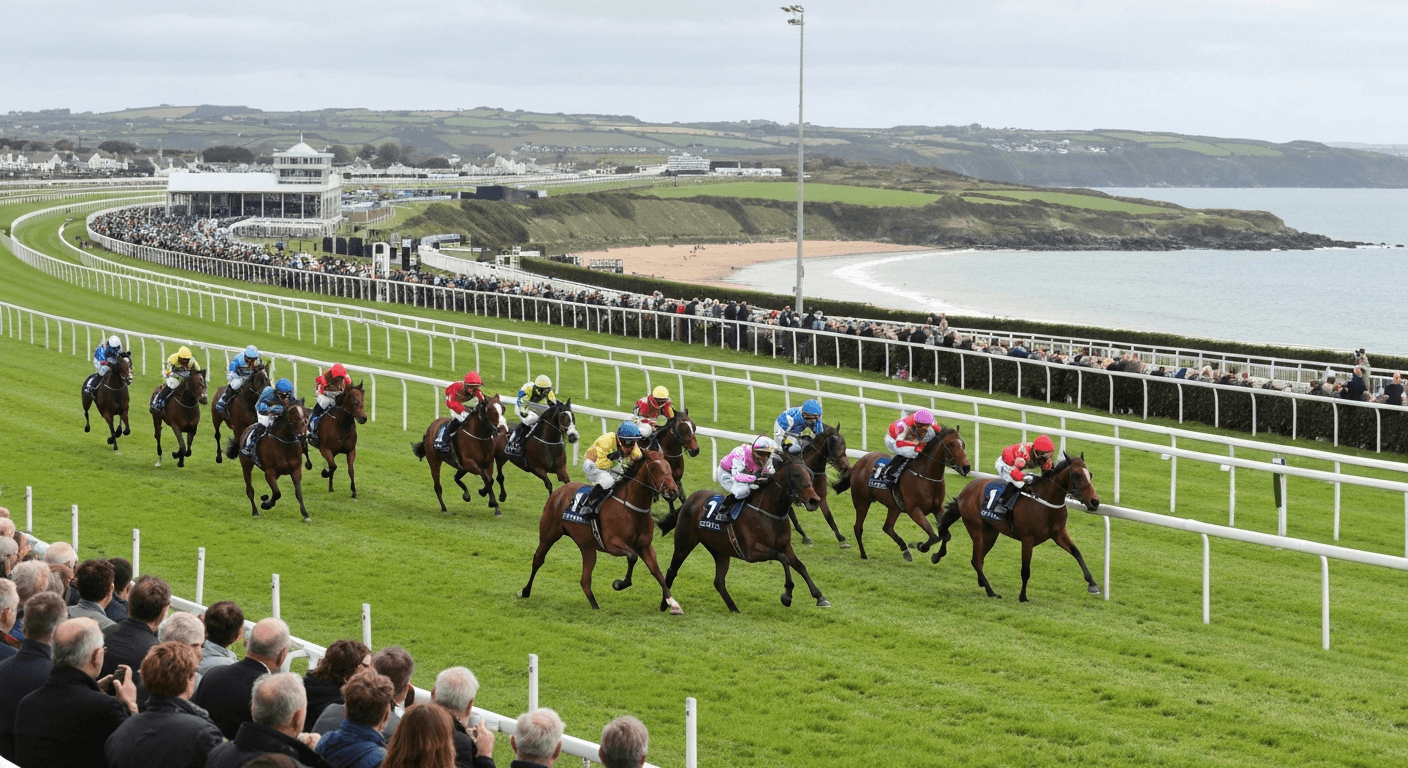
New Year's Day at Tramore: The Complete Guide
Guide to the Grade 3 New Year's Day Chase at Tramore on 1 January: its grade and distance, Willie Mullins and Al Boum Photo's four-in-a-row, and the August Festival.
Read more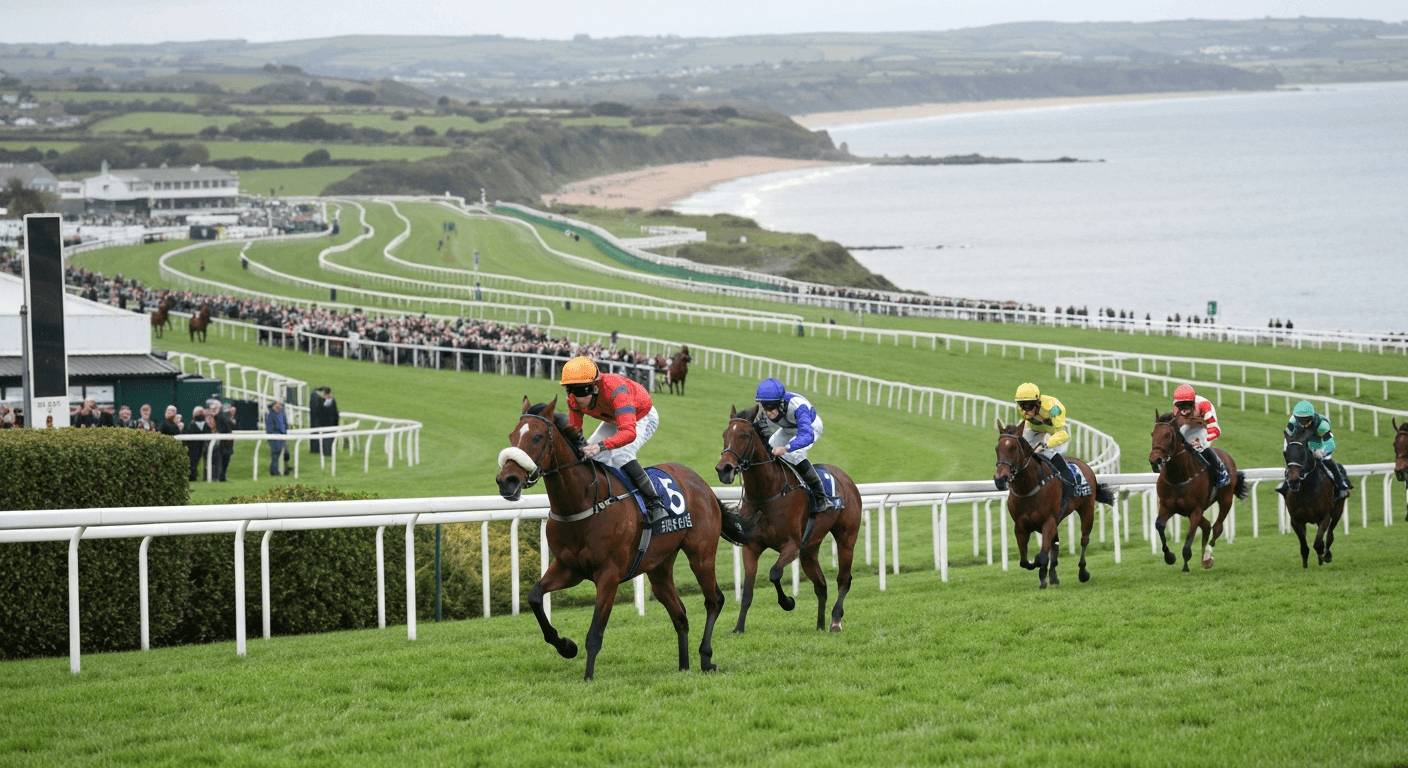
No Problem and Tramore's Great Days: The Complete Story
How No Problem won the first race of the new Millennium at Tramore on 1 January 2000, and the New Year's Day Chase days that make the seaside track.
Read more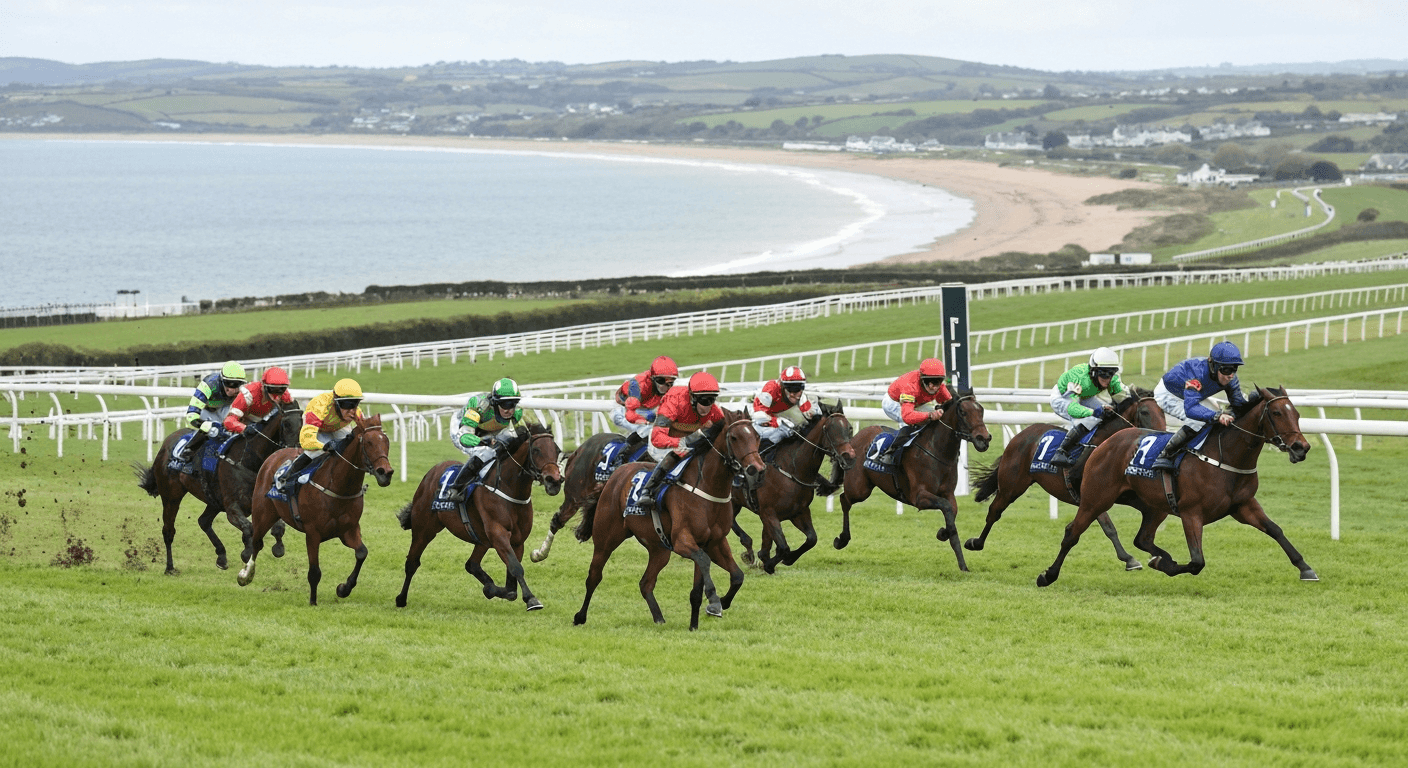
Betting at Tramore Racecourse
How Tramore's tight, undulating, right-handed dual-code track above Tramore Bay shapes the betting, with the New Year's Day Chase, going and form framed honestly.
Read moreResearch the field with the AI Race Predictor
Our model publishes calibrated win-probability estimates for UK races — a second opinion to understand a race, not tips. It's open about its record: it doesn't beat the market, and we show exactly how it does.
Work it out & learn the basics
Gamble Responsibly
Gambling should be entertaining and not seen as a way to make money. Never bet more than you can afford to lose. If you or someone you know has a gambling problem, help and support is available.