
Founder & Editor · Last reviewed 2026-07-13
Betting at Ballinrobe: the honest starting point
Ballinrobe is Mayo's only racecourse and one of just four in Connacht, a dual-code venue on turf that stages a mix of competitive Flat and jumps racing across 10 fixtures from April to September, most of it in the evenings. It is a compact, country meeting set in a natural amphitheatre before Lough Carra, and the racing reflects the shape of the place: tight, sharp and quick to reward a horse that travels near the pace.
This guide is written for punters who want to understand Ballinrobe rather than be handed a tip. There are no selections here, and one honest theme runs through every section. Over time, backing favourites to their starting price loses money, because the price carries the bookmaker's margin, the overround built into the odds. That holds at every track and in every kind of race, and no staking method or system changes it. What the guide offers instead is context: the demands the circuit places on a horse, the pace and draw patterns that recur, the trainers and jockeys whose records are worth knowing, and how the big handicap days tend to bet.
A word on the draw before we start. Ballinrobe is right-handed and tight, so the draw only enters the picture on the Flat, and then mainly in the short sprints; over jumps there is no draw to weigh at all. Betting should be treated as paid entertainment with money you can afford to lose, not as a way to make an income. If it stops being fun, the gambling support services at GamCare and GambleAware are there to help.
This guide covers what the tight, right-handed track asks of a horse, the going patterns and the draw, the trainer and jockey angles worth knowing, the honest picture on favourites and form, how the big race days bet, and answers to common questions.
Where to Bet
Place your bets with a trusted, licensed bookmaker.

Promo code BETFRED50. New customers only. Register, deposit with a Debit Card, and place a first bet of £10+ at Evens (2.0)+ on Sports, to be settled within 7 days, to get £30 in Sports Free Bets and £20 in Bet Builder Free Bets within 24 hours of settlement. 7-day expiry. Eligibility & payment exclusions apply. Full T&Cs apply. Take Time to Think. BeGambleAware.org. 18+. Full T&Cs.

Promo code R30. New UK customers only, 18+. Register, deposit £10 or more, then place a £10 single cash bet at odds of 1/2 (1.5) or greater on any sports market (excluding Virtuals). Once the qualifying bet settles you get £30 in Free Bets (3 x £10) — the qualifying bet can win or lose. Free Bets are valid on any sports market excluding Virtuals, expire in 7 days, are non-withdrawable and must be used in full. Excluded deposit methods apply (including PayPal, Apple Pay, Skrill and NETELLER). Named bets such as Lucky 15 do not qualify. If you cash out the qualifying bet, or it is voided, you are no longer eligible for the offer. Ends 31.12.26. Full T&Cs apply. Please gamble responsibly. BeGambleAware.org. 18+. Full T&Cs.

Promo code BET40GET20. New UK customers, 18+. Register with the code and place a first bet of £40 or more at Evens (2.0) or greater. Receive 2 × £10 free bets: the first credited automatically once the qualifying bet settles, the second 24 hours later. Free bets must be placed at minimum odds of 4/1 (5.0), expire 24 hours after credit, and the free-bet stake is not returned with winnings. Debit card deposits only. Take Time to Think. BeGambleAware.org. 18+. T&Cs apply. Full T&Cs.

50% of your first-day net losses refunded as a free bet, capped at £25. New UK customers aged 18+ only. To qualify, deposit and place a first bet of £10 or more on any sport at minimum odds of evens (2.00), then place at least two further bets on different events, each worth at least 50% of your largest bet, all at evens (2.00) or greater. Losses are counted from your first settled bet until 23:59 the same day. Place a qualifying £10+ bet and you are guaranteed at least a £5 free bet. Bets placed at SP, void bets, cashed-out bets and bets struck with free bets do not count towards the offer. The free bet is credited the day after your qualifying bets settle and must be used within 7 days, after which it expires. It can be used at odds from 1/4 (1.25) up to 250/1 on singles and straight accumulators, but not on Trixie, Patent or Yankee style multiples. Free-bet stake is not returned with winnings. One offer per person, household, address, IP address and device. E-wallet deposits may not qualify, so check the cashier before depositing. Customers registered with GAMSTOP cannot claim. KYC identity verification must be completed before the free bet is credited. Take Time to Think. BeGambleAware.org. 18+. T&Cs apply. Full T&Cs.

New customers, 18+. Choose the sports bonus at sign-up, make a first deposit and receive a 100% bonus up to £50 in your Sports Bonus balance. To convert the bonus to cash, wager it 10x within 30 days. Single bets below Evens (2.00) do not qualify; accumulators do not qualify if any selection is below 1/2 (1.50). Virtual Sports, voided, cancelled, drawn, cashed-out and free-bet wagers do not count towards wagering. Only the first settled bet per event counts. Withdrawing before the wagering requirement is met forfeits the bonus balance including bonus winnings. Real-money funds are used before bonus funds. Deposits via Skrill or Neteller are not eligible. Not valid in conjunction with other promotions. Odds, bet and payment limits apply. 10bet general and promotion T&Cs apply. BeGambleAware.org. 18+. Full T&Cs.

New customers in Great Britain and Republic of Ireland, 18+. Place a £10 fixed-odds qualifying bet at minimum odds of 1/2 (1.50) — single or each-way (only the win part counts), pre-event or in-play, not cashed out early, within 28 days of opening the account. Receive up to £60 in bonuses credited over three days: 3 × £10 fixed-odds free bets (the first on settlement, then 24 and 48 hours later) plus 3 × £5 Total Goals FOOTBALL spread bets and 3 × £5 racing Winning Favourites spread bets, with a £1 racing Race Index spread bet as an extra on top. The spread bets need a full spread-betting account, opened within 28 days of the fixed-odds account and subject to Spreadex's eligibility and appropriateness checks. Free-bet stakes not returned with winnings; free bets valid 28 days from issue. IMPORTANT: the £5 credits are SPREAD bets — sports spread betting carries the risk that losses can exceed your stake. Sports spread-betting customers do not have Financial Ombudsman or FSCS recourse. Take Time to Think. BeGambleAware.org. 18+. T&Cs apply. Full T&Cs.

Promo code WELCOME15, entered under My Bonuses after registering. New UK customers, 18+. Place a first qualifying bet of at least £10 from your cash balance at odds of evens (2.0) or greater within 7 days of opening the account. Once the qualifying bet fully settles you receive £15 in free bets, credited as 3 x £5 tokens with set uses: one £5 accumulator free bet (minimum 4 legs, each leg at 2/5 or bigger), one £5 sports free bet (any market at evens or bigger) and one £5 Sub Cover free bet (selected football player markets at evens or bigger). Free-bet stakes are not returned with winnings. Free bets expire 7 days after they are credited. Void, cashed-out and partially cashed-out bets do not qualify. One offer per customer. Confirm the current terms on BetGoodwin's own welcome-offer page before claiming. Take Time to Think. BeGambleAware.org. 18+. T&Cs apply. Full T&Cs.

New UK customers, 18+. Minimum deposit £10. Place a £10 qualifying single at minimum odds of 1/2 (1.50), settled within 14 days. Receive £30 in free bets (stake not returned), split £20 for sportsbook use (2 x £10) and £10 for Bet Builder only (2 x £5); Bet Builder does not cover horse racing. Free bets must be accepted within 7 days and expire 7 days after acceptance. No promo code required. Best Odds Guaranteed on UK & Irish racing, subject to having staked over £25 in the previous seven days. Operated by LiveScore Betting and Gaming (Gibraltar) Ltd, UKGC 56859. Confirm the current terms on LiveScore Bet's own promotions page before claiming. Take Time to Think. BeGambleAware.org. 18+. T&Cs apply. Full T&Cs.
18+. BeGambleAware.org
What the tight Ballinrobe track asks
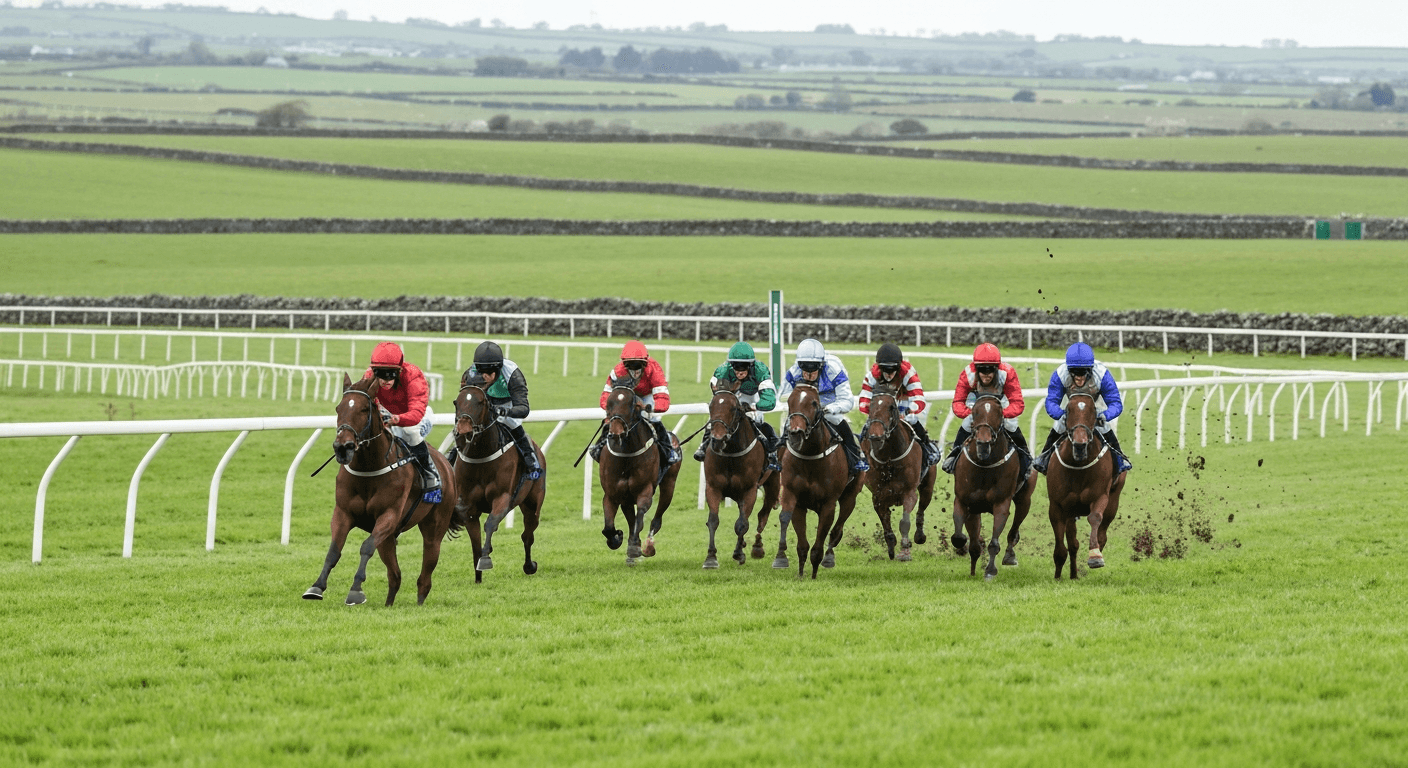
Ballinrobe is a slightly elevated right-handed oval, described variously as about one mile to a mile and a furlong round, and it is a tight track with a very short run-in of just over a furlong. The shape asks a specific set of questions of a horse, and they are worth understanding before reading any form here.
The back straight runs uphill, but the closing two and a half furlongs are downhill, which favours speedier types over out-and-out stayers. With so little run-in once a horse turns for home, there is limited room to make up ground late. That combination, a downhill run to a short straight, is why prominent racers do well across both codes. A horse settled near the pace and travelling smoothly has far less to do in the final furlong than one being asked to weave through from the rear.
Two courses in one
There are effectively two configurations. Flat racing and hurdles use the inner loop; chases use an outer loop that runs parallel to and outside the old back straight, adding about two furlongs and making the track more galloping and fairer when it is in use. The old inner track is tight and can throw runners wide at the sharp home turn, which historically bred course specialists, horses that returned and handled the quirks better than newcomers.
The obstacles
On the chase course there are six fences per circuit, three of them in the back straight, with the last coming just after the turn into the short finishing straight. These are considered among the easiest fences in Ireland; the tricky part is the positioning of the final two obstacles rather than their size. The hurdle course has five flights per circuit. None of this converts into a selection. It is context for reading a result: a jumping error late at Ballinrobe, so close to a short home straight, is harder to recover from than the same error at a galloping park track.
What tends to win
Across both codes there is a clear pace bias toward prominent racers. On the Flat, six-furlong sprints are run around a sharp right-handed turn, where a low draw and a prominent position both help. The honest reading of all this is a description of demand, not a shortcut: Ballinrobe rewards handiness, cruising speed and a horse that can hold a position, and it asks less of stamina than a long, galloping circuit would. Whether any individual horse is well suited is a question the market has usually already weighed, and the price reflects it.
Going patterns and the draw
Ballinrobe races through the warmer months, with 10 fixtures spread from April to September and most cards run in the evening. That seasonal window matters when reading form. Summer ground in the west of Ireland can change quickly, and a horse that handled quick going on a dry evening is not automatically the same proposition after mid-week rain. There is no published seasonal going table or authoritative course-record time for Ballinrobe in an accessible source, so this is not a track where you can lean on a clean standard-times figure. The going description on the day, read alongside the likely pace of the race, tells you more here than any time figure would.
The draw
Because Ballinrobe is right-handed and tight, the draw only comes into play on the Flat, and most sharply in the sprints. Six-furlong races are run around a sharp right-handed turn, and a low draw plus a prominent early position both help, since a horse berthed low and ridden handily has the shortest route to the rail before the bend. Over jumps there is no draw to consider at all. The table below sets out the pattern by code and race type.
| Code and race type | Draw guidance | Pace guidance |
|---|---|---|
| Flat, 6f sprints | Low draw favoured | Prominent position helps |
| Flat, other distances | n/a (no specific bias recorded) | Prominent racers favoured |
| Hurdles (inner loop) | No draw | Prominent racers favoured |
| Chases (outer loop) | No draw | Prominent racers favoured |
How to weigh it
Two points keep the draw in proportion. First, it applies to a narrow slice of the card, the Flat sprints, not to the jumps racing that fills much of the summer programme. Second, a draw is one input that interacts with how a horse is ridden, not a standalone signal. A low-drawn sprinter that misses the break gives back its theoretical advantage, while a sharp beginner from a wider stall can cross and lead. None of this yields a way to beat the starting price. The margin sits in every price regardless of the stall a horse comes out of, and the draw pattern is context for understanding a sprint result, not a method for profiting from one.
Trainer and jockey angles
The names that recur at Ballinrobe are the same powerful yards that dominate Irish racing generally, and that is the first thing to understand about them as a betting factor. A strong stable running a horse here signals quality, but that quality is already in the price. The honest puzzle is rarely whether the big yard is dangerous; it is which of its runners, and at what price, on a card where the same operation may saddle several.
On the Flat
Over the level, trainers such as Aidan O'Brien, Dermot Weld, Jessica Harrington and Willie Mullins post high strike rates at the course. These are among the most successful Flat operations in the country, so a good record at a summer evening track like Ballinrobe is no surprise, and it is not a secret the market has missed. When one of these yards sends a fancied runner, the short price reflects the strength of the stable rather than handing you an edge over it.
Over jumps
Over jumps the picture narrows further. Willie Mullins and Gordon Elliott dominate the trainer tables, and Paul Townend paired with Willie Mullins has posted among the strongest recent jockey and trainer strike rates at the track. Elliott's grip on the feature race has been the standout story of recent seasons, with three McHale Mayo Nationals in a row from 2023 to 2025 before Henry de Bromhead broke the run in 2026. On the riding side, Danny Gilligan won the Mayo National twice, in 2023 and 2025.
The feature-race record
The clearest way to see the leading connections is the recent roll of honour in the McHale Mayo National, the course's most valuable race.
| Year | Winner | Jockey | Trainer |
|---|---|---|---|
| 2026 | Native Speaker | Darragh O'Keeffe | Henry de Bromhead |
| 2025 | Western Fold | Danny Gilligan | Gordon Elliott |
| 2024 | Duffle Coat | Sam Ewing | Gordon Elliott |
| 2023 | Tullybeg | Danny Gilligan | Gordon Elliott |
| 2022 | Rock Road | Kieran Callaghan | W P Mullins |
| 2021 | Agent Boru | Phillip Enright | Thomas Gibney |
| 2020 | Doctor Duffy | Kevin Brouder | Charles Byrnes |
| 2019 | Peregrine Run | Kevin Sexton | Peter Fahey |
| 2018 | Kaiser Black | Jack Kennedy | PMJ Doyle |
| 2017 | Kilcarry Bridge | Donagh Meyler | John Patrick Ryan |
| 2016 | King Leon | Mark Walsh | Aidan O'Brien |
| 2014 | Sammy Black | Danny Mullins | Anthony Mullins |
The race was inaugurated in 2014, and the 2015 winner is not reliably recorded, which is why the roll of honour above skips that year. Danny Gilligan appears twice as the winning jockey, in 2023 and 2025, both times for Gordon Elliott, underlining how a single strong yard and rider pairing can shape a course's feature-race history.
How to use it
A record like Elliott's tells you the yard targets the meeting and prepares horses to run well here. It does not tell you which of a multiple-entry hand will win, and it does not make the favourite a profitable bet. Course and connections form is best treated as one input into your own judgement of value, weighed against the price on offer, rather than a signal to follow blind. The strike rates above are qualitative, drawn from the pattern of results rather than a fixed sample size, so read them as a guide to who prepares horses well at Ballinrobe, not as a number to stake to.
Favourites and form: the honest picture
Ballinrobe throws up one figure that needs handling with care. In the samples that have been analysed, Flat favourites at the course have historically shown a small level-stakes profit across all contests, particularly in non-handicaps. It is an honest fact, so it belongs here, but it is easy to misread.
| Code | Historical favourite pattern | What it means |
|---|---|---|
| Flat | Small level-stakes profit in limited samples, mainly non-handicaps | A small-sample curiosity, not a prediction |
| Jumps | No such pattern recorded | Treat favourites as the market prices them |
Why a small sample flatters
A level-stakes profit over a limited run of races is exactly the kind of result a small sample can produce by chance. Ballinrobe is a compact fixture with 10 meetings a year, so the number of Flat non-handicaps to draw on is not large, and a handful of well-backed winners can tip a small sample into notional profit without describing anything you can rely on going forward. The pattern is a description of what happened, not a forecast of what will.
The honest line
Across racing as a whole, backing favourites to starting price loses money over time, because the SP carries the bookmaker's margin. That is a well-established feature of betting markets, not a Ballinrobe quirk, and no course record overrides it. No staking method, system or back-the-favourite approach beats starting price in the long run. A short price on a strong yard's runner reflects information the market has already absorbed; it does not hand you an edge.
Use the course patterns in this guide to understand a race more fully, the pace bias, the draw on the sprints, the yards that prepare horses well here, and treat them as inputs into your own judgement of value rather than a betting machine. The bottom line is simple: betting is a cost paid for entertainment, not a source of income. Stake only what you can afford to lose, and if it stops being fun, GamCare and GambleAware can help.
How the big days bet
Ballinrobe's betting year has two clear peaks: McHale Raceday in late May and the two-day Tote festival in July. Both lean on competitive handicaps, which is the type of race that spreads results across a wide band of prices and rewards understanding over any mechanical method.
McHale Raceday and the Mayo National
McHale Raceday is the biggest fixture of the year, a Monday evening meeting held on 25 May in 2026. It is headlined by the McHale Mayo National, a Listed handicap chase run over about two miles and seven furlongs for four-year-olds and up, first run in 2014 and worth €100,000. The Mayo National off-time has crept steadily earlier over the years to fit the TG4 coverage window, from later evening slots down to 18:30 in 2025 and 18:35 in 2026.
As a big-field handicap it is hard to call by design, and it has proved a genuine springboard: the 2025 winner Western Fold went on to take the Tote Galway Plate and a Grade 1 at Punchestown. That pedigree of winner is worth knowing as context, though it does not point to a selection or a way to beat the layers. The same card carries the McHale Mayo Hurdle, a handicap hurdle over about two miles and six and a half furlongs worth €30,000, where the 2025 winner Digby scored at 18/1, a reminder that these handicaps regularly produce double-figure-priced results rather than short-priced ones. Completing the day is the McHale Tiger Roll Beginners Chase, named for Tiger Roll's first win over fences here in 2016 and won in 2025 by Westport Cove for Paul Townend and Willie Mullins.
The July festival
The two-day July meeting, Tote Raceday, falls on Monday 20 and Tuesday 21 July in 2026. It is a hugely popular summer festival with a family-day atmosphere, built around competitive handicaps including the Tote Handicap. As with McHale Raceday, the handicaps are the betting heart of the fixture, and the same honest point applies to all of it: a large, competitive field is designed to bring horses together on the weights, so results spread and the favourite is beaten far more often than it wins. Read these races as puzzles to understand, and remember that backing the favourite blind still loses to starting price over time.
Frequently Asked Questions
Share this article
More about this racecourse
All ballinrobe guides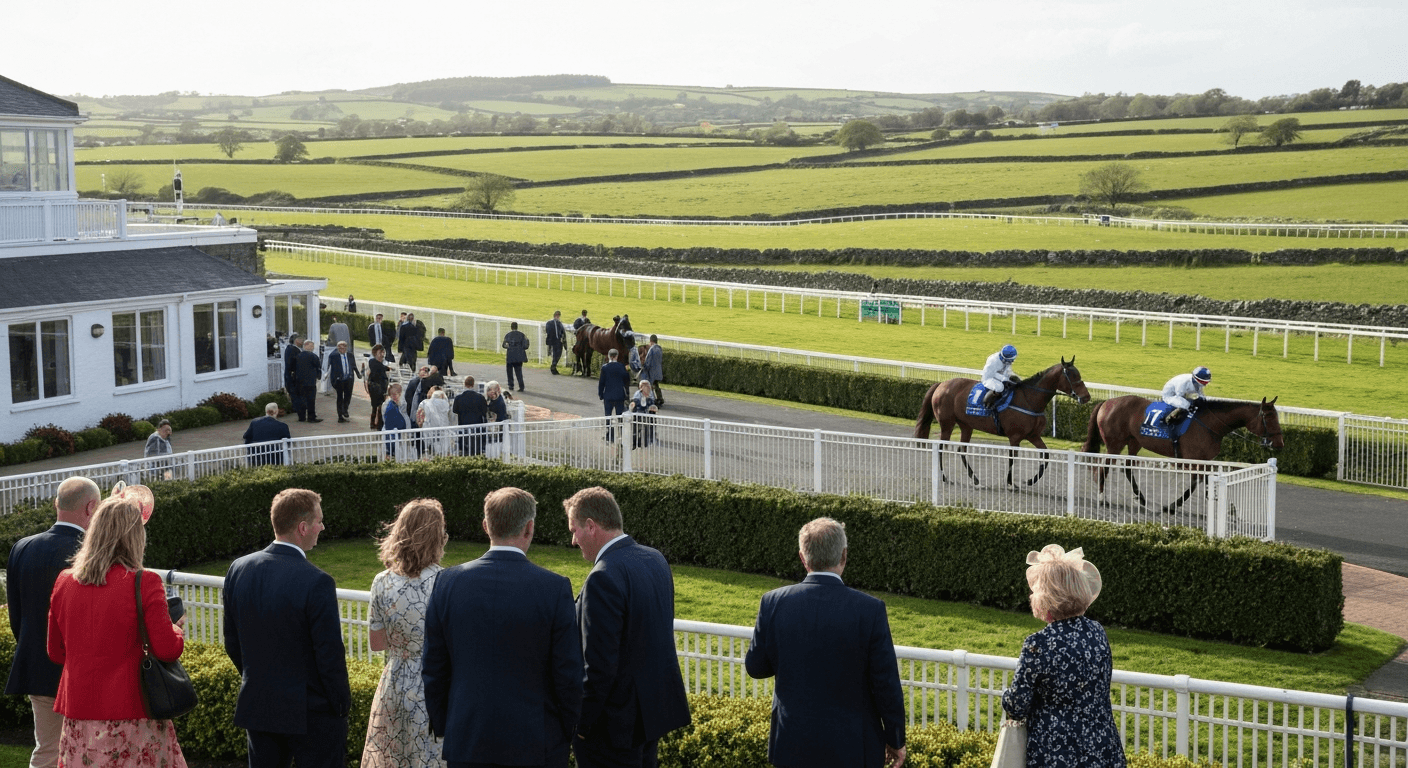
A Day Out at Ballinrobe Racecourse
Plan a day at Ballinrobe Racecourse in Co. Mayo: getting there, admission and tickets, food and bars, the best fixtures, what to wear and first-visit tips.
Read more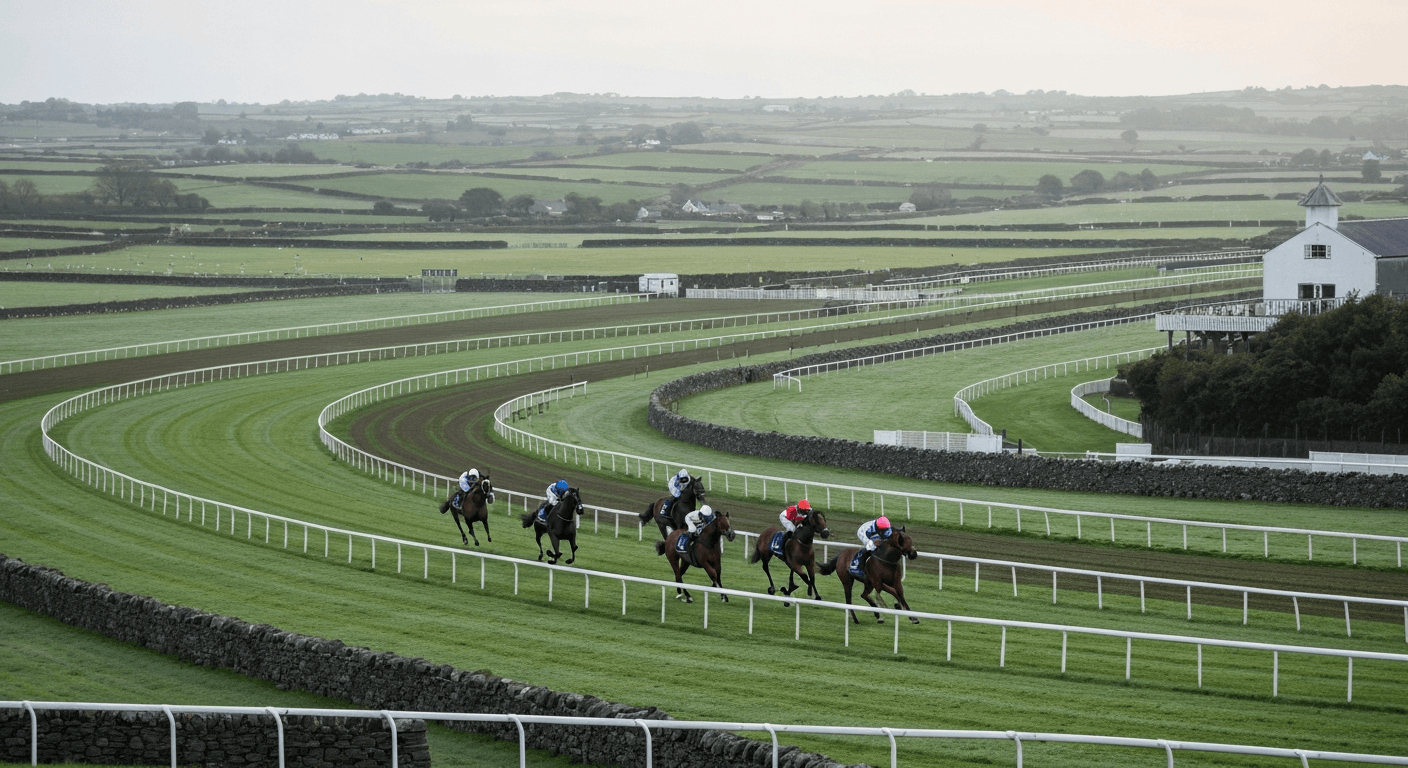
The History of Ballinrobe Racecourse
The history of Ballinrobe Racecourse: racing in Co. Mayo since 1774, the present course since 1921, the McHale Mayo National and Tiger Roll's first chase.
Read more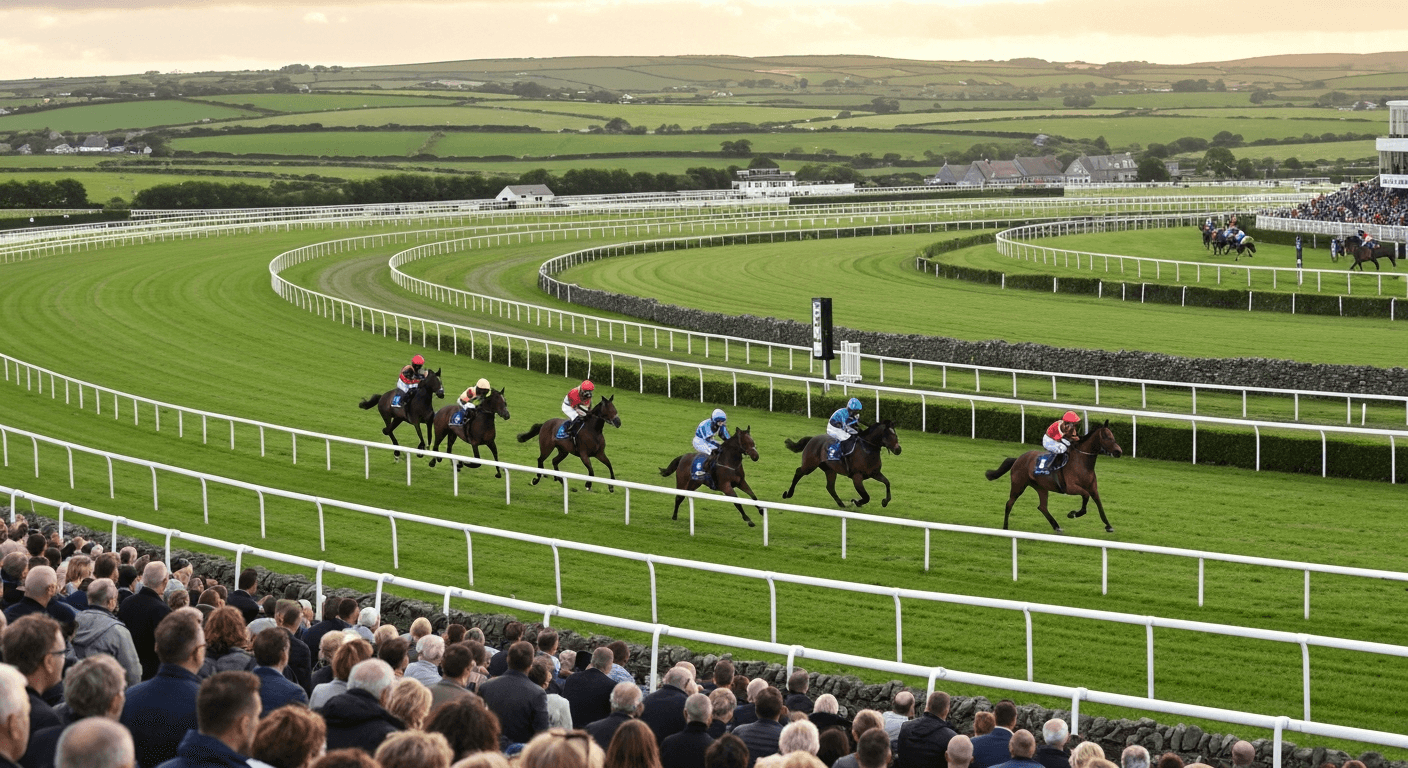
Ballinrobe Racecourse: The Complete Guide
Ballinrobe Racecourse guide: Co. Mayo dual-code course, home of the McHale Mayo National and Tiger Roll's first chase win, plus tickets and travel.
Read moreResearch the field with the AI Race Predictor
Our model publishes calibrated win-probability estimates for UK races — a second opinion to understand a race, not tips. It's open about its record: it doesn't beat the market, and we show exactly how it does.
Work it out & learn the basics
Gamble Responsibly
Gambling should be entertaining and not seen as a way to make money. Never bet more than you can afford to lose. If you or someone you know has a gambling problem, help and support is available.