Founder & Editor · Last reviewed 2026-07-13
Racing at Bellewstown goes back a very long way. The first record of it appears in the August 1726 edition of the Dublin Gazette and the Weekly Courier, which means horses have been running on the Hill of Crockafotha in County Meath for three centuries. In 2026 the course marks its 300th anniversary, counted straight from that 1726 notice.
That gives Bellewstown one of the longest continuous racing traditions in Ireland, and it has earned the description of the historical home of Irish summer jump racing. It sits on high ground about 11km south of Drogheda and roughly 37km north of Dublin, a hilltop oval with views out to the Mountains of Mourne to the north and the Irish Sea to the east. The stands, enclosures and parade ring are set up on the hill, and the whole place has kept a country-festival character that most modern tracks lost long ago.
None of that longevity comes from staging the sport's biggest prizes. Bellewstown has never run a Pattern or Graded race, and it has no champion horse to call its own. Its jumps racing is over hurdles only, with no steeplechases at all. What the course has instead is a store of stories, and the most famous of them is not really about a horse. In June 1975 the professional gambler Barney Curley landed the Yellow Sam betting coup here, one of the most celebrated strokes in the history of the sport, and it worked precisely because Bellewstown was remote enough to have a single public telephone box.
This history follows the course from that first 1726 record through the royal sponsorship of the 18th and 19th centuries, the Yellow Sam coup, the great trainers and jockeys who fill the modern record book, and the redevelopment and anniversary that bring the story up to the present day. It is honest about where the record runs thin, because for a course this old a good deal of the early detail was simply never written down.
Use the links below to jump to a section:
Racing on the Hill
The earliest firm fact in Bellewstown's story is a printed notice. Racing here is first recorded in the August 1726 edition of the Dublin Gazette and the Weekly Courier, and it is that date the course counts from when it calls itself 300 years old in 2026. What survives is the fact of racing on the Hill of Crockafotha in the 1720s, not a full running order or a founding committee, and this account keeps to what the record actually gives.
Summer Racing Takes Hold
By the middle of the 18th century the meeting had grown into a focal point of Irish racing, drawing large crowds up onto the hill and at one stage extending to five-day meetings. That is a long fixture for a country course, and it says a good deal about how popular the summer festival had become. The racing shared its ground with other uses too. There was formerly a cricket ground in the middle of the track, a reminder that the hilltop was a piece of communal land as much as a dedicated racecourse.
The setting has always been part of the appeal. Bellewstown sits on high ground, and the stands, enclosures and parade area are laid out on the hilltop with the winning post at the top of the uphill run-in. On a clear day the crowd looks north to the Mountains of Mourne and east to the Irish Sea. That elevation shapes the racing as well as the view: the going tends to be on the quick side in July because the course drains freely, though it is well watered to compensate.
A Royal Connection
A defining moment came in 1780. George Tandy, a former Mayor of Drogheda and brother of the patriot James Napper Tandy, secured royal sponsorship for the meeting from King George III. The monarch's support introduced His Majesty's Plate, valued at £100, which was a substantial prize for the time. The plate tied a small Meath meeting to the Crown, and the royal connection ran on for two centuries. It is generally recorded as continuing until 1980, when it was discontinued after the British monarchy chose to consolidate its Irish sponsorship on a single race, the Royal Whip at the Curragh.
That two-hundred-year royal thread is one of the things that separates Bellewstown from the many small tracks that came and went over the same period. Where the title of the plate followed the reigning monarch, the prize itself gave the meeting a standing above its modest scale.
The Shape of the Course
The physical track that grew up on the hill is a sharp, undulating left-handed oval. The racecourse and Horse Racing Ireland describe it as one mile and one furlong round, roughly nine furlongs, though some form guides measure it closer to a mile and two furlongs depending on whether they follow the hurdles line or the flat line. There is a run-in of about three furlongs to a slightly uphill finish, and a chute for five-furlong sprints that starts up on the Hill of Crockafotha and gives a steep downhill run in the opening stages.
The jumps racing has always been over hurdles only. There are five hurdles per circuit and no fences at all, so Bellewstown has never staged a steeplechase. Cambers, road crossings and the undulations put a premium on a balanced, speedy sort of horse, and the whole layout has stayed recognisably the same country course through the centuries rather than being rebuilt into something grander.
The Royal Plate and the Course's Big Races
Bellewstown's history is measured less in grand acts of parliament than in a handful of turning points: the first record, the royal plate, a notorious betting coup, and the slow build-up of the summer festival races that headline the card today.
From the Royal Plate to the Modern Features
The royal sponsorship of 1780 gave the meeting its first race of real standing in His Majesty's Plate, worth £100, and that tradition ran until 1980. In the modern era the headline prizes are handicaps rather than titles, but they carry the biggest funds the course has ever offered.
The July Festival's feature is the standout. It began as the Crockafotha Handicap Hurdle, named for the hill the course sits on. Around 2021 to 2023 it ran with Bar One Racing sponsorship, worth roughly €45,000, and it is now the QuinnBet Bellewstown Handicap Hurdle, promoted with a fund of about €60,000. That makes it comfortably the most valuable race in the Bellewstown year and, in the words of General Manager Kevin Coleman in 2025, by far the most valuable renewal to date. The winner earns free entry into the Guinness Galway Hurdle, tying the little Meath feature to one of the summer's biggest jumping prizes.
The August meeting is headed by the Mullacurry Cup Handicap Hurdle, run over about two and a half miles. It takes its name from Mullacurry, a now-defunct racecourse in County Louth, so the race carries the memory of a lost track into the present programme. Recent renewals have been worth in the region of €25,000, though older guides cite higher figures and some 2025 results list lower ones, and the exact prize fund is one of the details that shifts from year to year.
The Yellow Sam Coup
The single most famous milestone in the course's history is a betting story. In June 1975 the professional gambler Barney Curley landed the Yellow Sam coup at Bellewstown. Yellow Sam, trained on the Curragh by Liam Brennan and ridden by the amateur Michael Furlong, won the Mount Hanover Amateur Riders' Handicap Hurdle at 20/1.
The coup worked because of exactly how remote Bellewstown was. The course had only a single public telephone box as its link to the outside world, and Curley had an accomplice, Benny O'Hanlon, occupy it for around half an hour before the off, pretending to be talking to a dying relative. With the line blocked, off-course bookmakers could not get money back to the track to shorten Yellow Sam's price, so the horse was returned at its long odds while Curley's team backed it in cash across a network of shops. According to the Racing Post the coup won Curley £306,000, the equivalent of over £2 million today. The full story has its own place in the course's telling, and there is a dedicated account of the Yellow Sam coup elsewhere in this section.
Milestones at a Glance
| Year | Milestone |
|---|---|
| 1726 | First record of racing at Bellewstown, in the Dublin Gazette and the Weekly Courier |
| 1780 | George Tandy secures royal sponsorship from George III; His Majesty's Plate introduced, worth £100 |
| 1975 | Barney Curley lands the Yellow Sam betting coup at 20/1 |
| 1980 | Royal sponsorship of the plate discontinued |
| 2009 | Home bend realigned to allow safer, faster racing |
| 2026 | Course marks its 300th anniversary |
Each figure and date here traces to the research on the course; where a prize fund is disputed between sources, that is noted in the text rather than settled with a single number.
Legendary Horses
Here an honest history has to admit a gap. Bellewstown's fame rests on people and occasions far more than on individual horses, and there is no course-specialist champion to build a roll of honour around. Many of the biggest yards treat the track as an educational stepping stone for young hurdlers rather than a target for their established stars, so the horses that pass through tend to be on their way up rather than at their peak.
Yellow Sam
The horse most closely tied to Bellewstown is Yellow Sam, and even he is remembered for a betting stroke rather than for greatness on the track. Named after the nickname of Barney Curley's father, Yellow Sam had shown very little in nine runs over two seasons before he was deliberately campaigned to arrive at Bellewstown on a light handicap mark and a long price. He won the Mount Hanover Amateur Riders' Handicap Hurdle at 20/1 in June 1975, and that single afternoon secured his place in racing folklore. He was a vehicle for one of the sport's cleverest coups, not a champion, and it would overstate the record to call him anything more.
The Modern Feature Winners
Where the course does have a documented list of good horses is in the winners of its July feature handicap hurdle, the race now run as the QuinnBet Bellewstown Handicap Hurdle. These are competitive handicappers rather than stars, but the roll of honour is verified year by year:
- 2022 saw Anna Bunina take the Bar One Racing running as a 9/2 favourite for trainer John C. McConnell and jockey Shane Fitzgerald.
- 2023 went to Wouldn't You Agree at 20/1, trained by Eoin Griffin.
- 2024 was won by Petrol Head at 7/4 favourite for Miss Katy Brown. The horse later returned a positive clenbuterol test but kept the race after the regulator took no further action in October 2024.
- 2025 produced the best-known name on the list when Bowensonfire won the first €60,000 QuinnBet renewal at 7/1, trained by Gordon Elliott and ridden by Jack Kennedy, beating sixteen rivals by four and a half lengths.
The August feature, the Mullacurry Cup Handicap Hurdle, has its own recent winners: Important Message in 2020, Repeat That in 2021, Penny Jar in 2022, Our Bobby in 2023, Barry Lyndon in 2024 and Birmingham Alabama in 2025, the last of those a popular local success. None of these horses is a household name, and it would be false to dress them up as one. Their value to Bellewstown's story is that they fill a genuine, checkable record book for a course that has never pretended to stage the sport's championship races.
Legendary People
If Bellewstown has no champion horse, it has more than its share of memorable people. The course's character has always come from the figures who filled it, from an 18th-century mayor who won it royal backing to the punter who made it the setting for a legendary gamble.
Barney Curley
No name is more bound up with Bellewstown than Barney Curley. A Fermanagh-born professional gambler, former Jesuit seminarian and one-time showband manager, Curley masterminded the Yellow Sam coup of 1975, still described as one of the greatest betting strokes in racing history. His plan turned Bellewstown's remoteness into a weapon, blocking the course's only phone box so the price could not be cut, and it left the bookmakers no choice but to pay out because nothing about it broke the rules. Curley went on to stage further famous gambles in later decades and became known in his final years as a philanthropist. He died on 23 May 2021, aged 81. Bellewstown has embraced its part in his story, preserving the phone box and staging anniversary races to mark the coup.
The Trainers
In the modern era the training honours belong clearly to Gordon Elliott, the outstanding jumps trainer at the track with around 21 wins, roughly double his nearest rivals. Willie Mullins and Tony Martin are also frequent and successful visitors over hurdles, and Charles Byrnes runs a strong strike rate at the course. On the Flat, Ger Lyons is the most successful trainer. That these are among the biggest names in Irish racing, turning up at a small summer track, tells you how the yards use Bellewstown as a place to educate and place their horses.
The Jockeys
The riding records are led by familiar names too. Colin Keane, with about 21 Flat wins, heads the Flat jockeys, alongside Shane Foley and Declan McDonogh. Over jumps, Davy Russell is the most successful active rider at the track with around a dozen wins, while retired greats Ruby Walsh, with about sixteen, and Paul Carberry, with around twelve, also feature in the record.
One appearance stands slightly apart. Frankie Dettori rode at Bellewstown just once, on 30 September 2021, a one-off visit that gave the hilltop crowd a memorable afternoon with one of the sport's biggest global names.
George Tandy
Reaching back to the 18th century, George Tandy deserves his place among the course's important figures. A former Mayor of Drogheda and brother of the patriot James Napper Tandy, it was Tandy who in 1780 secured the royal sponsorship of George III that gave the meeting His Majesty's Plate. That single act tied a small Meath course to the Crown for two centuries and lifted its standing well beyond its scale.
Records and Stats
Bellewstown's record book is a thin one, and the honest starting point is what is missing. No authoritative course-record or standard-time data for the track could be found in any accessible source, so this section quotes none. Anyone who sees a firm all-time course record for Bellewstown quoted elsewhere should treat it with caution, because the published record does not support one.
What can be set out reliably is the leading-win picture at the course, drawn from the course's own statistics.
| Category | Leader | Wins |
|---|---|---|
| Jumps trainer | Gordon Elliott | about 21 |
| Flat trainer | Ger Lyons | leading (count n/a) |
| Flat jockey | Colin Keane | about 21 |
| Jumps jockey (active) | Davy Russell | about 12 |
| Jumps jockey (retired) | Ruby Walsh | about 16 |
| Jumps jockey (retired) | Paul Carberry | about 12 |
Gordon Elliott's roughly 21 jumps wins put him clear at the head of the trainers, about double the tallies of Willie Mullins and Tony Martin behind him. Colin Keane leads the Flat jockeys with a similar figure of around 21. These are indicative counts from the course data rather than certified all-time totals, and they are given as approximate for that reason.
Draw and Pace, as History Not a Tip
The course's shape has left a clear statistical fingerprint over the years. There is a marked high-draw bias over five furlongs, a consequence of the dogleg, which lets high-drawn runners in the middle of the course take a straighter, shorter line while low-drawn horses on the inside race further. Over a mile a slight low-draw edge is noted instead. There is also a strong front-runner bias over the minimum trip that weakens at longer distances, a reflection of the steep downhill start off the hill.
These are descriptions of how the track has run historically, not a betting angle. Backing favourites loses money to starting price over time, and no system of backing favourites or front-runners should be assumed profitable at Bellewstown or anywhere else. The patterns are worth knowing as part of the course's character; they are not a route to a profit.
Atmosphere and What Bellewstown Means
Bellewstown's character comes from its hilltop. The whole meeting is set up on the Hill of Crockafotha, and that elevation gives the racing a feel that most modern tracks have lost, with the Mountains of Mourne to the north and the Irish Sea to the east framing the card. It is repeatedly described as a precious jewel in the Irish racing calendar, and it holds a claim to be the historical home of Irish summer jump racing.
The place is deliberately old-fashioned. Facilities are marquee-based rather than built around a large permanent grandstand, and the summer festival keeps a rural country-fair flavour: picnics on the hill, strawberries and cream, a fairground, food and craft stalls, best-dressed and Ladies Day competitions, and live music after racing. The summer festivals are traditionally staged on warm evenings, an evening-racing habit that suits the informal, family-oriented mood. There is no strict dress code, though best-dressed prizes are awarded on set days.
That community feel is not an accident of marketing. The course is run by a local committee of volunteers, and it is woven into the identity of the surrounding villages of Bellewstown, Collierstown and Duleek, as well as nearby Drogheda. It is the kind of meeting a district turns out for rather than a commercial venue that happens to sit in Meath, and the picnics-on-the-hill tradition is a large part of why the July Festival draws the crowds it does.
The course has kept its own history close, too. Rather than let the Yellow Sam coup fade into anecdote, Bellewstown preserved the phone box that made it possible, ran a 30th-anniversary hurdle in 2005, and staged a 40th-anniversary commemoration in 2015 attended by both Barney Curley and the winning rider Michael Furlong. A locally commissioned history, 300 Years of Racing at Bellewstown by John Kirwan, was published in 2013. For a small summer track, that is an unusual amount of care taken over its own story, and it says something about how much the place matters to the people who run it.
The Modern Era
The modern Bellewstown has changed carefully rather than dramatically. The course is still run by a committee of volunteers, with a General Manager, Kevin Coleman, overseeing the operation. That same office also administers the famous Laytown strand races on the Meath coast, whose regulatory contact is listed care of Kevin Coleman at Bellewstown, so the two most unusual tracks in the area share a management link.
A Safer, Busier Course
The most significant physical change came in 2009, when the home bend was realigned to allow safer and faster racing. It is a small alteration by the standards of major redevelopments, and it fits the course's approach of improving the track without rebuilding its country character.
The calendar has grown more than the buildings have. Historically Bellewstown ran only a handful of days, at one stage as few as five, but the modern fixture list has expanded to around eight or nine days spread across April, July, August and October. The exact number moves year to year: Horse Racing Ireland has at one point listed eight days across April, July, August and September, while the racecourse markets nine days of racing on the hill. Either way, a track that once packed its racing into a single festival now spreads it across the season.
Money and Coverage
The headline prizes have risen with the profile of the meeting. The July feature, once the Crockafotha Handicap Hurdle, moved through Bar One Racing sponsorship worth about €45,000 to its current form as the QuinnBet Bellewstown Handicap Hurdle, promoted at around €60,000, which General Manager Kevin Coleman called by far the most valuable renewal to date. Since 2019 every Irish course has been shown on Racing TV, and Bellewstown promotes that live coverage on its own site, so a meeting once known for having almost no communication with the outside world is now broadcast nationally.
Three Hundred Years
The defining event of the current era is the anniversary. Counting from the first record in 1726, the course reaches its 300th birthday in 2026, and it is marking the milestone with a 300th Birthday Celebration on the Hill, including a Country Music Xtravaganza on Sunday 5 July 2026 following the three-day July Festival. Reaching three centuries of continuous summer racing is a rare thing, and it caps a modern era in which Bellewstown has grown its calendar and its prize money while keeping the hilltop, marquee-and-picnic identity that makes it worth visiting. For the practical detail of a raceday now, see the Bellewstown Racecourse complete guide.
Frequently Asked Questions
Share this article
More about this racecourse
All bellewstown guides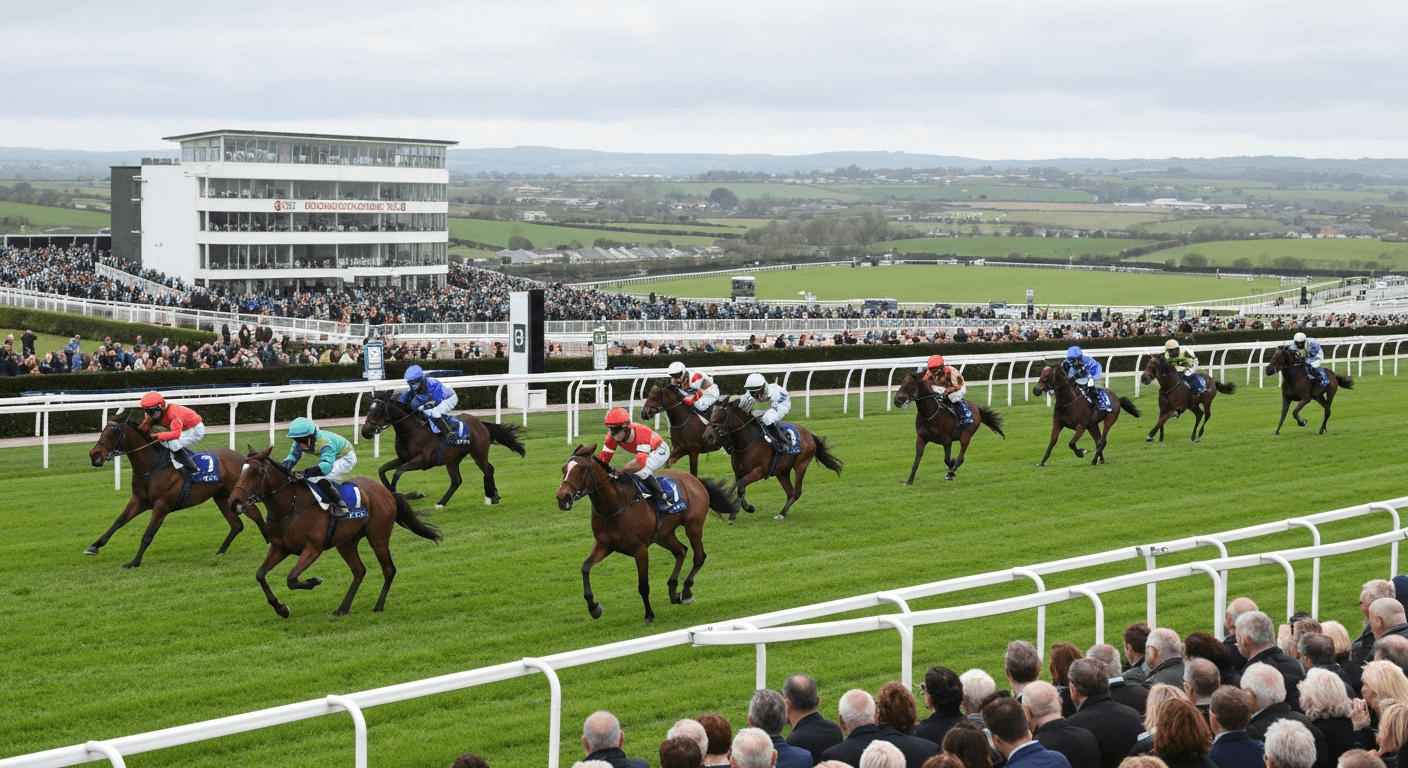
The Bellewstown July Festival: The Complete Guide
A guide to the Bellewstown July Festival, the hilltop track's flagship three-day meeting in Meath, headed by the QuinnBet Handicap Hurdle, plus roll of honour and how to visit.
Read more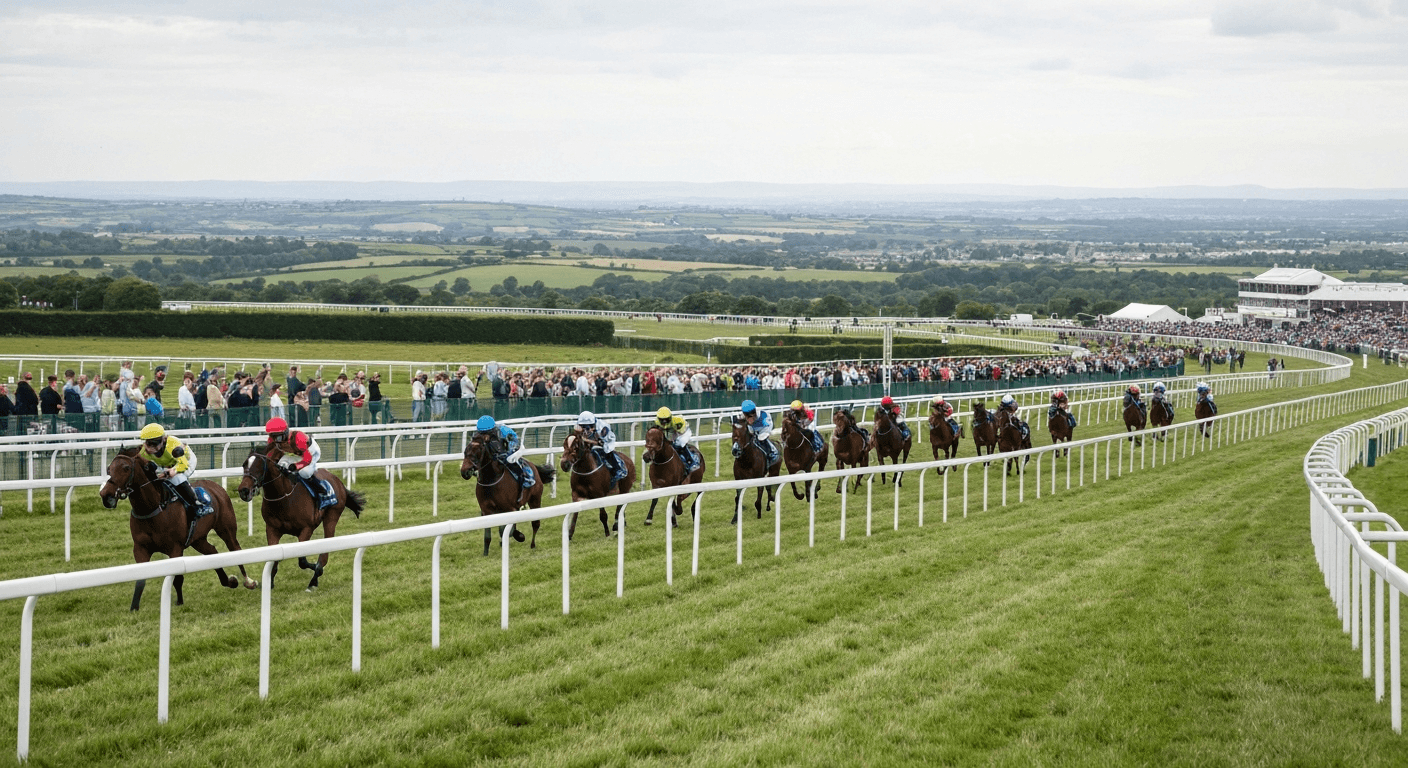
Bellewstown Racecourse: The Complete Guide
Bellewstown Racecourse guide: dual-code Meath track famed for the QuinnBet Handicap Hurdle and the Yellow Sam coup, plus tickets, travel and how to visit.
Read moreThe Yellow Sam Coup: Bellewstown's Most Famous Day
The 1975 Yellow Sam coup at Bellewstown, when Barney Curley used a single phone box to block the off-course price and landed a gamble worth millions today.
Read moreGamble Responsibly
Gambling should be entertaining and not seen as a way to make money. Never bet more than you can afford to lose. If you or someone you know has a gambling problem, help and support is available.