
Founder & Editor · Last reviewed 2026-06-29
The biggest crowd day in Irish jumps racing
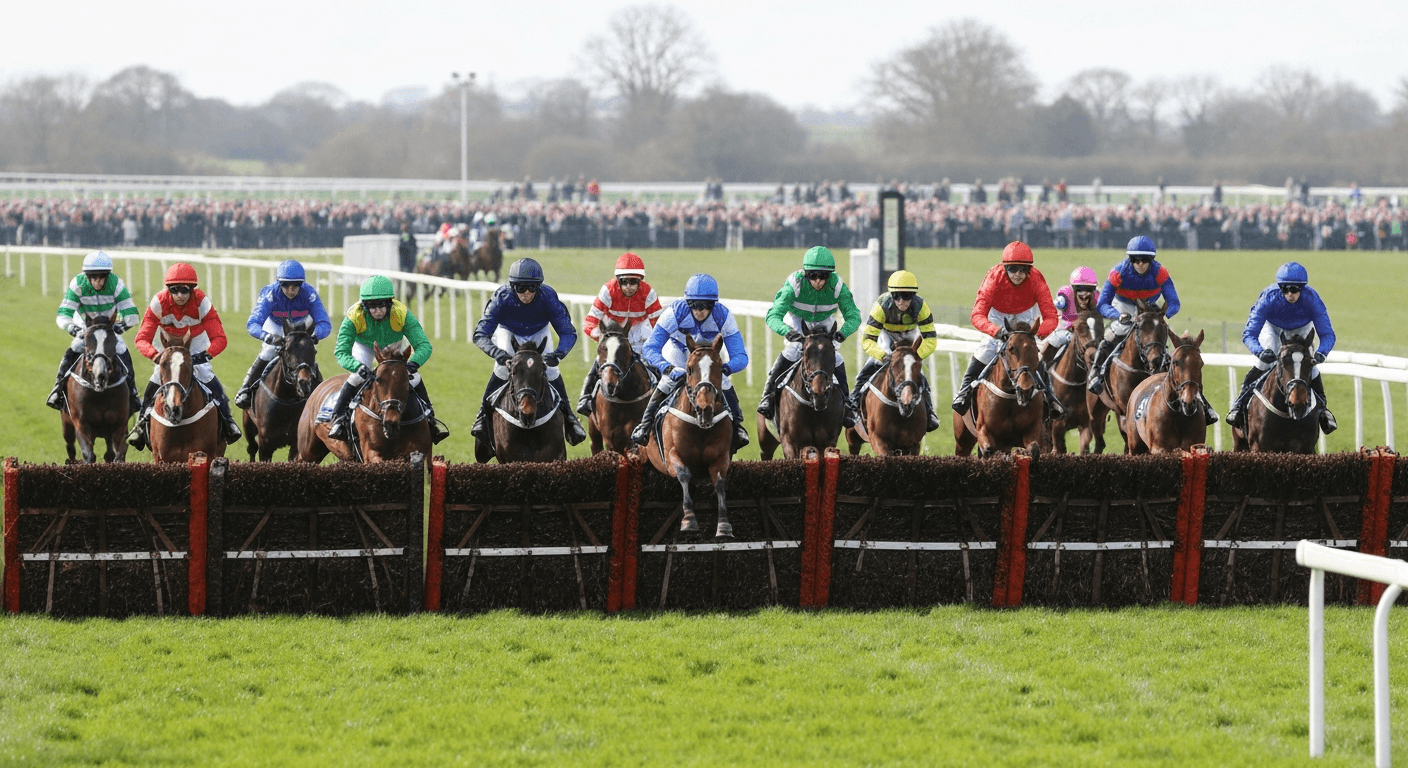
For one weekend every spring, a wide, galloping turf track in the Co. Meath parish of Ratoath becomes the centre of Irish racing. Fairyhouse, about 23km north-west of Dublin city centre on the R155, has been the home of the Irish Grand National since 1870, and the Easter Festival built around that race draws some of the biggest crowds in the Irish sporting calendar. The Easter Monday fixture has its own nickname, the "Dubs' Day Out", earned over generations of Dublin racegoers pouring out along the N3 for a bank-holiday afternoon at the races.
The festival runs across the Easter bank-holiday weekend, three days of National Hunt racing that climb towards a single feature: the Irish Grand National, run over about 3 miles 5 furlongs and 24 fences on Easter Monday. It is the most valuable and most famous steeplechase in Ireland, and its roll of honour reads like a history of jumps racing, from Arkle and Flyingbolt in the 1960s to Tiger Roll and I Am Maximus in the modern era.
Fairyhouse is owned by Horse Racing Ireland (HRI) and run through its subsidiary HRI Racecourses, the same arm that operates Leopardstown, Navan and Tipperary. It is a dual-code course, mostly National Hunt with a handful of Flat fixtures in spring and summer, and it stages around 20 to 21 meetings a year on turf only, with no all-weather track. In December 2024 it was named HRI Racecourse of the Year.
This guide covers the Easter Festival in full: when and where it runs, the Irish Grand National itself and the horses, trainers and jockeys who have shaped it, the Grade 1 races that fill out the supporting cards, the atmosphere across the enclosures, the practical business of getting there and what to expect, and a closing note on the separate Winter Festival in late November. The aim is to give you a clear, accurate picture of what the meeting actually is, rather than a sales pitch. Where betting comes up, it is treated as fact, not advice.
This guide covers when and where the festival runs, the Irish Grand National and its roll of honour, the supporting Graded races, the atmosphere and enclosures, going to the festival, a note on the separate Winter Festival, and answers to common questions. For the wider course beyond Easter, see our Fairyhouse hub and the full list of Irish racecourses.
Where to Bet
Place your bets with a trusted, licensed bookmaker.

Promo code BETFRED50. New customers only. Register, deposit with a Debit Card, and place a first bet of £10+ at Evens (2.0)+ on Sports, to be settled within 7 days, to get £30 in Sports Free Bets and £20 in Bet Builder Free Bets within 24 hours of settlement. 7-day expiry. Eligibility & payment exclusions apply. Full T&Cs apply. Take Time to Think. BeGambleAware.org. 18+. Full T&Cs.

Promo code R30. New UK customers only, 18+. Register, deposit £10 or more, then place a £10 single cash bet at odds of 1/2 (1.5) or greater on any sports market (excluding Virtuals). Once the qualifying bet settles you get £30 in Free Bets (3 x £10) — the qualifying bet can win or lose. Free Bets are valid on any sports market excluding Virtuals, expire in 7 days, are non-withdrawable and must be used in full. Excluded deposit methods apply (including PayPal, Apple Pay, Skrill and NETELLER). Named bets such as Lucky 15 do not qualify. If you cash out the qualifying bet, or it is voided, you are no longer eligible for the offer. Ends 31.12.26. Full T&Cs apply. Please gamble responsibly. BeGambleAware.org. 18+. Full T&Cs.

Promo code BET40GET20. New UK customers, 18+. Register with the code and place a first bet of £40 or more at Evens (2.0) or greater. Receive 2 × £10 free bets: the first credited automatically once the qualifying bet settles, the second 24 hours later. Free bets must be placed at minimum odds of 4/1 (5.0), expire 24 hours after credit, and the free-bet stake is not returned with winnings. Debit card deposits only. Take Time to Think. BeGambleAware.org. 18+. T&Cs apply. Full T&Cs.

50% of your first-day net losses refunded as a free bet, capped at £25. New UK customers aged 18+ only. To qualify, deposit and place a first bet of £10 or more on any sport at minimum odds of evens (2.00), then place at least two further bets on different events, each worth at least 50% of your largest bet, all at evens (2.00) or greater. Losses are counted from your first settled bet until 23:59 the same day. Place a qualifying £10+ bet and you are guaranteed at least a £5 free bet. Bets placed at SP, void bets, cashed-out bets and bets struck with free bets do not count towards the offer. The free bet is credited the day after your qualifying bets settle and must be used within 7 days, after which it expires. It can be used at odds from 1/4 (1.25) up to 250/1 on singles and straight accumulators, but not on Trixie, Patent or Yankee style multiples. Free-bet stake is not returned with winnings. One offer per person, household, address, IP address and device. E-wallet deposits may not qualify, so check the cashier before depositing. Customers registered with GAMSTOP cannot claim. KYC identity verification must be completed before the free bet is credited. Take Time to Think. BeGambleAware.org. 18+. T&Cs apply. Full T&Cs.

New customers, 18+. Choose the sports bonus at sign-up, make a first deposit and receive a 100% bonus up to £50 in your Sports Bonus balance. To convert the bonus to cash, wager it 10x within 30 days. Single bets below Evens (2.00) do not qualify; accumulators do not qualify if any selection is below 1/2 (1.50). Virtual Sports, voided, cancelled, drawn, cashed-out and free-bet wagers do not count towards wagering. Only the first settled bet per event counts. Withdrawing before the wagering requirement is met forfeits the bonus balance including bonus winnings. Real-money funds are used before bonus funds. Deposits via Skrill or Neteller are not eligible. Not valid in conjunction with other promotions. Odds, bet and payment limits apply. 10bet general and promotion T&Cs apply. BeGambleAware.org. 18+. Full T&Cs.

New customers in Great Britain and Republic of Ireland, 18+. Place a £10 fixed-odds qualifying bet at minimum odds of 1/2 (1.50) — single or each-way (only the win part counts), pre-event or in-play, not cashed out early, within 28 days of opening the account. Receive up to £60 in bonuses credited over three days: 3 × £10 fixed-odds free bets (the first on settlement, then 24 and 48 hours later) plus 3 × £5 Total Goals FOOTBALL spread bets, 3 × £5 racing Winning Favourites spread bets and a £1 racing Race Index spread bet (the spread bets need a full spread-betting account). Free-bet stakes not returned with winnings; free bets valid 28 days from issue. IMPORTANT: the £5 credits are SPREAD bets — sports spread betting carries the risk that losses can exceed your stake. Sports spread-betting customers do not have Financial Ombudsman or FSCS recourse. Take Time to Think. BeGambleAware.org. 18+. T&Cs apply. Full T&Cs.

Promo code WELCOME15, entered under My Bonuses after registering. New UK customers, 18+. Place a first qualifying bet of at least £10 from your cash balance at odds of evens (2.0) or greater within 7 days of opening the account. Once the qualifying bet fully settles you receive £15 in free bets, credited as 3 x £5 tokens with set uses: one £5 accumulator free bet (minimum 4 legs, each leg at 2/5 or bigger), one £5 sports free bet (any market at evens or bigger) and one £5 Sub Cover free bet (selected football player markets at evens or bigger). Free-bet stakes are not returned with winnings. Free bets expire 7 days after they are credited. Void, cashed-out and partially cashed-out bets do not qualify. One offer per customer. Confirm the current terms on BetGoodwin's own welcome-offer page before claiming. Take Time to Think. BeGambleAware.org. 18+. T&Cs apply. Full T&Cs.

New UK customers, 18+. Minimum deposit £10. Place a £10 qualifying single at minimum odds of 1/2 (1.50), settled within 14 days. Receive £30 in free bets (stake not returned), split £20 for sportsbook use (2 x £10) and £10 for Bet Builder only (2 x £5); Bet Builder does not cover horse racing. Free bets must be accepted within 7 days and expire 7 days after acceptance. No promo code required. Best Odds Guaranteed on UK & Irish racing, subject to having staked over £25 in the previous seven days. Operated by LiveScore Betting and Gaming (Gibraltar) Ltd, UKGC 56859. Confirm the current terms on LiveScore Bet's own promotions page before claiming. Take Time to Think. BeGambleAware.org. 18+. T&Cs apply. Full T&Cs.
18+. BeGambleAware.org
When and where: the Easter weekend at Fairyhouse
The Easter Festival is a three-day meeting held across the Easter bank-holiday weekend. In 2026 it runs from Saturday 4 April to Monday 6 April, with the Irish Grand National on Easter Monday, 6 April, and a scheduled off-time for the big race of around 5pm. The structure is consistent from year to year: a Saturday opener, an Easter Sunday card carrying two of the festival's Grade 1 races, and the Easter Monday finale built around the National.
Each day has its own character. Day one, the Saturday, is Style Day, also known as Ladies Day, when dressing up is part of the occasion. Day two, Easter Sunday, is Family Fun Day, and it is far from a filler card: it stages the Grade 1 WillowWarm Gold Cup and the Grade 1 Irish Stallion Farms EBF Honeysuckle Mares Novice Hurdle, along with a €100,000 Tattersalls bumper. Day three, Easter Monday, is Irish Grand National Day, the showpiece and the biggest crowd day of the three.
Where it sits in the season
The festival has a natural place in the spring National Hunt calendar, falling between the Cheltenham Festival in March and Aintree in early April. That timing matters: Fairyhouse regularly attracts horses that ran at Cheltenham a few weeks earlier, and in both 2025 and 2026 the Irish Grand National was run before the Aintree Grand National rather than after it. Across the three days there is over €1.25 million in prize money on offer, which the course bills as making it a destination for racing fans well beyond Ireland.
Finding the course
Fairyhouse sits at Fairyhouse Road, Ballybin, Ratoath, Co. Meath (Eircode A85 XK30). It is on the R155 regional road, about 3km off the N3/M3, roughly 23km north-west of Dublin city centre and a similar distance from Dublin Airport. This is the Republic of Ireland, in the Boyne Valley region of Meath, and should not be confused with the Northern Irish courses such as Down Royal or Downpatrick.
The track itself is a right-handed, clockwise turf circuit of about 1 mile 6 furlongs, broadly square in shape, and is generally described as wide and galloping. It is an undulating course, with a steady climb on the far side to its highest point, a rise known as Ballyhack, a descent down the back straight, and a slightly uphill home straight of about two and a half to three furlongs. The chase course has eleven fences to a circuit and is widely regarded as among the stiffest in Ireland.
The Irish Grand National: the Easter Monday centrepiece
The Irish Grand National is the reason the Easter Festival exists in the form it does. First run in 1870, when Sir Robert Peel won it and his connections collected 167 sovereigns, it became Ireland's most valuable and prestigious steeplechase and has stayed there. It is a premier handicap chase, classified as a Grade A handicap rather than a Pattern race, run over about 3 miles 5 furlongs, the equivalent of two full circuits of the chase course and 24 fences. It is open to horses aged five and older, and it carries a maximum field of 30 runners.
The distance was 3 miles 4 furlongs until 1991, when it was extended to its current trip. The race has been missed only three times: in 1919 during the Irish War of Independence, in 1941 because of foot-and-mouth, and in 2020 because of COVID-19. BoyleSports has sponsored it since 2014, taking over from a line of backers that included Irish Distillers under the Powers and Jameson whiskey brands up to 2010, then Ladbrokes from 2011 to 2013.
Prize money and scale
The prize fund was nearly doubled to around €500,000 in 2017, and HRI's official 2026 Irish Grand National Facts give a total fund of €500,000 with €275,000 to the winner. The race's reach goes well beyond the on-course crowd: the 2025 running drew a peak television audience of 333,000 on RTÉ.
That 2025 renewal also showed how demanding the race can be. Thirty runners set out on soft-to-heavy ground, but only 15 completed the course. The 2025 winner, Haiti Couleurs, was timed at 8 minutes 11.80 seconds, a figure that gives a sense of the test on testing ground. There is no published all-time course-record time for the race, and because the distance changed in 1991 and times swing widely with the going, cross-era time comparisons are not meaningful.
The roll of honour
The list of winners is a roll-call of National Hunt greatness. Arkle, rated the greatest steeplechaser of all time, won in 1964 carrying 12st under Pat Taaffe for Tom Dreaper. His stablemate Flyingbolt, rated by Timeform as the second-best chaser ever, won in 1966. Brown Lad remains the only three-time winner, successful in 1975, 1976 and 1978 for Jim Dreaper and carrying 12st 2lb to two of those wins, which makes him the race's outstanding course specialist.
Other names stand out across the decades: Prince Regent (1942, later the 1946 Cheltenham Gold Cup winner), Royal Approach (1954), Olympia (1960), Fortria (1961), Kerforo (1962), Last Link (1963), Splash (1965), Rhyme 'n' Reason (1985) and the grey Desert Orchid, who won in 1990 carrying top weight under Richard Dunwoody. Ascetic's Silver, the 1904 winner, went on to take the Aintree Grand National in 1906. Several Fairyhouse winners have completed the Aintree double: Bobbyjo (1998 here, 1999 at Aintree), Numbersixvalverde (2005 and 2006), and more recently I Am Maximus, who won here in 2023 and at Aintree in 2024. Tiger Roll won the Irish National in 2018 and 2019.
Recent winners show the range of prices the race throws up:
| Year | Winner | SP | Trainer | Jockey |
|---|---|---|---|---|
| 2025 | Haiti Couleurs | 13/2 | Rebecca Curtis | Sean Bowen |
| 2024 | Intense Raffles | 13/2 | Thomas Gibney | J. J. Slevin |
| 2023 | I Am Maximus | 8/1 | Willie Mullins | Paul Townend |
| 2022 | Lord Lariat | 40/1 | Dermot McLoughlin | P. J. O'Hanlon |
| 2021 | Freewheelin Dylan | 150/1 | Dermot McLoughlin | Ricky Doyle |
| 2019 | Burrows Saint | 6/1 fav | Willie Mullins | Ruby Walsh |
| 2018 | General Principle | 20/1 | Gordon Elliott | J. J. Slevin |
| 2017 | Our Duke | 9/2 fav | Jessica Harrington | Robbie Power |
Haiti Couleurs in 2025 was the first British or Welsh-trained winner in over a decade. Freewheelin Dylan, at 150/1 in 2021, is the longest-priced winner in the race's history, and is a useful reminder that this is a large-field handicap in which the market is regularly beaten.
The people behind it
Tom Dreaper is the most successful trainer in the race's history with 10 wins, including seven in a row from 1960 to 1966 through the Arkle and Flyingbolt years. His son Jim Dreaper added four more, three of them with Brown Lad, so between father and son the family trained 14 Irish Grand National winners. Pat Taaffe is the leading jockey with six wins. Ruby Walsh and Martin Molony each rode three. The Carberry and Walsh families are woven through the story: Tommy Carberry trained Bobbyjo for his son Paul to ride in 1998, while Ann Ferris became the first female rider to win it on Bentom Boy in 1984, followed later by Nina Carberry and Katie Walsh.
The supporting Graded races across the weekend
The Irish Grand National draws the headlines, but it is the supporting Grade 1 races on Easter Sunday that give the festival its competitive depth. Two top-flight contests anchor the Sunday card, and both regularly attract horses fresh from the Cheltenham Festival.
WillowWarm Gold Cup (Grade 1)
The WillowWarm Gold Cup is run on Easter Sunday over about 2 miles 4 furlongs and 16 fences, for novice chasers aged five and older. First run in 1960, it has carried a string of sponsors' names down the years: it was the Powers Gold Cup under Irish Distillers, then the Ryanair Gold Cup from 2015 to 2019, then briefly Underwriting Exchange and BoyleSports, and has been the WillowWarm Gold Cup since 2023. The prize fund is around €100,000.
Its roll of honour is strong. Arkle won the race, then the Power's Gold Cup, in 1963, and the list also includes Fort Leney, Captain Christy, Carvill's Hill, Al Boum Photo in 2018, Voix du Rêve in 2019 and Galopin des Champs. Willie Mullins and the Dreapers feature prominently among the winning trainers.
Honeysuckle Mares Novice Hurdle (Grade 1)
The Irish Stallion Farms EBF Honeysuckle Mares Novice Hurdle is also run on Easter Sunday, over about 2 miles 4 furlongs, for EBF-eligible mares aged four and older. It is the only Grade 1 in the calendar for novice mares, with a prize fund of around €100,000 and roughly €60,000 to the winner. It is named in honour of Honeysuckle, who won the race in 2019.
Willie Mullins has dominated it in recent seasons, usually with Paul Townend in the saddle:
| Year | Winner | Trainer |
|---|---|---|
| 2025 | Aurora Vega | Willie Mullins |
| 2024 | Jade de Grugy | Willie Mullins |
| 2023 | Ashroe Diamond | Willie Mullins |
| 2022 | Brandy Love | Willie Mullins |
| 2021 | Skyace | John Joseph Hanlon |
| 2019 | Honeysuckle | Henry de Bromhead |
| 2018 | Laurina | Willie Mullins |
| 2017 | Augusta Kate | Willie Mullins |
The 2020 running was abandoned, and Annie Power is an earlier winner associated with the race.
Fairyhouse stages five Grade 1 National Hunt races a year in total, the others being staged at the Winter Festival in late November. Together with the Irish Grand National itself and a programme of Listed and Graded handicaps across the weekend, the Easter Festival packs serious quality into its three days. One footnote on the supporting cast: the Bobbyjo Chase, the Grade 3 named after the 1998 winner, is run in February and is not part of the Easter meeting, though it has become a strong Aintree pointer, with both I Am Maximus and Nick Rockett going on from it to win at Aintree.
Atmosphere and enclosures
The Easter Festival is one of the biggest crowd events in Irish racing, and Irish Grand National Day in particular is the kind of meeting that defines a venue. The "Dubs' Day Out" tag is well earned: tens of thousands attend across the three days, with the bulk of them arriving from Dublin for the bank-holiday Monday. The course can comfortably hold around 16,000 racegoers, and on National Day it feels full.
The enclosures and stands
There are two main grandstands at Fairyhouse, both dating in their current form to a 1999 redevelopment that modernised the venue: the new-build Powers Gold Label Stand and the refurbished Jameson Stand. Beyond the two grandstands, general enclosure access takes in the Ballyhack and Grand National stands, and private suites sit at the top of both main grandstands. The home straight runs slightly uphill to the line, so the grandstand finish gives a good view of horses being asked for a final effort up the rise.
The festival mixes serious racing with a broad day-out offering. The Bobbyjo Bistro overlooks the parade ring and a Suite Level Restaurant looks out over the finish, alongside multiple bars, food stalls and a festival marquee with live music. There is no strict dress code across the course, though smart casual is encouraged in the Bobbyjo Bistro and the private suites, and Style Day on the Saturday is when racegoers tend to dress up.
A weekend for families
Easter Sunday is pitched squarely at families. Billed as Family Fun Day, it pairs its two Grade 1 races with free children's entertainment, a large outdoor playground, the indoor Fairyhouse Kids Club that opens at weekend fixtures, and the La Bucca Easter Bonnet competition. It makes the Sunday a genuine option for a family afternoon rather than a card aimed only at hardcore racing fans, and it is one of the reasons the Easter Festival pulls the crowds it does. The three days together give the meeting its range: a Style Day, a family day and then the raw, large-crowd spectacle of the National on the Monday.
Going to the festival
Getting to Fairyhouse is straightforward, and on festival days the course lays on extra transport to handle the crowds. The key thing to remember is that this is a rural venue, so walking to and from the course is not advised, and you should allow extra time on busy racedays.
Getting there
By road: From Dublin city centre, take the N3/M3 towards Navan, stay on the M3 and take Exit 5 for Ratoath/Fairyhouse, then follow the signs onto the R155 for about two miles, with the course on the right. The journey is around 23 to 25km and typically about 30 minutes, though you should build in extra time on big days. There is free on-site car parking, including 10 wheelchair spaces.
By bus: The 105 Bus Éireann service stops outside the racecourse. On some racedays a special Bus Éireann service runs from Dublin's central bus station, leaving roughly 90 minutes before the first race and returning after the last.
By train: The nearest station is M3 Parkway, about 7km away, with a direct line to and from Dublin Connolly. A complimentary shuttle bus runs from M3 Parkway for both the Easter and Winter Festivals.
By air: Dublin Airport is around 20 minutes away by road.
Tickets and timing
Festival admission is priced above an ordinary meeting. As a guide, early festival days have been around €20, rising to roughly €30 for Irish Grand National Day, with festival adult general admission listed at €45 for some later dates. By contrast, an ordinary meeting has been about €12 online, around €15 on the gate, with a €10 concession for OAPs and students and free entry for under-18s. Hospitality packages, such as the Bobbyjo Bistro option, bundle dining with admission.
Gates typically open around 10am for festivals, with first races commonly in the early-to-mid afternoon. On the busiest days, arriving an hour or more before the first race is sensible.
Accessibility
Fairyhouse publishes an accessibility page on fairyhouse.ie. The free car park includes 10 wheelchair spaces, entrances and exits are accessible, and there are lifts at the venue. Accessible toilet facilities are provided throughout, and on-site first-aid support is available, with staff able to help if asked. For specifics such as accessible viewing areas, assistance-dog policy and carer or companion tickets, it is best to confirm directly with the course before you travel.
Following it from home
For the Irish Grand National, RTÉ shows the race live in Ireland on terrestrial television and via the RTÉ Player. For dedicated racing coverage, Fairyhouse is a Racing TV course: Racing TV holds the exclusive media rights to broadcast from all Irish racecourses, and offers streaming through its app and Racing TV Extra. The Winter Festival Grade 1s are also shown on Racing TV.
A note on the separate Winter Festival
Easter is not Fairyhouse's only flagship meeting. In late November the course stages the Winter Festival, Ireland's premier pre-Christmas jumps meeting and a key trial stage for the Cheltenham, Punchestown and Aintree festivals that follow in the spring. In 2025 it ran across Saturday 29 and Sunday 30 November, with the feature races on the Sunday and gates opening around 10am. It is sponsored by BAR 1 Betting, whose involvement at the course dates back to 2006.
The Sunday card carries close to €500,000 in prize money and three of the festival's best races. The Grade 1 Hatton's Grace Hurdle, run over about 2 miles 4 furlongs and named after the three-time Champion Hurdle winner trained by Vincent O'Brien, has an exceptional honour roll: Istabraq won it in 1997 and 1998, and it has since been dominated by multiple winners, with Limestone Lad, Solerina, Apple's Jade, Honeysuckle and Teahupoo all taking it three times. Teahupoo, trained by Gordon Elliott and ridden by Jack Kennedy, won most recently in 2025.
The Grade 1 Drinmore Novice Chase, a novice contest over about 2 miles 4 furlongs and 16 fences, has been a Gordon Elliott stronghold, with nine wins to his name. Its winners include future Cheltenham Gold Cup hero Don Cossack (2013) and I Am Maximus (2023), who later won both the Irish and Aintree Grand Nationals. Alongside them runs the Royal Bond Novice Hurdle, which held Grade 1 status from 1994 until it was downgraded to Grade 2 in 2023; its past winners include Istabraq, Moscow Flyer, Hardy Eustace, Hurricane Fly and Jezki.
The Winter Festival is shown live on Racing TV. For anyone planning a year of Fairyhouse, it makes a natural bookend to Easter: the late-autumn meeting that opens the big jumps campaign, and the spring festival that brings it to a head with the Irish Grand National.
Frequently Asked Questions
Share this article
More about this racecourse
All fairyhouse guides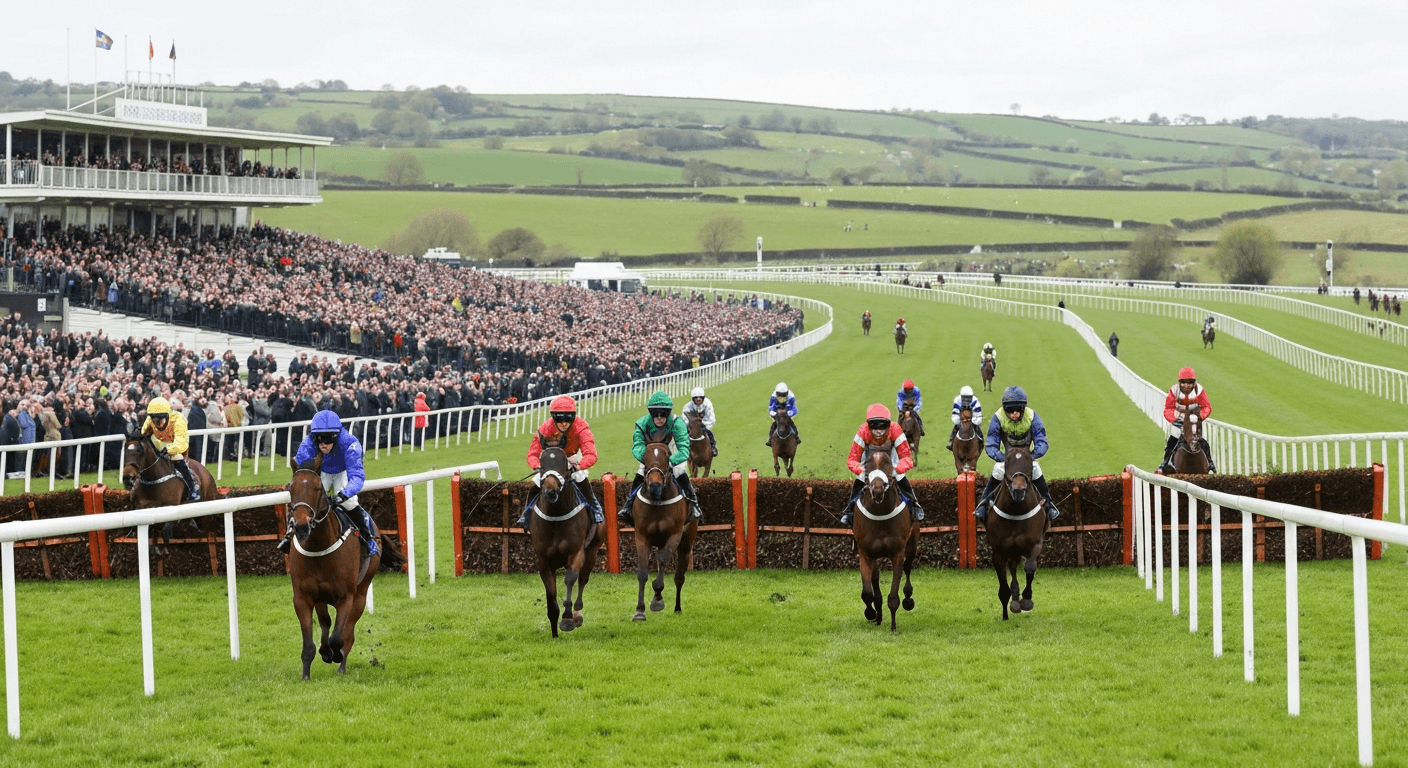
Fairyhouse Racecourse: The Complete Guide
Fairyhouse (Ratoath, Co. Meath) in full: the home of the Irish Grand National on Easter Monday, the Winter Festival Grade 1s, the wide galloping track, the winners with their rolls of honour, tickets, travel, venue hire and how to visit.
Read moreIrish Grand National Winners: The Full Roll of Honour (1970-2026)
Every Irish Grand National winner since 1970 - horse, age, starting price, jockey and trainer - with the trends that emerge across the full roll of honour. Source-verified.
Read moreThe History of Fairyhouse
How a Ward Union hunt meeting in Co. Meath grew into the home of the Irish Grand National, from Sir Robert Peel in 1870 to the modern Easter and Winter Festivals.
Read moreResearch the field with the AI Race Predictor
Our model publishes calibrated win-probability estimates for UK races — a second opinion to understand a race, not tips. It's open about its record: it doesn't beat the market, and we show exactly how it does.
Work it out & learn the basics
Gamble Responsibly
Gambling should be entertaining and not seen as a way to make money. Never bet more than you can afford to lose. If you or someone you know has a gambling problem, help and support is available.