
Founder & Editor · Last reviewed 2026-07-13
Betting at Kilbeggan: the honest starting point
Kilbeggan is a small jumps course in Co. Westmeath that punches well above its size. It is described as the most successful one-day meeting in Ireland outside the festival tracks, running around eight to ten mostly evening fixtures between April or May and September. The full course guide covers the visit in detail. This guide is written for punters who want to understand how the place bets, rather than to be handed a tip.
There are no tips here, and one honest theme runs through everything below. Over time, backing favourites to starting price loses money, because the price carries the bookmaker's margin, the overround built into every set of odds. That holds at Kilbeggan exactly as it holds everywhere else. Nothing on this page is a system, an angle for profit, or a way to beat the bookmaker. It is context to help you read a race more fully and judge value for yourself.
Kilbeggan has been a National Hunt track only since 1971, so every race is over hurdles or fences. That shapes the whole betting character of the course: there are no stalls and no draw to worry about, and the questions that matter are stamina, jumping and whether a horse handles a sharp, turning circuit. The feature of the year is the Midlands National, a Listed handicap chase in July worth around €100,000, run in front of the biggest crowd of the season.
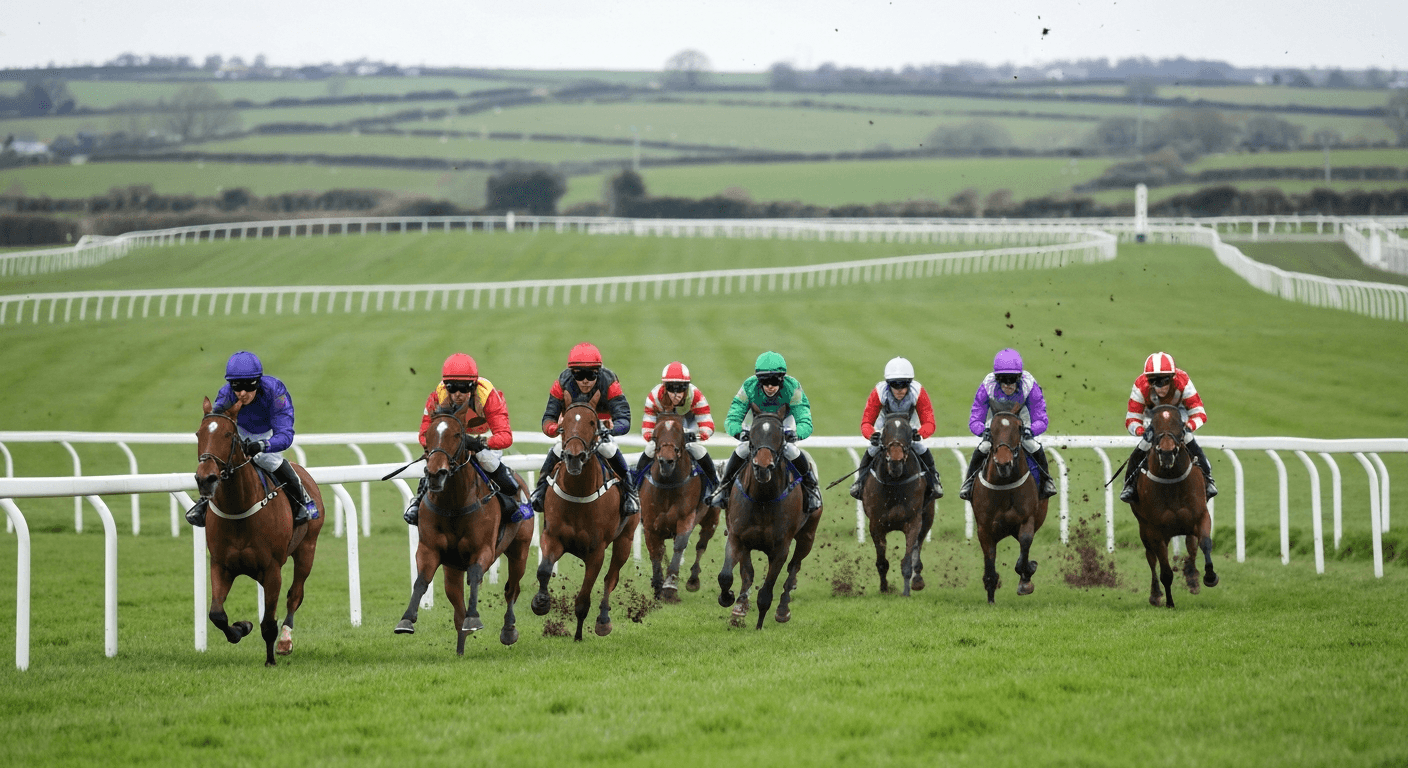
If you are betting from home rather than on-course, Kilbeggan racing is broadcast live on Racing TV under its media-rights arrangement, so you can watch the fields, the ground and the way the races are run before deciding whether a price is worth taking. Watching how the track plays on the day is one of the more useful things a punter can do here, because a sharp, turning circuit rewards horses that are handily placed, and that is easier to judge with your own eyes than from the form book alone.
Betting should stay within what you can afford to lose. If it stops being fun, the gambling support service GamCare and the National Gambling Helpline are there to help. Treat any stake as the price of an afternoon's entertainment, never as a way to make money.
This guide covers what the sharp, turning track asks of a horse, the going through the season and why there is no draw factor at a jumps course, the trainer and jockey angles worth knowing, the honest picture on favourites and form, how the Midlands National meeting bets, and answers to common questions.
Where to Bet
Place your bets with a trusted, licensed bookmaker.

Promo code BETFRED50. New customers only. Register, deposit with a Debit Card, and place a first bet of £10+ at Evens (2.0)+ on Sports, to be settled within 7 days, to get £30 in Sports Free Bets and £20 in Bet Builder Free Bets within 24 hours of settlement. 7-day expiry. Eligibility & payment exclusions apply. Full T&Cs apply. Take Time to Think. BeGambleAware.org. 18+. Full T&Cs.

Promo code R30. New UK customers only, 18+. Register, deposit £10 or more, then place a £10 single cash bet at odds of 1/2 (1.5) or greater on any sports market (excluding Virtuals). Once the qualifying bet settles you get £30 in Free Bets (3 x £10) — the qualifying bet can win or lose. Free Bets are valid on any sports market excluding Virtuals, expire in 7 days, are non-withdrawable and must be used in full. Excluded deposit methods apply (including PayPal, Apple Pay, Skrill and NETELLER). Named bets such as Lucky 15 do not qualify. If you cash out the qualifying bet, or it is voided, you are no longer eligible for the offer. Ends 31.12.26. Full T&Cs apply. Please gamble responsibly. BeGambleAware.org. 18+. Full T&Cs.

Promo code BET40GET20. New UK customers, 18+. Register with the code and place a first bet of £40 or more at Evens (2.0) or greater. Receive 2 × £10 free bets: the first credited automatically once the qualifying bet settles, the second 24 hours later. Free bets must be placed at minimum odds of 4/1 (5.0), expire 24 hours after credit, and the free-bet stake is not returned with winnings. Debit card deposits only. Take Time to Think. BeGambleAware.org. 18+. T&Cs apply. Full T&Cs.

50% of your first-day net losses refunded as a free bet, capped at £25. New UK customers aged 18+ only. To qualify, deposit and place a first bet of £10 or more on any sport at minimum odds of evens (2.00), then place at least two further bets on different events, each worth at least 50% of your largest bet, all at evens (2.00) or greater. Losses are counted from your first settled bet until 23:59 the same day. Place a qualifying £10+ bet and you are guaranteed at least a £5 free bet. Bets placed at SP, void bets, cashed-out bets and bets struck with free bets do not count towards the offer. The free bet is credited the day after your qualifying bets settle and must be used within 7 days, after which it expires. It can be used at odds from 1/4 (1.25) up to 250/1 on singles and straight accumulators, but not on Trixie, Patent or Yankee style multiples. Free-bet stake is not returned with winnings. One offer per person, household, address, IP address and device. E-wallet deposits may not qualify, so check the cashier before depositing. Customers registered with GAMSTOP cannot claim. KYC identity verification must be completed before the free bet is credited. Take Time to Think. BeGambleAware.org. 18+. T&Cs apply. Full T&Cs.

New customers, 18+. Choose the sports bonus at sign-up, make a first deposit and receive a 100% bonus up to £50 in your Sports Bonus balance. To convert the bonus to cash, wager it 10x within 30 days. Single bets below Evens (2.00) do not qualify; accumulators do not qualify if any selection is below 1/2 (1.50). Virtual Sports, voided, cancelled, drawn, cashed-out and free-bet wagers do not count towards wagering. Only the first settled bet per event counts. Withdrawing before the wagering requirement is met forfeits the bonus balance including bonus winnings. Real-money funds are used before bonus funds. Deposits via Skrill or Neteller are not eligible. Not valid in conjunction with other promotions. Odds, bet and payment limits apply. 10bet general and promotion T&Cs apply. BeGambleAware.org. 18+. Full T&Cs.

New customers in Great Britain and Republic of Ireland, 18+. Place a £10 fixed-odds qualifying bet at minimum odds of 1/2 (1.50) — single or each-way (only the win part counts), pre-event or in-play, not cashed out early, within 28 days of opening the account. Receive up to £60 in bonuses credited over three days: 3 × £10 fixed-odds free bets (the first on settlement, then 24 and 48 hours later) plus 3 × £5 Total Goals FOOTBALL spread bets and 3 × £5 racing Winning Favourites spread bets, with a £1 racing Race Index spread bet as an extra on top. The spread bets need a full spread-betting account, opened within 28 days of the fixed-odds account and subject to Spreadex's eligibility and appropriateness checks. Free-bet stakes not returned with winnings; free bets valid 28 days from issue. IMPORTANT: the £5 credits are SPREAD bets — sports spread betting carries the risk that losses can exceed your stake. Sports spread-betting customers do not have Financial Ombudsman or FSCS recourse. Take Time to Think. BeGambleAware.org. 18+. T&Cs apply. Full T&Cs.

Promo code WELCOME15, entered under My Bonuses after registering. New UK customers, 18+. Place a first qualifying bet of at least £10 from your cash balance at odds of evens (2.0) or greater within 7 days of opening the account. Once the qualifying bet fully settles you receive £15 in free bets, credited as 3 x £5 tokens with set uses: one £5 accumulator free bet (minimum 4 legs, each leg at 2/5 or bigger), one £5 sports free bet (any market at evens or bigger) and one £5 Sub Cover free bet (selected football player markets at evens or bigger). Free-bet stakes are not returned with winnings. Free bets expire 7 days after they are credited. Void, cashed-out and partially cashed-out bets do not qualify. One offer per customer. Confirm the current terms on BetGoodwin's own welcome-offer page before claiming. Take Time to Think. BeGambleAware.org. 18+. T&Cs apply. Full T&Cs.

New UK customers, 18+. Minimum deposit £10. Place a £10 qualifying single at minimum odds of 1/2 (1.50), settled within 14 days. Receive £30 in free bets (stake not returned), split £20 for sportsbook use (2 x £10) and £10 for Bet Builder only (2 x £5); Bet Builder does not cover horse racing. Free bets must be accepted within 7 days and expire 7 days after acceptance. No promo code required. Best Odds Guaranteed on UK & Irish racing, subject to having staked over £25 in the previous seven days. Operated by LiveScore Betting and Gaming (Gibraltar) Ltd, UKGC 56859. Confirm the current terms on LiveScore Bet's own promotions page before claiming. Take Time to Think. BeGambleAware.org. 18+. T&Cs apply. Full T&Cs.
18+. BeGambleAware.org
What the sharp, turning circuit asks
Kilbeggan is a sharp, right-handed, undulating oval of about nine furlongs, roughly one mile and one furlong round. The circuit turns almost throughout, so a horse is rarely running on a true straight line. There is a notably sharp bend after the penultimate fence, and then an uphill run-in of about 300 yards to the line. Those two features, the tight turn late on and the climb to finish, do most of the work in deciding what kind of horse wins here.
The demand the layout makes
Because the track is short, sharp and always turning, it favours speedy, handy types that can lie close to the pace and travel through their race. Long-striding gallopers that need a big, sweeping course to build momentum are at a disadvantage, and dour, one-paced stayers who stay on from the back can find the race is over before they get involved. The uphill run-in then asks a question of stamina at the very end, so a horse needs enough petrol to see out the climb after being ridden with speed for most of the way. In plain terms, the profile that suits Kilbeggan is a nippy front-runner or prominent racer with the toughness to keep going up the hill.
That is a description of the demand the course makes, not an instruction to back front-runners. Plenty of handy horses still get beaten here, and the market already knows the track suits speed. The point is to understand why a certain type of horse tends to be involved at the finish, so you can read a race with the layout in mind.
Chase track and hurdles track
The two courses are not the same shape. The chase track carries six fences per circuit and runs outside the tighter inner hurdles loop, which has around five flights per circuit. Jockeys regard the hurdles course as particularly tight and trickier to ride than the chase track, because the inner loop turns even more sharply. That matters when you are weighing up a horse's chance: a strong traveller with a bit of pace and a low mistake count has more in its favour on the tight hurdles course than a big, bold-jumping galloper who wants more room.
A proving ground
For all that it is a small country track, Kilbeggan has been an early stop for some very good horses. Both of the 2016 Cheltenham Festival winners Cause of Causes and Tiger Roll won at Kilbeggan earlier in their careers, and Freewheelin Dylan won the 2020 Midlands National before landing the Irish Grand National the following year. That history is a useful reminder that a horse handling this sharp, quirky circuit is doing something meaningful, not just picking up an easy race. It does not make Kilbeggan form a shortcut to backing future stars, but it does mean a well-touted young jumper travelling and jumping well here is passing a genuine test.
All of this agrees with the complete guide's account of the track. Kilbeggan rewards handiness, accurate jumping and a change of gear off a sharp bend, and it asks for stamina up the final climb. Read those demands as a filter on which runners the circuit suits, never as a shortcut to a winner.
Going through the season, and why there is no draw here
Kilbeggan is a summer jumps track. Its season runs through the warmer months, from April or May to September, and the fixtures are predominantly evening meetings. That seasonal shape is worth keeping in mind when you read form, because a summer jumping campaign is a different test from a midwinter one, and horses that come alive on quicker ground in the evening light are a familiar type here. A horse whose best form comes on heavy midwinter ground is not necessarily the same proposition under summer conditions at Kilbeggan, so it pays to check when and on what a runner has done its winning.
Winning times, and what they are worth
Kilbeggan does not publish a full set of all-time course records by distance, so this is not a track where you can lean on a clean standard-times table. What is available is the winning time of individual runnings of the feature race. The Midlands National is run over 3 miles 1 furlong, and its recent times show how much ground conditions and tactics move the clock:
| Midlands National | Year | Winning time |
|---|---|---|
| Patton (fastest recent) | 2006 | 5:16.60 |
| Amirite | 2025 | 6:13.20 |
| Foxy Jacks (slowest recent) | 2023 | 6:44.90 |
The gap between 5:16.60 and 6:44.90 over the same trip is enormous, and it reflects ground, pace and how the race was run far more than the raw merit of the horses. Treat a single winning time as a product of the day, not as an absolute. For betting purposes at Kilbeggan, the going description and the likely pace of a race tell you more than any time figure will.
Why there is no draw factor here
At many Flat tracks the draw, the stall a horse starts from, can carry a measurable bias. Kilbeggan has none of that. It has been a National Hunt course only since 1971, so every race is over hurdles or fences, started by tape rather than from stalls. There is no draw to analyse, no low-numbers or high-numbers edge, and any talk of a draw bias here would be meaningless. The tight, right-handed shape of the circuit affects every runner in the same way, whatever position they line up in.
What does the turning shape reward, if not a draw? Handiness and a good position early. On a sharp, always-turning track, a horse ridden close to the pace saves ground on the bends and is not left with too much to do off the final turn and up the hill. That is a matter of how a horse is ridden and how it travels, and it is priced into the market like everything else. It is not an edge, and it is certainly not a way to beat the starting price.
Trainer and jockey angles at Kilbeggan
A handful of names recur in the Kilbeggan results, and knowing who has a record there is part of reading the form intelligently. It is worth being clear at the outset what that knowledge is and is not. A strong yard signals a horse worth a close look, but the price already reflects that. The honest puzzle is rarely whether a fashionable stable is running well, it is which of its runners, and at what odds.
Trainers with a Midlands National record
The feature race is the clearest window on who does well at the track, because its roll of honour is recorded in detail. Over the last twenty renewals, Noel Meade is the leading trainer with three wins, and three other yards have two apiece.
| Trainer | Midlands National wins | Horses |
|---|---|---|
| Noel Meade | 3 | Patton (2006), Tulsa Jack (2016), Idas Boy (2024) |
| Gordon Elliott | 2 | Rogue Angel (2018), Hurricane Georgie (2022) |
| Mouse Morris | 2 | Cristy's Picnic (1997), Foxy Jacks (2023) |
| Philip Fenton | 2 | n/a |
Those are the trainers with a proven feel for the race and, by extension, for the demands of the track. Henry de Bromhead took the 2025 running with Amirite, and other well-known jumps yards appear regularly across the card. A record like this tells you a stable knows how to place and prepare a horse for Kilbeggan. It does not tell you the horse is overpriced. The big yards send a lot of runners to a track like this, and plenty of them get beaten.
Jockeys to note
Jack Kennedy is the leading rider in the modern Midlands National with two wins, on Rogue Angel in 2018 and Hurricane Georgie in 2022. Beyond the feature, Kilbeggan has drawn the best in the weighing room over the years: Ruby Walsh, AP McCoy and Barry Geraghty have all ridden there. A top jockey booking is a fair signal that connections fancy their chance and want the tactical nous to get a handy horse into position on a sharp track. It is a signal the market reads too, so it shows up in the price rather than handing you value.
Course specialists
The pattern most worth watching at a tight, quirky track like Kilbeggan is the course specialist, the horse that keeps turning up in the frame here. Some horses simply take to the sharp turns, the uphill finish and the summer ground, and repeat their form at the track season after season. Pakens Rock, trained by Darren Collins, is a good example: a triple Kilbeggan winner, including a hurdles success in spring 2025. When a horse has won here more than once, that is genuine course form worth respecting.
The caveat is the same one that runs through this guide. Proven course form is context, not a licence to bet blindly. A horse that has won twice at Kilbeggan will usually go off at a price that already reflects that record, and course specialists get beaten like everyone else when the ground, the trip or the opposition turns against them. Use trainer, jockey and course-form records to understand who has a live chance and why, then judge whether the odds on offer are worth taking. Never treat any of these records as a profitable angle in itself, because none of them beats starting price over time.
Favourites and form: the honest picture
The single most useful thing to understand about betting at Kilbeggan is also the least comfortable: backing favourites does not make money. Over time, backing every favourite to starting price produces a loss, because the SP carries the bookmaker's margin, the overround built into the prices. This is a well-established feature of betting markets, not a Kilbeggan quirk, and it holds across every track and every code.
Hurdle favourites and chase favourites are not the same
One descriptive pattern is worth knowing at Kilbeggan. Over recent seasons, favourites on the hurdle track have won a good deal more often than favourites over fences.
| Code | Recent favourite strike rate |
|---|---|
| Hurdles | Higher |
| Chases | Lower |
That difference makes intuitive sense. The chase track and the tight inner hurdles course are quirky, and a fence-by-fence test on a sharp circuit gives more chances for the market's fancied horse to come unstuck. It is a genuine pattern in how the results have fallen, and it is useful for reading a race with realistic expectations.
It is not a betting system. A higher favourite strike rate on the hurdles does not mean hurdle favourites are profitable to back. Even a favourite that wins a third of its races still loses money to starting price once the margin is taken out, and a "back all the hurdle favourites" plan would bleed away over a season just like any other mechanical angle. The pattern tells you where the market is more reliable, not where there is free money.
The honest bottom line
Nothing in this guide is advice, and no staking method, system or "back the favourite" approach beats starting price in the long run. What Kilbeggan offers the thinking punter is context: a sharp, turning circuit that rewards handy, speedy jumpers; an uphill finish that asks a stamina question at the death; course specialists whose records are worth respecting; and a feature race that regularly throws up big-priced winners. Use those factors to understand a race more fully and to judge whether a price is worth taking, then bet only what you can afford to lose. If betting stops being fun, GamCare and the National Gambling Helpline can help. Treat any stake as the cost of the entertainment, not a route to income.
How the Midlands National meeting bets
The betting focus of the Kilbeggan year falls on one evening in July. The Midlands National is a Listed handicap chase over 3 miles 1 furlong, worth around €100,000, first run in 1997 when Cristy's Picnic won it for Mouse Morris, with film director Neil Jordan among the winning owners. Its trip was extended to the current 3 miles 1 furlong in 2013, and it is widely regarded as a stepping stone towards the Galway Plate a couple of weeks later. That link to Galway matters when you read the form: horses are often campaigned here with the bigger handicap in mind, so the race regularly brings together improving types on their way up the weights. In 2026 the meeting is scheduled for Friday 10 July, with gates opening at 3pm and the first race at approximately 4:30pm, mirroring the 2025 running on Friday 11 July.
Reading a big handicap
The Midlands National is a handicap, which is the key to how it bets. Handicaps are built to bring horses together on the weights, so the field is competitive by design and the results spread across a wide band of prices. Kilbeggan's feature does exactly that: Idas Boy landed the 2024 running at 40/1, and Freewheelin Dylan, who won the 2020 renewal, went on to take the 2021 Irish Grand National at 150/1. Big-priced winners in a race like this are not a fluke to be explained away, they are what a well-framed handicap is supposed to produce.
That has a plain implication for how you approach the race. The favourite is beaten far more often than it wins, and picking through eighteen or twenty runners in a competitive handicap is genuinely hard. None of that is a method for beating the bookmaker. It is a reminder that the same honest maths applies here as everywhere: backing the favourite blind loses to starting price over time, and the wide spread of winning prices is a feature of the handicap, not an angle to exploit.
The rest of the card
The Midlands National does not run alone. The July meeting also stages the Writech Handicap Hurdle, worth €30,000 over 2 miles 3 furlongs, and the Belvedere House and Gardens Galway Plate Trial, a handicap chase that points ahead to the bigger prize at Ballybrit. Both are competitive handicaps in their own right, so they bet the same way as the feature: deep fields, honest prices and no shortcut to a winner. Off the track, the day carries a Sustainable Style Ladies Competition and the usual family and music attractions, but for the punter the whole card is a run of hard handicaps to be read on their merits.
Frequently Asked Questions
Share this article
More about this racecourse
All kilbeggan guides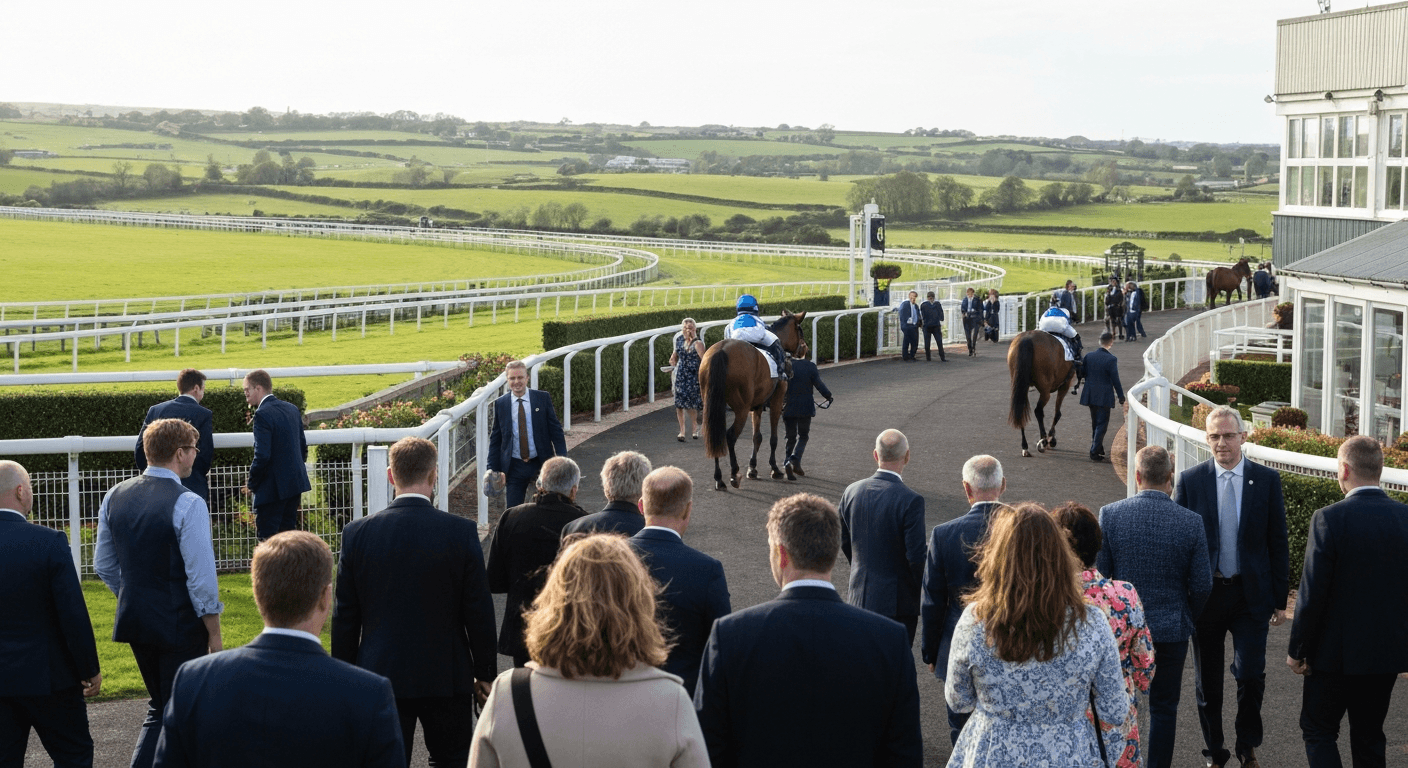
A Day Out at Kilbeggan Racecourse
Plan a day out at Kilbeggan Racecourse in Co. Westmeath: getting there, tickets, food and drink, the Midlands National meeting and first-visit tips.
Read more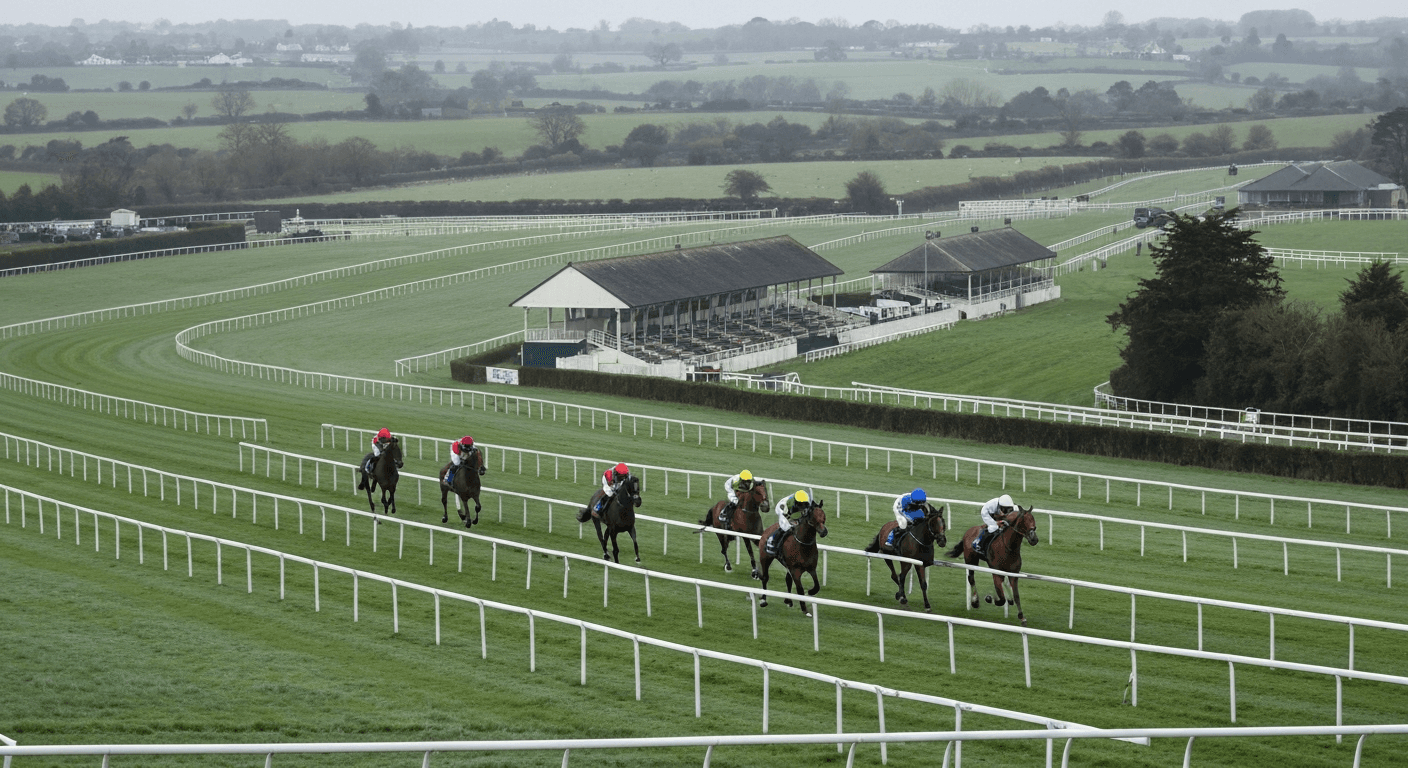
The History of Kilbeggan Racecourse
Racing at Kilbeggan from 1840 to the Loughnagore course of today, the switch to jumps in 1971, the Midlands National and the horses who made their name here.
Read more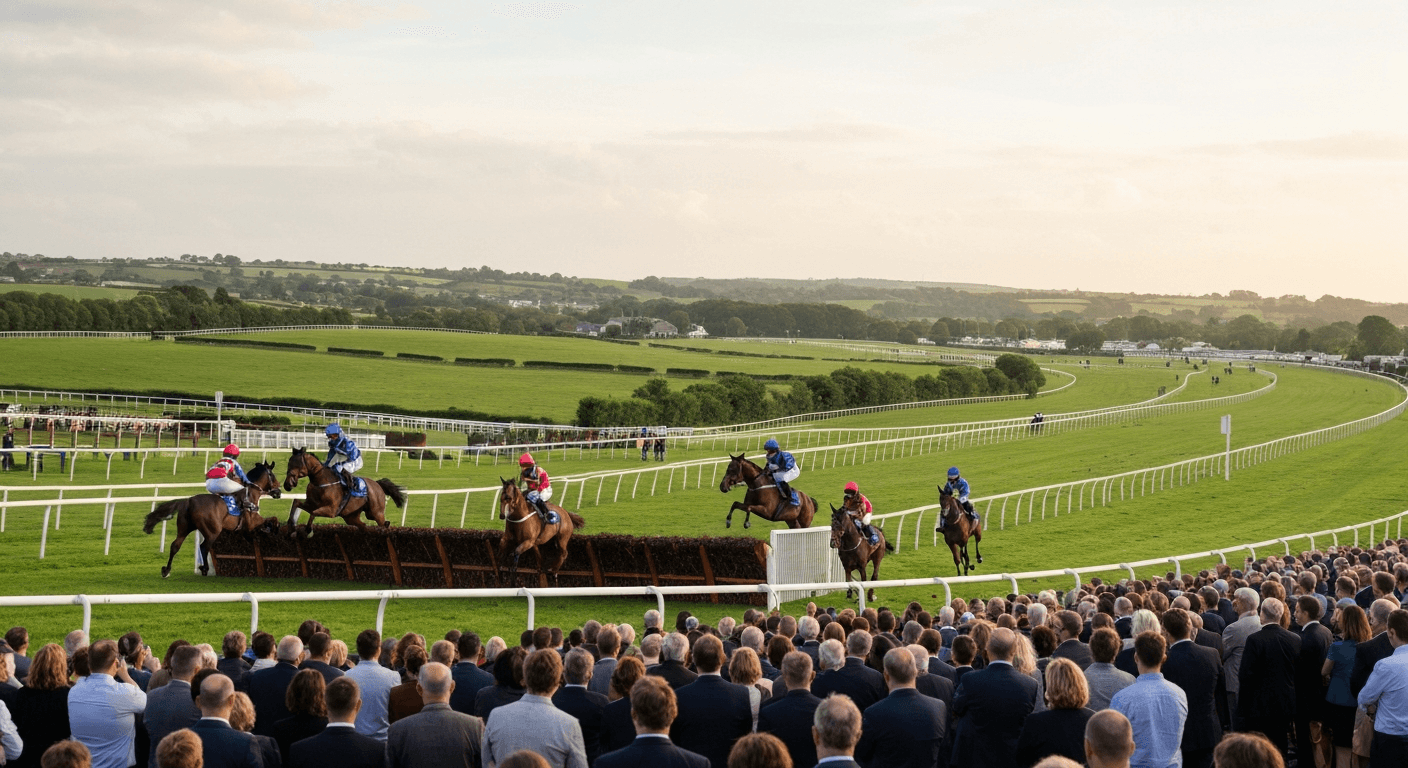
Kilbeggan Racecourse: The Complete Guide
Kilbeggan Racecourse in Co. Westmeath is Ireland's midlands jumps track, home of the Midlands National, plus tickets, travel and how to visit.
Read moreResearch the field with the AI Race Predictor
Our model publishes calibrated win-probability estimates for UK races — a second opinion to understand a race, not tips. It's open about its record: it doesn't beat the market, and we show exactly how it does.
Work it out & learn the basics
Gamble Responsibly
Gambling should be entertaining and not seen as a way to make money. Never bet more than you can afford to lose. If you or someone you know has a gambling problem, help and support is available.