
Founder & Editor · Last reviewed 2026-07-13
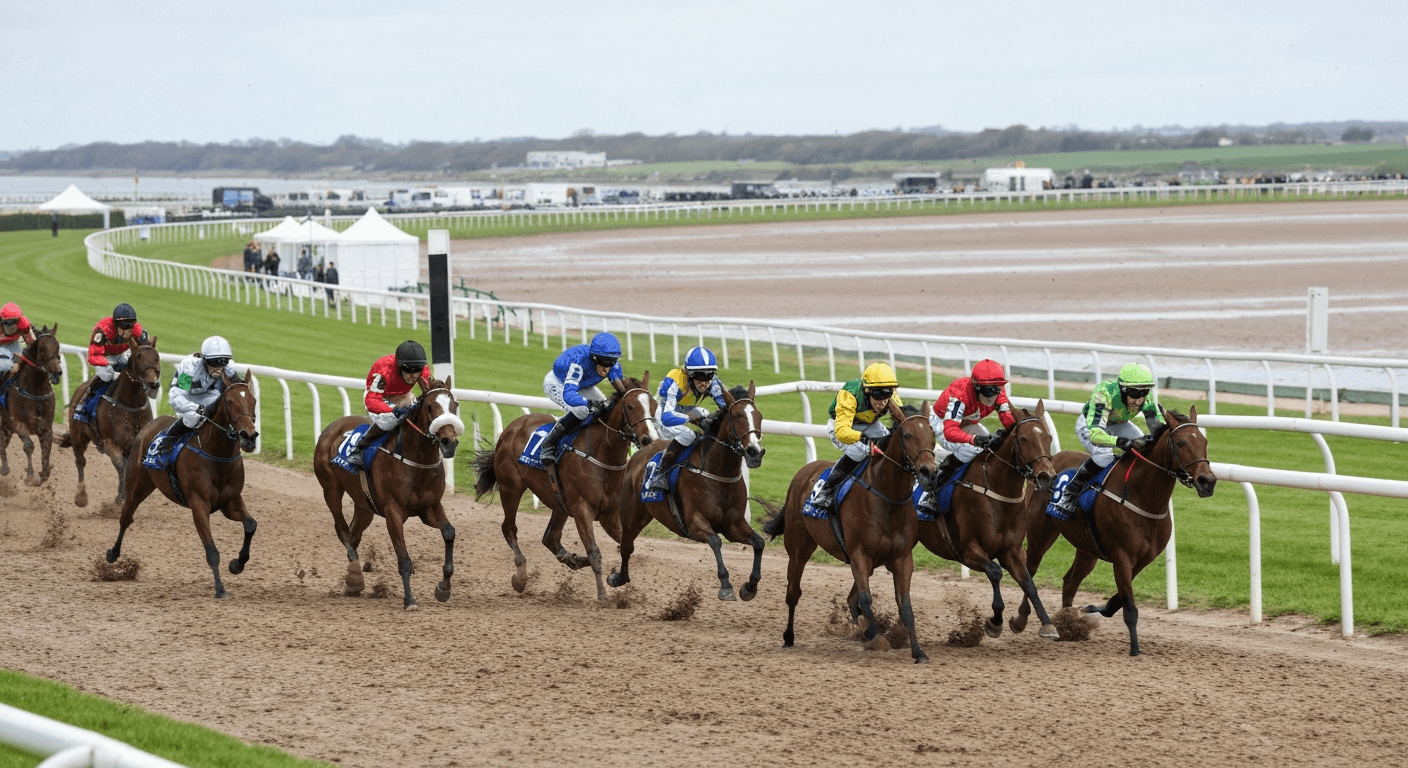
Laytown is unlike anywhere else you will bet on a horse. It is the only race meeting in Europe run on a beach under the Rules of Racing, staged on the tidal strand at Laytown, Co. Meath, on a single day each September. For 364 days a year the course does not exist. On race day a straight, near-level track is measured out on the wet sand left by the retreating tide, a temporary running rail goes up, and the whole thing comes down again afterwards. Everything about how a card here bets flows from that.
Nothing in this guide is a tip, and none of it describes a way to beat the bookmaker. Over time, backing favourites loses money to starting price, and the same is true of every mechanical betting method. The track traits and form notes set out below are context that helps you read a race, not edges that turn a profit, and at a once-a-year fixture on ground that changes every year they are looser still. Betting is a cost paid for entertainment, so only stake what you can afford to lose, and treat every figure here as information rather than advice. If a bet stops being fun, the GamCare helpline and the tools your bookmaker offers are there to help.
The betting shape of Laytown is set by a few plain facts. All races are six or seven furlongs on a straight course. Fields are small. The wet sand rides firm and fast, so it suits a horse with speed, and front-runners tend to fare better than hold-up types. There is no conventional draw bias. Beyond that, the unique conditions make Laytown genuinely hard to predict, which is worth keeping front of mind before any stake. For the wider picture of the meeting, see the full Laytown Racecourse guide.
This guide covers what the track asks of a horse, the sand and the draw, the trainer and jockey angles the record supports, the honest picture on favourites and form, how the day bets, and answers to common questions.
Where to Bet
Place your bets with a trusted, licensed bookmaker.

Promo code BETFRED50. New customers only. Register, deposit with a Debit Card, and place a first bet of £10+ at Evens (2.0)+ on Sports, to be settled within 7 days, to get £30 in Sports Free Bets and £20 in Bet Builder Free Bets within 24 hours of settlement. 7-day expiry. Eligibility & payment exclusions apply. Full T&Cs apply. Take Time to Think. BeGambleAware.org. 18+. Full T&Cs.

Promo code R30. New UK customers only, 18+. Register, deposit £10 or more, then place a £10 single cash bet at odds of 1/2 (1.5) or greater on any sports market (excluding Virtuals). Once the qualifying bet settles you get £30 in Free Bets (3 x £10) — the qualifying bet can win or lose. Free Bets are valid on any sports market excluding Virtuals, expire in 7 days, are non-withdrawable and must be used in full. Excluded deposit methods apply (including PayPal, Apple Pay, Skrill and NETELLER). Named bets such as Lucky 15 do not qualify. If you cash out the qualifying bet, or it is voided, you are no longer eligible for the offer. Ends 31.12.26. Full T&Cs apply. Please gamble responsibly. BeGambleAware.org. 18+. Full T&Cs.

Promo code BET40GET20. New UK customers, 18+. Register with the code and place a first bet of £40 or more at Evens (2.0) or greater. Receive 2 × £10 free bets: the first credited automatically once the qualifying bet settles, the second 24 hours later. Free bets must be placed at minimum odds of 4/1 (5.0), expire 24 hours after credit, and the free-bet stake is not returned with winnings. Debit card deposits only. Take Time to Think. BeGambleAware.org. 18+. T&Cs apply. Full T&Cs.

50% of your first-day net losses refunded as a free bet, capped at £25. New UK customers aged 18+ only. To qualify, deposit and place a first bet of £10 or more on any sport at minimum odds of evens (2.00), then place at least two further bets on different events, each worth at least 50% of your largest bet, all at evens (2.00) or greater. Losses are counted from your first settled bet until 23:59 the same day. Place a qualifying £10+ bet and you are guaranteed at least a £5 free bet. Bets placed at SP, void bets, cashed-out bets and bets struck with free bets do not count towards the offer. The free bet is credited the day after your qualifying bets settle and must be used within 7 days, after which it expires. It can be used at odds from 1/4 (1.25) up to 250/1 on singles and straight accumulators, but not on Trixie, Patent or Yankee style multiples. Free-bet stake is not returned with winnings. One offer per person, household, address, IP address and device. E-wallet deposits may not qualify, so check the cashier before depositing. Customers registered with GAMSTOP cannot claim. KYC identity verification must be completed before the free bet is credited. Take Time to Think. BeGambleAware.org. 18+. T&Cs apply. Full T&Cs.

New customers, 18+. Choose the sports bonus at sign-up, make a first deposit and receive a 100% bonus up to £50 in your Sports Bonus balance. To convert the bonus to cash, wager it 10x within 30 days. Single bets below Evens (2.00) do not qualify; accumulators do not qualify if any selection is below 1/2 (1.50). Virtual Sports, voided, cancelled, drawn, cashed-out and free-bet wagers do not count towards wagering. Only the first settled bet per event counts. Withdrawing before the wagering requirement is met forfeits the bonus balance including bonus winnings. Real-money funds are used before bonus funds. Deposits via Skrill or Neteller are not eligible. Not valid in conjunction with other promotions. Odds, bet and payment limits apply. 10bet general and promotion T&Cs apply. BeGambleAware.org. 18+. Full T&Cs.

New customers in Great Britain and Republic of Ireland, 18+. Place a £10 fixed-odds qualifying bet at minimum odds of 1/2 (1.50) — single or each-way (only the win part counts), pre-event or in-play, not cashed out early, within 28 days of opening the account. Receive up to £60 in bonuses credited over three days: 3 × £10 fixed-odds free bets (the first on settlement, then 24 and 48 hours later) plus 3 × £5 Total Goals FOOTBALL spread bets and 3 × £5 racing Winning Favourites spread bets, with a £1 racing Race Index spread bet as an extra on top. The spread bets need a full spread-betting account, opened within 28 days of the fixed-odds account and subject to Spreadex's eligibility and appropriateness checks. Free-bet stakes not returned with winnings; free bets valid 28 days from issue. IMPORTANT: the £5 credits are SPREAD bets — sports spread betting carries the risk that losses can exceed your stake. Sports spread-betting customers do not have Financial Ombudsman or FSCS recourse. Take Time to Think. BeGambleAware.org. 18+. T&Cs apply. Full T&Cs.

Promo code WELCOME15, entered under My Bonuses after registering. New UK customers, 18+. Place a first qualifying bet of at least £10 from your cash balance at odds of evens (2.0) or greater within 7 days of opening the account. Once the qualifying bet fully settles you receive £15 in free bets, credited as 3 x £5 tokens with set uses: one £5 accumulator free bet (minimum 4 legs, each leg at 2/5 or bigger), one £5 sports free bet (any market at evens or bigger) and one £5 Sub Cover free bet (selected football player markets at evens or bigger). Free-bet stakes are not returned with winnings. Free bets expire 7 days after they are credited. Void, cashed-out and partially cashed-out bets do not qualify. One offer per customer. Confirm the current terms on BetGoodwin's own welcome-offer page before claiming. Take Time to Think. BeGambleAware.org. 18+. T&Cs apply. Full T&Cs.

New UK customers, 18+. Minimum deposit £10. Place a £10 qualifying single at minimum odds of 1/2 (1.50), settled within 14 days. Receive £30 in free bets (stake not returned), split £20 for sportsbook use (2 x £10) and £10 for Bet Builder only (2 x £5); Bet Builder does not cover horse racing. Free bets must be accepted within 7 days and expire 7 days after acceptance. No promo code required. Best Odds Guaranteed on UK & Irish racing, subject to having staked over £25 in the previous seven days. Operated by LiveScore Betting and Gaming (Gibraltar) Ltd, UKGC 56859. Confirm the current terms on LiveScore Bet's own promotions page before claiming. Take Time to Think. BeGambleAware.org. 18+. T&Cs apply. Full T&Cs.
18+. BeGambleAware.org
What the Track Asks
Laytown is run on the beach at low tide, on a straight course that follows only the slight natural curve of the bay and is close to level throughout. Since the safety reforms that followed 1994, every race is six or seven furlongs, with the full temporary course measuring about seven furlongs. There are no permanent rails and no permanent markings of any kind: a running rail is put up for the meeting and taken down once the racing is over. That is the first thing to hold in mind, because it means the track a horse runs on has no settled history to lean on.
Firm, fast sand
The wet, compacted sand left by the retreating tide rides fairly firm and fast. In practice that favours fast-ground horses, the type with natural speed rather than a grinding stayer who wants give underfoot. A horse whose best turf form comes on soft ground is a different proposition on Laytown's surface, and that is a demand to weigh rather than a selection to make.
Front-runners over hold-up types
Over both the six and seven furlong trips, front-runners are favoured and hold-up horses tend to fare poorly. On a straight, firm sand course with small fields, a horse that can bowl along up front is not giving away ground it then has to make up, whereas a closer is asking a lot to reel in the leaders late. This describes how races here tend to unfold; it is not a cue to back the pace-setter blind, because the market sees the same thing.
Experience of the sand
The kickback off the sand, the tide-set conditions and a track that changes each year all make Laytown hard to predict, and course or beach experience genuinely counts. A horse that has handled the strand before, and a jockey who has ridden it, carry a familiarity that first-timers lack. That is worth noting as context. It is not a number you can price an edge from.
The Sand and the Draw
The surface is the whole story at Laytown, and it is not a going report in the usual sense. There is no watered turf and no official good-to-soft; there is the wet sand the tide leaves behind, which rides firm and fast. It differs slightly every year, and organisers drain excess water from the course during the meeting, a practice brought in after heavy rain made the sand unsafe and forced the 2002 abandonment. Establish that you are dealing with a firm, quick surface, then read each horse against it.
| Factor | At Laytown |
|---|---|
| Surface | Wet tidal sand, rides firm and fast |
| Year-to-year | Changes slightly each year; no settled record |
| Suits | Fast-ground horses with natural speed |
| Draw bias | None worth betting to (see below) |
| Course record / standard time | n/a (once-a-year beach track) |
The draw
There is no conventional draw bias at Laytown, and the reasons are built into the fixture. Fields are small, the sand differs slightly from one year to the next, and the runners race in a straight line rather than round a bend where an inside berth would tell. Percentage-of-rivals-beaten figures have leaned towards high draws, but that is most likely a small-sample effect from a track that races once a year, not a signal you can trust. Treat the draw as close to irrelevant here, and be wary of any source that reads a firm bias into so few runnings.
Using it
The sensible order is simple: the surface first, the draw barely at all. Judge which horses are proven with speed on a fast, quick surface, weigh whether they have handled the sand before, and leave the stall number out of it. None of that is a system. It is a way of understanding a race that is unusually hard to read, and every note above is context rather than an edge over starting price.
Trainer and Jockey Angles
A once-a-year meeting of up to six races does not build the kind of trainer and jockey record you get at a track running through the season, so there is little in the way of course strike rates to lean on here. What Laytown does have is a roll of good riders who have won on the strand, and a handful of connections drawn to the meeting for its own sake. Treat all of it as background rather than a formula.
Jockeys who have won here
Completing a Laytown win is often described as one of the hardest boxes for a jockey to tick, simply because there are only around six races a year to do it in. Champion riders who have managed it include Colin Keane, Ruby Walsh, Joseph O'Brien, Pat Smullen and Declan McDonogh. When Mark Enright rode a winner here in 2021 it completed his set of every Irish racecourse, which tells you how prized and how scarce a Laytown victory is.
| Rider | Note |
|---|---|
| Colin Keane | Champion Flat jockey; among Laytown's winning riders |
| Ruby Walsh | Won at Laytown during his riding career |
| Joseph O'Brien | Won here as a rider |
| Pat Smullen | Among the champions on the Laytown roll |
| Declan McDonogh | Long-serving Flat rider; a Laytown winner |
Connections drawn to the strand
Trainer Jamie Osborne is associated with the meeting through the Melbourne 10 ownership group, which buys some horses specifically to run at Laytown. That is a reminder that part of the field is aimed at the strand deliberately, which can matter when you are weighing a runner's readiness for these unusual conditions.
The honest use of any of this is narrow. A good jockey or a purpose-aimed runner signals a live chance, but that quality is already in the price, and with so few races run each year none of these names amounts to a profitable angle. They are context for reading the card, not a shortcut.
Favourites, Form and the Honest Picture
The unusual setting can make it feel as though local knowledge ought to hand a sharp punter an edge here. It does not, and it is worth being plain about why.
What the favourite returns
Over time, backing favourites blindly loses money to starting price. That holds across racing as a whole, and there is nothing about Laytown that overturns it. If anything the conditions cut the other way: the sand, the tide and a track that changes each year make the meeting genuinely hard to predict, so the reliable read on a favourite is harder to come by, not easier. No system, and no policy of backing favourites, is profitable over the long run.
| Measure | At Laytown |
|---|---|
| Backing favourites blind | Loses to SP over time |
| Any mechanical system | Not profitable over the long run |
| Predictability of the card | Low; unique conditions, changes yearly |
Reading the form
A few track-specific points help when you weigh a Laytown card:
- Speed on firm sand. The surface rides fast, so a horse with natural speed is better suited than one who wants give in the ground.
- Prominence pays its way. Front-runners are favoured and hold-up horses fare poorly on the straight strand, so note where the pace is likely to come from.
- Experience of the strand counts. A horse and rider who have handled the sand before carry a familiarity first-timers lack.
- Leave the draw out of it. There is no reliable draw bias, so it is not a factor to bet to.
The honest bottom line
None of the above is an edge. Speed, prominence and course experience describe what tends to do well here; they do not turn a profit against the price, because the market weighs them too. Favourites lose to SP over time, and the only sound way to use any of this is to understand the races better, stake only what you can afford to lose, and treat every figure here as information rather than a tip. If your betting stops being entertainment, the GamCare helpline and your bookmaker's deposit limits and self-exclusion tools are there to use.
How the Day Bets
Laytown is a single day rather than a season, and the day itself, not any one contest, is the occasion. The point of the notes below is to understand how the card tends to unfold, not to offer a method for beating the bookmaker. The favourite loses backed blind here as everywhere, and the make-up of the programme does nothing to change that.
One card, up to six races
The meeting is a single annual fixture of up to six races, all handicaps, maidens and claiming or similar contests over six and seven furlongs. There are no Pattern or Graded races and nothing black-type, and prize money is modest. The 2025 card, on Thursday 4 September, featured six races including a claiming race, maidens and handicaps over the six and seven furlong trips. This is competitive, ordinary-class racing rather than a feature-race meeting, which is one more reason the field is hard to sort with confidence.
Race times set by the tide
The off-times at Laytown are dictated by the tide. The card is scheduled around low water so the strand is fully exposed and safe, which is why the times shift from year to year and can fall unusually late in the day for an Irish meeting. In 2025 the six races went off at 16:30, 17:05, 17:40, 18:10, 18:40 and 19:10. The 2026 fixture is set for Thursday 10 September; the precise off-times are confirmed closer to the day once the tide is known, so check them before making any plans around a particular race.
Reading the day
The pattern across the card is the same throughout. Small fields of competitive handicappers and maidens on firm sand, run on a track no one races on the rest of the year, make for a meeting that is enjoyable to bet through but genuinely difficult to call. Use the surface, the likely pace and any course experience to read a result more clearly, never as a way to beat the bookmaker.
Frequently Asked Questions
Share this article
More about this racecourse
All laytown guides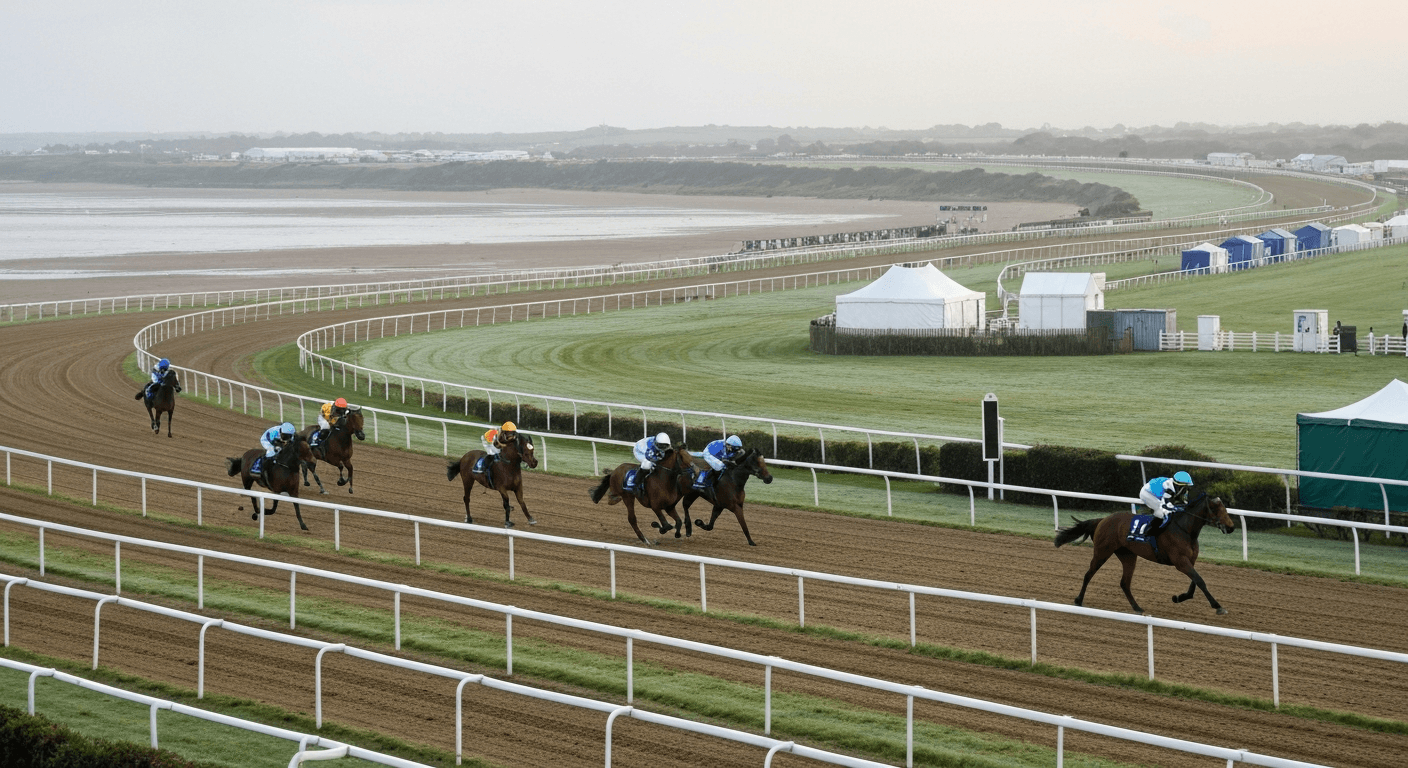
The History of Laytown Strand Races
How Laytown Strand Races grew from an 1868 sideshow to the Boyne Regatta into Ireland's only beach racing under Rules, reshaped by the 1994 tragedy.
Read more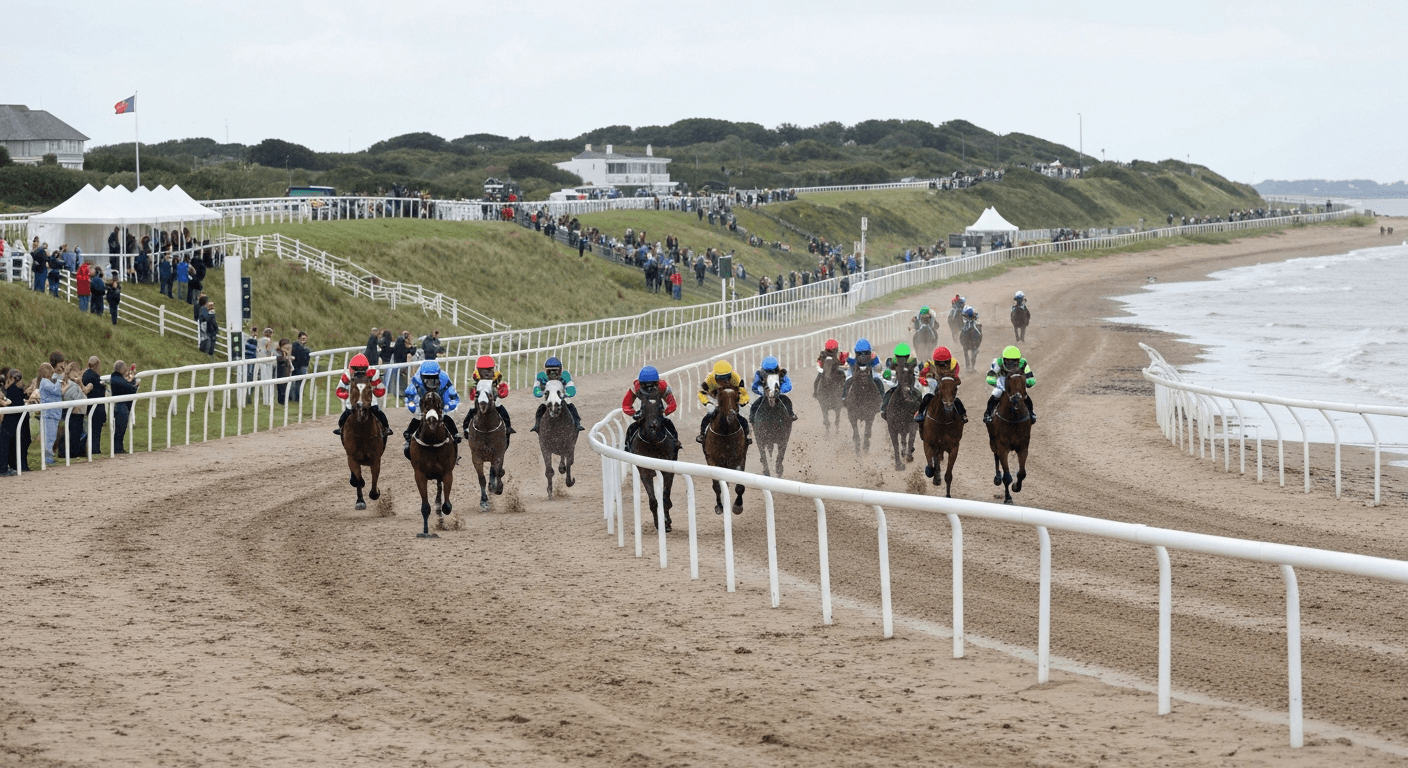
Laytown Racecourse: The Complete Guide
Laytown Racecourse guide: Europe's only beach meeting under Rules of Racing, on the Co. Meath strand each September, plus tickets, travel and how to visit.
Read more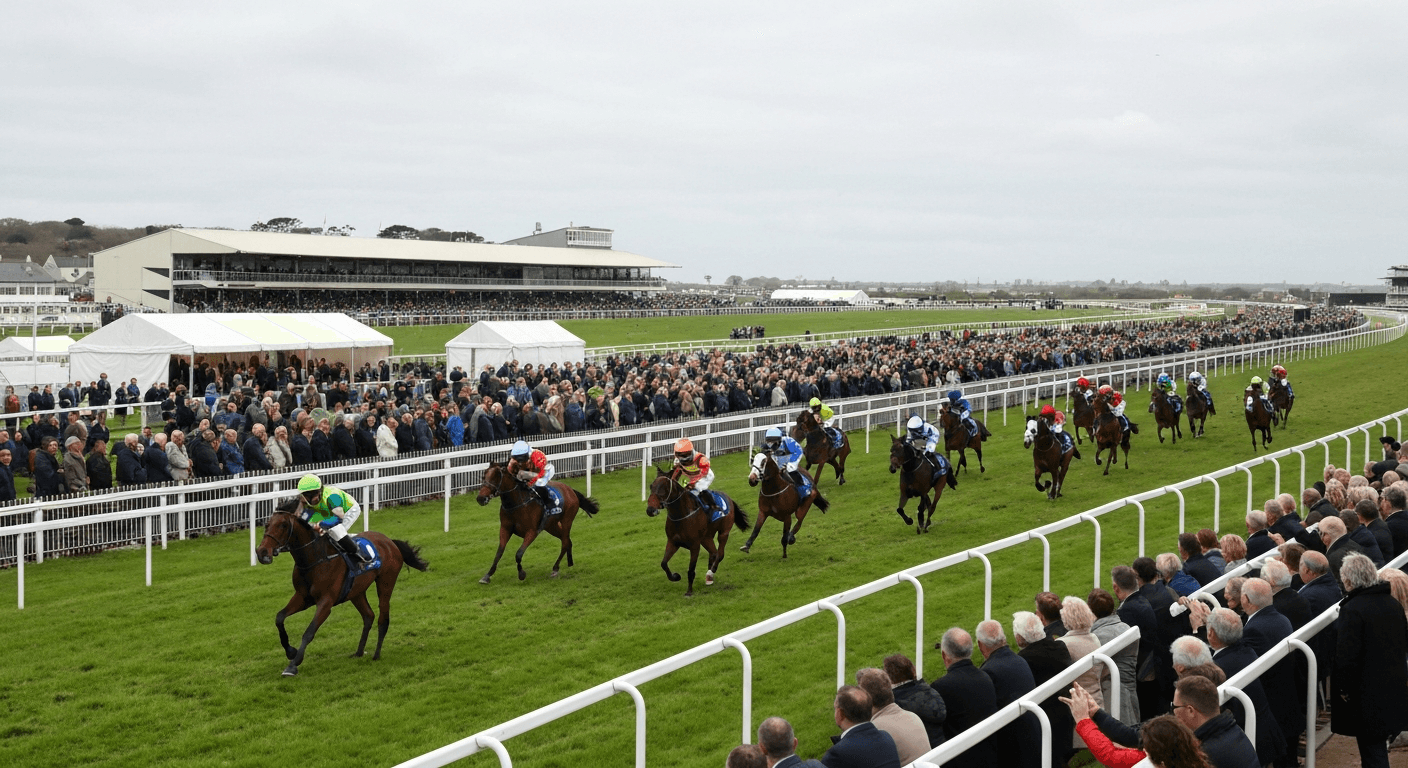
The Laytown Strand Races: The Complete Guide
The Laytown Strand Races, the only racing under Rules run on a beach, staged one day each September on the Co. Meath sand with race times set by the tide.
Read moreResearch the field with the AI Race Predictor
Our model publishes calibrated win-probability estimates for UK races — a second opinion to understand a race, not tips. It's open about its record: it doesn't beat the market, and we show exactly how it does.
Work it out & learn the basics
Gamble Responsibly
Gambling should be entertaining and not seen as a way to make money. Never bet more than you can afford to lose. If you or someone you know has a gambling problem, help and support is available.