
Founder & Editor · Last reviewed 2026-06-29
Ireland's dual-code headquarters
Most racecourses pick a side. They are Flat tracks that tolerate a winter jumps fixture, or jumps tracks that fill summer dates with modest Flat cards. Leopardstown does not pick a side. It is the only Irish track to stage both Group 1 Flat racing and Grade 1 jumps racing, and it does both at the very top of the sport. In September the Irish Champion Stakes brings Europe's best middle-distance horses to Foxrock. In December and February the same turf hosts the Savills Chase, the Irish Gold Cup and the Irish Champion Hurdle. One oval, two codes, both world-grade.
It sits about 8km, five miles, south of Dublin city centre, in the Dún Laoghaire-Rathdown area, and it is the only racecourse in the Irish capital. Horse Racing Ireland owns and runs it, having acquired the course back in 1967, and the track stages around 23 meetings a year carrying 13 Grade 1 jumps races and, from 2026, three Group 1 Flat races.
For anyone studying form or pricing up a race, the dual-code identity matters because the demands are consistent across both. This is a wide, left-handed turf oval of roughly a mile and three-quarters, with a deceptively stiff three-furlong run-in that rises gently all the way to the line. It rewards horses that stay every yard and punishes those that do not, whether they are jumping fences or sprinting up the straight. It is a fair, galloping track that rarely throws up hard-luck stories, and that fairness shapes how the betting behaves.
This guide walks through what the Flat course asks of a horse, what the jumps course asks, how the going moves through the seasons, what the draw does and does not do, the dominant yards and riders, and the honest picture on favourites. None of it is a tip. The aim is to describe the track and the patterns accurately so you understand what you are looking at, including the uncomfortable truth that backing the obvious horse loses money to the starting price over time.
This guide covers what the galloping Flat track asks, what the jumps track asks, going patterns through the year, the draw on the Flat, the leading trainer and jockey angles, the honest picture on favourites, how festival-day betting behaves, and answers to common questions.
Where to Bet
Place your bets with a trusted, licensed bookmaker.

Promo code BETFRED50. New customers only. Register, deposit with a Debit Card, and place a first bet of £10+ at Evens (2.0)+ on Sports, to be settled within 7 days, to get £30 in Sports Free Bets and £20 in Bet Builder Free Bets within 24 hours of settlement. 7-day expiry. Eligibility & payment exclusions apply. Full T&Cs apply. Take Time to Think. BeGambleAware.org. 18+. Full T&Cs.

Promo code R30. New UK customers only, 18+. Register, deposit £10 or more, then place a £10 single cash bet at odds of 1/2 (1.5) or greater on any sports market (excluding Virtuals). Once the qualifying bet settles you get £30 in Free Bets (3 x £10) — the qualifying bet can win or lose. Free Bets are valid on any sports market excluding Virtuals, expire in 7 days, are non-withdrawable and must be used in full. Excluded deposit methods apply (including PayPal, Apple Pay, Skrill and NETELLER). Named bets such as Lucky 15 do not qualify. If you cash out the qualifying bet, or it is voided, you are no longer eligible for the offer. Ends 31.12.26. Full T&Cs apply. Please gamble responsibly. BeGambleAware.org. 18+. Full T&Cs.

Promo code BET40GET20. New UK customers, 18+. Register with the code and place a first bet of £40 or more at Evens (2.0) or greater. Receive 2 × £10 free bets: the first credited automatically once the qualifying bet settles, the second 24 hours later. Free bets must be placed at minimum odds of 4/1 (5.0), expire 24 hours after credit, and the free-bet stake is not returned with winnings. Debit card deposits only. Take Time to Think. BeGambleAware.org. 18+. T&Cs apply. Full T&Cs.

50% of your first-day net losses refunded as a free bet, capped at £25. New UK customers aged 18+ only. To qualify, deposit and place a first bet of £10 or more on any sport at minimum odds of evens (2.00), then place at least two further bets on different events, each worth at least 50% of your largest bet, all at evens (2.00) or greater. Losses are counted from your first settled bet until 23:59 the same day. Place a qualifying £10+ bet and you are guaranteed at least a £5 free bet. Bets placed at SP, void bets, cashed-out bets and bets struck with free bets do not count towards the offer. The free bet is credited the day after your qualifying bets settle and must be used within 7 days, after which it expires. It can be used at odds from 1/4 (1.25) up to 250/1 on singles and straight accumulators, but not on Trixie, Patent or Yankee style multiples. Free-bet stake is not returned with winnings. One offer per person, household, address, IP address and device. E-wallet deposits may not qualify, so check the cashier before depositing. Customers registered with GAMSTOP cannot claim. KYC identity verification must be completed before the free bet is credited. Take Time to Think. BeGambleAware.org. 18+. T&Cs apply. Full T&Cs.

New customers, 18+. Choose the sports bonus at sign-up, make a first deposit and receive a 100% bonus up to £50 in your Sports Bonus balance. To convert the bonus to cash, wager it 10x within 30 days. Single bets below Evens (2.00) do not qualify; accumulators do not qualify if any selection is below 1/2 (1.50). Virtual Sports, voided, cancelled, drawn, cashed-out and free-bet wagers do not count towards wagering. Only the first settled bet per event counts. Withdrawing before the wagering requirement is met forfeits the bonus balance including bonus winnings. Real-money funds are used before bonus funds. Deposits via Skrill or Neteller are not eligible. Not valid in conjunction with other promotions. Odds, bet and payment limits apply. 10bet general and promotion T&Cs apply. BeGambleAware.org. 18+. Full T&Cs.

New customers in Great Britain and Republic of Ireland, 18+. Place a £10 fixed-odds qualifying bet at minimum odds of 1/2 (1.50) — single or each-way (only the win part counts), pre-event or in-play, not cashed out early, within 28 days of opening the account. Receive up to £60 in bonuses credited over three days: 3 × £10 fixed-odds free bets (the first on settlement, then 24 and 48 hours later) plus 3 × £5 Total Goals FOOTBALL spread bets, 3 × £5 racing Winning Favourites spread bets and a £1 racing Race Index spread bet (the spread bets need a full spread-betting account). Free-bet stakes not returned with winnings; free bets valid 28 days from issue. IMPORTANT: the £5 credits are SPREAD bets — sports spread betting carries the risk that losses can exceed your stake. Sports spread-betting customers do not have Financial Ombudsman or FSCS recourse. Take Time to Think. BeGambleAware.org. 18+. T&Cs apply. Full T&Cs.

Promo code WELCOME15, entered under My Bonuses after registering. New UK customers, 18+. Place a first qualifying bet of at least £10 from your cash balance at odds of evens (2.0) or greater within 7 days of opening the account. Once the qualifying bet fully settles you receive £15 in free bets, credited as 3 x £5 tokens with set uses: one £5 accumulator free bet (minimum 4 legs, each leg at 2/5 or bigger), one £5 sports free bet (any market at evens or bigger) and one £5 Sub Cover free bet (selected football player markets at evens or bigger). Free-bet stakes are not returned with winnings. Free bets expire 7 days after they are credited. Void, cashed-out and partially cashed-out bets do not qualify. One offer per customer. Confirm the current terms on BetGoodwin's own welcome-offer page before claiming. Take Time to Think. BeGambleAware.org. 18+. T&Cs apply. Full T&Cs.

New UK customers, 18+. Minimum deposit £10. Place a £10 qualifying single at minimum odds of 1/2 (1.50), settled within 14 days. Receive £30 in free bets (stake not returned), split £20 for sportsbook use (2 x £10) and £10 for Bet Builder only (2 x £5); Bet Builder does not cover horse racing. Free bets must be accepted within 7 days and expire 7 days after acceptance. No promo code required. Best Odds Guaranteed on UK & Irish racing, subject to having staked over £25 in the previous seven days. Operated by LiveScore Betting and Gaming (Gibraltar) Ltd, UKGC 56859. Confirm the current terms on LiveScore Bet's own promotions page before claiming. Take Time to Think. BeGambleAware.org. 18+. T&Cs apply. Full T&Cs.
18+. BeGambleAware.org
What the galloping Flat track asks
Leopardstown was built by Captain George Quin in 1888 and modelled on Sandown Park in England. The key difference is handedness: Sandown is right-handed, Leopardstown is left-handed. The family resemblance is otherwise close, and it explains the central feature of the Flat course, a long, gradual climb to the line that asks more of a horse than the eye first suggests.
A stiffer test than it looks
The circuit runs to about a mile and three-quarters, a wide oval that gallops. The run-in is three furlongs with a slight uphill rise from the final bend to the winning post. At The Races describes it as "a stiffer track than most people give it credit for," with "a long gradual rise all the way up the straight," and that is the single most useful thing to hold in mind. The pace often picks up a long way from home, and the climb then strings the field out, so non-stayers are found out late. Long-striding, galloping types with proven stamina are suited; horses that need a sharp track and a downhill finish are not.
There is no five-furlong racing here. The minimum Flat trip is six furlongs, and the home straight after the final bend is short, around three furlongs, so a sprinter has to be travelling and well-positioned turning in. The course offers an inner and an outer configuration, with the outer track providing an even longer straight than the inner.
What this does to a race
Because the track is fair and stamina-laden, it rarely produces hard-luck stories. The best horse on the day tends to win, which is part of why it stages championship races: there is little hiding place. For form study, that means strong recent course form, and evidence a horse truly stays the trip, carry more weight than they might at a tighter, trickier circuit.
The Flat programme is anchored by the Irish Champion Stakes over a mile and two furlongs in September, a Group 1 first run in 1976 as the Joe McGrath Memorial Stakes. From 2026 the Golden Fleece Stakes is upgraded to Group 1 at nine furlongs, giving the course a third Flat top-flight prize alongside the Champion Stakes and the mile Matron Stakes for fillies and mares. Around those sit a deep card of Group 3 trials and summer Group races, but the demand never really changes: stay the trip, handle the climb, and you are in the race.
What the jumps track asks
The same uphill finish that defines the Flat course defines the jumps track, but over obstacles the inner-versus-outer distinction becomes more pronounced and more relevant to how a race unfolds.
Chase course and hurdles course
The chase course is the outer track and is regarded as the easier, fairer test. It has 10 fences per circuit, including an open ditch, and three of those fences in the back straight come in quick succession, which can catch out a horse that is not jumping fluently. The Irish Gold Cup over roughly three miles is run over 17 fences; the Arkle Novice Chase over about two miles and a furlong is run over 11.
The hurdles course is the inner track, and it is sharper. It carries seven flights per circuit, one of them a "cross hurdle" jumped before the home turn, which leaves just two hurdles in the final five furlongs. The practical effect is that the inner hurdles course favours handier, prominently-ridden horses with tactical speed, more so than the galloping chase course. A held-up horse over hurdles here has plenty to do.
Pace and prominence
Front-running and prominent racing is favoured across both jumps codes, and the numbers behind that are striking. In non-handicap hurdles with eight or more runners, Geegeez data shows front and prominent runners winning about 73% of the time, 101 of 137 races. Handicap hurdles are less extreme but still tilt forward, with front and prominent runners around 47.7% since 2009. Held-up horses struggle on both the chase and Flat courses. The reason ties back to the track itself: with the long climb to the line and the pace lifting early, a horse dropped out the back has to make up ground precisely where the ground is hardest to make up.
Stamina rewarded, fluency required
As on the Flat, this is a stayer's track. The three-furlong rise punishes any chaser or hurdler not seeing out the trip, and the back-straight fences demand accuracy under pressure. The jumps calendar is the heart of Leopardstown's reputation: the Christmas Festival across 26 to 29 December and the two-day Dublin Racing Festival in late January or early February deliver the bulk of the 13 Grade 1s, from the Savills Chase and Irish Gold Cup over three miles to the two-mile Irish Champion Hurdle and the staying Christmas Hurdle over close to three miles. Different distances, same underlying ask: jump cleanly, race handily, and get home up the hill.
Going patterns through the year
Leopardstown is turf only. There is no all-weather strip, Ireland's all-weather racing being at Dundalk, so every race here is run on grass and every assessment of the going matters. The course has a modern watering system and good natural drainage, which means extremes of going are comparatively rare. You are less likely to be caught out by bottomless mud or rock-hard ground here than at many tracks, though the weather still rules.
The seasonal rhythm
The two codes split the year. The National Hunt season runs roughly from December to March, and festival going over jumps is typically soft to yielding, the kind of winter ground that further rewards the stamina the track already demands. The Flat season runs roughly from April to October, with spring Classic trials, summer Thursday-evening Group cards, and the September Champions Festival, where the going is typically good to yielding.
That pattern is worth filing away because it interacts with the track's character. Soft, testing winter ground stacked on top of an already stiff, climbing finish makes the December and February festivals a genuine examination of stamina. A horse that stays well on good ground may still be exposed when the same trip is run on soft going into a headwind up the straight.
Why it still pays to check
None of this removes the need to read the official going on the day. Watering decisions in a dry summer and rainfall in winter can move the ground a description or two, and the inner and outer courses are not always identical underfoot. The 2026 Dublin Racing Festival is a reminder of how much weather can dictate: heavy rain, reported as Storm Chandra, forced the Saturday card to be postponed, and racing instead ran on the Sunday and Monday. Good drainage keeps Leopardstown racing more often than many tracks, but it does not make it weatherproof.
The honest summary is simple. The going here is usually moderate rather than freakish, which is a help when you are trying to assess form, but the combination of soft winter ground and a stiff uphill finish means stamina is never a detail to gloss over.
The draw on the Flat
Draw bias on the Flat at Leopardstown is, for the most part, minimal. This is a wide, fair track, and over the bulk of its trips where a horse starts has little bearing on the result. That said, there are a couple of specific situations worth understanding rather than guessing at.
The six-furlong exception
The clearest edge is over six furlongs, the minimum Flat trip here. At The Races puts it plainly: "A low draw is always a help, particularly in the six-furlong sprints as the bend comes up quickly after the start." With the turn arriving soon after the gates open, low-drawn runners have less ground to lose getting a position, which matters over a short trip on a track with a short home straight. Over seven and eight furlongs that bias largely disappears.
Longer trips and the middle ground
Over a mile the data shows next to nothing. Geegeez figures give a percentage of rivals beaten of around 0.51 for both low and high draws, which is effectively negligible. In larger-field mile-and-a-quarter handicaps, eight or more runners, low and middle draws have tended to fare best, with higher draws winning about 23.4% since 2009 at a lower actual-versus-expected figure and impact value. The signal is mild, not a rule to bet blindly on.
When high draws have done well
It is not a one-way street. Some valuable autumn handicaps have shown the opposite. Racingtipster.com notes that the mile-and-five-furlong Petingo Handicap and the seven-furlong Autumn Handicap on Champions Festival day have shown a high, double-figure draw advantage in recent renewals. These are specific races rather than a general trend, and they are a useful reminder that a course-wide draw summary can mislead at the level of an individual handicap.
The takeaway is measured. Note a low draw as a small plus in a six-furlong sprint, treat most other trips as draw-neutral, and check the recent record of the specific handicap you are looking at rather than assuming the whole track behaves one way. A draw bias is a tiebreaker at Leopardstown, not a headline.
Trainer and jockey angles
If one thing dominates the form book at Leopardstown across both codes, it is the concentration of winners among a small number of yards. The big Irish operations win a disproportionate share of races here, and knowing who they are is part of reading any card.
The jumps yards
Willie Mullins is the defining jumps trainer at the track. He holds the record in the Irish Champion Hurdle with nine wins between 2011 and 2025, a cited record in the Arkle Novice Chase, 11 wins in the December Hurdle across four horses, and multiple Irish Gold Cups and Savills Chases. The scale of his Dublin Racing Festival dominance is hard to overstate: in 2024 he won all eight DRF Grade 1s, and in 2025 he took six of the eight. Over a decade his course strike rate runs around 20.3%, a cited 128 winners from 628 runners.
Gordon Elliott is the other heavyweight, level with Mullins on four Savills Chase wins over the last 20 renewals and a regular winner of the Christmas Festival Grade 1s. Henry de Bromhead, with Honeysuckle's three Irish Champion Hurdles, and Joseph O'Brien, with back-to-back Paddy's Rewards Club Chases through Solness, complete the picture of a jumps scene controlled by a handful of stables.
The Flat yards
On the Flat the pattern repeats. Aidan O'Brien is the most successful trainer in the Irish Champion Stakes with 13 wins and is the dominant Flat trainer at the course, with the best 10-year strike rate among trainers with 75 or more runners at around 19.4% and roughly 43.8% placed. Dermot Weld is next at about 18.2%, and it was Weld who trained Famous Name to the course record of 13 wins, every one at odds of 11/10 or shorter.
The riders
The leading jockeys mirror the yards. Over jumps, Ruby Walsh struck at about 28.2% across the decade before retiring, Paul Townend is the most successful active rider with 55 or more course wins, and Jack Kennedy has the best record over the recent two seasons at around 22.8% and leads the Savills Chase with three wins. On the Flat, Ryan Moore returns about 28.9%, 24 winners from 83 rides, and Michael Kinane holds the Irish Champion Stakes record with seven wins. Geegeez flags Chris Hayes as the most profitable Flat jockey to follow.
One caution sits under all of these names. A high strike rate is not the same as a profit. The best yards and riders are heavily backed precisely because they win often, and the market prices that in. Neither Aidan O'Brien nor the leading jumps stables are blindly profitable to back, a point the next section spells out in full.
Favourites and form figures: the honest picture
Because Leopardstown is a fair, galloping track where the best horse usually wins, favourites win their fair share of races here. That is true, and it is also where a lot of betting goes wrong. Winning often is not the same as making a profit, and the honest picture on favourites needs both halves of that sentence.
The win rates are genuinely high
The headline numbers are strong. In the Irish Champion Stakes, 12 of the last 20 winners were favourites, and the betting favourite's finishing positions skew heavily to the front. In the Irish Champion Hurdle, Geegeez records 16 of 22 winning favourites, at an average winning starting price of around 13/8. These are championship races run on a fair track, so the form tends to hold up and the market gets it right more often than not.
The staying chases reinforce how reliable course form is. Across recent Irish Gold Cups, all 12 of a 12-race sample had a previous run at Leopardstown and nine of the 12 had won at the track. Previous course form is a strong positive in those races, which is exactly what you would expect on a stamina-testing circuit that rewards horses proven over the trip and the climb.
Why that does not mean profit
Here is the part the win rate hides. A favourite that wins 16 times in 22 at an average price of 13/8 is not a money-making bet, because the prices are short enough that the losers wipe out the winners. The market sets favourites' odds precisely so that, over time, backing them returns less than you stake. Across racing as a whole the favourite loses to its starting price over the long run, and Leopardstown is no exception. The track being fair makes favourites more reliable, not more profitable: reliability is already in the price.
It is also not uniform. The Savills Chase went through a poor spell for favourites between 2015 and 2022 before the market recovered, with the 2023 and 2024 renewals both going to favourites and then the 2025 race falling to Affordale Fury at 7/1. And short prices offer no safety: in the 2025 Irish Champion Hurdle, the 8/11 favourite Lossiemouth fell at the fourth-last and the race went to State Man at 5/4.
The honest framing is this. Course form and a fair track make favourites here more dependable than at trickier venues, which is genuinely useful for understanding a race. It does not make them a profitable bet, and anyone treating a strong favourite strike rate as a betting edge has the logic backwards. The strike rate is the reason the price is short, not a reason it is generous.
Festival-day betting
Leopardstown's betting interest concentrates around three marquee meetings, and each has its own character. Understanding what kind of races they serve up helps you read the markets rather than chase them.
The Dublin Racing Festival
The DRF, created in 2018, packs eight Grade 1s into two days, 15 races and over €2m in prize money, with attendances approaching 25,000. Day 1 features the Goffs Irish Arkle Novice Chase, the Nathaniel Lacy Novice Hurdle and the Paddy Power Irish Gold Cup; Day 2 brings the Chanelle Pharma Irish Champion Hurdle, the Ladbrokes Dublin Chase, the Ladbrokes Novice Chase and the Tattersalls Ireland Novice Hurdle. The defining market feature is Mullins. When one yard wins all eight Grade 1s in a year, as in 2024, and six of eight the next, the betting often turns on which Mullins horse is preferred rather than which stable wins. The Dublin Chase has been so thoroughly farmed by Mullins that he has won all but one running, the 2025 anomaly aside.
The Christmas Festival
Four days from 26 to 29 December, seven Grade 1s, seven-race cards daily, and more than 62,000 spectators across the four days in 2024. The highlights are the Savills Chase and the staying Christmas Hurdle on 28 December, and the Matheson Hurdle on 29 December. Two betting notes carry over from the form section: prominent racing is favoured over both codes, and a short price guarantees nothing, as Galopin Des Champs showed when the 6/5 favourite finished only third in the 2025 Savills Chase behind 7/1 Affordale Fury.
The Irish Champions Festival
In September, Leopardstown stages Day 1 of the Irish Champions Festival, a nine-race card headed by the Group 1 Irish Champion Stakes over a mile and a quarter and the Group 1 Matron Stakes over a mile. The Champion Stakes is the track's Flat showpiece, won in 2025 by Delacroix for Aidan O'Brien, and its history runs through Sea The Stars (the 2009 winner), Giant's Causeway and the dual scorers Dylan Thomas and Magical. The biggest-priced winner in the last 20 renewals was Decorated Knight at 25/1 in 2017, a reminder that even the most reliable Group 1 produces the occasional upset.
The discipline that applies to all three
The festivals are where the money and the noise are loudest, and that is exactly where the favourite-to-starting-price reality bites hardest. Better fields and tighter markets mean prices are sharp and value is scarce. Strong course form, proven stamina and a prominent racing style describe the kind of horse that wins here. None of that, and nothing in this guide, is a tip or a promise of profit. Over time the favourite loses to its starting price, festival days included, and the most useful thing you can take to Leopardstown is an accurate read of the track rather than a system for beating it.
Frequently Asked Questions
Share this article
More about this racecourse
All leopardstown guides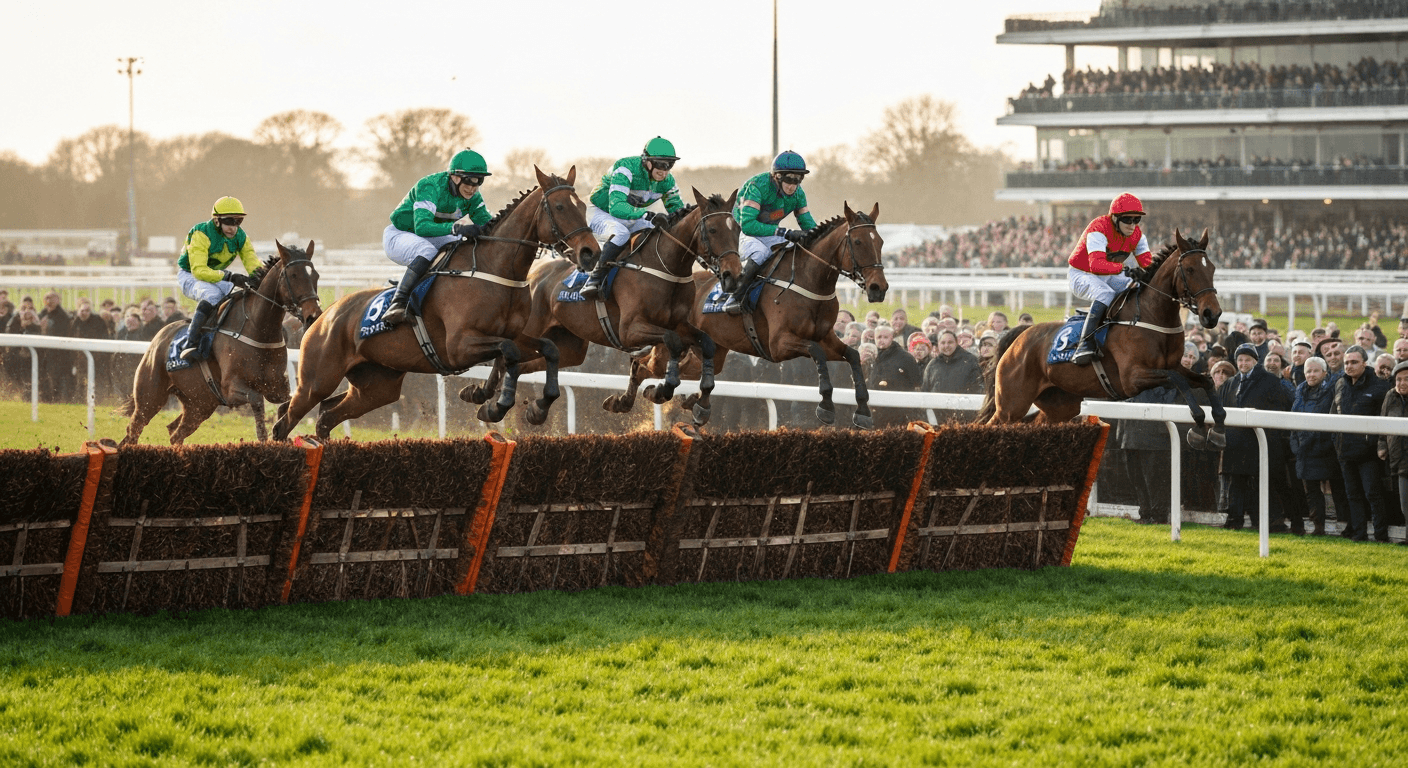
The Leopardstown Christmas Festival: A Complete Guide
A complete guide to the Leopardstown Christmas Festival: four days from 26 December, seven Grade 1s including the Savills Chase, and how to go.
Read more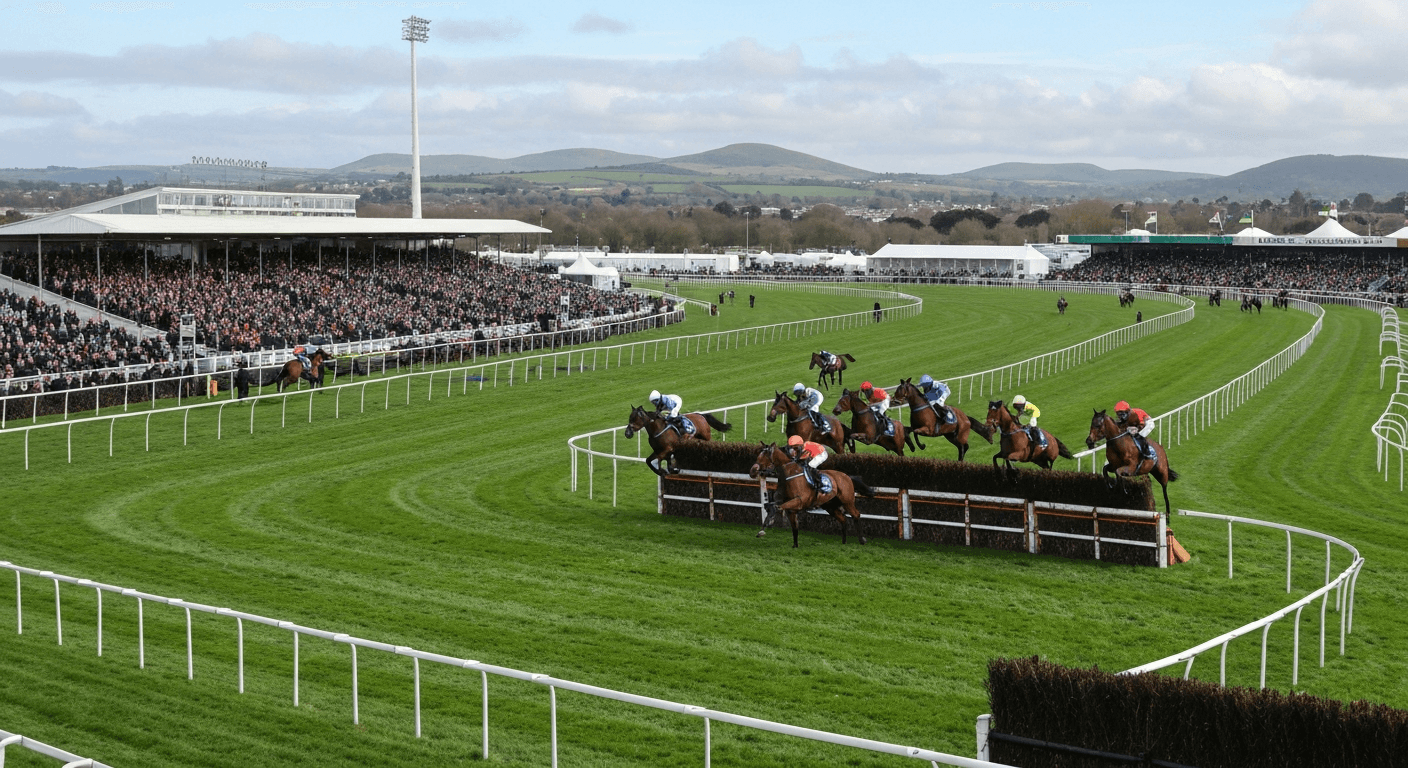
Leopardstown Racecourse: The Complete Guide
Leopardstown (Foxrock, south Dublin) in full: the only Irish track with top Flat and jumps, the Dublin Racing Festival, Christmas Festival and Irish Champions Festival day by day, the Group 1s and Grade 1s with their winners, tickets, travel, venue hire and how to visit.
Read more
The History of Leopardstown
From Captain Quin's 1888 Sandown copy to Ireland's only dual Group 1 and Grade 1 track. The full story of Leopardstown racecourse.
Read morePhotos on this page are used under Creative Commons licences. Titles, sources and licence links for each one are on our image credits page.
Research the field with the AI Race Predictor
Our model publishes calibrated win-probability estimates for UK races — a second opinion to understand a race, not tips. It's open about its record: it doesn't beat the market, and we show exactly how it does.
Work it out & learn the basics
Gamble Responsibly
Gambling should be entertaining and not seen as a way to make money. Never bet more than you can afford to lose. If you or someone you know has a gambling problem, help and support is available.