Founder & Editor · Last reviewed 2026-07-13
Roscommon Racecourse has a longer story than its modest size suggests. Organised racing in the town traces back to 1837, when the British military stationed nearby put on the first meeting. That was an unofficial start. Official racing did not begin until 1885, and it has run almost without a break ever since, the one interruption being a twelve-year gap between 1936 and 1948 that spanned the Second World War. From a single fixture a year, the course has grown into a summer and autumn programme of nine or ten meetings on the edge of Roscommon town.
What Roscommon lacks in Pattern-race depth it makes up for in a distinctive identity. It is a compact, sharp, right-handed turf track in the heart of the Irish midlands, close enough to Roscommon Castle, a thirteenth-century Norman ruin, to share its skyline. It runs both codes, Flat and National Hunt, and its two signature races, the Grade 3 Kilbegnet Novice Chase and the Listed Lenebane Stakes, sit above a card of maidens, handicaps and novice events.
The thread that runs through its history is not a single great horse but a habit of sending them on. Roscommon has become known as a launchpad, a place where future champions took an early step before winning far bigger prizes elsewhere. Imperial Call, Enzeli and the filly Again all passed through before their finest days.
This article follows that story from the earliest recorded racing to the course as it stands today. For the track, tickets and travel as they are now, the Roscommon Racecourse complete guide covers the modern venue in full.
In this history:
Racing on the Roscommon Plain
Racing in Roscommon began as a garrison pastime. The first meeting was organised in 1837 by the British military based near the town, staged on the plain within easy reach of their quarters. It was a fixture without formal standing, the kind of local gathering that came and went across nineteenth-century Ireland, but it planted the idea that Roscommon was a place where horses ran.
From military meeting to official course
The move from an occasional army fixture to a recognised racecourse took decades. Official racing at Roscommon began in 1885, and from that point the course kept going more or less continuously. The single break came between 1936 and 1948, a twelve-year hiatus around the Second World War, after which racing resumed and has continued to the present day.
The early programme was slight by modern standards. Roscommon started with one meeting a year and built up gradually, adding fixtures across the decades until it reached the nine or ten it stages now. That growth was steady rather than dramatic. The course never chased Pattern-race status or a marquee festival. It settled instead into a role as a dependable provincial track, running through the summer and into the autumn, mostly on Monday and Tuesday evenings.
The setting
The course sits on the edge of Roscommon town, in the townland of Lenabane, a short drive from the centre on the Castlebar road. Its neighbour is Roscommon Castle, a thirteenth-century Norman structure whose ruins still stand close by. The racecourse and the castle share a corner of the midlands that has been settled and fought over for centuries, and the sense of an old town going about an old habit is part of what a raceday here feels like.
The track itself is a compact, right-handed oval of about a mile and two furlongs, sharp and speed-favouring, with an incline to the winning post that asks a stamina question in the final furlong. On the Flat the run-in is around three and a half furlongs; over jumps there are five fences to a chase circuit, including one open ditch, and a short run-in of just over two hundred yards. Those dimensions were set long ago by the ground available, and they have shaped the kind of racing Roscommon produces ever since: handy, prominent types tend to be suited, strong stayers less so.
What the course did not acquire, at any stage, was black-type depth. Roscommon has never held a Group race. Its rise, such as it was, came not from the quality of its own prizes but from the quality of the horses that used it as a starting point, a story the later sections of this history return to.
The Signature Races
Roscommon's racing calendar is built around handicaps, maidens and novice events, but two races give the year its shape: the Grade 3 Kilbegnet Novice Chase over jumps and the Listed Lenebane Stakes on the Flat. A third, the Connacht National, is the course's biggest staying handicap chase. None carries Pattern status beyond the Listed Lenebane, and Roscommon has no Group race at all, but each has its own place in the course's modern history.
The Kilbegnet Novice Chase
The Kilbegnet is Roscommon's feature jumps race, a novice chase over about two miles and half a furlong run in late September or early October, on the final jumps day of the season. It was awarded Grade 3 status in 2007 and now carries a prize fund of around €40,000, with €24,000 to the winner in 2025. The name comes from a local County Roscommon place.
Its reputation rests on the horses it has caught early. The forerunner of the race in 1994 saw Sound Man beat Shawiya, with a young Imperial Call back in third, two seasons before he won the Cheltenham Gold Cup. The 2018 running was one of the strongest on record: Ornua won it for Henry de Bromhead and went on to a Grade 1 at Aintree, while runner-up Cadmium later took the Topham Trophy over the National fences. De Bromhead is the leading trainer in the race with four wins, and Paul Carberry the leading jockey, also with four.
The Lenebane Stakes
The Lenebane is the Flat highlight, a Listed race for three-year-olds and upwards run in July on Ladies Day, the first day of the July meeting. It was first run in 2006 over ten furlongs, lengthened to about a mile and a half (1m 3f 175y) the following year, and has been run over that trip since. Horses that have won at Group 1 or Group 2 level are not eligible, which keeps the race open to progressive types on the way up. Panama Hat, the 2015 winner, later finished runner-up in the American St Leger. John Oxx is cited as the leading trainer with six wins, though that figure rests on a single source.
The Connacht National
The Connacht National is Roscommon's marathon, a handicap chase over about three miles and one furlong run in June and sponsored in recent years by the Tote. The 2025 running, over 3m 1f 24y, was won in 6m 25.10s off a €25,000 fund. It also holds a small place in jockey history: Jonathan Burke rode his first professional winner in the race, on Golden Kite, in June 2014.
Signature races at a glance
| Race | Code and grade | Distance | Month | Introduced or graded |
|---|---|---|---|---|
| Kilbegnet Novice Chase | National Hunt, Grade 3 | About 2m half-furlong | September or early October | Grade 3 since 2007 |
| Lenebane Stakes | Flat, Listed | About 1m 3f 175y | July, Ladies Day | First run 2006 |
| Connacht National | National Hunt handicap chase | About 3m 1f | June | n/a |
A Launchpad for Future Stars
Roscommon's claim to fame is not a resident champion but a run of horses who started here and finished somewhere far grander. The course promotes the idea itself, and the record supports it. Several of the best horses to pass through went on to win elsewhere, which means the honest way to tell their stories is to keep the Roscommon run separate from the wins it foreshadowed.
Imperial Call
Imperial Call is the horse most often tied to the launchpad story. He won the 1996 Cheltenham Gold Cup, and two seasons earlier he had run at Roscommon in the 1994 feature novice chase, finishing third to Sound Man. Both the racecourse and the record of that meeting place him there, though the exact date, distance and margin of his Roscommon run are not fully documented, and care is needed not to confuse it with his other early efforts. What is clear is the shape of it: a future Gold Cup winner taking an ordinary early step on an ordinary autumn day in the midlands.
Enzeli
Enzeli was a top-class stayer trained by John Oxx who won the 1999 Ascot Gold Cup, the first Irish-trained winner of that race for thirty years. The year before Ascot, in 1998, he won at Roscommon. Several accounts record the Roscommon success, but the precise race, distance and result are not confirmed from a primary form source, so the fair statement is simply that he won there before his Ascot day, not the detail of how.
Again
Again made her racecourse debut at Roscommon on 7 July 2008, finishing unplaced in a seven-furlong maiden. It was the quietest possible start. Within months she had won the Group 1 Moyglare Stud Stakes, and the following spring she took the Group 1 Irish 1,000 Guineas at the Curragh, giving her trainer David Wachman his first Classic. Her Roscommon debut is exactly the kind of run the course likes to point to: a beaten favourite one week, a Classic winner the next season.
The supporting cast
Roscommon's own account names others who took the same path. Wrote could only manage third on his debut at the course in 2011, then ended the year winning the Breeders' Cup Juvenile Turf. Mouramara won a maiden here as a three-year-old and, two races later, took the Prix Royallieu at Longchamp. Panama Hat won the 2015 Lenebane Stakes and later placed in the American St Leger.
The wider wins in every one of these cases belong to other courses. What Roscommon owns is the first chapter, and there are enough of these horses to make the pattern real rather than a single lucky tale.
The Trainers and Jockeys
Roscommon has no single course-specialist trainer whose name defines it, in the way a big festival track might. What it has instead is a steady presence of the leading Irish yards and riders, drawn by a card that suits young horses and by races worth winning.
The trainers
Over jumps, Henry de Bromhead is the leading trainer in the Kilbegnet Novice Chase with four wins. Across the National Hunt course more broadly, Gordon Elliott has been the dominant force of the modern era: a Roscommon course guide recorded him as the winning-most trainer on the jumps track since 2009, with 26 wins as of early 2021, some ten clear of Willie Mullins. Mullins, running fewer horses, held the better strike rate at around 28 per cent, and he has taken the Kilbegnet itself in recent years.
On the Flat, John Oxx is cited as the leading trainer in the Lenebane Stakes with six wins, a figure that comes from a single source and is best treated as such. The race has also gone to Aidan O'Brien and to Joseph O'Brien, who won it in back-to-back years.
The jockeys
Paul Carberry is the leading rider in the Kilbegnet Novice Chase with four wins, matching de Bromhead's trainer tally. In the saddle over jumps generally, Davy Russell led the Roscommon jockeys across the seasons from 2015-16 to 2019-20, with 13 winning rides at a strike rate of 27 per cent. On the Flat, Chris Hayes has taken the Lenebane three times.
Running the course
The racecourse is operated by Roscommon Racecourse Company Limited, under the governance of Horse Racing Ireland, which lists Roscommon among its tracks. Its chairperson is Pat Rogers and its racecourse manager Michael Finneran. Theirs is the quieter work behind the fixtures, keeping a small provincial course viable and its dates on the national calendar, which is no small thing for a track that competes for horses and crowds with far larger neighbours.
Records and Stats
Roscommon is not a course that keeps a deep record book. It does not publish an authoritative all-time schedule of course-record times or standard times by distance, so any single figure quoted as "the Roscommon record" should be treated with caution. What can be stated is grounded in specific, verified results and in the leading connections at the two signature races.
What is on the record
The clearest timed figure is recent. The 2025 Connacht National, run over 3m 1f 24y, was won in 6 minutes 25.10 seconds. That is a race result rather than a standing course record, and it should be read as such.
Attendance is another gap. Roscommon draws large evening crowds and often sells out its summer fixtures, but it does not publish authoritative attendance or footfall figures, so crowd sizes are described rather than counted.
Leading connections
The most reliable statistics attach to the two feature races and to the modern jumps course.
| Record | Holder | Detail |
|---|---|---|
| Leading Kilbegnet Novice Chase trainer | Henry de Bromhead | 4 wins |
| Leading Kilbegnet Novice Chase jockey | Paul Carberry | 4 wins |
| Leading Lenebane Stakes trainer | John Oxx | 6 wins (single source) |
| Leading Lenebane Stakes jockey | Chris Hayes | 3 wins |
| Leading jumps trainer since 2009 | Gordon Elliott | 26 wins (as of early 2021) |
| Leading jumps jockey, 2015-16 to 2019-20 | Davy Russell | 13 wins, 27% strike rate |
| Timed feature result | 2025 Connacht National | 6m 25.10s over 3m 1f 24y |
| All-time course-record times | n/a | Not published |
| Attendance records | n/a | Not published |
A note on the strike-rate figures: they describe history, not a betting angle. That some favourites and some in-form riders win at Roscommon does not make backing them profitable. Over any long run, backing to starting price loses money to the layer, and no pattern in these numbers changes that.
Race Nights in the Midlands
Roscommon's character comes from being a summer evening track in the middle of the country. Most of its fixtures fall on Monday or Tuesday evenings between May and early autumn, and the shape of the day is built around that: racing after work, a lively and sociable crowd, live music once the last race is run and post-race dancing in the main bar.
A midlands meeting point
Position is part of the appeal. Roscommon sits centrally enough to pull racegoers from Athlone, Longford, Galway and Sligo, and that catchment gives its evening cards a good crowd for a small course. The grandstands, bars and enclosures are packed close together beside the winning-post straight, so the racing and the socialising happen in the same tight space rather than spread across a big estate.
Ladies Day and the July meeting
The busiest week is in July. A Family Day on the Flat comes first, followed about a week later by Ladies Day over jumps, when the Lenebane Stakes is run. Ladies Day carries a best-dressed competition with cash prizes, sponsored in recent years by SuperValu, with a four-figure prize for the overall winner and smaller awards for the runners-up. Dressing up is encouraged that day; the rest of the season has no formal dress code.
Beyond the racing
The course is used for more than horses. It has hosted a June country-music concert, the Shannonside and Northern Sound "Day with the Stars", along with community events including the Roscommon GAA Poc Fada and cross-country running. That mix keeps the racecourse woven into midlands life rather than standing apart from it, a shared piece of ground for the town much as it has been since the first meetings on the plain.
The Modern Course
The Roscommon of today is a modernised version of the same compact provincial course, brought up to standard by a run of investment over the past two decades rather than by any single grand redevelopment.
Rebuilding behind the scenes
Much of the work has been in the parts of a racecourse the public rarely sees but that decide whether a track keeps its fixtures. The stable yard was resurfaced in 2008. The weighing room was demolished and rebuilt, with works completed in 2019. Alongside those, the course has added new stables, new bars and hospitality areas, and new entrance turnstiles. The stabling now runs to 98 stables, two veterinary stables and ten wash bays, enough to service the busy evening cards that bring in horses from across Ireland.
The facilities for racegoers have grown in step. The Main Stand Bar is the largest, with live music and post-race dancing; the Upstairs Bar offers panoramic views with a full bar and snacks; the Montelado Bar can be reserved for groups; and a buffet restaurant beside the Small Stand seats sixty. There is a fully wheelchair-accessible Owners and Trainers area. Not everything about the course is comprehensively documented, though: detailed accessibility information and firm attendance figures are not fully published, which is worth flagging rather than papering over.
The course today
Roscommon now stages around nine or ten meetings a year, running from May into the early autumn. In 2026 it has ten fixtures, opening on Monday 11 May. The programme remains a mix of maiden hurdles and chases, handicaps over both codes, and the occasional bumper, topped by the Kilbegnet Novice Chase and the Lenebane Stakes.
Racing is broadcast on Racing TV, carrying the small midlands track to a national and international audience it could never fit inside its own enclosures. That reach matters for a course of Roscommon's size. It cannot compete on prize money or Pattern races with the big Irish tracks, but it has held on to its dates, kept its facilities current and preserved the thing that makes it distinctive: a friendly evening meeting that now and then gives an early outing to a horse bound for much greater days. The complete guide covers how to visit the modern course in detail.
Frequently Asked Questions
Share this article
More about this racecourse
All roscommon guides
Roscommon Racecourse: The Complete Guide
Roscommon Racecourse: the dual-code turf track in the Irish midlands, home to the Grade 3 Kilbegnet Novice Chase, plus tickets, travel and how to visit.
Read more
Roscommon's Big Nights: The Kilbegnet Chase and the Summer Festival
Roscommon's summer evening highlights: the Grade 3 Kilbegnet Novice Chase and the Listed Lenebane Stakes, the two black-type races at the Irish midlands track.
Read more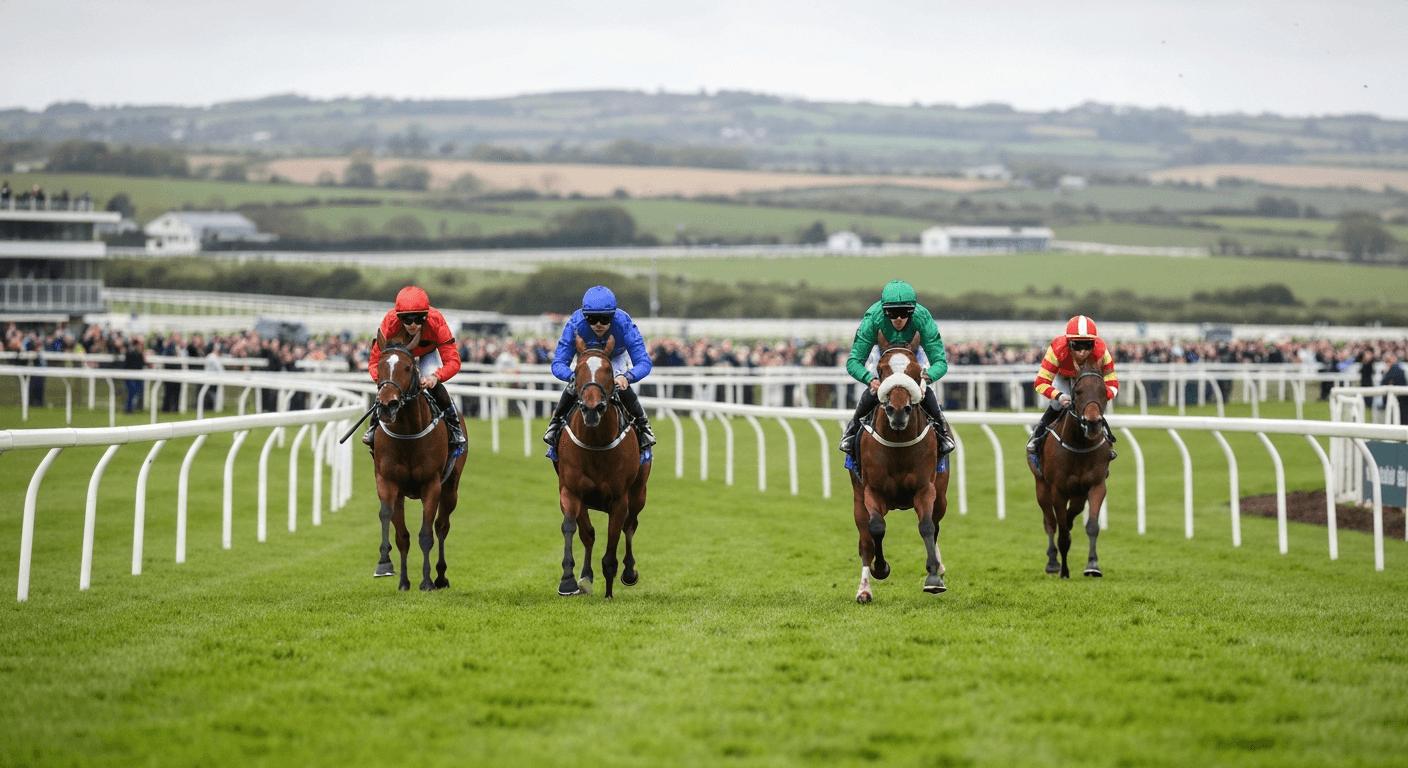
Roscommon's Launchpad: The Champions Who Started Here
How Imperial Call, Enzeli and Again all ran at Roscommon before winning at the top level elsewhere, and why the small Irish midlands track earns its launchpad name.
Read moreGamble Responsibly
Gambling should be entertaining and not seen as a way to make money. Never bet more than you can afford to lose. If you or someone you know has a gambling problem, help and support is available.