
Founder & Editor · Last reviewed 2026-07-13
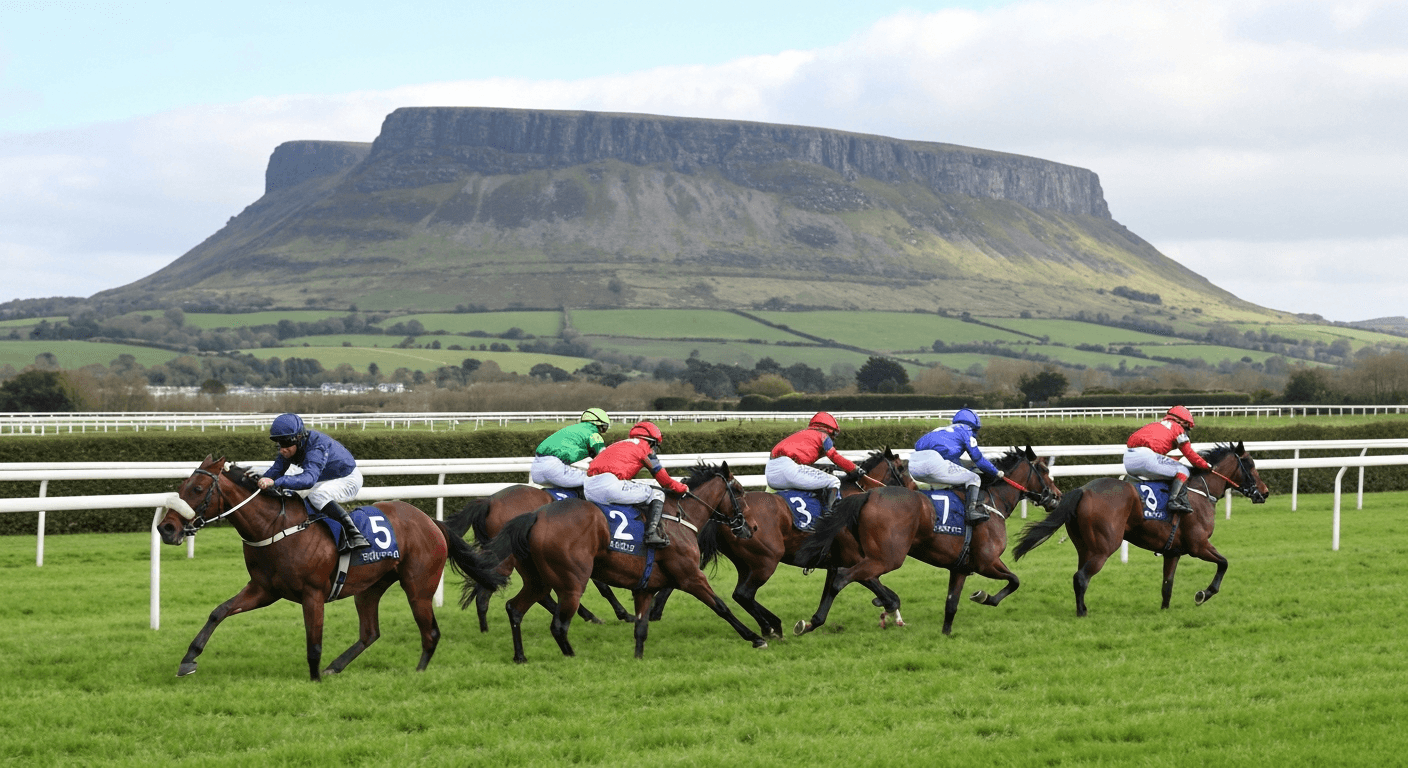
Sligo is a course that rewards knowing the place. It sits in a natural bowl at Cleveragh, just south of Sligo town, with Benbulben and Knocknarea rising behind the turf oval, and it is the most northerly racecourse on the island of Ireland. The track is a sharp, undulating, right-handed circuit of just over one mile, and it runs both Flat and jumps across roughly eight or nine fixtures between May and October. That combination of a tight, hilly loop and a short season is what gives Sligo its character, and it is the starting point for anything sensible you can say about betting here.
Before going further, a plain word on what this guide is and is not. Nothing here is a tip. Sligo throws up patterns worth understanding, but a pattern is context for reading a race, not a way to beat the price. Over time the market wins, and backing favourites blind loses money to starting price once the bookmaker's margin is taken out. Treat any stake as the cost of a day's entertainment, not as an income. If betting stops being fun, step away. Please gamble responsibly, only stake what you can afford to lose, and use the tools at BeGambleAware.org if you need them.
With that settled, Sligo makes a genuinely interesting study. It is regarded as one of the stiffest tracks in Ireland, with an uphill run-in of just under two furlongs and horses almost constantly on the turn. That produces course specialists, animals that have proven they handle the demands, and it is why previous course form counts for more here than at a flat, galloping track. The going can turn genuinely heavy after rain, which changes what wins. And with no Pattern or Listed race on the card, the betting heat gathers around the August two-day meeting, the feature handicap hurdle and the Connacht Oaks.
In this guide:
- What the Track Asks
- Going and the Draw
- Trainer and Jockey Angles
- Favourites and Form
- Betting on the Big Days
- Frequently Asked Questions
For the full picture of the venue, its history and how to visit, see the Sligo Racecourse complete guide.
Where to Bet
Place your bets with a trusted, licensed bookmaker.

Promo code BETFRED50. New customers only. Register, deposit with a Debit Card, and place a first bet of £10+ at Evens (2.0)+ on Sports, to be settled within 7 days, to get £30 in Sports Free Bets and £20 in Bet Builder Free Bets within 24 hours of settlement. 7-day expiry. Eligibility & payment exclusions apply. Full T&Cs apply. Take Time to Think. BeGambleAware.org. 18+. Full T&Cs.

Promo code R30. New UK customers only, 18+. Register, deposit £10 or more, then place a £10 single cash bet at odds of 1/2 (1.5) or greater on any sports market (excluding Virtuals). Once the qualifying bet settles you get £30 in Free Bets (3 x £10) — the qualifying bet can win or lose. Free Bets are valid on any sports market excluding Virtuals, expire in 7 days, are non-withdrawable and must be used in full. Excluded deposit methods apply (including PayPal, Apple Pay, Skrill and NETELLER). Named bets such as Lucky 15 do not qualify. If you cash out the qualifying bet, or it is voided, you are no longer eligible for the offer. Ends 31.12.26. Full T&Cs apply. Please gamble responsibly. BeGambleAware.org. 18+. Full T&Cs.

Promo code BET40GET20. New UK customers, 18+. Register with the code and place a first bet of £40 or more at Evens (2.0) or greater. Receive 2 × £10 free bets: the first credited automatically once the qualifying bet settles, the second 24 hours later. Free bets must be placed at minimum odds of 4/1 (5.0), expire 24 hours after credit, and the free-bet stake is not returned with winnings. Debit card deposits only. Take Time to Think. BeGambleAware.org. 18+. T&Cs apply. Full T&Cs.

50% of your first-day net losses refunded as a free bet, capped at £25. New UK customers aged 18+ only. To qualify, deposit and place a first bet of £10 or more on any sport at minimum odds of evens (2.00), then place at least two further bets on different events, each worth at least 50% of your largest bet, all at evens (2.00) or greater. Losses are counted from your first settled bet until 23:59 the same day. Place a qualifying £10+ bet and you are guaranteed at least a £5 free bet. Bets placed at SP, void bets, cashed-out bets and bets struck with free bets do not count towards the offer. The free bet is credited the day after your qualifying bets settle and must be used within 7 days, after which it expires. It can be used at odds from 1/4 (1.25) up to 250/1 on singles and straight accumulators, but not on Trixie, Patent or Yankee style multiples. Free-bet stake is not returned with winnings. One offer per person, household, address, IP address and device. E-wallet deposits may not qualify, so check the cashier before depositing. Customers registered with GAMSTOP cannot claim. KYC identity verification must be completed before the free bet is credited. Take Time to Think. BeGambleAware.org. 18+. T&Cs apply. Full T&Cs.

New customers, 18+. Choose the sports bonus at sign-up, make a first deposit and receive a 100% bonus up to £50 in your Sports Bonus balance. To convert the bonus to cash, wager it 10x within 30 days. Single bets below Evens (2.00) do not qualify; accumulators do not qualify if any selection is below 1/2 (1.50). Virtual Sports, voided, cancelled, drawn, cashed-out and free-bet wagers do not count towards wagering. Only the first settled bet per event counts. Withdrawing before the wagering requirement is met forfeits the bonus balance including bonus winnings. Real-money funds are used before bonus funds. Deposits via Skrill or Neteller are not eligible. Not valid in conjunction with other promotions. Odds, bet and payment limits apply. 10bet general and promotion T&Cs apply. BeGambleAware.org. 18+. Full T&Cs.

New customers in Great Britain and Republic of Ireland, 18+. Place a £10 fixed-odds qualifying bet at minimum odds of 1/2 (1.50) — single or each-way (only the win part counts), pre-event or in-play, not cashed out early, within 28 days of opening the account. Receive up to £60 in bonuses credited over three days: 3 × £10 fixed-odds free bets (the first on settlement, then 24 and 48 hours later) plus 3 × £5 Total Goals FOOTBALL spread bets and 3 × £5 racing Winning Favourites spread bets, with a £1 racing Race Index spread bet as an extra on top. The spread bets need a full spread-betting account, opened within 28 days of the fixed-odds account and subject to Spreadex's eligibility and appropriateness checks. Free-bet stakes not returned with winnings; free bets valid 28 days from issue. IMPORTANT: the £5 credits are SPREAD bets — sports spread betting carries the risk that losses can exceed your stake. Sports spread-betting customers do not have Financial Ombudsman or FSCS recourse. Take Time to Think. BeGambleAware.org. 18+. T&Cs apply. Full T&Cs.

Promo code WELCOME15, entered under My Bonuses after registering. New UK customers, 18+. Place a first qualifying bet of at least £10 from your cash balance at odds of evens (2.0) or greater within 7 days of opening the account. Once the qualifying bet fully settles you receive £15 in free bets, credited as 3 x £5 tokens with set uses: one £5 accumulator free bet (minimum 4 legs, each leg at 2/5 or bigger), one £5 sports free bet (any market at evens or bigger) and one £5 Sub Cover free bet (selected football player markets at evens or bigger). Free-bet stakes are not returned with winnings. Free bets expire 7 days after they are credited. Void, cashed-out and partially cashed-out bets do not qualify. One offer per customer. Confirm the current terms on BetGoodwin's own welcome-offer page before claiming. Take Time to Think. BeGambleAware.org. 18+. T&Cs apply. Full T&Cs.

New UK customers, 18+. Minimum deposit £10. Place a £10 qualifying single at minimum odds of 1/2 (1.50), settled within 14 days. Receive £30 in free bets (stake not returned), split £20 for sportsbook use (2 x £10) and £10 for Bet Builder only (2 x £5); Bet Builder does not cover horse racing. Free bets must be accepted within 7 days and expire 7 days after acceptance. No promo code required. Best Odds Guaranteed on UK & Irish racing, subject to having staked over £25 in the previous seven days. Operated by LiveScore Betting and Gaming (Gibraltar) Ltd, UKGC 56859. Confirm the current terms on LiveScore Bet's own promotions page before claiming. Take Time to Think. BeGambleAware.org. 18+. T&Cs apply. Full T&Cs.
18+. BeGambleAware.org
What the Track Asks
Sligo is a sharp, undulating, right-handed turf oval of just over one mile, and it is widely regarded as one of the stiffest, most testing tracks in Ireland. The shape of it explains most of what wins. From the winning post the runners turn sharply and then descend, before climbing for much of the final stretch, and the run-in itself rises for just under two furlongs. Because the circuit is small, horses are almost constantly on the turn, with very little straight galloping ground to settle into. That makes it a tricky track to ride and a track that produces genuine course specialists.
What does that ask of a horse? On the Flat, the tight, turning layout tends to suit speedier, prominent types that can lie handy and hold a position, provided they have enough stamina to see out the climb to the line. A horse that needs to be produced with one long run on a wide, sweeping track has less to work with here; there is simply not enough room, and the uphill finish punishes anything that has been left with too much to do. The honest read is that Sligo rewards adaptable, well-balanced horses with tactical speed, and it exposes those that want a flat, galloping test. That is a description of the demand, not a selection method.
Over jumps the same principles apply, with the added test of the obstacles. There are four flights of hurdles to a circuit and five fences on the chase course, with the chase track sitting outside the hurdles track. One fence comes just before the straight and one at the foot of the slightly uphill run-in, so a horse has to be jumping cleanly at the very point where the ground begins to rise and the race is decided. Tiring horses can lose lengths at those two obstacles. Sound jumping and a bit in reserve for the hill matter more here than raw class over a stiff finish.
The other structural fact is the setting. Sligo sits in a natural bowl close to the Garravogue river, and the ground can become genuinely heavy after rain. On that sort of surface the emphasis shifts hard towards stamina, and horses that looked sharp enough on a sound surface can find the climb too much. It is worth reading the going and the horse together rather than in isolation.
None of this is a shortcut to a winner. Course form, a prominent style and proven stamina for the hill describe the type that tends to go well at Sligo, and the market knows all of it too. Those qualities are usually reflected in the price. The value in understanding the track is that it helps you read a result and judge whether a run was better or worse than the bare finishing position suggests, not that it hands you an edge over the bookmaker.
Going and the Draw
Two conditions shape a Sligo race more than any headline rating: the state of the ground and, on the Flat, the draw. Both need handling honestly, because at Sligo the data is thinner than the confident guides elsewhere would have you believe.
Going
Sligo races between May and October, so the card runs through the drier part of the Irish year, and several of its fixtures are summer evening meetings. In settled spells the ground can ride on the quick side. The complication is the setting: the course sits in a natural bowl close to the Garravogue river, and after rain it can become genuinely heavy. That is a real swing, not a nominal one. When the ground goes soft to heavy, the uphill run-in bites harder and stamina moves to the front of the queue; a horse with proven form in a bog is a different proposition from one that has only shown its best on a sound surface.
The practical point is to read the horse against the going rather than treat the going as an angle in its own right. A quick-ground performer that has never handled cut is not suddenly well handicapped because it is drawn well; it is simply racing in conditions that may not suit. Check the going description on the day, and be aware that a riverside meadow can ride softer than the bare official word suggests.
The Draw
Over jumps there is no draw to speak of, so this is a Flat-only consideration. Even on the Flat, the evidence at Sligo is limited. What data exists points to a slight low-draw advantage in handicaps with ten or more runners, which is consistent with the early turn: a low-drawn horse has a shorter route to the inside as the field reaches the first bend. The table below sets that out plainly.
| Race type | Field size | Draw signal |
|---|---|---|
| Flat handicap | 10 or more runners | Slight low-draw lean, consistent with the early turn |
| Flat handicap | Small fields | No reliable signal |
| Jumps (all) | Any | n/a (no draw) |
Treat that low-draw lean as a mild, conditional nudge, not a rule. It shows up only in bigger Flat handicaps, it is slight rather than decisive, and it depends on how a race is run as much as on the stall. A well-drawn horse that misses the break gains nothing from its number. Most importantly, a draw tendency this soft is priced into a competitive market long before you get to it, so it will not beat the starting price on its own. Use it, at most, as a tie-breaker between two horses you already rate as closely matched.
Trainer and Jockey Angles
A turning, uphill track that races only a handful of times a year tends to reward those who know it, so course records are worth reading at Sligo. The caution is that they are worth reading as context, not as a betting shortcut. A rider or a yard with a good Sligo record is usually running quality horses that are suited to the demands, and the market prices that in. The record tells you the horse is likely to handle the place; it does not tell you it is bigger than its odds.
Jockeys
On the Flat, two riders stand out for their Sligo records. Gary Carroll and Shane Cross have both gone well here, and on a track this specialised, a jockey who has learned where to be through the constant turns and how to time the run up the hill has a real practical advantage over a first-time visitor. On a sharp circuit with a short, rising finish, getting a horse into the race early and saving ground on the bends can matter as much as the horse's raw ability.
| Jockey | Code | Sligo note |
|---|---|---|
| Gary Carroll | Flat | Strong course record |
| Shane Cross | Flat | Strong course record |
That is the extent of the individual detail that can be stated with confidence. It is better to leave a gap than to fill this section with names carried over from other tracks or invented locale, so no jumps riders or specific yards are singled out here beyond what the record actually supports.
How to use a course record
The honest way to weigh a strong Sligo hand is this. When a horse turns up with proven course form and a rider who knows the track, you have good evidence that it will run its race rather than be undone by the layout. That is genuinely useful for reading the form, and it is a fair reason to respect a runner that the bare figures might make you doubt. What it is not is a signal that the horse is overpriced. If anything, a well-advertised course record shortens a price, because plenty of other people are reading the same record.
The sharper question at Sligo is usually not whether the specialist yard or rider is involved, but which of two closely matched, well-suited horses is the one to be with, and that is a puzzle the market is already working on. Course form narrows the field of serious contenders; it does not name the winner, and it does not tell you where the value lies. Use it to build a picture of who can handle the track, then judge each runner on its price rather than on the reputation of the name in the saddle.
A last point on discipline. Records at a course that runs eight or nine times a year are built on small samples, so a rider or trainer can look hot or cold on a handful of results that would even out over a fuller season. Give more weight to the underlying reason a record exists, that a horse or a rider suits a tight, testing, uphill track, than to a raw win count from a short run of meetings.
Favourites and Form
This is the section where the honest maths has to be stated plainly, because it is the one people most want to argue with. Favourites win their share of races at Sligo, as they do everywhere. A well-backed horse is well-backed for reasons, and on a specialist track those reasons often include proven course form. None of that makes backing favourites a way to make money.
The reason is simple and it does not change from course to course. The starting price already contains the bookmaker's margin, so the odds are shorter than the horse's true chance. Back every favourite blind, over a long enough run, and you lose to that margin. A horse can win a third of its races and still be a losing bet if the price on offer was always a shade too short. Winning "their share" and being profitable to back are two different things, and the gap between them is exactly the built-in overround.
| Approach | What actually happens over time |
|---|---|
| Backing favourites blind | Loses to starting price after the margin |
| Backing course specialists blind | Same; the record is priced in |
| Betting a low-draw or going pattern mechanically | Same; a known, soft edge is in the price |
The same logic applies to every pattern in this guide. The low-draw lean in bigger Flat handicaps, the pull towards prominent, tactically speedy horses, the extra emphasis on stamina when the ground goes heavy: these are real descriptive tendencies, and they help you understand why a race worked out as it did. Turned into a mechanical staking rule, each one still loses to the starting price, because it is public knowledge and the market has already taken account of it before you place a bet.
So what is form study good for at Sligo? For understanding, not for beating the price. Knowing that the track is sharp and uphill helps you judge whether a beaten horse ran better than its position, or whether a winner flattered itself on ground that will not come again. It helps you tell a genuine course specialist from a horse that got lucky with an easy lead. That is a better way to enjoy the racing and to read a result. It is not a system, and anyone selling a Sligo "angle" as a route to profit is selling something the maths does not support.
The bottom line is the one worth keeping in front of you. Betting is a cost for entertainment, not a source of income, and the market wins over time. Set a budget you are happy to lose, treat any winnings as a bonus rather than a plan, and stop when the fun stops. If you ever feel your betting slipping out of your control, help is available at BeGambleAware.org. Please gamble responsibly.
Betting on the Big Days
Sligo has no Pattern, Group or Listed race, so there is no black-type showpiece to build a betting week around. What it has instead is a country card built on handicaps and maidens, and a clear high point in the calendar: the two-day August meeting, the biggest fixture of the year. The betting interest, and the bigger fields, gather there.
The centrepiece over jumps is the feature handicap hurdle, run at that August meeting and worth around €11,500 to the winner. As a competitive handicap hurdle on a sharp, testing track, it is exactly the kind of race the course's demands come to bear on. The field will be bunched on the turns, and the finish up the rise will find out anything that has been ridden along too hard too soon. A clean jumper with tactical speed and the stamina to see out the hill fits the profile of the track; but that is a description of the test, not a tip, and in a big-field handicap the placings are wide open by design. The handicapper's job is to make it hard to predict, and a large field on a specialist track is a puzzle, not an opportunity.
On the Flat, the race to know is the Connacht Oaks, run in August over about one mile two and a half furlongs. Its full title is the Irish Stallion Farms EBF Connacht Oaks, and it is a fillies-and-mares handicap restricted to female runners. Being a handicap rather than a black-type contest, it is framed to be competitive, and the middle distance on Sligo's turning, uphill circuit asks for a filly that stays well and can be positioned handily. Again, that is context for reading the race rather than a way to find the winner ahead of the market.
A few honest points carry across both. Fields at Sligo range from around six to eight in the quieter races up to sixteen or eighteen in the competitive handicaps, and it is the bigger handicaps that draw the money and the closest finishes. Larger fields mean more ways to be wrong, wider each-way places at the bookmakers, and prices that reflect genuine uncertainty. The August meeting also runs its second day as an evening card, so check off-times on the day rather than assuming an afternoon start.
Above all, a big race day does not change the underlying maths. The favourite in the Handicap Hurdle or the Connacht Oaks loses money backed blind over time, just as it does on a quiet Tuesday evening, because the price still carries the margin. Read the track, enjoy the meeting, and treat any bet as part of the entertainment rather than a plan to come out ahead.
Frequently Asked Questions
Share this article
More about this racecourse
All sligo guides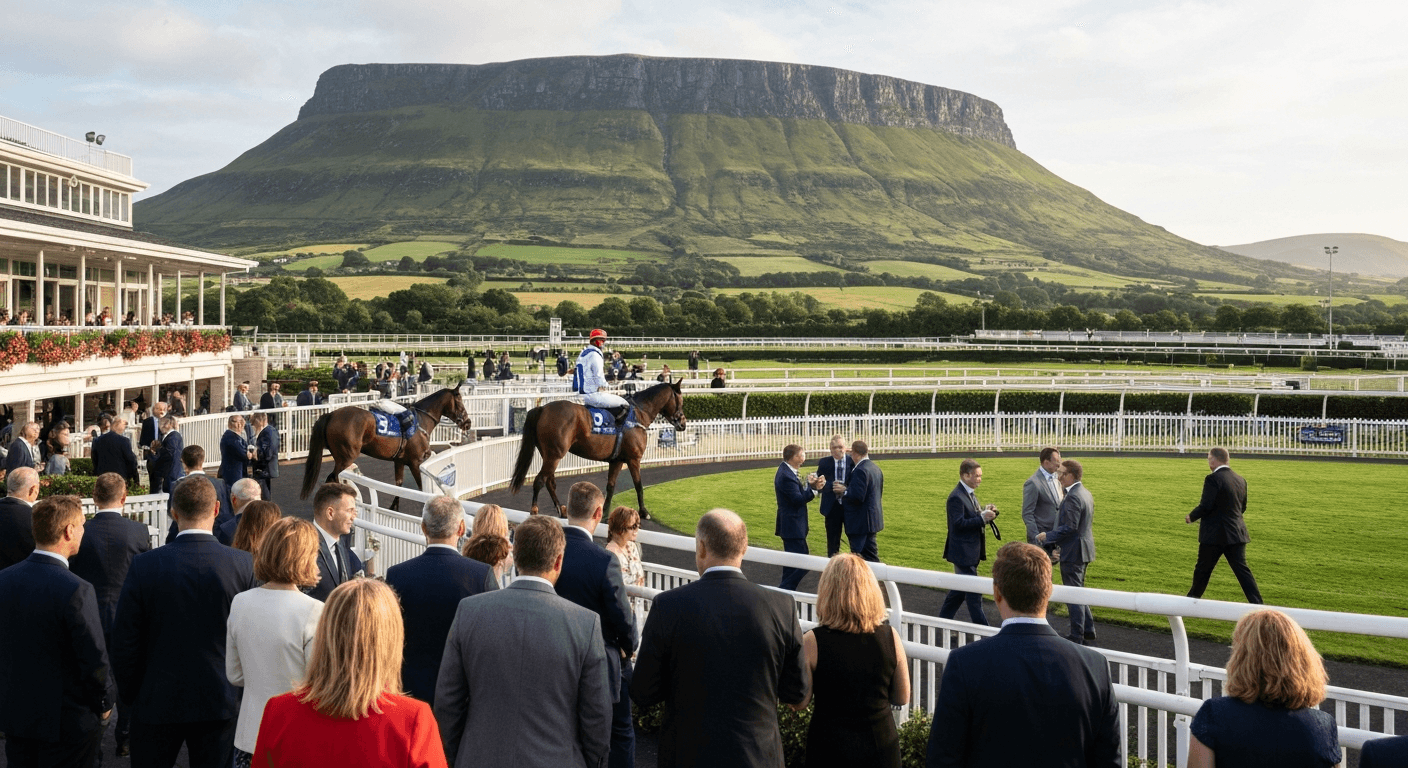
A Day Out at Sligo Racecourse
Plan a day out at Sligo Racecourse: getting there, tickets, the grandstand suites, food, the best summer meetings, what to wear and first-visit tips.
Read more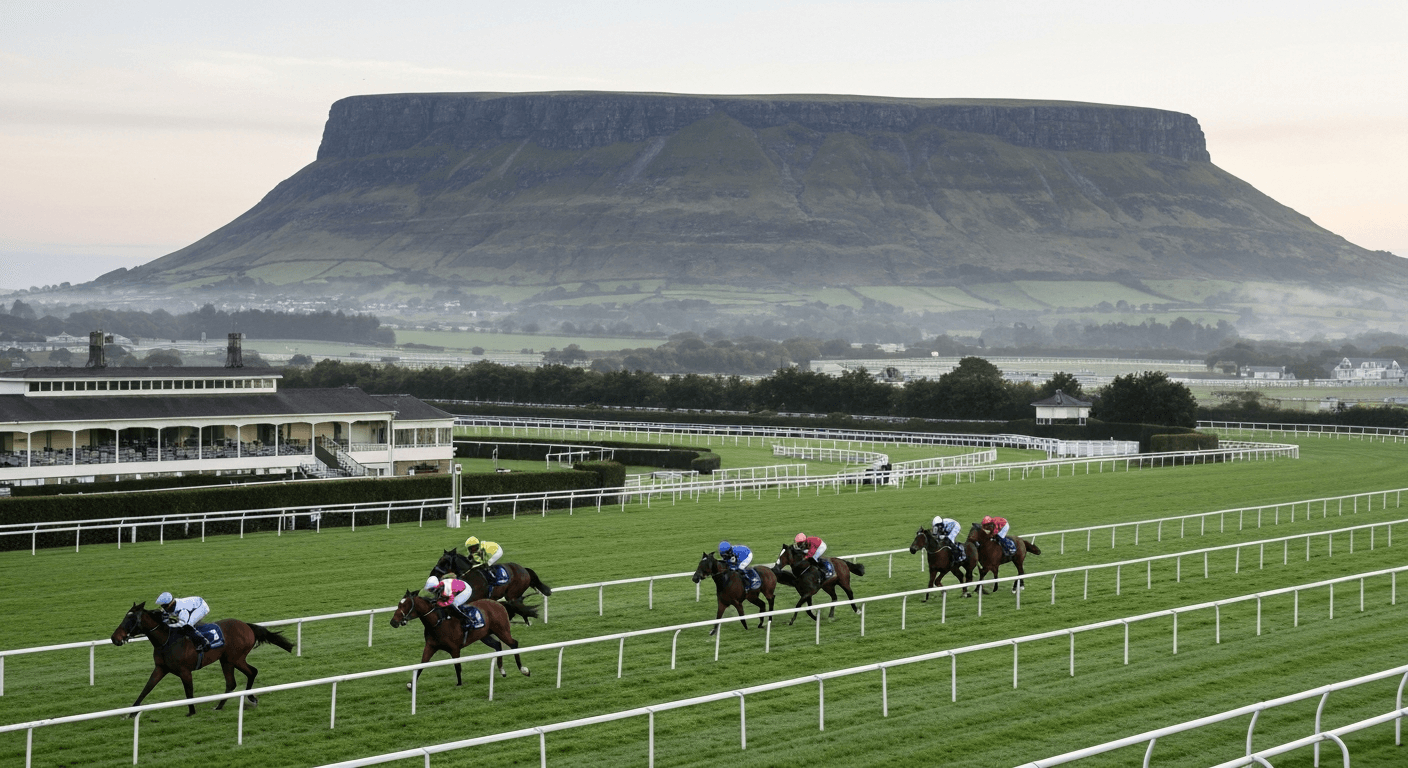
The History of Sligo Racecourse
The history of Sligo Racecourse, from the 1781 races at Rosses Point through Hazelwood to the Cleveragh course of 1955, its feature days and record-holders.
Read more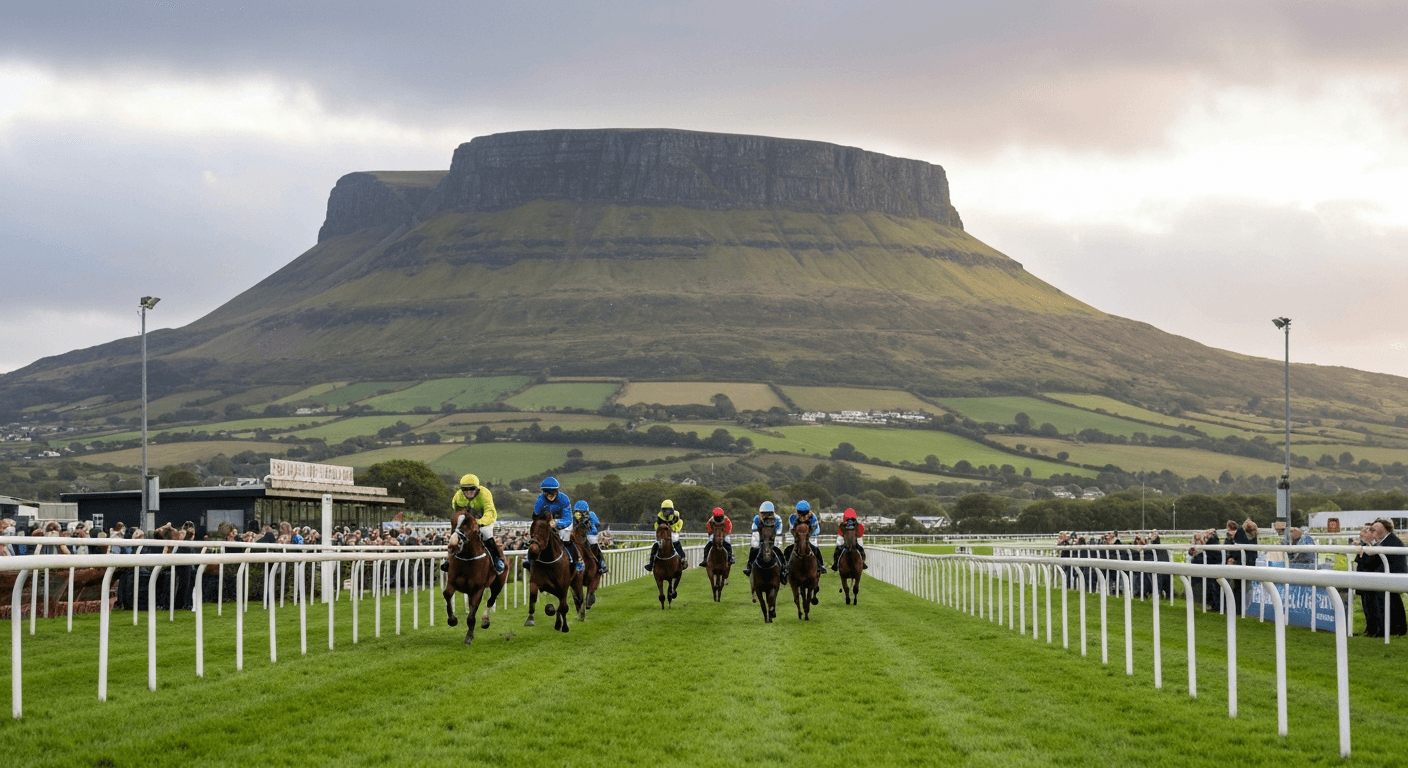
Sligo Racecourse: The Complete Guide
Sligo Racecourse: dual-code Flat and jumps in Co. Sligo, home of the Connacht Oaks and Guinness Sligo Handicap Hurdle, plus tickets, travel and how to visit.
Read moreResearch the field with the AI Race Predictor
Our model publishes calibrated win-probability estimates for UK races — a second opinion to understand a race, not tips. It's open about its record: it doesn't beat the market, and we show exactly how it does.
Work it out & learn the basics
Gamble Responsibly
Gambling should be entertaining and not seen as a way to make money. Never bet more than you can afford to lose. If you or someone you know has a gambling problem, help and support is available.