
Founder & Editor · Last reviewed 2026-07-13
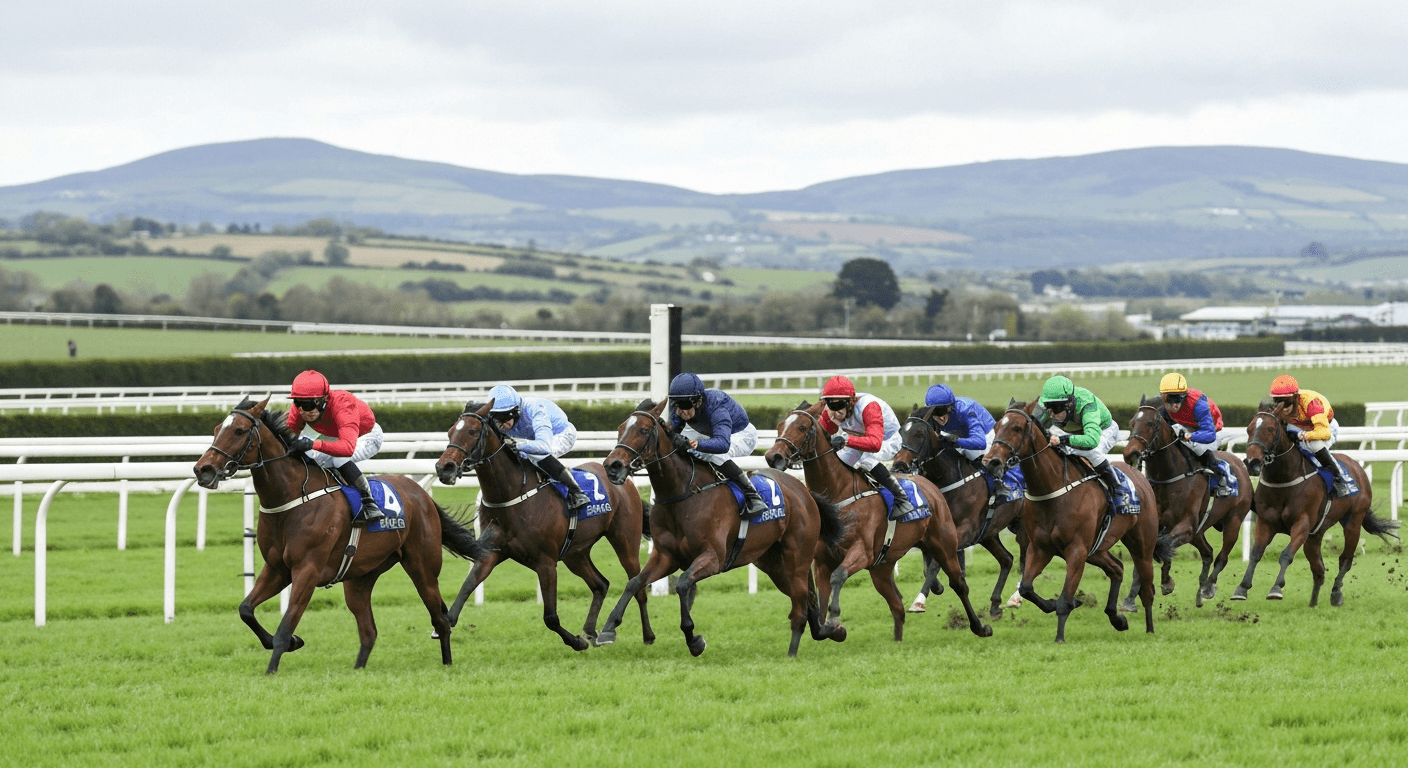
Tipperary Racecourse sits at Ballykisteen, Limerick Junction, in Co. Tipperary, right beside the railway station and about two miles from Tipperary town. It is a dual-code turf track, running both Flat and National Hunt across a calendar of around eleven to twelve fixtures a year between April and October, more than half of them evening meetings. For a punter, the character of the place is set by its shape. Tipperary is a left-handed, flat oval of a mile and a quarter, with tight, sharp bends, long straights and a dead-straight five-furlong sprint course. That is a fast, speed-track layout, and a track like that asks a particular sort of question of a horse and rewards a particular sort of runner.
This guide is a plain read on how that character shapes the betting, not a set of selections. It is worth being clear on that at the outset. Nothing here is a tip, and nothing here points to a way of making the sums add up in your favour. The plain truth of betting, on the Flat or over jumps, is that backing the favourite blindly loses money to the starting price over time, because the price already carries the bookmaker's margin. Tipperary is no exception, and neither is any staking plan built on top of it. The aim is to understand the track and read the races better, not to sell a system.
If you do have a bet, treat it as paid entertainment and stake only what you can afford to lose. Anyone gambling in Ireland or the UK can find free, confidential help and self-exclusion tools through GambleAware and GamCare.
In order, this guide covers what the track asks of a horse, the going and the draw, the trainer and jockey angles, the favourites and form figures framed honestly, how the big days bet, and answers to some common questions. For the wider picture on the venue, its history and the feature races, see the full Tipperary Racecourse guide and the rest of Irish racing.
Where to Bet
Place your bets with a trusted, licensed bookmaker.

Promo code BETFRED50. New customers only. Register, deposit with a Debit Card, and place a first bet of £10+ at Evens (2.0)+ on Sports, to be settled within 7 days, to get £30 in Sports Free Bets and £20 in Bet Builder Free Bets within 24 hours of settlement. 7-day expiry. Eligibility & payment exclusions apply. Full T&Cs apply. Take Time to Think. BeGambleAware.org. 18+. Full T&Cs.

Promo code R30. New UK customers only, 18+. Register, deposit £10 or more, then place a £10 single cash bet at odds of 1/2 (1.5) or greater on any sports market (excluding Virtuals). Once the qualifying bet settles you get £30 in Free Bets (3 x £10) — the qualifying bet can win or lose. Free Bets are valid on any sports market excluding Virtuals, expire in 7 days, are non-withdrawable and must be used in full. Excluded deposit methods apply (including PayPal, Apple Pay, Skrill and NETELLER). Named bets such as Lucky 15 do not qualify. If you cash out the qualifying bet, or it is voided, you are no longer eligible for the offer. Ends 31.12.26. Full T&Cs apply. Please gamble responsibly. BeGambleAware.org. 18+. Full T&Cs.

Promo code BET40GET20. New UK customers, 18+. Register with the code and place a first bet of £40 or more at Evens (2.0) or greater. Receive 2 × £10 free bets: the first credited automatically once the qualifying bet settles, the second 24 hours later. Free bets must be placed at minimum odds of 4/1 (5.0), expire 24 hours after credit, and the free-bet stake is not returned with winnings. Debit card deposits only. Take Time to Think. BeGambleAware.org. 18+. T&Cs apply. Full T&Cs.

50% of your first-day net losses refunded as a free bet, capped at £25. New UK customers aged 18+ only. To qualify, deposit and place a first bet of £10 or more on any sport at minimum odds of evens (2.00), then place at least two further bets on different events, each worth at least 50% of your largest bet, all at evens (2.00) or greater. Losses are counted from your first settled bet until 23:59 the same day. Place a qualifying £10+ bet and you are guaranteed at least a £5 free bet. Bets placed at SP, void bets, cashed-out bets and bets struck with free bets do not count towards the offer. The free bet is credited the day after your qualifying bets settle and must be used within 7 days, after which it expires. It can be used at odds from 1/4 (1.25) up to 250/1 on singles and straight accumulators, but not on Trixie, Patent or Yankee style multiples. Free-bet stake is not returned with winnings. One offer per person, household, address, IP address and device. E-wallet deposits may not qualify, so check the cashier before depositing. Customers registered with GAMSTOP cannot claim. KYC identity verification must be completed before the free bet is credited. Take Time to Think. BeGambleAware.org. 18+. T&Cs apply. Full T&Cs.

New customers, 18+. Choose the sports bonus at sign-up, make a first deposit and receive a 100% bonus up to £50 in your Sports Bonus balance. To convert the bonus to cash, wager it 10x within 30 days. Single bets below Evens (2.00) do not qualify; accumulators do not qualify if any selection is below 1/2 (1.50). Virtual Sports, voided, cancelled, drawn, cashed-out and free-bet wagers do not count towards wagering. Only the first settled bet per event counts. Withdrawing before the wagering requirement is met forfeits the bonus balance including bonus winnings. Real-money funds are used before bonus funds. Deposits via Skrill or Neteller are not eligible. Not valid in conjunction with other promotions. Odds, bet and payment limits apply. 10bet general and promotion T&Cs apply. BeGambleAware.org. 18+. Full T&Cs.

New customers in Great Britain and Republic of Ireland, 18+. Place a £10 fixed-odds qualifying bet at minimum odds of 1/2 (1.50) — single or each-way (only the win part counts), pre-event or in-play, not cashed out early, within 28 days of opening the account. Receive up to £60 in bonuses credited over three days: 3 × £10 fixed-odds free bets (the first on settlement, then 24 and 48 hours later) plus 3 × £5 Total Goals FOOTBALL spread bets and 3 × £5 racing Winning Favourites spread bets, with a £1 racing Race Index spread bet as an extra on top. The spread bets need a full spread-betting account, opened within 28 days of the fixed-odds account and subject to Spreadex's eligibility and appropriateness checks. Free-bet stakes not returned with winnings; free bets valid 28 days from issue. IMPORTANT: the £5 credits are SPREAD bets — sports spread betting carries the risk that losses can exceed your stake. Sports spread-betting customers do not have Financial Ombudsman or FSCS recourse. Take Time to Think. BeGambleAware.org. 18+. T&Cs apply. Full T&Cs.

Promo code WELCOME15, entered under My Bonuses after registering. New UK customers, 18+. Place a first qualifying bet of at least £10 from your cash balance at odds of evens (2.0) or greater within 7 days of opening the account. Once the qualifying bet fully settles you receive £15 in free bets, credited as 3 x £5 tokens with set uses: one £5 accumulator free bet (minimum 4 legs, each leg at 2/5 or bigger), one £5 sports free bet (any market at evens or bigger) and one £5 Sub Cover free bet (selected football player markets at evens or bigger). Free-bet stakes are not returned with winnings. Free bets expire 7 days after they are credited. Void, cashed-out and partially cashed-out bets do not qualify. One offer per customer. Confirm the current terms on BetGoodwin's own welcome-offer page before claiming. Take Time to Think. BeGambleAware.org. 18+. T&Cs apply. Full T&Cs.

New UK customers, 18+. Minimum deposit £10. Place a £10 qualifying single at minimum odds of 1/2 (1.50), settled within 14 days. Receive £30 in free bets (stake not returned), split £20 for sportsbook use (2 x £10) and £10 for Bet Builder only (2 x £5); Bet Builder does not cover horse racing. Free bets must be accepted within 7 days and expire 7 days after acceptance. No promo code required. Best Odds Guaranteed on UK & Irish racing, subject to having staked over £25 in the previous seven days. Operated by LiveScore Betting and Gaming (Gibraltar) Ltd, UKGC 56859. Confirm the current terms on LiveScore Bet's own promotions page before claiming. Take Time to Think. BeGambleAware.org. 18+. T&Cs apply. Full T&Cs.
18+. BeGambleAware.org
What the Track Asks of a Horse
Tipperary is a left-handed oval of a mile and a quarter round, and it is a flat, fast track rather than an undulating, testing one. Almost everything about how it plays follows from that shape. The bends are tight and sharp, the straights are relatively long, and the run-in is an extended quarter of a mile. That combination makes it a speed track, and it favours horses that can go a good gallop and hold a prominent position rather than those that need to grind their rivals down from off the pace.
That profile produces a particular kind of race. Front-runners and agile, all-round types do well here, because an uncontested lead on a quick, flat surface is hard to peg back, especially on good or firmer ground. The read for a punter is about the demand, not a selection. A horse that jumps out, travels within itself and can hold its position round the tight bends fits the track. One that habitually drops in and needs a strongly run race to make late ground has the layout against it. That describes the sort of runner the course suits and is a way of reading a race, not an instruction to back whatever is in front.
The five-furlong sprint course is the track's signature. It is a dead-straight, flat strip that joins the main circuit at the entrance to the home straight, and it is regarded as one of the quickest and fairest sprint courses in Ireland. Fair is the operative word: on faster ground there is little to separate the runners by position, and the race tends to come down to which is the quickest horse rather than which found the right piece of ground. The one exception is a going-dependent draw effect, covered in the next section.
Over the round course, the tight bends matter. From the seven-furlong start and beyond, the first turn arrives soon after the stalls, so early position and a tractable, well-balanced horse count for more than a big late burst on a galloping straight would. It is the sort of detail that helps explain a result after the event, a horse that was caught wide and never got competitive, rather than something that hands anyone an edge beforehand.
Over jumps Tipperary is a summer venue, and the same fast, flat character applies. There is nothing testing in the layout to bring stamina into play the way an undulating track would, so a horse that jumps efficiently and travels prominently is well suited. None of this is a Tipperary secret, and none of it is priced out of the market. It is simply the physical demand the course makes, and knowing it helps you judge whether a horse's profile fits the track before you look at the price. These track details match the fuller description in the complete Tipperary Racecourse guide.
Going and the Draw
Two separate things get bundled together as "the going and the draw", and at Tipperary it pays to keep them apart, because the draw only speaks on the Flat and only under certain conditions.
Start with the going. Tipperary is a fast, flat track, and the ground is best used as context for whether a runner's proven conditions match the day rather than as an angle in its own right. Front-runners are at their most dangerous on good or firmer going, when an uncontested lead on a quick surface is very hard to catch. A horse whose best form has come on a sound surface is on different terms from one that wants it deep, and the sensible reading is to check that a horse's favoured ground matches the description before the price catches your eye.
The draw is where the codes part company. Over jumps the draw does not matter. Runners line up and the race is decided by jumping, pace and position, not by stall number, so there is no draw bias to weigh in a hurdle or a chase at Tipperary. The angles below apply to the Flat only.
On the Flat the clearest draw effect is on the straight five-furlong sprint course, and it is tied to the going. When the ground rides soft or worse, the stands-side ground holds up better, so high-drawn runners in the top stalls, around 16, 17 and 18, are favoured because they race on the sounder strip. On faster ground that bias largely disappears and the sprint plays fair, which is part of why it is rated one of the fairest five-furlong courses in Ireland. Over seven furlongs and beyond the picture is less settled: the first bend arrives soon after the start, which is often read as a help to low draws, though some data show high draws performing well too, so it is not a fixed rule.
| Code and course | Draw angle | Condition |
|---|---|---|
| Flat, straight 5f sprint | High draws (stalls 16 to 18) favoured | Soft going or worse, stands-side ground holds up |
| Flat, straight 5f sprint | Little draw bias | Faster ground, course plays fair |
| Flat, 7f and beyond | Views differ; first bend may help low draws | Round course, unsettled and not a fixed rule |
| All jumps racing | No draw bias | n/a |
State any of these with their conditions attached or they mislead. The high-draw sprint edge is a soft-ground effect, not a permanent feature, and on quick ground it fades to almost nothing. Just as importantly, a draw angle is a small factor, not a route to profit. It can help explain why a Flat sprint fell the way it did, but on its own it will not beat the starting price, and it should never be treated as if it could.
Trainer and Jockey Angles
Because Tipperary runs both codes but is best known for its Flat racing, and because it is the closest racecourse to Ballydoyle, the names that matter start with one yard above all others.
Aidan O'Brien has the most runners and the most winners on the Flat at Tipperary, and posts a high strike rate from his Ballydoyle string. The reason is partly geography: Ballydoyle is on the doorstep, and many of the stable's two-year-olds have their first or second run here before going on to bigger things. The honest way to read that is the same as at any track a powerful yard dominates. A Ballydoyle runner tells you where the quality is likely to be, not that the name is a licence to bet, and when the stable fields more than one the harder question is usually which of them to be with. Among the Flat riders, Colin Keane and Billy Lee are noted as leading jockeys at the course.
Over jumps, which at Tipperary means the summer and the Super Sunday card in October, the strongest records belong to the top National Hunt yards. Willie Mullins has posted the best trainer strike rate over jumps at the course in recent seasons, and Henry de Bromhead has been prominent alongside him. The leading jump jockeys have been Rachael Blackmore and Paul Townend. As with the Flat, a strong hand from one of these yards signals quality that the market already knows about rather than a hidden angle.
The feature Flat races put firmer numbers on the picture, and this is where the records are quantified rather than described. In the Concorde Stakes, the track's flagship Flat contest, Dermot Weld is the outstanding trainer with eleven wins, a run that includes Kings River in 1985 and 1986, Executive Perk in 1989 and Emulous in 2010. Michael Kinane is the leading jockey in the race with five. The most recent renewal, in 2025, went to Deepone for trainer Paddy Twomey and jockey Billy Lee.
The Fairy Bridge Stakes, the Group 3 for fillies and mares in August, tells a similar story of yard dominance. Jim Bolger and Joseph O'Brien share the lead among trainers with four wins each, Bolger's including Modeeroch in 2006 and Clever And Cool in 2023, O'Brien's including Agartha in 2022 and Princess Child in 2025. Kevin Manning, Pat Smullen and Declan McDonogh each have three wins in the race as jockeys.
| Code / race | Trainer angle | Jockey angle |
|---|---|---|
| Flat, general | Aidan O'Brien, most runners and winners, high strike rate | Colin Keane and Billy Lee, leading Flat riders |
| Flat, Concorde Stakes | Dermot Weld, 11 wins | Michael Kinane, 5 wins |
| Flat, Fairy Bridge Stakes | Jim Bolger and Joseph O'Brien, 4 wins each | Manning, Smullen and McDonogh, 3 each |
| Jumps, general | Willie Mullins best strike rate; Henry de Bromhead prominent | Rachael Blackmore and Paul Townend, leading jump jockeys |
The honest reading of all this is the same across the card. A strong hand from O'Brien on the Flat or Mullins over jumps is a genuine signal of quality, and that is exactly why it is already in the price. Where a figure is given here it is a feature-race win count, not a general course strike rate, and the qualitative records above are exactly that: descriptions of where the quality is concentrated, not a shortcut to value. The better the record, the shorter the price the market sets against it.
Favourites, Form and the Honest Maths
Here is the part most betting guides skip over, so it is worth saying plainly. Favourites win their share of races at Tipperary, as they do everywhere, but backing the favourite, or any single mechanical angle, loses money to the starting price over time. That is not a Tipperary quirk. It is how the market works. The starting price already contains the public's best estimate of a horse's chance plus the bookmaker's margin, so a plan of backing the obvious runner time after time simply hands that margin away with every bet.
Tipperary can make the temptation stronger than usual, because so much of the quality passes through one gate. With Ballydoyle on the doorstep, well-bred Aidan O'Brien juveniles are often sent off at short prices, and they win their share. A quick look at that record might suggest simply following the market leader off the back of the stable's strike rate. The catch is that the short prices are exactly why it does not pay. A race that turns on one clearly superior, well-touted newcomer is a race the market reads correctly, so the class is already reflected in a skinny price. Winning at a short quote returns little for the stake and money risked, and stringing those bets together still loses to the margin over a season.
The same logic runs through the feature Flat races. The Concorde Stakes and the Fairy Bridge Stakes are dominated by a handful of powerful yards, which is precisely why the standouts are short. A favourite-heavy Group race and a wide-open big-field handicap look like opposite puzzles, yet they reach the same answer: the price you take swallows any edge.
So how should the form be used? As a filter on understanding, not as a betting machine. Knowing that Tipperary is a fast, flat, speed track that favours prominent front-runners, that the high-draw sprint edge is a soft-ground effect and nothing more, and that the draw only speaks on the Flat, helps you judge whether a result made sense and whether a price looks fair. It does not, on its own or together, hand you a profit. Anyone who tells you a course angle reliably beats the starting price is selling something. The realistic goal is to be better informed, place fewer poor bets, and stake only what you can afford to lose. Betting at Tipperary, like betting anywhere, is a cost for entertainment over time, not a source of income, and it is worth keeping the GambleAware tools to hand if it ever stops feeling that way.
How the Big Days Bet
Tipperary's biggest betting days each have their own shape, and it helps to know which kind of race you are looking at before a price catches your eye.
The centrepiece is Super Sunday, the mixed card on the first Sunday of October, which in 2025 fell on 5 October. It is the only Irish meeting to stage Graded jumps races and a Group-class Flat race on the same afternoon, so a single card asks you to switch between codes. The Flat feature is the Concorde Stakes over seven furlongs and 100 yards, sponsored by Coolmore, which went off at 14:43 in 2025 and was won by Deepone. Alongside it run the Grade 2 Istabraq Hurdle over two miles, a Grade 3 novice hurdle and the Grade 3 Like A Butterfly Novice Chase. These are the sort of small-field Graded and black-type contests a top yard tends to dominate. The way to read them is to judge whether the standout is as good as its reputation, because the class is already in the price rather than tucked away at a value one. There is no expectation that the short-priced favourite will see you right over time.
The other Flat highlight is the Fairy Bridge Stakes, a Group 3 for fillies and mares over seven furlongs and 100 yards in August, also a Coolmore race; the 2025 running was on 31 August, off at 16:00. As with the Concorde, it is a race the strong yards win again and again, so the honest read is to weigh whether the market leader is worth its short quote rather than to assume it is the answer.
Beyond the black type, Tipperary's Flat card carries a spread of pattern and Listed prizes, including the Listed Abergwaun Stakes over five furlongs, the Listed Coolmore Churchill Stakes for two-year-olds over seven and a half furlongs, and the Tipperary Stakes. Over jumps, the summer brings the Grade 3 Grimes Hurdle over two miles. The handicaps around these features are more open than the small-field Graded races and reward reading pace, the fast surface and how the handicapper has treated the field, again with no assumption that the market leader is the answer.
The thread through all of them is the same. These trends are context for understanding how a race is likely to unfold and why a result happened, not a method for beating the bookmaker. On the days the markets are busiest, the prices are at their sharpest, the favourite still loses money backed blind over time, and the only sound rule is to stake what you can afford and treat any return as a bonus rather than a plan.
Frequently Asked Questions
Share this article
More about this racecourse
All tipperary guides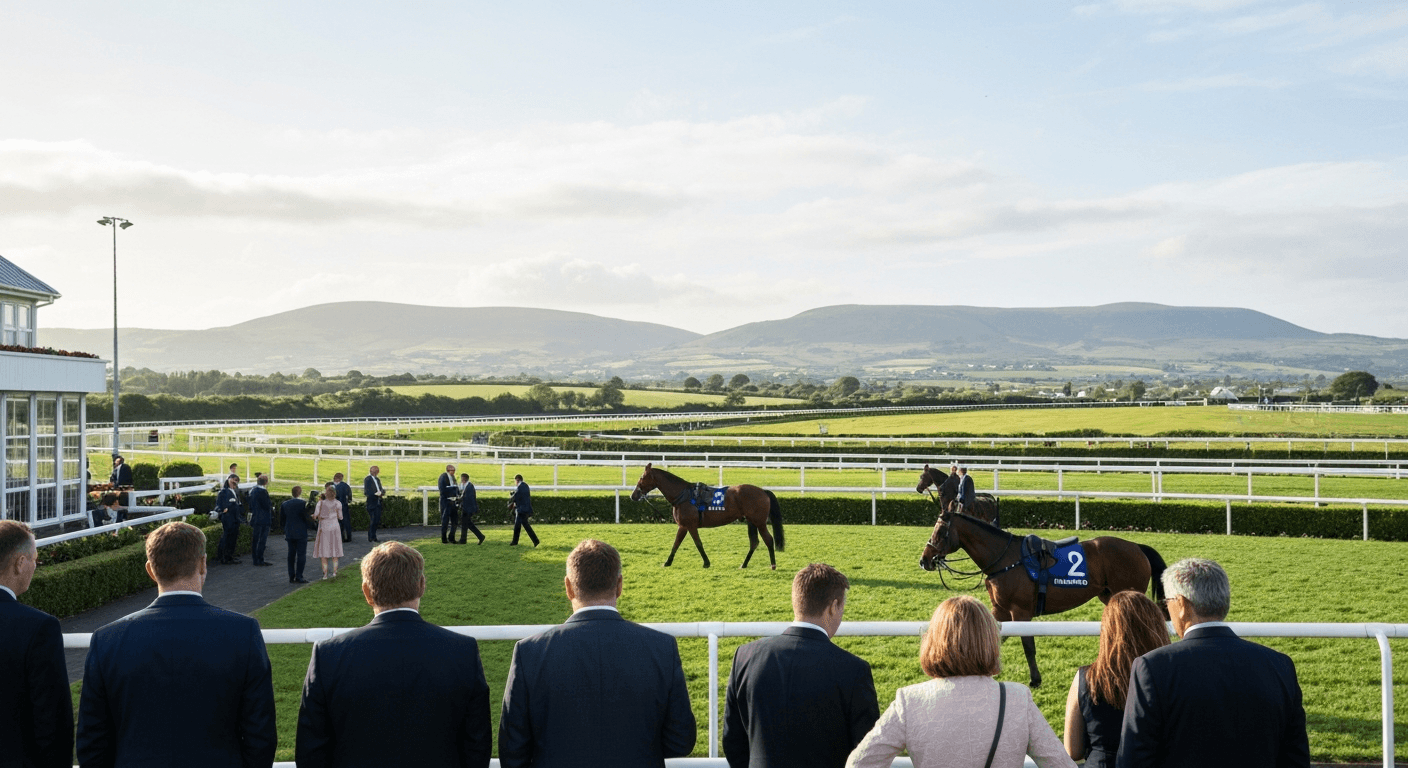
A Day Out at Tipperary Racecourse
Plan a day at Tipperary Racecourse: trains to Limerick Junction, admission and enclosures, food and bars, Super Sunday and practical first-visit tips.
Read more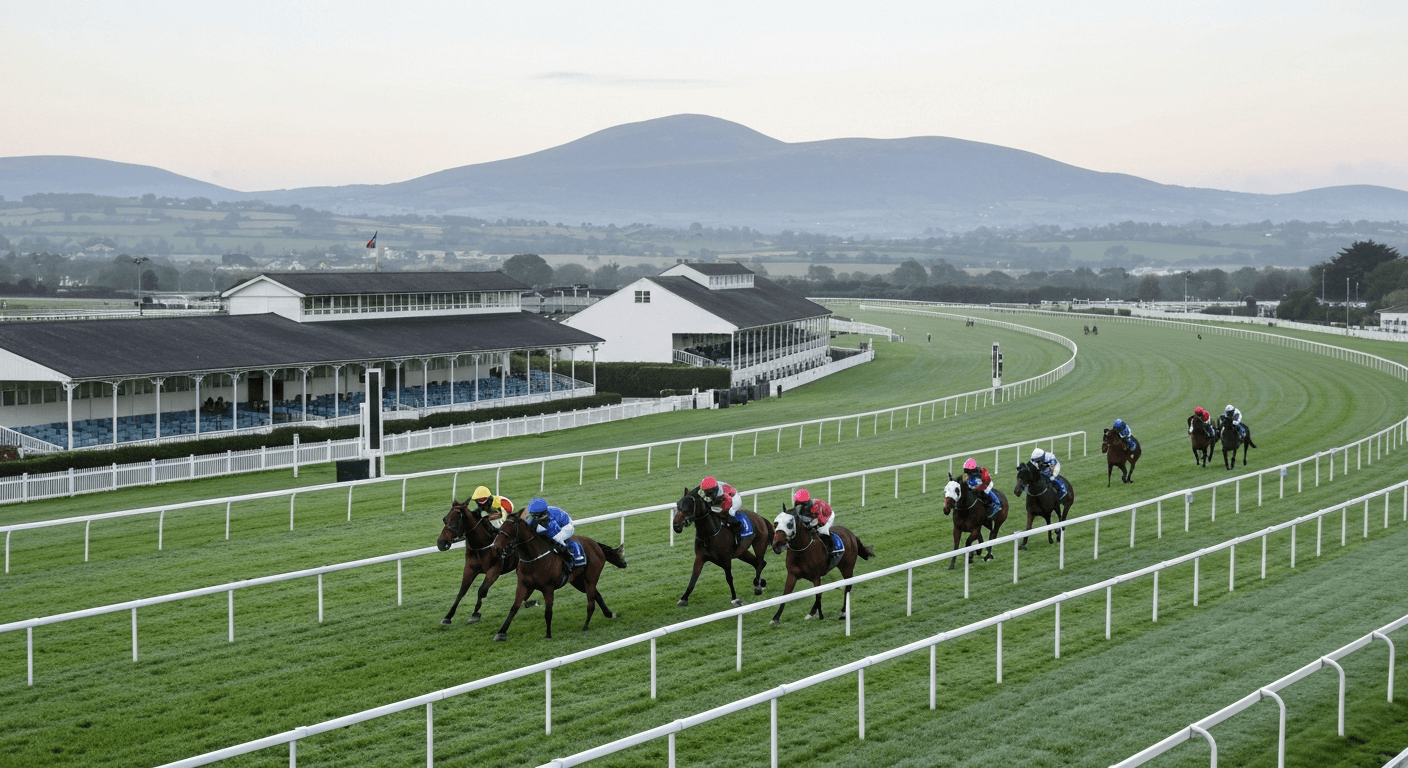
The History of Tipperary Racecourse
The history of Tipperary Racecourse at Limerick Junction, from the first races in 1848 to the Concorde Stakes and the champions who started out at the track.
Read more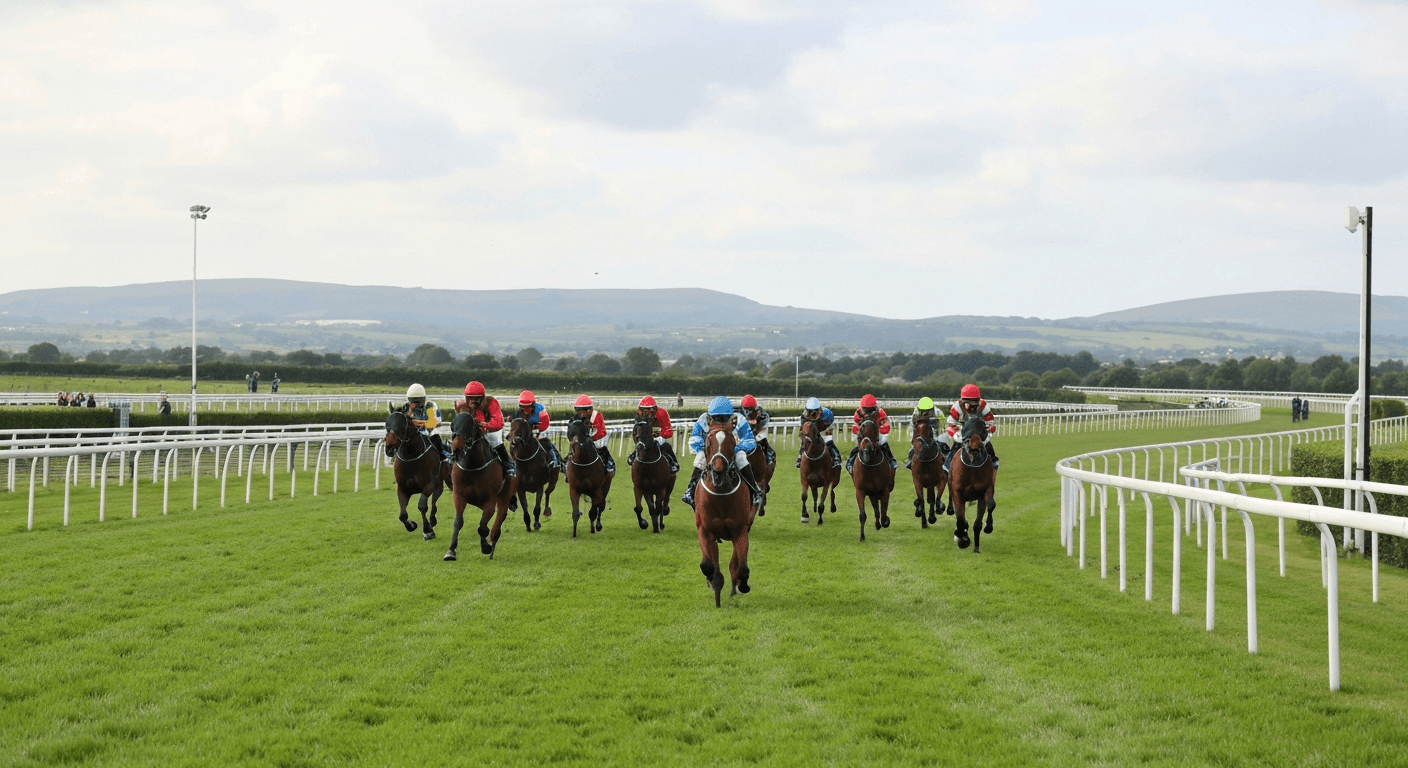
Tipperary Racecourse: The Complete Guide
Tipperary Racecourse, the dual-code Munster track beside Limerick Junction, home of Concorde Stakes and High Chaparral, plus tickets, travel and how to visit.
Read moreResearch the field with the AI Race Predictor
Our model publishes calibrated win-probability estimates for UK races — a second opinion to understand a race, not tips. It's open about its record: it doesn't beat the market, and we show exactly how it does.
Work it out & learn the basics
Gamble Responsibly
Gambling should be entertaining and not seen as a way to make money. Never bet more than you can afford to lose. If you or someone you know has a gambling problem, help and support is available.