
Founder & Editor · Last reviewed 2026-07-13
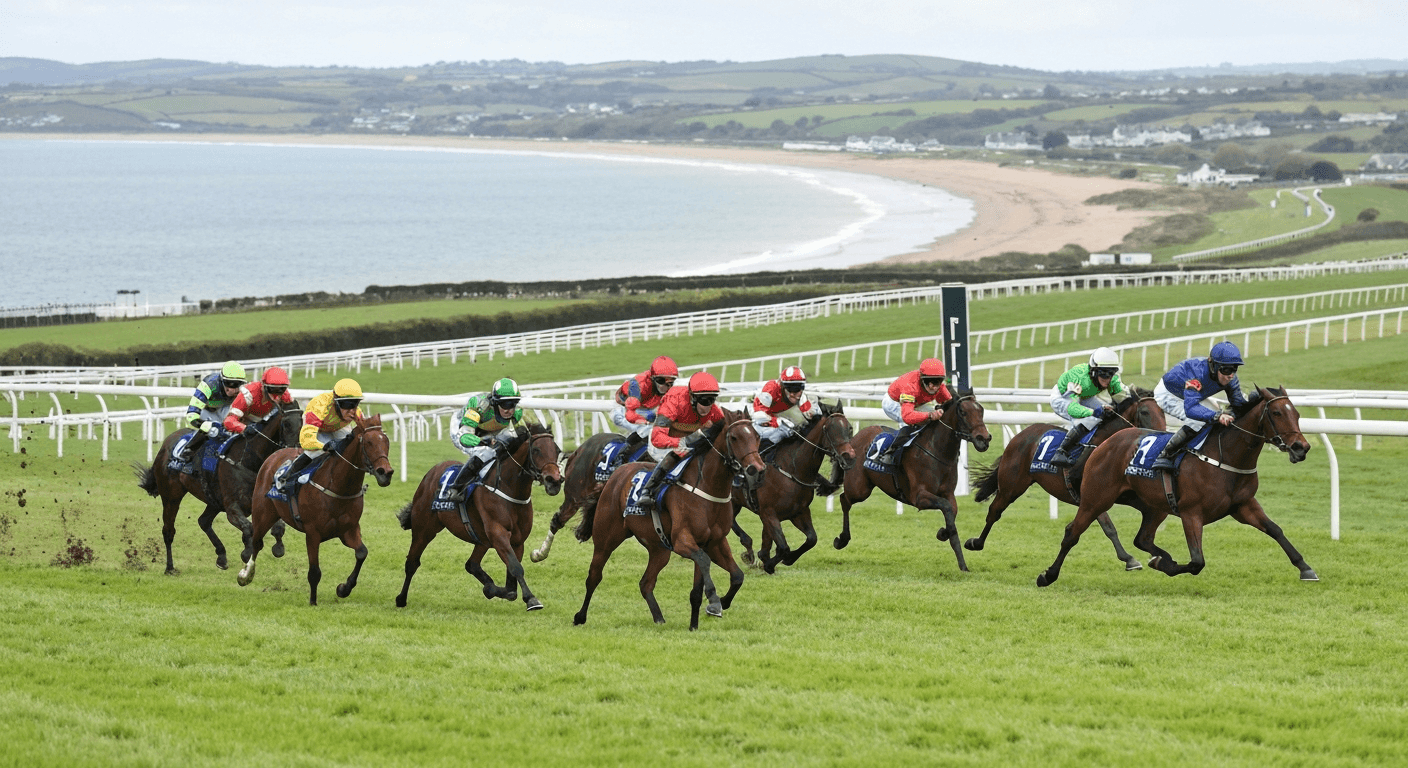
Tramore Racecourse sits at Graun Hill, on high ground above the seaside town of Tramore in Co. Waterford, overlooking Tramore Bay and about twelve kilometres from Waterford city. It is a dual-code turf track, running both National Hunt and Flat across eleven fixtures a year, and for a punter the whole character of the place comes from its shape. Tramore is a right-handed, tight, undulating, roughly round circuit of about seven to seven-and-a-half furlongs, one of the tightest and trickiest tracks in Ireland, and a course like that asks a particular sort of question of a horse and rewards a particular sort of runner.
This guide is a plain read on how that character shapes the betting, not a set of selections. It is worth being clear on that at the outset. Nothing here is a tip, and nothing here points to a way of making the sums add up in your favour. The plain truth of betting, on the Flat or over jumps, is that backing the favourite blindly loses money to the starting price over time, because the price already carries the bookmaker's margin. Tramore is no exception, and neither is any staking plan built on top of it. The aim is to understand the track and read the races better, not to sell a system.
If you do have a bet, treat it as paid entertainment and stake only what you can afford to lose. Anyone gambling in Ireland or the UK can find free, confidential help and self-exclusion tools through GambleAware and GamCare.
In order, this guide covers what the track asks of a horse, the going and the draw, the trainer and jockey angles, the favourites and form figures framed honestly, how the big days bet, and answers to some common questions. For the wider picture on the venue, its history and the feature races, see the full Tramore Racecourse guide and the rest of Irish racing.
Where to Bet
Place your bets with a trusted, licensed bookmaker.

Promo code BETFRED50. New customers only. Register, deposit with a Debit Card, and place a first bet of £10+ at Evens (2.0)+ on Sports, to be settled within 7 days, to get £30 in Sports Free Bets and £20 in Bet Builder Free Bets within 24 hours of settlement. 7-day expiry. Eligibility & payment exclusions apply. Full T&Cs apply. Take Time to Think. BeGambleAware.org. 18+. Full T&Cs.

Promo code R30. New UK customers only, 18+. Register, deposit £10 or more, then place a £10 single cash bet at odds of 1/2 (1.5) or greater on any sports market (excluding Virtuals). Once the qualifying bet settles you get £30 in Free Bets (3 x £10) — the qualifying bet can win or lose. Free Bets are valid on any sports market excluding Virtuals, expire in 7 days, are non-withdrawable and must be used in full. Excluded deposit methods apply (including PayPal, Apple Pay, Skrill and NETELLER). Named bets such as Lucky 15 do not qualify. If you cash out the qualifying bet, or it is voided, you are no longer eligible for the offer. Ends 31.12.26. Full T&Cs apply. Please gamble responsibly. BeGambleAware.org. 18+. Full T&Cs.

Promo code BET40GET20. New UK customers, 18+. Register with the code and place a first bet of £40 or more at Evens (2.0) or greater. Receive 2 × £10 free bets: the first credited automatically once the qualifying bet settles, the second 24 hours later. Free bets must be placed at minimum odds of 4/1 (5.0), expire 24 hours after credit, and the free-bet stake is not returned with winnings. Debit card deposits only. Take Time to Think. BeGambleAware.org. 18+. T&Cs apply. Full T&Cs.

50% of your first-day net losses refunded as a free bet, capped at £25. New UK customers aged 18+ only. To qualify, deposit and place a first bet of £10 or more on any sport at minimum odds of evens (2.00), then place at least two further bets on different events, each worth at least 50% of your largest bet, all at evens (2.00) or greater. Losses are counted from your first settled bet until 23:59 the same day. Place a qualifying £10+ bet and you are guaranteed at least a £5 free bet. Bets placed at SP, void bets, cashed-out bets and bets struck with free bets do not count towards the offer. The free bet is credited the day after your qualifying bets settle and must be used within 7 days, after which it expires. It can be used at odds from 1/4 (1.25) up to 250/1 on singles and straight accumulators, but not on Trixie, Patent or Yankee style multiples. Free-bet stake is not returned with winnings. One offer per person, household, address, IP address and device. E-wallet deposits may not qualify, so check the cashier before depositing. Customers registered with GAMSTOP cannot claim. KYC identity verification must be completed before the free bet is credited. Take Time to Think. BeGambleAware.org. 18+. T&Cs apply. Full T&Cs.

New customers, 18+. Choose the sports bonus at sign-up, make a first deposit and receive a 100% bonus up to £50 in your Sports Bonus balance. To convert the bonus to cash, wager it 10x within 30 days. Single bets below Evens (2.00) do not qualify; accumulators do not qualify if any selection is below 1/2 (1.50). Virtual Sports, voided, cancelled, drawn, cashed-out and free-bet wagers do not count towards wagering. Only the first settled bet per event counts. Withdrawing before the wagering requirement is met forfeits the bonus balance including bonus winnings. Real-money funds are used before bonus funds. Deposits via Skrill or Neteller are not eligible. Not valid in conjunction with other promotions. Odds, bet and payment limits apply. 10bet general and promotion T&Cs apply. BeGambleAware.org. 18+. Full T&Cs.

New customers in Great Britain and Republic of Ireland, 18+. Place a £10 fixed-odds qualifying bet at minimum odds of 1/2 (1.50) — single or each-way (only the win part counts), pre-event or in-play, not cashed out early, within 28 days of opening the account. Receive up to £60 in bonuses credited over three days: 3 × £10 fixed-odds free bets (the first on settlement, then 24 and 48 hours later) plus 3 × £5 Total Goals FOOTBALL spread bets and 3 × £5 racing Winning Favourites spread bets, with a £1 racing Race Index spread bet as an extra on top. The spread bets need a full spread-betting account, opened within 28 days of the fixed-odds account and subject to Spreadex's eligibility and appropriateness checks. Free-bet stakes not returned with winnings; free bets valid 28 days from issue. IMPORTANT: the £5 credits are SPREAD bets — sports spread betting carries the risk that losses can exceed your stake. Sports spread-betting customers do not have Financial Ombudsman or FSCS recourse. Take Time to Think. BeGambleAware.org. 18+. T&Cs apply. Full T&Cs.

Promo code WELCOME15, entered under My Bonuses after registering. New UK customers, 18+. Place a first qualifying bet of at least £10 from your cash balance at odds of evens (2.0) or greater within 7 days of opening the account. Once the qualifying bet fully settles you receive £15 in free bets, credited as 3 x £5 tokens with set uses: one £5 accumulator free bet (minimum 4 legs, each leg at 2/5 or bigger), one £5 sports free bet (any market at evens or bigger) and one £5 Sub Cover free bet (selected football player markets at evens or bigger). Free-bet stakes are not returned with winnings. Free bets expire 7 days after they are credited. Void, cashed-out and partially cashed-out bets do not qualify. One offer per customer. Confirm the current terms on BetGoodwin's own welcome-offer page before claiming. Take Time to Think. BeGambleAware.org. 18+. T&Cs apply. Full T&Cs.

New UK customers, 18+. Minimum deposit £10. Place a £10 qualifying single at minimum odds of 1/2 (1.50), settled within 14 days. Receive £30 in free bets (stake not returned), split £20 for sportsbook use (2 x £10) and £10 for Bet Builder only (2 x £5); Bet Builder does not cover horse racing. Free bets must be accepted within 7 days and expire 7 days after acceptance. No promo code required. Best Odds Guaranteed on UK & Irish racing, subject to having staked over £25 in the previous seven days. Operated by LiveScore Betting and Gaming (Gibraltar) Ltd, UKGC 56859. Confirm the current terms on LiveScore Bet's own promotions page before claiming. Take Time to Think. BeGambleAware.org. 18+. T&Cs apply. Full T&Cs.
18+. BeGambleAware.org
What the Track Asks of a Horse
Tramore is a right-handed, roughly round track of about seven to seven-and-a-half furlongs, and it is a tight, undulating circuit rather than a flat, easy one. Almost everything about how it plays follows from that shape. The course climbs from the winning post to about halfway down the back straight, then descends sharply before rising again into a very short uphill home straight of only about one furlong. A horse has to cope with sharp turns and marked changes of elevation, and then find something for the pull to the line off a bend, all inside a lap of just over seven furlongs.
That profile produces a particular kind of race. The tight turns, the undulations and the short straight mean many horses simply fail to act around Tramore, and the course turns out specialists among both horses and jockeys. Balance and a nimble, handy type are what the track asks for; a big galloping horse that wants a long straight to wind up is ill-suited. The read for a punter is about the demand, not a selection. A horse that is well balanced, travels within itself and can quicken off a turn fits the track. One that needs a long run to the line to make its stamina tell has the layout against it. That describes the sort of runner the course suits and is a way of reading a race, not an instruction to back whatever is in front.
Over jumps the geometry is wrapped around the fences. The chase course has five fences to a circuit, with a long downhill run to the second-last just before the short uphill straight, and the run-in from the final fence is only about 160 yards. That short run-in matters: a horse that jumps the last in front and is still travelling has very little ground left in which to be caught. The fences themselves are traditionally soft and forgiving, so the track tends to ask more of a horse's balance and agility around the turns than of its raw jumping.
The Flat course is used sparingly, chiefly on the Style Evening at the August Festival, over trips from about a mile and a half to two miles. Because Flat racing at Tramore is rare, there is less Flat form to lean on than over jumps, where the course produces a deeper book of runners that come back and go well again.
None of this is a Tramore secret, and none of it is priced out of the market. It is simply the physical demand the course makes, and knowing it helps you judge whether a horse's profile fits the track before you look at the price. These track details match the fuller description in the complete Tramore Racecourse guide.
Going and the Draw
Two separate things get bundled together as "the going and the draw", and at Tramore it pays to keep them apart, because on one of them the course gives a clear answer and on the other there is nothing to weigh at all.
Take the draw first, because it is the simplest point on the whole card. Tramore uses no starting stalls on the Flat. The races are set off by flag starts, so there is no draw and no draw bias to factor in, on the Flat or over jumps. What the flag start does introduce is a different wrinkle: horses that are not used to lining up and being sent off by flag can struggle with it, so the relevant question is a runner's experience of that kind of start rather than any stall number. There is simply no draw angle to sell here, and any guide that offers one is inventing it.
The going, and more precisely the pace the ground produces, is where the real story sits. Tramore's tight turns and one-furlong uphill straight make it very hard to make up ground from behind, and the state of the ground changes how much that matters. On quicker ground it is very difficult to come from off the pace, so prominent runners are favoured and a horse that can hold a handy position through the turns has the track in its favour. When the ground rides soft, the emphasis shifts: horses can come from further back, because the deeper surface blunts the early speed and lets closers get into the race. The going at Tramore is usually soft, which is worth holding in mind when reading how a race is likely to unfold.
| Ground | Pace it favours | Why |
|---|---|---|
| Quicker | Prominent, handy runners | Tight turns and one-furlong straight make ground-up hard |
| Soft | Closers can figure | Deeper surface blunts early speed |
| Any (Flat or jumps) | No draw bias | n/a, flag starts, no stalls |
State any of this with its condition attached or it misleads. The pace bias is not a fixed rule that a front-runner always wins; it is a lean that is strong on quick ground and softer when the going eases, and Tramore's ground is more often soft than fast. Just as importantly, none of it is a route to profit. Knowing that quick ground favours prominence, or that soft ground opens the race up, helps explain why a result fell the way it did. It does not, on its own, beat the starting price, and it should never be treated as if it could.
Trainer and Jockey Angles
Because Tramore runs both codes but has far more jumping form to go on, the names that matter are led by the National Hunt yards, and over obstacles one name sits well above the rest.
Willie Mullins is the dominant trainer at the course over jumps. Course data credits him with about 63 National Hunt wins since 2009, at roughly a 38 per cent strike rate, which is a remarkable return at any track and reflects how often the champion yard fields the best-in class runner in a small Tramore field. Henry de Bromhead, the Co. Waterford trainer with strong local ties, features strongly too, and is a three-time recent winner of the New Year's Day Chase, including with Heart Wood in 2026. Gordon Elliott and Eoin Doyle are the other jumps yards that show up repeatedly in the course statistics.
Among the riders, the Flat and the jumps split into different names. Over jumps, Darragh O'Keeffe and Paul Townend feature strongly, and third-party course data has flagged O'Keeffe as notably profitable to follow over jumps in recent seasons. On the Flat, which Tramore stages sparingly, Shane Foley and Wayne Lordan lead the recent riding statistics and are noted course-riding specialists, the sort of jockeys who know how to get a horse balanced around the tight turns. Pat Flynn is the leading recent Flat trainer at the course.
| Code | Trainer angle | Jockey angle |
|---|---|---|
| Jumps, general | Willie Mullins, about 63 NH wins since 2009, roughly 38% strike rate | Darragh O'Keeffe and Paul Townend feature strongly |
| Jumps, New Year's Day Chase | Henry de Bromhead, three recent wins including 2026 | Darragh O'Keeffe, rode 2026 winner Heart Wood |
| Jumps, others | Gordon Elliott and Eoin Doyle feature | n/a |
| Flat | Pat Flynn, leading recent Flat trainer | Shane Foley and Wayne Lordan lead recent Flat riders |
That last point about O'Keeffe is worth handling carefully, because "profitable to follow" is exactly the kind of phrase that reads like a betting instruction when it is not one. A rider or a yard being ahead on a stretch of past results does not carry any promise about the next race, and the moment a pattern like that is widely noticed the market shortens the relevant runners to match. The honest reading of all these records is the same across the card. A strong hand from Mullins over jumps, or a de Bromhead runner in the New Year's Day Chase, is a genuine signal of quality, and that is exactly why it is already in the price. When a dominant yard fields more than one runner in a small Tramore field, the harder question is usually which of the stablemates to be with, not whether the stable will be involved.
The value in this section is not a shortlist to back. It is that Tramore rewards course specialists, both horses and jockeys, more than most tracks, so a proven course-and-distance record over jumps is a more meaningful pointer here than it would be at an easy, galloping course. Reading that record helps you understand where the quality is concentrated and why some horses keep going well at Tramore while others never act around it. It is not a shortcut to value, because the better the record, the shorter the price the market sets against it.
Favourites, Form and the Honest Maths
Here is the part most betting guides skip over, so it is worth saying plainly. Favourites win their share of races at Tramore, as they do everywhere, but backing the favourite, or any single mechanical angle, loses money to the starting price over time. That is not a Tramore quirk. It is how the market works. The starting price already contains the public's best estimate of a horse's chance plus the bookmaker's margin, so a plan of backing the obvious runner time after time simply hands that margin away with every bet.
The New Year's Day Chase is a useful case, because on the face of it the trends look inviting. Course trends note about ten winning favourites in the last twenty renewals, which is the kind of figure that tempts a punter into simply backing the market leader in the race each January.
| New Year's Day Chase | Detail |
|---|---|
| Winning favourites | About 10 of the last 20 renewals |
| 2026 winner | Heart Wood, 2/1 joint-favourite |
| Biggest-priced recent winner | The Fonze, 2010, 12/1 |
The catch is that a strike rate around half does not add up to a profit. Even in a favourite-friendly race, the market prices the favourite to reflect that chance, so the winners return little and the losers still cost a full stake, and stringing those bets together across the years leaves you behind after the margin. The Fonze going in at 12/1 in 2010 is the other half of the picture: the favourite does not always oblige, and the renewals it loses are what the short winning returns have to cover. A favourite-friendly Graded chase and a wide-open handicap look like opposite puzzles, yet they reach the same answer, which is that the price you take swallows any edge.
So how should the form be used? As a filter on understanding, not as a betting machine. Knowing that Tramore favours nimble, balanced course specialists, that prominent runners are hard to peg back on quicker ground, and that there is no draw to weigh because of the flag starts, helps you judge whether a result made sense and whether a price looks fair. It does not, on its own or together, hand you a profit. Anyone who tells you a course angle reliably beats the starting price is selling something. The realistic goal is to be better informed, place fewer poor bets, and stake only what you can afford to lose. Betting at Tramore, like betting anywhere, is a cost for entertainment over time, not a source of income, and it is worth keeping the GambleAware tools to hand if it ever stops feeling that way.
How the Big Days Bet
Tramore's biggest betting days each have their own shape, and it helps to know which kind of race you are looking at before a price catches your eye.
The one Graded race of the year is the O'Driscoll's Irish Whiskey New Year's Day Chase, a Grade 3 steeplechase over about two miles and seven furlongs, run on 1 January for five-year-olds and up. It was upgraded from Listed to Grade 3 in 2020 and carried a first prize of €22,125 in its recent running, from an advertised fund of €37,500. In 2026 it was off at 2.25pm and won by Heart Wood, ridden by Darragh O'Keeffe for Henry de Bromhead, sent off the 2/1 joint-favourite and winning by eight and a half lengths from Ile Atlantique on soft going. That result gave de Bromhead a third win in the race in four years. As a small-field Graded chase it tends to go to a strongly-fancied runner, so the way to read it is to judge whether the standout is as good as its price suggests, because the class is already in that price rather than tucked away at a value one. There is no expectation that the short-priced favourite will see you right over time, and the race has thrown up a 12/1 winner in The Fonze as recently as 2010.
The other headline days come at the four-day August Festival, which runs Thursday to Sunday, dated 14 to 17 August in 2025 and scheduled for 13 to 16 August in 2026. The Friday BBQ Evening carries the meeting's feature chase, promoted generically as the "EY Steeplechase" and run in 2025 as the Seamus Byrne Electrical Steeplechase over about two miles and five furlongs, worth €12,500, won by Caesar Rock for Mouse Morris and Darragh O'Keeffe at 5/1 on 15 August 2025. The Saturday Style Evening is the rare Flat card, built around a Rated Flat Race, run in 2025 as the Morris DIY Rated Race over a mile and a half and won by Chica Guerrera at 11/2, with the most valuable Flat race on the card the Perennial Freight Handicap, also over a mile and a half, won by the evens favourite Tounsivator.
The thread through all of these is the same. These trends are context for understanding how a race is likely to unfold and why a result happened, not a method for beating the bookmaker. On the days the markets are busiest, the prices are at their sharpest, the favourite still loses money backed blind over time, and the only sound rule is to stake what you can afford and treat any return as a bonus rather than a plan.
Frequently Asked Questions
Share this article
More about this racecourse
All tramore guides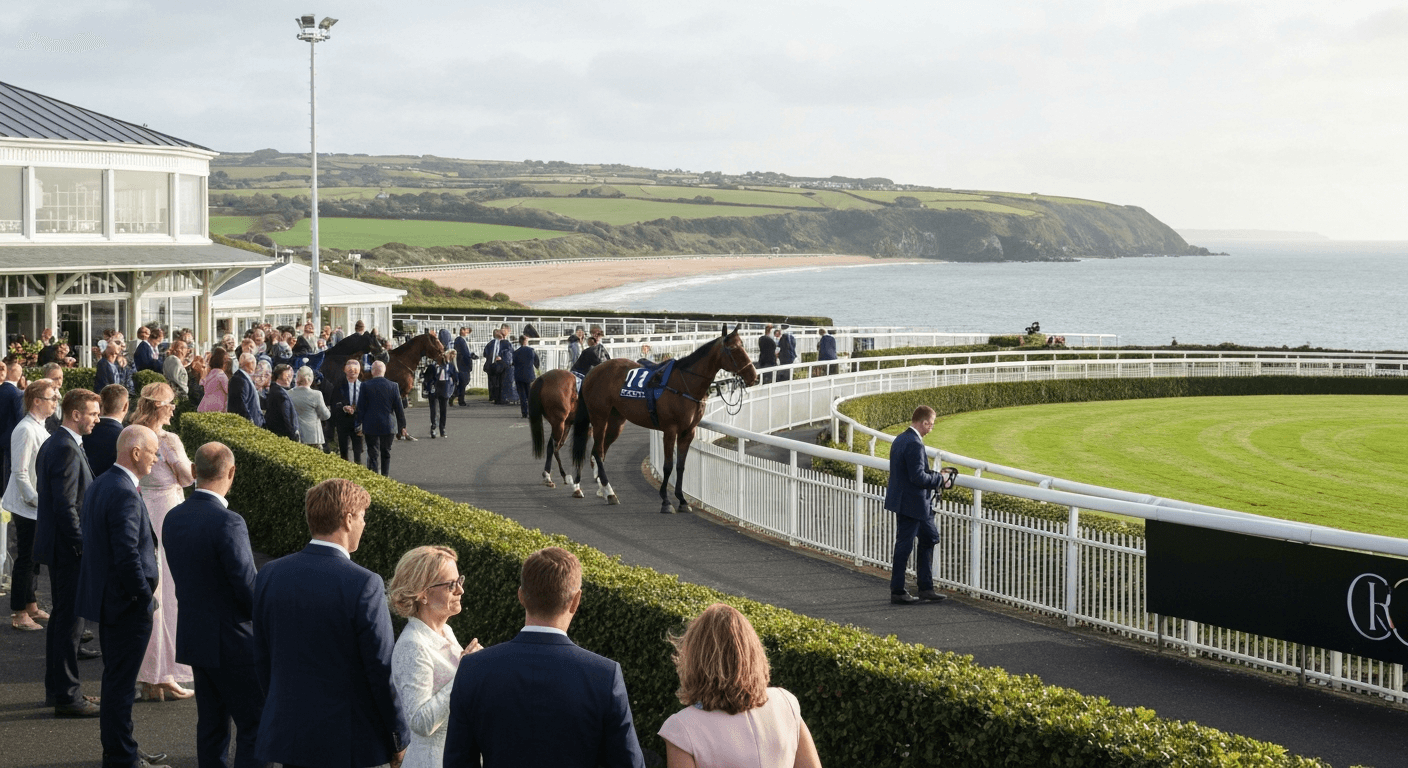
A Day Out at Tramore Racecourse
Plan a day at Tramore Racecourse above Tramore Bay: getting there, tickets, food and bars, the August Festival, what to wear and first-visit tips.
Read more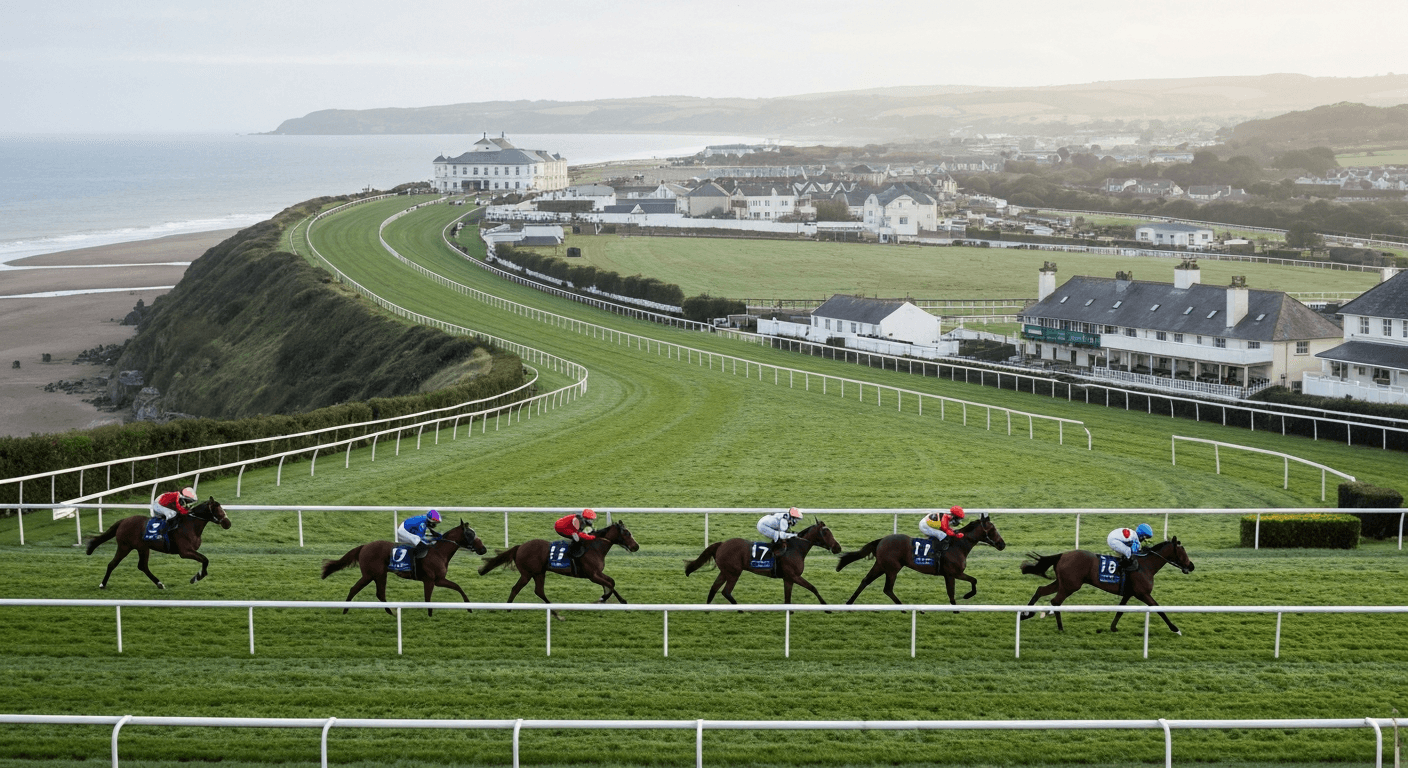
The History of Tramore Racecourse
The history of Tramore Racecourse, from beach racing in 1785 to Graun Hill, the New Year's Day Chase and the August Festival above Tramore Bay.
Read more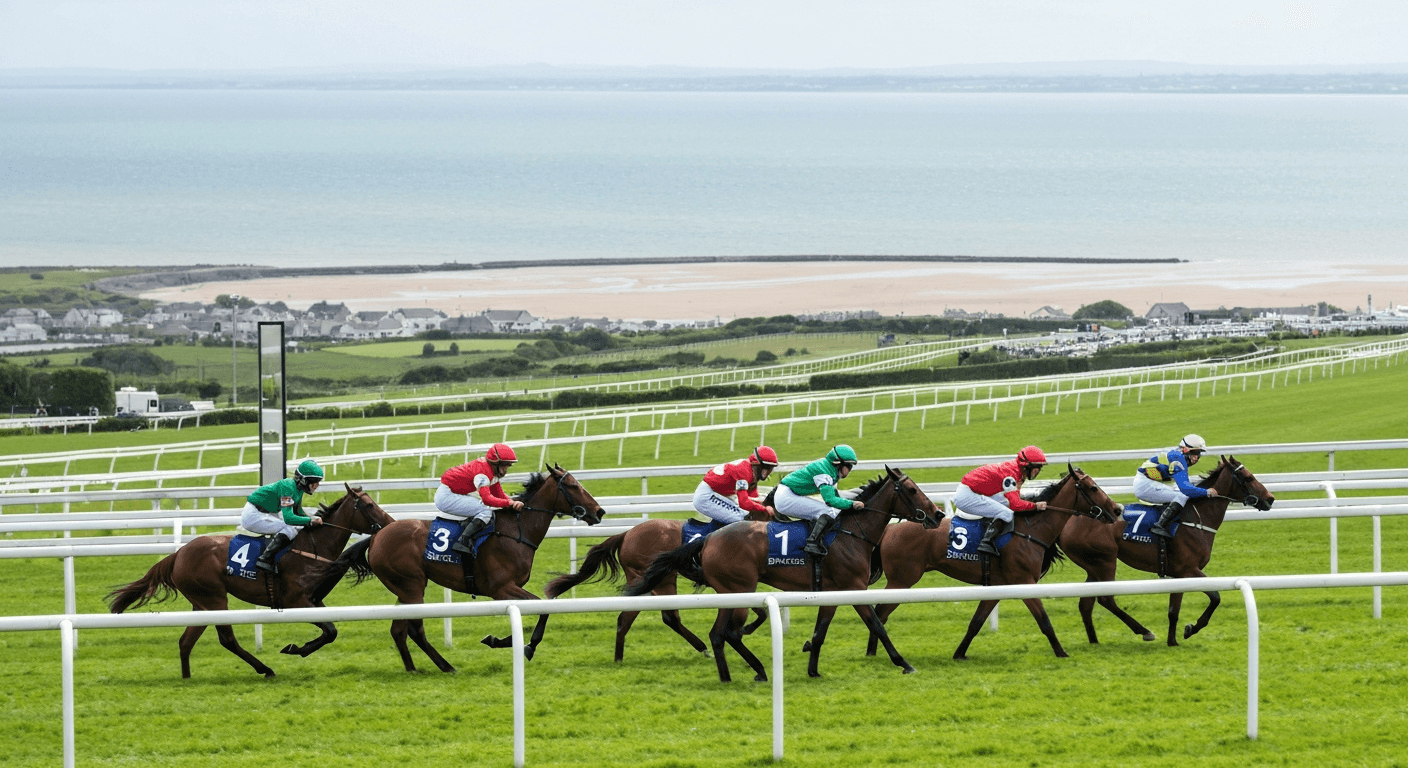
Tramore Racecourse: The Complete Guide
Guide to Tramore Racecourse, a dual-code track above Tramore Bay in County Waterford, home of the New Year's Day Chase, plus tickets, travel and how to visit.
Read moreResearch the field with the AI Race Predictor
Our model publishes calibrated win-probability estimates for UK races — a second opinion to understand a race, not tips. It's open about its record: it doesn't beat the market, and we show exactly how it does.
Work it out & learn the basics
Gamble Responsibly
Gambling should be entertaining and not seen as a way to make money. Never bet more than you can afford to lose. If you or someone you know has a gambling problem, help and support is available.