
Founder & Editor · Last reviewed 2026-07-13
On 30 July 1992, a three-year-old bay filly named Sinntara won a maiden over a mile and a half at Wexford. It was a modest afternoon at a modest track. Wexford has never had a champion racehorse of its own, and Sinntara did not become one that day. What makes her worth a page of her own is what came later, and it had almost nothing to do with the racecourse where she scored one of her four career wins.
Eight years after that Wexford maiden, Sinntara's son Sinndar won the Epsom Derby, the Irish Derby and the Prix de l'Arc de Triomphe in a single season. He is one of the outstanding European colts of the modern era. His mother, the mare who produced him, had won her maiden at a small jumps-and-Flat town in the south-east of Ireland. That is the connection, and it is worth being honest about its shape from the start. Sinntara raced at Wexford; Sinndar never did. This is not the story of a great horse who happened to run here. It is the story of a winner at Wexford who went home to the paddocks and bred a champion.
Sinntara was owned by the Aga Khan and trained by John Oxx, the same stable that later handled Sinndar. She ran six times on the Flat in Ireland and won four, a useful and honest record for a filly at that level. Her Wexford win sits inside that record as a real result, verified and commemorated by the racecourse itself. It is the direct thread that ties her to the course. Her fame, though, rests on the breeding shed rather than the track.
This article tells the complete story of that connection: the mare herself and her own racing, the maiden she won at Wexford, the champion she produced, and what her tale says about a course whose place in the wider sport comes as much through the horses bred nearby as through the ones who race there. Below are the anchors for each part of the story.
Where to Bet
Place your bets with a trusted, licensed bookmaker.

Promo code BETFRED50. New customers only. Register, deposit with a Debit Card, and place a first bet of £10+ at Evens (2.0)+ on Sports, to be settled within 7 days, to get £30 in Sports Free Bets and £20 in Bet Builder Free Bets within 24 hours of settlement. 7-day expiry. Eligibility & payment exclusions apply. Full T&Cs apply. Take Time to Think. BeGambleAware.org. 18+. Full T&Cs.

Promo code R30. New UK customers only, 18+. Register, deposit £10 or more, then place a £10 single cash bet at odds of 1/2 (1.5) or greater on any sports market (excluding Virtuals). Once the qualifying bet settles you get £30 in Free Bets (3 x £10) — the qualifying bet can win or lose. Free Bets are valid on any sports market excluding Virtuals, expire in 7 days, are non-withdrawable and must be used in full. Excluded deposit methods apply (including PayPal, Apple Pay, Skrill and NETELLER). Named bets such as Lucky 15 do not qualify. If you cash out the qualifying bet, or it is voided, you are no longer eligible for the offer. Ends 31.12.26. Full T&Cs apply. Please gamble responsibly. BeGambleAware.org. 18+. Full T&Cs.

Promo code BET40GET20. New UK customers, 18+. Register with the code and place a first bet of £40 or more at Evens (2.0) or greater. Receive 2 × £10 free bets: the first credited automatically once the qualifying bet settles, the second 24 hours later. Free bets must be placed at minimum odds of 4/1 (5.0), expire 24 hours after credit, and the free-bet stake is not returned with winnings. Debit card deposits only. Take Time to Think. BeGambleAware.org. 18+. T&Cs apply. Full T&Cs.

50% of your first-day net losses refunded as a free bet, capped at £25. New UK customers aged 18+ only. To qualify, deposit and place a first bet of £10 or more on any sport at minimum odds of evens (2.00), then place at least two further bets on different events, each worth at least 50% of your largest bet, all at evens (2.00) or greater. Losses are counted from your first settled bet until 23:59 the same day. Place a qualifying £10+ bet and you are guaranteed at least a £5 free bet. Bets placed at SP, void bets, cashed-out bets and bets struck with free bets do not count towards the offer. The free bet is credited the day after your qualifying bets settle and must be used within 7 days, after which it expires. It can be used at odds from 1/4 (1.25) up to 250/1 on singles and straight accumulators, but not on Trixie, Patent or Yankee style multiples. Free-bet stake is not returned with winnings. One offer per person, household, address, IP address and device. E-wallet deposits may not qualify, so check the cashier before depositing. Customers registered with GAMSTOP cannot claim. KYC identity verification must be completed before the free bet is credited. Take Time to Think. BeGambleAware.org. 18+. T&Cs apply. Full T&Cs.

New customers, 18+. Choose the sports bonus at sign-up, make a first deposit and receive a 100% bonus up to £50 in your Sports Bonus balance. To convert the bonus to cash, wager it 10x within 30 days. Single bets below Evens (2.00) do not qualify; accumulators do not qualify if any selection is below 1/2 (1.50). Virtual Sports, voided, cancelled, drawn, cashed-out and free-bet wagers do not count towards wagering. Only the first settled bet per event counts. Withdrawing before the wagering requirement is met forfeits the bonus balance including bonus winnings. Real-money funds are used before bonus funds. Deposits via Skrill or Neteller are not eligible. Not valid in conjunction with other promotions. Odds, bet and payment limits apply. 10bet general and promotion T&Cs apply. BeGambleAware.org. 18+. Full T&Cs.

New customers in Great Britain and Republic of Ireland, 18+. Place a £10 fixed-odds qualifying bet at minimum odds of 1/2 (1.50) — single or each-way (only the win part counts), pre-event or in-play, not cashed out early, within 28 days of opening the account. Receive up to £60 in bonuses credited over three days: 3 × £10 fixed-odds free bets (the first on settlement, then 24 and 48 hours later) plus 3 × £5 Total Goals FOOTBALL spread bets and 3 × £5 racing Winning Favourites spread bets, with a £1 racing Race Index spread bet as an extra on top. The spread bets need a full spread-betting account, opened within 28 days of the fixed-odds account and subject to Spreadex's eligibility and appropriateness checks. Free-bet stakes not returned with winnings; free bets valid 28 days from issue. IMPORTANT: the £5 credits are SPREAD bets — sports spread betting carries the risk that losses can exceed your stake. Sports spread-betting customers do not have Financial Ombudsman or FSCS recourse. Take Time to Think. BeGambleAware.org. 18+. T&Cs apply. Full T&Cs.

Promo code WELCOME15, entered under My Bonuses after registering. New UK customers, 18+. Place a first qualifying bet of at least £10 from your cash balance at odds of evens (2.0) or greater within 7 days of opening the account. Once the qualifying bet fully settles you receive £15 in free bets, credited as 3 x £5 tokens with set uses: one £5 accumulator free bet (minimum 4 legs, each leg at 2/5 or bigger), one £5 sports free bet (any market at evens or bigger) and one £5 Sub Cover free bet (selected football player markets at evens or bigger). Free-bet stakes are not returned with winnings. Free bets expire 7 days after they are credited. Void, cashed-out and partially cashed-out bets do not qualify. One offer per customer. Confirm the current terms on BetGoodwin's own welcome-offer page before claiming. Take Time to Think. BeGambleAware.org. 18+. T&Cs apply. Full T&Cs.

New UK customers, 18+. Minimum deposit £10. Place a £10 qualifying single at minimum odds of 1/2 (1.50), settled within 14 days. Receive £30 in free bets (stake not returned), split £20 for sportsbook use (2 x £10) and £10 for Bet Builder only (2 x £5); Bet Builder does not cover horse racing. Free bets must be accepted within 7 days and expire 7 days after acceptance. No promo code required. Best Odds Guaranteed on UK & Irish racing, subject to having staked over £25 in the previous seven days. Operated by LiveScore Betting and Gaming (Gibraltar) Ltd, UKGC 56859. Confirm the current terms on LiveScore Bet's own promotions page before claiming. Take Time to Think. BeGambleAware.org. 18+. T&Cs apply. Full T&Cs.
18+. BeGambleAware.org
Sinntara: The Mare
Sinntara was a bay filly foaled in 1989. She was by Lashkari out of the French-bred mare Sidama, bred and owned by the Aga Khan and trained by John Oxx at Currabeg in County Kildare. That is a well-connected pedigree and a top yard, and it places her squarely inside one of the most successful breeding operations in European racing rather than among the everyday runners at a country track.
Her own racing career was short and honest. She ran six times on the Flat in Ireland and won four of those starts, for recorded earnings of around 28,000 euros. By the standards of the Aga Khan's better horses that is a minor record, but four wins from six runs is a genuinely useful strike rate, and it marks her out as a filly with real ability rather than a maiden plodder. She stayed middle distances well, which is worth noting given what her son later achieved over a mile and a half.
Two of her wins are worth naming. On 30 July 1992 she won a maiden at Wexford over a mile and a half, the result that gives this page its subject. In September of the same year she won the Irish Cesarewitch at the Curragh, a competitive staying handicap and the strongest race on her record. Her final recorded win came at the Curragh on 10 October 1992. Taken together, that is the profile of a progressive staying filly who improved through the summer and autumn of her three-year-old season.
The reason Sinntara is remembered has little to do with any of this. Like many well-bred fillies who show ability without reaching the top, her value was always going to be greatest as a broodmare. She retired to the Aga Khan's studs and there produced the horse who made her name. Her son Sinndar, foaled on 27 February 1997 and sired by Grand Lodge, was trained by the same John Oxx for the same owner. In a career of eight starts he won seven, and in 2000 he won the Epsom Derby, the Irish Derby and the Prix de l'Arc de Triomphe in the same season, a feat that puts him among the best colts Europe has produced in living memory.
That is the honest weight of Sinntara's story. She was a good race filly and a far more important broodmare. The Wexford maiden was a real win on a real afternoon, but her lasting significance runs through her produce rather than her own form. It is a pattern that repeats across breeding: the mare who wins quietly and then breeds loudly. Sinntara is one of the clearest examples of it with an Irish country track attached to her name.
The Race at Wexford
Sinntara ran at Wexford once. On 30 July 1992 she won a Flat maiden over a mile and a half. That single appearance is her entire Wexford record, and it is the direct link between the mare and the course.
The detail on the day itself is thin, and it is better to say so than to invent it. The jockey, the starting price and the winning margin are not part of the verified record, so this account keeps to what is confirmed: a mile-and-a-half maiden, won by Sinntara, on 30 July 1992. What can be said is that the win came during the productive middle of her three-year-old season, before her stronger success in the Irish Cesarewitch at the Curragh that September. A maiden win of that kind, over middle distance, is exactly the sort of form that reads as a stepping stone rather than a peak, and in her case that is how it turned out.
It is worth being clear about what a maiden win at Wexford was and was not. It was a genuine result at a licensed meeting, enough to get a useful filly off the mark. It was not a black-type race, and it did not put her among the best horses of her generation on the track. Wexford in 1992 was still a dual-code course that staged Flat racing alongside its jumps programme, and it drew the honest, everyday Flat cards you would expect of a country track in the south-east. Sinntara winning there was a good yard placing a progressive filly to win a race she was expected to win. The interest is entirely in who she later bred, not in the strength of the maiden.
| Detail | Record |
|---|---|
| Date | 30 July 1992 |
| Course | Wexford |
| Race | Maiden |
| Distance | 1m4f |
| Result | Won |
| Jockey | n/a |
| Starting price | n/a |
| Winning margin | n/a |
The gaps in that table are honest gaps, not oversights. Where the day's finer detail is not confirmed, it is left as n/a rather than filled with a plausible guess. The one number that matters is the year, 1992, and the one fact that matters is the win, and both are secure. Wexford's own racecourse history commemorates the maiden, which is a fair measure of how much a small track will make of a slender but real connection to a future champion's dam.
Great Moments
The defining moment in Sinntara's story did not happen at Wexford, and it is more honest to build this section around that fact than to dress up a country maiden as high drama. Her Wexford win was quiet and useful. The moment that made her matter came at Epsom on the first Saturday of June 2000, when her son Sinndar won the Derby.
The Wexford afternoon deserves its place first, though, because it is the course-bound moment and the reason this page exists. On 30 July 1992 a good filly did what a good filly was expected to do at a country meeting: she won her maiden over a mile and a half. There was no fanfare, no black type and no sign to a casual onlooker that anything unusual had happened. What the day quietly confirmed was that the Aga Khan and John Oxx had another progressive stayer on their hands, one worth persevering with. That persistence paid off within weeks at the Curragh, and it paid off on a far larger scale years later in the breeding shed.
The great moment in the fullest sense belongs to Sinndar. In 2000 he won the Epsom Derby, then the Irish Derby, then the Prix de l'Arc de Triomphe, three of the most important middle-distance races in the world, in a single season under Johnny Murtagh for John Oxx. Seven wins from eight starts is the record of a genuine champion, and the Arc in particular sealed his standing among the best European colts of his generation. Every one of those victories traces back, in the plain arithmetic of breeding, to the mare who won a maiden at Wexford.
That is the moment worth holding in the mind when Wexford's connection to the horse is discussed. A filly won a small race in the south-east of Ireland in 1992. Eight years later her son stood in the Epsom winner's enclosure as a Derby winner, and by October he had added the Arc. The line between the two is direct and real, even though the horse who reached the top never set foot on the Wexford turf. The course cannot claim Sinndar. It can, fairly and modestly, claim the afternoon his mother got off the mark.
Legacy and Significance
Sinntara's legacy is a broodmare's legacy. She is remembered as the dam of Sinndar, and that is a substantial thing to be remembered for. A mare who produces a Derby and Arc winner has done more for the breed than most horses who beat her on the track ever managed. Her own four wins were the useful base; Sinndar was the return. In the record of the Aga Khan's studs she stands as one of the successful matings, the Lashkari mare who, put to Grand Lodge, produced a colt good enough to win three of Europe's biggest middle-distance races in one summer.
For Wexford, the honest verdict is that Sinntara gives the course a real but indirect claim to greatness. She won here, and her son became a champion, and the two facts are genuinely linked. But the course did not shape Sinndar and cannot pretend to. What Sinntara offers Wexford is a good story rather than a resident legend, and the racecourse tells it well by simply recording her maiden win rather than overreaching.
Wexford's stronger claim to a place in the wider sport comes through a different set of horses, and it is worth setting alongside Sinntara's for balance. The M.W. Hickey Memorial Chase, the course's only black-type race and now run as a Listed steeplechase over 2m7f in late October, has a roll of honour that reaches championship level. Road To Riches won it in 2014 and went on to take the Galway Plate and finish third in the 2015 Cheltenham Gold Cup. Minella Indo won it in 2020 and then won the 2021 Gold Cup itself. Noble Yeats, the 2022 Grand National winner, took the race later that year. Double Seven, a winner in 2013 for J P McManus and Martin Brassil, finished third in the 2014 Aintree Grand National. Those are horses who actually raced and won at Wexford, and together they give the course a direct link to Gold Cup and Grand National form that no breeding footnote can match.
Placed against that jumps roll of honour, Sinntara's contribution is different in kind. Hers is not a course record but a bloodline. She is the local winner who bred a champion, the reminder that a country track's connection to the top of the sport can run through the paddock as easily as the parade ring. Both stories are true, and Wexford is entitled to both. The Hickey winners show what has been achieved on the track. Sinntara shows what once left it and went on to breed the very best.
Frequently Asked Questions
Share this article
More about this racecourse
All wexford guides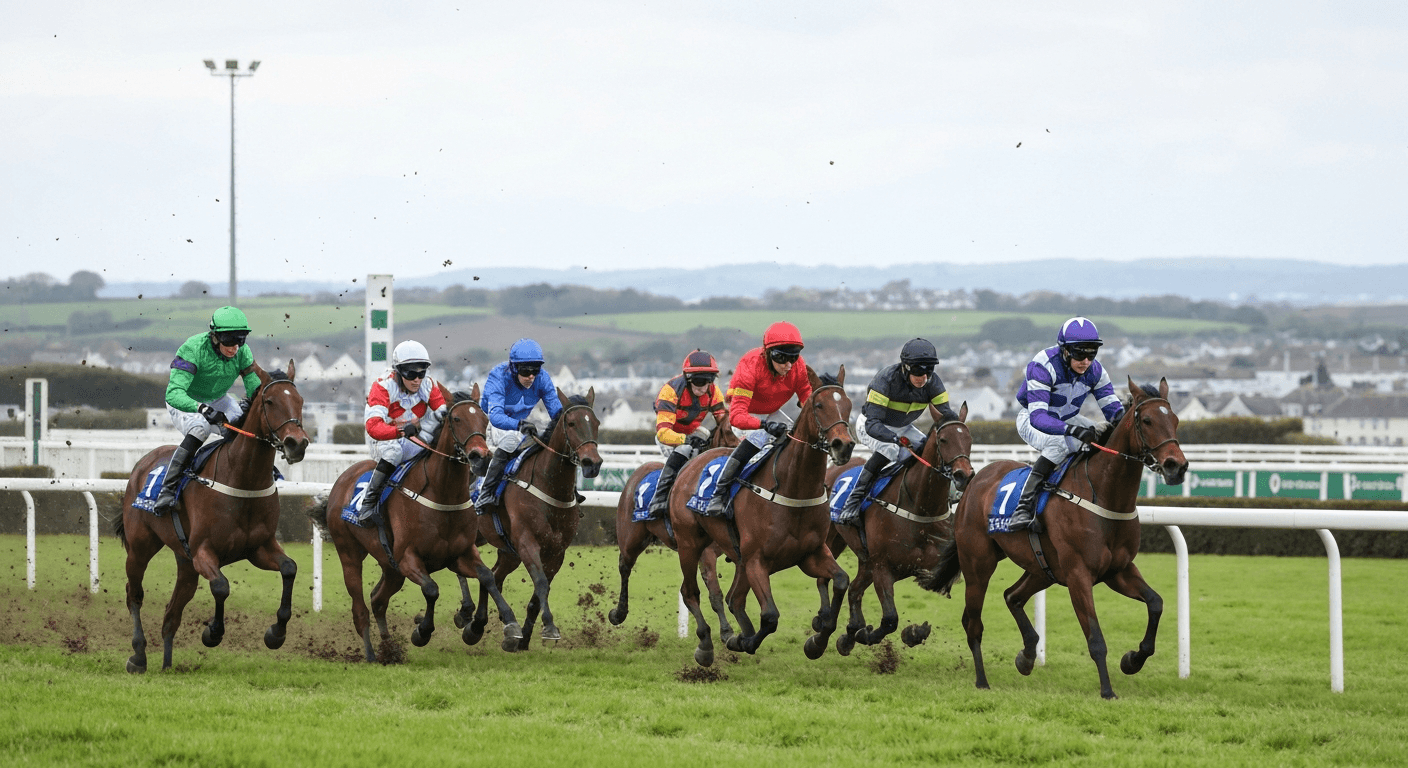
Betting at Wexford Racecourse
How Wexford's sharp, undulating, left-handed jumps track shapes the betting, with the Listed Hickey Memorial Chase, the front-runner bias and form framed honestly.
Read more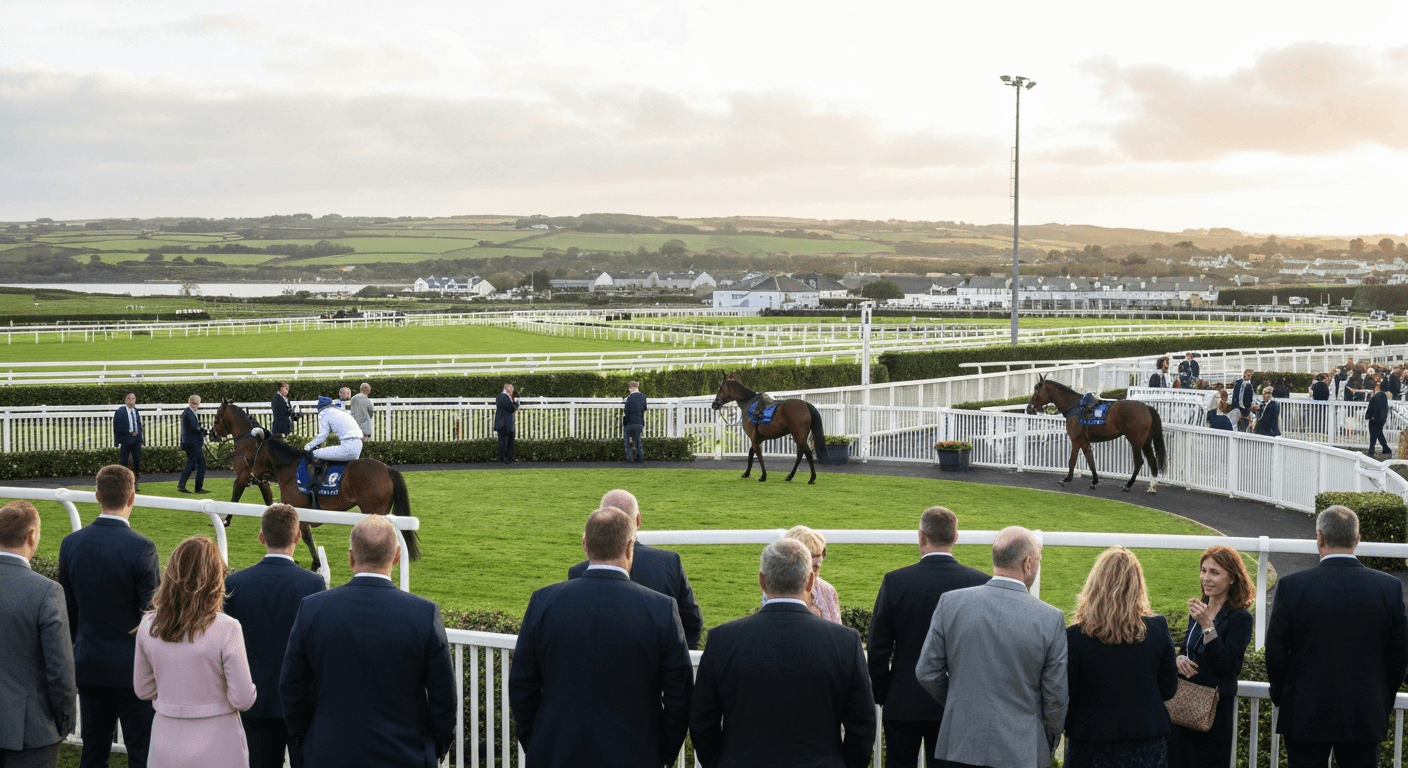
A Day Out at Wexford Racecourse
How to plan a day at Wexford Racecourse: getting there, tickets and the Ivy Room, the best fixtures, what to wear, accessibility and first-visit tips.
Read more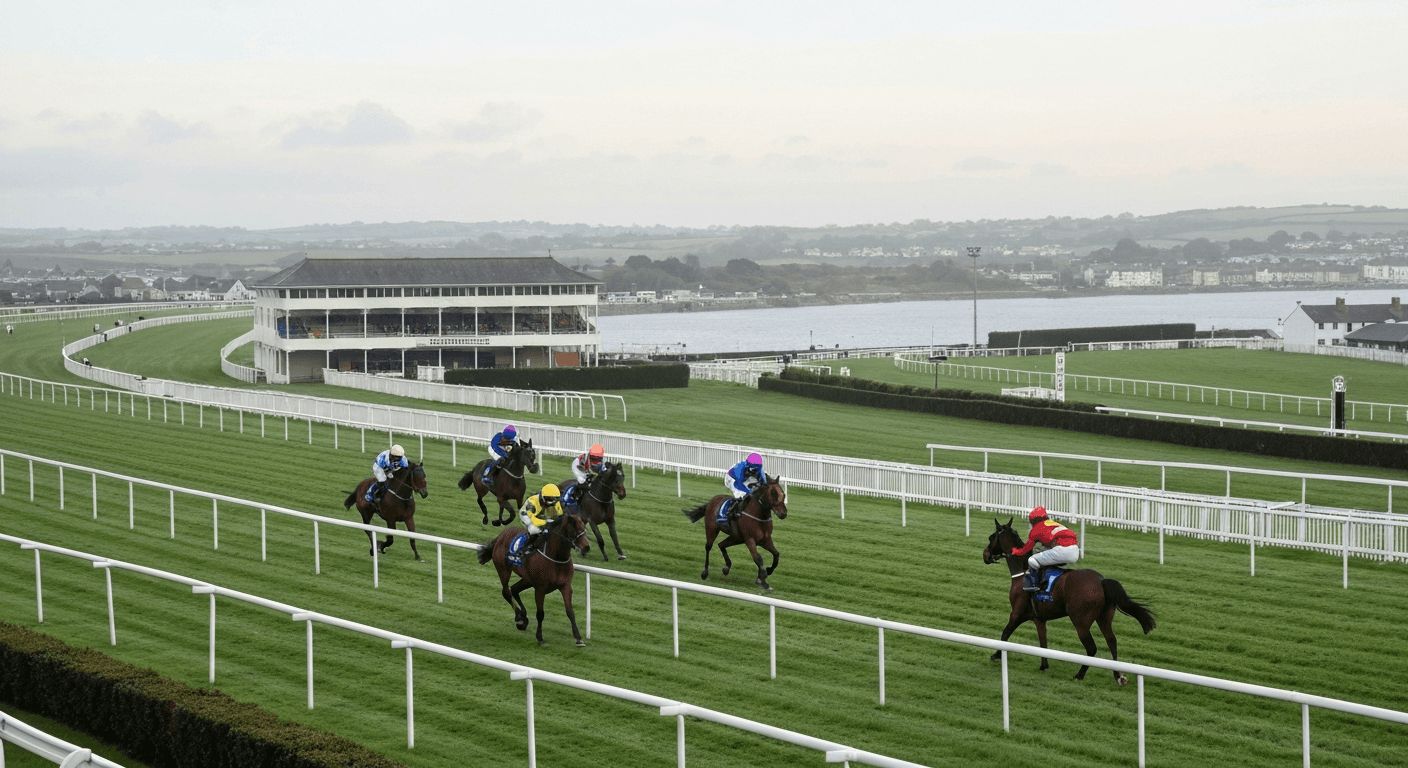
The History of Wexford Racecourse
The story of Wexford Racecourse, from racing in the area in the 1870s to the 1951 Bettyville opening, the 2015 left-handed switch and jumps-only today.
Read moreResearch the field with the AI Race Predictor
Our model publishes calibrated win-probability estimates for UK races — a second opinion to understand a race, not tips. It's open about its record: it doesn't beat the market, and we show exactly how it does.
Work it out & learn the basics
Gamble Responsibly
Gambling should be entertaining and not seen as a way to make money. Never bet more than you can afford to lose. If you or someone you know has a gambling problem, help and support is available.