
Founder & Editor · Last reviewed 2026-05-30
The 2026 edition has been run. Next: Royal Ascot 2027, Tuesday 15 to Saturday 19 June 2027.
Royal AscotStablebet model (pre-race estimated win chances)
Royal Ascot 16:20 · Jersey Stakes (Group 3) · Class 1 · 7f
Pre-race estimate. Published 20 June 2026, before the off. This is what the model made of the race beforehand, kept as a record. It was never published as a tip.
The model rated Saber Strike its most likely winner at 8%, ahead of Colori Forever (7%) and Catullus (7%). It read as a competitive, open race with no dominant runner.
| Horse | SP | Model chance | Market | vs Market |
|---|---|---|---|---|
| Saber Strike Tom Marquand / W J Haggas | 3.25 | 7.5% | 22.9% | Market 15.3pp shorter |
| Colori Forever Marco Ghiani / M Botti | 13.00 | 7.4% | 5.7% | Market 1.7pp longer |
| Catullus W Buick / C Appleby | 9.00 | 7.3% | 8.3% | Market 0.9pp shorter |
| Neolithic R L Moore / A P O'Brien | 13.00 | 7.2% | 5.7% | Market 1.5pp longer |
| Thesecretadversary Seamie Heffernan / J A Stack | 9.00 | 6.7% | 8.3% | Market 1.6pp shorter |
| Avicenna Ray Dawson / R Varian | 11.00 | 6.3% | 6.8% | In line with market |
| America Queen Billy Loughnane / R Hughes | 17.00 | 6.3% | 4.4% | Market 1.9pp longer |
| Morris Dancer Benoit D L Sayette / J & T Gosden | 17.00 | 5.9% | 4.4% | Market 1.5pp longer |
| Andab Dylan Browne McMonagle / J P O'Brien | 26.00 | 5.5% | 2.9% | Market 2.7pp longer |
| Into The Sky Oisin Murphy / J R Boyle | 6.50 | 5.4% | 11.4% | Market 6.0pp shorter |
| Domina Ignis D Egan / K P De Foy | 67.00 | 5.3% | 1.1% | Market 4.2pp longer |
| Green Sense James McDonald / J P O'Brien | 34.00 | 5.3% | 2.2% | Market 3.1pp longer |
| The Prettiest Star James Doyle / E Walker | 8.00 | 4.9% | 9.3% | Market 4.3pp shorter |
| Dorset Wayne Lordan / A P O'Brien | 21.00 | 4.9% | 3.5% | Market 1.3pp longer |
| Take Charge Star Ben Coen / J P Murtagh | 67.00 | 4.8% | 1.1% | Market 3.7pp longer |
| Ardisia Colin Keane / H Palmer | 67.00 | 4.7% | 1.1% | Market 3.6pp longer |
| Billecart Rowan Scott / K R Burke | 67.00 | 4.6% | 1.1% | Market 3.5pp longer |
These were the model's estimated win chances going into the race, not tips. The model is calibrated to real results (when it says 25%, about 25% win) but it does not beat the market, so read it as an independent second opinion on the race. See how accurate it is →
This race has been run. See the Royal Ascot 2026 results for the finishing order and starting prices. What follows is kept as it was written before the race, so anything it lists as not confirmed was still open when it was written and was not revisited afterwards.
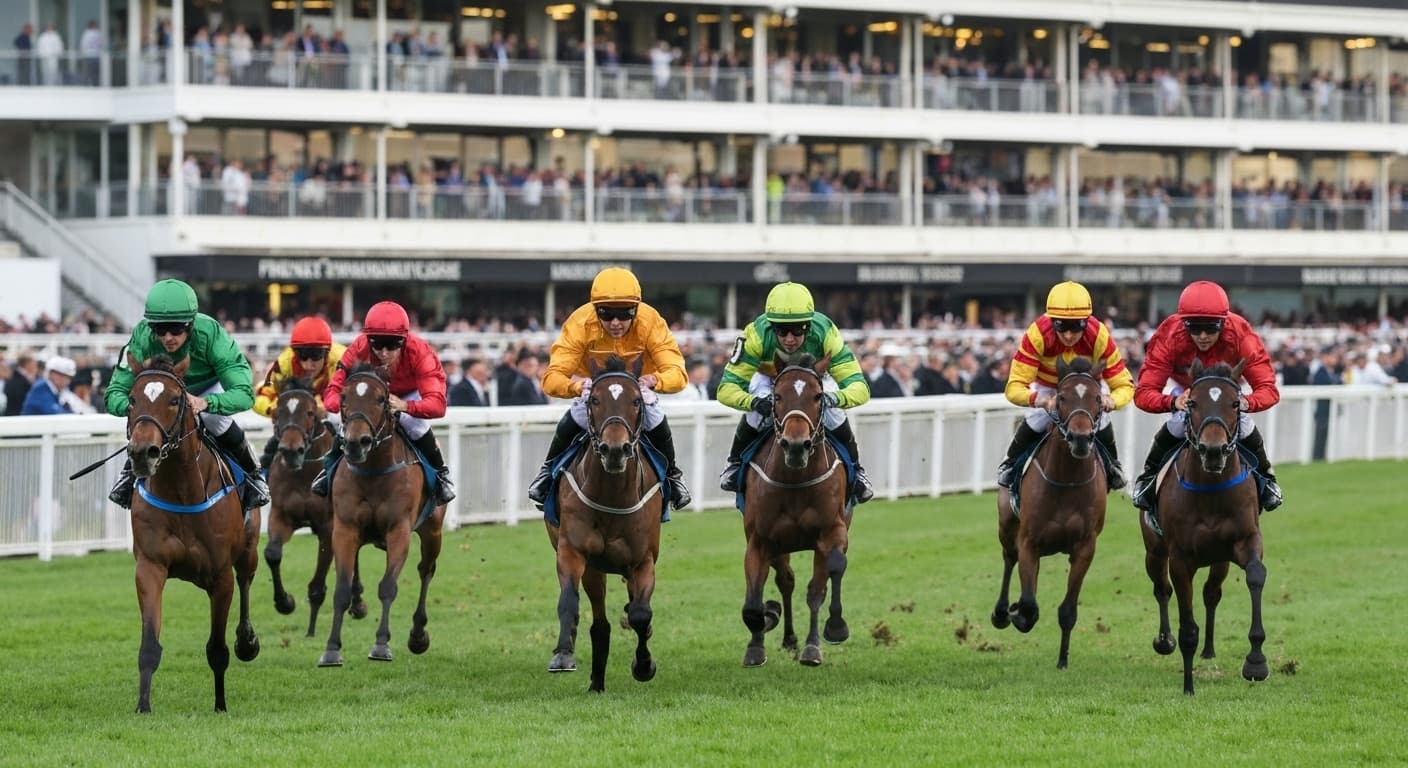
For five furious furlongs the field tucks together, and then the camber bites, and in those final two uphill furlongs the Diamond Jubilee Stakes turns from a sprint into a slogging test of class. That is why this race, the Saturday centrepiece of Royal Ascot, has belonged for over 150 years to the very best six-furlong horses on the planet.
The 2026 renewal runs on Saturday 20 June at 16:20 BST, the showpiece event on the final day of the royal meeting at Ascot. It is a Group 1 contest open to four-year-olds and upwards, run over the straight six furlongs, with the field released from stalls at the far end of the course and asked to charge home up Ascot's famously stiff climb [Ascot.com].
The race carries a prize fund of around £1,000,000, with roughly £567,100 going to the winner based on the 2025 allocation. Ascot has not yet published the official 2026 schedule, but the royal-meeting prize pot is typically held flat or nudged up year on year, particularly given the record £10m allocated across the week in 2025 [Ascot.com, Paddy Power]. The 2026 prize fund had not been published when this was written.
First run in 1868 as the All-Aged Stakes, the race has been renamed three times in honour of the late Queen. It became the Cork and Orrery Stakes in 1926, the Golden Jubilee Stakes in 2002 to mark Elizabeth II's 50-year reign, then the Diamond Jubilee Stakes in 2012 for her 60-year reign, and most recently the Queen Elizabeth II Jubilee Stakes in 2023 in her memory. It was promoted from Group 2 to Group 1 in the same 2002 reorganisation [Wikipedia]. For long-standing punters and trade media the older title still tends to dominate: most coverage in 2026 will still call it the Diamond Jubilee.
Why does it matter? Because the Saturday card is built around it. The royal carriage procession winds in, a senior royal presents the trophy, and the world's fastest milers-down-to-five-furlong specialists (Hong Kong, Australia, Ireland, France, the US and the UK) converge for a single race that, most years, decides the European older-sprinter hierarchy for the rest of the campaign. A win here is the year-defining performance for a sprint operation.
This preview maps the typical winning template, scores the last ten runnings against five hard trends, and frames the evergreen each-way maths.
Companion analysis: our Diamond Jubilee Stakes 2026 trends & stats runs the 10-year winning profile and the big-priced-winners pattern that makes this the least market-faithful G1 of the meeting.
Where to Bet
Place your bets with a trusted, licensed bookmaker.

Promo code BETFRED50. New customers only. Register, deposit with a Debit Card, and place a first bet of £10+ at Evens (2.0)+ on Sports, to be settled within 7 days, to get £30 in Sports Free Bets and £20 in Bet Builder Free Bets within 24 hours of settlement. 7-day expiry. Eligibility & payment exclusions apply. Full T&Cs apply. Take Time to Think. BeGambleAware.org. 18+. Full T&Cs.

Promo code R30. New UK customers only, 18+. Register, deposit £10 or more, then place a £10 single cash bet at odds of 1/2 (1.5) or greater on any sports market (excluding Virtuals). Once the qualifying bet settles you get £30 in Free Bets (3 x £10) — the qualifying bet can win or lose. Free Bets are valid on any sports market excluding Virtuals, expire in 7 days, are non-withdrawable and must be used in full. Excluded deposit methods apply (including PayPal, Apple Pay, Skrill and NETELLER). Named bets such as Lucky 15 do not qualify. If you cash out the qualifying bet, or it is voided, you are no longer eligible for the offer. Ends 31.12.26. Full T&Cs apply. Please gamble responsibly. BeGambleAware.org. 18+. Full T&Cs.

Promo code BET40GET20. New UK customers, 18+. Register with the code and place a first bet of £40 or more at Evens (2.0) or greater. Receive 2 × £10 free bets: the first credited automatically once the qualifying bet settles, the second 24 hours later. Free bets must be placed at minimum odds of 4/1 (5.0), expire 24 hours after credit, and the free-bet stake is not returned with winnings. Debit card deposits only. Take Time to Think. BeGambleAware.org. 18+. T&Cs apply. Full T&Cs.

50% of your first-day net losses refunded as a free bet, capped at £25. New UK customers aged 18+ only. To qualify, deposit and place a first bet of £10 or more on any sport at minimum odds of evens (2.00), then place at least two further bets on different events, each worth at least 50% of your largest bet, all at evens (2.00) or greater. Losses are counted from your first settled bet until 23:59 the same day. Place a qualifying £10+ bet and you are guaranteed at least a £5 free bet. Bets placed at SP, void bets, cashed-out bets and bets struck with free bets do not count towards the offer. The free bet is credited the day after your qualifying bets settle and must be used within 7 days, after which it expires. It can be used at odds from 1/4 (1.25) up to 250/1 on singles and straight accumulators, but not on Trixie, Patent or Yankee style multiples. Free-bet stake is not returned with winnings. One offer per person, household, address, IP address and device. E-wallet deposits may not qualify, so check the cashier before depositing. Customers registered with GAMSTOP cannot claim. KYC identity verification must be completed before the free bet is credited. Take Time to Think. BeGambleAware.org. 18+. T&Cs apply. Full T&Cs.

New customers, 18+. Choose the sports bonus at sign-up, make a first deposit and receive a 100% bonus up to £50 in your Sports Bonus balance. To convert the bonus to cash, wager it 10x within 30 days. Single bets below Evens (2.00) do not qualify; accumulators do not qualify if any selection is below 1/2 (1.50). Virtual Sports, voided, cancelled, drawn, cashed-out and free-bet wagers do not count towards wagering. Only the first settled bet per event counts. Withdrawing before the wagering requirement is met forfeits the bonus balance including bonus winnings. Real-money funds are used before bonus funds. Deposits via Skrill or Neteller are not eligible. Not valid in conjunction with other promotions. Odds, bet and payment limits apply. 10bet general and promotion T&Cs apply. BeGambleAware.org. 18+. Full T&Cs.

New customers in Great Britain and Republic of Ireland, 18+. Place a £10 fixed-odds qualifying bet at minimum odds of 1/2 (1.50) — single or each-way (only the win part counts), pre-event or in-play, not cashed out early, within 28 days of opening the account. Receive up to £60 in bonuses credited over three days: 3 × £10 fixed-odds free bets (the first on settlement, then 24 and 48 hours later) plus 3 × £5 Total Goals FOOTBALL spread bets and 3 × £5 racing Winning Favourites spread bets, with a £1 racing Race Index spread bet as an extra on top. The spread bets need a full spread-betting account, opened within 28 days of the fixed-odds account and subject to Spreadex's eligibility and appropriateness checks. Free-bet stakes not returned with winnings; free bets valid 28 days from issue. IMPORTANT: the £5 credits are SPREAD bets — sports spread betting carries the risk that losses can exceed your stake. Sports spread-betting customers do not have Financial Ombudsman or FSCS recourse. Take Time to Think. BeGambleAware.org. 18+. T&Cs apply. Full T&Cs.

Promo code WELCOME15, entered under My Bonuses after registering. New UK customers, 18+. Place a first qualifying bet of at least £10 from your cash balance at odds of evens (2.0) or greater within 7 days of opening the account. Once the qualifying bet fully settles you receive £15 in free bets, credited as 3 x £5 tokens with set uses: one £5 accumulator free bet (minimum 4 legs, each leg at 2/5 or bigger), one £5 sports free bet (any market at evens or bigger) and one £5 Sub Cover free bet (selected football player markets at evens or bigger). Free-bet stakes are not returned with winnings. Free bets expire 7 days after they are credited. Void, cashed-out and partially cashed-out bets do not qualify. One offer per customer. Confirm the current terms on BetGoodwin's own welcome-offer page before claiming. Take Time to Think. BeGambleAware.org. 18+. T&Cs apply. Full T&Cs.

New UK customers, 18+. Minimum deposit £10. Place a £10 qualifying single at minimum odds of 1/2 (1.50), settled within 14 days. Receive £30 in free bets (stake not returned), split £20 for sportsbook use (2 x £10) and £10 for Bet Builder only (2 x £5); Bet Builder does not cover horse racing. Free bets must be accepted within 7 days and expire 7 days after acceptance. No promo code required. Best Odds Guaranteed on UK & Irish racing, subject to having staked over £25 in the previous seven days. Operated by LiveScore Betting and Gaming (Gibraltar) Ltd, UKGC 56859. Confirm the current terms on LiveScore Bet's own promotions page before claiming. Take Time to Think. BeGambleAware.org. 18+. T&Cs apply. Full T&Cs.
18+. BeGambleAware.org
Course-and-distance demands
The Diamond Jubilee Stakes is run up Ascot's straight six-furlong course: a track with a character all of its own that, year after year, separates honest sprinters from real Group 1 horses. The field is loaded at the far end and runs straight, but the camber and the uphill finish are what define the race.
The first three furlongs are run on a gradual descent, which most years sees the early pace fly. The middle furlong levels out, and then the closing two furlongs rise hard towards the line. It is in that final climb that the race is won and lost: closing speed up the camber matters more than early sharpness, and a horse that takes a soft lead into the rising ground rarely lasts. Most winners come from midfield or off a strong pace, having taken cover early and being delivered late [Racing TV].
The wide track shows no strong overall draw bias for sprints in fast ground, with low-to-middle stalls historically converting best when the rail is fresh. In soft ground, high numbers towards the stands' side can be favoured, particularly when the centre of the course has been chewed up by Friday traffic. Good or good-to-firm ground produces the bulk of winners. The race rarely turns into a slog on heavy turf, partly because Ascot drains well and partly because the better horses tend to confirm their class when the surface lets them stride [OLBG, Racing TV].
Gear matters less here than elsewhere. Most winners run uncovered: visor or cheekpieces tend to appear only on horses that have previously raced hooded. The race is run at full G1 tempo, so a previously quirky sprinter rarely finds blinkers the answer at the highest level.
Recent winning template
A clear profile emerges from the last decade. The typical Diamond Jubilee Stakes winner is a four-to-seven-year-old proven Group-class sprinter, rated 118 or higher on the international scale, trained by one of the elite UK or Irish yards: Charlie Appleby, Charles Hills, Aidan O'Brien, Sir Michael Stoute, James Fanshawe and Kevin Ryan have all collected this race in the last ten editions [Wikipedia, OLBG]. Most years the prep route runs through the Duke of York Stakes, the Group 2 six-furlong contest at York in mid-May. Of the ten most recent winners, four to five came directly via the York race: Khaadem twice, Dream Of Dreams, Twilight Son and The Tin Man [OLBG, Racing TV].
Blue Point (2019) is the exception that proves a different rule: he came via the King's Stand Stakes four days earlier in the same Royal Ascot week, completing the Tuesday-Saturday sprint double. It can be done, but only by top-class horses who hold their freshness across the meeting. Most trainers prefer the four-week-out York route.
Race format and tradition
The Diamond Jubilee Stakes anchors the Saturday card and is the only Group 1 of the day. The royal carriage procession arrives mid-afternoon, and the trophy is presented annually by a senior member of the Royal Family, a tradition that dates back generations. Saturday at Royal Ascot is the most-watched race day of the meeting on UK terrestrial television, and a strong G1 field is what makes that broadcast worth turning on [Ascot.com].
The international footprint typically includes runners from Australia (Merchant Navy 2018), the United States (Undrafted 2015, trained by Wesley Ward), Hong Kong, France and Ireland alongside the European pattern regulars. The travelling brigade rarely outclasses the locals, but it forces a faster early tempo most years, which in turn rewards the closers.
What makes a typical winner profile
If you boil ten years of evidence into one paragraph: a four-to-five-year-old (six of the last ten winners), prepped through the Duke of York Stakes, trained by one of the established sprint yards, sent off between 6/4 and 14/1 (nine of the last ten winners sat inside that band), with prior Group 1, 2 or 3 success on the CV. Khaadem's 80/1 2023 victory remains a true outlier, and tellingly, when he returned in 2024 at 14/1 he won again, suggesting that the previous year was a market miss rather than a real giant-killing. Most years, the winning price tag tells you to focus on the top of the market, not to fish below 20s [Racing Post, OLBG].
The trends section that follows scores the last ten editions against five hard rules (age, prep route, trainer profile, price ceiling and prior Group form) to show how the winning profile narrows.
Five trends, scored against the last ten editions of the Diamond Jubilee Stakes, tend to narrow the shortlist most years.
The five trends
1. Aged 4-5 dominant: 6/10 (60%) strike rate. Six of the last ten winners were either four or five, with two seven-year-olds, one eight-year-old (Khaadem's 2024 repeat) and just one three-year-old (Undrafted in 2015). The sweet spot is a sprinter at peak speed; older horses can win, but only if they hold real Group 1 form [Wikipedia, BettingSites].
2. Duke of York Stakes is the dominant trial: 4-5/10 (40-50%). Khaadem (twice), Dream Of Dreams, Twilight Son and The Tin Man all came directly via the mid-May Group 2 at York, also run over six furlongs. A top-three Duke of York finish is the cleanest single pointer to this race [OLBG, Racing TV].
3. Top trainers dominate: 6/10 (60%). Charlie Appleby and Charles Hills have two wins apiece in the last decade, with Aidan O'Brien and Sir Michael Stoute also on the board. Appleby's runner strike rate sits at roughly 33% (two from six), and Hills is on 20% (two from ten). Elite sprint operations convert their preferred runners here [OLBG].
4. Price ceiling of 33/1: 9/10 (90%). Nine of the last ten winners were sent off at 14/1 or shorter. The realistic shortlist sits between 6/4 and 14/1. The single exception is Khaadem at 80/1 in 2023, an outlier that the market itself self-corrected when he returned to win again at 14/1 the following year [Racing Post, OLBG].
5. Previous Group-class form essential: 10/10 (100%). Every winner in the last decade had prior Group 1, 2 or 3 success. There is no pattern of first-time pattern winners taking this race. An official rating of 118 or higher is the typical floor [Racing TV, OLBG].
Last 10 winners
| Year | Winner | Age | Trainer | Jockey | SP | Prep Race |
|---|---|---|---|---|---|---|
| 2024 | Khaadem | 8 | Charles Hills | Oisin Murphy | 14/1 | Duke of York Stakes |
| 2023 | Khaadem | 7 | Charles Hills | Jamie Spencer | 80/1 | Duke of York Stakes |
| 2022 | Naval Crown | 4 | Charlie Appleby | James Doyle | 33/1 | not confirmed |
| 2021 | Dream Of Dreams | 7 | Sir Michael Stoute | Ryan Moore | 3/1 | Duke of York Stakes |
| 2020 | Hello Youmzain | 4 | Kevin Ryan | Kevin Stott | 4/1 | not confirmed |
| 2019 | Blue Point | 5 | Charlie Appleby | James Doyle | 6/4F | King's Stand Stakes (Royal Ascot, Tue) |
| 2018 | Merchant Navy | 4 | Aidan O'Brien | Ryan Moore | 4/1 | Greenlands Stakes (Curragh) |
| 2017 | The Tin Man | 5 | James Fanshawe | Tom Queally | 9/2 | Duke of York Stakes |
| 2016 | Twilight Son | 4 | Henry Candy | Ryan Moore | 7/2 | Duke of York Stakes |
| 2015 | Undrafted | 5 | Wesley Ward | Frankie Dettori | 14/1 | Shakertown Stakes (Keeneland) |
The cleanest 5/5 profile
A horse that scores against all five trends in 2026 will need to be: aged four to five, coming directly out of a top-three Duke of York Stakes finish, trained by a top sprint yard (Appleby, Hills, O'Brien, Stoute, Fanshawe or Ryan), priced 14/1 or shorter on the morning of the race, and already a Group-class winner over six furlongs. That is the template the data gives us, and most years, two or three runners qualify. The trends rarely point to one horse; they tend to narrow the field from twenty to a shortlist of three to five, which is exactly where the each-way maths in the betting tips section gets interesting.
The Diamond Jubilee Stakes draws a deep international field most years, but the historical roll of winners makes one thing clear: a handful of yards have learned how to peak a sprinter for the Royal Ascot Saturday.
Historically dominant yards
Charlie Appleby (Godolphin) has won this race twice in the last decade (Blue Point in 2019 and Naval Crown in 2022) and his runners strike at roughly 33% over the last six renewals. Appleby tends to send a Group 1-proven horse, often one that has either won abroad or completed a Royal Ascot week double. Godolphin's wider sprint programme (King's Stand, July Cup, Haydock Sprint Cup, Champions Sprint) feeds in here naturally.
Charles Hills has also taken the race twice in the last three editions through Khaadem (2023, 2024). Hills's approach is patient: he typically uses the Duke of York Stakes as the dress rehearsal and saves his sprinter for the day that matters. Whether Khaadem reappears in 2026 at nine remains unknown until declarations. Older sprinters can stay competitive at this level but rarely deliver three wins in three years.
Aidan O'Brien (Ballydoyle) is a regular fixture, with Merchant Navy in 2018 the most recent victory. O'Brien's runners often come via the Greenlands Stakes at the Curragh or a direct Royal Ascot tilt without a UK prep.
Sir Michael Stoute (Dream Of Dreams, 2021) and James Fanshawe (The Tin Man, 2017) round out the list of UK-based dominant yards. Both are proven specialists at handling top-end Ascot sprinters, and Fanshawe in particular has a deep record at the track across all distances [OLBG].
Kevin Ryan (Hello Youmzain, 2020) and Henry Candy (Twilight Son, 2016) are smaller operations that have nonetheless landed this race, demonstrating that a single elite sprinter from a regional yard can absolutely take it. Wesley Ward (Undrafted, 2015) is the proof that the US challenge is live: Ward's runners always need watching at Royal Ascot, particularly any sprinter that has come through Keeneland.
Typical sire-line profiles
Recent winners tend to come from speed-influencing sire lines well known to UK turf: the Acclamation / Dark Angel / Dutch Art branch, the Invincible Spirit line, the Oasis Dream line, and the more recent Kingman-influenced second-crop sons. Naval Crown by Dubawi was a slight outlier on stamina-influence, but he had already shown his speed in Dubai. The dominant sire-line profile is short-distance Group-class speed proven at six furlongs, with enough toughness to handle the Ascot climb. Most winners have a sire who proved themselves between five and seven furlongs at pattern level [Wikipedia].
Trial-graduate routes
The proven trial routes into this race are well established:
- Duke of York Stakes (G2, York, mid-May, 6f): 4-5 of the last 10 winners
- King's Stand Stakes (G1, Royal Ascot Tuesday, 5f): Blue Point 2019
- Sandy Lane Stakes (G2, Haydock, late May, 6f): viable spring prep
- Palace House Stakes (G3, Newmarket, early May, 5f): drop in trip prep
- Greenlands Stakes (G2, Curragh, late May, 6f): the Ballydoyle / Irish route
The Duke of York Stakes runs roughly four weeks out and is the cleanest pointer. A top-three finisher there with a Group 1-proven CV is the template trial graduate. The King's Stand route requires a horse capable of stretching out from five furlongs and recovering across four days; that is a Royal Ascot-tough horse, not just a sprinter.
2026 ante-post market
As of late May 2026 the ante-post market for the Diamond Jubilee Stakes is unsettled until declarations. Bookmakers typically post early prices in late April, but firm markets do not solidify until the Duke of York Stakes is run on 14-16 May and the King's Stand entries are confirmed for the Tuesday of the meeting.
When the field is declared in the week of the race, the trends profile narrows quickly. Most years, two or three horses match the full five-trends template, and another three or four match four of the five. Those are the names that belong on a Diamond Jubilee Stakes shortlist. Specific 2026 runner analysis will be added as a race-week update note once declarations are confirmed via Ascot.com [Racing Post, Ascot.com].
For now, the template is the work. The trends scorecard above, combined with the dominant-yards list, gives the evergreen frame. The betting tips section that follows turns that frame into each-way maths.
The Diamond Jubilee Stakes is a deep Group 1 field most years (typically fourteen to eighteen runners) and that depth is exactly what makes the each-way bet the structurally sound approach for a punter who wants exposure to the race without backing one horse to win outright.
The each-way maths frame
Most UK and Irish bookmakers price the Diamond Jubilee Stakes with either four or five each-way places, sometimes extended to six or seven by an individual firm running an extra-place special on the day. Place fractions are typically 1/4 odds, occasionally 1/5 if the firm has tightened margins on a competitive G1.
A simple template: a £10 each-way bet at 8/1 stakes a total of £20 (£10 to win and £10 on the place). If the horse wins, the punter collects £80 win profit plus an each-way return of £20 (£10 at 8/1 ÷ 4 = £20 place profit), totalling £110 profit on a £20 outlay. If the horse only places, the £10 each-way return at 1/4 of 8/1 returns £20 profit on the place portion, offset by the £10 lost on the win side, for a net £10 profit. The bet returns most of the stake even on a non-placing fourth or fifth if a firm is running five or six places.
Diamond Jubilee Stakes each-way
Total stake
£20.00
If wins
£120.00
If places only
£30.00
This is the evergreen frame. Adjust the odds field to model whatever price your shortlist horse is on the morning of the race, and use the place-fraction explainer in the place-terms widget on each bookmaker's homepage to confirm whether the firm is on 1/4 or 1/5 odds for a place.
How the trends scorecard narrows the field
The five-trend scorecard in section three typically reduces a field of fourteen to eighteen runners to a shortlist of three to five. A horse that matches 5/5 trends (aged 4-5, top-three in the Duke of York Stakes, trained by an elite sprint yard, priced 14/1 or shorter and a prior Group-class winner) is the structural front-runner. A 4/5-trends horse priced 10/1 or longer is the each-way value play, and a 3/5-trends horse over 20s is a stake-saver for the place market only if the field is unusually thin.
Most years there is no clean 5/5 winner-only standout. The race usually delivers a 4/5 winner at 6/1 to 14/1, which is why the each-way bet at the top of the trends scorecard outperforms a single win-only bet on the favourite over multiple renewals.
Where the price chase goes wrong
Khaadem's 80/1 win in 2023 is the cautionary tale. It is tempting in a deep field to look beyond the 33/1 mark for a place; the data says nine of the last ten winners sat 14/1 or shorter. A horse over 33/1 should ideally only feature on a stakes-saver portfolio bet, not as the value play. The market gets the Diamond Jubilee Stakes broadly right most years, and the each-way edge sits inside the 6/1-to-14/1 band, not below it.
Selections deferred to race week
Specific 2026 NAP and NB picks will be added as a race-week update note once the Duke of York Stakes (14-16 May) and Royal Ascot declarations are confirmed via Ascot.com. The trends frame and each-way maths above give the evergreen template; the race-week note narrows it to two or three named selections at confirmed morning prices.
Use small stakes, set a session limit, and check the responsible-betting tools your bookmaker offers. Each-way maths help limit downside but never guarantee a profit.
Frequently Asked Questions
Share this article
Betting offers for Royal Ascot
Work it out & learn the basics
Gamble Responsibly
Gambling should be entertaining and not seen as a way to make money. Never bet more than you can afford to lose. If you or someone you know has a gambling problem, help and support is available.